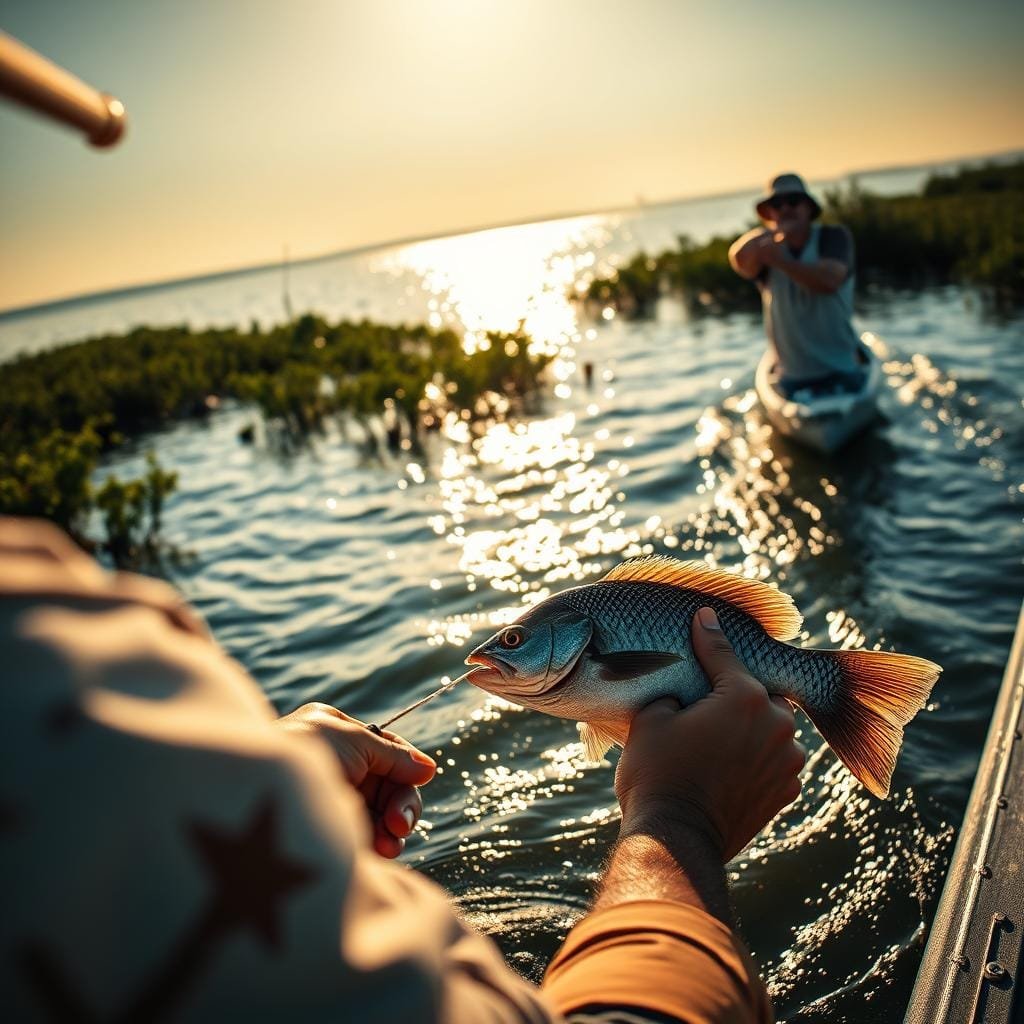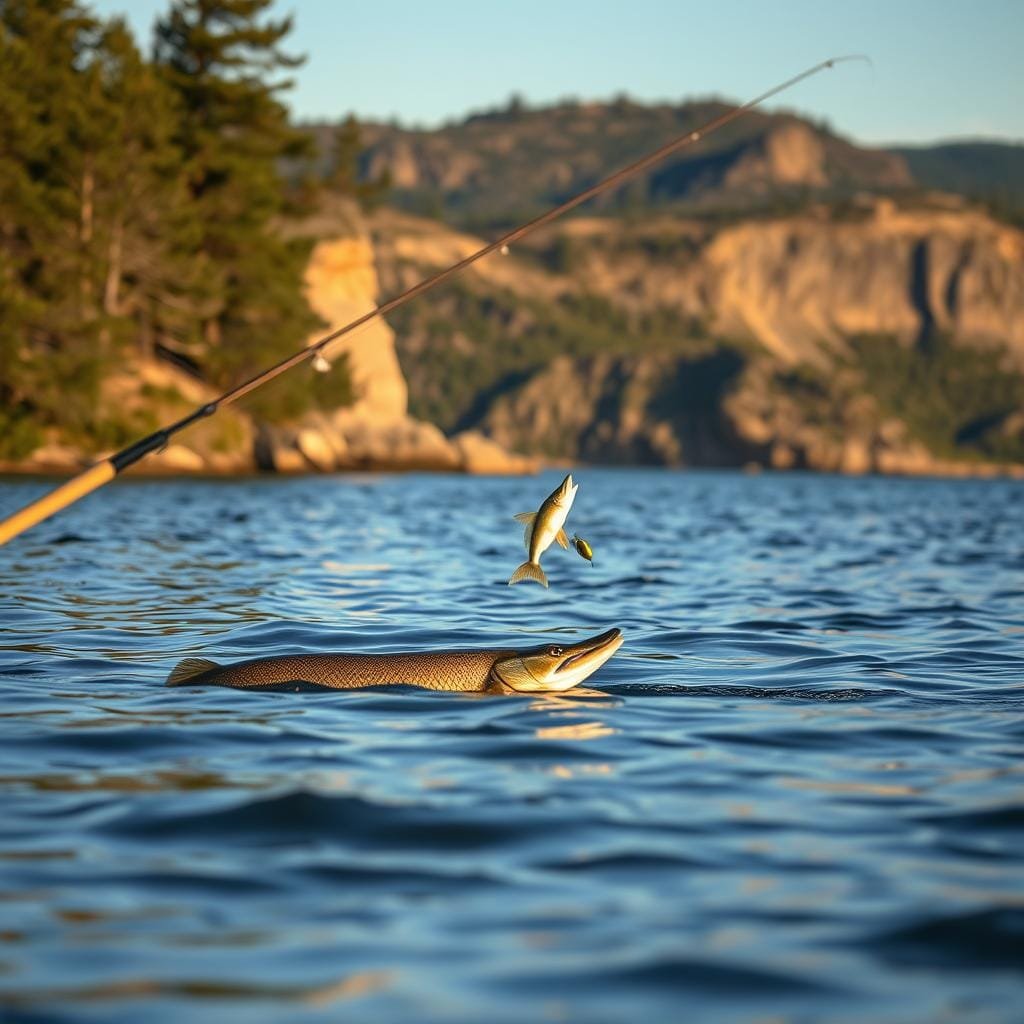
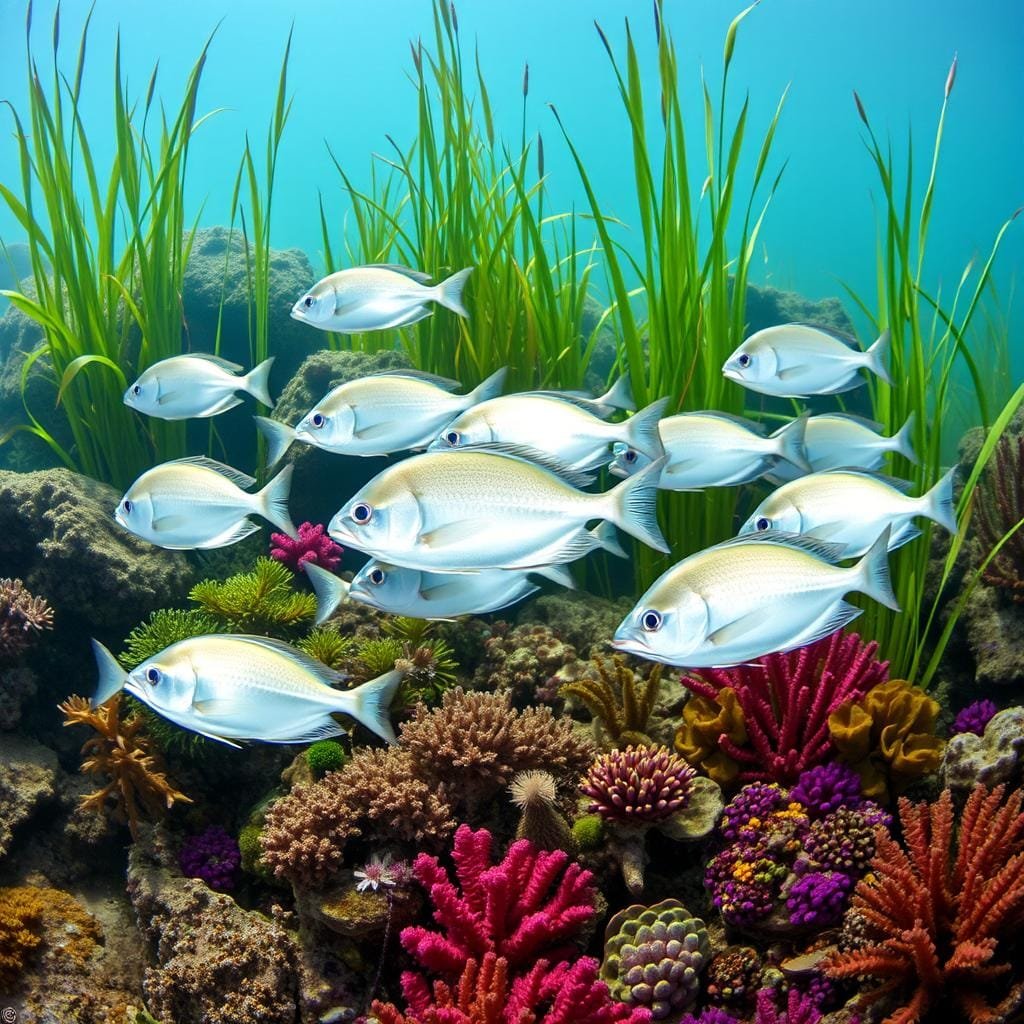
Ever wonder what scup, or porgy, eat? They swim in the U.S. Atlantic from Massachusetts to South Carolina. They can be found as far north as Maine and as far south as North Carolina.
Scup are bottom-feeding fish that anglers love. They search rocky bottoms, reefs, pilings, and sandy patches for food.
Scup mainly eat what they find on the seafloor. They munch on mollusks, marine worms, and small crustaceans. They use their strong jaws and teeth to crush these foods.
Season affects their eating habits. In warmer months, they move closer to shore and eat more. When it gets cold, they go back to deeper water but keep eating.
Their diet makes their meat taste good. It’s firm, flaky, and a bit sweet. You can grill, fry, broil, or bake them.
Anglers know what to use to catch scup. They use squid strips, sand-worms, and clams. These foods are similar to what scup eat naturally. To catch them, fish near structures and keep your line close to the bottom.
Scup basics: habitat, migration, and where they feed along the Atlantic coast
Scup live from Massachusetts to South Carolina. They like the Middle Atlantic Bight a lot. They stay near things like reefs because food is plentiful there.
They start to spawn when it gets warmer. Young ones go to places with lots of food. By age two, females start to have babies, helping the inshore areas.
Seasonal movements from inshore shallows to offshore depths
Scup move from shallow to deep water. From May to October, they go into bays to eat and grow. When it gets cold, they move south and deeper.
In warm months, they go into coves and harbors. When it gets cold, they go to deeper areas. This helps them stay warm.
Hotspots: rocky bottoms, reefs, pilings, and sandy patches
Scup like places like jetties and reefs. Sandy areas with weeds are good too. They eat clams, crabs, and worms there.
Places like Narragansett Bay and the Chesapeake are great for them. They have lots of food and places to hide. These spots are good from spring to fall.
How temperature shifts impact feeding behavior
When it’s warm, they eat a lot. They move closer to shore. When it gets cold, they slow down and move to deeper water.
They like temperatures between 55–70°F. When it gets too cold, they move to warmer areas. This helps them stay comfortable.
| Season | Primary Area | Depth Range | Key Structures | Feeding Notes | Regional Focus |
|---|---|---|---|---|---|
| Spring | Inner shelf to bays | 10–80 ft | Reefs, channel edges | Warmth triggers scup migration and inshore feeding; juveniles settle in estuarine feeding zones | Middle Atlantic Bight |
| Summer | Coastline within a few miles | 5–60 ft | Rocks, pilings, weeded sand | High activity across scup habitat; dense foraging along structure within the Atlantic porgy range | Massachusetts to New Jersey |
| Fall | Nearshore to outer nearshore | 30–120 ft | Wrecks, gravel plains | Cooling temps start inshore offshore movement; schools stage on transitions | New York to Virginia |
| Winter | Mid and outer shelf | 100–250 ft | Sand and shell beds | Reduced feeding during cold stress; stable layers maintain survival | Virginia to the Carolinas |
What does scup eat
Ask any Northeast angler and they’ll tell you: scup food is all about the seafloor. These porgy feeding habits center on structure and sand where prey is dense. Their choices line up with a classic bottom-feeding fish diet, shaped by the places they root and pick along the Atlantic coast.
Core diet: mollusks, worms, and benthic invertebrates
Day to day, scup target mollusks worms crustaceans tucked into rock crevices, shell beds, and sandy patches. Clams, small bivalves, and sand-worms are routine finds, along with benthic invertebrates clinging to pilings and reefs. This steady mix explains why squid strips, worms, and clams produce bites from spring to fall.
How strong jaws and pointed teeth crush hard-shelled prey
Scup have small mouths but tough jaws and pointed, molar-like teeth that act like a nutcracker. They nip, pin, and grind until shells give way, turning armored meals into easy calories. That build favors thick-skinned prey, so benthic invertebrates and shellfish stay at the top of their list.
Why bottom-feeding defines their menu
Hugging the substrate keeps scup close to the pantry. Their profile and quick fin work let them hover over rubble and weed edges where food hides. It’s a natural fit for a bottom-feeding fish diet, and it keeps porgy feeding habits focused on reliable, slow-moving targets that can’t outrun those jaws.
Natural prey profile: mollusks, worms, and small crustaceans
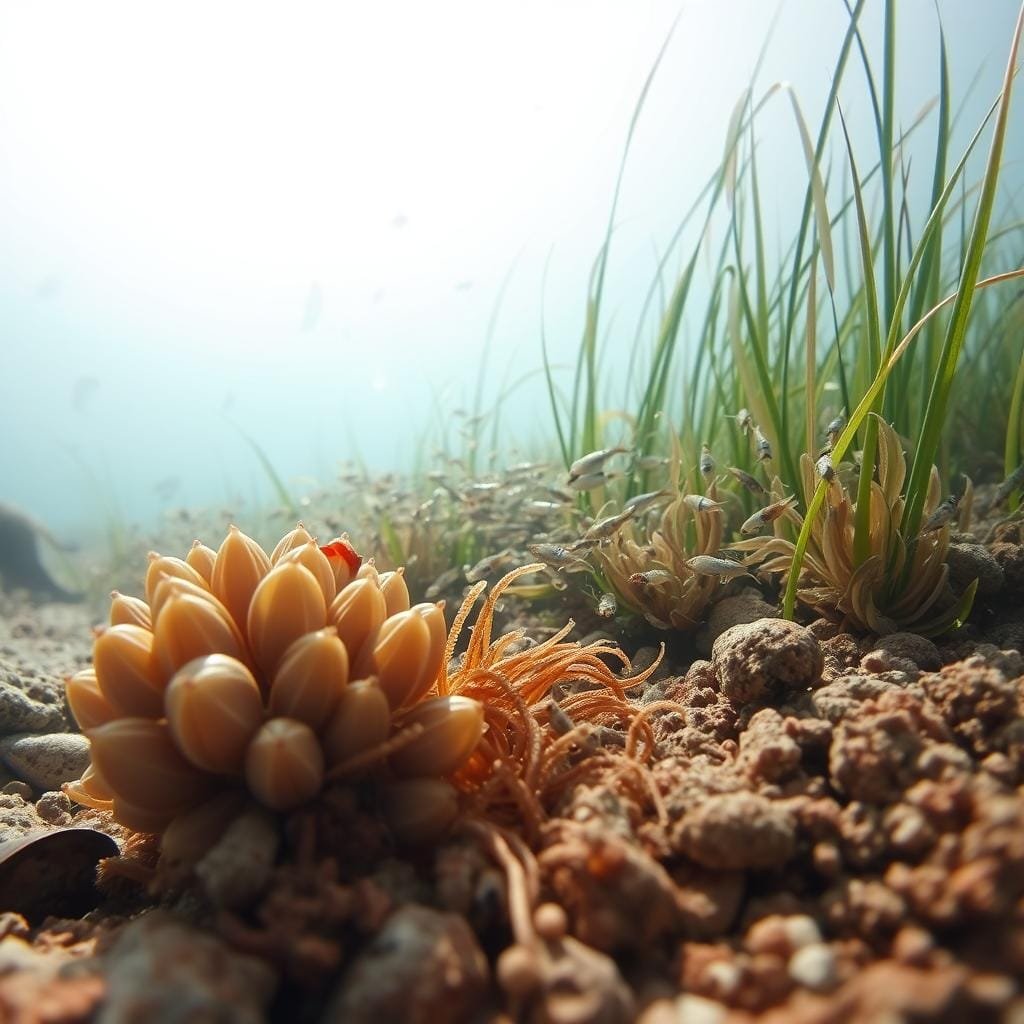
Scup fish eat mollusks, worms, and small crustaceans along the coast. They find food in sand, weeds, and rubble where the tide brings it. Anglers see baits disappear when they hit the bottom.
Clams, small bivalves, and other shellfish
Scup fish look for clams and small bivalves in sandy flats and weeds. They crush them to get to the meat. This is common where shell beds are found.
Sand-worms and marine worms
Scup worms live in channels and mud-sand seams. Fish dig into sediments to find them. This quick meal is important during strong tides.
Crabs and tiny crustaceans around structure
Near rocks and reefs, scup eat pea crabs and small hermits. They use the current to catch prey. This is how they find food in the right places.
Anglers use bait that matches what scup eat. Clam strips for shellfish, sand-worms for worms, and small baits for crustaceans. These choices help catch scup in their favorite spots.
How scup anatomy shapes their diet
Scup are fish that can fit into tight spaces. They have tall, thin bodies that help them move fast. This lets them find food in places others can’t.
They also blend in well with their surroundings. Their brown backs with shiny silver help them sneak up on food.
Small mouths, strong jaws, and molar-like teeth
Scup have small mouths that help them pick food from tight spots. They can grab clams, small bivalves, and tiny crabs. Their teeth are strong and can crush shells.
They eat slowly and carefully. This way, they make sure to get every bit of food.
Dorsal spines and agile maneuvering around structure
Scup have a long dorsal fin with sharp spines. This helps them control their movements in strong currents. It also protects them when they hide in small spaces.
They can change color to blend in. This makes it hard for predators to see them. They can stay hidden and find food easily.
Feeding times and seasonal diet shifts
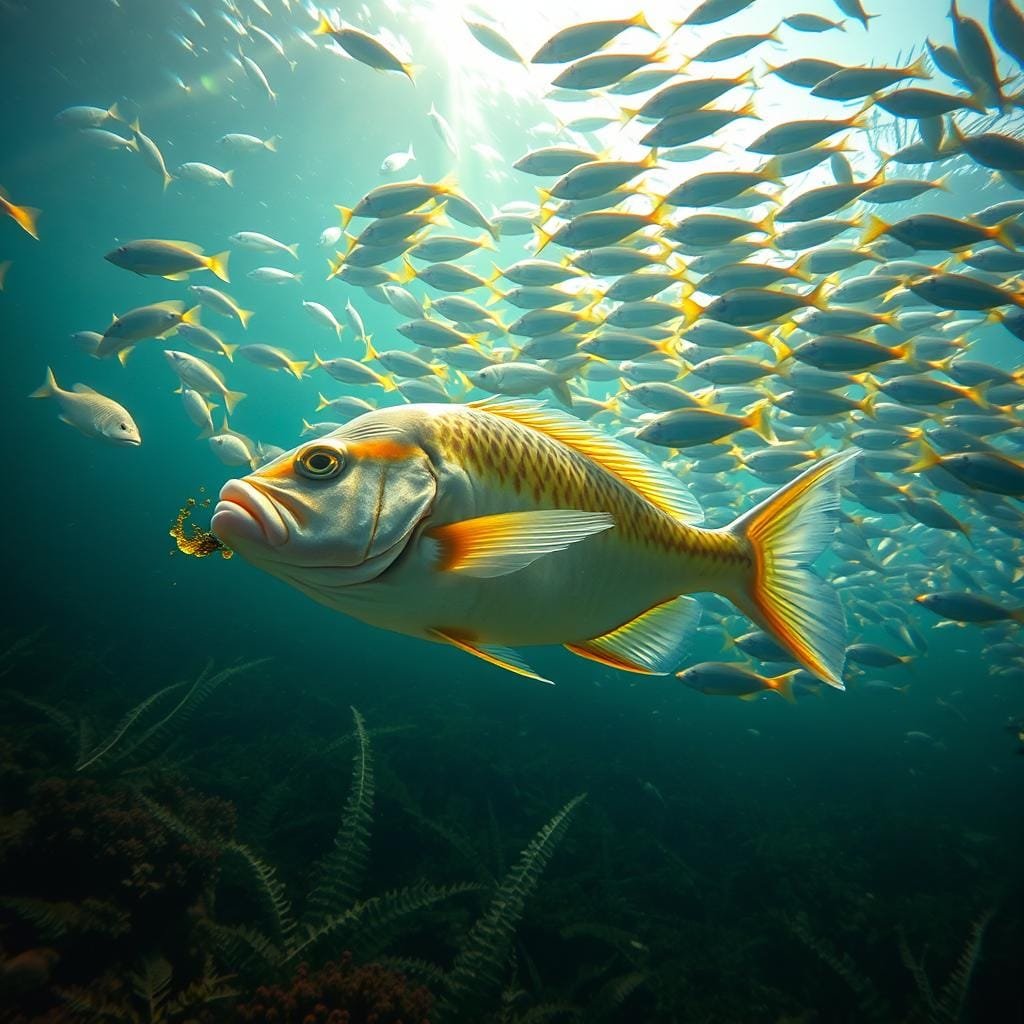
Light, tide, and temperature guide a scup’s diet. Dawn and dusk are active times. Steady currents move food across the bottom.
As waters warm and cool, feeding times and what they eat change. This follows the coast’s seasons.
Spring inshore migration and increased foraging
April and May warm the waters. Scup move from the mid-shelf to bays and sounds. They find worms, tiny bivalves, and small crustaceans in sand flats and weed beds.
Spawning near June, from southern New England to New York, overlaps with peak forage. Bites often cluster around moving water and early light.
Summer nearshore feeding near rocks and weeds
May through October, scup focus on structure. Rocks, jetty edges, and pilings shelter crabs and snails. Eelgrass and rock weed hide sand-worms.
Warm, stable weather keeps feeding windows wide. Mid-morning and late afternoon surges happen when currents sweep scent and bits across the bottom.
Winter offshore patterns and energy conservation
As fall cools, scup move to deeper shelf waters in winter. Food thins and the pace slows. Short, efficient feeds replace long hunts.
Sudden cold snaps in the shallows can be deadly. Offshore has more stable conditions and a leaner diet until spring.
Angler insights: baits that mimic a scup’s natural food
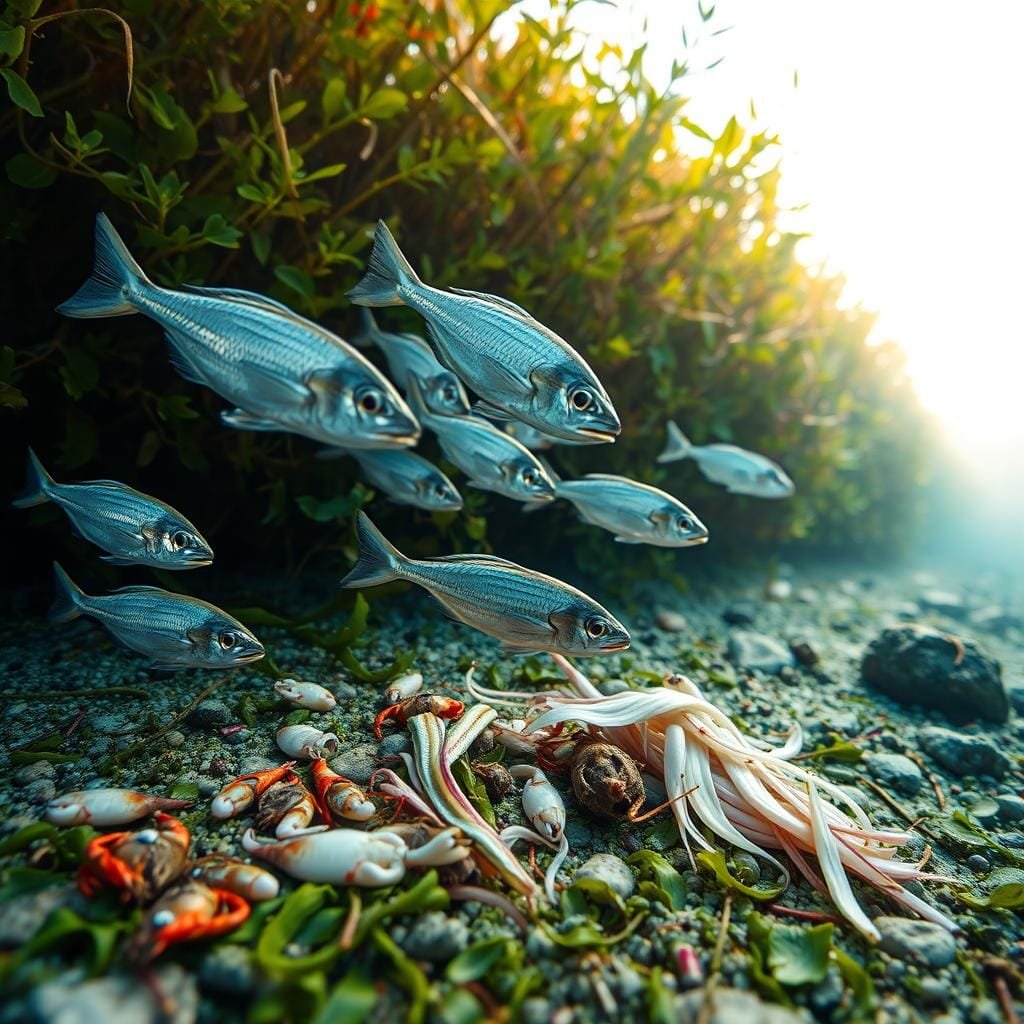
Match the menu, catch more fish. The best scup bait looks like what they eat. Keep your rig simple and your bait fresh for quick wins.
Scup like to eat clams and worms. Learn about their diet on scup feeding habits. Then, fish smart based on where you are.
Top baits: squid strips, sand-worms, and clams
Squid strips are great because they stay on the hook. Sand-worms get bites when fish are picky. Fresh clam bait is classic and scents out fish fast.
Try different baits as the bite changes. Squid strips are good against bait stealers. Clam squares or half a sand-worm work well on small hooks.
Why durable baits work for aggressive strikes
Scup hit baits hard and fast. Squid strips take a lot of hits and stay on. This means more fish for you.
Clams and worms are also great. They smell like real food. Add a thin squid ribbon to a clam for extra scent and staying power.
Drifting, bottom fishing, and light jigging tactics
For bottom fishing, use a simple rig with 1–2 oz weights. A 6’6″–7′ rod and thin line help feel bites.
Drifting? Tap bottom, lift, then pause. From shore, cast and keep a tight line. For jigging, use a small metal or bucktail with squid.
When scup are higher, use a tiny metal jig. They might hit small clousers during rain. Always be ready to change your bait.
Juvenile vs. adult scup diets
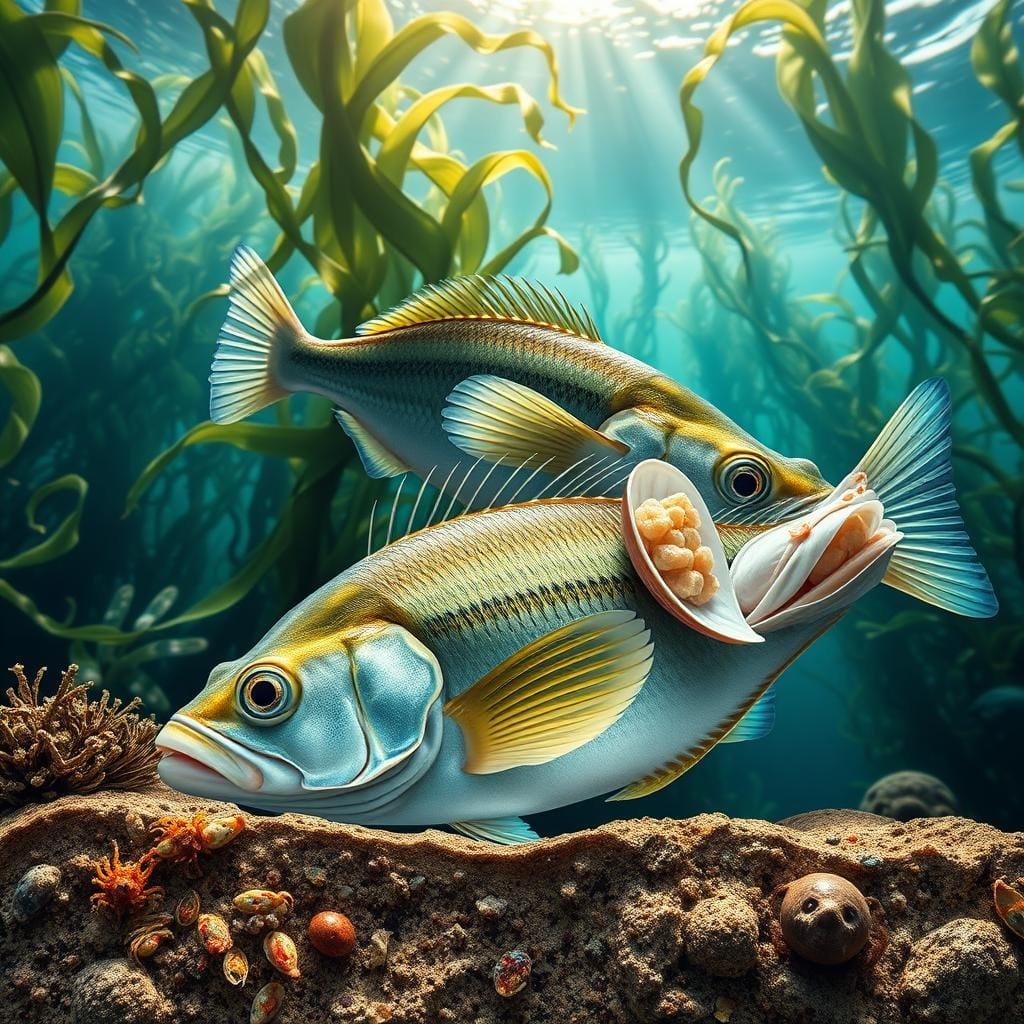
In shallow nurseries and eelgrass pockets, young scup eat small, soft foods. They find tiny worms, micro-bivalves, and small crustaceans in sand and weed beds. This helps them grow in the first warm months.
As they grow, they eat bigger prey. Their jaws get stronger, letting them eat more. By late summer of their first year, they eat tougher invertebrates but smaller than adults.
Adult scup eat bigger and more varied foods. They have strong teeth to crack open clams and eat marine worms. They eat around rock and rubble, showing they can go to deeper places.
Season changes how they eat. In spring and summer, they eat the same food. But in winter, adults go offshore to save energy. Young ones stay in bays until they are about two years old and eight inches long.
Larval and early juvenile feeding starts with zooplankton. This is explained in a NOAA’s Northeast data brief. It shows how they grow from eating small prey to eating bigger prey as adults.
Ecosystem role: scup as bottom-feeding porgies
Scup connect nearshore and offshore life. They eat near the bottom and move with the seasons. This links habitats and energy flows across the coastal food web.
Controlling invertebrate populations on the seafloor
Scup eat clams, worms, and small crabs. They help control invertebrates on reefs and sandy patches. Their eating keeps invertebrates from growing too fast.
They turn shells and stir sediment. This helps release nutrients and creates diverse habitats. It’s important for the health of the benthos.
Prey for larger predators in coastal food webs
Scup are also food for bigger fish like striped bass. They live near rocks and weeds. This makes them easy prey for larger predators.
Anglers use live scup to catch bigger fish. This shows how scup fit into the coastal food web. They move energy and nutrients between areas, helping both predators and prey.
From diet to flavor: how scup’s menu influences taste
Scup eats clams, worms, and tiny crabs. This diet makes its flavor like Mediterranean sea bream. It tastes mild and sweet, with a firm flaky texture.
At markets from Montauk to Boston, it’s called orata Americana or Montauk sea bream. Cooking it simply lets its natural taste shine.
Mild, sweet, firm-and-flaky flesh
Its diet gives it a light taste, almost like shrimp. The flesh stays firm and flaky, even when cooked. This makes it easy to enjoy at home.
Cooking tips that respect a shellfish-rich diet
Use simple seasonings to bring out its flavor. Olive oil, sea salt, and citrus are great choices. Cooking it whole saves the juicy collar and cheeks.
- Best methods: pan-fry, broil, bake, or grill.
- Use a thin fish spatula to protect the skin.
- For bones, pull flakes in the direction they run to spot and remove them cleanly.
Grilling whole scup with herb-citrus and tomatillo sauce
Start with a clean whole fish. Rub it with olive oil and salt. Stuff it with ginger, chives, and lemon.
Grill it over medium heat for 5–10 minutes per side. Use a thin spatula to turn it.
Make a tomatillo sauce by grilling tomatillos and red onion. Blend with cilantro, olive oil, vinegar, and honey. Spoon it over the fish for a burst of flavor.
Responsible harvest: regulations and sustainability notes
Scup have been fished along the Atlantic coast for a long time. In 1996, the stock was overfished. But, thanks to new management, it started to recover.
The IUCN listed scup as Near Threatened in 2014. This means we must be careful. Anglers and crews must follow rules to help the fish recover.
Rules vary by state and season. In Massachusetts, commercial boats get 78% of the catch. Recreational fishers get 22%. Commercial fishing uses otter trawls, while recreational fishing uses natural baits like squid and clams.
Before you go fishing, check the scup regulations. Keep a log of the sizes and limits you catch. This helps you avoid mistakes.
Try to fish when the fish are most plentiful. If you catch too many small fish, move to a different spot. Use the whole fish to reduce waste and enjoy its taste.
By making smart choices, we help the fishery stay healthy. Follow the porgy limits and watch the scup quotas. Spread out your fishing to protect the fish and the ocean.
FAQ
What does scup eat?
Scup eat bottom-dwelling invertebrates like mollusks and small bivalves. They also eat marine worms and tiny crustaceans. Their strong jaws can crush hard shells.
Where do scup live and feed along the Atlantic coast?
Scup live from Massachusetts to South Carolina. They like to be near rocks, reefs, and sandy patches. They are there from May to October.
How do scup migrate through the seasons?
In spring, scup move closer to the shore as it warms up. They stay there through summer and early fall. In winter, they go deeper and further south.
What are the best habitat hotspots to find feeding scup?
Look for rocky bottoms, reefs, and sandy areas with weeds. These places have clams, worms, and crustaceans that scup like to eat.
How do temperature changes affect scup feeding?
Warm water makes scup more active. But, cold snaps in shallow bays can be deadly. So, they go deeper when it gets cold.
What is scup’s core diet?
Scup mainly eat benthic invertebrates like mollusks and worms. This diet makes their meat taste mild and sweet.
How do scup crush hard-shelled prey?
Scup have strong jaws and teeth. They can grip and crack hard shells to get to the soft flesh inside.
Why are scup true bottom feeders?
Scup are built for the seafloor. They have a body shape and mouth that let them pick food from the bottom.
Do scup really eat clams and small bivalves?
Yes. Scup hunt for clams and small bivalves in sandy and weedy areas. They use their teeth to open shells and eat the meat.
Are sand-worms and other marine worms important in their diet?
Yes. Worms are common in flats and channels. Scup eat them during spring and summer when they are inshore.
What crustaceans do scup eat around structure?
Scup eat small crabs and tiny crustaceans near rocks and reefs. These areas have lots of prey and scup can hide while they eat.
How does scup anatomy shape what they eat?
Scup’s compact mouth lets them pick food from tight spaces. Their strong jaws and teeth help them crush shells. Their body shape and spiny dorsal fin help them move and defend in tight spaces.
Do dorsal spines help scup feed?
Yes. The long dorsal fin helps scup stay stable and turn quickly. This lets them get close to structure where prey hides.
When do scup feed most actively?
Scup feed a lot in spring and summer when it’s warm. In winter, they feed less as they conserve energy.
What changes in scup diet from spring to winter?
In spring and summer, scup eat lots of worms and small bivalves. In winter, they eat less and eat deeper in colder water.
What baits work best for catching scup?
Squid strips, sand-worms, and clams are the best baits. They look like scup’s natural food and make them bite hard.
Why are squid strips so effective on scup?
Squid is tough and stays on the hook. This makes scup bite more often. They hit hard, so durable baits work best.
What are good techniques for scup fishing?
Drifting, bottom fishing, and light jigging are good methods. Use a medium spinning setup with braided or fused line. Keep your rig near the seafloor where scup feed.
Do juvenile scup eat the same things as adults?
Mostly, but smaller. Young scup eat tiny worms and small bivalves in estuaries. As they grow, they eat bigger prey.
What role do scup play in the ecosystem?
Scup help control invertebrate populations and influence nutrient cycling. They are prey for larger predators like striped bass.
Are scup used as bait for other fish?
Yes. Anglers use live scup for striped bass and white marlin. This shows scup’s important role in coastal food webs.
How does scup’s diet affect its flavor?
Scup’s diet of shellfish makes their meat firm and flaky. It tastes mild and sweet, like sea breams.
What are good cooking methods for scup?
Frying, broiling, baking, and grilling whole are popular ways to cook scup. Cooking whole keeps the meat intact and suits their size and bone structure.
Any tips for grilling whole scup with sauce?
Oil and salt the fish, stuff with lemon, chives, and ginger. Grill 5–10 minutes per side. Top with a tomatillo-cilantro sauce with charred onions, olive oil, sherry vinegar, and honey.
What’s the status of scup populations and management?
Scup are an important fishery in the U.S. They were overfished in 1996 but have recovered. The IUCN lists them as Near Threatened (2014). Regulations vary by state and season.
How are scup harvested commercially and recreationally?
Commercial fishing uses otter trawls. Recreational anglers use natural baits like squid strips and clams. In Massachusetts, most are caught commercially.
How can I harvest scup responsibly?
Follow local rules on size and bag limits. Fish during peak inshore seasons to reduce pressure. Cooking whole fish is a good way to honor this sustainable species.