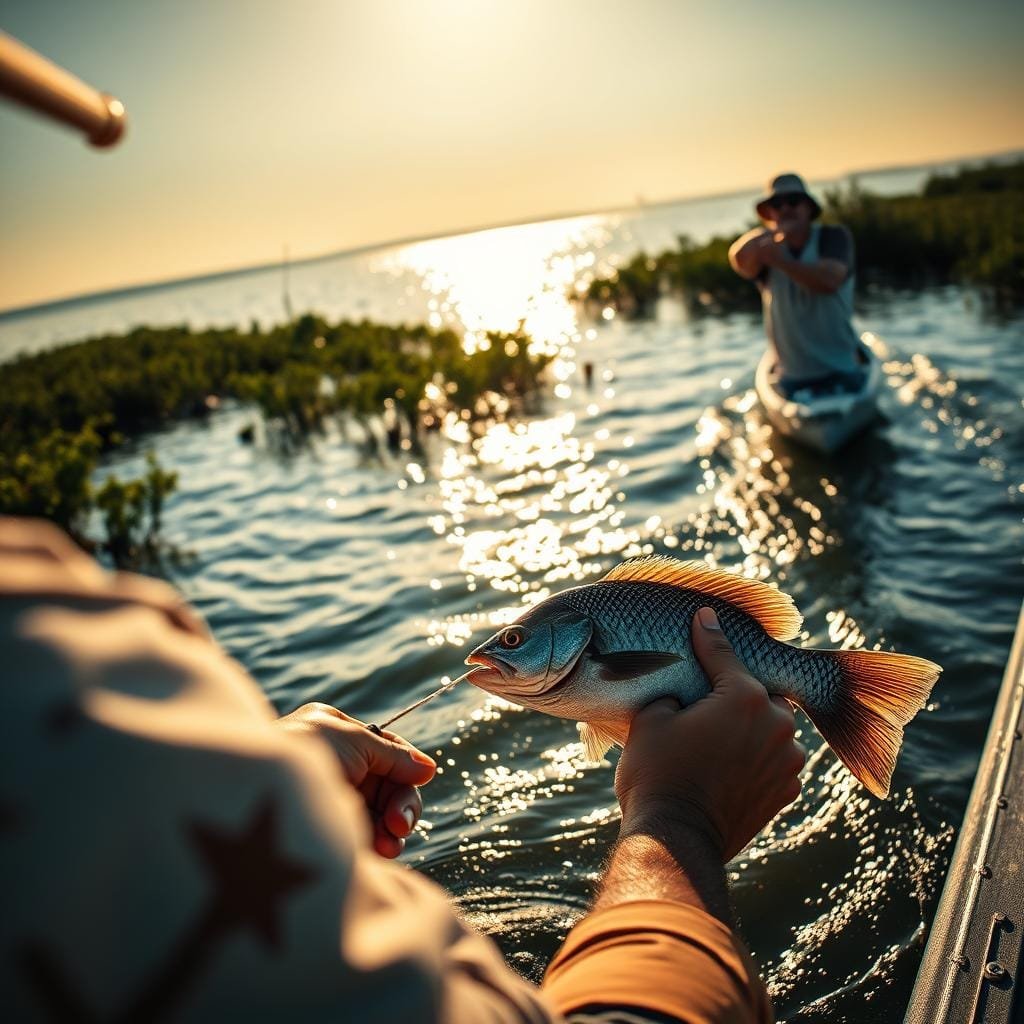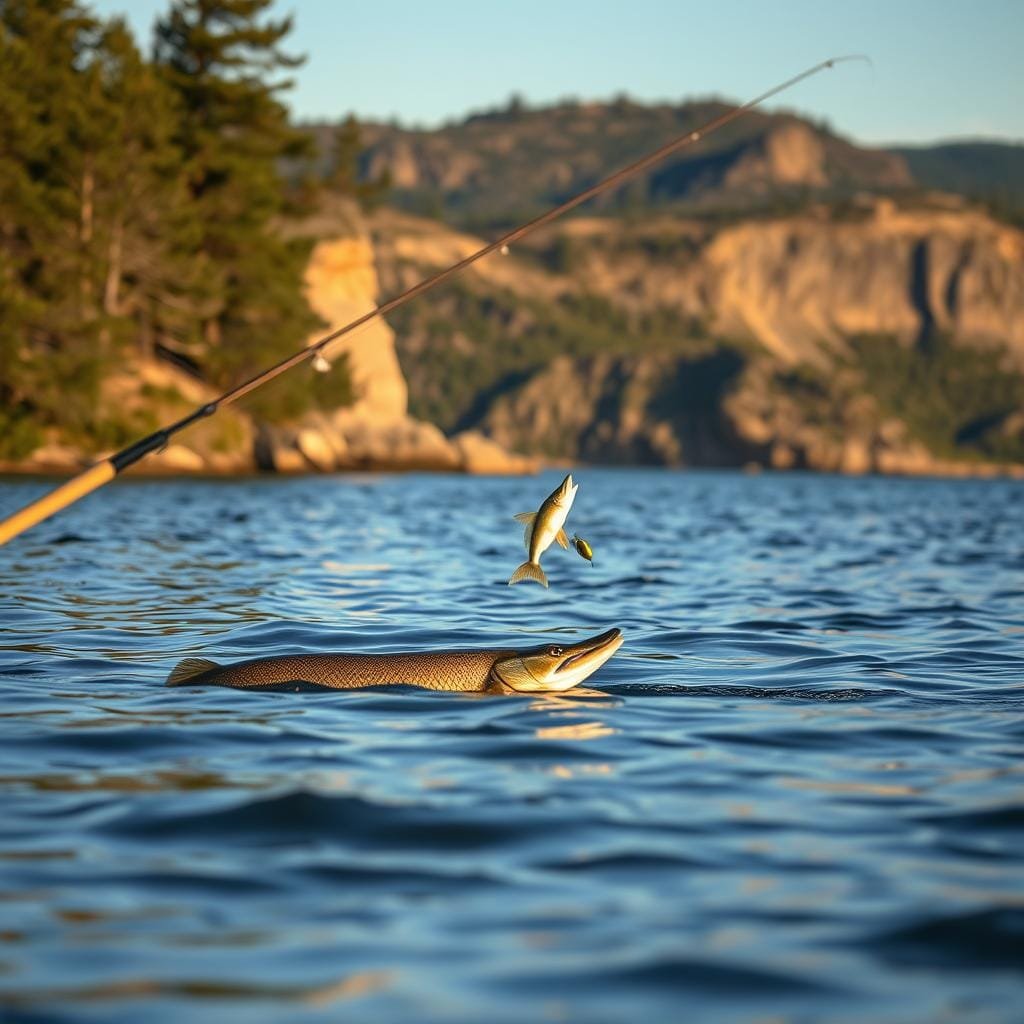
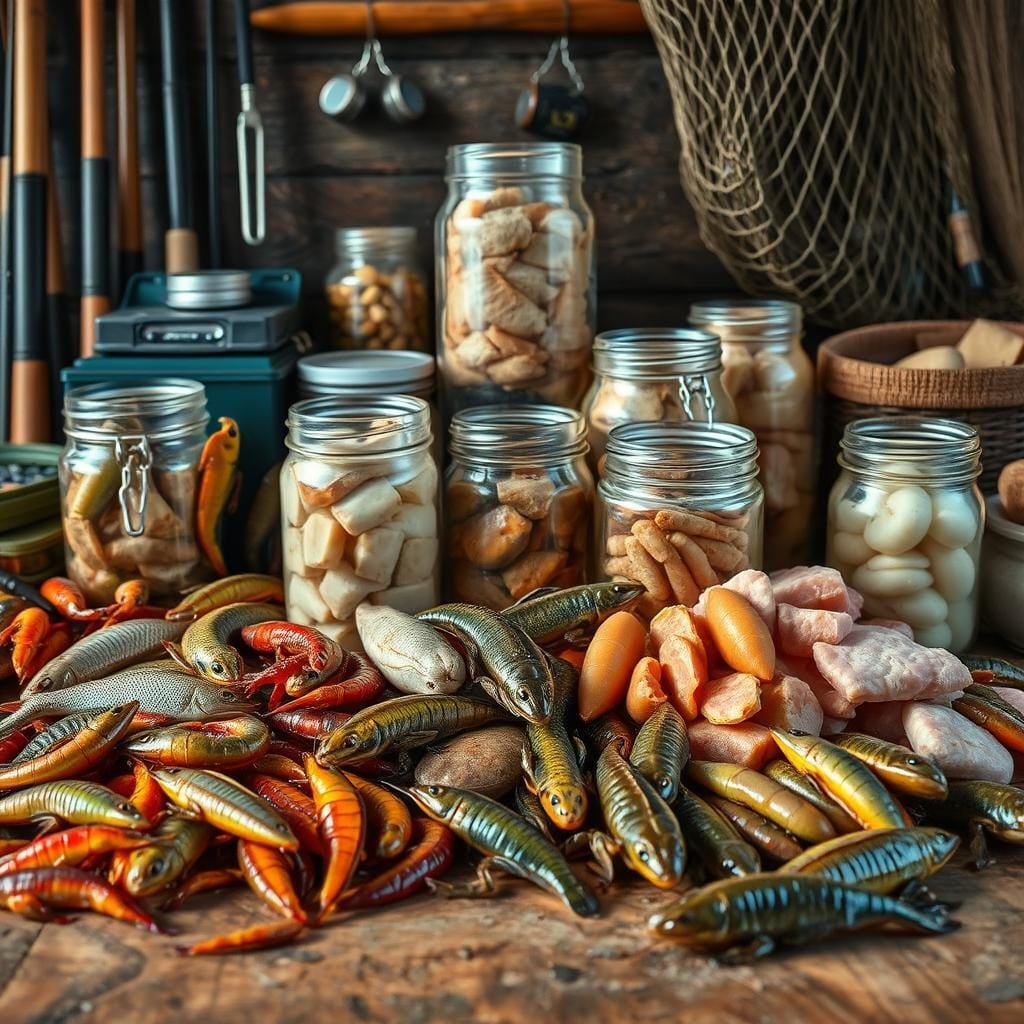
Bowfin are old, native fish that love to eat bait in swampy places across the United States. If you want to catch them fast, use fresh and local bait. This guide will help you catch bowfin with easy rigs, good gear, and smart tips for fishing in mud and weeds.
While lures can work, bowfin cutbait like bluegill or shrimp often catches them best. Use tilapia or shrimp if you need something quick. Use strong spinning tackle, 30–40 lb braid, and 40–50 lb fluorocarbon leaders for better hooksets and landings.
When to fish matters. Spring to early summer is best for shallow water. September is hot in many places. Look for surface bites, set a slip float, and let the bait soak. With the right gear and a strong swing, bowfin fishing is exciting.
Next, we’ll talk about bowfin behavior, where they live, and the best baits. This will help you choose the right bait for your fishing spot.
Understanding Bowfin Behavior and Habitat for Better Bait Choices
To catch bowfin, know where they live. They are found from Texas to Minnesota and east to Florida and Quebec. Look for stained water, tangled cover, and soft bottoms. Use these tips to find them and choose the right bait.
Where bowfin thrive: swampy, weedy backwaters with low current
Bowfin love swampy areas. Look for mucky coves, ditches, and places with little water flow. These spots have lots of weeds and brush.
Cast your line where weeds meet open water. Put your bait in the brush and along mud lines. For more tips, check out this beginner’s guide to bowfin fishing.
Why air-breathing lets them dominate low-oxygen shallows
Bowfin can breathe air, which helps them in hot, calm water. Their swim bladder acts like a lung. This lets them survive in water with little oxygen.
In calm water, bait scent spreads slowly. So, put your bait right next to the cover. This is because bowfin often strike when the bait is right next to them.
Spotting surface gulps and swirls to place your bait
Look for quick gulps, subtle swirls, or tiny boils near weeds. These signs mean a fish is taking air. Cast a little past the sign and slowly move your bait into the area.
Make short, accurate casts instead of long ones. In these areas, patience is key. Use these tips to find more bowfin and catch them in the calm water.
best bait for bowfin
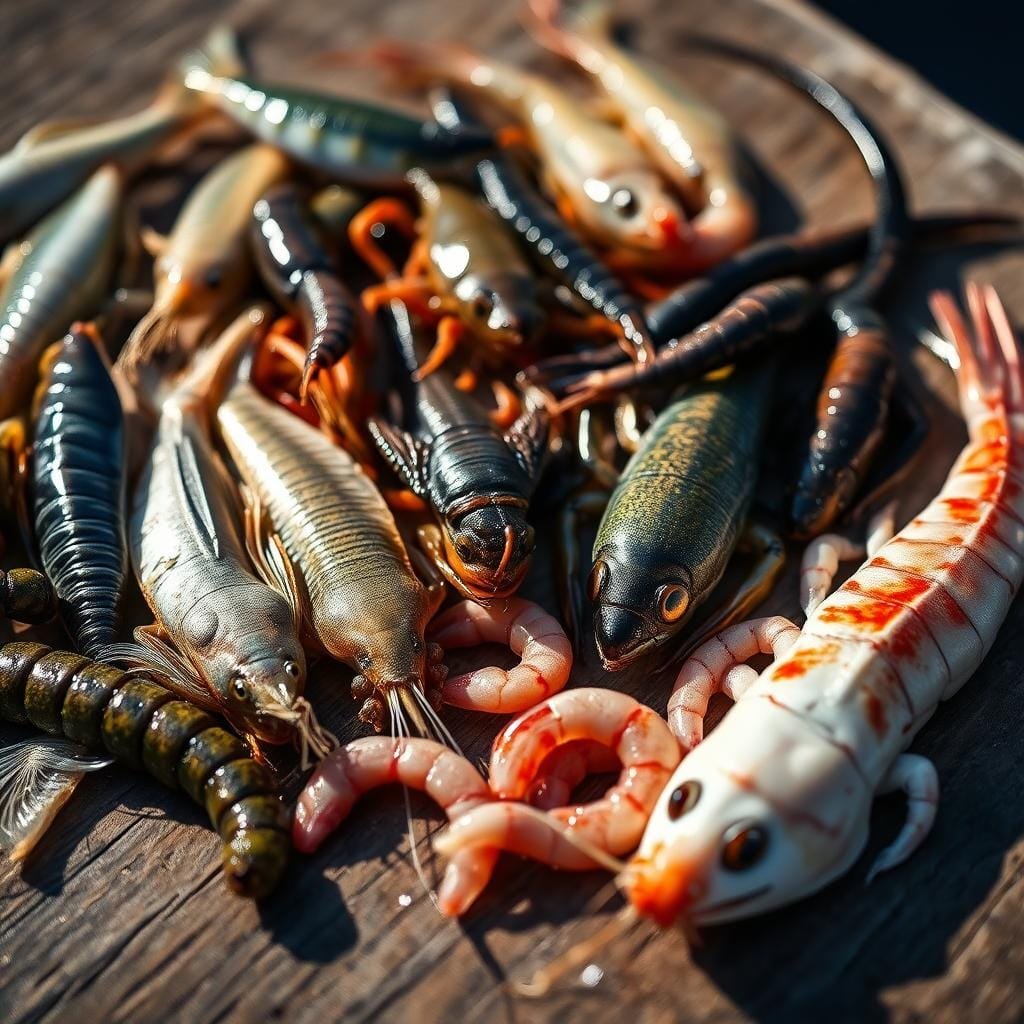
Strong scent is key in stained water. The best bait is fresh, bloody, and cut small. This makes it hard to see the hook. For more tips, check out bowfin cutbait tips.
Fresh, local cutbait: bluegill, shad, suckers, carp (where legal)
Local bait is always a winner. Bluegill bait works all season. Shad bait, like American shad in spring, gets quick bites.
Suckers, gizzard shad, and carp are great too, if it’s legal. Always check the rules before you go.
Make fillets small to catch more fish. This way, the bait smells steady and stays on the hook.
Store-bought standbys: fresh tilapia and shrimp
When you can’t find local bait, store-bought works. Tilapia bait smells good and stays on the hook well. Shrimp is easy and works in murky water. Choose fresh for better smell and feel.
Both are easy to carry in a small cooler. They’re good to have on long trips or when bait shops are closed.
Salty options like mackerel or mullet: when to test and when to skip
Oily fish like mackerel and mullet attract bowfin. They smell strong and work in warm, dirty water. But, results can vary.
Try them out, but don’t rely on them alone. Bring a few to try different spots.
Small baits (shrimp) to reduce “bite-and-run” short strikes
Bowfin often nip and run. Smaller baits solve this. Use a single shrimp or a small piece of tilapia bait.
This makes it easier for fish to eat the bait. It also helps the hook set better.
Use a sharp, short hook and change baits often. A steady scent keeps fish interested and close.
Cutbait That Consistently Gets Crushed
Bowfin like dark, weedy water. That’s why bowfin cutbait works when other lures don’t. Scented baits help anglers catch them.
Why scent beats sight for this stained-water predator
In dark water, a bait might be ignored if it doesn’t smell. Strong-smelling chunks attract bowfin from far away. This is why scented baits work better than plastics in murky water.
Make sure bait pieces are fresh and firm. This keeps them on the hook. The smell of the bait is what attracts the bowfin.
Matching the hatch: use species from the same water
Use bait that matches the local fish. Bluegill, shad, suckers, and carp are great choices. In spring, American shad chunks are perfect for rivers like the Delaware.
If you can’t catch fresh bait, store-bought tilapia or shrimp work well. Shrimp are small and don’t cause as many lost bites. But try local fish first, like mackerel or mullet.
Legal check: gamefish-as-bait rules by state
Check the local bait rules before you go. Some places let you use gamefish as bait, but others don’t. Always carry proof of your catch.
Follow the rules, and you’ll catch bowfin easily. Just match the hatch, follow the bait rules, and trust the power of scent.
Live Bait and Artificial Lures That Produce
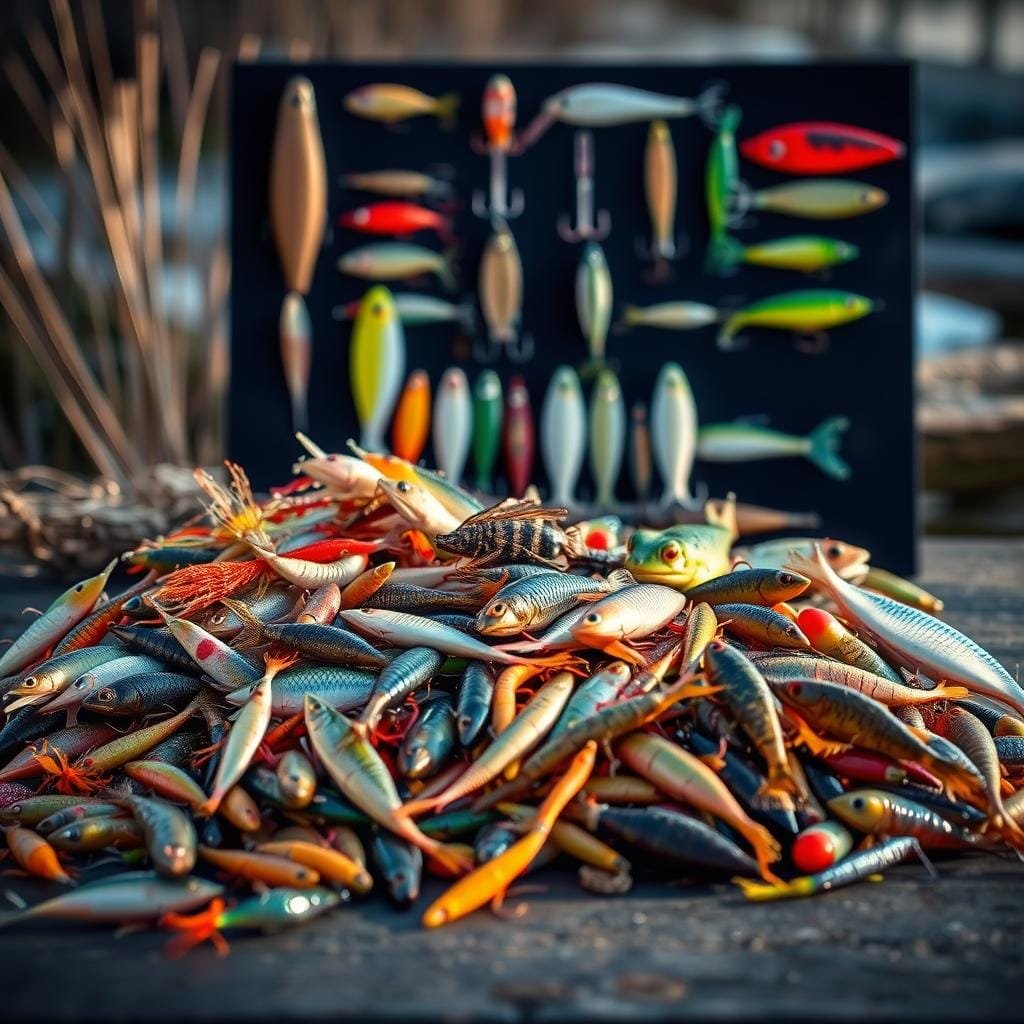
Bowfin hit hard when the setup is right. In stained, weedy water, a mix of bowfin lures and live bait bowfin tactics keeps you in the game. Cutbait is great for numbers, but smart lure choices and clean presentations add true sight-fishing bowfin moments.
Topwater frogs and spinners for ambush strikes
Over matted grass, topwater frogs draw savage ambushes. Pause in pockets, then crawl the bait to the edge; many eats start with a slow V-wake. Along banks and under bushes, inline or safety-pin spinners flash, thump, and trigger reaction bites near stumps and logjams.
Keep casts short and precise. Bowfin rarely roam far, so feed them the hit zone. Rotate colors and vibration to match water stain and sun angle.
When artificials work: sight-fishing and nose-to-bait presentations
Artificials shine when you can see the fish. With sight-fishing bowfin, drop the lure inches from the nose and let it hover. Tiny twitches beat long retrieves. If the fish flares and stalls, hold the bait steady and let the gills do the work.
When you need a sure commit, a float-suspended live bait bowfin setup makes the take obvious and helps time the hookset. For more on effective baits, see this brief primer on creature baits, live options, and line.
Quick lure swaps with strong micro clips for finicky fish
Shallow, muddy water often demands fast tweaks. Tactical Anglers Power Clips in micro sizes let you switch topwater frogs to spinners in seconds without retying. They are small, strong, and perfect for dialing blade size, wire style, and lure profile as light or wind shifts.
Pair clips with short leaders and quiet casts. Swap until you find the pulse—then repeat that speed and angle to turn lookers into biters.
Rigging Your Bait to Maximize Hookups
Keep your bowfin rig simple and quiet. Fish in less than 10 feet of water like to hide in weeds and muck. A slip float rig keeps bait just above the mess, letting fish move freely.
This soft drift is what gets the fish to bite.
Slip float setups for shallow, weedy, mucky bottoms
Use a 5-inch unweighted Little Joe Pole Float as a slip float rig. Tie a rubber stop on 40 lb braid. Below the float, attach a 50 lb barrel swivel and 16–18 inches of 40 lb fluorocarbon to a sturdy hook.
This setup rides high but pulls almost nothing. So, fish can chew and swim before you set the hook.
Set the stop for 1–3 feet in skinny water or a bit deeper if weeds are taller. This setup means fewer snags and cleaner bait presentation. Make short, quiet pitches along pads, cattails, and dark seams.
Light-resistance balsa pole floats to let fish chew
A true balsa pole float reduces early pressure. The Little Joe Pole Float is reliable and easy to read. Watch for a slow slide or tilt instead of a hard dunk.
Give the fish a heartbeat to turn the bait, then drive the hook. This light rig keeps your line straight and your bait lively.
Grease braid with a touch of paste floatant to help it skate on the surface. This keeps the drift natural and protects the slip knot from waterlogged drag.
Bottom rigs with minimal weight in calm backwaters
When fish hug the floor, a bottom rig bowfin approach can score. Use minimal weight rigging—just enough to hold in place with slight tension. If you need more than 1/2 oz in calm backwaters, slide to a quieter pocket.
Keep the leader short to avoid snagging and let scent do the work.
Pair the same 40 lb fluorocarbon leader with a compact sinker and a single swivel. The less metal you hang, the less debris you collect, and the faster a wary fish commits.
Hooks, Leaders, and Terminal Tackle That Survive Bowfin
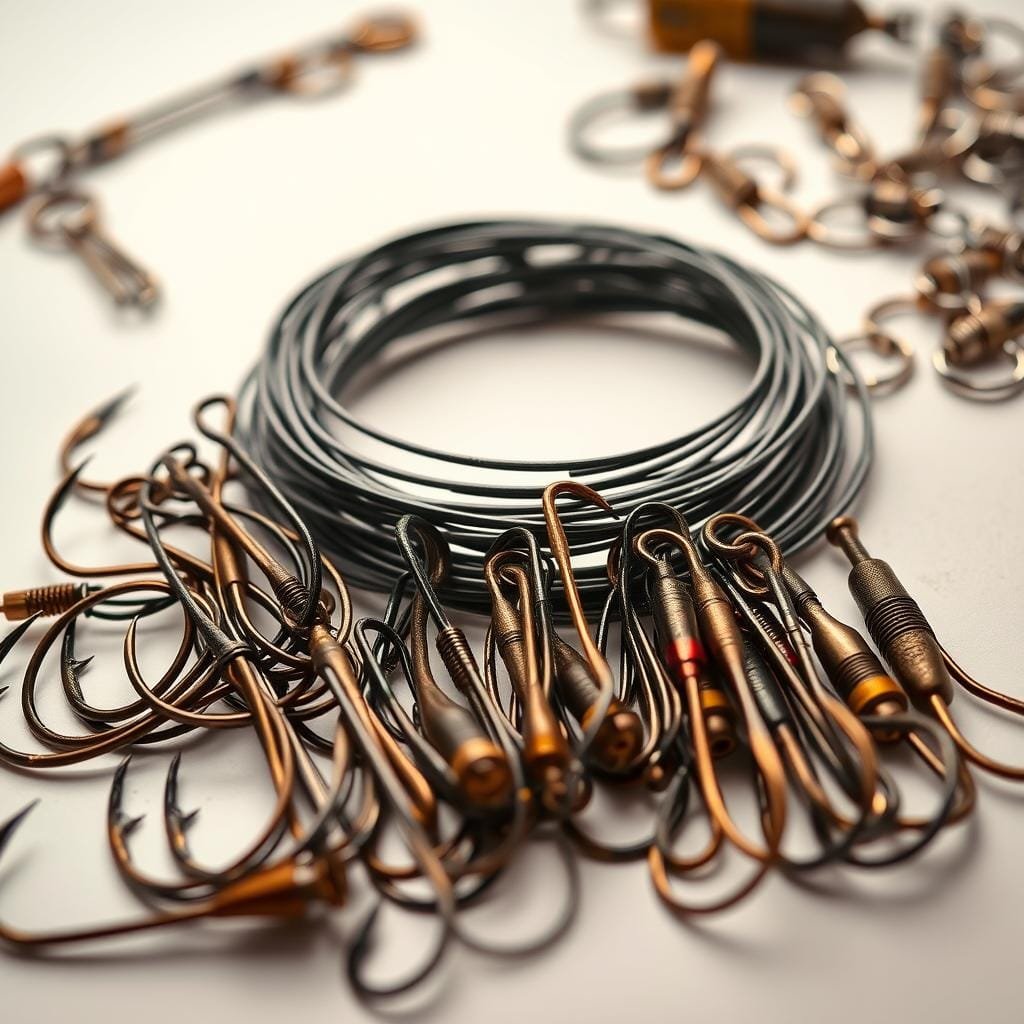
Bowfin have strong jaws that crush baits. To catch them, use a strong rig. The right hooks, leader, and swivel are key to success.
Heavy-gauge 3/0 or 1/0 short-shank hooks to beat bony jaws
Choose heavy gauge hooks to resist bending. A 3/0 baitholder or circle hook works well. For smaller baits, use 1/0 short shank hooks.
Match the hook to your bait and the water. Keep the hook point sharp. Bent hooks mean missed fish, so change them fast.
40–50 lb fluorocarbon leaders over steel for natural presentation
Use a 40 lb fluorocarbon leader for a natural look. It sinks well and gets more bites. For tough spots, go to 50 lb fluoro.
Fluorocarbon is better than steel for avoiding lost fish. Add a 50 lb barrel swivel for less twist. Store your gear in a dry place, like this terminal tackle box review.
Snelling hooks to improve alignment and penetration
Snell knot bowfin setups work well. They keep the hook straight for better penetration. Use circle or baitholder snells for extra strength.
Keep leaders short to control the fight. With the right gear, you can handle bowfin’s strong head shakes and land them.
Rod, Reel, and Line: Gear That Won’t Get Bullied
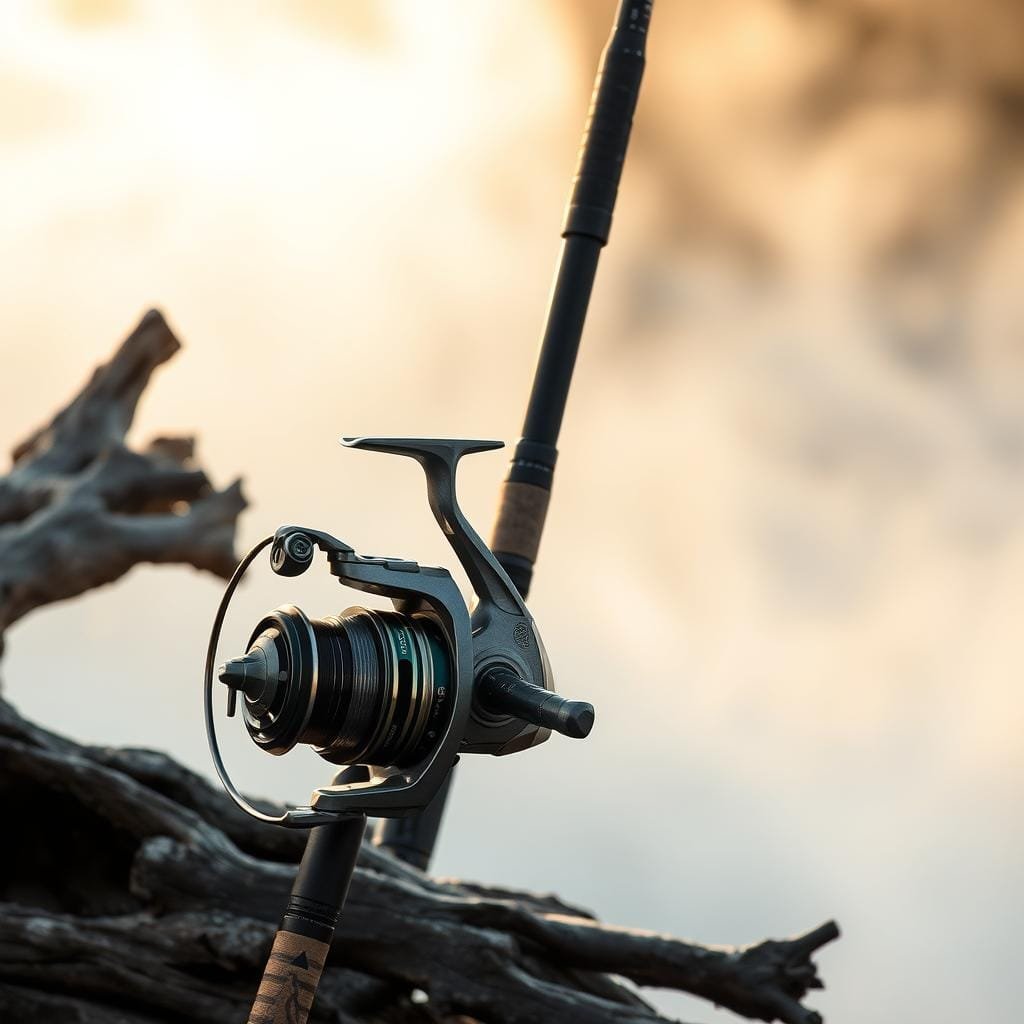
Bowfin hit like wrecking balls. A weak setup means bent wire and missed hooksets. Use a strong bowfin rod and reel to handle power runs and weeds.
Stout spinning rods (catfish/inshore class) with backbone
Go for a 7-foot inshore spinning rod or catfish rods. They have a stiff, extra-fast action. This helps drive hooks through bony jaws and steer fish out of trouble.
A balanced bowfin rod with a foregrip lets you lean hard. Yet, you won’t lose feel.
30–40 lb braid for shock, abrasion, and solid hooksets
Use braided line 40 lb for weeds, wood, and shell beds. In open water, 30 lb is fine. But braided line 40 lb gives extra insurance and solid hooksets.
Tie a short fluorocarbon leader if the water is very clear.
Durable, sealed reels that handle mud, weeds, and power runs
Swamps are tough on gear. A sealed spinning reel keeps it clean and drag smooth. The Penn Fierce 3000 is good for heavy braid and quick pickups.
Pair it with an inshore spinning rod. Set the drag tight, then back off as fish surge to avoid pullouts.
- Rod: 7′ extra-fast, inshore or catfish class for leverage and control
- Line: 30–40 lb braid; go braided line 40 lb in thick cover
- Reel: corrosion-resistant, sealed spinning reel; consider the Penn Fierce 3000
Many anglers lose fish with 10 lb mono or 15 lb braid. A strong bowfin rod, reel, and line choice helps. It turns short strikes into pinned fish and messy battles into clean landings.
Seasonal and Location Tips to Put Bait in the Right Place
Match your setup to the calendar and the swampy places most anglers skip. During peak bowfin season, think shallow, warm, and messy. A fresh cutbait on a slip float or a light bottom rig puts you in the game where the water looks too calm and dark.
Spring to early summer: spawning beds in 1–3 feet of water
When water holds near 60–65°F, the bowfin spawn kicks off. Look for spring bowfin males flashing lime-green fins as they fan beds under logs, stumps, bushes, or along sand bars in 1–3 feet. They guard tight, so drop a smelly chunk under a float right on the bed edge.
Keep casts short and quiet. Let the bait soak and drift through skinny lanes. Aggressive fish pin baits and turn fast as they defend fry, giving you clean hook shots.
Back-bay coves, ditches, culverts, and muck flats
Target back-bay bowfin in coves with stale, calm water. Vegetated ditches and culvert fishing spots funnel scent and food, so set baits on the seam where flow meets slack. In thick weeds, go light on weight to avoid burying the bait.
Muck flats are money when the sun warms a few inches of water. Slide a float along the edge of pads and laydowns. If bass and crappies avoid it, a bowfin likely owns it.
September bonus: transitional bite stays hot for bowfin
As days shorten, September bowfin stay locked on easy meals while other patterns fade. Work spillways, culvert-fed pockets, and dark backwaters with oily cutbait. A steady soak on bottom or under a slow-creeping float scores in the late-summer haze.
Fish the first cool mornings and last light. Keep moving until you find a gut of life, then camp on it and refresh baits often.
| Timeframe | Prime Water | Depth | Best Presentation | Why It Works |
|---|---|---|---|---|
| Early Spring–Early Summer (bowfin season) | Spawning pockets under logs, bushes, sand bars | 1–3 ft | Slip float with fresh cutbait placed on bed edges | Active bowfin spawn concentrates fish; males guard fry and strike intruders |
| Warm Afternoons | Back-bay coves, vegetated ditches, muck flats | Shin-deep to 3 ft | Light bottom rig or float crawl through weeds | Heat and low oxygen push forage shallow; bowfin feed by scent in stained water |
| Any Time After Rains | Culvert fishing at inflows and spillway eddies | 1–4 ft near slack seams | Pin a bait where current dumps into calm water | Runoff delivers scent trails and stunned forage to ambush lanes |
| September Transition | Stagnant backwaters, culvert-fed pockets | 2–4 ft | Soak cutbait on bottom; slow float drifts at dusk | September bowfin keep chewing while other species turn fickle |
Bite Detection, Hookset, and Landing Tactics
Stay calm and read the signs. Sharp bite detection is key in stained water. With float fishing bowfin, let visual cues guide your timing and keep slack out.
Let them swim a beat with the bait, then swing big
When a slip float tilts or slides, count to three. Then, drive a firm bowfin hookset to punch past the jaw plates. On bottom rigs, wait for steady pressure before you commit.
Reading float drifts and line runs to time the set
Watch for a float to track sideways, pause, and dip. That signals a committed take. If free-lining, use the line angle and a smooth draw to confirm before setting the hook.
Managing bulldog runs, bottom digs, and “death rolls”
Expect a bulldog pull instead of jumps. Keep the rod low and apply side pressure. A death roll fish can twist leaders, so maintain tension and avoid slack. This keeps landing bowfin quick and controlled.
Recasting: bowfin often strike again
If a hook pulls, keep the bait soaking or recast for bowfin to the same pocket. These fish seldom spook from one miss. Reset the float depth, check the point, and go again while the zone is hot.
| Signal | What It Means | Best Move | Why It Works |
|---|---|---|---|
| Float slides, then dips | Fish has turned with the bait | Count a beat, then hard bowfin hookset | Gives time for a full mouthful before steel meets bone |
| Line angles and feeds steadily | Committed run on a bottom rig | Engage reel, sweep set, and lean | Loads the rod and drives the point without shock |
| Grinding pull toward cover | Bottom dig and root wrap | Side pressure, short pumps | Turns the head without tearing the hook |
| Sudden twist and spin | Active death roll | Keep tension; do not high-stick | Prevents slack that frees hooks and protects leaders |
| Missed strike, calm water | Fish is in the area | Quick recast for bowfin to the same line | Bowfin often re-engage within minutes |
Use abrasion-resistant leaders and keep long-nose pliers handy. A steady hand, clean timing, and smart pressure make landing bowfin repeatable and safe.
Safety, Identification, and Ethical Handling
Bowfin are native “living fossils,” not pests. Knowing how to tell them apart from snakeheads is key. Look for a rounded head and a shorter anal fin. Their upper jaw goes past the lower jaw.
Males have a black eye spot near the tail. Their body is solid tan to olive, without blotchy patterns. When comparing bowfin and snakehead, look at the head and fin length.
They show us that wetlands are healthy. Their presence means marsh edges and backwaters are good for native fish. This supports native fish conservation.
So, it’s important to handle them right. Use lip gripper pliers and expect them to thrash. Lay them on a wet surface to keep them steady.
Keep your fingers away from the gill plate. Pop the hook fast with needle-nose pliers. Practice catch and release bowfin with a quick photo and a gentle revive.
Use heavy fluorocarbon leaders to protect against teeth. Skip steel if you can. This helps if a snapping turtle grabs your bait.
Keep the fish in shallow water. Minimize air time and avoid squeezing the belly. This helps them survive.
Knowing how to identify bowfin helps protect a native predator. Share the difference—bowfin vs snakehead—at the ramp. Model ethical handling on the bank.
Make catch and release bowfin your default. These small steps help a lot in swamps, ditches, and back-bay coves.
FAQ
What’s the best bait for bowfin right now?
Fresh, local cutbait is best most days. Bluegill chunks, gizzard shad, suckers, and carp pieces work well. If local bait is hard to find, try fresh tilapia or shrimp from the store. They smell good, stay on the hook, and work in stained water.
Where do bowfin usually live and hunt?
Look for swampy, weedy backwaters with little current. Coves, ditches, culverts, spillways, and mud flats are good spots. They like shallow, mucky areas where other fish don’t.
Why does their air-breathing matter for anglers?
Bowfin use a lung-like swim bladder to breathe air. This lets them live in hot, low-oxygen water. You’ll see them gulp air at the surface, showing where to cast.
How do I use surface gulps and swirls to place my bait?
Cast just past the swirl and let your bait drift back. Use a slip float to settle it in the right spot. Bowfin often sit close to where they gulped and follow scent quickly.
Can I use bluegill, shad, suckers, or carp for bait?
Yes, where it’s legal. Bluegill, shad, suckers, and carp pieces are great cutbait. Always check local rules before using gamefish as bait.
Are store-bought baits like tilapia and shrimp effective?
Yes, they are. Fresh tilapia and shrimp are reliable baits. Shrimp’s small size helps avoid short strikes.
Should I try salty options like mackerel or mullet?
They’re worth trying but not first. Oily fish can work in some places. In the Northeast, results are mixed. Stick with local bait first.
How do small baits curb “bite-and-run” misses?
Using small baits lets bowfin swallow the whole thing. This reduces short strikes. Thread the hook inside the bait to hide it and get better hookups.
Why does scent beat sight for bowfin?
In stained water, scent is more important than sight. Fresh cutbait is better than most lures. A strong scent trail draws fish and gets bites.
What does “match the hatch” mean for bowfin bait?
Use bait that matches the local species. Bluegill, shad, suckers, and carp are good choices. This mimics local scent and taste for better catches.
How do I check if gamefish-as-bait is legal?
Check your state’s fishing laws and local rules. Some states allow it, others don’t. If unsure, call your state’s fisheries agency.
Do artificials work for bowfin?
Yes, but they’re not the best. Topwater frogs and spinners can get bites. For lure fishing, aim for their nose.
How can I change lures fast without retying?
Use strong micro clips like Tactical Anglers Power Clips. They handle heavy braid and let you swap baits quickly.
What slip-float setup works best in shallow muck and weeds?
Use a 5-inch unweighted balsa pole float with a rubber stop. Add a 50 lb barrel swivel and 16–18 inches of 40 lb fluorocarbon. This setup keeps bait moving naturally.
Why use light-resistance balsa floats?
Balsa floats let bowfin move without feeling weight. This boosts their commitment and increases hook-in-corner pins.
Can bottom rigs work in calm backwaters?
Yes, but use light weights. A 1/2 oz is enough. If you need more, you might not be in prime bowfin water.
What hooks should I use for bowfin?
Use heavy-gauge hooks. 3/0 baitholder or circle hooks are good for corner pins. For small baits, try 1/0 heavy short-shanks. Light-wire hooks bend out on bony jaws.
Fluorocarbon or steel leader?
Choose 40–50 lb fluorocarbon for more bites. It’s natural-looking and rarely cut by bowfin teeth. Steel leaders can reduce takes and are hard to manage around snapping turtles.
Why snell my hooks for bowfin?
Snelling keeps the hook aligned with the leader. This leads to straighter pulls and firmer penetration into hard jaws. It’s a small tweak with big gains.
What rod and reel setup won’t get bullied?
Use a stout 7-foot spinning rod in the catfish or inshore class. Pair it with a durable, sealed reel like a Penn Fierce 3000. This setup handles mud, weeds, and hard runs.
What line is best for bowfin?
Spool 30–40 lb braid. It cuts vegetation, drives hooks home, and resists abrasion. Lighter lines lead to lost fish.
When are bowfin most active?
They’re active in spring to early summer when water is 60–65°F. September also brings a strong bite when other fish slow down.
Where should I focus during the spawn?
Look in 1–3 feet around beds under stumps, logs, bushes, and sand bars. Back-bay coves, vegetated ditches, culvert mouths, and muck flats are good spots.
How do I time the hookset with a float?
Set the hook when the float dips and moves steadily. With bottom rigs, watch for steady line runs and angle changes before swinging.
How do I fight and land a bowfin?
Expect bottom digs and crocodile-like death rolls. Keep side pressure, no slack, and use abrasion-resistant leaders. After a miss, recast—bowfin often hit again.
How do I safely handle and release bowfin?
Use a lip gripper and long-nose pliers. Keep the fish low over soft ground, remove the hook quickly, and practice fast catch-photo-release. These native predators are indicators of healthy wetlands.
How do I tell bowfin from northern snakehead?
Bowfin have a tail eyespot, shorter anal fin, rounded head, and upper jaw extends past the lower. Snakeheads have longer anal fins and different head profiles. Release native bowfin.
Do sealed reels matter in swampy bowfin spots?
Yes. Mud, algae, and weeds are brutal on gear. Sealed reels resist grit and keep drags smooth during heavy side pressure and shallow slugfests.
Any quick tip for placing baits precisely?
Watch for surface “gulps,” then drop a slip-float rig a foot past and let it drift into the swirl. In skinny water, quiet casts and minimal hardware increase eats.