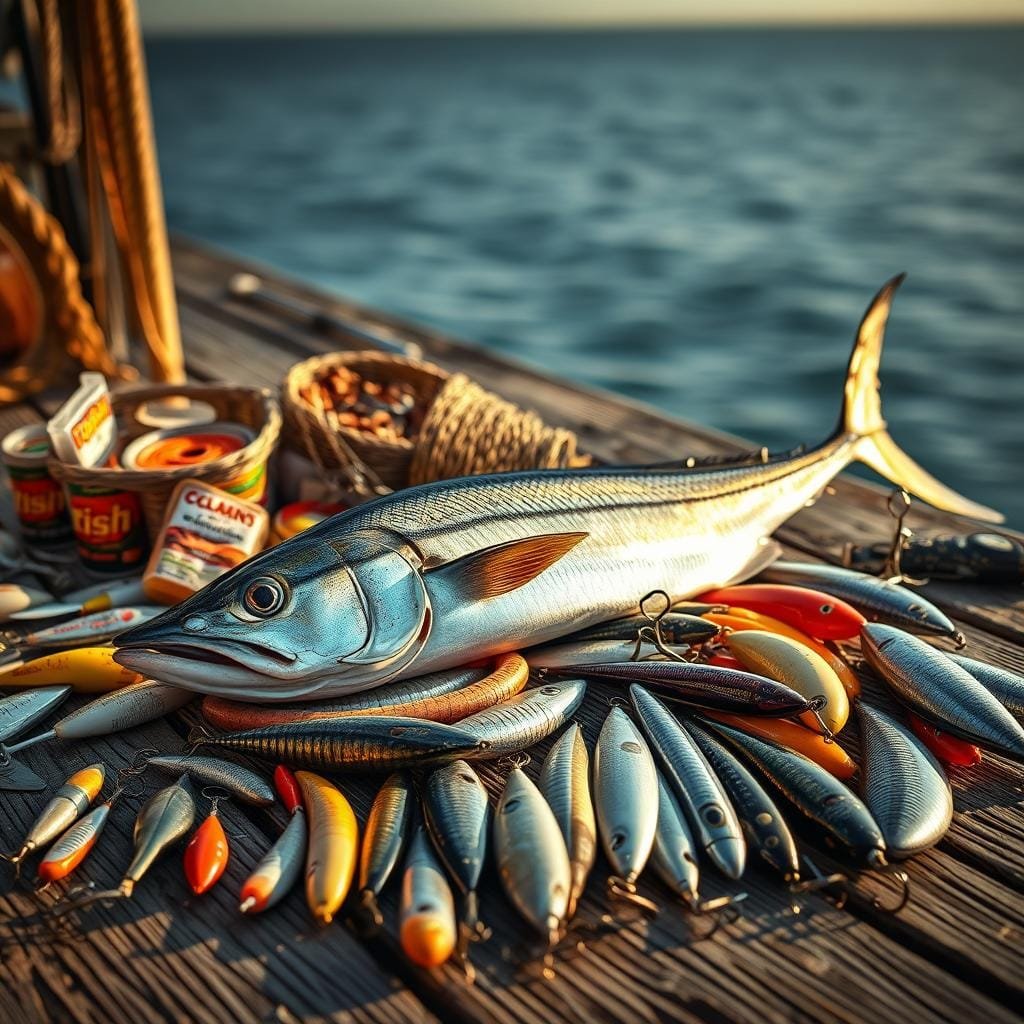
Chasing a smoker king mackerel needs more than luck. It starts with the best bait and a plan for big fish. This guide shows what works now, from South Florida to the Gulf and Atlantic.
We’ll use tips from George Poveromo and Frank Sargeant. They talk about circle-hook stingers and light drags. They also share structure patterns for more bites.
Expect tips on live bait like blue runners and menhaden. Even little tunny and bonito are good for hunting giants.
Whether in the Florida Keys or the Panhandle, you’ll find great picks and rigs. For a quick look at reflective teasers and green trolling spreads, see king mackerel bait and lures used by many.
From bait choice to drag settings, every step is for big strikes. Set up right, and those long silver torpedoes will make the box.
Why Giant “Smoker” Kings Eat Big: Understanding Predator Behavior
Big kingfish are fast and powerful. They eat quickly because they need to survive. They chase big baits, tear them apart, and then come back for more.
George Poveromo wrote about kings eating baits in two parts. They first clip a baitfish, then come back for the rest. This happens when baitfish are close to something or moving fast.
Slash-feeding and second-pass strikes on large baits
Kings are like precision cutters. They first hit a bait hard, then come back for the rest. This is why they prefer big baits.
Stinger rigs work well for kings. They have a hook at the back for the second bite. This way, more fish get caught.
Targeting the food chain: kings key on Spanish mackerel, bonito, yellowtail
Kings follow the food. They eat Spanish mackerel, bonito, and yellowtail. These fish are full of energy.
- In the Atlantic, menhaden and mullet schools draw packs of fish to rips and inlets.
- In the Gulf, menhaden, cigar minnows, threadfins, and mullet dominate, but kings won’t pass on larger species when pressure pins them near the surface.
- When kings slash baits, the head often gets taken on the return run, so a clean presentation matters.
Seasonal movements around the Florida Keys and Florida coasts
Two groups of fish move with the seasons. They follow the bait in the Florida Keys. This is where big catches happen.
In winter, fish move to southeast Florida and the Keys. From January to March, the Keys are a meeting place. In spring and summer, fish move north with the bait. By fall, they go back down, ready to hunt again.
best bait for king mackerel
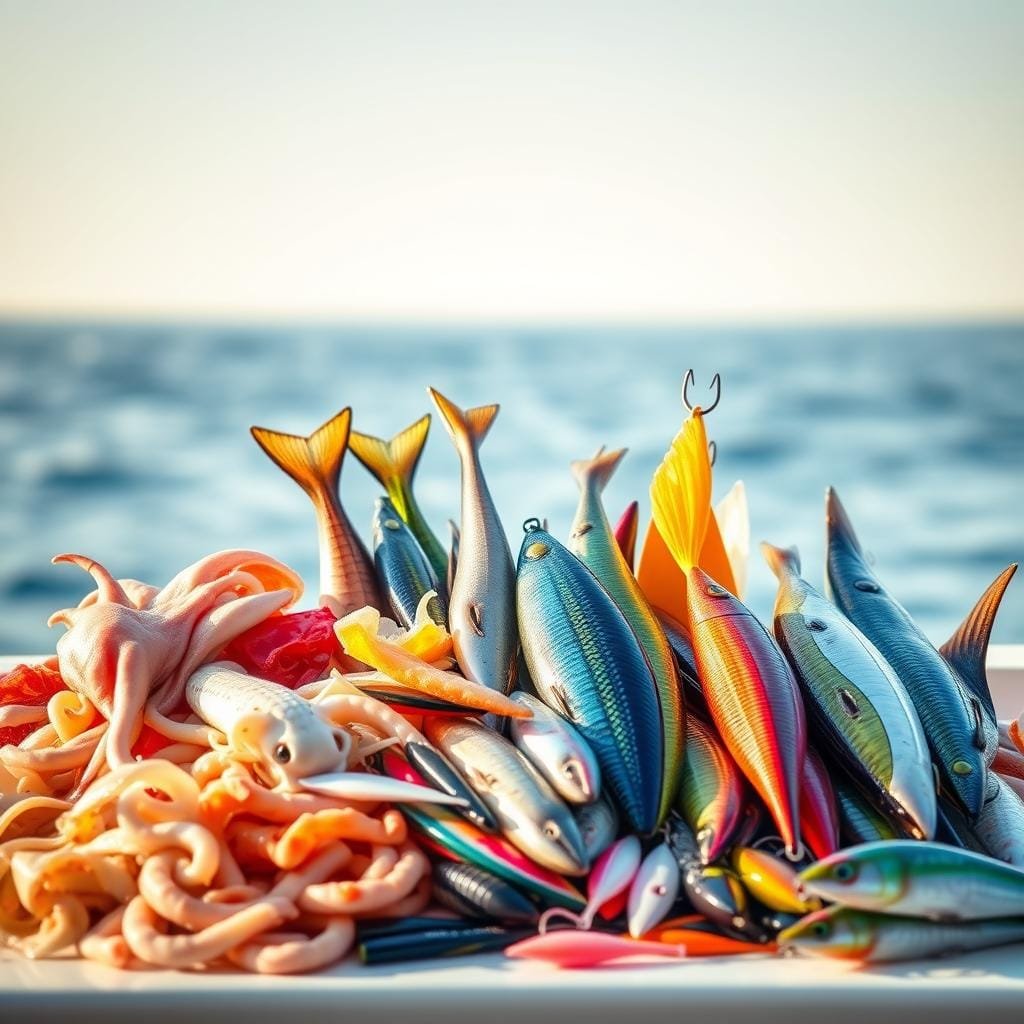
Big kings like to chase strong swimmers. They like baits that look good and stay lively. Match what’s local, keep baits fresh, and be ready for a second pass.
Live, durable swimmers: blue runners, goggle-eyes, large menhaden
Hardy live baits are great for all-day fishing. Blue runners work well in current. Goggle-eyes kick hard under kites or balloons.
Pogies menhaden kings love are easy to catch at sunrise. Slow-troll them near color lines.
These swimmers stay on point through turns and bumps. They handle stinger rigs well and rarely spin.
“Meal-size” prey: legal Spanish or cero mackerel, yellowtail snapper
For a true smoker, use big baits. A Spanish mackerel bait or cero mackerel bait tracks straight. Yellowtail snapper sends out panic cues that kings home in on fast.
Many crews report better consistency with these larger offerings. See this discussion of big baits for king mackerel.
Big-profile options: little tunny/bonito and threadfin herring
For a once-a-season bite, use bonito little tunny bait. Slow-troll them outside inlets or along drop-offs. Pair with wire and a free-swinging stinger to survive the first run.
Threadfin herring fire up the spread when kings are skittish. They are fragile but irresistible. Handle gently, pin them clean, and reset often.
When dead baits shine: rigged Spanish mackerel and ballyhoo in a chum line
On anchor over a reef, dead baits can outfish live ones. A neatly stitched Spanish mackerel bait drifts true in the slick. Rigged ballyhoo for kings swims with a subtle wag that draws slash bites.
Keep a steady ladle of chum going. Float baits back on light drag. Vary sinker placement to stagger depths. When the line jumps, let the fish turn before you come tight and drive the hooks.
Live Bait All-Stars for Trophy Kingfish
Big kings quickly find the best bait. Use local bait, keep it fresh, and watch how fast they move. The best baits are strong, move water, and make fish strike.
Menhaden (pogies) along the Atlantic seaboard
From the Carolinas to Cape Canaveral, pogies attract kings. Cast-net schools at dawn, then troll the liveliest ones. In clear water, use different depths to mimic fleeing fish.
Blue runners (hardtails) for durability on slow-trolls
Blue runners are great for long trolling. They’re strong, making them perfect for big trips over reefs. Use a nose hook and a light stinger to handle strikes.
Goggle-eyes and threadfin herring in South Florida
In South Florida, goggle-eyes work well on kites. Greenies are slim and good in clear water but bruise easily. Keep their water well-oxygenated and don’t overcrowd.
Spanish and cero mackerel as natural “king crushers”
Spanish mackerel look natural in chum lines. Cero mackerel also attract big fish. Use a nose hook with a treble to catch second strikes.
Little tunny/bonito for targeting true smokers
For a big catch, use a live bonito. It filters out small fish and lasts through turns. Troll deep and shallow to cover the strike zone.
| Bait | Best Use | Rigging Tip | Why It Works |
|---|---|---|---|
| Menhaden (pogies) | Atlantic beach runs, bunker pods | Nose hook plus light stinger on No. 5 wire | Mimics primary forage; steady thump draws packs |
| Blue runner (hardtail) | All-day slow-troll over reefs and ledges | Nostril hook and trailing treble mid-back | High stamina; hardtails for kings stay lively for hours |
| Goggle-eye | Kite or balloon in chop, South Florida spreads | Bridle through the nose to keep it upright | Strong surface commotion; South Florida goggle-eyes pull bites |
| Threadfin herring | Clear water, light current | Small circle in the nose; gentle handling | Sleek profile; greenies threadfin trigger fast eats |
| Spanish mackerel | Chummed slicks around reefs and wrecks | Nose hook with free-swinging stinger treble | Natural prey; Spanish mackerel bait live draws big strikes |
| Cero mackerel | Keys and South Florida structure | Single-strand wire, two-treble stinger | Local forage match; cero mackerel bait live gets targeted |
| Little tunny/bonito | Filtering for true smokers offshore | Bridle rig, heavy wire, two-treble chain | Big thump, stays tough; live bonito for kingfish triggers trophies |
Chum Strategies That Draw Kings Into Range
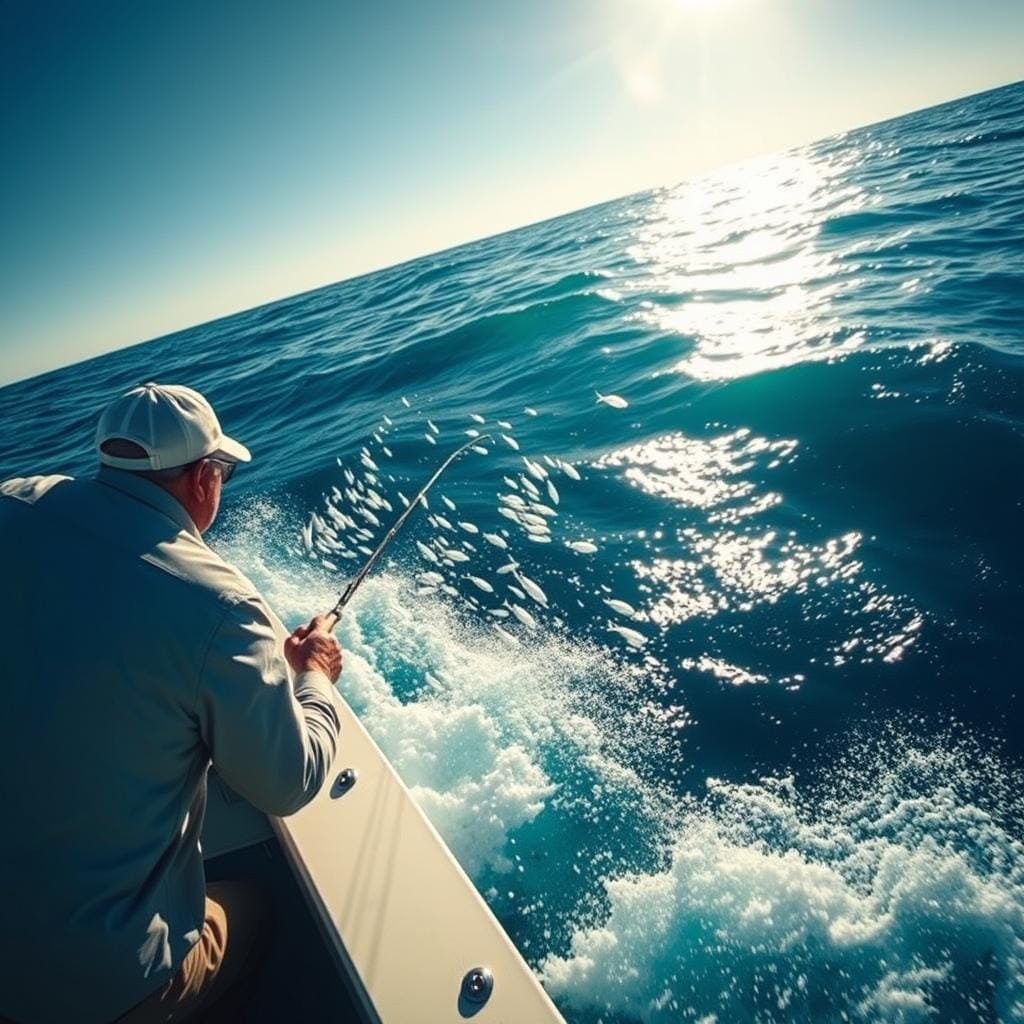
A clean kingfish chum slick pulls life to your boat fast. It happens when scent and small bites flow at a steady pace. Keep the mix simple, keep it moving, and let the current do the work while you watch your baits.
Frozen block plus ladled mix: silversides, scratch feed, seawater
Set a frozen block in a mesh bag. Add a bucket blend that behaves like paste. A good mix is silversides chum, seawater, and chicken scratch feed chum.
This slow release builds a trail that rides the current. It doesn’t dump everything at once.
George Poveromo’s anchored approach shows how a measured flow keeps baitfish close. For deeper detail on timing and boat placement, see this live-chumming guide for kingfish.
Sweetening the slick with sardine, pilchard, or ballyhoo chunks
Every few minutes, add sardine chunks to spark bursts of feeding. Mix in pilchards ballyhoo chunks to vary scent and size. This attracts runners, yellowtails, and Spanish mackerel.
Those flashes hold kings within casting range. They make your live baits look natural in the flow.
Menhaden drip and repeat trolling passes to lay a scent trail
When you leave the hook, set a menhaden oil drip over the transom. Run a repeat trolling pattern along the edge of structure. The drip seeds a corridor.
Each pass gets stronger as chopped menhaden or threadfin sprinkles into the wake. Keep speeds steady so the plume stacks and kings track your baits.
Anchored reef setups and drifting through bait-rich structure
On reefs, anchored reef chum kings best when the boat sits upcurrent of a ledge, wreck, or rock pile. Drifting works too: ease across marks where bait stacks and maintain the same cadence of silversides chum and small chunks.
Either way, adjust the flow to keep the line tight and the bite building.
| Scenario | Core Scent Source | Add-Ins | Boat Move | Why It Works |
|---|---|---|---|---|
| Anchored on reef edge (80–140 ft) | Frozen block + chicken scratch feed chum | Sardine chunks; pilchards ballyhoo chunks | Hold position upcurrent of structure | Builds a stable kingfish chum slick that holds bait and funnels strikes to your spread |
| Drift over wreck or ledge | Silversides chum ladled with seawater | Light chunking every few minutes | Controlled drift across marks | Lets scent ride naturally while covering ground to find feeding lanes |
| Trolling along color line | Menhaden oil drip | Chopped menhaden or threadfin during passes | Repeat trolling pattern on GPS | Stacks a scent corridor that draws kings to baits on every return pass |
Leader, Hooks, and Stinger Rigs That Convert Strikes
Big kings can break mono fast. So, using wire is a must. Keep your rigs neat and balanced to catch fish well without stress.
Single-strand wire (No. 4–6) and haywire twists for tooth protection
For live baits, use a kingfish wire leader No. 4–6. It keeps teeth away without harming the bait. Use 12–18 inches to a small swivel and secure with a haywire twist.
Dark finish wire scares fewer fish in clear water. It also stays straight after a run.
For bigger baits, use 38 lb single-strand wire. It handles the heat and keeps drag low. Match the wire size to your bait and water clarity. Test each wrap under load before using it.
Circle-hook approach for fast fights and safer releases
A circle hook setup makes fights shorter and hooks deeper. Use two feet of 38 lb wire to a 120 lb swivel. Pair a 7/0–8/0 circle hook up front with a 6/0–7/0 circle as a stinger.
Place the stinger swivel over the lead hook eye. Pass the main wire through both eyes before twisting. Finish with a barrel wrap. Set the lead circle just ahead of the dorsal and free-line the bait.
Classic stinger rig: nose hook plus trailing 4X treble(s)
The nose hook and stinger rig combo works well for aggressive bites. Pin a 2/0–3/0 live-bait hook in the nostrils. Then, place a 4X size 4–6 treble 6–8 inches back.
For jumbo baits, add a second treble. Keep the leader short and tidy to avoid spinning. A crisp haywire twist and compact swivel reduce drag.
Free-swinging vs. skin-hooked stingers on larger baits
Free-swinging stingers increase hookup odds on slash strikes. They also keep the bait action alive. A skin-hooked treble near the dorsal can pin short-biters, but it may tear soft flesh.
Mix it up: start with a free-swinging stinger on lively runners. If bites miss, swap to a light skin-hooked treble. Adjust the leader length and 38 lb single-strand wire so the trailing hook sits where kings strike most—just behind mid-body.
- Wire choice: kingfish wire leader No. 4–6 for stealth and strength
- Connections: precise haywire twist and compact swivels
- Hooks: circle hook king mackerel rigs for cleaner corners; 4X stinger rig treble for slash hits
- Placement: free-swinging stinger for action; skin-hooked treble for short-biters
- Material: consistent 38 lb single-strand wire for leaders and stinger links
Slow-Trolling and Drift Tactics for XXL Kings
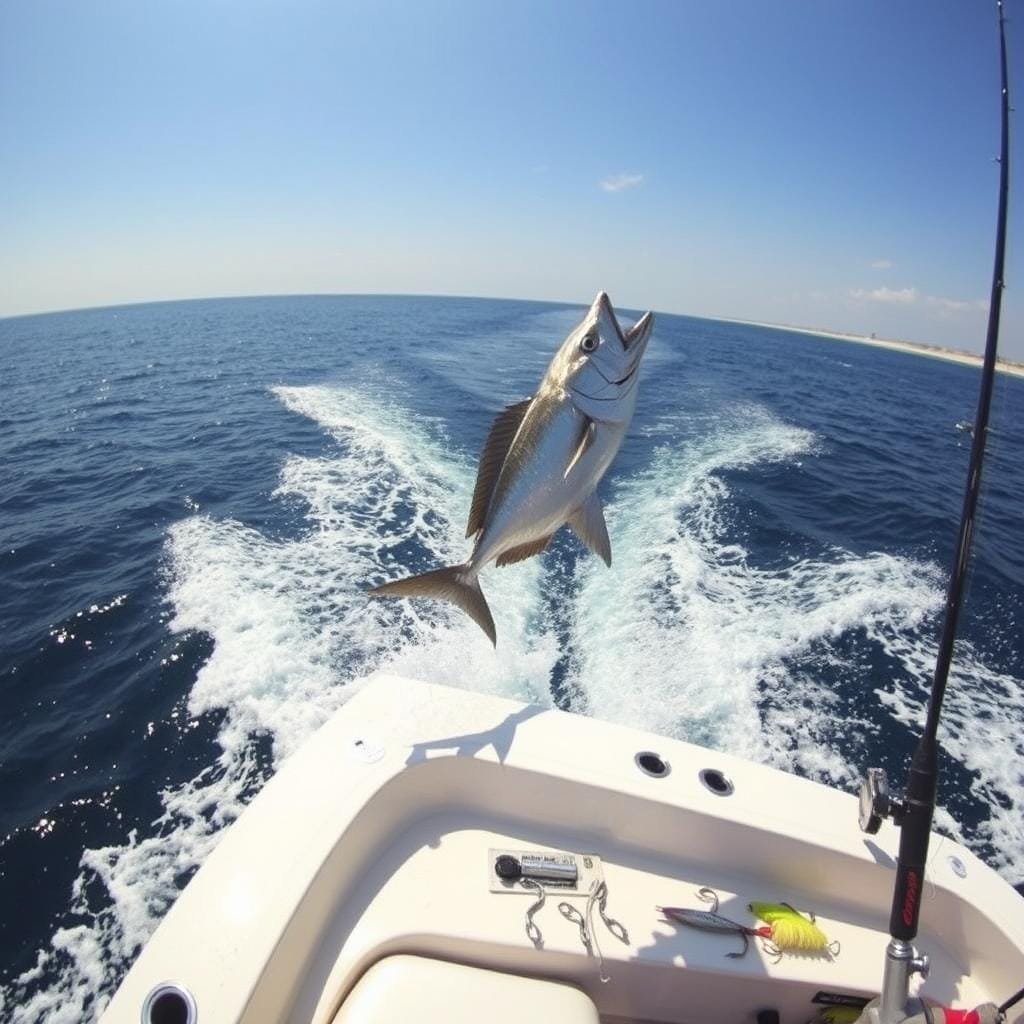
Big kings need a calm, steady approach. Move the boat slowly and let live baits swim naturally. This method helps catch kings with clean strikes and long runs.
Walking-speed presentations that keep baits alive and natural
Match the sea state and keep a quiet wake. In slight chop, move just fast enough to keep lines tight. For drift fishing king mackerel, bump in and out of gear to keep heading and bait life.
Keep turns wide so baits don’t roll. This is important for drift fishing king mackerel.
Balloon and kite setups to vary depth and surface commotion
Mix heights to trigger reaction bites. A balloon rig kingfish rod pins one bait midwater, while kite fishing kings adds flash and splash up top. Use clickers when free-lining, then ease the lever forward once the fish commits.
On breezy days, a single kite keeps a nervous bait skipping, calling up smokers from deep rips. On slick calm, shrink the balloons and lengthen leaders to tone down the commotion.
Light initial drags to survive the first 40-mph run
Start with a light drag 3 pounds so hooks stay pinned during that first 200-yard blast. Let the king run, then lift and wind with smooth pressure. Medium-power rods with slower tips cushion the surges without tearing out.
After the burn, advance the drag in small bumps and steer the fish off the bow quarter. Keep the boat in gear to maintain angle and line control.
Working color lines outside inlets and along reef edges
Focus on clean rips where green meets blue. Color line trolling inlets on the clear side of an outgoing tide stacks bait and scent. Mark waypoints and repeat the same GPS lanes to rebuild the slick and keep the spread in the strike zone.
Along reef edges, set a long down-sea drift, then loop back on the productive stripe. When the bite starts to pulse, slow-troll kings through the same seam to convert a single into a flurry.
| Tactic | Best Use Case | Boat Speed | Spread Position | Why It Triggers Kings |
|---|---|---|---|---|
| Slow-troll live baits | Calm to light chop over reefs and wreck lines | Walking speed, steady wake | Two flat lines, one long shotgun | Natural swim keeps big baits alive and steady under scrutiny |
| Drift with controlled bumps | Strong tide or wind over bait-rich structure | Idle bumps to hold heading | Staggered depths with a midwater float | Drift fishing king mackerel covers lanes without spooking fish |
| Balloon rig | Midwater target zone, moderate current | Slow-troll or free-drift | Outside position, away from prop wash | Balloon rig kingfish setup locks bait in the strike layer |
| Kite spread | Breezy days with surface bait activity | Idle to 1 knot drift | High and wide, surface tick | Kite fishing kings adds splash, draws fish up from rips |
| Light drag start | First run after hookup | N/A | Rod tip high, angled off bow quarter | Light drag 3 pounds protects small hooks during 40-mph surges |
| Color-line passes | Edges outside passes and channels | 0.8–1.5 knots | Repeat GPS tracks on the clear side | Color line trolling inlets funnels bait and scent to the spread |
Pro Gear Setup: Line, Drag, and Rods That Land Smokers
Big kings are tough on gear. So, we need simple, strong, and smooth setups. The right line mix, drag setting, and spool space help keep hooks in and fish on the boat.
Why many anglers choose 15–25 lb mono/fluoro over braid
Using 15–25 lb mono or fluoro is smart for kingfish. It stretches during fast runs, preventing hooks from coming out. Many argue over braid vs mono, but it’s about controlling shock and releasing the bait smoothly.
Some fish tight to structures with braid and a long leader for better feel. Others prefer mono or fluoro for its softness and ease offshore.
Top shots and shock absorption for bite-to-boat control
A 20 to 30 foot fluorocarbon top shot adds stealth and shock absorption. Connect braid to it with a Bimini twist Bristol knot for a slim, strong link. This keeps the fight smooth as the fish gets closer.
Adding a wire leader above a 120 lb swivel and stinger helps with bite resistance. It keeps the stretch benefits of the top shot.
Drag settings around 3 pounds for initial runs
Start with a 3 lb drag setting before lines go out. This light drag saves hooks during the first fast run. Then, you can slowly increase the drag as the run slows down.
Reels with 300+ yards capacity and buttery drags
Choose reels that can hold 300 yards of line. This lets a smoker run without hitting the arbor. Penn Torque reels work well with fast rods, giving a smooth drag that protects light wire and small hooks.
Spooling with braid or mono, and using a fluorocarbon top shot and Bimini twist knot keeps fights even. This is great for fishing near reefs and wreck lines.
Where To Find Trophy King Mackerel in the U.S.
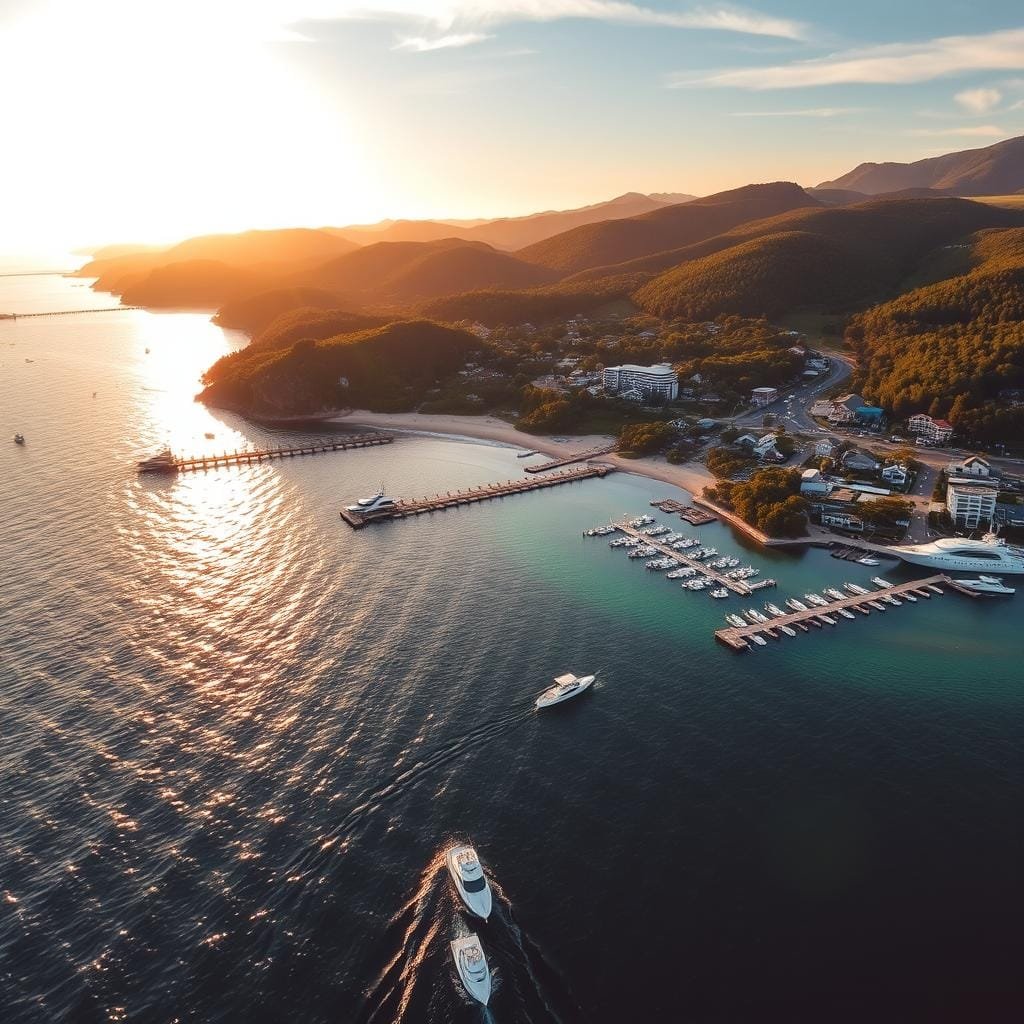
Big kings like places where bait flows and water moves well. Follow the kingfish migration in Florida. Then, match tides and water color to find the best spots.
Florida Keys as prime trophy destination and record hub
The Florida Keys are a key spot for winter fish. Many records were set here from January to March. This is when Gulf and Atlantic fish mix, making it rich with food.
When bait falls on the reef, big fish move to the flats. For more tips, see this guide to trophy king mackerel.
Gulf and Atlantic runs: spring north, fall south
As it gets warmer, kings move north along both coasts. They go back south with the cooling. This brings big fish to beaches and bars from April to October.
Look for clear edges early, then deeper by midday. Outside big inlets, color lines and rips are good spots. Move your spread with light drag, ready for a big catch.
High-percentage spots: wrecks, reefs, rigs, FADs, and big passes
Structure like wrecks and reefs is key. Look for them on clear days. Boca Grande pass kings are found on rips and bait pods at Charlotte Harbor’s mouth.
In Tampa Bay, Egmont Channel kings are around Egmont and Southwest Channels. Clearwater’s hard bottom, Panhandle passes, and artificial reefs also hold fish. On the Atlantic side, the St. Johns and St. Mary’s rivers are good when pogies and glass minnows are around.
From piers to shrimp-boat chum lines: surprising hotspots
Some days, fishing from the shore is best. Long Gulf piers at Panama City Beach and others are great. Look for bait schools and green water.
Offshore, follow trawlers and fish downwind of their chum. Shrimp boat chum lines are also good. Keep one bait high and one mid-depth to catch fish quickly.
Rigging Big Baits the Right Way
For legal Spanish or cero mackerel and yellowtail snapper, start clean and simple. Crimp or haywire a 2-foot piece of 38 lb single-strand wire to a 120 lb swivel. Then, thread the main leader through the eyes of a 7/0–8/0 inline circle and a 6/0–7/0 circle. Finish with tight haywire and barrel wraps.
This circle hook stinger rig how-to keeps everything in line. It reduces spin and sets up a strong, straight pull.
On the bait, set the lead circle lightly just ahead of the dorsal. Add 4–5 inches of 38 lb wire to the stinger circle. Tie it to a 120 lb swivel and let it ride as a free-swing stinger for a natural tail kick.
When rigging Spanish mackerel bait or rigging yellowtail snapper bait, avoid burying metal deep. Light skin contact keeps baits lively and protects hookups during wild runs.
Drop the bait well back in your slick with the reel in gear, clicker on, and the drag eased. When a king eats and turns, ease up the drag until the circle loads. Then, lift and come tight.
To change depth or keep a bait on top around reef edges, use balloon float rigging. Clip a small balloon to the double line or wind-on about 20 feet above the bait. This creates lift without choking action.
Treble-based options have their place when fish slash and miss. Nose-hook the bait with a 2/0–3/0 live bait hook and hang a 4X treble 6–8 inches back. Keep treble stinger placement either free-swinging for the most movement or lightly skin-hooked near the dorsal if fish are short-striking.
On large baits like little tunny, add a second treble aft to cover the tail without stiffening the swim.
- Lead system: 2 ft of 38 lb single-strand wire to a 120 lb swivel for toothy protection and clean tracking.
- Hook plan: 7/0–8/0 inline circle ahead of the dorsal; 6/0–7/0 circle as a free-swing stinger on 4–5 inches of 38 lb wire.
- Presentation: free-line in the chum slick with a soft drag; escalate pressure only after the turn-and-burn.
- Elevation: balloon float rigging clipped 20 ft up to spread baits and adjust depth without drowning them.
- Treble strategy: precise treble stinger placement to match bait size and strike behavior; add a second treble for bigger profiles.
| Rig Type | Best Use | Hooks | Leader & Connections | Key Advantage |
|---|---|---|---|---|
| Inline Circle with Free-Swing Stinger | Rigging Spanish mackerel bait and rigging yellowtail snapper bait for slow-trolling or drifting | 7/0–8/0 lead circle; 6/0–7/0 stinger circle | 2 ft 38 lb wire to 120 lb swivel; main leader passed through both hook eyes; haywire/barrel wrap finish | Natural swim, strong hook-hold, minimal leverage during long runs |
| Circle Hook Stinger (Step-by-Step) | Clear-water bites and release-minded fishing | Inline circles only | 4–5 in 38 lb wire from lead to stinger; 120 lb swivel between segments | Circle hook stinger rig how-to improves corner-of-mouth hookups |
| Treble Stinger Chain | Short strikes and slash-feeding fish | 2/0–3/0 nose hook; 4X treble(s) 6–8 in back; optional second treble aft | Single-strand wire with haywire twists; precise treble stinger placement | Covers missed bites; option to free-swing or skin-hook near dorsal |
| Balloon-Assist | Surface tracking over reefs, wrecks, and color lines | Works with circle or treble builds | Balloon float rigging clipped ~20 ft up on double line or wind-on | Depth control and visibility without killing bait action |
Boat-Side Wins: Gaffs, Safety, and Shark-Factor Timing
The last 10 feet are key. Keep the rod low and the pressure steady. This helps avoid big kings from breaking the line.
A long-handled gaff is great for this. It’s built on fiberglass surf blanks for extra reach. Use a light tackle gaff technique to lead the fish’s head and lift with purpose.
Boat control is as important as the hookset. Move the boat forward to keep the line tight. Use mono or fluoro main line for extra stretch. Start with a drag of three pounds to shorten the fight.
Quick and clean work is important. This reduces the risk of sharks cutting the line. Always keep safety first, like using dehookers and heavy gloves.
Once you’ve caught the fish, lift it quickly and carefully. Never touch the gill plate. Use a cooler or kill bag to keep it safe. Always keep the gaff down and out of the way to protect everyone.
FAQ
What are the best live baits for trophy king mackerel?
Blue runners, goggle-eyes, and large menhaden are top picks. They stay lively on a slow-troll or drift. Legal Spanish and cero mackerel, yellowtail snapper, and little tunny/bonito are “big-bite” baits that filter for smoker kings. Threadfin herring also crush, but they’re fragile.
Why do giant “smoker” kings prefer large baits?
Kings are slash-feeders. They often cut a big bait in half on the first pass, then swing back to eat the head or remaining chunk. That second-pass behavior is why oversized, legal baits like Spanish mackerel, cero, and yellowtail snapper score so many 40–50-pound fish in a chum slick.
What’s the go-to rig for kings—circle hooks or trebles?
Both work. Circle-hook stingers deliver solid corner-hook sets, faster fights, and fewer deep hooks. Classic stingers with a 2/0–3/0 nose hook and a 4X treble 6–8 inches back are proven, specially for smaller baits. Add a second treble for big bonito or Spanish mackerel.
What wire leader should I use for kingfish?
Single-strand dark wire in No. 4–6 with haywire twists is standard. Many anglers run about 12–18 inches to a 120 lb swivel. For circle stingers, 38 lb single-strand wire with clean haywire-to-barrel wraps is a sweet spot for stealth and bite protection.
How light should my drag be on the first run?
Around 3 pounds. That light setting lets a king blast off at 40 mph without tearing hooks free. After the run, ease into more pressure and fight with smooth, steady lifts. A scale-set drag removes the guesswork.
Mono, fluoro, or braid for main line?
Many pros favor 15–25 lb mono or fluorocarbon main line for stretch and forgiveness on blistering runs. Others use 30–50 lb braid to a Bimini twist plus a 20-foot 30 lb fluoro top shot for cushion and low vis. Either way, keep at least 300 yards of capacity and a silky drag.
Where are the best places to find trophy kings?
The Florida Keys are the winter hub and record zone, specially January–March. Beyond the Keys, target wrecks, reefs, rigs, FADs, and color lines outside big passes along both coasts. Don’t overlook shrimp-boat chum lines and big public piers on the Panhandle.
When do kings make their big runs in Florida?
Two populations—Atlantic and Gulf—winter off southeast Florida and the Keys. As bait pushes north in spring, kings follow along both coasts, then slide south again in fall. April–October often sees 40-pounders near passes, reefs, and ledges.
How do I chum effectively for kings?
Anchor over structure with a frozen block in a mesh bag. Ladle a thick mix of thawed chum, silversides, fine scratch feed, and just enough seawater. Sweeten with small chunks of sardine, pilchard, or ballyhoo. On the move, drip menhaden oil and toss chopped bait on repeat GPS tracks to lay a scent trail.
What speed should I slow-troll or drift?
Walking speed. Go just fast enough to keep baits swimming upright and natural. If they roll or tire, you’re moving too fast. In a drift, use balloons or a sea anchor to control pace and angle.
How do balloons and kites help?
Balloons pin baits at specific depths or keep them near the surface. Kites spread baits wide, add commotion, and keep lines out of the water for stealth. Both tools stagger your spread and trigger reaction bites.
What are the most consistent “big-bite” baits?
Legal Spanish mackerel, cero mackerel, yellowtail snapper, and 1–2 lb little tunny/bonito. These offer a large profile and trigger slashes from true smokers. Big menhaden and small bluefish are also durable producers.
Do dead baits work for kings?
Yes. Rigged Spanish mackerel and ballyhoo drifted or soaked in a chum line get crushed, specially when kings are slicing through the slick. Keep them straight and spinning-free to look natural.
What’s a reliable stinger length for trebles?
Position a 4X treble 6–8 inches behind the nose hook. Skin-hook the treble near the dorsal on big baits, or leave it free-swinging to reduce leverage. For extra-large baits like bonito, add a second treble aft.
How do I rig a circle-hook stinger like George Poveromo?
Use a 2-foot leader of about 38 lb wire to a 120 lb swivel. Tie a 7/0–8/0 inline circle as the lead and a 6/0–7/0 circle as the stinger with 4–5 inches of 38 lb wire and a 120 lb swivel. Lay the stinger swivel over the lead-hook eye so the main wire passes both eyes before the haywire wrap. Lightly set the lead circle ahead of the dorsal and free-line.
Which hotspots on the Gulf side consistently hold kings?
Boca Grande Pass, Tampa Bay’s Egmont and Southwest Channels, Clearwater hard bottom, and Panhandle passes like St. Andrews and Pensacola. Artificial reefs are steady producers, specially when bait is thick and tides push clean water.
What about the Atlantic coast of Florida?
St. Johns and St. Marys river mouths shine during bait pushes. Outside big inlets, work color lines, rips, and nearshore reefs. Schools of menhaden and mullet are major clues—follow the pogies and you’ll often find kings shadowing them.
How do I gaff big kings safely at the boat?
Use a 10–12 foot long-handled gaff to reach a circling fish. Keep steady pressure and a measured drag to prevent last-second lunges. Stick the fish cleanly, lift with control, and keep hands clear of those razor teeth.
Any tips to beat sharks around reefs and passes?
Land fish quickly. Light initial drag saves the first run, but add pressure once the king settles. Mono or fluoro main lines offer stretch that shortens fights and reduces pulled hooks. Stay mobile—if sharks show, move.
What reel and rod specs make sense for smokers?
Reels should hold 300+ yards with buttery-smooth drags. Medium-power rods with slower tips cushion surges and protect hooks. Many anglers match compact lever or star drags with jigging-style rods for backbone and comfort.
How do I work color lines and rips?
Fish the clear side of an outgoing tide. Troll or drift along the edge where green meets blue, and repeat GPS tracks that produce. If you’re dripping menhaden oil, keep passes consistent to build a scent corridor.
Are piers and shrimp boats legit for big kings?
Yes. Panhandle piers like Panama City Beach, Okaloosa Island, Navarre Beach, and Pensacola Beach see smokers when bait stacks up. Behind shrimp boats, bycatch creates an instant chum line that pulls kings tight—use sturdy wire and stay alert.
How should I handle legal Spanish or cero mackerel as bait?
Follow local regulations on size and harvest. Rig them with a circle-hook stinger or a nose-hook plus treble. Keep them lively by slow-trolling or free-lining in a slick. Big, healthy baits get bit first and last longer.
What’s the best way to keep threadfin herring alive?
Handle gently, avoid overcrowding, and troll very slowly. Use small, sharp hooks and minimize time out of the water. If they tire, switch to a drift or balloon setup to reduce stress and keep them upright.
Any scent add-ons worth using while trolling?
A menhaden oil drip works. Pair it with chopped menhaden or threadfin tossed on each pass to build a lane of scent that kings track. Keep your speed consistent so the corridor forms and your spread crosses it the same way each time.
What line-to-leader connections are reliable?
For braid to fluoro, a Bimini twist to a Bristol or a small FG knot keeps things slim and strong. From fluoro to wire, use a small 120 lb swivel. Finish wire terminations with clean haywire and barrel wraps.
How do I set up for anchored reef fishing for kings?
Anchor uptide of the structure, drop a chum block in a mesh bag, and ladle a thick mix to keep baitfish stacked. Free-line a large live bait down the slick, add a balloon if needed, and stay patient—kings often materialize after the bait gathers.
Do kings really hit yellowtail snapper?
Yes, specially around the Keys. Yellowtails in a chum line draw predators, and smoker kings will slash them. Rig with a circle stinger, free-line well back, and be ready for a savage first run.
What’s a smart hook strategy to avoid pulled hooks?
Use light initial drag, sharp hooks, and rods with some give. With circles, don’t swing—just add pressure and let the hook roll into the corner. With trebles, keep a steady bend and avoid sudden pumps near the boat.