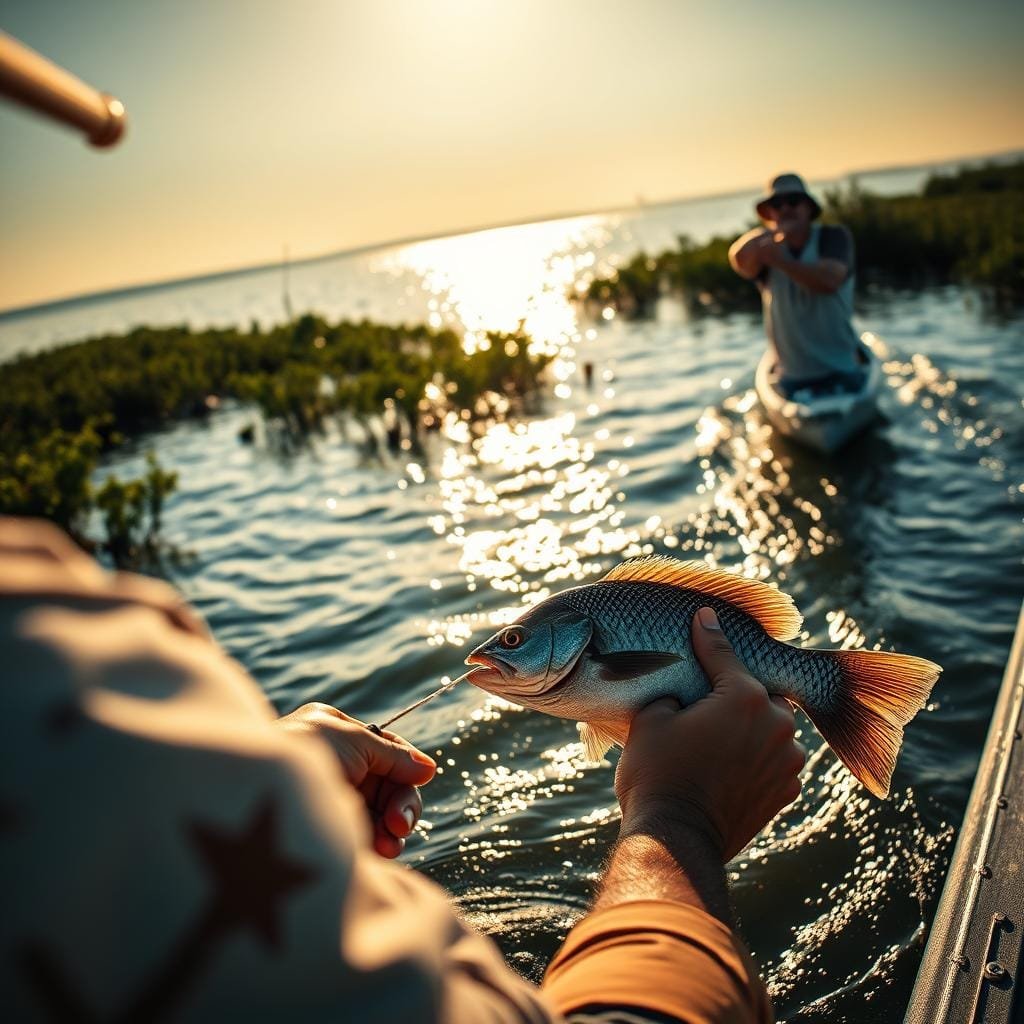
If you want to catch big bass, you need a good plan and the right bait. This guide shows the best baits for largemouth bass. It helps you win in bass fishing all year in the United States.
Big bass love certain lures like jigs, crankbaits, and plastic worms. Spinnerbaits, swimbaits, and glide baits are also favorites. Plus, live baits like shiners and worms work well with the right tricks.
Some top brands include Terminator Flipping Jigs and Rapala DT 10. Loco jerkbaits are great for cold weather. For surface action, try River2Sea Whopper Plopper and Berkley Choppo.
For glide and soft-swim profiles, SPRO KGB Chad Shad 180 and Berkley CullShad are good. Huddleston swimbaits catch the biggest bass. Don’t forget classics like Heddon Zara Spook and Lunker Lure Buzzbait.
Learn when and where to fish for bass. This includes offshore ledges and grass edges. Know how to adjust your bait for different water conditions.
For more on live and artificial baits, check out this guide to bait for largemouth bass.
This guide helps both new and experienced anglers. It makes catching big bass easier and more consistent. It gives you the confidence to use top bass baits in U.S. waters.
Why Bait Choice Matters for Trophy Largemouth Bass
Bait choice is key because it shows how bass act in different water temperatures and seasons. A good big bass plan mixes confidence lures like jigs and crankbaits with the right retrieve. Cold days mean slow, steady moves; mild days are for a steady pace; and hot days call for small baits near shade.
Cover is very important. In places like pads and docks, small jigs or Texas-rigs work best. Wind and clear water make flashier baits better. After the spawn, bass hide in shallow areas, where big worms and plugs catch their eye.
Lipless crankbaits are great for deep spots in cold water. A suspending jerkbait attracts bass that swim high. For long casts, use a glide or swimbait. For a single-bait strategy, check out this versatile bass bait approach.
Live bait is also good. Golden shiners and crawfish look like natural prey, attracting big bass near grass or laydowns. Choosing the right lure means matching size, depth, and the mood of the bass.
Keep a simple checklist on deck:
- Match speed to water temperature bass behavior and light levels.
- Pick profiles that track with seasonal bass patterns and local forage.
- Target edges, shadows, and ambush spots to anchor a big bass strategy.
- Use silent, tight actions in clear water; add thump and flash in wind or stain.
Proven Big-Bass Producers: Jigs, Crankbaits, Plastic Worms, Spinnerbaits, and Swimbaits
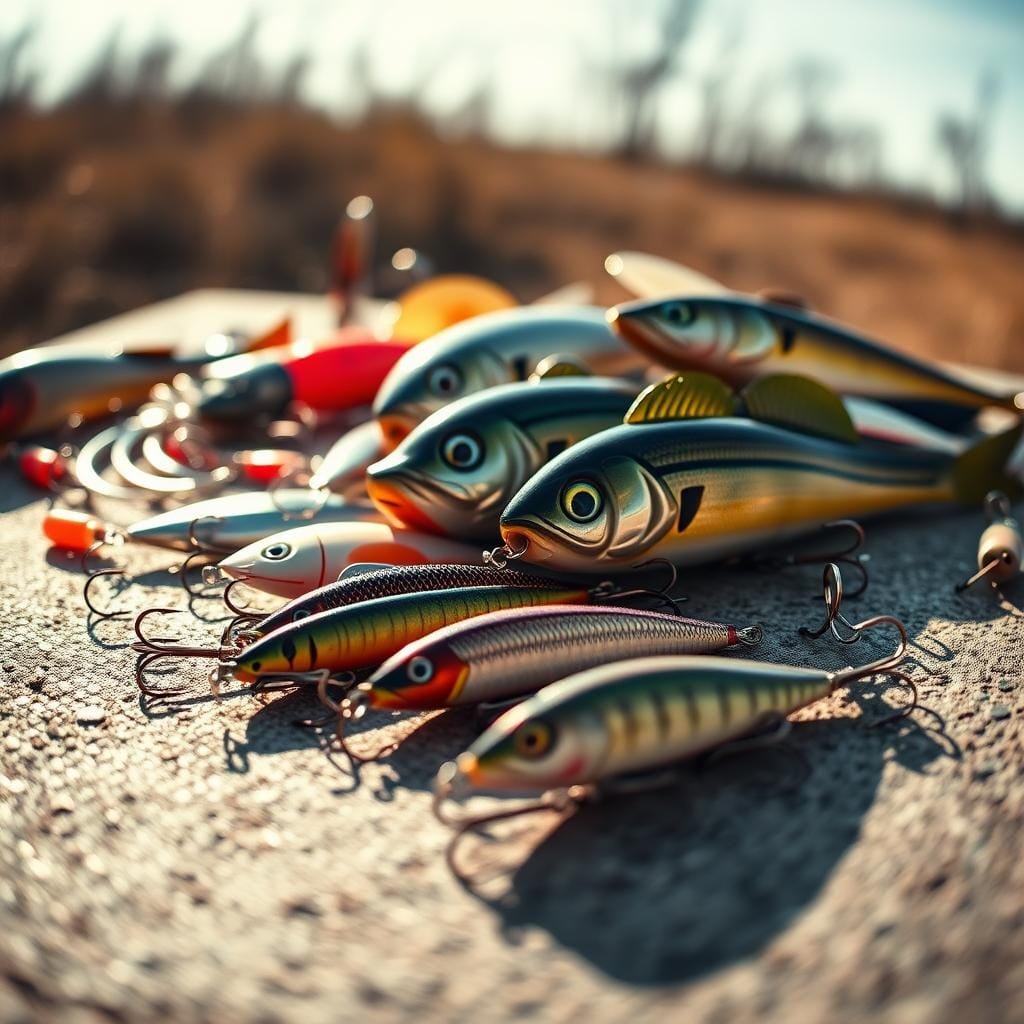
These lures are always in the tackle box because they work well. They catch bass in all weather. Pro anglers trust brands like Strike King and Rapala for every fishing situation.
When each lure shines across seasons and water temps
Jigs are great from 50 to 90 degrees. They work in shallow or deep water. They’re good near grass, docks, wood, and steep banks.
Crankbaits are good most months. Rapala’s DT series works well when fish are deep. Lipless baits like the Red Eye Shad are best in early spring and late fall.
Plastic worms are always useful. In winter, use a slow Carolina rig for rock and hard bottom. In summer, twitch a Senko or Zoom Trick Worm near docks and vegetation.
Spinnerbaits are great in the wind. Low light, stain, and breezy banks are perfect. A steady, medium retrieve keeps the blades in the strike zone.
Swimbait retrieves change with the season. Harnessed, treble-hook options work best in open water. Top-hook single styles slide through hydrilla and grass without snagging.
Cover, depth, and retrieve speed tips for more strikes
- Jigs: Pitch to laydowns, dock corners, and grass clumps. Let the bait soak, then hop or drag. Short pauses trigger neutral fish.
- Crankbaits: Burn in summer to locate active bass, then re-run the sweet stretch. In cold water, slow-roll lipless baits so they throb but don’t rise.
- Plastic worms: Go light on weight for a natural fall. Texas rig for cover, Carolina rig for humps and points, shakey head when fish hug bottom.
- Spinnerbaits: Keep a medium, steady cadence. Follow the wind line along grass edges and channel swings to stay in productive water.
- Swimbaits: Count down to the target zone, then reel just fast enough to tick cover. Use micro stalls and quarter turns to flair the tail.
Color selection for clear vs. stained water
Choose colors that match the water. In clear water, use natural minnow and bluegill patterns. In stained water, go darker with a touch of flash.
In stained water, use darker colors with a bit of shine. Crawfish patterns on cranks are good when craws are around. For spinnerbait wind, use white skirts with silver blades in clear water and gold blades in stained water.
| Lure | Prime Conditions | Best Retrieve | Go-To Colors (Clear) | Go-To Colors (Stained) |
|---|---|---|---|---|
| Jig (Strike King, Z-Man) | 50–90°F; grass, docks, wood, steep banks | Methodical hop, drag, pause | Green pumpkin, bluegill | Black/blue with flake |
| Crankbait (Rapala DT, lipless) | All year; lipless in early spring/late fall | Summer burn; cold slow-roll/tick grass | Natural minnow, craw | Red craw, chartreuse/black back |
| Plastic Worm (Berkley, Zoom) | Year-round; docks, vegetation, offshore | Light weight; twitch weightless; slow Carolina drag | Watermelon, green pumpkin | June bug, black grape |
| Spinnerbait (Strike King) | Wind, stain, low light, night | Steady medium-speed retrieve | White skirt, silver blades | White/chartreuse skirt, gold blades |
| Swimbait (Megabass, Keitech) | Open water (harnessed) or grass (top-hook) | Slow, high-in-column swimbait retrieves with stalls | Ayu, Tennessee shad | Dark shad, black/blue flash |
Use these tips for jigs, crankbaits, and plastic worms. Adjust for spinnerbait wind and swimbait retrieves. Choose colors wisely for clear or stained water. Big bass will follow.
Flipping Jigs for Heavy Cover Giants
When heavy cover bass hide, a flipping jig is perfect. The Terminator Flipping Jig goes where others can’t. Its weedguard lets it move freely, just like a weedless jig. Make short, quiet casts and let the bait sit where big fish hide.
Where to fish: thick weeds, pads, docks, wood, and stumps
Start with matted hydrilla, lily pads, and reed edges. Then, fish around docks, posts, and shaded slips. Laydowns, timber, and stumps are also great spots for flipping jig bass all year.
Trailer and color choices to match crawfish and bluegill forage
Choose the right bait. Use a craw trailer in cold water and a thumping style in warm. Switch to a bluegill trailer when brim are shallow. Pick green pumpkin or brown in clear water and black and blue or add flash in stain.
Tackle setup and weedguard advantages for punching cover
Use a sturdy baitcaster, 7’3”–7’6” heavy-power rod, and a high gear ratio reel. Spool with 50–65 lb braid or 20–25 lb fluorocarbon. The jig’s weedguard helps you punch through mats and wood, keeping the lure in the strike zone longer.
| Situation | Jig Weight | Trailer Choice | Color Pick | Line & Reel | Why It Works |
|---|---|---|---|---|---|
| Matted grass and pads | 3/4–1 oz | Craw trailer (kicking claws) | Black/blue | 65 lb braid + 8:1 reel | Punches cover; weedless jig slides in and triggers reaction bites. |
| Docks and walkways | 3/8–1/2 oz | Bluegill trailer (chunk) | Green pumpkin | 20–25 lb fluoro + 7.5:1 reel | Controlled fall near posts for dock fishing largemouth holding in shade. |
| Laydowns and stumps | 1/2–3/4 oz | Craw trailer (subtle) | Brown/orange | 50 lb braid + 8:1 reel | Natural craw profile crawls through limbs without constant snagging. |
| Clear rock banks | 3/8–1/2 oz | Bluegill trailer (paddletail) | Watermelon red | 20 lb fluoro + 7.1:1 reel | Subtle flash and vibration mimic forage; steady contact gets bites. |
Crankbait Confidence: Rapala DT 10 and Lipless Options
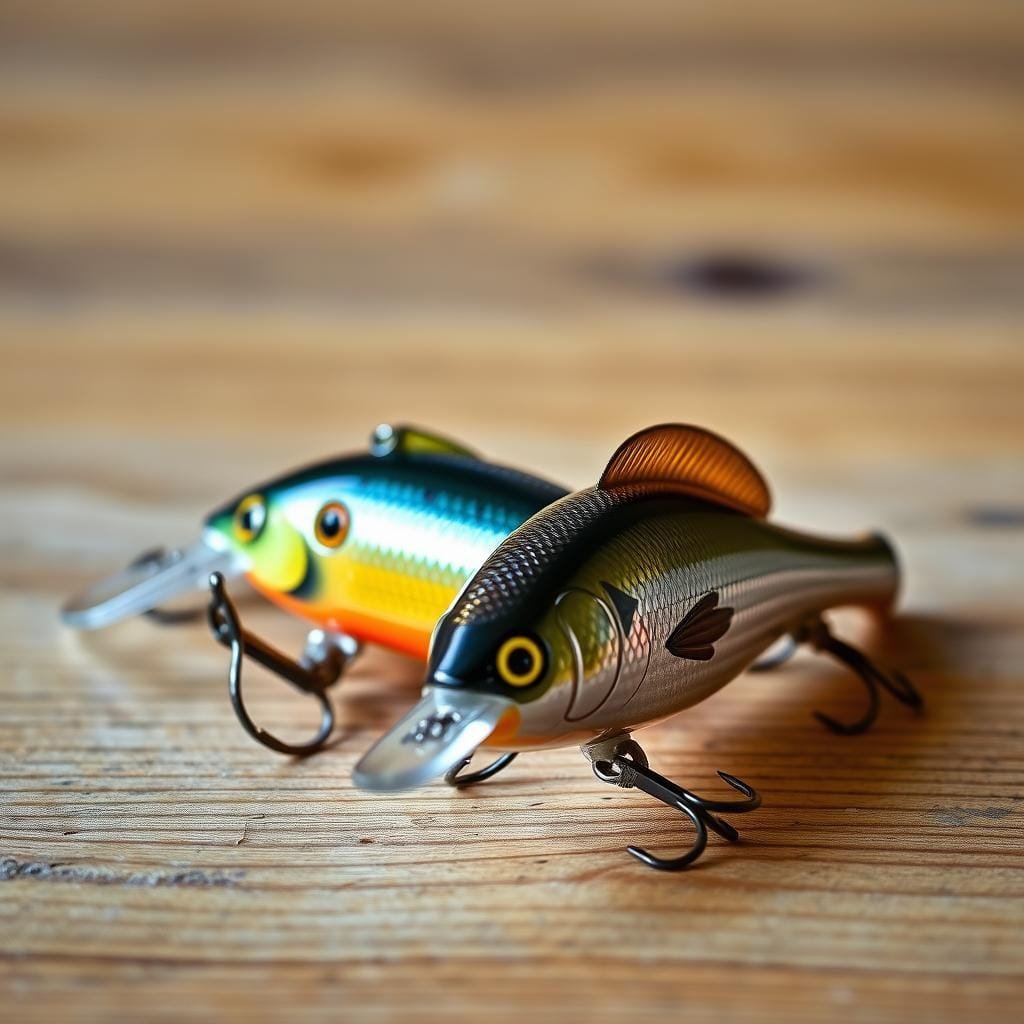
The Rapala DT 10 goes deep fast. It lets you feel the bottom. You can map the structure with each cast.
Use smart angles and steady pressure. This keeps the trebles pinned. These tips also work for lipless models on offshore flats.
Covering water on sand, rock, weed edges, and mid-lake humps
Fan-cast across sand and rock to find depth breaks. Then, switch to weed edge cranking. This way, you tick the tops without getting stuck.
Sweep the DT 10 through mid-lake humps. Bass use these spots to feed. Pause when you feel a deflection.
Work lipless baits over dying grass. This way, you can contact stalks and trigger hits.
Speed control: burning in summer vs. slow-rolling in cold water
In warm water, burn the DT 10 to find schools. Then, slow down once you get a bite. This helps you catch more fish.
In cold water, slow-roll or yo-yo the lipless crankbait. This keeps it in the zone longer. Change your speed until the rod loads. Speed changes make fish bite.
Best patterns: minnow, crawfish, and bluegill
Match your lure to the local forage. Use minnow on shad lakes. Crawfish work well on rocky points.
Bluegill patterns are great around grass and docks. On clear days, choose natural finishes. In stained water, bold colors are better.
| Lure | Primary Use | Ideal Retrieve | Best Terrain | Go-To Crankbait Colors |
|---|---|---|---|---|
| Rapala DT 10 | Target mid-depth structure fast | Steady grind with deflection pauses | Sand, rock, weed edges | Minnow for clear, crawfish on rock, bluegill near grass |
| Lipless Crankbait | Cold-water coverage and flats | Slow-roll or yo-yo in lipless crankbait cold water | Dying grass flats, deep points | Minnow on shad schools, crawfish in early spring, bluegill around weeds |
| DT 10 over Humps | Probe offshore feeding spots | Stop-and-go to maintain depth | Mid-lake humps bass stage on | Minnow in sun, darker crawfish in clouds, bluegill for pressure |
| DT 10 on Edges | Weed edge cranking | Slow grind just above grass tops | Outside grass lines | Bluegill for cover, minnow when baitfish flicker |
Use a medium or medium-heavy cranking rod. Pair it with 10–14 lb fluorocarbon. This helps you reach the DT 10’s running depth.
Keep contact on rock and run just over grass. This keeps you clean. Adjust your angles and cadence to the structure.
Plastic Worm Mastery: Texas Rigs, Ribbon Tails, and Finesse
When the water gets warm, big plastics work great. A ribbon tail worm moves like a real worm. This makes bass notice it in clear or stained water.
Big Texas-rig worms offshore after the spawn
After the spawn, bass hide offshore. Use a Texas rig big worm to find them. A 10.5-inch Zoom Ol’ Monster works well.
Move the worm slowly along the bottom. This makes bass feel it. Keep the pace slow so the tail moves just right.
Weight selection: why the lightest possible fall triggers bites
Start with a light bullet weight, like 1/4 ounce. This makes the worm drop slowly. Bass like this slow drop after spawning.
Only add more weight if you need to. Wind, current, or depth might require it. Let the bait fall slowly on semi-slack line.
Shallow dock twitching vs. deep Carolina rig dragging
Under docks, a finesse worm is perfect. Use it without weight or with a small nail. Short twitches and long pauses work well.
For deep water, use a Carolina rig. A medium-heavy rod and 3-foot leader are key. Drag it slowly over hard spots.
| Scenario | Rig & Bait | Weight | Key Move | Why It Works |
|---|---|---|---|---|
| Post-spawn offshore ledges | Texas rig big worm (Zoom Ol’ Monster) | Light bullet weight 1/4 oz; bump up as needed | Slow crawl with brief shakes | Slow fall teases neutral fish and keeps contact |
| Brush piles and shell bars | Texas-rig ribbon tail worm | 1/4–3/8 oz pegged | Lift-drop to free, then pause | Tail ripples on slack draw reaction strikes |
| Shade under docks | Weightless finesse worm | No weight or tiny nail | Skip, twitch, long pause | Subtle glide matches pressured shallow fish |
| Deep points and humps | Carolina rig bass setup with 6–10″ worm | 1/2–3/4 oz main weight | Slow drag with leader trailing | Separates noise from bait for natural presentation |
Plastic worms work in many ways. Use a light weight near cover and a steady drag offshore. Try different worms to see what bass like. Let them tell you how slow to go.
best bait for largemouth bass
The best bait for largemouth bass depends on the situation and what you want to catch. Live bait is great for catching big bass. Wild shiners, herring, and creek minnows work well in places like pad edges and deep grass.
A slip bobber keeps the bait just above the weeds. A split-shot rig lets the bait swim near rocks or timber without getting stuck.
Crawfish and frogs are also very effective. Live craws work well along riprap or hydrilla. In dense pads, a live frog on a wide-gap hook with a small split shot can get you big bites.
Artificial lures are good for covering a lot of water. Jigs, crankbaits, plastic worms, spinnerbaits, and swimbaits work all year. A big ribbon-tail worm can be great on ledges after the spawn.
Lipless crankbaits are good in fall when you can rip them free from grass. Spinnerbaits with white skirts and silver blades work well in clear water. Use darker colors in stained water.
Swimbait choices are important. A glide bait like the SPRO KGB Chad Shad 180 is good for teasing bass along edges. Harnessed swimbaits like the Berkley CullShad work well in open water. For grass lanes, a top-hook Huddleston is good.
Topwater baits have their place. Single-prop baits like the River2Sea Whopper Plopper are great for summer. If the pressure gets too high, try finesse tactics like a wacky rig or a drop shot.
Match the color and flash of your bait to the water clarity. Natural shad, green pumpkin, and translucent colors work well in clear water. In murkier water, use darker colors and more flash.
| Bait Category | Best Use Case | Rigging Tip | Water Clarity Match | Why It Produces |
|---|---|---|---|---|
| Live shiners/minnows | Deep edges, pads, bridges | Slip bobber or split-shot drift | Clear to lightly stained | Natural action triggers big, cautious fish |
| Live crawfish | Rock, grass transitions | Light split shot; short leader | All clarities | Mimics prime bass forage on bottom |
| Live frogs | Mats, pads, thick cover | Wide-gap hook; gentle lob | Stained to heavy stain | Targets ambush strikes in heavy vegetation |
| Jigs | Year-round; wood, docks, grass | Trailer to match craw/bluegill | Natural in clear; darker in stain | Compact profile, skips well, big-bass appeal |
| Crankbaits/lipless | Covering flats, grass edges | Vary speed; rip free from grass | Shad in clear; craw in stain | Deflection and vibration call fish from range |
| Plastic worms | Post-spawn ledges, docks | Texas or Carolina; lightest weight possible | Green pumpkin in clear; junebug in stain | Subtle fall and long hang time |
| Spinnerbaits | Wind, stain, low light | White/silver in clear; gold in stain | All clarities | Flash and thump find active feeders fast |
| Swimbaits/glides | Cover edges, open water hunts | Glide near cover; harnessed high column | Match shad/blueback tones | Draw power and size select for trophies |
| Topwater props | Summer flats, calm chop | Steady retrieve; pause on blowups | Clear to stained | Sound trail and wake trigger reaction bites |
| Wacky rig/drop shot | Pressured fish, shallow shade | Light line; slow shakes | Natural in clear; bold in stain | Finesse gets bites when power fails |
Use a mix of live and artificial baits to stay ready for anything. Keep a few key baits on hand, and you’ll always have something good to use.
Spinnerbaits that Produce in Wind, Stain, and Low Light
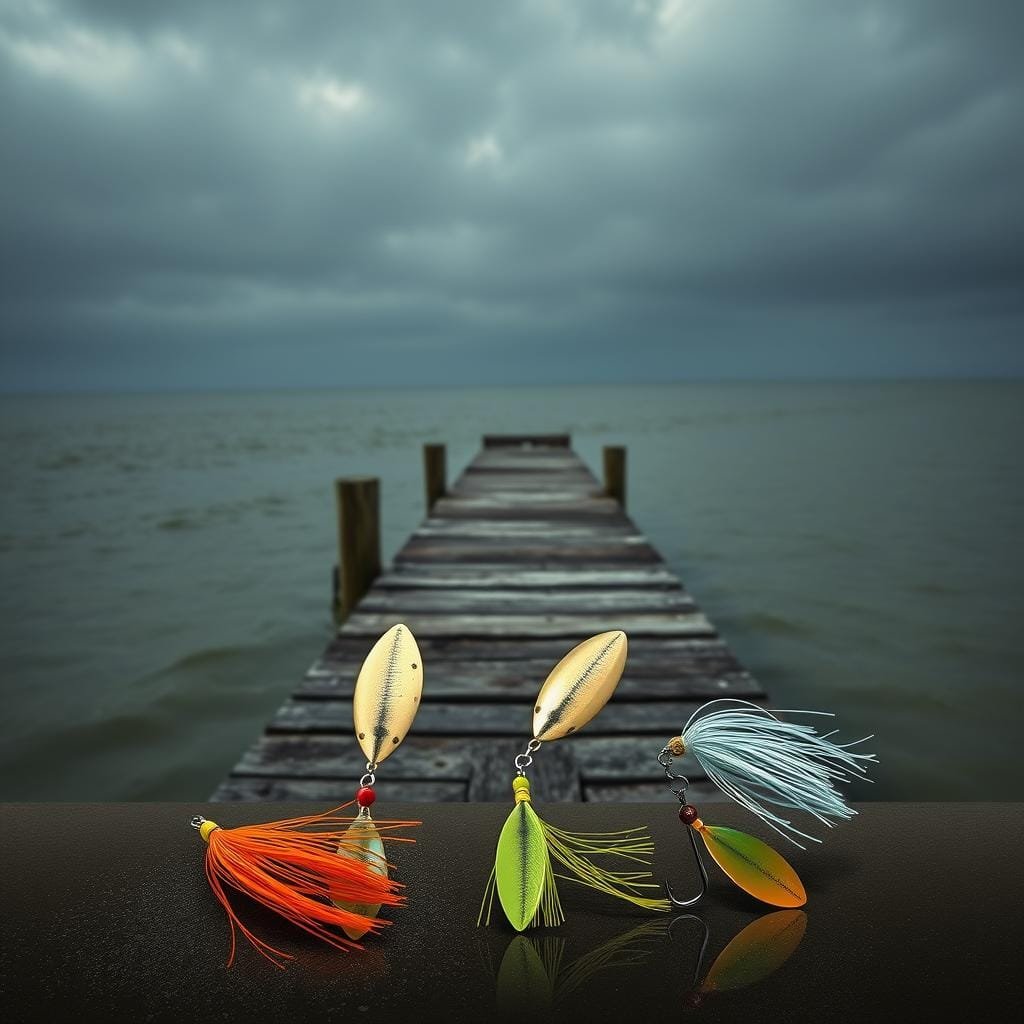
When the wind blows or the sky gets dark, a Terminator Spinnerbait is perfect. It moves well in windy conditions, goes through grass and wood, and makes a loud noise to attract big fish. Keep your casts close together and let the skirt move freely.
White skirts with silver blades vs. gold in stained water
Choose a white skirt and silver blades for clear water and sunny days. This combo looks like a shad and doesn’t scare fish away. For murky water, use gold blades to be seen better and stay deep near obstacles.
Slow-rolling along grass lines, ledges, and drop-offs
Slow-rolling spinnerbaits help you catch fish longer. Let the reel spin slowly so the wire frame vibrates over grass. Then, touch the first leaf. On edges and drops, count down and move it just enough to feel the blades.
Blade styles to mimic shad and add flash/vibration
Decide between willow and colorado blades based on the water and mood. Willows give quick flash and look like shad in clear water. Colorado or Indiana blades make more noise and are better for murky water and low light, great for windy days near rocks and trees.
- Clear water: Terminator Spinnerbait, white skirt, silver willow blades for speed and flash.
- Stain or dusk: gold Colorado or Indiana blades for stronger vibration and slower roll.
- Cover contact: bump grass, wood, or rock, then pause to let the skirt flare.
Swimbaits and Glide Baits for Drawing Out Trophies
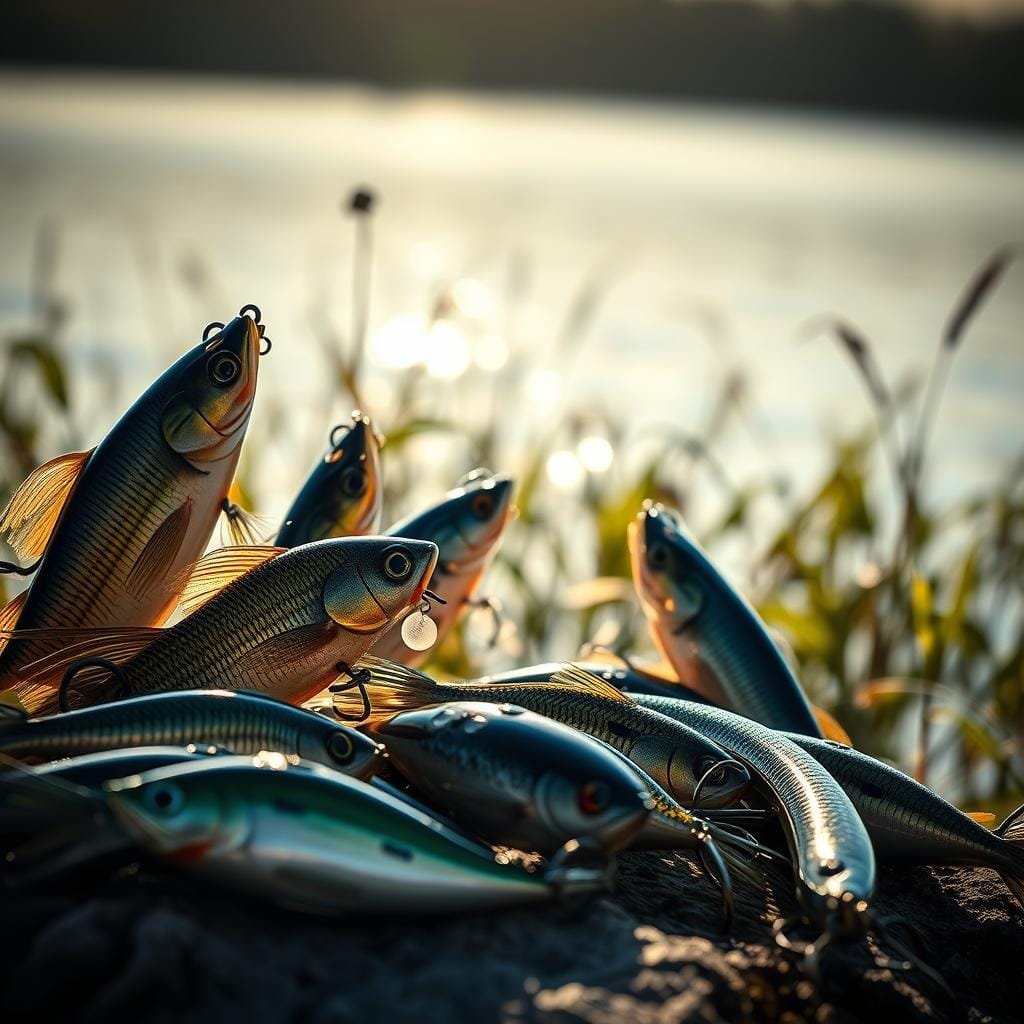
Big swimbaits bring out bass you don’t see often. A few glide bait tips can make them bite. This is true when you move around visible spots and shadows.
Glide baits like the SPRO KGB Chad Shad 180 draw fish from far away. Cast near docks, wood, and shade. Keep it away from thick stuff so fish can run.
When to choose glide baits near cover without risking snags
Make a wide S-turn near wood, pier posts, and grass edges. Speed up with the reel, then pause. The SPRO KGB Chad Shad 180 works well here.
Cast past the target, then move it along the edge. If a fish follows, add a quick turn and pause.
Harnessed vs. top-hook swimbaits: open water vs. grass
Choose the right rig for the cover. The Berkley CullShad is great for open water. It has trebles for better hookups.
The Huddleston swimbait is better for grass. It moves through weeds without getting stuck. Use it where fish hide.
High-in-the-column retrieves to target roaming big bass
Keep your swimbait high over flats and zones. Move it slowly and steadily. This makes it look vulnerable.
Use the Berkley CullShad for fast coverage. Use the Huddleston swimbait for slow, sneaky moves through weeds.
Learn more about big bait patterns and why they attract giants in this guide to big swimbaits and trophy.
| Bait/Style | Best Use Case | Retrieve Cue | Cover Type | Key Advantage |
|---|---|---|---|---|
| SPRO KGB Chad Shad 180 (Glide) | Target casting beside docks, wood, and shade | Wide S with burst-and-stall | Edges of cover | Extreme drawing power with precise lane control |
| Berkley CullShad (Harnessed) | Roaming fish over points and submerged cover | Steady, high-in-column roll | Open water swimbait zones | Higher hookup rate from treble exposure |
| Huddleston swimbait (Top-hook) | Threading lanes and seams in vegetation | Slow crawl with occasional rod taps | Grass swimbait pathways | Weed resistance and controlled profile through hydrilla |
Topwater Thrills: Whopper Ploppers, Frogs, and Walkers
Summer brings big bites and loud sounds. Single-prop baits, frogs, and walkers work well in calm water. Try different ones to keep the bites coming all day.
Covering water fast for summer giants on bluegill flats
Look for long flats with bluegill beds. Use a River2Sea Whopper Plopper or Berkley Choppo to cover a lot of ground. These baits can attract bass from far away.
Keep your rod tip up and reel steady. Pause and then speed up to catch fish. This is the best time for summer bass fishing.
Frogs through mats and pads: hookup timing and rod work
When it’s hard to see, use frogs. They work well in mats and pad edges. A Snag Proof Frog or SPRO Bronzeye can skip over cover and drop into holes.
Use short twitches to move the frog. Aim for edges and clumps. Heavy braid and a strong rod help keep fish from getting away.
Walking baits for calm mornings and pressured fish
A walking bait Zara Spook is great for calm water. The Heddon Zara Spook’s walk-the-dog action attracts bass. Use light taps and pauses near stumps and docks.
Try other baits too. A Hula Popper or Arbogast Jitterbug adds different sounds. A Lunker Lure Buzzbait covers banks quickly at dawn.
| Lure Type | Best Scenario | Retrieve Keys | Gear Tips | Why It Works |
|---|---|---|---|---|
| River2Sea Whopper Plopper / Berkley Choppo | Bluegill flats with scattered beds | Steady grind with pause-and-burst | 7’2″ MH rod, 40–50 lb braid | Noise and lift call distant summer topwater bass |
| Hollow-Body Frog | Mats, pads, and matted lanes | Walk or pop in holes; delay hookset | 7’4″ H rod, 50–65 lb braid | Weedless design excels in frog fishing mats |
| Heddon Zara Spook | Calm mornings, pressured fish | Walk-the-dog with short pauses | 6’10″–7′ M rod, 12–15 lb mono | Subtle cadence tempts followers on topwater bluegill beds |
Drop Shot and Wacky Rig for Finesse Trophies
When bass slide shallow and act spooky, go subtle before you go big. A drop shot largemouth setup and a wacky rig big bass approach shine around docks, bushes, and bedding edges. Keep the rod high, the line tight, and let the bait do the selling.
During finesse bass spawn periods and the weeks after, fish hold tight to shade and cover. Skipping a stick worm on a wacky rig under a pontoon or overhang keeps it in the strike zone longer. A nose-hooked minnow or worm on a drop shot can hover by a post or rock without spooking fish.
Shallow finesse for spawn/post-spawn targets around cover
Target the first shade lines, ladder rails, and outside edges of beds. Pitch a wacky rig into pockets in pads, then let the natural shimmy work. Slide a drop shot along seawalls and isolated rocks; pause it next to every shadow seam.
Use light weights bass anglers favor to keep the fall slow and natural. A 1/16–1/8 oz drop shot sinker helps the bait suspend near nosey fish. If wind picks up, step slightly heavier, but keep movements soft and minimal.
Weight, line, and bait color picks for clear vs. dirty water
In clear water, run 6–8 lb fluorocarbon leaders for both techniques. Choose translucent worms and brown smallmouth colors on lakes like Champlain or St. Clair. In stain, bump to 10–12 lb and lean on black and blue largemouth hues that pop under low light.
For drop shot largemouth, a short leader pins the bait near cover without snagging. For wacky rig big bass, add an O-ring to center-hook and improve durability. Keep casts long, land quiet, and let the bait settle before any twitch.
Why finesse first can outproduce big baits on wary fish
Big glides and swimbaits draw looks, but cautious fish often slide off. Lead with finesse and you get the first clean shot, before they’re on alert. A silent entry, slow fall, and small profile feel safe to trophy fish guarding or cruising.
Start with light weights bass settings to maintain a neutral drift. If they track but won’t commit, shorten pauses and add a tiny shake. Rotate between black and blue largemouth staples in stain and brown smallmouth colors in clear to seal the deal.
Live Bait for Monster Bass: Shiners, Crawfish, Worms, and Frogs
Live bait is great for catching big bass. Match the bait to what’s in your lake. For shiners, hook them through both lips or just behind the dorsal fin.
Use a bobber to keep them off the bottom. This is good around lily pads and dock corners. Switch baits when you don’t get bites anymore.
In open areas, a split shot rig works well. It lets the shiner swim at mid-depth. This keeps it in the fish’s strike zone longer.
Crawfish are perfect for bass around rocky areas. Hook them through the tail so they kick and drop claws. Move them along the bottom slowly.
In calm water, use an egg sinker and swivel. This lets the crawfish swim naturally. Nightcrawlers are simple: just use a small hook and a split shot.
Thread the worm tip and leave the barb out. Fish shallow areas and near cattails. This makes it easy to catch bass.
For thick vegetation, use live frog rigging. Hook the frog through the forelegs and add a split shot. Pitch it into the thick stuff.
Let the frog sit, then twitch it. This makes it look alive. Big bass will strike at this movement.
Change baits often to keep them fresh. Use colors that match local fish. Slow down and keep contact with the fish. Let the bait do the work.
FAQ
What are the most reliable big-bass baits to carry year-round?
Jigs, crankbaits, and plastic worms are great all year. Spinnerbaits and swimbaits work well too. For surface bites, try topwaters like the River2Sea Whopper Plopper and frogs.
Why does bait choice matter so much for trophy largemouth?
Largemouth bass change how they act with the seasons. Choosing the right lure helps you catch them. It’s all about matching the lure to the bass’s behavior.
When should I fish jigs, crankbaits, plastic worms, spinnerbaits, or swimbaits?
Fish jigs in 50–90°F water in various spots. Crankbaits are good for covering water fast. Plastic worms work all year in different ways.
Spinnerbaits are best in windy or cloudy conditions. Swimbaits attract bass in open water and near cover.
How do I adjust retrieve speed for conditions?
Slow down in cold water and speed up in warm. In summer, crankbaits work best when moving fast. Lipless crankbaits should be slow in cold water.
Spinnerbaits should move at a steady pace. Swimbaits need a slow, natural retrieve. Jigs should be moved carefully.
What colors work best in clear vs. stained water?
Use natural colors like shad and minnow in clear water. In stained water, darker colors with flash work better. Spinnerbaits should have white skirts with silver blades in clear water and gold blades in stained water.
Where should I flip a jig for heavy-cover giants?
Look for thick weeds, lily pads, and docks. Weedguards help you move through cover without getting stuck. This keeps your jig in the strike zone.
What trailers and jig colors should I pick?
Choose colors that match the local forage. Use craw-style trailers for crawfish lakes and bluegill-style for brim lakes. In clear water, pick natural colors. In stained water, go darker with a bit of flash.
What tackle is best for flipping Terminator Flipping Jigs?
Use a sturdy baitcasting setup. It should have heavy braid or fluorocarbon, a high-gear reel, and a rod with strength. This setup helps pull fish from tight spots.
When should I throw a Rapala DT 10 vs. a lipless crankbait?
Rapala DT 10 is good for hitting 8–12 feet over various structures. Lipless crankbaits are better in early spring and late fall. They work well over deep points and dying grass.
How do I control crankbait speed for more bites?
Burn crankbaits fast in summer to cover water and trigger bites. In cold water, slow-roll or yo-yo lipless crankbaits. Always adjust to avoid burying in weeds.
Which crankbait patterns produce most often?
Minnow/shad, crawfish, and bluegill patterns are consistent. Match the dominant forage and water clarity for best results.
Why are long ribbon-tail worms so good after the spawn?
Post-spawn bass slide offshore to find food. A big Texas-rig worm like the 10.5-inch Zoom Ol’ Monster offers a slow, rippling meal. This attracts even the biggest bass.
How much weight should I use on Texas-rig worms?
Start with a light weight, around 1/4 ounce, for a slow fall. Increase to 5/16, 3/8, or 1/2 ounce if needed. The slower fall often triggers bites.
Should I twitch shallow worms or drag deeper rigs?
Twitch weightless or lightly weighted worms under docks and around vegetation. Drag a Carolina rig or shakey head slowly for deeper structure, best in cold or neutral conditions.
What’s the best bait for largemouth bass overall?
Live shiners/minnows and versatile artificials are top choices. Keep jigs, crankbaits, plastic worms, spinnerbaits, and swimbaits ready. Add glide baits and top-hook swimbaits for different situations.
How do I set up spinnerbaits for different water clarity?
Use a white skirt with silver blades in clear water for a clean shad flash. In stained water, switch to gold blades for visibility. Keep the retrieve medium to track true.
Where do spinnerbaits excel during tough conditions?
Slow-roll along grass lines, ledges, and drop-offs in windy or cloudy conditions. Let the skirt pulse and blades thump to trigger bites.
Which blade styles should I pick to mimic forage?
Willow blades maximize flash for shad in clear water and fast retrieves. Colorado and Indiana blades add thump, lift, and presence in stained water, at night, or in heavy wind.
When do glide baits beat other big baits?
Use glides like the SPRO KGB Chad Shad 180 along dock lines, laydowns, and cover edges. They draw power without burying in wood or grass. Walk them just off the target to pull fish out.
Harnessed vs. top-hook swimbaits—how do I choose?
Harnessed swimbaits with trebles (e.g., Berkley CullShad) shine in open water or high in the water column over submerged cover. Top-hook swimbaits (e.g., Huddleston) slip through hydrilla and grass lanes with fewer hang-ups.
Why retrieve swimbaits high in the column?
Roaming big bass often cruise high over points, flats, and transitions. A slow, natural high retrieve intercepts them and mimics an easy, injured baitfish.
How do I cover water fast with topwater in summer?
Run single-prop baits like the River2Sea Whopper Plopper and Berkley Choppo across bluegill flats and scattered beds. Their loud profile draws fish from distance and helps you find active schools quickly.
Any tips for frog fishing in heavy vegetation?
Work a Snag Proof Frog over mats and pads with steady rod twitches. Wait a beat after the blowup before driving the hooks. Aim for holes, edges, and shade lines to boost hookups.
When should I walk a topwater like a Heddon Zara Spook?
On calm mornings, slick water, or pressured fish. A subtle “walk-the-dog” can seal the deal when louder props or buzzbaits get followers but no commits.
Where do drop shots and wacky rigs shine for trophies?
During spawn and post-spawn around docks, bushes, beds, and shade. These finesse rigs slip into tight spots and look harmless—perfect for wary giants that snub big baits.
What weights, lines, and colors should I use for finesse?
Use the lightest drop-shot weight you can control. Go lighter line in clear water and a touch heavier in stain. Black and blue excel for largemouth in dirty water, while browns and natural shades win in clear water.
Why can finesse first beat bigger baits?
Quiet presentations get the bite before fish are alerted by bulkier profiles. A wacky or drop shot often closes the deal on the first pitch.
What live baits are best for catching monster bass?
Shiners, herring, and minnows are top picks, with crawfish, nightcrawlers, and frogs close behind. Live bait often tempts the biggest fish, near deep structure, pads, and current breaks.
How should I rig shiners and minnows?
Hook through both lips bottom-up or behind the dorsal for a natural swim. Fish them under a bobber to keep them off bottom, on a split-shot for shallow cover, or on a light drift rig around points and edges.
What’s the right way to present live crawfish and frogs?
Hook crawfish through the tail and fish near rocks and grass. Rig frogs with a wide-gap hook through the forelegs and a split shot a foot up the line, then toss around pads and mats. Small rod-tip jerks can spark reaction strikes when interest fades.