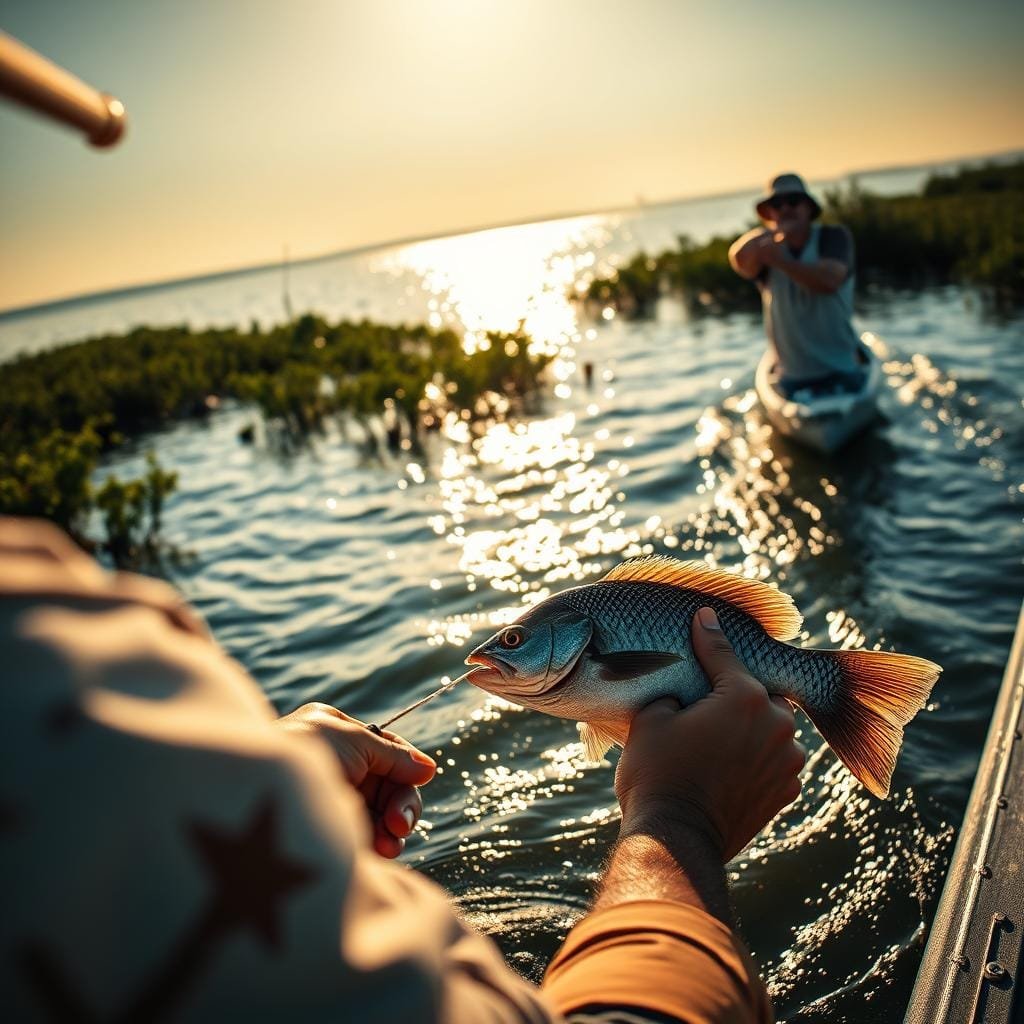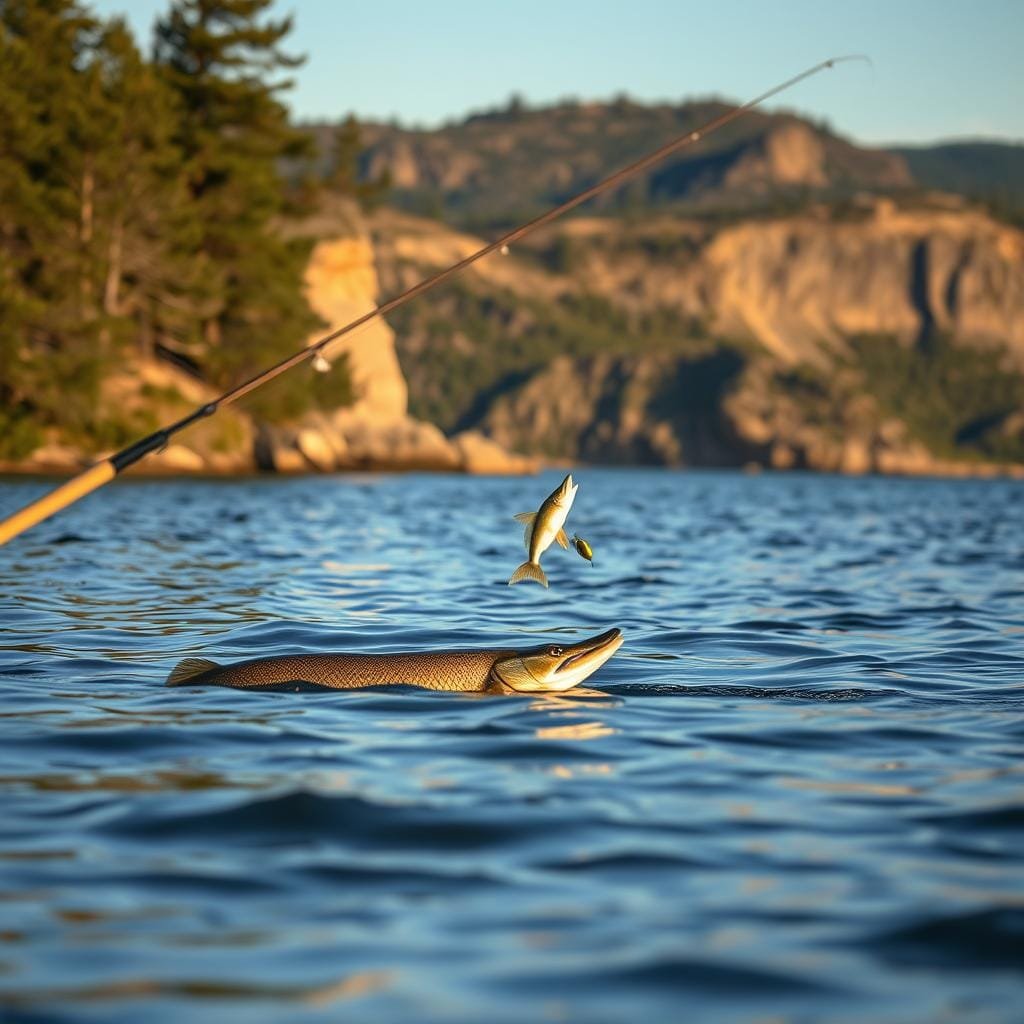
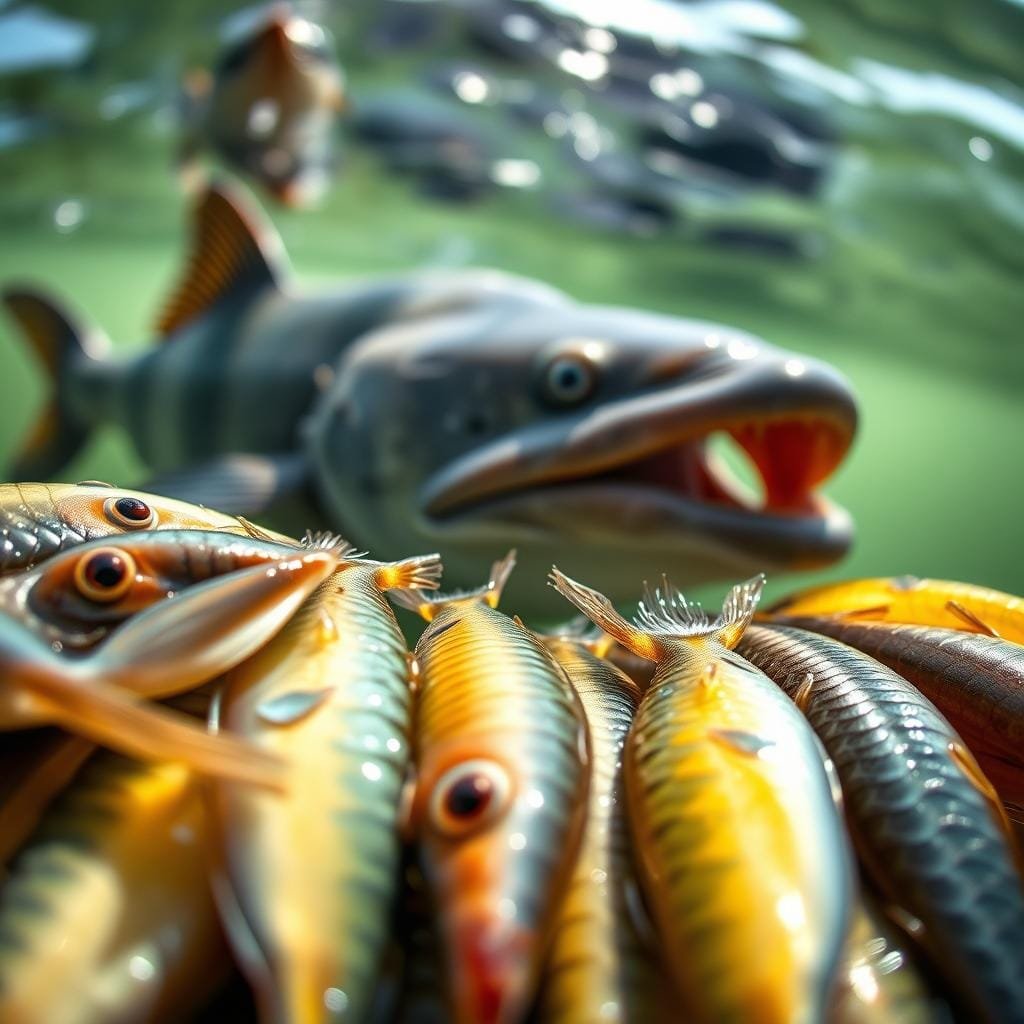
You don’t need a guide boat to catch big fish. Just grab heavy line, a strong rod, and the right bait. This guide will show you how to pick the best bait for gar.
We’ll talk about cut bait for gar that really works. You’ll learn about carp steaks, drum chunks, and oily mullet. These baits are great for catching gar in Texas and other places.
Want to know the best ways to catch gar? Check out this guide on how to fish for alligator. It explains why cut bait is so effective.
For fishing, use 50- to 130-pound main line and 5/0–8/0 hooks. We’ll share tips on when to use line and when to use steel. You’ll learn how to land big fish in places like the Trinity River and Lake Pontchartrain.
Here’s the short version: keep it simple and smart. A lawn chair, a cooler, and the right bait can make your day unforgettable.
Why Target Gar: Power, Size, and an Underrated Freshwater Trophy
Chasing a trophy gar is like big-game fishing at home. You can find them in Texas bayous and Louisiana marshes. They offer raw power, exciting takes, and the chance to catch a 100-pound fish with simple gear.
Freshwater giants that routinely top 100 pounds
Alligator gar are huge, just like sturgeon and record blue cats. They can grow up to eight feet long and weigh nearly 300 pounds. Modern catches in places like the Trinity River and Lake Pontchartrain show they can reach 100 pounds.
This makes catching them very special. A single bite can create a memory that lasts a lifetime.
For more on alligator gar, check out going for gator gar. It talks about their sizes, slow growth, and how to protect them.
The fight: bottom-digging runs and aerial acrobatics
The first move is a shock. Big gar dive to the bottom and fight upstream. Keep your rod low and steady.
Then, they jump out of the water. This is when you switch to free-spool. It keeps the hook in and your rod ready.
Guides on the Trinity River teach a special way to catch them. Wait for the bite, then pull hard. This makes the fight easier to win.
This fight is a mix of calm and excitement. It’s like a game of chess and a rodeo all at once. It never gets boring.
Access and simplicity: lawn chair, heavy line, and cut bait
You don’t need a big boat to catch gar. Just a bank, a stick, and cut bait. You can use muskie or big-cat gear, 80- to 100-pound braid, and a wire or heavy mono leader.
In Louisiana’s Lake Pontchartrain bayous, summer fish are easy to find. You can catch them from a johnboat or even a kayak. This makes gar fishing simple and exciting.
Keep your gear simple. Bring fresh cut bait, pliers, and a strong net. If you’re new, follow local rules and release fish cleanly. This way, the next angler has a chance too.
| Reason to Target Gar | What You’ll Experience | Practical Tip |
|---|---|---|
| Power and Size | Encounters with a 100-pound freshwater fish and true trophy gar | Use heavy braid and sharp hooks sized for large baits |
| Signature Fight | Bottom-drive surges followed by airborne gar acrobatics | Free-spool during jumps to keep hooks pinned and avoid pullouts |
| Simple Access | Bank or small-boat fishing with cut bait and a forked stick | Start with a beginner gar setup built from muskie or catfish gear |
| Wide Range | From Trinity River bends to Lake Pontchartrain bayous | Target warm months and shoreline flats for consistent action |
Know Your Gar: Alligator Gar vs. Longnose Gar
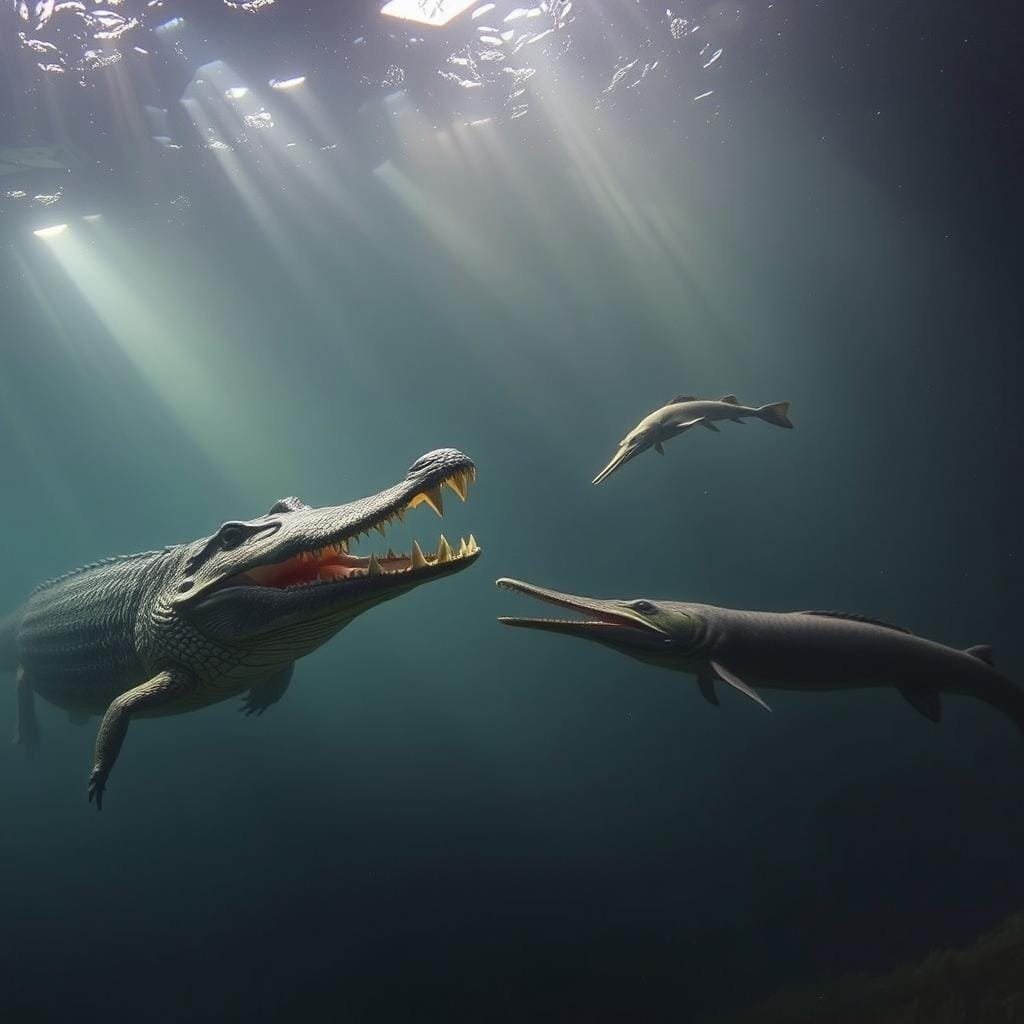
To catch fish, know their habits. Learn about alligator gar and longnose gar. Know where they live and how they move.
Find out where they like to be. Look for signs on the water before you throw your line.
Range and habitat: Trinity and Sabine (TX) to Lake Pontchartrain vs. Great Lakes–St. Lawrence tributaries
Alligator gar love Texas and Louisiana. They hang out in the Trinity and Sabine rivers. They also like the bayous leading to Lake Pontchartrain.
Longnose gar live in the Great Lakes. They’re found in Lakes Huron, Erie, and Ontario. They also like the St. Lawrence and Ottawa Rivers.
Anatomy and behavior: double row of teeth, armor scales, and air-breathing bladders
Alligator gar have sharp teeth for catching food. They also have hard scales that protect them. These scales were once used by Native Americans.
Gars have a special air bladder. It helps them breathe in low oxygen. Watch for signs on the water to find them.
Seasonal patterns: warm-water flats and back bays, flooded timber, and summer cruising
In spring and summer, longnose gar swim in shallow waters. They like it when it’s calm and sunny.
Alligator gar go into flooded areas during high water. They move back when the water goes down. In Lake Pontchartrain, they change spots with the seasons.
best bait for gar
Gar eat what’s common in their water. So, match the menu. In places like the Trinity River and Lake Pontchartrain bayous, oily chunks and easy targets work best.
Top natural choices: carp steaks, drum chunks, mullet, and rough fish
Carp bait for gar is great for steady action. Cut thick steaks or heads and use 5/0 to 8/0 hooks. Drum bait for gar, chunked freshwater drum, holds well in current.
Mullet for gar, fresh or brined, adds oil and firmness. Rough fish pieces stay on the hook well.
Why cut bait works: scent, size, and easy swallowing
Cut bait gar tactics are good because the scent plume travels fast. A fist-size chunk lets a gar mouth, chew, and rotate the bait into the throat. This shape reduces misses and speeds up the hook finding purchase.
Live bait scenarios: free-lined mullet for cruising fish
When fish cruise high, live bait gar is hard to beat. Guides often run two Texas rigs with cut bait and one freelined mullet for gar. Expect crosswise carries at first; give a little time before you come tight.
Fly and lure options when sight-fishing longnose gar
In clear, skinny water, fly fishing longnose gar is visual and quick. Throw 4- to 6-inch slender minnow flies in white/red or white/chartreuse on a floating line and 60-pound fluoro. Bunny leeches add a slow, pulsing sink.
Track the fish and make parallel passes across the snout to tease a snap. When they won’t eat meat, switch to gar lures that run shallow. Cranks like the Jackall Cherry Zero Footer, Rapala X-Rap, and Mann’s 1-Minus wake just inches down.
Keep retrieves steady, then twitch as the head nears the bill. That turn often triggers the bite right on the side plate.
Pro-Proven Rigs for Gar: Hook, Leader, and Line Setups
Dialed-in gar rigs make hookups solid. Use strong line, clean presentations, and gear that doesn’t rust. This way, fish can swim away easily.
Cut-bait rig: slip or Texas rig with 5/0–8/0 hooks and 50–130 lb main line
A good Texas rig for gar starts with a 3/4- to 1-ounce sinker. Then, a swivel, and a 3- to 4-foot leader. Use gar hooks 5/0–8/0 from Mustad or Gamakatsu for a strong hold.
Main lines should be 50–130 lb. Guides like 130 lb Dacron for shock absorption. Others prefer 80–100 lb braid for its thin diameter and feel.
For shallow water, use a slip float gar setup. The float keeps bait off stumps and tracks the drift.
Leader discussion: bronze hooks/wire for corrosion vs. nylon-coated wire for tooth protection
For tooth safety, use a nylon-coated wire leader like Malon-7 in 50 lb. It’s tough but stays flexible. Crimp it well to avoid sharp edges.
For fast releases, choose bronze hooks and wire. They rust away in water and stomach acid, making releases safer.
Keep both types ready. Use corrosion-resistant gear for deep fish and coated wire for fish that shake near the boat.
Float and drift tactics: slip floats, free-spool takes, and strike timing
With a slip float rig, open the bail and let the fish move. Lightly thumb the spool to feel speed changes. This helps you know when a gar takes the bait.
Trinity River guides use 130 lb Dacron gar under big floats. They wait for the pace to steady, then set the hooks gently.
Swinging too early can bounce off. Waiting too long risks deep takes. Bronze hooks help if you need to release quickly.
| Component | Recommended Spec | Why It Works | When to Choose |
|---|---|---|---|
| Main Line | 50–130 lb braid or 130 lb Dacron gar | Braid adds sensitivity; Dacron adds cushion on surges | Braid for long casts and feel; Dacron for slip-float drifts |
| Sinker | 3/4–1 oz barrel | Slides for Texas rig gar; keeps bait near bottom | Current seams, bayou mouths, and channel edges |
| Leader | 3–4 ft nylon-coated wire leader gar (50 lb) | Resists teeth without kinking; easy to crimp | Active, crosswise-carrying fish around cover |
| Hooks | Gar hooks 5/0–8/0 (Mustad, Gamakatsu) | Wide gap for cut bait; stronger wire for bone | Cut bait chunks, carp steaks, and drum pieces |
| Corrosion Option | Bronze hooks gar and bronze wire | Corrodes if clipped, aiding safe release | Deep takes or pressured waters |
| Float | Slip float gar, 8–10 in | Controls depth; tracks V-wakes during takes | Shallow flats, flooded timber, and drift lanes |
Where to Find Gar: Rivers, Lakes, Bends, and Flats
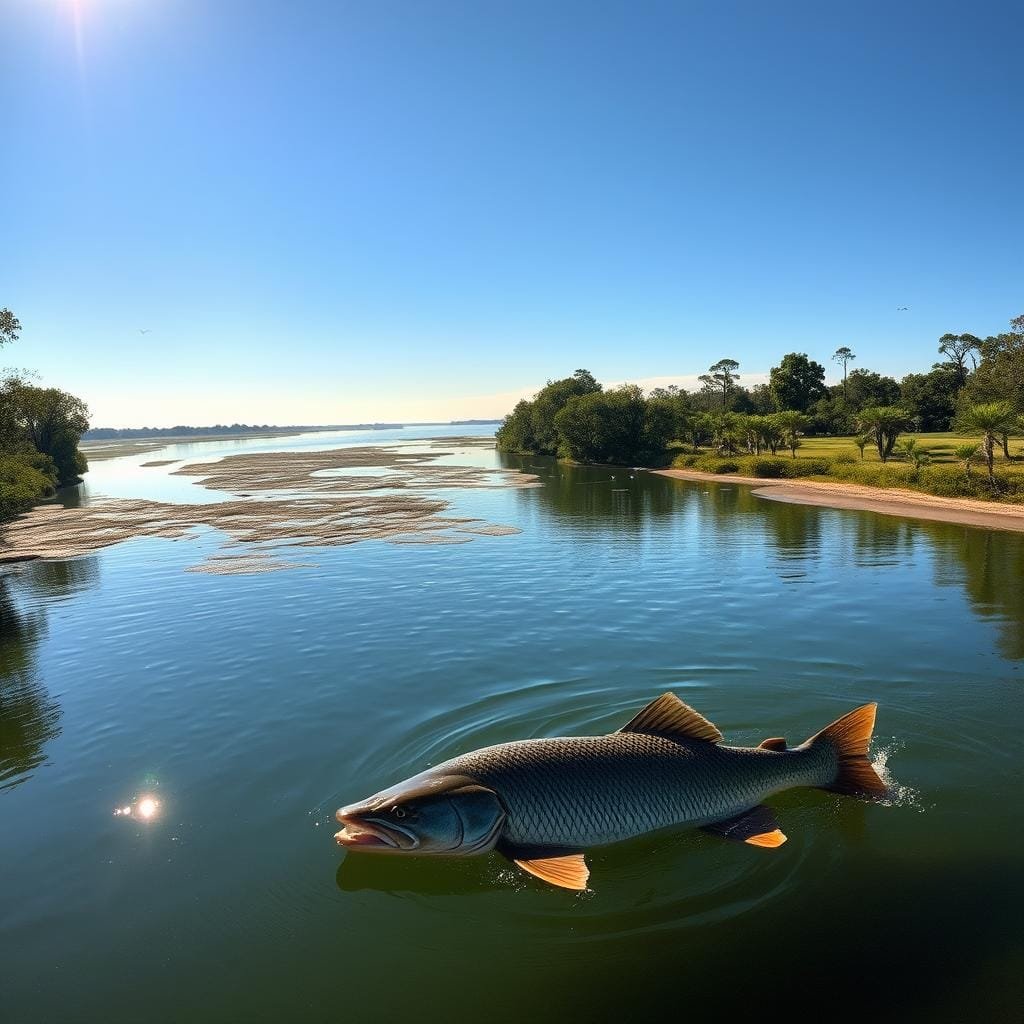
Find the right water and the right spots, and you’ll catch gar. In Texas, the Trinity and Sabine rivers are great. Look for deep current seams and flooded timber edges.
In Louisiana, Lake Pontchartrain is the place to be. Look for gar around tidal swings and where marsh meets open water.
On calm mornings, look at edges and mid-depth lanes. A steady breeze can push fish to cruise higher. This means more chances to catch them over drop-offs and along the shore.
In the Great Lakes and St. Lawrence and Ottawa systems, gar gather in warm, weedy back bays. There’s little danger there for them.
Ambush points: sharp bayou bends, drop-offs off shoreline flats
Start with spots that funnel bait. Sharp bayou bends are great for gar. Look for slack pockets next to fast water.
Where flats meet depth, target the first break. Drop-offs are where gar stacks hold. In Lake Pontchartrain, watch shell bars and small drain mouths.
Reading signs: V-wakes, slip-float tracks, surface gulps for air
Let the fish show you where to go. A V-wake means a big fish is cruising. Cast quietly ahead of it.
Floats tell a story too. Clean lines mean fish are feeding. Jagged lines mean cross currents. Surface gulps mean fish are breathing.
Guide intel: low-pressure holes and local movements
Seasoned captains know the best spots. They find low-pressure pockets and Trinity River holes. In the Pontchartrain marsh, they know where gar gather.
Ask about the best times and places. Guides know about north breezes and sunlit stretches. Use this info to find new spots.
Timing the Bite: Seasons, Weather, and Water Conditions
The clock is as important as the lure. In every gar season, heat turns on the switch. Surface cues pop up, and slow tides show the best spots.
If you want to catch gar, watch the temperature rise and the water flow steady. Then, fish the shallows where warm water gar gather and roll.
Late spring through summer: heat boosts activity and oxygen gulping
In late spring and summer, gar fishing gets exciting. High sun and warm water make them feed more. In Lake Pontchartrain, May to September is the best time.
During this time, gar roll steadily and gulp air more. This makes them easier to find in bayous and open lake edges. Warm water gar prefer the flats at midday and shallow areas near sunset.
On calm afternoons, gar show themselves by making V-wakes. They stay near grass lines. This is the best time to catch them because they bite longer and bait draws confident bites.
Windows on rivers: floods for spawning success, receding water reveals juveniles
In the Trinity, floods open up new areas for gar. This is a great time for flood spawn gar. When the water goes down, young gar move into side channels and backwater pockets.
This means more aggressive bites. Start by fishing current seams, then move to the edges as the water settles.
During peak gar season, watch the river level closely. A slow drop in water makes fish gather on inside bends. This makes summer gar fishing more predictable around logs and drop-offs.
Wind and sun: bright, calm days for sight-fishing longnose gar
For longnose gar, the best sight-fishing is from mid-May to late June. The water is clear, and new weeds don’t block the view. Bright sun and light wind help you see them better.
As the weeds grow thicker, use shorter leaders and fish tighter lanes. Be ready for hooks to get stuck.
Early fall is when gar fish high in the water column. Keep a shallow crankbait ready. Use clear skies to your advantage during summer gar fishing to find the best spots.
How to Present Bait So Gar Actually Eat It
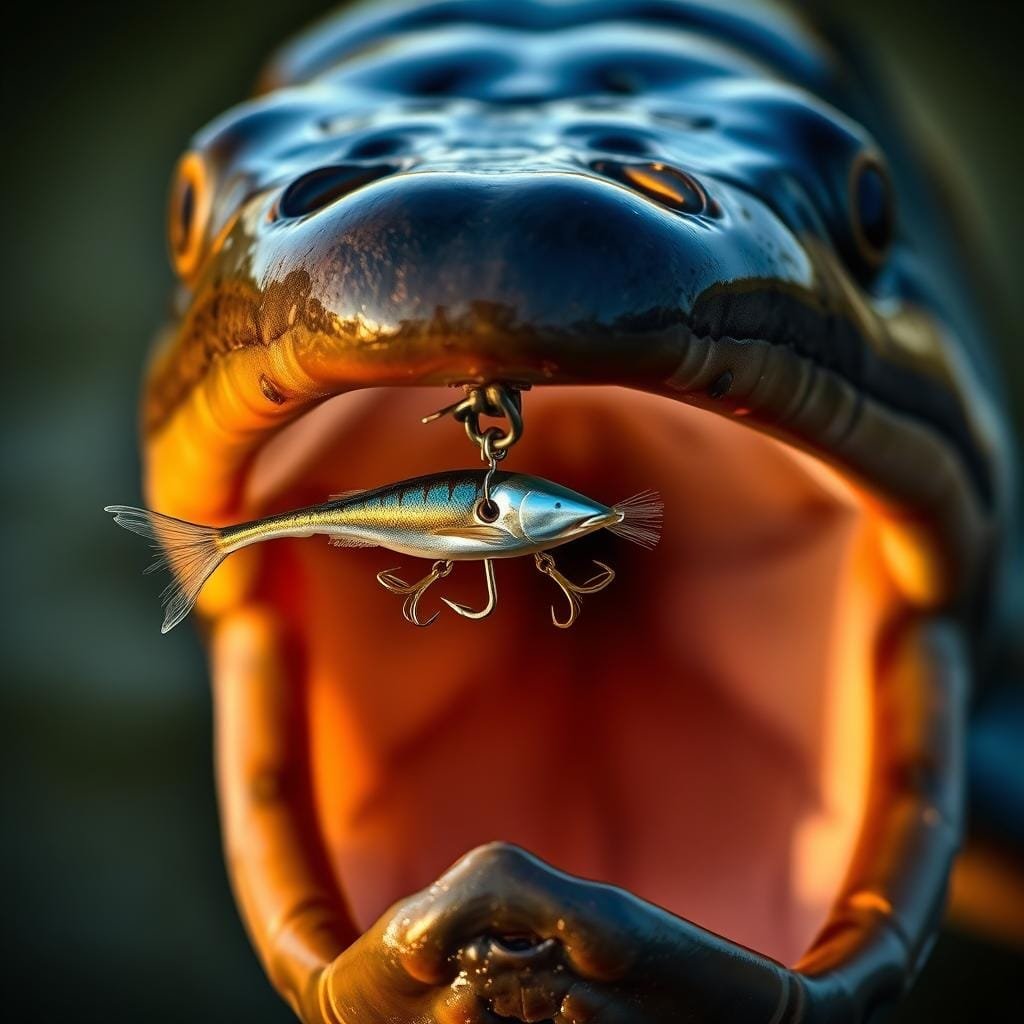
Great hookups start with patient gar presentation and clean line feel. Focus on gar bite timing, keep motion smooth, and let the fish dictate the pace. Whether you prefer cut bait vs live bait gar, or a sight-fishing gar retrieve, the key is calm hands and a clear plan.
Let them chew: giving time to work bait into the soft throat
After the take, do not rush. Let the fish clamp, stop, and chew. That pause helps cut bait slide into the soft throat, turning bumps into solid weight.
Watch the line and listen for the clicker if you use one. True gar bite timing feels like steady pressure, not a panic sprint.
Free-spool feel: thumb-and-forefinger line control during the take
Open the bail and control the run with a light pinch. This free-spool gar method keeps tension off the bait while you read the fish.
Feather line with your thumb and forefinger. When the peel evens out and angles away, ease the drag, come tight, and lift.
Cut vs. live bait: quicker swallows on cut, crosswise carries on live
Cut bait vs live bait gar choices affect timing. Cut bait gets inhaled faster, so your window arrives sooner.
Live bait is often carried crosswise as the fish cruises. Early hooksets yank free. Wait for a turn or a second run before you drive steel.
Parallel presentations: bringing flies/lures across the snout
For longnose fish you can see, cast past and run a shallow crank or fly parallel to the beak. That angle prompts a head turn and snap.
Use short strips on bunny leeches and keep working even after a miss. A measured sight-fishing gar retrieve earns repeat strikes when your first set doesn’t stick.
| Scenario | Best Move | Key Cue | Hook-Set Window |
|---|---|---|---|
| Cut bait on slip float | Free-spool gar take, then tighten | Steady V-wake and controlled peel | When pressure stays constant for 3–5 seconds |
| Live bait for cruisers | Let fish carry crosswise, wait for turn | Line angles, short stop, second surge | After the turn or second run begins |
| Bottom-set cut bait | Thumb-and-forefinger feel, slow swing | Firm, even pull with no darting | On steady load, sweep and reel |
| Sight-fishing longnose with flies | Parallel strip along the snout | Head turn and close-in flash | When the beak closes; keep stripping if missed |
| Shallow crankbait visual | Maintain speed, no sudden pauses | Shadow tracks lure nose-to-nose | On contact, lean and keep hooks pinned |
Blend these moves with smart gar bite timing, and each gar presentation gets cleaner. Choose cut bait vs live bait gar based on current, clarity, and how fish are traveling. When you can see them, trust a steady sight-fishing gar retrieve and let the angle do the work.
Hookset, Fight, and Land: From Slow Takes to Boat-Side Chaos
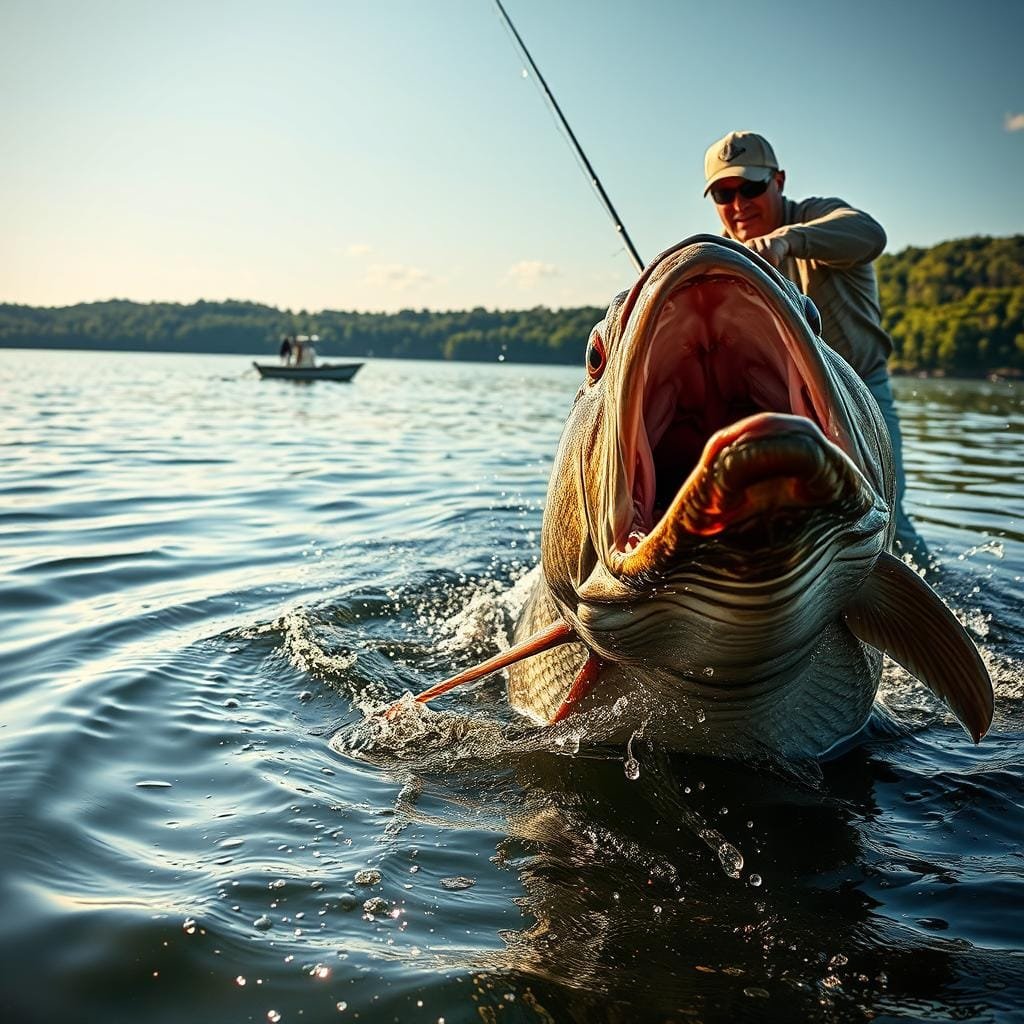
Patience is key for a good gar hookset. Guides on the Trinity River teach a quiet wait. Then, a calm move when it’s time.
When to hit ’em: from “Not yet” to “O.K., hit him”
Wait until the fish chews on the bait. A slow crawl turns into a confident run. That’s when you know it’s time to hit.
Keep the rod low and the line tight. This helps plant the hook without pulling it out. If the fish stops, wait a bit and feel for weight before you pull.
Two-phase battle: bottom-digging power then full-body jumps
The fight has two parts. First, the fish digs into the bottom. Use short strokes to turn its head and gain ground.
Then, the fish jumps up. Gar jumps can be wild. Stay balanced and let the rod absorb the shock.
Boat-side safety: free-spooling during jumps to keep hooks planted
Near the boat, danger increases. Gar can jump up and swallow air. Be ready to free-spool during jumps to keep the hook in.
After the jump, re-engage the reel. Steer the fish away from the boat. Use short circles to control it.
Landing tools: oversized net, homemade snare/noose-on-a-stick
Standard grippers don’t work well on gar. Use an oversized net for small fish. But for big ones, a noose-on-a-stick is best.
On Lake Pontchartrain, crews use a special setup. It helps control big fish. Hand-landing is risky because of their sharp gill plates.
| Stage | Key Move | Why It Works | Pro Tip |
|---|---|---|---|
| Slow Take | Wait through the chew | Lets bait reach soft throat for better penetration | Feel for a steady pull before the gar hookset |
| Drive | Level sweep, tight line | Seats hook without tearing bait free | Keep rod low; avoid high, jerky snaps |
| Bottom Dig | Pump-and-reel pressure | Turns the head and beats structure | Short strokes stop the fish from owning the bottom |
| Air Game | Free-spool during jump | Slack micro-cushion keeps points pinned | Tap the clutch, then re-engage after gar jumps |
| Boat-Side | Control circles, clear crew | Prevents hull cuts and thrown hooks | Leader gloves on; eyes on gill plates |
| Landing | Noose-on-a-stick gar tool | Locks behind head and pectorals for safe control | Use proven landing gar tools; skip lip grippers |
Safety First: Teeth, Scales, and Smart Release or Keep
Gar safety starts before the fish hits the net. There are no verified attacks on people. Most “bites” come from thrashing fish. Treat that armor and the concrete-hard head with respect, and keep legs and hands clear at boatside.
Handling hazards: needle teeth, gill plates, and thrash risk
Handling alligator gar means planning for sudden surges. Needle teeth can slice bare skin, and sharp gill plates act like knives. Use a noose-on-a-stick to pin the head, then control the tail. Wear cut-resistant gloves and keep the fish low on a wet deck or in the water.
Skip gaffs on any fish you might release. A steady grip behind the head, with a hand under the belly, protects the fish and you. If it rolls, let go and reset.
De-hooking strategy: clip bronze hooks for fast, safe releases
Dehooking gar is about speed and precision. If the hook is easy to reach, use long pliers only when the mouth is stable. For deep sets, clip the line close and move on. Bronze hooks corrosion—and bronze wire leaders—let a fish shed hardware within weeks in water and stomach acids.
Downsized options like a 4/0 Trokar reduce damage, while heavy rod-and-braid systems shorten the fight. For science-backed context on gear and biology, see this overview of alligator gar conservation and tactics.
Keep or release: respected table fare in Louisiana; ethical harvest tips
Gar table fare Louisiana has real fans. Cleaned right, the meat is white and mild. Ice it fast, avoid waste, and follow local limits and size rules. Target abundant fish and pass on obvious spawners in flood years for an ethical gar harvest.
- Release candidates: clip and let bronze hooks corrosion work; minimize air time.
- Keepers: bleed, chill, and fillet away from the skin and armor.
- Any fish: control with a noose, never gaff, and keep hands clear during boatside surges.
Smart handling alligator gar keeps anglers safe and sustains the fishery. Balanced choices—quick releases, clean harvest, and careful gear use—protect a species that grows slow and lives long.
Myths vs. Facts: Do Gar Attack and Do They Crush Gamefish?
Some gar myths won’t die. These fish look fierce and swim in shallow water. But, do gar attack humans? Let’s look at the facts, not just stories.
No verified human attacks; misattributed bites
Guides and biologists say gar don’t target people. Reports of gar attacks often mix them up with alligators. Most injuries come from snagging bait or other fish, not gar.
Texas Parks and Wildlife studies back this up. They found gar avoid fights and only take bait when it’s safe. So, no, gar don’t attack humans.
Diet reality: carp, shad, and opportunistic forage dominate
Studies show gar mainly eat carp and shad. They rarely eat gamefish. Many gar even have empty stomachs, showing they wait for the right moment to eat.
Gar eat what they can find near shore, like fry. They don’t just hunt bass. When there’s a lot of bait, they mostly eat rough fish like carp and shad.
Aging giants: 6-footers can be 35–45 years; some live to 70+
Gar grow slowly and live a long time. In Texas, they start at two feet and grow to five feet in a decade. A lean 6-footer is 35–45 years old, and some live up to 70 years.
This slow growth is why we need to harvest them carefully. Texas studies show a big catch is a long-lived fish. It’s shaped by many years of changes in its environment.
Gear That Gets It Done: Rods, Reels, and Sight-Fishing Essentials
Start with versatile gar rods and reels for both bait and sight work. Guides on Lake Pontchartrain use medium to medium-heavy sticks. They pair these with a Penn Battle 2000 and PowerPro 30 lb braid.
Add 3 to 4 feet of 50-pound Malon-7 nylon-coated braided wire leader for gar protection. Use 5/0–8/0 Mustad or Gamakatsu hooks. A 3/4–1-ounce barrel sinker makes a clean Texas rig that works well in current.
For big Texas rivers, use heavier main lines of 50 to 130 pounds. Slip floats help drift carp or drum naturally. Free-spool-capable reels are important for fish to chew before hitting.
Switch to longnose sight work with a 7- or 8-weight fly rod. Use a floating line and an 8-foot, 60-pound fluoro leader. Slender minnow flies in white/red or white/chartreuse work well, as do bunny leeches.
Cover shallow flats with flippin’ stick crankbaits and 40-pound braid for long casts. Shallow runners like the Jackall Cherry Zero Footer and Rapala X-Rap work well. Longnose often don’t need a leader here.
Use polarized sunglasses gar to read wakes and beaks. Carry an oversized net for bycatch and a simple PVC noose tool. A forked stick, a lawn chair, or a small johnboat complete your kit.
Match conditions to tactics and keep it simple. The right gar rods and reels handle bait duty. A fly rod or flippin’ stick crankbaits are best for high-cruising fish. With clear vision and patient takes, you’ll catch and land fish safely.
FAQ
What’s the absolute best bait for gar in U.S. waters?
Carp steaks and heads, freshwater drum chunks, and mullet are top picks. They smell strong and are easy for gar to eat. For longnose gar, cut bait works well, but flies and shallow lures can also catch them.
Why does cut bait outfish live bait for alligator gar?
Cut bait smells more and is easier for gar to swallow. Live bait might get stuck in their jaws. Cut bait gets swallowed faster, helping you catch more gar.
When should I set the hook on a gar?
Wait patiently. Open the bail and let the gar take line. Feel the speed and direction with your thumb and finger. Wait until the gar stops running or changes direction, then set the hook.
What rigs work best for big gar?
Two good rigs are a Texas rig and a slip-float rig. The Texas rig uses 50 lb wire and 5/0–8/0 hooks. For drifting, use a slip-float rig with cut bait.
Should I use wire leaders or bronze leaders?
Use wire leaders for quick fights. Bronze leaders are better for conservation. If you need to clip a fish, bronze corrodes fast, helping the gar shed the hook.
Where are reliable spots to find gar?
In Texas, try the Trinity and Sabine Rivers. In Louisiana, fish Lake Pontchartrain bayous. For longnose gar, check Ontario and Quebec’s Great Lakes and rivers.
What months are best for gar fishing?
Fish from late spring to summer. In Lake Pontchartrain, May to September is best. For longnose gar, fish from mid-May to late June.
How do I present bait so gar actually swallow it?
Cast cut bait and let gar chew. For live mullet, free-line and wait. Use flies or shallow lures to trigger a bite.
What tackle do I need to handle trophy alligator gar?
Use medium-heavy to heavy rods and reels. Choose 50–130 lb main line. For longnose gar, a fly rod works well.
How do I fight a big gar without losing it?
Expect a bulldog run and jumps. Pump and reel hard to avoid snags. Click to free-spool during jumps to keep hooks in.
What’s the safest way to land and release gar?
Avoid lip grippers. Use a net for small fish and a homemade snare for big ones. Handle with care and release quickly.
Are gar dangerous to people?
No, there are no attacks on record. They look scary but are not dangerous. Handle them carefully to avoid injury.
Do gar wipe out bass and crappie?
No, they mostly eat carp and shad. They’re not bass assassins. They’re part of the ecosystem.
How old are the big ones?
A 6-foot gar can be 35–45 years old. 7–8 footers can be over 70. They grow fast then slow down.
What lures and flies actually hook longnose gar?
Use slender minnow flies and bunny leeches. Shallow crankbaits work well on bright days.
Any simple bank setup that can catch giants?
Yes, use a sturdy rod, 50–130 lb line, and a forked stick. Park a chair and wait for a V-wake.
How do I read the water for active gar?
Look for snouts breaking the surface and V-wakes. Fish sharp bends and lake-side drop-offs. They roam more on breezy days.
What about regulations and ethical harvest?
Check local rules before fishing. In Louisiana, gar are good to eat. Harvest wisely and handle fish carefully.
Can I target gar while chasing other species?
Yes, gar often mix with other fish. Keep a cut-bait rod or crankbait ready for surprise encounters.
Why do gar surface so often?
They gulp air to breathe. Their air bladder works like a lung. Surface rolls are good signs for anglers.