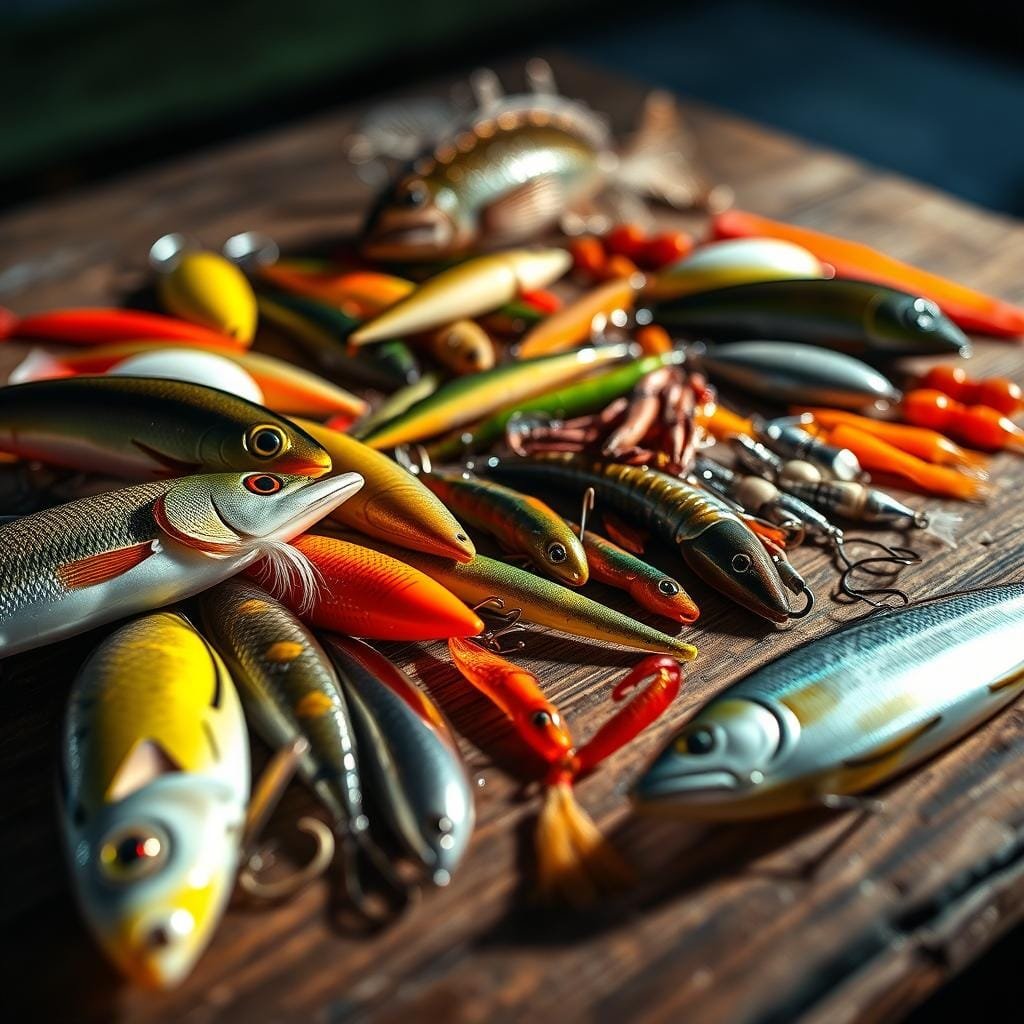
Fishing for trophy lake trout means going deep and using big baits. These fish live in cold, clear lakes from Lake Superior to Alaska. They like water that’s almost freezing and can dive very deep.
To catch them, you need the right bait and to fish where others can’t. This means using downriggers and fishing deep.
First, you need to get your bait to the right depth. Use downriggers, lead core, and heavy weights. Then, try different lures like big baits, spoons, and swimbaits.
These lures are 6–10 inches long and can be very effective. Even though you might not get many bites, the ones you do could be huge.
Using electronics helps find these deep fish. Look for bait balls with 2D CHIRP sonar. Then, use spot-lock to find the fish and fine-tune with forward-facing sonar.
Try trolling, drifting, and slow retrieves in cold water. These tactics will help you find and catch lake trout. They can make your fishing trip unforgettable.
Lake Trout Behavior and Habitat: Depth, Temperature, and Forage Preferences
Lake trout like cold, clean water. They need oxygen-rich places and steady temperatures. Finding the right depth and temperature is key. This, along with the right bait and tactics, leads to more bites.
Cold, deep water: targeting the 20–200+ foot zone
Most days, the best temperature is 40–50°F. In spring and far north, it’s 20–80 feet. In big southern lakes, it’s over 200 feet.
Lakers often hide under bait, then quickly strike. Keep your lure near the bait school’s base. This is where they ambush.
They can handle warmer water up to 59°F. But their efficiency drops. Look for arcs on your sonar near bait blobs. Set your lines where the temperature matches the forage.
Move quietly in clear water. This helps you catch more fish.
Key forage species: alewife, cisco, whitefish, smelt, suckers
They eat alewife baitfish, cisco, whitefish, smelt, and suckers. Big fish also eat kokanee and smaller trout. Use slim, silver lures for smelt and cisco. Use meatier lures for whitefish and suckers.
When schools gather, place your lure just below or next to them. This is where they strike.
When and why lakers move shallow to feed or spawn
They move shallow at dawn, dusk, or in cloudy weather. They go to 4–10 feet to feed on rocks or sand. In fall, they spawn on open-water humps and reefs, 6–60 feet deep.
See this guide to catching big lake trout for more info.
Time your moves with wind, bait, and cooling trends. Feeding times are short and fast. Be ready to move.
How lake type (oligotrophic, clear) influences bait choice
Trophy waters are usually oligotrophic lakes. They are cold, deep, and clear. Use natural metallics and cisco or white shades here.
Use bright colors like chartreuse and pink for deep, low light, or stained water. In clear water, use softer lures and thinner wire. This helps in clear water.
Let the lake guide your bait choice. Mimic alewife baitfish when you see suspended pods. Add vibration or flash when fish are near bottom or visibility is low. This balances depth, temperature, and forage.
Understanding the “Deep” Bite: How To Reach Fish Holding Low
Getting baits down is key. Deep water trout tactics need precise depth, quiet baits, and quick contact. Small changes in angle and weight are critical at 200 feet or more.
Downriggers are great for lakers. Use a short fluorocarbon leader with spoons or wobblers. Track lure depth with sonar. Lead core line is good for long trolls over structure.
Downriggers, lead core, and heavy weights to get baits down
Live bait or jigs need weight. Use egg weights trout 12–24 inches above bait. This drives the bait down fast while keeping it alive.
For quick bites, use bigger metal. A 3/4–1 oz Fish Sense Binsky or 1–2 oz Spro Prime bucktail works well. They punch through current and hit the zone fast.
Change systems as the lake changes. Use downriggers for lakers, then switch to lead core line. Keep your gear simple to avoid spooking fish in clear water.
Boat control in wind and using controlled drifts
Wind helps with controlled drift fishing. Set a slow, diagonal slide across waypoints. Hold a vertical line for straight tracking.
Tap bottom, lift a foot, and hover where marks stack. If the bow swings, adjust the bow-mount or use a drift sock.
On big water, aim the hull for a straight drift. This keeps your spread tight and baits in the strike zone.
Matching sink rate to target depth without spooking fish
Match sink rate to depth and clarity. Heavier blades drop fast but splash can scare fish. Start heavy, then downsize for a natural fall.
Keep the line vertical and reduce clips and swivels. This ensures crisp hooksets. Pause and let the lure glide when marks rise.
| Method | Best Use Case | Typical Setup | Depth Control | Stealth Factor |
|---|---|---|---|---|
| Downriggers for lakers | Precision trolling over suspended fish | Cannon or Scotty rigger, short fluoro leader, spoon or wobbler | Exact; adjust ball depth to marks | High with minimal hardware and quiet passes |
| Lead core line | Covering contours and changing depths | 5–10 colors, swivel, 20–30 lb fluoro leader | Progressive; count colors to reach zone | Moderate; keep leaders long in clear water |
| Heavy weights and egg sinkers | Live bait and vertical jigging to bottom | Egg weights trout 12–24 inches above bait, circle or jig | Fast; ideal for targeting 200 feet | High when hardware is trimmed down |
| Controlled drift fishing | Wind-driven coverage with vertical lines | Bow-mount or drift sock, blade baits, bucktails, heavy jigheads | Responsive; adjust weight to hold vertical | High; natural presentation with minimal noise |
best bait for lake trout
Choose the best bait for lake trout based on what they’re eating and how they’re acting. For big fish, use 6–10 inch suckers, gold shiners, or legal perch and sunfish. Make sure the bait size is right for the local fish.
For cautious fish or when you want more bites, use smaller bait. Nightcrawlers, salmon eggs, and small minnows work well. Live bait should move slowly, while dead bait is better in cold weather.
Hardware is key in deep lakes. Start with classic spoons in gold, silver, or bronze. For better visibility, try fire tiger, hot pink, chartreuse, and glow. Flatfish-style wobblers are great for finding bottom. Bucktails and fast-fall blades are good for action. Swimbaits in 9–10 inches are big but slow.
| Category | Examples/Brands | Best Use Case | Color/Game Plan | Notes on Lake Trout Bait Size |
|---|---|---|---|---|
| Live bait for lakers | Suckers, gold shiners, perch, sunfish (where legal) | Trophies, cold fronts, slow drifts | Natural tones; subtle flash | 6–10 inches for big fish; 3–5 inches for numbers |
| Dead bait lake trout | Salted cisco, smelt, cut whitefish | Static sets, bottom presentations | Silver/white profile; scent-driven | Match local forage length; keep profiles streamlined |
| Spoons | Acme Little Cleo, Luhr-Jensen Krocodile | Trolling deep, vertical yo-yo | Gold/silver on bright days; glow/fire tiger low light | 3/4–2 oz to reach 60–200+ feet |
| Flatfish-style wobblers | Yakima FlatFish, Worden’s T50–T60 | Slow troll, contour tracing | Perch, white, rainbow, silver | 5.5 inches and up for aggressive strikes |
| Bucktails | Spro Prime, Andrus 1–2 oz | Bottom hops, bait-tipped search | White, chartreuse, glow | Heavier heads to stay vertical in current |
| Blade baits | Binsky 3/4–1 oz, Johnson Thinfisher | Fast-fall reaction bites | Metallic silver/gold; glow on overcast | Compact; excels when fish pin bait to bottom |
| Swimbaits for lake trout | Storm WildEye, Savage Gear Pulse Tail, Bull Dawg 9”, Mini-D 10” | Slow roll near bottom, steep breaks | White, smelt, cisco, chartreuse highlight | 9–10 inches for class; expect fewer but bigger bites |
- Start with top lake trout bait that mirrors local forage, then adjust color based on light.
- Let conditions dictate lake trout bait size: big for trophies, small when fish are neutral.
- Rotate between live bait for lakers, dead bait lake trout, and swimbaits for lake trout until a pattern sticks.
Live and Dead Bait Options That Consistently Produce
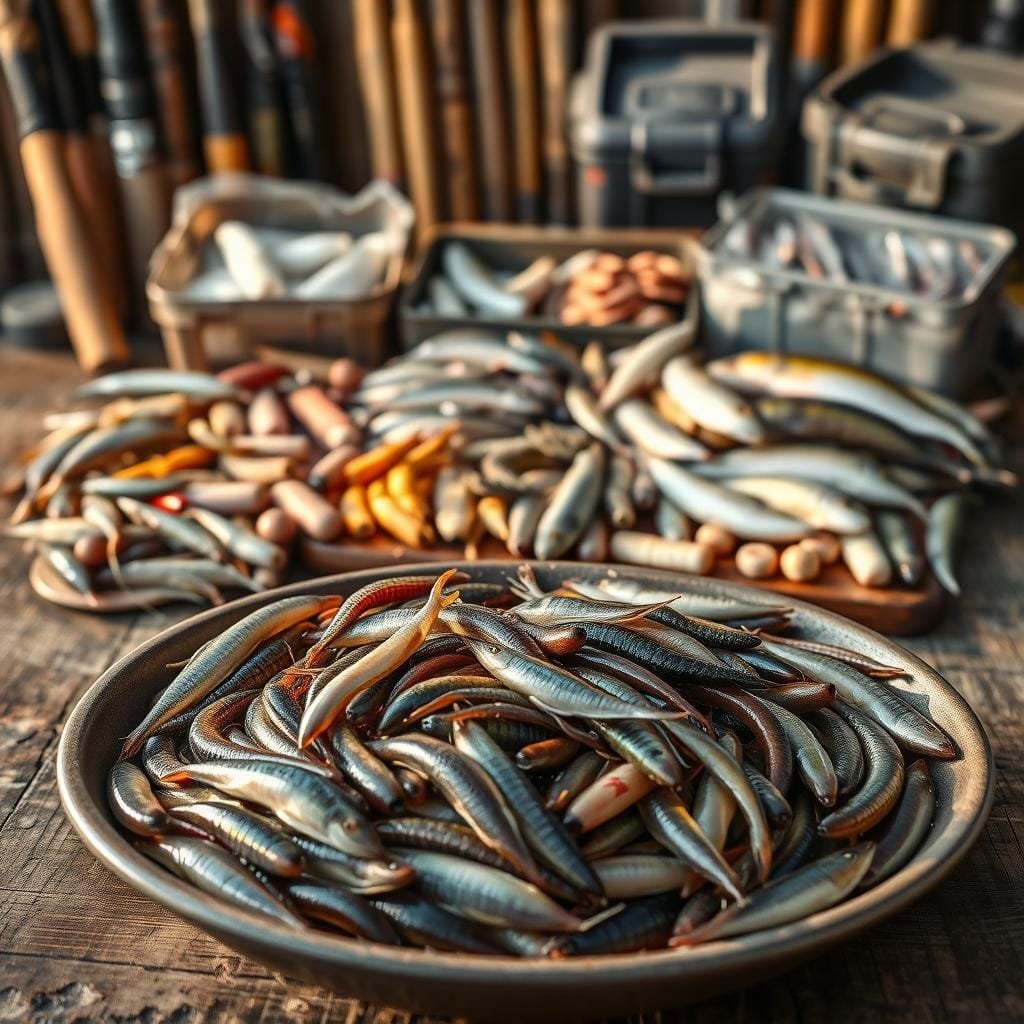
Lake trout love big meals but also enjoy easy snacks. Choose bait that matches the conditions and the fish you’re after. Using both live and dead baits can keep you catching all day.
Big offerings (6–10 inches): suckers, gold shiners, legal panfish
Big bait means big fish. Suckers and gold shiners work well because they sink deep and attract big fish. In places where it’s legal, using perch or sunfish can also draw in lakers.
Make sure your big bait can handle the drop. Use strong hooks and a slip sinker to keep it near the bottom. Even if your bait dies, keep moving it to catch more fish.
When smaller baits shine: nightcrawlers, salmon eggs, small minnows
When it’s cold or the water is clear, smaller baits work better. Nightcrawlers and salmon eggs mimic small food and insects. They’re great for catching fish when they’re not hungry for big meals.
Small minnows also catch fish when they’re spread out. Move your bait slowly and carefully to keep it in the right spot without scaring the fish away.
Selecting bait size for trophy fish versus numbers
Big bait is for catching big fish. It takes patience but can lead to bigger catches. Smaller bait, on the other hand, catches more fish but they might not be as big.
- Chasing giants: go 6–10 inches and slow your pace.
- Chasing numbers: downsize to eggs, nightcrawlers, or 2–3 inch minnows.
- Neutral fish: start small, then test a single oversized bait for a reaction bite.
Legal considerations for using live bait in your state
Before you go fishing, know the rules about live bait. Panfish bait laws vary by state and even by lake. Always check the latest rules and keep receipts when needed.
Only use approved bait species. Never release bait you don’t use. If you’re unsure, try frozen or salted bait to follow the rules and catch fish.
| Bait Type | Primary Use | Best Scenario | Pros | Watch-outs |
|---|---|---|---|---|
| Sucker bait (6–10 in) | Trophy targeting | Deep structure, low light | Big profile, strong scent trail | Requires stout tackle; check transport rules |
| Gold shiners (6–8 in) | Search and draw power | Clear water, long drifts | Flashy scales, durable | Availability varies by region |
| Legal panfish (perch/sunfish) | Large forage match | Where panfish bait legality allows | Natural prey, stays lively | Strict species and harvest rules |
| Nightcrawlers for trout | Numbers and neutral fish | Post-front, midday lulls | Easy to rig, universal appeal | Short strikes; use lighter wire hooks |
| Salmon eggs trout | Finesse and scent | Cold water, rivers or inlet zones | Natural drift, quick bites | Delicate; refresh often |
| Dead bait trout (frozen/cut) | Bottom or slow-drift | When fish hug bottom or after mortality | Consistent scent, stays on hook | Less action; needs jigging to animate |
Pro Rigging Setups for Natural Baits
These two builds cover most bites, from mud-bottom ambushes to mid-lake chases. Each lake trout bait rig aims for clean drops, natural action, and fast hooksets on heavy fish.
Nostril-hooked circle hook with 12–24 inch egg weight dropper
For a stealthy circle hook rig trout, pass the point lightly through a baitfish nostril. Clip an egg sinker 12–24 inches up the leader to form a controlled egg sinker rig trout. Drop to bottom, ease the reel in gear, and let the bait swim tight circles while the sinker pins the zone.
This set-piece shines with suckers or golden shiners in 6–10 inch sizes. Keep the rod high and let the fish load it before pressure. It’s simple, legal in most states, and deadly around points, humps, and saddles.
Treble-behind-the-head jig setup for active searching
When scanning marks, a treble hook jigging rig triggers reaction eats. Pin a small treble just behind the head, add a sliding weight a few inches above, and work a crisp lift-drop over fish you mark on sonar. It tracks straight, kicks on the fall, and sticks short strikers.
Use this to cover water over breaks and suspended lake trout on bait balls. Mix in long pauses to let the bait flutter and hang in their face before the next pop.
Bottom contact vs suspended presentations in the water column
Grind bottom to puff silt and mimic stunned forage. That signal pulls neutral fish from nearby structure. When fish ride mid-column, rise your bait a few feet over their heads and hold it there. Suspended lake trout often eat on the stall, not the hop.
Match weight to depth and wind. A heavier egg sinker rig trout locks depth, while a lighter slider allows a slow, natural fall on pressured fish.
Hook placement to maximize hookups and bait longevity
Nostril placement keeps gills clear and baits lively for long sets with a circle hook rig trout. For the search game, a behind-the-head treble ups your odds on slash bites without tearing the bait apart on the first lift.
For more rig ideas and component combos, see this guide on trout fishing rigs and adapt the hardware to your water.
| Rig | Core Components | Best Use | Depth Target | Bait Types | Key Advantage |
|---|---|---|---|---|---|
| Nostril Circle with Dropper | Circle hook, 12–24 in dropper, egg sinker, fluorocarbon leader | Set-piece on structure, light current | Bottom to low-mid | Suckers, golden shiners, cisco | Natural swim with pinned depth; ideal lake trout bait rig for big bites |
| Treble Head Jig Search | Small treble behind head, sliding weight 2–6 in above, swivel | Vertical hunt on marks, mobile boat | Mid-column to over deep basins | Shiners, smelt, dead baits trimmed | Fast hookups; excels on suspended lake trout during bait-ball pushes |
| Hybrid Bottom Tap | Circle hook plus bead stop, adjustable egg sinker | Contact, silt puffs, reaction strikes | Bottom contact | Large minnows, cut whitefish | Switches from anchor to slow-drift; blends egg sinker rig trout control with subtle action |
| Hover-Stop Present | Treble hook jigging rig with lighter weight | Hold above marks spotted on CHIRP | Mid to high column | Smelt, small cisco, trimmed sucker heads | Extended hang-time keeps bait in strike box for circle-back fish |
Classic Spoons for Lakers: Colors, Sizes, and When to Deploy
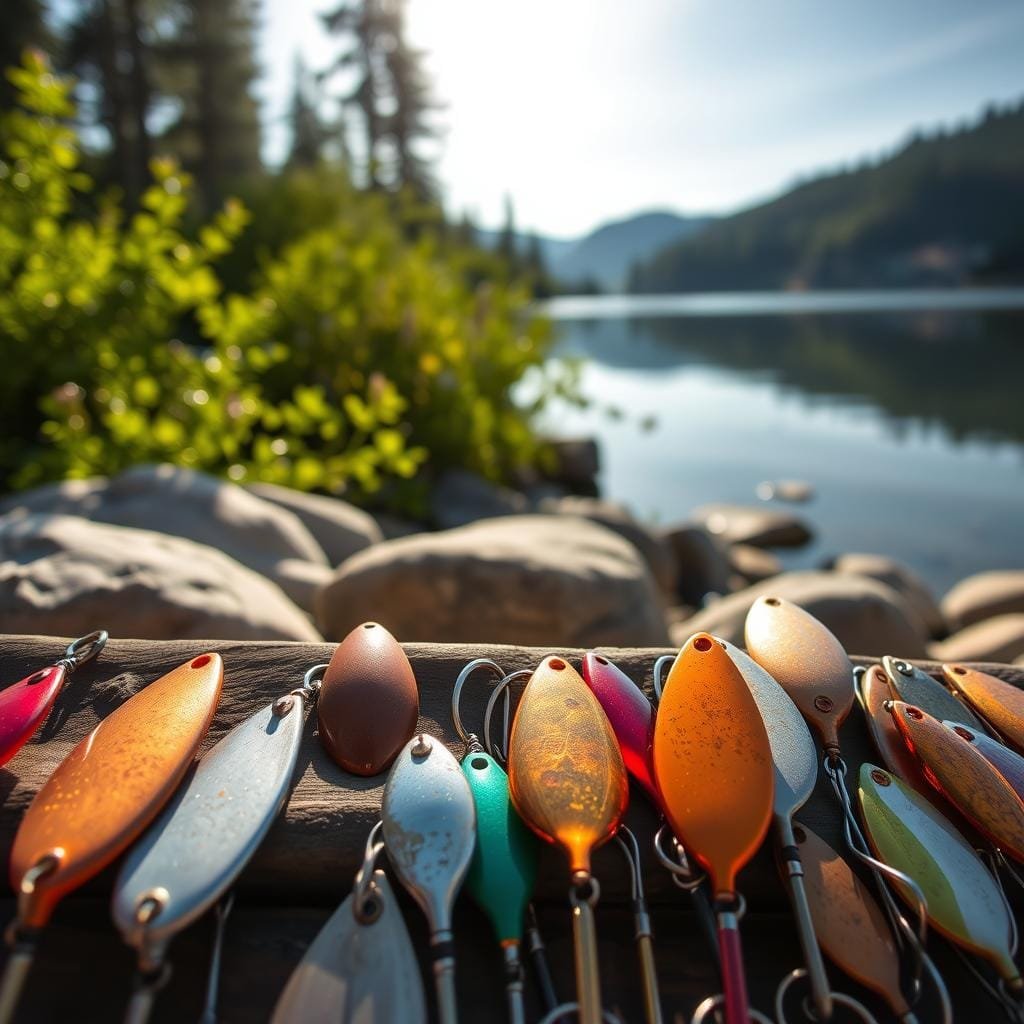
When big fish get picky, few tools beat well-tuned lake trout spoons. They flash, thump, and speed range let you cover depth and trigger strikes fast. Pair smart color choices with depth control, and the bite often follows.
Why spoons dominate trophy catches historically
Spoons have put more giants in nets because they work across seasons and speeds. The profile mimics smelt and cisco, while the wobble throws far-reaching flash. That mix turns neutral fish into hitters, whether you’re trolling spoons or vertical spooning trout on deep structure.
Fluorescents vs natural metals: fire tiger, hot pink, gold, silver
Use bright paint when light fades or water stains. A fire tiger spoon or hot pink pattern jumps in the dim and punches through depth. In clear water or bright sun, polished gold and silver seal the deal by matching baitfish sheen without spooking pressured fish.
Trolling deep vs vertical retrieves and wind drifts
For roaming schools, run lake trout spoons behind downriggers and keep a steady cadence. When marks stack on breaks, drop and rip for vertical spooning trout, then pause to let the lure flutter into the strike zone. On windy days, free-drift while ticking target depth so the spoon keeps a wide, rolling wobble.
Running a two-spoon pattern and switching based on bites
Start with contrast. Run a 2.5-ounce Red Eyed Wiggler in hot pink or a fire tiger spoon on one side, and a magnum Michigan Stinger in gold or silver on the other. Track which rod fires, then shift the spread to that winner and match speed to preserve the spoon’s heartbeat.
| Spoon/Brand | Best Light/Water | Primary Method | Typical Speed or Cadence | Key Strength |
|---|---|---|---|---|
| Red Eyed Wiggler (2.5 oz) | Low light, stained, deep layers | Vertical spooning trout; wind drifts | Rip-and-fall; 2–4 fast lifts, 2–3 sec flutter | Loud flash and thump to wake neutral fish |
| Michigan Stinger (Magnum) | Bright sun, clear water | Trolling spoons with downriggers | 1.6–2.2 mph, hold steady wobble | Natural metal flash that matches smelt and cisco |
| Fire Tiger Spoon (assorted makers) | Dawn, dusk, cloudy fronts | Troll deep or slow roll mid-depth | 1.4–2.0 mph or slow pump retrieve | High visibility to cut through color and depth |
Hard Plugs That Dig Deep: Flatfish and Similar Wobblers
Lake trout like to hide at the bottom. A wide-wobbling plug works well here. It moves water and hits the bottom slowly. Use a Flatfish for lake trout and control the boat well.
5.5-inch and larger models for aggressive strikes
For big lakers, use plugs over 5.5 inches. Try the Yakima Bait FlatFish T55, Rapala Deep Tail Dancer 11, and Luhr-Jensen Kwikfish K16. They move a lot of water and stay effective at slow speeds.
Natural prey patterns: silver, white, rainbow, perch
Choose colors that match what fish eat. Silver and white look like smelt and cisco. Rainbow and perch colors look like trout and panfish. Start simple in clear water and add more color or scent in murky water.
Slow retrieve in cold water versus troll for search mode
In cold water, cast and slowly roll the plug along the bottom. This makes it feel real to fish. For searching, troll the plug behind lead core or downriggers. Change speeds to cover more area.
Vertical Jigging Mayhem: Blade Baits, Bucktails, and Swimbaits
When you mark a stack of bait with arcs beneath, vertical jigging lake trout lights up fast. Keep your drifts short, watch the fall, and stay ready. Most strikes land on the drop, so keep contact without killing speed.
Fast-fall blades (e.g., Binsky 3/4–1 oz) to trigger reaction bites
Blade baits for trout shine when fish are pinned to ledges. A 3/4–1 oz Fish Sense Binsky in silver or blue chartreuse rockets down, pings on sonar, and thumps hard. Snap it six to twelve inches, then let it free-fall under control to spark reaction hits.
Use braid with a fluoro leader for crisp feel. Pause mid-column when a chaser appears to convert followers into biters.
Saltwater-style 1–2 oz bucktails, plain or bait-tipped
In heavy current or 100-plus feet, bucktail jigs trout like the Spro Prime or Offshore Angler XXX Baitfish hold bottom and stay true. Fish them plain for glide, or tip with a minnow head for scent without killing the profile.
Lift in slow, high sweeps and let the lure settle. That puff of bottom silt often triggers nearby cruisers.
Boot-tail and minnow plastics on heavy jigheads (1+ oz)
Big soft plastics match cisco or alewife well. Pair boot tails or minnow bodies with heavy jigheads to reach depth fast and track straight. Long upward sweeps followed by measured drops let the body wobble and hunt.
If fish rise to look, hold the bait steady for two seconds, then give a short pop. Many eats happen right there.
Color calls: white, chartreuse, glow vs baitfish hues
Rotate between standout tones and naturals. White and chartreuse excel in dim light; glow swimbaits punch through deep water. On clear days, switch to silver, pearl, or smelt patterns and let cadence do the work.
Carry both options so you can match mood and light fast. A quick change can save the bite when pressure builds.
| Lure Type | Best Weight Range | Primary Use | Key Colors | Pro Tip |
|---|---|---|---|---|
| Fish Sense Binsky blade | 3/4–1 oz | Reaction strikes on tight schools | Silver, blue chartreuse | Snap short and let it free-fall to trigger chasers. |
| Bucktail jigs | 1–2 oz | Holding bottom in deep or current | White, glow, smelt | Fish plain for glide; add a minnow head for scent. |
| Swimbaits on heavy jigheads | 1–2 oz+ | Natural swim with fast bottom contact | Glow, pearl, alewife | Sweep high, then controlled drop; pause on followers. |
Soft-Plastic Swimbaits: The Versatile Big-Fish Magnet
Big swimbaits are great for catching big lake trout. They move a lot of water and stay deep. This makes them perfect for clear water and where fish like to hide.
Why swimbaits excel for trolling, casting, and jigging
Soft plastics are easy to use in many ways. You can troll, cast, or jig without changing your setup. They work well even when you move slowly, which is good for cold days.
Go big: 9–10 inch profiles for true giants
Use big swimbaits to catch the biggest fish. A 9-inch Bull Dawg or 10-inch Mini-D Swimbait is perfect. Use bright colors like chartreuse and red, or natural ones like gray and cisco. For more options, check out these soft-plastic lures for trout.
Retrieve cadence: slow rolls, deep sweeps, and patient pauses
How you move your rod is key. Move it slowly to feel the bottom. Then, make big sweeps to make the tail move. Pause to let it fall back down.
Expect fewer bites—but from behemoths
Big swimbaits might not get you a lot of bites. But, the ones you do get will be huge. Be ready for strong bites and keep your hooks sharp. The reward is worth it.
| Swimbait | Best Use | Primary Cadence | Go-To Colors | Why It Works |
|---|---|---|---|---|
| Bull Dawg (9″) | Casting edges, slow trolling | Slow roll retrieve with brief stalls | Chartreuse, red, ghost gray | Bulky profile moves water and stays true at crawl speeds |
| Mini-D Swimbait (10″) | Vertical jigging, contour swings | Deep sweeps and controlled drops | Hot pink, cisco, white | Long body and boot tail call fish from depth and hold strike zone |
| Boot-Tail Soft Plastics (9–10″) | Search trolling and wind-drift casting | Steady grind with timed pauses | Silver, glow, perch tints | Natural thump pairs with speed changes to trigger neutral fish |
Finding Fish Fast: Sonar Strategy and Boat Positioning
Start with good electronics. Set up your CHIRP sonar for lake trout. Look for steep breaks leading to wide flats. Keep your baits ready to drop them fast when you see fish.
Reading 2D CHIRP: bait balls with arches underneath
On 2D sonar, find dense bait balls and arches below them. These arches are lake trout hiding under the bait. Move your boat to match the depth of the arches. Then, cast your lure to the bait level, not the bottom.
High-speed scanning (~5 mph) and dropping waypoints
Scanning at 5 mph helps cover large areas quietly. Mark bait balls and arches with waypoints. Make a wide turn, slow down, and set up to fish from clean water.
Spot-locking on hookups to capitalize on wolf packs
When you feel a bite, use spot-lock to stay put. Lake trout hunt in groups. Stay in one spot to keep fishing the school. Switch rods and keep your boat angle steady as fish move back.
Forward-facing sonar for lining up the drop
Use forward-facing sonar to guide your cast. Watch the jig fall in real time. Adjust your drop to hit the arches perfectly. This method makes fishing precise and quick.
Combine CHIRP sonar for lake trout with forward-facing sonar. Add tight boat control and smart fishing. This mix turns scans into bites and makes spot-locking a winning strategy.
Gear and Line Setup for Deep-Water Sensitivity and Power
Start with a 6’6”–7’ medium action spinning rod. It gives you the right balance. Use a large arbor reel for quick line pickup and smooth drag.
Choose braided line for better deep water feel. It makes hooks drive in deep water like it’s shallow. Add a short shock leader to protect your line from big runs.
Match your weight to the water depth and current. This keeps your bait vertical. Use 3/4–1 oz blade baits for a quick drop and clear feedback.
For bottom contact, try 1–2 oz bucktails in windy conditions. Use 1+ oz jigheads for big swimbaits to swim through the water column. Keep your terminal gear strong but slim.
For trolling, control the depth of your line. Use downriggers for precise placement of lures. Or, switch to lead core for a stealthy line angle.
The same rod works well for vertical fishing. But, use stout trolling sticks for fast speeds. Braided line gives you feel, while a fluorocarbon shock leader adds give. This combo helps you catch big fish every time.
FAQ
What are the top lake trout baits to pack for a trip?
Pack large live or dead baitfish (6–10 inches), classic spoons, and deep-diving wobblers like the Flatfish. Also, bring 1–2 oz bucktails, fast-fall blade baits, and oversized soft-plastic swimbaits. Bigger baits mean fewer bites, but they attract the biggest fish.
Where do lake trout usually hold in the water column?
Lake trout like water near 50°F. In northern lakes, they’re 20–80 feet down. In warmer southern reservoirs, they can be 200+ feet deep. They often sit under bait balls, tight to bottom, or the lower third of the water column.
What do lake trout eat in most lakes?
They eat alewife, cisco, whitefish, smelt, and suckers. In some places, they also eat walleye, kokanee, and other trout. Match colors and profiles to local forage or go bright when visibility drops.
When do lake trout move shallow?
They move shallow during short feeding windows, low-light periods, and for fall spawning runs. Look for steep breaks and flats where bait stacks and fish can ambush then drop back to depth.
How does clear, oligotrophic water affect lure color?
In clear water, natural metals and baitfish tones like silver, gold, white, and cisco shine. In deep or low light, fluorescents like fire tiger, hot pink, chartreuse, and glow often outproduce by boosting visibility and contrast.
What’s the best way to get baits to deep lake trout?
Use downriggers for precise depth control, lead core line to step lures down, or heavy clip-on “banana” weights and egg sinkers for live bait and jigging. The goal is fast, clean delivery to the strike zone.
How do I control the boat in wind over deep water?
Run controlled drifts powered by the breeze while keeping presentations vertical. Use the trolling motor to correct angle and speed, and lean on spot-lock when you hook up to milk a school.
How do I match sink rate without spooking fish?
Upsize blades to 3/4–1 oz, bucktails to 1–2 oz, and jigheads to 1+ oz to punch down fast. Keep rigs streamlined, maintain a vertical line angle, and trim excess hardware to stay stealthy in clear water.
What’s the single best bait for lake trout?
There isn’t one magic bait, but for trophies, big live or dead baitfish and oversized swimbaits are hard to beat. For numbers, smaller offerings like nightcrawlers, salmon eggs, and small minnows are consistent.
Which live baits work best for big lakers?
Suckers, gold shiners, and legally harvested panfish like perch and sunfish in the 6–10 inch range. They mirror cisco and whitefish profiles that trophy lake trout key on.
When should I downsize to smaller baits?
During tough bites, cold fronts, or when you want more action. Nightcrawlers, salmon eggs, and small minnows excel for mixed-size fish across many systems.
How do I choose bait size for trophies versus numbers?
Go big—9–10 inch profiles or 6–10 inch live baits—for fewer but heavier bites. Choose smaller baits if you want steady action and more hookups with a range of sizes.
Are there legal rules for using live bait?
Yes. Regulations vary by state and water body. Check rules on transport, species allowed, and use of panfish as bait. When in doubt, consult your state agency before fishing.
How do I rig a nostril-hooked bait with an egg weight?
Thread a circle hook lightly through the baitfish nostril. Clip a heavy egg weight 12–24 inches above the hook. Drop to bottom and let the bait swim tight circles to call fish in.
What’s the treble-behind-the-head jigging setup?
Pin a small treble just behind the bait’s head with a weight a few inches above. Vertically jig while watching sonar. This rig boosts hookup rates when fish chase fast drops.
Should I grind bottom or suspend above marks?
Both work. Kick bottom to stir silt and mimic wounded prey, or hover just above arches under bait balls. Let sonar and fish mood decide.
Where should I place hooks for better hookups and bait life?
Nostril placement keeps baits lively for longer so they swim naturally. A treble behind the head improves hook penetration during aggressive jigging or when fish nip at the head.
Why do spoons catch so many trophy lake trout?
Spoons offer flash, thump, and a wide speed window that triggers predators. They cover water fast while holding depth, making them a staple for big fish.
When do fluorescents beat natural metals on spoons?
In deep, dim, or stained conditions, run fire tiger, hot pink, chartreuse, or glow. In clear, bright water, gold, silver, and bronze deliver a realistic flash.
Should I troll spoons or fish them vertically?
Do both. Troll deep with downriggers to search, then drop spoons into holes and rip them up. On windy days, free-drift and keep spoons near bottom.
How do I run a two-spoon program?
Start with one fluorescent and one natural metal. Track bites, then switch all lines to the winning color and speed for the conditions.
Are Flatfish-style wobblers good for lake trout?
Yes. Their deep-diving, wide wobble triggers big fish at slow speeds. Choose 5.5-inch and larger models to target mature lakers.
What plug colors should I pick for Flatfish?
Go natural with silver, white, rainbow trout, or perch to match forage. Swap to brighter finishes if the light drops or water stains.
Troll them or cast them?
Both. Troll to cover water or cast and slow-roll in cold water. The exaggerated wobble works even at lazy speeds.
How do I jig lake trout with blades, bucktails, and swimbaits?
Use fast-fall blades like a Fish Sense Binsky 3/4–1 oz to get down and trigger reaction bites. Drop 1–2 oz saltwater-style bucktails, plain or tipped. Rig boot-tail or minnow plastics on 1+ oz jigheads for natural glide.
What colors should I try when jigging deep?
Rotate standout shades—white, chartreuse, glow—with baitfish hues that mirror alewife or cisco. Let sonar and bite feedback guide switches.
Why are big soft-plastic swimbaits so effective?
They move water, look real, and fish at any speed. They excel for trolling, casting, and vertical jigging while staying in the strike zone longer.
How big should my swimbait be for trophies?
Go 9–10 inches. Models like the Bull Dawg and Mini-D move heavyweight fish that ignore smaller offerings.
What’s the best swimbait retrieve for deep lakers?
Slow rolls near bottom, deep rod sweeps, and long pauses. Keep contact, watch your line on the drop, and be ready—strikes are violent.
Should I expect fewer bites with big swimbaits?
Yes, but the bites you get are from behemoths. It’s a quality-over-quantity play, specially in clear, cold lakes.
How do I use sonar to find lake trout fast?
Use 2D CHIRP to locate dense bait balls with arches underneath. Those arches are lakers staging to feed. Mark waypoints and circle back for precise drops.
What scan speed works for searching?
Around 5 mph. It’s fast enough to cover water yet slow enough for clean returns. Drop a waypoint on promising bait and fish.
Why spot-lock after a hookup?
Lake trout often run in groups or “wolf packs.” Spot-locking keeps you over the bite zone so more rods can get hammered quickly.
How does forward-facing sonar help?
It lets you line up your drop, track your lure, and watch fish react in real time. Adjust cadence and depth on the fly to trigger follows into bites.
What rod, reel, and line setup handles deep-water lakers?
A 6’6”–7’ medium spinning rod with a large-arbor reel spooled with braid for sensitivity, plus a shock leader for give. Match lure weight to depth: 3/4–1 oz blades, 1–2 oz bucktails, and 1+ oz jigheads.
How do I rig for trolling spoons and Flatfish deep?
Pair downriggers or lead core with strong, streamlined terminal tackle. Keep hardware minimal to avoid spooking fish in clear, oligotrophic water.
Any tips for fighting and landing 40-pound-class lakers?
Keep steady pressure with a smooth drag, avoid high-sticking, and use a big rubber net. A short shock leader helps tame surges without pulling hooks.