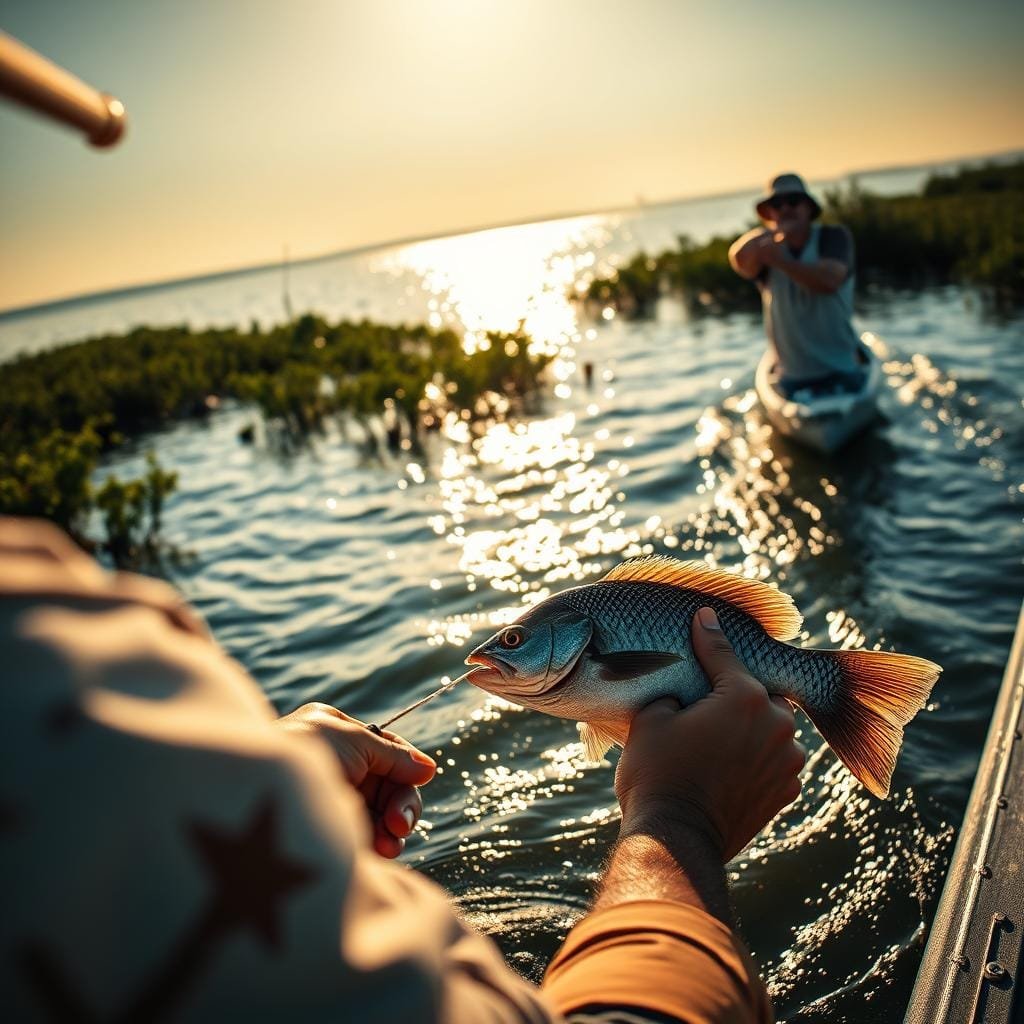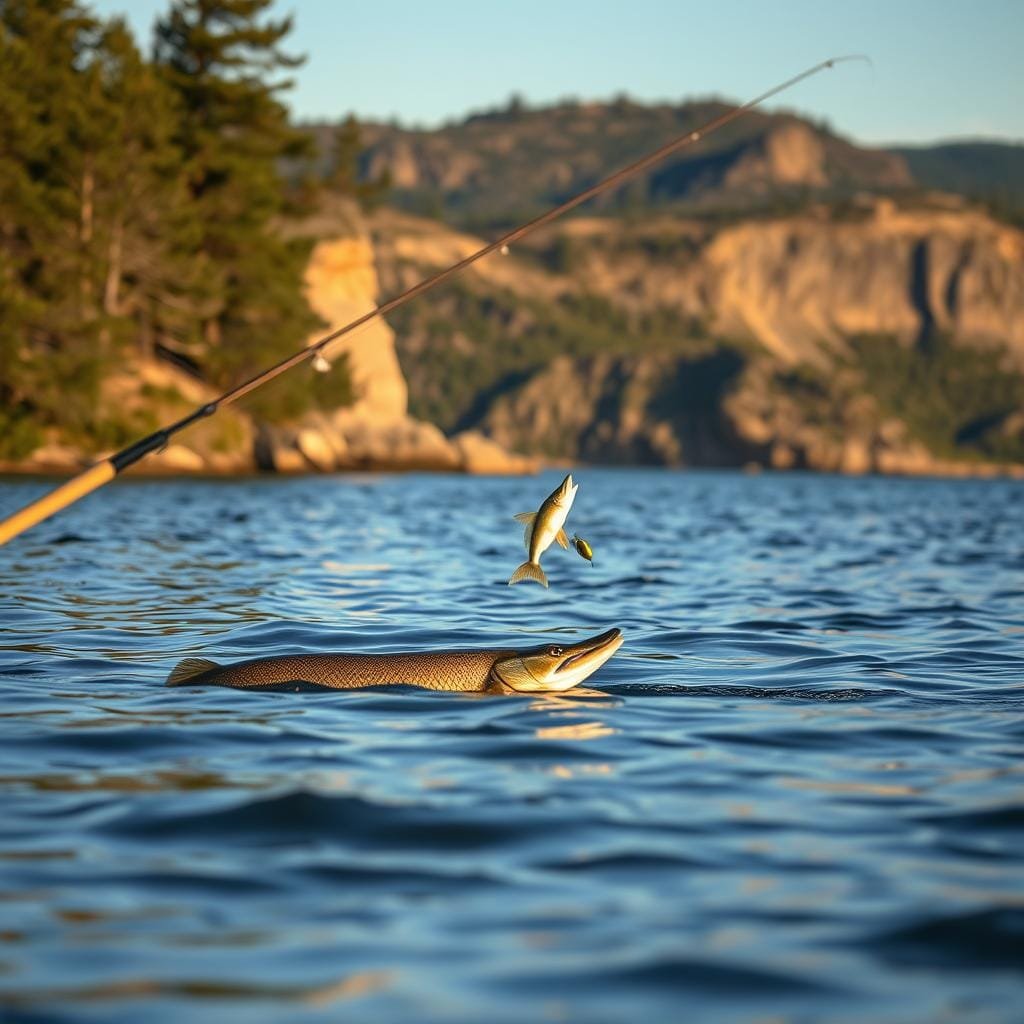
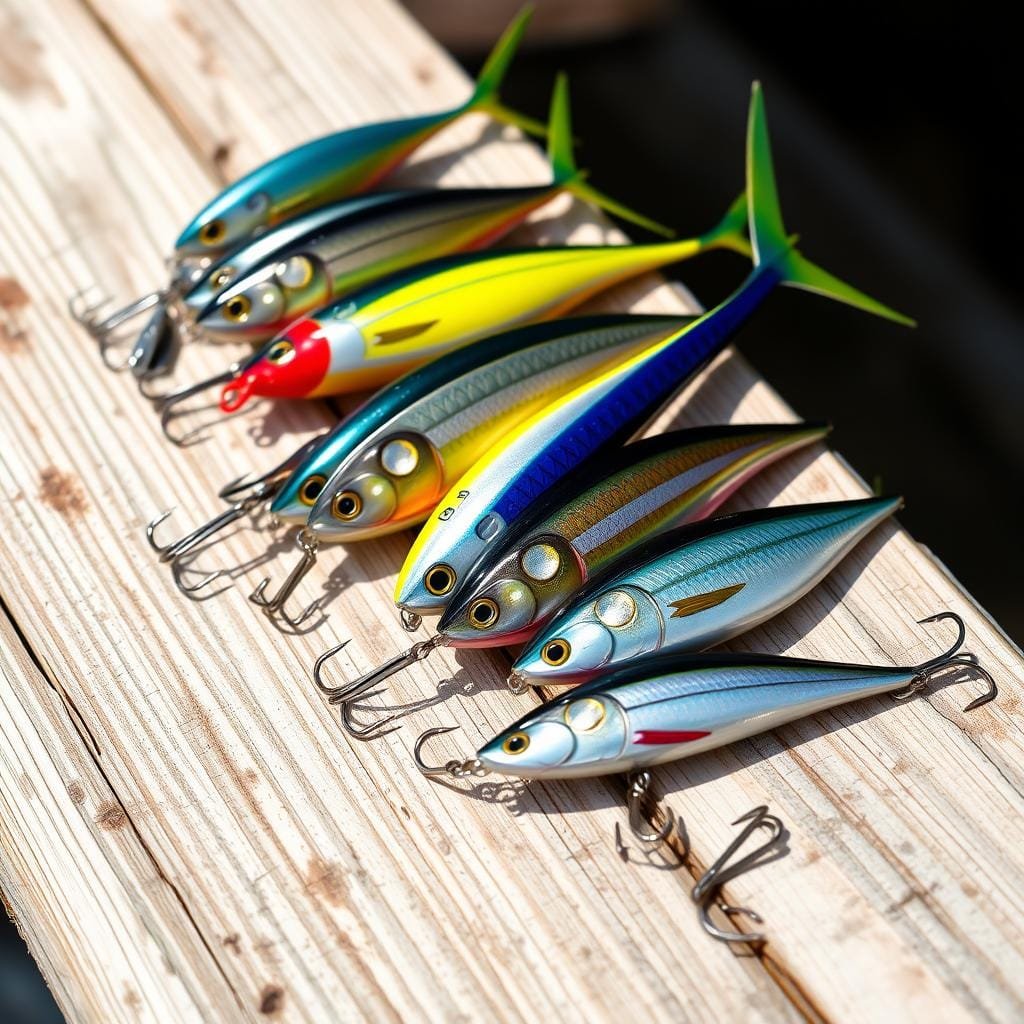
Mahi mahi are fast, jump high, and swim together. To catch a lot, pick the right bait. The best bait mixes hard lures with natural ones that last long.
Color, size, shape, and durability are key. Hooks, skirts, and weight also matter. When the fish bite, these details help a lot.
For catching mahi mahi, some lures are better than others. Nomad Tackle’s Slipstream Flying Fish 140 is 5-1/2 inches long and costs $29.99. The 200 model is 8 inches long for $39.99, and the 280 is 11 inches long for $49.99.
For trolling, try DTX Minnow 125 SNK at 5 inches for $24.99. The 140 FLT is 5-1/2 inches long for $29.99. The 145 Shallow FLT is 5-3/4 inches long for $29.99.
Madscad 115 SNK is 4-1/2 inches long for $17.99. Madscad 150 SNK is 6 inches long for $26.99. Madmacs 130 High Speed SNK is 5 inches long for $29.99.
These baits work because they look like flying fish and squid. Long shapes catch big fish, while wide ones catch smaller ones. When choosing bait, think about the sea, speed, and pressure.
Look for a good retailer with a 4.9 out of 5 rating from 1,288 reviews. They have a wide range of baits up to $279.99. This way, you can find something that fits your budget and crew.
We’ll talk about trolling lures, stickbaits, teaser and chumming, and how to make fish bite. For a quick look at sizes and colors, check out this mahi mahi lures lineup before your next trip.
Why Mahi Mahi Crush Bright, Flashy Offerings
Mahi mahi are fast and make quick decisions. They like shiny things near currents and FADs. Anglers use bright baits that look like real food, choosing colors that match the water.
Natural prey cues: flying fish and squid behavior
Flying fish skipping on the water attract mahi. Lures that mimic this action are very effective. Squid lures that move like squid are also great.
Move your lure fast to imitate a flying fish. Then, stop to look like it’s stunned. Squid lures work best with slow, short movements.
Color theory on bluewater: greens, blues, pinks, and oranges
In clear water, use colors that match the sea. Sea-blue and pearl colors blend well. But, bright colors like pink and orange are great for attracting fish from far away.
Try different colors together. This way, you cover all angles and attract fish from different depths.
When visibility and light penetration change lure choice
On sunny days, use subtle colors and small lures. But, when it gets cloudy, use brighter colors and bigger lures. This helps your lure reach deeper.
Keep a variety of lures ready. Use flying fish lures for surface action and squid lures for mid-depth. Small changes can make a big difference.
Stickbaits That Trigger Strikes Near FADs
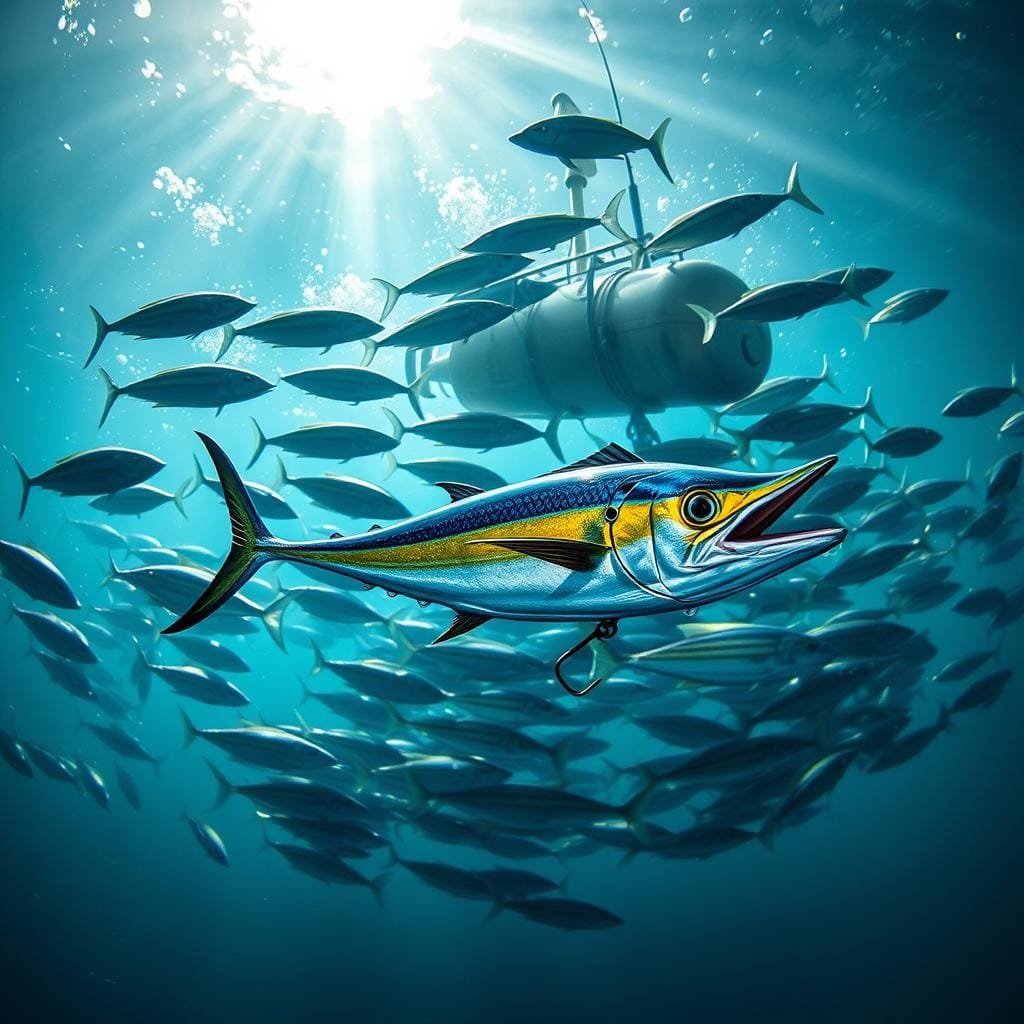
When fishing for dorado near FADs, move slowly at 3–5 knots. Look for birds, flying fish, and blue shadows. Cast ahead of the fish and keep lines ready for fast runs.
Floating stickbait action: S‑swim, head dip, and body roll
The Nomad Riptide floating stickbait comes to life with a long rod sweep. It throws a splash and then swims in an S-wave under the water. This action makes it look real and attracts mahi.
Try different ways to move the lure. A zig-zag can make fish follow, and a fast skitter can make them strike. Pause after the splash, then sweep again.
Go-to sizes for bow casting at 3–5 knots
Use 5–6 inch lures for bow casting. They fly well and last long. They also match the bait at FADs and catch wary dorado.
- 5–6 in floating profiles for repeated bow casting mahi passes
- Rod sweeps of 2–3 feet to hold the S-swim in the strike zone
- Short pauses when fish are following but not eating
Rigging with strong inline singles for aerial acrobatics
Use strong inline single hooks for mahi that jump. A good setup is 4/0 BKK inline singles on a Riptide. This keeps the fish pinned and prevents them from throwing the hook.
This setup keeps the lure in line and reduces foul-hooking. It also helps you land more fish when dorado get active. It cuts through water well, keeping the lure’s action alive.
Nomad Tackle Picks That Consistently Produce
These plugs are tough and keep attracting fish. For the best lures from Nomad, pick these for changing waters around FADs and weedlines. Mix them up by depth, speed, and look.
Slipstream Flying Fish 140/200/280 for surface commotion
The Nomad Slipstream Flying Fish looks like real bait. Use the 140 (5-1/2 in, $29.99) for small bait, the 200 (8 in, $39.99) for average, and the 280 (11 in, $49.99) for big bait.
Its splash and bubble trail attract fish fast. Near weedlines or FADs, it makes fish want to eat.
DTX Minnow 125/140/145 for trolling depth options
The DTX Minnow mahi lineup tracks fish in the water. The 125 SNK (5 in, $24.99) goes deep, the 140 FLT (5-1/2 in, $29.99) is mid, and the 145 Shallow FLT (5-3/4 in, $29.99) stays high.
Change sizes as the day goes on. It’s easy to keep a good spot behind the boat.
Madscad 115/150 and Madmacs 130 for speed and flash
For dorado below the surface, a fast, shiny lure works. Choose Madscad for dorado in 115 SNK (4-1/2 in, $17.99) for small bait or 150 SNK (6 in, $26.99) for bigger bait. Cast it to active fish or slow-troll along edges.
For fast coverage, use Madmacs high speed trolling. The Madmacs 130 High Speed SNK (5 in, $29.99) tracks straight and flashes when needed.
- Hard-plastic bodies resist toothy hits and long runs under pressure.
- Profiles and actions cross over to marlin and sailfish during mixed feeds.
- Keep Nomad Slipstream Flying Fish, DTX Minnow mahi, Madscad for dorado, and Madmacs high speed trolling in rotation as conditions change.
| Model | Size | Type/Action | Best Use | Price (USD) |
|---|---|---|---|---|
| Slipstream Flying Fish | 140 / 200 / 280 | Surface commotion, splash and wing flick | Raise mahi on FADs and weedlines; match hatch | $29.99 / $39.99 / $49.99 |
| DTX Minnow | 125 SNK / 140 FLT / 145 Shallow FLT | Shallow-to-mid trolling coverage | Track depth as light and bait move | $24.99 / $29.99 / $29.99 |
| Madscad | 115 SNK / 150 SNK | Tight flash, sinking stickbait | Cast or troll when dorado are sub-surface | $17.99 / $26.99 |
| Madmacs 130 High Speed SNK | 130 | High-speed, straight-track flash | Cover water fast to locate new schools | $29.99 |
best bait for mahi mahi
When the bite is hard to get, natural bait works best. Fresh, oily strips look like real food and stay in the water. This makes fish hit the bait hard without you thinking too much.
Strip baits from skipjack or bonito for scent and realism
A skipjack strip bait smells good and moves like real fish. Bonito strips dorado do the same. They move fast at 3–5 knots.
For a teaser, use an 11/0 BKK inline single with a strip. Tow it 20 meters back. Then, set two more strips 15–20 meters behind. Run one alongside to catch followers.
On spinning gear, keep the bail open. Feed 7–10 seconds before pressure. This helps get a clean hook.
When to choose skirts versus hard baits
Skirts add color and pulse in calm seas. They can get tangled but make your bait stand out. For speed and depth, use hard baits like Nomad’s Slipstream Flying Fish.
Check out sizes and colors here: mahi mahi lures. Skirted lures are good for lift and flash. Switch to plugs for covering ground and dodging predators.
Balancing durability, hook size, and lure weight
Choose the right hook size for mahi and your bait. Use circle hooks for release and J hooks for harvest. Strong, sharp inline singles keep pressure steady.
Match lure weight to the water. Heavier baits go down to deep schools. Lighter ones work for surface fish. Hard baits last long, while natural bait adds scent.
Color, Size, and Shape: Dialing In What They Want Today
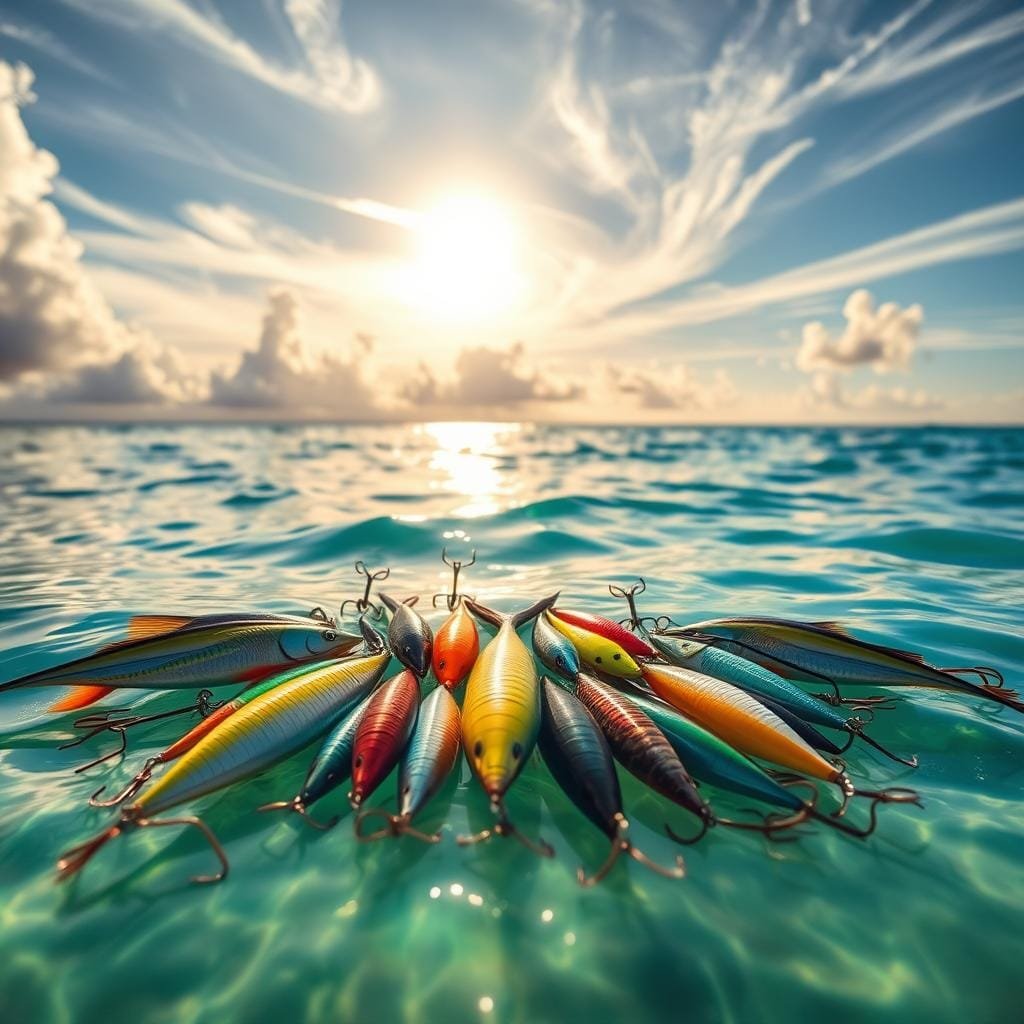
Start with the ocean’s colors. Use greens and blues to match bait. Then, switch to oranges and pinks as the light changes or fish get scared.
Test bright lure colors dorado quickly. This often makes fish bite.
Match your gear to the fish. Use bigger lures for big fish and smaller ones for small ones. Try Nomad Slipstream 140/200/280, DTX Minnow 125/140/145, and Madscad 115/150.
Think about the lure’s shape before its color. A long, thin lure looks like a flyer. A wider lure looks like squid. This helps you catch fish better.
Choose the right lure weight. Heavy lures go deep for fish below the surface. Lighter lures stay up high and are good for FADs.
Watch the surface for signs. Birds and flyers mean use floating baits. If marks go down, use sinking lures.
| Condition | Best Color Move | Profile Cue | Mahi Lure Size | Lure Weight Selection | Go-To Models |
|---|---|---|---|---|---|
| Clear skies, calm rips | Greens/blues to match bait | Long and slender (flying fish) | Medium (140–150 mm) | Light to medium for high track | Madscad 115/150, DTX 140 |
| Pressured fish, midday sun | Rotate to bright lure colors dorado (orange/pink) | Wider shape (squid signal) | Small to medium (115–140 mm) | Light for quick pops and stalls | Slipstream 140, DTX 125 |
| Marks below weedlines | Natural topside, contrast belly | Mixed bait; flyer first, squid second | Large (150–200+ mm) | Heavy to reach subsurface lanes | Slipstream 200/280, DTX 145 |
| Surface blitz near FADs | Greens/blues with flash | Flying fish mimic | Medium (140–150 mm) | Light for long casts and fast pickups | Madscad 150, Slipstream 140 |
| Mixed school sizes | Start natural, test a hot color runner | Alternate flyer/squid every pass | Rotate sizes every 10 minutes | Blend light and heavy across spread | DTX 125/140/145, Madscad 115/150 |
Start with a natural lure, then try a bold one. Change the lure size, shape, and weight a little at a time. Keep one thing the same to learn more.
Trolling Spreads and Speeds That Keep Rods Bending
Get the crew ready and keep the spread tight. A good mahi trolling spread turns lookers into biters. Choose the right trolling speed for your lure and adjust teaser distance and lure type as needed.
Running teasers 15–20 meters back to raise fish
Start with a teaser 20 meters back, pinned through the nose on an 11/0 BKK inline single. Add two more strip-bait lines 15–20 meters behind. This setup makes fish climb the wake and makes it easy to get bites.
Work near FADs with a casting rod on the bow. When you see neon-blue shadows, pitch fast. Keep the spread lit up.
Ideal boat speeds: 2.5–3 knots for teasing, faster for plugs
Keep your speed at 2.5–3 knots to keep strips swimming right. This speed pulls mahi tight to the transom. When fish rise, switch to hard baits to catch them.
Use Nomad DTX Minnow or Madmacs for faster speeds. The Madmacs 130 works well at high speeds. It turns lookers into reaction bites while keeping the spread organized.
Positioning lures high vs. subsurface to match bait
Watch the signs. If you see flying fish and mahi up top, use Slipstream Flying Fish or floating lures. For deeper marks or flashes below, use DTX Minnow 125/140/145 or sinking Madscad.
Switch between surface and subsurface lures until you see action. Keep teaser distance the same to funnel fish into the spread. This keeps lanes clean for quick pitches.
| Scenario | Spread Setup | Speed | Primary Lures | Why It Works |
|---|---|---|---|---|
| Tease fish to the wake | Strip-bait teaser 20 m back; two strips 15–20 m beside | 2.5–3 knots | Strip baits on BKK inline singles | Tight teaser distance raises mahi and sets easy bite windows |
| Cover ground after a flurry | Four-rod mahi trolling spread with staggered positions | Medium to high | Nomad Madmacs 130, DTX Minnow | Higher trolling speed dorado triggers reaction strikes and finds new packs |
| Surface feed, flying fish present | Short rigger high, flat lines clean of prop wash | Moderate | Slipstream Flying Fish, floating stickbaits | Surface vs subsurface lures favor topwater to match the visible bait layer |
| Marks deep or subsurface flashes | Weighted lines mid-wake, one down-current corner | Moderate | DTX Minnow 125/140/145, Madscad sinking | Tracks below the chop where mahi are corralling bait |
Live, Cut, and Chum Strategies for Schooling Dorado
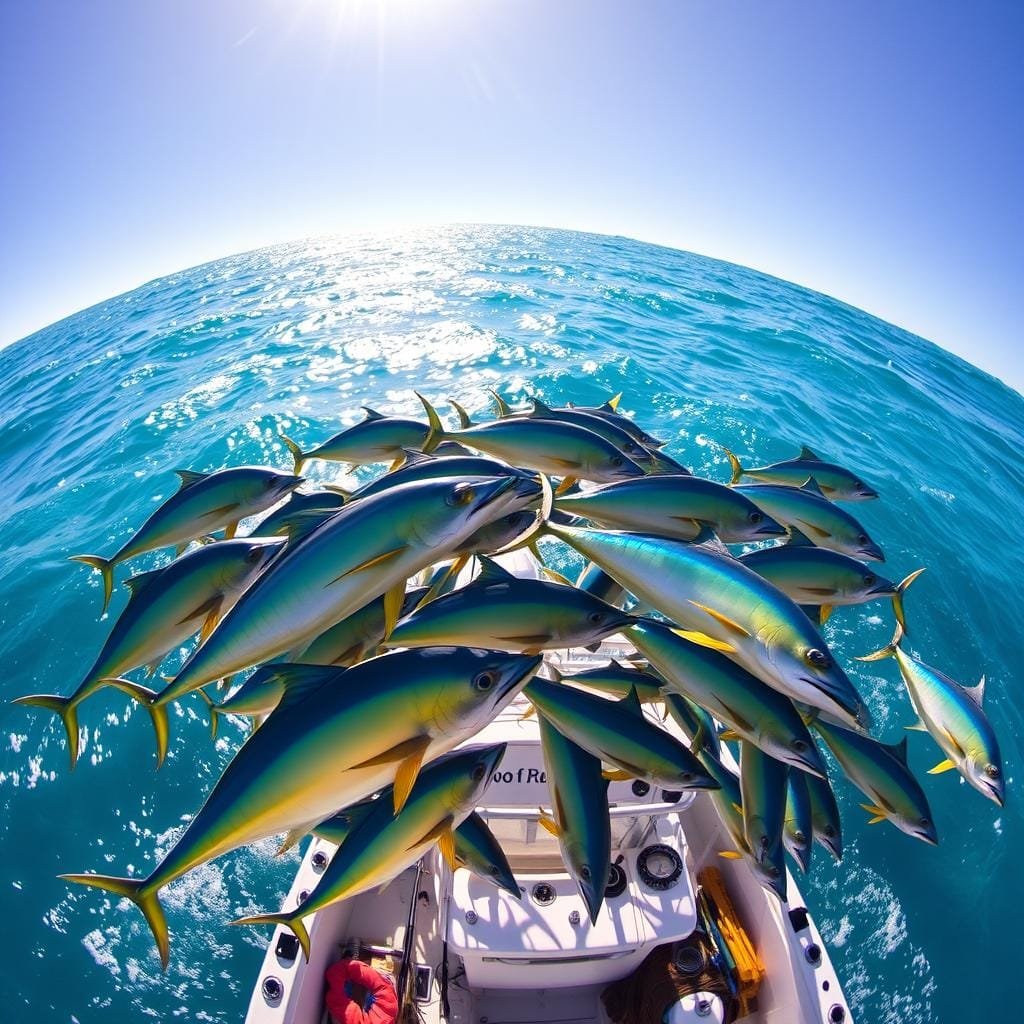
When a school lights up behind the boat, keep things simple. Use live, cut, and chum together. This keeps fish close. Add a plug like the Nomad Slipstream for extra action.
Minced oily burley trails to pull fish up-current
Make a trail dorado can’t ignore by mincing fish into small bits. Aim for a slick of oil and blood, not big chunks. This attracts fish up-current and keeps them near your boat.
Keep adding small amounts of mince. This scent keeps fish interested without feeding them too much. Watch for fish showing up in the distance.
Open-bail technique: 7–10 second feed before pressure
Cast lines with bait and use open bail feeding. Wait 7–10 seconds after a fish bites. Then, close the bail and apply even pressure.
Expect fish to jump high and run fast. Keeping steady pressure helps keep the hook in place.
Circle vs. J hooks depending on release or harvest
Choose the right hook for your plan. Use J hooks for fish you plan to keep. For releases, circles are better to avoid deep hooking.
Check your hooks often and replace any that are dull. This ensures a clean catch from start to finish.
Hardware Matters: Hooks, Leaders, and Durability Offshore
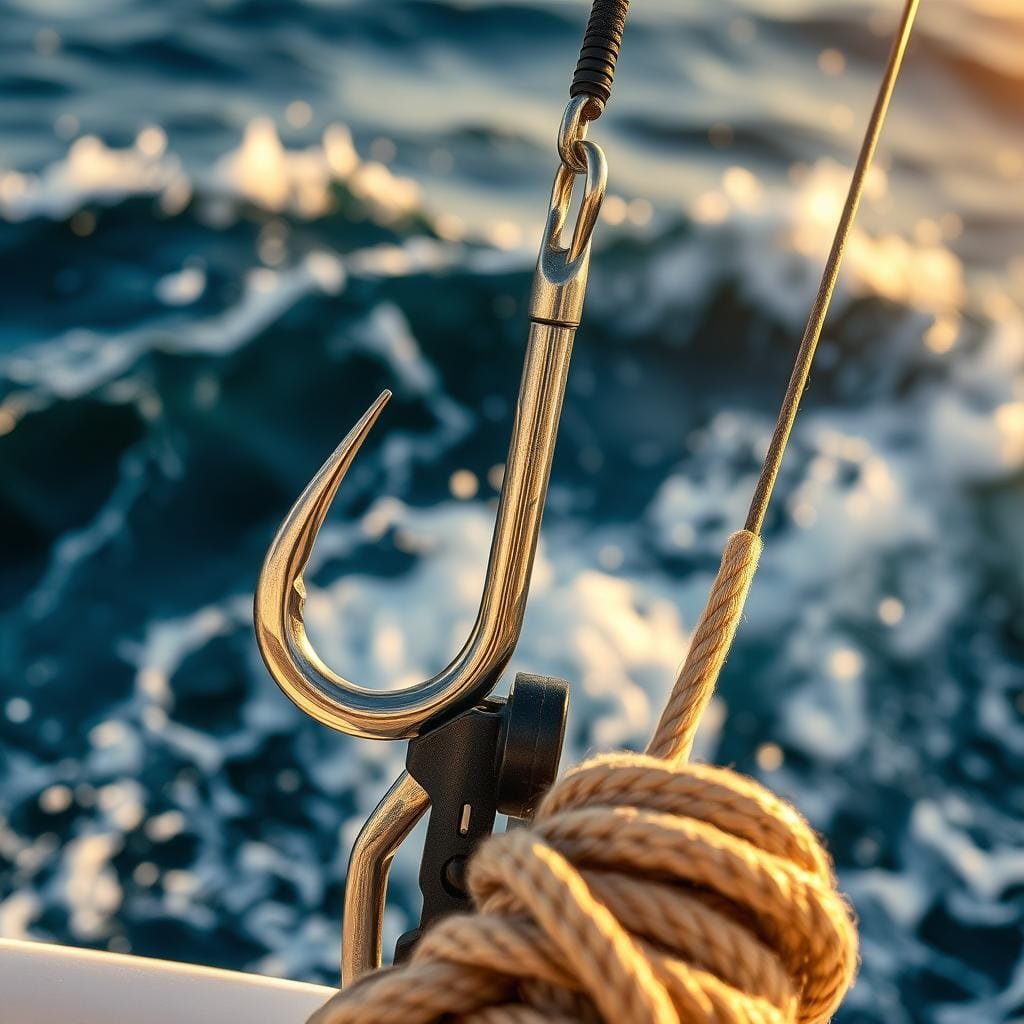
Big dorado hit hard and jump high. They can hurt weak gear. Use strong, sharp gear for every strike to count.
Strong, sharp inline singles and sizes for bulls
For big fish, use inline single hooks. They catch more than trebles. Stickbaits with 4/0 BKK hooks work well.
When using a skipjack teaser, an 11/0 BKK hook is best. Match hook size to the fish. Keep points sharp.
Heavy dorado need strong gear. Use forged wire and solid rings. They won’t break under pressure.
Choosing hard plastic and metal lures that survive abuse
Durable lures are key for offshore fishing. Hard plastic and metal jigs can take a beating. Try Nomad’s DTX Minnow, Madscad, and Madmacs.
These lures stay true after hits and long trolling. Balance weight for distance and stability. Strong hardware is important.
Leader length and abrasion resistance around bills and beaks
Use a tough leader to protect against dorado bites. Fluorocarbon or mono from 40–80 lb works well. Cut it to 4–8 feet.
Check the leader after each jump. Spin new tags and replace split rings. Keep hook points sharp for the next bite.
Reading Signs: Birds, Flying Fish, and Neon Blue Shadows
Start by reading birds and bait indicators over FADs and rips. Frigate birds tracking tight, terns dipping, and shearwaters skimming can signal mahi, even without tuna marks. Flying fish showering ahead of the bow also helps find mahi.
Use these tells to set your plan. Cruise 3–5 knots toward the life, keep casters on the bow, and work stickbaits across the face of the school. If the show shifts deeper, slide to Nomad DTX Minnows or heavier sinking options. When surface feeds fire, swap to Slipstream Flying Fish or a floating stickbait for splash and hang time.
Scan for FAD mahi visual cues beyond birds: neon blue mahi spotting is real when bodies greyhound in the chop or when dorsal fins knife the skin of the water. Hit the edge first, then cross down-sea, and adjust between surface and subsurface passes to match what you see.
Birds and bait indicators matter most when yellowfin or skipjack are not in the spread. That gap often points right to dorado patrolling the structure, making finding mahi signs faster and more precise.
From Cast to Catch: Retrieve Cadence That Converts Follows
Start with a floating stickbait like the Nomad Riptide. Hold the rod tip down and sweep it long. The lure will dip and splash, then move smoothly just under the surface.
This action looks like an injured flyer and attracts mahi. If you see a flash behind the lure, keep moving it. Use steady pressure instead of a wild hookset.
Match the mood of the fish. If they follow closely, use a calm zig-zag. Short sweeps and brief pauses keep the lure real. When they’re excited around bait, go fast with a surface skipping retrieve.
Burn the handle and pop the tip to make it spit. This trick turns lookers into hitters.
Make quick decisions. Mahi show interest quickly. If they slow down or lose interest, change how you move the lure. Try longer sweeps, pauses, or faster speeds.
Try different sizes and actions to catch them. Use Slipstream Flying Fish for noise, DTX Minnow for depth, and Madscad for speed. Mixing colors and actions with the right retrieve can make mahi bite.
After a bite, use an open-bail feed for 7–10 seconds. Then, come tight with firm pressure. On lures, skip the snap-set and let the lure work through the fight. Be ready to change your retrieve to catch more fish.
FAQ
What are the top mahi mahi baits if I want fast, reliable action?
Use Nomad Tackle hard baits and natural strip baits. The Slipstream Flying Fish 140/200/280 and DTX Minnow 125/140/145 are great. Madscad 115/150 and Madmacs 130 High Speed also work well.
For natural baits, try fresh skipjack or bonito strips. They add scent and flutter. Mix both for different fishing situations.
Why do mahi mahi crush bright, flashy offerings offshore?
Mahi love to hunt by sight in clear blue water. They go for anything shiny and moving. Their competitive nature means they often attack bright lures.
How do flying fish and squid behavior shape my lure choice?
Long, slender baits mimic fleeing flying fish. Wider profiles suggest squid, near structure or at night. Slipstream Flying Fish is good for flying fish, while a wider stickbait or skirted strip works for squid.
Which colors work best in bluewater—greens, blues, pinks, or oranges?
Start with greens and blues to match the prey. When light drops or water gets murky, try bright pinks and oranges. Keep changing until you get a bite, then stick with it.
How do visibility and light penetration change lure choice?
In bright, clear days, use natural colors and floating or high-riding baits. When it gets darker or water gets cloudy, use heavier, sinking plugs. This helps reach fish deeper.
What stickbait actions trigger strikes near FADs?
A floating stickbait that dips and splashes is very effective. Use a long rod sweep to make it swim just under the surface. Speed it up and skip it if fish are excited.
What sizes are best for bow casting at 3–5 knots?
Mid-size stickbaits, 5–6 inches, cast well and match common prey. They’re easy to pitch quickly when birds dive or flying fish shower. Keep a rod ready as you idle or slow-cruise past FADs.
How should I rig stickbaits for aerial acrobatics?
Use strong inline single hooks. For example, 4/0 BKK inline singles on belly and tail hold fish through jumps and spins. Make sure split rings are sturdy and check hook points after each catch.
Which Nomad Tackle models consistently produce for dorado?
The Slipstream Flying Fish 140 (5-1/2 in, .99), 200 (8 in, .99), 280 (11 in, .99); DTX Minnow 125 SNK (5 in, .99), 140 FLT (5-1/2 in, .99), 145 Shallow FLT (5-3/4 in, .99); Madscad 115 SNK (4-1/2 in, .99), 150 SNK (6 in, .99); Madmacs 130 High Speed SNK (5 in, .99). All are durable for pelagics.
When should I fish the Slipstream Flying Fish 140/200/280?
Use Slipstream for surface commotion around FADs and weedlines, when flying fish are showering. Choose 140 for smaller bait, 200 as an all-rounder, and 280 for bigger fish.
How do I use DTX Minnow 125/140/145 to cover depth?
Run the Shallow 145 FLT when fish are high, 140 FLT for mid-depth, and 125 SNK to get deeper. Change as marks move up or down, or with light and water changes.
When do Madscad 115/150 and Madmacs 130 shine?
Madscad’s tight, flashing fall is great for sub-surface or fast-tracking fish. The 115 is compact for finicky fish; 150 adds size. Madmacs 130 covers water quickly and stays planted at speed.
What’s the best bait for mahi mahi if I want scent and realism?
Fresh strip baits from skipjack or bonito are top-notch. They throw an oily scent trail and flutter like real prey. Run them in your spread or as teasers to raise fish for a cast.
When should I choose skirts versus hard baits?
Use skirted strips or small skirted heads for extra pulse and visibility. If you’re worried about tangles or durability, switch to hard baits like DTX, Madscad, Madmacs, or Slipstream for speed and longevity.
How do I balance durability, hook size, and lure weight?
Choose hard plastic or metal lures for repeated strikes and high-speed trolling. Use strong, sharp hooks sized to target fish—4/0 to 6/0 covers most mahi. Heavier lures reach deeper fish; lighter ones stay high and are easier to work near the surface.
How do color, size, and shape help me dial in bites today?
Start with blue/green to match prey, then test bright pink/orange. Scale up for bulls, down for schoolies. Long, slender shapes mimic flying fish; wider bodies suggest squid. Adjust until you get consistent eats.
How do I run teasers 15–20 meters back to raise fish?
Set a strip-bait teaser about 20 meters behind the boat on an 11/0 BKK inline single. Then run two strip lines 15–20 meters behind and beside the teaser. Watch for neon-blue flashes and be ready to cast.
What are ideal boat speeds for teasing and for plugs?
Tease at 2.5–3 knots to keep strips swimming naturally. When switching to plugs, speed up to cover water and trigger reaction bites. Madmacs 130 is built to hold at speed.
How should I position lures high vs. subsurface?
If flying fish are showering or birds are diving, run floating or high-riding baits and Slipstream high. When fish slide down, swap to DTX Minnow or a sinking Madscad to stay with them.
What’s the best way to build a chum trail for dorado?
Mince oily skipjack or bonito to make a steady slick of oil and scent. Avoid large cubes. Keep the trail consistent up-current of your drift or troll to pull fish to you.
How does the open-bail technique improve hookups?
With strip baits, keep the bail open and feed line for 7–10 seconds after the eat. Then close the bail and come tight with steady pressure. It lets mahi turn the bait for a clean hook-up.
Should I use circle hooks or J hooks for mahi mahi?
Use circle hooks if you plan to release—fewer deep hookings. Choose 4/0–6/0 J hooks when you’re keeping fish for the table. Match hook size to bait and target fish.
What hooks and sizes hold up to big bulls and jumps?
Strong inline singles like BKK 4/0 on stickbaits handle jumps and keep fish pinned. For strip-bait teasers, an 11/0 BKK inline single through the nose is reliable. Keep them sharp and replace worn hardware.
Why choose hard plastic and metal lures offshore?
They resist tooth wear, survive high-speed trolling, and keep swimming true after multiple fish. Nomad’s Slipstream, DTX, Madscad, and Madmacs are designed for this punishment.
What leader setup works around bills, beaks, and FADs?
Use abrasion-resistant leaders long enough to protect during boatside jumps and near structure, but not so long they kill action. Check for scuffs after every fish.
What surface signs tell me mahi are nearby?
Watch for birds diving without tuna mixed in, flying fish leaping, and neon-blue mahi dorsal fins or bodies greyhounding. These cues mean it’s time to cast or adjust your spread.
How should I approach a FAD when I see activity?
Cruise at 3–5 knots with a caster on the bow. Pitch stickbaits to bait showers or visible fish, and be ready to swap between surface and subsurface lures based on how they respond.
What retrieve cadence turns follows into eats?
Start with a steady zig-zag swim. If they track but won’t bite, speed up and make it erratic with surface skips and rod sweeps. Change pace and pause lengths until a fish commits.
Any tips after the bite to keep hooks pinned?
On natural baits, feed 7–10 seconds, then apply firm, steady pressure. On lures, skip the big hookset. Maintain tension through jumps to avoid throwing the hook.
Where can I find a broad selection of these lures with good reviews?
Look for a retailer with a wide offshore catalog reaching up to 9.99 and a 4.9/5 rating from 1,288 reviews. The depth of stock and feedback shows strong demand and proven performance.