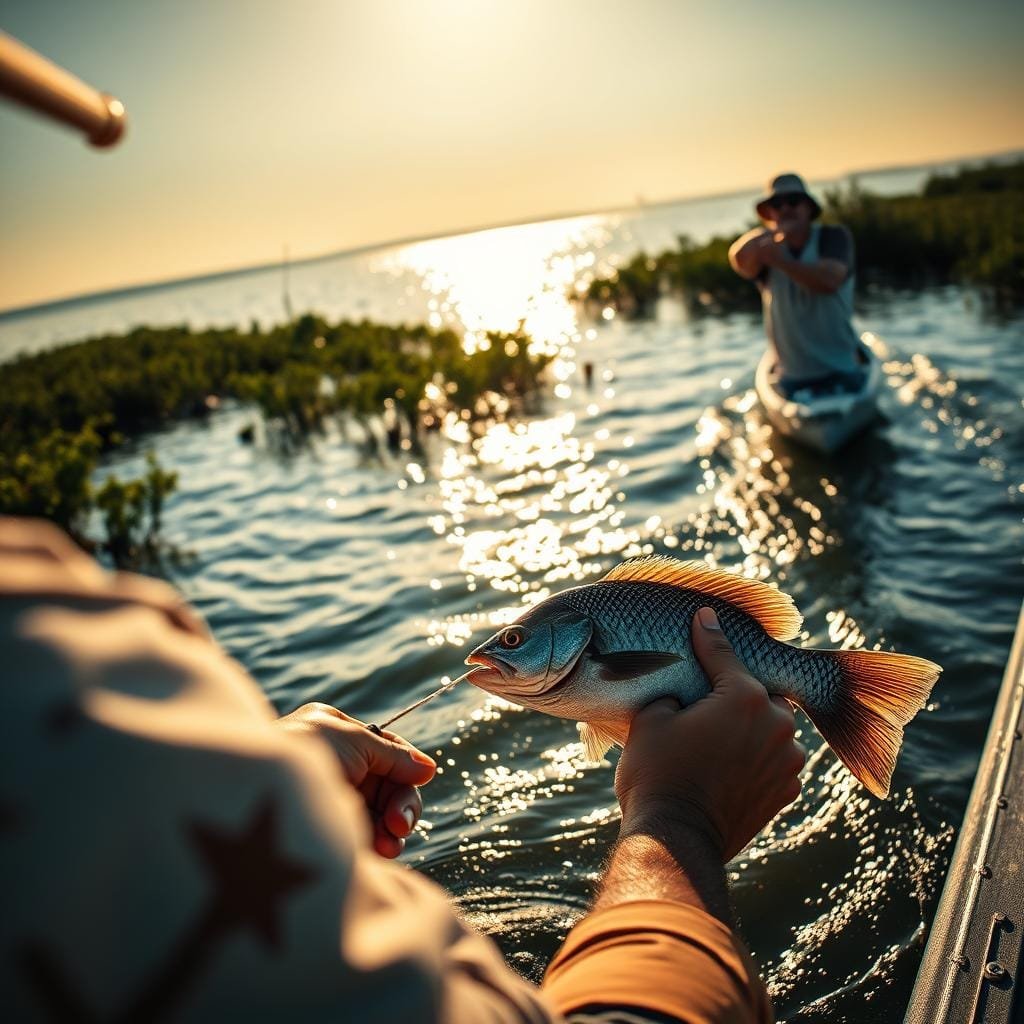
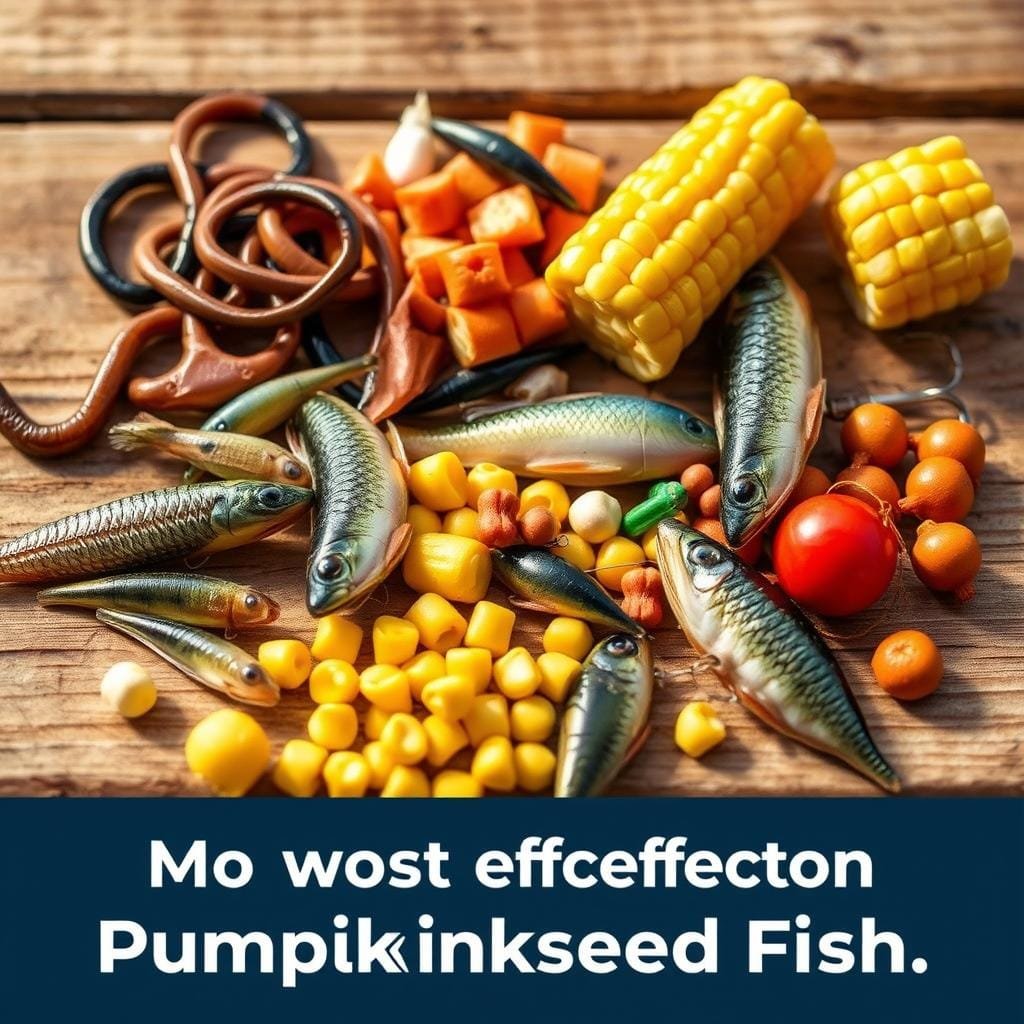
Pumpkinseed fishing is great for quick catches near the shore. These sunfish love small baits in warm, clear water. The trick is to use tiny, lively, and easy-to-swallow baits.
Live bait is best for constant bites. Crickets are super effective, even if they’re hard to find. Wax worms and nightcrawlers also work well. Try artificial baits like micro jigs and small spinners for fun.
Use ultralight gear to present small baits well. Use 3–4 lb monofilament for long casts. Choose #8 to #12 hooks for small mouths. Keep your retrieves slow and steady.
These tips work everywhere, from Lake Okeechobee to Dale Hollow Lake. In murky water, use bright colors. In clear water, stick to natural colors. With the right bait and gentle touch, you’ll catch lots of fish.
Next, we’ll explore habitat, diet, and why size is important. This way, every cast will count.
Pumpkinseed Basics: Habitat, Diet, and Why Bait Size Matters
Bright colors catch our eyes, but it’s their behavior that fills our coolers. Knowing where pumpkinseeds live and what they eat helps us choose the right bait. Their small mouths and breeding habits affect how and where we fish. This is why the size of our bait is so important.
Where pumpkinseed thrive: warm, clear, weedy water near shore
Pumpkinseeds love calm, sunny spots with lots of weeds. Look for ponds, lake coves, or slow river spots with clear water and solid bottoms. They like to hide in cover and swim near sand or gravel, which is great for spawning.
They can be found from the Pacific Northwest to New England and the Great Lakes. Many waters now have them, thanks to introductions. Cast your line along weedlines, docks, and downed wood where it’s easy to see and the water is calm.
Natural forage: insects, larvae, fish eggs, mollusks, and worms
Pumpkinseeds eat a variety of small things like mayfly nymphs, caddis, midge larvae, snails, fish eggs, and worms. They also eat some plant matter. Use small pieces of worm, a wax worm, or a tiny jig to mimic their food.
Because their food is small, it’s better to use small, moving baits. A lively bait that looks like a bug will keep the fish interested longer.
Small mouths, big attitude: matching hook and bait size
They hit hard but can’t swallow big baits. Use small hooks for sunfish, sizes #8 to #12, to catch them cleanly. Keep your bait small: use tiny grubs or 1/64–1/32 oz jigs.
During spawning in May and June, males make shallow nests and guard them. Use small, neat baits near the beds without disturbing the nest. This helps avoid scaring the fish and ensures quick hookups.
| Factor | Best Practice | Why It Works | Seasonal Note |
|---|---|---|---|
| Pumpkinseed habitat | Target clear, weedy shorelines and slow pockets | Concentrates fish around cover and light current | Most consistent spring through early fall |
| Pumpkinseed diet | Imitate insects, larvae, eggs, mollusks, and worms | Aligns with daily feeding patterns | Bug-heavy in spring; mixed forage in summer |
| Hook choice | Small hooks for sunfish (#8–#12) | Fits small mouths; cleaner lip sets | All seasons, specially around beds |
| Bait size for pumpkinseed | Thumb-nail pieces and micro jigs | Matches natural prey size; fewer missed bites | Downsize further in cold fronts |
| Pumpkinseed spawning | Work edges of 6–12 inch nests | Aggressive guards strike small intruders | Peak May–June; males guard for days |
Live Bait That Consistently Produces Strikes
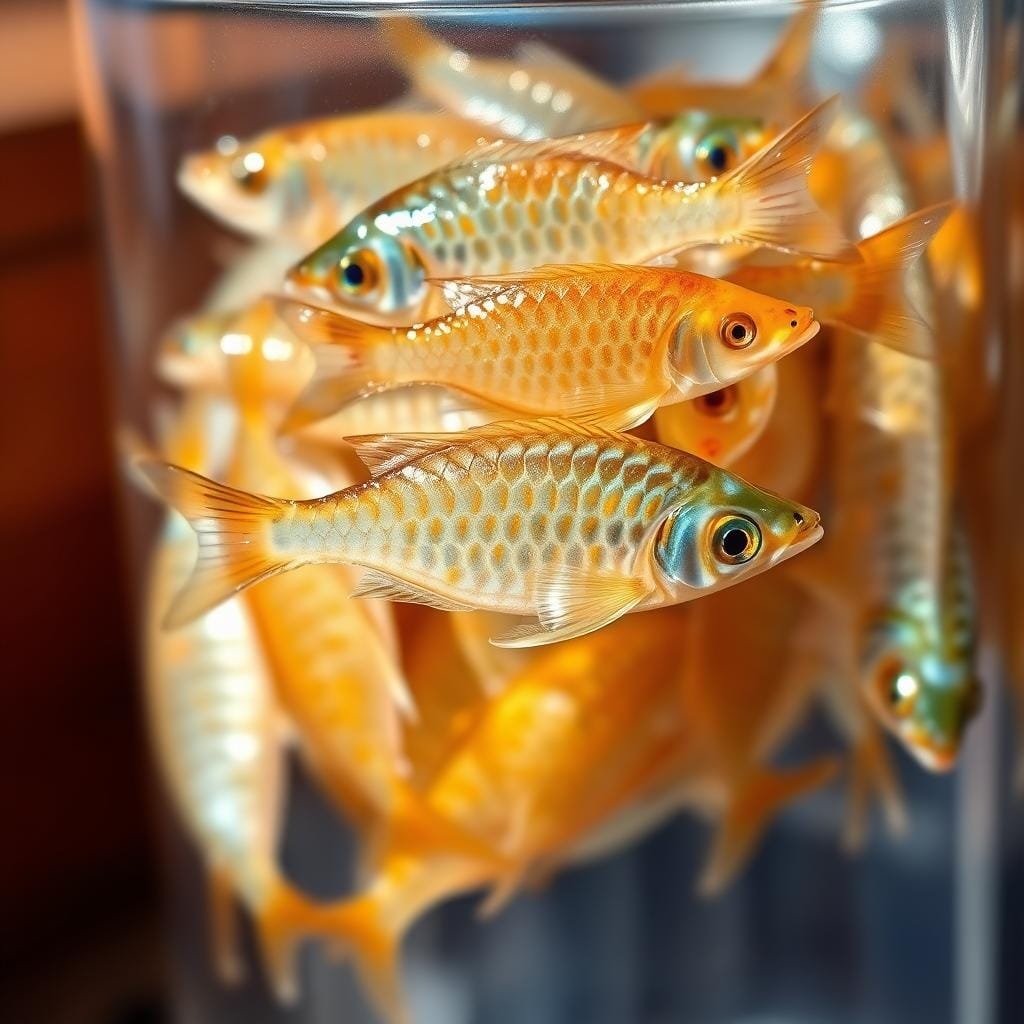
When fish hide near weeds and docks, live bait works best. Use small, lively bait that’s easy for them to eat. Use #8–#12 hooks and a tiny bobber to keep bait at the right depth.
Crickets and grasshoppers for aggressive shallow feeders
On sunny days, use crickets near the bank. Pin the cricket lightly so it moves when it falls. Grasshoppers work the same way, making them great in late spring.
Cast near pads and let the bait fall. Then, twitch it a bit. Set the hook gently to avoid losing the fish.
Wax worms and nightcrawlers rigged for movement, not theft
Wax worms are good for steady bites under a small bobber. Hook a single grub so it moves with every ripple. For nightcrawlers, use a one-inch piece in a pleated pattern. This keeps the tail free and the hook exposed.
Drift the rig along weed edges. Change your retrieve to mimic real movement.
Beetles and other invertebrates for pressured fish
For slow bites, try small beetles or nymphs. They look like real food and fool pressured fish. Present them near cover and adjust depth until you find the right spot.
This mix works well in clear, shallow water. Try different baits in the same spots until you find what works best.
| Live Bait | Best Use Case | Hook Size | Rigging Tip | Why It Works |
|---|---|---|---|---|
| Crickets | Shallow, sunny banks and docks | #10–#12 | Collar-hook for surface kick and slow fall | Triggers aggressive feeders; natural splash draws strikes |
| Grasshoppers | Weedlines and pad pockets | #8–#10 | Back-hook to keep legs kicking | High profile and movement; ideal for sight-feeding fish |
| Wax worms | Calm pockets and shaded edges | #10–#12 | Nose-hook a single grub under a micro bobber | Subtle wiggle matches larvae; great for finicky bites |
| Nightcrawler segments | Edges with light current or drift | #8–#10 | Pleated threading, tail free, hook point exposed | Movement without bulk; resists bait theft while hooking clean |
| Beetles and nymphs | Pressured fish in clear water | #10–#12 | Suspend at mid-depth and creep forward | Natural profile; matches real invertebrates in weedy cover |
Artificial Options That Punch Above Their Weight
Pumpkinseed like small lures that move slowly. Use tiny baits, light hooks, and a slow retrieve. This makes them think it’s real food. For more on catching sunfish, check out this guide.
Micro minnows and tiny jigs (down to 1/32 oz)
Small lures catch big fish. Micro jigs are great in clear water and near docks. Use a 1/64–1/32 oz jig with a Berkley Micro Power Minnow.
Drop it down, then move it slowly through the weeds. Short pauses help. If a fish bites too hard, trim the tail for a better fit.
Soft plastics that mimic insects and grubs
Choose baits that look like what they eat. Gulp! Cricket or a slim grub works well. Hook it through the nose for more action.
Move it slowly to look like a struggling bug. This trick works well in shady spots where sunfish hide.
Beetle spins, spinners, and small topwaters in cover
Beetle spins add flash and sound without being too big. They work well in murky water. Spinners catch fish swimming by.
At dawn, topwater poppers are irresistible. Move it gently, then pause. Keep it close to the surface.
| Lure Type | Best Use Case | Retrieve Tip | Why It Works | Suggested Tackle |
|---|---|---|---|---|
| Berkley Micro Power Minnow on 1/32 oz jig | Weed edges and docks in clear water | Slow swim with brief stalls | Natural minnow profile with tight shimmy | UL rod, 3–4 lb mono or 6 lb braid + 4 lb leader |
| Micro jigs pumpkinseed with trimmed grub | Sight-fishing beds and shallow flats | Lift-drop with short hops | Compact target reduces short strikes | 1/64–1/32 oz head, #10–#12 hook |
| Soft plastics sunfish (Gulp! Cricket, small grub) | Shade lines and sparse grass | Slow pendulum, occasional twitch | Matches insect and grub forage | Nose-hook on fine-wire hook |
| Beetle spin for sunfish | Muddy coves and stained creeks | Steady, blade-first retrieve | Flash and vibration draw reaction bites | 1/32–1/16 oz, Colorado blade |
| Spinners for panfish | Roaming fish along drop-offs | Count down, then slow roll | Searches water fast with tight thump | Size 0–1 inline, bright finishes |
| Topwater poppers sunfish | Shallow weeds and edge pockets at dawn | Pop-pause-pop with long rests | Surface disturbance triggers ambush strikes | Short leader to keep nose up |
best bait for pumpkinseed
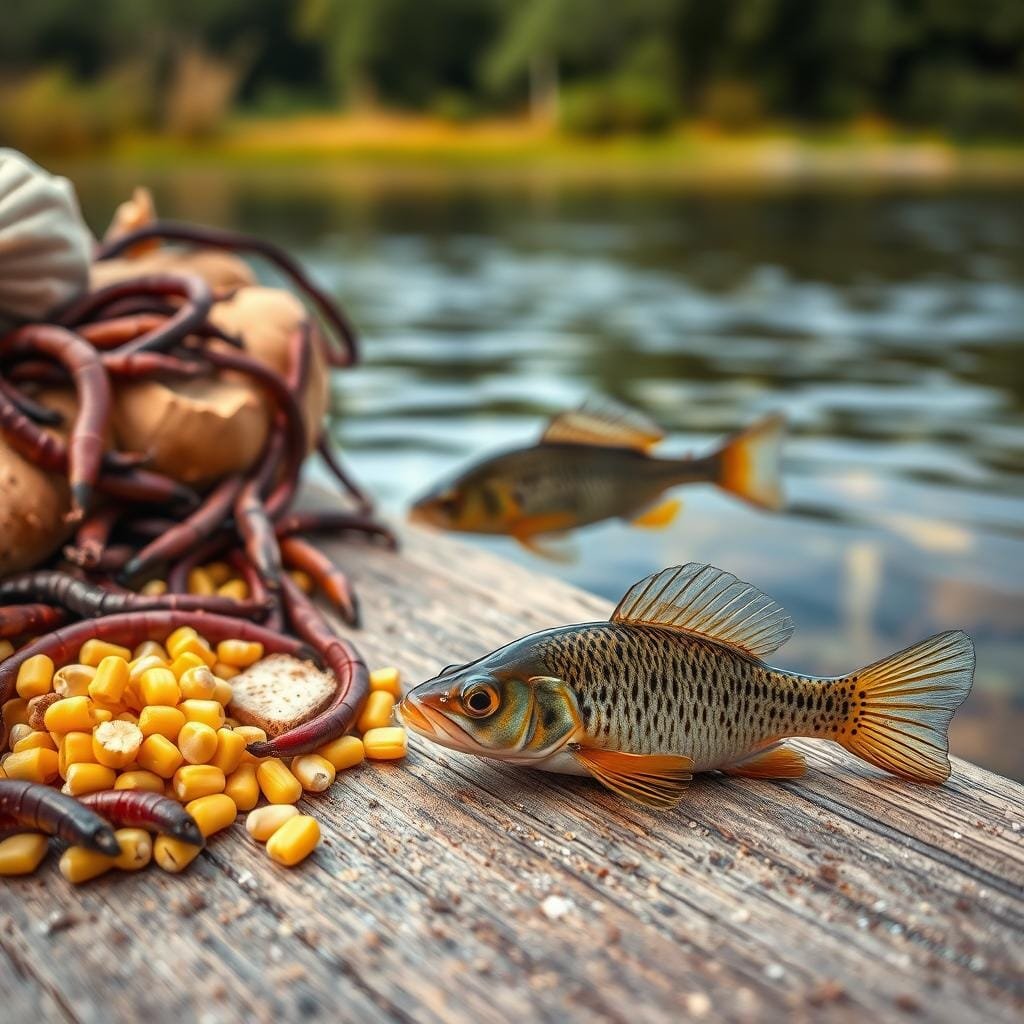
The best bait for pumpkinseed is small and moves a lot. Crickets work great, even for big fish near weeds. Wax worms and tiny nightcrawler pieces stay on the hook well.
Artificials like micro jigs and the Berkley Micro Power Minnow are good too. Beetle spins are good for covering water. Use bright colors in murky water and natural colors in clear water.
How you present your bait is more important than what it is. Use a small bobber to test depth. Or, move micro jigs slowly to look like easy food. Use small hooks and light line for better control.
| Bait/Lure | When It Excels | Color Cues | Rigging/Size | Why It Works |
|---|---|---|---|---|
| Live Cricket | Shallow weeds, active midday feeders | Natural tan/olive | #8 hook, under small bobber | Matches primary insect forage; lively kick tempts larger pumpkinseed |
| Wax Worm | Clear water, finicky bites | Cream/white | #10–#12 hook, single grub | Soft texture and scent lead to longer takes; ideal for subtle nips |
| Nightcrawler (small pleated piece) | Edges of beds and docks | Natural earth tones | #8 hook, pleat worm to cover shank | Creates compact target that resists theft and pulses with movement |
| Micro Jig ≤1/32 oz | Covering flats and outside weedlines | Chartreuse/orange in stain; brown/olive in clear | Slow, steady swim on ultralight | Matches tiny prey and stays in the strike zone longer |
| Berkley Micro Power Minnow | When fish want a minnow profile | Natural shad or perch tones | Threaded on micro jighead | Subtle tail thump triggers reaction without spooking fish |
| Gulp! Cricket | Pressured fish after cold fronts | Natural or brown | #10 hook or 1/64 oz head | Scented plastic imitates insects and holds fish longer |
| Beetle Spin | Searching new water and along weed edges | Chartreuse/black combo | 1/32 oz with small Colorado blade | Flash plus thump calls fish from cover; easy for kids to retrieve |
| Setup Essentials | All conditions | — | Gamakatsu #8, Eagle Claw #12, 3–4 lb Berkley Trilene Big Game | Light line and small hooks improve bites and keep lures working true |
For a good mix of baits, change them based on water and fish mood. These tips help your bait stay effective and look real. This is the best way to catch pumpkinseed.
Rigging and Presentation: How to Keep Bites Coming
Keep your gear simple and light. Let the fish tell you what to do. An ultralight sunfish setup lets you cast tiny baits well. You’ll feel every peck, even in a breeze. For more tips, see this guide to catching pumpkinseed.
Ultra-light setups: rods, reels, and 3–4 lb mono advantages
Choose a 4–7 ft ultralight spinning rod with a soft tip. Use a smooth-drag reel. Spool 3–4 lb monofilament to cast micro jigs well.
Berkley Trilene Big Game in light tests works great. It stays supple, knots clean, and handles pads and docks well.
This setup is perfect for short pitches along weed lines. The thin line cuts water, drops faster, and shows taps you’d miss with heavier gear.
Hook sizes that fit: #8 to #12 for clean hookups
Use sharp, fine-wire hooks that match small mouths. A Gamakatsu #8 is great for nightcrawler bits and micro plastics. An Eagle Claw #12 works well with wax worms and tiny grubs.
Thread worms in pleats so they pulse. This makes them more attractive and helps you avoid deep hooking.
Slow and steady retrieves to match typical prey speed
Pumpkinseed like slow, easy meals. Retrieve micro jigs slowly with short, steady turns and brief pauses. Use weights at or under 1/32 oz to glide, then tick cover, stop, and let the bait hover.
Make controlled casts and fan the area. Vary depth until you mark a school. Most hold near shore and relate tight to grass, wood, or dock shade.
Bobbers and split shot for precise depth control in vegetation
Use bobber fishing sunfish tactics when fish suspend. Clip on a small float and add a tiny split shot 8–12 inches above the hook. Set the stop so bait rides just above the weeds. The float shows shy takes and keeps your bait in the strike zone longer.
With an ultralight sunfish setup and 3–4 lb monofilament like Berkley Trilene Big Game, you can lob delicate rigs quietly. Slide the stop up or down after each drift until the bites stack up.
Seasonal Patterns: Matching Bait to Behavior
Season changes change where pumpkinseed fish eat and how they react. First, read the water. Then, match the bait’s movement, color, and size to their mood. Keep your casts short and precise to stay quiet and get quick feedback.
Spring beds in 6–12 inches: shallow, sight-fishing with subtle baits
In spring, males make nests in 6–12 inches of water and guard them tightly. Use shallow bed fishing with crickets, wax worms, or a tiny micro jig. Cast past the nest, slide in, and let the bait sit. Tiny movements are best.
Use a light line and small hooks. A slow drop that pauses above the nest draws a flaring charge without spooking the fish.
Summer weeds and shade: topwater taps and tiny plastics
In summer, fish hide in lily pads, hydrilla, docks, and shady spots. Use small poppers, Beetle Spins, or tiny soft plastics along edges and pockets. Hit shade lines first, then fan-cast the outer grass.
Short bursts, then a stop, trigger swipes. If they nip, downsize the plastic or trim the tail to keep the hook point clear.
Fall edge bites: bright colors and small jigs near structure
In fall, target weed edges, wood, and rocky transitions with small jigs. Use bright colors in stained water and natural hues on clear days. Count down a tiny jig and swim it slow and steady.
Pause at turns, posts, and gaps. Subtle lifts near cover often pull a reaction bite from fish feeding up before the chill.
Winter slowdown: finesse plastics and micro-presentations
Cold fronts push fish deeper and slow them down. Switch to winter finesse with micro plastics on small jigheads. Keep twitches minimal and pause for long beats between moves.
Watch the line for ticks on the fall. If strikes fade, go smaller, lighten the jig, and hold the bait a bit longer.
Location Tactics: Finding Fish Fast in U.S. Waters
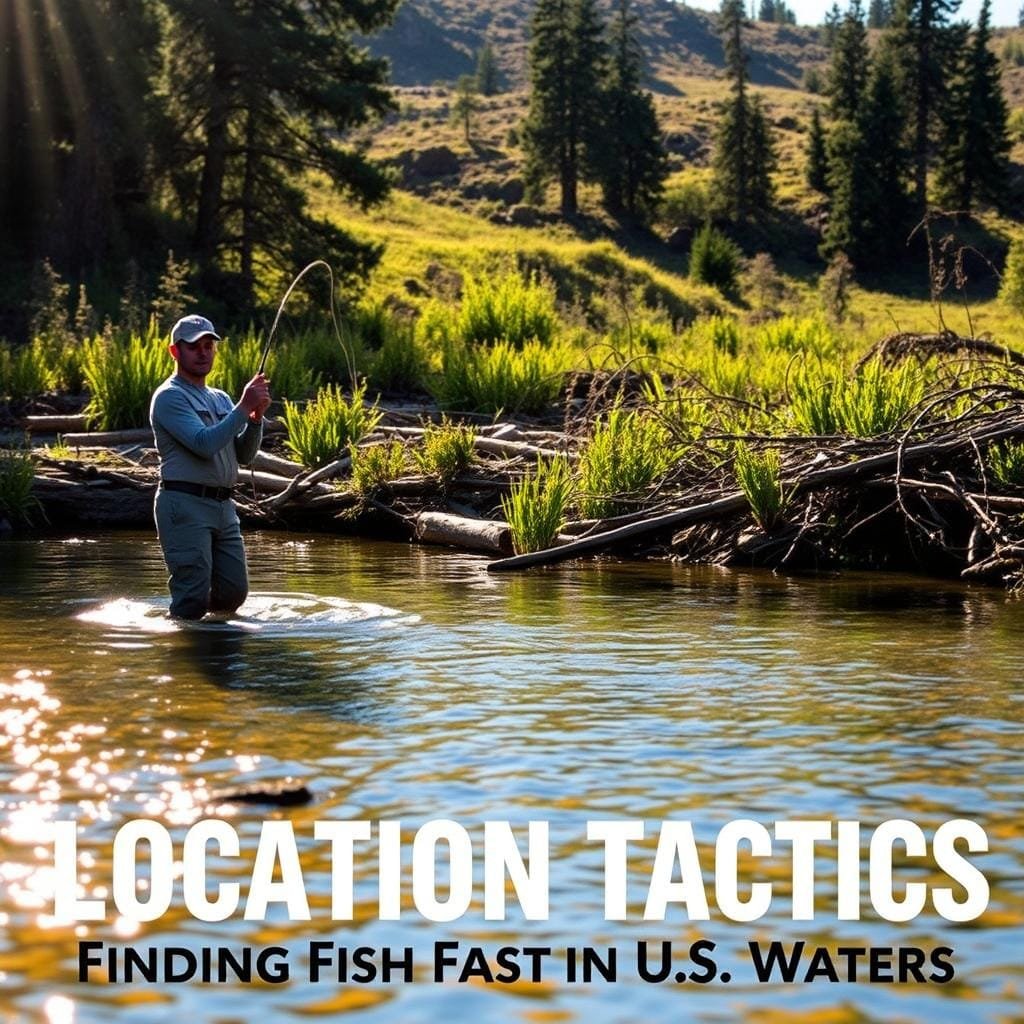
Start with classic pumpkinseed locations: warm, calm ponds and lakes. Look for clear water and thick vegetation. Quiet stream pools are good too.
Work the edges where sand meets weeds. Treat weedlines panfish as your roadmap. Follow them along lily pads, cattails, and downed trees.
Begin with a small bobber and live bait. This lets you probe depths from one to six feet. Make short casts for shore fishing panfish, moving every few minutes until you mark a bite.
Once you pin a school, switch to micro jigs. This lets you cover water faster and keep the action rolling.
Polarized sunglasses help you spot beds, cruising fish, and shadow lines. Match color to clarity—bright in murky water, natural in clear. This makes your offer stand out without spooking fish.
From broader hotspots in the best sunfish lakes USA, target Lake Okeechobee in Florida. It has lush vegetation. Lake Vermilion in Minnesota has rock and weed edges. Lake Havasu in Arizona has clear flats and points. Dale Hollow Lake on the Tennessee–Kentucky line has deep, clean structure.
The same search plan applies: stalk weedlines panfish, probe pockets, then grid the area with small jigs.
Focus near shore and around hard edges: weedlines, lily pads, docks, stumps, and brush. For shore fishing panfish, cast parallel to cover and retrieve slow. Pause as the jig ticks grass tops.
Always confirm local regulations and licensing. Bag and size limits vary by state and can change without notice.
| Waterbody | Region | Prime Zones | Quick Tactic | Notes |
|---|---|---|---|---|
| Lake Okeechobee | Florida | Reeds, pads, inside weedlines | Bobber-leech, then 1/64-oz jig | Great for docks and cover fishing when winds push bait |
| Lake Vermilion | Minnesota | Rock–weed transitions, bays | Slip-float with wax worm | Work weedlines panfish along points and island edges |
| Lake Havasu | Arizona | Clear flats, marinas, shade lines | Tiny swimbaits, light fluoro | Sight-cast for shore fishing panfish in calm coves |
| Dale Hollow Lake | Tennessee/Kentucky | Steep breaks, grass pockets | Micro jig under fixed float | Scan for docks and cover fishing near creek mouths |
Keep moving until you get taps. Map out promising pumpkinseed locations. Note wind lanes that stack plankton and fry. Circle back during low light when fish push shallow again.
Bite Refinements: Color, Scent, and Profile Tweaks
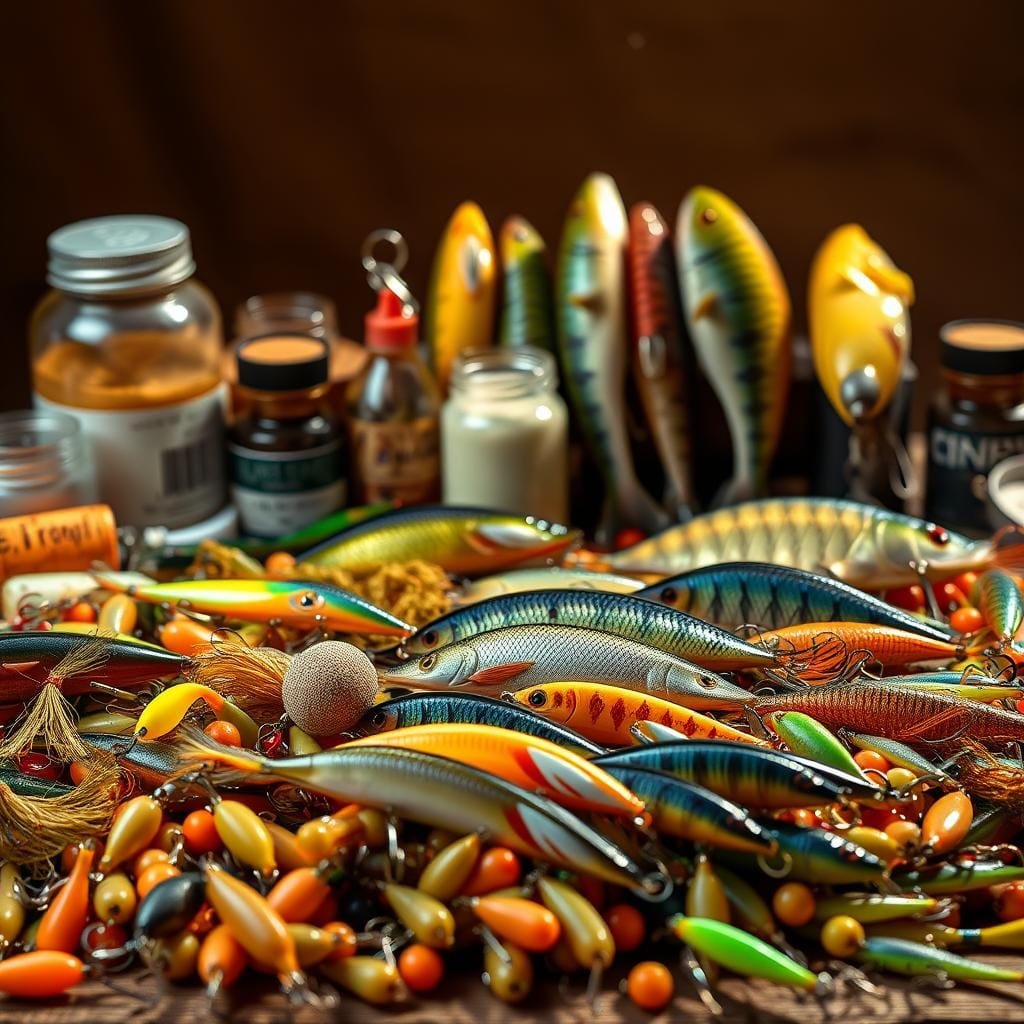
Small changes can make pumpkinseed fish bite. Match the light, water, and pressure. Then, tweak the scent and size.
Keep your retrieve slow and steady. This helps fish track and commit.
Chartreuse and orange in murky water; natural hues when clear
In murky water, use chartreuse orange patterns. These colors stand out and grab fish’s attention.
When the water is clear, use natural colors. Think of baitfish silver, olive, and insect brown. These colors look real and don’t scare fish away.
Scented soft baits and bait juices for finicky fish
Use scent to seal the deal. Scented panfish baits like Berkley Gulp! Cricket or Gulp! Maggots add taste. This makes fish want to bite.
Refresh with bait juice after a few casts. This little boost turns follows into bites without changing your rhythm.
Downsizing profiles when they short-strike
Missed taps mean the lure is too big. Start with smaller jigs, from 1/32 oz to micro heads. Or trim soft plastics by a third.
Break nightcrawlers into matchstick pieces. Use #8–#12 hooks on 3–4 lb mono. This setup casts well and keeps hooks in the lip.
If fish get wary, try beetle bodies and subtle insect shapes. The slim package works well with natural colors for a sneaky approach.
Pro Tips to Beat Bait Thieves and Boost Hookups
Pumpkinseed are expert pickpockets. To beat a bait thief sunfish, thread or pleat nightcrawlers or wax worms. This lets them wiggle while the hook point stays exposed.
Use small, sharp hooks in #8–#12, like Gamakatsu or Eagle Claw. This helps improve hookup ratio panfish and stop short-bites.
Keep your cadence slow with tiny jigs or plastics. Their prey moves at a crawl, so speeding up slashes bites. Watch a small float like a hawk—bobber depth control matters.
Downsize the bobber to boost sensitivity, then add a micro split shot. This pins your bait just above weeds. Pair these tweaks with ultralight panfish tips: a soft rod and 3–4 lb monofilament such as Berkley Trilene Big Game for crisp strike detection.
Rotate offerings when fish get wary. Switch from worms to crickets, then to beetles or insect-style plastics. Adjust color to the water: chartreuse or orange in stain, natural browns and olives in clear.
If you see pecks without hookups, downsize the profile. This improves hookup ratio panfish and stick with deliberate pauses.
Start where they live. In spring, sight-fish shallow beds in 6–12 inches along flats, weed edges, and docks. Through summer and fall, slide to deeper edges with the same bobber depth control to hold your bait in the strike zone.
In winter, go micro and slow. Blend these ultralight panfish tips with smart worm rigging tips. Even a seasoned bait thief sunfish won’t stand a chance.
FAQ
What’s the top bait for pumpkinseed if I just want fast action?
Crickets are the best, with wax worms a close second. Small nightcrawler pieces work well too. Use tiny baits near weeds or docks where pumpkinseed like to hang out.
Where do pumpkinseed usually live and feed?
They love warm, calm, clear water near shore. Look for them around weedlines, lily pads, docks, and downed trees. They like quiet spots in rivers and streams too.
What do pumpkinseed eat in the wild?
They eat lots of insects, larvae, fish eggs, mollusks, and worms. Crickets, wax worms, small worm pieces, and plastic lures that look like insects are great choices.
Why does bait size matter so much for pumpkinseed?
They have small mouths but are big eaters. Use #8 to #12 hooks and tiny baits. This helps avoid short strikes and deep-hooking.
Are crickets and grasshoppers really that good?
Yes. Crickets are deadly for bigger pumpkinseed, and grasshoppers work well too. Rig them under a small bobber and let them move naturally.
How should I rig wax worms and nightcrawlers so they don’t get stolen?
Thread or “pleat” a small piece onto the hook. This lets it wiggle and keeps the point exposed. It’s hard for bait thieves to steal.
Can beetles and other invertebrates outfish worms?
Yes, on pressured fish. Beetles and other invertebrates look different. They work well in clear, calm water and around cover.
What artificial lures work best for pumpkinseed?
Tiny jigs down to 1/32 oz and micro minnows like Berkley Micro Power Minnow are great. Keep your retrieve slow to match their slow prey.
Which soft plastics should I try?
Try insect-mimicking options like Gulp! Cricket and small grub-style plastics. They match their natural food and add scent to help them bite.
When should I throw beetle spins, small spinners, or topwater poppers?
Use beetle spins and small inline spinners along weed edges and in stained water. Tiny poppers or “crickhopper” topwaters work in shallow cover early or late.
What’s the absolute best bait for pumpkinseed most days?
Crickets, wax worms, and small nightcrawler pieces are usually winners. Among artificials, 1/32-oz jigs, Berkley Micro Power Minnow, and Gulp! Cricket are reliable. Keep it small and natural.
What rod, reel, and line work best?
Use a 4–7 feet ultralight spinning rod with a smooth-drag reel. Spool 3–4 lb monofilament like Berkley Trilene Big Game for casting tiny baits.
What hook sizes should I use?
Stick with #8 to #12 hooks. Gamakatsu #8 and Eagle Claw #12 are popular. Small hooks fit their mouths better, improve hookups, and reduce deep-hooking.
How fast should I retrieve lures?
Retrieve slowly. Pumpkinseed prefer slow-moving prey. Short hops or a gentle swim works better than fast retrieves.
How do bobbers and split shot help around weeds?
A small bobber suspends bait at the right depth above vegetation. A micro split shot helps you punch through and hover just over the tops.
How do seasonal patterns change the best bait?
Spring: use subtle live baits on beds in 6–12 inches. Summer: tiny plastics, beetle spins, and small poppers around shade and weeds. Fall: bright small jigs on edges and structure. Winter: finesse micro plastics and long pauses.
Where should I start looking on a new lake?
Start near shore in warm, clear, weedy spots with cover. Check weedlines, docks, and shallow flats first. Use a small bobber and live bait to find fish fast, then switch to micro jigs.
Any standout U.S. waters for pumpkinseed-style panfishing?
Yes, on sunfish-rich waters like Lake Okeechobee, Lake Vermilion, Lake Havasu, and Dale Hollow Lake. Focus on clear edges, vegetation, and shallow cover.
What colors work best in different water clarities?
In murky water, use chartreuse and orange to pop. In clear water, stick with natural browns, greens, and baitfish tones. Let clarity guide your palette.
Do scents really help with pumpkinseed?
Yes. Scented plastics like Gulp! Cricket and a touch of bait juice can turn followers into biters, even in cold fronts or heavy pressure.
What should I do when they keep short-striking?
Downsize. Drop to lighter jigs, trim plastics, or use smaller live bait pieces. Keep hooks small (#8–#12) and slow your retrieve.
How do I stop pumpkinseed from stealing my bait?
Pleat worms or wax worms onto the hook with the point exposed. Use sharp small hooks, watch a small bobber for tiny takes, and set quickly. Rotate baits if they wise up.
Any quick tips to boost hookups on artificials?
Use ultralight line, keep jig weights at or under 1/32 oz, and make short, accurate casts along cover. Pause often, maintain a steady cadence, and match color to water clarity.
Are pumpkinseed found coast to coast, and are they ever a problem?
Yes, they’re found between the Pacific and Atlantic, often introduced beyond their native range. In some waters, they’re considered a nuisance due to ecosystem impacts, so always check local regulations.