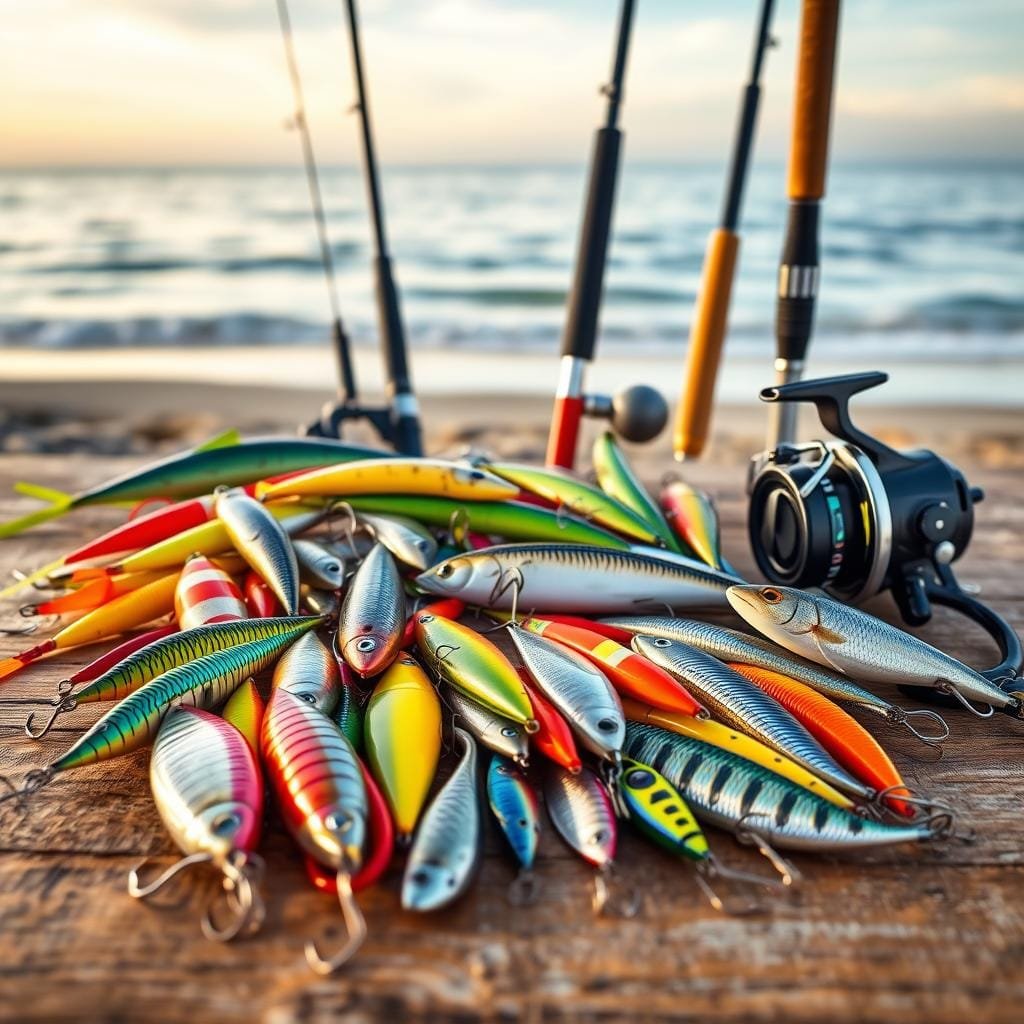
Spanish mackerel are fast and love shiny things. This guide shows the best baits for them in U.S. waters. You’ll learn about top lures and smart fishing tactics.
We focus on gear that works well every day. You’ll see trolling setups and fast inshore lures. These include tight leaders and simple retrieves.
Some top picks are the Got-Cha Plug and the Original Clark Spoon. The HR Tackle Sting Silver and Tsunami Glass Minnow are also great. For more info, check Outdoor Life’s lure guide.
Live and dead baits are also good when fish get picky. Use sharp wire and short traces. Troll at 3–9 knots and look for birds and bait marks.
Why Spanish Mackerel Smash Fast, Flashy Offerings
Spanish mackerel love speed, chaos, and shine. They go for motion that looks like a panic. Fast lures that stay in place when cranked hard get bites.
For a seasonal snapshot near Jacksonville jetties and inlets, see this Spanish mackerel overview.
Speed and erratic action trigger strikes
Spanish mackerel are built for chasing. A tight-wobbling spoon at up to six knots looks like a fleeing meal. This erratic action forces them to bite.
Keep the lure moving straight. This lets the fish aim without hesitation.
Flash and small profiles match silversides and anchovies
When food is small, so is the lure. Lures with chrome or gold finishes look like scales and sun flare. A small baitfish imitation works best when it’s compact and dense.
This lets it cast far and stay down during a fast retrieve.
Tough hardware stands up to violent hits and sharp teeth
Hits are sudden and savage. So, gear must be tough. Choose durable saltwater hardware with strong parts.
For casting, use 20–40 lb fluorocarbon to keep it low. For trolling, a short wire prevents bite-offs. This is good for running flashy metal lures or small baitfish imitations fast.
Got-Cha Plug: The Classic High-Speed Casting Killer
The Got-Cha Plug is a favorite for catching Spanish mackerel. Its shape and weight make it fly through the air. It goes far and straight, perfect for fishing from the beach or a boat.
Standout features: through-wire, twin trebles, forward weight
This lure is built strong with a through-wire design. It has twin treble hooks to catch fish well. The weight at the front helps it go far and move quickly, like a hurt bait.
How to work it: low rod tip, quick reel, sharp jerks
Hold your rod tip low and reel fast. Then, make quick, sharp jerks. These jerks make the lure move side to side, like a real fish.
When to throw it: surface blitzes and clear water
Throw it when birds are diving into the water or when the water is clear. It works well in these situations because it looks real. It also works when trolling short distances.
Best finishes and colors for pressured fish
Use bright colors like chrome, gold, or hot chartreuse to catch fish in clear water. If fish are harder to catch, try softer colors like chrome-blue, pearl, or bone. These colors help the lure stay effective and catch fish well.
Original Clark Spoon: Simple, Deadly, And Perfect For Trolling
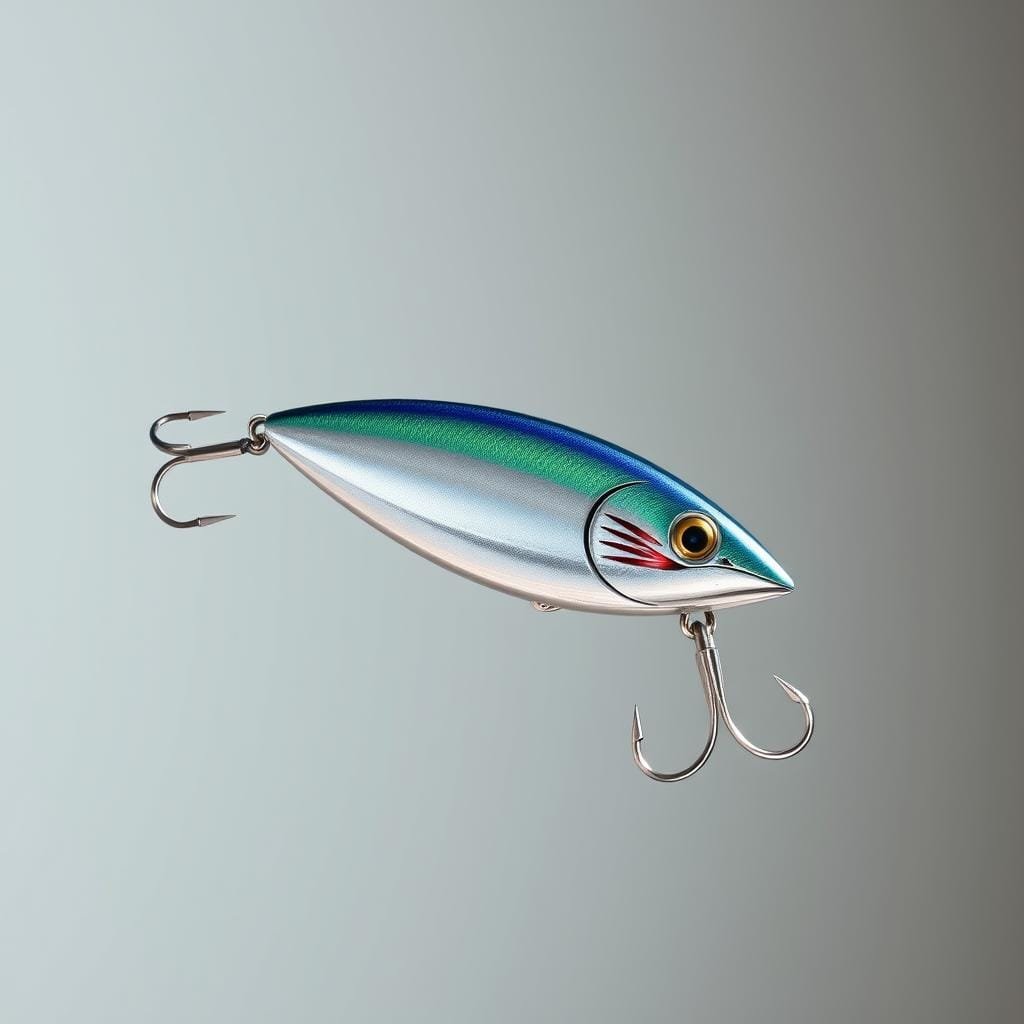
The Spanish mackerel spoon from Clarkspoon is a favorite on every coastal boat. It has a thin blade, swivel, and stainless hook. This makes it great for trolling at real-world speeds.
Proven at up to six knots with an enticing side-to-side roll
Even at six knots, the spoon tracks well. It flashes like glass minnows and anchovies. Its steady side-to-side move is perfect for catching fish.
Rigging: 25 ft of 30 lb mono/fluoro behind inline sinker, bird, or planer
Use 25 feet of 30-pound mono or fluoro to avoid engine wash. An inline sinker rig is simple and cuts twist. For deeper water, use a planer or a trolling bird.
The 2-inch, 1/2-ounce model with a #1 hook is just right for fish. For more on its success, see this Field & Stream breakdown.
Color picks: chartreuse green and pink, gold or chrome plate
Chrome shines in bright light, while gold works on cloudy days. Add chartreuse and pink for extra visibility. Change colors to match the sun and water.
| Setup | Best Use | Leader & Hardware | Spoon Finish | Why It Works |
|---|---|---|---|---|
| Inline sinker rig | Shallow to mid-depth, clean water | 25 ft of 30 lb mono/fluoro, small mid-swivel | Chrome with chartreuse and pink spoon accent | Stable roll, fast deployment, minimal twist |
| Planer setup (No. 1) | Deeper lanes on reef edges | 25 ft of 30 lb leader, 200 lb barrel swivel | Gold plate for softer flash | Drops the lure into the strike zone at speed |
| Trolling bird | Surface activity and scattered bait | 25 ft of 30 lb leader, heavy terminal swivel | Chrome body with pink teaser | Creates commotion that pulls fish to the spoon |
| High-speed run (5–6 knots) | Covering water along surf lines | Same leader; check hook point often | Gold or chrome, match sky and water | Side-to-side roll holds true and flashes like minnows |
HR Tackle Sting Silver: Long Casts, Fast Retrieves, Brutal Durability
The HR Tackle Sting Silver is great for catching Spanish mackerel on windy days. It’s small and flies straight, even in strong winds. It’s made to cast far and fast, and it feels solid in your hand.
Aerodynamic, dense alloy for distance and tight profile
This metal jig is made of a dense alloy. It makes your rod feel heavy and casts far. Its small size helps it move straight and stay down in rough water.
3X Mustad treble and chrome/dimpled finish for flash
It comes with a strong 3X Mustad hook. This hook can take a lot of hits without bending. The shiny finish adds extra sparkle, making it look like real bait.
Retrieve cadence for reaction bites around bait balls
Cast it far and fast, then crank it back quickly. Stop for a second or jerk the rod tip. This action makes fish bite around bait balls.
- Use high-speed reels to keep the HR Tackle Sting Silver moving.
- Clip short with fluorocarbon; add light wire only when bite-offs spike.
- Rotate chrome dimple finish and natural paints to match sky and water glare.
Tsunami Glass Minnow: Match-The-Hatch Jig For Tiny Bait
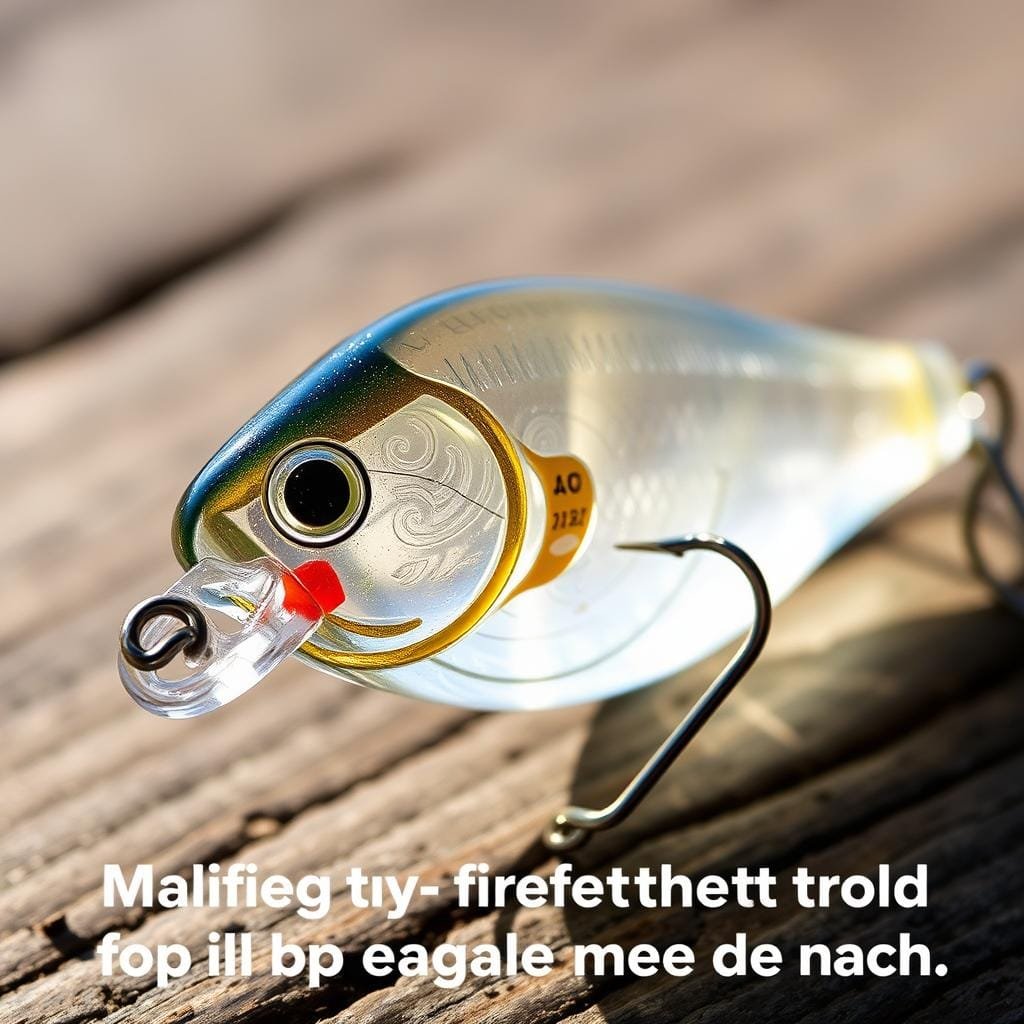
When Spanish mackerel chase silversides, the Tsunami Glass Minnow jig is perfect. It looks like a real baitfish and can handle bites well.
Balanced 3/8 oz head, glow-mylar skirt, long-shank hook
The jig’s 3/8-ounce head is balanced. This makes the skirt jiggle and shine. The glow-mylar and tinsel mix looks like real baitfish.
The long-shank hook catches fish that try to grab the skirt. This helps the jig stay on during fast swims.
Bullet casts to blitzing schools and fast, erratic retrieve
This jig casts far and straight into schools of fish. Move it quickly, then pause. This action makes it look like a real baitfish.
Why it excels in chum slicks and around surface-feeding fish
In chum slicks, the right bait is key. The jig’s chrome and light colors match the baitfish in clear water. Glow accents help at dawn.
The jig can take a few bites, but it’s not perfect. Carry extra jigs and switch them if needed. The long-shank hook helps catch fish that try to grab the jig.
Bass Assassin Die Dapper: Budget Paddle Tail That Gets Bit
The Bass Assassin Die Dapper is a great choice for mackerel fishing. It’s fast, flashy, and affordable. Its design stays straight even when you fish fast. The bait smells good, so fish stay hooked longer.
1/4 oz jighead rigging and attractant-infused plastic
Use a 3.5-inch body on a 1/4 oz jighead with a 2/0 hook. This setup works well near the surface. The tail moves a lot, so you can fish it fast or slow.
The bait smells good, which helps catch fish. Even when fish are biting fast, this bait works well.
When to go soft plastic to save money during frenzies
Spanish mackerel can break expensive lures quickly. Use a soft plastic when birds dive and bait splashes everywhere. A pack of Bass Assassin Die Dapper can last longer than many hard baits.
It’s great for catching fish fast, even in a frenzy.
Color rotation for variable clarity and light
Choose colors based on the water. In clear water, use silver or chrome. For murky water, try chartreuse or pink. Darker colors work best in bright sun.
Keep a few rigged up to switch colors quickly. This keeps you on the fish’s trail.
- Clear water: subtle flash, baitfish tones
- Stained water: chartreuse or pink pops
- Bright sun: darker spine for contrast
- Retrieve: burn high or drop-and-rip through pods
best bait for spanish mackerel
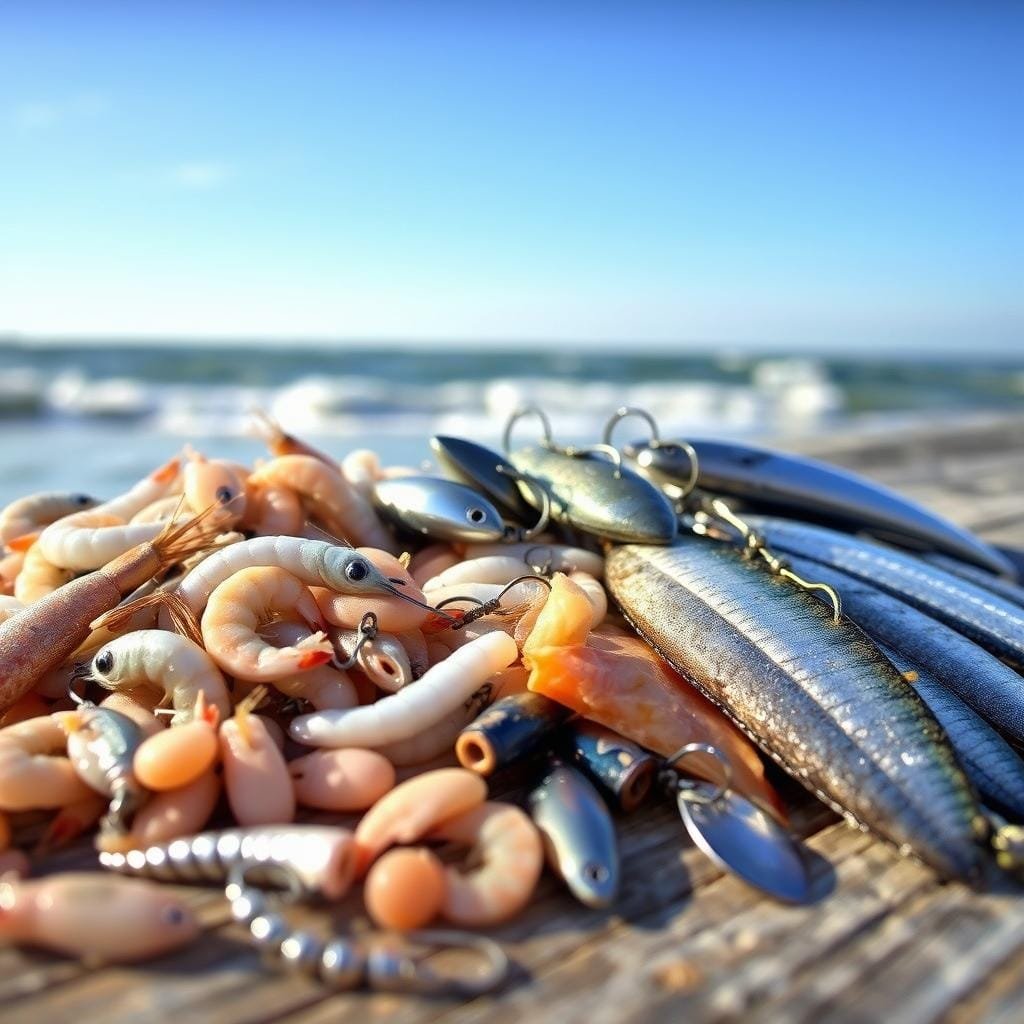
The best bait for Spanish mackerel is fast, shiny, and easy to rig. When fish dash through bait, quick lures stand out. Make sure your rig is neat, hooks sharp, and your retrieve is quick.
Top artificial picks: spoons, metal jigs, plugs, and soft plastics
Artificial lures for Spanish mackerel need to move fast. The Original Clark Spoon in 1/2 oz works well at six knots. It uses 25 feet of 30 lb mono or fluoro.
An HR Tackle Sting Silver in 2 oz casts far and moves fast. It has a tight flash. A Got-Cha Plug darts side to side and holds two hooks well.
The Tsunami Glass Minnow is small but effective. It has a 3/8 oz head and a glow-mylar skirt. A 3.5-inch Bass Assassin Die Dapper on a 1/4 oz jighead is also good for frenzies.
Live options: slimy mackerel and yakkas for fussy fish
Live bait is best when fish are picky. Slow-troll slimy mackerel or yakkas at 2–4 knots. Use 30 lb fluorocarbon and a short wire stinger.
Change depths with a small egg sinker or a downrigger clip. Clear water means longer leads. Choppy water lets you shorten the spread.
Dead and skirted baits: garfish, wolf herring for speed trolling
Garfish trolling with a skirt is fast. A tight rig tracks well at high speeds. Use a chin weight and set it back where wakes settle.
Wolf herring bait swims well when sewn and pinned. Mix it with a spoon on another rod. In clear water, use chrome skirts and subtle hues.
| Bait/Lure | Primary Use | Speed Range | Rigging Notes | Why It Works |
|---|---|---|---|---|
| Original Clark Spoon (1/2 oz) | Trolling | Up to ~6 knots | 25 ft of 30 lb mono/fluoro; planer, bird, or inline sinker | Bright flash and tight roll mimic silversides |
| HR Tackle Sting Silver (2 oz) | Long-cast retrieve | Fast burn | 3X Mustad treble; chrome or dimpled finish | Dense profile casts far and triggers reaction strikes |
| Got-Cha Plug | High-speed casting | Fast with jerks | Forward-weighted; through-wire; twin trebles | Erratic darting action matches fleeing bait |
| Tsunami Glass Minnow (3/8 oz) | Match small bait | Quick, erratic | Glow-mylar skirt; long-shank hook | Compact flash convinces selective fish |
| Bass Assassin Die Dapper (3.5 in) | Budget soft plastic | Medium-fast | 1/4 oz jighead; steady burn with twitches | Thump and profile hold up during frenzies |
| Live slimy mackerel/yakkas | Slow-troll | 2–4 knots | 30 lb fluoro; 10–15 cm wire stinger | Natural swim seals bites from wary fish |
| Garfish behind a skirt | Speed trolling | Fast | Sewn mouth; chin weight; clean, straight track | Long, flashy bait excels for garfish trolling at pace |
| Wolf herring (rigged dead) | Weighted swim | Moderate-fast | Sew with thread; pin to weighted hooks | Strong silhouette and wiggle make prime wolf herring bait |
Use both artificial and natural baits to stay ready for changes. Try different baits until you find the best one. Then, focus on speed and how you present it.
Live, Dead, And Skirt-Assist Baits That Convert Neutral Fish
When lures stall, natural offerings wake up the bite. Work a clean spread and mind your speed. Balance scent, profile, and track so each bait swims straight and stays in the zone.
Fast-trolled gar behind a skirt for commercial-grade results
Captains running the Gulf and Atlantic edges lean on trolling garfish for mackerel when they need to cover miles. A straight, durable setup with skirted mackerel baits keeps the body intact at pace while adding flash and vibration.
Pair a resin or Mylar skirt from Boone or Sea Striker over the nose. Keep leader short to reduce spin. These skirted mackerel baits track clean at higher speeds and hold up through chop.
Slow-trolled live baits at 2–4 knots with short wire stingers
For picky fish, live bait trolling 2–4 knots is hard to beat. Bridle a slimy mackerel or yakka on a 5/0–7/0 live-bait or circle hook with 40–60 lb fluorocarbon to wire transition.
Add wire stinger hooks 10–15 cm behind the main hook to nail tail-biters. Pin the stinger lightly in the back or leave it free-swinging. Adjust an egg sinker or trolling sinker ahead of the swivel to set running depth as current or wind shifts.
Swimming dead baits: prep, sewing, and weighted hooks
When fish study every detail, rigging swimming dead baits pays. Use a bait needle, waxed thread, and a keel-weighted hook to lock a wolf herring, yakka, or slimy into a true track.
Sew the jaw shut, stitch the backbone points, and tune the tow point until it runs straight at speed. Wire stinger hooks complete the package for short strikes, and a small chin weight helps stop roll in clear water.
Blend tactics as conditions change—trolling garfish for mackerel to scout, live bait trolling 2–4 knots to seal the deal, and skirted mackerel baits or a tuned swim on rigging swimming dead baits when pressure is high.
Leaders, Line, And Hooks: Tackle That Survives Teeth
Fast strikes and sharp jaws hurt weak gear. Keep your rigs tough and simple. This way, lures move right and stay on.
Fluorocarbon 20–40 lb for casting; wire for trolling bite protection
For casting, a fluorocarbon leader helps catch Spanish mackerel. Use 20–40 lb fluoro with 10–30 lb braid for long casts. This setup keeps lures moving well.
For trolling, protecting against bites is key. Use a short swivel to connect your rig. This keeps your lures moving right and saves time.
Short 30 cm single-strand wire for spoons/minnows at speed
A 30 cm wire leader protects baits from fish bites. It works well at high speeds. Keep it clean and simple.
Start with fluoro in clear water. Switch to wire after a few bites. This keeps you fishing longer and protects your gear.
Replaceable trebles, sturdy split rings, stainless hardware
Hard hits can bend weak parts. Use lures with replaceable hooks. This lets you change them after catching a few fish.
Check your rings and hooks after each catch. Small problems can lose you fish. Use top-notch, corrosion-resistant hardware for better fishing.
Where And How To Present Baits: Casting And Trolling Playbook
Start by looking for signs of life. Look for birds flying, fish skipping, and bait flipping. These signs show where Spanish mackerel might be.
Watch your screen for squiggles and tight clouds. These are bait marks that tell you where to cast or troll.
Look for places where food gathers. Surf lines, reef edges, and drop-offs are good spots. Warm, clear water is best, where the color changes.
Set up your cast so it crosses these lines at an angle. This helps you reach the fish better.
Use long-throw metals and plugs when casting. Try the Got-Cha Plug, HR Tackle Sting Silver, and Original Clark Spoon. Cast fast and erratically to get the fish’s attention.
Make a clean trolling spread to avoid tangles. Use one long bait in the middle and two short ones in the corners. Add a deep diver and a shallow one to cover different depths.
Use small spoons like Clark Spoons at about six knots. Use planers or sinkers to control depth. Keep your speed between 3 and 9 knots, depending on the sea and lure.
Pay attention to the surface and your screen. If birds are flying and bait marks show up, troll through. If it’s quiet, try a wider area and faster speed to find more fish.
Gear And Setup Tips For U.S. Inshore Success
Set up your Spanish mackerel gear for fast strikes and smooth runs. Use an 8-foot medium to medium-light spinning rod for casting. Pair it with a 2500-size reel.
Choose 10–30 lb braid and add a 20–40 lb fluorocarbon leader. This combo offers reach, feel, and protection. Use an FG knot to keep everything neat and trim tags for straight casts.
For trolling, pick compact overhead outfits. A 6-foot rod in the 10–15 kg class works well with a 12–20-size lever-drag reel. Run 50 lb braid to a 150 lb leader for trolling.
Use a 30 cm single-strand wire bite section for mackerel-only days. For mixed species, switch to heavy mono or fluoro and accept some losses for more bites.
Hooks and drag settings are key. Trebles on diving minnows catch more fish in a blitz. Strong inline singles are safer for releases and hold better on larger fish.
Set drags modestly at the strike to avoid ripping hooks. Add pressure mid-fight as needed. Work fast, keep fish moving, and follow shark-avoidance tips.
Bleed and ice your catch right away for the best table quality.
FAQ
What are the top bait picks for Spanish mackerel fishing?
Top picks include Got-Cha Plug, Original Clark Spoon, and HR Tackle Sting Silver. Also, Tsunami Glass Minnow and Saltwater Assassin Die Dapper are great. Natural baits like garfish, slimy mackerel, and yakkas work well too.
Why do Spanish mackerel smash fast, flashy offerings?
They love speed and flash. Tight-wobbling spoons and zig-zagging plugs mimic fleeing bait. Chrome, gold, and bright finishes attract them in clear water.
How does speed and erratic action trigger strikes?
Fast retrieves and sharp rod snaps mimic fleeing bait. Keep lures moving fast and add quick pauses or darts.
Why do small, flashy profiles work so well?
Spanish mackerel target tiny bait like glass minnows and anchovies. Small metals and spoons with mylar or dimpled surfaces match their prey.
What hardware stands up to violent hits and teeth?
Choose through-wire construction, strong split rings, and corrosion-resistant hooks. Replaceable trebles, like 3X Mustad, help you keep fishing after bites.
What makes the Got-Cha Plug a high-speed casting killer?
It’s forward-weighted for long casts and has twin trebles on through-wire hangers. Its pencil body tracks straight and darts side to side.
How should I work a Got-Cha Plug?
Point the rod tip low, reel fast, and add sharp jerks. This creates a tight, zig-zag dart that looks like fleeing bait.
When should I throw a Got-Cha Plug?
Throw it during surface blitzes and in clear water. It shines when fish are pushing bait near the top and chasing fast.
What finishes help on pressured fish with a Got-Cha?
Start with bright chrome and bold colors. If fish get picky, try subtler chrome, pearl, or natural baitfish tones.
Why is the Original Clark Spoon so deadly for trolling?
It rolls with a tight side-to-side flash up to about six knots. This action matches tiny bait and stays controlled at speed.
How do I rig a Clark Spoon?
Run roughly 25 feet of 30 lb mono or fluorocarbon behind an inline sinker, trolling bird, or No. 1 planer. Add a heavy barrel swivel when using planers.
What Clark Spoon colors should I start with?
Gold or chrome plates are staples. Chartreuse green and pink accents are proven in many water colors.
What sets the HR Tackle Sting Silver apart?
A dense alloy body casts a mile and keeps a tight bait profile. It stays stable at high speed and reaches distant feeds.
How do finish and hooks help on a Sting Silver?
Chrome and dimpled surfaces amplify flash. A 3X Mustad treble on a split ring is tough and easy to replace.
What retrieve triggers bites on a Sting Silver?
Burn it with brief pauses or snap the rod tip for a tight dart. This cadence fires up fish around bait balls and birds.
Why pick the Tsunami Glass Minnow for tiny bait?
Its 3/8-ounce balanced head and glow-mylar skirt mirror glass minnows and silversides. The long-shank hook pins short-strikers.
How should I fish the Tsunami Glass Minnow?
It “casts like a bullet” to blitzing schools. Retrieve fast and erratic to match fleeing micro bait.
Where does the Glass Minnow excel?
In chum slicks and around surface-feeding fish. Rotate chrome/silver and light baitfish tones as light and water clarity change.
Why use the Saltwater Assassin Die Dapper?
It’s a budget paddle tail with surprising durability and scent infusion. Rig on a 1/4-ounce jighead and burn or yo-yo near bait pods.
When should I switch to soft plastics for Spanish?
During frenzies when bite-offs are common. Swapping pricey hard baits for Die Dappers saves money while keeping bites coming.
What color rotations work best on the Die Dapper?
Use natural silvers and chromes in clear water. Go chartreuse or pink in stain, and darker backs under bright sun.
What’s the best bait for Spanish mackerel overall?
A mix of spoons, metal jigs, plugs, and soft plastics covers speed and size. Add live slimy mackerel and yakkas, plus garfish and wolf herring for trolling.
Which live baits excel on fussy fish?
Slow-trolled slimy mackerel and yakkas at 2–4 knots. A short wire stinger helps with tail snips.
What dead or skirted baits work for speed trolling?
Garfish behind skirts are a high-speed staple. Swimming dead baits like wolf herring or yakkas shine when prepped to track straight.
Why troll gar behind skirts for neutral fish?
Gar baits hold up at high speed and throw off scent. They cover water fast and stay lifelike in clear, bright conditions.
How do I slow-troll live baits for Spanish?
Run 2–4 knots with a short wire stinger that’s free-swinging or lightly pinned. Adjust sinker weight for depth and current.
How do I rig swimming dead baits?
Use weighted hooks, a bait needle, and thread to sew the bait. The goal is a straight, stable swim at speed.
What leaders and line work best for Spanish?
For casting, 20–40 lb fluorocarbon leaders with 10–30 lb braid keep bites high. For trolling, add short single-strand wire for bite protection.
When should I use single-strand wire?
Run about 30 cm of wire with spoons and minnows at speed. It prevents bite-offs without killing lure action.
What terminal hardware should I prioritize?
Replaceable trebles, sturdy split rings, and stainless components. Inspect hooks and rings after flurries of bites.
How do I find Spanish before I cast or troll?
Look for birds bombing, flying fish, and bait marks on the sounder. Work pressure points where bait stacks up.
What structure and conditions hold fish?
Surf lines, reef and channel edges, headlands, and drop-offs. Warm, clear water and color changes are prime.
How should I set a simple trolling spread?
Run three rods: one long down the middle and two short in the corners. Mix depths with a deep diver around 8 meters and a shallower diver around 4 meters.
What are the best speed windows for trolling?
Overall, 3–9 knots works depending on the spread. Small spoons like Clark Spoons excel around six knots.
What gear setup works for U.S. inshore casting?
Use an 8-foot medium to medium-light spinning rod with a 2500-size reel. Spool 10–30 lb braid to a 20–40 lb fluorocarbon leader.
What’s a solid trolling rod and reel combo?
A 6-foot 10–15 kg class rod with a 12–20-size lever-drag reel. Many anglers run 50 lb braid to a long heavy leader with an FG knot.
Trebles or singles for Spanish?
Trebles hook more fish on diving minnows. Singles are stronger and speed up releases on larger fish.
Any drag and fight tips to beat sharks?
Set a modest drag to avoid pull-outs. Fight fish efficiently and tighten up if sharks show; bleed and ice your catch right away.