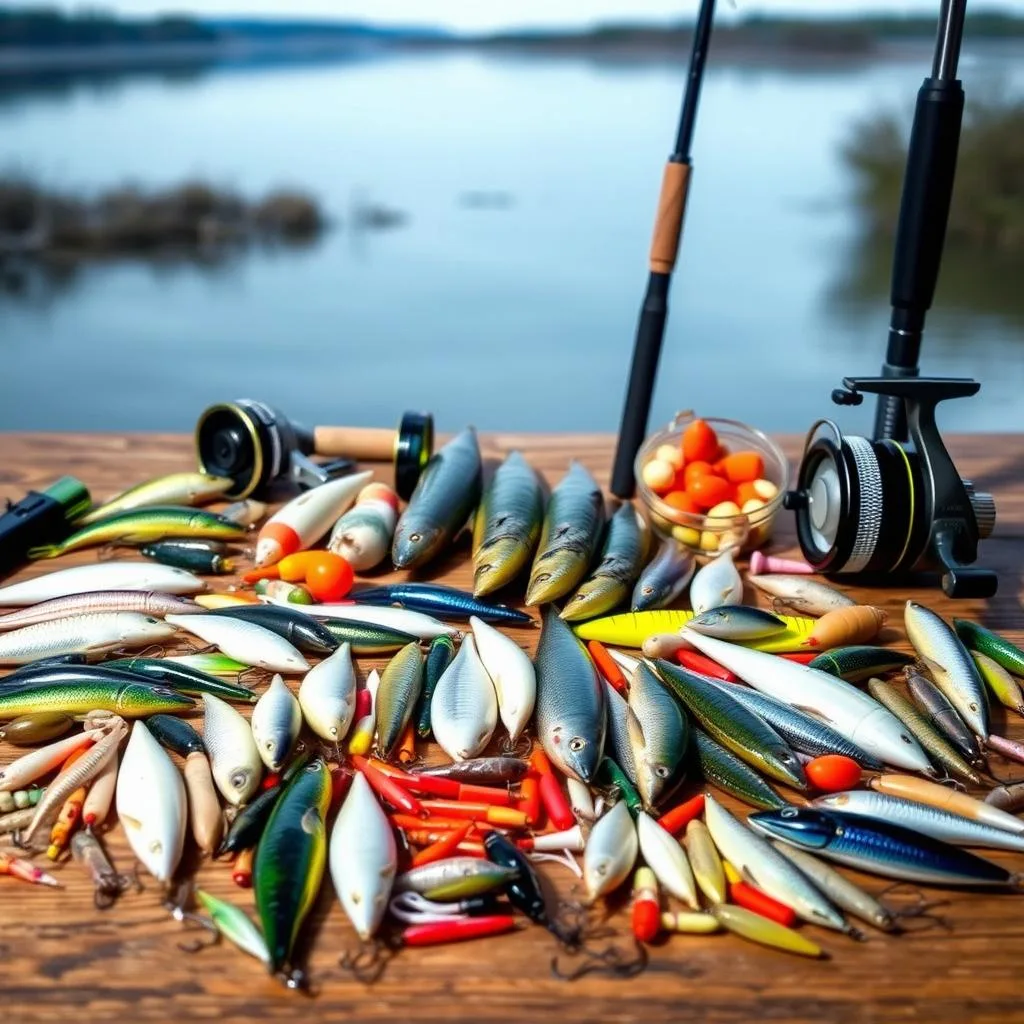
Chasing white bass is exciting. The right tackle makes it even better. This guide shows the best bait for white bass.
It also talks about the top white bass lures and baits. You’ll learn smart fishing tips for all seasons. These tips help you catch white bass from spring to winter.
Some top baits include Bill Lewis Rat-L-Trap and Bomber Model A. Bobby Garland Stroll’R, Road Runner, and War Eagle Jigging Spoon are also great. Bass Pro Shops XPS Micro Spin and Heddon Zara Puppy are favorites too.
These baits are about the right size, usually 1 to 2 inches. We change colors based on the water. For more tips, check out this white bass angler guide from Oklahoma.
Learn when to use minnows, shad, and nightcrawlers. Find out how to fish wind-driven points and riprap. Using electronics helps you find schools.
Whether you like power fishing or finesse, this guide has you covered. It offers the best white bass fishing tips and baits. You’ll catch fish fast with these tips.
White Bass Behavior and Seasonal Patterns That Influence Bait Choice
Understanding white bass behavior is key. It changes with the seasons. By tracking these changes, you can pick the right lure size, color, and speed.
Watch how wind, light, and shad migration affect white bass. They move across points and coves in response.
Spawning temperature triggers: 50–60°F sweet spot
Spawning starts when water hits 50°F, peaking at 55–60°F. In many places, this happens when redbud trees bloom. Use slower baits in cold water and faster ones as it warms up.
Where they go: tributaries, riffles, shoals, and sandy shoals at night
When water levels rise, fish move into creeks and rivers. They spread out over rocks, weeds, and debris. On lakes with few tributaries, they spawn on rocky shoals.
At night, adults go to shallow sandy shoals. Then, they drift back to deeper areas after spawning.
Schooling and shad-following habits
White bass swim in tight groups, sometimes with 30–300 fish. They follow shad migrations. This explains why they often surface to chase bait and then hide in nearby breaks.
Matching your lure to their behavior can lead to success.
Dawn and dusk feeding windows
At dawn and dusk, white bass become more active. They hunt in shallow waters during these times. Cast your line during these hours and adjust your retrieve based on their behavior.
Matching the Hatch: Shad-Sized Lures and Colors That Convert
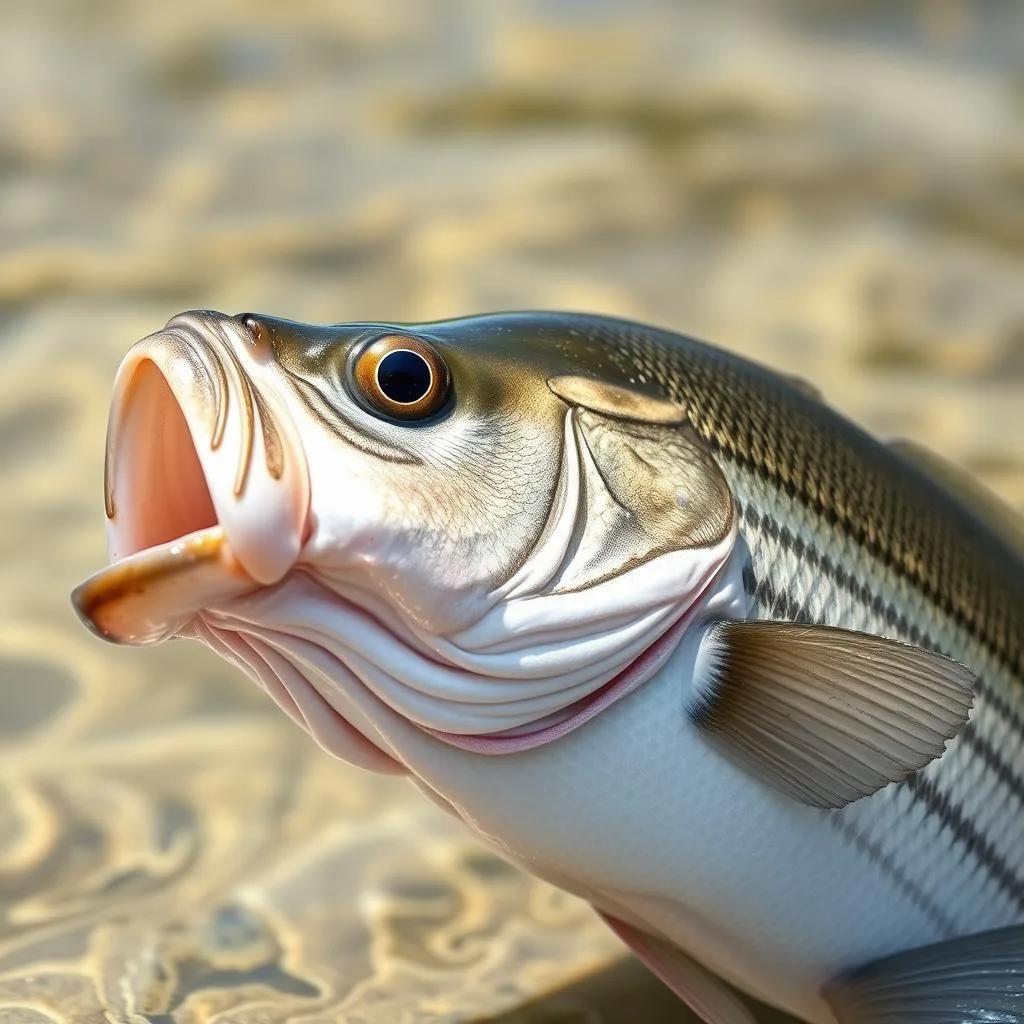
White bass love young shad. To catch them, use small, bright lures. Match the hatch by considering water clarity and wind.
Start small: 1–2 inch profiles to mimic young shad
Start with small lures, about 1–2 inches. This size attracts both small and big fish. Try curly tail grubs, paddletail swimbaits, and small jerkbaits from Berkley, Z-Man, Mepps, and Rapala.
Cast small lures well. When you get bites, try bigger ones. Keep your retrieve short and steady, like a fleeing baitfish.
Color cues: white/silver in clear water, chartreuse/red in stain
In clear water, use white or silver lures with dark backs. This looks like real shad. In murky water, chartreuse and red work best.
Change lure colors with the light. Use shiny lures at midday and dull ones in the morning. Find the best colors for your lake.
Wind-driven points, riprap, and coves stacked with bait
Follow the wind. It moves bait and creates current seams. Fish windward points, coves, and riprap areas where shad get trapped.
Start fishing high and then go deeper. Use spinners, spoons, and slabs to cover water. Crankbaits catch wanderers. Remember, size, color, and speed matter.
Live Bait Lineup That Consistently Produces
When fish get picky, nothing beats natural scent and motion. For live bait white bass, think small, lively, and easy for schools to inhale. Keep a fresh supply aerated in a Frabill or Engel bait cooler so every presentation swims strong.
Minnows and shad in the 2–4 inch range
The best live bait for white bass mirrors their main forage. Net 2–4 inch threadfin shad or buy fathead minnows from a trusted bait shop. Shad minnows for sand bass match size and profile, so bites come fast when schools pin bait against current seams or riprap.
Hook lightly through both lips or the nostril to keep baits alive longer. If current is strong, a dorsal skin hook keeps them upright and flashing.
Rigging: slip-bobber for bank, egg-weight and swivel for boat
From shore, a slip bobber rig white bass setup shines for precise depth control. Thread a bobber stop, bead, slip float, then your weight and hook. Cast beyond the seam, let the rig slide, and stop at your set depth.
In a boat, drop an egg weight swivel rig: slide a 1/4–1 oz egg sinker, add a barrel swivel, then a 10–14 inch leader to a bait-holder hook from Eagle Claw or Gamakatsu. Scale weight to wind and current so the bait holds in the zone.
Depth control: keep it within a couple feet of bottom
When schools are not busting the surface, they often cruise near the bottom. Adjust your slip stop or leader so the bait tracks one to two feet up. This keeps shad minnows for sand bass above silt and in plain view.
Watch your line. Subtle ticks or slack can mean a fish lifted the weight. Sweep the rod to load the hook.
When surface feeding pops off: fixed float adjustments
If fish erupt on top and you only have live bait, switch fast. Clip on a fixed float 12–24 inches above the hook and remove weight and swivel. Now the bait rides high, where white bass slash through schools.
Short pitches into boils with the best live bait for white bass can outfish lures in calm water. Keep casts tight and move with the school to stay in the feed.
Artificial All-Stars: Proven Lures for White Bass
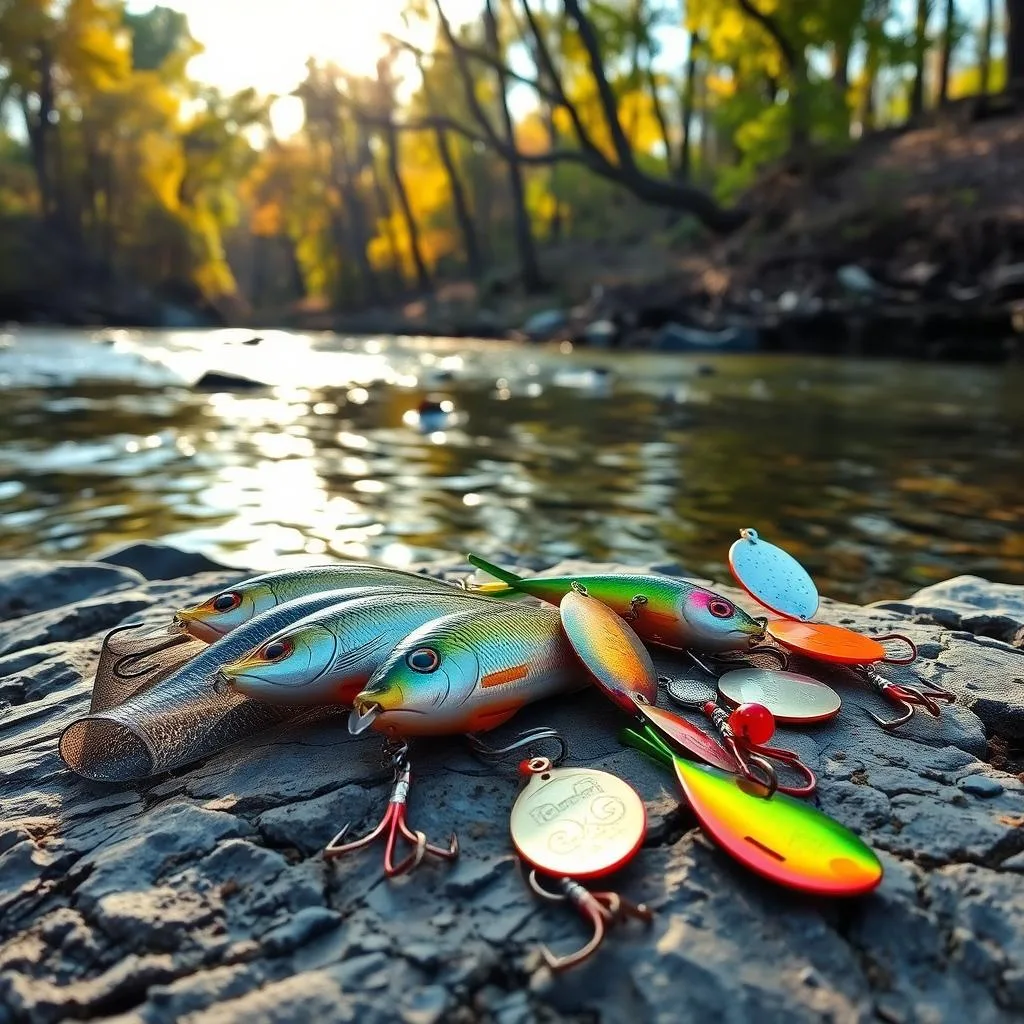
These picks work fast when schools of shad are around. Cast, count down, and keep moving until you feel a thump. Mix up the lure’s shape and metal to control depth. Adjust how fast you move it.
Many bites happen when you’re falling. So, keep your line tight.
Curly tail grubs and paddletail swimbaits on 1/16–1/4 oz heads
A curly tail grub is great for catching lots of white bass. Use 2–3 inch plastics in white, silver, blue, pink, or chartreuse. Attach them to 1/16–1/4 oz jig heads.
For 1–6 feet, use 1/16 oz. For 6–12 feet, use 1/8 oz. For deeper than 12 feet, use 1/4 oz.
Good choices include the Bobby Garland Stroll’R, Berkley PowerBait Power Swimmer, and Bass Pro Shops Squirmin’ Shad. A steady retrieve works well on flats and points. Hops along the bottom attract more fish.
Inline spinners, spoons, and slabs for flash and reaction
For flash, try an inline spinner. Worden’s Original Rooster Tail works well in current. For vertical fishing, use a jigging spoon like the War Eagle Jigging Spoon.
On windy ledges, use a 1/2 oz Fle-Fly Bendable Minnow. Lift it from 3 o’clock to noon. Let it flutter. Most bites happen as it falls.
Lipless and diving crankbaits for covering water
For fast scanning of big water, use a lipless crankbait. The Bill Lewis Original Rat-L-Trap in Electric Silver, Sexy Chrome, or Tennessee Shad Chrome is good. Use a yo-yo retrieve to tick rocks or grass.
For deeper edges, try a Bomber Model A or a Bass Pro Shops Tourney Special crankbait. Vary your speed until you feel the rod load up. These are also top picks when shad are bigger.
Hair jigs and Road Runners for subtle thump
When it’s crowded, hair jigs are the best. Try a VMC Dominator Marabou Jig or Johnson Beetle Bou. Cast, count down, and swim slow for neutral fish.
For flash and thump, the Road Runner Original Marabou Jig and Road Runner Curly Tail are great. Use them on edges and creek mouths. Short hops keep the blade turning and attract fish without scaring them.
- Key rule: retrieve steadily when casting; switch to vertical lifts for slabs and spoons.
- Adjust: change weight and color with light, wind, and depth.
- Hook sets: sweep and keep pressure; white bass have soft mouths.
best bait for white bass
White bass love to eat small shad and minnows. Live 2–4 inch shad or fathead minnows are great. They work well in creeks and tributaries.
When the current gets strong, fish close to the bottom. Then, move up as schools rise.
Choosing between live bait and lures depends on what’s around. Start with small baitfish imitations. Then, size up if needed.
In clear water, use white or silver with dark backs. In stained water, chartreuse with a hint of red works best.
Soft plastics are great for shad imitation. Use 2 to 3 inch curly tails and paddletails. They look natural and fall right.
Add jigging spoons or slab-style metals for deep fish. Drop them, hop, and pause for bites.
Reaction lures are also good. Try inline spinners, lipless thumpers, and shad-tone crankbaits. They cover a lot of water.
When fish hit the surface, use a Heddon Zara Puppy or small popper. Add a marabou jig 18 inches behind for more bites.
Live shad and worms are good when fish are picky. Mix these with other baits for the best results. Check out this guide for more.
| Category | Examples | Best Use | Colors | Key Tip |
|---|---|---|---|---|
| Live Bait | 2–4 in shad, fathead minnows, worms | Spring runs, tight-to-bottom fish | Natural shad tones | Aerate and change water often to keep bait lively |
| Soft Plastics | 2–3 in curly tails, paddletails | Bank and boat casting; slow roll or hop | White/silver in clear, chartreuse/red in stain | Match 1/16–1/4 oz heads to depth and wind |
| Slabs & Spoons | Jigging slabs, flutter spoons | Vertical over 15–30 ft schools, deeper in winter | Chrome, white, nickel | Most bites come on the fall—pause between hops |
| Reaction Lures | Rooster Tail, Bill Lewis Rat-L-Trap, Bomber Model A | Covering water; wind-blown points and riprap | Shad patterns, chartreuse in low viz | Vary retrieve speed to trigger followers |
| Topwater | Heddon Zara Puppy, small poppers | Surface feeds at dawn, dusk, or cloudy days | Bone, clear, chrome | Add a trailing marabou jig for short strikers |
- Use shad imitation best bait first; switch only when activity slows.
- Balance live bait vs lures white bass decisions with water clarity and depth.
- The top bait for sand bass often changes hour to hour—keep options ready.
Topwater Times: Capitalizing on Surface Feeds
When the lake erupts, move fast. Dawn, dusk, fall blitzes, and windy pushes spark white bass topwater mayhem. Keep casts short, accurate, and steady to stay in the strike zone.
Birds and boils: finding active schools
Look for gulls dipping hard and tight bait flips. This is a sign of white bass activity. Idle in, kill the motor early, and drift within range.
Fire the first cast at the edge of the boil, not the middle. This helps you catch roamers.
Poppers and walk-the-dog lures for aggressive strikes
A compact popper for sand bass or a walking bait in shad tones is deadly. The Heddon Zara Puppy white bass bite shines in Flitter Shad when fish key on small profiles. Work a crisp cadence: pop-pop-pause or a tight walk to mimic a fleeing shad.
Pair these choices with a simple topwater white bass rig: 10–12 lb braid to a short fluoro leader for long casts and quick hooksets. Keep hooks sharp and swap to feathered trebles when fish swipe short.
“Dry-dropper” add-on with a trailing marabou jig
Boost hookups by trailing a marabou jig 12 inches behind the bait. Tie 6–10 lb mono or fluoro from the rear treble, add a 1/32–1/16 oz jig, and let followers pick it off on the pause. This tag-team turns bumps into pins when schools get wary.
If you only have live bait during a feed, clip on a fixed float 1–2 feet above the hook and remove weight so shiners ride high. Cast into the nervous water and let the bait twitch on top while you keep moving with the school.
Vertical Jigging Tactics for Deep Summer and Winter Schools
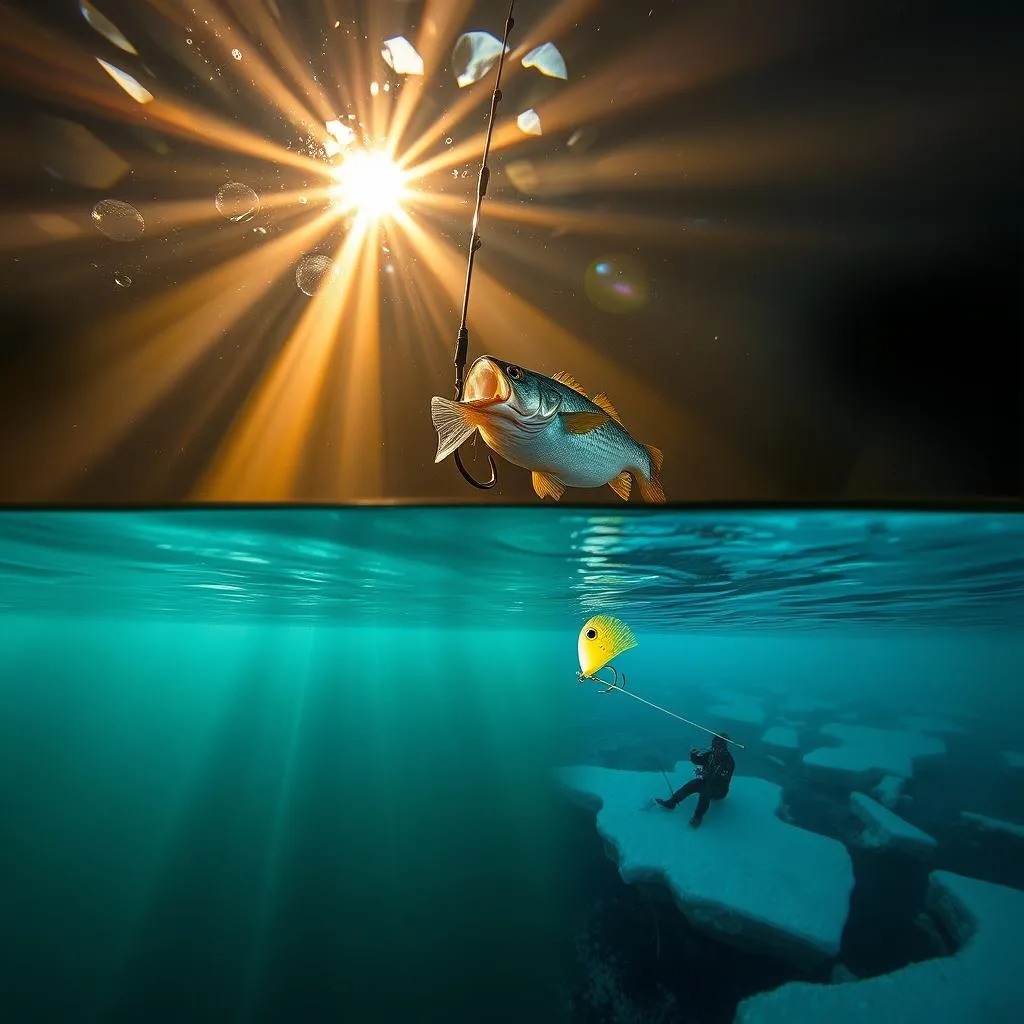
When it’s hot or windy, white bass vertical jigging is key. Look for ledges, channel swings, and deep flats. Use deep tactics like a slow drop and a clean sweep.
Vertical jigging strategies for white bass focus on staying over the fish. A jigging spoon setup works well. Drop it, sweep, and let it flutter.
Vertically present spoons/slabs over ledges and channel breaks
Drop spoons and slabs right on the fish’s noses. Use a 1/2-ounce Fle-Fly Bendable Minnow or War Eagle Jigging Spoon. For neutral fish, hover a jig-and-minnow above them.
Rod sweep from 3 o’clock to 12 o’clock—most bites on the fall
Let the lure touch down, then sweep from 3 to 12 and stop. Watch the line as it flutters back. Most hits come mid-fall, so keep slack out but don’t kill the glide.
Electronics: down/side imaging and forward sonar to stay on fish
Down and side imaging show the fish pile. Forward sonar keeps you centered as the school drifts. Mark the upwind edge and hover with a steady motor.
Typical depths: 15–30 feet, sometimes to 50 in winter
In summer, start at 15–30 feet on main-lake structure. In winter, go deeper to 50 feet. Adjust lure weight for a vertical drop and crisp contact.
| Scenario | Lure and Weight | Presentation | Electronics Cue | Why It Works |
|---|---|---|---|---|
| Summer ledge school (18–25 ft) | War Eagle Jigging Spoon, 1/2 oz | Sweep 3-to-12; pause on bottom touch | Side imaging shows tight pod on break | Fast drop keeps the bait in the strike zone |
| Winter hump (35–50 ft) | Fle-Fly Bendable Minnow, 3/4 oz | Long lift; controlled flutter back | Down imaging shows stacked arcs mid-column | Heavy metal reaches depth and triggers fall bites |
| Suspended roamers over channel | Jigging spoon white bass, 3/8 oz | Hover and short hops two feet above fish | Forward sonar white bass tracks slide under boat | Stays above the school to avoid spooking |
| Neutral mid-day pod on flat | Slabs for sand bass + teaser jig | Tandem drop; subtle lifts and pauses | Down imaging shows scattered singles | Two-profile look coaxes reluctant biters |
Stay mobile, reset on every shift, and keep your metal working. With white bass vertical jigging dialed in, the fall becomes your strike trigger. The school stays under you long enough to stack a quick limit.
Spring Run Strategy: Follow Fish from Lake Mouths up Creeks
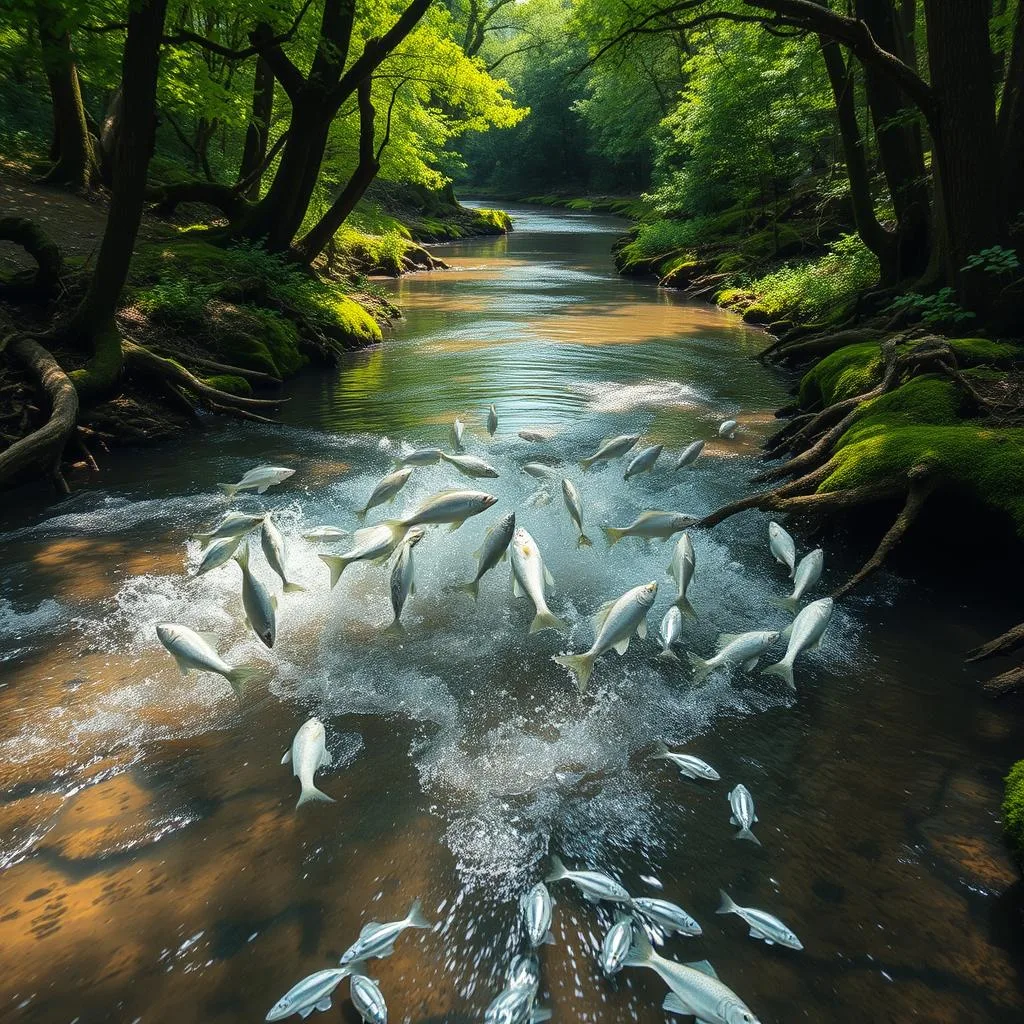
When the lake warms up to 50°F, white bass start moving. They gather where the water flows and stops. Both people fishing from the bank and those in boats have good chances. Move carefully and follow the water’s lead.
Start at inflowing tributary mouths when the lake hits 50°F
Begin fishing at the mouths of tributaries where sand bass like to be. Move up the creek as more fish come. Look for brushy spots, riffles, and gravel edges. Use small shad lures or live minnows to attract the fish.
Moderate rainfall fuels the push upstream
After a rain, the white bass move up the creek. When the water is 55–60°F, they go to gravel and shoals. Be ready for quick bites, then move up again.
Low-water fallback: stage at mouths and migration barriers
In dry times, fish gather at barriers like dams and riffles. Stay at creek mouths and these spots. Move up the creek with each new group of fish.
| Trigger | Primary Zone | Best Approach | Why It Works |
|---|---|---|---|
| 50°F Lake Temp | Inflowing tributary mouths sand bass favor | Cast small shad swimbaits; drift 2–4 inch minnows | Concentrates early arrivals at current seams |
| Moderate Rainfall + 55–60°F | Spawning creeks white bass use: riffles, shoals, gravel | Cover water fast with spinners and grubs | Flow and warmth trigger strong upstream movement |
| Low Water / Clear Skies | Mouths and staging barriers white bass stack on | Slow-roll small slabs; hover live bait at seams | Fish pause at obstacles, creating predictable clusters |
| Active Wave Passing | Brushy bends and connecting feeder mouths | Hit multiple spots in 15–20 minute rotations | Short feeding windows reward steady leapfrogging |
Gear Setup That Handles Hard-Fighting Schools
White bass fight hard, so pick a tackle setup white bass that casts far and controls well. Don’t choose ultralights. A good white bass rod and reel lets you cast small baits and steer fish.
Look for white bass gear from Shimano, Daiwa, Abu Garcia, and Lew’s. A smooth drag with small lures keeps you close to schools without harming them.
Spinning or baitcasting: medium-light to medium power
Go for a 6’6”–7’2” rod that’s medium-light or medium with a fast tip. Spinning is great for windy days and small jigs. Baitcasting is better for ripping slabs or cranks.
Use 1/16–1/4 oz jig heads to match the water’s depth and chop.
Mainline choices: 6–12 lb test for versatility
Use 6–12 lb line for sand bass for long casts and to pull fish from rocks. Braid in 8–15 lb with a 10–12 lb fluoro leader is a good choice. Mono works well for trebled baits because it stretches.
Fly gear: 4–7 wt with floating lines in creeks, sinking lines in lakes
A 4–7 wt fly rod for white bass is good for rivers and lakes. Use floating lines in creeks and sink-tip or full sinking in reservoirs. Leaders should be 7.5-foot 2X–0X, then 1–2 feet of 4X–0X tippet for small streamers and clousers.
Use electronics like side imaging, down imaging, and forward sonar to find bait and fish. With the right white bass gear and tackle setup white bass, you’ll catch more fish all day.
Location Clues: Where White Bass Hunt Throughout the Year
Start by finding bait to find white bass. Look for shad and follow the wind. This will lead you to good spots on lakes and rivers.
Spring is when creek and river mouths get busy. The current brings bait into open areas near coves and points. On windy days, fish the upwind side of points where shad get caught.
In summer and fall, dam riprap is the place to be at dawn and dusk. Schools of bass push bait against rocks and then roam the area. If your lake doesn’t have strong currents, try coves, points, and riprap on windy sides in the morning and evening.
Shallow flats and sandy shoals are best in low light. After the spawn or when it’s very sunny, move to deeper areas. In midsummer, look for fish 14–28 feet deep. In late summer and winter, check 30–50 feet near structures and breaks.
Watch the sky and the water. Birds diving into the water mean there are white bass around. Ripples and sudden boils are signs to cast your line.
- Creek and river mouths: Hit when water reaches the low 50s; work outside bends and merging seams.
- Open-water transitions: Edges of coves and points hold roaming bait; hop spot to spot until you mark life.
- Dam riprap mornings/evenings: Cast parallel to rocks; move with the shade line for consistent bites.
- Shallow flats at low light: Sand and gravel flats shine; shift deeper once the sun is high.
- Wind-driven structure: Windblown points sand bass gather on upwind shelves where shad pile.
- Visual cues: Birds over bait white bass and surface flickers reveal white bass locations in real time.
Use wind, sonar, and birds to find white bass fast. This works every season.
Regional Note: Oklahoma “Sand Bass” Timing and Tackle Picks
In Oklahoma, white bass, or “sand bass,” start moving when lakes hit 50°F. They really go when they reach 55–60°F. This is from mid-March to early May, the main season for them.
When it rains a bit, they move up creeks. In dry times, fish gather at creek mouths and barriers. Lake Altus-Lugert is great for fishing. It has sand flats and points where you can troll or cast without getting stuck.
Choose lures that match what they eat. Use white or silver in clear water. Chartreuse or red works best in murky water. Good lures include curly tail grubs and spoons.
The Fle-Fly Bendable Minnow is also a favorite. Use crankbaits like the Bill Lewis Rat-L-Trap in stained water. For shy fish, try suspending jerkbaits and hair jigs.
Live bait is always good. Use minnows or shad under a bobber from the bank. Or, rig them with an egg weight and swivel from the boat. This way, you can catch fish at the bottom and when they jump up.
Use gear that can handle fast action. Spinning or baitcasting rods with 6–12 lb line work best. Fly anglers do well with 4–7 wt rods. During the peak season, move around a lot. Check creek mouths first, then go upstream.
FAQ
What are the top baits for white bass fishing success?
Small shad imitators catch the most fish. Try 1–2 inch curly tail grubs, paddletail swimbaits, and inline spinners. Spoons, slabs, and compact crankbaits like the Bill Lewis Rat-L-Trap also work well. Live 2–4 inch minnows or shad are deadly, too.
What water temperatures trigger the white bass spawn?
Spawning starts around 50°F and peaks at 55–60°F. Many anglers use the “redbuds blooming” cue. Expect waves of fish pushing upstream during this time.
Where do white bass go to spawn and at night?
In rivers and creeks, they go to riffles and rocky stretches. In lakes, they use rocky shoals. At night, adults slide onto sandy shoals shallow, then drop back deeper after spawning.
How do white bass school and follow shad?
They travel in tight packs and shadow shad across windblown points. Find the bait and you’ll find the fish. Electronics help you stay with the school as it roams.
When are white bass most active during the day?
Dawn and dusk are prime. Fish often push shallow in low light, then slide to deeper edges after the morning feed. In fall, they chase bait shallow again and feed hard.
Why start with 1–2 inch lures for white bass?
Most of their forage is small shad and minnows. Tiny profiles get more bites, even from bigger fish. Start as small as you can cast, then size up once you’re getting bit.
What lure colors work best for white bass?
In clear water, use white or silver with a dark back like black, green, or blue. In stain or mud, go chartreuse, red, or bright combos. Match local shad tones when possible.
Where should I cast to match the hatch?
Target wind-driven points, riprap, and coves with quick access to deeper water. Focus on transition zones and spots bait stacks. Watch for birds and surface flickers to dial in active schools.
What live baits consistently produce for white bass?
2–4 inch minnows or shad are deadly. Nightcrawlers and red worms work too, but shad and minnows match natural forage best.
How do I rig live bait from shore and boat?
From shore, use a slip bobber above a small bait hook. From a boat, slide on a 1/4 to 1 oz egg sinker. Add a barrel swivel, then a 12-inch leader to the hook. Scale weight for wind and current.
How deep should I present live bait?
Keep it within a couple feet of bottom when fish aren’t busting on top. If they’re schooling high, raise the bait to their level to get bit faster.
What should I do when surface feeding pops off?
Switch to a fixed float 1–2 feet above the hook and remove extra weight. Throw small topwaters and prop baits in shad colors.
Which soft plastics and jig heads are most reliable?
Run 2–3 inch curly tails and paddletails on 1/16–1/4 oz heads. Examples include the Bobby Garland Stroll’R, Berkley PowerBait Power Swimmer, and Bass Pro Shops Squirmin’ Shad. Adjust head weight to depth and wind.
What metal and spinner options excel for white bass?
Inline spinners and slabs flash hard and trigger reactions. Worden’s Original Rooster Tail, War Eagle Jigging Spoon, and the 1/2 oz Fle-Fly Bendable Minnow in white, red, or chartreuse are staples.
Why use lipless and diving crankbaits?
They cover water fast and help locate roaming schools. Try the Bill Lewis Original Rat-L-Trap in Electric Silver, Sexy Chrome, or Tennessee Shad Chrome, and Bomber Model A in shad or chartreuse blues.
When do hair jigs and Road Runners shine?
They add subtle thump and flash that works in clear water and on pressured fish. VMC Dominator Marabou Jigs, Johnson Beetle Bou, and Road Runner Original Marabou and Curly Tail are proven.
What is the single best bait for white bass?
Day in and day out, small shad imitators win. Live 2–4 inch shad or minnows, 2–3 inch shad-profile plastics, compact crankbaits, and vertical spoons or slabs are the core lineup across seasons.
How do I find active surface schools?
Look for diving gulls, terns, and quick “boils” as shad get pinned near the top. Move fast, keep casts short, and match the size of the fleeing bait.
Which topwater lures work best for white bass?
Small walk-the-dog and popper styles in shad colors. The Heddon Zara Puppy is a classic pick, and compact prop or popper baits from Bass Pro Shops or Offshore Angler also score.
What is a topwater “dry-dropper” for white bass?
Tie a 1-foot, 6–10 lb leader to the rear treble of your topwater and add a 1/32–1/16 oz marabou jig. It nabs followers and short strikers during blitzes.
How should I vertical jig spoons and slabs?
Drop to bottom over ledges, humps, and channel breaks. Sweep the rod from roughly 3 o’clock to 12 o’clock, then let the bait flutter back down. Most bites hit on the fall.
What electronics help me stay on deep schools?
Use side imaging to find them, down imaging to verify density, and forward-facing sonar to track movement. Re-scan and re-drop as the school shifts.
What depths are typical in summer and winter?
Expect 15–30 feet most days, with fish pushing to 50 feet in the dead of winter. Adjust spoon weight and cadence to reach and hold the zone.
When should I start at tributary mouths in spring?
As soon as the main lake touches 50°F. Fish gather at inflows, then surge upstream as temps rise and flows improve.
How does rainfall affect the spring run?
Moderate rainfall fuels the push, spreading fish through creeks and rivers. After dry spells, schools stall at mouths and move in short waves.
What’s the plan in low-water springs?
Target staging spots at tributary mouths, bends, and migration barriers. Work small shad profiles or drift live minnows through the lanes.
What rod power is best for white bass?
Medium-light to medium power spinning or baitcasting rods offer casting distance and control. Skip ultralights—white bass pull hard in current.
What line strength should I run?
Spool 6–12 lb mono, fluoro, or braid with a fluoro leader. It balances casting small baits with solid hooksets and abrasion resistance around rocks.
What fly gear works for white bass?
A 4–7 wt covers most scenarios. Use floating lines in creeks during the spawn and sinking lines in lakes. Clouser Minnows and Woolly Buggers are money.
Where do white bass feed through the year?
Spring: tributary mouths and creeks. Summer: ledges, humps, and thermocline edges. Fall: windblown points, coves, and flats. Winter: deep channels and drops near bait.
When is dam riprap a good bet?
Mornings and evenings in summer and fall, when schools pin shad against the rocks. Cast crankbaits, spoons, and grubs parallel to the face.
Should I fish shallow flats or deeper edges after the spawn?
Hit shallow flats at low light, then slide to deeper edges, ledges, and channels as the sun gets high. Adjust lure weight to maintain bottom contact or suspend at their level.
What surface clues point to active schools?
Circling and diving gulls, nervous water, and flickering shad. If you see bait spraying, get a cast in immediately.
What’s the Oklahoma “sand bass” timing and go-to tackle?
In Oklahoma, runs typically fire mid-March to early May with 55–60°F water and decent inflows. Curly tails, paddletails, Rooster Tails, spoons and slabs like the 1/2 oz Fle-Fly Bendable Minnow, Super Dupers, Rat-L-Traps, Bomber Model A, jerkbaits, and hair jigs all produce. Use 6–12 lb line on medium-light to medium rods; for flies, 4–7 wt with floating lines in creeks and sinking lines in lakes. Lake Altus-Lugert and other reservoirs offer strong action on sand flats, dam areas, and points.