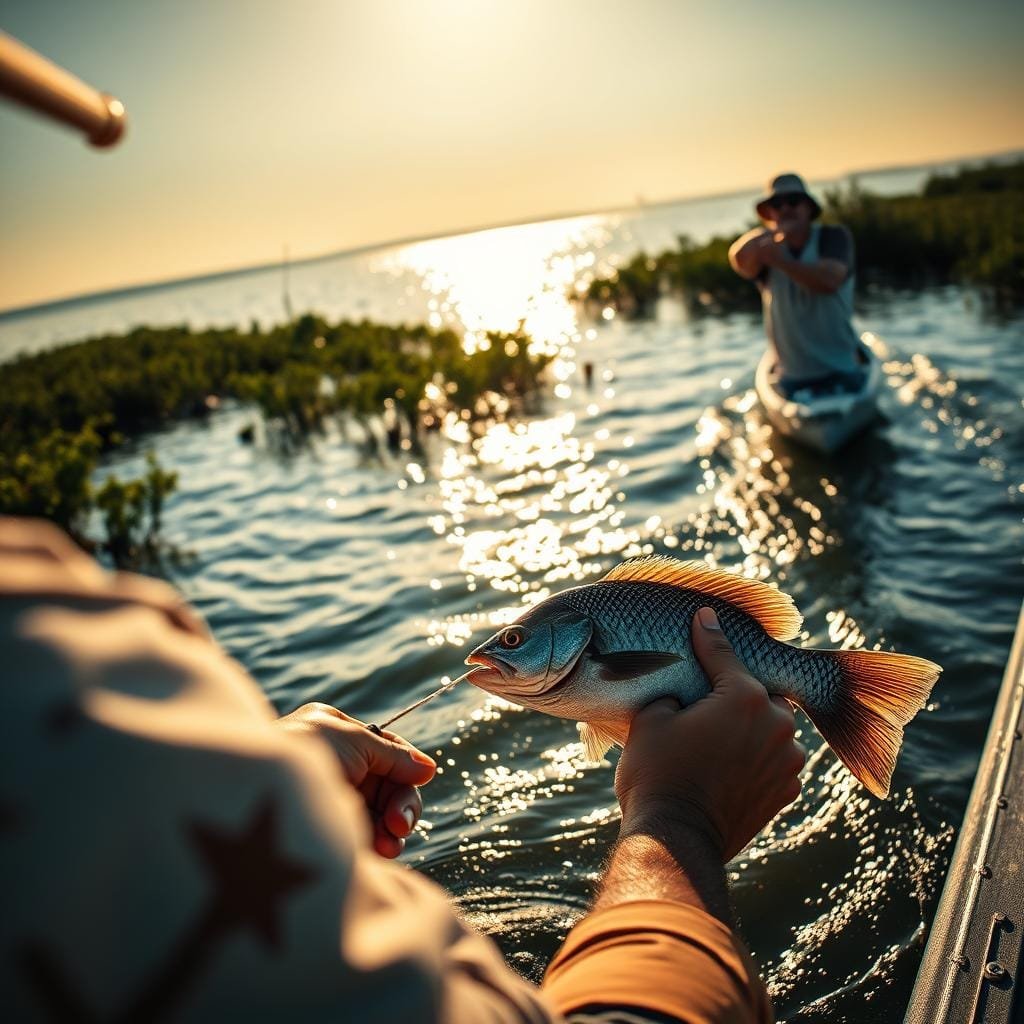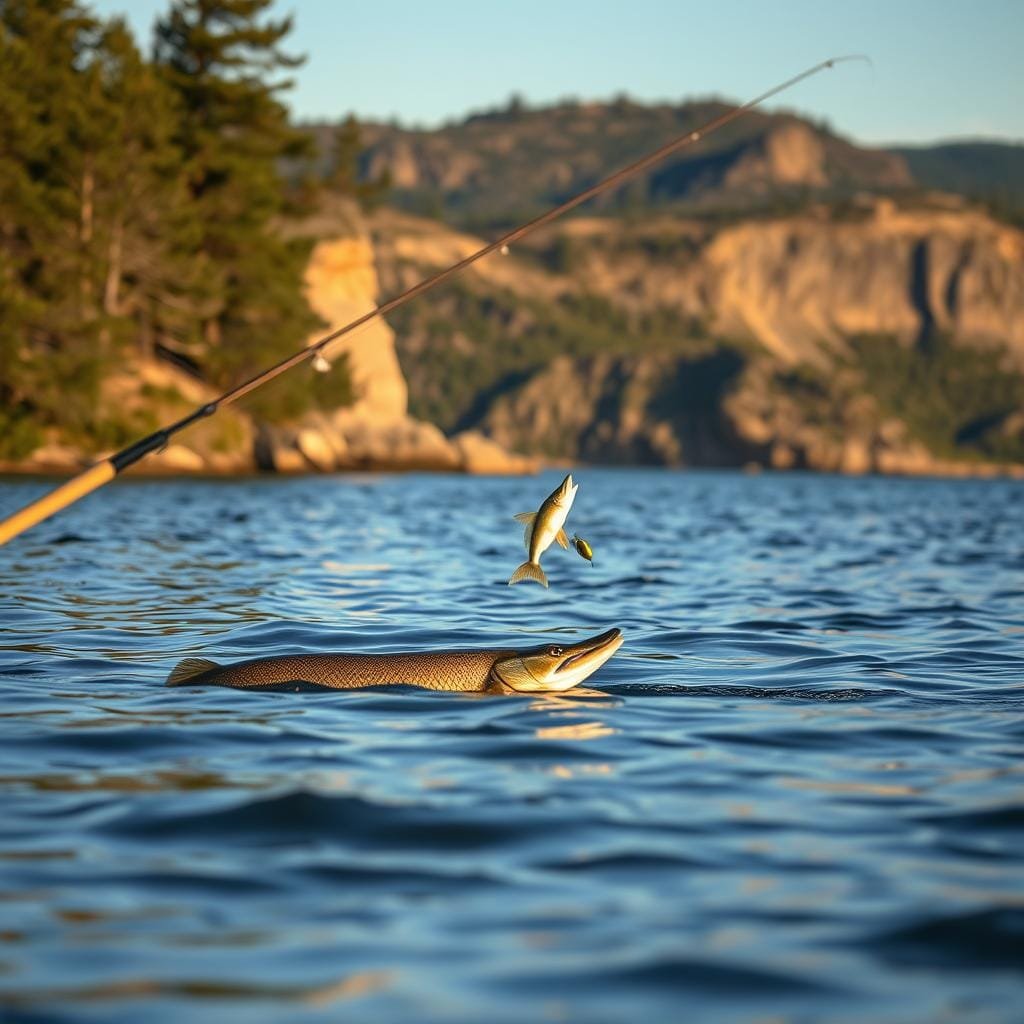
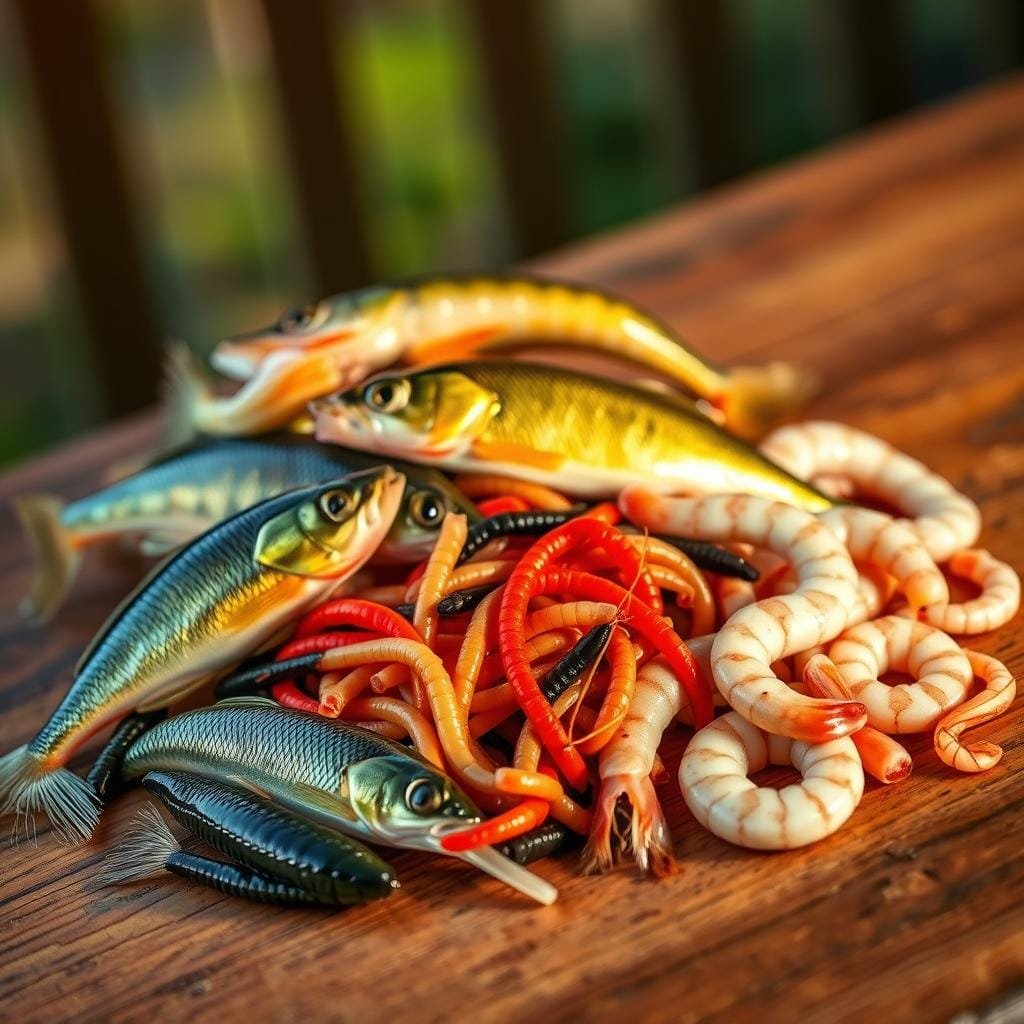
Want to catch lots of fish fast? Yellow perch are easy to find and catch. They school together and hit bait often. This guide will help you catch them with confidence.
Yellow perch like to eat minnows, worms, leeches, and small crayfish. Use light tackle, like a 6’6”–7’ rod, to catch them. Keep these baits ready: lively minnows, jigs with soft plastics, and small hard baits.
When fish go deep, use vertical baits. Jigging Raps and spoons work well. For more tips, check out this guide on catching more perch.
Keep your fishing simple. Use simple retrieves with your baits. With the right lures and tackle, you’ll catch lots of perch.
Yellow Perch Basics: What They Eat and Where to Find Them
Finding yellow perch can be exciting. Learn where they are and what they eat. Use simple tips for all lakes.
Natural forage: minnows, crayfish, shrimp, insects, and leeches
Yellow perch love small food like minnows and crayfish. They also eat shrimp, insects, and leeches. In spring, they eat insects near weeds.
In summer, they prefer minnows and shrimp in open areas. Match your lure to what you see. Use small lures for picky bites and bigger ones for aggressive schools.
Typical habitats: sand/mud flats, vegetated bays, open-water areas
Perch like places with sand or mud and lots of bugs. They also like areas with weeds and open water. On rivers, look for spots where the current slows down.
Drift slowly over flats and stop when you get a bite. On windy days, go to the windward side of weeds. On calm days, start just outside the weeds.
Depth ranges: shallow zones to about 30 feet, deeper on big lakes
Perch usually stay in water from knee-deep to 30 feet deep. On big lakes, they go deeper, like Lake Michigan or Lake Erie.
Start in shallow water in the morning. Move down as the sun gets higher. If you see bait at mid-depth, use a lure that meets the school.
Schooling behavior and why it matters for bait choice
Yellow perch feed in groups. The first bite often means more. Use lures that stay in the strike zone and cover water with small cranks.
If you catch small fish, try fishing higher. Adjust your depth and lure until you catch bigger perch.
| Key Factor | What To Look For | Why It Works | Quick Adjustment |
|---|---|---|---|
| Yellow perch forage | Minnows, shrimp, insects, crayfish, leeches | Matches natural diet across seasons | Match size/color to visible prey or sonar clouds |
| Perch habitat | Sand/mud flats, vegetated bays, open-water edges | High food density draws schools | Drift flats; hold on weedlines during bites |
| Perch depth | Shoreline shallows to ~30 ft; deeper on big lakes | Light and weather shift positions | Start shallow at dawn; slide deeper with sun |
| Schooling yellow perch | Multiple bites after first hookup | Pack feeding boosts efficiency | Use slip floats or vertical jigs to stay on fish |
| Perch location tips | Weed edges on windward shores; first drops on calm days | Wind and structure concentrate forage | Cover water with small crankbaits to relocate schools |
Light Tackle Setup That Makes Perch Bait Shine
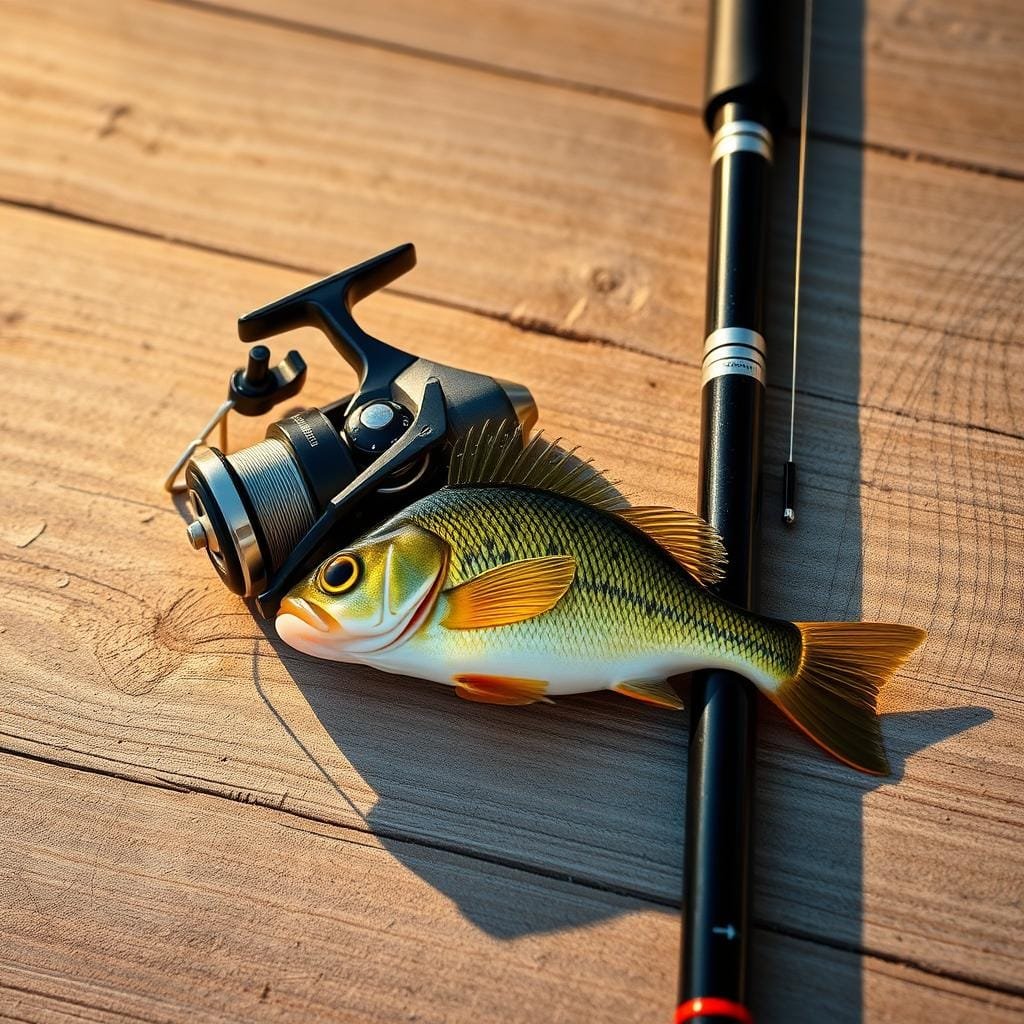
A good perch spinning setup makes small baits move well. It feels alive. Use light gear to cast tiny baits and feel soft bites.
Start with balance. Then choose rod, reel, and line for your fishing spot.
Rods and reels: 6’6”–7’ light power, fast action spinning gear
Choose a 6’6”–7’ light power rod and reel combo. It should handle 1/16–1/4 oz. The St. Croix Triumph or Shimano Compre works well with a 1000–2500 size Shimano Nasci or Daiwa Regal.
This setup is perfect for micro jigs. It keeps contact and protects thin wire hooks.
Balance is key. Set the reel seat so the tip drops slightly when the bail is open. This lets small baits glide and keeps you in touch with subtle bites.
Line choices: 4–6 lb mono vs. 6–8 lb braid with fluoro/mono leader
For a simple line, use 4–6 lb monofilament like Berkley Trilene XL. It’s good for floats and small cranks.
Want sensitivity? Try 6–8 lb braid like Sufix 832 with a 2–4 ft fluorocarbon or monofilament leader. Braid shows light taps, and the leader adds stealth.
Terminal tackle for live bait and plastics
Have terminal tackle for 1.5–3 inch baits. Use 1/16–1/4 oz jig heads with fine-wire hooks for minnows and worms. Slip floats with split shot pin baits over weeds.
For deeper edges, use a drop-shot with a #6–#8 hook and 1/8–1/4 oz weight. This holds live minnows or small plastics in place. A small black Duo-Lock snap is good for spoons and eye-style hooks.
Live Bait That Consistently Produces Yellow Perch
Yellow perch like to see and smell their food. So, simple and lively bait works best. Live bait stays in the right spot longer and gets more bites when the water is cool or clear.
Minnows, worms, leeches: when and how to rig them
Minnows are a top choice for yellow perch. Use fathead minnows or emerald shiners. Hook them lightly through the dorsal or behind the head on a small jig.
When perch nibble, cut the bait in half or thirds. This helps the hook stay exposed. For deeper fishing, use a drop-shot with a small minnow.
Nightcrawlers and worm pieces are great when perch are near the bottom or after a storm. Use a size 6–8 hook or a small jig. Leeches work well in warm water. Hook a medium leech through the nose.
Spinner rigs work too, moving slowly. They’re good around flats and sparse weed lines.
For more tips, check out this live bait fishing for perch guide. It covers minnow sizes, bait tweaks, and smart hook placement.
Slip float setups to keep bait in the strike zone
A slip float rig keeps bait above weeds and rocks. Choose a float that matches your jig’s weight. This way, the float moves down when a fish bites.
Set the bobber stop where you mark fish. Cast, let it settle, then move it forward a foot. This makes minnows and leeches more active.
Shore vs. boat presentations for spring and summer
In spring, shore fishing with a jig-and-float is excellent. Try wind-blown banks, creek mouths, and weed edges. Long casts help find roaming schools.
In summer, boat fishing lets you hover over fish. Use a slip float rig or drop-shot under the boat. Slow-troll spinner rigs with minnows to find schools.
| Live Bait | Best Rig | Depth/Season | Key Tip | Why It Works |
|---|---|---|---|---|
| Fathead Minnow | 1/16–1/8 oz jig or drop-shot | Shallow spring to mid-depth summer | Hook dorsal or behind head; trim to halves if short strikes | Natural wiggle draws bites; trimmed bait exposes hook |
| Emerald Shiner | Slip float with small split shot | Weed tops and rocks, 4–12 ft | Cut into thirds when perch are small or picky | Bright flash and scent keep fish tracking |
| Worm (Half Crawler) | Size 6–8 hook or finesse jig | Bottom contact zones, post-front | Shorten the piece to reduce misses | Easy calories when fish are negative |
| Leech | Slip float perch rig, nose-hooked | Warm water, 6–14 ft | Keep it just above weeds to avoid fouling | Constant pulse triggers reaction strikes |
| Minnow + Spinner | Slow-trolled spinner rig | Flats and edges, summer | Troll 0.8–1.2 mph to locate schools | Covers water while staying snack-sized |
Soft Plastics and Jigs: Compact Profiles Perch Can’t Resist
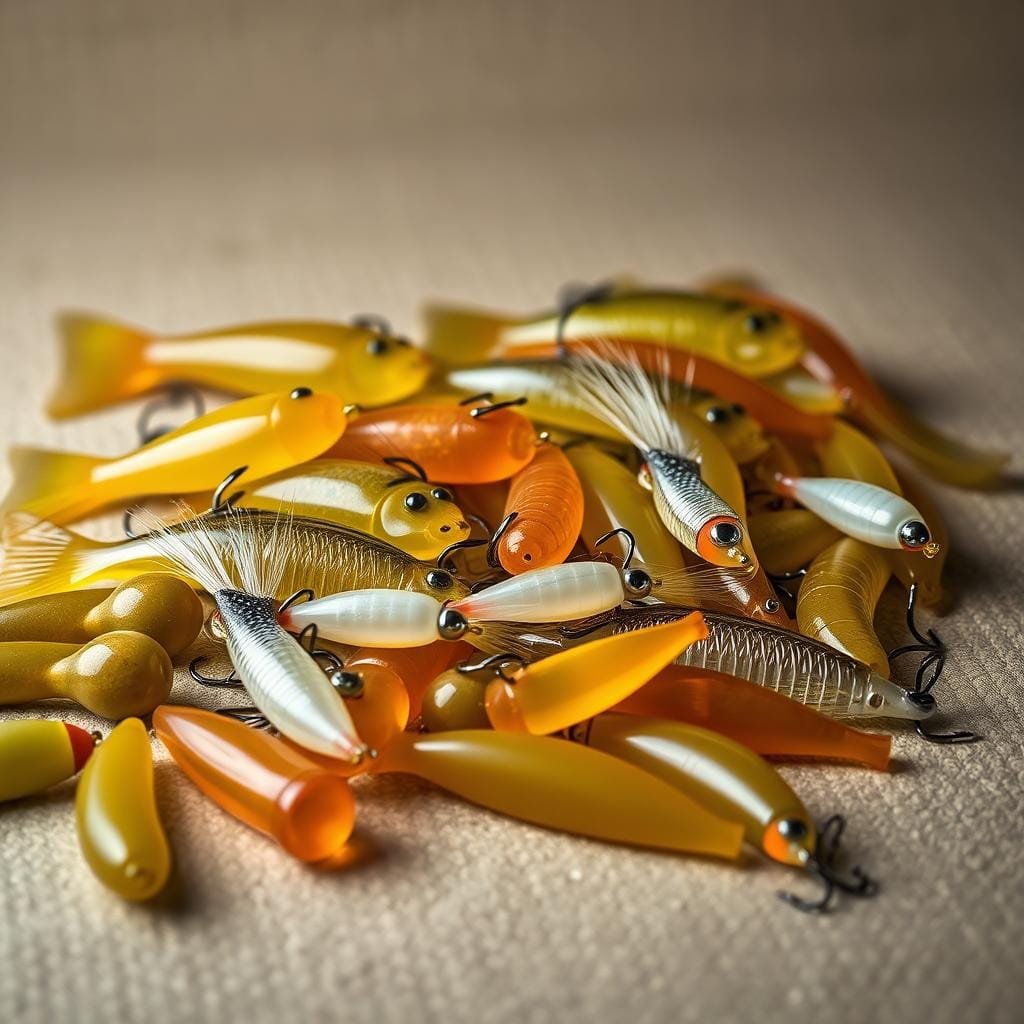
When the bite is hard to catch, use small lures and simple movements. Match the size of the bait to the fish’s food. This way, you can catch more perch.
Go-to jig sizes: 1/16 to 1/4 oz for most conditions
Bring different jig sizes to match the water and fish. VMC Neon Moon Eye and VMC Wingding Spin Jig Head add sparkle. Use smaller jigs in calm water and bigger ones for longer casts.
Put soft baits close to the jig head. This makes them move straight. It also helps you feel bites better.
Top soft baits: Gulp! Minnow, micro crayfish, tubes, curl tails
Berkley Gulp! Minnow is great for catching perch. Mister Twister Micro Crayfish and Meeny look like craws and grubs. Mizmo panfish tubes and curl tail grubs work well near grass and wood.
Choose colors that match the water and bait. Use natural colors in clear water and bright ones in murky water. For more ideas, check out this guide on best lures for perch.
Retrieve styles: lift-fall, slow swim, and suspend-countdowns
For fish on the bottom, use a lift-fall. Pop the jig a bit, then let it fall. Most bites happen as it falls.
For fish in the middle, count down and then swim slowly. This keeps the bait in the strike zone. Over weeds, use a float to suspend the bait.
On windy days, swim the jig steadily. This adds vibration to attract fish. If you catch small fish, pause and pump the jig to find bigger ones.
Hard Baits That Cover Water: Crankbaits, Jerkbaits, and Minnowbaits
When perch roam, hard baits shine. Small profiles dig, wobble, and call fish from a distance. This lets you sweep broad zones fast. Rotate colors to match light and clarity, then let action do the rest.
Proven picks: Flicker Shad, Rapala Original Floater, Shad Rap
Start with crankbaits for perch that track true at slow speeds. The Berkley Flicker Shad perch pattern hunts tight and flashes on turns. A Rapala Original Floater fished shallow is deadly over sand and sparse weeds.
For a classic wiggle, the Rapala Shad Rap perch model covers 4–10 feet with a fine, natural roll. Mix slow cranks with brief stalls to tease followers into striking.
Twitch-pause cadences that trigger reaction bites
A subtle jerkbait for perch, like a small X-Rap, pops and glides without overpowering the school. Snap the rod tip twice, then pause long enough to watch the line. Most hits load up on the stall.
Short twitches near weed edges or along flats mimic a wounded minnow. If fish track but won’t bite, lengthen the pause or lighten your leader to free the bait’s action.
Trolling small cranks across shallow flats and sparse weeds
Cover water with trolling perch crankbaits at 1.5–2.2 mph. Keep the lure ticking tops of grass, then steer S-curves to surge and slow the bait. Test action boatside before setting lines.
Run a Berkley Flicker Shad perch alongside a Rapala Shad Rap perch to find the day’s cadence. When you dial depth, add a second rod with a minnowbait to tag roaming packs and stay on the bite.
Vertical Jigging and Ice Strategies for Jumbo Perch
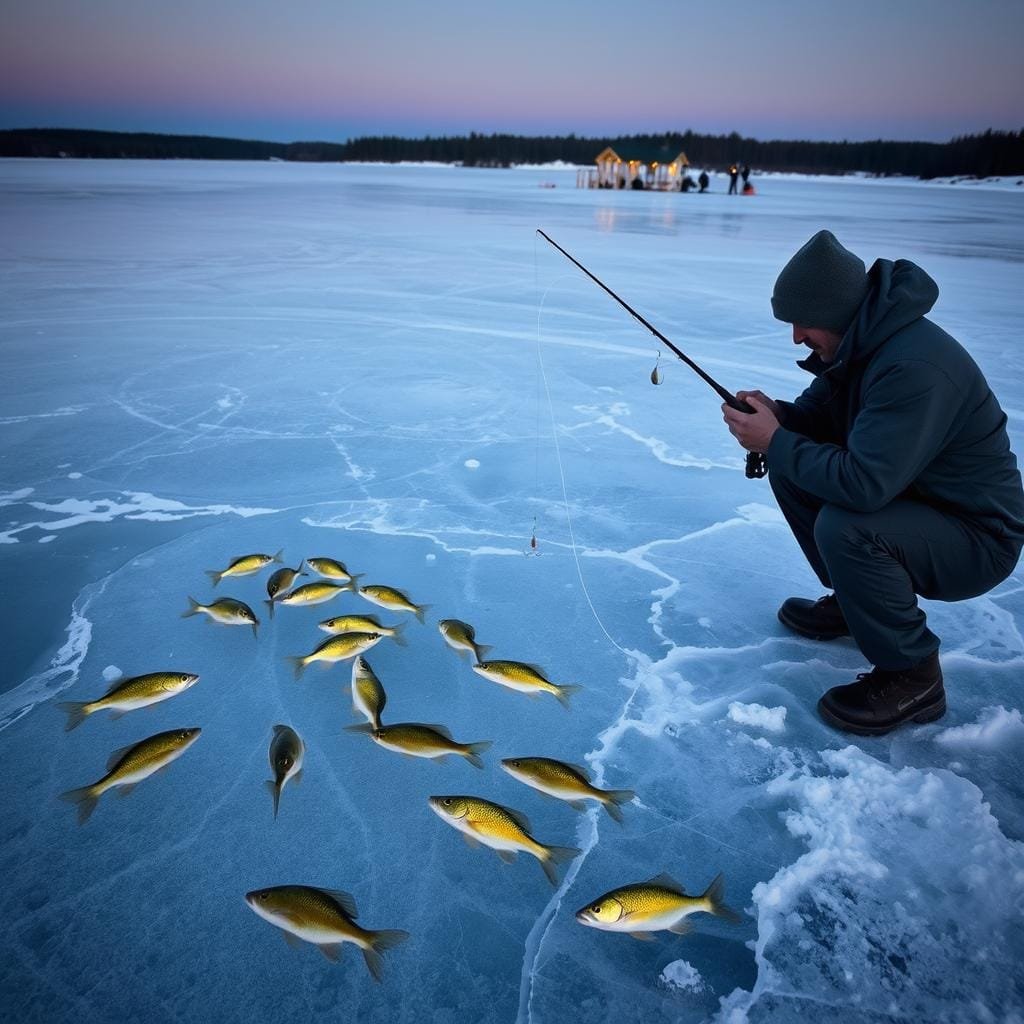
Ice fishing for yellow perch in big basins or deep flats means moving around and watching your sonar. Keep your bait a foot or two above the school. This makes fish look up and commit.
Deep-water tactics: Jigging Raps (#3, #5) and small spoons
Start with a Jigging Rap for perch in sizes #3 or #5. Or use small spoons like the Acme Kastmaster. Work the lure just above the marks to stay visible.
Mix perch spoon jigging with a few silt taps. This calls fish from the edges of the school.
Cadence keys: 12–24 inch lifts to attract, short hops to trigger
Use 12–24 inch lifts to pull fish in. Then switch to short hops and dead-still pauses. Add three quick 1–3 inch snaps, pause 10–15 seconds, and watch for slack or ticks.
A high lift, slack-line flutter often flips lookers into biters during vertical jigging perch sessions.
Ice upgrades: upsizing baits to bypass dinks and target bigger fish
To weed out smalls, upsize from tiny spoons to a larger profile Jigging Rap for perch. Bring the bait higher in the column so only confident perch chase.
Tip the front treble with a spike or wax worm when fish nip. But keep the profile bold to target true jumbos.
Noise and vibration: Ripping Rap and color choices (UV green, pink, orange, natural perch)
The Rapala Rippin’ Rap adds thump and rattles that pull fish from a distance. Rotate Rippin’ Rap perch colors—UV green, UV pink, orange, and natural perch—until the screen lights up.
In clear ice, lean natural; in stain or snow cover, push UV and bright tones.
Line management: 4 lb test, swivel 18 inches up to reduce twist
Run 4 lb mono or fluoro with a small barrel swivel 18 inches above the lure. This prevents strong line twist. A tiny Duo-Lock snap helps spoons swing clean and guards against abrasion.
With this setup, perch spoon jigging and rip sequences stay true. Ice fishing yellow perch becomes steadier and more efficient.
Russian Hook and Flutter Spoon Tricks for Winter Perch
Cold fronts make fish harder to catch. But, two tricks work well: the Russian hook and the flutter spoon. Use sonar to find fish, then wait for them to bite.
Why eye-bead “Russian hooks” excel without bait
The bead looks like a perch’s eye. When you snap the lure, it flutters. Then, it stops and looks like it’s staring.
This makes fish curious and they bite. Many catch big fish because the lure moves just right. This trick works when fish don’t want to eat bait.
Line watching: bright red/yellow main line with clear leader
Use bright red or yellow line to see when fish bite. Add a clear leader to keep fish calm. This way, you can catch fish right when they bite.
Snap, pause, and bottom-pounding sequences that trigger eats
Start by dropping your line close to the bottom. Snap your wrist, then let the line go slack. This makes the lure flutter.
If the line moves or stops, set the hook. Try different moves like quick pops and pauses. This keeps fish interested without bait.
Rigging tip: use a small snap to avoid line damage on stamped hook eyes
Use a small Duo-Lock snap to avoid breaking your line. This lets you change lures easily. For shallow water, use a stiff rod and strong line. For deeper water, use a light rod and reel.
best bait for yellow perch
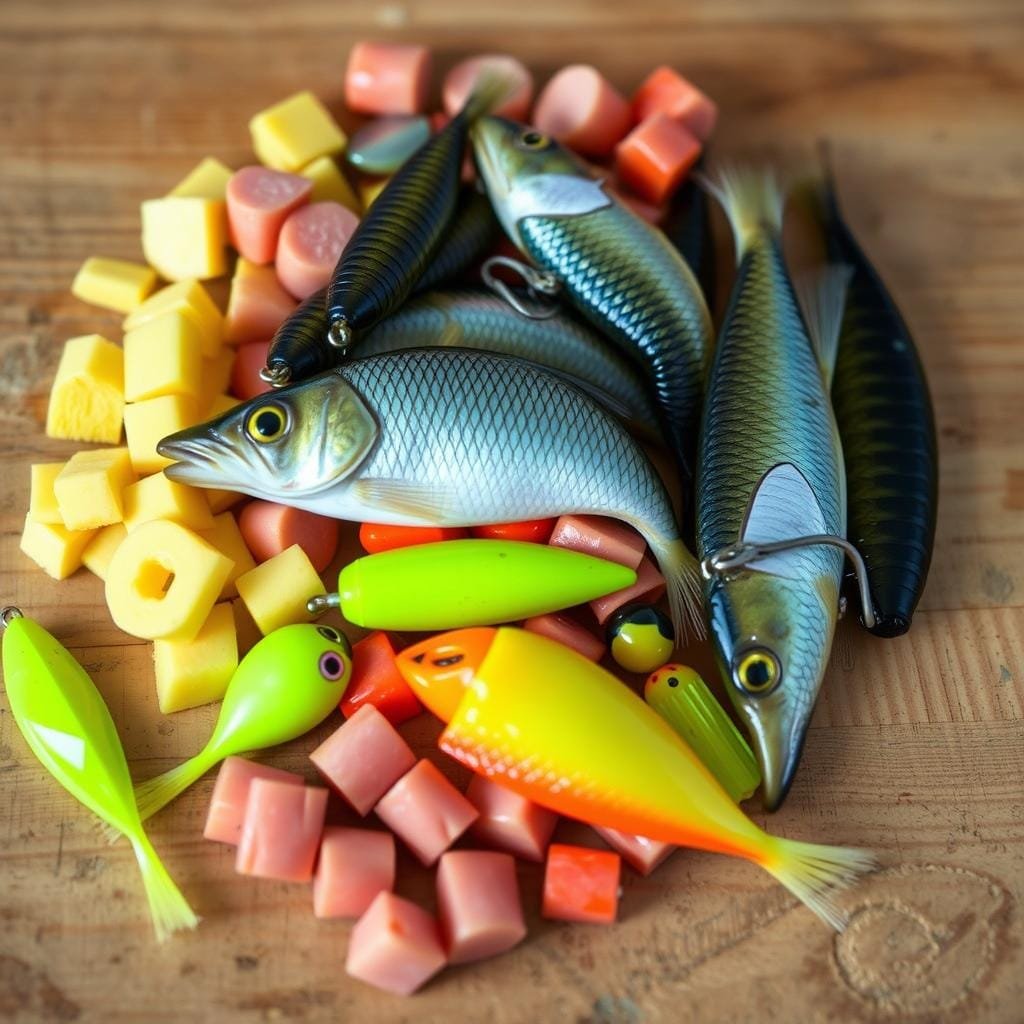
The best bait for yellow perch changes with depth, water clarity, and how tight the school is holding. Think simple and local. Keep sizes small, stay mobile, and let your cadence do the talking.
Matching the hatch: choose bait by local forage and depth
Start with match the hatch perch logic. If minnows and young-of-year dominate, run 1.5–3 inch profiles on 1/16–1/4 oz jigs. Use micro crayfish or insect-style plastics when perch key on bugs or shrimp. In 6–15 feet, a lift-fall or slow swim keeps you in the strike zone without spooking fish.
Over weeds or brush, a slip float pins bait just above cover. Go heavier and tighter to bottom as you slide deeper. When fish suspend, switch to minnowbaits or small cranks like Berkley Flicker Shad, Rapala Original Floater, or Shad Rap to search and connect.
Situational picks: live bait under floats vs. plastics vs. hard baits
For neutral schools, live bait vs lures perch debates favor slip-floated minnows, worms, or leeches that hover naturally. If fish are scattered, plastics on light jigs let you cast far, cover flats, and stay efficient. When you must locate fast, hard baits shine—troll spinner rigs or small cranks across sand and sparse weeds until you mark a pack.
In deep water, vertical tools rule. Jigging Raps (#3/#5) and compact spoons like Acme Kastmaster or a VMC Rattle Spoon call fish from distance. For jumbo selection, bump the bottom, then hold just above the school. For more lure ideas and cadence tweaks, see this primer on ice perch bait.
Seasonal shifts: shallow spring bites to deeper mid-summer/ice patterns
In April–May, spring perch bait under floats is hard to beat. Work shorelines and new weeds with tiny jigs and live bait, then switch to small cranks as fish roam. As temps rise, summer perch tactics pivot to covering water—troll spinner rigs, pull minnowbaits on three-ways, or use bottom bouncers to trace edges and mid-lake flats.
Late season and winter bring tighter schools and colder fish. That’s when perch seasonal patterns favor vertical metal, glide baits, and rattle baits. Mix colors—UV green, pink, orange, or natural perch—and watch your line. On ice, Russian-style bead spoons, dropper chains, tungsten jigs with spikes, or a Rapala Rippin’ Rap help you sift dinks and stay on quality fish while you refine the true best bait for yellow perch for the day.
Pro Tips, Safety, and Must-Have Gear for Perch Missions
Pack smart and stay nimble. Use labeled trays in a soft bag or backpack for tackle. This saves time when fish move.
Don’t forget pliers, scissors, a hook file, and a small cooler with ice. Keep a bucket and aerator for minnows. Also, have bait containers with ice packs for worms and leeches.
A good fillet knife for perch and a cooler for fish are must-haves. These are key for perch fishing.
Fish with purpose. Use slip floats and split shot for better bites. Test crankbaits on the boat to find the right speed.
Use sonar to find perch schools. Then, place your baits just above them. Always wear a PFD and polarized sunglasses for better vision.
Spring bugs can be tough. Don’t forget repellent. Keep your gear clean and ready for action.
On hard water, use 4 lb test for big jigs. Add a swivel 18 inches up to avoid twist. Start with UV green, UV pink, orange, or natural perch.
Use 12–18 inch snaps with controlled slack. Pause for 15 seconds and pound the bottom to attract big fish. Bright red or yellow main line with a clear leader helps detect bites.
Attach Russian hooks and flutter spoons with a small Duo-Lock snap. This protects your line. In shallow ice, use a stiff rod with braided line for sharp control.
In deeper water, a 24-inch light or medium ice rod works best. Use a smooth micro reel and 6–8 lb mono for better control.
Stay safe and organized to fish longer and cleaner. Always wear a PFD, keep extra gloves, and check ice thickness. Let sonar guide your search.
Keep your tackle organized, protect your eyes with polarized sunglasses, and finish clean with a sharp fillet knife. Simple habits lead to more bites and better fish in the cooler.
FAQ
What’s the best all-around bait for yellow perch right now?
Live minnows, worms, or leeches work well on a 1/16–1/4 oz jig or under a slip float. If fish are active, try soft plastics like a 1.5–3 inch Berkley Gulp! Minnow. Use quality jig heads such as VMC Neon Moon Eye or VMC Wingding Spin Jig Head.
What do yellow perch eat, and how does that guide bait choice?
Perch eat minnows, crayfish, and insects. Use live bait, small plastics, and natural-color hard baits like Rapala Original Floater. This will get you more bites.
Where should I look for perch on most lakes and rivers?
Look for sand or mud flats, large vegetated bays, and open-water zones. Perch roam in schools. Keep moving with small crankbaits or troll spinner rigs until you find them.
How deep do perch usually hold?
Perch are usually found from the bank to about 30 feet. On the Great Lakes, they may be deeper, mainly in late summer and winter.
Why does schooling behavior matter for perch fishing?
Finding a school means you can catch several fish quickly. Use presentations like slip floats or troll fast with crankbaits to find new schools.
What rod and reel setup makes light perch baits fish best?
Use a 6’6”–7’ light power, fast action spinning rod with a smooth spinning reel. It casts tiny jigs well and sets hooks without tearing them out.
Should I use mono or braid for perch?
4–6 lb monofilament is versatile and forgiving. For sensitivity and long casts, use 6–8 lb braid with a short mono or fluorocarbon leader.
What terminal tackle should I carry for live bait and plastics?
Carry 1/16–1/4 oz jig heads, slip floats, assorted split shot, and snaps. Add drop-shot hooks and weights for deeper fish. Keep spinner rigs for trolling.
When should I choose minnows, worms, or leeches?
Minnows are best in cold water and clear lakes. Worms and leeches work spring through summer, around weeds and wood. Match the size to local forage.
How do I set up a slip float for perch?
Choose a float that matches your jig. Add just enough split shot for a clean sink. Set the stop so your bait rides above weeds or bottom.
What are easy shore vs. boat presentations in spring and summer?
From shore, cast a jig under a float, let it settle, then pull forward and pause. From a boat, drift or slow-troll slip floats or pitch jigs to edges. Then switch to small crankbaits to cover water.
What jig sizes work best for perch?
Most days, 1/16 to 1/4 oz covers it. Use lighter jigs in shallow water and calm conditions. Use heavier jigs for wind, current, or deeper fish.
Which soft plastics consistently catch perch?
1.5–3 inch baits like Berkley Gulp! Minnow and Mister Twister Micro Crayfish work well. Also, Meeny, Mizmo Panfish Tube and curl tails on sharp jig heads are proven producers.
What retrieves should I use with jigs and plastics?
Use lift-fall along bottom, slow swims for suspended fish, or count down to depth and hold a steady pace. If bites slow, slip-float the jig to suspend it in their face.
Which hard baits help me find roaming schools fast?
Small crankbaits and minnowbaits like Berkley Flicker Shad cover water and trigger reaction strikes.
How do I work jerkbaits for perch?
Use a twitch-pause cadence. Short twitches to flash, then pause to let the bait hover. Many perch eat on the pause.
What are simple trolling plays for perch?
Pull shallow-running cranks across flats and sparse weeds, or troll spinner rigs tipped with minnows, leeches, or worms. For deeper fish, try bottom bouncers or a three-way rig with a small minnowbait.
What’s the go-to vertical approach for deep perch?
Work #3 and #5 Rapala Jigging Raps and compact spoons like the Acme Kastmaster. Use sonar to stay just above the school.
How should I cadence vertical baits?
Start with 12–24 inch lifts to call fish in. Then switch to short hops and pauses to make them commit. Watch your line for slack bites.
How do I target bigger perch through the ice?
Upsize your profile with Rapala Jigging Rap or Slab Rap. Pound bottom to stir silt, or work higher in the column to avoid smaller fish.
Do noise and color matter for winter perch?
Yes. The Rapala Rippin’ Rap adds vibration and BB rattles that pull fish. Try UV green, UV pink, orange, and natural perch and rotate until one pops.
How do I reduce line twist with vibrating baits?
Run 4 lb test and add a small swivel about 18 inches above the lure. It helps when fishing spoons and lipless baits that roll or vibrate.
Why do Russian hooks with eye-like beads work without bait?
The bead gives fish a target and the blade flutters freely on slack line. That combo often triggers aggressive school bites without tipping.
What’s the best way to detect subtle winter strikes?
Use bright main line—fluorescent red Sufix Ice Fuse or bright yellow Maxima—with a clear two-foot leader. Watch for tiny stops or jumps on the fall.
What’s a productive cadence for Russian hooks and flutter spoons?
Drop to six inches off bottom, snap 12–18 inches with the wrist, then let it flutter on slack. Mix in three rapid 1–3 inch snaps with 15-second pauses, occasional 2-foot snaps, bottom pounding, slow lifts, and side-to-side tip wiggles.
How should I rig flutter spoons to protect my line?
Clip on with a small black Duo-Lock snap. Avoid tying directly to stamped hook eyes, which can nick mono or braid and dull the action.
How do I choose the best bait for yellow perch on a new lake?
Match the hatch. If perch are spitting minnows, fish small minnowbaits, plastics, or live minnows. If you see crayfish or shrimp, downsize to tubes, micro crayfish, or curl tails near bottom.
When should I fish live bait under floats vs. plastics vs. hard baits?
Use live bait under slip floats when fish are finicky or hugging cover. Throw plastics on jigs for targeted casts. Switch to hard baits to cover water fast or when you need a reaction bite.
How do perch patterns shift from spring to ice season?
Spring brings shallow float bites around new weeds. Summer favors covering flats with cranks and spinner rigs. Late season and ice call for vertical Jigging Raps, spoons, Rippin’ Raps, and Russian hooks with tight cadence control.
What safety and utility gear should I bring for perch trips?
Pack a PFD, polarized glasses, bug repellent, sonar/chartplotter, a cooler with ice, and a sharp fillet knife. Keep live bait in dedicated containers or a bucket with an aerator.
Any quick pro tips to boost my perch catch rate?
Test trolling speed boatside to confirm lure action. Use slip floats matched to jig weight so they submerge cleanly on bites. On ice, add a swivel 18 inches up and tip the front treble with spikes or wax worms when needed.
What lines and rods work best for ice-specific tactics?
In under 15 feet, a stiff aluminum arrow-shaft rod with 10 lb Fireline gives crisp control. Deeper, a 24-inch light/medium ice rod with a Quantum micro reel and 6–8 lb Berkley XL mono is reliable and sensitive.