Catfish range from a 1-pound bullhead to blue cats that top 100 pounds, and one rod will not suit that whole spread. For most anglers, the best fishing rod for catfish is a 7 to 8 foot, medium-heavy or heavy power rod with fast action, paired with a sturdy spinning or baseball-style baitcasting reel. Go closer to 7 feet for channel cats and 9 feet for big flatheads and blues. We’ll show you how to match the rod to your line, your sinker, and the spot you fish.
Rod Length: Why 7 to 9 Feet Works for Catfish
Most freshwater rods are 5 to 6 feet long. Catfish rods run longer, and there is a practical reason for that. A longer rod lets you lob heavy baits farther and with better aim. It also gives you more leverage when a big fish dives for a brush pile or a snag.
The right length depends on the fish you chase and the place you stand. Longer is not always better. We’ll break it down by situation.
7 Feet: Channel Cats and Tight Spots
Yes, a 7 foot rod is good for catfish. It handles channel cats, bullheads and small flatheads well. It is easier to cast under trees, to carry through brush, and to use from a small boat or kayak.
If you fish ponds, small lakes or creeks, 7 feet is the best length for most days. You give up a little casting distance, but you gain control in tight places.
8 Feet: The All-Round Pick
An 8 foot rod is the best single length if you fish different waters. It casts a 3 to 4 ounce sinker with room to spare. It also has enough length to steer a 20-pound fish away from cover.
If you can only buy one catfish rod, buy an 8 footer in medium-heavy power. It works from the bank, from a boat, and on most rivers and reservoirs.
9 Feet and Longer: Big Rivers and Heavy Current
A 9 foot rod is for big flatheads and blue cats, long casts, and bank anglers who need to clear weeds or rocks. Some bank anglers go up to 10 feet, much like surf casters on a beach. The extra length helps you hold line out of the current and get far more distance.
The drawback is handling. A 9 foot rod is awkward in a kayak, hard to land fish with in a small boat, and it snags on brushy banks. Buy one only if you fish big water.
Rod Power and Action: What the Labels Mean
Power tells you how much force the rod takes before it bends fully. It runs from ultralight to extra heavy. Action tells you where the rod bends. A fast action rod bends mostly near the tip, and a slow one bends deeper toward the handle.
For catfish, choose medium-heavy power with fast action for most situations. The strong middle and butt handle heavy fish. The fast tip lets you feel a light bite and set the hook quickly.
Which Power for Which Fish
A medium power rod handles smaller catfish near the bank. It has enough backbone for fish into the double digits, up to about 10 to 15 pounds. Past that, you want more strength.
Medium-heavy is the best power for catfish overall. It covers channel cats in moving water, flatheads in cover, and most blue cats under 30 pounds. Go to heavy power if you fish big rivers for blues or flatheads over 30 pounds, or if you use sinkers of 4 ounces or more.
Why Fast Action Matters
Catfish often bite softly, especially when you fish cut bait on the bottom. A fast tip shows even a small tap. Many catfish rods also have a bright tip, usually yellow or chartreuse, that you can watch in low light.
Slower action has its place with circle hooks, since you do not need a hard hook set. But if you are unsure, pick fast. It gives you more feel and more control.
Match Rod, Line and Sinker Weight
Every rod has two ratings printed above the handle: a line weight range and a lure or sinker weight range. They tell you what the rod can safely handle. Ignoring them is a common way to snap a rod or lose a fish.
A rod rated for 12 to 25 pound line and 1 to 4 ounce weights is a good example for an 8 foot medium-heavy catfish rod. Stay inside both ranges. If your sinker is heavier than the rating, the rod can break on the cast.
Here is a quick guide to pair the rod, the line and the weight. These are typical ranges, not strict rules.
Fishing situation
Typical catfish size
Rod length
Rod power
Line (braid or mono)
Sinker weight
Pond or small creek
1-10 lb
6.5-7 ft
Medium
10-15 lb mono
1/2-1 oz
Lake or small river bank
5-20 lb
7-8 ft
Medium-heavy
15-20 lb mono or 30-50 lb braid
1-3 oz
Big river or reservoir bank
15-50 lb+
8-9 ft
Heavy
20-30 lb mono or 50-80 lb braid
3-6 oz
Boat, drifting or anchored
10-40 lb
7-8 ft
Medium-heavy to heavy
20-30 lb mono or 50-65 lb braid
1-4 oz
Kayak
5-25 lb
6.5-7.5 ft
Medium-heavy
15-20 lb mono or 30-50 lb braid
1-3 oz
Braid has a thin diameter for its strength, so it is common on catfish rods. Check the rod’s line rating against the mono strength. Braid is often labeled by its mono-equivalent diameter, so read the package.
Heavier is not always safer. A rod that is too stiff will not bend enough to cushion lunges, and light line can pop. Match the line to the rod and the fish.
Channel, Blue or Flathead: Size Changes the Rod
The fish you chase sets the rod. Catfish vary a lot in size, so a rod that fits one species can fail on another.
Channel cats are the most common. Most catches run 1 to 10 pounds, though fish over 20 pounds do show up in big lakes. A 7 to 8 foot medium-heavy rod handles all of them.
Blue cats grow far bigger. Fish of 30 to 50 pounds are common in big rivers, and the largest approach 100 pounds. These fish pull hard in current, so choose a heavy power rod of 8 to 9 feet.
Flatheads live in cover such as logs, brush and rock piles. They often eat live bait and can top 40 pounds. You need a stiff butt section to turn them before they reach the snag. Medium-heavy to heavy power works, and 7.5 to 8.5 feet gives enough reach and control.
Match the rod to the largest fish you can reasonably hook, not the average one. If most of your fish are 5 pounds but a 30-pounder swims in your water, buy for the 30-pounder.
Bank, Boat or Kayak: Pick the Rod for Where You Stand
Your fishing spot matters as much as the fish. A rod that works great on an open riverbank may be a headache in a kayak.
Bank Fishing
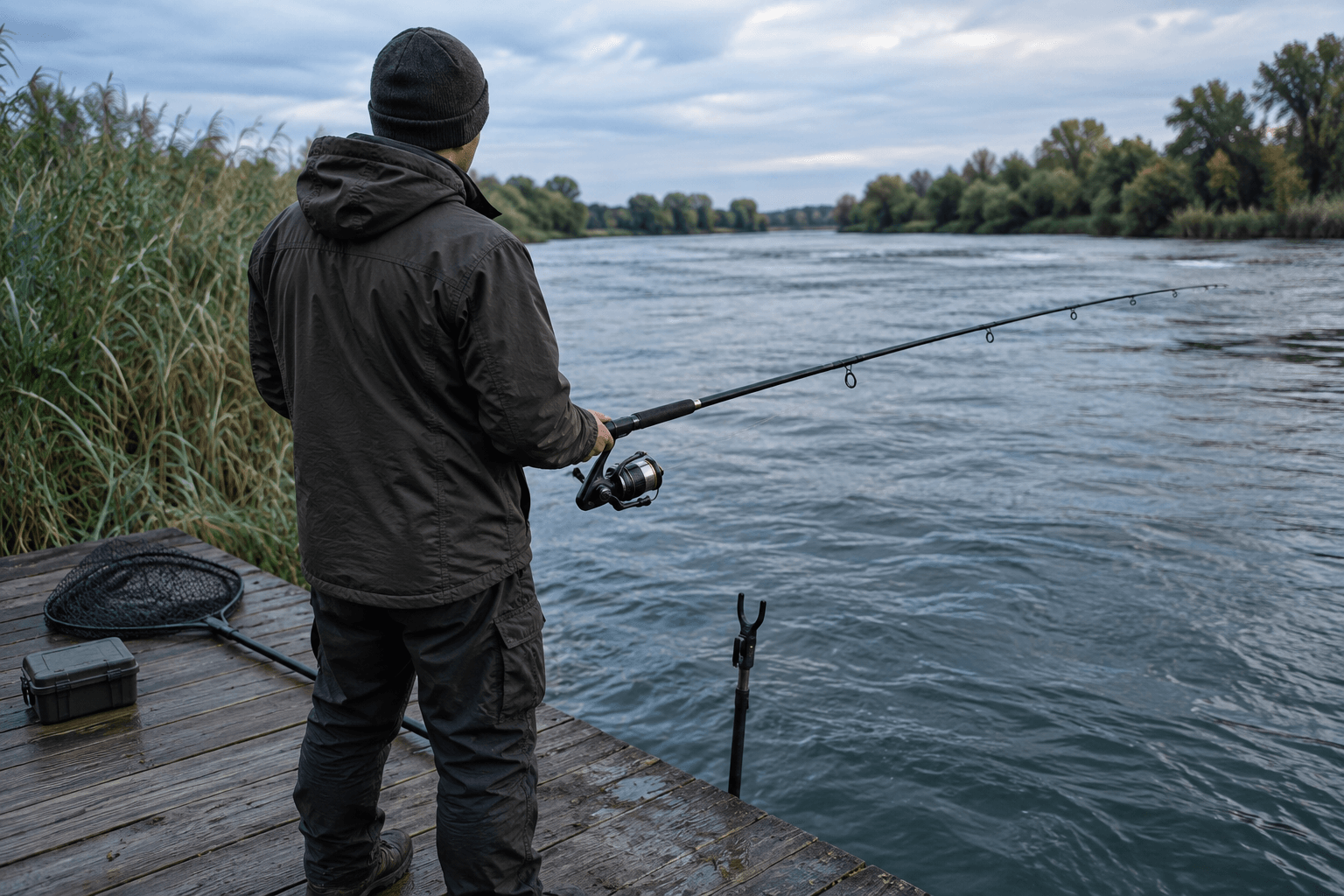
Bank anglers cast far and often prop rods in holders. Choose 8 to 9 feet for open banks where distance matters. Choose 7 feet for brushy ponds and creeks.
For bank fishing, an 8 foot medium-heavy rod with a long handle is the safest first buy. The long handle gives you leverage on the cast and a place to rest the butt against your thigh when you fight a big fish.
Boat Fishing
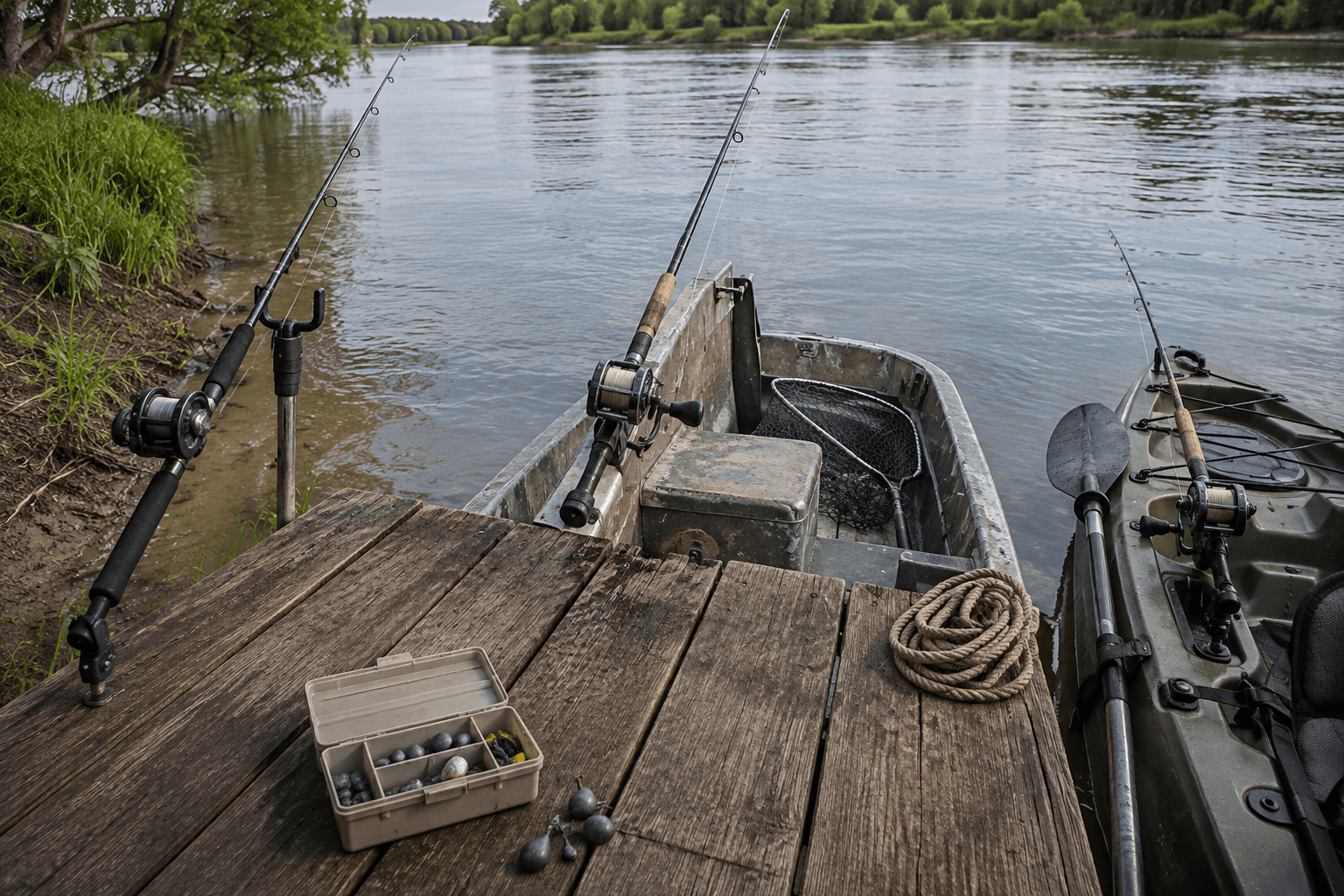
In a boat you rarely need distance. You drop baits straight down or drift them behind the boat. A 7 to 7.5 foot medium-heavy rod is easier to handle and fits in rod holders.
Longer rods get in the way in a small boat, and they hit the motor and other lines. Save the 9 footers for a bank.
Kayak Fishing
Kayaks need compact rods. Choose 6.5 to 7.5 feet in medium-heavy power. A shorter rod fits the cockpit and does not poke out where it can break on overhanging branches. A two-piece rod stores and travels more easily than a one-piece.
Some anglers like a longer rod in a sit-on-top kayak to keep line off the water and clear of snags. That works if you have room, but 7.5 feet is usually the limit. A big catfish can also pull a kayak around, so use steady pressure and keep your drag set properly.
Spinning or Baitcasting Reel? Don’t Skip This Choice
The rod is only half the setup. A strong rod with a weak reel will fail at the worst moment. Pick a reel that matches your rod size and line.
A spinning reel is easier to use and a good choice for beginners. It casts light and medium weights with few tangles. Choose a 4000 to 6000 size reel that holds at least 150 yards of 20 pound line.
A baitcasting reel gives more cranking power and better control with heavy fish. It suits bigger blues and flatheads, and anglers who want to use heavier line. It takes practice, because the spool can overrun and cause a bird’s nest (a tangle of line). If you come from bass fishing, you may already own a suitable one.
Which is better? For most anglers, spinning is the best way to start, and baitcasting is better once you target fish over 20 pounds. The best choice is the one you can cast without tangles.
Whatever you choose, look for a smooth, strong drag. A drag is the part that lets line out under pressure. Catfish make hard, steady runs, so you want a drag that gives line without jerking. Metal gears last longer than plastic ones.
Rod Material, Handle and Sensitivity
Three materials cover most catfish rods: graphite, fiberglass and composite. Each has strengths.
Graphite is the lightest and most sensitive. It shows small bites well, but it can snap if hit or overloaded.
Fiberglass is heavy and tough. It bends deeper, so it forgives mistakes and takes abuse on rough banks.
Composite mixes both. It gives a good balance of strength and feel, and it is the most common choice for catfish.
Handle material is usually cork, composite cork or EVA foam. EVA foam grips well when your hands are wet and slimy, and it lasts well around fish slime and bait.
For most anglers, a composite blank with an EVA foam handle is a safe pick. Choose graphite if you value feel over toughness, and fiberglass if you fish rough water or have kids using the rod.
Sensitivity matters when you fish heavy sinkers in current, since it is harder to tell a bite from the river. A fast tip, a graphite or composite blank, and braided line all help. Many anglers use braid for this reason, since it does not stretch.
Also look at the guides, the rings that carry the line. Stainless steel or ceramic inserts handle braid without wearing out. Cheap plastic guides can cut or groove under braid.
Combos, Budget and When Not to Overbuy
Is a rod and reel combo good for catfish? Yes, for beginners and casual anglers. A combo gives you a matched rod and reel at a lower price, and you can start fishing right away. Just check the specs before you buy.
Prices vary. These are typical ranges, not exact figures:
Budget combos: about $40 to $80. Good for ponds, channel cats and kids.
Mid-range rods or combos: about $80 to $200. Better blanks, smoother drags and better handles.
Specialty heavy rods: about $200 and up. Built for big blues and flatheads.
A cheap combo is enough if you fish small waters for fish under 10 pounds. Do not buy a heavy specialty rod unless you regularly hook fish over 20 pounds or use sinkers over 4 ounces. A heavy rod feels stiff and dull on small fish, and you will not enjoy it.
Be careful with the label “catfish rod” on big-box shelves. Many are marketed that way but have a weak reel, a soft tip or poor guides. Read the length, power and line ratings instead of trusting the name.
Can you use a bass rod for catfish? Sometimes. A medium-heavy bass rod of 7 feet works for channel cats and small flatheads, and many bass anglers already own one. But a light bass or panfish rod is a poor choice for big cats. It can break, or it can fail to turn a strong fish. Use a bass rod only for smaller fish and lighter sinkers.
If you want gear reviews for your budget and fishing style, we cover them at Rod Rush.
Rod Holders and Bite Detection
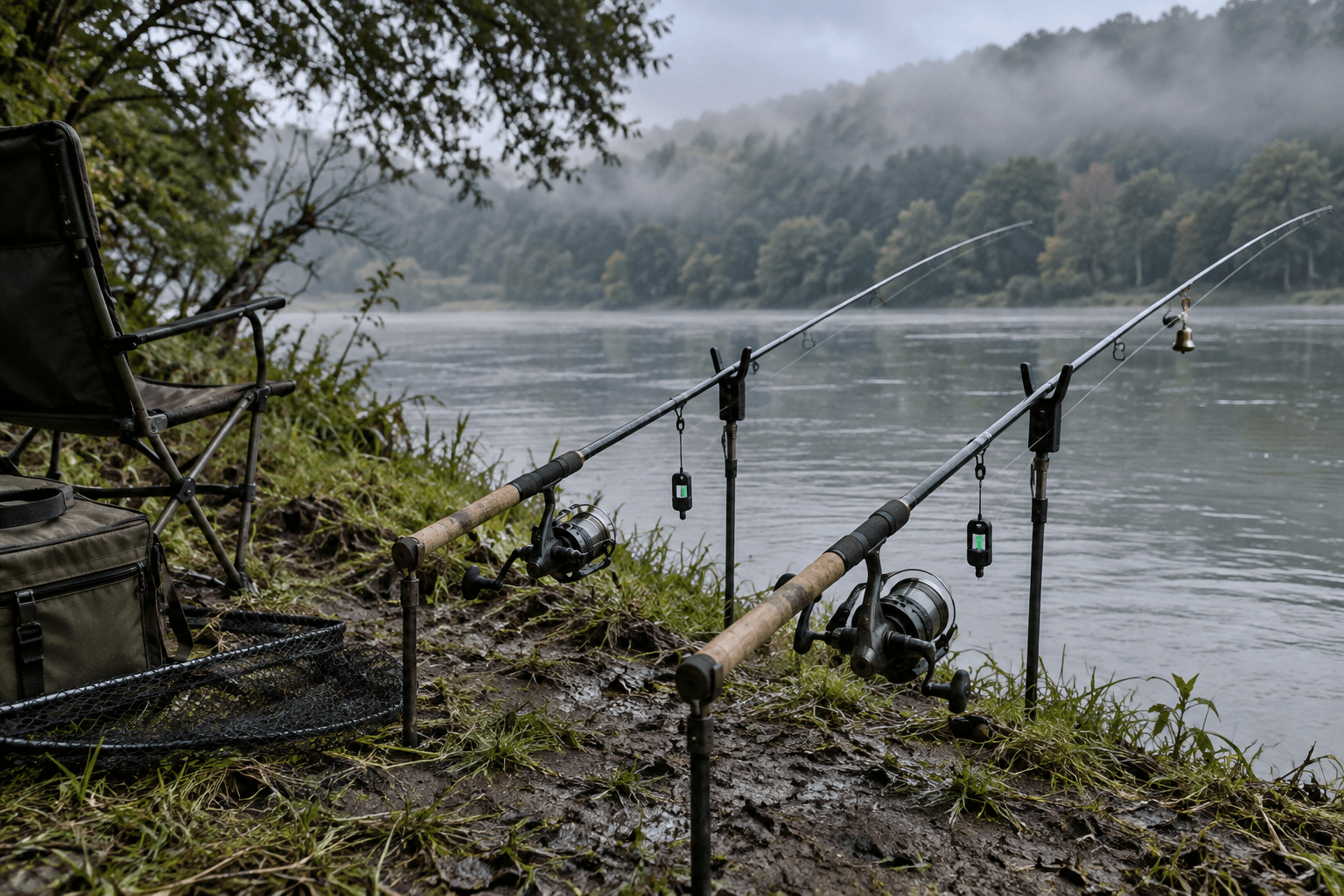
Catfish anglers often fish with the rod resting in a holder, so the rod must work with it. Choose a rod with a solid reel seat and a butt that fits the holder. Check that the rod does not slip out when a fish hits.
Watch the rod tip. A steady tap or a slow bend means a fish is mouthing the bait. With circle hooks, wait until the rod bends and starts to load, then reel steadily rather than yanking. A fish that pulls the rod out of the holder is a risk, so use a strong holder or tie a safety line to the rod.
Set your drag loose enough to let a big fish run, but tight enough to hook it. A good test is to pull line by hand and feel a smooth, firm pull. At night, a bright tip or a small bell on the line helps you see and hear bites.
Frequently Asked Questions
What type of rod should I use for catfish?
Use a 7 to 8 foot rod with medium-heavy power and fast action. It handles most catfish and casts typical sinkers. Move to heavy power and 9 feet only if you target big blues or flatheads in strong current.
Is a baitcaster or spinning reel better for catfish?
Spinning reels are easier and better for beginners and fish under 20 pounds. Baitcasters give more power and control on big fish but need practice. Pick the one you can cast without tangles, then match it to your line.
Is a 7 foot rod good for catfish?
Yes. A 7 foot rod handles channel cats, bullheads and small flatheads well, and it works in tight spots, small boats and kayaks. For big rivers and long casts, step up to 8 or 9 feet.
Is a rod and reel combo good for catfish?
Yes, for beginners and small waters. A combo costs less and comes matched, with budget ones from about $40 to $80. Check the line and sinker ratings, and upgrade if you start hooking fish over 20 pounds.