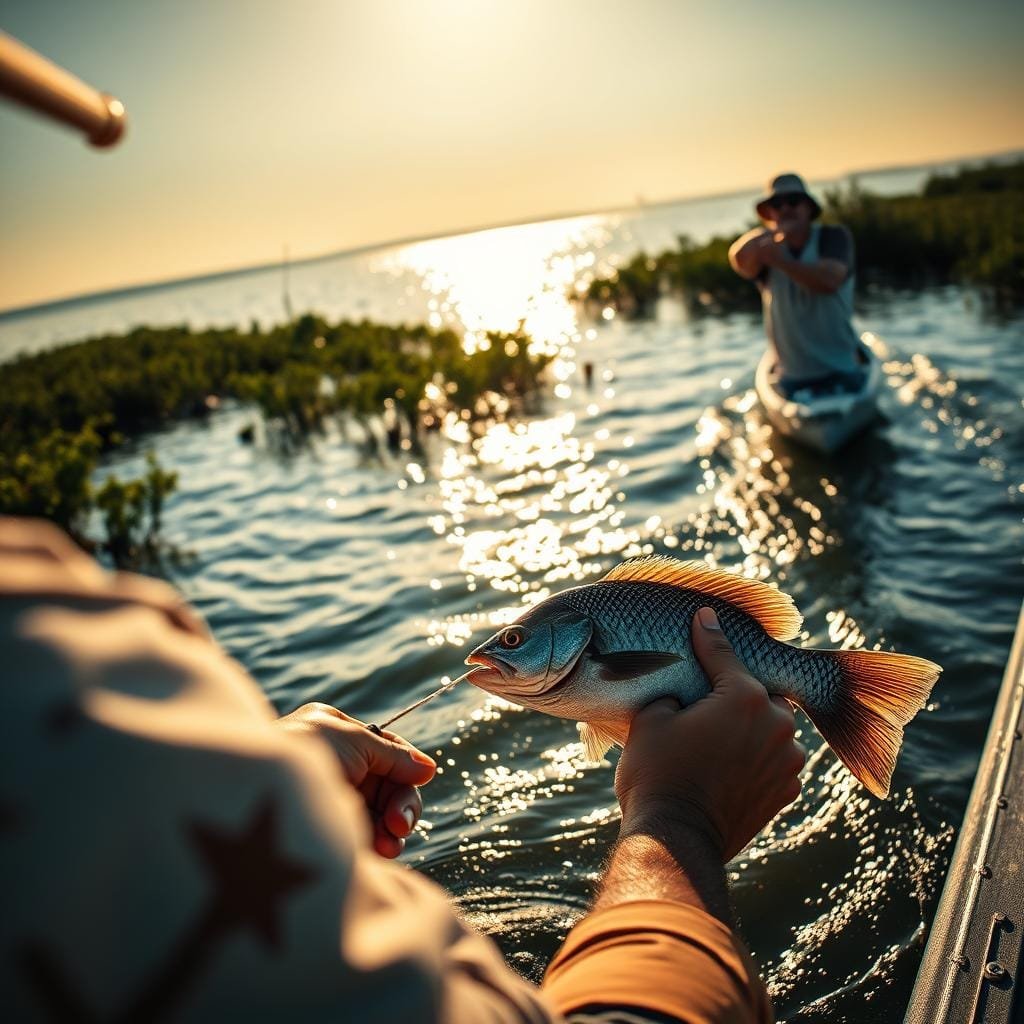
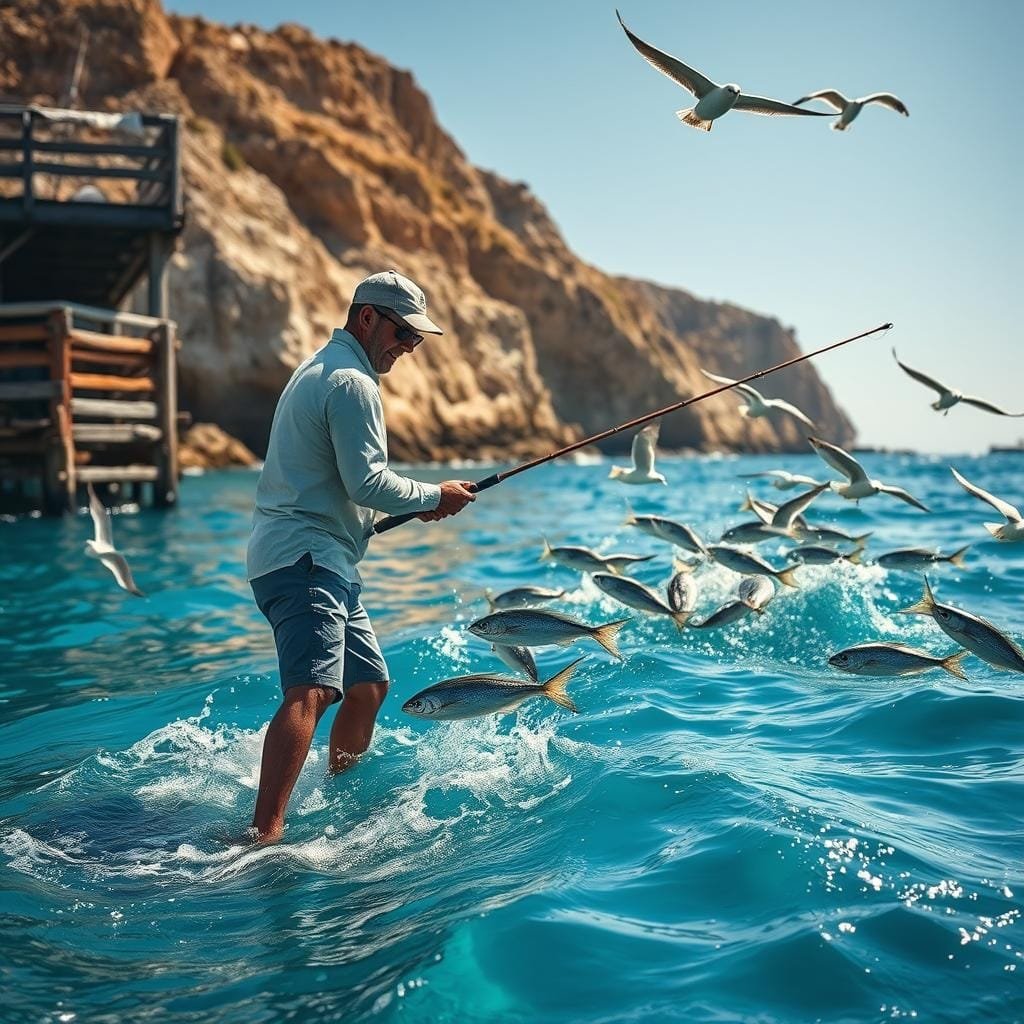
Starting your bonito fishing adventure takes you into the heart of the ocean. Here, you’ll find these quick tuna family members waiting. This guide is made to help you catch more bonitos.
Whether you fish from the shore or go deep-sea fishing, we’ve got you covered. Every tip in this guide is to help you catch more fish.
Every step of fishing is exciting, from getting ready to the thrill of catching a bonito. We share our fishing stories with you. Let’s explore the world of catching bonitos together.
With our help, you’ll know where to find bonitos. You’ll learn how to catch them. Let’s go catch the amazing bonito fish together.
Understanding Bonito: The Basics
Exploring the world of bonito species reveals why they’re a big catch in angling for tunas. These strong fish live in the big open water fishing areas. They swim fast in schools of bonito, showing off their skills.
Bonito habitats are found in places like Southern California’s islands and Southern Florida’s coast. These spots let bonito use their speed and agility. This makes them exciting for fishermen to catch.
Fishing for bonito is thrilling because of their quick moves and the challenge of small tuna identification. Each time you go fishing, you get to experience excitement and meet these lively fish. Even though they’re not usually eaten, they’re very important in sport fishing and as bait.
Catching bonito gives anglers a mix of calm open water fishing and the thrill of catching these strong tunas. Places like Southern California and Florida are great for both new and experienced fishers because of the bonito’s wide presence and schooling behavior.
As we learn more about bonito species and their traits, it’s clear why they’re loved by sport fishers all over the world.
How to Catch Bonito
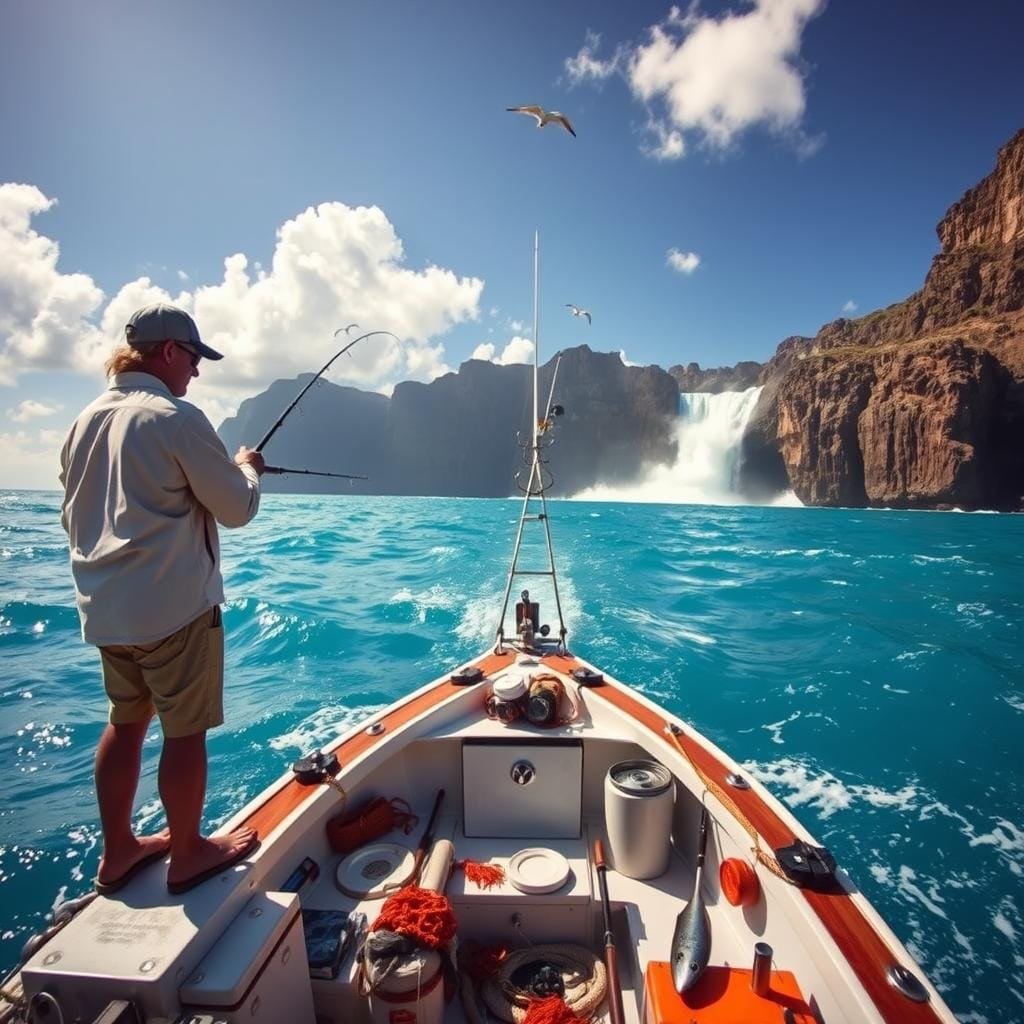
Catching bonito is all about using the right bonito fishing strategies and catching bonito techniques. These methods help you catch them because they move fast and are aggressive. Here are some tips and lure and bait tips for a great catch.
- Trolling: Use shiny plugs like Rapala to catch bonito. Their shiny surface looks like small fish, which attracts bonito.
- Casting: Spoons like the Krocadile work well for casting. Their odd movement pattern makes bonito strike.
- Chumming: Use small baitfish or chum to draw bonito. They are curious and will check out where food is.
- Live Bait: Live anchovies and sardines work well near shore. Their movement attracts bonito.
Successful angling methods also mean knowing how to handle bonito. They are strong, so turning them sideways helps when removing hooks.
These tips are good for both new and experienced fishermen. The right bait, technique, and timing are key in bonito fishing strategies.
The Best Baits for Bonito Fishing
Anglers looking to catch more fish should use effective bonito baits and choosing lures for bonito techniques. Both live baits and artificial lures have their own benefits. They can greatly help you catch more bonito during your fishing trip.
Live baits like lively anchovies and small sardines are great for catching bonito. They look like the natural food of bonito. Using a sabiki rig helps catch these live baits from the pier. This can make your fishing day very successful.
Artificial baits, like shiny lures, are also very appealing. Artificial baits for tuna such as the Krocadile spoon or the Yo-Zuri Crystal Minnow work well. These lures mimic the movement and look of small fish, making them hard for bonito to resist.
So, whether you choose natural or synthetic baits, knowing what bonito like to eat helps. Using a mix of live bait techniques and artificial baits for tuna will make your fishing better.
Lure Selection for Targeting Bonito
Choosing the right lure is key for catching bonito. Bonito see well and like shiny lures that look like their food. Knowing about different lures and how they look to bonito is important.
Reflective tackle is great because it shines and looks like small fish. This makes bonito think it’s real food and they chase it. It’s like a flashing sign saying “eat me!”
Why Shiny Lures Work Best
Shiny lures are a must for catching bonito. They work well in any light. In the sun or early morning, they shine and attract bonito.
Types of Lures to Consider
- Rapala-type Plugs: These plugs swim like real fish and shine like scales.
- Krocadiles: Their long, shiny body is perfect for long casts and catching bonito from far away.
- Yo-Zuri Crystal Minnows: These minnows are clear and colorful, moving in a way that catches bonito’s eye.
For tuna and bonito, pick lures that look good and work well. Lures that move and shine like real fish will help you catch more.
Advanced Techniques: Building an Effective Bonito Fishing Rig
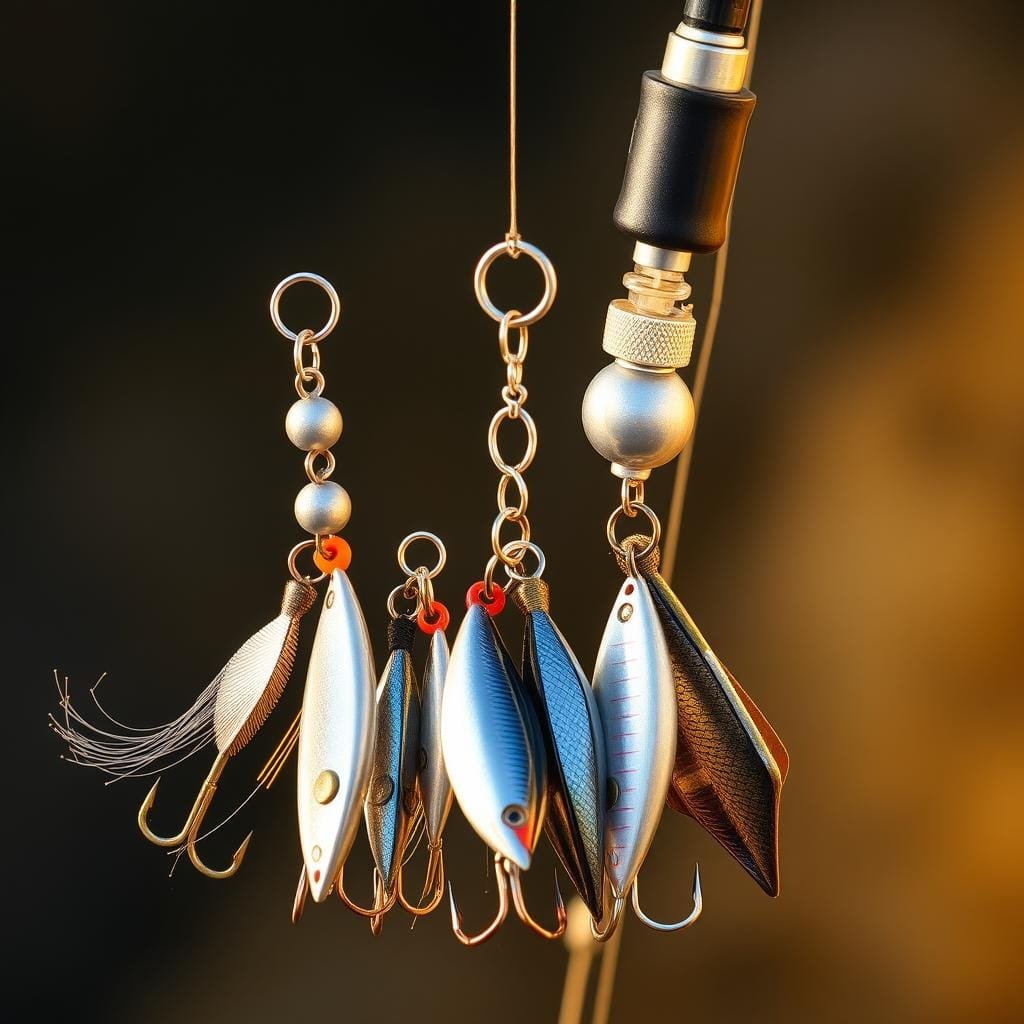
When you fish for bonito, you need special techniques. A good bonito rig setup helps you catch more fish. It also keeps your bait fresh and lively.
To make a great bonito rig, you must know your tackle and the fish. This part talks about how to put together a bonito rig. It will help you catch more fish on your trips.
| Rig Component | Function | Recommended Material |
|---|---|---|
| Circle Hook | Reduces gut hooking and securely catches fish | High-carbon steel |
| Leader Line | Prevents line cuts on sharp teeth | Fluorocarbon (20-30 lbs test) |
| Bridle | Attaches bait to hook without damage | Wax floss or rubber bands |
| Swivel | Prevents line twisting | Stainless steel or brass |
Start by tying a circle hook with a bridle. Use wax floss to tie the bait. This lets the bait move naturally. It’s key for live bait, as it attracts big fish.
Using these advanced techniques makes you a better angler. It makes fishing more fun and successful. Every trip is a chance to learn and get better.
Finding the Perfect Fishing Spot for Bonito

Anglers looking to catch more bonito need to find the right spots. Bonito like clear, deep, and moving waters. They are often found near jetties and rocky points fishing spots.
These areas have deep waters and lots of baitfish. This makes them great for locating bonito schools.
Knowing the best places to fish is important. Bonito like where water currents meet. This creates spots for baitfish to gather.
These spots are near jetties or where the seabed changes a lot. Like rocky cliffs or steep sandy drop-offs.
To learn more about fishing for bonito, check out recommended fishing techniques and locations. It shows how the right spot can help you catch more.
The success of catching bonito also depends on what’s under the water. A lively baitfish population is a good sign. Look for birds diving into the water or fish schools on the surface.
Here’s how some popular fishing spots compare:
| Location Type | Water Clarity | Depth | Bait Presence |
|---|---|---|---|
| Rocky Points | High | Deep | Abundant |
| Jetties | Variable | Moderate to Deep | High |
| Sandy Drop-offs | Clear | Very Deep | Moderate |
Each spot has its own challenges and benefits. But rocky points and jetties are best for bonito fishing. They have clear water, the right depth, and lots of bait. By choosing these spots, anglers can have a great time fishing for bonito.
Understanding Bonito Behavior: Tips for Successful Fishing
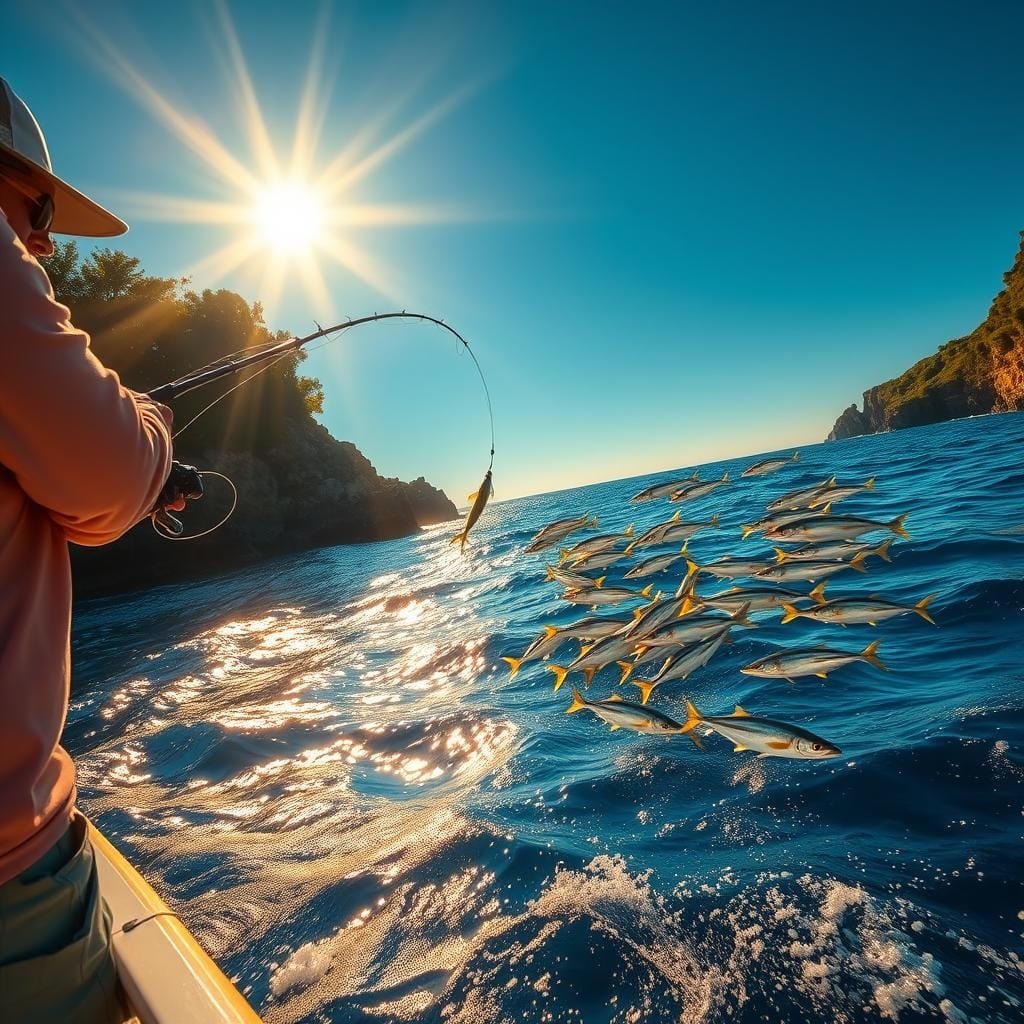
To catch bonito, you need to know how they act and when they eat. Bonito are popular game fish with unique habits. Knowing these habits can help you catch more fish.
Feeding Habits and Times
Bonito are most active early in the morning and late in the afternoon. They move with the tides and eat small fish like sand eels. They mainly eat smaller fish like sand eels and squid.
| Time of Day | Feeding Activity |
|---|---|
| Early Morning (Sunrise to 10 AM) | High Activity |
| Mid-Day (10 AM to 1 PM) | Low Activity |
| Afternoon (1 PM to 5 PM) | Moderate to High Activity |
Spotting Bonito Schools
Spotting bonito schools is key. Look for splashes on the water and birds diving. These signs mean bonito are eating.
Watching for signs of bonito can help you catch them. By using these tips, you can increase your chances of catching these strong fish.
The Importance of Proper Gear and Tackle
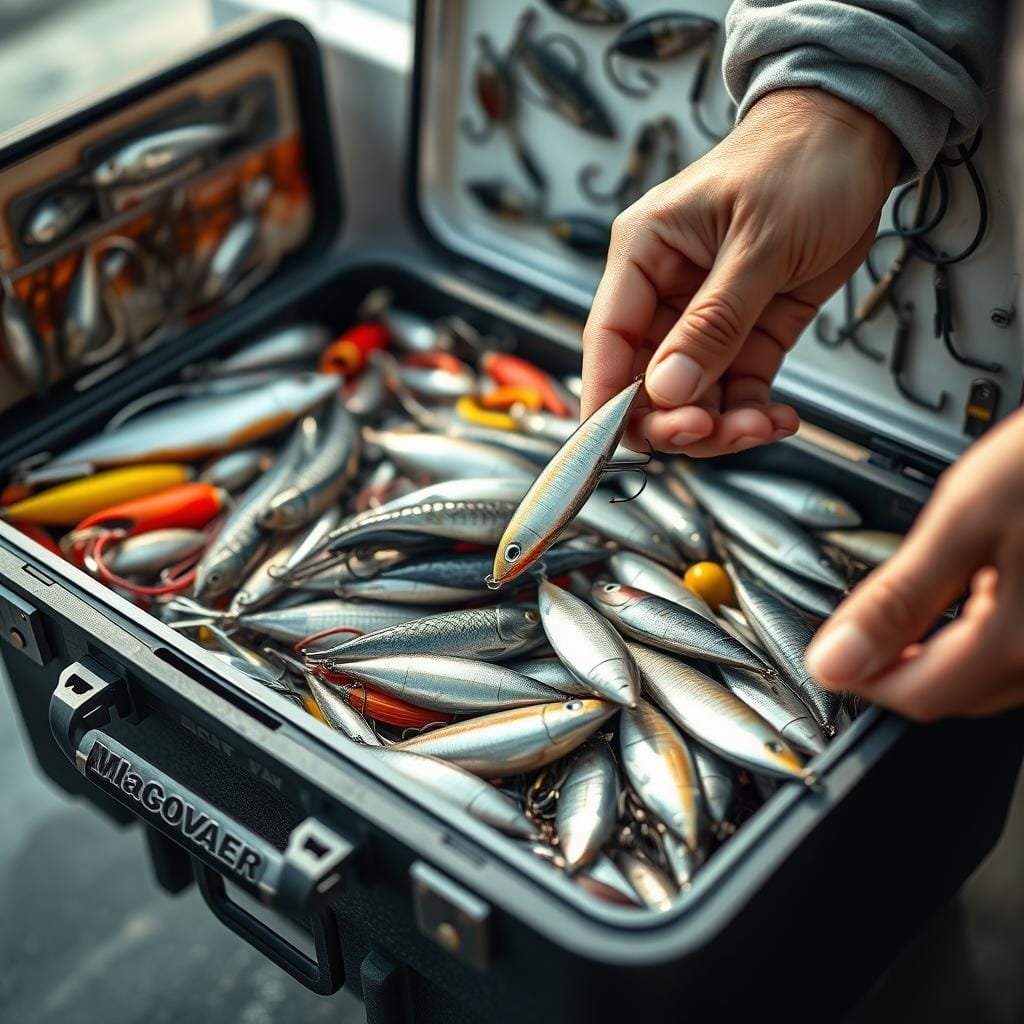
Mastering bonito fishing starts with the right choosing fishing tackle. You need strong fishing line and the optimal rod and reel. These help a lot in your fishing journey.
It’s key to have bonito angling gear that’s strong. This gear must handle the fish’s power and quick moves. A heavy-duty rod and a durable reel are good choices.
For bonito fishing, picking the right line is important. It should match your rod and reel well.
Selecting the Right Line Strength
A good line for bonito fishing is a braided one. It should be strong enough for the fish in your area. This line helps with casting and feeling bites.
Choosing the Ideal Rod and Reel Combo
Choosing the right optimal rod and reel is key. Look at weight, action, and how they work with different fishing styles. A good reel and rod help catch these fast fish.
For more on bonito fishing gear, check out this guide. It has tips and gear recommendations for Atlantic Bonito Tackle and Tactics.
Setting up your gear right makes bonito fishing better and more fun. The right tackle is key. It helps you catch more fish and enjoy the hunt.
Bonito Handling and Release Techniques
Learning how to handle bonito is key for every fisher who wants to fish sustainably. This part talks about the best ways to catch and handle these quick fish. It makes sure they stay healthy when released back into the sea.
How to Handle Bonito without Causing Harm
It’s very important to handle bonito right to avoid hurting them. Always make sure your hands are wet before touching the fish. This keeps its slime coat safe, which is important for its health when it goes back into the ocean.
Also, hold the fish gently and securely under its belly. This helps avoid hurting its inside parts.
- Wet hands before handling to protect the bonito’s slime coat.
- Support gently under the belly to avoid internal injuries.
- Hold sideways and slightly upside down to calm the bonito.
Ensuring a Successful Release
A good release starts with safe tuna fishing techniques. Quick and efficient catch and release methods help keep bonito safe. This makes them more likely to survive once they’re back in the water.
Controlling your tackle’s drag settings is important. It helps shorten the fight time. This means the bonito gets less tired.
- Adjust drag settings to decrease fight time.
- Minimize handling time to reduce stress on the fish.
- Return to water promptly to improve survival prospects.
When you’re doing these things, it’s also important to know and use catch and release tips. This helps keep the bonito population healthy. It also makes sure sport fishing stays fun and productive for the future.
Making the Most of Your Bonito Fishing Trip
For those who love to fish for bonito, it’s more than just an activity. It’s an art that needs planning and being ready to change. The best time and place to fish are key. Bonito move around and bite at different times, depending on where you are.
Knowing the latest fishing reports and weather helps you guess where bonito might be. This way, you can increase your chances of catching them.
The excitement of fishing comes from more than luck. It’s about being well-prepared and smart. Make sure your fishing gear is ready and you know how to use it well.
Using bonito as bait is special. Outriggers help spread your lines and avoid getting tangled. This makes it easier to catch bonito and handle the action when they bite.
Even with the best plans, fishing can be unpredictable. Sometimes, bonito seem to disappear. But, being alert and ready to change can help you catch them when they come back.
Every fishing trip is a unique story. It’s a mix of challenges and chances. Catching a bonito is a memorable experience. With good planning, being flexible, and never giving up, every trip can be amazing.
FAQ
What is Bonito?
Bonito are small tuna known for their strong fight. They live in open waters worldwide. They love to eat baitfish and squid.
Where can I find Bonito?
You can find Bonito in places like Southern California and Southern Florida. They also live near the Cortez Bank. You can fish for them from jetties, piers, and islands.
Why is Bonito a popular target for anglers?
Anglers love to catch Bonito for their exciting fight. They are fun to catch, even if they’re not tasty.
What bait works best for catching Bonito?
Live baits like anchovies and sardines work well. Shiny lures also attract them. The bait’s movement and look are key.
Why do shiny lures work best for Bonito fishing?
Shiny lures attract Bonito because they look like their natural prey. The shine and flash are what draw them in.
What types of lures should I consider when targeting Bonito?
Look for lures that mimic small baitfish. Rapala-type plugs, Krocadiles, and Yo-Zuri Crystal Minnows are good choices.
How can I build an effective Bonito fishing rig?
Use the right tackle for the fish and location. Include fluorocarbon leaders and strong lines. Try bridle rigging live bait with wax floss.
What are some ideal fishing spots for Bonito?
Good spots have clear, moving water. Look for jetties, rocky cliffs, and sandy beaches with lots of baitfish.
What are Bonito’s feeding habits and preferred times to feed?
Bonito feed most in the early morning and some afternoons. They eat small fish and squid.
How do I spot schools of Bonito?
Watch for baitfish and water movement. Schools may show up with frenzied water or birds feeding on baitfish.
What should I consider when selecting gear and tackle for Bonito fishing?
Choose tackle based on the fish size and location. Use lighter lines for shore fishing and heavier for offshore. A 14-pound-test Fireline is good for castability.
What is the ideal rod and reel combo for Bonito fishing?
A medium to heavy action rod with a reel for at least 20-pound-test line is best. It depends on the fishing conditions.
How should I handle Bonito to minimize harm?
Hold the fish sideways upside down. Keep your hands wet to protect their slime. This helps calm them and makes hook removal easier.
What are the best practices for ensuring a successful Bonito release?
Fight the fish quickly to avoid exhaustion. Use wet hands for handling. Release them gently and quickly back into the water.
What can I do to make the most of my Bonito fishing trip?
Prepare well by choosing the right time and spots. Use effective baits and adapt your tactics based on the fish and environment.