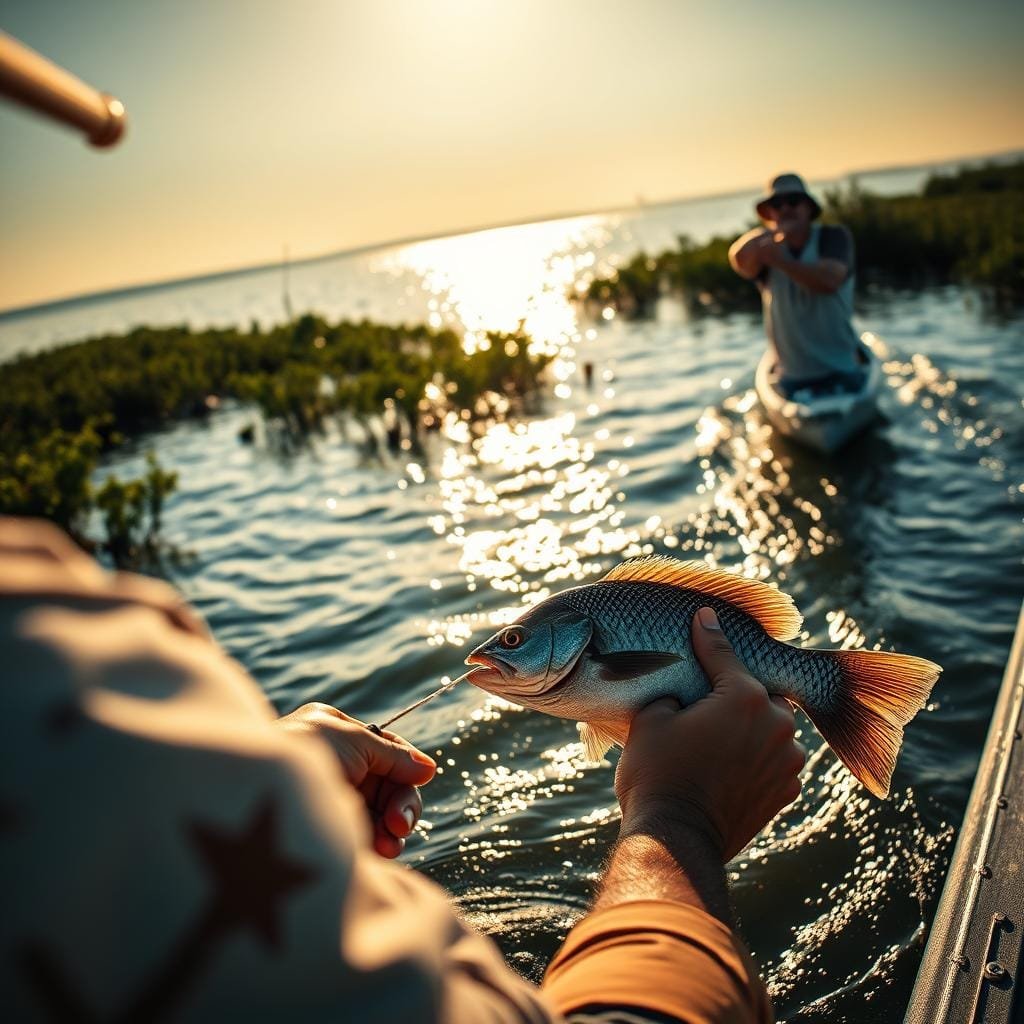
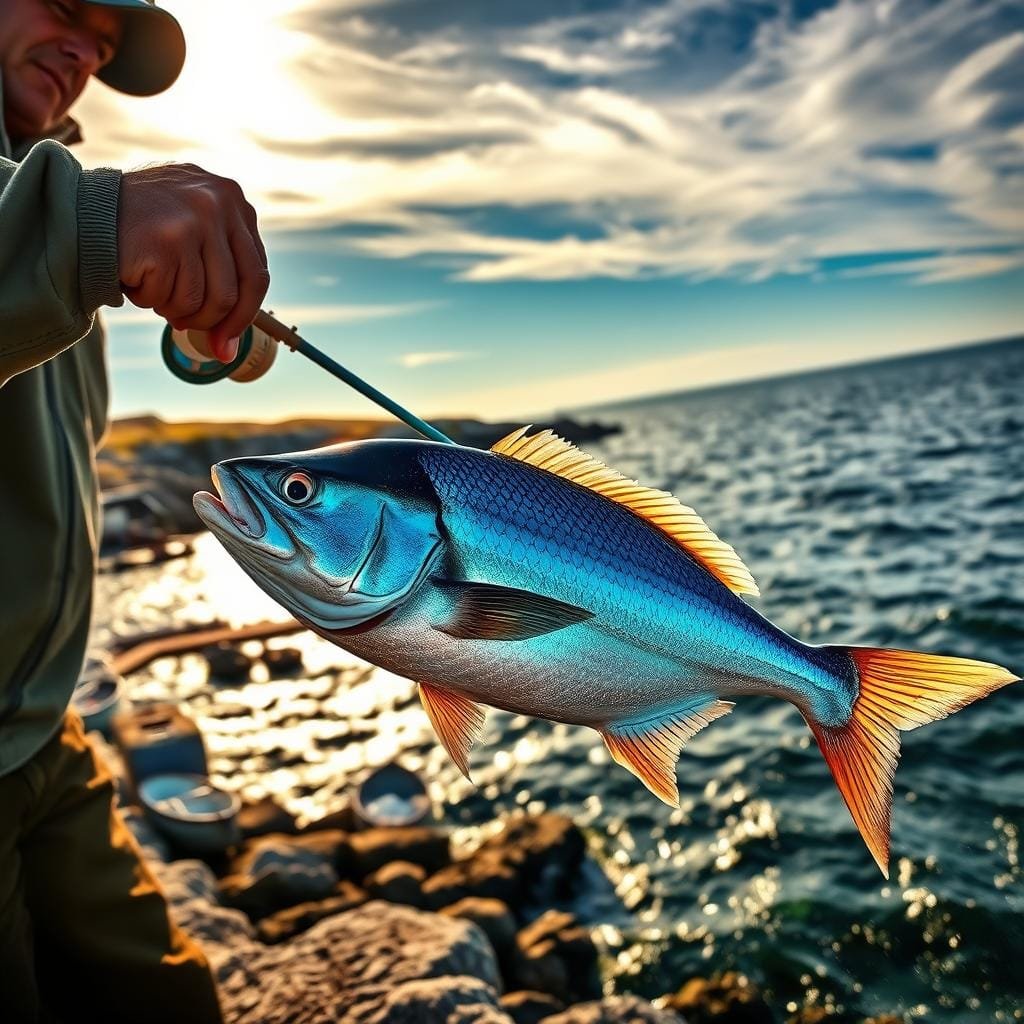
Welcome to the ultimate guide for bluefish angling fans! Bluefish are known for their strong fights and exciting catches. This guide will give you top bluefish fishing tips for catching them on the water or from the shore.
Learn about the best tackle and how to understand their behavior. You’re in for a fun journey into the world of bluefish.
Get ready for an exciting journey into bluefish fishing. Our guide will show you how to catch and land these strong fish. Stay with us as we share the secrets for a successful bluefish catch.
Understanding Bluefish Behavior and Habitat
Exploring bluefish behavior shows how these aggressive feeders are lively in their bluefish habitat. They are key saltwater game fish. Knowing how they eat and where they live helps both anglers and scientists.
Identifying Bluefish Feeding Patterns
Bluefish eat a lot, making them strong predators. They join in feeding frenzies, attacking schools of baitfish. This shows their aggressive feeding and tells us about the health of the sea and the food they need.
Preferred Bluefish Habitats: From Bays to the Open Ocean
Bluefish live in many places, from bays to the open sea. They fit well in different places. These spots give them food and safety from big predators.
| Habitat Type | Key Features | Common Prey |
|---|---|---|
| Coastal Bays | Sheltered waters, abundant with estuaries | Menhaden, sardines |
| Inlets | Dynamic currents, access to open waters | Shrimp, squid |
| Open Ocean | Vast, deeper waters with strong currents | Crustaceans, smaller fish species |
Learning about bluefish behavior and bluefish habitat helps us protect them. It also makes fishing better for everyone. Knowing where bluefish live makes fishing trips better for both the sea and the people fishing.
How to Catch Bluefish
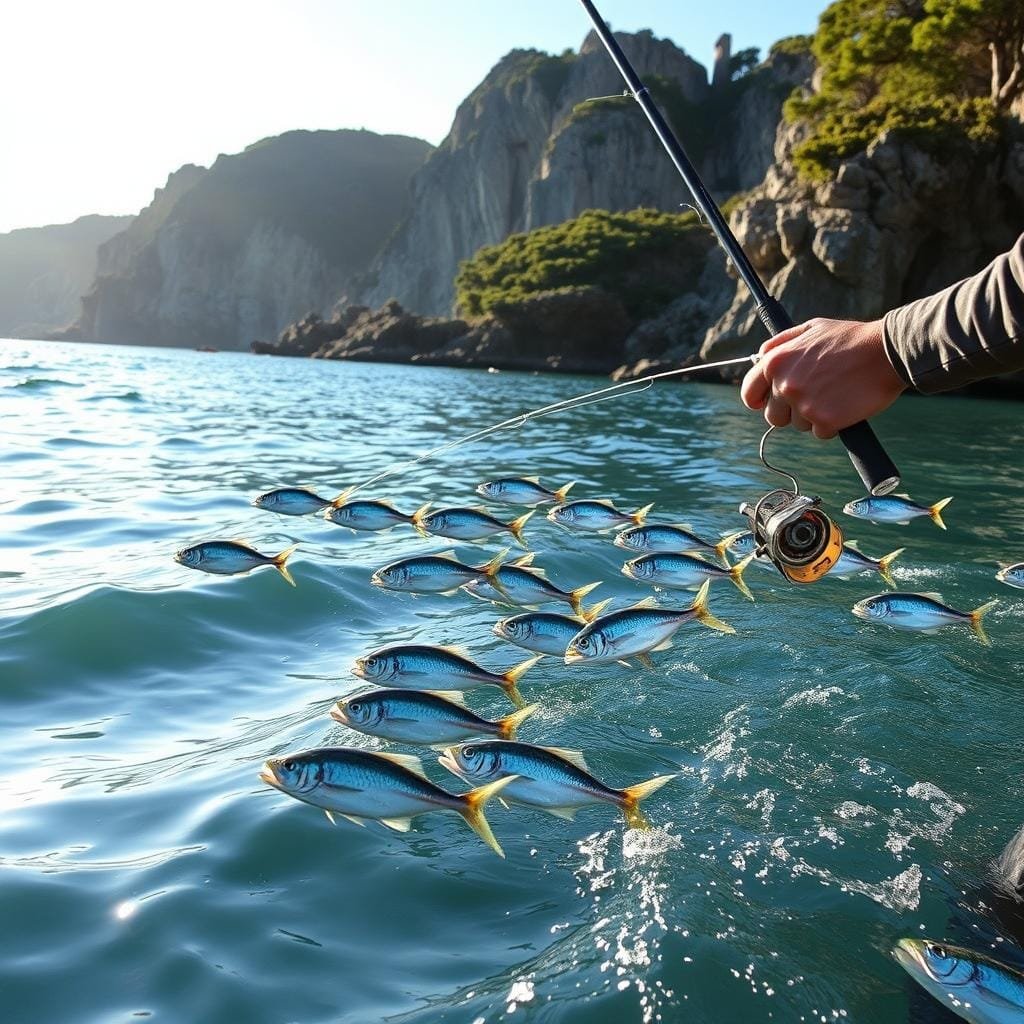
Catching bluefish needs the right angling bluefish methods. These methods depend on where you fish. In Florida, casting into schools is popular. In the north, trolling and chumming work better.
When bluefish feed on the surface, it’s fun to fish. You can see them splashing. Casting into the action is a good way to catch them. Drifting over flats or near structures also works well. For more tips, check out successful bluefish catching strategies.
Both new and experienced anglers should try different ways to catch bluefish. Trolling with poppers or spinning with live bait can help. Knowing when and where to use these methods can make your fishing better.
- Using poppers and walk-the-dog style lures to mimic wounded baitfish.
- Employing heavy jigging in deeper waters where bluefish may lurk below.
- Trolling along tide rips and color changes where bluefish commonly feed.
Changing your fishing style based on the sea and bluefish behavior makes your trip better. Being flexible and trying new things is key. This way, you’ll catch more bluefish and have a great time.
The Best Time of Year to Target Bluefish
For those who love to fish, knowing when bluefish are around is very important. These fish move based on water temperature and where they find food.
Finding the best time to fish for bluefish can really help your fishing trips. Bluefish are usually more common in late spring and early fall. This is when they move to cooler waters.
Seasonal Movements and Migration Patterns of Bluefish
In summer, bluefish swim up the Atlantic coast to eat lots of baitfish. Their movements change with water temperature and salt levels. To know where and when to find them, check out guides like Fishing Beginners How to Fish for.
Optimal Weather Conditions for Bluefish Fishing
The weather also affects when it’s best to fish for bluefish. Look for calm winds and clear skies. These make it easier to see bluefish schools.
Knowing these patterns can make your fishing trips better. Always check the weather and bluefish movement reports before you go. This will help you have a great time fishing.
Choosing the Right Tackle for Bluefish
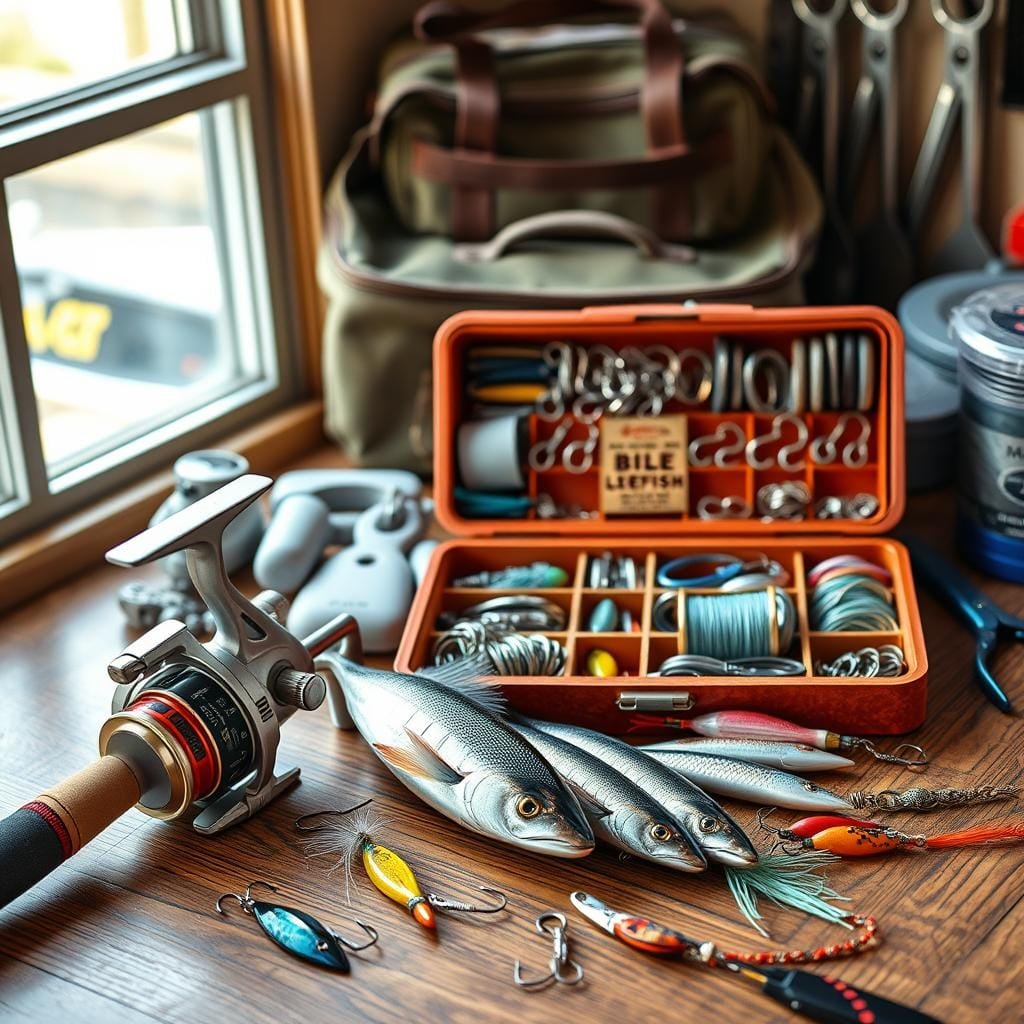
When you go fishing for bluefish, picking the right gear is key. It doesn’t matter if you’re new or experienced. Knowing the difference between light spinning and heavy conventional tackle can really help you catch more fish. This guide will help you choose the best tackle for your fishing trips, based on the bluefish you want to catch.
Light Spinning Tackle Versus Heavy Conventional Tackle
For smaller bluefish, 2 to 5 pounds, light spinning rods are best. They’re easy to use and good for casting small lures. Spinning tackle is great for fun and interactive fishing.
But for bigger bluefish, you need heavy conventional tackle. It’s strong enough to handle big fights. This is important for trolling and chunking, where you need durable gear.
Recommended Rods, Reels, and Line Strength
It’s important to pick the right rod, reel, and line for bluefish fishing. For smaller fish, a 7-foot, medium-action rod with a 3000 to 4000 series reel and 20-pound braided line works well. This setup is good for most inshore fishing.
But for bigger fish, you need a stronger setup. A 6 ½ foot, medium-heavy rod with a strong drag system and 40-50 pound braided line is best. This gives you the power to catch the big ones.
Here’s a table showing the best gear for both spinning and conventional tackle for bluefish:
| Tackle Type | Rod Length | Reel Size | Line Strength |
|---|---|---|---|
| Light Spinning | 7 ft (Medium Action) | 3000-4000 | 20 lb Braided |
| Heavy Conventional | 6 ½ ft (Medium Heavy) | 5000+ | 40-50 lb Braided |
Essential Lures and Baits for Bluefish
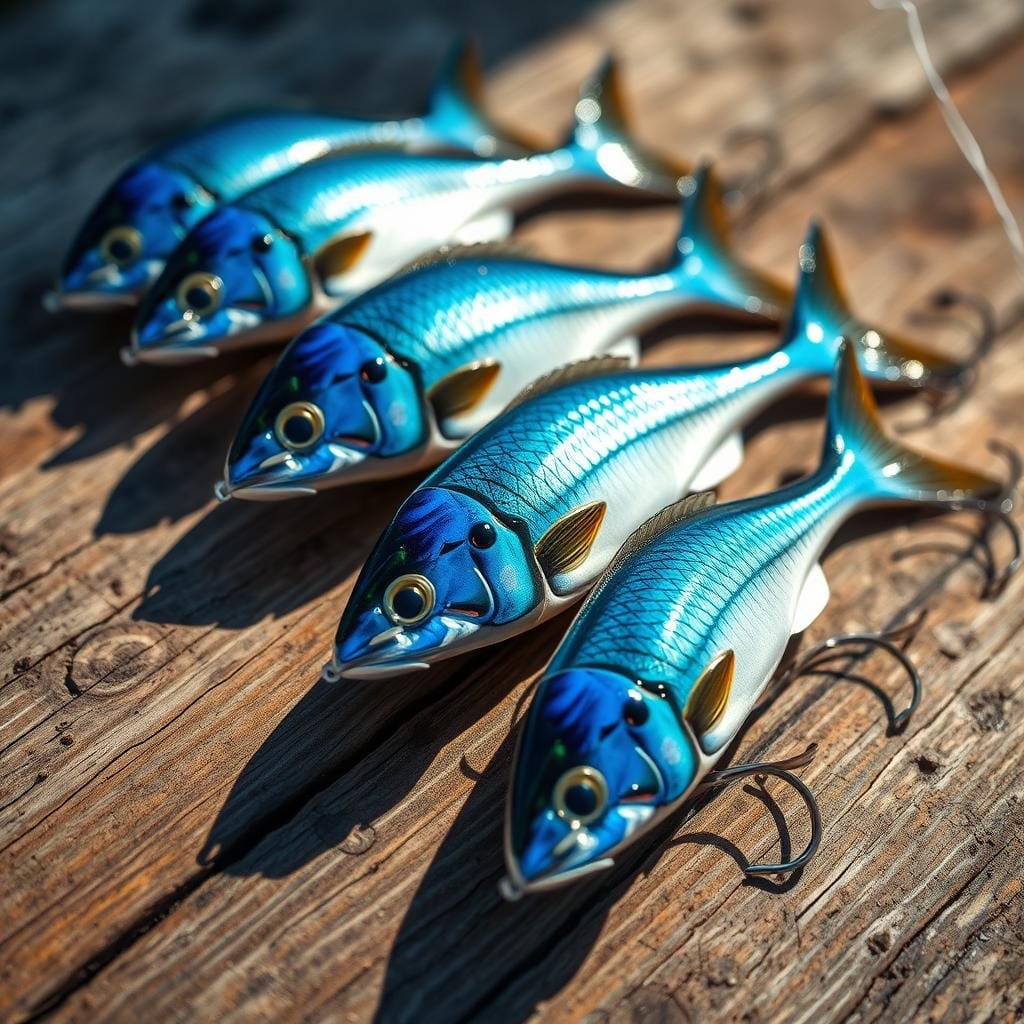
Bluefish are very active and love to eat. This makes them fun to catch. The right lures and baits can help you catch more bluefish.
Artificial lures like jigs, spoons, and surface plugs work well. They look like injured fish. This makes bluefish think they’re eating a real meal.
Live baits like shrimp and small fish are also good. Cut baits like menhaden and sardines work too. These baits smell good and attract bluefish.
Choosing between lures and baits depends on the bluefish’s mood. If they’re hungry, use something flashy. If they’re not, try something more natural.
| Type of Lure/Bait | Description | Best Used |
|---|---|---|
| Jigs | Mimic small baitfish, ideal for casting and vertical jigging | Surf, Jetty |
| Spoons | Reflective, spoon-shaped metal lures for long casts and fast retrieves | Open Water, Jetty |
| Surface Plugs | Create surface disturbance to mimic injured fish | Overcast or Windy Conditions |
| Live Bait (Shrimp/Baitfish) | Natural motion attracts predatory fish through visual and scent cues | Calmer, Clear Waters |
| Cut Baits (Menhaden, Mullet, Sardines) | Releases oils into the water, creating a scent trail | Choppier Waters |
Choosing the right lures and baits depends on the day and where you are. Having many options helps you catch bluefish no matter what.
Mastering Bluefish Fishing Techniques
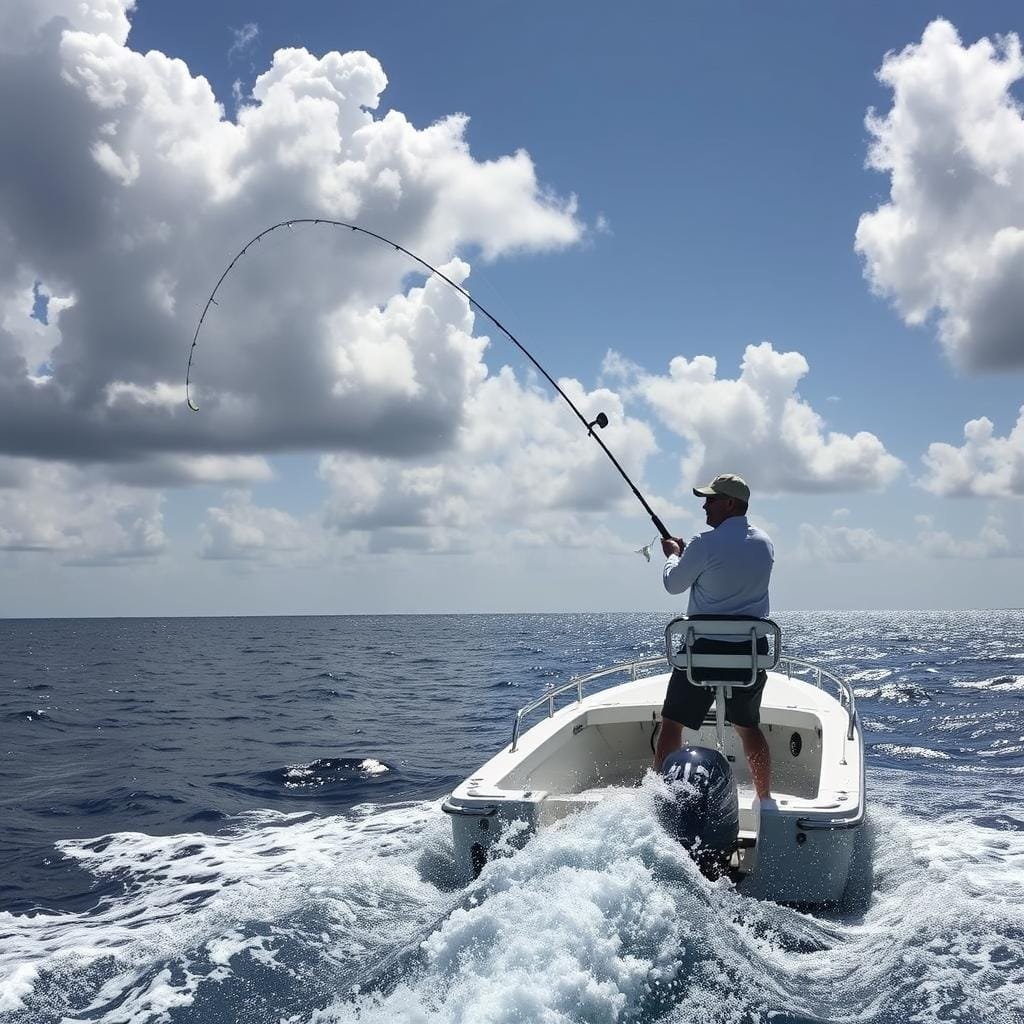
Learning different bluefish fishing techniques can make fishing more fun. Each method, like casting, chunking, or trolling, has its own charm and success. Let’s dive into these techniques to catch more bluefish on your next trip.
The Art of Casting for Bluefish
Casting for bluefish needs precision and timing. Fast lures like spoons and topwater plugs work well. Look for areas where birds dive or fish splash to find bluefish.
Effective Chunking Techniques for Bluefish
Chunking involves cutting bait into pieces and letting them drift. It’s a favorite in the Northeast. Add a chum slick to attract bluefish. Keep the bait fresh and on the hook well to avoid losing it.
Trolling Strategies for Targeting Bluefish
Trolling with diving plugs and spoons covers more ground. It’s great for finding bluefish in deeper water. Try different speeds to mimic injured bait and catch more fish.
| Technique | Tool | Description | Tip |
|---|---|---|---|
| Casting | Topwater Plugs, Spoons | Aim for surface activity and aggressive feeding | Watch for diving birds as indicators of fish activity |
| Chunking | Fresh Bait Chunks | Drift chunks in current with a chum trail | Use sturdy hooks to prevent bait theft |
| Trolling | Diving Plugs, Spoons | Cover larger areas and mimic injured prey | Vary speed to enhance the lure’s appeal |
Tips for Successful Surf Fishing for Bluefish
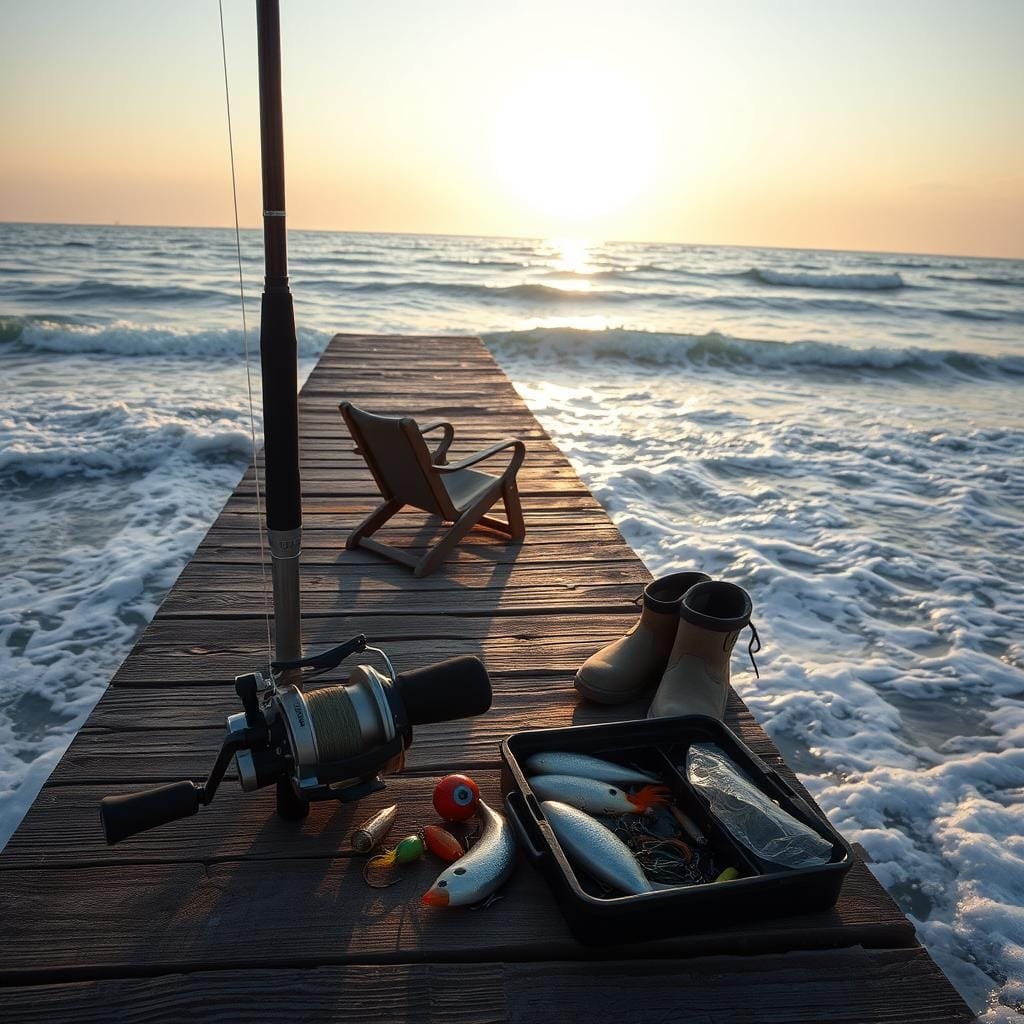
Surf fishing for bluefish needs skill, patience, and knowing where to fish and what gear to use. It doesn’t matter if you’re experienced or new. Using the right strategies in the right places can greatly improve your fishing.
Choosing the Right Spots Along the Coast
Finding good coastal fishing spots is key for surf fishing bluefish. Look for places where bluefish like to hunt in the surf. Good spots include areas near jetties, sandy beaches, and rocky shores where baitfish are found.
The water movement around these spots often draws bluefish. This makes them great places for anglers. Check local tide charts and talk to experienced fisherman to find the best spots.
Surf Fishing Gear and Bait Tips
Choosing the right surf fishing gear is very important. Use rods and reels that are strong and won’t rust. Bluefish are tough fighters, so you need gear that can handle them.
For bait, fresh bunker or mackerel strips work best. But, artificial lures like spoons and topwater plugs also attract bluefish. Make sure your hooks are sharp and your lines are strong to handle bluefish’s strong bites.
Bluefish Handling and Release: Best Practices
Handling bluefish safely is key for both the angler and the fish. Their sharp teeth and strong body make it important. Using the right methods and tools is vital for catch-and-release fishing.
For those into sustainable fishing, circle hooks are best. They hook the fish in the jaw corner, lessening damage. Tools like pliers or a dehooker help remove hooks safely, keeping the fish’s slime coat intact.
- Use wet hands or gloves when handling bluefish to protect their slime layer.
- Avoid removing bluefish from water; if necessary, ensure it is for the briefest time possible.
- Support the bluefish horizontally when out of water to avoid damage to their internal organs.
Releasing bluefish quickly and correctly is key. It helps keep the fish population healthy and supports marine ecosystems. Handle them gently and release them fast for the best chance of survival.
At times, you might need help releasing bluefish after a fight. Keeping the fish in water and slowly moving it helps. This care shows respect for the ocean and its creatures.
Stay updated on fish handling best practices to help marine conservation. Catch-and-release fishing with the right methods makes fishing fun and sustainable for everyone.
Common Mistakes to Avoid When Fishing for Bluefish
When you go bluefish fishing, knowing common mistakes is key. Many people, new or experienced, make simple errors. These mistakes can really hurt your chances of catching bluefish.
Watching water conditions for bluefish is very important. Things like water temperature, how clear it is, and the current matter a lot. If you ignore these, you might miss out on catching bluefish, because they might be feeding or moving.
Being quiet and careful is also very important. A big mistake in bluefish fishing mistakes is making too much noise or getting too close to where they are eating. Bluefish can get scared and swim away if you’re not careful.
- Ignoring Water Conditions and Bluefish Activity Patterns: Always look for signs of bluefish like birds flying overhead or fish splashing on the surface. These signs can help you know where to cast your line.
- Overlooking the Importance of Stealth and Approach: Move quietly when you get to fishing spots. Try not to make too much noise or move too much. This way, you won’t scare the bluefish away.
By avoiding these mistakes and watching the bluefish’s behavior and the water, you can do better. The secret to catching bluefish is to understand and respect their home and how they act.
Advantages of Using Artificial Lures Over Natural Baits
Anglers fishing for bluefish have a choice: artificial lures or natural baits. Artificial lures have big advantages. They help catch more fish and make fishing more fun.
Lures can take a lot of bites from bluefish without breaking. This makes them cheaper in the long run. They also let you cast farther and more accurately. This means you can fish in places where bluefish like to be without scaring them away.
Using lures also means less mess and hassle. You don’t have to deal with live or dead bait. It’s quicker and cleaner to switch lures.
| Aspect | Artificial Lures | Natural Baits |
|---|---|---|
| Durability | High – resists multiple strikes | Low – often requires frequent replacement |
| Ease of Use | Quick setup and change | Messy and requires careful handling |
| Attractant | Visually stimulating actions | Natural scent and texture |
| Cost-Effectiveness | More upfront, less long-term | Less upfront, more frequent purchases |
Lures can look like many different foods. This makes bluefish more likely to bite. They often catch more fish than natural baits.
Artificial lures are also better for the environment. They don’t hurt baitfish populations as much. This is good for the planet.
Natural baits have their uses, but lures are better for many reasons. They save money, are easier to use, and help the environment. Lures are a smart choice for bluefish fishing.
Fly Fishing Tactics for Bluefish
Fly fishing for bluefish is thrilling. It’s great when they are hungry. Use an 8wt rod for small ones and a 10wt for big ones in the Northeast.
Choose an intermediate sink tip line. It works well in different depths.
Use simple baitfish patterns to catch them. Casting into feeding frenzies works well. Blind casting over flats can also get bites.
Here’s a table with good fly patterns for bluefish. It shows different types and how well they work.
| Fly Pattern | Description | Best Use Scenario |
|---|---|---|
| Clouser Minnow | Weighted eyes for a jiggling dive motion | Clear waters, feeding frenzies |
| Surf Candy | Epoxy-coated for durability with a lifelike appearance | Sunny days, offshore fishing |
| Deceiver | Streamlined for mimicking various small fish | Choppy conditions, grass flats |
Fly fishing for bluefish needs good gear and skills. Use different patterns for different conditions. Good casting and rod handling help catch these fish.
Bluefish fishing is exciting. It’s all about adapting and having fun.
Key Bluefish Fishing Regulations to Remember
Before you go fishing for bluefish, learn the latest rules. This ensures you fish right and follow the law. Knowing the saltwater fishing laws helps protect marine life for the future.
Size limits and bag limits are key. They help bluefish grow and reproduce. Bag limits let everyone have a chance to fish without overdoing it.
Also, the gear you use matters. It should not harm the sea or other fish. Following these rules shows you care about the ocean and its creatures.
Before you start, check the current bluefish fishing rules. This way, you can have a fun and legal fishing trip.
FAQ
What are some identifying features of bluefish feeding patterns?
Bluefish feed aggressively, causing feeding frenzies. Look for surface disturbances and slicks after they feed. Also, watch for birds diving into the water, showing where bluefish are attacking baitfish.
Where are the preferred habitats of bluefish?
Bluefish live in many places, from warm waters off Florida to cooler areas. They like bays, inlets, and the open ocean. Places with lots of baitfish are their favorite spots.
When is the best time to fish for bluefish?
Summer is the best time to catch bluefish in northern areas. They come closer to shore when following baitfish. This makes coastal waters great for fishing.
What weather conditions are best for fishing bluefish?
Fishing for bluefish is best with mild winds and calm seas. This makes it easier to see where they are feeding.
What type of tackle should I use for bluefish?
The tackle you need depends on the size of the bluefish. For small ones, use light spinning tackle. For bigger ones, you’ll need heavier gear.
A 7′ medium action spinning rod with 20 lb braided line is good for casting lures. A 6 ½ foot medium heavy rod with 40-50 pound braid is better for trolling or chunking.
What lures and baits are effective for catching bluefish?
Bluefish like jigs, spoons, and surface plugs. These work well when casting into schools or from jetties and the surf. Live baits like shrimp and small baitfish or cut baits like menhaden and mullet also work well, when they’re feeding aggressively.
How do I properly handle and release bluefish?
Bluefish have sharp teeth and are aggressive. Handle them carefully. Use pliers for hook removal and circle hooks to reduce injury. Release them quickly and gently back into the water for their best chance of survival.
What common mistakes should I avoid when fishing for bluefish?
Don’t ignore water conditions like clarity and temperature. They affect bluefish activity. Also, avoid being too forceful when approaching feeding schools and be stealthy to increase your chances of catching them.
Are artificial lures better than natural baits for catching bluefish?
Artificial lures have many advantages over natural baits for bluefish. They allow for longer and more accurate casts. They don’t need live bait and can withstand bluefish’s sharp teeth better. They also create more exciting strikes.
Can you provide tips on fly fishing for bluefish?
For fly fishing, use an 8wt rod for smaller bluefish and a 10wt for larger ones in the Northeast. Use intermediate sink tip lines with simple baitfish patterns. Cast into feeding frenzies and strip quickly to meet their energetic strikes.
What regulations should I be aware of when fishing for bluefish?
Know the local and regional regulations for bluefish fishing. This includes size limits, bag limits, and allowed gear. Always check with fisheries management for the latest information to ensure sustainable fishing.