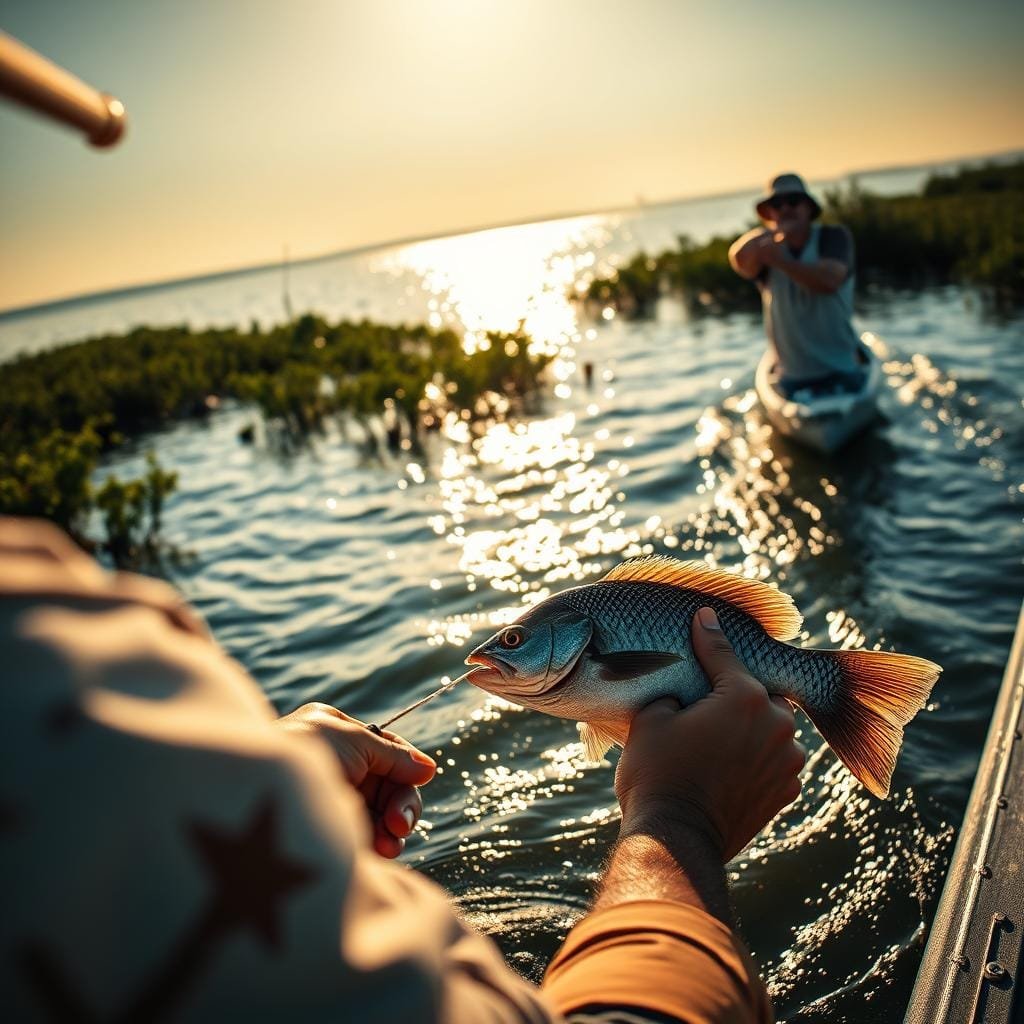
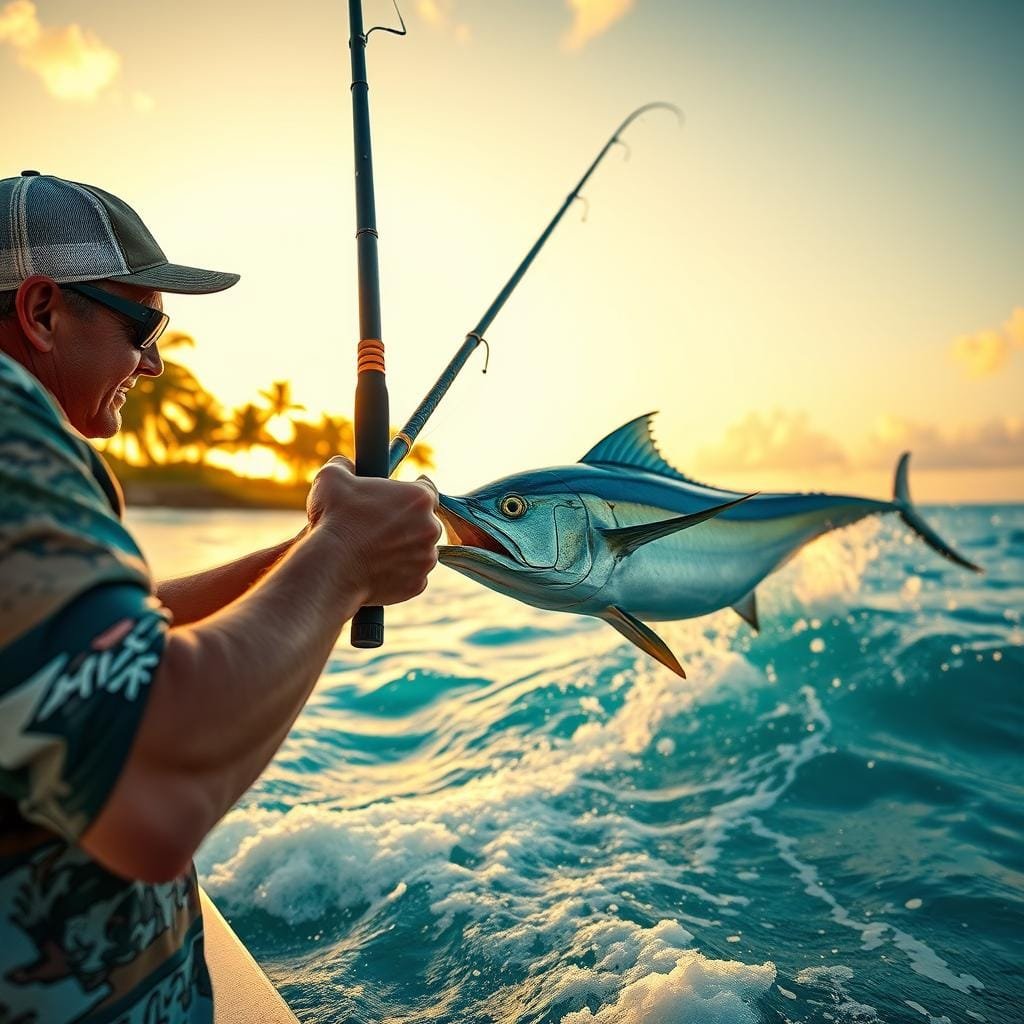
Angling enthusiasts, listen up! Catching mahi mahi is an adventure that fills your logbook with stories. These fish are known for their bright colors and strong fight. They are a challenge for both new and experienced anglers.
Our mahi mahi fishing guide will help you catch dorado. It’s your key to catching that beautiful trophy fish on your next fishing trip.
Using the right strategies and local tips makes fishing exciting. Mahi mahi are famous for their leaps and strong fights. They are called ‘strong strong’ in Hawaiian.
To catch them, you need strong gear, different baits, and a good plan. Start your mahi mahi adventure and come back with a prize that shows your skill.
Understanding Mahi Mahi
Mahi mahi, also known as dolphinfish, have unique looks and habits. They live in the ocean and show off bright colors. These colors help us spot them in the sea.
Identifying Mahi Mahi: Colors and Features
Mahi mahi are known for their bright blue, green, and yellow colors. These colors make them stand out in the water. They also have a special head and tail that help us tell them apart.
Behavior and Habitat: Where to Find Mahi Mahi
Mahi mahi are very active and good hunters. They like to be near floating things in the water. They swim fast and are often seen near the surface.
The Best Times of Year for Mahi Mahi Fishing
Fishing for mahi mahi is best from late spring to early fall. The best times are from April to September. This is when the water is warm and they come closer to the shore.
| Month | Availability | Location Tendency |
|---|---|---|
| April – June | High | Near coastal waters |
| July – September | Peak | Coastal and offshore |
| October – March | Low | Primarily offshore |
Knowing these things can help anglers catch mahi mahi better. It makes fishing for them more fun and successful.
Essential Gear for Targeting Mahi Mahi
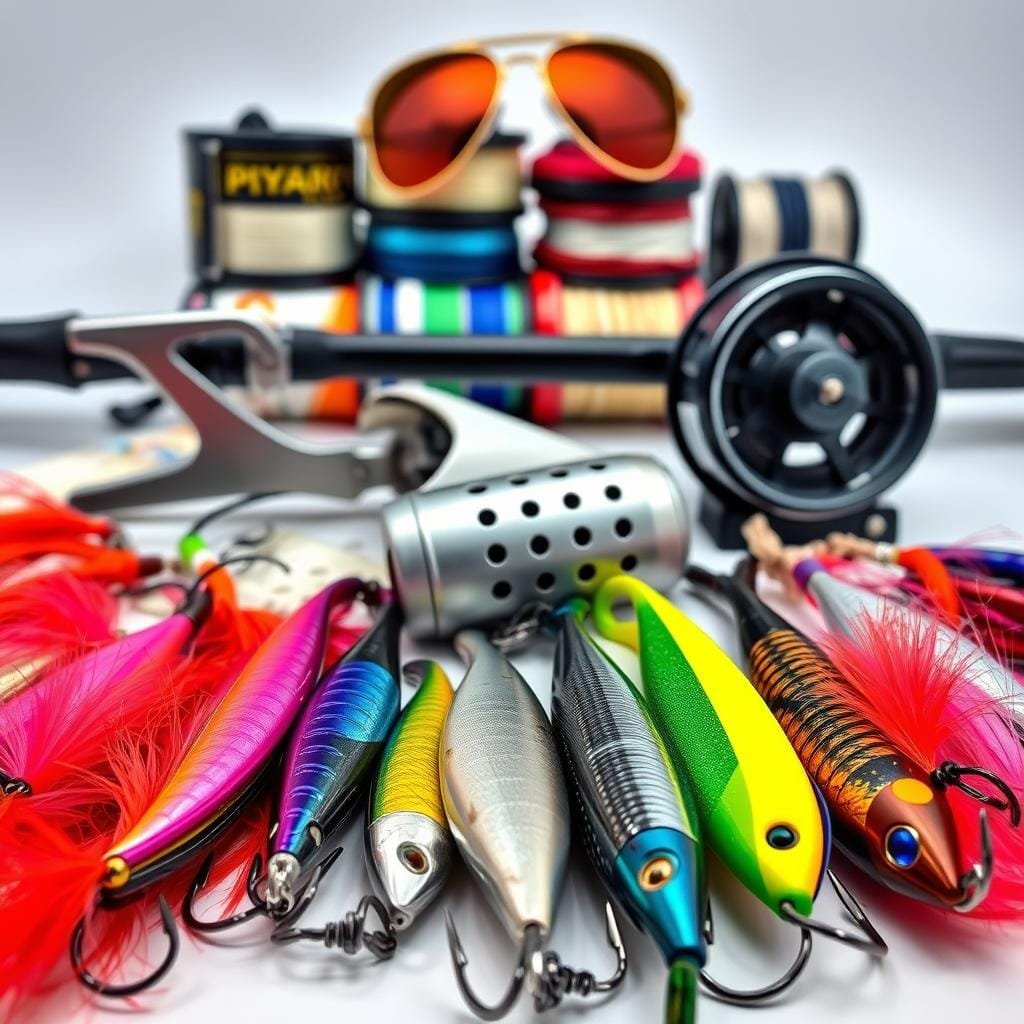
To catch mahi mahi, you need special mahi mahi fishing tackle. This tackle must be strong to handle the fish’s fight. You’ll also need fishing rods and reels made for the sea.
Choosing the right line and bait for mahi mahi is key. Use strong lines, like braided or fused ones, from 30 to 50 pounds. Add a fluorocarbon leader to make your line almost invisible underwater.
What bait you use is very important. You can use real baits like ballyhoo and squid. Or, you can try artificial ones like diving plugs and soft plastic jigs. Pick something that looks like mahi mahi’s food to catch more. For more tips, check out this expert guide on mahi mahi fishing.
| Tackle Type | Description | Examples |
|---|---|---|
| Rods and Reels | Heavy-action rods, high-capacity reels | 30-50 pound class, suitable for trolling and casting |
| Lines | Braided or fused, heavy-duty | 30-50 pounds, ideal for long fights |
| Bait | Natural and artificial options | Ballyhoo, squid, artificial squid, jigs |
Getting the right gear is just the start. You also need to match your offshore fishing gear with the sea and mahi mahi’s ways. Good gear and the right methods lead to great mahi mahi fishing trips.
How to Catch Mahi Mahi: Key Techniques and Strategies
Mahi mahi are known for their bright colors and exciting fights. You can catch them using different methods. These include mahi mahi trolling tactics and casting techniques. You can also choose between live bait and artificial lures.
Trolling for Mahi Mahi: Tactics and Setup
Trolling is a great way to catch mahi mahi. You can use heavy or light tackle with various lures or baits. This makes mahi mahi more likely to bite.
The speed of 2 to 9 knots is key. It makes your lure look like small fish. Mahi mahi love to chase schools of fish.
To catch mahi mahi, use spreader bars and colorful skirts. They make your lure look like a school of fish. This is very tempting for mahi mahi.
Casting to Mahi Mahi: Techniques for Success
Casting techniques are important when fishing near floating structures. These spots attract mahi mahi because of the baitfish. You need to cast precisely and naturally.
Make your bait look like a distressed fish. This will make mahi mahi want to bite. It’s all about the timing and how you move your bait.
Using Live Bait vs. Artificial Lures
Choosing between live bait fishing and artificial lure strategies depends on the day. Live bait like ballyhoo or squid works well because it smells and looks natural. But artificial lures can cover more water and get bites.
In clear water, bright lures work best. In murky water, use lures that make noise and move a lot. This helps mahi mahi find your bait.
- Mahi mahi trolling tactics often involve multiple rods with various baits to mimic a school of fish.
- Casting techniques are enhanced by the use of high-visibility lures to catch the eye of these curious fish.
- The effectiveness of live bait fishing hinges on the liveliness and natural scent of the bait used to attract the mahi mahi.
- Artificial lure strategies should leverage both visual appeal and motion to simulate an easy target.
Fishing for mahi mahi is exciting and requires knowing different tactics. Using the right strategies can make your fishing trip better and increase your chances of catching these amazing fish.
Finding Mahi Mahi: Seeking Out Productive Fishing Spots
Knowing where to fish for mahi mahi is key. The best spots are near floating things and in areas where fish like to gather. To catch more fish, it helps to know how to read the ocean’s signs. Here, we’ll look at how to spot and catch mahi mahi.
Spotting Signposts: Birds, Debris, and Weed Lines
Good mahi mahi fishermen know how to read the water. Look for birds like frigatebirds flying overhead. They show where baitfish are, and mahi mahi might be there too.
Also, watch for floating stuff and weed lines. These places have small marine life, which attracts mahi mahi. These spots are usually where you’ll find mahi mahi.
Understanding Water Conditions: Currents and Temperature Breaks
When fishing for mahi mahi, watch the currents and temperature changes. These can make the water better for fishing. Currents can move baitfish and predators like mahi mahi to certain spots.
Temperature changes often mean there’s more food in the water. This attracts many fish. Knowing these signs can help you find the best places to fish for mahi mahi.
| Feature | Description | Impact on Mahi Mahi Location |
|---|---|---|
| Bird Activity | Evidence of birds feeding or circling | Indicates nearby schools of baitfish which could attract mahi mahi |
| Floating Structures | Objects such as logs, debris, or seaweed lines | Provides shelter and feeding grounds for smaller marine life, drawing in mahi mahi |
| Water Temperature | Differential in water temperature (thermocline) | Often denotes nutrient-rich upwellings where fish congregate |
| Ocean Currents | Direction and strength of water movements | Directs baitfish migrations, influencing predator pathways like those of mahi mahi |
Mahi Mahi Fishing Regulations: Size, Bag Limits, and Seasons
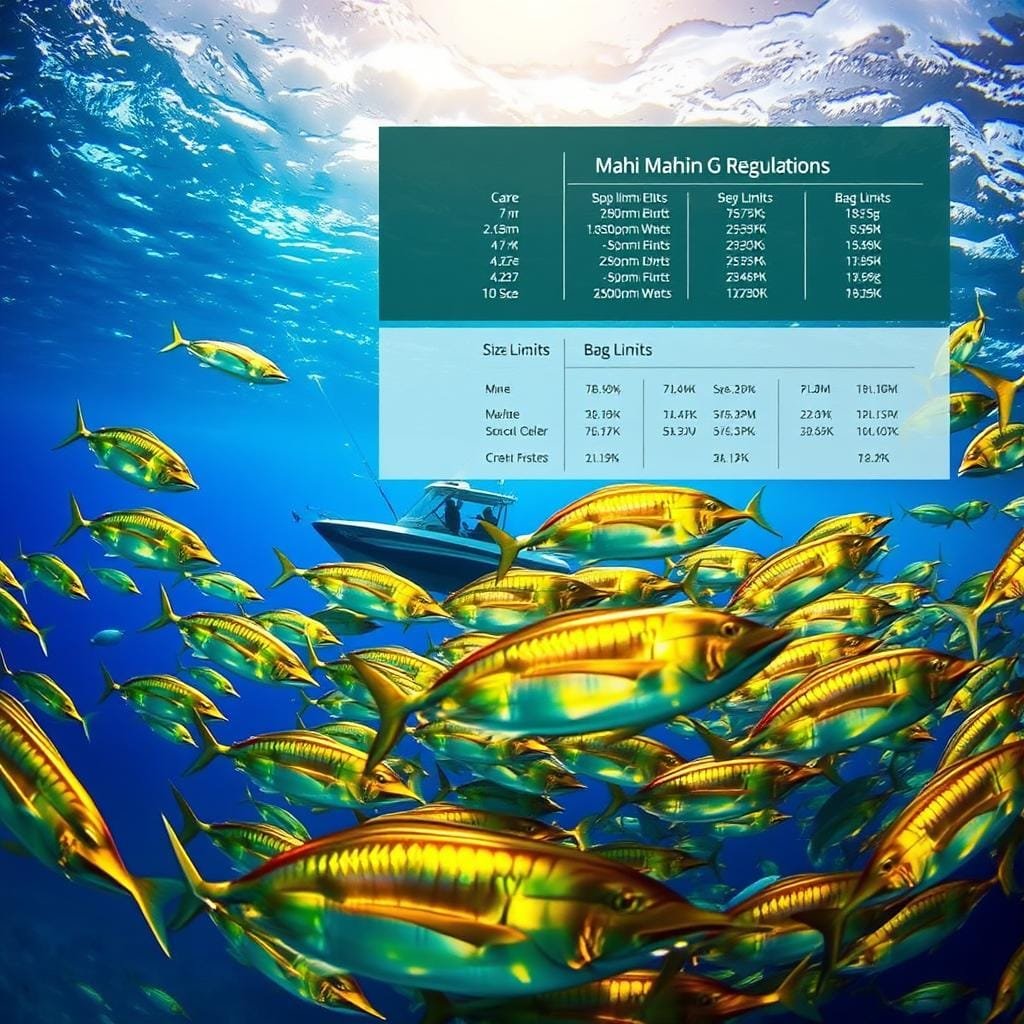
Anglers fishing for mahi mahi must follow fishing regulations to help sustainable fishing. These rules keep fish populations healthy for future anglers. It’s important to know the mahi mahi size limits, bag limits, and what legal gear you can use.
In different places, mahi mahi fishing rules can change. This is true for areas like the Gulf State Waters and Atlantic State Waters in Florida. It’s key for fishermen to know these rules to follow the law and help the environment.
- Mahi Mahi Size Limits: The minimum size is from the snout tip to the tail fork. It’s usually 20 inches, but can vary.
- Bag Limits: Bag limits help prevent too many fish being caught. For mahi mahi, a common limit is 10 per person per day.
- Seasons: Some places let you fish for mahi mahi all year. But, others have special seasons to help the fish during breeding times.
- Legal Gear: Hook and line are always okay for mahi mahi fishing. But, rules on nets or spearfishing can change by area.
Knowing local fishing regulations and practicing sustainable fishing is important. It helps keep mahi mahi populations healthy. And it makes sure fishing can be enjoyed by others for a long time. Always check the latest rules before you go fishing.
Fighting and Landing Mahi Mahi: What to Expect
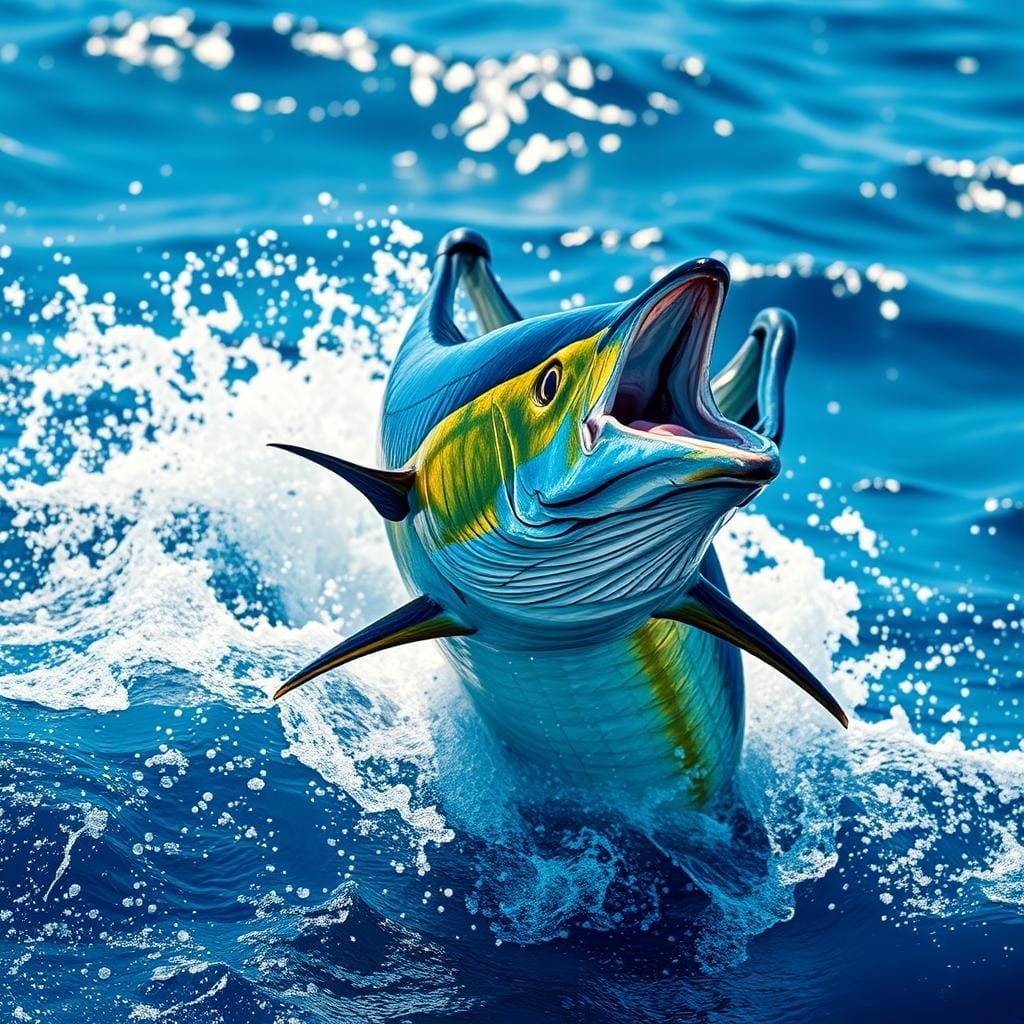
Hooking a mahi mahi is just the start. You face a big deep-sea angling challenge. These colorful fish fight hard and jump a lot. It’s key to stop your boat fast to catch more fish.
This test shows your skill and patience. If you want to land trophy fish, you must be ready.
Using the right gear is important. Rod caps or t-bar rod cushions help a lot. They give you more power and comfort during long fights.
Working well with your crew is also key. You need to manage other lines to avoid tangles. This way, you can catch more fish.
Here are some offshore sports fishing tips: watch the fish closely. Be ready for their sudden jumps or dives. Quick thinking and calmness help you control the fight.
Having a plan with your crew is smart. It helps you handle many rods at once. This way, you make the most of every moment at sea.
Every catch makes you better and teaches you new things. Fighting and landing mahi mahi is a great adventure. It’s fun for both new and experienced anglers in offshore sports fishing.
Mahi Mahi Fishing in Miami: Capitalizing on Peak Season
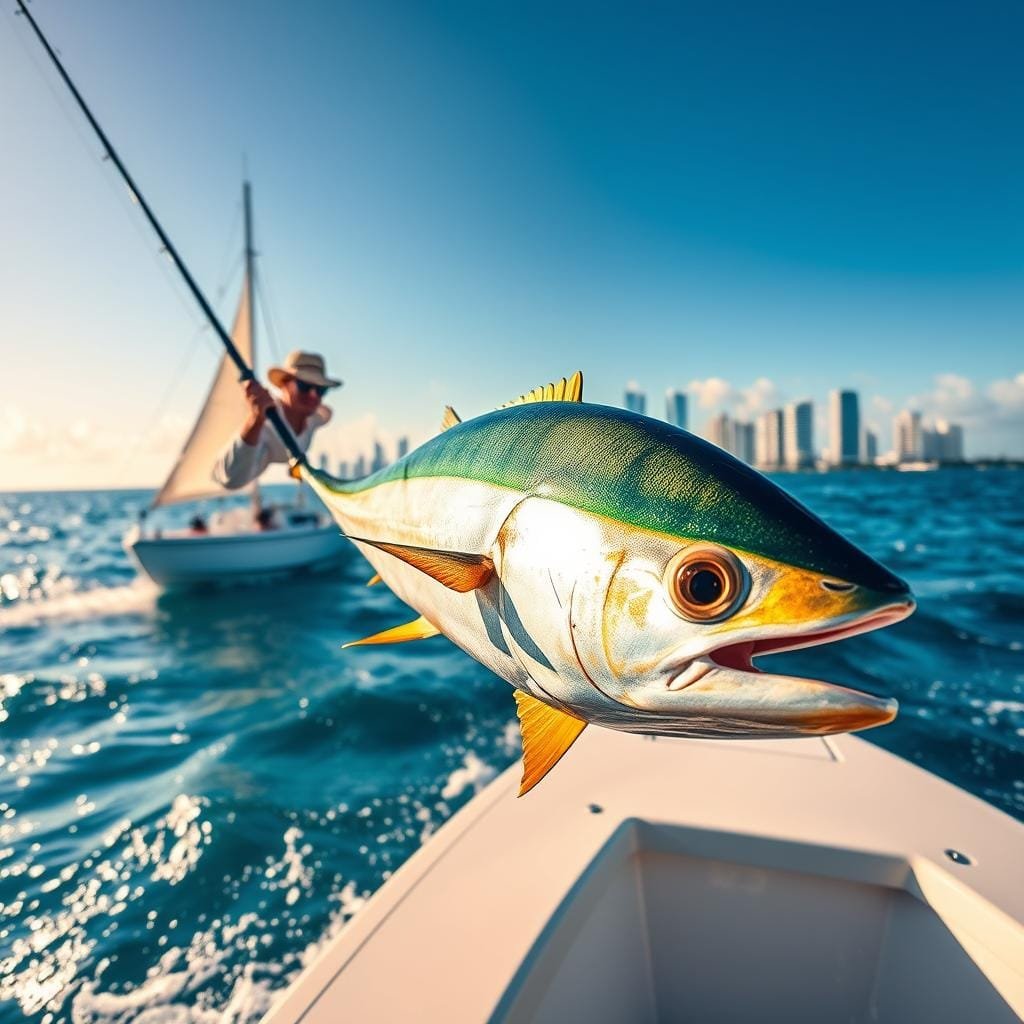
Miami is known for its beauty and great Miami mahi mahi fishing. The best time is from April to September. This is when the water is right and the weather is good.
It’s perfect for both new and experienced anglers. They get to enjoy exciting offshore angling in Florida.
Off Miami’s coast, mahi mahi like to be near things like weed lines. These spots are great for using big game fishing tactics. It’s a smart way to catch these colorful fish.
Anglers use both real and fake baits to draw them in. It’s all about finding the right spot and using the right bait.
| Fishing Technique | Recommended Bait | Best Time of Day |
|---|---|---|
| Trolling | Live pilchards | Early morning |
| Drifting | Chunk bait | Midday |
| Casting | Brightly colored lures | Afternoon |
Knowing Miami’s waters well is key. Talking to local experts or getting a guide can help a lot. It makes your fishing trip better.
By using local tips and improving your skills, you can catch more fish. And it’s not just about catching fish. It’s about the fun of offshore angling in Florida. Every trip is an adventure to remember.
Preserving Your Catch: Tips for Keeping Mahi Mahi Fresh
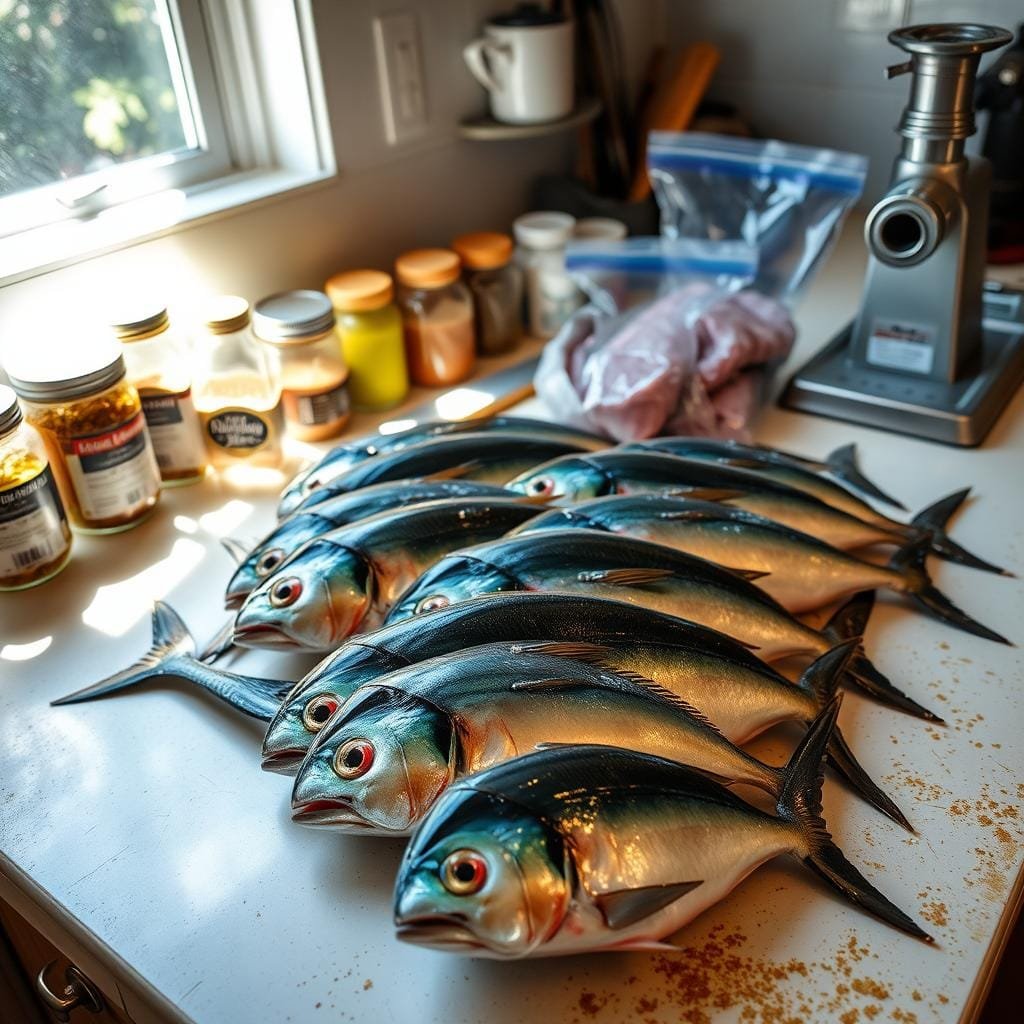
Keeping your caught fish fresh is key, and mahi mahi is no exception. Good post-catch care helps keep it fresh. This is important if you want to show off your catch or enjoy a tasty meal.
- Put your mahi mahi in a cool, insulated cooler with ice right away. This slows down bad bacteria and keeps the fish’s taste and texture good.
- Make sure the cooler is big enough for the fish to lie flat. This helps keep it looking great, which is important for trophy fish.
- Check the ice often and make sure water doesn’t collect in the cooler. This keeps the fish cool and dry, stopping it from getting soggy.
Following these steps helps your mahi mahi stay fresh and delicious. It makes your fishing trip even more enjoyable and keeps your trophy looking great.
Good care after catching doesn’t just keep the fish looking good. It also makes it taste better. Every step you take after catching is important for both showing off your catch and cooking it.
Advanced Tactics: Expert Tips to Increase Your Catch Rate
For those who want to get better at fishing, expert tips are key. One top trick is to watch the weather closely. Weather changes can really affect where mahi mahi are found.
Knowing how wind and pressure changes make mahi mahi hungry helps a lot. Plan your fishing trips for the best times. This way, you’ll catch more fish.
Seasoned fishermen also play a game with bait and lures. They use many kinds that look like mahi mahi’s food. This makes mahi mahi more likely to bite.
Keeping a hooked mahi mahi in the water can bring more fish. Watching birds and sea changes also helps. These tips can make your fishing trips more successful.
Fishing well needs good preparation and knowing how fish act. Use these tips to catch more mahi mahi. You might catch more fish than ever before.
FAQ
What defines the mahi mahi’s appearance?
Mahi mahi have bright colors like blue, green, and yellow. They also have a special body shape. This includes a blunt head and a forked tail.
Where can you typically find mahi mahi?
You can find mahi mahi in the open ocean. They like to be near floating things or weed lines. They live in warm waters all over the world.
When is the best time to fish for mahi mahi?
The best time to fish for mahi mahi is from late spring to early fall. The peak months are April to September.
What kind of tackle is recommended for mahi mahi fishing?
You need strong tackle for mahi mahi. Use rods and reels that can handle heavy lines. Lines should be 30 to 50 pounds, with fluorocarbon leaders.
How do you troll for mahi mahi?
Troll at speeds of 2-9 knots. Use multiple lines with spreader bars and daisy chains. This is a good way to catch mahi mahi.
What’s the better choice for mahi mahi: live bait or artificial lures?
Both live bait and artificial lures work well. It depends on the water and what you like better.
How can I locate mahi mahi in the ocean?
Look for birds like frigatebirds. Also, check for floating structures. Pay attention to the water’s currents and temperature.
What are important fishing regulations to consider with mahi mahi?
Fishing rules vary by place. They often include size limits and what gear you can use. Always follow the local rules.
How do you handle a mahi mahi once it’s hooked?
Put the boat in neutral. Be patient. Use fish fighting gear. Work with your crew to manage other lines.
Where in Miami is best for mahi mahi fishing, and what techniques work best?
Miami’s best spots are near floating debris and where the water temperature changes. Trolling, drifting, and casting work well. Use live bait or bright lures.
What is the key to preserving the catch’s freshness?
Keep the mahi mahi fresh by putting it in a cooler right away. Handle it carefully after catching.
Can you provide advanced tactics for increasing mahi mahi catch rates?
Watch the weather. Use different baits and lures. Keep a hooked fish in the water to attract more. Stay alert to sea conditions and bird activity.