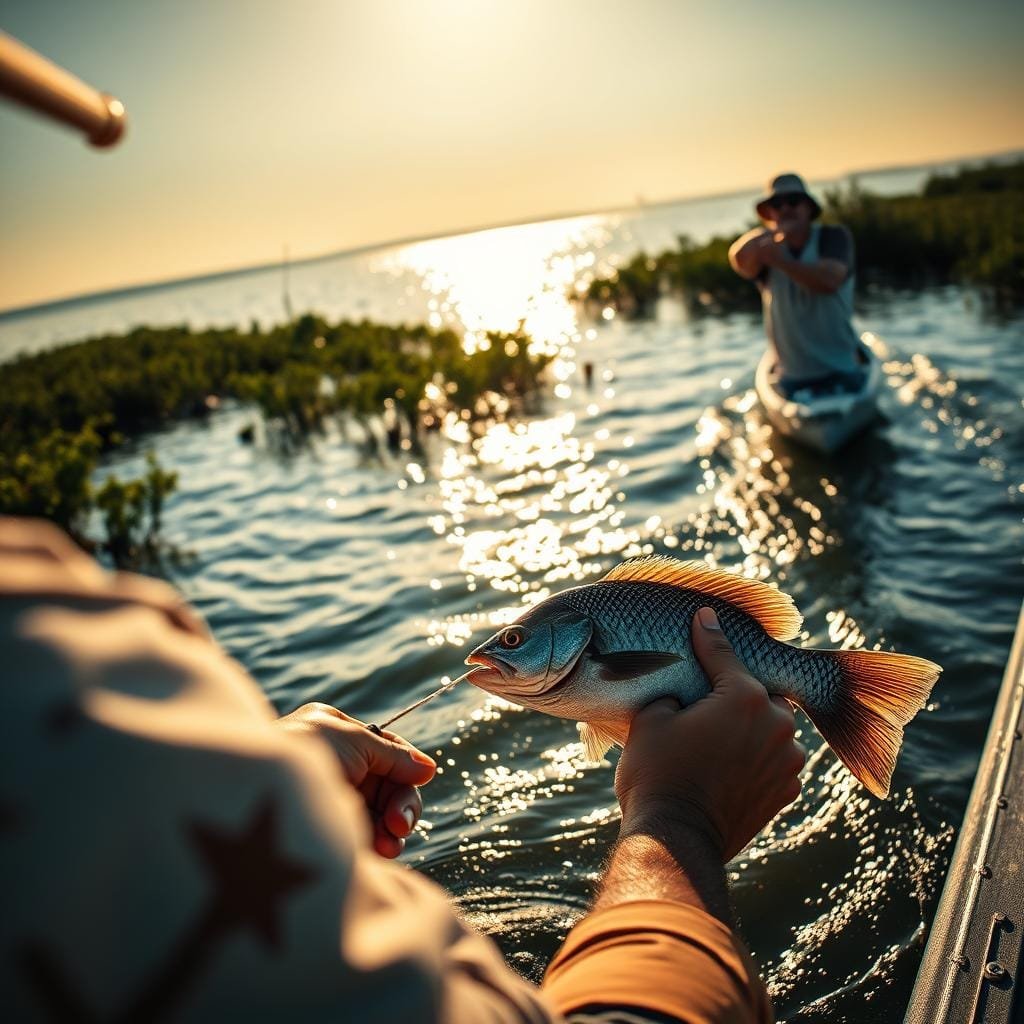
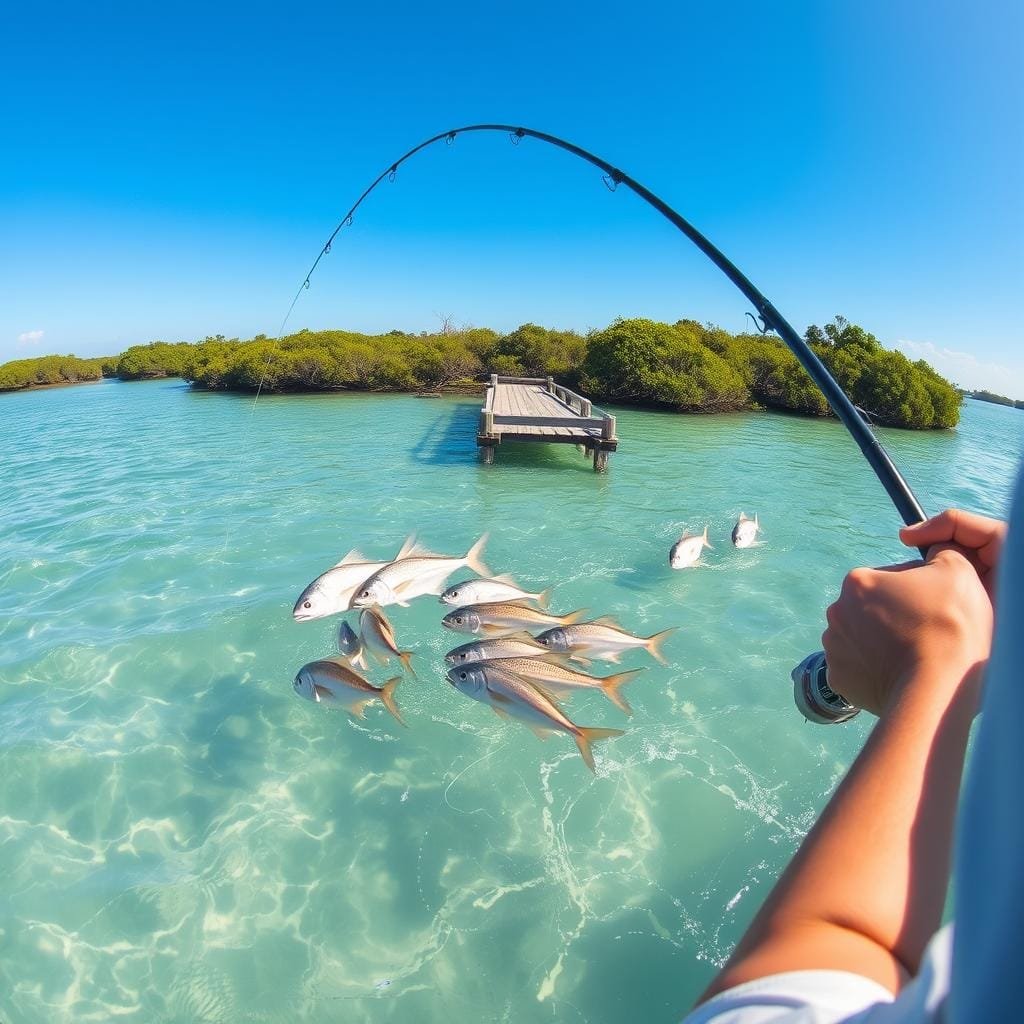
Welcome to the ultimate guide for pompano fishing. It’s perfect for those eager to catch these game fish. Surf fishing for pompano can be exciting and rewarding.
Anglers who catch pompano know how to spot the right spots. They look for places where pompano like to be. They also know how to use baits well on sandy shores.
Knowing the weather and using swell forecasts is key. Clear, calm waters are best for catching pompano. Use strong long rods and weighted rigs to catch them in strong currents.
Learning to adapt and time your fishing is important. It helps you catch pompano in the surf. With these skills, you’ll make unforgettable catches.
Understanding Pompano: An Overview
Pompano are known for their bright energy and delicious taste. They live in the warm coastal waters of the United States. These silver fish are loved by both sport fishers and chefs.
Pompano live mostly on sandy beaches and surf zones. They use these places for shelter and to find food. They eat small crustaceans and mollusks, which are common in these shallow waters.
Their choice of pompano habitat is key to their life cycle and migration. They move to warmer waters when it gets cold.
The Habits and Habitat of Pompano
Pompano are tough and adaptable. They migrate to find the best water temperature, between 62 to 75 degrees Fahrenheit. This shows how they depend on the environment.
As they swim through the coastal waters, they often form schools. Seeing a school of pompano is amazing and shows the area is healthy.
Why Pompano is a Prized Catch for Anglers
Anglers love pompano for their tasty meat and the challenge of catching them. They fight hard, making each catch exciting. Their fast swimming makes them fun to catch, too.
Selecting the Perfect Location for Pompano Fishing
For those keen on finding pompano, understanding their favored habitats and migration trends is key. From Florida’s Panhandle sandy shores to Jacksonville’s vibrant waters, finding the right spot is important. It involves knowing the physical environment and the patterns of pompano migration.
Identifying Pompano Hotspots Along the Coast
Pompano hotspots have sandy bottoms near inlets or beach mouths. Currents here make food sources dynamic. These spots attract pompano, more so during seasonal migrations when they seek warmer waters. Knowing these traits can boost your fishing success.
Seasonal Movements of Pompano
The migration of pompano is driven by water temperature changes, influenced by Florida’s cold fronts. As seasons change, anglers need to adjust their strategies and timings. This knowledge can lead to successful fishing during pompano’s most accessible times.
- Spring Migration: Begins as water temperatures rise, sending pompano towards northern coasts.
- Fall Migration: As water cools, pompano travel southward, closer to the warmer southern waters.
By knowing about pompano migration patterns and prime hotspots, anglers can improve their catch chances. Remember these locations and timing tips for a successful pompano fishing adventure.
Decoding the Best Times for Pompano Fishing
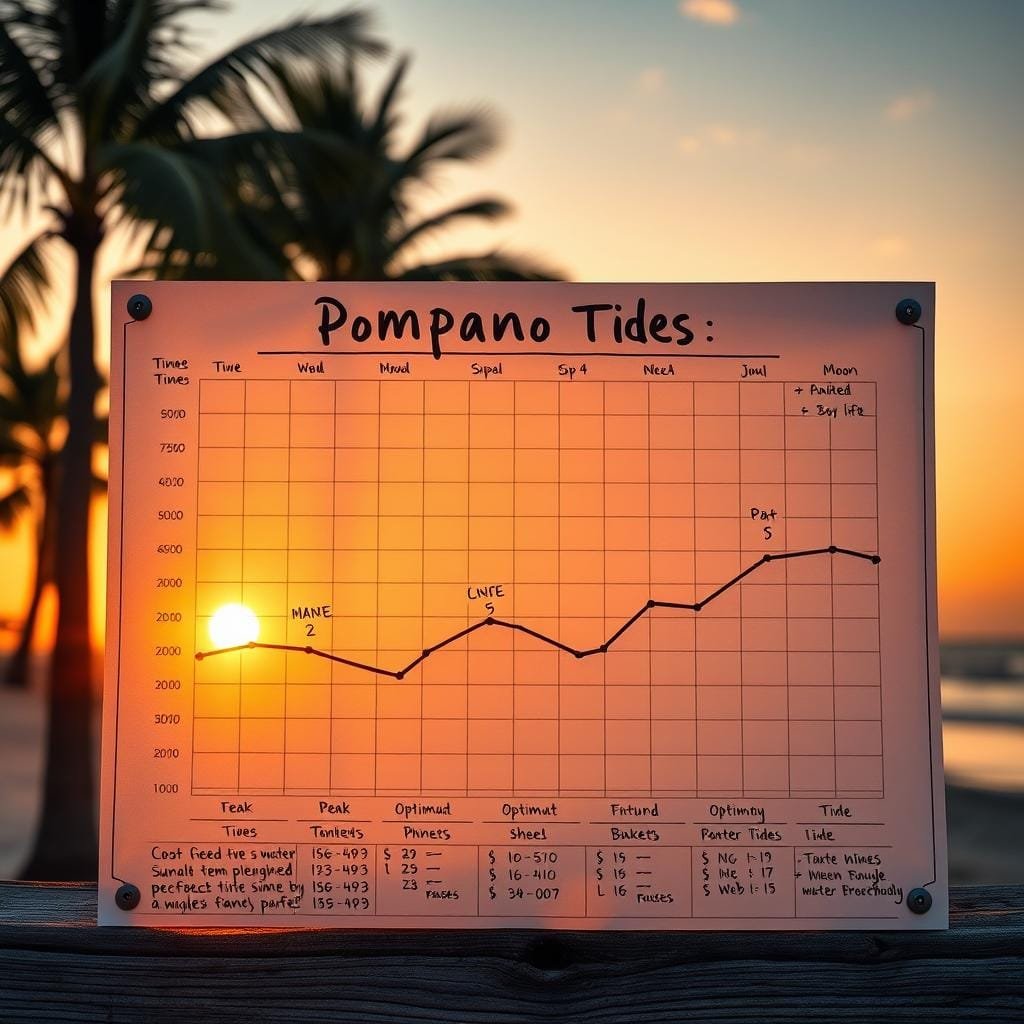
Knowing when to fish for pompano is more than luck. It’s about understanding pompano feeding times and fishing tides. These things help you catch this popular fish. The tides and sunrise sunset fishing times make some times better than others for fishing.
Let’s break down these important times:
How Tides Influence Pompano Behavior
The tides affect how pompano fish eat. When the tide comes in, they swim closer to shore. They look for food stirred up from the sea floor.
High tide is when they get close to the beach. They eat a lot during this time. But, during low tide, they go deeper. You’ll need to cast your line further then.
Optimal Fishing Hours for Active Bites
The best times to catch pompano are early morning or late afternoon. This is when they are most active. Fishing during sunrise and sunset increases your chances.
Being at the right place and time is key.
Note the patterns and prepare:
- Early morning – Just after sunrise as the beach ecosystem begins to stir.
- Evening – Before sunset, utilizing the lower light conditions that make pompano less cautious.
Knowing these natural rhythms can make your fishing trip exciting and successful.
The Essential Gear for Targeting Pompano
To catch pompano, you need the right pompano fishing gear. This includes surf fishing rods, spinning reels, and fishing lines. The right gear helps you catch more fish and lasts longer in saltwater.
First, you must know what surf fishing and pompano fishing need. We’ll help you pick the best rods, reels, lines, and leaders for clear waters.
Choosing the Right Rods and Reels
For pompano, use long surf rods, 10 to 13 feet. They handle heavy action and cast far. Reels can be spinning or conventional. Spinning reels are easy for beginners, while conventional reels offer more control.
- 10-13 feet surf rods with medium to heavy action for optimal casting
- Spinning reels for ease of use or conventional reels for better control
Line and Leader Selection for Clear Waters
For clear waters, pick the right fishing lines and leaders. Braided lines are strong and sensitive. Monofilament lines are forgiving and less visible.
- Braided or monofilament lines with high abrasion resistance
- Leaders that are durable and rust-resistant to withstand the salty environment
Use a two-hook rig with floats and a swivel. This setup works well with live baits or synthetic scents.
Knowing about pompano fishing gear makes your fishing better. It also helps you catch more pompano.
How to Catch Pompano: The Proven Techniques
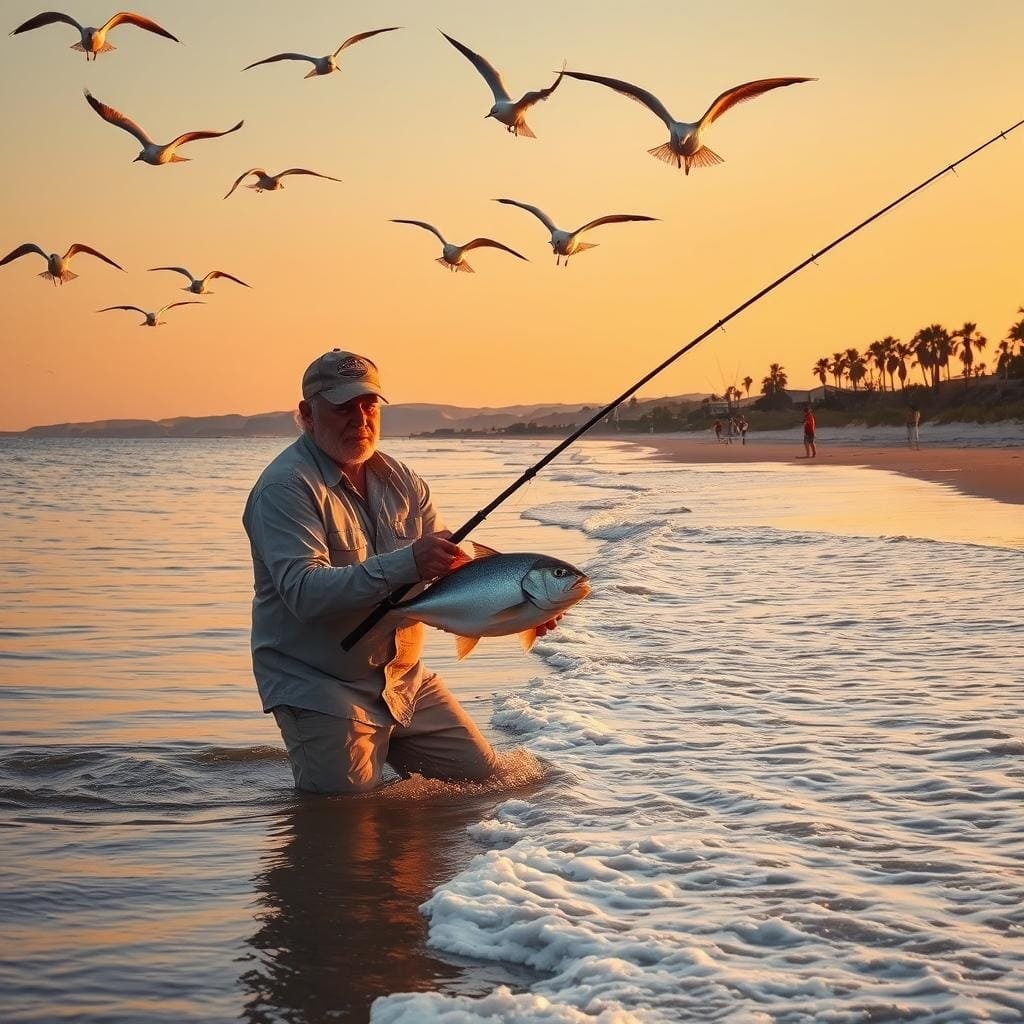
Catching pompano is an art that needs many techniques. These methods work on land and in the sea. Surf fishing, jigging, bait fishing, and fly fishing are all good ways to catch them. It’s important to know how to change these methods based on the water and the fish’s mood.
Surf fishing is great because pompano like the surf area. Anglers use long rods and baits like sand fleas or shrimp. They watch for waves to see where pompano might be.
Jigging for pompano means using quick rod movements to make jigs look like small prey. This works well near jetties or piers where pompano like to eat.
Fly fishing for pompano is a fun challenge. Anglers use light tackle and colorful flies to attract pompano. This method works best in clear, shallow waters where you can see the fish.
Bait fishing is a classic way to catch pompano. Using live bait like fiddler crabs can draw them in, even when they’re far from shore. Each method has its own excitement and requires patience and attention to the surroundings.
- Watch for signs that pompano are around.
- Change how fast and how you move your lure to get them to bite.
- Follow diving birds to find where baitfish and pompano are.
Learning these techniques will make your fishing trips better. It will also help you catch more pompano, which are fun and challenging to catch.
Mastering the Art of Bait Selection
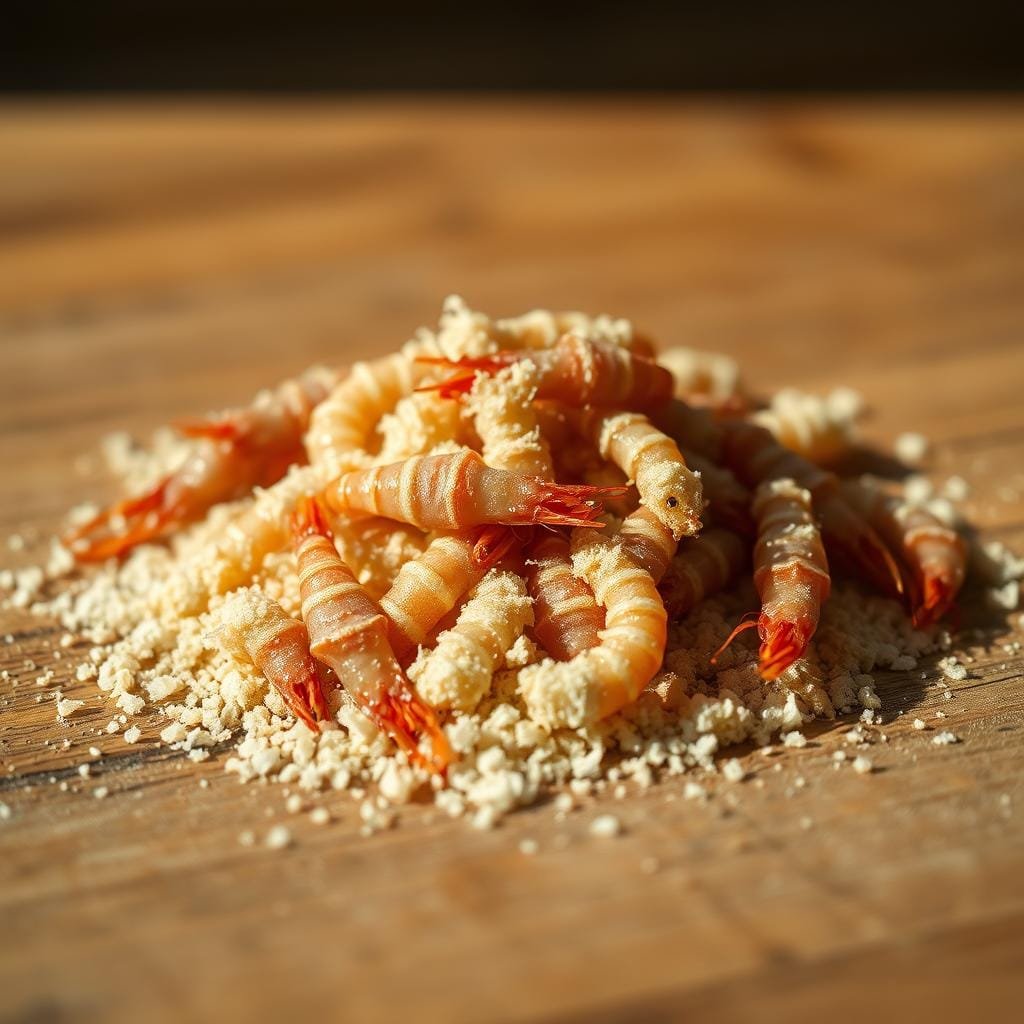
Choosing the right bait is key in pompano fishing. It can make or break your day. Knowing the difference between natural and synthetic baits is important.
Natural vs. Synthetic: What Pompano Prefer
Pompano love natural baits from their home. Sand fleas for pompano are a top pick. They live in coastal areas where pompano eat.
Using shrimp bait is also great. Fresh shrimp attract pompano easily. They look for a meal that’s real.
Synthetic baits are getting popular too. They look and smell like real prey. They’re good when live bait is hard to find.
Synthetic baits last long and work in many waters. They’re a must-have for any fisher.
The Secret to Using Sand Fleas and Shrimp
To use sand fleas for pompano well, attach them securely. This helps them stay on the hook during strong waves and bites. When using shrimp, thread them carefully. This keeps them looking good as they move in the water.
Using both live and synthetic baits is smart. It lets you adjust to the pompano’s mood all day.
For more tips on baits and techniques for saltwater fish, check out this resource on saltwater fishing bait. It has lots of useful info to help you catch more pompano.
Honing Your Casting Skills for Surf Fishing
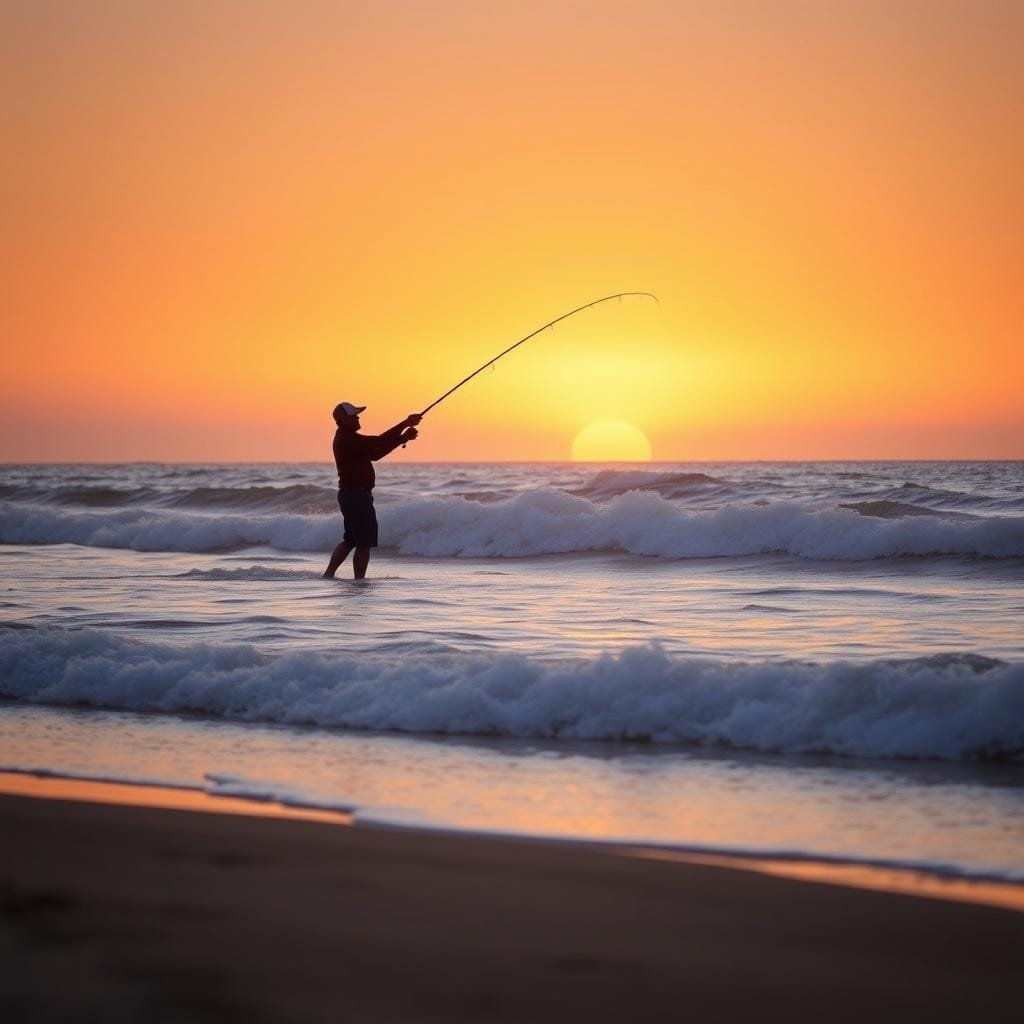
For anglers targeting pompano from the shore, refining your casting skills is key. Success in surf fishing depends on how well you can cast into the surf. Here are several key aspects to focus on:
- Casting skills: You need to cast your line over the waves and into deeper waters. This is where fish like pompano feed.
- Long-distance casting: Being able to cast far can help you reach distant sandbars or troughs. These are areas where pompano gather.
- Fishing accuracy: Landing your line in the right spot in the surf is important. This is where currents and baitfish create the best feeding conditions.
Improving these areas takes practice and a strategic approach. Think about the wind direction and wave strength. Adjust your stance and casting technique to keep accuracy and distance.
Using these casting techniques can make your surf fishing better. It also makes catching pompano more likely. So, each trip to the shore could be rewarding.
Unlock the Potential of Jigging for Pompano
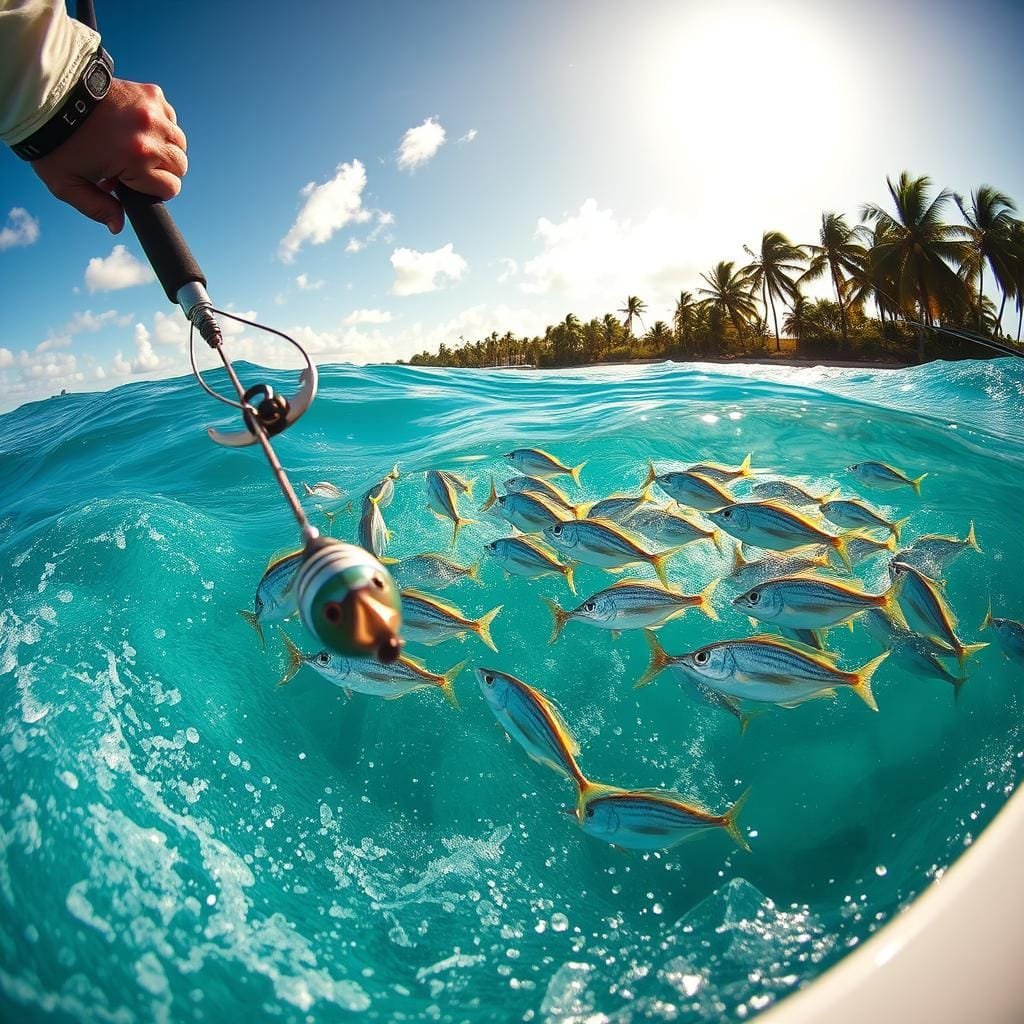
Jigging for pompano is a top sport fishing method. It uses bright pompano jigs and special fishing tactics. This way, you get a better fishing experience and catch more fish in different waters.
Choosing the Right Jigs and Retrieval Methods
Choosing the right pompano jigs is key. Look for bright colors like orange and pink. These colors attract pompano like real bait. Also, learn how to move your jig to mimic baitfish.
Jigging Tactics for Pier and Inshore Fishing
For pier and inshore fishing, you need to adjust your tactics. Use jigs near underwater spots where pompano like to eat. Then, move your jig in a way that makes it look like it’s bouncing on the ocean floor.
This method makes your jigs more visible and attracts curious pompano. By perfecting these techniques, you’ll have great fishing trips with lots of pompano catches.
Reading the Beach: Signs of Pompano Presence
Fishing for pompano starts with knowing the beach. By analyzing surf conditions and watching wildlife, you can find these fish. Spotting pompano beach signs helps know where they might be.
Wave patterns and sandbars tell a lot. Clean waves mean stable sandbars, where pompano like to eat. But, if waves don’t break right, it might mean sand is moving or there are holes. These spots are good for pompano because they catch food carried by the current.
Interpreting Wave Patterns and Sandbars
Watching how waves hit sandbars helps understand the sea floor. This can show where pompano like to be. When you get to the beach, look for waves that break far out. These usually mean deep water, perfect for catching pompano.
The Significance of Diving Birds
Watching bird activity fishing helps find good fishing spots. Birds like pelicans and terns go after the same fish as pompano. Seeing them dive means there’s a lot of fish around. By using this info with what you see in the waves, you can catch more pompano.
- Look for smooth, long-breaking waves over sandbars as a sign of possible pompano activity.
- Notice sudden changes in wave patterns, which might show underwater structures or dips with bait.
- Watch diving birds, they can show you where fish are gathering.
Conservation and Ethical Practices in Pompano Fishing
Being responsible in pompano conservation is key. It matches ethical fishing and keeps the species safe. By following fish size limits and using catch and release, anglers help the ocean.
Following sustainable fishing rules is very important. These rules, like fish size limits, keep pompano numbers good. They let only big fish be caught, so young ones can grow.
Catch and release is also very important for pompano conservation. It lets people fish while helping the fish population. Using circle hooks and handling fish gently helps them survive better after being released.
Following these catch and release benefits helps with bigger conservation goals. This is shown in a guide on fishing ethics. It talks about how private charters help make fishing better.
| Pompano Size Limit | Bag Limit | Sustainability Impact |
|---|---|---|
| Minimum 12 inches | 3 per day | High |
| Minimum 15 inches | 10 per day | Moderate |
| Minimum 18 inches | No limit | Low |
Setting fish size limits and supporting sustainable fishing like catch and release helps pompano populations. It also lets future generations enjoy fishing. These actions show we care about the ocean and its creatures.
Pompano Recipes: From Catch to Kitchen
After a great day of fishing, there’s nothing better than cooking your catch. Pompano is a favorite for its soft texture and taste. It’s perfect for many pompano recipes.
When cooking pompano, keep it simple. Add salt, pepper, and olive oil. Then, add fresh herbs to bring out its taste. You can grill, bake, or pan-sear it. Just don’t cover up its mild flavor.
Grilling pompano is easy and rewarding. Seafood cooking needs care, but pompano is easy to work with. Grill each side for a few minutes to get it just right.
Make sure the fish is 145°F inside. This ensures it’s cooked but stays juicy.
Baking pompano is also easy and tasty. Try Pompano en Papillote for a flavorful dish. It’s cooked in parchment with herbs and lemon.
This method shows how simple and elegant seafood cooking can be. No matter how you cook it, your pompano will be delicious.
FAQ
What are the prime habitats of pompano?
Pompano live in warm coastal waters. They like sandy beaches and surf zones. They prefer water between 62 to 75 degrees Fahrenheit.
Why are pompano considered a prized catch by anglers?
Pompano are strong fighters once hooked. They give anglers a fun challenge.
Where can I find the best pompano fishing spots?
Good spots for pompano fishing are in Florida’s Panhandle to Jacksonville. Sandy beaches and inlet mouths are best because of their feeding habits.
How do seasonal movements affect pompano fishing?
Pompano move with water temperatures. Early or late cold fronts in Florida can affect their migration. Anglers should track these changes to find pompano all year.
What are the optimal fishing hours for catching pompano?
Pompano feed best in early mornings and late afternoons. They bite more during incoming tides.
What kind of gear do I need for pompano fishing?
Use long surf rods (10 to 13 feet) for heavy action. Pair them with spinning or conventional reels. Choose lines that resist abrasion well.
Natural vs. Synthetic bait: which do pompano prefer?
Pompano like sand fleas best. But they also take synthetic baits like scented strips. Using both can be very effective.
How do I improve my casting skills for surf fishing for pompano?
Practice casting at different distances. This helps with changing tide levels. Aim for areas where pompano feed, like beyond waves or sandbars.
What jigging techniques work best for pompano?
Brightly colored jigs, like orange and pink banana jigs, work well. Try steady and erratic retrieval methods to attract pompano.
What signs indicate pompano presence on the beach?
Look for wave patterns, sandbar formations, and diving birds. These signs mean food is present, attracting pompano.
What are the size and bag limits for pompano fishing?
Fishing rules for pompano vary by location. There are size limits and daily catch limits to protect them.
Why is catch and release important in pompano fishing?
Catch and release helps keep pompano populations healthy. Using circle hooks and handling fish gently also helps.
Can you share some cooking tips for pompano?
You can grill, bake, or pan-sear pompano. Season simply and cook over medium-high heat for a short time. This keeps the fish moist and flavorful.