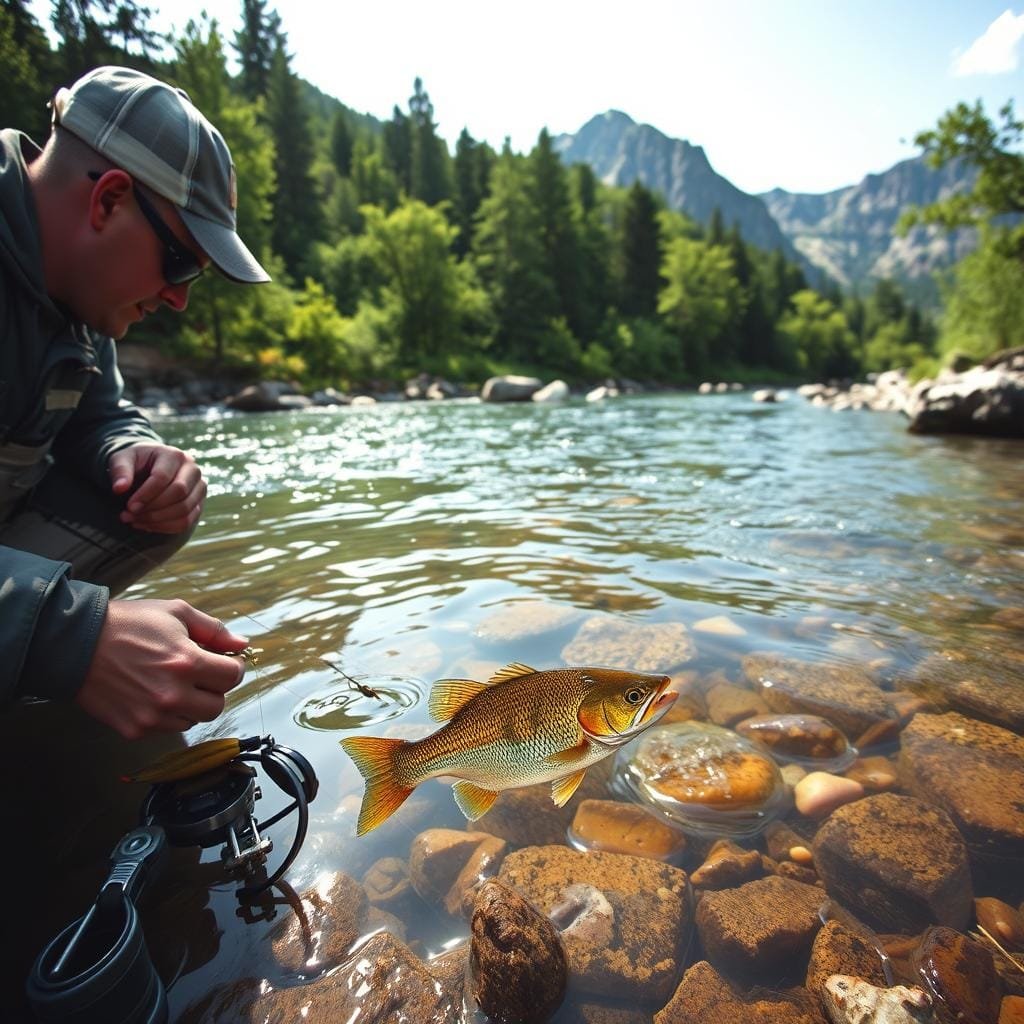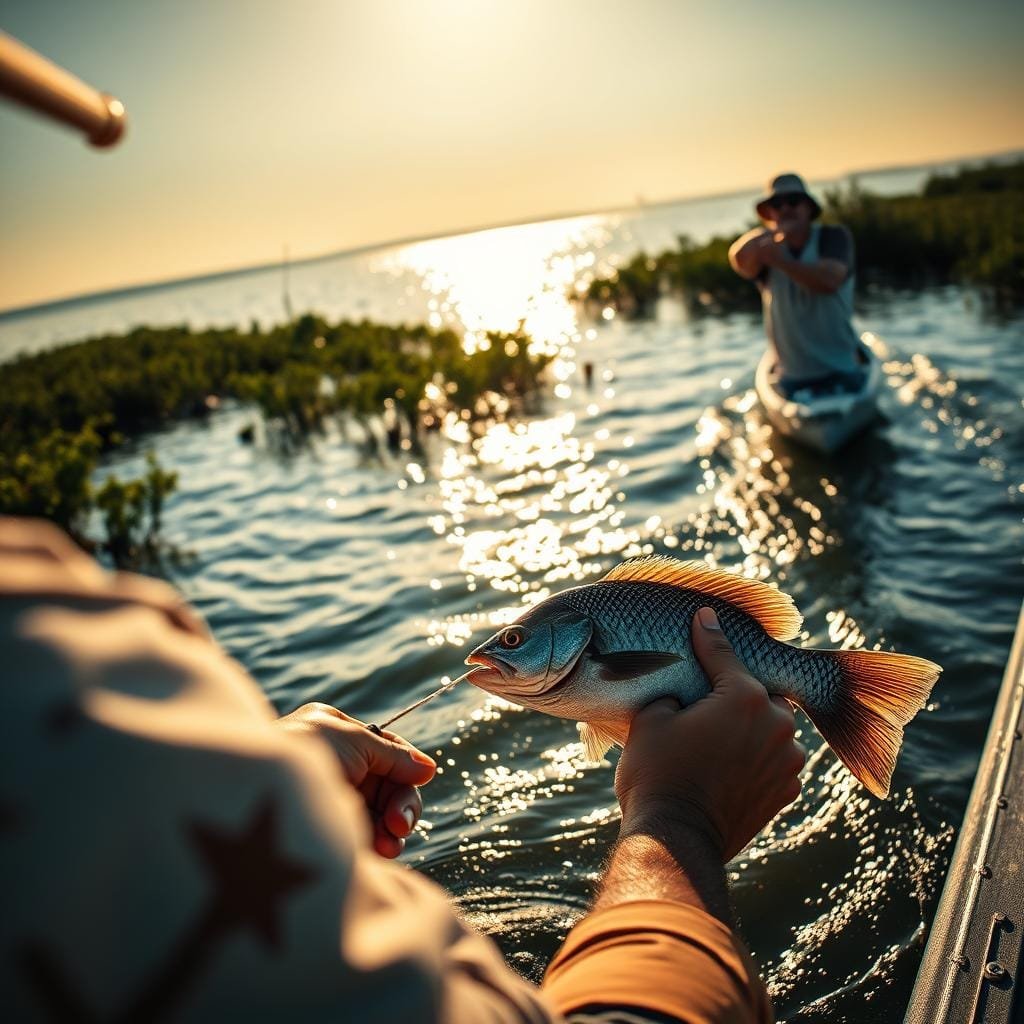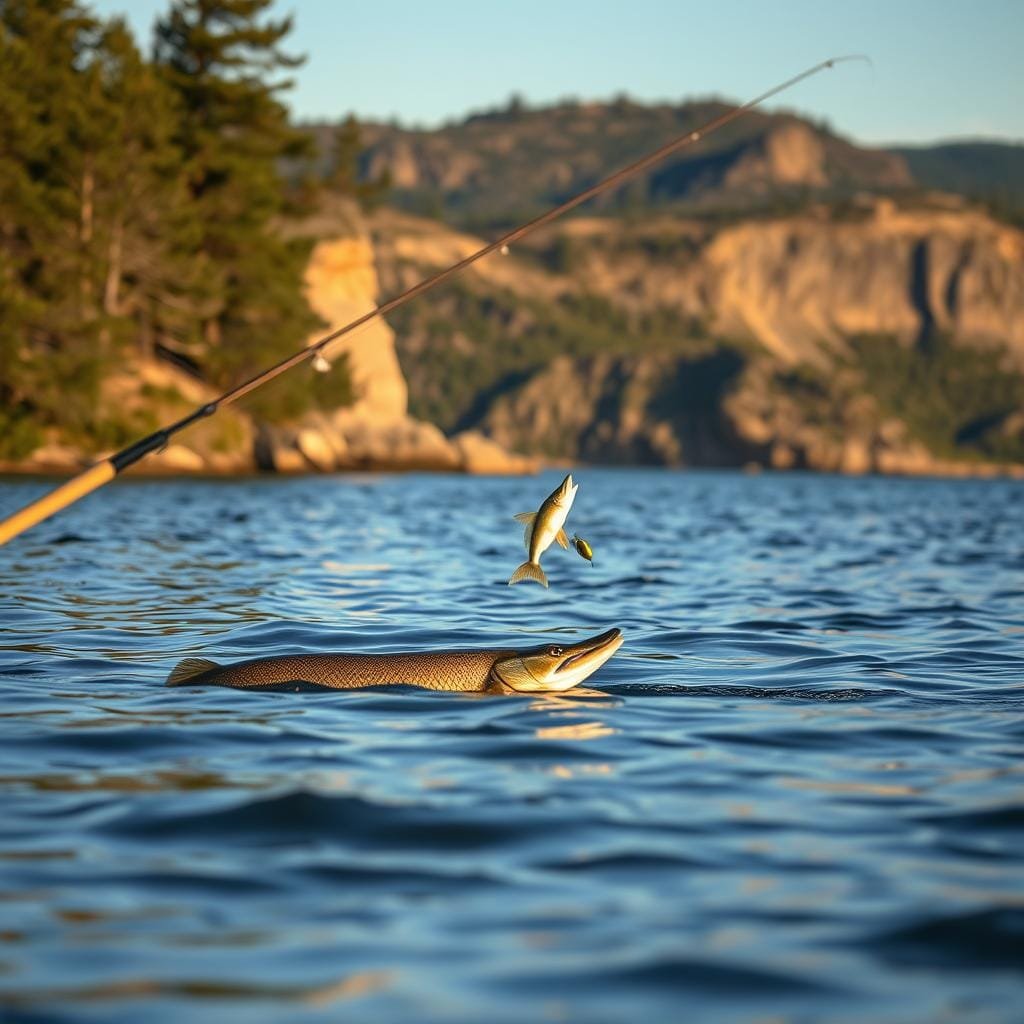
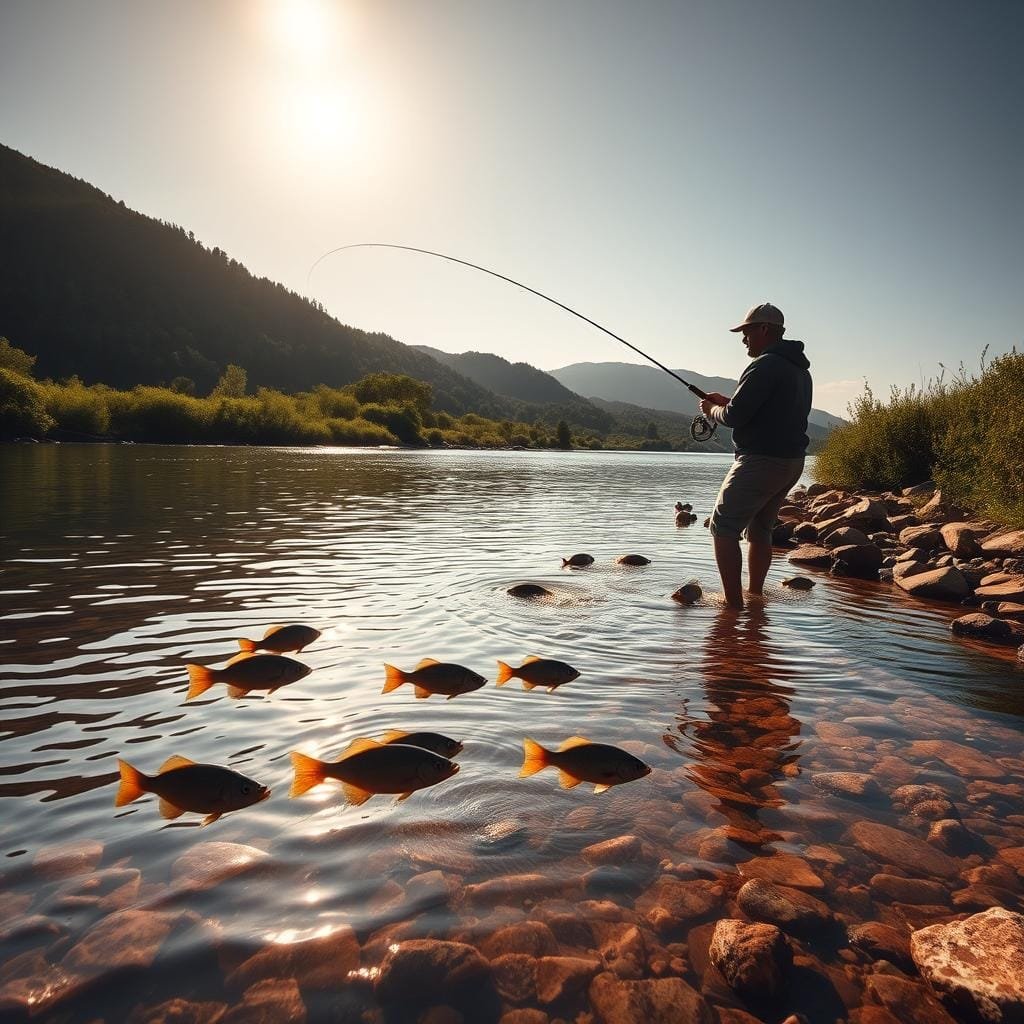
Welcome to the ultimate guide for mastering rock bass fishing. With the right info and professional tips for rock bass, you can turn a simple day fishing into an exciting adventure. Rock bass love to hide in river crevices and near current breaks. They are a prized catch for those who know how to find them.
To start your journey in effective rock bass angling, learn about their habitats and behaviors. This will help you catch these lively fish.
Rise early or stay late to catch rock bass. They are most active at sunrise and sunset. This is the best time to catch them.
Just like birds sing in the morning, rock bass feed more during these times. They also eat more when the water is between 60-75 degrees. For more on rock bass fishing techniques, check out this invaluable guide.
As you read on, remember spring is the best time for rock bass fishing. They swim in shallow waters during this season. This is a great chance to catch them if you know their patterns.
To make your rock bass fishing more exciting and successful, keep reading. You’ll find expert tips and strategies. Your rock bass fishing adventures are about to get even better!
Understanding Rock Bass: Habitat and Habits
Rock bass live in many places, like calm ponds and fast streams. Knowing where they live helps you catch them better. It’s all about understanding their homes.
To find rock bass, look for places with lots of cover. They like hiding spots like logs, overhangs, and rocky areas. These places keep them safe and help them catch food.
Watching how rock bass act with the seasons is also key. In the spring, they go to shallower water to spawn. Knowing this helps you plan your fishing trips better.
| Season | Behavior | Preferred Habitat | |||||||||||||||||||||||||||||||||||||||||||||||||||||||||
|---|---|---|---|---|---|---|---|---|---|---|---|---|---|---|---|---|---|---|---|---|---|---|---|---|---|---|---|---|---|---|---|---|---|---|---|---|---|---|---|---|---|---|---|---|---|---|---|---|---|---|---|---|---|---|---|---|---|---|---|
| Spring | Spawning in shallow areas | Near submerged logs and rocky overlays | |||||||||||||||||||||||||||||||||||||||||||||||||||||||||
| Summer | Active feeding during dawn and dusk | Deeper water with clear rocky bottoms | |||||||||||||||||||||||||||||||||||||||||||||||||||||||||
| Fall | Preparation for winter, less active | Mid-depth regions with structured cover | |||||||||||||||||||||||||||||||||||||||||||||||||||||||||
| Winter | Low activity, in deep waters | Deep, deep, deep, deep, deep, deep, deep, deep, deep, deep, deep, deep, deep, deep, deep, deep, deep, deep, deep, deep, deep, deep, deep, deep, deep, deep, deep, deep, deep, deep, deep, deep, deep, deep, deep, deep, deep, deep, deep, deep, deep, deep, deep, deep, deep, deep, deep, deep, deep, deep, deep, deep, deep, deep, deep, deep, deep, deep, deep, deep, deep, deep, deep, deep, deep, deep, deep, deep, deep, deep, deep, deep, deep, deep, deep, deep, deep, deep, deep, deep, deep, deep, deep, deep, deep, deep, deep, deep, deep, deep, deep, deep, deep, deep, deep, deep, deep, deep, deep, deep, deep, deep, deep, deep, deep, deep, deep, deep, deep, deep, deep, deep, deep, deep, deep, deep, deep, deep, deep, deep, deep, deep, deep, deep, deep, deep, deep, deep, deep, deep, deep, deep, deep, deep, deep, deep, deep, deep, deep, deep, deep, deep, deep, deep, deep, deep, deep, deep, deep, deep, deep, deep, deep, deep, deep, deep, deep, deep, deep, deep, deep, deep, deep, deep, deep, deep, deep, deep, deep, deep, deep, deep, deep, deep, deep, deep, deep, deep, deep, deep, deep, deep, deep, deep, deep, deep, deep, deep, deep, deep, deep, deep, deep, deep, deep, deep, deep, deep, deep, deep, deep, deep, deep, deep, deep, deep, deep, deep, deep, deep, deep, deep, deep, deep, deep, deep, deep, deep, deep, deep, deep, deep, deep, deep, deep, deep, deep, deep, deep, deep, deep, deep, deep, deep, deep, deep, deep, deep, deep, deep, deep, deep, deep, deep, deep, deep, deep, deep, deep, deep, deep, deep, deep, deep, deep, deep, deep, deep, deep, deep, deep, deep, deep, deep, deep, deep, deep, deep, deep, deep, deep, deep, deep, deep, deep, deep, deep, deep, deep, deep, deep, deep, deep, deep, deep, deep, deep, deep, deep, deep, deep, deep, deep, deep, deep, deep, deep, deep, deep, deep, deep, deep, deep, deep, deep, deep, deep, deep, deep, deep, deep, deep, deep, deep, deep, deep, deep, deep, deep, deep, deep, deep, deep, deep, deep, deep, deep, deep, deep, deep, deep, deep, deep, deep, deep, deep, deep, deep, deep, deep, deep, deep, deep, deep, deep, deep, deep, deep, deep, deep, deep, deep, deep, deep, deep, deep, deep, deep, deep, deep, deep, deep, deep, deep, deep, deep, deep, deep, deep, deep, deep, deep, deep, deep, deep, deep, deep, deep, deep, deep, deep, deep, deep, deep, deep, deep, deep, deep, deep, deep, deep, deep, deep, deep, deep, deep, deep, deep, deep, deep, deep, deep, deep, deep, deep, deep, deep, deep, deep, deep, deep, deep, deep, deep, deep, deep, deep, deep, deep, deep, deep, deep, deep, deep, deep, deep, deep, deep, deep, deep, deep, deep, deep, deep, deep, deep, deep, deep, deep, deep, deep, deep, deep, deep, deep, deep, deep, deep, deep, deep, deep, deep, deep, deep, deep, deep, deep, deep, deep, deep, deep, deep, deep, deep, deep, deep, deep, deep, deep, deep, deep, deep, deep, deep, deep, deep, deep, deep, deep, deep, deep, deep, deep, deep, deep, deep, deep, deep, deep, deep, deep, deep, deep, deep, deep, deep, deep, deep, deep, deep, deep, deep, deep, deep, deep, deep, deep, deep, deep, deep, deep, deep, deep, deep, deep, deep, deep, deep, deep, deep, deep, deep, deep, deep, deep, deep, deep, deep, deep, deep, deep, deep, deep, deep, deep, deep, deep, deep, deep, deep, deep, deep, deep, deep, deep, deep, deep, deep, deep, deep, deep, deep, deep, deep, deep, deep, deep, deep, deep, deep, deep, deep, deep, deep, deep, deep, deep, deep, deep, deep, deep, deep, deep, deep, deep, deep, deep, deep, deep, deep, deep, deep, deep, deep, deep, deep, deep, deep, deep, deep, deep, deep, deep, deep, deep, deep, deep, deep, deep, deep, deep, deep, deep, deep, deep, deep, deep, deep, deep, deep, deep, deep, deep, deep, deep, deep, deep, deep, deep, deep, deep, deep, deep, deep, deep, deep, deep, deep, deep, deep, deep, deep, deep, deep, deep, deep, deep, deep, deep, deep, deep, deep, deep, deep, deep, deep, deep, deep, deep, deep, deep, deep, deep, deep, deep, deep, deep, deep, deep, deep, deep, deep, deep, deep, deep, deep, deep, deep, deep, deep, deep, deep, deep, deep, deep, deep, deep, deep, deep, deep, deep, deep, deep, deep, deep, deep, deep, deep, deep, deep, deep, deep, deep, deep, deep, deep, deep, deep, deep, deep, deep, deep, deep, deep, deep, deep, deep, deep, deep, deep, deep, deep, deep, deep, deep, deep, deep, deep, deep, deep, deep, deep, deep, deep, deep, deep, deep, deep, deep, deep, deep, deep, deep, deep, Essential Gear for Rock Bass Fishing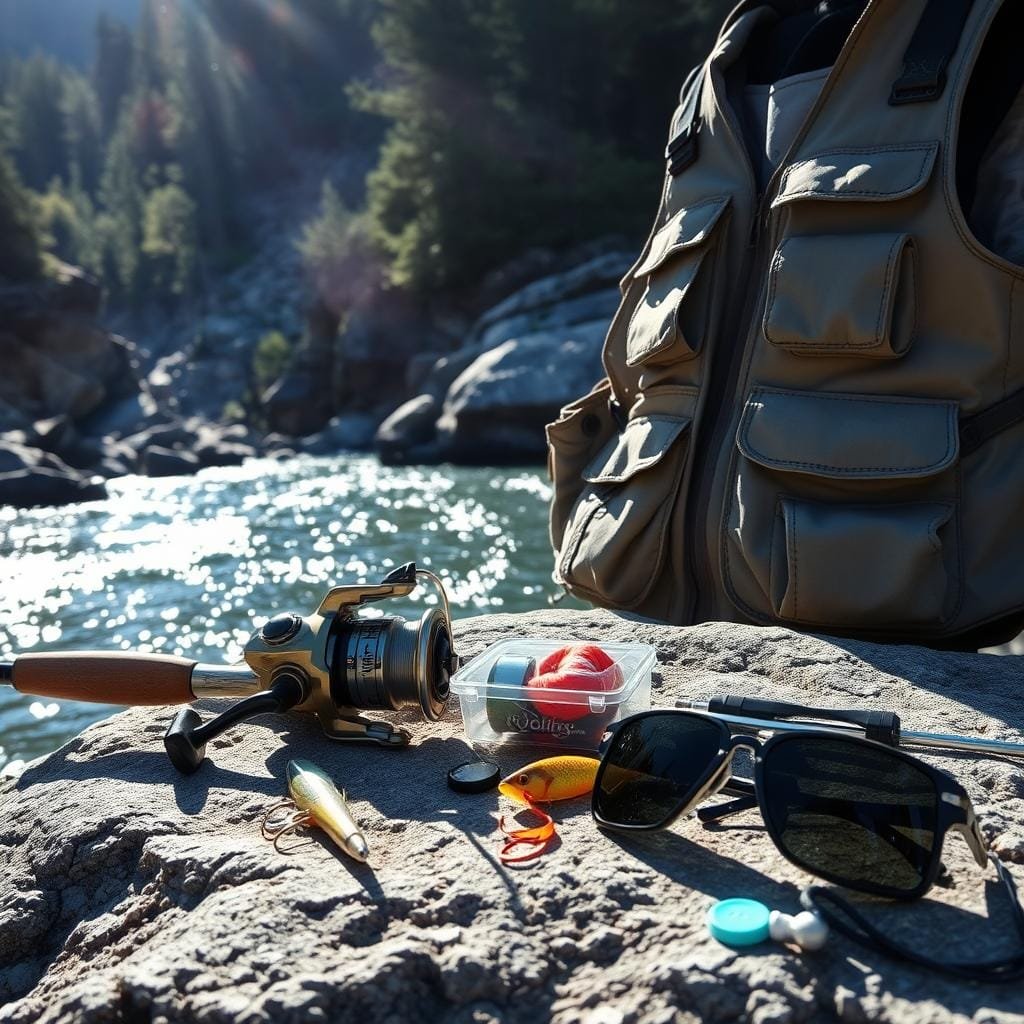 When you go rock bass fishing, the right gear is key. Your rod and reel must be top-notch. They help you catch that big fish. Let’s talk about the must-haves for rock bass fishing, like rods and line. A light to medium action rod is best for rock bass. It lets you feel even the lightest bites. Rods should be both light and responsive. Fiberglass rods are tough and forgiving. Graphite rods are stiffer and more sensitive, giving you better feedback. Reels should match your rod well. They should cast and retrieve smoothly. Choose reels that are balanced and easy to handle. The drag system must be strong to handle rock bass’s quick moves. Line and Hook Selection for Success The right fishing line is important. It depends on the water and the size of fish you want to catch. Thin lines are best in clear water to avoid scaring fish. Braid lines are strong and sensitive, great for fishing in tight spots. Don’t forget about hooks. Use small hooks, 4 to 8, because rock bass have small mouths. Make sure your hooks are sharp and strong to catch and hold fish well. Choosing the right gear for rock bass fishing makes your day better. Focus on rods, reels, and line. With the best gear, you’re set for a great fishing day! Best Baits and Lures for Rock BassAnglers need to know that rock bass eat a lot of different things. They are also very active. Using the right baits and lures can really help you catch more fish. Natural Baits vs. Artificial LuresThere’s a long debate about using natural or artificial baits. But both have their own strengths. Live minnows and worms are very tempting because they smell and feel real. Artificial lures, on the other hand, are great because you can use them in places where live bait is not allowed. Top Performing Lures in Various ConditionsChoosing the right lure for rock bass depends on the water. In warm, murky water, spinnerbaits and topwaters work well. They look like fast-moving prey. In cold or clear water, jigs that look like insects or small animals are better.
Advanced Techniques for Catching Rock BassLearning advanced rock bass catching techniques means knowing their home and how they act. Knowing more about rock bass helps you catch more. To catch more, focus on rock bass structure fishing. This means fishing in spots like under docks or near rocks. Fishing the right spots is key. But using jigging for rock bass makes your trip even better. Jigging looks like natural food in clear water. It makes rock bass come out of their hiding spots. Drop shotting is similar but for deeper water. It’s great for when it’s very hot. Both jigging and drop shotting need patience and skill. They’re great for those who want to get better at fishing. Using these advanced methods makes catching rock bass easier. It also makes fishing more fun. Every trip becomes a chance to learn and improve. How to Catch Rock Bass
Learning how to catch rock bass can make your fishing trips better. These fish are tough and fun to catch with the right rock bass angling tips. Here are some tips to catch more rock bass. Using different strategies for rock bass is key. The season and water conditions change, so you need to adjust your methods. Here are some tips for catching rock bass all year:
Using these how to catch rock bass tips will help you catch more fish. It will also make fishing more fun. Knowing how rock bass behave and where they live can lead to a great catch, whether you’re fishing from the shore or a boat. Night Fishing for Rock Bass: A Hidden Opportunity
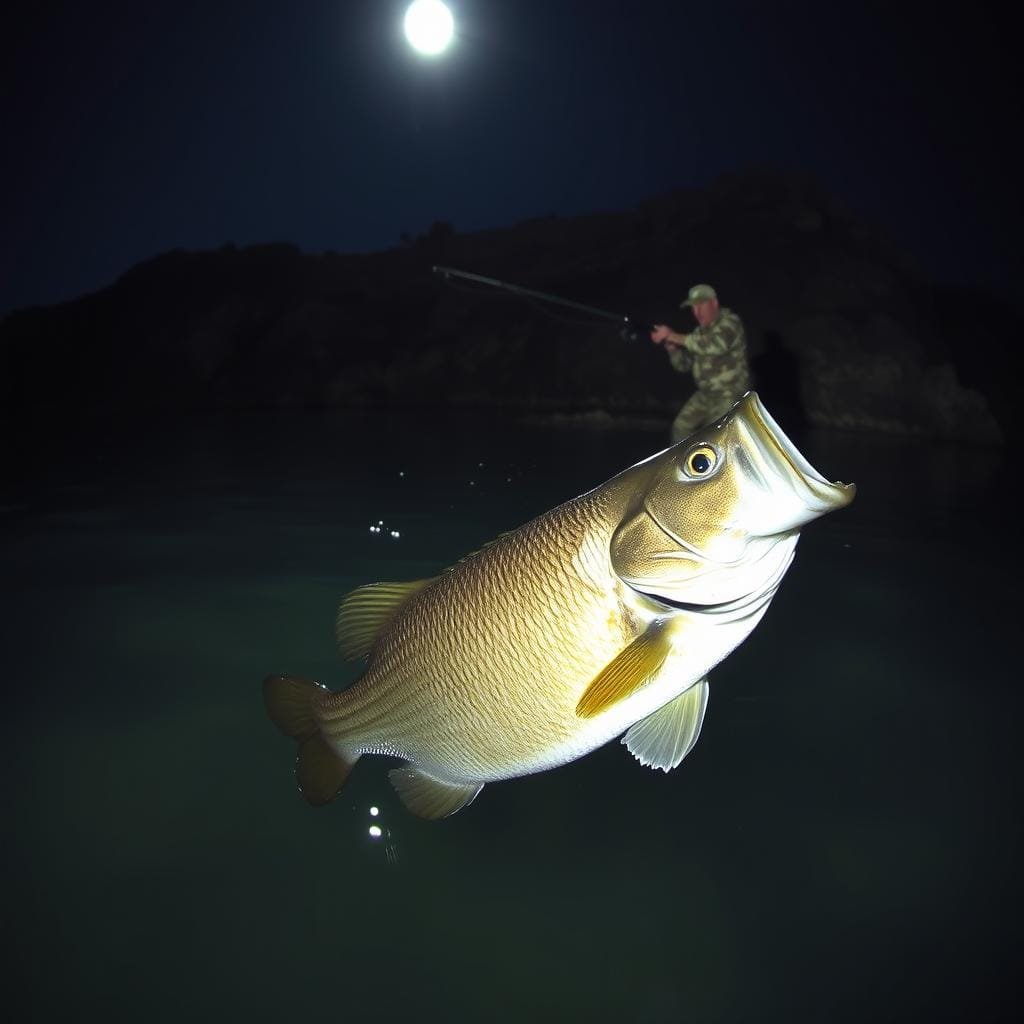
Going fishing at night is special. It’s quiet and peaceful. Night rock bass fishing is a challenge but also rewarding. Rock bass get active when it’s dark, giving anglers a great chance to catch them. Night fishing safety is very important. You need the right gear and to be ready for anything. Wearing reflective vests and having enough light and emergency supplies is key. Here are some tips for catching more fish and staying safe at night. Effective Night Fishing Tactics
Gearing Up for Night: Safety and Equipment Tips
Reading Water Conditions for Rock Bass Success
Successful rock bass fishing depends a lot on understanding water conditions. Anglers need to know about the water’s dynamics. This knowledge helps them catch more fish. Looking at fishing water dynamics means watching how clear, warm, and fast the water is. These things change how rock bass act and where they hide. Clear water needs quiet lures, while dirty water lets you use bolder ones. Keeping an eye on water changes helps you fish better. For example, water temperature affects how active rock bass are. When it’s cooler, fish move slower, so use slower lures to get their attention.
Knowing how to read water conditions makes you a better angler. It helps you find rock bass and enjoy your fishing more. By understanding water changes, you can have a more successful fishing trip. Handling and Releasing Rock Bass Properly
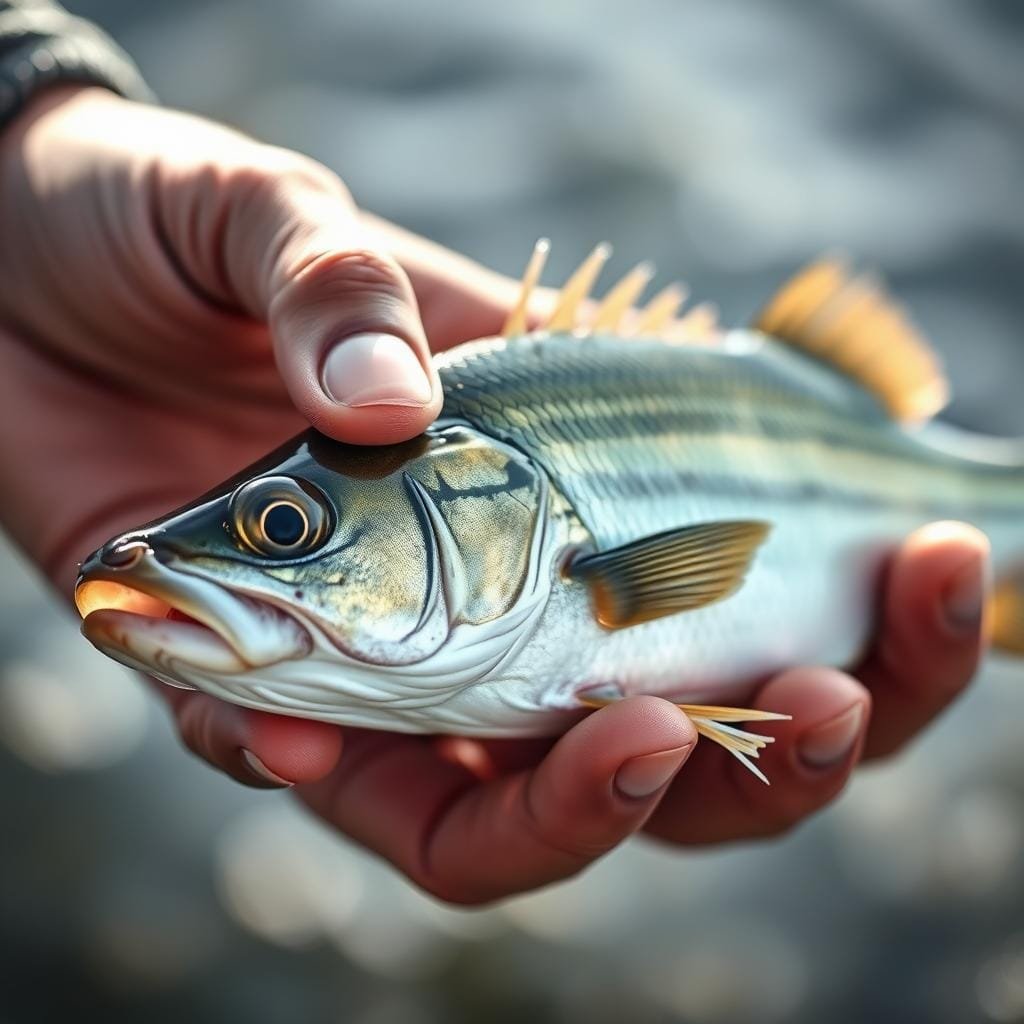
Rock bass need our help to survive. We must learn how to handle them gently. This helps keep their numbers up for future fishing. The Importance of Conservation-Oriented HandlingHandling rock bass right is more than just for photos. It’s about taking care of them. When we handle them gently, they can live and have babies. This helps keep our water and fishing good for everyone. Techniques for Healthy Catch and ReleaseReleasing fish the right way is key to saving rock bass. Here’s how to make sure fish are healthy when they go back in the water:
By following these easy steps, we can enjoy fishing and help rock bass. Let’s take care of each fish we catch. This way, they can stay a part of our world and our fun. Seasonal Strategies: When to Target Rock BassKnowing when to fish for rock bass is key for better catches all year. Each season offers its own challenges and chances to catch more fish. The right strategies can make your fishing trips better. In spring, rock bass get more active as the water warms up. This is a great time to fish. Use spring rock bass strategies like small jigs or live baits near spawning beds for good results. Summer brings the need to find cover and food for rock bass. Use deep diving lures and topwater baits in the early morning or late evening. This is when they are most active. Fall brings colder weather, changing how rock bass behave. They move to deeper waters with baitfish. Winter is the toughest season, needing special winter rock bass tactics. Ice fishing and the right lure for cold, deep water are essential for success. Here’s a table showing the best ways to fish for rock bass in each season:
Using these strategies will help you catch more rock bass. It will also help you understand their behavior in different seasons. Common Mistakes in Rock Bass Fishing and How to Avoid ThemLearning to fish for rock bass means knowing what not to do. It’s about improving your skills and avoiding mistakes. Here, we’ll look at common errors and how to steer clear of them. Overlooking Key Habitat FeaturesMany anglers forget the importance of where rock bass live. Places with depth changes, underwater features, and lots of cover are key. If you ignore these spots, your fishing trips might not be as good. It’s important to learn about these places. This way, you can find where rock bass like to be. Improper Use of Baits and TechniquesUsing the wrong baits and methods is another big mistake. Anglers often stick to the same old ways, even when it doesn’t work. Changing your lures and how you fish based on the water and season is key. Below, a table shows which baits and methods work best in different situations.
Expert Tips and Tricks for Increasing Your Rock Bass CatchesTo get better at expert rock bass fishing, learn from the pros. They say to fish where slow water meets rocks. Rock bass love these spots. Seasoned anglers use special techniques. They do fine jig work to attract rock bass. This is because rock bass are very active hunters. Choosing the right lure is key. Use 3-inch jerkbaits and Clouser Minnows because rock bass have big mouths. Knowing when rock bass are most active helps too. Use Woolly Buggers or in-line spinners to catch them. Being patient and knowing your stuff is important. A 3-pound rock bass is the biggest ever caught. With the right skills, you could catch one too. Follow the pros’ advice and improve your fishing. FAQWhat are the ideal habitats to find rock bass?Rock bass like many places to live. They like ponds, creeks, and lakes. They need places to hide, like logs and rocks, and clear water. How do seasonal changes affect rock bass behavior?Rock bass change with the seasons. In spring, they spawn. In cold months, they seek warmer water. They feed best at dawn and dusk, more in spring. What type of gear is essential for rock bass fishing?You need good rods, reels, and line. A strong rod and a reel that casts well are key. Choose a line that’s right for the water and helps you fish quietly. Should I use natural or artificial baits for rock bass?Both work well for rock bass. They like big baits like spinnerbaits and jigs. But, live minnows and worms work too, in clear water. What advanced techniques can be employed to catch rock bass?Use their love for hiding spots. Try lures near cover or under docks. Jigging and drop shotting work well in clear water. Can you catch rock bass from the bank?Yes! Bank fishing is great for rock bass. Look for pinch points and follow their paths. Use lures and techniques for bank fishing. Is night fishing good for catching rock bass?Night fishing is great, warm months are best. Use special gear and follow safety tips for a good night. How important is water clarity and temperature when fishing for rock bass?Water clarity and temperature matter a lot. Clear water needs quiet fishing. Different temperatures change how they act and feed, so pick the right lure and how to use it. Why is proper fish handling important when catching rock bass?Handling fish right keeps them healthy for future fishing. Use wet hands and release them quickly to help the fish population. What are some seasonal strategies for targeting rock bass?Change your fishing plan with the seasons. Spring and early summer are best for feeding. Fall, watch the baitfish. Winter, find deeper fish. What common mistakes should I avoid when fishing for rock bass?Don’t ignore the right places to fish, like depth changes and cover. Also, use the right baits and techniques for the season and water. Are there any expert tips for increasing my rock bass catches?Yes, experts say to improve your jigging and use electronics to find fish. Choose lures based on what works best for rock bass fishing. |