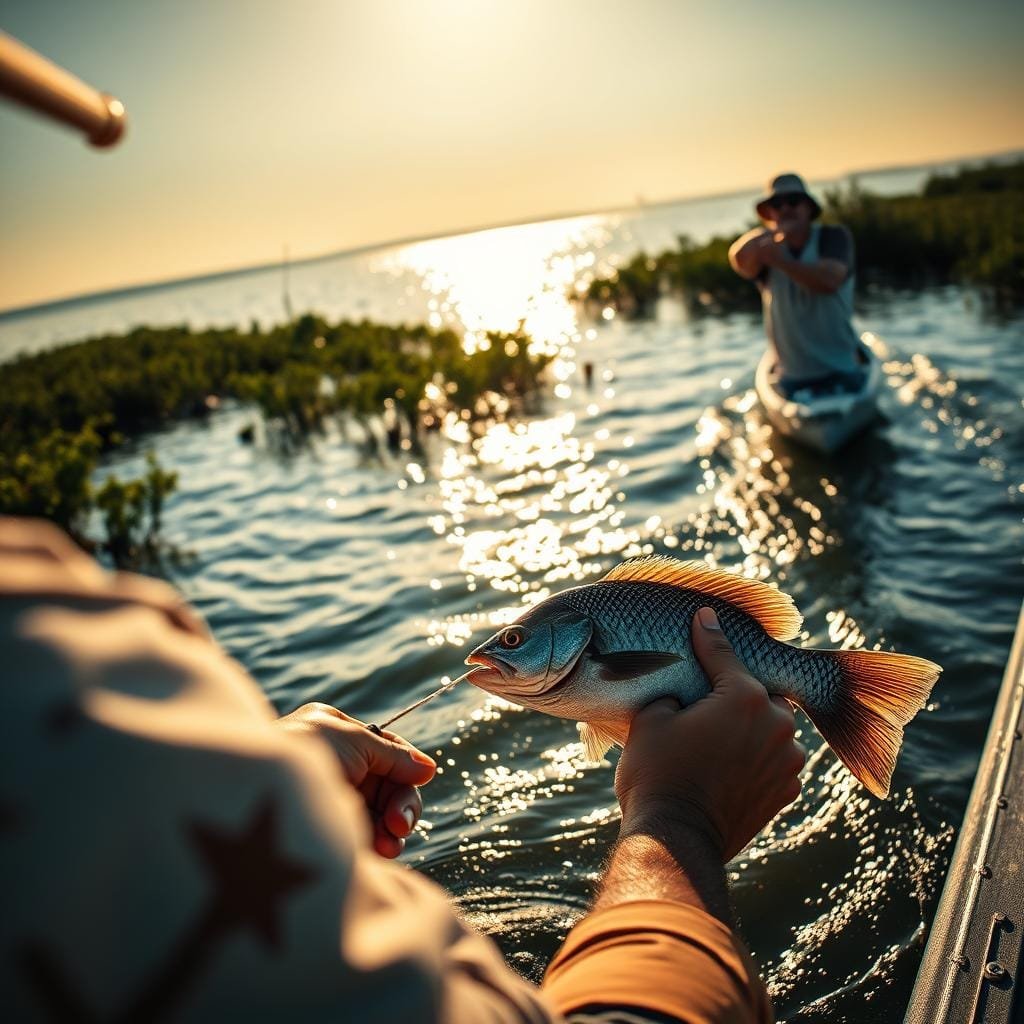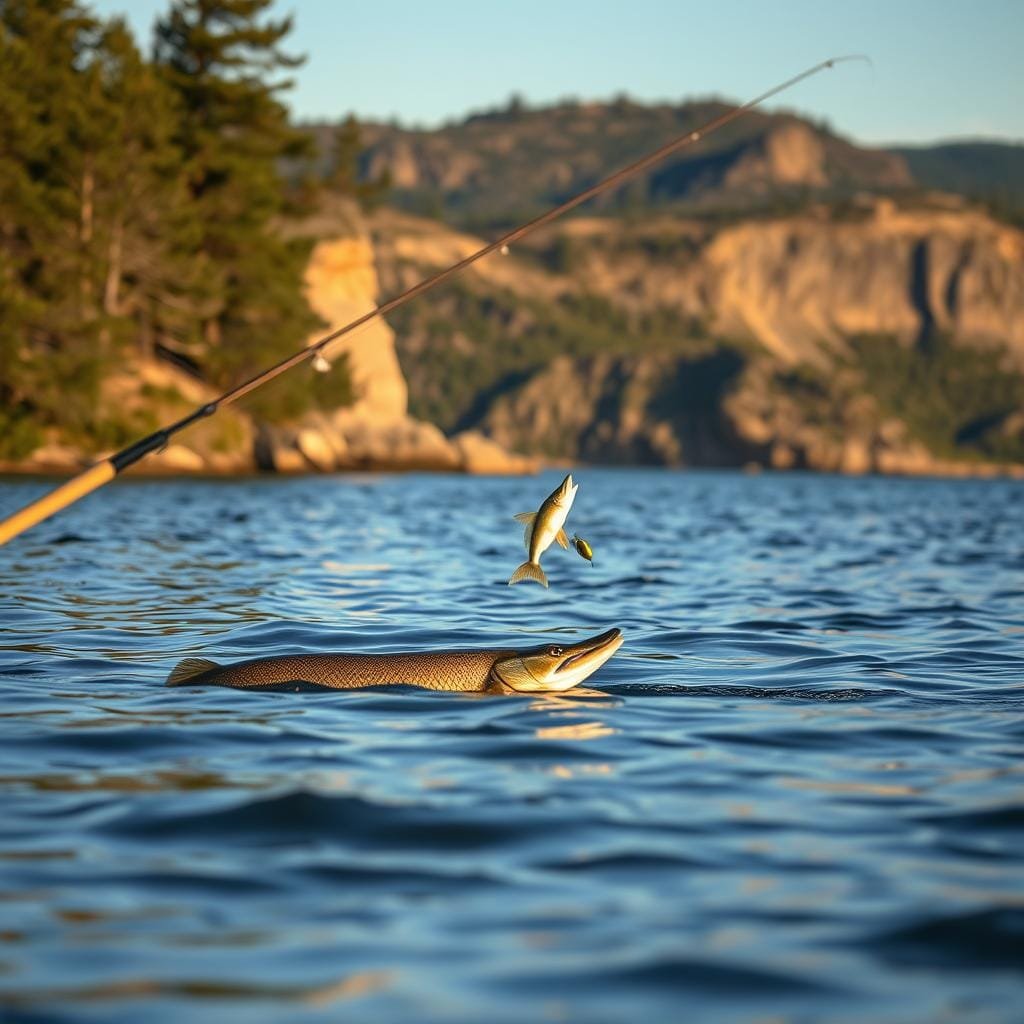
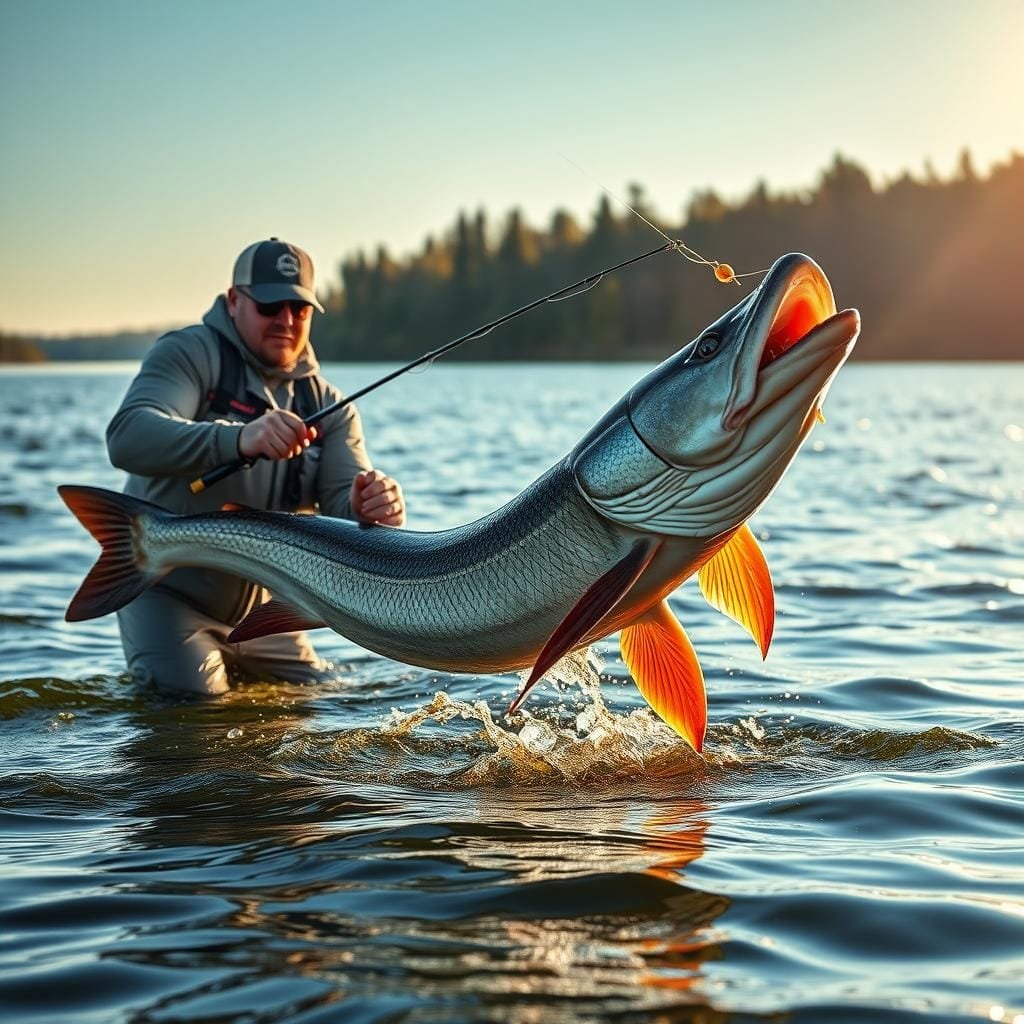
Welcome to the world of muskie angling techniques. It’s a world where catching a big fish is exciting and challenging. Muskie fishing is like an art, testing your patience and skill.
This guide will help you understand muskies better. It will give you muskie fishing tips to catch them more easily. You’ll learn about their behavior and how to use the right gear.
Catching a muskie can seem hard, but with the right tips, you can do it. This guide is full of advice from experienced anglers. It’s for beginners and experienced fishers alike.
Before you go muskie fishing, remember to be patient and know your stuff. Keep these tips handy. Then, go fishing with confidence, knowing you might catch a big one.
Understanding the Muskie: The Fish of 10,000 Casts
Muskies are known as the ultimate fishing challenge. They are called “the fish of 10,000 casts”. This name shows how hard they are to catch and how exciting it is to catch one.
Why are muskies so challenging to catch?
Muskies are hard to catch because of their hunting skills. They are not just picky eaters; they are smart hunters. They use their hunting tricks to catch prey, making it hard to lure them with bait.
They only eat during short times, and this can change based on the environment. Anglers need patience and to know how muskies act to catch them.
The biology and behavior of muskie
Muskie biology is interesting and key for anglers. They are top predators with great senses. They can move fast and control their water home.
Knowing about muskies helps anglers understand their hunting ways. This knowledge helps in making better fishing plans.
Learning about muskies makes fishing better. It helps match your fishing ways with how muskies hunt. Knowing when to fish and how to use bait can help catch them.
The Best Times and Conditions for Muskie Fishing
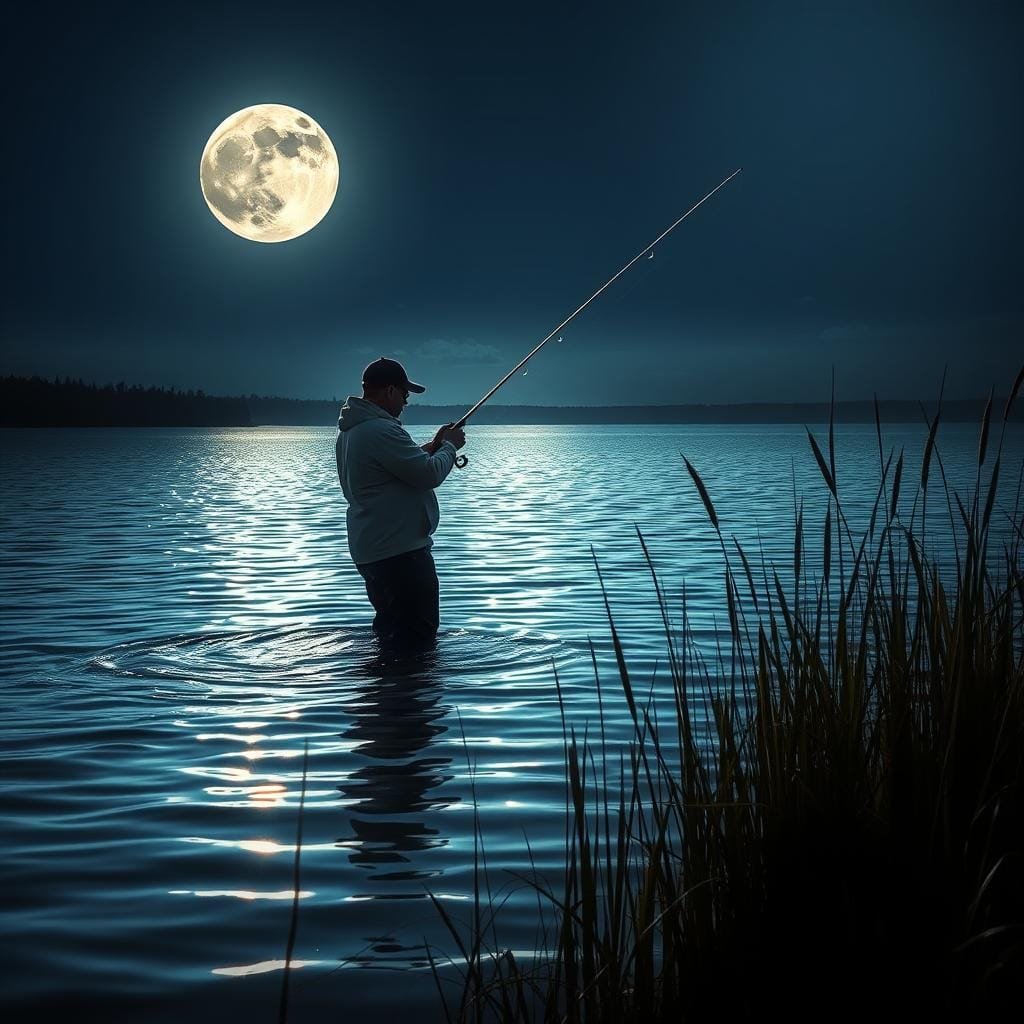
Knowing weather patterns and lunar influence is key for muskie fishing. These factors greatly affect muskie activity. It’s important to fish at the best times.
Weather conditions are very important. Stable weather or just before a change makes muskies hungry. This is because they are getting ready for stress or spawning.
Moon phases also matter a lot. The moon’s pull affects tides and muskie feeding. Full and new moon times are best for fishing.
To catch muskies, know about optimal fishing times. Watch the weather and moon. This helps find muskies when they are most active.
| Season | Water Temperature | Recommended Fishing Time |
|---|---|---|
| Spring | ~60°F | Shallow waters for spawning |
| Summer | 67°F-72°F | Early morning or late evening near deeper waters |
| Fall | Declining from Summer Peaks | Dawn and dusk, peak muskie activity |
By knowing optimal fishing times, weather patterns, and lunar influences, anglers can catch more muskies.
Essential Gear for Muskie Fishing
https://www.youtube.com/watch?v=jyYNhJxBPqE
Successful muskie fishing needs the right gear. This gear helps tackle the challenges and thrills of catching these big fish. We’ll look at rods, reels, lines, and leaders.
Choosing the right rod and reel is key. For muskie fishing rod selection, go for rods 7’6” to 8 feet long. Heavy power rods are best for big lures and strong fish.
The optimal reel features include fast retrieval. This helps keep up with muskies. The Shimano Tranx is a top pick for its durability and performance.
Picking the best line and leader is also vital. Baitcasting gear works well with braided fishing line. A 50- to 65-pound test line is good for fighting muskies.
Muskie bite leaders are a must. The choice between fluorocarbon versus steel leaders depends on what you need. Fluorocarbon is almost invisible, while steel is very strong.
Pre-made leaders are great for beginners. They ensure your gear is strong and durable. The right gear makes catching muskies more likely and safer.
- Heavy-duty muskie rods (7’6” to 8 feet, heavy power)
- High-speed reels (e.g., Shimano Tranx)
- Braided lines (50- to 65-pound test)
- Fluorocarbon or steel leaders designed for muskie fishing
Get your tackle box ready with these essentials. You’ll be well on your way to catching muskies.
How to Catch Muskie
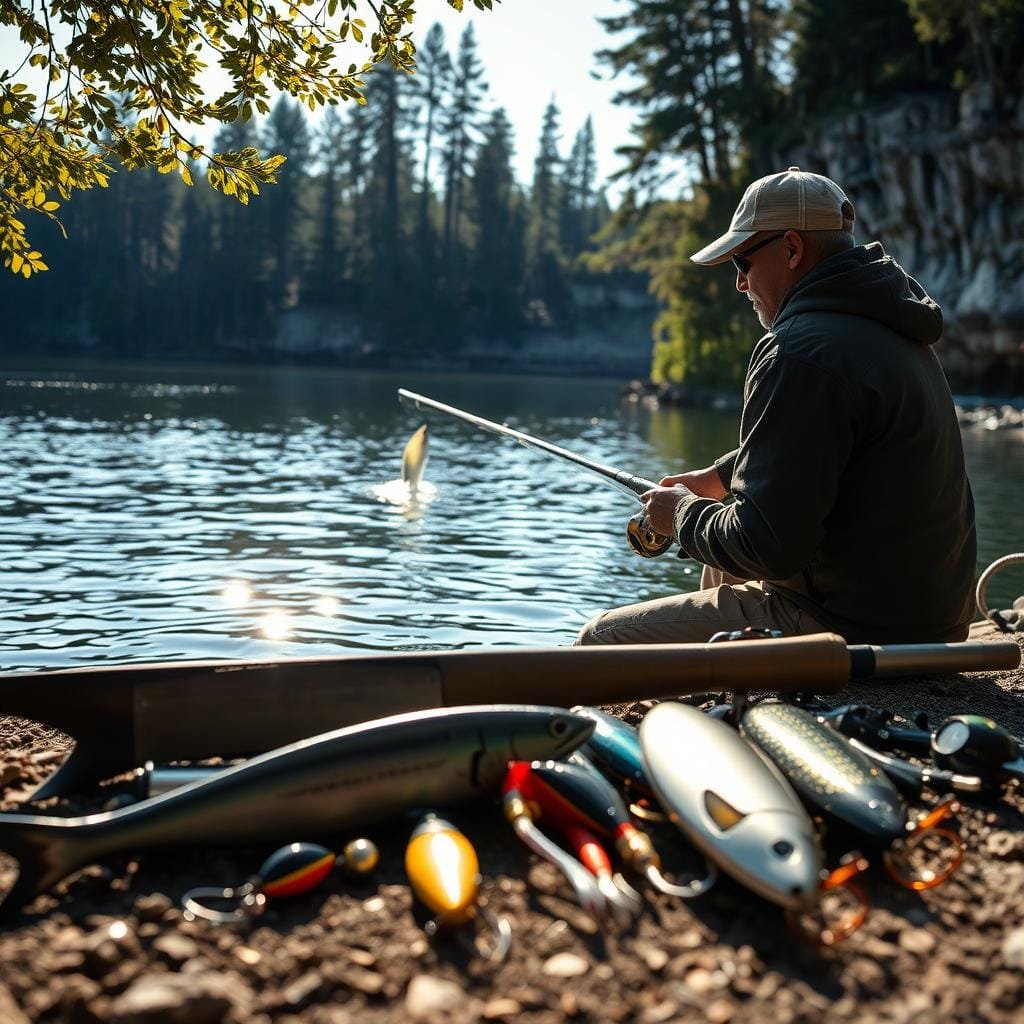
To catch muskie, you need to mix good muskie fishing strategies with patience and skill. You must know where and when muskies live. They are top predators and very picky, so you need special trophy muskie techniques to catch them.
Choosing the right gear is key. You need strong equipment to handle muskies’ power. Successful muskie fishing also depends on when you go. Early morning or late evening is best, when it’s warm and muskies are active.
| Season | Recommended Strategy | Suggested Locations |
|---|---|---|
| Spring | Follow retreating ice edges in northern lakes | Deeper waters near baitfish schools |
| Summer | Focus on weed lines and shallow reefs | Weedy areas in 3-8 feet of water |
| Fall | Use larger lures to mimic prey size increase | Transitional zones, sharp slopes |
| Winter | Limited activity; focus near deep holes | Deep river bends and lake sectors away from current |
Using different muskie fishing strategies can help you catch more. For example, in fall, use big lures to cover more water. Also, being precise with your casting and retrieval is very important.
Catching muskie is a mix of knowing, the right gear, and using trophy muskie techniques. With hard work and being flexible, catching a trophy muskie is a great reward for anglers.
Proven Lure Types for Catching Muskie
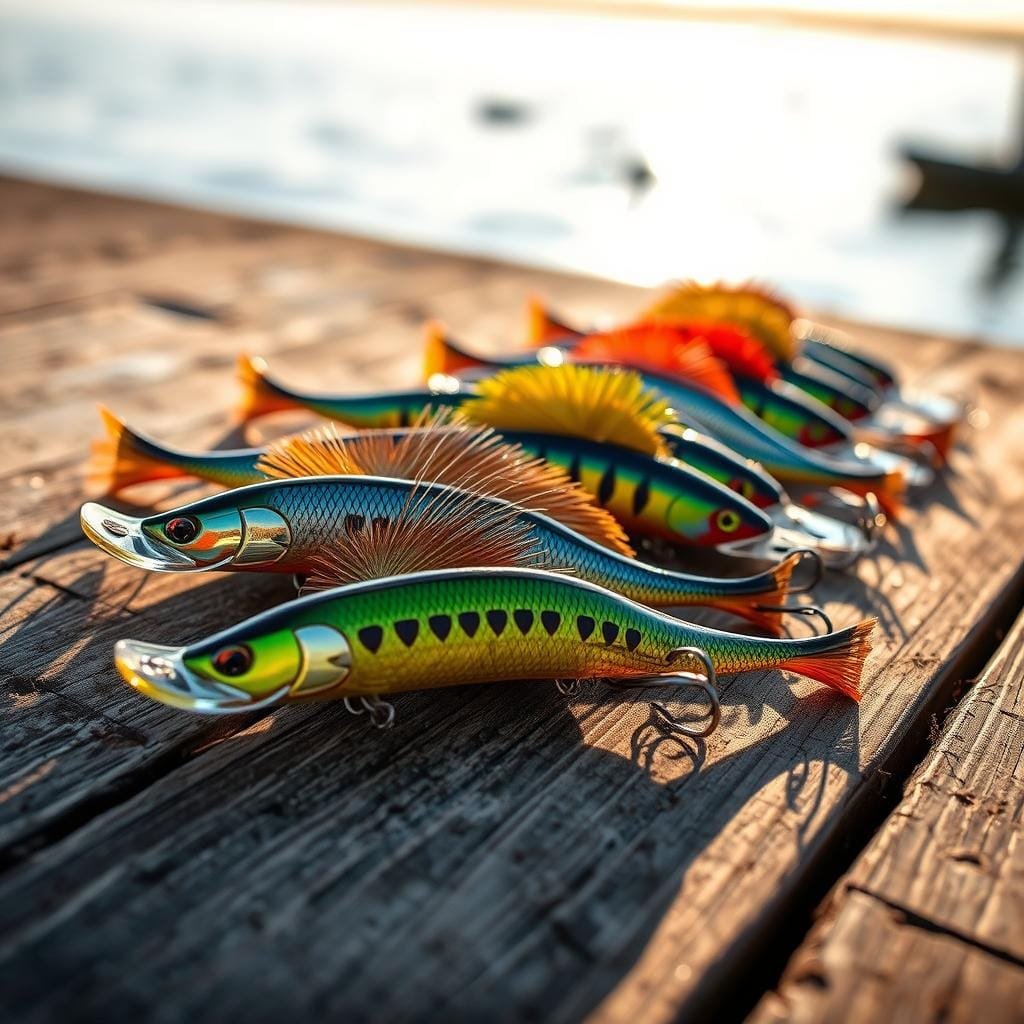
Choosing the right lure is key when fishing for muskie. Each lure type has its own way to attract these fish. You might get a big splash or a quiet bite.
Inline Spinners and their effectiveness
Inline spinners, also known as muskie bucktails, are favorites among anglers. They work best when the water is warm. These lures cover a lot of water quickly and easily.
The allure of Diving Plugs and Glide Baits
Muskie diving plugs reach deep where muskies hide. Muskie glide baits move side to side underwater. Both lure types mimic prey, making muskies hard to resist.
Topwater Lures for thrilling strikes
Muskie topwater lures make fishing exciting. They make noise on the water, like a wounded baitfish. This can lead to big, splashy catches.
Using different lure action techniques can help you catch more muskies. By picking the right lures, you can have fun and successful fishing trips.
Advanced Techniques for Muskie Fishing
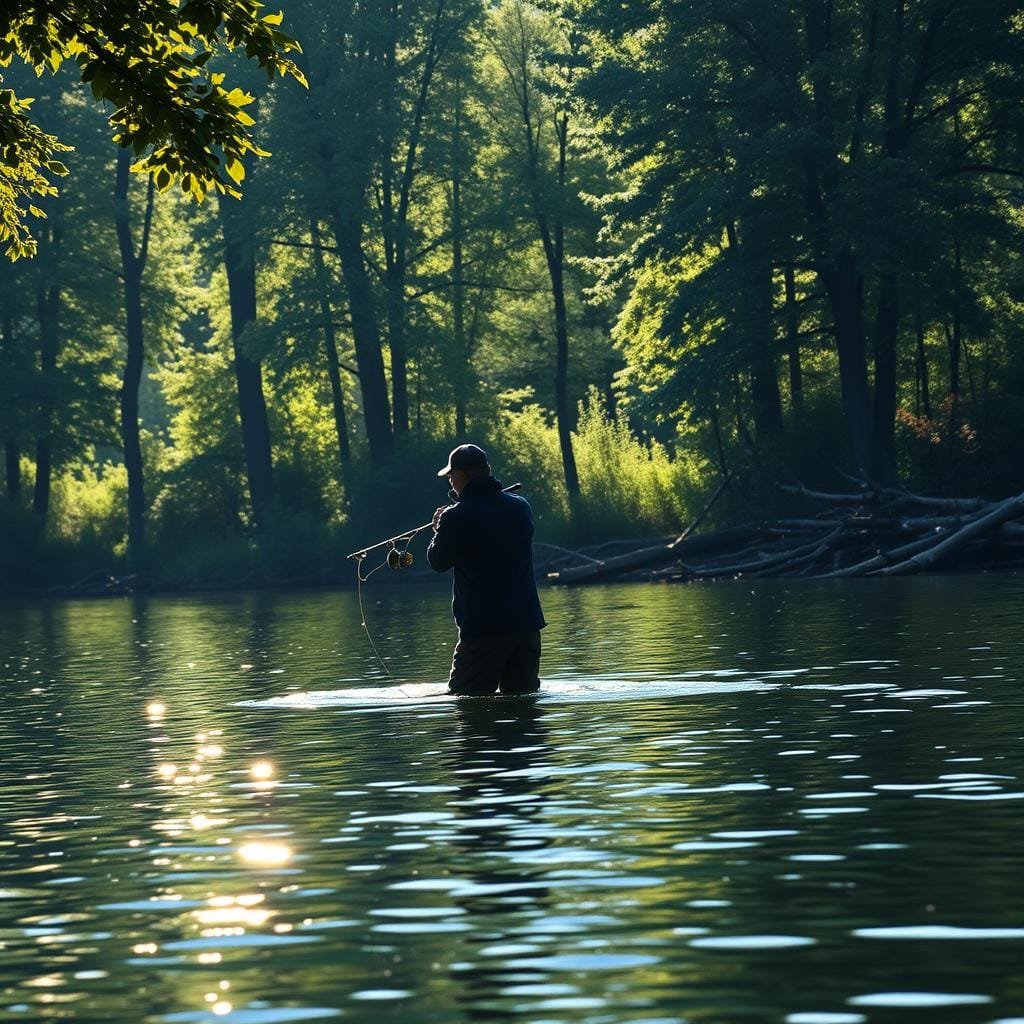
Learning to catch muskies well takes skill, patience, and the right moves. Two key skills are mastering the figure-8 maneuver and getting the rhythm and speed of your lure right.
Mastering the Figure-8 Technique
The figure-8 is key for getting muskies to strike right by your boat. It means moving your rod in a big figure-8 shape. This keeps the lure moving and looks like injured bait to muskies.
Understanding the Role of Speed and Rhythm in Retrieves
Knowing how fast and how to move your lure is very important. Each cast tells you what to do next. This could be a steady pull or changing speeds to look like real bait.
Changing your techniques based on what you see helps a lot. It makes every cast count and increases your chances of catching a muskie.
Here’s a comparison of how effective casting techniques impact muskie behavior:
| Technique | Impact on Muskie Behavior | Usage Scenario |
|---|---|---|
| Steady Retrieve | Creates predictable pattern, good for calm waters | Clear days, minimal underwater activity |
| Variable Speed | Imitates distressed prey, attracts active muskies | Choppy waters, aggressive fish conditions |
| Figure-8 Maneuver | Induces reactive strikes from followers at boatside | When muskies follow without striking |
Where to Find Muskies: Identifying Prime Habitats
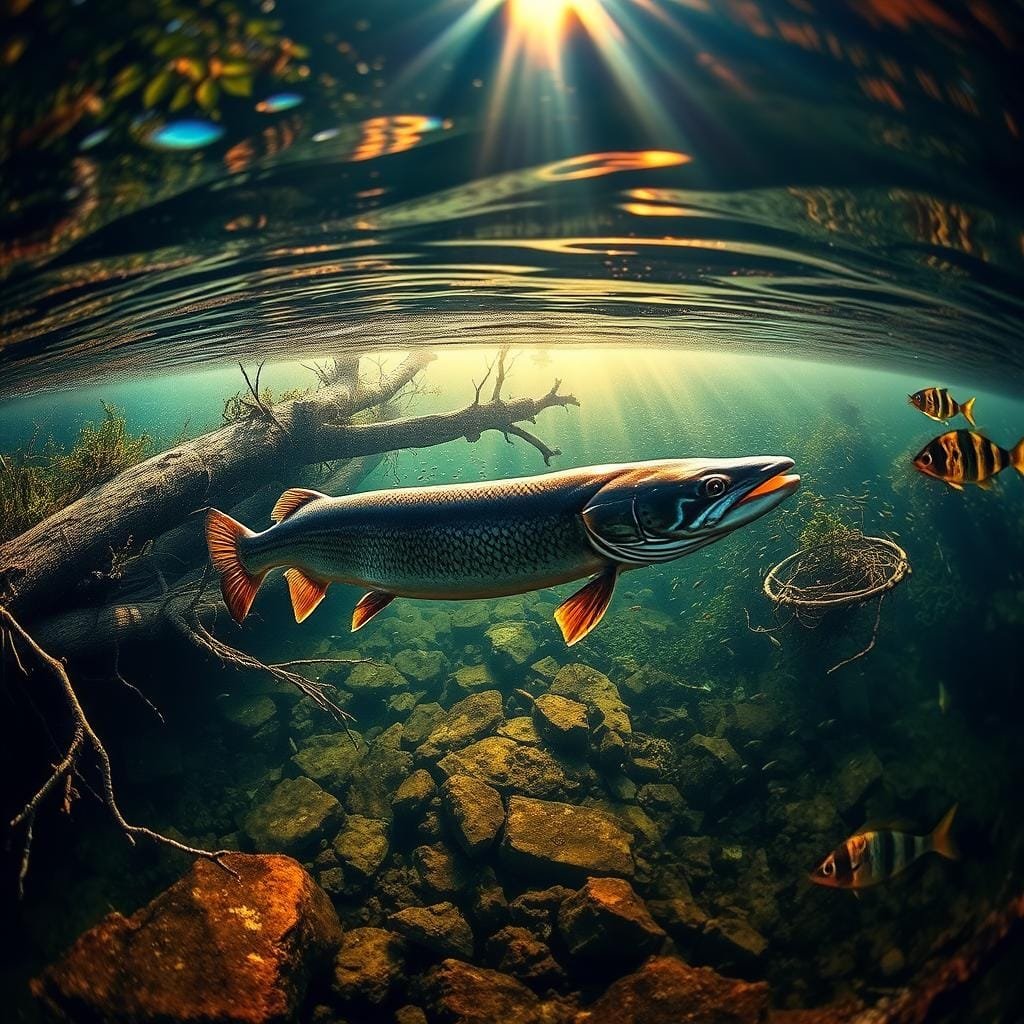
Knowing when and where muskies move is key for anglers. Muskies change their spots with the seasons. This affects where and how to fish.
Seasonal movements of muskie
In spring, muskies head to deeper waters near where they spawn. This makes them hard to find. Summer brings them to shallower waters with lots of food. This is a great time for fishing.
As fall comes, muskies go back to deeper waters. They prepare for winter here. Knowing these patterns helps anglers find muskies.
Seeking out structures and weed beds
Muskies love areas with lots of cover and food. Look for weed edges and structures like reefs. These spots are where muskies like to be.
Here’s a quick guide to muskie habitats and when to find them:
| Season | Location | Features |
|---|---|---|
| Spring | Deep waters near spawning areas | Initial post-winter gathering grounds |
| Summer | Weed beds in shallower waters | Abundance of prey, optimal for casting lures |
| Fall | Deeper water zones | Preparation for winter, predictable locations |
| Winter | Deep water structures | Less active muskies, targeted deep water fishing |
Knowing these spots can really help your fishing. It makes every cast a chance to catch a big one.
Handling and Releasing Muskies Correctly
It’s important to know how to handle muskies after catching them. This helps keep fish populations healthy. It also supports the sport of fishing and helps the environment.
The Importance of Proper Fish Handling
Handling muskies right is key to keeping them healthy. Keep them in the water as much as you can. Don’t touch their gills or eyes.
This helps them stay strong and live longer after being released.
Step-by-Step Guide to Safely Release Muskie
Releasing big fish is both an art and a science. Start with the right tools, like pliers or hook cutters. They help remove hooks fast and safely.
- Use wet hands or gloves to handle the muskie to protect its slime coat.
- Support the muskie horizontally to avoid damaging internal organs.
- Take quick photos only if necessary and keep the muskie submerged as much as possible.
- Before releasing, ensure the muskie is adequately revived by holding it gently in the water, allowing water to flow through its gills.
- Release the muskie facing the current to facilitate easier recovery and oxygen intake.
By following these tips, anglers help protect muskie populations. Each step helps the fish thrive. This supports the health of the species and the environment.
Muskie Fishing Etiquette and Conservation
As muskie populations face challenges, ethical fishing practices and muskie stewardship are key. These ideas help keep muskie healthy and ensure responsible angling in North America.
Catch and release is vital in muskie fishing. It helps keep the fish population diverse and healthy. To fish responsibly, knowing the right techniques is important. This means using tools that don’t hurt the fish and releasing them quickly.
Angler contributions go beyond just releasing fish. Helping with habitat improvement and following fish management rules are important. Working with groups that protect fisheries shows a commitment to sustainable fishing.
- Muskie stewardship includes reporting tagged fish to local wildlife agencies.
- Engaging in clean-up days at local lakes and rivers to preserve natural muskie habitats.
- Donating to or volunteering with groups that focus on the preservation of muskie.
Together, anglers can make fishing sustainable and better for muskie and other aquatic life. This way, future generations can also enjoy muskie fishing.
Learning from the Experts: Tips and Stories
Every muskie hunter can learn a lot from professional guides and seasoned anglers. They share expert fishing tips and muskie angling stories. These stories show the unpredictable nature of muskies and the skills needed to catch them.
Professional guides spend a lot of time on the water with muskies. They know how these fish react to different things. They teach about the best times to fish and how to pick the right lure.
Learning from those who know muskies well can make you a better fisher. Guides talk about the importance of being patient and careful. They share stories of muskies that were hard to catch, teaching us about determination and skill.
FAQ
Why are muskies so challenging to catch?
Muskies are hard to catch because they are picky eaters. They are also very cautious. Weather and water conditions also play a big role in their activity.
What is unique about the biology and behavior of muskie?
Muskies are big and belong to the pike family. They have long bodies and sharp teeth. This makes them good at catching fast prey like fish and small ducks.
How do weather conditions affect muskie fishing?
Weather affects muskie fishing a lot. It’s best to fish when the weather is calm. Or just before it changes, when muskies might be more active.
How do moon phases influence muskie behavior?
Moon phases, like full and new moons, change muskie behavior. They might hunt more when the moon is full. This gives anglers a better chance to catch them.
What should I consider when choosing a rod and reel for muskie fishing?
Choose a strong rod, 7’6” to 8 feet long. It should handle big lures well. Pick a reel that can pull fast, like the Shimano Tranx.
What line and leader are best for muskie fishing?
Use a braided line, 50- to 65-pound test, for strength. Leaders help protect against sharp teeth. Use heavy fluorocarbon or steel for best results. Beginners can use ready-made leaders.
Why are inline spinners effective for muskie fishing?
Inline spinners work well when it’s warm. They’re easy to use and cover a lot of area. This makes them a favorite for muskie fishing.
Can you tell me about the allure of diving plugs and glide baits?
Diving plugs are good for deep water. Glide baits move side to side, attracting muskies when they’re hungry. They mimic natural prey.
What makes topwater lures exciting for muskie fishing?
Topwater lures get muskies to strike hard, mostly in warm weather. The sounds they make can really get muskies excited.
How do you master the figure-8 technique?
To master the figure-8, make a big pattern underwater with your rod. Do this when a muskie follows your lure but doesn’t bite. It tricks them into biting at the last minute.
What role does speed and rhythm play in retrieving lures?
Speed and rhythm are key when retrieving lures. Watch how muskies react and adjust your retrieve to look like prey. This can make them strike.
How do you identify prime muskie habitats?
Look for areas with structures like weed beds and reefs. Muskies like places where baitfish are. Both lakes and rivers have spots where muskies like to be.
Why is proper handling of muskies so important?
Handling muskies right is key for their survival. It helps them stay healthy and reproduce. This is important for responsible fishing.
Can you provide a step-by-step guide to safely release muskie?
To safely release a muskie, fight it quickly. Keep it in water when removing hooks. Handle it horizontally and use tools to remove hooks. Take quick photos and support it in the water until it’s strong enough to swim away.
How is catch and release practiced correctly with muskies?
Catch and release with muskies means using the right handling techniques. Follow conservation rules and make sure the fish is healthy before releasing it. This helps keep their populations strong.
How can anglers contribute to muskie conservation efforts?
Anglers can help by following local fishing rules. They can also join in on habitat improvement projects. Supporting groups like Muskies, Inc. is also important for conservation.