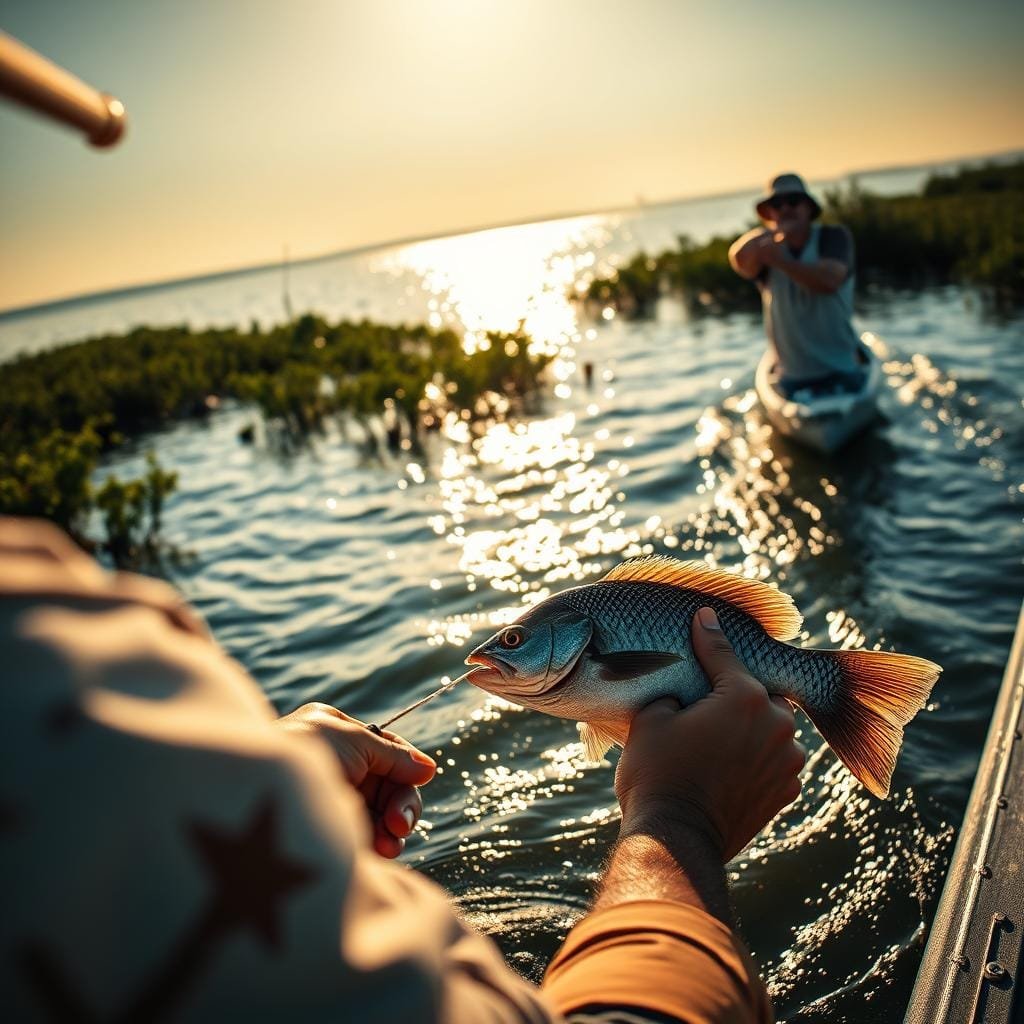
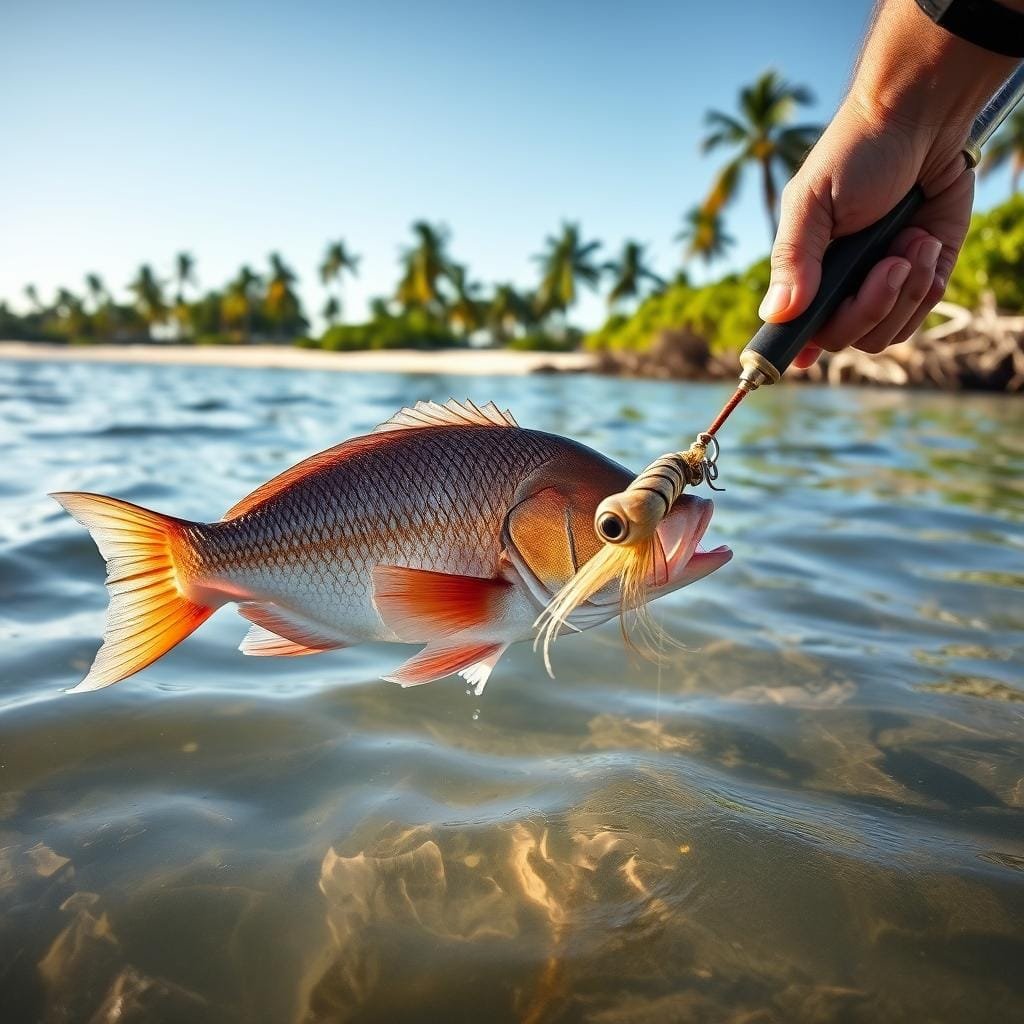
Welcome to the ultimate redfish fishing guide. It’s here to help you get better at catching redfish. Whether you’re new or experienced, this guide has what you need. We’ll teach you how to catch more redfish.
Redfish, also known as red drum, are loved by many anglers. They have a unique copper-bronzed color and fight hard. They live in coastal waters and can make a drumming sound.
Knowing the rules, like in Virginia and Maryland, is important. It lets you catch redfish and help them stay healthy.
Fishing in flats, tidal basins, or marshes can be exciting. Learning about redfish behavior helps you catch more. It’s a mix of art and science.
So, get ready for a fun journey in redfish fishing. It’s where patience and passion meet. Each cast brings you closer to a great adventure.
Introduction to Redfish Fishing
Starting a redfish fishing journey is exciting for both new and experienced anglers. Redfish are known for their strength and beautiful looks. They are a top choice for sport fishing because they put up a good fight.
Redfish, or Red Drum, make a unique “drumming” sound. This sound is interesting to anglers. They also like to swim together, making them fun to catch in shallow waters.
Understanding Redfish Behavior
Knowing how redfish act can make fishing better. They live in shallow waters and like salt and brackish water. Anglers look for signs like tailing to find them.
This helps in finding them and knowing when to fish. It’s a great way to catch them.
Why Redfish is a Popular Target Among Anglers
Redfish are popular because they are easy to find and fun to catch. They can be found in many places along the Gulf Coast and Atlantic states. This makes them a great choice for a day of fishing.
Catching a redfish is a big accomplishment. They are fast and strong. Catching one is even more rewarding when you release it back into the water.
Best Locations for Redfish Fishing in the United States
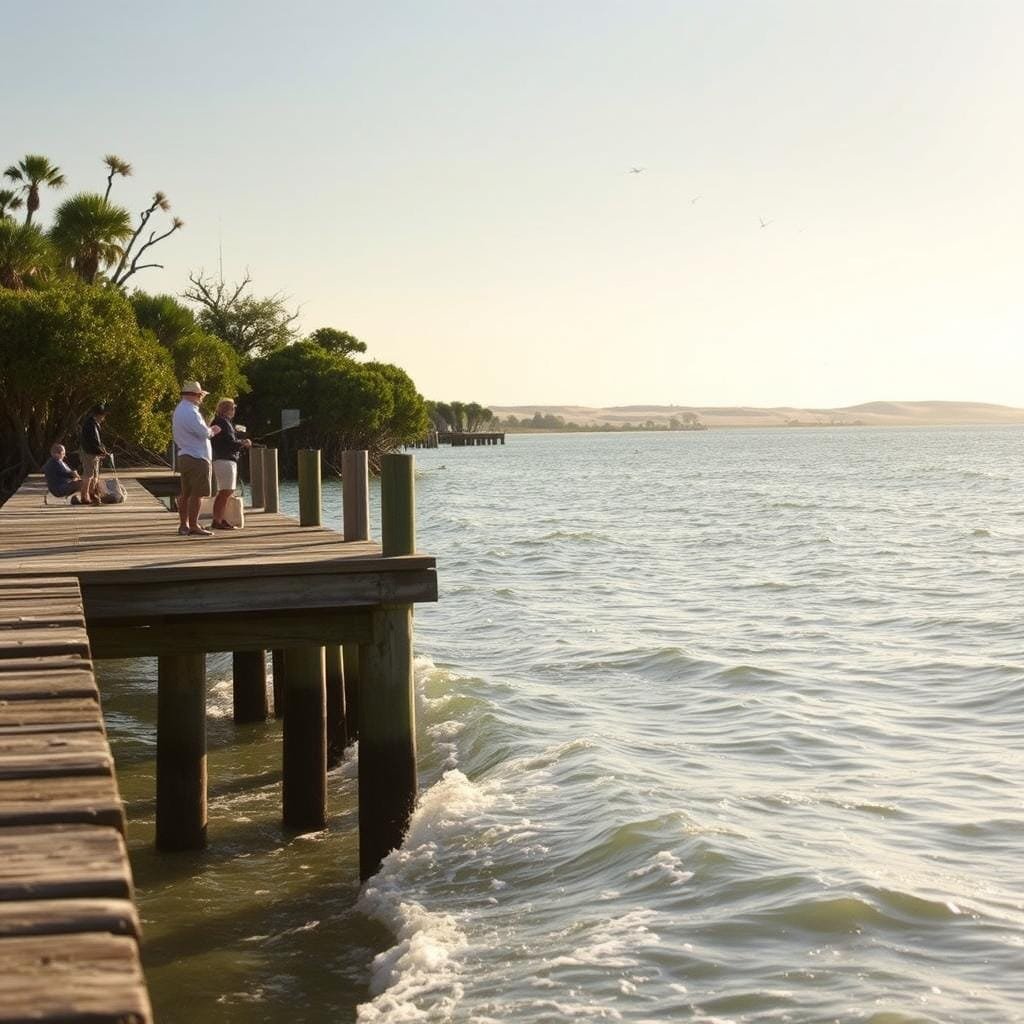
Anglers searching for the best spots to catch redfish often go to Florida and the Gulf Coast. These places are known for having lots of redfish. They are great for both new and experienced fishers.
Florida redfish charters lead to some of the best fishing spots in the country. Places like Key Largo, Marco Island, and the Everglades offer amazing fishing and beautiful views. They are perfect for those who love the beauty of fishing as much as the sport itself.
Florida’s Top Redfish Destinations
In Florida, the best spots for catching redfish are clear. The state’s coast has docks, grass flats, and bays. These areas are full of redfish because of the warm waters and plenty of baitfish.
Exploring the Gulf Coast for Redfish Hotspots
Along the Gulf Coast, there are great places to fish like Venice, Louisiana. It’s known as the “Redfish Capital of the World.” The marshes and estuaries here offer amazing fishing for redfish. The waters and oyster bars are perfect for these fish to grow big.
For more tips on Gulf Coast fishing, check out this article on top red drum fishing. Knowing these tips can help you catch more fish. It also makes fishing more fun at these top spots.
Decoding the Best Seasons for Redfish Fishing
Knowing the redfish seasonal behavior is key for anglers. Red drum change their ways with the seasons. This affects where and when they are active.
Spring brings more redfish activity as waters warm up. This is a great time to fish. In colder months, they seek darker spots to stay warm. Knowing these habits is vital for a good fishing trip, as shown in our fishing calendar.
| Month | Behavior | Optimal Fishing Times |
|---|---|---|
| January – February | Gathering in warm, deep waters | Midday when sunlight peaks |
| March – May | Increased surface activity as waters warm up | Late morning and early afternoon |
| June – August | Spawning season, very active | Early morning and late evening |
| September – November | Feeding heavily post-spawn, preparing for winter | Late afternoon to sunset |
| December | Slowing down as waters cool | Warmest part of the day |
The fishing calendar above helps plan fishing trips. It shows the best times to catch redfish. By following these red drum varying patterns, anglers can catch more fish.
How to Catch Redfish: Choosing the Right Tackle
Choosing the right tackle is key to catching redfish. You need gear that can handle their strength and size. This guide will help you pick the best spinning gear, baitcasting equipment, and rod and reel combos.
Spinning gear is popular for redfish fishing. It’s easy to use and versatile. Look for a medium action rod, 6.5 to 7 feet long, with a strong spinning reel. Use a 10 to 20-pound braid line. This setup works well for all skill levels.
Baitcasting equipment is good for bigger redfish or fishing in strong currents. It offers more control and accuracy. Choose a firm rod and reel combo with high gear ratios for fighting big fish.
| Gear Type | Rod Length | Line Strength | Recommended Use |
|---|---|---|---|
| Spinning Gear | 6.5 – 7 ft | 10 – 20 lb braid | General redfish fishing, versatile conditions |
| Baitcasting Equipment | 7 – 7.5 ft | 15 – 25 lb braid | Targeting larger fish, strong currents |
Choosing the right rod and reel is very important. Both spinning and baitcasting setups are useful. Knowing what gear to use can help you catch more redfish.
Mastering the Art of Bait Selection for Redfish
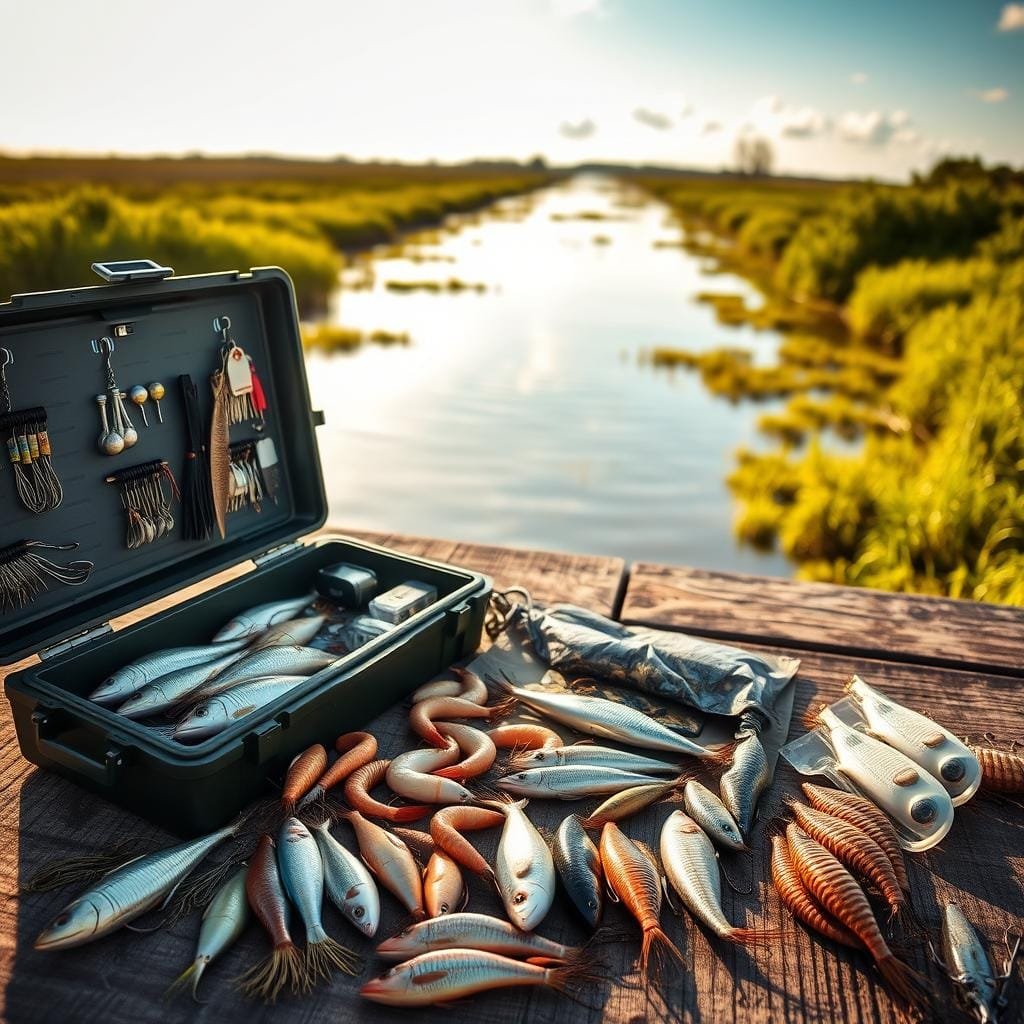
Choosing the right bait is key for a good redfish fishing trip. You must decide between live and artificial baits. This choice depends on the water, the season, and the local ecosystem.
Live Baits vs. Artificial Lures
Many anglers prefer live baits because they look like real food. Shrimp and small baitfish are favorites. They move like real prey, attracting redfish.
Artificial soft plastics work well too. They last longer and are good in tough places like oyster beds. They’re also great for longer fishing trips.
Top Bait Choices for Redfish
- Live Shrimp: Great for clear waters, looks natural.
- Finger Mullet: Best for murky waters or grass beds.
- Artificial Soft Plastics: Looks like real prey, good when fish are shy.
- Half-Ounce Leadhead Jigs: Use with soft plastics, best for deep or fast waters.
How you present your bait is just as important. Make sure it looks like real food. This can mean the difference between a good catch and a quiet day.
Tactics for Successful Redfish Fishing
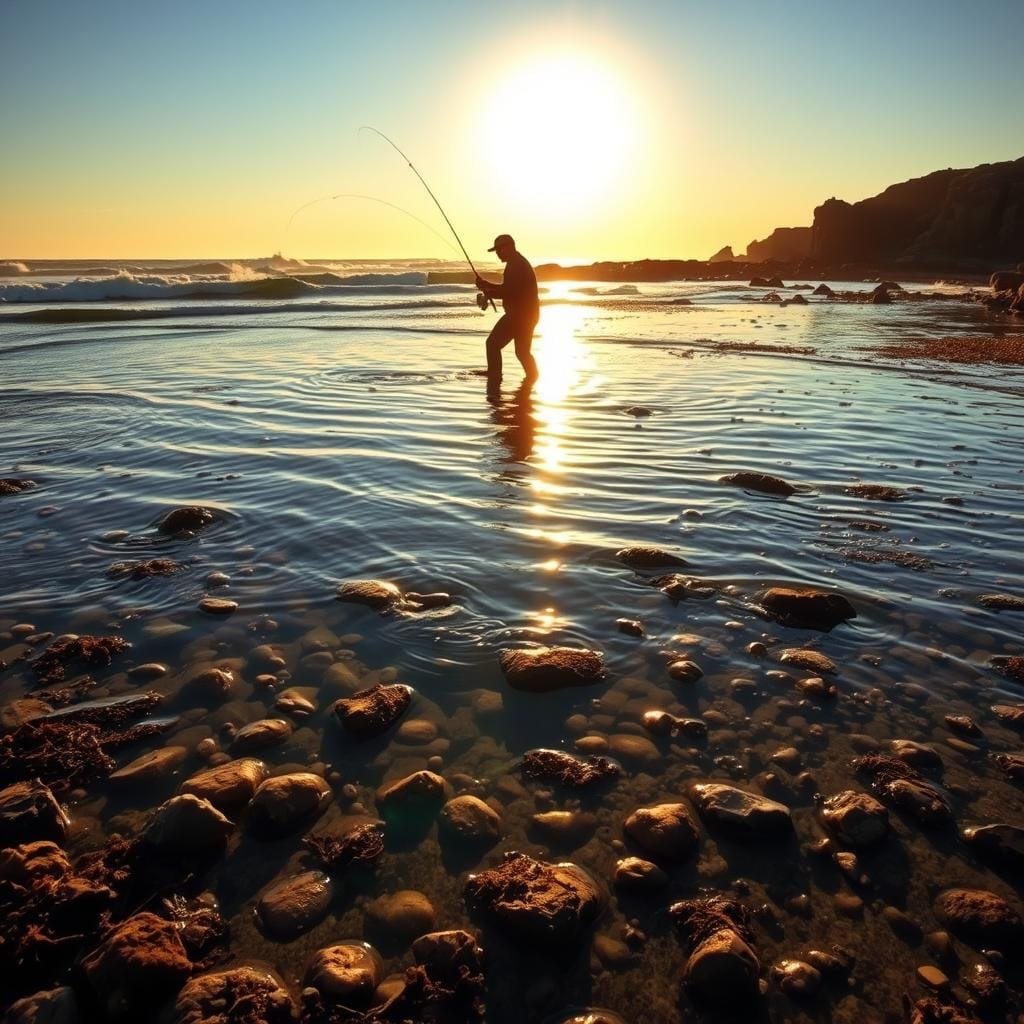
Fishing for redfish well needs good tactics. You must watch the environment closely. Look for signs of redfish and change your fishing ways with the tides. Good anglers use the natural world and redfish habits to their advantage.
Reading the Water: Signs of Redfish Presence
Finding redfish starts with knowing their signs. They like shallow water and “tailing,” where their tails show above water. Watching for these signs takes patience but helps you know where to fish.
Adapting Strategies for Tidal Movements
Redfish fishing depends on the tides. Fishing with the tides helps a lot. You need to fish at the right times and places, like near channels and potholes.
- Look for redfish at low tide on oyster bars and mud flats. They hunt for crabs and shrimp there.
- At high tide, fish in grassy marshes. Redfish go there to eat small fish and crustaceans.
Using these fishing tactics and knowing redfish behavior with the tides makes fishing better. You’ll catch more redfish and have a great time fishing.
Understanding and Utilizing Redfish Feeding Patterns
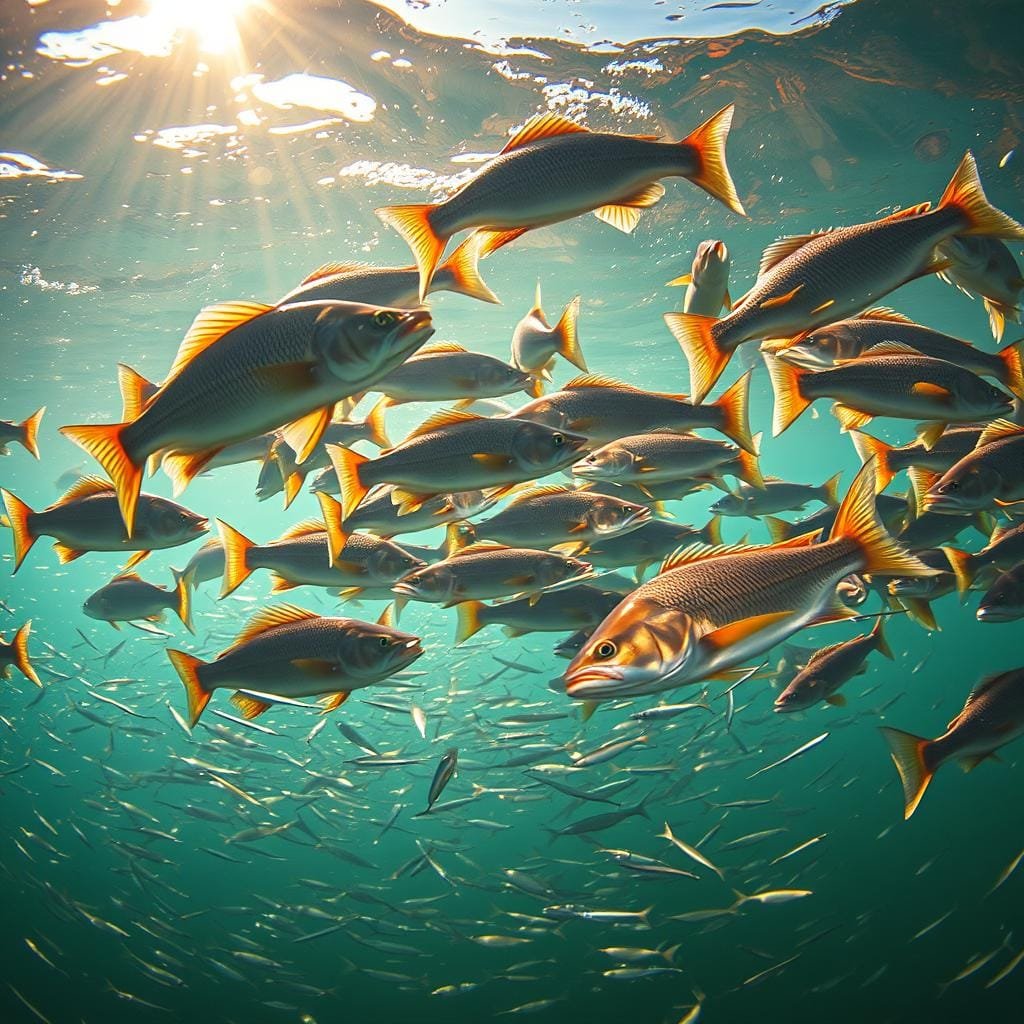
Knowing the redfish feeding habits is key for any fisher. Redfish are strong bottom feeders. They have special behaviors that can make your fishing better. Timing and how you present your bait are very important.
When they eat, redfish often show “tailing”. This means they lean forward in shallow water. Their tails come up as they look for food on muddy bottoms. Knowing these signs and using the right angling strategies can help you catch more fish. The best times to fish are early morning or late afternoon.
- Look for signs like birds eating or fish swimming to find where redfish are.
- Use scents or flavored baits to attract redfish with their sense of smell.
- Think about the tide, as redfish follow it into flats and marshes for food.
By fishing when redfish are most active, you can catch more fish. It also makes fishing more fun and rewarding.
Using Technology to Enhance Redfish Fishing Success
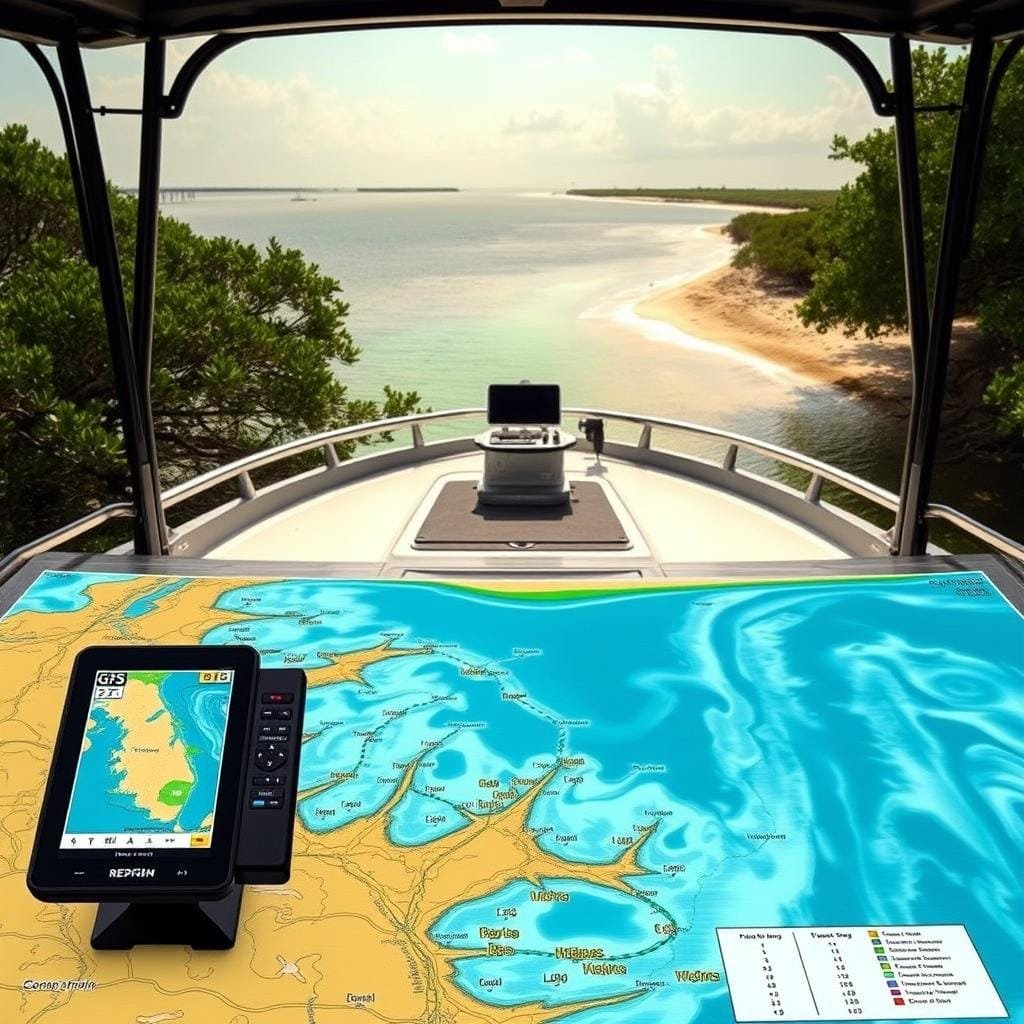
Fishing is changing fast, and using new tech is key for catching redfish. Tools like GPS and habitat mapping help anglers fish better and catch more.
Today’s anglers use tech to know where redfish are and where they like to hide. Here’s how:
GPS and Fishfinders: Mapping Redfish Habitats
GPS helps fishermen find the best spots to fish for redfish. It saves time and gas. Plus, GPS devices have fishfinders that show what’s under the water. This helps find redfish spots that are hard to see.
The Role of Mobile Fishing Apps
Mobile apps turn phones into fishing helpers. They have calendars, weather, and logs for planning. Some apps even share fishing spots, making it easier to catch redfish.
| Technology | Use in Redfish Fishing | Benefits |
|---|---|---|
| GPS Devices | Locating fishing spots and routing | Increased efficiency and saved costs |
| Fishfinders | Underwater habitat mapping | Spot redfish hideouts |
| Mobile Apps | Log catches, view maps, and share tips | Stay updated with real-time data and community insights |
By using these tech tools, anglers can catch more redfish. They also fish better and help the ocean by fishing in the right places.
Tips for Catch and Release Fishing
Doing catch and release techniques tests your skills and helps fish conservation. It’s important to handle redfish right to keep fish healthy for the future. We’ll talk about how to care for redfish and make sure they can swim away again.
Handling Redfish with Care
When you catch and release, it’s key to not stress the fish too much. Use wet hands or gloves to keep the slime coat on. This helps protect the fish from getting sick.
Don’t touch the gills because they are very sensitive. Instead, hold the fish by the mouth and belly. This helps avoid hurting the fish inside.
- Use the right gear: Employ circle hooks to reduce deep hooking and injuries.
- Minimize air exposure: Keep handling times brief, typically less than a minute.
- Handle with care: Support the weight of larger fish in the water as much as possible.
Ensuring Healthy Release Practices
Good release techniques are key for redfish to survive. It’s not just about handling; it’s also about using the right gear and methods. For more info, check out sustainable fishing practices.
- Revive the fish if necessary: After a long struggle, gently move the fish back and forth in the water to aid in oxygen absorption.
- Check the surroundings: Release the fish in a safe area free from predators, ensuring the water is deep enough.
- Observe after release: Monitor the fish momentarily to ensure it doesn’t roll over or show signs of distress.
By following these sustainable fishing practices, anglers help a lot with marine life. This way, future generations can enjoy catching redfish too. Every effort helps make the water healthier.
Advanced Techniques for the Experienced Angler
For those who know the basics of redfish fishing, trying advanced redfish techniques is exciting. Sight fishing and fly fishing for redfish are top choices. They make fishing more fun and improve your skills.
Sight fishing means finding redfish in shallow water. You need good eyes and specialized angling approaches. Knowing the water and fish behavior helps you cast close without scaring them.
Fly fishing for redfish is thrilling. It uses light rods and bait that looks real. It’s a test of your skill to make the fly look like food.
Both advanced redfish techniques need patience and skill. Whether you’re quiet in the shallows or casting in the marsh, each way is special. They lead to better redfish fishing.
Conservation Efforts and Sustainable Fishing Practices
Fishing for redfish is more than just catching them. It’s about caring for the future of this special fish. Anglers, rules makers, and green groups work together to keep redfish safe. They make sure the fish have a good home and enough friends.
Rules for fishing are very important. They help keep the number of redfish just right. This way, everyone can keep fishing while making sure the fish stay healthy.
Keeping the water clean is key to redfish survival. Places like the Gulf of Mexico need to stay healthy for redfish and other sea creatures. Rules like bag limits and fishing seasons help keep the balance right.
Anglers play a big role in keeping the sea healthy. Knowing the fishing rules and releasing fish when you can helps a lot. This way, we help keep redfish for everyone to enjoy. Fishing the right way shows we care about nature and the sport of fishing.
FAQ
What exactly is a redfish?
Redfish, also known as Sciaenops ocellatus, is a game fish. It’s known for its strong fight when hooked. They belong to the drum family, which includes croaker and black drum.
Redfish are often found in schools. They are also called red drum, puppy drum, and bull redfish.
Where are the best places to fish for redfish in the U.S.?
The best places to fish for redfish in the U.S. are along Florida’s coastlines. Places like the Everglades, Fort Myers, Key Largo, and Marco Island are great. The Gulf Coast is also good, with oyster bars and tidal creeks.
How do seasons affect redfish behavior?
Seasons change how redfish behave. In spring, they get more active as the water warms up. They are most aggressive during their spawning season in late summer and fall.
In winter, they gather in warmer waters. This helps them stay warm.
What type of tackle is recommended for catching redfish?
For catching slot redfish, use light spinning tackle. A 6.5- to 7-foot rod with 10-pound to 20-pound braid is good. Add about three feet of 20-pound monofilament leader to handle their strong fight.
Natural baits vs. artificial lures: Which is better for redfish?
Both live and artificial baits work well for redfish. Live baitfish or shrimp are good natural baits. Half-ounce leadhead jigs with soft plastic tails are good artificials.
The choice depends on the fishing conditions and what you prefer.
How can you tell if there are redfish in the area?
Look for schools of fish or “tailing” behavior on flats. This is where they search for food. Also, pay attention to tidal movements and environmental cues to find redfish.
What technology helps with finding redfish?
GPS and fishfinders are great for finding redfish habitats. Mobile fishing apps can give you info on feeding patterns, local rules, and tidal changes.
What are the best practices for catch and release fishing with redfish?
When catch and release fishing, handle redfish carefully to help them survive. Minimize handling time and avoid touching their gills. Use circle hooks to reduce injury.
Knowing how to release them properly helps with sustainable fishing.
Can you explain more about sight fishing and fly fishing techniques for redfish?
Sight fishing means spotting redfish and casting to them in shallow waters. Fly fishing for redfish uses special gear and techniques to mimic baitfish or crustaceans.
Both methods need skill in casting and reading water conditions. You also need to present baits naturally.
How do conservation efforts impact redfish fishing?
Conservation efforts are key to keeping redfish populations healthy. States have rules like slot limits, seasonal restrictions, and bag limits. Anglers must follow these to help keep redfish available for everyone.