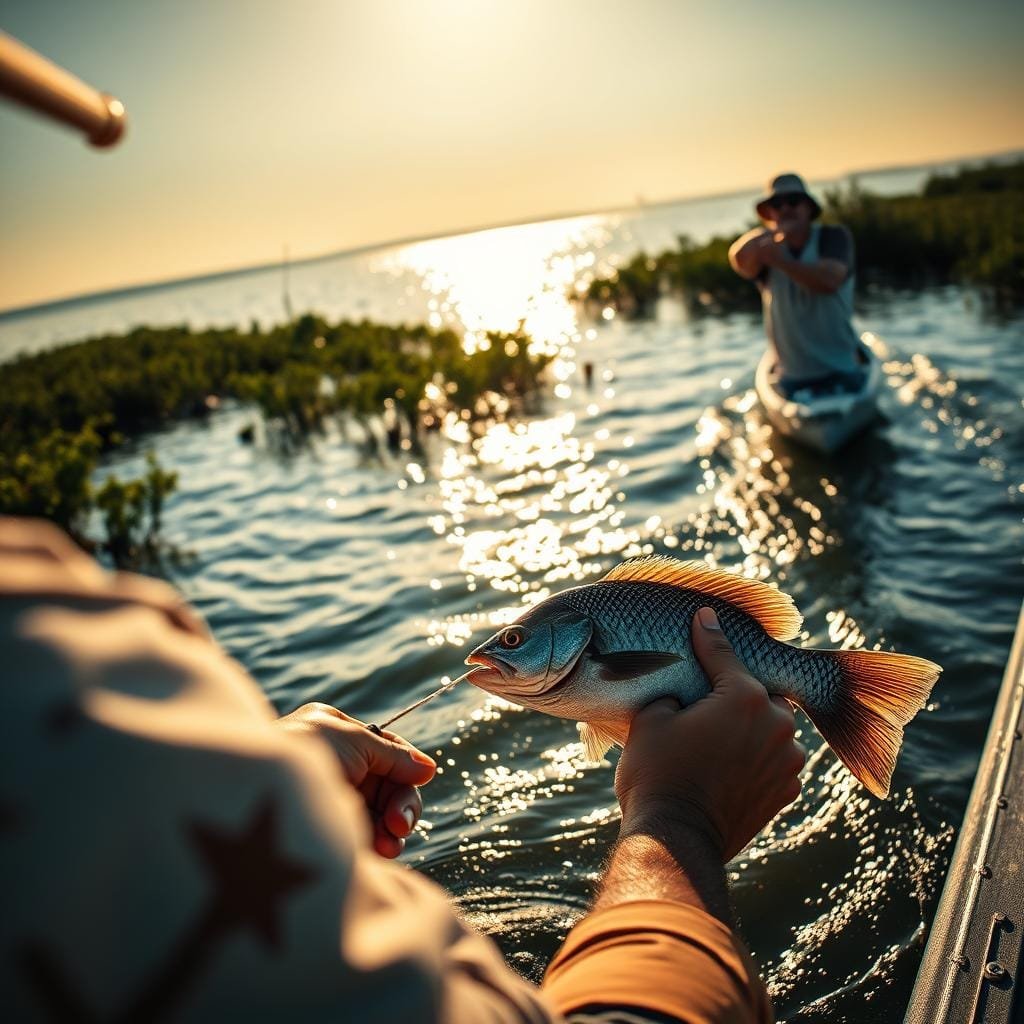
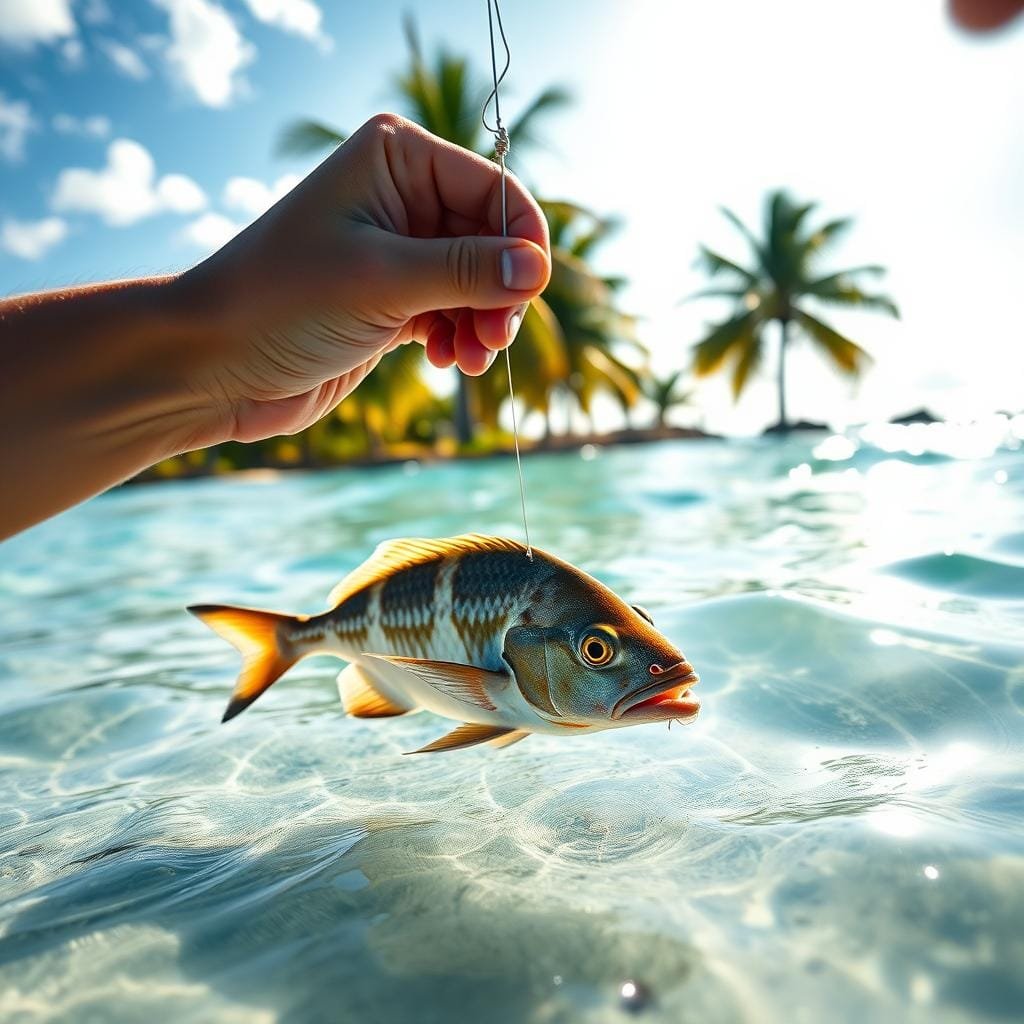
Triggerfish are fun to catch and great to eat. They have small mouths, tough teeth, and sharp instincts. Using light tackle makes the fight exciting.
Smart rigs and baits help catch them. Their firm, white meat is as good as grouper. This is thanks to their diet of sand dollars and sea urchins.
Gray triggerfish are popular in Florida and the Mid-Atlantic. Queen triggerfish are found in deep water. Fly fishermen target titan and yellowmargin triggerfish in the Pacific and Indian Oceans.
These fish live on reefs, wrecks, and artificial reefs. They also hang out under weedlines and buoys. Knowing how to handle them is important.
Their “trigger” spine must be pressed to open. This is a safety step because of their parrot-like teeth. Keep your rigs simple, hooks small, and leaders clean.
Next, we’ll share tips on how to catch triggerfish. We’ll cover the best rigs and baits. Plus, we’ll explain U.S. regulations so you can fish legally.
Understanding triggerfish behavior and identification for better hookups
Getting triggerfish to bite starts with watching closely and moving slowly. Knowing how to identify them helps pick the right bait and time. They check their surroundings before biting, so paying attention to their body language is key.
Why the “trigger” spine matters and how to safely handle it
The triggerfish’s famous dorsal spine works like a lock. It pops up and won’t fold until you press the second spine. This lets you control the fish and avoid getting hurt by their sharp teeth.
When a fish tries to swim away, the fin helps it get stuck. Anticipate this and keep steady pressure. This way, you can safely remove the hook from the spine.
Recognizing gray vs. queen vs. titan/yellowmargin triggers
Distinguishing between gray and queen triggerfish involves looking at their shape and color. Grays are more oval and have diamond scales. Queens have brighter patterns and swim a bit deeper.
Abroad, titan triggerfish have a black “moustache” and orange tail. Yellowmargin triggerfish have a yellow-edged tail. Knowing these details helps you identify them quickly and avoid mistakes.
Feeding habits: sand dollars, sea urchins, mollusks, and crustaceans
Triggerfish are clever eaters. They flip sand dollars and eat sea urchin spines to get to the soft inside. They also eat mollusks and crustaceans with their strong teeth.
Choosing the right bait can make a big difference. For more tips, check out are trigger fish hard to catch. It talks about using small hooks and tight leaders.
Aggression and nest-guarding: how it affects your approach
Triggerfish are protective of their nests and will chase away intruders. This boldness can work in your favor, but it can also make them run away quickly. Move quietly and reel in smoothly to avoid losing them.
On reefs, they can be aggressive and steal bait. Wait for a solid bite before setting the hook. This way, you’ll catch more fish and avoid losing them in holes.
Best places to find triggerfish: reefs, wrecks, and surprising shallow spots
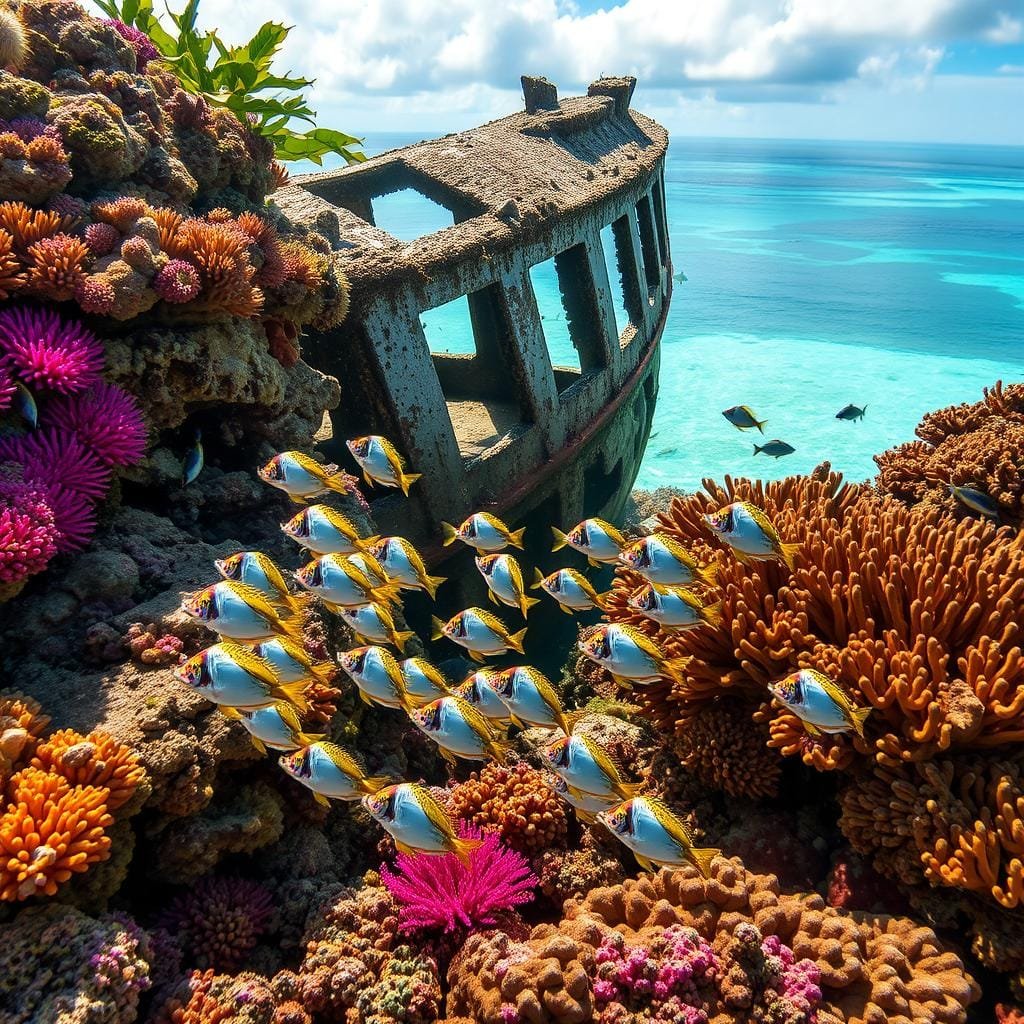
Find the right spot for triggerfish and you’ll catch a lot. Look for places with rough bottoms, clear water, and some current. Use sonar to find the highest points, then see how bait moves before you drop your line.
Ledges, limestone outcrops, and artificial reefs that hold fish
Reefs made of limestone are great for triggerfish. They like to hang around where the water is a bit deeper. Artificial reefs, like old bridges, also attract them. Start by fishing the up-current side, then move to the top to find the best spot.
When you can’t see fish on your screen, try using a chicken rig. Drop it to the bottom, then slowly move up to find the fish. This helps you see where they are in the water column.
Nearshore “shockers”: docks, 20-foot hardbottom, and mitigation reefs
Nearshore areas can be good for triggerfish too. Look for reefs near Clearwater Pass and Johns Pass. They’re close enough to see from the beach. In St. Petersburg, 20-foot deep areas are also good for finding them.
Don’t ignore the shadows under big docks. A five-pound fish was caught in just six feet. Move quietly and cast short to catch them.
Offshore flotsam: weedlines, buoys, buckets, and lobster balls
Offshore, look for weedlines and buoys for surprises. Mahi and other fish gather there. Buckets and lobster balls also attract fish. Cast near the cover, not on it, to avoid scaring them away.
Keep a light rod ready for mahi. Triggerfish often hide in the same spots. A quick cast can turn a catch into dinner.
Boat positioning and anchoring precisely over structure
Getting your boat in the right spot is key. Being off by just 20 feet can hurt your chances. Use a two-point anchor or spot-lock to stay right over the structure.
Match your sonar with what divers say about the area. Once you’re in the right spot, fish the edges first. Then move to the peak, adjusting your drift to stay close to the structure.
how to catch triggerfish
Use smaller lures to catch those tiny mouths. Start with 15–20 lb main line and a 30 lb fluorocarbon leader. Then, add a knocker setup with 1/0–2/0 circle hooks.
In the Mid-Atlantic, go even smaller. Use #4–#6 hooks tied to about 15 lb line. Add dime-sized squid pieces for bait. These methods keep your bait in place and hooks where they need to be.
Cut squid into thin strips. This way, each nibble finds steel. The bait stays longer, and smaller targets mean more catches. Wait for steady weight before reeling fast and smooth.
Start by fishing on the bottom. Then, slowly move the rig up a few feet. This helps find fish in the middle. A chicken rig can also attract more fish around structures.
After catching one fish, pause. This might get another fish to bite. These tactics can help you catch more fish when they’re all biting.
Keep one light outfit ready while using heavier rods for grouper or snapper. A steady pick on squid can bring in bigger fish. Approach surface or flotsam quietly and cast near, not on, what you see.
If fish won’t eat, try the old bucketing trick. This can change things. Use calm hands and these techniques to catch triggerfish without worrying too much about the bite.
Proven baits that trigger bites: squid strips, crabs, and shellfish
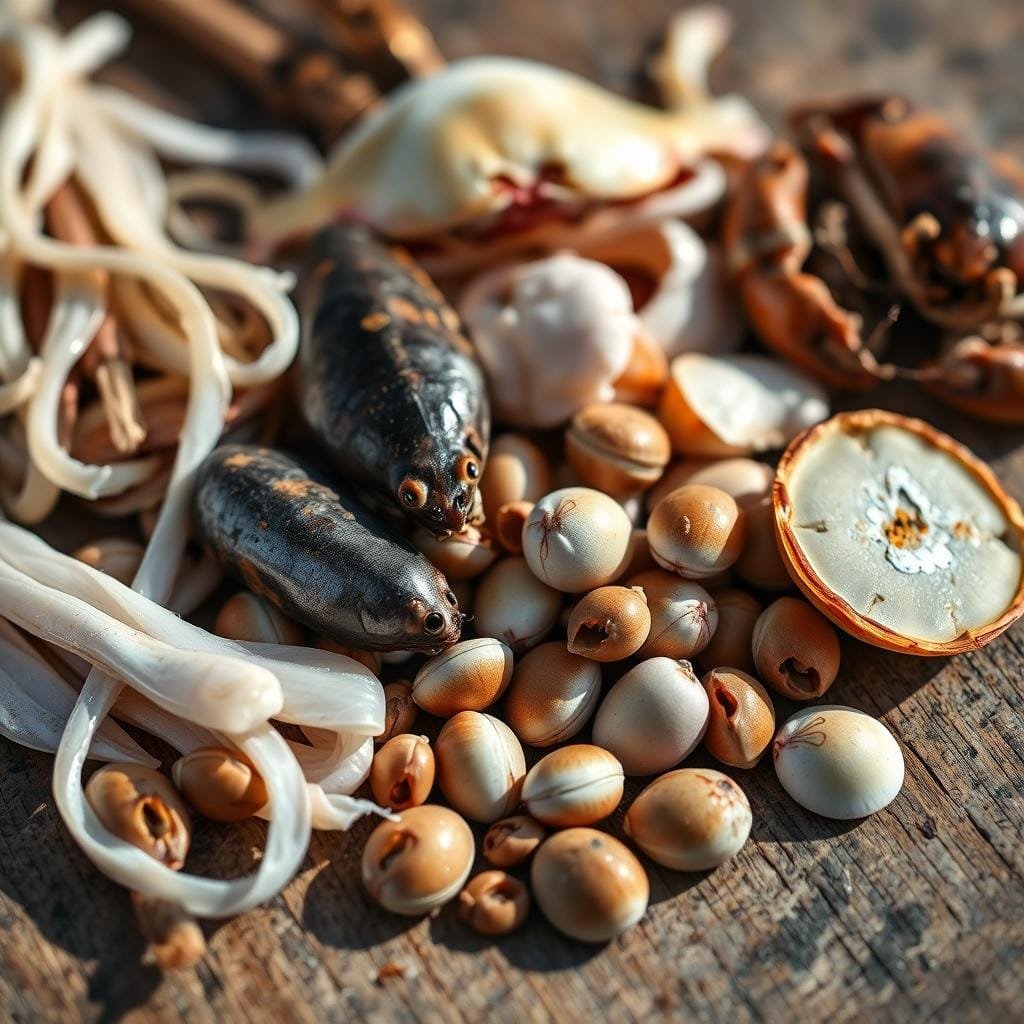
Use what they love on the reef to catch more fish. The best bait for triggerfish is what they eat every day. It should stay on the hook and let a small hook catch them fast.
Why tiny squid strips out-fish chunks on tough-mouthed nibblers
Thin squid strips are great because they last a long time. They thread easily and fold into a small circle. This makes them easy to hook and less likely to get lost.
Don’t use big chunks of bait. Use a small piece of squid instead. This makes it easier to hook them and helps you feel the bite.
Fiddler crabs, barnacles, oysters, and green mussels as natural options
When fish are picky, use crab bait. A fiddler crab with its leg cut off works well. Barnacles and oysters also attract them, and green mussels are great for hardbottom areas.
Green mussels from bridge pilings are also good. They smell like what fish eat every day. This helps when they’re not biting much.
Cut bait alternatives: grunt or pigfish pieces
Use cut bait if you don’t have squid. Grunt or pigfish pieces work well. They smell good and change the bait’s look when it’s hard to catch fish.
Make the pieces small and uniform. They should be big enough to cover the hook but not too big.
Bait prep: downsized, durable, and streamlined presentations
Make baits small and strong. Thread squid strips carefully to keep them straight. Use soft shellfish at the tip so the hook is easy to see.
Choose the right hook size for the fish’s mouth. Use squid strips, crab bait, oysters, or green mussels. This way, you can feel the fish bite and catch them easily.
Rigs and terminal tackle that beat tiny mouths and tough teeth
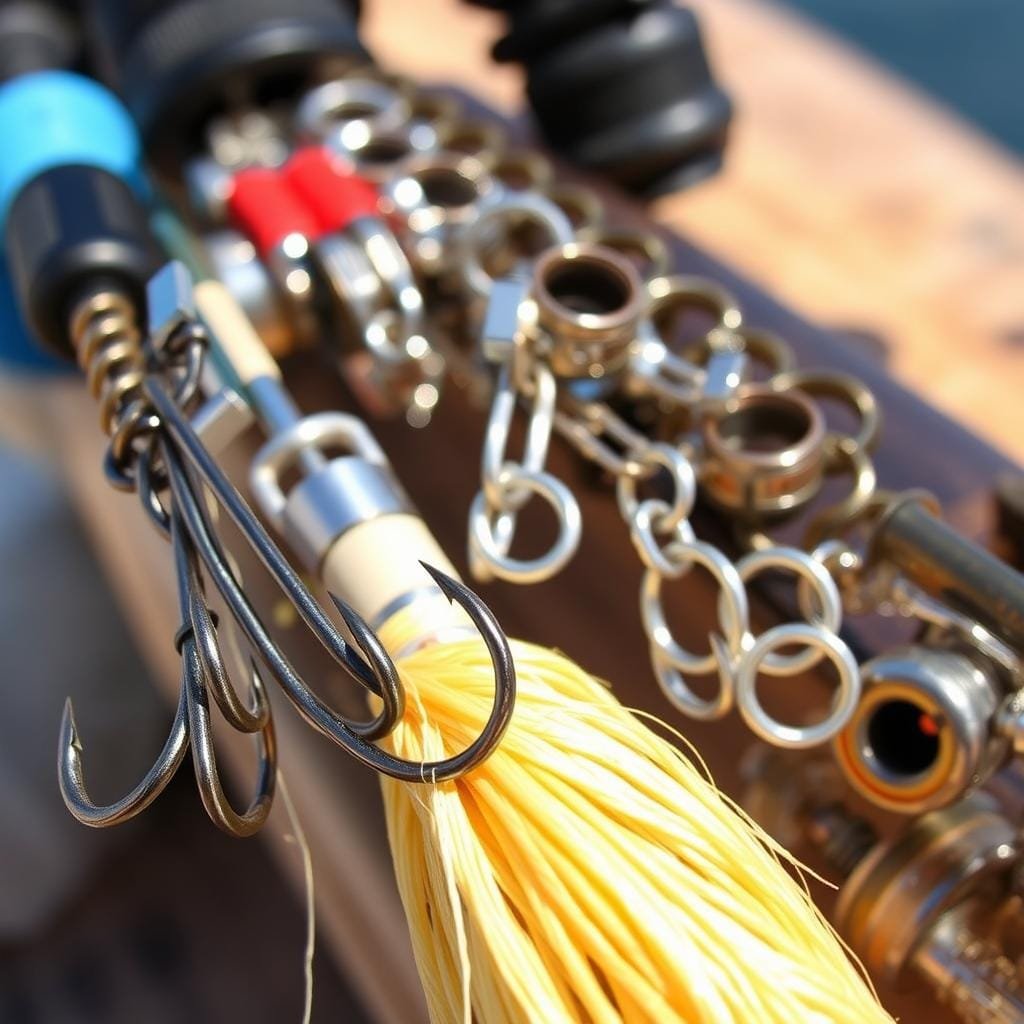
Triggerfish nip, inspect, and bolt. Smart triggerfish rigs keep bites coming without spooking fish. Match small baits with compact hardware and lean on abrasion-resistant pieces that survive reef edges and teeth.
Knocker rig with 1/0–2/0 circle hooks for stealthy takes
A knocker rig keeps everything tight to the bait. A slip sinker slides down to the hook, so the bite feels natural. When a fish eats, the line slips through the weight with almost no drag, and you just reel until tight.
- Weight: 1/2–2 oz to match current and depth.
- Main line: 20 lb braid or mono to feel soft pecks.
- Terminal: 30 lb fluorocarbon leader paired with 1/0–2/0 circle hooks for triggerfish.
Circle hooks are standard on Gulf reef fish and stick clean. Forget the swing; ease the rod and crank. For bait size and setting tips, see this practical take on a J-hook for triggerfish and tiny squid or cut bait in 20–30 feet.
Chicken (high–low) rigs to spark competition around structure
A chicken rig, also called a high-low rig, puts two small baits in the strike zone. Dropper loops keep baits off the bottom, while a 2–4 oz sinker pins the rig under the boat. A light jiggle often draws fast doubles when fish compete.
- Convert a heavy sabiki: trim to the top two hooks, leave about 18 inches to the sinker.
- Use 1/0 circle hooks for triggerfish or downsize when they’re picky.
- Run a short fluorocarbon leader to reduce visibility and resist chafe.
Light line strategies: 15–20 lb main line, 30 lb fluoro leaders
Thin diameters transmit pecks and cut drag in current. A 15–20 lb main line helps you feel the bite and lift the rig clear of snags. Add a 30 lb fluorocarbon leader to survive the rub of wrecks and those file-like teeth.
- Keep leaders short, 12–18 inches, to prevent spinning baits.
- Crimp or tie clean connections; bulky knots spook wary fish.
- Use compact weights to keep triggerfish rigs streamlined.
Micro-hook tactics in the Mid-Atlantic: #4–#6 hooks tied direct
When Mid-Atlantic triggerfish key on tiny bits, skip the leader and tie #4–#6 hooks straight to about 15 lb main line. Pin thumbnail-size squid strips and let the bait flutter. The lack of hardware boosts bites in clear water.
- Keep the sinker light—just enough to touch bottom and hold.
- Reel as the rod loads; let circle hooks for triggerfish seat on their own.
- If they shy off, switch to a slimmer fluorocarbon leader and a smaller knocker rig.
| Rig | Best Use | Hook Size | Main Line | Leader | Weight | Key Advantage |
|---|---|---|---|---|---|---|
| Knocker rig | Stealth bites on reefs and wreck edges | 1/0–2/0 circle | 20 lb | 30 lb fluorocarbon leader | 1/2–2 oz | Slip weight reduces resistance; compact profile |
| Chicken rig / high-low rig | Triggering competition around structure | #1–1/0 circle | 15–20 lb | 20–30 lb fluorocarbon leader | 2–4 oz | Two baits in the zone; easy doubles |
| Mid-Atlantic micro | Clear water, finicky Mid-Atlantic triggerfish | #4–#6 | ~15 lb | None or light fluoro if needed | Light as possible | Minimal hardware; maximum sensitivity |
Light tackle setups and boat strategies that increase hook-up rates
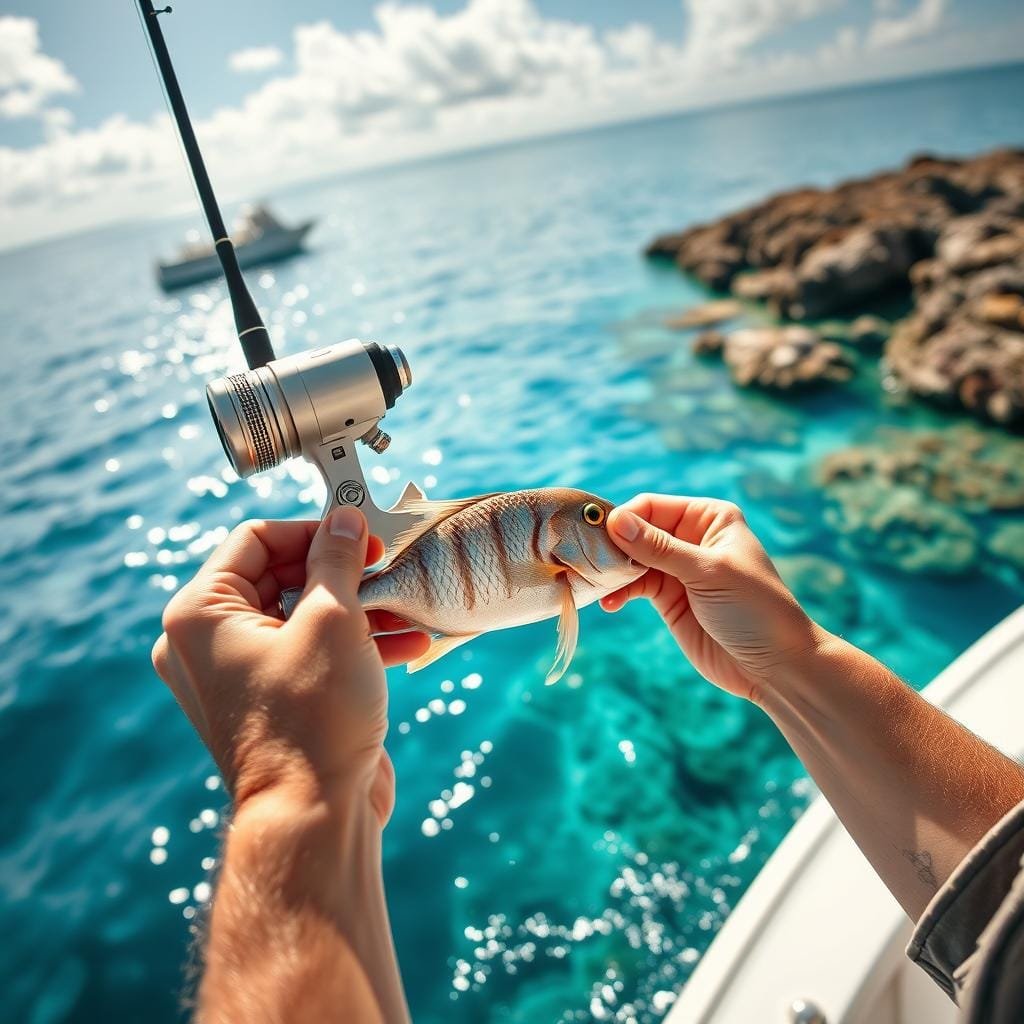
Use a light, easy-to-handle outfit to feel every bite. A 15-class rod with a small reel from Shimano, Daiwa, or Penn works well. Many use the same gear for triggerfish and mahi, but change to tiny hooks and squid bits.
Keep different options ready. Have one angler use a light tackle rig to check the area. Squid on small circles can quickly show you where fish are. This is great for kids fishing triggerfish, keeping the action steady.
Where you place the boat is key. Position the boat right over the tallest structure for the best chance. Use sonar to see how fish are stacked and adjust your boat to sit perfectly.
Watch the screen as the tide changes. If marks move away, adjust your boat’s position. When your bait drops into the right spot, you’ll feel a solid weight, and hookups will increase.
| Setup | Why It Works | Pro Tip |
|---|---|---|
| 15–20 lb spinning gear for triggerfish with 30 lb fluoro leader | Sensitive to light bites but stout near structure | Match tiny squid strips to 1/0–2/0 circles to stick tough mouths |
| Light tackle triggerfish rod kept in one angler’s hands | Constant taps reveal depth and current shifts | Let youths work this rod to keep the school engaged—ideal for kids fishing triggerfish |
| Pinpoint boat positioning for triggerfish over highest relief | Stays on the densest stack of fish | Set anchor for the up‑current edge; adjust scope to hold center over the peak |
| Sonar reads guided by past dive notes or waypoints | Shows how fish sit relative to current and ledge faces | Mark the up‑current lip and drop vertically to minimize swing |
Switch anglers between the scouting rod and a slightly heavier stick. This helps guide hooked fish out and up. With the right boat control, small baits, and sharp hooks, every drift has a chance.
Boat and shore techniques: dropping, drifting, and slow-rolling the water column
Start by working the bottom, then move up. Use a drop and slow retrieve to follow the bottom. This works well from a boat, pier, or shore, near rocks.
Drop to bottom, then creep the rig up to find mid-column feeders
Drop the rig until it hits bottom. Then, slowly move it up. This attracts fish that like to hang near the bottom.
If you see sand eels or marks higher up, try a metal jig. Move it up and down like a dropping-and-creeping playbook for suspended fish.
Managing peck-peck bites: wait for weight, then reel steadily
Peck bites feel like tiny taps. Don’t jerk the rod. Wait until the line feels heavy, then reel in.
Keep the rod low and reel hard. This helps guide the fish out and hook it better.
Keeping one light rod in the mix to ignite a feeding frenzy
Drifting for triggerfish? Make a pass, then anchor where bites happen. Use a light rod with a small bait.
This bait can start a feeding frenzy. If one fish eats, wait a bit. Often, another will join in.
- Boat drift: short drifts over relief, then reset on the most active line.
- Pier or jetty plan: vertical drops, tiny lifts, and a slow retrieve to cover the face.
- Beach or harbor walls: target seams and current eddies for consistent shore fishing triggerfish action.
Fly fishing for triggerfish on the flats
Shallow water means every move is important. Move quietly and watch the light. Place your fly carefully.
Gear: 9-weight, 12-foot leaders (16–20 lb), weed-guarded crab/shrimp flies
Use a fast 9-weight rod with a smooth line. This helps in windy conditions. A 12-foot leader in 16–20 lb works well for quiet fishing.
Bring shrimp and crab flies. They work well in coral and grass. Strong hooks and weed guards help avoid getting stuck.
Stealth, timing, and casting to tailing fish on incoming tides
Move slowly to avoid disturbing the water. Tides bring fish to edges and sand spots. Look for tails and cast ahead of them.
Let the fly settle before drawing it back. A slow draw can catch their attention. Be patient with shrimp and crab flies.
Strip-set technique and keeping them out of coral holes
Use short, sharp strips to set the hook. Don’t trout set. If they miss, they might try again.
Keep the rod low to keep the fish tight. If they get stuck, lift the rod and apply side pressure. This helps turn them away from coral.
Hot destinations: Seychelles, Christmas Island, Nubian Flats, Caribbean
Seychelles is great for fly fishing. You can see many fish on the turtle grass. Christmas Island has triggers near coral and sand.
Nubian Flats Sudan has big fish and lots of them. The Caribbean has gray fish in sunny areas. Bring a titan and yellowmargin fly for different fish.
Surface and flotsam tactics: sight-casting and “bucketing”
Blue water weedlines, buoys, and lobster balls can hold triggerfish. Move the boat downwind quietly. Look for shadows under the flotsam for a good sight casting spot.
Approach quietly and cast near, not on, visible fish
Slide the boat in slowly with the bow into the wind. Stop and then drift to the edge of the weedline. For flotsam fishing, cast a small jig or squid strip a few feet ahead of the fish.
This light splash will draw them in. They’ll then swim 10 feet to eat it.
- Use 15–20 lb braid and a 30 lb fluorocarbon leader for quiet casts.
- Make short, accurate casts. One good pitch is better than many.
- If they stop eating, pause, then feed the bait down their nose. This keeps sight casting without scaring them away.
When they won’t eat: sink a weighted five-gallon bucket trick
Stubborn fish hiding in cover? Try bucketing. Tie a rope to a five-gallon bucket, add water and a small lead weight. Lower it beside the boat near the debris.
Triggers drawn to shade will come in. Ease the line up and lift the bucket aboard smoothly.
- Place the bucket on the shadow side of the flotsam for a natural draw.
- Work fast and quiet. Hesitation lets fish escape.
- Have pliers ready to quickly release the fish.
Safety first: handling those parrot-like teeth boatside
Boat-side safety starts with keeping distance. Use long-nose pliers to grip the hook and avoid the mouth. Press down the second dorsal spine to unlock and flatten the fin before lifting.
A rubberized net helps steady the release.
- Wear cut-resistant gloves when unhooking near the gunwale.
- Keep the fish horizontal to protect the jaw and reduce thrashing.
- If you plan to release, unhook in the water when possible and skip deck photos.
Regulations, safety, and cleaning: staying legal and enjoying the catch
Before you fish, learn the rules. In the Gulf, gray triggerfish must be 15 inches long. On the Atlantic coast, they need to be 12 inches long. Circle hooks are a must for reef fish in the Gulf, so use them.
These rules help keep fish populations healthy. They also make sure your fishing trip is legal. You might catch other fish like white grunts or vermilion snapper. But, they’re not as exciting as triggerfish.
Be careful when handling triggerfish. They can bite and won’t back down if they’re nesting. Use tools like pliers or a dehooker to handle them.
To release a fish quickly, press the second spine of the first dorsal. This helps if the fish is too small. You need to meet the size limit for Gulf or Atlantic triggerfish.
Cleaning a triggerfish is a bit tricky. Their skin is tough, so you’ll need a sharp knife. To fillet, cut from the soft spot behind the gill plate to the dorsal.
Then, follow the backbone and cut around the ribs. Clean from flesh to skin, not tail-first. For a whole fish, gut it from the vent forward and remove eyes and gills.
Stuff it with a citrus or seafood dressing. Score the flanks and baste with butter and citrus. Bake at 350°F for 20–30 minutes. For more tips, check out this guide: tips for targeting triggerfish.
When you’re done cleaning, trim dark bloodlines and pat dry the fillets. Triggerfish meat is mild and firm. It’s great in a pan or on the grill.
Keep portions small to avoid overcooking. Follow the rules, respect the size limit, and use the right knife. You’ll love every bite.
FAQ
Why does the “trigger” spine matter, and how do I handle triggerfish safely?
The “trigger” spine is special. It locks up until you press a smaller spine. This is how you catch them safely.
Hold the fish gently and press the second spine. This makes the fin lay flat. But, be careful of their sharp teeth.
For safe dehooking, use pliers at the boat.
How do I tell gray triggerfish from queen, titan, and yellowmargin triggers?
Gray triggerfish have diamond scales and live in 50–80 feet off Florida. Queen triggers live deeper.
Titan triggers have an orange tail with a black band. Yellowmargin triggers have a yellow-edged crescent tail. Grays have a small black flag-like tail.
What do triggerfish eat, and how does that guide bait choice?
They eat sand dollars, sea urchins, mollusks, and crustaceans. Use squid strips, fiddler crabs, and oysters as bait.
Small pieces and streamlined baits fit their mouths well.
Are triggerfish aggressive, and does that change how I approach them?
Yes, they are aggressive. They build nests and defend them. This makes them bold on bait.
Approach quietly and manage hooked fish with firm side pressure. Steer them away from structure fast.
Where are the best places to find triggerfish?
Look on reefs, wrecks, and artificial reefs. They also stack under offshore flotsam.
Don’t overlook shallow hardbottom in 20 feet or residential docks.
What nearshore “shocker” spots should I check?
Pinellas County mitigation reefs are good. South St. Petersburg hardbottom in 20 feet is another spot.
A gray triggerfish was caught under a residential dock on a live shrimp, weighing around five pounds.
How do I fish triggers under weedlines and other flotsam?
Slide in slow and quiet. Cast near, not on, the fish to avoid spooking.
They’ll often rush 10 feet to eat. If they’re lockjawed, try the “bucketing” trick.
How important is precise boat positioning over structure?
Very important. Being 20 feet off the high-relief sweet spot can kill the bite.
Use sonar to find the active zone. Set anchor scope and angle to sit right on top.
What are the go-to baits, and why do thin squid strips work so well?
Squid is durable and easy to handle. Cut thin strips to create a small target.
Natural options like fiddler crabs and oysters also shine. Small grunt or pigfish chunks add variety.
How should I prep bait for tiny-mouthed triggerfish?
Keep it small and tough. Use single squid tentacles or dime-sized pieces in the Mid-Atlantic.
Streamline on small hooks so quick pecks find steel. Squid’s toughness keeps it on through repeated bites.
Which rigs beat tough teeth and small mouths?
Two standouts are a knocker rig and a chicken (high–low) rig. Both keep baits compact and in the zone.
What line and leader setups work best?
Run 15–20 lb main line for feel and stealth. Use a 30 lb fluorocarbon leader for abrasion resistance.
In the Mid-Atlantic, a micro-hook approach with #4–#6 hooks tied direct to ~15 lb line can out-fish heavier gear.
How do I work the water column from boat or pier?
Drop to the bottom around structure. Then crawl the rig up to locate mid-column feeders.
With high–low rigs, a light jiggle can trigger competition. After the first hookup, pause and a second fish may jump on.
What’s the right way to handle those “peck-peck-peck” bites?
Be patient. Wait for steady weight before reeling. With circle hooks, don’t jerk—just crank smoothly until the rod loads.
Thin squid strips help turn pecks into solid pressure.
Why keep one light rod fishing while other baits soak?
A constant trickle of squid strips can spark a feeding frenzy. This pulls in more triggers and bonus species.
It also keeps the crew engaged and helps locate the active depth.
What light tackle and boat strategies boost hookups?
Use sensitive 15-class spinning or casting gear scaled light, but stout enough to steer fish off structure. Anchor cleanly over the highest relief, minimize noise, and maintain precise angles over the spot.
Little differences in position matter.
How do I fly fish for triggerfish on the flats?
A 9-weight with a 12-foot leader (16–20 lb) is standard. Throw weed-guarded crab and shrimp flies like the Gumby Crab, EP Spawning Shrimp, or Itchy Trigger.
Approach quietly, target tailing fish on incoming tides, and be ready for multiple eats.
What’s the proper fly presentation and hook-set?
Drop the fly close and ahead, let it settle, then make a long slow strip. When the fish tails down, use short, sharp strip-sets—no trout strike.
Keep the rod high and use strong side pressure to keep fish out of coral holes.
Where are the hottest fly destinations for triggers?
The Seychelles and Christmas Island are world-class. The Nubian Flats in Sudan offer numbers and size. In the Caribbean, look to Los Roques and the southern Bahamas, including Crooked and Acklins, for gray triggerfish on the flats.
Are triggerfish good to eat, and how do I clean them?
Yes—firm, white fillets often outshine snapper and grouper. Use a sharp fillet knife to puncture the soft spot behind the gills, cut up to the dorsal, then run the blade down the backbone and around the ribs.
Their “leatherjacket” skin is tough, so cut from flesh to skin.
Any whole-fish cooking tips?
Try a whole-bake: gut from the vent forward, remove eyes and gills, stuff with a shrimp or scallop dressing or citrus, score the flanks, baste with butter and citrus, and bake at 350°F for 20–30 minutes.
The flavor pops, with sea urchin-rich diets.
What are the size rules and hook requirements?
For gray triggerfish, the Gulf of Mexico minimum is 15 inches and the Atlantic coast minimum is 12 inches fork length. Circle hooks have been required for Gulf reef fish.
Always check current state and federal regs before you go.
How strong do triggerfish fight, and what gear adjustments help?
They hit hard on light tackle and try to bulldog into structure. Downsize hooks and baits, keep leaders abrasion-resistant, and be precise with anchoring.
In the Mid-Atlantic, go even smaller—#4–#6 hooks and dime-sized squid pieces can be the difference.
Any boatside safety tips?
Use pliers and keep hands away from the mouth. Control the dorsal by pressing the second spine before handling.
Expect sudden kicks and protect fingers—those teeth are built for crushing shells.
What bycatch should I expect when targeting triggers?
You’ll often catch white grunts, porgies, vermilion snapper, and sometimes black seabass. They’re great table fare and offer steady action while you dial in the trigger bite.
How do I keep hooked triggers from diving into holes?
Hit them with immediate, firm side pressure and a high rod angle. Keep reeling to move them off the structure.
If one locks its dorsal in a crevice, carefully depress the second spine to unlock before extraction—watch those teeth.