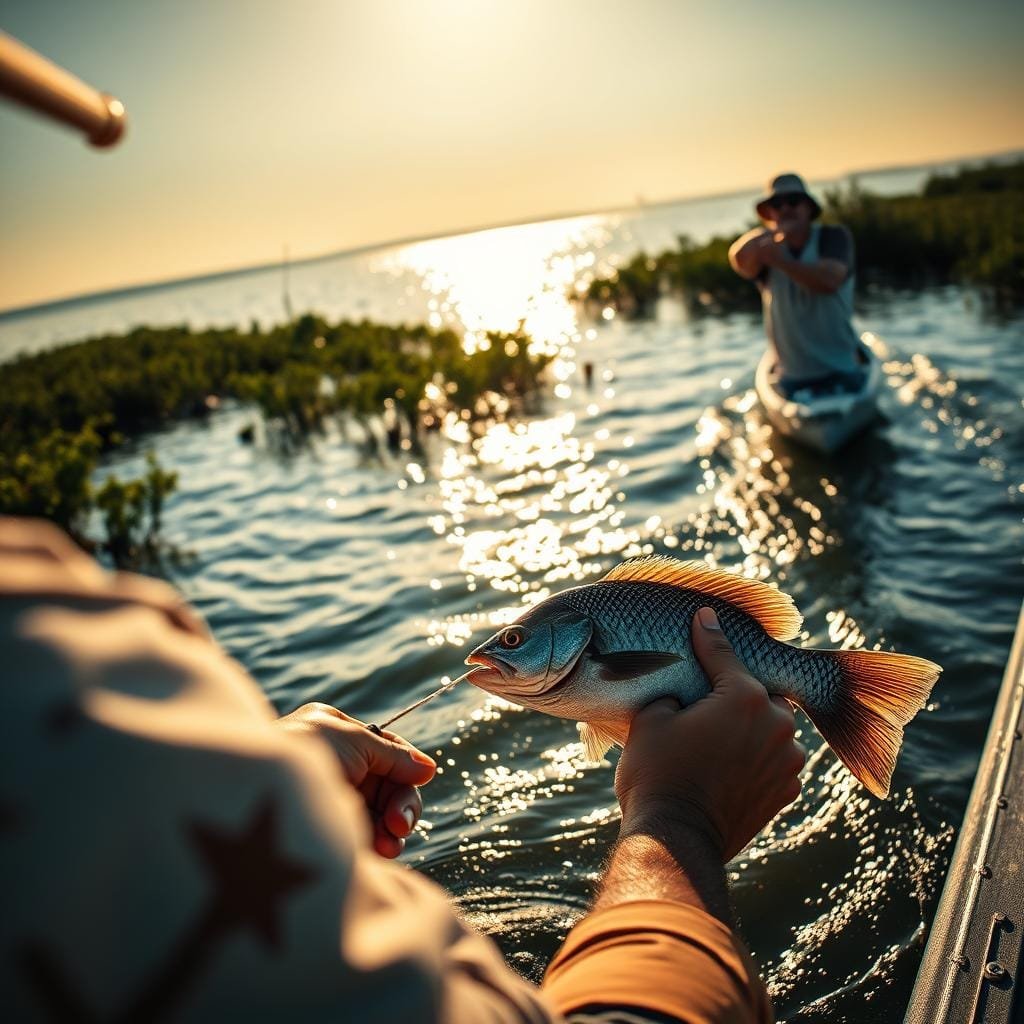
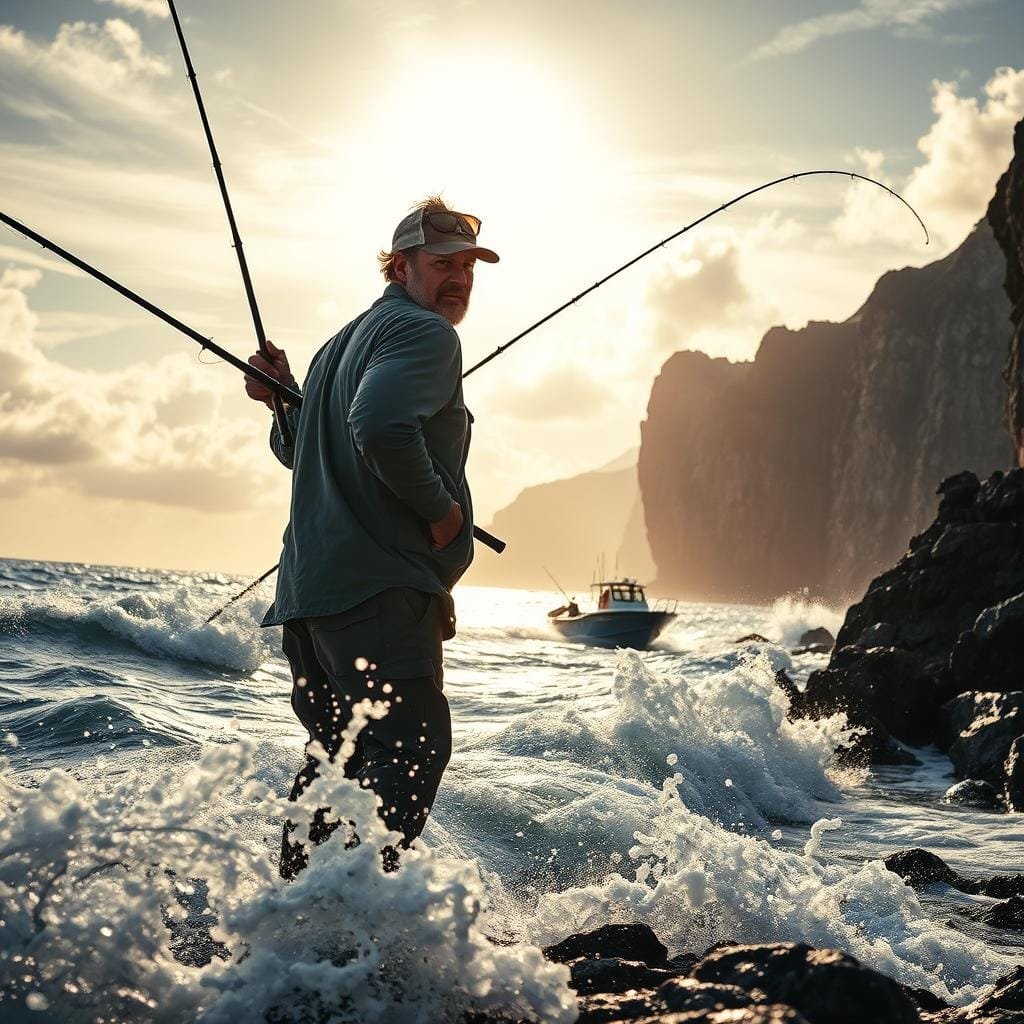
Tuna are fast swimmers in the ocean. They are warm-blooded and fight hard. They live in warm and cool waters where food is plentiful.
Getting ready to catch tuna is key. You need the right gear and to know where to find them. This makes catching tuna exciting.
Big tuna can cost a lot of money. In Tokyo, a tuna was sold for $3.1 million. This makes catching tuna very exciting.
There are simple ways to catch tuna. You can troll, chunk, pop, or jig for them. Each method works best in different situations.
U.S. places good for tuna fishing include the Gulf of Mexico and San Diego. Kona, Florida, and Nova Scotia are also great spots. Knowing where to go is important.
It’s important to fish sustainably. We need to take care of tuna and their homes. This means using the right gear and handling fish gently.
Understanding Tuna Species and Where They Live
Tuna can swim far because their bodies are made for it. In any tuna home, temperature and food decide where they go. Knowing where tuna live in the U.S. helps you catch them better.
Warm-blooded predators: why tuna roam tropical and temperate waters
Many tuna keep their muscles warm while swimming in cooler water. This lets them go from warm to cool areas. Bluefin tuna, for example, swim near Iceland and then to the Gulf of Mexico to spawn.
This pattern is seen in the Pacific and Mediterranean too. Being warm-blooded helps them swim fast and recover quickly. This means tuna can swim deep and far, making their home wide and flexible.
Pelagic behavior and feeding windows that drive bite times
Tuna live in open water and follow food. They chase schools of herring, mackerel, squid, and eels. When food goes up, tuna follow; when it goes down, they follow too.
Tuna bite best at dawn and dusk when food is plentiful. Bigeye tuna bite before dark and at first light. Bluefin tuna bite in the morning, then might go offshore if food spreads out.
From the Gulf of Mexico to Nova Scotia and Hawaii: prime U.S.-accessible ranges
In the U.S., where and when you fish matters. Atlantic bluefin spawn in the Gulf of Mexico from January to June. They are found off North Carolina’s Outer Banks in winter and near Nova Scotia by late summer.
On the Pacific side, San Diego’s bluefin fishery is active from November to May. Yellowfin tuna are steady off Louisiana, and Kona sees peak action from May to September. Mexico’s Bahia Banderas draws large yellowfin from August to December.
Albacore swim the West Coast from Oregon to San Diego. Blackfin roam from Massachusetts to Brazil, including the Caribbean and the Gulf. Knowing these patterns helps you find the best times to fish.
| Species | Key U.S.-Accessible Areas | Seasonal Highlights | Feeding Notes |
|---|---|---|---|
| Atlantic Bluefin | Gulf of Mexico, Outer Banks, Nova Scotia | Spawn Jan–Jun (peak Apr–May); Outer Banks Dec–Apr; Nova Scotia late summer | Morning surface feeds on herring; offshore moves as bait spreads |
| Pacific Bluefin | San Diego offshore zones | Nov–May | Keying on mackerel and squid; dusk rises on breezy days |
| Yellowfin | Louisiana offshore, Kona (Hawaii), Bahia Banderas (Mexico) | Louisiana year-round; Kona May–Sep; Mexico Aug–Dec | Dawn/dusk surges; thermocline edges and current breaks |
| Bigeye | Canyon tips, shelf edges, seamounts | Common on warm-current pushes | Strong just-before-dark and first-light bites; deeper daytime marks |
| Albacore | Oregon to San Diego | Migratory pulses with mixing water | Respond to cooler bands and bait-rich breaks |
| Blackfin | Massachusetts to Brazil, Gulf, Caribbean | Varies by front and reef edge activity | Fast chasers of small bait; crisp morning flurries |
Bluefin Tuna: Tactics, Timing, and Travel Patterns
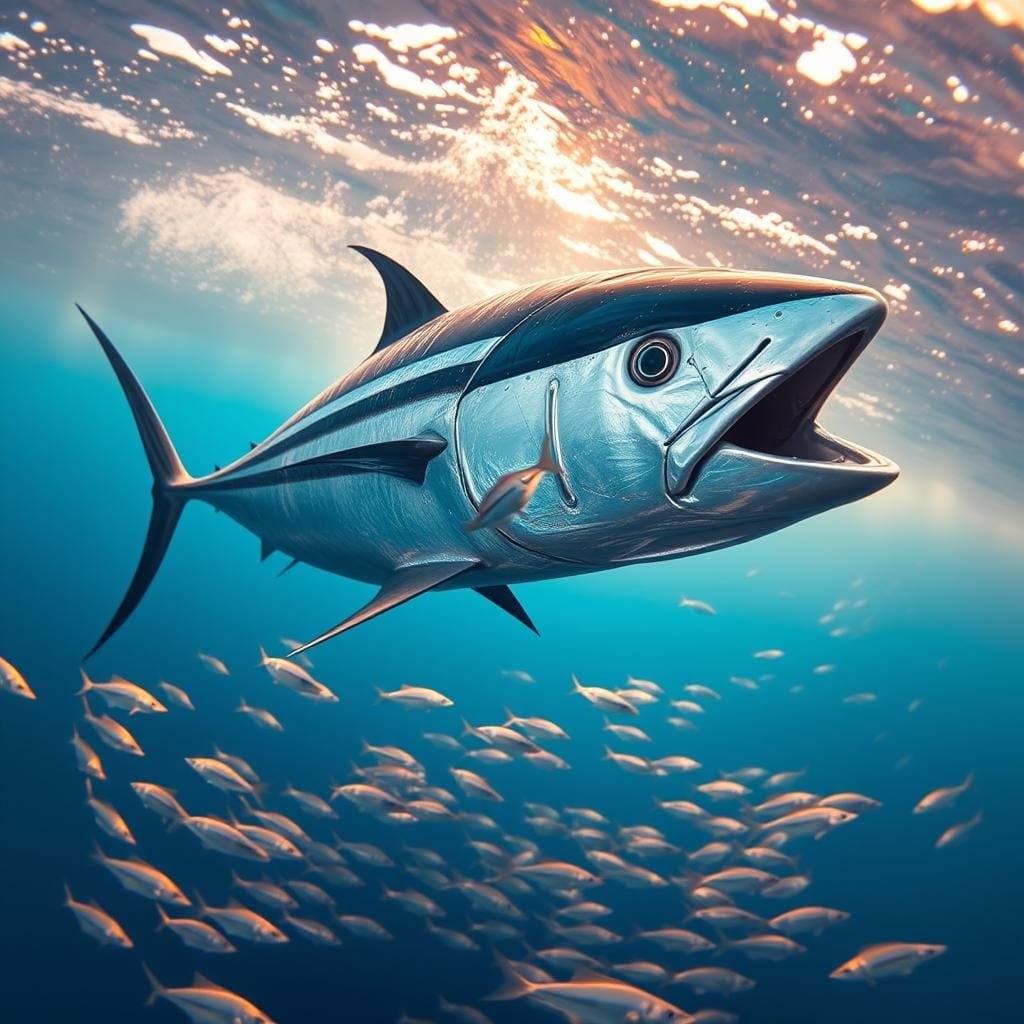
Planning is better than luck. Learn to read the water and match your bait. Use clean angles and good boat handling to increase your chances.
Reading surface feeds: herring balls, bird activity, and oil slicks
Surface activity is key. Look for herring balls and birds flying over the water. Also, watch for porpoises and mackerel.
When the water erupts, move in quietly. Use poppers or heavy baits. Keep an eye out for more fish coming.
Slack-tide strategy and water temperature cues (70–75°F)
Many fishers plan for slack tide. This is when the current is soft. The water should be clear green-blue.
When it’s 70–75°F, fish bite higher. If it gets warmer, go deeper and slow down.
Trolling spreads: birds, squid bars, daisy chains, cedar plugs, and skirted ballyhoo
Use different baits at the surface. Try tuna birds, squid bars, and daisy chains. Use cedar plugs and ballyhoo below.
- Surface pace: 6.5–8.5 knots for aggressive feeds
- Deeper targets: 5.5–6.5 knots with weighted offerings
- Placement: 50–60 yards aft in low clarity; adjust above or below the thermocline
This mix works well for bluefin. But be ready to change if the fish move.
Chunking and chumming in 150–180 ft with butterfish, sardines, and squid
For mid-water marks, try chunking. Drift in 150–180 ft and chum with bait. Use light hooks and stealthy leaders.
Drop a jig or pop a plug when fish come up. If they go down, move your bait down. Use a strong drag for big fish.
Regional timing: Outer Banks winter, Nova Scotia late summer, San Diego Nov–May
Know when to fish. Outer Banks are good from December to April. Nova Scotia is best in late summer.
San Diego is great from November to May. The Gulf of Mexico is good from January to June, peaking in April and May.
| Region | Prime Window | Go-To Approach | Why It Works |
|---|---|---|---|
| Outer Banks, NC | Dec–Apr | Bluefin trolling spreads at 6.5–8.5 knots; switch to bluefin chunking on marks | Cold pushes bait to breaks; slack tide bluefin rise on soft current |
| Nova Scotia | Late summer | Surface bars, cedar plugs; poppers on visible feeds | Stable late‑season weather and dense herring balls draw giants shallow |
| San Diego, CA | Nov–May | Mixed bars and plugs; slow deeper passes on hot days | Edges and bait schools align with bluefin migration timing along temp breaks |
| Gulf of Mexico | Jan–Jun (peak Apr–May) | Chunking around rigs; controlled zigzags over contours | Upwellings and structure stack forage; temperature shifts set depth |
Use local tips and these tactics. Be flexible and follow the fish’s lead.
Yellowfin Tuna: Versatile Spreads and Dawn/Dusk Bites
Yellowfin tuna are strong and dive deep. They can break weak gear. To catch them, use a simple but smart approach.
Make sure your wake is clean and your lures are tuned. Move at a steady 5–8 knot speed. At dawn and dusk, fish the edges of schools. Big fish often hide off to the side and below the surface.
Layering baits at different depths above the thermocline
Start with shallow lines, then move deeper. Use three to five baits to cover different depths. This way, you tap into the thermocline fishing sweet spot.
Choose leaders that match the sea and water clarity. Use a smooth drag on 50-class reels. When a rod loads, let the spread keep working. You might catch doubles with a balanced pattern.
Go-to offerings: plugs, large spoons, squid and ballyhoo (skirted or not)
Diving plugs and large spoons cover a lot of water. They call fish from below. Use squid lures and ballyhoo, skirted or not, at 5–8 knots.
Use No. 9–10 hooks for yellowfin trolling. Only go bigger if bluefin are around. Shorten drop-backs in chop to avoid losing lures.
Match your lure color to the light. Use darker colors at dawn and brighter ones when the sun is up. Keep hooks sharp and replace frayed leaders quickly.
U.S. hotspots: Gulf of Mexico (Louisiana), Kona peak May–Sep, Mexico Aug–Dec
In the Gulf of Mexico, yellowfin tuna are found around deep rigs and current edges all year. Fish rips, weedlines, and areas where tide pushes bait. In Hawaii, Kona yellowfin are plentiful from May to September along drop-offs where cobalt water meets structure. Mexico’s Bahia Banderas is best from August to December, with larger fish following schools of skipjack.
Wherever you fish, watch for birds, slicks, and temperature breaks. Use proven yellowfin baits and a disciplined spread. Keep your routine consistent, and you’ll catch more fish, even at dawn and dusk.
Bigeye Tuna: Deep-Day Hunters and Nighttime Trollers
Bigeye tuna are strong swimmers. They dive deep during the day and jump up at night. For catching them, look for places with structure and wait for the right time. Keep notes to find the best spots again next year.
Targeting canyon tips, shelf edges, seamounts, and high flyers
Start by fishing near canyons, like Hudson and Wilmington. Also, try seamounts and areas with lots of life. Move your boat in a zigzag pattern to cover more ground.
In the Pacific, near Kona, Hawaii, find areas where the water rises. Then, search around those spots until you find fish.
Night bite windows: just before dark and first light
The best times to catch tuna at night are just before it gets dark and right after it gets light. Move slowly and keep your engine steady. If you feel a fish bite, hold on tight.
If you miss a bite, go back to that spot right away. Bigeye tuna often swim together, so you might catch another one quickly.
Tighter spreads at 6–8 knots with weighted, dark 8–10 inch lures or live bait
Use a tight pattern when you’re fishing at 6–8 knots. This helps your lures stay straight in choppy water. Use dark lures that are 8–10 inches long and weighted.
Live bait works well at night, but keep it close to your boat. This way, the tuna can’t easily get away.
Repeatable waypoints: logging consistent seasonal bites
Write down where you catch tuna and what the conditions were. This helps you find the same spots next year. Bigeye tuna like the same places in the Western Atlantic and around the Canary Islands and Kona.
For tips on setting up your gear for deep water fishing, check out this trolling handbook. It covers lines, downriggers, and keeping your deck organized.
Albacore and Other Light-Tackle Targets
When the sea is calm and birds are flying, fishing for tuna is exciting. Keep your binoculars handy and watch for changes in the water. Use small lures that match what fish eat.
Mixing-Water Tells for Albacore
Albacore like to be where cool and warm water mix. Look for them near canyons and ridges where squid swim. In the Pacific, fish from Oregon to San Diego and into Mexico. In the Atlantic, they’re found from Nova Scotia to northern Argentina.
Use small lures like slim metals and white feathers when squid are small. Spinning or compact gear makes fighting big fish fun. Look for albacore where birds like shearwaters and terns fly.
Skipjack and Little Tunny: Fuel and Fire
Skipjack swim in big groups near the surface all over the world. Their oily meat is good for catching bigger fish. Use feather chains, chrome spoons, and tiny ballyhoo to catch them.
Little tunny are found near reefs from the Carolinas to the Keys. They have a worm-like dorsal and a dark spot on their pectoral fin. Try trolling swimmers and small metal jigs to catch them.
Blackfin Basics Across the Western Atlantic
Blackfin tuna are found from Massachusetts to Brazil. They like clear water near reefs and shrimp boats. In Florida, they bite on small lures and feathers.
Use pilchards for bait when the current is strong. Use small fluorocarbon and compact reels for light tackle. Short spreads with a bird teaser can help catch fish.
| Target | Primary Zones | Best Signs | Effective Offerings | Tackle Notes |
|---|---|---|---|---|
| Albacore (“longfin”) | Oregon–San Diego–Mexico; Nova Scotia to N. Argentina | Temp breaks over canyons/ridges, squid slicks, working birds | Small cedar plugs, feathers, slim metals, squid-color skirts | Spinning or compact conventional; match hatch; light tackle tuna focus |
| Skipjack | Temperate/tropical belts worldwide | Large surface schools, foaming feeds, bait showers | Feather chains, chrome spoons, mini skirted ballyhoo | Fast troll 6–8 knots; prime for skipjack bait |
| Little tunny | Western Atlantic near reefs, color lines, and inlets | Worm-like dorsals, dark pectoral spot, bird piles | Resin heads, micro metals, small diving plugs | Great for little tunny fishing; doubles as cut bait |
| Blackfin | Massachusetts to Brazil; Gulf of Mexico; Caribbean | Slicks, shrimp boats, edge current, dawn/dusk life | Small lures, feathers, spoons, rigged ballyhoo/strips; live pilchards | Fluoro leaders, bird teasers, short spreads; classic light tackle tuna |
how to catch tuna
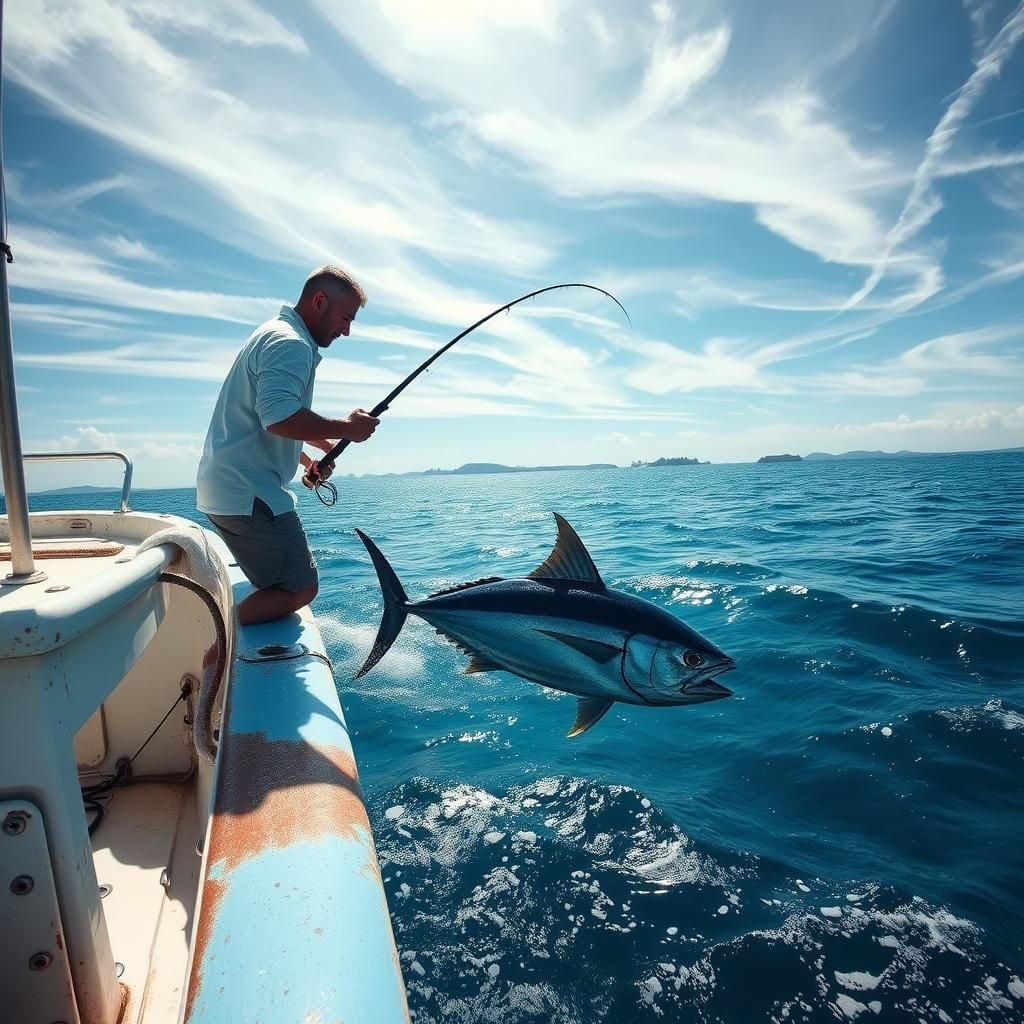
Start by matching the forage you see on the surface. When birds wheel over slick water and porpoises push bait, set a spread that mirrors local prey. This is the heart of how to catch tuna. Rotate lures and baits to fit real-time signs, and keep a rig ready to swap from live bait to jigs without delay.
For classic trolling, hold a steady tuna trolling speed between 5 and 8 knots. Slow a touch when you want deeper baits to track under the prop wash, or when you add inline weights. Use outriggers, spreader bars, and even a greenstick to imitate small schools that draw reaction bites.
When fish mark mid-depth, switch tactics. A drift with chunking tuna in 120 to 180 feet creates a steady scent line. Butterfish, sardines, and mackerel cubes—plus a few larger butterflied pieces—can lift yellowfin and bluefin into the slick. Keep leaders light enough for clear water, and stagger baits through the column.
Explosive feeds call for surface work. With popping and jigging tuna, sweep a stickbait or chug a cup-faced popper across the foamy edge of a feed. If marks sit deeper on canyons, seamounts, or ridge lines, drop a long metal jig, then work a fast lift-and-fall to trigger bigeye and bluefin.
Effective tuna fishing methods stick to what the water shows. Read contour lines that pinch current, watch for fish-oil sheens, and note the thermocline on your sounder. Keep heavy-duty gear on deck—35 to 60 pounds of drag for giants—and size trolling hooks to the target: No. 9–10 for yellowfin spreads, upsized patterns when bluefin crash the party.
| Approach | Best Use Case | Key Cues to Start | Core Setup | Pro Tip |
|---|---|---|---|---|
| Trolling | Covering water to find scattered schools | Bird piles, dolphins, clean temp breaks | 5–8 knot tuna trolling speed, outriggers, bars and chains | Slow 0.5–1 knot to sink baits when marks drop mid‑column |
| Chunking | Holding fish in 120–180 ft over structure | Marks layered under the boat, slow drift, light current | Butterfish and sardine cubes, fluorocarbon leaders | Stagger chunks; one hooked bait every few handfuls for natural flow |
| Popping | Surface feeds with pressured bluefin or yellowfin | Foam, oil slicks, bait spraying from strikes | Heavy spinning gear, floating stickbaits and poppers | Land the plug past the feed and sweep into the chaos, not through birds |
| Jigging | Deep marks on canyons, seamounts, and ridges | Arcs stacked at 100–300 ft, low light or midday | Elongated metal jigs, fast lift‑and‑fall cadence | Change jig weight to track the thermocline when current tightens |
| Hybrid Switch | Rapid shift as conditions change | School rises or drops during a pass | Rigged rods for popping and jigging tuna beside trolling outfits | Mark a bite waypoint and re-approach from the up‑current edge |
Core Techniques: Trolling, Chunking, Popping, and Jigging
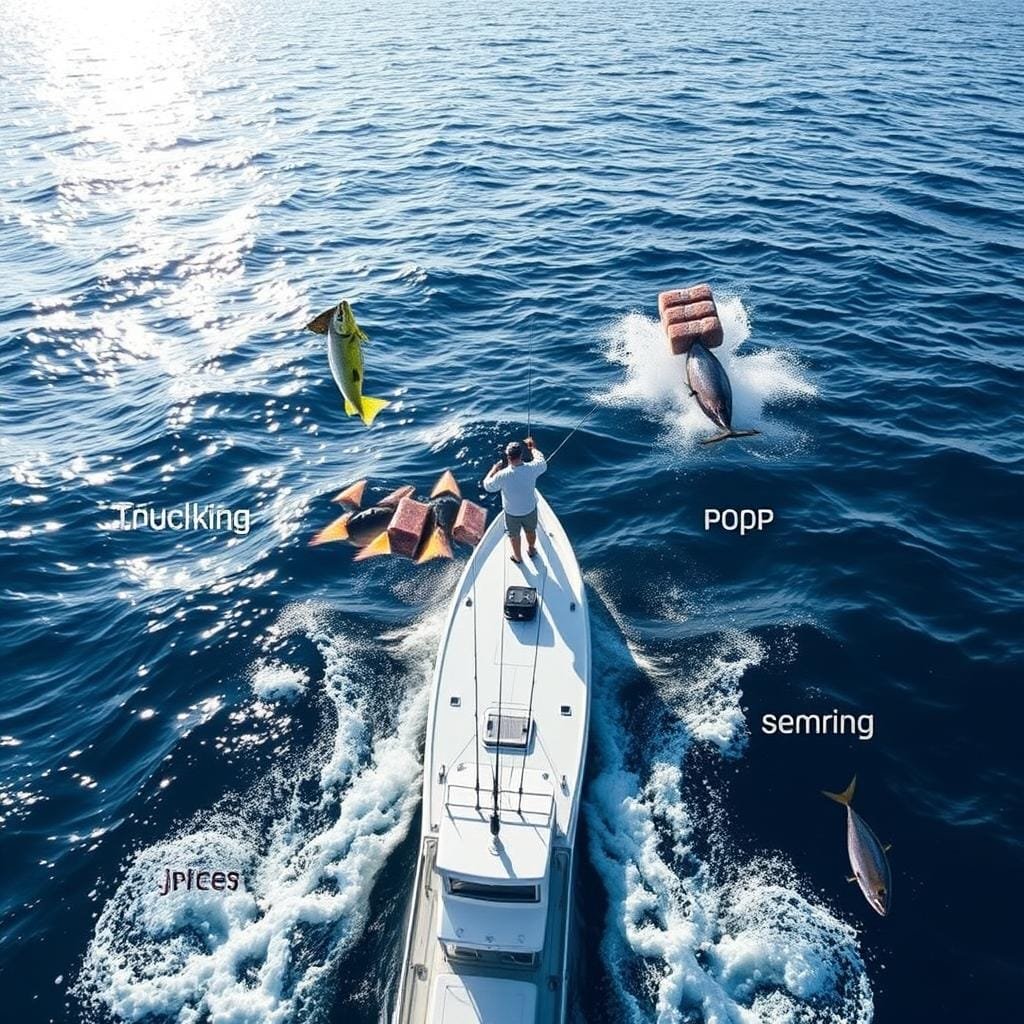
Four key moves keep you in the game: tuna trolling speed, contour trolling, tuna chunking with live chumming, and tuna popping with vertical jigging. Each works best in different places, like shelf breaks and canyon edges. Each needs clean execution to work well.
Speed control: 5–8 knots and adjusting deeper baits slower
Set your tuna trolling speed to 5–8 knots, depending on the sea and lure depth. For deeper baits, slow down to 5.5–6.5 knots. This helps bars and ballyhoo stay in place. In murky water, keep lines 50–60 yards back to avoid scaring fish.
Reading contour lines and zigzagging to work the water column
Use contour trolling to explore canyon edges and shelf breaks. Zigzag to cover different depths and temperatures. Use spreader bars and ballyhoo to target different levels.
Live-chum and chunk strategies to lift fish in 120–180 ft
In 120–180 feet, use live chumming and tuna chunking with baitfish. This attracts yellowfin and bluefin. Drift slowly to keep a natural slick. Be ready for sharks or bonito near shrimp-boat slicks.
Poppers and heavy jigs for explosive surface and vertical strikes
For surface blitzes, use Yo-Zuri Mag Poppers and Shimano Orca. Keep leaders short and strong. For drop-offs, use metals for vertical jigging. See more on surface work for tuna.
Dialing in Blackfin Tuna in Florida Waters
Florida blackfin tuna are fast and easy to catch. They like to be near the beach and along edges offshore. Keep your presentation simple and read the water well. With the right spread and bait, you’ll catch a lot.
Live pilchards and light fluorocarbon for nearshore action
Start with a livewell full of live pilchards. Throw some out to get the school going. Then, hook fresh baits on short‑shank J‑hooks and 30‑lb fluorocarbon. This works while drifting or slow‑trolling along edges where tuna like to be.
Keep the drag light and the boat quiet. If the tuna stop biting, throw out some freebies to get them going again. Change up your baits often.
Small lures far astern, plus bird-style teasers for more bites
When trolling, use very small lures way back. Add bird teasers to catch fish that won’t show. Two long lines help avoid tangles, and circling back helps track schools.
Look for tail slaps and tiny dimples in the spread. If a rod pops and then goes quiet, drop the lure to get more bites.
Shrimp boat bycatch slicks, winter chunking, and reef edges (90–135 ft)
Start near anchored trawlers after night tows. With permission, chunking into the slick can be amazing. But watch out for sharks, so use strong drag and steady pressure. In winter, reefs at 90–135 ft are good for tuna, using butterfish or sardine cubes.
On bright days, use different depths and keep one line high. Tuna often swim up-current of reefs, so set your drifts to cover that area.
Seasonal notes, school behavior, and sustainable bag limits
Most tuna are 10–15 lb, with bigger ones mixed in. Late June and July have lots of small tuna in 80–135 ft. Use small diamond jigs or Kastmasters on light tackle. Winter trolling off Port Canaveral is steady, and live baits work on calm days.
Know the rules before you go. Florida has a blackfin bag limit of two per person or 10 per boat, whichever is more. Bleed fish, ice them hard, and keep the fillets dry for the best taste.
| Scenario | Best Approach | Key Tackle | Why It Works |
|---|---|---|---|
| Nearshore live‑bait feed | Drift or slow‑troll live pilchards and sprinkle freebies | 2/0–4/0 short‑shank J‑hooks, 30‑lb fluoro, circle-ready rods | Natural flash draws Florida blackfin tuna without spooking them |
| Long-range troll | Run two tiny lures far astern with bird teasers | Feathers/resin heads, teasers, 20–30 lb mono topshot | Small profiles match micro bait; teasers lift reluctant fish |
| Winter reef drift | Free-drift chunks over reef tuna 90–135 ft edges | Butterfish/sardine cubes, light fluoro leaders, subtle weights | Natural sink rates keep baits in the strike lane |
| Shrimp-boat slick | Ask to deploy bycatch and start shrimp boat chunking | Heavier leaders, fast retrieve reels, dehooker | Pre-built slick concentrates tuna; firm drag beats sharks |
| Juvenile summer schools | Cast small metals and drop light jigs | 1–2 oz diamond jigs, Kastmasters, 20–30 lb braid | Matches tiny bait size and covers water fast |
| Regulation check | Monitor blackfin bag limit Florida rules before departure | FWC updates, catch log, insulated fish bags | Stays compliant and protects consistent fishing |
Reading Water, Life, and Structure
Finding tuna starts with knowing the ocean’s life and texture. Look for color breaks, clean edges, and moving rips. These signs help you set up your spread and where to fish.
Birds, mammalian dolphins, and fish-oil slicks as fish finders
Watch for birds that fly low and move in circles. Shearwaters and gannets dive for bait when bluefin chase sea herring up. Porpoises and dolphins follow the same food; blackfin tuna often follow them off Florida’s Space Coast.
Seeing fish-oil slicks means it’s time to troll wider and move in a gentle S‑curve. If splashes are close and fast, shorten your lines and keep baits in the action. If splashes are spread out over mackerel, widen your pass and cover more water.
Thermocline awareness and clarity determining depth of spread
To find thermocline tuna, watch the temperature and sonar. Bluefin tuna swim higher in 70–75°F water but dive deeper as it gets warmer or sunnier. In murky water, cast your lines farther back and place them above and below the break.
Use one bait mid-depth on fluorocarbon, another just below the thermocline, and a teaser on the surface. Adjust your baits every turn until you see the fish’s wake.
Underwater canyons, shelf edges, and upwellings that stack bait
Plan your canyon fishing around tips, edges, ridges, and high points. These areas create upwelling bait stacks and hold fish all day. Bigeye tuna follow these lines; albacore prefer mixing water over canyons and ridges; blackfin and skipjack like reefs and shrimp‑boat slicks.
Mark tight bait balls and note the current direction. Fish the productive side first. Save waypoints for repeat bites on a tide line or seamount notch.
| Signal | What It Means | Best Move | Target Species |
|---|---|---|---|
| Diving birds over tight bait | Active surface feed | Short lines, keep baits in the boil | Bluefin, yellowfin |
| Porpoises and fish-oil slicks | Recent crush of bait | Wider S‑curves, stay upwind of the slick | Bluefin, blackfin |
| Thermocline mark at 60–120 ft | Comfort band for mid‑water feed | Split spread above/below the break | Yellowfin, bigeye |
| Canyon tip with hard edge | Consistent current break | Loop the tip; log repeat bites | Bigeye, albacore |
| Upwelling on a ridge line | Cold push stacking bait | Work the cold side first | Yellowfin, albacore |
| Shrimp‑boat bycatch slick | Easy groceries in the wash | Live‑chum, small lures far astern | Blackfin, skipjack |
- Keep a running log of temp, clarity, and bite time to refine thermocline tuna reads.
- Blend a canyon fishing strategy with local intel from NOAA charts and your sounder.
- Rotate lures to match upwelling bait stacks: small when glass minnows rise, larger when mackerel mark deep.
Gear and Safety for Hard-Fighting Pelagics
Good tuna tackle means using gear that can handle a lot. Choose the right stuff for the fish and the sea. This keeps the fight going and the fish on ice.
Heavy-duty rods and reels are key for big fights. Conventional setups with lots of drag catch big fish. Spinning reels from Shimano or Penn work well for surface action.
Make leaders that fit the fish and the water. Fluorocarbon is good for shy fish on bright days. Use strong, simple knots to avoid reel failure.
Terminal choices affect how well you hook fish. Use size 9 10 trolling hooks for most fish. Try different lures like cedar plugs and squid bars.
For bigeye in the dark, use big, weighted lures. Send them down in different depths to cover more area. Check your lines often.
Boat handling and care are important. Move the boat on hookups to keep the line straight. This helps avoid tangles. Bleed fish at the back and keep them cold.
Be careful with shrimp boat bycatch. Sharks can attack fast. Use heavy leaders and land fish quickly to avoid sharks.
Gulf Stream crossing safety is very important. Plan your trip carefully and stay safe. Carry safety gear and know how to use it.
Prevent seasickness before you leave. Use medicine as directed, stay hydrated, and have ginger chews ready. A steady boat helps everyone stay focused.
- Drag targets: 35–60 lb for giants; 50‑class for yellowfin; strong spinners for poppers
- Leaders: fluorocarbon in clear water; size up near sharks and structure
- Hooks and lures: trolling hooks size 9 10; weighted tuna lures for deep or night work
- Safety: Gulf Stream crossing safety planning plus seasickness prevention for crew
Sustainability, Regulations, and Handling Your Catch
Start smart, sustainable tuna fishing before you leave the dock. The International Seafood Sustainability Foundation has guidebooks for different fishing methods. These lessons help with recreational fishing too.
Match your lure size to the fish you want to catch. Avoid areas where young fish live. Watch for bird packs and bait marks to reduce bycatch.
For a quick guide on tuna health and fishing methods, see this tuna sustainability overview.
Tuna rules change often. Always check NOAA Highly Migratory Species updates and your state’s rules before fishing. Atlantic bluefin fishing has strict rules due to overfishing.
In the U.S., follow HMS permits, size limits, and closed seasons. Florida has a limit of two blackfin tuna per person or 10 per boat, whichever is more.
On the water, make choices to reduce your impact. Use circle hooks, release non-targets quickly, and keep your gear light. Focus on natural areas to fish, not where fish are spawning or young.
After catching a fish, handle it carefully. Bleed it right away, ice it well, and keep fillets dry. This keeps the fish fresh and safe to eat. Thoughtful handling helps the fish and supports conservation efforts.
FAQ
What makes tuna different from most fish?
Tuna are warm-blooded and fast. They have pink to deep-red flesh. They can hunt in cooler water, from Icelandic waters to the Gulf of Mexico and the Mediterranean.
Which tuna species should I expect in U.S.-accessible waters?
You’ll find blackfin, skipjack, albacore, yellowfin, bigeye, Pacific bluefin, and Atlantic bluefin. Sizes range from small to over 500 pounds.
When do tuna usually bite?
Many tuna bite at dawn and dusk. Bigeye bite before dark and at first light. Bluefin like calm, slack tides and feed strong in the morning.
Where are prime U.S. tuna zones and seasons?
Hot areas include the Gulf of Mexico (year-round yellowfin), North Carolina’s Outer Banks for winter bluefin, Nova Scotia in late summer, San Diego for Pacific bluefin November–May, Kona’s yellowfin peak May–September, and Mexico’s Bahia Banderas August–December.
How do I read bluefin surface feeds?
Look for tight sea herring balls, diving birds, porpoises, intermittent mackerel splashes, and fish-oil slicks. In frenzies, you can approach quietly and cast poppers or heavy stickbaits.
What water temps and tides favor bluefin?
Bluefin often rise higher in 70–75°F water and drop deeper as temps climb. They dislike strong tides, so slack tide is prime time to get a bite.
What trolling spread works for bluefin?
Run tuna birds, squid spreader bars, daisy chains, cedar plugs, and skirted ballyhoo like Joe Shute or Ilander. Go 6.5–8.5 knots on top; slow to 5.5–6.5 for deeper baits, and zigzag over contour lines.
How do I chunk or chum for tuna effectively?
In 150–180 feet, set a steady slick of butterfish, sardines, or squid. Drift to keep it natural. Mix in live baits if you have them, and keep a popper or heavy jig ready when fish rise.
What’s the travel pattern timing for bluefin?
Outer Banks sees fish December–April, Nova Scotia shines late summer, and San Diego’s Pacific bluefin run November–May. The Gulf of Mexico is a key Atlantic bluefin spawning zone January–June, peaking April–May.
How should I target yellowfin through the water column?
Stagger your spread above the thermocline. Set shallow lines first, then progressively deeper. Yellowfin fight deep, so cover multiple depths to stay in the zone.
What are proven yellowfin lures and rigs?
Diving plugs, large spoons, squid lures, and ballyhoo—skirted or naked—are standards. Use No. 9–10 hooks for typical trolling; size up if bluefin are around.
Where are reliable yellowfin hotspots?
Louisiana’s Gulf rigs hold fish year-round, Kona peaks May–September, and Mexico’s Bahia Banderas draws big fish August–December. Work edges of schools at first light and dusk to avoid spooking larger tuna.
How do I target bigeye tuna by day and night?
Bigeye sit 250+ feet deep by day along canyon tips, shelf edges, seamounts, and high flyers. At night and around first light, troll tight spreads at 6–8 knots using dark, weighted 8–10 inch lures or live bait.
Are bigeye bites repeatable in the same places?
Yes. Many captains log waypoints. Seasonal bigeye strikes often repeat year after year on the same canyon corners and ridges where bait stacks.
What’s the deal with albacore and mixing water?
Albacore (“longfin”) love temperature breaks and upwellings over canyons and ridges. Watch birds, match lure size to local squid and bait, and work those color changes.
Are skipjack and little tunny worth targeting?
Skipjack and little tunny offer fast surface action and make excellent bait thanks to oily flesh. While less prized for the table, they’re a blast on light tackle and great for chunking stock.
Where do blackfin tuna shine?
Blackfin range from Massachusetts to Brazil, throughout the Caribbean and Gulf of Mexico. Florida sees strong action, with fish averaging 10–15 pounds and schools of larger fish showing seasonally.
What speeds should I troll for tuna?
Run 5–8 knots depending on sea state and lure depth. Slow to 5.5–6.5 knots for deeper baits. Keep some offerings above and below the thermocline and adjust when water clarity drops.
How do I work contour lines while trolling?
Zigzag over shelves, canyon edges, and ridges so baits rise and fall through the column. Turning over breaks triggers bites by changing lure speed and depth.
What’s a solid live-chum approach?
Start with a full livewell of pilchards. Toss a few to spark a feed, then nose-hook baits on 2/0–4/0 short‑shank J‑hooks with 30‑lb fluorocarbon. Drift, anchor, slow-troll, or spot‑lock over 120–180 feet.
When should I pop or jig for tuna?
Cast big surface plugs into visible feeds for bluefin. Drop heavy, elongated metal jigs vertically over canyons and seamounts for bigeye and bluefin, using fast lift-and-fall retrieves.
How do I target blackfin tuna in Florida?
Use live pilchards, light fluorocarbon, and small lures run far astern with bird-style teasers. Winter chunking over 90–135‑foot reefs works, and shrimp‑boat slicks can be hot after night trawls.
Any special tips around shrimp boats?
With crew permission, fish the bycatch slick and add chunks. Expect sharks—use sturdier tackle and land fish quickly to beat predation.
What about blackfin seasons and limits?
Blackfin are IUCN “Least Concern.” Florida’s recreational limit is two per person or 10 per vessel, whichever is greater. Schools often travel with mammalian dolphins off the Space Coast—run long lines behind the boat to connect.
What signs on the water point to tuna?
Watch for diving birds, porpoises, and fish‑oil slicks. Surface herring balls scream bluefin. Intermittent mackerel feeds mean wider trolling passes may be better.
How does the thermocline and water clarity affect my spread?
Set some baits above and some below the thermocline. In clear water, keep spreads tighter; in dirty water, run lines 50–60 yards back to boost bites.
Which structures reliably hold tuna?
Underwater canyons, shelf edges, ridges, seamounts, and high flyers concentrate bait via upwellings and current breaks. Log productive edges and repeat them.
What gear do I need for giants?
Use heavy‑duty rods and reels capable of 35–60 pounds of drag. For yellowfin, 50‑class reels are standard. Robust spinning outfits are best for popping bluefin.
What hooks and lures should I stock?
Carry No. 9–10 trolling hooks for yellowfin and size up for bluefin. Pack cedar plugs, large spoons, squid bars, spreader bars, daisy chains, and skirted ballyhoo like Joe Shute and Ilander. For bigeye, favor dark, weighted 8–10 inch lures.
Any safety and boat-handling tips?
Plan Gulf Stream crossings around weather and current. Prep for seasickness. On hookup, keep the boat moving to maintain line angle, clear teasers fast, and avoid crossed lines.
How should I handle tuna for top table quality?
Bleed immediately, ice thoroughly, keep fillets away from fresh water, and remove bloodlines—especialy on blackfin and yellowfin. Quick sears and cured preparations both shine when fish are cared for right away.
What sustainability and regulation resources matter?
Atlantic and Southern bluefin have faced overfishing, so follow NOAA HMS permits, size limits, and seasons. The International Seafood Sustainability Foundation (ISSF) publishes best practices to reduce bycatch and promote responsible gear use.