Yellow perch are classic American panfish. They have gold sides and a white belly. They also have dark vertical bars and a sharp spiny dorsal fin.
Most yellow perch are 6–7 inches long. A 12-inch fish is a big catch. If you want a fun fishing experience and tasty food, this guide is for you.
We’ll keep it simple and effective. You’ll learn how to catch yellow perch. We’ll focus on the strike zone near bottom and the best baits.
You’ll also learn where perch live and when they feed. This will help you plan your fishing trips.
For gear, start with ultralight perch gear. Use a 6’6”–7’ light, fast spinning rod. Match it with a 1000–1500 reel.
Spool 4–6 lb mono or 6–8 lb braid with a leader. This gear works for perch and other fish too.
On the water, use versatile perch lures and live bait. Try 1/16–1/4 oz jigs with soft plastics. Use Berkley Gulp! Minnow or Mister Twister Meeny.
Add hardbaits like Rapala Original Floater or Berkley Flicker Shad. Also, use vertical staples like Rapala Jigging Rap or VMC Rattle Spoon.
Core techniques include lift-fall jigging and slip-float presentations. Keep your bait near bottom. When trolling, test lure action boatside.
Read on for seasonal spots and simple rigs. Follow these tactics for every cast. With these tips, you’ll catch more yellow perch.
Yellow perch basics: identification, range, and behavior
Perca flavescens is a common fish in America. It’s easy to tell them apart. Knowing where they live helps you find good fishing spots. Understanding their behavior lets you fish like a pro.
How to identify yellow perch (color, bars, spiny dorsal)
Yellow perch have a gold to olive body and a pale belly. They have dark, vertical bars on each side. Their dorsal fin is sharp and spiny.
Their fins are orange to reddish, mostly near the belly. These signs help you spot yellow perch quickly, even in murky water.
Natural range and introduced waters across the United States
They live from Nova Scotia to the Upper Midwest. Their range also covers much of Canada.
In the U.S., they’re found in some reservoirs and lakes in California, Oregon, and Washington. They like places with low oxygen and clear water.
Schooling tendencies and why it matters for anglers
Yellow perch school together. If you find one, more are nearby. They like to hang out near the bottom, on sand or mud, or near rocks.
This behavior makes them easy to catch. Just cover the water until you find a school. Then, stay close and keep your bait in the right spot.
Diet: minnows, insects, crayfish, leeches, and small crustaceans
Perch eat a variety of foods. They like small minnows, insects, crayfish, leeches, and small crustaceans. In big lakes, they might even eat young perch.
Using subtle jigs or live bait works well. Match the bait to what they eat, and they’ll bite quickly.
Best seasons and locations to find perch in the United States

Finding yellow perch starts with knowing the season, depth, and cover. In the United States, they like to stay near the bottom, often just a half foot down. As the water warms or cools, adjust your fishing to stay on the fish. This works from prairie reservoirs to the Great Lakes.
Shallow spring weeds, bays, and vegetation edges
In spring, look for perch in sun-warmed bays, cattail lines, and new cabbage in 4–10 feet. They move up to eat insects and small minnows. Use a jig and float along weed edges.
In stained water, find dark bottoms that heat up fast. This attracts schools of perch. On clear lakes, move quietly and cast from far away. A slip bobber helps keep bait near bottom without snagging.
Stay mobile and cover each edge in short, careful drifts.
Summer sand and mud flats, rock piles, and open-water schools
In summer, perch move to sand or mud flats and mid-lake rock. Look for them in 12–30 feet, deeper in big, clear lakes. Use electronics to mark tight schools.
Anchor or use Spot-Lock to present baits right on bottom. Rock piles that top out around 18–25 feet often have perch. In windy conditions, glide over flats with a slow drift and vertical jigs.
If fish suspend, slide to the first basin break and probe that layer until you reconnect.
Fall transitions and Great Lakes patterns
In fall, perch move to edges of dying weeds, then to hard-bottom points and first drop-offs. On large waters, follow Great Lakes cues: roam sandgrass, zebra mussel beds, and soft-to-hard transitions near river mouths.
Use small spoons or Jigging Raps to cover water, then slow down with minnows once you mark a pack. Expect fish to bunch up tight. Hits can come fast when your bait ticks bottom.
Ice season opportunities in the northern states
Prime ice fishing perch action runs from Minnesota to Michigan and upstate New York. Early ice favors remaining weeds in 6–12 feet; midwinter calls for basins, mud flats, and subtle rises where invertebrates bloom.
Hole-hop until you find life, then keep your presentation within 6 inches of bottom. A small spoon or tungsten jig with a minnow head draws the first bites, while a deadstick seals the deal nearby.
Across all regions, noting structure and depth changes turns guesswork into a plan. With these seasonal cues, you’ll always know where to find yellow perch throughout the perch habitat United States.
Ultralight tackle setup that catches more perch
Keep your rig simple and light. A balanced setup lets tiny jigs fly well. It keeps you in touch with the bottom and feels soft taps.
Rods: 6’6”–7’ light power, fast action for 1/16–1/4 oz
A 6’6”–7’ ultralight perch rod is great. It launches small jigs and cranks well. The extra length helps with longer casts and absorbs boat shakes.
Its sensitive tips help you feel bottom ticks and short strikes. This is useful when fish are a foot off the bottom.
Reels: 1000–1500 size spinning reels
Match the rod with a 1000–1500 size reel from brands like Shimano, Daiwa, or Abu Garcia. The reel should have a smooth drag and a shallow spool. This helps manage thin lines.
A clean lay reduces wind knots. It lets tiny baits drop straight on vertical presentations.
Line: 4–6 lb mono or 6–8 lb braid with mono/fluoro leader
For all-around use, 4–6 lb monofilament is good. It’s forgiving and stealthy. If you want more feel, try 6–8 lb braid with a short mono or fluorocarbon leader.
This mix sharpens bite detection. It keeps visibility low in clear water. It’s also great for a light spinning setup without losing control.
Why slightly heavier line can help around mixed species
In waters with trout, smallmouth, walleye, or pike, a bit more strength is good. Choose 6 lb mono—or braid with a tough leader. This protects against abrasions and surprise runs.
It also settles the braid vs mono debate. Use the tool that matches your cover, depth, and bycatch risk. Keep the line lively and responsive.
how to catch yellow perch
Start simple and stay close to the lake bed. The best way to fish for perch is to use a near-bottom presentation. Drop a small jig with a wax worm or minnow, twitch it, and pause. For better depth control, use a slip bobber setup.
Vertical jigging is great when fish are under the boat. Tungsten jigs sink fast and help you feel bites. Lift the rod a bit, let the jig fall, then hold it.
In windy or current conditions, a tandem jig rig works well. Tie 12–18 inches of mono with two jigs. This lets you cast farther and test different colors or plastics.
Using electronics can speed up your fishing. Mark a school on your screen, hit Spot-Lock, and drop a jig. If fish move, try spinners or tiny crankbaits.
For more details, see this guide to how to catch yellow perch. It covers vertical jigging to bait under a bobber.
| Method | When to Use | Key Tackle | Depth Control | Pro Tip |
|---|---|---|---|---|
| Slip bobber perch | Deeper weeds, rock edges, or wind | 1/32–1/16 oz jig, wax worm or minnow | Stop-knot sets exact depth | Set bait for a near-bottom presentation within 6 inches |
| Vertical jigging | When sonar shows tight schools under boat | Tungsten jig, small plastic or leech | Count down to bottom, short lifts | Pause after the fall to trigger neutral fish |
| Cast and lift-fall | Covering flats for roaming fish | Light jig with grub or tube | Feel bottom, hop and glide | Use a slow swim between hops to keep contact |
| Small crankbaits/spinners | Searching or breezy conditions | Mepps Aglia #1, Rebel Hellgrammite | Retrieve so the lure ticks bottom | Boat-side tests help match speed and vibration |
| Tandem jig rig | Testing colors, long casts, doubles | Two 1/32 oz jigs on 12–18″ mono | Let both reach bottom before cadence | Mix plastic colors to see what they want fast |
Live bait that consistently produces bites
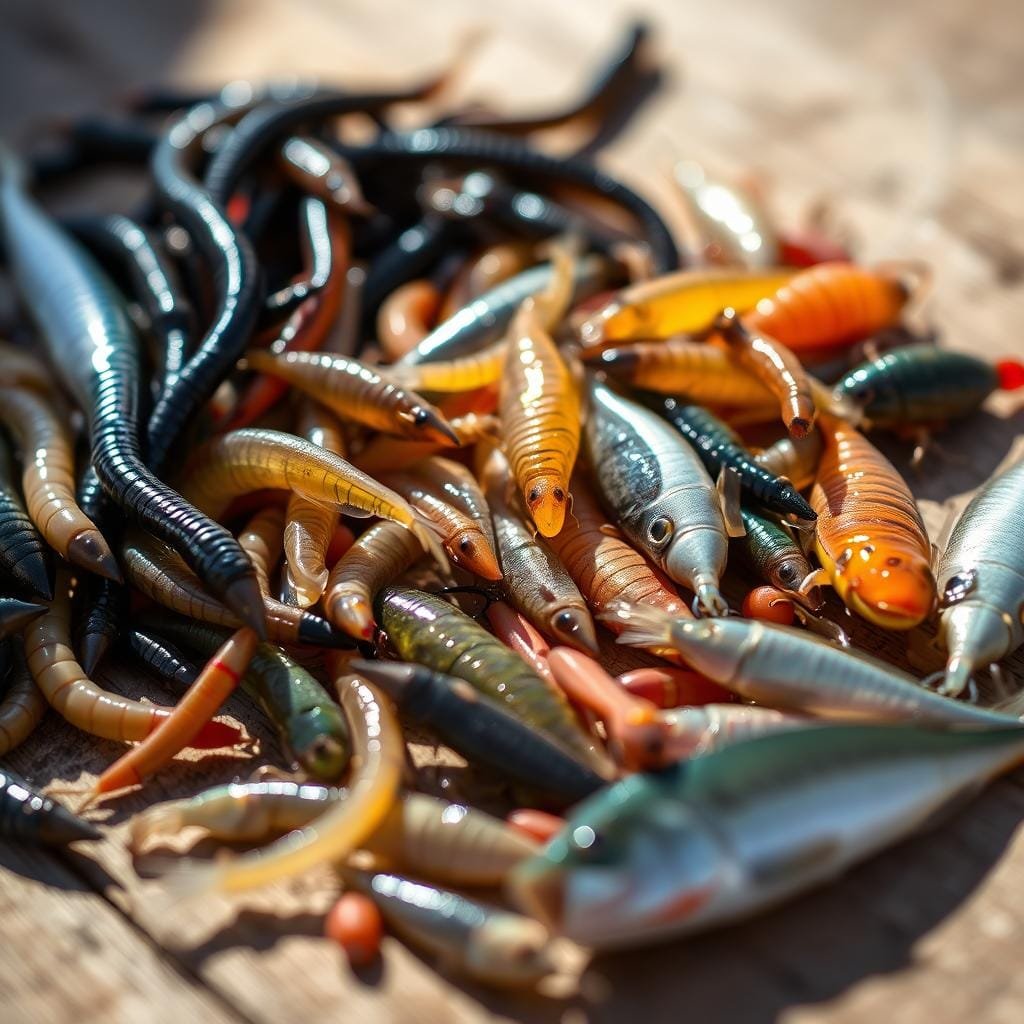
Start with a mix of live baits to catch perch. Use fathead minnows, shiners, leeches, wax worms, and nightcrawler pieces. Match the bait to the fish and keep it fresh. Switch baits quickly if the fish get picky.
Fathead and shiner minnows: when and how to rig them
Small shiners work best in cold, clear water. Fathead minnows are better in stained water. Use a 1/32–1/8 oz jig to hook a minnow for casting or vertical fishing.
For slip floats, nose-hook the minnow to keep it lively. When perch are near the bottom, dead-stick a jig-and-minnow setup.
On big waters like Lake Erie, use a 1000-size spinning reel and 6 lb mono. Short twitches can trigger bites.
Leeches, wax worms, and earthworms for active schools
Leeches are great for perch near rocks in mid-summer. Thread a small leech on a 1/16 oz jig and use short twitches. Wax worms are deadly when fish nip short. Tip a tungsten jig with wax worms and pause between twitches.
Nightcrawler pieces draw fast strikes on inland lakes. Use one-inch chunks to prevent panfish from stealing the worm. If they stall, switch to leeches or minnows.
Cut bait tricks: perch strips and crayfish tails (check regulations)
Some days, cut bait works better than live bait. Use skinless perch strips on a light jig under a slip float. For a cut bait crayfish tail, peel the shell and use a small piece. This stays put and thumps on the lift-fall.
Crayfish tails were great on Lake Michigan’s rock edges. Always check local rules, as rusty crayfish are a concern.
Hooking methods that reduce deep-hooking on small perch
Use techniques that help release small perch quickly. A jig under a slip float holds depth and reduces deep-hooking. Lip-hook minnows and leeches so the point rides up and you can set fast.
Keep the leader short—10 to 14 inches—when fishing near the bottom. If fish inhale baits, step up hook size slightly and use faster hooksets.
| Bait | Best Use Case | Rig & Hooking | Key Advantage | Notes |
|---|---|---|---|---|
| Fathead Minnows | Stained lakes; cold fronts | 1/16 oz jig, lip-hook | Durable, easy to control | Great for fathead minnows perch patterns near bottom |
| Shiner Minnows | Clear water; open-water schools | Slip float, nose-hook | High flash draws packs | Keep lively with frequent water changes |
| Leeches | Rocks, 15–25 ft; summer | Light jig, tail-first thread | Pulse action on pauses | Leeches for perch excel with short twitches |
| Wax Worms | Finicky biters; ice or post-front | Tungsten jig, tip once or twice | Soft scent, compact profile | Wax worms perch seal the deal on tough days |
| Nightcrawler Pieces | Inland weeds; aggressive schools | 1-inch segments on small jig | Fast hookups, cheap | Less effective on some Great Lakes bites |
| Perch Strips | Neutral fish; float or jig | Skinless strip on 1/32–1/16 oz | Stays on, subtle glide | Remove skin for better flutter |
| Crayfish Tail | Rock piles; current edges | Small chunk on light jig | Firm meat, strong scent | Use cut bait crayfish tail where legal |
| Rigging for Release | All baits; school scenarios | Slip float + jig combo | Fewer deep hooks | Core of perch hooking techniques |
Top artificial lures for yellow perch
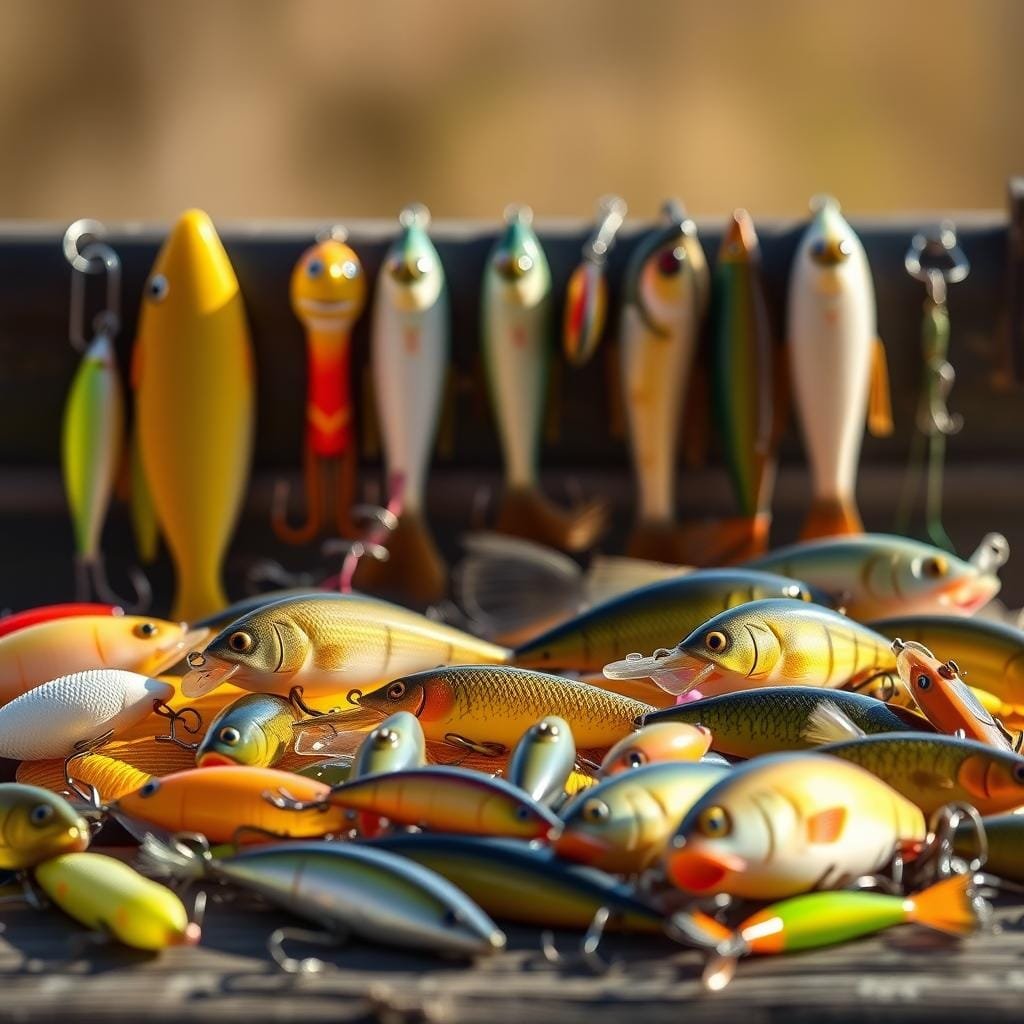
Perch like small, fast-moving baits that look like food. Try different sizes and colors until you get a bite. The best lures match the depth and stay close to the bottom.
Jigs: 1/16–1/4 oz lead or tungsten for faster sink
Use 1/16–1/4 oz jigs for shallow weeds and mid-depth areas. Tungsten jigs are great for 18–30 feet. They have a small profile but sink fast.
Try single or tandem rigs to test colors and reach farther. A little twitch near the bottom can get their attention. This setup is a must-have for perch fishing.
Soft plastics: grubs, tubes, glow worms, and minnow imitations
Soft plastics in 1.5–3 inches work well on light jig heads. Berkley Gulp! Minnow and Mister Twister Meeny are good choices. Glow worms and micro crayfish shapes can outdo live bait.
Make sure plastics are straight for a smooth glide. Short lifts and pauses keep the lure in front of them without scaring them off.
Hardbaits: small crankbaits, jerkbaits, and minnowbaits
Small crankbaits are perfect when perch chase minnows. Berkley Flicker Shad and Rapala Shad Rap are great choices. Run them near weeds or rocks.
A slow roll with brief stops can make them bite. These hardbaits add to your perch fishing arsenal.
Vertical baits: Jigging Raps and small spoons for deep water
For 20–30 feet, use a #3 or #5 Rapala Jigging Rap. Snap it up, let it glide, then hold it. Short strokes are best when they’re close to the bottom.
Small spoons like Acme Kastmaster and VMC Rattle Spoon work well. Add a wax worm or minnow head if bites are slow. Choose the right weight for the sink rate you need.
- Depth control: pick tungsten jigs perch for quick descent and small profile.
- Profile: soft plastics for perch in natural minnow or perch fry colors.
- Search mode: small crankbaits perch tackle covers water fast between schools.
- Trigger: Rapala Jigging Rap or Acme Kastmaster when fish stack deep.
Slip float and bobber techniques for staying in the strike zone
Put your bait where perch live and keep it there. That’s the edge a float gives you. With slip float perch setups, a jig rides just above weeds or rock, and you can cast far without blowing the spot. For bobber fishing perch on windy days, hold your boat with Spot-Lock so the float tracks straight through the school.
Choosing float size, weighting with split shot, and depth control
Match float size to your jig first, then fine-tune with split shot. This makes the float sit low and dips clean on light takes. The right balance makes bite detection instant.
A 1/32–1/16 oz jig with a wax worm or small shiner is a staple. Add a single No. 4 or No. 5 shot if waves lift the float. The goal is a slow, level drop that keeps your bait in the strike window longer.
Set vs. slip bobbers: shallow vs. deeper water
In less than five feet, a fixed model is fast and simple. That’s the classic set float vs slip float choice when fish roam spring shorelines. It shines for cruising pods where long casts cover water.
Go deeper, and slip float perch rigs take over. Slide the stop to hit suspended marks or near-bottom arcs on sonar. You’ll cast well, and the jig won’t foul in weeds, wood, or rocks as it slides down the line.
Cadence: pull, pause, and let the jig settle above weeds
Work a perch bobber cadence that feels like life: pull, pause, settle. Cast, let the jig drop, wait two to four seconds, give a short pull, then pause again. That hang time triggers followers that nip on the fall.
When the float tilts or sinks, sweep to load the rod, not a hard jerk. This saves small fish and reduces deep-hooking, specially with a jig head under the bobber.
| Scenario | Recommended Float | Weighting | Depth Target | Cadence Tip |
|---|---|---|---|---|
| Shallow spring flats (3–5 ft) | Set float, slim foam or pencil | 1/32 oz jig + light split shot | Weed tops, 6 in above bottom | Short pull, 3-sec pause; repeat |
| Mid-depth weed edges (6–12 ft) | Slip float, medium pencil | 1/16 oz jig + one No. 5 shot | Edge face, just off stalks | Pull-pause-settle to stall over lanes |
| Windy points with current seams | Slip float, high-visibility top | 1/16 oz jig + added shot to cock float | Near bottom on seam | Long pulls to track, longer pauses |
| Open-water schools over flats | Slip float, longer body for drift | 1/16–1/8 oz jig balanced to slow fall | Suspended marks on sonar | Two pulls, pause, then let it sink back |
Bottom-oriented retrieves and vertical jigging tips
First, find the strike zone. Then, let your lure do the work. Use a tungsten head for vertical jigging perch. It keeps control without being bulky.
Watch your line closely. Adjust when you feel bottom contact.
Why “near bottom” matters: staying within 6 inches
Yellow perch like to stay close to the bottom. If your bait is too high, you miss them. Try to touch bottom, lift a bit, and settle again.
Use tungsten to feel the bottom. If your line bows, drop back until you feel bottom. This keeps you in the right spot.
Lift-fall jigging, slow swims, and bottom hopping
For calling fish, lift 12 to 24 inches, then let it fall. Pause on a semi-slack line. This jigging cadence attracts fish.
On long casts, swim the jig slowly. Tap bottom every few feet. Mix in bottom hopping to stir up silt.
Electronics and Spot-Lock for holding on schools
A good fish finder setup helps you plan. Use Down Imaging or forward sonar to mark bottom. Set your drop depth with precision.
When you find a good spot, lock in with Spot-Lock. This keeps you from drifting away from the bite.
Combine precise positioning with fast drop speed. Tungsten or slim spoons help you get back down quickly. Check out this cool-water perch guide for more tips.
Cadence adjustments: big lifts to call fish, short hops to trigger
Start with big lifts to get noticed. Then, switch to short hops and pauses. This often turns followers into biters.
Watch the graph for signs of fish. If marks rise, extend your pause. If they fade, reset and try again. Adjust your jigging to match their mood.
Trolling for perch to cover water
Trolling for perch is great for covering water fast. Use sonar to find flats and edges. Keep lines clean and watch for vibrations that mean weeds or a bite.
Small crankbaits over shallow flats and sparse vegetation
For two- to eight-foot flats, use shallow crankbaits. Rapala, Berkley, or Yo-Zuri work well. Move slowly with S-turns to attract fish.
Choose baitfish colors and keep leaders short. If you hit weeds, pop the rod to free the lure. This often triggers a strike.
Spinner rigs tipped with minnows, leeches, or worm pieces
Spinner rigs are good for edges. Use a small fathead or a half nightcrawler. A bullet weight keeps the blade spinning.
Choose Colorado blades for clear water and Indiana for stained. Pull smoothly to feel the rod load. Short pauses can trigger a bite.
Bottom bouncers and three-way rigs when fish hold deeper
For deeper fish, try bottom bouncers or three-way rigs. Bottom bouncers work on rock and sand. Hold the wire at 45 degrees and touch bottom often.
A three-way rig with a bell sinker is great for edges. Use a 2–3 inch minnowbait. Keep the bait moving to attract fish.
Boat-side lure tests to dial in speed and action
Do a trolling speed test before fishing. Watch how the lure moves at the boat. Adjust speed to keep it moving right.
Use GPS and a bow-mount to stay in place. Mark good spots and switch to vertical or floats if needed.
| Situation | Primary Presentation | Depth Range | Key Detail | Speed Guide |
|---|---|---|---|---|
| Shallow flats with sparse weeds | Shallow crankbaits perch | 2–8 ft | Tick tops of grass; short leaders | 1.4–2.0 mph after a trolling speed test |
| Roaming edge schools | Spinner rigs perch with minnow, leech, or worm | 6–15 ft | Bullet weight ahead of swivel for control | 0.8–1.2 mph; pause on turns |
| Deep breaks and humps | Bottom bouncers perch | 15–30 ft | 45° line angle; touch-and-go bottom contact | 1.0–1.4 mph, adjust for current |
| Rocky structure with tight contours | Three-way rig perch with minnowbait | 18–35 ft | Bell sinker dropper; free-swimming plug | 0.7–1.1 mph; maintain lure stability |
Finding bigger yellow perch
Chasing jumbo perch needs timing, structure, and smart moves. Use sonar to find tight schools. Then, hold with Spot-Lock and test vertical baits before casting.
Work edges, humps, and current seams. Quality fish push minnows there.
Notable waters: Green Bay, Lake Erie, Devils Lake, and prairie provinces
For big yellow perch, some places are better than others. Green Bay in Wisconsin has vast flats and rock-to-mud areas. Lake Erie has deep shoals and breaklines, often over 30 feet deep.
In North Dakota, Devils Lake perch are found on flooded roadbeds and timber edges. Farther north, Manitoba, Saskatchewan, and Alberta have fertile basins. These areas have classic weed lines and subtle sand rises.
Cyclical lakes, overfishing pressure, and “sleeper” spots
Many lakes have hot and cold periods. A hot bite draws crowds, and overfishing can thin fish fast. Keep notes on size trends and rotate waters to avoid overfishing.
Track “sleeper” spots with clear logs: water temps, wind, and bait movement. When perch scatter, quiet bays or inland basins may have untouched fish.
Post-winterkill windows and predator-prey dynamics
Cold winters can reset lakes. After low-oxygen events, predator numbers dip. This can lead to a growth spurt in perch for several seasons.
Watch for fresh weed regrowth, booming minnows, and stable oxygen levels. Devils Lake perch and prairie provinces perch respond fast in these cycles. They offer short bursts of trophy size without long waits.
Pro tip: On big water, vertical baits like the Rapala Jigging Rap and spoons from Acme and Northland cover depth fast. They help you stay pinned to the best big yellow perch locations while schools move.
Essential gear and safety for a successful trip
Begin with ultralight spinning outfits for perch fishing. Use a 1000–1500 reel and 4–6 lb mono. This setup keeps jigs crisp and bites clear.
Slip bobbers are great for deeper breaks. Set floats work well for weed edges. Tie jig heads under bobbers to avoid deep-hooking. Add short leaders if using braid.
Tungsten jigs are heavy for their size. They avoid lead issues in many waters.
Smart tackle storage saves time. Use labeled trays in a soft tackle bag. Carry pliers, scissors, and a hook file in an outer pocket.
For keeping fish, bring a sharp fillet knife and a cooler with ice. Ice packs are key for worms and leeches. Use a small bucket with an aerator for minnows.
For local tips, check out this guide on yellow perch fishing.
Electronics boost consistency and safety. A sonar chartplotter finds edges and schools. A trolling motor with Spot-Lock keeps you steady.
This setup keeps your presentation near bottom. It reduces snags, even in windy conditions. Use polarized sunglasses to read surface chop and spot weedlines.
Don’t forget PFD safety and bug repellent for calm evenings. Keep your gear simple for fast fishing. Use one rod for bobbers and one for jigs.
With good tackle storage, a ready fillet knife, and reliable live bait care, each stop is efficient and safe. A mapped plan on your sonar chartplotter makes every trip more productive.
FAQ
How do I identify a yellow perch on the water?
Look for a gold to olive body with a white belly. It has 6–9 dark vertical bars. The sharp, spiny dorsal fin will flare when stressed.
A 12-inch fish is considered trophy class.
Where are yellow perch found in the United States and Canada?
They’re native from Nova Scotia to South Carolina and west across most of the U.S. and Canada. They’ve been introduced to parts of California, Oregon, Washington, and some southern reservoirs.
You’ll find them in shallow weeds, big bays, sand or mud flats, and deep, clear lakes.
Why does schooling behavior matter when targeting perch?
Perch are competitive and often stack tight near bottom. Find one and you can quickly catch many. Electronics help you stay on top of a school.
Spot-Lock on a trolling motor keeps you in place for vertical jigging.
What do yellow perch eat?
They eat small minnows, insects, larvae, crayfish, freshwater shrimp, snails, leeches, and other small crustaceans. Match the hatch with minnows, tubes, grubs, or baits that mimic local forage.
Where should I look for perch in spring?
Target shallow bays, weed edges, and new vegetation. Float-fishing a jig with a slip bobber from shore or boat is deadly. Keep your bait just off bottom and above the weeds.
What are top summer locations for perch?
Work sand and mud flats, rock piles, and open-water schools from shallow out to about 30 feet. On big water like the Great Lakes, fish can hold deeper. Rock piles around 20–25 feet are reliable.
How do fall and Great Lakes patterns differ?
Fish often shift deeper and roam edges of structure. Trolling small crankbaits or spinner rigs covers water until you mark a school, then switch to vertical spoons or a Rapala Jigging Rap.
Are there good ice-fishing opportunities for perch?
Yes. Perch are a favorite ice target across the northern states and Canadian provinces. Use small tungsten jigs, spoons like the Acme Kastmaster, and keep presentations tight to bottom.
What rod should I use for perch?
A 6’6”–7’ light-power, fast-action spinning rod rated 1/16–1/4 oz balances casting light jigs and detecting subtle bites. Sensitivity helps feel bottom contact and soft pickups.
What reel size pairs best with that rod?
A 1000–1500 size spinning reel is ideal. Choose a smooth drag for light line and small hooks, and spool it evenly for long casts with small baits.
What line setup works best for perch?
Run 4–6 lb monofilament for simplicity, or 6–8 lb braid with a short mono or fluorocarbon leader for stealth and abrasion resistance. Fluoro leaders shine in clear water.
Why might slightly heavier line be helpful?
In waters with trout, smallmouth bass, northern pike, or walleye, 6 lb test adds insurance without hurting bite detection in most situations. It also helps around rocks and wood.
What’s the number one rule to catch more yellow perch?
Stay near bottom—within about six inches. Most bites happen tight to bottom whether you’re jigging, trolling, or fishing a slip float.
Which live baits work best and how do I rig them?
Fathead or shiner minnows are top producers. Lip-hook a minnow on a 1/32–1/8 oz jig for casting or vertical work, or run it under a slip bobber to pin your depth above weeds and rocks.
When should I use leeches, wax worms, or earthworms?
Use them for active schools or picky fish. Tip a small jig with a leech or worm piece and keep it close to bottom. Wax worms excel in cool water and under floats.
Do cut baits like perch strips or crayfish tails work?
Yes, they can outfish live bait. Skinless perch strips and crayfish tails are excellent on jigs. Always check local regulations, specially where rusty crayfish are a concern.
How do I reduce deep-hooking small perch?
Use a jig head under your float instead of a plain hook, and set the hook quickly. Lip-hooked fish release better and stay healthier.
What jig sizes and materials should I carry?
Stock 1/16–1/4 oz jigs in lead and tungsten. Tungsten sinks faster with a smaller profile, which helps in deep water and wind.
Which soft plastics consistently catch perch?
Grubs, tubes, glow worms, and minnow imitations in 1.5–3 inches. Proven picks include Berkley Gulp! Minnow, Mister Twister Meeny and Micro Crayfish, Mizmo Panfish Tube, and Strike King Mr. Crappie Slabalicious.
What hardbaits should I bring?
Small crankbaits and minnowbaits like the Berkley Flicker Shad, Rapala Original Floater, and Rapala Shad Rap. Retrieve them near bottom or troll them across flats.
What vertical baits shine in deeper water?
Rapala Jigging Rap (#3/#5), Acme Kastmaster, Northland UV Macho Minnow, and VMC Rattle Spoon. Drop to bottom, lift to call fish, then twitch and pause to trigger.
How do I choose and weight a slip float?
Match float size to your jig weight. Add split shot so the float sits low and submerges cleanly on bites. Set depth to ride just above bottom and above cover.
When do I use a set bobber vs. a slip bobber?
Use a fixed (set) bobber in shallow water for quick casts. Switch to a slip float for deeper water or when you need longer casts and precise depth control.
What’s an effective bobber cadence?
Cast, let the jig settle, pause, then pull a foot or two and pause again. That pull-pause cadence keeps the bait above weeds and in the strike zone.
Why is fishing near bottom so critical for perch?
Perch feed close to bottom most of the time. If your bait rides more than six inches high, you’ll miss bites, specially from neutral fish.
What retrieves work best with jigs?
Use lift-fall jigging, slow swimming retrieves, and bottom hopping. Start with a few higher lifts to draw fish, then switch to short hops to make them commit.
How can electronics and Spot-Lock improve my catch rate?
Sonar shows schools hovering just off bottom on flats and rock piles. Engage Spot-Lock to hold over them so your vertical jig or spoon stays in the strike zone.
How should I adjust cadence for different moods?
Call fish with 12–24 inch lifts. When they show on sonar, shorten to subtle twitches and pauses. If they’re negative, barely lift and dead-stick near bottom.
What trolling lures work over shallow flats?
Small shallow-running crankbaits like a Flicker Shad or Rapala Original Floater. Run them just ticking bottom over sparse weeds and sand.
How do I troll spinner rigs for perch?
Tip blades with real or artificial minnows, leeches, or worm pieces. Use a bullet weight, bottom bouncer, or three-way rig depending on depth to keep the rig near bottom.
When should I use bottom bouncers or three-way rigs?
When fish hold deeper or along sharp breaks. Bottom bouncers maintain bottom contact while three-way rigs present a small minnowbait or spinner cleanly above snags.
How do I dial in trolling speed and action?
Always pull your lure boatside to check wobble, then adjust speed until it runs true. Use your sonar trail to repeat productive passes.
Where can I find bigger yellow perch?
Prime waters include Green Bay, Lake Erie, Devils Lake in North Dakota, and parts of Ontario, Manitoba, and Saskatchewan. Many Midwest and prairie lakes also kick out slabs.
What are “sleeper” lakes and how does pressure affect them?
Some lakes cycle through boom years. Once a hot bite gets attention, overfishing can drop size fast. Explore less-publicized waters and watch creel limits.
Do winterkill events create windows for trophy fish?
After severe winters, low oxygen can thin predators while perch endure. The next few years may see faster perch growth until predator numbers rebound.
What essential gear should I bring for a perch trip?
A soft tackle bag with organized trays, pliers or forceps, scissors, and a hook file. For keeping fish, a sharp fillet knife and a cooler with ice. Add polarized sunglasses, a PFD, bug repellent, and if using live bait, an aerated minnow bucket or ice-packed containers for worms and leeches. A sonar/chartplotter and a trolling motor with Spot-Lock boost safety and efficiency.