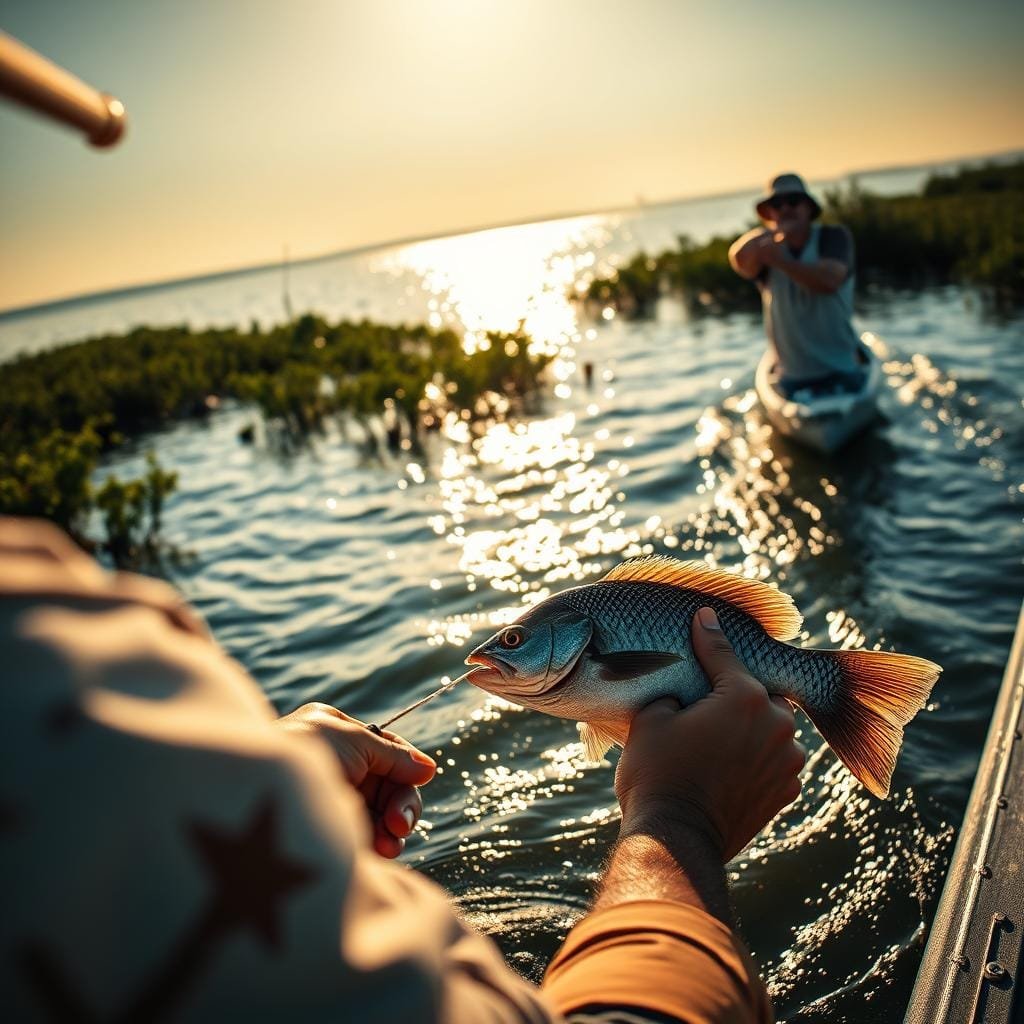
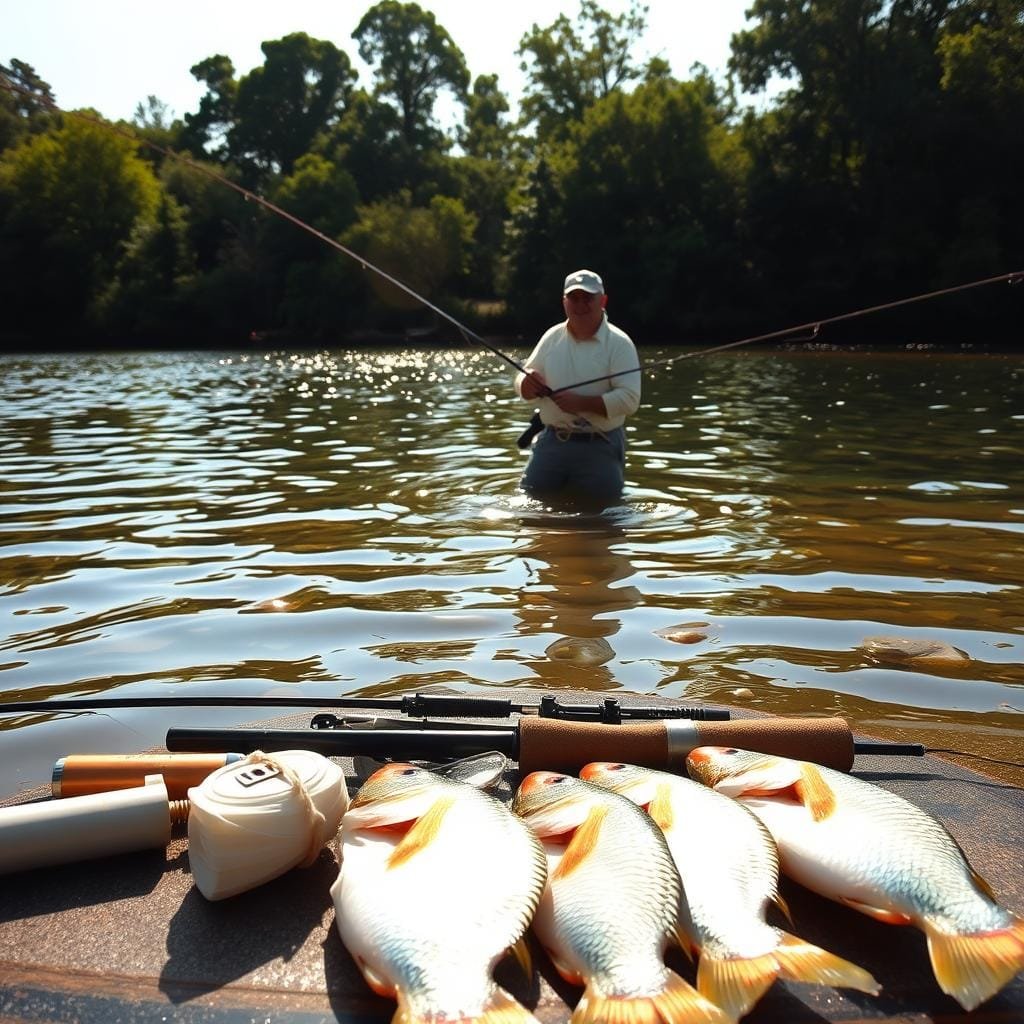
White bass are fast and run in groups. They live in many places, from Texas to Minnesota. This guide will help you catch them easily.
Use simple, effective methods. Choose medium-power rods and 6–10 lb line. Pick lures that look like shad or minnows. Spoons, spinners, and crankbaits work well.
When they hit the surface, use topwater lures. For picky fish, try minnows or worms. These baits are very effective.
Season is important. In spring, they move into tributaries when it’s 54–68°F. Summer, they hang out at the thermocline. As it gets hotter, they go deeper.
In fall, they go shallow to eat. Winter, they’re in 30–50 feet. Use electronics to find them and see them react to your lure.
If you’re new, start at wind-blown points and where you see birds. Look for baitfish clouds. Move until you find a school. Then, use these tips: count down your lure, change speed, and switch lures to match their mood.
Follow the season pattern and stay flexible. You’ll catch more white bass.
White bass basics and identification for new anglers
White bass are quick to bite and love to school together. Knowing how to spot them helps you find the best fishing spots. They shine silver and have lines that vary from faint to bold. They chase shad and swim in big groups in the Midwest and South.
Species snapshot: temperate bass family (Moronidae) and nicknames
White bass belong to the Moronidae family, which includes striped bass and yellow bass. They look similar because of their shared family. You might hear them called whiteys, sand bass, or silver bass at bait shops.
Some people call them “stripers,” but that’s not correct. Knowing they’re part of the Moronidae family helps you tell them apart when fishing is good.
Average size, growth, and trophy fish
White bass usually grow to 12–15 inches and weigh about a pound. They can live up to 10 years and females can lay almost a million eggs each spring.
Big ones are over 3 pounds, and very rare ones can be over 5 pounds. They eat insects and shad as they grow, which helps them grow fast and stay active all season.
How to tell white bass from striped bass and white perch
Start by looking at stripes and body shape. White bass have broken, narrow lines and a deeper body. Striped bass have stronger, continuous lines and grow bigger.
White perch are smaller with faint or no lines and a stockier body. Check the tongue teeth and fins if you can. White bass have a single tooth patch, while striped bass often have two. They also school tight in open water and blitz bait on points and flats.
| Trait | White Bass (Morone chrysops) | Striped Bass (Morone saxatilis) | White Perch (Morone americana) |
|---|---|---|---|
| Family | Moronidae temperate bass | Moronidae temperate bass | Moronidae temperate bass |
| Common Nicknames | whiteys, sand bass, silver bass | stripers, rockfish | perch |
| Typical Size | 12–18 in; 1–2 lb | 20–40 in; 10–30+ lb | 8–12 in; 0.5–1 lb |
| Body Shape | Deeper body, compact | Longer, more streamlined | Stocky, smaller |
| Striping | Faint to bold, often broken | Bold, mostly continuous | Faint or absent |
| Tongue Tooth Patches | Usually single | Commonly two | Single or none |
| Schooling Style | Large, tight schools in open water | Roaming schools, often pelagic | Loose groups near structure |
| Diet Shift | Insects to shad/minnows | Baitfish-focused | Invertebrates to small fish |
Where white bass live across the United States
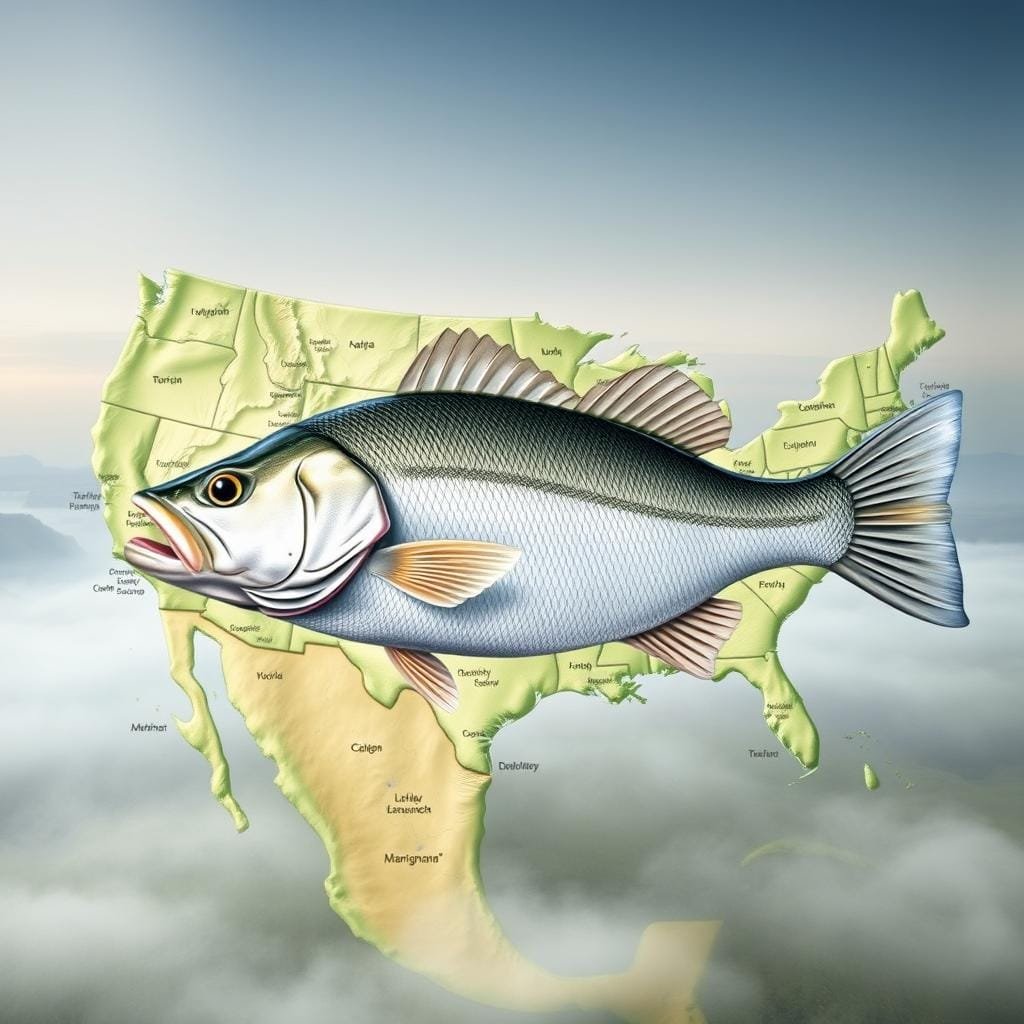
White bass live in many places, from the Great Plains to the Deep South. They like big reservoirs, busy rivers, and natural lakes. If you want to find white bass, look for open-water zones with shad and other prey.
The Midwest and the South have many lakes and rivers for white bass. These places are great for both shore and boat anglers. They offer lots of room for fish to roam.
White bass distribution is found in famous places like Lake Erie and the Winnebago system in Wisconsin. Oklahoma’s big impoundments are also home to them. In these areas, white bass swim in schools, using depth changes and current to catch bait.
Lakes, rivers, reservoirs: open-water, schooling behavior
In reservoirs, white bass swim in pods 10–25 feet deep. On rivers, they like the heads of pools, riffles, and eddies. At dawn and dusk, they move to shallow flats to chase baitfish.
When they’re feeding, you’ll see surface boils. Keep a distance and cast far to avoid breaking up the school. Using electronics can help find bait and predators, but watching the sky and surface is best.
High-percentage structure: points, drop-offs, brush, boulder piles
Main lake points are great because they gather current and shad. This makes them ambush lanes all day. Nearby drop-offs, humps, brush, and boulder piles also attract fish.
Shallow rock and gravel areas draw aggressive fish early. As the sun gets higher, move to the first break. This works in most lakes and rivers: start at windblown banks, then move to edges and deeper schools.
Reading wind, birds, and surface activity to locate schools
Wind helps move baitfish to points, riprap, and island tips. Look for birds diving in circles over schools. This is a good sign.
Watch for quick splashes and dimples on the surface. If it’s quiet, try casting downwind of main lake points. Make a few casts at different depths to catch moving schools.
| Water Type | Prime Zones | Depth Range | Key Clues | Why It Works |
|---|---|---|---|---|
| Reservoir | Main lake points, drop-offs, humps | 10–25 ft suspended; deeper at midday | Wind on points, bait on sonar | Current and wind funnel forage; schools pin shad along edges |
| Natural Lake | Boulder piles, brush, rock bars | 8–18 ft early/late; 20+ ft bright sun | Surface boils, bird activity | Hard structure creates ambush lanes and quick escape routes |
| River | Riffles, eddies, pool heads | Varies with flow; often mid-column | Seams, slicks, bait dimples | Current seams deliver food; schools rest and strike in soft water |
| Windblown Shore | Points, riprap, island tips | Shallow at dawn/dusk; step-down breaks after | Consistent chop, diving gulls | Wind-driven baitfish stack tight; fish push prey onto structure |
Seasonal patterns that put you on fish
Learn the white bass seasonal patterns to catch them all year. Watch the water temperature and depth changes. Also, adjust your fishing style to match their mood. For more on regional timing, check out how to catch white bass.
Spring spawn runs: tributaries, temps 54–68°F, gravel and weed beds
When water is 54–68°F, white bass start to spawn. Males go first, then females follow. Look for them in creeks and small rivers where they lay eggs.
If your lake doesn’t have creeks, try the windy shores. Use small jigs, spinnerbaits, and live minnows. This time of year is great for shore anglers who move around.
Summer thermocline strategy: 14–28 feet early, 30+ feet later
After spawning, fish the thermocline at 14–28 feet. As it gets hotter, move to 30+ feet. Look for them near boulders, humps, and underwater peaks.
- Use slabs, spoons, or deep crankbaits to reach suspended fish.
- Chase surface pushes when shad ball up, then drop back to the edge of the thermocline.
Fall feed: shallow rocks, islands, points for bigger fish
In the fall, white bass go shallow to 10–14 feet. Fish the ends of islands and rocky points with jigs, spoons, and crankbaits. Keep your casts close to the structure.
Expect bigger fish and short feeding times. The best bites often come with a breeze that brings bait to windward spots.
Winter deep schools: 30–50 feet and slow presentations
In winter, white bass gather deep in 30–50 feet. Find stationary schools and use spoons or soft plastics. Hold them in the strike zone with gentle lifts.
Fish slow and vertical. Sunlit afternoons can bring short bursts of activity. Keep your presentations slow and patient.
Electronics tips for finding schools fast

Get your white bass sonar ready before you cast. Mark the thermocline on your graph. Then, check points, humps, and drop-offs for tight fish packs.
In most lakes, fish are in 15–30 feet deep. But in cold snaps, they might go as deep as 50 feet.
Side-, down-, and forward-facing sonar: what to look for
Begin by side imaging white bass on long points and saddles. Side-scan quickly to spot pods and travel lanes. Then, switch to down view to see depth and avoid brush or rocks.
Forward view is key. It helps you track schools and line up your cast. This method is fast for finding schools with electronics.
“Christmas tree” returns and bait–predator stacking
Look for “Christmas tree” clusters on 2D sonar. These are fish. Clouds above are shad, showing bait stacking. Predators might be below or threading through the bait.
Check if the school is on the bottom or suspended. This helps you decide how to fish. Vertical jigging works for bottom fish. For suspended ones, try hover spoons or swim a jig.
Watching streaking fish react to your lure in real time
Streaks on forward-facing sonar show active fish. Fast lines mean charged fish. Adjust your lure speed to match theirs.
Cast past the marks and work back. Keep tweaking to find schools. Soon, those streaks will turn into hooksets.
Best rods, reels, and lines for white bass
White bass hit hard, so a balanced white bass rod and reel matters. Choose a 6’6” to 7’ medium power spinning setup. It casts light lures all day without getting tired.
The length helps with distance and quick line pick-up when schools push bait on the surface.
Use 6–10 lb test. This range protects small trebles on shad-style baits but turns fish fast in open water. It also keeps spoons, spinners, and slabs running true at the right depth and speed.
The braid vs mono white bass debate comes down to feel and stretch. Braided main line in 6–10 lb test gives instant feedback on light taps. It drives hooks at range.
Add a short fluorocarbon or mono leader for abrasion resistance and a stealthy presentation in clear water.
If you like simple rigging, straight mono works too. It offers cushion for surging fish near the boat. This helps with small crankbaits and topwater.
For finesse plastics or vertical work, braid plus a leader is the best line for white bass in most conditions.
Pick reliable gear from brands like Shimano, Daiwa, Abu Garcia, St. Croix, and Fenwick. A smooth 2500-size reel with a strong drag pairs well with a crisp blank. This lets you throw compact lipless cranks, tiny swimbaits, and live bait rigs with control.
Fly anglers can step up to a 6–7 weight to handle wind and longer casts. Full-sink lines reach deeper schools fast. A floating line shines during surface feeds. This balance keeps you ready when the bite shifts by the hour.
| Component | Recommended Spec | Why It Works |
|---|---|---|
| Rod | 6’6”–7’ medium power spinning | Versatile casting distance and backbone for schooling fish |
| Reel | 2500 size, smooth drag | Fast pick-up for moving schools and steady pressure on runs |
| Main Line | 6–10 lb test braid or mono | Braid for sensitivity; mono for stretch and forgiving hooksets |
| Leader | 6–10 lb fluorocarbon or mono | Stealth in clear water and abrasion resistance around rock |
| Use Case | Slabs, spoons, spinners, lipless cranks, live bait | Handles compact weights and quick depth changes |
Keep one white bass rod and reel spooled with braid for deep work. Another with mono for topwater and cranks. This simple two-setup plan covers the braid vs mono white bass scenarios without overpacking the boat.
Live bait setups that just work
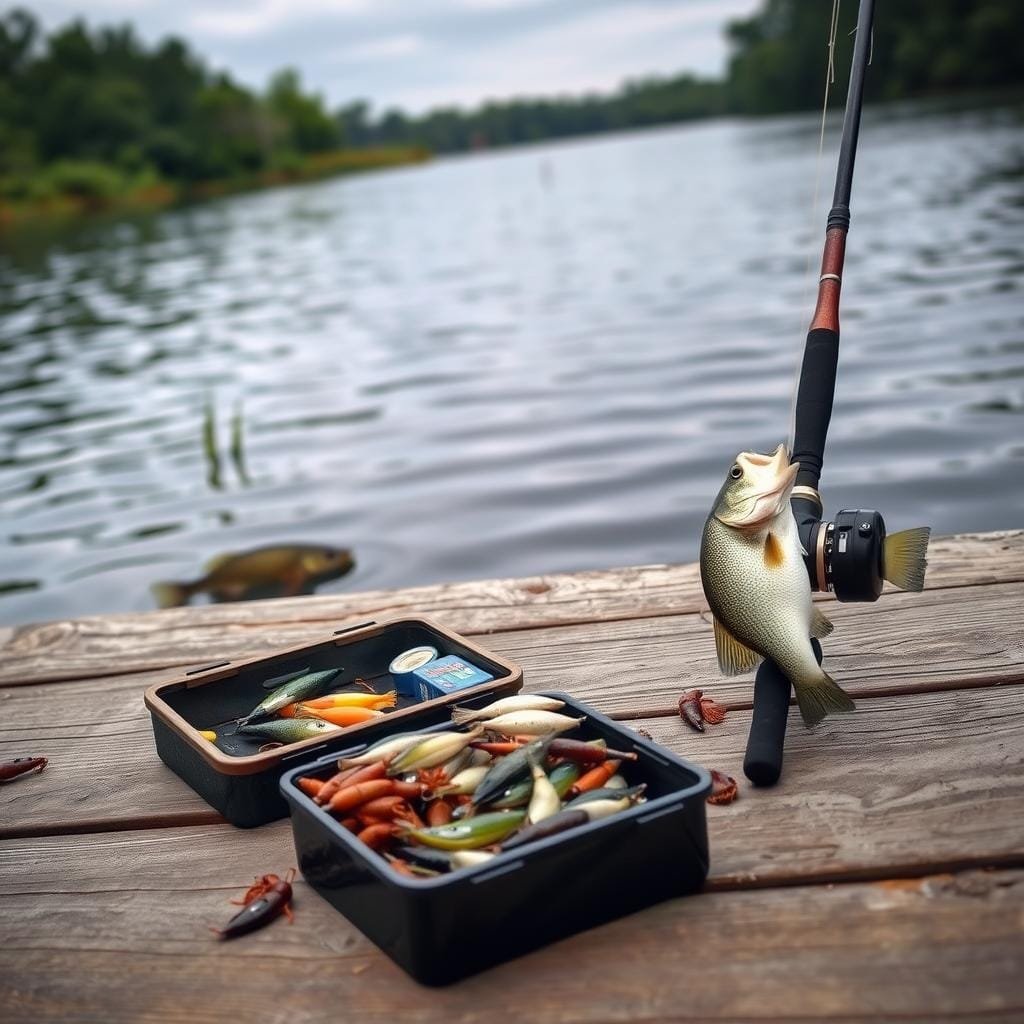
When white bass chase shad in current or wind, simple rigs shine. A clean white bass live bait rig stays in the strike zone. This is true whether you’re on a breezy point or walking riprap. Keep it light, keep it neat, and let the flow work for you.
Weighted rig with swivel leader for shore and current
For shore fishing white bass or fishing a spring tributary rig, slide a small casting weight on the main line. Then, tie a barrel swivel and add 2–3 feet of 4–6 lb mono or fluorocarbon. This layout pins the bait while letting it move a bit in the seam.
Cast, reel slack, and hold the rod at a low angle. In current, the rig settles fast and resists rolling. On windy banks, it keeps contact so you can feel the pick-up instead of dragging.
Hook sizes, line choices, and how to rig minnows and worms
Use a size 8–4 bait hook on a 4–6 lb leader and a 6–10 lb main line. The lighter leader draws strikes; the heavier main line handles surges near rocks or logs.
For minnow rigs for white bass, lip-hook a lively shiner or fathead. For a worm rig white bass setup, thread a nightcrawler halfway from the head, with the point exiting below the band. Let the fish move a few feet before a smooth set.
Boat positioning and bite detection in wind and flow
Anchor or spot-lock up-current or upwind of the lane. Keep lines as vertical as possible to read taps. Short drifts over seams also work when the school roams.
Watch line angles and rod tips. White bass often inhale and turn, so you’ll feel steady pressure more than a smash. Lift, reel, and lean into them—no haymaker hookset needed.
| Component | Recommended Spec | Why It Works | Best Situations |
|---|---|---|---|
| Main Line | 6–10 lb mono or braid with mono top shot | Cushions runs yet handles rocks and wind drag | Windy points, shore fishing white bass, anchored boats |
| Leader | 2–3 ft, 4–6 lb fluoro/mono | Low visibility and natural bait action | Clear water, tributary rig in spring currents |
| Weight | 1/8–3/8 oz casting or egg sinker | Holds bottom without killing bait movement | Moderate wind, seams, shallow gravel runs |
| Hook | Size 8–4 bait or octopus | Strong penetration with small profile | Live minnows, half-crawlers, finesse bites |
| Bait Rigging | Lip-hook minnow; thread crawler halfway | Keeps bait lively and aligned in flow | Minnow rigs for white bass and worm rig white bass |
| Presentation | Cast, tighten, wait, then lean-set | Matches the inhale-turn bite pattern | Current edges, wind lanes, bank eddies |
Lure lineup for numbers and size
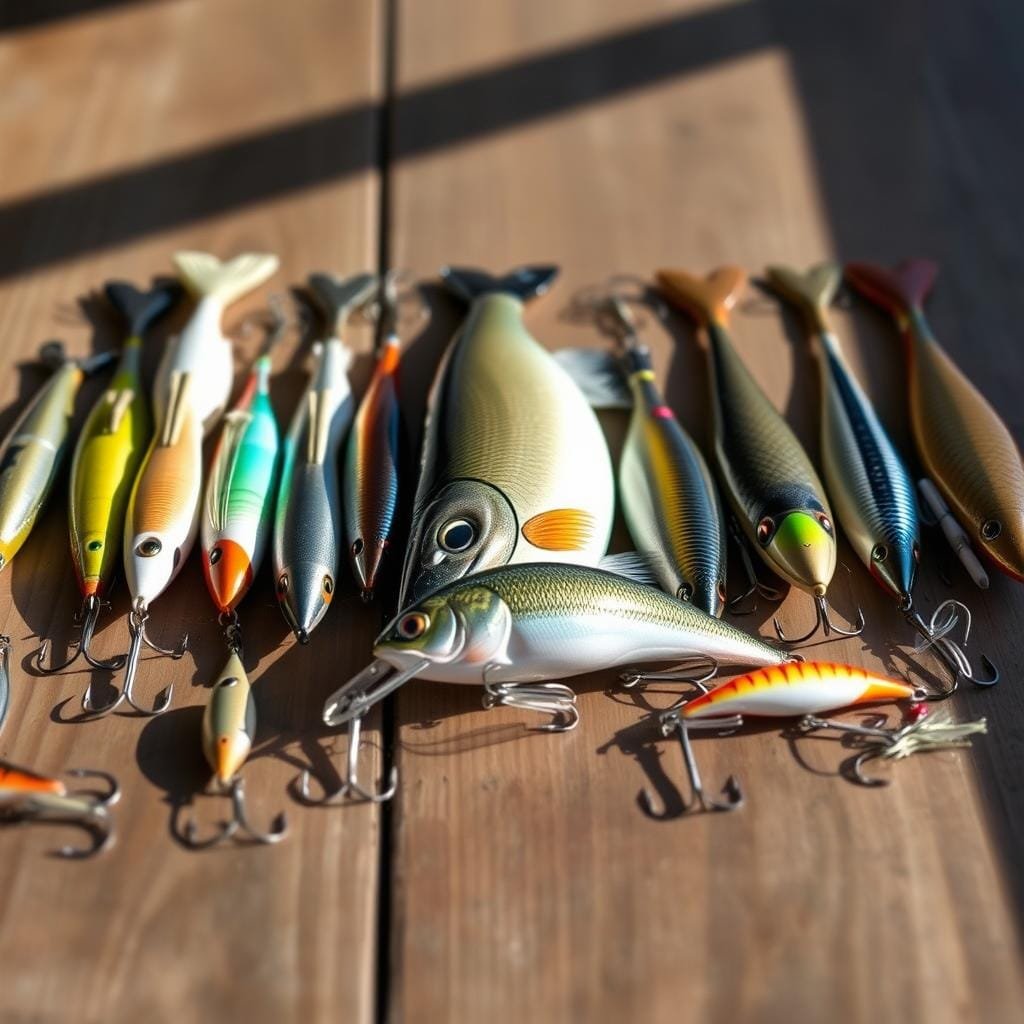
Choose the right lures for white bass by matching them to the school’s depth. Keep your retrieves quick and clean. Run your lures at or just above the fish.
Shad tones are best. But use chartreuse when the water gets murky.
Spoons, spinners, and slabs for vertical and cast retrieves
For deep schools, use white bass spoons or heavy slabs and spinners. Use short hops. A War Eagle Jigging Spoon works well on points and humps.
Cast-and-count is good for roamers between feeds.
Near the surface, use inline spinners like the Bass Pro Shops XPS Micro Spin. Worden’s Rooster Tail and Beetle Spin also work well. Pick white or clear shad prints. Use chartreuse when it’s hard to see.
Crankbaits and jerkbaits for deeper, colder fish
For deeper or colder water, use white bass crankbaits and compact jerkbaits. Rapala Countdown is great for precise zones. Think Countdown Rapala white bass for suspenders.
Try the Crème Ultralight for a tight wobble. Use the Rattle Trap for speed. Square-bill styles work on windy banks. Pause often and let the lure rise or stall a beat above the marks.
Topwater picks during surface feeds
When gulls wheel and bait showers, go topwater. Small poppers and walkers keep you in the splash. The Cotton Cordell Crazy Shad and Storm Cover Pop draw savage strikes during blitzes.
Choose subtle pops in slick water. Use quicker walks in choppy water. Keep casts tight to the commotion and work the lure out, not through the school.
Proven models anglers trust
- War Eagle Jigging Spoon — vertical over humps and points
- Bass Pro Shops XPS Micro Spin, Worden’s Rooster Tail, Beetle Spin — steady retrieves along breaks
- Rapala Countdown (1–3 inch) — target suspenders; classic for Countdown Rapala white bass patterns
- Crème Ultralight, Rattle Trap, square-bill styles — versatile white bass crankbaits for changing depths
- Atomic Tube, Bobby Garland crappie jig — tubes and grubs for brush and boulders
- Cotton Cordell Crazy Shad, Storm Cover Pop — go-to white bass topwater during busting bait
Strategy tip: whites feed at or above their depth. Keep lures at their level or a touch higher. Swap between white bass spoons, slabs and spinners, and plugs as the school rises or sinks.
Fly fishing for white bass
Fast packs of whites crush flies when you match their food and control depth. For white bass fly fishing, bring gear that handles wind, long casts, and quick moves. Keep retrieves tight and level; these fish feed upward, so aim just above the marks.
6–7 wt outfits, full-sink and floating lines
A 6 weight fly rod is the sweet spot on open water, with a 7 wt handy when gusts build. Pair a smooth large-arbor reel from brands like Orvis, Redington, or Sage with a full sink fly line. This reaches suspended fish fast. Keep a floating line rigged for spring runs and evening slicks when schools push bait shallow.
Use short, stout leaders on sinking systems to keep streamers tracking true. On a floater, step up to a longer leader for stealth in clear water. Swap spools instead of re-rigging so you can move from a channel edge to a windy point without missing a feed.
Streamers that match shad and minnows
A Clouser Minnow white bass setup is hard to beat; chartreuse-over-white and gray-over-white nail shad hues. Add a conehead Woolly Bugger in white or black, a Bunny Muddler, and a Flash and Grab for flash and thump. Strip in short bursts, then pause to let the fly hover at eye level.
Target tributary runs in spring, thermocline edges in summer, and shallow rocks in fall. In winter, count down the full sink fly line and hover streamers over deep marks while slowing the cadence to a crawl.
Topwater flies for surface blitzes
When gulls spin and bait sprays, tie on Micro Poppers, Crease Flies, or Airheads for explosive topwater fly bass action. Cast past the froth, sweep once, then pop and pause—hits often come on the stall. A 6 weight fly rod turns these flies cleanly and keeps hooks pinned during the surge.
Work the upwind edge of the feed and land quietly to avoid pushing fish down. If the blitz fades, switch back to a full sink fly line and count to the level where you last saw marks, then resume a tight, upward-track retrieve.
how to catch white bass
To catch white bass, match your speed and depth to the season. Keep your moves simple. When fish are shallow, cover water fast. Slow down and go vertical when they slide deep.
Stay flexible and watch your electronics. Let birds and bait tell you where to go.
Shallow power fishing in spring and fall
In spring and fall, white bass roam flats and rocky points. Use shallow power fishing with reaction baits to find them.
- Walk a Heddon Super Spook Jr. or Booyah Boss Pop over bait flicks at dawn.
- Burn a Mepps Aglia spinner or a 1/4-ounce Rooster Tail around wind-blown points.
- Fan-cast small crankbaits like the Rapala Shad Rap or Strike King Series 3, plus suspending jerkbaits such as the Rapala X-Rap.
Vary your retrieve depth until you connect. Then, match that angle and speed. If the action fades, slide a cast wider or switch to a tighter wobble.
Deep vertical jigging and hovering in summer and winter
Use sonar to mark schools in 15–30 feet in summer and 30–50 feet in winter. Vertical jigging works best when you park over arcs and bait stacks, then hover just above the school.
- Drop a jigging spoon like the Cotton Cordell CC Spoon or a slab to fish level and lift-drop in short hops.
- For neutral winter fish, shake a 1/4–3/8 oz jig-and-minnow in place and hold above their heads.
- Watch for “streaks” on forward-facing sonar; time your pulse when a fish rises.
Keep hooks sharp and line tight. Short strikes are common. A gentle sweep often lands more fish than a hard set.
Trolling strategies with crankbaits, spinners, and Lindy rigs
Trolling shines when schools roam or suspend off structure. Cover lanes at 1.6–3.0 mph with crankbaits, or slow to 0.8–1.4 mph with spinners or bait. Trolling Lindy Rig white bass also scores when fish hug bottom.
- Pull shad-profile cranks like the Bandit 200/300 or Berkley Flicker Shad to probe mid-depths.
- Run inline spinners behind an inline weight to sweep edges of flats and humps.
- Tick bottom with a Lindy Rig and nightcrawler or minnow behind a bottom bouncer; stagger leads to span the water column.
Spread rods with planer boards to avoid tangles and to contact scattered fish. Log depth, speed, and lure color to repeat productive passes.
Boat etiquette and approaching surface schools without spooking
When gulls dip and water boils, ease back on the throttle. Good boat etiquette starts with idling to the upwind edge, then drifting into range.
- Make long casts with topwaters, spoons, or small swimbaits; avoid running over the blitz.
- Keep one hooked fish in the water briefly to hold the school when practical and legal.
- Maintain space from other boats, rotate drifts, and communicate if paths cross.
Leave quietly when the feed sinks. Circling wide keeps the area alive and helps everyone catch more.
| Pattern | Best Zones | Core Lures/Rigs | Key Moves | Why It Works |
|---|---|---|---|---|
| Shallow power fishing | Flats, rocky points, island ends, tributary mouths | Topwaters, spinners, small crankbaits, jerkbaits | Fast casts, angle changes, speed bursts | Triggers roaming fish during spring/fall feeds |
| Deep vertical jigging | Humps, breaks, bait stacks at 15–50 ft | Jigging spoons, slabs, jig-and-minnow | Hover above arcs, lift-drop, subtle shakes | Precision strikes on schooled fish seen on sonar |
| Trolling Lindy Rig white bass | Edges, basins, long points, channel sides | Crankbaits, inline spinners, Lindy Rig + bottom bouncer | Speed control, rod spread, depth staggering | Covers water and multiple columns to find roamers |
| Surface school etiquette | Bird-led blitzes and windy slicks | Topwaters, spoons, small swimbaits | Idle to edge, long casts, rotate drifts | Prevents spooking and keeps the bite active |
Reading conditions: wind, light, and water clarity
Start with wind fishing white bass. Wind makes shad stack up. So, go upwind and let your boat drift.
Look for windblown points where white bass like to be. Casts that follow the drift keep your lure in the strike zone longer. When the water gets choppy, a spinner or slab that moves cross-current looks like a hurt baitfish.
Low light is best at dawn, dusk, or under a soft overcast. Whites go to shallow flats and riprap then. Small crankbaits, thumping spinners, and crisp topwaters work well here.
If the sun comes out and the lake gets smooth, go deeper. Use spoons, slabs, or count-down jerkbaits for marks in the thermocline.
Choose your tackle based on the water’s clarity. In stained water, use bright colors like chartreuse and black–silver. In clear water, pick natural colors and move your lure fast to avoid being seen too much.
Watch for bird activity and surface boils to find feeding spots quickly. Diving gulls and terns often show where bait and predators are. Use side- and forward-facing sonar to check.
For more on how wind affects baitfish and how to use electronics, see this white bass tips and tactics resource.
Keep, clean, and cook: making the most of your catch
White bass are great to eat because they are light and flaky. Bleed them at the boat and ice them quickly for the best taste. Most are about a pound, but fall fish have thicker fillets.
Because schools can be active, it’s important to catch only what you need. Follow state limits to help keep the fish population strong.
Cleaning white bass is easy because of their firm flesh and small size. To fillet them, start behind the pectoral fin and follow the backbone to the tail. Then, peel the skin and trim the dark red lateral line to reduce strong flavors.
Rinse the fillets in cold water, pat them dry, and keep them chilled. This makes them perfect for cooking at home or while camping.
Cooking white bass is simple and delicious. You can pan-fry them in butter with lemon, bake with olive oil and paprika, or grill with salt, pepper, and lime. You can also make them into tacos with cabbage and crema.
For something different, try searing them in a hot cast-iron pan or cooking them in foil with garlic and herbs. Make sure to keep the portions small and don’t overcook them. This way, your catch will be moist and full of flavor.
FAQ
What is a white bass, and how is it related to other temperate bass?
White bass belong to the temperate bass family, Moronidae. They are schooling predators with silver-white sides and faint horizontal stripes. They are also known as whiteys, sand bass, and silver bass.
They are found in U.S. lakes, rivers, and reservoirs. They are aggressive and fight hard.
How big do white bass get, and what counts as a trophy?
Most white bass are 12–18 inches long and weigh 1–2 pounds. A trophy is over 3 pounds. Rarely, they can grow up to 5 pounds.
They grow fast and can live up to 10 years. Females release hundreds of thousands of eggs in spring.
How do I tell white bass from striped bass and white perch?
White bass are smaller with bold but broken stripes. Striped bass are larger with continuous stripes. White perch lack strong stripes and have a uniform body.
Size, stripe clarity, and tongue patches help tell them apart.
Where do white bass live across the United States?
They live in the Midwest, South, and northern states. Look for them in lakes, rivers, and reservoirs. They like open water and hold 10–25 feet deep.
They roam around baitfish like shad and minnows. They often suspend off structure and follow wind-driven forage.
What structures and spots consistently hold white bass?
Look for main-lake points, drop-offs, humps, rock and boulder piles, brush, and saddles. In rivers, target riffles, eddies, and current seams.
Windblown banks and points are high percentage spots. They pin baitfish against structure.
How do wind, birds, and surface activity help me find schools?
Wind concentrates shad on the upwind side of points and shorelines. Diving gulls often mark active feeding schools.
Surface boils or “blitzes” happen when whites push bait up. Idle to the edge, make long casts, and avoid driving through the feed.
What are the key seasonal patterns for white bass?
Spring: spawning runs into tributaries at 54–68°F on gravel and weeds. Summer: suspend near the thermocline, 14–28 feet early, often 30+ feet later.
Fall: push shallow to feed on rocks, points, and islands. Winter: group deep in 30–50 feet and respond to slower vertical tactics.
How do I target white bass during the spring spawn?
Work tributary creeks, river mouths, and windswept shorelines. Use live minnows, small spinners, jigs, and crankbaits.
Shore anglers do well on gravel bars and current breaks. Males arrive first, followed by larger females.
What’s the summer thermocline strategy?
Find the thermocline with electronics and fish just above it. Early summer, target 14–28 feet over humps and breaks.
As water warms, slide to 30+ feet. Vertical spoons, slabs, and count-down crankbaits excel.
Where do white bass go in the fall?
Cooling water draws them shallow over rock, island ends, and points, often in 10–14 feet or less. Jigs, spoons, jerkbaits, and square-bill crankbaits shine.
Bigger fish feed heavily before winter.
How should I fish white bass in winter?
Use electronics to find tight schools in 30–50 feet. Present spoons, jigs, or live bait vertically and slow the cadence.
Watch for short feeding windows on sunny, stable days.
What electronics help find white bass schools fast?
Combine side-imaging to scan large areas, down-imaging to pinpoint depth and separate fish from structure, and forward-facing sonar to track moving schools and present baits to individual fish.
Mark bait clouds and predator arcs to set depth.
What do “Christmas tree” returns mean on sonar?
On 2D sonar, a tight stack of arcs forming a tree-shaped cluster often signals a white bass school. Bait shows as clouds above, with predators beneath or mixed in.
That picture tells you where to place your lure—at or just above the school.
How do I use forward-facing sonar for white bass?
Aim the beam to watch fish roam and react. When you see fast “streaks” rising to your lure, hold your depth or speed up slightly.
If fish stall below your bait, drop to their level and lift to trigger chases.
What rods, reels, and lines work best?
Medium-power spinning or baitcasting outfits with 6–10 lb mono or fluorocarbon work great. Many anglers run 6–10 lb braid with a light fluoro leader for sensitivity.
White bass fight hard, but open water reduces break-offs, so balanced, medium gear is ideal.
What live bait rig is simple and effective?
Use a sliding casting weight, a barrel swivel, and 2–3 feet of 4–6 lb leader to a size 8–4 bait hook. Lip-hook a live minnow or thread a nightcrawler halfway on.
Cast, tighten to the sinker, and let fish load the rod before a firm set.
What hook sizes and line should I use for minnows and worms?
Size 8–4 bait hooks cover most situations. Run 6–10 lb main line with a lighter leader for stealth. Lip-hook minnows through both lips for current, or through the back ahead of the dorsal for calm water.
Thread worms from the head to keep them straight.
How should I position the boat and detect bites in wind and current?
Set up upwind or up-current of the target and drift or hold with a trolling motor so lines stay as vertical as possible. Watch line angles and rod tips; many bites feel like steady pressure as fish inhale and turn.
What lures consistently catch numbers and size?
Spoons, slabs, and inline spinners produce vertically and on the cast. Small crankbaits and jerkbaits shine in deeper or colder water.
During surface feeds, poppers and small walkers draw explosive strikes. White and shad patterns are staples; chartreuse helps in stained water.
Which lure models are proven for white bass?
Try the War Eagle Jigging Spoon, Worden’s Rooster Tail, Beetle Spin, Cotton Cordell Crazy Shad, Rapala Countdown, lipless Rat-L-Trap, square-bill cranks, and Bobby Garland soft-plastic jigs. Match size to local shad and minnow forage.
What’s the best topwater approach during blitzes?
Make long casts with small poppers or walking baits and keep retrieves moving. Whites feed up, so stay above them. Avoid running through the school—work the edges to keep the bite going.
Can I fly fish for white bass effectively?
Yes. A 6–7 wt rod handles wind and fast retrieves. Use full-sink lines for suspended schools and a floating line for spring runs and surface feeds.
The take is aggressive, and fish fight hard on fly gear.
Which fly patterns match shad and minnows?
Clouser Minnow, conehead Woolly Bugger, Bunny Muddler, and Flash and Grab in white, gray, and olive. Strip at speeds that keep flies at or just above fish level. Add flash in stained water.
What topwater flies work during surface blitzes?
Micro Poppers, Crease Flies, and Airheads. Cast beyond the boil, land softly, and pop or walk the fly back through the edges of the feed.
What are the go-to tactics to catch white bass fast?
In spring and fall, power fish shallow with spinners, small cranks, jerkbaits, and topwaters. In summer and winter, rely on vertical jigging spoons and slabs over marked schools.
Keep a trolling program ready to cover water when fish roam.
How do I troll for white bass across seasons?
Pull crankbaits or spinners at varied depths. Use bottom bouncers with Lindy Rigs to tick bottom and draw reaction bites. Spread rods to cover the water column and follow contour lines along points and humps.
What’s the proper etiquette around surface schools and birds?
Don’t run through the feed. Idle to the edge, give other boats space, and rotate drifts. Keep hooked fish in the water briefly to keep the school fired up before netting or releasing.
How do wind, light, and water clarity affect white bass?
Wind stacks bait and activates points and saddles. Low light pulls fish shallow; bright, calm conditions push them deeper or make them suspend. In stained water, use chartreuse and thumping spinners; in clear water, run natural shad hues.
Are white bass good to eat, and how should I handle them?
They’re excellent table fare with light, flaky flesh similar to walleye. Bleed and ice fish promptly. When filleting, trim the dark red lateral line to improve flavor.
Selective harvest helps keep schools healthy.
What are easy ways to cook white bass?
Pan-fry, bake, or grill with simple seasonings like lemon, butter, and pepper. Fish tacos and blackened fillets are fan favorites. Thicker fall fish offer hearty fillets that hold up well on the grill.
What line and leader setup helps with clear-water fish?
Run 8–10 lb braid for sensitivity with a 3–6 foot fluorocarbon leader of 6–8 lb. It’s stealthy, sinks well, and keeps spoons, jigs, and jerkbaits at target depth.
How deep do white bass usually hold?
Common depths are 10–25 feet most of the year. In peak summer and winter, expect 15–30 feet or deeper, with some fish as deep as 50 feet. Electronics help dial in exact depth and presentation.
What natural forage should I match with lures?
Threadfin shad, gizzard shad, and small minnows make up most of the diet. Use shad-color spoons, spinners, lipless cranks, and small jerkbaits to mirror local bait size and color.
Is Oklahoma really known for white bass?
Yes. White bass are the state fish of Oklahoma, and waters like Grand Lake and Lake Texoma are famous for strong runs and big numbers. Many Midwestern and Southern reservoirs offer similar action.