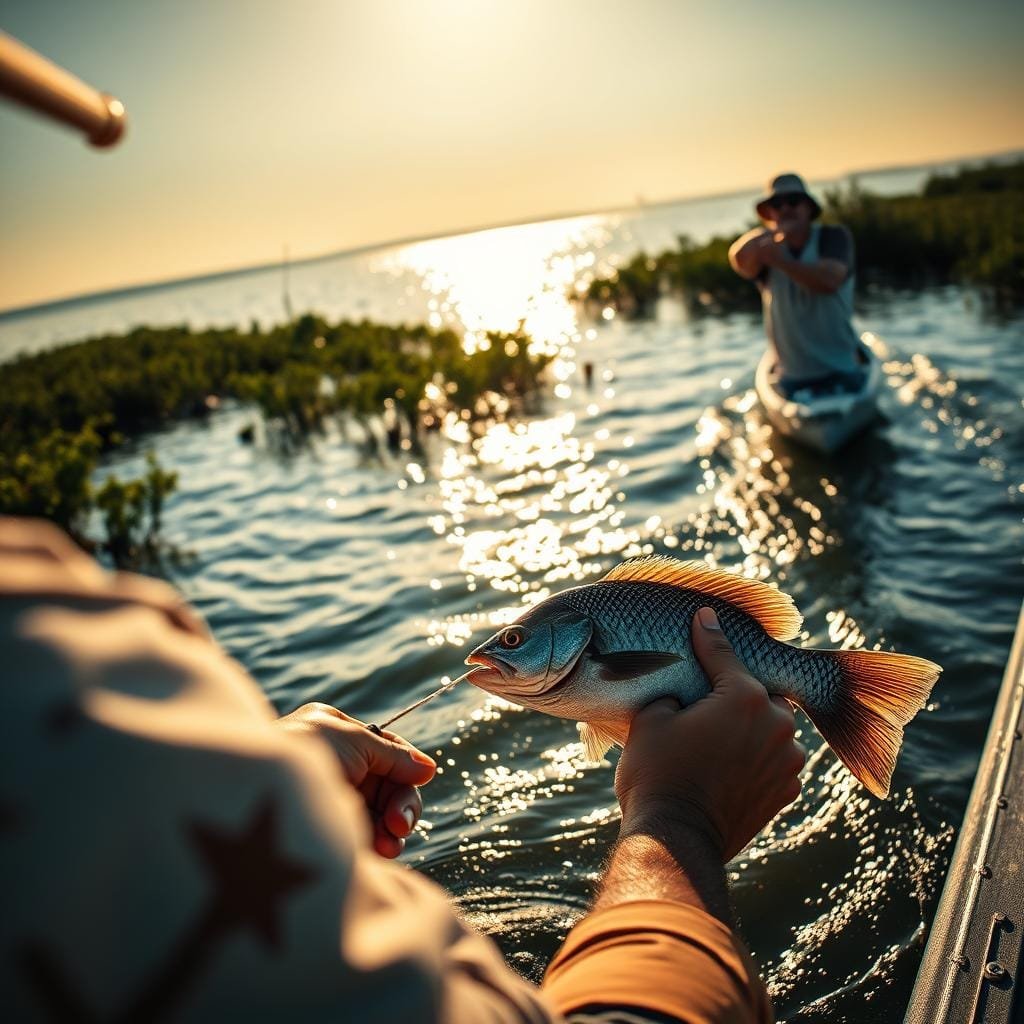
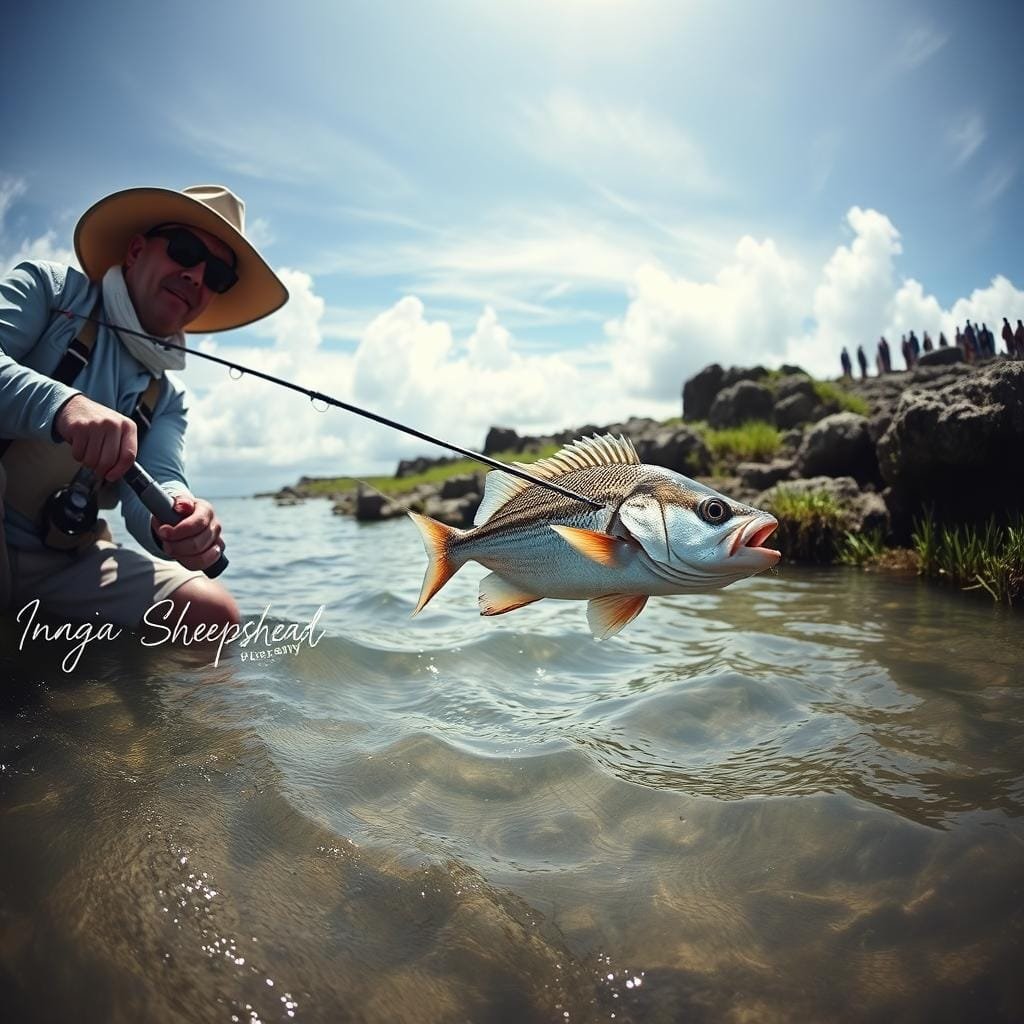
Want a quick plan to catch sheepshead? These fish are great at eating barnacles and crabs. They fight hard and taste good. We’ll share easy steps to catch them in the US.
Start by looking for places like docks and seawalls. In warm months, they’re nearshore and offshore. When it gets cold, they move closer to the shore.
Spring is when they spawn nearshore. This is when the water is around 70°F. Knowing this helps you catch sheepshead in the US.
Use a simple setup. A 6- to 7-foot rod with light tackle is best. Use 12–20 lb braid and a 15–20 lb fluorocarbon leader. Small hooks and bait work well.
Choose the right rigs. A short-leader Carolina rig is good. Short-shank jigs with fiddler crabs also work well. In shallow water, use no weight.
Use baits sheepshead love. Try fiddler crabs, sand fleas, and shrimp. Scrape barnacles on structures to attract them. Keep your line tight and react fast.
Stay safe and follow the law. Sheepshead have sharp teeth, so check your line often. Know the local fishing rules before you fish.
Seasonal patterns for sheepshead in the United States
Track sheepshead seasonal patterns to stay on fish all year. As fronts roll through and currents shift, these crustacean crushers slide between inshore and nearshore structure. Keep an eye on water temperature sheepshead thresholds to predict when they feed hard or move to spawn.
Fall migration inshore and timing by region
When autumn cools the bays, waves of fall sheepshead migration push onto docks, bridge pilings, seawalls, and marker posts. In North Florida, the first arrivals often show in October; farther south, the shift ramps up in November.
Along the Atlantic from St. Marys to Sebastian Inlet, jetties light up as temps slide toward 70°F. These moves set up steady bites on structure as crabs and oysters stay thick and easy to reach.
Winter inshore concentrations and midwinter slowdowns
Through December and January, fish stack tight to pilings and rock, and the winter sheepshead bite tracks moving tides. Cold snaps and heavy pressure can cause a lull, when readings dip into the low 50s.
Look for a rebound in the warmest window, usually 1–4 p.m. Small bridges and deep creek bends often shine then. For a deeper seasonal look at habits, see this overview on understanding winter sheepshead.
Spring spawn on nearshore structure
From February into early April—earlier in South Florida, later in the Panhandle—trophy fish stage for the spring sheepshead spawn on nearshore rock piles, wrecks, and channel edges. Inside bays like Charlotte Harbor, Tampa Bay, St. Andrews, Choctawhatchee, and Pensacola, schools gather on reefs and corners with flow.
In the Chesapeake, arrivals build in April–May around jetties and mouth channels. Rising clarity and salinity help, and the action often lifts when temps crest 70°F.
Best water temperatures for feeding and spawning
Feeding is most reliable near 70°F, while low 50s throttle back activity. In the Chesapeake, many anglers key on the mid-70s for steady catch rates, matching water temperature sheepshead cues to tide movement.
As temps warm, eggs hatch fast in saline water, keeping the cycle moving. Dial in these marks, and the broader sheepshead seasonal patterns turn into a simple plan you can repeat across regions.
Prime habitats and structure to target for sheepshead
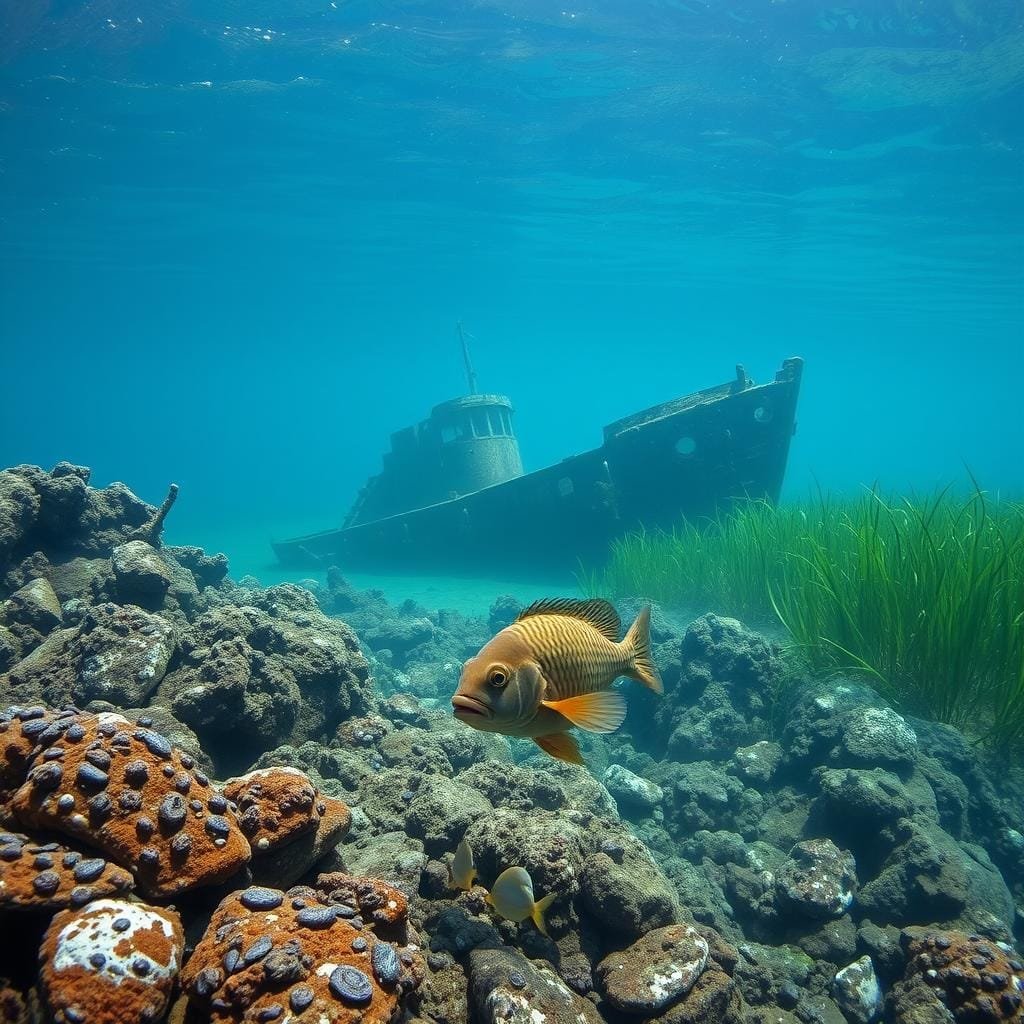
Think like a crustacean grazer to find sheepshead. Structure fishing works best where current hits hard edges. This is where food grows on the texture.
Use the tide to slide bait into the structure’s face. Don’t slide it away.
Inshore: docks, piers, bridge pilings, seawalls, and marker posts
Look for shade under docks and the up-current sides of seawalls. Sheepshead circle around bridge pilings, eating crust on the concrete. Keep bait tight to the base, a foot or two off bottom.
Marker posts and trestles hold fish in cool months. Short drops with a controlled swing place bait against the face. This is key for structure fishing sheepshead when bites are subtle.
Nearshore/offshore: artificial reefs, rock piles, wrecks, and jetties
In spring and summer, reefs and wrecks are steady for sheepshead. Target natural rock piles and Corps-built modules. Also, jetty corners where surge funnels forage.
In the Chesapeake, the CBBT islands and the High Rise area are good. Also, inshore wrecks like the Big D, Anglo African, and Santore. These spots stack fish on current seams. Start with vertical relief, then fan casts across the down-current edge.
Reading barnacle, mussel, and oyster growth as location clues
Thick shell growth means food is there. Look for white crust, dark clusters, and sharp ledges on pilings and rocks. These textures show the best feeding lanes.
If you see spadefish, tautog, or triggerfish eating the same spot, you’ve found it. Match that spot and keep bait in contact with the cover.
Finding overlooked spots in creeks and small bridges
In midwinter, check coastal creeks and small bridges with deeper bends. These spots get less pressure but have plenty of food.
At low tide, see which faces have the heaviest crust. Return on a rising tide and fish those lines. Pay special attention to corners that push current into the piling.
| Structure Type | Best Season/Window | Key Clue | Presentation Tip |
|---|---|---|---|
| Docks & Seawalls | Late fall through winter | Heavy barnacle bands at mid-depth | Short leader; drop straight to the face and hold steady |
| Bridge Pilings | Year-round; peak in cold snaps | Crusted concrete with eddy on up-current side | Pinpoint drop; lift an inch at a time to track bites |
| Artificial Reefs | Spring spawn and summer | Active life on modules and relief edges | Vertical jig or knocker rig along high spots |
| Rock Piles & Jetties | Spring through early fall | Shell growth on rock seams | Cast quartering up-current; walk the bait down the face |
| Small Creek Bridges | Midwinter | Concentrated mussels and oysters on deeper pilings | Light weight; hover baits where current kisses the piling |
Best tides, water temps, and daily timing
Finding the best tides for sheepshead is key. Moving water makes food move, while slow water stops it. Keep track of water temperature and daily patterns to improve your fishing.
Why moving water turns on the bite
Flow is important. It moves food to fish, making them line up. Chum in the current to attract them. If the tide stops, move to another spot.
Fishing low 50s vs around 70-degree water
In the low 50s, fish slow down. Use smaller hooks and baits. Move slowly and hold your line.
Around 70°F, fish are more active. They go to jetties and eat more. You can fish faster and cover more ground.
Warmest afternoon window in winter
On cold days, fish best from 1–4 p.m. on sunny days. Shallow spots warm up first. Make quiet casts and keep your distance.
Experimenting with incoming vs outgoing tides
Both tides work. Keep a log of which tide works best by spot and month. Sometimes fish are on the bottom, other times in the middle. Try different depths to find them.
| Condition | Key Cue | Adjustment | Reason It Works |
|---|---|---|---|
| Steady moving tide | Clear downtide seam | Chum lightly and anchor uptide | Current delivers scent and bait fragments to waiting fish |
| Slack or near-slack water | Bites fade fast | Hop spots or wait for tide to turn | Forage stops moving; fish drift off structure |
| Low 50s sheepshead water temperature | Short taps, long pauses | Downsize baits; fish slower | Cold fish feed less and inspect more |
| ~70°F water | Active fish on jetties and passes | Cover more pilings; moderate retrieve | Higher metabolism and pre-spawn movement |
| Winter sun 1–4 p.m. | Rising surface temps | Target sunlit rocks and seawalls | Warm microclimates open a reliable winter bite window |
| Incoming vs outgoing comparisons | Depth-specific eats | Probe bottom to mid-column in 1–2 ft steps | Sheepshead shift with flow speed and forage layer |
Use these tips on each trip. Track the best tides and water temperature. Improve your plan for the winter bite window and tide patterns.
Stealth and boat positioning around structure
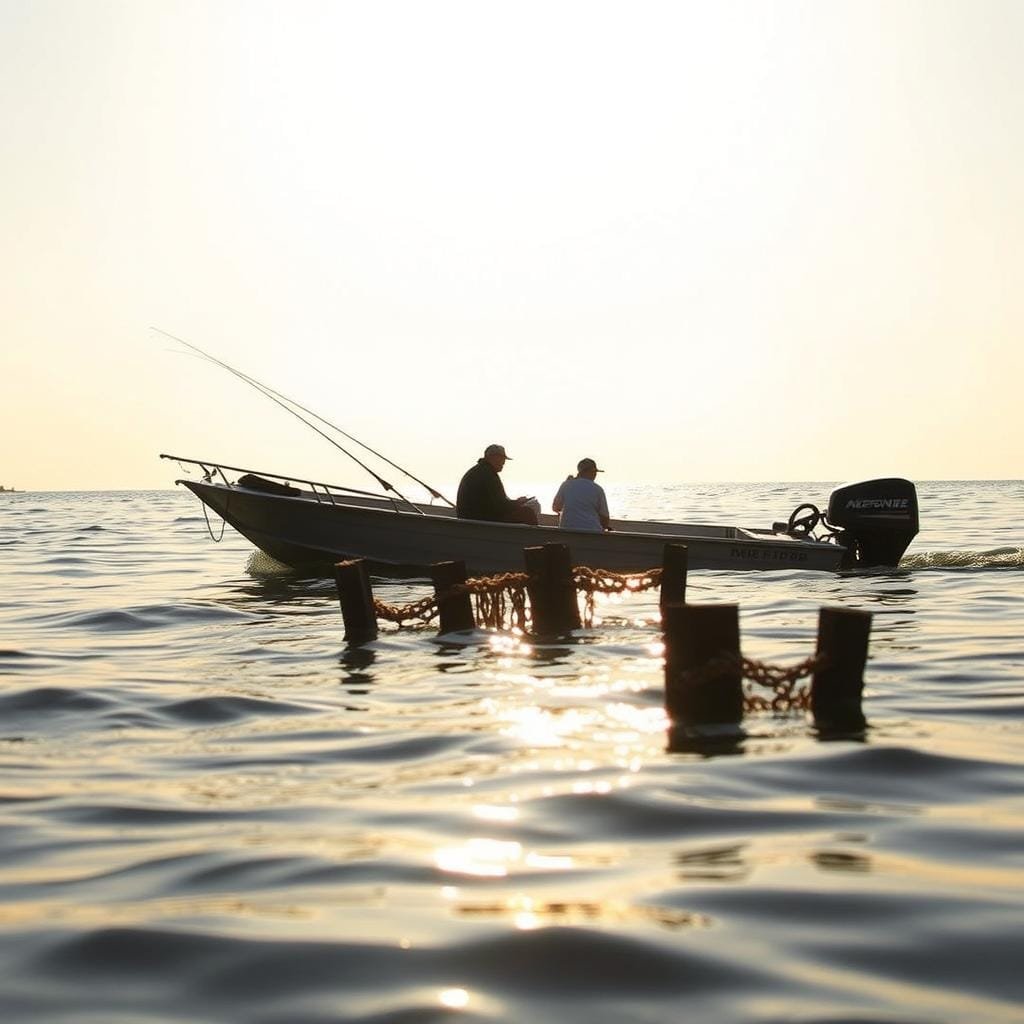
When fishing in tight spots, be very careful. Think like a bowhunter for stealthy sheepshead fishing. Move quietly and use a Minn Kota or Power-Pole to sneak up.
Silence and low profile to avoid spooking wary fish
Sheepshead get scared easily. Don’t bang the hull or throw heavy things at pilings. Stay low and cast softly to avoid scaring them.
Positioning to drift baits into the structure
Position your boat to let the current carry your bait. This way, your lines stay close to vertical. It helps you feel the fish’s bites better.
Using forward/side-scan sonar on deeper structure
For deeper fishing, use sonar to find fish. Tools like Garmin LiveScope show fish clearly. Anchor softly and wait for fish to come to you.
how to catch sheepshead
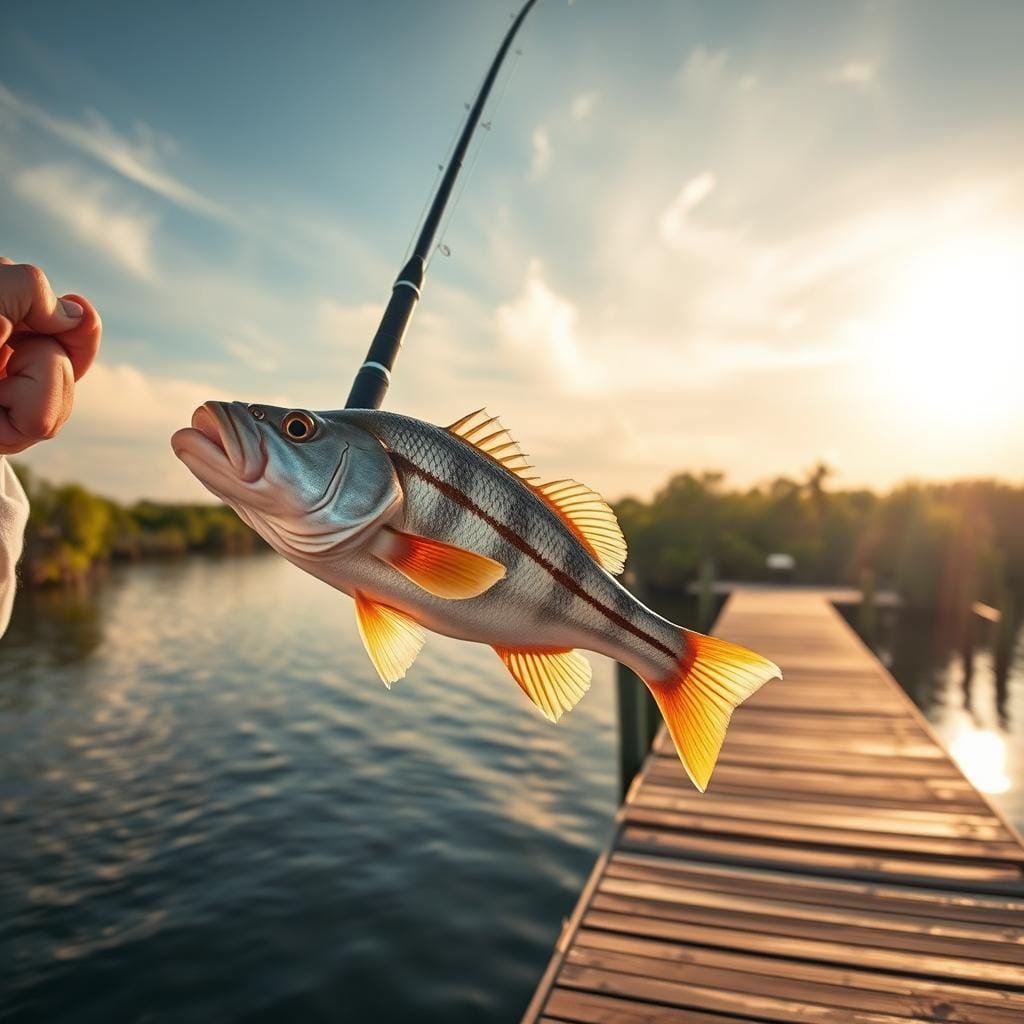
Start with a simple plan to catch sheepshead. Use small, natural baits near pilings, rocks, or jetties. A short-leader Carolina rig or a short-shank jig works well.
Use just enough weight to keep the bait on the bottom. This way, it’s right beside the structure, not under it.
Sheepshead bites can be hard to notice. Keep a tight line and feel for tiny lifts. Watch for a crisp tap or slow loading to detect bites.
For a bite, snap a quick, firm strike. Or, lift until the rod loads, then crank hard to set the hook.
Choose the right bait for the season. In late fall to early winter, use fiddler crabs, barnacles, and shell bits. In winter, shrimp is best.
In spring, fish nearshore structures where fish spawn. Use stronger tackle to keep them away from reefs and wreck edges.
On bright winter afternoons, fish lightly. Cast an unweighted fiddler or shrimp tail in 10–18 inches of water. Land it quietly, then let it settle and twitch slightly.
This method works well on grass flats and mangrove roots.
Prime spots need patience. Scrape barnacles from pilings to chum, then fish the moving tide. See this guide on how to catch sheepshead in Florida for more tips.
Rods, reels, line, and leaders that excel
Good tackle makes soft taps into solid hookups. Choose the right rods and reels for the place you fish. Then, pick line and leader that let you feel bites but don’t let fish win.
Medium to stout 6- to 7-foot rods vs medium-heavy options
A medium to stout 6- to 7-foot rod is great. It’s from brands like St. Croix, Shimano, or Daiwa. It’s sensitive at the tip and strong near cover.
For big fish or tough cover, a 7-foot medium-heavy rod is better. It has more power to turn fish fast. A stiff tip is best to feel bites clearly.
Braided main line strengths for docks and pilings
Thin braid is best for sheepshead near pilings. It feels and powers well. Use 12–20 lb braid most of the time; 20 lb is best for tight spaces.
In tough Chesapeake pilings, some use 30–40 lb braid. It helps win short fights. Braids from PowerPro, Sufix 832, or Daiwa J-Braid are smooth and cut current.
Fluorocarbon leader choices for abrasion and bites
A good fluorocarbon leader setup is tough but stealthy. Use 15 lb in clear water or for heavy pressure. But, it may get damaged near sharp shells.
For jagged edges or rock, use 20 lb fluorocarbon. Keep leaders short, 12 to 24 inches, to avoid scuffing. A uni-to-uni or FG knot is reliable.
Drag settings and rod-tip control near cover
Start with a firm, smooth drag for structure fishing. It protects small hooks and stops fish runs. Set it just right to stop fish without ripping flesh.
Keep the rod tip high and angle the fish away on the hookset. Use steady side pressure, then reel down and lift to lead the fish clear.
- Rod/Reel Pairings: 6’6” medium with 2500–3000 spinning reel for docks; 7’ medium-heavy with 3000–4000 reel for bridge pilings.
- Braid/Leader: 12–20 lb braid with 15–20 lb fluoro; upsize to 30–40 lb braid in extreme cover.
- Hooks/Bait Control: Small J-hooks or circle hooks stay pinned when pressure stays constant and the rod tip stays up.
Go-to rigs that put baits in the strike zone
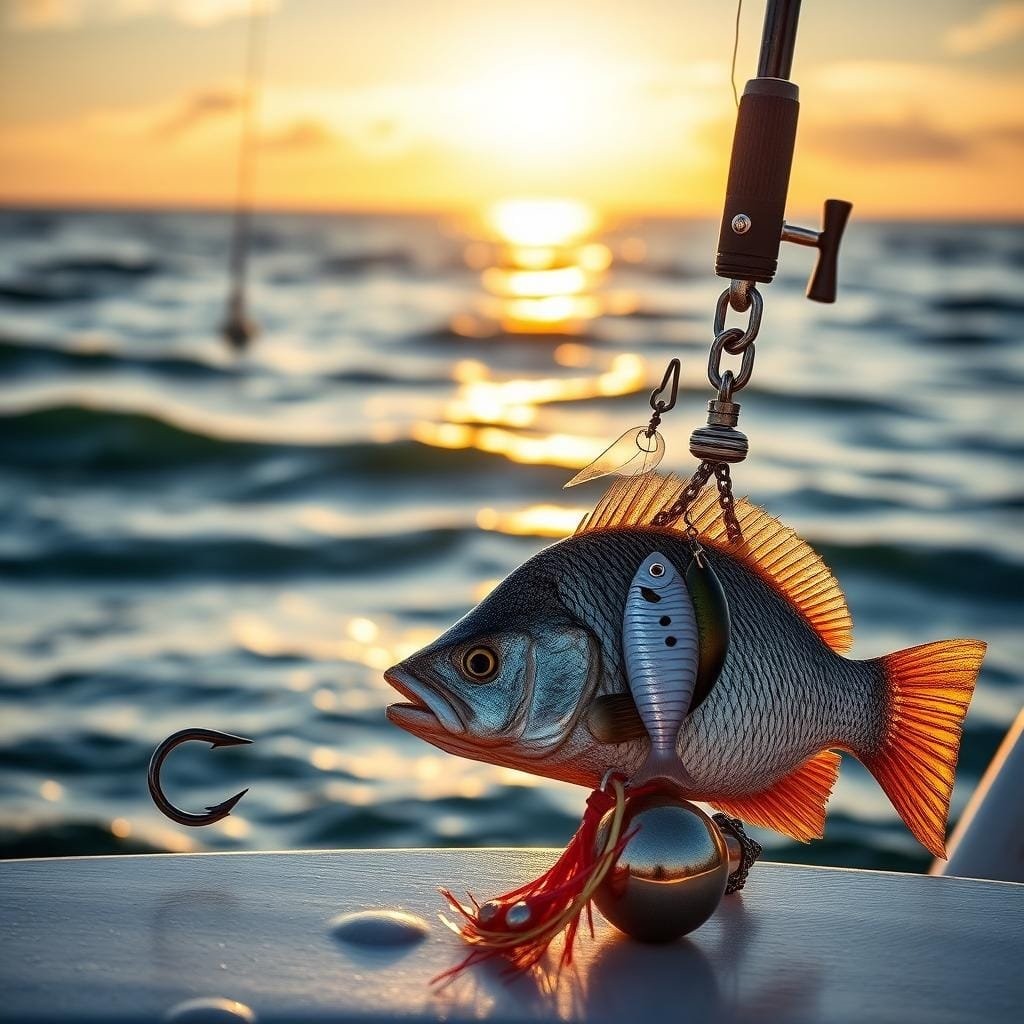
Dialed rigs are key when fishing near pilings, rocks, and reef edges. They keep your gear simple and close to the bottom. This helps you catch fish without scaring them away. The rigs below are great for current, depth, and staying quiet to catch pressured fish.
Carolina rig with short leader for tight structure
A Carolina rig is perfect for sheepshead fishing. It has a sliding egg sinker, swivel, and a 6–18 inch fluorocarbon leader. Use a #1–1/0 hook for fiddlers or shrimp, and a 2/0 for bigger crabs.
The short leader keeps the bait close to the fish. It also helps you feel when a fish bites.
Cast straight to the shadow line of a dock or the up-current face of a piling. Lift two inches, pause, and keep a finger on the braid. If it feels “lighter,” reel tight and lift.
Weights for depth and current control
Choose sinker size based on the current, not just the depth. For 5–12 feet around protected docks, a 1/4–3/8 oz egg works well. At jetties and passes with strong flow, use 1/2–1 oz to keep the bait in place.
Adjust the sinker size with the tide. As the current gets stronger, use heavier weights. When it gets weaker, use lighter weights to avoid scaring fish.
Short-shank specialized jigs for fiddler crabs
Short-shank sheepshead jigs are great for fiddler crabs. They have a rocker-style head that settles on bottom but doesn’t snag. The sturdy, short-shank hook keeps the crab compact and helps pull fish out of cover.
Thread the fiddler through a leg socket and out the top shell edge. Tap the jig against the structure, hold, and wait for that subtle thump.
Unweighted presentations for shallow, tailing fish
In 10–18 inches of clear water, use an unweighted crab presentation. Rig a live fiddler or shrimp on a 1/0 short-shank hook with no lead. Cast 10 feet ahead of tailing fish and let it settle like a natural drop from the rocks.
Any splash too close will blow the shot. Let the bait rest, then barely inch it forward. If the tail tips and the fish noses down, lift smooth and steady.
| Rig | Best Use | Hook/Size | Weight Guide | Key Advantage |
|---|---|---|---|---|
| Carolina rig sheepshead | Tight to docks, pilings, and reef edges | #1–1/0 (2/0 for larger crabs) | 1/4–1 oz sinker size for current and 5–30 ft depth | Short leader boosts feel and keeps bait in the strike zone |
| Sheepshead jigs (Bottom Sweeper jig) | Rocky bottom, jetty seams, and bar edges | Short-shank stout hook | 1/4–3/4 oz based on flow and drift speed | Rocker head resists snagging and holds crab upright |
| Unweighted crab presentation | Shallow flats with tailing or cruising fish | 1/0 short-shank | No lead; use fluorocarbon leader only | Ultra-stealth approach for skittish, shallow fish |
Best natural baits for sheepshead and when to use them
Finding the best bait for sheepshead starts with what they like. Look at what’s on the pilings or rocks. Try different baits until you get bites.
Keep quiet and close to the cover. Let the current help you.
Fiddler crabs, sand fleas, barnacles, oysters, clams
Fiddler crabs are a sure bet for sheepshead. Big fish love them in spring. They stay on the hook well in current.
For sandy areas near jetties, use sand fleas. They work well in clear, moving water.
Crack barnacles, oysters, and clams for dock lines. This bait looks like what fish eat off pilings. For more on bait, see this guide.
Live or dead shrimp tactics and seasonal preference
In early season, crabs and shell baits beat shrimp. But as winter comes, shrimp become better. Use fresh shrimp tails to hide the hook.
On piling schools, a chunked tail can turn on the bite fast. Use a #1 to 2/0 short-shank jig. Keep the bait small.
Chumming by scraping barnacles to fire up the bite
Scrape barnacles with a flat hoe or shovel. Let the current carry the shell and meat to your piling. Fish will come to eat.
After scraping, stay quiet and cast short. Let the bait sink to the structure. You might catch redfish and black drum too.
- Clams: Tough, salty scent that holds in current and pairs well with short leaders.
- Fiddler crabs: Prime choice for picky fish; crush the shell slightly for extra scent.
- Mussels: Soft but irresistible; ideal for barnacle chumming follow-ups.
- Barnacles: Pin a tight wad to match the hatch after a scrape.
- Shrimp: Fresh tails or half-pieces excel mid to late winter.
Rigging and hooking techniques that convert bites
Clean rigs get more eats around pressured docks and bridges. When planning how to rig for sheepshead, keep the profile small, keep the bait natural, and keep your line under control. The goal is simple: feel more taps and turn more of them into fish.
Small hooks and minimal hardware for picky fish
Use compact hooks that hide in the bait. Proven choices include a #1 circle, a #1 Gamakatsu Octopus, or a 1/0 short‑shank. This small hooks sheepshead approach pairs with light swivels, short leaders, and tiny egg weights. Less metal means fewer spooked fish and better sensitivity.
Match the hook to the bait’s size, not the fish. Check points often; a single scrape on concrete can dull a hook and cost the only thump you get all tide.
Threading shrimp tails and using the bottom half
Shrimp tail rigging starts by removing the head and shelling the bottom half. Thread the point through the meat of the tail, then bury it so the hook is hidden. Using just the bottom half toughens the presentation and keeps the profile tight.
Run this on a short‑leader Carolina rig or a compact jig to stay fishing tight to structure. The streamlined shape slips past barnacles and lets you feel subtle pressure bites.
Hooking fiddler crabs for natural presentation
For hooking fiddler crabs, pass the hook from the soft underside between the legs and out through the top shell. Face the crab aft on a jig so it rides true in current. Leave the big claw on; it looks natural, keeps the crab lively, and draws the strike to the hook side.
Test the orientation in the water before dropping. If it spins, re‑pin slightly off center to track straight.
Keeping baits tight to the piling without snagging
Drop on the up‑current side and engage the reel the instant the weight lands. Maintain light tension and make micro‑lifts every few seconds to confirm you have bait. This is the core of fishing tight to structure without feeding the snag monster.
Short leaders and small jigs reduce hang‑ups and help when deciding how to rig for sheepshead in heavy cover. If you feel weight but no thump, ease up an inch—often a sheepshead is pinning the bait to the concrete.
| Scenario | Recommended Rig | Hook Size/Style | Bait Prep | Key Advantage |
|---|---|---|---|---|
| Busy pier with wary fish | Short‑leader Carolina | #1 Gamakatsu Octopus | Shrimp tail rigging, bottom half only | Minimal hardware, stealthy profile |
| Deep pilings with current | Compact jig (1/8–3/8 oz) | 1/0 short‑shank | Hooking fiddler crabs, claw on | Tracks straight, resists pull‑off |
| Shallow rocks and seawalls | Unweighted or split shot | #1 circle | Shrimp tail rigging, hook buried | Natural fall, fewer snags |
| Heavy barnacles on bridge | Short dropper with small sinker | #1 Gamakatsu Octopus | Fiddler crab pinned underside to top | Precise depth control tight to cover |
Reading the bite and setting the hook
To detect sheepshead bites, stay connected to the sinker. Keep a slight bend in the rod. The bite feels like tiny pecks or a slow, building weight.
Watch the line for a twitch or a steady creep. These subtle bites mean it’s time to react.
For a clean sheepshead hook set, use two paths. If you feel real weight or a sharp tap, set quickly and firmly. Or try the lift and crank method.
Raise the rod smoothly, feel pressure load, then crank and sweep. This method buries the point. With steady pressure, many fish pin themselves.
Line management is key. Keep the rod tip up and the braid tight. This way, you can detect sheepshead bites even when they’re soft.
Avoid extra-soft tips that hide subtle bites. Give the bait tiny test lifts. It’s common to find a fish already mouthing it.
Once the hook lands, steer hard and low. Turn the head from pilings, rocks, or jetty edges. Apply directional pressure and keep cranking.
A crisp sheepshead hook set plus calm control keeps your leader safe. It also keeps the fish out of trouble.
Location strategies by region and scenario
Find the best spots by looking at current, cover, and seasonal changes. Search in sheepshead locations Atlantic Gulf first. Then, focus on small areas where fish are active without using too much energy.
Atlantic and Gulf passes, jetties, and bay systems
Look for sheepshead in jetties and passes from St. Marys to Sebastian Inlet on the Atlantic side. Also, check Charlotte Harbor, Tampa Bay, St. Andrews, Choctawhatchee, and Pensacola on the Gulf. Target spots like jetty rocks, channel edges, and bridge abutments.
In the Chesapeake, focus on the Chesapeake Bay Bridge-Tunnel islands, the High Rise, and wrecks like Big D, Anglo African, and Santore. Watch for eddies on incoming and outgoing tides across each bay system.
Shallow flats sight-fishing on sunny winter days
On calm, sunny days, look for sheepshead in 10–18 inches of water. This is common along the east shore of Tampa Bay. Cast far with unweighted fiddlers or shrimp, aiming 10 feet ahead of the fish.
Be quiet and move slowly to avoid scaring fish away. Use polarized lenses to see fish in the shallow water.
Nearshore spring spawning congregations
When it gets warmer, sheepshead gather nearshore in reefs, wrecks, and rock piles. This happens just off the beach and inside big bays. South Florida warms up by February, and the northern Gulf and Carolinas follow in March and April.
Use a graph to find the right spot, then test with live bait. Move quickly to find the best areas.
Patterning depth on pilings throughout the day
Find the strike zone by using pilings. Drop a short-leader Carolina rig to the bottom, then lift it in small steps. Pause at each level to see if you get a bite.
Keep track of which side and depth work best as the tide changes. Sheepshead locations change often, so keep scanning and adjusting your gear.
| Region/Scenario | Primary Structure | Best Window | Presentation Tip | Why It Works |
|---|---|---|---|---|
| Atlantic and Gulf passes | Jetty rocks, channel edges, bridges | Strong moving tide | Crab or shrimp tight to rocks | Jetties and passes sheepshead feed where current funnels food |
| Big bays (Tampa, Pensacola, Chesapeake) | Pilings, CBBT islands, known wrecks | Mid-tide to peak flow | Short-leader Carolina rig | Control depth and avoid snags while testing layers |
| Sunny winter flats | 10–18 inch grass/sand mix | Late morning to afternoon | Unweighted fiddler, long cast | Shallow flats sheepshead warm up and tail in thin water |
| Nearshore spring | Reefs, wrecks, rock piles | 70°F+ water, Feb–Apr | Probe with live bait, hop spot to spot | Spring spawn nearshore sheepshead stack by the hundreds |
| Pilings, all seasons | Bridge and pier rows | Varies by tide and light | Step-up pauses to map bite zone | Depth patterning pilings reveals daily strike bands |
Safety, regulations, and fish care
Before you keep a fish, check the sheepshead rules in your state. Size and bag limits change by area and season. Wardens make sure everyone follows these rules.
Be careful around docks and rocks. Barnacles and mussels make pilings sharp. Use tough fluorocarbon, sturdy gloves, and move slowly.
Sheepshead have strong teeth. Handle them carefully to avoid injury. Use long-nose pliers or a dehooker to remove hooks. Support the belly and tail when releasing.
For cleaning, use a sharp knife and short strokes. Start behind the gill plate and follow the spine. Leave the tail on to skin easily, then cut the pin bones. Always check size and bag limits before leaving.
FAQ
What makes sheepshead worth targeting and how do I start?
Sheepshead are tough fighters and taste great. Start by fishing near docks and piers. Use small hooks and little gear.
When do sheepshead push inshore during fall, and where first?
As the water cools to 70°F, they move inshore. North Florida sees them in October, while the south waits until November. Jetties and passes fill up when it’s in the 60s to 70s.
How do winter patterns and slowdowns affect the bite?
In winter, they stack up on structure and feed on moving tides. A midwinter slump happens after heavy pressure and cold snaps. In the low 50s, they slow down. Fish the warmest part of the day and try deep creek bridges.
When and where does the spring spawn happen?
February to early April, big fish gather on nearshore spots. Look for rock piles, wrecks, and reefs in big bays. The Chesapeake Bay sees them at the CBBT islands and nearby wrecks.
What are the best water temperatures for feeding and spawning?
They feed best near 70°F. The bite slows in the low 50s. In the Chesapeake, aim for 75°F for steady catching. Spawning happens at 70°F+ with high salinity.
Which inshore structures are most reliable throughout the cool months?
Docks, piers, and bridge pilings are prime spots. They hold tight to the structure. Present baits so they drift into the structure, not away.
What nearshore and offshore spots produce in summer and spring?
Target reefs, wrecks, and channel edges. In big systems, graph edges and drop live fiddlers or shrimp tails. In the Chesapeake, work inshore wrecks and the CBBT complex.
How do barnacles, mussels, and oysters help me locate fish?
Heavy shell growth on pilings and rocks signals feeding zones. Oysters, barnacles, and mussels attract sheepshead. If you see spadefish, tautog, or triggerfish around, you’re near the right habitat.
What overlooked spots produce during winter lulls?
Small bridges over deep coastal creeks often hold fish in December–January. Scout at low tide to see which pilings have the best growth, then return on moving water.
Why does moving water make such a difference?
Current carries scent and food to ambush points. It positions fish on the structure. Sheepshead chew when the tide moves; slack tides usually shut the bite down.
How should I adjust when temps are in the low 50s vs around 70°F?
In the low 50s, go small and subtle. Fish the warmest part of the day. Around 70°F, fish are more active and spawn on nearshore structure.
What’s the best daily window in winter?
On sunny days, the 1–4 p.m. window is most productive. On shallow flats, calm sun brings tailers into 10–18 inches of water. Make long, quiet casts ahead of fish.
Incoming or outgoing tide—how do I choose?
Fish both and keep notes by spot and season. Some years, outgoing near the bottom wins; other days, incoming 10–12 feet down in 27+ feet of water is better. Use a Carolina rig to scan depth levels.
How do I avoid spooking wary sheepshead near structure?
Stay quiet. Avoid banging the hull, dropping anchors hard, and casting heavy weights onto the structure. Keep a low profile, and land baits 10 feet ahead of tailing fish.
What’s the best boat position for presenting baits tight to cover?
Set up up-current or cross-current so baits drift into pilings, jetty faces, or rocks. Keep lines as vertical as possible, engage the reel immediately, and maintain slight tension.
How do I fish tight to pilings without constant snags?
Drop on the up-current side, engage the reel immediately, and keep slight tension. Use short leaders and compact jigs. Make tiny lifts often to confirm bait status and detect delicate takes.
What does a sheepshead bite feel like and how do I react?
Expect faint taps or a slow, steady pressure increase as fish move the bait to crush it. Two methods work: a quick firm set on the first real weight, or lift-and-crank to let the fish load the rod before sweeping.
Where should I focus by region and season?
Atlantic and Gulf passes, jetties, and bay systems are money. St. Marys to Sebastian Inlet, Charlotte Harbor, Tampa Bay, St. Andrews, Choctawhatchee, and Pensacola. In the Chesapeake, hit CBBT islands, the High Rise, and inshore wrecks like the Big D, Anglo African, and Santore.
Can I sight-fish sheepshead on flats in winter?
Yes. On sunny, calm days, they tail in 10–18 inches of water. Use unweighted fiddlers or shrimp, quiet approaches, long casts, and land the bait 10 feet ahead to avoid spooking fish.
How do I find nearshore spring congregations?
When temps hit 70°F+, graph rock piles, wrecks, reefs, and channel edges off beaches and inside large bays. Drop live fiddlers or shrimp tails and test different pieces until you pinpoint schools of larger fish.
How do I pattern depth on pilings during the day?
Use a Carolina rig to scan. Drop to bottom, then crank up in increments, pausing to test. Note which side of the structure—ocean or bay—and the exact depth band that produces. Adjust with the tide.
What regulations and safety tips should I keep in mind?
Always check current state size and creel limits before keeping fish. Wear gloves around barnacle-covered structure, set a smooth drag, and control the boat in current. Use abrasion-resistant leaders and dehookers to avoid those powerful, human-like teeth.
How should I handle, clean, and care for sheepshead?
Keep fingers clear of the mouth and support the fish if releasing. For filleting, work around the large rib cage near the head, keep the blade tight to the spine, leave the tail attached to skin cleanly, and V-cut pin bones. Ice fish promptly for top-quality fillets.