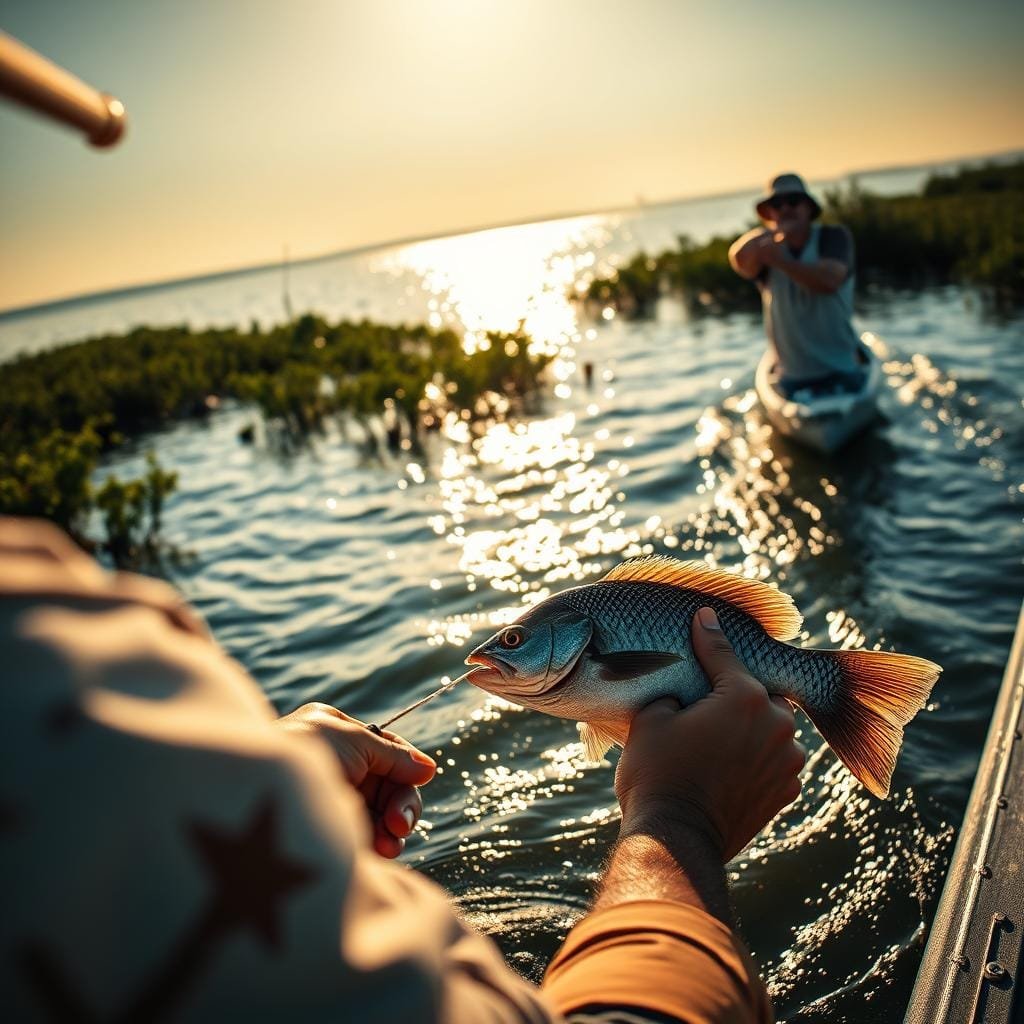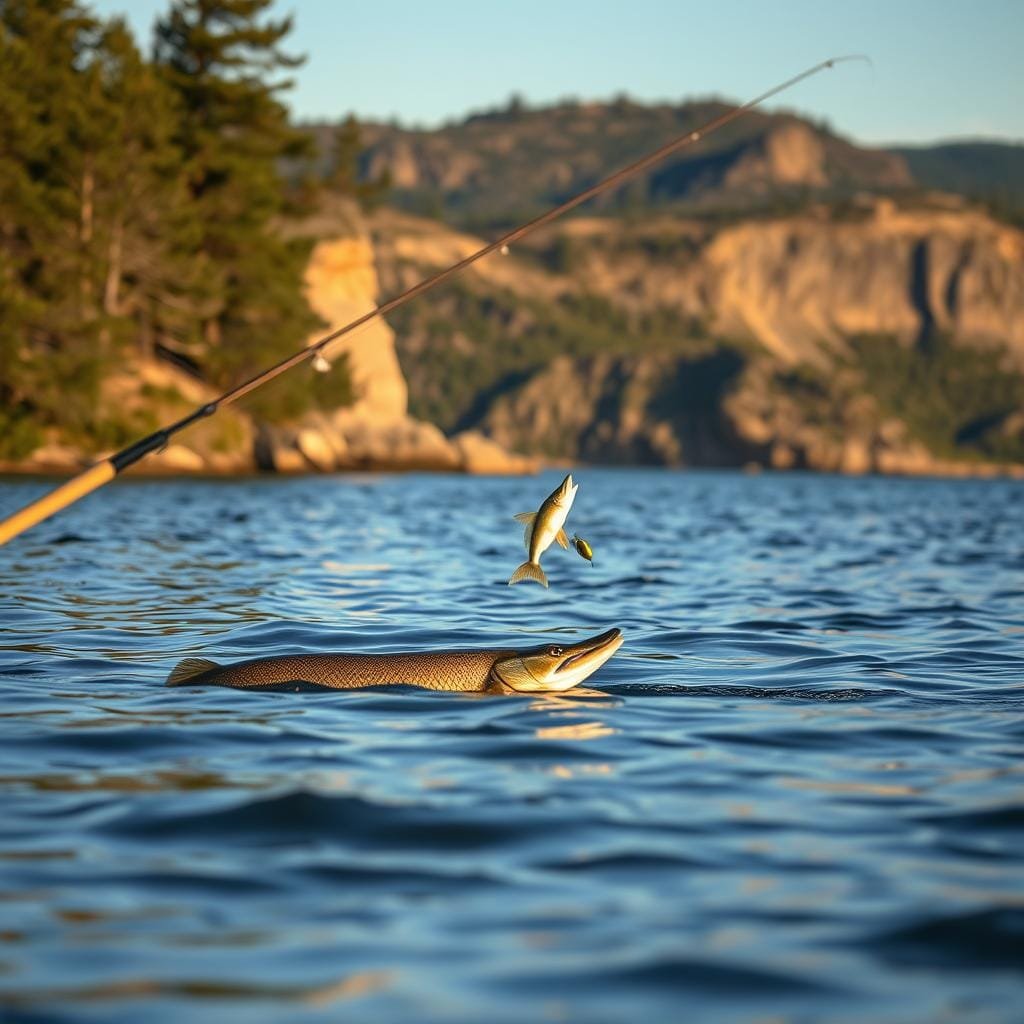

Want a simple plan for catching smallmouth bass all year? Start with food. Smelt, cisco, alewife, shad, crayfish, gobies, frogs, and insects tell you where fish are. Find the food and you’ll find the fish.
Topwater fishing works from spring to fall. Yes, even in calm water. A walking bait or popper often beats slower lures. When it’s hot, smallmouth move to shallow areas.
In rivers, they hide near current breaks. These tips work in clear or murky water across the U.S.
Competitive anglers use speed first, finesse second. Schools react to fast-moving lures. After a cold front, slow down and fish near the bottom.
These tactics work from Lake Champlain to Lake St. Clair. They also apply in Northwest Ontario’s Lake of the Woods and Rainy Lake. Here, you can fish different spots in one day.
In late summer and fall, fish move to main-basin structure. Minnow baits work well during this time. But keep a topwater ready for calm evenings.
Simple gear works best. A 6’6”–7’ medium spinning rod with braid and fluorocarbon leader is versatile. Add a medium-light for finesse and a medium-heavy for power baits.
Polarized glasses, tidy tackle trays, pliers, scissors, a hook file, and a sonar/chartplotter help you read the water. Follow the food and you’ll catch smallmouth bass anywhere.
Prime habitats for smallmouth bass: rocks, current, flats, and structure
Think about food first, then structure. Look for baitfish, crayfish, and gobies in good spots. Then, use topwaters or horizontal lures to find active schools.
Rocky points, reefs, ledges, and offshore humps
Rocky areas can have fish from the bank to 30-plus feet. Look for rocky points near deep water. Also, check rocky reefs and ledges where food gathers.
On big lakes, bass like offshore humps. Cast across the top and down the sides. This helps find depth and rock changes.
Mixed-cover flats with vegetation, sand patches, and boulders
Flats with grass, sand, and rock are great. Weeds hide bait, and sand offers feeding paths. Boulder piles are quick ambush spots.
Map the flat in a grid. Look for where grass meets rock or sand meets a rise. These spots are good all day.
River current breaks: islands, wing dams, logs, and boulders
In moving water, bass like current breaks. Islands, wing dams, and logs create soft spots. These spots are perfect for resting and feeding.
Boulders and mid-channel humps make nice eddies. Cast upstream, let it wash, then work it along the seam for a strike.
Shade targets in summer: docks, overhanging trees, and boats
In summer, bass seek shade. They hide under docks, trees, and boats. The best shade is near deep water or weedy edges.
Pitch low and quiet, then skip back to the darkest spot. Follow with a second cast from a new angle. This reaches fish that didn’t bite the first time.
| Spot Type | Why It Holds Fish | Best Cast Angle | Quick Check |
|---|---|---|---|
| Rocky points & rocky reefs for bass | Hard bottom, depth change, steady forage flow | Across tip, then along edges to hit both drops | Look for crayfish claws and bait on sonar |
| Ledges & offshore humps bass | Ambush lanes with wind or current pushing food | Diagonal over crown, then downwind along contour | Mark arcs on electronics before making long casts |
| Mixed-cover flats | Vegetation, sand, and rock create feeding seams | Fan-cast grid to connect boulders and weed clumps | Note sand openings and rock ticks on the retrieve |
| River current breaks bass | Eddies behind islands, wing dams, logs, boulders | Upstream cast, drift lure along the seam | Watch surface boils and leaf lines to find slack |
| Summer shade bass targets | Cooler temps, cover, and nearby forage | Low skip under docks, parallel to edges | Track shade lines as the sun shifts |
Seasonal patterns that boost your odds
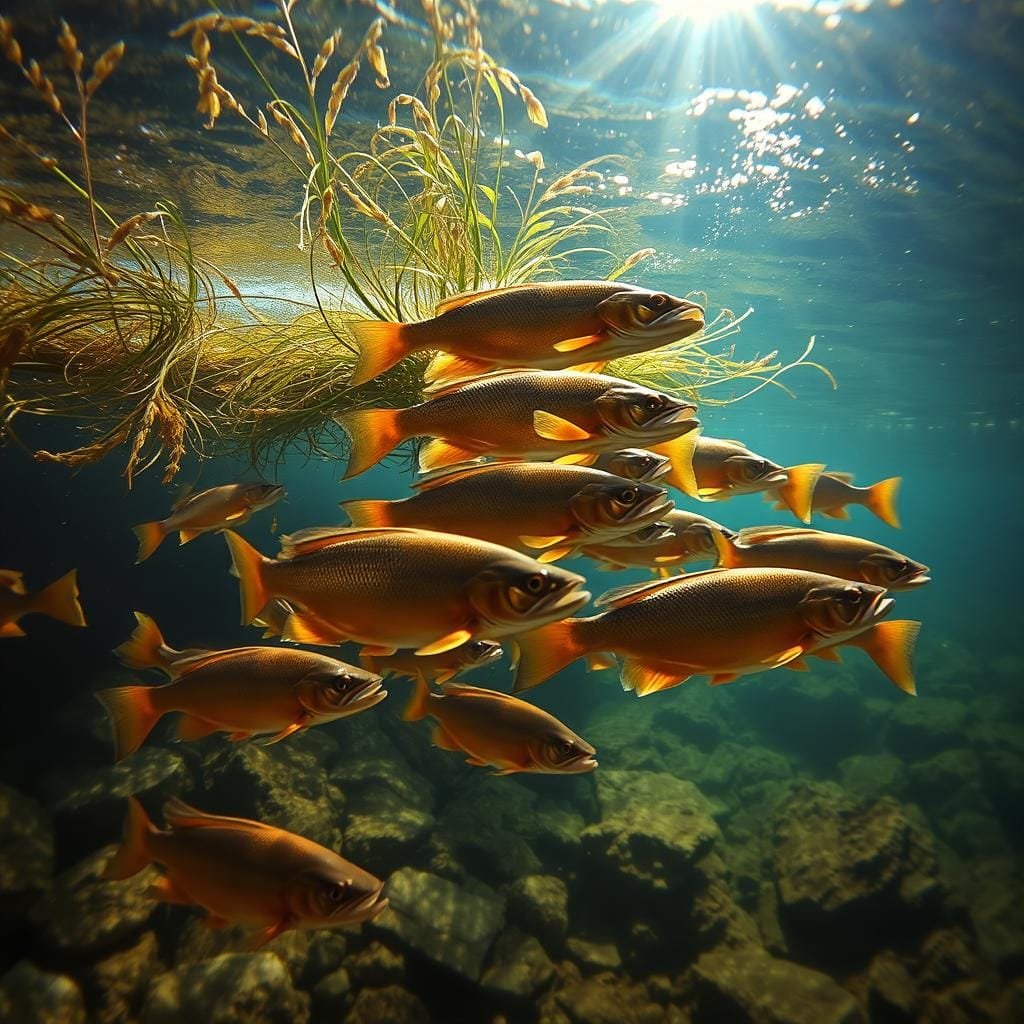
Follow fish movements and match their food. Let the weather guide your fishing pace. Use seasonal patterns to stay ahead of the fish.
Late spring to summer: shallow bites around spawn and post-spawn
When water warms to the low 60s, fish move outside their beds. Then, they go shallow again. Use topwaters, jerkbaits, and finesse rigs to catch them.
Look for spots like fence posts and clean sand. This guide to seasonal movements helps find the best early bite.
Peak summer heat: shallow weed clumps, sand flats, and cruising fish
In July and August, smallmouth fish in weeds and sand flats. Use polarized glasses to spot them. Then, throw hair jigs or soft plastics.
Keep a walking topwater ready. This is for when fish suddenly appear on calm water.
Late summer to fall: main-basin moves and baitfish focus
As days get shorter, fish move to humps and reefs. They follow baitfish like smelt and alewives. Use big minnows to match their size.
Watch for birds and surface slicks. This helps find roaming schools.
Cold fronts: deeper, slower, bottom-oriented behavior
After a cold front, fish go deeper and slower. They hug the bottom. Use drop-shots, Ned rigs, and small metals on light line.
Make short casts and use tight angles. Patient pauses help keep baits in front of fish.
Best times of day and key weather cues
Fishing smallmouth is best when it’s light and windy. Low light makes fish more confident. Wind makes bait stack up on edges.
Match your fishing to the sky and water. Let these signs tell you where and how to fish.
Early morning and evening feeding windows
Dawn and dusk are the best times. Fish move around and hide bait in certain spots. Use topwaters, swimbaits, or jerkbaits to catch them.
When it’s sunny, fish go shallow. This is a good time to fish. Look for fish in the shallows.
Calm, sunny days: sight-fishing shallow flats
On sunny days, lakes are easy to see. Look for shadows and fish in the water. Use finesse lures to catch them.
On calm days, fish hide in skinny water. Wear polarized glasses and cast far to sneak up on them.
Wind-driven bites on rocky shorelines and mid-lake structures
Wind makes fishing better on rocky shores. Use spinnerbaits, crankbaits, or jigs to find schools.
Cast across the wind and fish fast. As the wind gets stronger, fish deeper spots.
Topwater all season long for explosive strikes
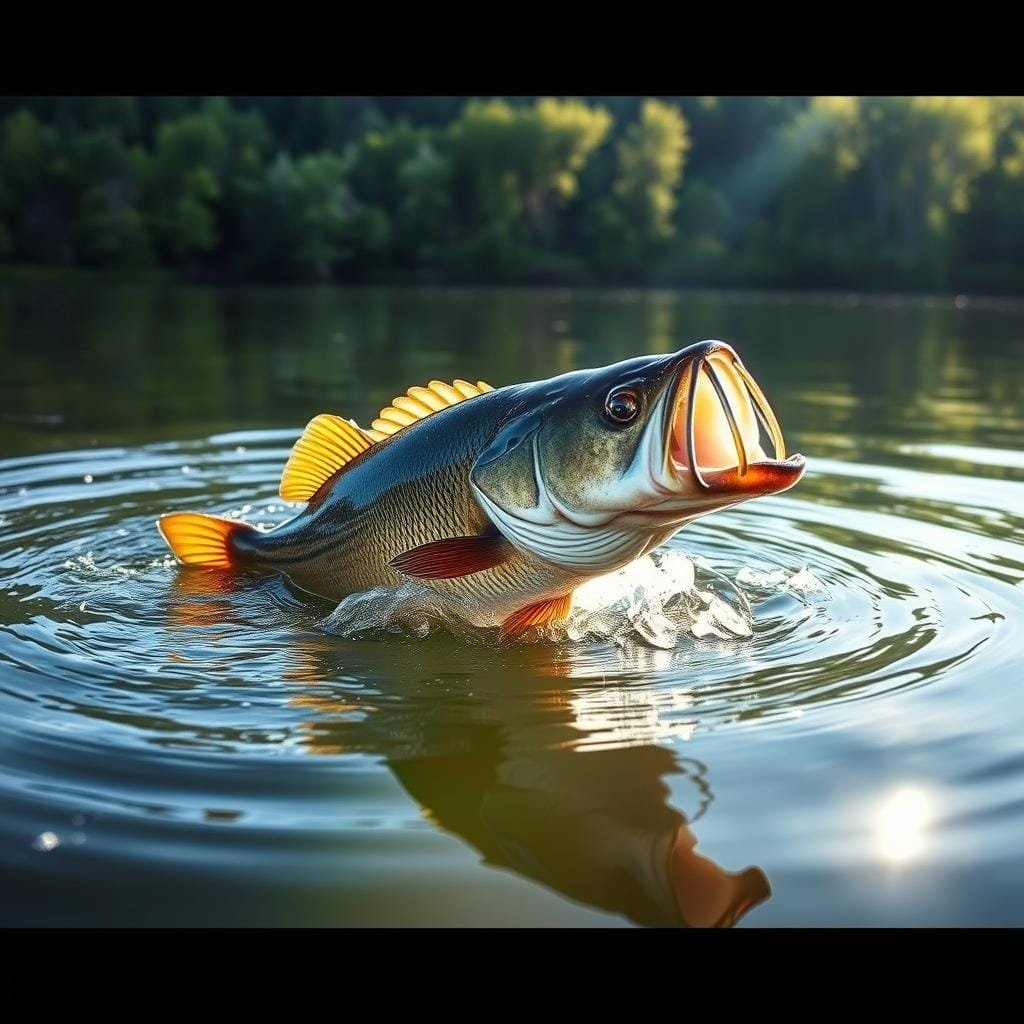
Topwater smallmouth fishing is great all year. Even on sunny days, keep your rod ready. Use a soft rod with braid for better hooking.
Poppers, walking baits, and plopper-style lures
Try different sounds and movements to attract fish. Poppers work well when fish are calm. Walking baits attract fish by moving wide.
Ploppers make a lot of noise and are easy to see. They work well in light and windy conditions. You can use poppers, walking baits, and ploppers without changing lures.
Covering water fast on new lakes to find active fish
When fishing new lakes, cast in many places. Move quickly to find bass. Mark any bites and come back slowly.
Summer bass often swim together. After a bite, cast again into the area. Keep moving until you find a school, then fish the area from different sides.
When calm and hot, work over weeds, boulders, and sand
In calm weather, fish are close to the surface. Use walking baits over weeds and rocks. On sand, use a slow pop-and-pause to keep fish interested.
On sunny days, you can see fish following your lure. Pause longer near rocks or beds of fry. This makes more fish bite.
| Lure Type | Best Conditions | Cadence Tip | Rod/Reel Setup | Why It Works |
|---|---|---|---|---|
| Popper (e.g., Rapala Skitter Pop) | Slick water, tight targets | Pop-pop, 2–5 sec pause | 7′ medium, braid to mono leader | Precise spits hold fish over a spot |
| Walking bait (e.g., Heddon Super Spook Jr.) | Roaming fish on flats | Wide walk with brief stalls | 6’10” medium, braid to short mono | Side-to-side flash pulls cruisers |
| Plopper-style (e.g., River2Sea Whopper Plopper) | Light chop, low light | Steady grind, speed up on follows | 7’2″ medium, straight braid | Loud tail thump draws long-range eats |
| Prop bait (e.g., Rapala X-Rap Prop) | Post-front slicks near cover | Short bursts, long dead-sticks | 6’8″ medium, braid to mono | Flash and hover tease stubborn fish |
how to catch smallmouth bass
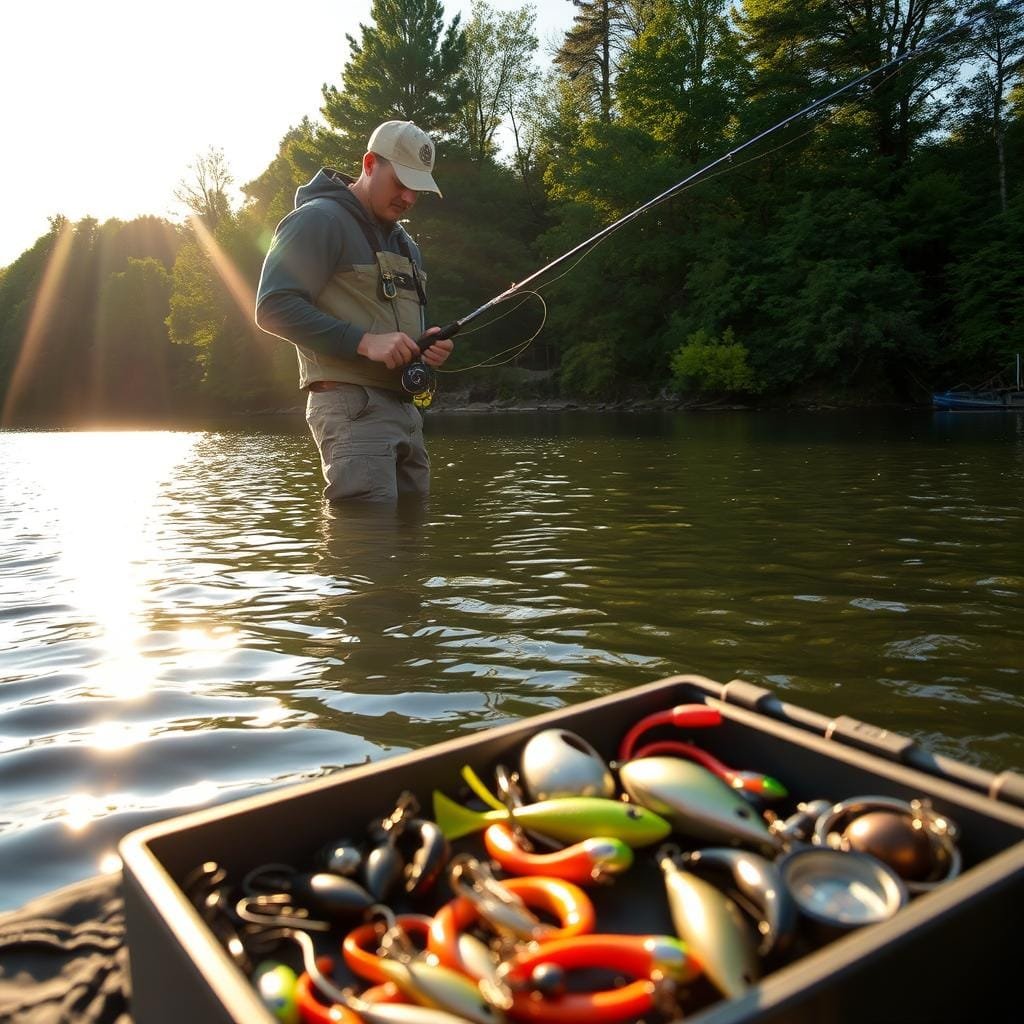
Start by looking at the food web. Look for places where smallmouth like to eat, like points, reefs, and flats. They like smelt, alewife, cisco, shad, crayfish, gobies, frogs, and mayfly nymphs.
Use sonar from brands like Humminbird or Lowrance. Watch for gulls or surface dimples to find where bass are. Then, cast your line.
When you see fish together on the sonar, use fast-moving lures. Try a Rapala jerkbait, a Strike King spinnerbait, or a Z-Man JackHammer. Move your lure quickly and add a pause or twitch to get bites.
If it gets windy or a front comes in, slow down. Use a drop-shot with a Berkley MaxScent minnow, a Ned rig, or a wacky-rigged Yamamoto Senko. Make short casts and move your lure a little to keep fish interested.
As the weather changes, so does how you fish. In hot summer days, fish shallower areas with a quick retrieve. After a front, fish deeper areas and slow down your retrieve. In late fall, fish deeper and use bigger lures to match the bass’s migration.
Read the lake: find forage first (smelt, alewife, crayfish, gobies)
- Use side-imaging to find forage smallmouth schools and bottom life on rock, sand, and grass edges.
- Spot pelagic bait like smelt or alewife with suspended arcs; mark crayfish and goby country on hard bottom.
- Match the hatch bass by color and profile: silver for smelt, green-brown for gobies and crayfish.
Match technique to mood: fast-moving vs. finesse
- Active pods: jerkbaits, crankbaits, spinnerbaits, bladed jigs, swimbaits, and topwater from brands like Megabass, Rapala, and Berkley.
- Neutral fish: drop-shot, Ned rigs, wacky sticks, downsized cranks with pauses, and tiny paddletails.
- Let sonar and follows dictate smallmouth retrieve speed—speed up for chasers, pause for lookers.
Adjust depth and speed with weather and season
- Summer stability: work 4–12 feet quickly over rock and weeds; track seasonal depth smallmouth as light rises.
- Cold fronts: shift to 15–35 feet, slow down, and keep bottom contact near breaks and ledges.
- Late season: push toward the main basin, target bait balls, and upsize minnow profiles to match the hatch bass.
| Situation | Clue to Watch | Primary Forage | Lure Style | Recommended Smallmouth Retrieve Speed |
|---|---|---|---|---|
| Stable summer heat (shallow) | Bait flickers over rock/sand, cruising fish | Crayfish, gobies, shiners | Walking topwater, spinnerbait, swimbait | Medium-fast with brief stalls |
| Wind ripple on reefs | Windward bait stacking | Smelt, alewife | Jerkbait, bladed jig, crankbait | Fast with sharp twitches |
| High sun, clear sky | Followers without strikes | Goby, crayfish | Ned rig, finesse swimbait, wacky stick | Slow, short hops and dead-sticks |
| Cold front drop | Arcs sliding to breaks | Mixed bottom forage | Drop-shot, tube, football jig | Slow, maintain bottom contact |
| Late fall basin | Dense bait balls on sonar | Smelt, cisco, alewife | Big jerkbait, flutter spoon, umbrella rig | Medium with long pauses |
Fast-moving “search” lures that trigger schools

Cover water with intent and let speed do the work. When smallmouth school, fast retrieves bass tactics flip the switch. Think clean, horizontal movement that forces reaction bites and sparks competition.
Jerkbaits, crankbaits, spinnerbaits, bladed jigs, and swimbaits
Lean on search baits smallmouth anglers trust. A Megabass Vision 110 or Rapala X-Rap is great for jerkbait smallmouth. A Strike King 1.5 or Rapala DT is good for rock.
For spinnerbait smallmouth, try a War Eagle or BOOYAH. A Z-Man Project Z ChatterBait with a Razor ShadZ trailer is perfect for bladed jig smallmouth. Use a Keitech Fat Swing Impact on a 3/8-oz head for edges and suspend zones.
Horizontal speed to spark competition in groups
Make long casts and keep baits moving high. Vary cadence. Rip, pause, and rip again with jerkbaits to light up a pack.
Crankbaits and swimbaits work on steady reels with short surges. This rhythm turns one bite into three when a wolf pack fires.
Burning baits over shallow rock and suspending fish
Burn spinnerbaits and squarebills across windblown rock and gravel. Tick cover without stalling. In stained chop, upsize blades or choose a wider wobble to call fish.
In clear water, go natural on color and sharpen cadence changes. Use crisp twitches and brief pauses.
When marks hang off breaks, count a swimbait down, then reel fast enough to stay above them. If they trail, speed up. If they fade, flash a jerkbait smallmouth move with two hard snaps. Keep moving and the next school will load the rod.
Bottom tactics that imitate crayfish and gobies
Smallmouth love to eat prey that lives on rock. They like to feel the bottom and move like a scurrying meal. Use hops, drags, and pauses to make your bait look like it’s moving.
Football jigs, tubes, and Carolina rigs
A football jig craw is great on reefs and ledges. Let it deflect and flutter, then pause. This bait works well on chunk rock and avoids cracks.
For tube jigs, try smoke, green pumpkin, purple, or blue. Snap it, then let it glide. A Carolina rig with a craw or swimbait works well on flats.
Lift-fall vs. drag retrieves on rock and contour bends
Drag slowly when fish seem calm. Switch to lift-fall for a fleeing crayfish look. Hit bends and the up-current side of boulders.
Use lighter heads for clear water. 1/8–1/16 oz heads with 2–3 inch grubs work well. Heavier heads are better in wind.
Bladebaits, underspins, and spoons near the lakebed
Bladebaits like the Johnson Thinfisher are good for vertical targets. Yo-yo it for a shivering effect. Underspins and jigging spoons drop fast and flash.
Alternate a steady crawl with short pops. Keep the lure in the strike zone. Let the bottom talk.
| Technique | Best Use Case | Primary Bait Style | Key Advantage | When to Choose |
|---|---|---|---|---|
| Football jig craw | Rocky reefs, ledges, contour bends | 3.5–4 in craw or creature trailer | Stays upright and deflects off rock | Moderate wind, active bottom feeders |
| Tube jig smallmouth | Boulders, flats, drop-offs | 2.75–3.5 in tube in smoke/pumpkin/purple/blue | Natural glide with lift-fall or slow drag | Clear water, pressured fish |
| Carolina rig smallmouth | Rubble flats and long stretches | Craws or small swimbaits | Keeps bait near bottom while covering water | Searching expansive areas |
| Bladebait bass | Deep edges and vertical targets | Metal blade, tight vibration | Fast drop, strong flash and thump | Cold water or tight-to-bottom schools |
| Light grub swim | Rock edges and calm days | 2–3 in grub on 1/8–1/16 oz head | Subtle profile, steady near-bottom path | Neutral fish in clear conditions |
Finesse fishing for tough bites and cold fronts
When it gets cold, fish hide deep and picky. Use finesse smallmouth tactics and slow down. Keep your bait near the bottom and watch for tiny bites.
Drop-shot rigs to hover baits off bottom
Drop-shot fishing is great when fish don’t want to move. Use a Berkley MaxScent FlatNose Minnow or Z-Man Trick ShotZ. Shake it gently without moving the sinker.
For the best setup, see this smallmouth finesse guide. It suggests using a G. Loomis NRX+ and Shimano Vanford 2500 for better feel.
Ned rigs for swim-glide or bottom hop
Ned rigs are good for covering water quietly. Use a Z-Man Finesse TRD on a VMC Ned Rig Jig. Drag it slowly and mix in light hops.
Choose natural colors like green pumpkin. Use 8- to 10-pound braid with a 6–8-pound fluorocarbon leader for better feel.
Wacky-rigged stickbaits on semi-slack line
Wacky rigs are great for neutral fish. Rig a 4-inch Yamamoto Senko or Berkley PowerBait General through the middle. Let it fall on semi-slack line.
Use light tackle: a medium-light spinning rod, thin-wire wacky hook, and 6–8-pound fluoro leader. This keeps the bait in the strike zone.
Light line, natural colors, and slower pacing
Downsize everything for cold front bass. Choose translucent or earth-tone plastics and trim leaders. Pause longer between moves.
Focus on bottom contact but don’t overwork the lure. Short shakes and long dead-sticks often work better than aggressive moves.
Late-season minnow bait strategies
As days get shorter, smallmouth bass move to the edges of main basins. They look for smelt, cisco, and alewives. This is when minnow baits that look like real food work best.
Soft jerk shads on 3/8-oz jig heads for smelt and alewife eaters
Use a soft jerk shad jig head that’s 3/8-oz and 4–6 inches long. Cast it, count it down, then reel slow with short twitches. Hold the combo in place if bait stacks under the boat.
Choose low-stretch fluoro or braid for a crisp feel. Use a medium rod to drive the hook. For deeper water, adjust the weight and leader length, as shown in this deep-water smallmouth guide. You might also catch walleye and lake trout.
Umbrella rigs, larger topwater, jerkbaits, flutter spoons
An umbrella rig smallmouth setup imitates a fleeing pod of bait. Run 3–5 swimbaits and adjust the wire spread to match the bait size. In calm wind, a full-size walker or plopper can pull fish up from 25 feet and deeper.
On sonar-marked arcs, mix in suspending jerkbaits and a flutter spoon bass presentation. Snap the spoon to flare and fall, then pause. These minnow baits smallmouth tactics cover water fast and trigger packs of fish.
Vertical “hanging” vs. long casts over main-basin bait
First, read the graph. If marks sit tight to bait, go vertical with a soft jerk shad jig head or spoon. Hover above them. If arcs drift off the edges, make long fan casts with jerkbaits or an umbrella rig smallmouth spread to intercept movers.
Rotate fall smallmouth lures by light and wind: bright spoons and chrome in sun, matte baitfish hues in clouds. Keep a flutter spoon bass ready when fish stop chasing.
| Scenario | Best Lure Family | Primary Presentation | Gear Notes | Why It Works |
|---|---|---|---|---|
| Bait stacked under boat (40–100+ ft) | Soft jerk shad on 3/8-oz jig head | Vertical “hang” above marks, subtle twitches | Medium spinning, braid to fluoro leader | Stays in the strike zone and mimics injured smelt |
| Roaming schools on breaks and basins | Umbrella rig | Steady retrieve with speed bursts | Medium-heavy casting, 30–50 lb braid | Replicates a fleeing pod and triggers wolf-pack bites |
| Fish following but not committing | Suspending jerkbait | Rip–rip–pause over 15–30 ft | Fluoro mainline for depth control | Hard pauses let fish close and strike |
| Sun over deep bait, light wind | Flutter spoon | High snap and flutter fall | Medium rod, 12–15 lb fluoro | Flash and fall mirror wounded alewives |
| Calm mornings over open water | Larger topwater walker/plopper | Long bomb casts, sweeping cadence | 30–40 lb braid, softer rod tip | Calls fish up and covers vast water fast |
Tackle setups that cover power and finesse
Start with a simple plan to find the best smallmouth rod and reel. Use one main setup and add two special rigs for every fishing situation. Choose lines that fit the water you fish most.
Versatile 6’6”–7’ medium spinning rod with braid to fluoro leader
A 6’6”–7’ medium, fast-action spinning rod works well with 15–20 lb braid and 10–15 lb fluorocarbon leader. It’s great for jerkbaits, tubes, Ned rigs, swimbaits, and wacky sticks. This rod is perfect for finesse fishing and can handle small topwaters.
Pair it with a Shimano Stradic or Daiwa Tatula LT for a smooth drag. Use a St. Croix Victory, G. Loomis E6X, or Dobyns Sierra for a crisp blank. This combo is often the best on the deck by midday.
Medium-light rods for finesse sensitivity
For finicky bites, use a medium-light blank for more feel on light line. Choose 8–10 lb braid to fluorocarbon leader in 6–8 lb for clear water and rivers. The soft tip protects knots and tiny hooks.
This setup is great for drop-shots, hair jigs, and small marabou. Longer rods, like 7’–7’2”, help with distance casts and line control in wind.
Medium-heavy setups for spinnerbaits and football jigs
A medium-heavy bass setup is perfect for power plays. Use 30–40 lb braid or 12–17 lb fluorocarbon with a fast or moderate-fast rod. This setup is great for spinnerbaits, football jigs, and heavier bladed jigs.
Choose rods like the Shimano Expride, Abu Garcia Veritas, or Megabass Levante. Pair them with a Shimano Curado or Daiwa Tatula 150. This setup keeps you in control on rock and deep edges.
Braid advantages for topwater and cranks with a softer rod
Braid boosts sensitivity and hooksets on topwater and mid-depth cranks. Use a softer or moderate rod to keep trebles pinned. A topwater braid setup in 20–30 lb with a short 12–15 lb mono or fluorocarbon leader tames surging fish boatside.
For cranks, a moderate graphite or composite rod cushions the no-stretch line. Blend these tools with your core rigs to round out the best smallmouth rod and reel trio for any lake.
Boat and bank essentials that increase success
Smart prep turns more bites into fish. A few key tools make a big difference. They help you stay focused on the cast, not the clutter.
Polarized glasses for spotting fish and structure
Pack polarized fishing glasses to cut glare. They help you see shallow water clearly. You’ll spot boulders, inside turns, and shadow edges that hold roaming fish.
Clear frames with copper or amber lenses shine on mixed light. Gray works on bright days. On flats, those lenses reveal cruising smallmouth and sand-to-rock transitions for precise casts.
They also help you track follows and adjust speed before fish fade away.
Tackle trays, pliers, scissors, and hook files
Dialed bass tackle organization speeds changes when a bite window opens. Use waterproof trays for jerkbaits, tubes, and jigs. Keep a soft bag ready for quick moves from boat to bank.
Carry a compact kit: fishing pliers scissors hook file. Pliers remove trebles cleanly. Scissors clip braid tags tight. A quick touch with a file keeps points sharp after grinding rock with hard baits and football jigs.
Sonar and chartplotters for locating humps, reefs, and bait
A quality sonar chartplotter smallmouth setup maps structure and fish in minutes. Side imaging outlines reefs. Down imaging separates bait from rock on ledges. GPS trails let you repeat the exact line when wind shifts.
From a boat, mark offshore humps, then circle to set your cast angles with current. From the bank, use mobile charts to target shade lines, visible current seams, and quiet pockets. Then present small profiles with a soft entry.
| Essential | Why It Matters | Pro Tip | Best Use Case |
|---|---|---|---|
| Polarized fishing glasses | Reduces glare to spot rock, weed edges, and cruising fish | Copper/amber lenses for mixed light; gray for high sun | Sight-fishing flats and reading shallow structure |
| Bass tackle organization | Faster lure swaps to match changing bites | Label trays by depth and profile: minnow, crayfish, goby | Boat-to-bank mobility without missing a flurry |
| Fishing pliers scissors hook file | Clean releases, neat braid cuts, razor-sharp hooks | Touch up trebles after each fish or rock contact | Hard baits and jig fishing over boulder fields |
| Sonar chartplotter smallmouth | Finds humps, reefs, bait schools, and safe routes | Save waypoints on the upwind edge for prime drifts | Mid-lake structure and seasonal migrations |
Regional insights from renowned waters
Great Lakes smallmouth show us a key lesson. They like hard structure near moving water. Look for rocky points, reefs, and humps offshore.
When the wind blows, bait piles up. Use a jerkbait or crankbait to find schools. Then, slow down with a tube, football jig, or drop-shot.
St. Lawrence River smallmouth also follow this rule. They like current seams, ledges, and island breaks. These spots funnel forage all season.
In Northwest Ontario’s Sunset Country, smallmouth are very flexible. On Rainy Lake, they bite on shallow boulders, submerged grass, and mid-lake rock. This happens in the same day.
On Lake of the Woods, bass seek shade under docks and trees when it’s sunny. At dusk, they roam boulder-strewn shoals. There’s steady action here, with fish averaging 15–16 inches. You might even catch a 20-inch fish.
Across the border, Ontario Quebec smallmouth follow similar patterns. In spring and early summer, they move onto points and reefs. Later, they head to main-basin bait like smelt and alewife.
Start with spinnerbaits, bladed jigs, and swimbaits to get their attention. Then, switch to bottom contact or finesse on contour bends and rock transitions when the bite slows.
The map gets simple when you put it all together. Great Lakes, St. Lawrence River, Rainy Lake, and Lake of the Woods bass all follow the same plan. Find forage, fish prime structure with speed, and adjust to mood and weather. This mix of power and finesse makes these waters repeatable, season after season.
FAQ
What are the highest-percentage places to find smallmouth bass on new water?
Look for rocky points, mid-lake shoals, and reefs. Also, check ledges, islands, and contour bends. Offshore humps from 5 to 30+ feet are good too.
In rivers, bass hide behind current breaks. This includes boulders, wing dams, and islands. They face upstream for ambush.
Flats with sand, vegetation, and boulders are great. They attract bass when forage is present.
How does forage like smelt, cisco, alewife, shad, crayfish, and gobies affect smallmouth location?
Forage is key. If you see smelt or cisco, bass will be near. Crayfish and gobies make bass hide near rocks.
Use sonar or look for birds to find bait. Great structure without bait rarely works.
Is topwater effective all season for smallmouth?
Yes, topwater works all season. Poppers and walking baits cover water fast. They call fish up, even in clear water.
Use braid with a soft rod to keep trebles in. Topwaters work well on calm, hot days.
What should I throw during late spring and early summer around the spawn and post-spawn?
Use jerkbaits, small topwaters, tubes, Ned rigs, and drop-shots in shallow areas. Bass guard or recover near sand-and-rock transitions.
Move quickly until you find a group. Then slow down to milk the area.
Do smallmouth go deeper during peak summer heat?
No, they go shallower to feed. Target weed clumps, boulder fields, and sand flats. Sight-fish with hair jigs or soft plastics.
Keep a topwater walking bait handy for fast bites.
How do smallmouth position in rivers and current?
They sit off the main flow behind current breaks. This includes boulders, wing dams, and islands. They face upstream for ambush.
Cast upstream and let the current bring your lure naturally. Horizontal movers like spinnerbaits work well.
What triggers schools when smallmouth group up?
Speed and horizontal movement trigger schools. Burn spinnerbaits and crankbaits across shallow rock. Rip jerkbaits with twitches and pauses.
Run bladed jigs or swim a Keitech Fat Swing Impact.
Which bottom tactics best imitate crayfish and gobies?
Drag football jigs with craw trailers along rock. Fish tube jigs in green pumpkin or purple. Use a Carolina rig to crawl baits.
When bass pin to bottom, use bladebaits or jigging spoons.
How should I adjust during cold fronts and high pressure?
Go deeper and slow down. Keep baits near bottom. A drop-shot works well in the strike zone.
Use a Ned rig or wacky-rigged stickbaits in light line.
When are the best times of day to fish?
Dawn and dusk are best, calm days included. Midday can be good when wind pushes bait onto structure.
Use faster, horizontal lures to trigger bites.
How does wind and sun change my approach?
Calm, sunny days are for sight-fishing. Use subtle baits in shallow flats. Wind breaks up light and stacks bait.
Work windblown structure with jerkbaits and crankbaits.
What’s the late summer to fall pattern shift?
Bass move to main-basin structures. Chase pelagic baitfish like smelt and cisco. Use a 3/8-oz jig head with a soft jerk shad.
Umbrella rigs, jerkbaits, and swimbaits are also good.
Which rod and line setups cover most smallmouth tactics?
Use a 6’6”–7’ medium, fast spinning rod. Pair it with 15–20 lb braid and a 10–15 lb fluorocarbon leader. This works for jerkbaits, tubes, and swimbaits.
Add a medium-light for finesse. Use a medium-heavy for spinnerbaits and football jigs.
What accessories give me an edge on the water?
Polarized sunglasses help spot fish and structure. Organized tackle trays and pliers are useful. A sonar/chartplotter finds humps and reefs.
How do I quickly locate active fish on unfamiliar lakes?
Cover water fast with topwaters and jerkbaits. Once you find a group, slow down with tubes or a drop-shot. Keep moving until you find the food and the school.
What makes shade such a strong summer pattern?
Shade concentrates cruising bass. Target docks and overhanging trees. Use wacky sticks, tubes, or compact jigs along the shade line.
Which regions showcase these smallmouth patterns?
The Great Lakes and the St. Lawrence River show these patterns. Inland waters like Rainy Lake also work. Ontario and Quebec have similar patterns.
What’s the ideal gear for bank anglers?
Carry a 7’ medium spinning combo. Include tubes, Ned rigs, drop-shot weights, and topwaters. Don’t forget polarized glasses and pliers.
How do I manage lure speed and cadence through the seasons?
In summer, run shallow and fast. After cold fronts, slow down and downsize. Late summer, move to main-basin structure and upsize minnow baits.
Adjust your cadence based on fish mood.
Are there brand-specific lures that consistently produce?
Yes, Megabass Vision 110 and Rapala X-Rap jerkbaits work well. Z-Man TRD and Finesse ShroomZ are good for Ned rigs. Berkley MaxScent FlatNose Minnow is great for drop-shots.
Keitech Fat Swing Impact swimbaits and Z-Man Project Z ChatterBait are also effective. Match color to water clarity and forage.