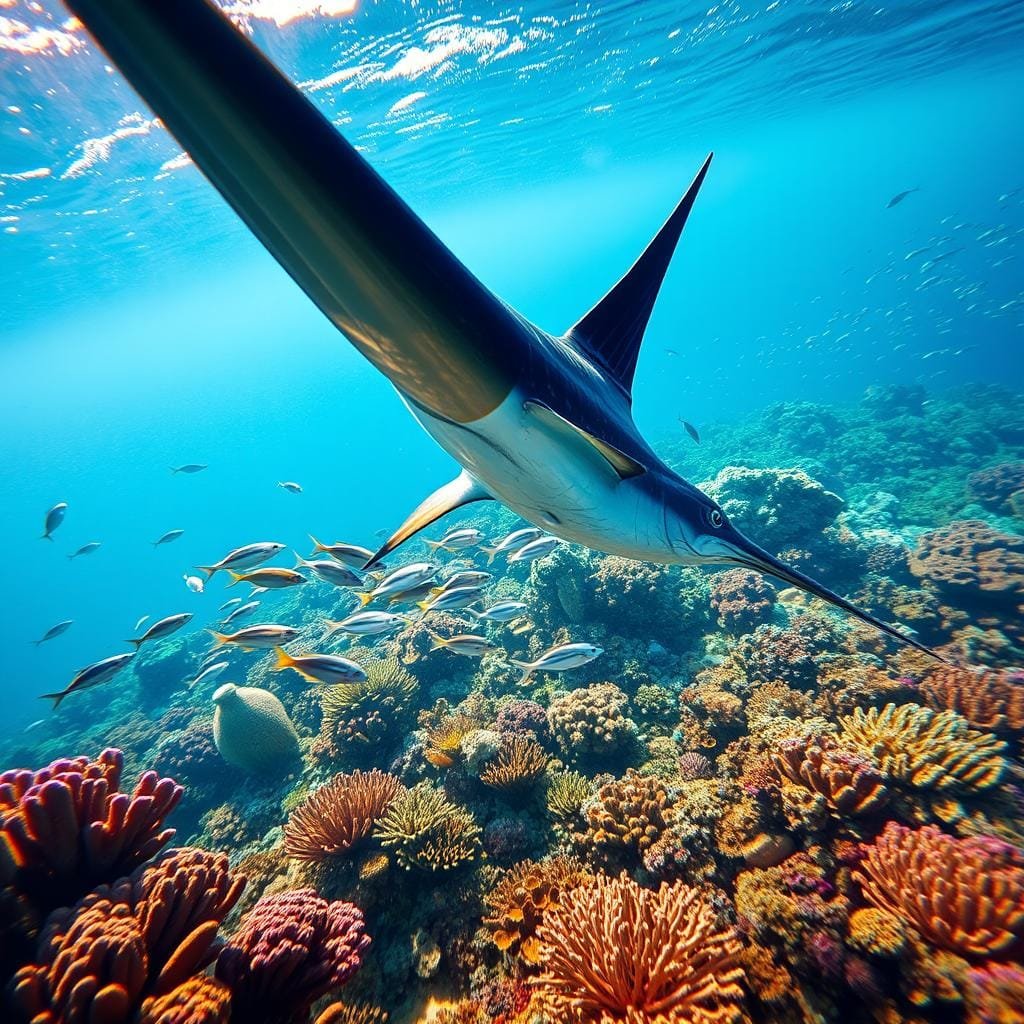
Ever wonder what sailfish eat? These fast fish are built for speed and skill. They hunt small fish near the surface with quick attacks.
They have a tall, blue sail and a long bill. This helps them strike and turn fast.
There are two types of sailfish in warm seas. One lives in the Atlantic, and the other in the Indo-Pacific. They have blue spots and a sail that moves up and down.
They can grow up to 10 feet long and weigh 220 pounds. Sailfish are the fastest fish in the sea, reaching speeds of 68 mph.
Sailfish are fast because they need to catch food quickly. They swim in warm waters, hunting small fish and squid.
They hunt in schools near the surface. This makes it easier for them to catch food. Their tall fin and bill help them strike fast.
This is how sailfish eat and why they are so fast. It’s all about catching food quickly.
Quick intro to sailfish diet and hunting behavior
Sleek bodies and sharp senses make sailfish great hunters. They chase small fish at the surface. Their speed turns quick chances into meals.
Fastest fish meets fast food: why speed shapes their menu
Sailfish can go up to 68 mph. They chase fish in short bursts. Then, they circle back to grab stunned fish.
Daylight feeders near the surface
Most hunting happens in daylight. They hunt in the top hundred feet. Sunlight and skittish bait make it easy for them.
How the “sail” and bill work together
The dorsal sail is like a flare and a herding tool. It makes them look bigger and pushes fish together. Then, the bill flicks and swipes, stunning fish for easy grabs.
Primary prey: schooling fish near the surface
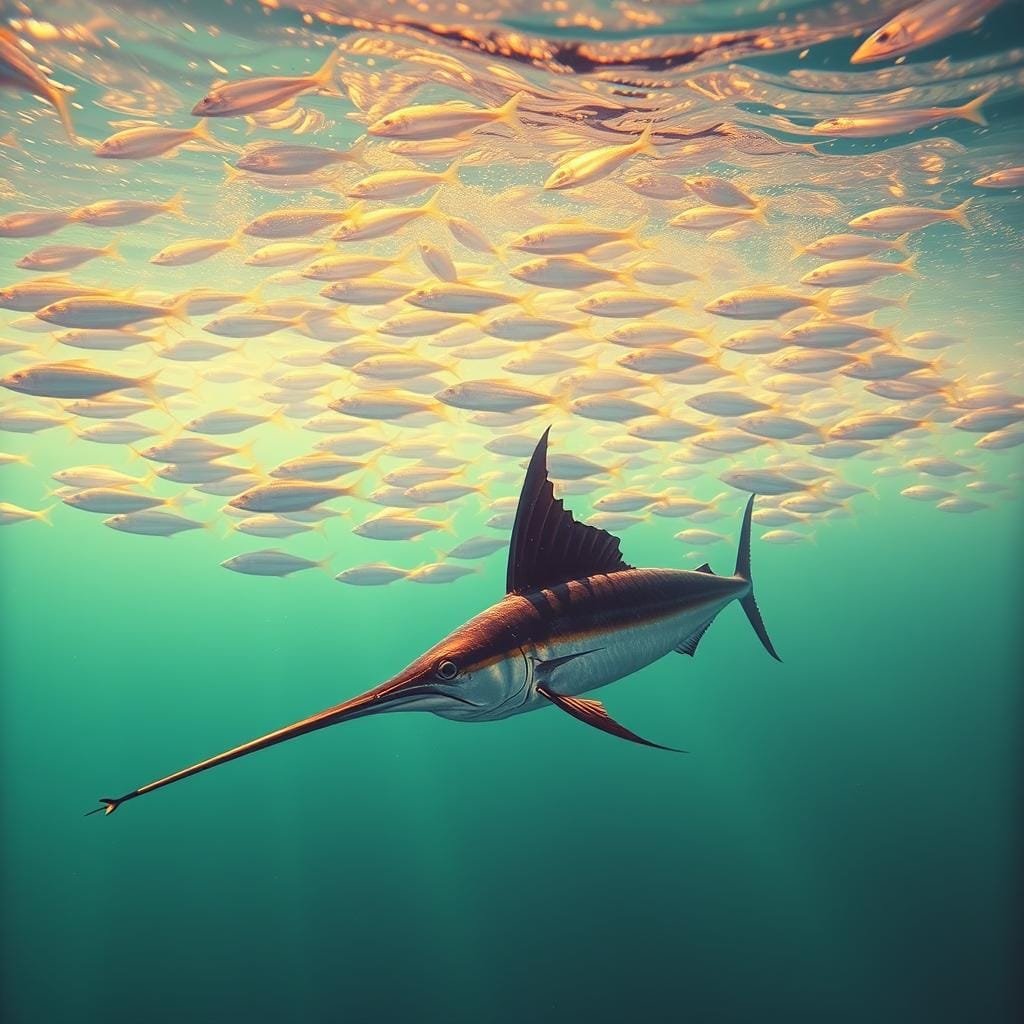
Sailfish love to hunt in tight schools near the surface. They find their prey in the top layers of blue water. The education guide from The Billfish Foundation shows how they attack quickly.
Flying fish, sardines, and anchovies
Flying fish jump out of the water first. Sardines and anchovies form shimmering curtains below. These fish are easy to catch because they move in lines.
Mackerel, herring, jacks, and needlefish
Mackerel and herring gather in rips and color changes. Jacks and needlefish cruise the edges. They school tightly, making it easy for sailfish to catch them.
Why bait balls are their favorite target
Bait balls are perfect for sailfish to attack. The tight group makes it easy to catch fish. Sailfish can quickly move on to the next target.
| Prey Type | Typical Position | Why It’s Targeted | Common Grouping |
|---|---|---|---|
| Flying fish | Surface burst, gliding above chop | High visibility and predictable launch paths | Loose schools that tighten under pressure |
| Sardines | Upper 30–100 ft | Dense energy-rich forage; easy to corral | Forms cohesive bait ball when pursued |
| Anchovies | Near-surface shoals | Small size enables multi-hit passes | Tight shoals that compress quickly |
| Mackerel | Rips and current seams | Meaty payoff for short chases | Medium schools with fast reactions |
| Herring | Edges of upwellings | Oil-rich flesh supports burst energy | Large, coordinated schools |
| Jacks | Surface to midwater | Bold, schooling behavior creates opportunities | Compact packs that wheel and turn |
| Needlefish | Topwater, skimming wakes | Elongated profile suits bill strikes | Loose lines that bunch when rushed |
In many places, sailfish follow the same hunting pattern. They chase after flying fish or bait balls of sardines and anchovies. The key is to find tight schools near the surface.
What does sailfish eat
Straight answer: they go after schooling prey near the surface. Flying fish, sardines, and anchovies are on the list. Mackerel, jacks, needlefish, and herring are also eaten. Their diet includes small fish and squid, perfect for warm, clear water.
Most strikes happen in daylight within the top hundred feet. That’s where sailfish food sources bunch into tight bait balls. A fast pass with the bill can scatter and stun prey. This pattern aligns with sailfish nutrition needs for quick energy after short, intense bursts.
Researchers and crews from The Billfish Foundation and North Carolina programs note frequent squid in stomach checks. So, what does sailfish eat on mixed days? A blend of dense baitfish and squid, adjusted by season and local schools. The small fish and squid diet holds across tropical grounds in the Atlantic and Indo‑Pacific.
In simple terms, sailfish food sources track where light, current, and heat push forage together. That’s why sailfish nutrition trends toward oily, surface-schooling fish, with squid as a steady backup when fish scatter or dive.
Do sailfish eat squid?
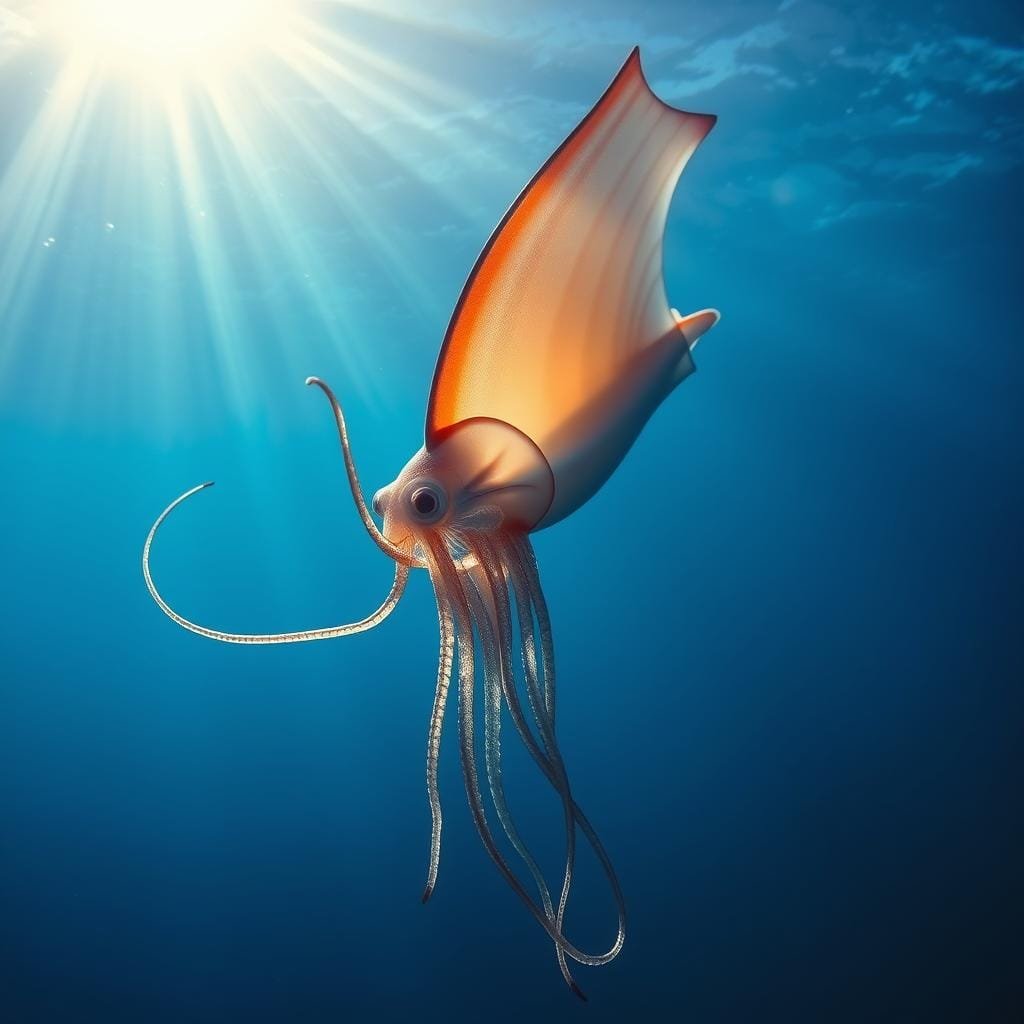
Sailfish do eat squid, and it’s not by accident. Field notes from The Billfish Foundation and North Carolina marine resources show squid in their diet. This is because cephalopods are near the surface, where sailfish hunt fast and in bright light.
These predators cut through mixed schools with sharp control. They favor bill swipe hunting to raise their odds per pass, then circle back for quick bites. The same tactic that scatters bait fish also works on tight knots of small squid.
When and where squid are on the menu
Squid rise along productive temperature fronts and drift under weed lines at dawn and midday. In tropical belts, the top 100 feet often hold cephalopods, so sailfish meet them in clear, warm layers near rips and color edges.
During bait migrations, mixed schools form. That’s when squid feeding behavior puts them within striking range of fast passes, letting sailfish switch from fish to soft-bodied prey without wasting energy.
How bill swipes stun multiple prey
The long bill delivers quick rostrum strikes that slice through a pack and daze more than one target. In close quarters, bill swipe hunting creates brief shock and separation, which makes small squid easy to pick off.
After a swipe, the fish pivots and snaps up stunned prey. The method scales well: one clean arc can disrupt a cluster, boosting catch rates on both fish and cephalopods.
| Scenario | Prey Behavior | Sailfish Tactic | Outcome |
|---|---|---|---|
| Surface front at midday | Squid schooling tight, brief dashes upward | High-speed pass with rostrum strikes | Multiple squid stunned, quick pickups |
| Weed line shadow at dawn | Cephalopods holding under sargassum | Angled entry and bill swipe hunting | Cluster disrupted, efficient feeding |
| Mixed bait ball with fish | Squid feeding behavior keyed to fleeing anchovies | Alternating swipes and short chases | Opportunistic takes on squid and fish |
| Clear blue shelf edge | Loose squid ribbons near thermocline | Controlled glide, precise rostrum strikes | Selective grabs with minimal effort |
Regional differences: Atlantic vs. Indo-Pacific prey
Two close cousins roam different oceans. They chase the same fast, schooling fish near the surface. This shared strategy shapes their diets in similar ways.
Shared favorites across oceans
From the Gulf Stream to the Coral Sea, they hunt in the same way. They go after flying fish, sardines, anchovies, mackerel, jacks, herring, and needlefish. Squid are also on the menu when the conditions are right.
This shared hunting style keeps their diets similar. Whether in the Atlantic or Indo-Pacific, they follow the same plan. They attack the edges, scatter the school, and pick off stunned fish.
Subtle size differences, similar diets
Indo-Pacific fish are often a bit bigger. But their diet doesn’t change much. Their size affects how they attack, not what they eat.
In areas where currents and warm water meet, they both target surface packs. Local conditions might affect which species is more common. But their prey remains the same on both sides of the world.
Where they feed: tropical, near-surface waters

Sailfish swim in warm, blue waters in tropical areas. They hunt where light and food are plentiful. They also go near reefs and shelves in coastal waters.
When currents bring bait to clean water, they go offshore. The Billfish Foundation and North Carolina Sea Grant say they hunt higher than marlins or swordfish. They use speed and sharp eyes to catch prey quickly.
Typical depths and temperatures for hunting
Most hunting happens in the top hundred feet. They sometimes dive to 120–300 feet to catch prey. The best temperatures for hunting are 70–82°F.
In clear coastal waters, they can swim fast without getting tired. This is because the water is warm and clear.
Following seasonal fronts and bait migrations
Seasonal fronts bring nutrients and change colors, guiding prey. Sailfish follow these changes and bait migrations. They track schools of sardines, anchovies, and mackerel.
By staying near moving edges, they find food easily. This saves them from long searches in tropical waters.
Group tactics: herding and turn‑taking
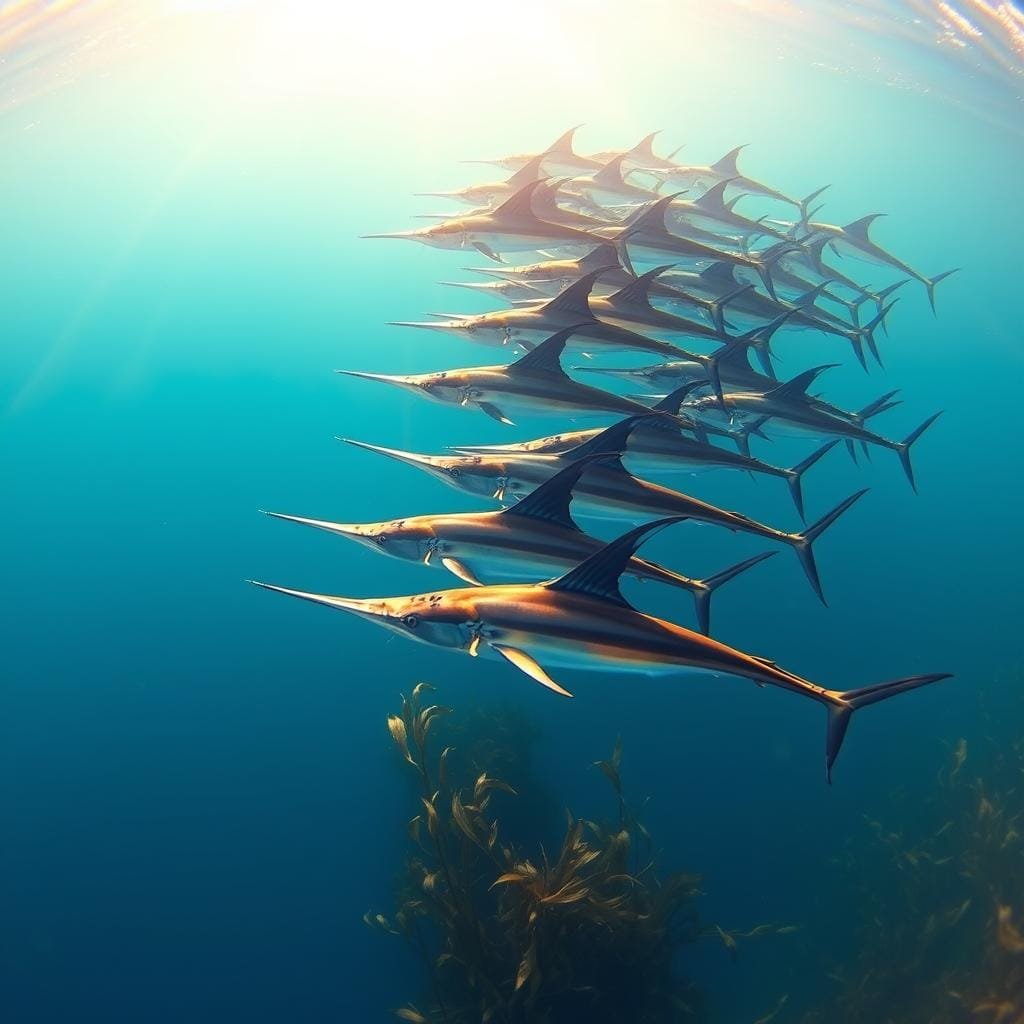
Sailfish work together when bait schools appear near the surface. They herd the bait, keeping it tight. Their sails and flashing sides help the school stay together.
After the bait is bunched, they hunt together. Each fish takes a turn, striking and then moving away. This way, they avoid hitting each other and keep the hunt going.
They also use their dorsal fins to keep the bait in place. This helps them keep the hunt organized. Each fish plays a role, making sure the hunt is successful.
The hunt goes on, even when it’s hard to see. They stun their prey with quick movements. This keeps the bait tight and the hunt going.
Why sailfish prefer dense bait balls
Sailfish like tight groups of prey because it’s easier to catch them all at once. In a tight school, one quick swipe can stun many fish. This makes hunting more efficient and increases the chances of catching fish near the surface.
Bait ball behavior fits their favorite hunting spot in the top hundred feet. Here, they can see the shimmer of sardines and anchovies easily. When fish gather in a ball, it’s easier for sailfish to find the best spot to strike.
Energy efficiency and strike success
Short, fast runs use a lot of energy. But with many fish together, sailfish can catch more with less effort. A quick pass through the school can stun several fish, then they can pick off the weak ones without chasing them long.
Because they hunt near the surface, sailfish can breathe and attack again quickly. This means they can catch more fish with each pass, making the bait ball strategy very effective.
How dorsal fins help corral prey
The dorsal fin helps sailfish push the school together. It acts like a moving fence, making it harder for fish to escape. This keeps the school tight, making it easier for sailfish to catch fish.
Working together, sailfish spread their fins and swipe with their bill. This keeps the school small and makes it easier to catch fish. It’s a quick and efficient way to hunt.
Daily rhythm: daylight feeding patterns
Sailfish have a regular schedule. They mostly hunt when it’s light outside. This is because they like the bright water and the bait that swims near the surface.
These fish are great at finding schools of fish in the open water. They use the light to find their prey. This makes it easier for them to catch food and saves energy.
When it’s daytime, sardines, anchovies, and mackerel swim together near the top. This is because they like the clear water. So, sailfish feed best from mid-morning to late afternoon when the light is softer.
In the Atlantic, from Florida to North Carolina, the pattern is the same. Sailfish look for edges and scan the light. They find bait balls and chase them quickly.
When clouds come, the hunting slows down a bit. But it doesn’t stop. Sailfish wait for the light to come back. Then, they feed again, looking for slicks and birds.
Size, speed, and diet: built for burst attacks
A sailfish is a fast predator. It runs fast to catch prey near the surface. Its muscles and body shape help it move quickly and catch fish well.
Streamlined bodies and 68 mph top speeds
Sailfish can swim up to 68 mph. This makes them very fast in the ocean. Their body shape helps them swim fast without losing energy.
They usually weigh between 28 to 60 pounds. But sometimes, they can grow up to 220 pounds. Their body shape and low-drag skin help them swim fast.
Rostrum advantages in precision strikes
The sailfish’s bill is like a blade. It helps them control their speed. When they swim fast, they can catch many fish at once.
They use their bill to aim and catch fish. Their body shape helps them swim straight. This makes them very good at catching fish.
Angler insights: common natural baits that mimic prey
For those who love catch-and-release fishing, it’s key to match the bait to the sailfish’s diet. The best baits look and act like the fast-moving food sailfish love to eat. Live bait is a top choice because it keeps the action lively, just like the real thing.
Choosing the right bait is easy and effective. Ballyhoo are great for quick, easy setups. Mullet add a strong feel and look good in rough seas. Spanish mackerel are fast and shiny, perfect for fishing near the surface. Bonito are sturdy and mimic small tuna and jacks, which sailfish often chase.
The season and location affect bait choice. In the western Atlantic, the best time is late spring to fall. This is when bait is plentiful near the surface and the water is warm. Kite fishing with live bait during this time keeps the bait in the sailfish’s favorite feeding zone.
Keep your baits natural and moving. Change out the bait often and vary the distance to mimic a school of fish. With the right live bait, trolling baits, and kite presentation, each pass will attract sailfish.
FAQ
What does a sailfish eat?
Sailfish mainly eat small schooling fish and squid near the surface. They love flying fish, sardines, anchovies, mackerel, herring, jacks, and needlefish. They also eat squid.
Why does sailfish speed shape their menu?
Sailfish are the fastest marine fish, reaching speeds of 68 mph. They use their speed to attack agile prey near the surface. Their bodies are streamlined, allowing them to move quickly through the water.
Do sailfish feed more during the day or at night?
Sailfish feed more during the day. They hunt in well-lit, near-surface waters. They use their vision to find prey in the top hundred feet.
How do the “sail” and bill help them hunt?
The tall dorsal sail helps corral prey and makes the fish appear larger. The elongated rostrum (bill) delivers quick lateral swipes. These swipes stun multiple fish in one pass.
Which schooling species are at the top of their list?
Flying fish are at the top of their list. They also eat sardines and anchovies. These fish form tight surface schools that match the sailfish’s hunting zone.
What about mackerel, herring, jacks, and needlefish?
These fast, surface-oriented fish are also important prey. They gather in packs, creating dense targets for the sailfish.
Why are bait balls a favorite target?
Bait balls concentrate prey. Sailfish can swipe their bills through the mass and stun several fish at once. This boosts capture rate and reduces wasted effort.
Is “What does sailfish eat” the same across regions?
Yes, in broad strokes. Both Atlantic and Indo-Pacific sailfish focus on small schooling fishes and squid. They hunt near the surface in warm waters.
Do sailfish eat squid?
Yes. Squid are a consistent part of their diet. They eat squid, where squid schools rise near the surface along productive fronts.
When and where do squid make the menu?
In tropical and subtropical zones with surface activity. This includes fronts, rips, or upwellings. They hunt in the top hundred feet during daylight.
How do bill swipes work on squid and fish?
The rostrum slices laterally through tight groups. This stuns or injures multiple animals per pass. It’s a precision tool that turns speed into multi-prey efficiency.
What’s the difference between Atlantic and Indo-Pacific sailfish diets?
Both eat similar prey types. Atlantic sailfish and Indo-Pacific sailfish share a taste for flying fish, sardines, anchovies, mackerel, jacks, herring, needlefish, and squid.
Do Indo-Pacific sailfish eat more because they’re larger?
Indo-Pacific sailfish can average a bit larger. But their feeding strategy and prey choices remain similar. Speed, surface schooling, and bait ball tactics drive the diet more than size.
Where do sailfish usually feed?
In coastal and offshore tropical waters, near the surface. They’re commonly found in the upper hundred feet where prey schools gather.
What depths and temperatures are typical for hunting?
Often 120–300 feet in the Atlantic, with preferred temperatures around 77–82°F. They like warm, well-lit surface layers.
Do sailfish follow seasonal fronts and bait migrations?
Yes. They shadow nutrient-rich fronts that concentrate sardines, anchovies, and other forage. They time their movements to stay with the food.
Do sailfish hunt in groups?
Often. They form loose groups around bait balls. They raise their sails to contain the school and take turns striking to keep the prey compact.
Why do sailfish prefer dense bait balls?
Dense prey boosts energy efficiency and strike success. One pass can yield multiple stunned targets. This makes each burst of speed count.
How do dorsal fins help corral prey?
The raised sail acts like a moving wall. It increases visual presence and lateral surface. This keeps schools tight and prevents escapes.
Do sailfish feed at set times each day?
Mostly during daylight. Their visual hunting style pairs with surface-schooling behavior. This peaks when the light is good.
How do size and speed relate to diet?
Sailfish have bodies up to about 10–11 feet and around 220–240 pounds. They pack the muscle for explosive bursts. This targets small, agile prey near the surface.
What makes them so fast—up to 68 mph?
A streamlined, hydrodynamic body reduces drag. Combined with strong musculature, it enables arrow-like sprints through water. They can make clean passes through bait balls.
What advantages does the rostrum give in precision strikes?
It extends reach and allows quick flicks that stun several fish. Precision swipes reduce chase time. This improves capture per pass.
Which natural baits mimic sailfish prey for anglers?
Ballyhoo, mullet, Spanish mackerel, and bonito are popular. They match the size and schooling habits of the fish sailfish naturally hunt.
Where are sailfish found globally?
Worldwide in warm oceans. Atlantic sailfish are in the Atlantic. Indo-Pacific sailfish are across the Indian and Pacific. Both favor tropical, near-surface zones.
What do sailfish look like when hunting?
They raise a tall, colorful sail and display 15–20 vertical bars of blue spots. The display helps herd prey and signals group coordination.