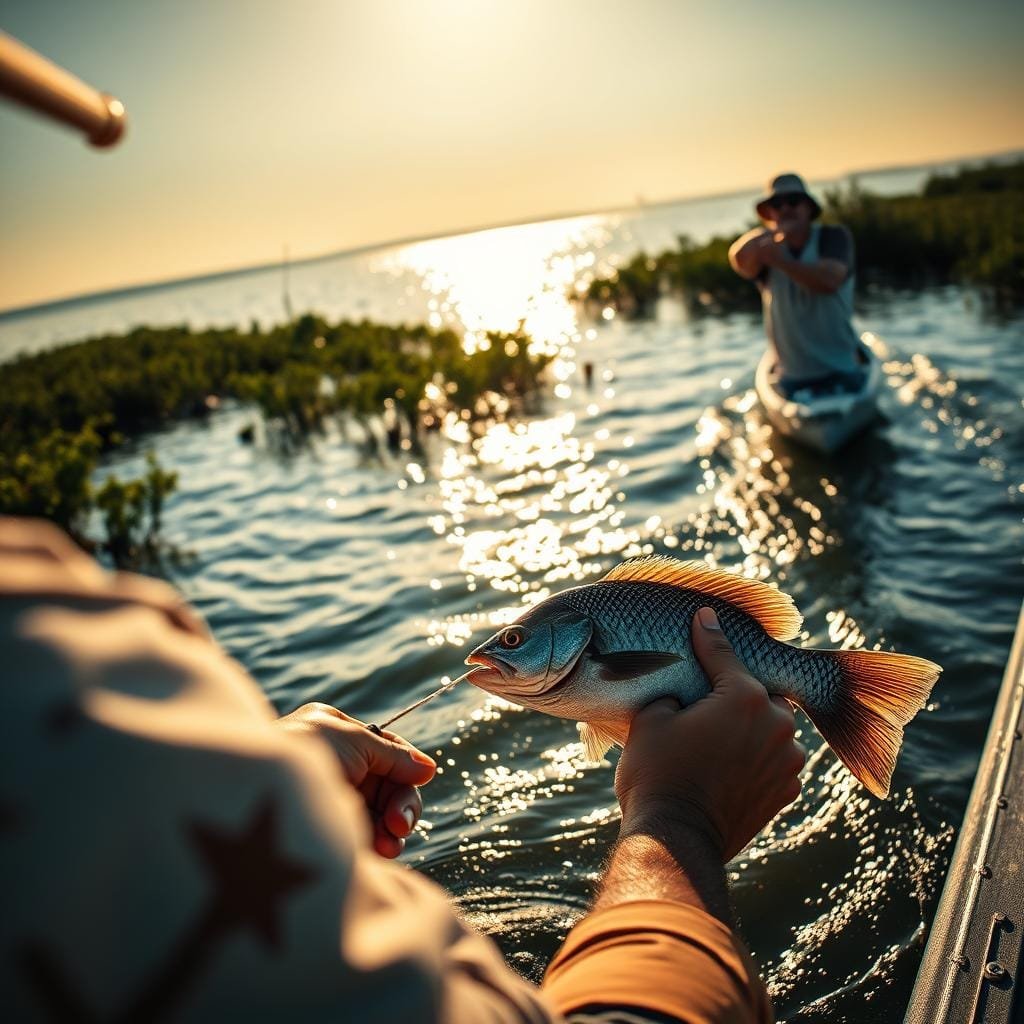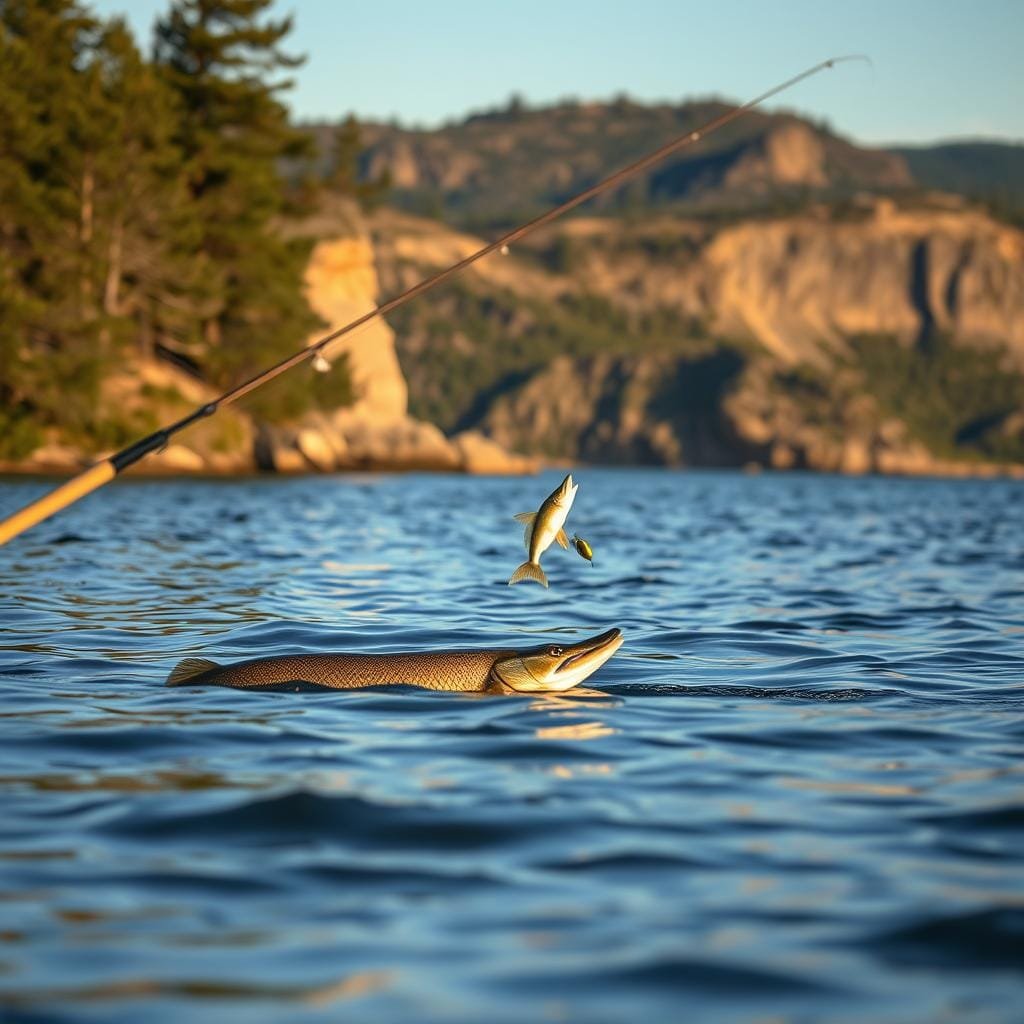
Bluefish are strong and can break weak gear. They are found along the East Coast, weighing 3 to 20 pounds. So, use strong tackle and keep your fingers safe from their sharp teeth.
When other fish stop biting, bluefish are ready to eat. That’s when the right bait makes a big difference.
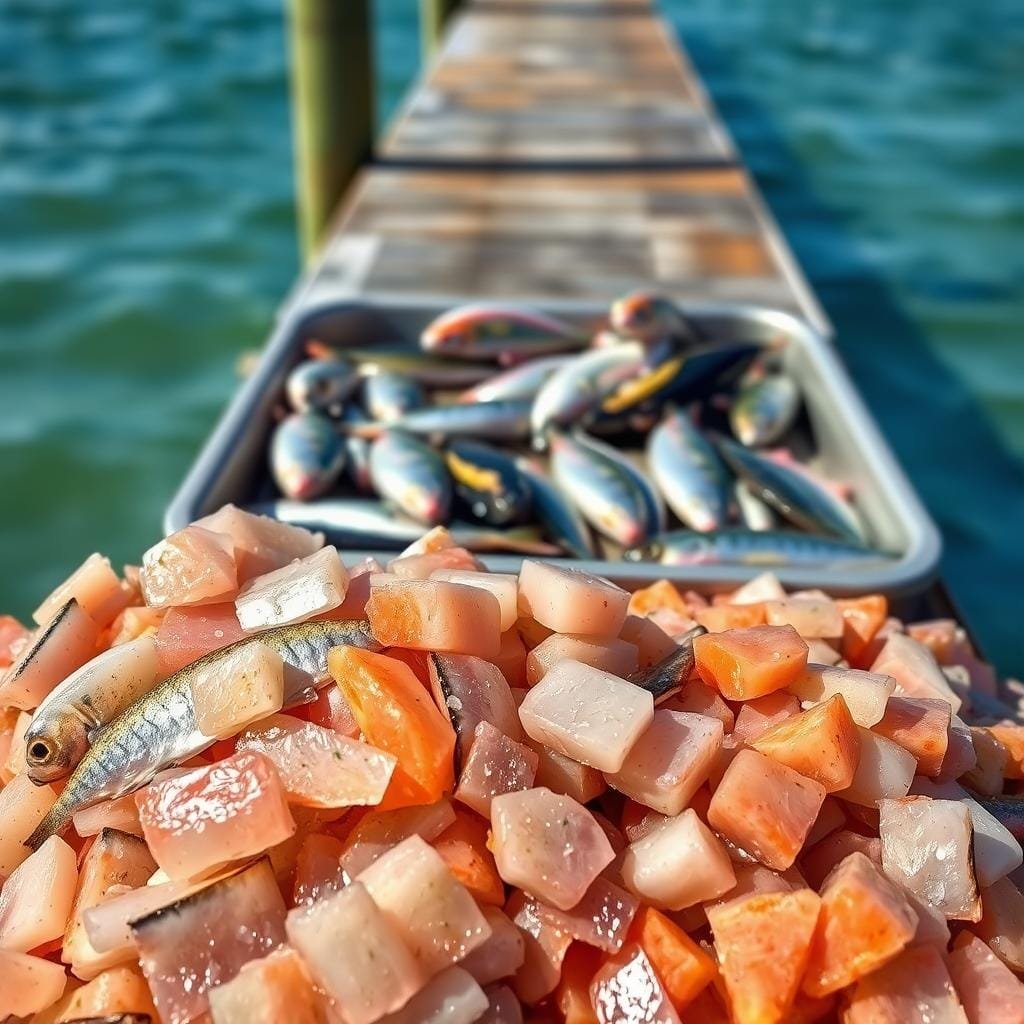
Choose oily, meaty baits like menhaden chunks, mackerel, and butterfish. These baits smell strong and attract bluefish quickly. Use chunking and light chumming to keep them close.
When bait shops run out, try bluefish lures. They help you cover more water and find fish.
Use simple, strong bluefish rigs. Short wire leaders and sturdy mono prevent losing bait. Add an egg sinker for better control in currents.
Keep fishing even when bait is hard to find. Pencil poppers and tough lures like Ava jigs catch fish. For trolling, use deep divers like Rapala Magnum.
End your trip by bleeding and icing fish. Then, try a smoked bluefish dip for a tasty treat.
Understanding Bluefish Behavior, Seasons, and Migrations
Tracking bluefish migration along the Atlantic coast is key. As seasons change, so does where they eat. Knowing their moves helps you catch them from Maine to the Outer Banks.
Spring northbound push from the Carolinas to New England
When the ocean warms up, bluefish move north from the Carolinas. They follow schools of fish past Delaware Bay and Long Island. By early summer, they gather in New England.
Look for them near inlets and river mouths. Bait and birds show where they are. For more tips, check out this bluefish behavior guide.
Summer hotspots: back bays, inshore grounds, and deeper NY/NJ waters
In July, bluefish gather in summer spots. In New England, they fill back bays and inshore areas. In New York and New Jersey, they go deeper to cooler waters.
They feed on the surface at dawn and dusk. In the middle of the day, they dive deeper. Change your spot as the sun moves, and watch for bait pushed by the wind.
Fall return south and wintering zones in the Carolinas
In early September, bluefish start moving south. They pass Montauk, Barnegat, and the Delaware shelf. They then settle in the Carolinas for winter.
Fish where bait balls are moving. Currents and points help keep the bite going as they head south.
Preferred water temps and how they affect feeding
Bluefish like water between 45–80°F. Warmer water brings them north in spring. Cooler water sends them south in fall. The 60s are prime for bites in both surf and nearshore.
When it’s hot, fish deeper or in ocean-influenced areas. When it’s cool, try sun-warmed bays and outflows. Knowing bluefish temperature helps catch them in New England.
| Season | Primary Zones | Typical Temp Range (°F) | Behavior Cues | Tactical Note |
|---|---|---|---|---|
| Spring (Apr–Jun) | Carolinas to Mid-Atlantic, pushing into Southern New England | 50–65 | Northbound movement, bait-driven blitzes near inlets | Work points and bars on a building tide with metals and jigs |
| Summer (Jul–Aug) | Back bays and inshore New England; deeper NY/NJ ledges | 62–75 | Summer bluefish pattern with dawn surface feeds | Start shallow at first light, shift deeper as sun and temps rise |
| Fall (Sep–Nov) | New York Bight to the Carolinas along the shelf edge and beaches | 55–68 | Southbound migration, heavy bird life over bait | Focus on rips and bait corridors during moving water |
| Winter (Dec–Mar) | Offshore and nearshore Carolinas | 45–58 | Holding patterns near stable water | Target warmer pockets and structure adjacent to current |
Where and When to Find Biting Blues
Start by watching the water and timing your moves. Look for signs of bluefish activity. This helps you know the best time and how to fish without scaring them away.
Reading birds, bait showers, and surface “busting” activity
Look for signs like sawing wakes and nervous rain on the water. Also, watch for bait showers and diving birds. These are clues that bluefish are feeding.
Cast your line to the edges of the activity. This way, you can catch them cleanly and keep them biting.
If the action stops, look for slicks in the water. These can be where bluefish are hiding. Be ready to cast quickly when you see them.
Why the first hours of a falling tide often fire up the bite
The start of a falling tide brings bait to certain spots. This attracts bluefish. Cast your line along these areas for the best chance of catching them.
As the tide slows, try different depths and slower movements. This can help you catch bluefish even when they’re not as active.
Daylight, dusk, and flat-calm scenarios that change selectivity
Light conditions affect bluefish behavior. In bright sun, start with fast, loud presentations. Adjust as needed based on bites.
At dawn and dusk, bluefish are more active. Start with a bit of noise, then slow down if they bite. In calm water, use quiet, natural lures. When the wind picks up, speed up your presentation.
Keep an eye out for signs of bluefish activity. This includes diving birds and small bait showers. Move to different spots as the tide and wind change.
Safety First: Handling Razor Teeth and Heavy Hitters
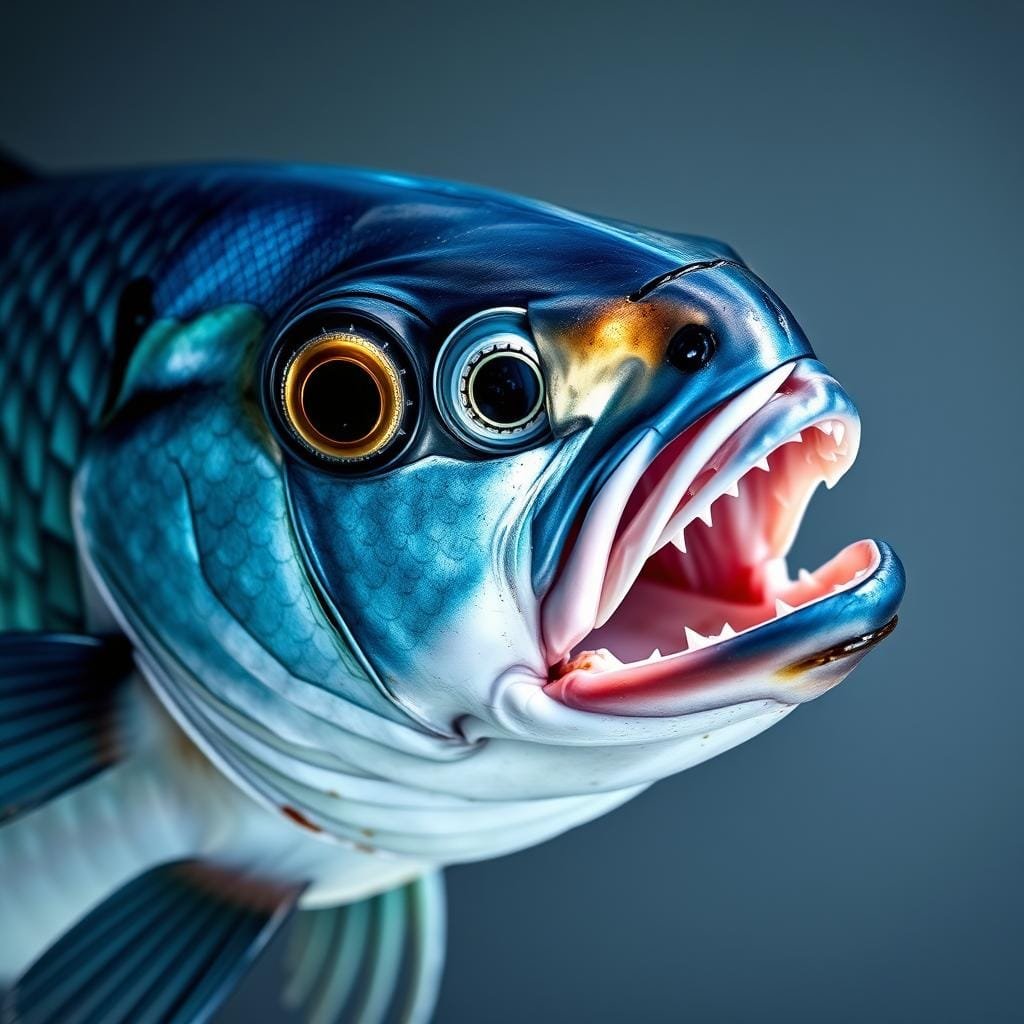
Bluefish hit hard and shake a lot. Always put safety first when dealing with them. Keep your hands away from their mouth. Use long-nose pliers or a dehooker instead.
Single hooks over trebles for safer releases
Choose single hooks over trebles for safer catches. They land fish clean and fast. This way, you avoid tangles and make quick releases.
Leader grabs, long mono, and avoiding braid cuts
Use a long mono section for leader handling. Aim for 36 inches of 50–60 lb mono. This helps you grab the leader without cutting the braid.
Bleeding and icing fish immediately if keeping for the table
If you’re keeping a fish, start bleeding it right away. Cut the dark meat later for a better taste. Keep the fish cold in a tight cooler.
- Carry pliers, a dehooker, and a short-handled gaff for control.
- Cut the engine drift-side to reduce chaos at boatside.
- Pinch barbs where legal to make quick work of releases.
Rods, Reels, and Leaders That Stand Up to “Choppers”
Don’t take light gear when bluefish attack. Use strong, fast gear to keep up. Surf casters might use longer rods, but boat anglers can do well with shorter, balanced ones.
Beefy 7-foot setups with 30–50 lb braid
A strong 7-foot rod paired with a 6000–6500 spinner reel is great for 3–20 lb fish. Use a Penn Slammer rod with a Penn 6500 or Shimano Stradic 6000. These reels are spooled with 30–50 lb braid like PowerPro.
This combo works well for casting metals, plugs, and jigs. It also helps with head shakes near the boat.
40–60 lb mono or 80–100 lb wire leaders to prevent bite-offs
Use braid to a 100 lb Spro Barrel swivel, then 50–60 lb mono for 36 inches. This helps with abrasion and safe hand grabs. For really tough bites, use 80–100 lb wire leaders or a 12-inch steel bite guard.
Change between 40–60 lb mono and wire based on water clarity and feeding intensity.
Quick-change clips and swivels for fast lure swaps
Speed is key when the action changes. Use a Tactical Anglers Power Clip rated to 100 lb for quick lure swaps. Keep a Spro Barrel swivel at the braid connection to avoid twist and keep casts clean.
| Component | Recommended Spec | Why It Works | Examples |
|---|---|---|---|
| Rod | 7-foot medium-heavy, 20–50 lb braid rating | Leverage for long casts and boat control | Penn Slammer rod |
| Reel | 6000–6500 size spinning | Strong drag, fast line pickup | Penn 6500, Shimano Stradic 6000 |
| Main Line | 30–50 lb braid | Cutting power through current, sensitive bites | PowerPro 30–50 lb |
| Swivel | 100 lb class | Prevents twist, clean connection to leader | Spro Barrel swivel |
| Mono Leader | 40–60 lb, 36 inches | Shock absorption, safe leader grabs | Triple Fish mono 50–60 lb |
| Wire Leader | 80–100 lb (12-inch bite guard) | Stops bite-offs in aggressive feeds | Coated stainless wire |
| Quick Clip | 100 lb class | Rapid lure changes during moving bites | Tactical Anglers Power Clip |
Adjust your gear for the day: a 7-foot rod with 30–50 lb braid for power. Use mono for cushion and wire leaders for tough bites. Always have a Tactical Anglers Power Clip and a Spro Barrel swivel ready for the next bluefish blitz.
best bait for bluefish
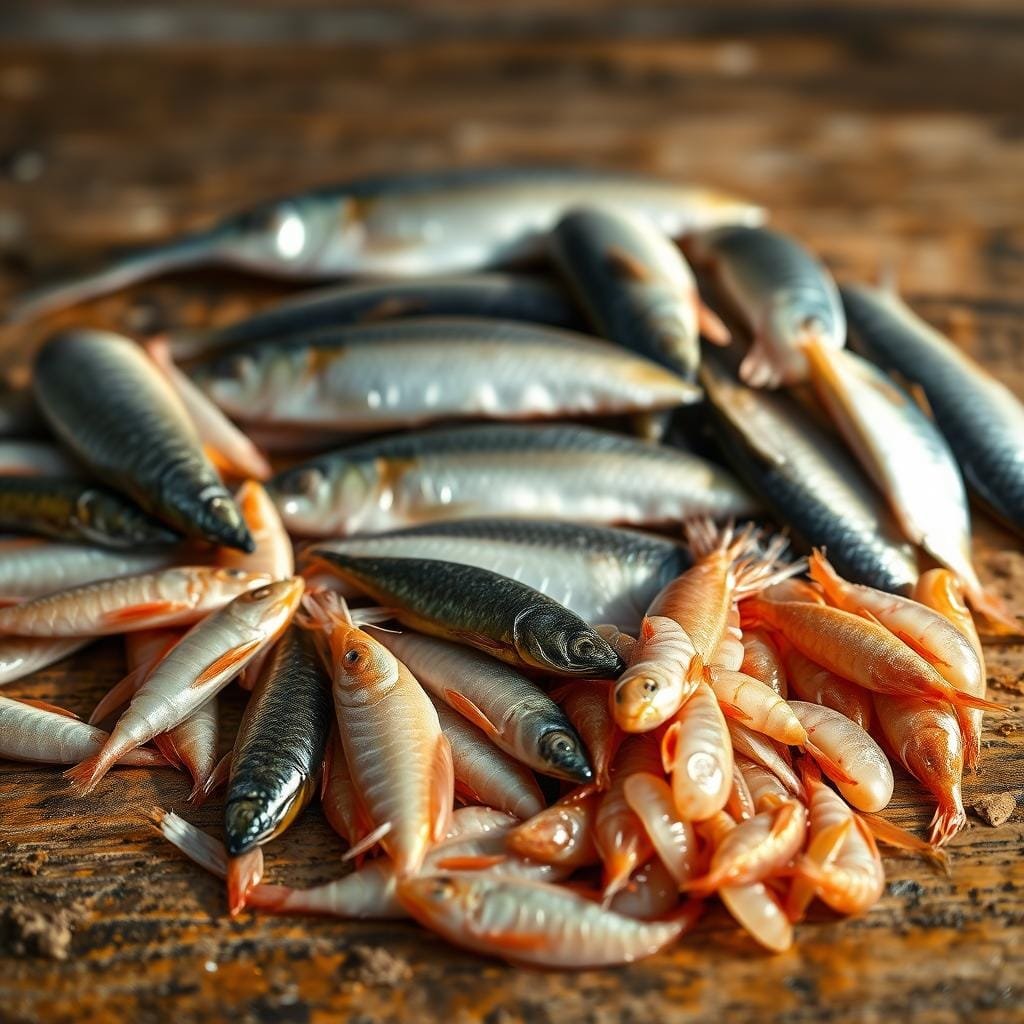
When blues are hungry, oily meat is the best bait. It smells good in the water and stays on the hook. Make sure your bait is fresh and fits the local fish size.
Top cut baits: bunker (menhaden), mackerel, butterfish
Use cut bait that smells far. Bunker chunks are oily and attract many fish. Mackerel chunks are firm and cast well.
Butterfish bait is sleek and works when fish are picky. Cut bait into palm-sized pieces for the surf. Use smaller pieces for inlet tides.
Live and whole dead bait options: eels, minnows, and fresh baitfish
Live eels are great when fish see them. Pin the eel through the upper jaw for a natural swim. Fresh minnows or whole peanut bunker work for small fish.
Whole dead bait is good on a slow sweep. Match the bait to the fish size for better hookups.
Rigging chunks to prevent spinning and improve hookups
Rig bunker and mackerel chunks by hooking under the backbone. This stops spinning and keeps the hook point out.
Use a short wire leader for strong teeth. Or switch to thick mono if fish don’t like metal. Check your knots after every strike.
Chumming strategies to pull schools into range
Chumming makes blues come to you. Mash bait into the tide, then free-line pieces to match the flow.
Use light egg sinkers for strong currents. Feed bait as fish come by. Let the scent do the work with your best bait.
Pro Rigging: Chunk, Live, and Dead Bait Setups That Convert
Make a bluefish bait rig that works well and catches fish. Keep it simple so you can change fast. This helps when the tide changes or fish move deeper.
For chunk or dead baits, use a wire leader that’s 6–12 inches long. Choose a 6/0–8/0 hook that’s trusted by bluefish anglers. Use octopus or baitholder patterns for bunker, mackerel, or butterfish.
If fish are hard to catch, try 60 lb mono. But keep the leader short to avoid spinning. This keeps your bait where it needs to be.
Make an egg sinker rig with 1–8 oz above a barrel swivel. Then add the leader and hook. This setup works well when the tide or swell is strong. Start with light weights and add more as needed.
Use a free-spool bluefish presentation. Open the bail and let the chunk sink slowly. When you feel a thump or see a line tick, do a calm three count hookset.
Match live bait rigs to the size and current. Use a compact wire or tough mono leader. Stick with a 6/0–8/0 hook that bluefish love. Use a nose hook for small menhaden or eels, and a tail hook for them to dig down.
Have a spare bluefish bait rig ready to go. Change sinker weights as the tide builds. Trim frayed wire after each fish. When it gets busy, use a free-spool bluefish setup with a patient three count hookset.
Lure Alternatives When Bait Is Scarce
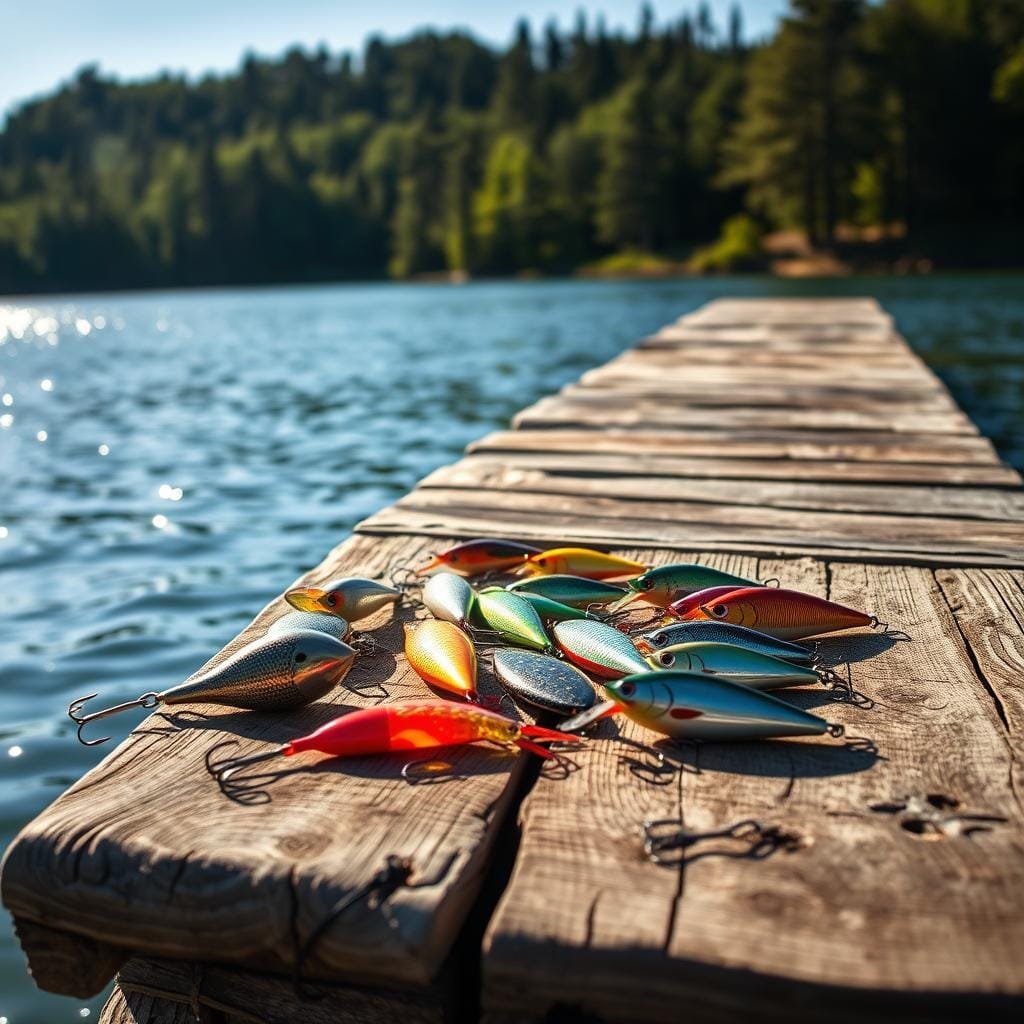
When bait runs out, use tough bluefish lures. Hard plastics and metal can take a bite. They cast far and let you cover water quickly. Use single hooks where you can for safer fish releases.
Topwaters that trigger violence: pencil poppers and poppers
On calm mornings, use pencil poppers to catch bluefish. The Cotton Cordell Pencil Popper and Atom Striper Swiper make a lot of noise. This noise attracts bluefish.
Keep your rod high and move it fast to keep the popper on the surface. Switch to single hooks for easier fish releases when it gets busy.
Metals and jigs for surf, river mouths, and vertical work
Metals like Ava jigs shine in current and surf. They come in sizes from 007 to A87. Diamond jigs and Kastmasters work well in wind and cover all water levels.
Start with a fast motion near the surface. Then, use a yo-yo drop for deeper fish. Change the lure’s shape and weight to match the bait and the tide.
Trolling standbys: deep divers, tube-and-worm, and hoochies
Trolling is great for finding new schools quickly. A Rapala Magnum bluefish lure dives 10 to 30 feet. Use two lures, one high and one deep, to cover more area.
For steady bites, try a tube-and-worm rig at a slow speed. Add flash with hoochie trolling at 2–6 mph. This keeps you in the strike zone and withstands bites.
| Category | Standout Options | Best Use | Retrieve/Speed | Why It Works |
|---|---|---|---|---|
| Topwater | Cotton Cordell Pencil Popper, Atom Striper Swiper | Calm seas, blitzes, shallow flats | Brisk pencil walk; steady pop-pop | Creates commotion that triggers sight-feeds from aggressive fish |
| Metals | Ava 007–A87, diamond jigs, Kastmaster | Surf, inlets, vertical marks | Fast burn high; yo-yo on drop | Long casts, precise depth control, holds up to teeth |
| Trolling | Rapala Magnum bluefish, tube-and-worm bluefish, hoochie trolling | Rips, ledges, roaming schools | 10–30+ ft divers; slow tube roll; 2–6 mph hoochies | Covers water, steady action, consistent depth and profile |
Topwater Tactics for Explosive Strikes
Bluefish love the surface action. To catch them, match the school’s mood and lure in their expected escape path. Make every cast count, keep the line tight, and set hooks firmly.
Working poppers fast on the edges of busting schools
Cast to the school’s edges, not the center. Use a fast pencil popper retrieve along the seam. Pop hard, pause, then pop again to mimic fleeing bait.
A Yo-Zuri Hydro Popper creates spray and attracts fish without overexciting them. Set the hook hard when it disappears. Keep the rod low to guide fish away.
Walk-the-dog vs. frantic retrieves in calm conditions
In calm water, let the fish guide you. Sometimes, a slow walk the dog pattern works best. Keep the rod tip down and let the lure move side to side.
Other times, a fast pencil popper retrieve with loud rattles and sharp pops works. Mix speeds and add pauses. This often triggers bites from following fish.
Popular models: Cotton Cordell pencil popper, Atom Striper Swiper
The Cotton Cordell pencil popper casts far and works well at various speeds. The Atom Striper Swiper is great for tight bait pods.
Also, use a Yo-Zuri Hydro Popper for big splashes and strong hooks. Switch these lures as conditions change.
Heavy Metals and Jigging Methods That Produce
Bluefish wreck metal. That’s why we use strong options when they bite hard. Keep your line straight and match the weight to the current. Watch the sonar to find the right spot for your lure.
Ava and diamond jigs: sizes, tails, and retrieve speeds
Ava jigs work well in rivers, surf, and wrecks. Use size 007 to A27 in current. A steady, moderate retrieve works best.
For deeper rips, use A27–A87. Pair them with hammered jigs, 6 to 10 ounces, to stay vertical.
When sandeels pile up, diamond jig bluefish tactics are key. Use A-27 or A-47 with split-tube tails. A quick lift and fluttering drop works well. Speed up over marks, then pause to let the jig fall.
Vertical vs. yo-yo jigging and finding the right depth
Vertical jigging starts with a straight drop to the bottom. Then, reel fast through mid-depths until you strike. If the line bows, add more weight. If you snag, use less weight or shorten your stroke.
Yo-yo jigging is about rhythm. Lift, drop, reel a few cranks, repeat. Count down to the layer on your machine, then hop evenly through that zone.
Kastmaster durability and water-column coverage
Kastmaster lures are solid brass and cast far. They can handle teeth. Try different speeds to cover different depths. Short pauses make them flash and fall like a wounded bait.
| Lure Type | Best Use Case | Weight/Size Guide | Retrieve or Cadence | Key Edge |
|---|---|---|---|---|
| Ava (007–A27) | Rivers, surf, light current | 1–3 oz; Ava jig sizes 007–A27 | Moderate, steady with brief stalls | Long casts, tight profile for sandeels |
| Ava (A27–A87) + hammered jigs | Deep rips, offshore humps | 4–10 oz; hammered jigs 6–10 oz | Fast lift to keep line vertical | Stays down in heavy current |
| Diamond jig | Marks on bottom or mid-depth sandeels | A-27, A-47 with split-tube tail | Sharp lifts, fluttering drops | Irresistible on the fall for diamond jig bluefish |
| Kastmaster | Covering water, mixed depths | 1–3 oz for surf and inshore | Slow roll to high-speed burn | Tooth-proof brass; Kastmaster bluefish workhorse |
| Method: vertical jigging | Pinpoint schools on sonar | Weight matched to hold straight up-and-down | Drop to bottom, reel up fast through strikes | Quickly hits active layers |
| Method: yo-yo jigging | When fish suspend or scatter | Mid-weight metals for controlled hops | Lift, drop, reel a few cranks, repeat | Triggers reaction bites on rhythm |
Trolling Playbook: Cover Water and Find the School
Bluefish trolling is great when fish move around a lot. Use a spread that covers different depths. Then, tighten up when you find a bunch of fish.
Use deep divers first. Choose Rapala Magnum trolling depth based on your area. Larger lips dive 20–30+ feet. A red/white plug dives 18–21 feet, covering mid-column over 30–40 feet.
Change the rear treble to a single hook. This makes releasing fish easier without losing control.
Use a tube-and-worm rig when fish are slow. Move it slowly to make the sea worm scent spread. The long tube helps when a fish tries to get away.
Hoochies cover a lot of area and avoid weeds. Troll them 2–6 mph. Use 2–3 mph for mixed-striper searches and 5–6 mph for aggressive blues.
For deep fish, use braid or lead core. Count colors to repeat passes. Adjust speed to keep the strike zone without extra gear.
- Spread plan: one deep diver for Rapala Magnum trolling depth, one tube-and-worm near the wake, and a hoochie down the seam.
- Speed notes: vary 0.3–0.5 mph each pass until rods fire, then lock it in.
- Conversion: once a pod tightens, circle back and be ready to cast metals or topwaters into the froth.
Keep wire or heavy mono leaders in the 40–100 lb range. Check them after every bite. Bluefish trolling gets better with small changes in speed, angle, and depth.
From Catch to Table: Care, Bleeding, and a Fan-Favorite Dip
Great eating starts on deck. When you catch a big one, bleed the bluefish. Pull a red gill raker on each side, or stun and cut the gills. Let it drain, then ice it hard.
Ice it in crushed ice or icy seawater. Cold stops enzymes and tames strong notes. It keeps the flavor clean. Once back, trim dark flesh for a sweeter taste.
Smoking is a top bluefish recipe. Season fillets with Tony Chachere’s Cajun Seasoning and lemon pepper. Smoke at 250°F for four hours until flaky.
Many love smoked bluefish dip. It balances the rich meat. Bleed and ice bluefish right away for the best results.
For a simple dip, crumble two cups of smoked meat. Mix in chopped onion, celery, tomato, and pickled jalapeños. Add half cup of mayonnaise. Chill and serve with crackers.
This dip is a hit at tailgates and beach fires. Leftover fish vac-seals well. Freeze for quick apps later.
For more ideas and handling tips, check out this guide to smoked bluefish dip. Treat your catch right from the start. Bluefish goes from strong to bright, clean, and craveable.