Want fast action and steady fillets? This guide shows the best bait for bluegill. You’ll learn about live and artificial lures for ponds, lakes, and small rivers. It covers when to use live bait and when to use artificial lures.
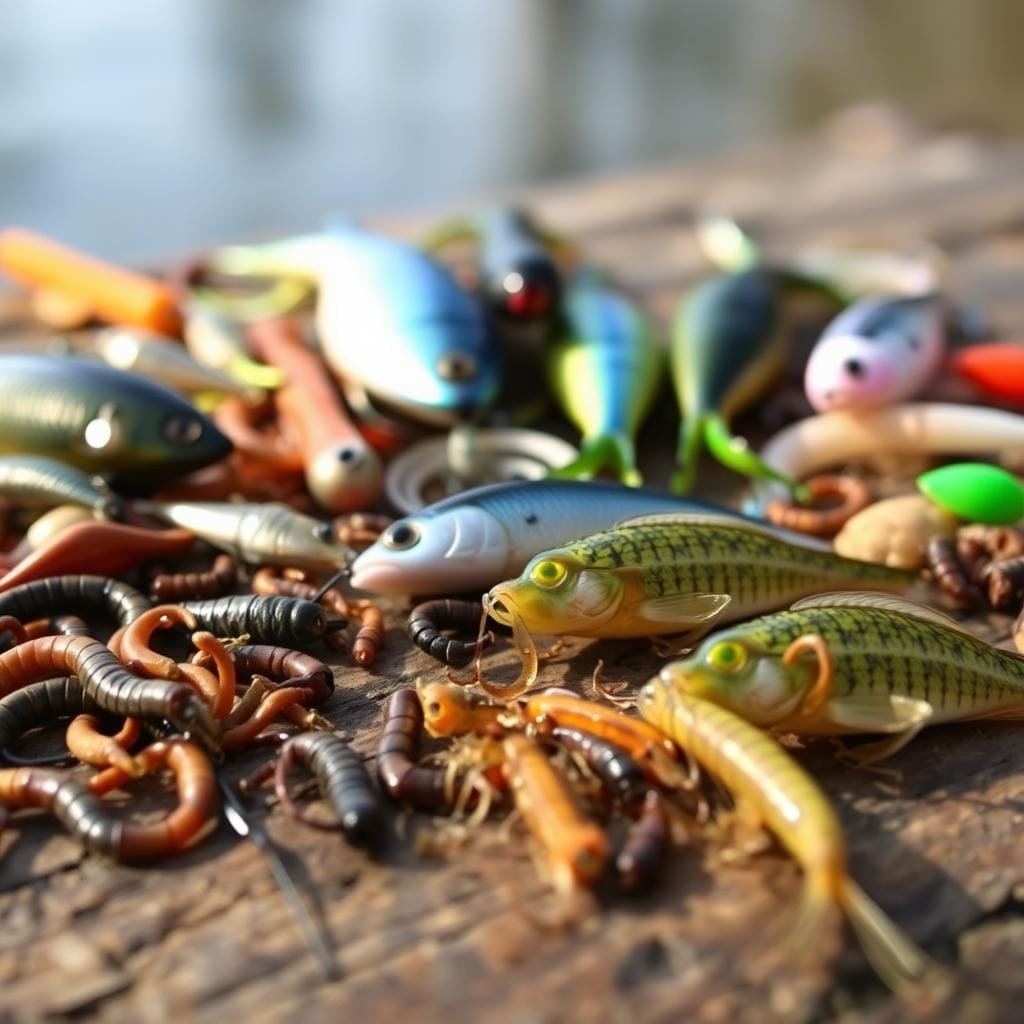
Live baits like red worms, nightcrawlers, and crickets work well under a bobber or drop-shot. For fast action, try panfish baits like jigs, micro plastics, and tiny cranks. Top picks include Panfish Magnet, Trout Magnet, and more.
Choosing the right jighead is key. Use a 1/16-ounce head with a No. 6–8 hook for small plastics. Add scent like Berkley Crappie Nibbles for better bites. Use simple colors like black, earth tones, and chartreuse/white.
Whether you like quick catches or the thrill of the hunt, this guide has you covered. It offers practical tips for catching more bluegill and saving time.
Live Bait vs. Artificial Lures for Bluegill: Pros, Cons, and When to Use Each
Choosing between live bait and artificial lures depends on where you fish and the mood of the fish. Both can catch big bluegills. The key is to match the water, cover, and pressure to catch more fish without wasting time or money.
Why live bait often out-fishes artificials in close quarters
In tight spots, live bait usually wins. A wriggling worm or cricket sends out a scent that attracts bluegills. They can even survive a few bites.
Wax worms, mealworms, and maggots are great too. They sit well under a bobber and stay in the strike zone. For more tips, check out this guide on best baits for bluegill fishing.
When artificial lures shine for covering water and finding fish
Artificials are best for covering a lot of water. Small hard baits and micro jigs let you move fast. One $6 plug can catch 20-plus bluegills, making them efficient on big water or windy days.
Durable plastics like Z-Man ElaZtech last for dozens of fish. Tiny cranks like Rebel Teeny Wee Craw or Yo-Zuri Snap Bean work well at slow speeds. Inline spinners also flag active fish when it’s clear.
Mess, storage, and cost trade-offs to consider
Live bait is messy and fragile. Worms need cool, breathable containers, and crickets can escape. You need to restock often. Artificials cost more upfront but last longer and are easier to swap out.
If you fish a lot, artificials might be cheaper. But for fishing docks and beds, live bait might be better because it gets bites closer to you.
Adding scent or tipping artificials to boost strikes
Hybrid setups can be very effective. Tipping a jig with a wax worm or maggot adds scent without going full live bait. Rub-on nightcrawler gels and crappie nibbles bluegill styles can also make shy fish bite.
Keep a small jar of Berkley Crappie Nibbles or crawler scent handy. A little dab can make a micro crank or spider jig irresistible after a pause.
| Situation | Best Choice | Why It Works | Cost/Longevity | Scent Boost |
|---|---|---|---|---|
| Docks, beds, tight brush | Live worm, cricket, wax worm | Natural motion and strong odor pull close fish | Low cost per trip, frequent restock | Natural scent for bluegill; optional tip on small hooks |
| Searching flats and edges | Small hard bait or micro jig | Covers water fast; high bluegill lure efficiency | Higher upfront; lures last many fish | Add crappie nibbles bluegill or crawler gel for hesitant biters |
| Pressured, clear water | Subtle plastics, light jig | Natural profile, slow fall, precise depth control | Reusable; minimal wear | Light scent for bluegill helps on long pauses |
| Cold fronts, picky fish | Jig tipped with maggot or wax worm | Hybrid approach keeps action with real taste | Few baits used; jig endures | Crappie nibbles bluegill or nightcrawler rub-ons seal the bite |
Worms, Crickets, and More: Live Baits Bluegill Can’t Resist
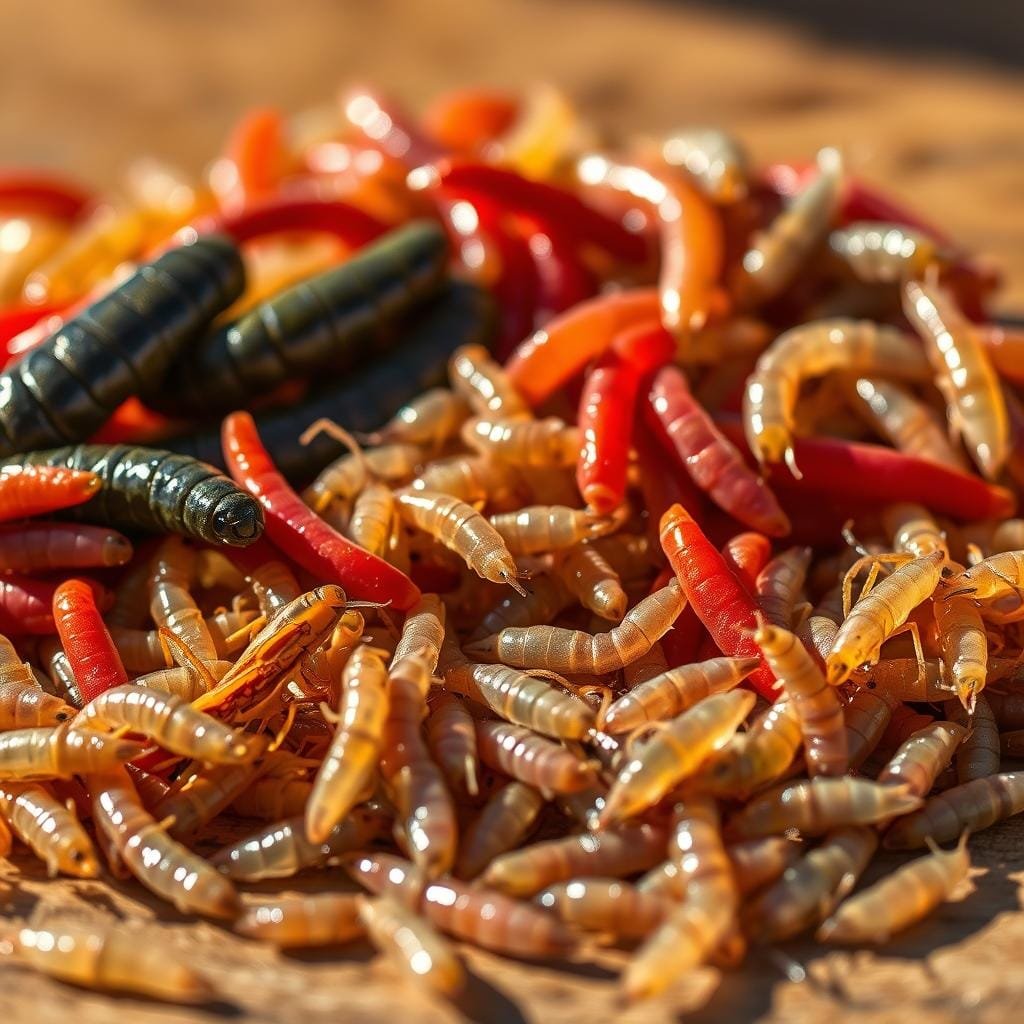
Live bait makes fish bite, even when they’re shy. Use simple rigs and keep baits lively. Match the bait size to the fish’s mood.
A bluegill bobber rig or a drop-shot setup works well. They let natural scents attract fish.
Earthworms and red wigglers: rigging tips under bobbers and on drop-shots
Red worms are great for bluegill. Thread a half inch of red wigglers on a No. 8 hook. Pinch the tag to make it wiggle.
Use a bluegill bobber rig to set the worm just above weeds. This makes it look natural.
For drop-shot rigs, hook a small worm segment. Keep the weight 6–12 inches below. This keeps the worm lively for more bites.
Crickets: hooking method and handling without the chaos
Crickets are good for bigger bluegill. Hook them under the hard back plate, just behind the head. This keeps the body lively.
Keep crickets in a wire cage or cone holder. This makes them easy to grab. Carry the container upright and shaded.
A small float with a split shot helps the bait sink naturally. This attracts fish on calm banks.
Mealworms, wax worms, maggots: perfect tippers for jigs
Mealworms add crunch, wax worms are soft and smelly, and maggots quiver a lot. Use a 1/64–1/32 oz jig with a single grub to attract fish without overfeeding.
Keep bait cool in cups. When bites slow down, switch to a smaller hook or trim the plastic and re-tip.
Household baits (corn, hotdog, dough balls): when they work and when they don’t
Sweet corn and tiny dough balls catch fish in small ponds. A thin hotdog sliver works too, after kids feed the fish.
In open water or on pressured lakes, these baits don’t work. Use worms or crickets instead. Pair them with a bluegill bobber rig or a drop-shot setup to catch fish without scaring them.
| Bait | Best Rig | Hook Size | Key Tip | When to Use |
|---|---|---|---|---|
| Red wigglers / nightcrawler pieces | Bluegill bobber rig; drop-shot bluegill | No. 8–10 | Thread or ball on the bend to survive multiple fish | Weed edges, bedding flats, shaded banks |
| Crickets | Slip or fixed bobber with split shot | No. 6–8 | Hook under back plate to lock in and keep lively | When targeting larger bluegill in calm water |
| Wax worms / mealworms | 1/64–1/32 oz jig under float | No. 8–10 | Single grub tip for subtle profile and scent | Clear water, cold fronts, pressured fish |
| Maggots | Tungsten ice-style jig or small fly hook | No. 10–12 | Two larvae on a tiny gap for quiver without bulk | Vertical bites, docks, deep schools |
| Corn / hotdog / dough | Light bobber or split-shot rig | No. 8 | Tiny pieces only; refresh often | Small ponds, marina corners, feeding areas |
Jigs and Plastics That Consistently Catch Big ’Gills
For steady bites in any season, use the best bluegill jigs. They swim, hang under a float, or crawl the bottom. Small profiles stay natural, and light heads let you control fall rate and depth with precision.
Why jigs are the day-in, day-out producers nationwide
Jigs match bugs, minnows, and nymphs without fuss. A slow count-down covers the mid-depths, while a pause lets the skirt or tail breathe. In stained water, a steady swim thumps; in clear water, a soft hop seals the deal.
Panfish Magnet and Trout Magnet: durable profiles that excel under bobbers
Panfish Magnet bluegill rigs shine when suspended over beds or brush. The flat body tracks straight, so bites show fast on a float. Trout Magnet panfish setups fish well on a twitch-pause, or with a slow reel when you need to cover water.
Charlie Brewer 1-Inch Slider Grub: subtle action for numbers and quality
The Charlie Brewer Slider Grub glides on light line and stays in the strike zone. Its thin tail pulses on the slowest retrieve. Downsize during cold fronts and let that 1-inch shape work without added flash.
Z-Man Micro Finesse (TRD, GoatZ): elastic durability and big bluegill appeal
Z-Man Micro Finesse TRD GoatZ plastics made from stretchy material collapse easily, so big ’gills inhale them. They last session after session, even around wood and rock. Trim a segment for a compact snack in tough bites.
Hand-tied bugs and Starky Flies Gill Getters: “buggy” looks for pressured fish
When fish get picky, hand-tied offerings with rubber legs and chenille bodies look like real forage. Starky Flies Gill Getters use tungsten to drop fast yet stay small, perfect for slip-floats over deep schools or beds in wind.
| Lure/Family | Primary Strength | Best Delivery | Ideal Conditions | Notes |
|---|---|---|---|---|
| Panfish Magnet bluegill | Durable, straight-tracking profile | Slip or fixed bobber; twitch-pause | Shallow beds, brush lines | Shows light bites; easy for kids and pros alike |
| Trout Magnet panfish | Neutral glide for pressured fish | Slow retrieve or hover in place | Clear water, mid-column roamers | Swap to lighter wire hook for softer inhalation |
| Charlie Brewer Slider Grub (1-Inch) | Subtle tail throb | Do-nothing swim; bottom crawl | Cold fronts; post-frontal sun | Excel when downsizing; keep the glide natural |
| Z-Man Micro Finesse TRD GoatZ | Elastic longevity; easy collapse | Count-down and slow roll | Rock, wood, mixed gravel | One bait handles dozens of fish; trim to match hatch |
| Starky Flies Gill Getters | “Buggy” realism with tungsten head | Under a bobber; double-bug rig | Pressured schools; spawn edges | Sinks fast yet stays micro; deadly on wary giants |
Dialed-In Jigheads and Hooks for Better Hookups
Most misses happen because of the wrong bluegill jighead size. The head and hook don’t match the bait or the fish’s small mouth. You need balance so plastics track straight, sink on cue, and pin light biters.
Why many panfish heads miss the mark (size/weight mismatch)
Oversized wire and long shanks push fish off short strikes. A bulky No. 2 or No. 4 with a light head drags the bait high and kills feel. Go compact so the hook point sits near the plastic’s tail, not past it, and let the head control sink, not the hook.
When wind or depth enter the picture, tiny 1/32–1/64 ounce heads stall out. They flutter and wander, which looks nice in a tub, but it burns time between bites on the lake.
Heavier micro heads: 1/16 oz with No. 6–8 hooks for casting and depth
The sweet spot for most small plastics is a 1/16 oz panfish jig paired with No. 6 No. 8 hooks bluegill can inhale. This combo boosts casting distance, keeps a straight fall, and sets clean with light line. It also handles wind better without overpowering a two-inch bait.
If you need a refresher on hook sizing for small mouths, see this quick guide on hook sizes for panfish, which backs the move to modest wire and shorter shanks.
Tungsten ice-style heads and slotted fly beads for compact weight
Tungsten jigheads carry more mass in less space, so they track bottom and cut current while staying bite-sized. Ice-style heads hug small plastics and drop like a pin, great for deeper edges or tight schools.
DIY fans can slide 5.5–6.4 mm slotted fly beads onto No. 6–8 jig hooks and secure with a touch of glue. You get near-tungsten density, a crisp fall, and a tiny profile that takes a firm set on light fluorocarbon.
Recommended options: Decoy Round Magic, Z-Man Micro Finesse ShroomZ
For off-the-shelf picks, Decoy Round Magic hits that micro-performance lane with smart wire and a compact head around 1.8 grams. Pair it with small grubs or micro worms to maintain that natural slide.
For open-water plastics, the Z-Man Micro Finesse ShroomZ shines. It pairs neatly with short bodies and keeps the hook gap clear for better penetration, making it a reliable 1/16 oz panfish jig stand-in when you want similar control.
| Use Case | Weight/Build | Hook Size | Why It Works | Best Baits |
|---|---|---|---|---|
| Windy banks, 6–12 ft | 1/16 oz lead | No. 6–8 | Longer casts, truer fall, easy sets | 2-inch grub, micro worm |
| Deep brush, quick drop | tungsten jigheads | No. 6–8 | Compact weight gets down fast, holds line angle | Buggy nymph, micro minnow |
| DIY compact profile | 5.5–6.4 mm slotted bead | No. 6–8 | Dense, tiny head with clean hook gap | Slim stickbait, wax-worm tip |
| Balanced factory option | Decoy Round Magic | No. 6–8 | Proper wire, straight tracking, sharp point | Small grub, micro tube |
| Elastic plastics pairing | Z-Man Micro Finesse ShroomZ | No. 6–8 | Hook geometry suits stretchy baits, solid hookups | TRD, tiny creature |
Keep your bluegill jighead size matched to your plastic and depth. With Decoy Round Magic, Z-Man Micro Finesse ShroomZ, and a smart mix of tungsten jigheads, you’ll cover the water column and stay in the strike zone longer.
Small Hard Baits, Spinners, and Spoons That Trigger Reaction Bites
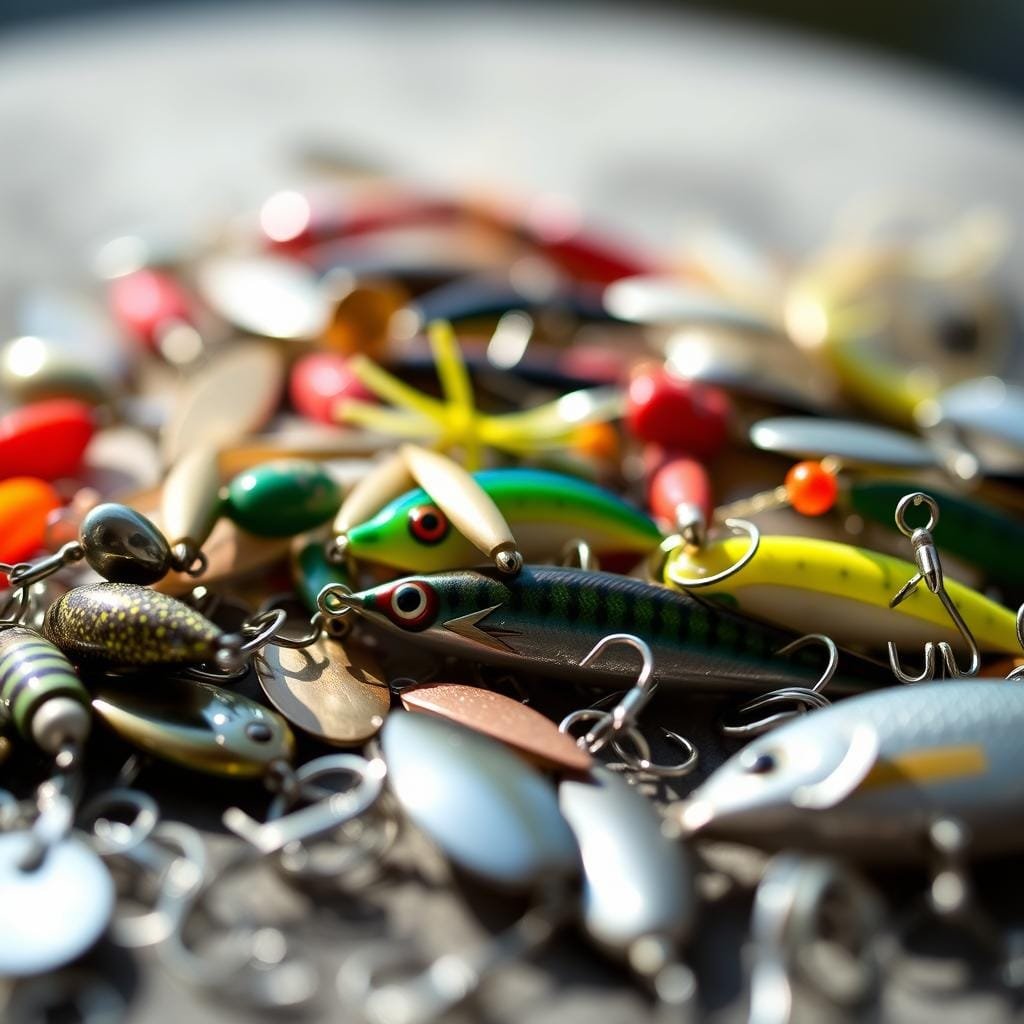
When bluegill won’t touch live bait, speed and flash can flip the switch. Think compact profiles, steady cadence, and subtle pauses. These micro hard baits bluegill hunters love also draw bonus crappie and the odd bass.
Tiny cranks that work: Rebel Teeny Wee Craw, Yo-Zuri Snap Bean
Small bodies and tight wobble make these bluegill crankbaits deadly in 1–8 feet. The Rebel Teeny Wee Craw crawls over sparse weeds, and the Yo-Zuri Snap Bean shines around docks. Add a twitch-pause to let the bait fall and quiver.
For fewer snags, pick sinking plugs with a lip, and consider swapping the front treble for an inline single. You’ll stick fish cleanly while keeping hooks away from rocks and laydowns.
Inline and safety-pin spinners: Rooster Tail, Beetle Spin, Road Runner
Cover water fast with a slow, steady wind. A Rooster Tail bluegill setup in 1/16 ounce throws far and flashes even at crawl speed. The Beetle Spin bluegill favorite is weed-friendly and great for new anglers.
When fish scatter or water runs tannin-stained, a Road Runner panfish presentation—jig head plus blade—gets noticed. Slow-roll it along edges, or ease it past brush for ambush bites.
Classic spoons for casting and vertical jigging: Acme Phoebe
The Acme Phoebe spoon casts like a bullet and flutters on the fall. Gold finishes pop in lakes and slow rivers, and it doubles for vertical work over deep schools. Tip the back hook with a tiny nightcrawler or wax worm for stubborn fish.
Mix in brief twitches between turns of the handle. That stall-and-flash often triggers followers that won’t commit to a straight retrieve.
Retrieve speeds, hook swaps, and minimizing snags
- Keep spinners and grubs on a slow, even path; let the blade thump without racing.
- With cranks and spoons, add short pauses so the lure drops into the strike zone.
- Swap stock trebles for barbless inline singles, or remove the front hook to reduce hang-ups.
- Use light line and micro hard baits bluegill prefer to keep casts long and depth controlled.
Want a deeper dive on sizes, hooks, and proven picks? See this quick guide on lures for bluegill for weights like 1/32–1/8 ounce and hook sizes in the #6–#10 range that match these small presentations.
best bait for bluegill
Choosing the right bait for bluegill depends on where and how they eat. In tight spots or on beds, worms, red wigglers, nightcrawlers, and crickets work well. They mimic natural scents and movements.
Use a small bobber or a light drop-shot to keep the bait in the right spot. This helps bluegill find it easily.
For covering more water, use artificials. The Panfish Magnet and Trout Magnet move straight and stay in the strike zone. The Charlie Brewer 1-Inch Slider Grub and Mister Twister Teeny Grub are good for casting.
Z-Man Micro Finesse TRD and Micro GoatZ last long and attract bigger fish. Starky Flies Gill Getters look like bugs and work well in pressured ponds.
Hard baits and spinners are great for getting a reaction from bluegill. Try a Rebel Teeny Wee Craw or a Rapala Ultralight Floating Minnow near weeds. A Johnson Beetle Spin or Worden’s Rooster Tail adds flash and thump.
For color, stick to black, earth tones, chartreuse/white, bison, and green pumpkin. Use 1/16 oz heads with No. 6–8 hooks or compact tungsten for better casting and depth. Add scent like Berkley Crappie Nibbles or Billy Rub nightcrawler. Tip plastics with wax worms when bites are slow.
Decide between live bait and lures based on the situation. Use worms and crickets in tight spots. For open water, try jigs, spinners, and small cranks. Use an ultralight rod with 2–4 lb mono for precise casting.
In short, the best bait for bluegill changes with the situation. Keep a mix of live baits and small plastics, cranks, and spinners. This way, you can quickly adapt and keep fishing.
Color, Profile, and Scent: Fine-Tune for Tough or Clear-Water Bites
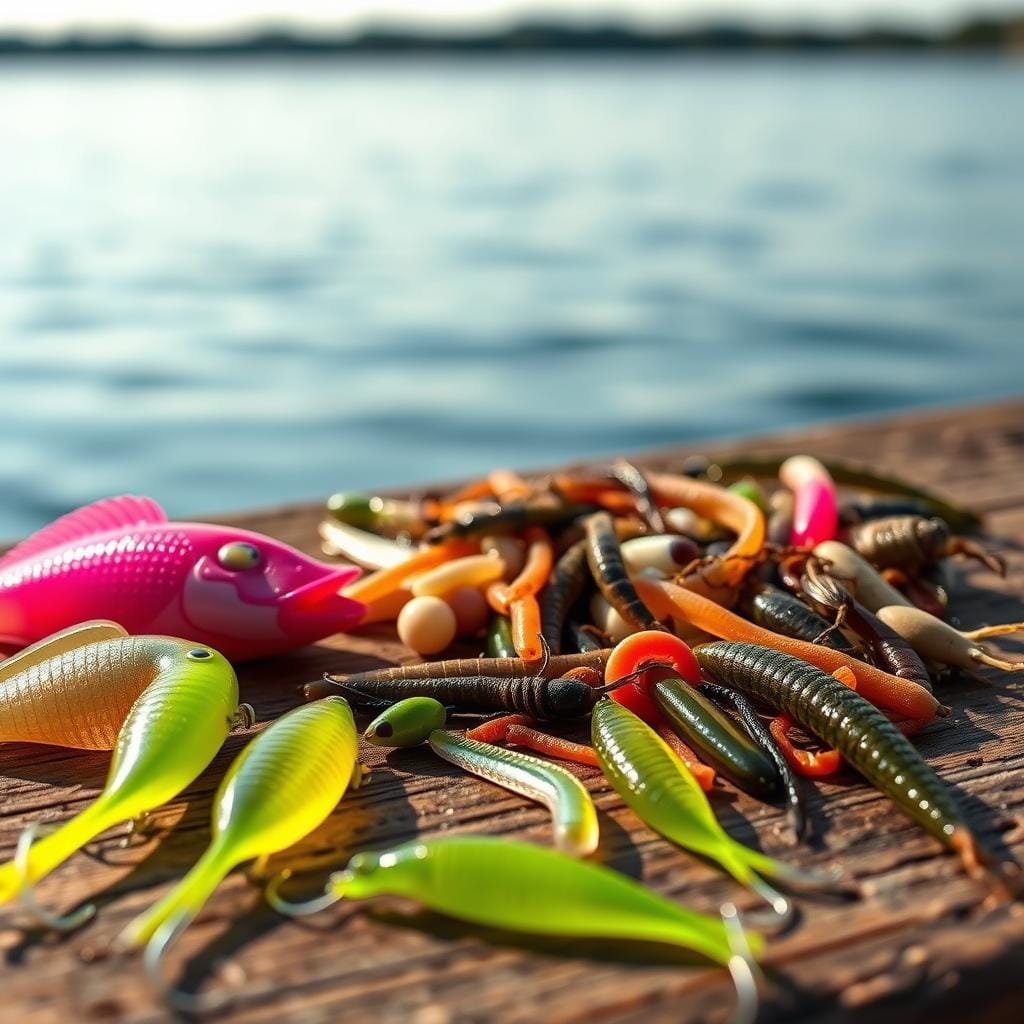
When bites get picky, start simple and stay subtle. Think about the shape and color of bluegill. Shape gets the first look, then color seals the deal. Match local worms, tiny bugs, and fry to see more bites.
Profile first, color second: matching worms, bugs, and small prey
Choose a shape that looks like what bluegills eat. Slim straight-tails and tiny tubes look natural. A slow fall with tiny twitches works better than loud splashes.
If fish nose the bait, shorten the body or trim the tail. This keeps the silhouette tight.
Go-to colors: black, natural earth tones, white/chartreuse, bison, green pumpkin
Keep a small list of colors for quick selection. Black is good in sunlight. Green pumpkin and earth tones mimic worms and crickets.
White with chartreuse adds contrast in stain. The bison color Trout Magnet works in mixed light. Add orange or chartreuse for extra pop.
When flash helps and when it hurts in clear, shallow water
Flash can attract fish in tannin or stain. But in bright, shallow water, it can scare them away. Use matte heads and dull blades in clear water.
Slow the retrieve and keep casts long. This avoids crowding the school.
Scent choices: Crappie Nibbles, nightcrawler scents, and clean rub-ons
Scent is key when fish hover but won’t bite. Crappie Nibbles bluegill on a jig hook adds taste and color. A light swipe of bluegill scent Billy Rub gives a natural nightcrawler note.
Tip plastics with wax worm or maggot for real flavor and a proven profile.
- Keep it natural first; let color confirm the bite.
- Use chartreuse for bluegill in stain; go muted in clear water.
- Lean on the bison color Trout Magnet when you need contrast and subtle flash.
- Carry both Crappie Nibbles bluegill and bluegill scent Billy Rub to cover moods.
Rigging and Retrievals That Produce More Bluegill
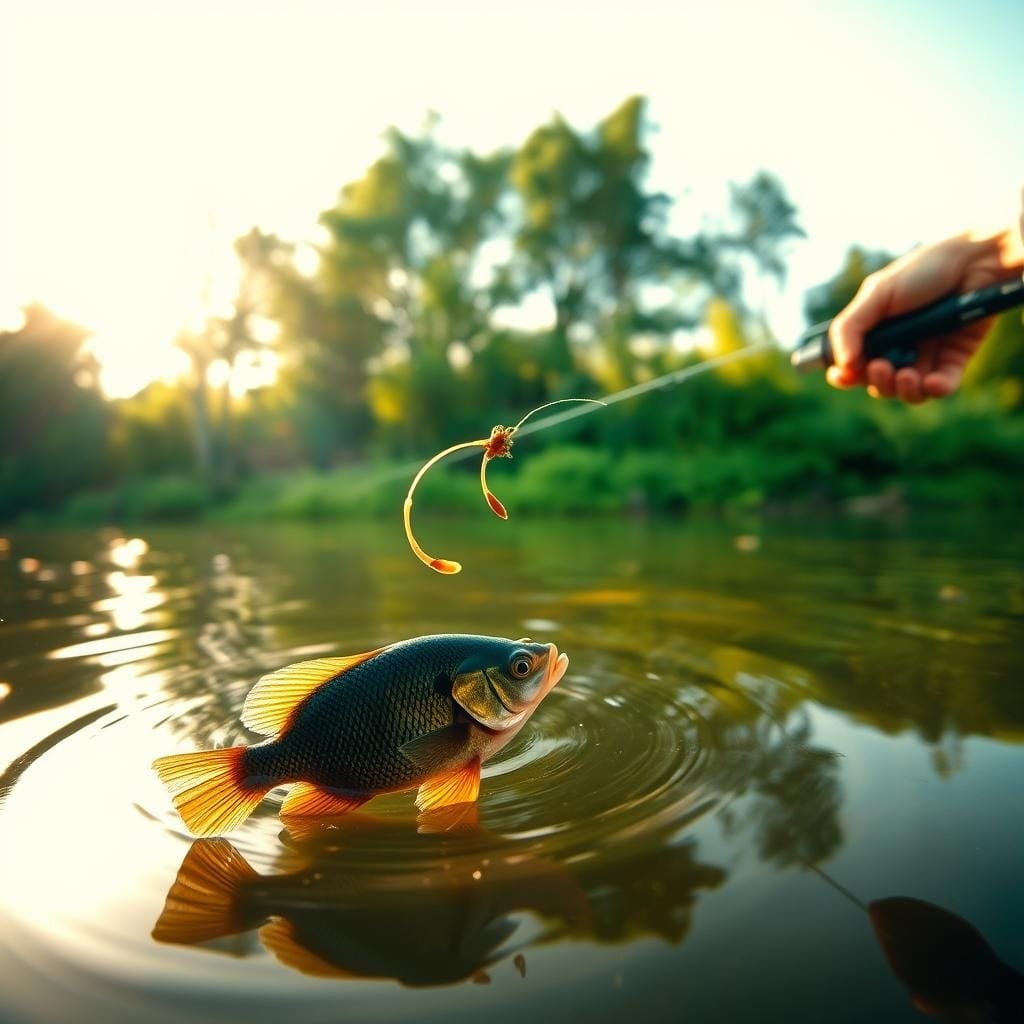
Keep rigs simple and precise. A bluegill bobber rig works well when fish are shallow or suspended. Use compact jigs with steady cadences. Add scent when fish get picky.
Use an ultralight bluegill setup to cast light offerings without spooking pressured schools.
Bobber and jig combos for suspending over beds and deep schools
Run a jig under bobber panfish style to park baits right above beds or deep pods. Use a small pear-shaped float or ultra-thin slip bobber to fine-tune depth. Try double-bug stacks with tungsten heads like Starky Flies Gill Getters to reach giants fast.
Match with sizes 14–8 hooks and micro plastics such as Panfish Magnet or Trout Magnet. For dialed settings and float balance, see this quick guide on how to jig for bluegill. Keep only the tip of a weighted bobber showing to read light takes.
Slow roll, twitch-pause, and bottom-crawl retrieves
Use these bluegill retrieve tips to cover every mood. Slow roll grubs or a Beetle Spin just off bottom for roamers. When fish trail but won’t strike, twitch-pause tiny cranks or spoons like the Acme Phoebe and let the fall seal the deal.
When they hug bottom, crawl a compact tungsten jig to mimic scurrying forage. Short, underhand flips near piers, weed edges, and laydowns keep you in the strike zone and reduce spook.
Tipping plastics with waxies for tentative fish
For neutral fish, wax worm tipping bluegill tactics turn lookers into biters. Pin a wax worm, mealworm, or maggot on the hook shank of a micro plastic. Add a sliver of nightcrawler to a spoon for extra scent and hang time on the drop.
Keep the bobber steady, then nudge it with a one-inch pop to pulse scent and flash. If bites fade, downsize the jig and trim the plastic for a tighter profile.
Ultralight setups with 2–4 lb line for casting tiny offerings
An ultralight bluegill setup with a 6’–6’6″ spinning rod, soft tip, and 2–4 lb mono sends micro jigs farther and keeps tension tight. Use 1/16 oz heads and No. 6–8 hooks, or tungsten ice-style heads, to get down fast under wind-blown floats.
This approach pairs perfectly with a bluegill bobber rig in open pockets or deeper water. Keep leaders clean, knots neat, and drags light so thin line protects small hooks during the surge at boatside.
Smart Storage for Live Bait and Micro Tackle
Make your bluegill kit easy to carry. Use a micro jig box to keep tiny jigs and hard baits safe. Foam-slit cases, like the Gamakatsu G-Box 3600 Foam Slit, keep hooks sharp.
Pair a small terminal box with a few packs of plastics in a zippered pouch. This makes a great setup for any daypack.
Live bait stays fresh with the right care. Use breathable containers for worms and crickets. Keep them cool and shaded.
A cooler can cool down worms quickly. But, don’t seal it for too long to avoid low oxygen. Use cone holders or wire mesh cages for crickets. This keeps them from jumping out.
Keep messy items sealed. Store Berkley Crappie Nibbles and scents in leak-proof places. Have a small towel nearby to clean your hands.
With smart storage, you’ll travel light and fish well. Compact boxes and breathable containers make a big difference.