Chasing brookies is simple. This guide shows the best bait for them. It’s perfect for when fish hide in cool shade at dawn and dusk.
You’ll learn to match natural food. Choose rigs that keep bait in the strike zone. And, read the water without getting too caught up.
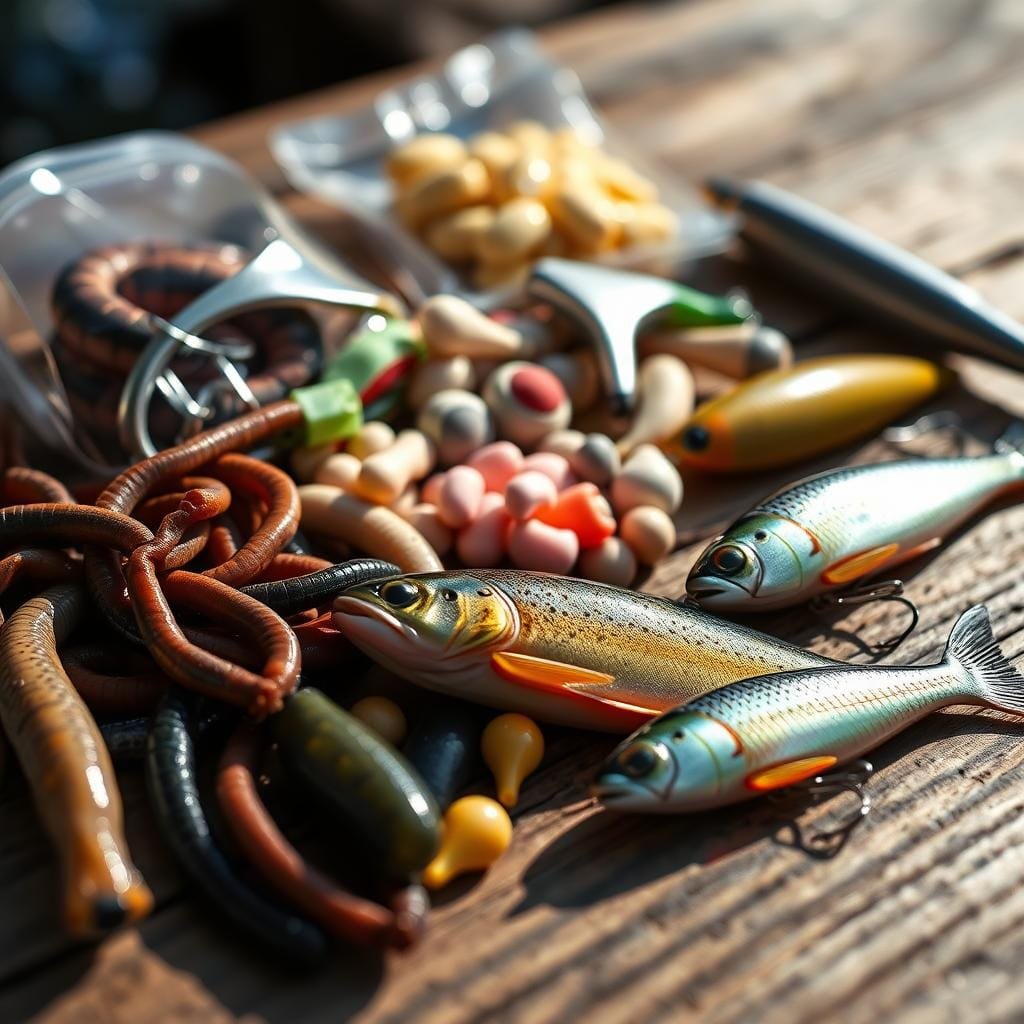
In clear creeks and small lakes, live bait is key. Nightcrawlers, earthworms, and minnows get fast bites. Mealworms and maggots are great for picky fish in runs and pools.
Crawfish, crickets, and grasshoppers work well in warm months. They attract fish near logs and rocks. For more on trout fishing baits, check out our brook trout bait guide.
Artificial bait is also effective. PowerBait nuggets and floating salmon eggs work well above snags. Synthetic worms and dough baits keep scent and color in cold water.
Remember to bring an ultralight mindset and quiet steps. Adjust your depth quickly. With the right bait, rigging, and water reading, you’ll catch more brookies this season.
Understanding Brook Trout Behavior and Feeding Windows
To catch brook trout, know when and where they eat. They follow food by current, cover, and light. Place your bait right to get bites quickly.
Dawn and dusk: prime times to target active feeders
The best times are dawn and dusk. Fish are more active then. They move in low light, so use natural baits in the right spots.
In lakes, fish points and drop-offs at dawn. In streams, use worms or eggs in seams for bites.
Cool, clean, oxygenated water and how it guides bait choice
Brook trout like cold, clear water. Choose baits like nightcrawlers or minnows. They look like what trout eat naturally.
On sunny days, use smaller baits. This keeps fish interested without scaring them off.
Shallows, shade, and structure: logs, rocks, and overhangs
Shade and structure are key. Fish hide behind rocks and logs. Use a float to get your bait close without getting snagged.
- Target dark pockets under overhanging branches.
- Drift along the soft side of current breaks.
- Pause baits in eddies behind midstream rocks.
Seasonal moves to deeper water during warm months
In warm weather, trout go deeper. Use a slip sinker to keep your bait just off the bottom. Floating baits work well too.
In lakes, start at the first breakline. In rivers, check deep pools and shaded areas for fish.
Live Baits That Consistently Produce Brookies
When fish get picky, keep it simple. Choose live bait for brook trout that mirrors what they already hunt. Match scent, size, and motion to the water you’re fishing, and let the current or a slow drift do the rest.
Nightcrawlers and earthworms: classic, high-scent offerings
Fresh, lively worms for trout draw fast interest in creeks and small ponds. Thread half a nightcrawler on a size 8–12 hook and leave the tail free to wiggle. Use a slip sinker for deeper runs or a small float to glide it along seams.
Earthworms broadcast scent that travels in cool, clear water. Keep them out of the sun and swap often so they stay firm and active.
Minnows and live baitfish where legal
Fatheads and shiners shine when brookies chase small prey. Rig minnows for trout with a light split shot in current or a slip sinker for drop-offs. Free-line near rock edges so the bait can dart and pause naturally.
Check state rules before using live baitfish. In places that allow them, keep them crisp and moving with fresh, cool water.
Mudeyes, maggots, and mealworms in streams
A mudeye under a float, set a foot above weeds, looks like easy protein. Its kicky swim invites quick takes in clear pools.
For selective fish, maggots for trout or a single mealworm on a fine-wire hook drift cleanly. Use minimal weight so the bait rides with the current, not against it.
Crawfish, crickets, grasshoppers, and beetles in warmer months
Big brookies pounce on crawfish bait trout sliding along stones. Pin the hook just behind the head and let it walk the bottom with short pauses.
On sunny afternoons, cast tight to bankside grass and let crickets, grasshoppers for trout, or beetles drift under overhangs. A small float keeps them in the strike zone without snagging brush.
- Water temp cues: cold flows favor mealworms and maggots; warming trends push bites to crawfish and terrestrials.
- Rig choice: slip sinkers for depth, tiny floats for cover, and light leaders to keep baits moving true.
- Refresh often: lively minnows for trout and crisp worms outfish tired baits every time.
Artificial Trout Baits That Win on Stocked and Wild Fish
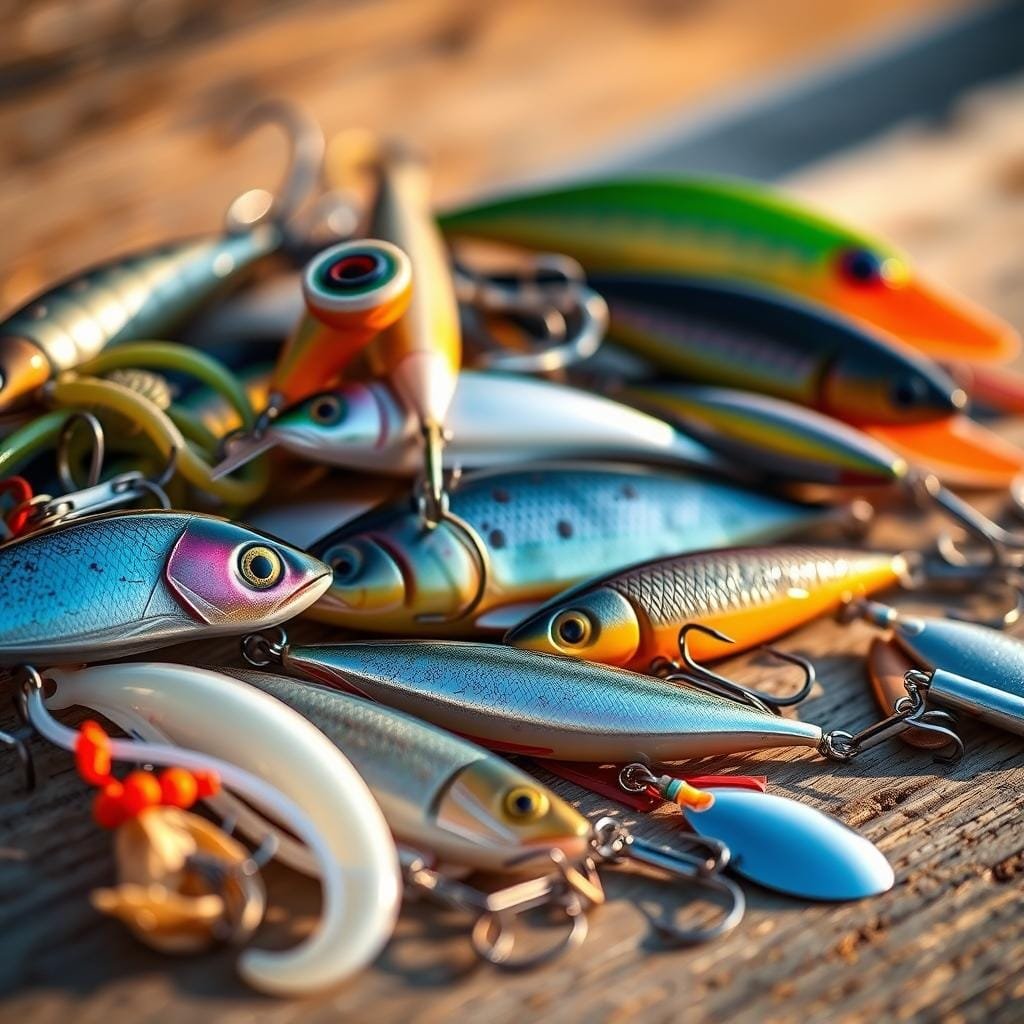
Smart anglers use scent, color, and buoyancy to catch brookies. Stocked fish smell pellets, while wild fish see shape and drift. Use buoyant baits with light leaders and natural flows for confident bites.
PowerBait nuggets and floating salmon eggs in proven colors
PowerBait trout nuggets are great for fish that remember hatchery feed. Colors like chartreuse, orange, and rainbow glitter work well in murky water. Natural corn or cheese tones are good in clear creeks.
Floating salmon eggs stand out in current and sit above moss. Use a single egg on a size 12 hook with a 2- to 4-pound fluorocarbon leader. This setup works well in pools and lake inlets.
Artificial salmon eggs and synthetic worms
Artificial salmon eggs are good when bait rules are tight or eggs are scarce. They can handle many casts and look real when stacked.
Synthetic worms are great for trout. Rig them wacky on a size 10 or nose-hook on a micro jig. Short hops near gravel seams work well without shredding like live crawlers.
Moldable dough baits and when buoyancy matters
Trout dough bait lets you adjust size and lift. Make a pea-size ball and test it in the shallows. It should float just above rock and grass. Add scent only if the flow is fast or the water is stained.
Use a slip sinker to keep the bait high. In steady current, a three-way rig works well. It keeps the bait ticking just over the bottom without snagging.
Marshmallows as a surprising, buoyant option
Small, bright marshmallows add lift and visibility. Run one alone to float over weeds or pair with a single egg. This raises the hook into the strike zone.
Choose white for clear lakes and pink or yellow for stained rivers. Keep hook gaps open so the foam compresses on the bite.
| Bait Type | Best Use Case | Rigging Tip | Water Clarity | Key Advantage |
|---|---|---|---|---|
| PowerBait trout nuggets | Stocked ponds and pressured lakes | Pea-size ball on size 12 treble; slip sinker | Stained to moderate | Strong scent, easy buoyancy control |
| Floating salmon eggs | Creek pools and lake inlets | Single egg on size 12 single hook; 2–4 lb fluoro | Clear to moderate | Natural hover above moss and rocks |
| Artificial salmon eggs | Areas with bait restrictions | Thread 2–3 for a lifelike cluster | Clear | Durable and consistent size |
| Synthetic worms trout | Seams, eddies, and undercut banks | Nose-hook or 1/32 oz micro jig | Clear to stained | Reusable, precise depth control |
| Trout dough bait | Weedy flats and gentle shelves | Test float near shore; adjust size | Stained | Moldable to match forage and lift |
| Marshmallows for trout | Snaggy bottoms and weed beds | Single marshmallow or with an egg | Clear to stained | High visibility and lift without extra weight |
best bait for brook trout
Anglers say natural baits are key for brook trout. Nightcrawlers and earthworms work well in low light and after rain. Minnows are great in lakes, if it’s legal.
In clear streams, mudeye, maggots, and mealworms are winners. They move quietly and smell right. For stocked fish, Berkley PowerBait nuggets and floating salmon eggs are good. Artificial salmon eggs also work well.
Moldable dough baits are good when trout are near the bottom but eat in the middle. In warm months, crawfish and terrestrials like crickets and grasshoppers are good too.
For the best bait, think about the season and water. In cold water, small baits like maggots and mealworms are best. Lakes are good for minnows all year.
When it’s sunny and the water is calm, try crawfish patterns and live terrestrials. They’re great for catching brook trout.
When fishing gets tough, use proven lures. Rapala Countdown and Daiwa Double Clutch are good for edges. Spinners like Blue Fox Vibrax and Mepps Aglia work well in riffles.
For covering a lot of water, try a Little Cleo slow-rolled in the wind. It’s a top choice on tough days.
- Low light: worms or eggs for fast confidence bites.
- Clear streams: mudeye, maggots, or mealworms for wary fish.
- Lakes: PowerBait or eggs on a slip rig; minnows where legal.
- Warm months: crawfish and terrestrials around rocks and shade.
- Windy, deep water: Little Cleo for steady, wide coverage.
Here’s a quick list of trout baits that really work.
| Situation | Primary Choice | Backup Option | Why It Works |
|---|---|---|---|
| Early/late, stained water | Nightcrawlers/Earthworms | Floating salmon eggs | High scent, easy profile that holds in current |
| Clear streams, cold temps | Maggots/Mealworms | Mudeye | Small, subtle baits match tiny aquatic prey |
| Lakes, year‑round (legal) | Minnows | PowerBait nuggets | Natural forage or buoyant dough to sit in strike zone |
| Warm months, rocky banks | Crawfish | Grasshoppers/Crickets | Seasonal food sources trigger aggressive feeds |
| Windy points, deeper basins | Little Cleo spoon | Rapala Countdown | Long casts, controlled depth, strong flash |
Match your bait to the water, season, and pressure. The best bait for brook trout is often what they already eat. This makes every pick in this list work well.
Rigging Essentials for Natural Presentations
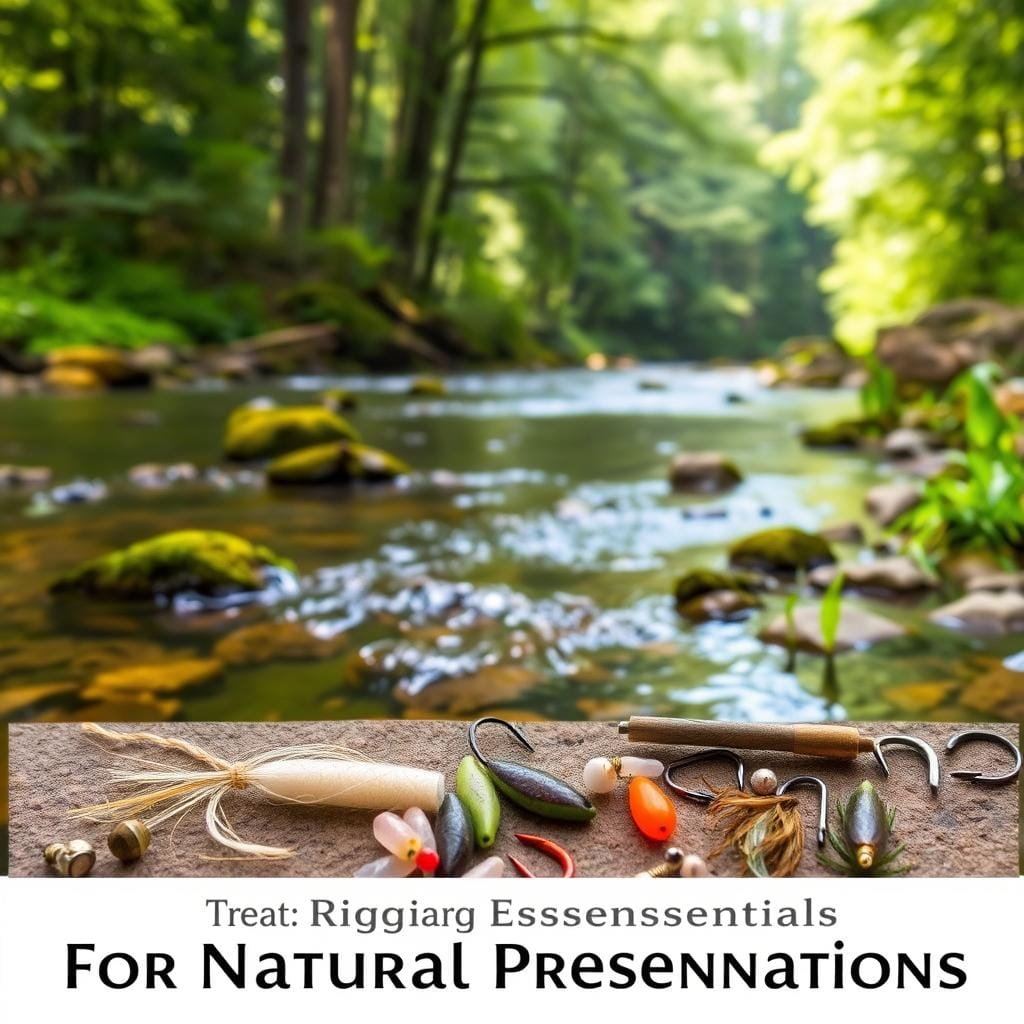
Natural drift beats brute force. Keep your trout rigs simple, balanced, and quiet. This way, bait moves like the real thing. Use light weights, stealthy leaders, and hooks that match your bait.
Slip sinker/Carolina rig is great for brook trout near the bottom. Use a sliding sinker above a swivel, then add a short leader and bait. This rig lets worms, minnows, or eggs move just enough to get a bite.
Float rigs keep baits above snags and weed tops. Use a stop to suspend a mudeye or worm over logs and grass. In ponds and slow pools, a thin pencil float tracks current seams and signals light takes fast.
Drift and three-way rigs excel in moving water. Clip a bank sinker to one arm of a three-way swivel and run your bait on the other. This setup follows the flow, reduces twist, and rides clean. Use a dropper sinker if you want the bait higher off the rocks, for buoyant eggs or dough.
Fine-tune each setup to the spot. Adjust trout leader size for clarity and abrasion—try 4–6 lb fluorocarbon in clear streams, bump to 6–8 lb around timber. Pick trout hook size to fit the bait: small for maggots or salmon eggs, medium for PowerBait, and larger for nightcrawlers. Add weight only until you tick bottom or hold depth; too much kills the drift.
- Slip sinker rig trout: 1/8–1/4 oz in lakes; go lighter in shallow creeks.
- Float rig trout: set depth to hover 6–18 inches above cover.
- Three-way rig trout: bank sinker on a short dropper; leader 18–36 inches for a natural glide.
- Trout leader size and trout hook size: match water clarity, bait type, and fish pressure.
Lure Alternatives When Bait Bites Slow Down
When brookies ignore live bait, try smart trout lures. Cast close to where water moves fast. Start with a slow roll, then add short pauses and twitches until fish bite.
Hardbodies and minnows: Rapala Countdown, Daiwa Double Clutch
The Rapala Countdown trout lure dives fast and stays in the strike zone. The Daiwa Double Clutch trout model works well in fast water. Try Duo Spearhead Ryuki, Jackson Trout Tune, and Rapala X-Rap for different depths.
Cast short upstream and follow the lure. A medium retrieve with a one-count pause can make fish bite.
Spinners that call fish: Blue Fox Vibrax, Mepps, Celta
The Blue Fox Vibrax trout and Mepps spinner add vibration and flash. Celta and Savage Gear Rotex keep the blade moving fast. Use size 0–2 in creeks and 3 in bigger water.
Cast across, let it sink a bit, then sweep. If fish miss, add a two-second drop to catch them.
Soft plastics: grubs, slim minnows, and nymphs
Light jig heads make trout soft plastics look real. Try Z-Man GrubZ, Slim SwimZ, and Berkley PowerBait Grub. Savage Gear Slim Minnows and Gulp 3-inch Minnows move quietly through water.
Choose the right head weight for the water. Hop, glide, and dead-drift to mimic natural bait.
Surface strikes: bent minnows, hoppers, and cicadas
In low light, the OSP Bent Minnow draws big strikes. On windy days, use small hoppers and cicadas to imitate blown terrestrials.
Work a slow walk with long pauses near logs and rocks. If fish swirl but miss, shorten pauses and add a gentle twitch.
| Lure Family | Standout Models | Best Use Case | Retrieve Tips | Key Benefit |
|---|---|---|---|---|
| Hardbodies/Minnows | Rapala Countdown trout; Daiwa Double Clutch trout; Duo Spearhead Ryuki; Rapala X-Rap | Working ledges, seams, and mid-depth pockets | Slow to medium with 1–2 second pauses; add twitches near cover | Precise depth control and consistent tracking |
| Spinners | Blue Fox Vibrax trout; Mepps trout spinner; Celta; Savage Gear Rotex | Dirty water, windy days, or when fish need a cue | Cast across, let sink briefly, steady sweep; inject brief drops | Strong vibration and flash to pull fish from distance |
| Soft Plastics | trout soft plastics: Z-Man GrubZ, Slim SwimZ; Berkley PowerBait Grub; Savage Gear Slim Minnows | Clear, pressured water and slow pools | Light jig heads 1/20–1/6 oz; hop, glide, or dead-drift | Natural profile that fools wary trout |
| Topwater/Surface | OSP Bent Minnow; small hoppers; cicada imitations | Dawn, dusk, and terrestrial falls near banks | Slow walk with pauses; subtle twitches on the spot | Visual takes and aggressive reactions from sight-feeders |
Metal Spoons That Trigger Brook Trout
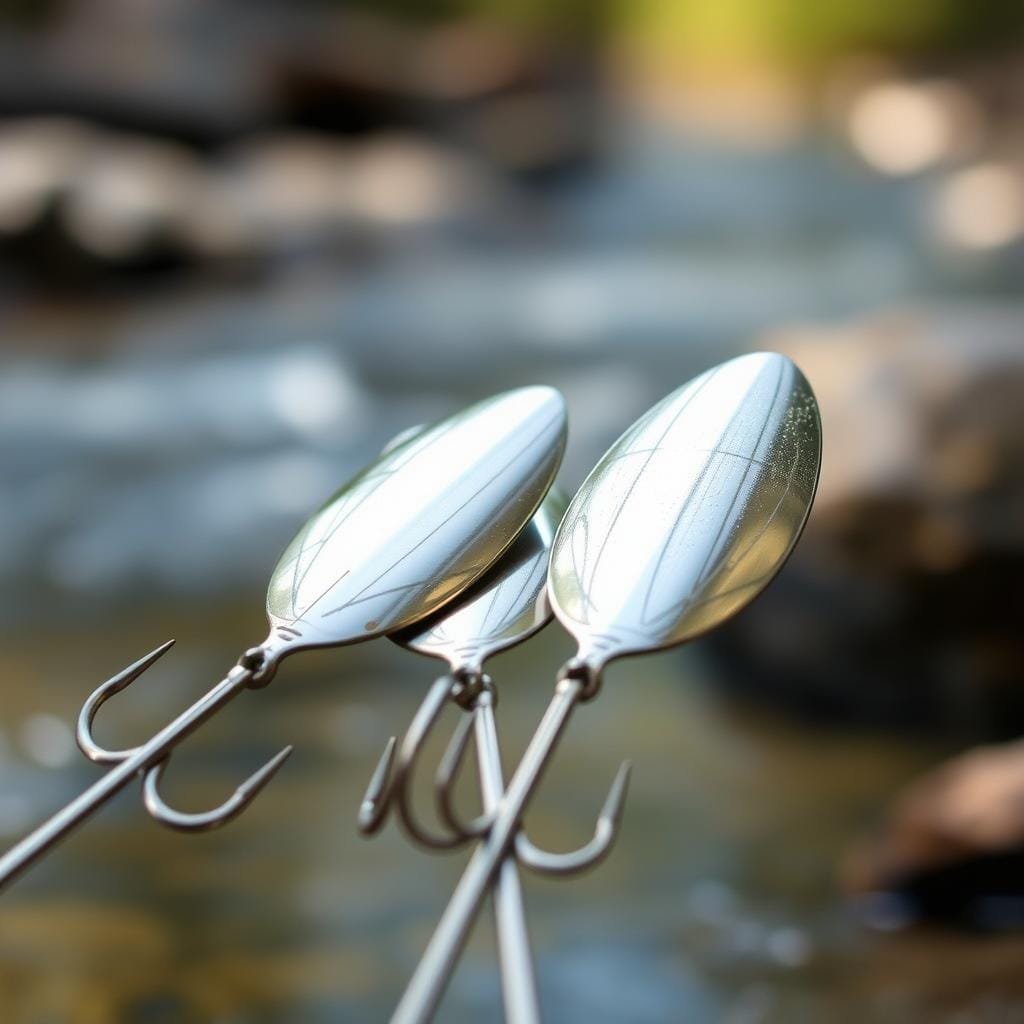
Trout spoons are great for covering water when brookies roam. Use them in points, drop-offs, and wind lanes. Move the lure with a steady rhythm.
Let it wobble, then pause. This pause can make the trout bite.
Long casts and slow rolls in lakes with spoons
Cast your spoon far across the cove. This helps reach fish that are far away. Count down the spoon, then roll it slowly near weeds or rocks.
Make it kick and flash by adding brief lifts. Then, drop it back down on a tight line.
In deeper areas, change your retrieve speed. Roll it slowly over marks, then drop it fast. This imitates a stunned baitfish.
Little Cleo classics and Diamond Series for flash
The Little Cleo looks like a wounded baitfish. It comes in sizes from 1/16 to 1 1/4 oz. It has colors that work well in any lake.
Cast it far and let it hit the mid-depths. The thump it makes can attract trout.
The Diamond Series Cleo has a bright finish. Sizes range from 1/8 to 3/4 oz. It’s good for clear streams and murky lakes.
Rotate the spoons to match the light and forage. This helps attract trout.
Glow and super-glow options for low light
Use a glow spoon trout in low light. The Glo and Super-Glow finishes stay visible. This is good at dawn, dusk, or under clouds.
Choose weights from 1/4 to 3/4 oz. This helps it stay at the right depth. Cast it far and retrieve slowly. Let it pulse and flutter to attract bites.
Match the Hatch: Choosing Bait by Season and Water Type
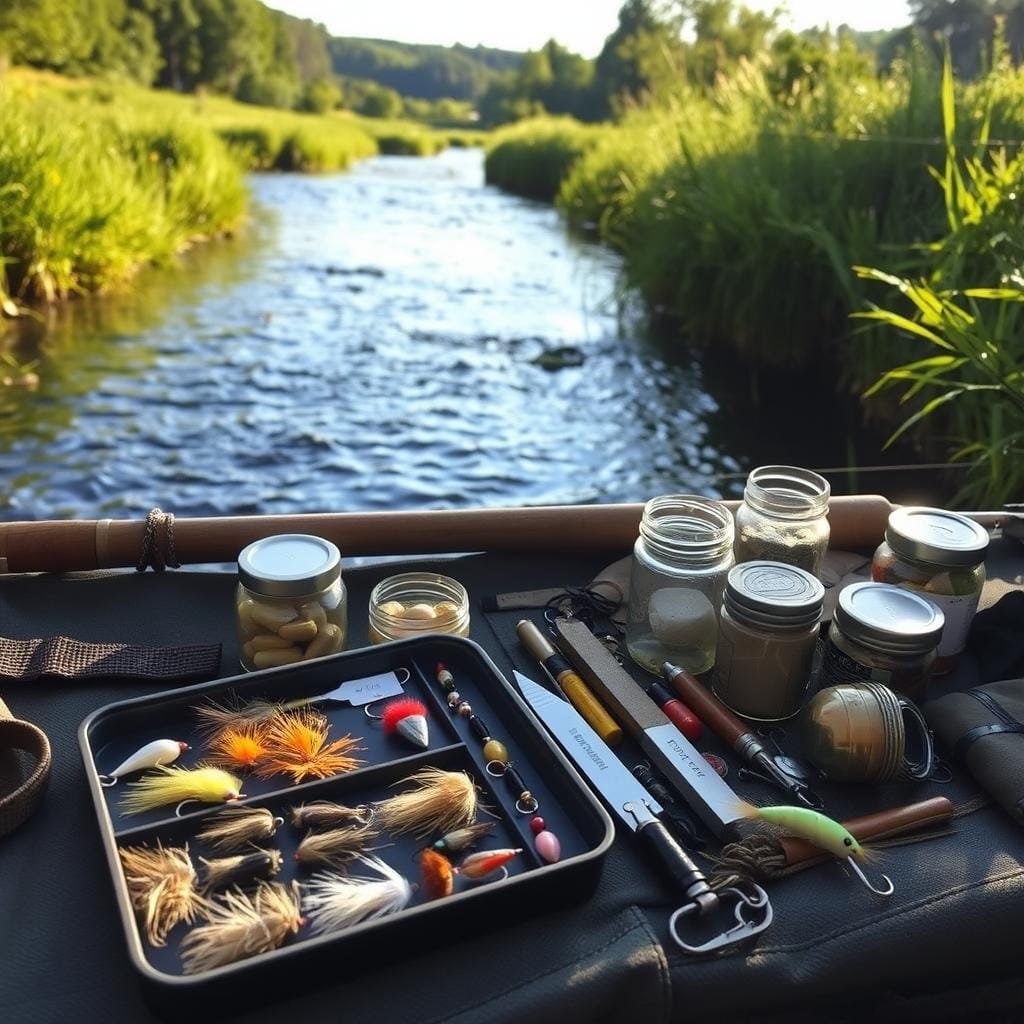
To catch trout in cold water, use small baits. Maggots, mealworms, and tiny nymphs look like natural food. They are great for cold water.
When fish are slow, try nightcrawlers drifted slowly. For quick info on insects, check this guide to matching the hatch.
In warmer days, use summer baits that match what’s around. Soft-shell patterns and small crayfish jigs are good. Terrestrials like crickets and grasshoppers work well near banks.
In moving water, choose baits that move with the river. Use drift rigs with worms or eggs. A short rod helps cast under branches.
For lakes, use baits that float. PowerBait and floating eggs work well. Live minnows are good where allowed.
In low light, use baits that are easy to see and smell. Worms and salmon eggs are good. Spoons with glow finishes work at dawn and dusk.
Keep your bait at the right depth. In warm weather, use longer leaders. A float helps keep bait at the right level.
Here’s a simple guide to match bait, rig, and timing.
| Condition | Primary Forage Match | Best Bait Type | Rigging Tip | Why It Works |
|---|---|---|---|---|
| Early season, cold water | Midges, mayfly nymphs | Small maggots, mealworms, subtle worms | Light drift with split shot | Cold water trout bait that imitates tiny, slow prey |
| Summer afternoons | Terrestrials, crawfish | Crickets, hoppers, beetles, crayfish patterns | Float rigs near banks; pause often | Summer trout bait targets edge-feeding fish |
| Fast pocket water | Eggs, worms swept in | Salmon eggs, nightcrawler pieces | Three to five split shot, short leader | Stream trout bait that tracks the current speed |
| Lakes at dusk | Stock pellets, drifting invertebrates | PowerBait, floating eggs, marshmallows | Slip sinker, 18–36 inch leader | Lake trout bait hovers above weeds for visibility |
| Warm spell, deeper fish | Baitfish, crawfish | Minnows (where legal), crayfish | Three-way rig to suspend just off bottom | Keeps seasonal trout bait in the strike zone longer |
Keep an eye on details like hook size and leader length. Small changes can help catch trout without scaring them away.
Stealth, Scent, and Depth Control Tips
Brook trout don’t like sloppy moves. Move quietly, pause a lot, and cast short. Use a fluorocarbon leader to hide your line and stay strong.
Clear water makes fish very careful. Wear colors that don’t stand out, hide behind rocks, and hold your rod low. On bright days, use longer leaders and smaller weights to look natural.
Quiet approaches, light line, and fluorocarbon leaders
Wade upstream to keep the water clear. Use 4–6 lb mono and a 4–8 lb fluorocarbon leader. This makes your line almost invisible.
Pinch split shot carefully so your bait falls softly. If the current gets too fast, add one more small shot and check again.
Check your knots and trim tags tightly. Any noise or shine can scare fish. Use smooth hooksets to avoid loud sounds.
When to add scent attractants to live and artificial baits
Use fresh bait. Change out old worms or tired minnows quickly. If fishing slows down, add a little trout scent to your bait. This can help attract fish without overpowering the water’s scent.
In cloudy water or at dusk, add scent with something that stands out. Keep the first drift clean, then add scent on the second cast if needed.
Fine-tuning bait depth with floats and sliding sinkers
Changing the bait depth can change how often fish bite. Use a float to control the depth of your bait. This lets you fish near rocks or logs without snagging.
Adjust the bait depth as the water temperature changes. In very clear water, use longer leaders and lighter weights. For more tips, see this quick guide on how to catch trout.
| Scenario | Rig and Tackle | Key Adjustment | Why It Works |
|---|---|---|---|
| Gin-clear pools at midday | 4–6 lb mono mainline, 6–8 lb fluorocarbon leader trout, size 8–12 single hook | Lengthen leader to 5–6 ft; reduce split shot size | Maximizes trout stealth and keeps the bait drifting naturally |
| Shade lines over cobble | Slip float with stop; small worm or mudeye | Adjust float depth trout in 6–12 inch increments | Holds bait just above cover where fish stage to ambush |
| Tailouts with moderate current | Slip sinker/Carolina rig with small egg sinker | Set leader 18–30 inches for bait depth control | Anchors near bottom while letting bait pulse in the flow |
| Low-light or stained water | Artificial egg or dough plus a subtle trout scent attractant | Refresh scent every 10–15 minutes | Boosts the scent cone and helps fish track the offer |
| Fast pocket water | Short float rig, compact hook, micro split shot | Shorten leader to 18–24 inches; raise float stop | Prevents snagging and keeps the bait in the strike zone |
Simple Gear That Makes a Big Difference
The right tools make small streams easy. Keep your gear light, balanced, and tuned to the water. A good trout spinning combo helps you cast well, fight smart, and protect light leaders.
Ultralight spinning setups for streams and shorelines
Choose an ultralight trout rod in a 1–3 kg or 2–4 kg class. A 7-foot rod works well with a 1000–2500 size reel from Shimano, Daiwa, or Abu Garcia. Use 6–10 lb braid and add a fluorocarbon leader for stealth.
In tight creeks, a 5’6″ rod improves accuracy under overhangs. Match rod lure ratings to your plan; go slightly heavier if you’re throwing spoons near 1/2 ounce to protect the tip and reach distance.
Bait rods with sensitive tips for bite detection
For soaking natural baits, a bait rod for trout around 7 feet with a soft “nibble” tip shines. Fiberglass models with full EVA handles sit steady in a holder and show shy pickups.
Pair that setup with a smooth 2500 reel and a slow, even drag. This keeps small hooks pinned without tearing free when a brookie surges close to the net.
Braid-to-fluorocarbon leaders and jig head weights
Run braid to fluoro trout for the best mix of feel and invisibility. Use a compact knot like the FG or Alberto to pass guides cleanly. Lengthen the leader in clear water and shorten it in stained flows.
When fishing soft plastics, tune trout jig head weight to depth and current. Pick 1/20 to 1/6 oz in creeks and step up in heavier flow. Keep the fall natural so the bait tracks with the seam, not below it.
| Setup | Specs | Best Use | Notes |
|---|---|---|---|
| Ultralight trout rod + 1000–2500 reel | 7′ | 1–3 kg or 2–4 kg | 6–10 lb braid | Streams, shorelines, mixed lures | Versatile trout spinning combo; add 4–8 lb fluoro leader |
| Short creek rod | 5’6″ | fast tip | light guides | Tight banks, roll casts, under branches | Pinpoint casting; protects small trebles and singles |
| Bait rod for trout | 7′ | 2–4 kg | fiberglass, EVA handle | Worms, eggs, live bait in holders | Sensitive nibble tip shows light takes |
| Braid to fluoro trout | 6–10 lb braid + 4–8 lb fluoro leader | Clear water, spooky fish | Use FG or Alberto knot; lengthen leader in gin-clear creeks |
| Jig head pairing | 1/20–1/6 oz trout jig head weight | Soft plastics, nymphs, slim minnows | Match flow and depth; maintain a slow, level swim |
| Spoon-ready outfit | Longer 7’–7’6″ | heavier tip | Long casts to lake points, light trolling | Protects the tip when casting 10–14 g metal |
Brook Trout Hotspots and How to Approach Them
Start with basic rules for finding brook trout: look for cool, clean water with shade. Find submerged rocks, logs, and trees that hide fish. In the morning or evening, fish in the shallows when fish are active.
When it gets sunny, move to nearby structures. This way, you can quickly change your spot if needed.
On lakes, study the structure like a bass fisherman studies a map. Fish weedlines, drop-offs, and points. Use spoons to cover water and then switch to rigs with PowerBait or eggs.
For bank fishing, try a lively minnow on points and windy shores. This can be very effective.
In streams and rivers, use precise tactics. Drift eggs, worms, or maggots through key spots. Use short rods for casting under branches.
At dawn and dusk, use glow spoons and high-scent baits. But be quiet and careful with your casts.
Seasonal changes are important. In summer, fish deeper areas and cool inflows. Use buoyant baits to stay off the bottom.
Along rocky and grassy edges, try crawfish, hoppers, and beetles. Always check local fishing rules, including for live bait.