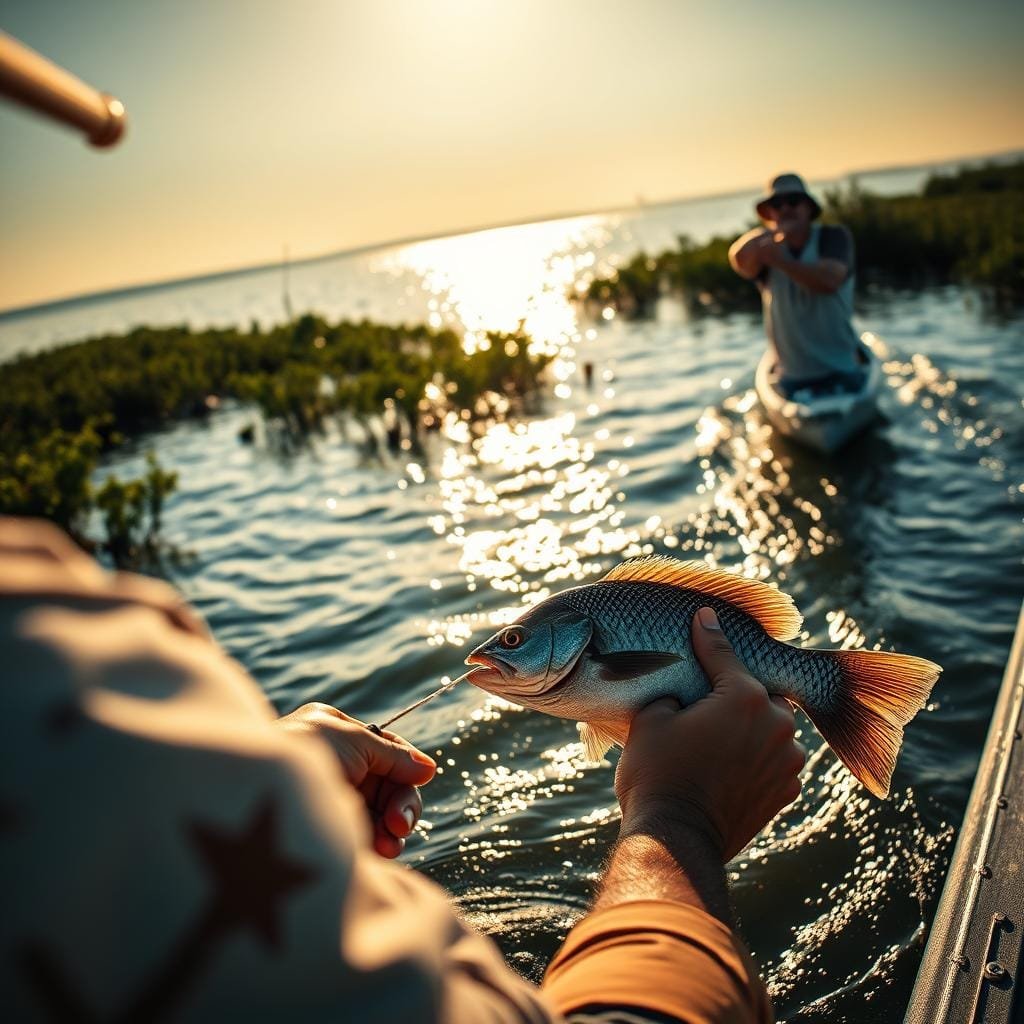
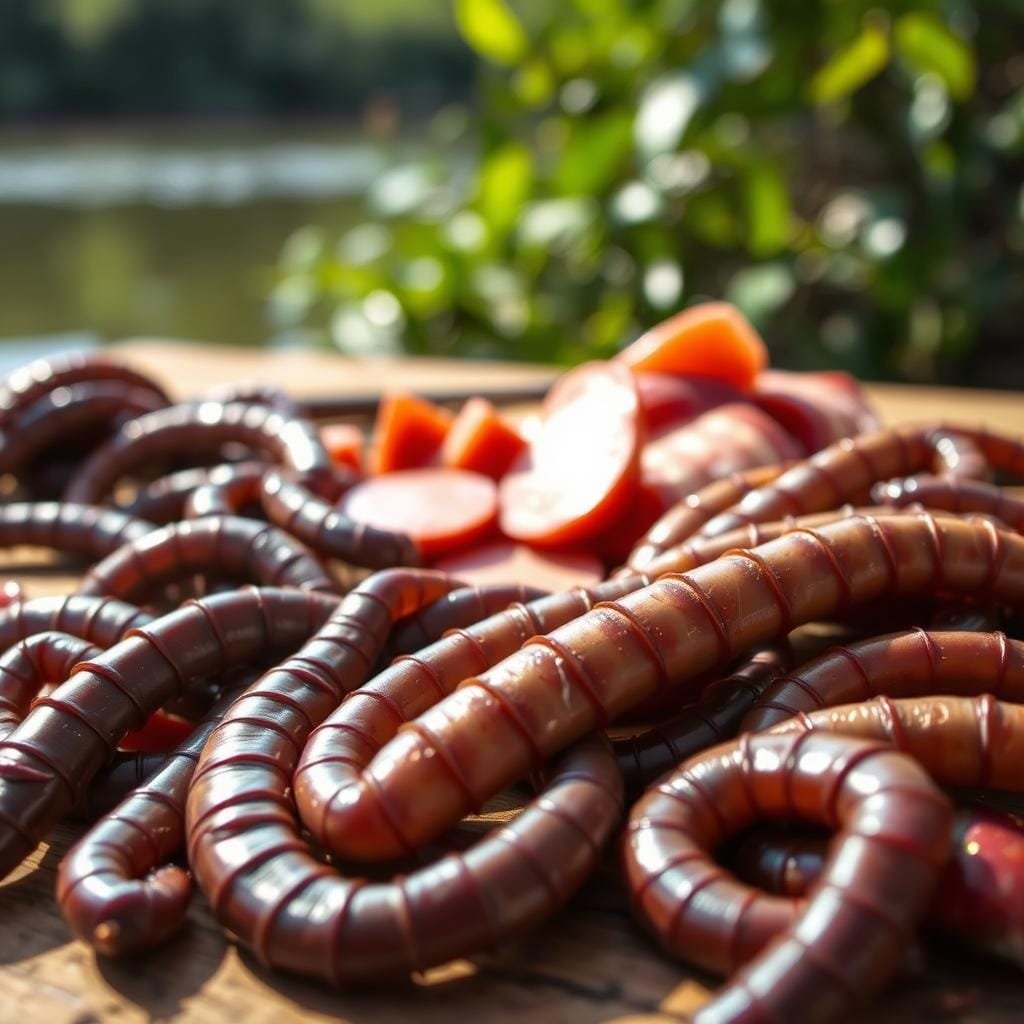
Want fast action and a full cooler? This guide starts with the best bait for bullhead catfish. It also covers simple rigs that make them eat. Bullheads are found all over the United States, are easy to catch, and taste great.
Start with nightcrawlers, leeches, minnows, and cutbait. Dough baits, chicken livers, hot dogs, cheese, bread, corn, and marshmallows also work. Try a few, match your hook size, and keep the scent fresh for bites.
Keep your setup simple. Use a slip sinker, a barrel swivel, a short leader, and a small bait hook. Use 6–10 lb mono or braid. Cast to deep holes, slow eddies, backwaters, and weedy edges. Night fishing often beats daylight, at dusk and dawn.
Handle fish with care. Bullheads have sharp spines. Use long-shank hooks and pliers for quick releases. Thinking about cooking bullhead later? Chill fillets fast, remove the skin cleanly, and enjoy light, slightly sweet meat that fries up crisp.
Stick with these tips, keep your gear tidy, and you’ll catch more fish faster. The next sections will go deeper into scent, seasonal moves, and exact presentations for every bite.
Understanding Bullhead Catfish: Species, Range, and Behavior
Anglers often think bullheads are just one fish. But, there are three main types. Knowing which one you’re after helps you pick the right spot and time. This knowledge makes catching them easier.
Black, Brown, and Yellow Bullheads: Key ID Traits
Start by looking at chin barbels and the anal fin. Yellow bullheads have pale, whitish to yellow barbels and 24–27 anal fin rays. Brown bullheads have mottled sides and gray chin barbels, with 21–24 rays.
Black bullheads are darker and more solid, with 15–21 rays and a lighter belly. Size also helps tell them apart. Black bullheads are usually the biggest. Brown bullheads are mid-sized with a patchy pattern. Yellow bullheads are smaller, with olive-yellow sides that brighten in clear water.
Where Bullheads Thrive Across the United States
Bullheads live in many places across the U.S. They like low oxygen and cloudy water. You can find them in ponds, slow rivers, backwaters, and city lakes.
But, they have different preferences. Black bullheads are the most adaptable, living in muddy rivers, swamps, and clear ponds. Brown bullheads like clearer lakes, streams, and weedy bays. Yellow bullheads prefer vegetation and cleaner, calm water.
| Species | Fast ID Clues | Typical Habitat | Anal Fin Rays | Relative Size |
|---|---|---|---|---|
| Black bullhead | Dark, solid sides; light belly | Muddy rivers, ponds, swamps, clear ponds | 15–21 | Largest of the trio |
| Brown bullhead | Mottled sides; gray chin barbels | Clearer lakes, streams, vegetated coves | 21–24 | Medium, stocky |
| Yellow bullhead | Pale/yellow chin barbels; olive-yellow sides | Calm, clearer water with dense vegetation | 24–27 | Smaller, sleek |
Nocturnal and Crepuscular Feeding Patterns
Bullheads are bottom-dwellers and are most active at night. They also feed at dawn and dusk. This makes them aggressive after sunset.
They start with light taps, known as “half biters.” Being patient is key. Wait for them to take the bait fully. Knowing their habits helps you catch them when they’re most active.
Why Scent Rules: How Bullheads Use Smell and Taste to Find Bait
Bullheads love smell more than sight, in murky water and at night. Their small eyes don’t matter much. They use their catfish barbels and skin to feel the bottom like a radar. That’s why using scents is better than shiny lures most of the time.
Barbels and Body-Wide Taste Buds
Those whiskers are not just for looks. They have lots of smell sensors. The whole skin of a bullhead has taste buds to check food. They can “taste” bait without biting and then follow the smell.
Use scented baits to catch catfish fast. Things like cut shad, sucker minnows, or chubs have a strong smell. Doughs and cheese blends also send out a strong smell. For more ideas, check out this guide on stinky bait and natural choices.
What “Stinky” Really Means for Catfish Baits
For catfish, stinky bait is good. Things with strong smells like sulfur, aged oils, or ripe dairy get their attention. Think of chicken livers, Limburger-style mixes, and even hot dogs with lots of salt, fat, and spice.
Fruits and soaps also work if they smell steady. Persimmons, mulberries, and pure bars like Ivory can attract fish. The goal is to keep a steady smell that meets their barbels and taste buds. If unsure, go for smell-based fishing and keep the scent going.
Basic Bullhead Rigging That Boosts Bite-to-Hookup Ratios
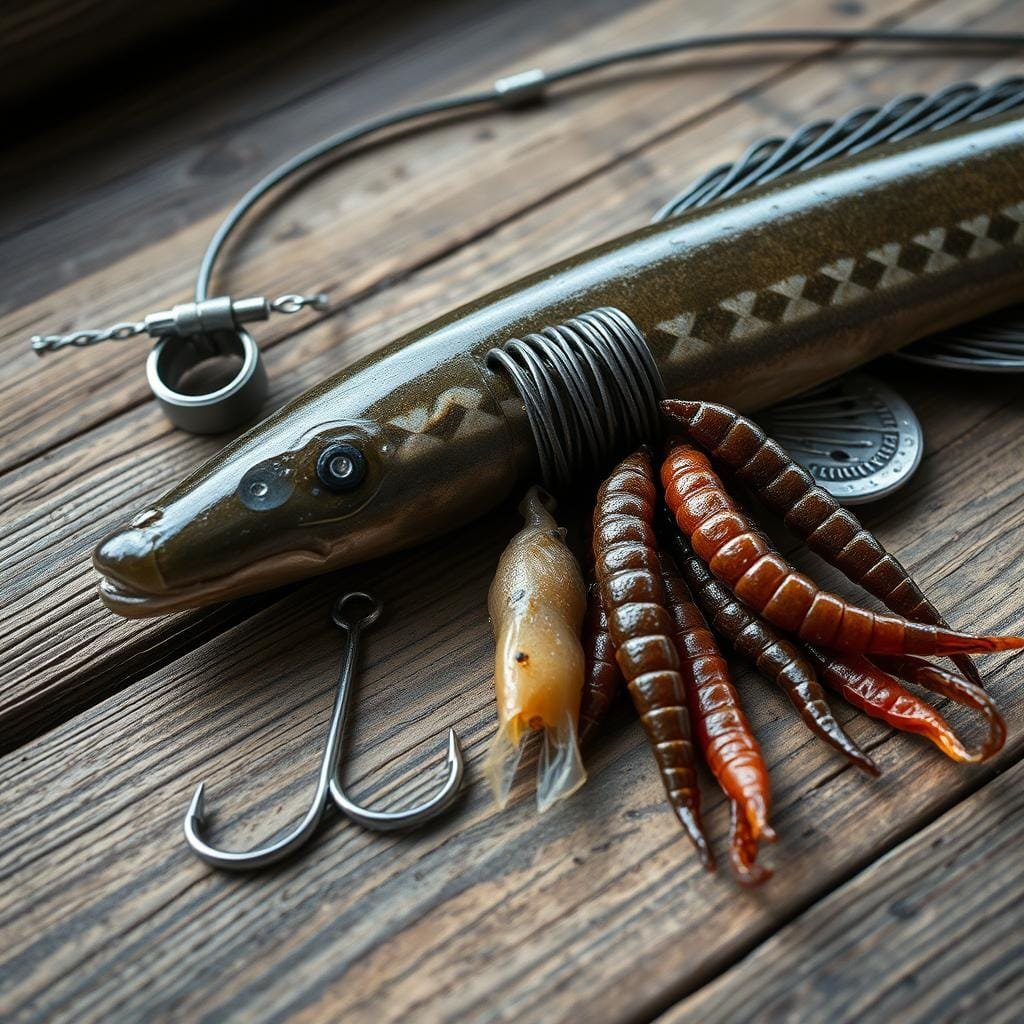
A simple bullhead rig lands more fish when each piece works with the next. Keep it streamlined, keep tension light, and let the fish take the bait before you drive steel. This approach builds cleaner bullhead hookups and fewer missed swings.
Slip Sinker to Barrel Swivel to Leader and Size 4 Bait Hook
Slide a 1/8–1/4 oz egg or casting weight on the main line, add a bead, then tie to a barrel swivel. Clip on 2–3 feet of leader and finish with a size 4 bait hook. This classic slip sinker rig lets a bullhead sample the bait without feeling the weight, which matters with “half-biters.”
For a quick swap, a free-sliding bell sinker to a snap swivel with a pre-snelled #8 Eagle Claw baitholder also scores. When weeds or current call for tweaks, study the parts and leader tips in this clear guide to catfish rigging and match them to your water.
Line Choices: 6–10 lb Mono or Braid
Go light but not flimsy. Six-pound mono casts bait well and keeps the slip sinker rig responsive. Step up to 8–10 lb when brush, rocks, or mixed species share the spot. If you favor braid, use a mono or fluoro leader to add a touch of give and abrasion resistance; the mono vs braid tradeoff is feel versus forgiveness.
Whichever you choose, retie after snags and check the knot at the barrel swivel. A clean knot protects the leader and keeps the rig sliding free.
Exposing the Hook Point for Hard-Mouthed Bullheads
Thread worms, minnows, or cutbait so the hook point stays proud. Bullheads clamp with a tough, bony outer jaw, and a hidden point dulls penetration. Keep the size 4 bait hook sharp, set with a firm sweep, and you’ll see more solid bullhead hookups.
To reduce deep-hooking, try a small jig tipped with bait and fish a tight line, or suspend a larger chunk under a float. Both pair well with a slip sinker rig nearby when you’re dialing depth and mood.
| Rig Element | Recommended Option | Why It Helps | Notes |
|---|---|---|---|
| Main Line | 6–10 lb mono or braid | Balance sensitivity and give | Mono vs braid: mono forgives; braid transmits light bites |
| Sinker | 1/8–1/4 oz egg or casting | Free slide encourages commits | Use lighter in ponds, heavier in current |
| Bead | Hard plastic | Protects knot from sinker | Improves smooth travel to the barrel swivel |
| Connection | Barrel swivel | Prevents twist, anchor for leader | Check knots often after snags |
| Leader | 24–36 in mono/fluoro | Natural bait drift and stealth | Shorten in heavy cover; lengthen on clean bottoms |
| Hook | Size 4 bait hook | Right gap for bullhead mouths | Keep the point fully exposed and razor sharp |
best bait for bullhead catfish
The best bait for bullhead catfish is something that smells good and stays on the hook. It should also match what fish like to eat. Bullheads eat both plants and animals, so you have many choices. For more info, check out this total guide to catching bullheads.
Top Natural Options: Nightcrawlers, Minnows, Leeches, Crickets
Start with natural baits that smell and move. A big nightcrawler or angle worm is great. Put half a worm on a size 4 hook and let it wiggle.
Live or dead minnows, leeches, and crickets also work well. In some places, a small panfish strip adds shine and oil. Bullheads find food by smell and taste.
Cutbait and Dough Baits: Strong Scent, Strong Results
For a strong scent, try cutbait. Pieces of shad, chub, or sucker smell good and stay on the hook. Small pieces help avoid short strikes.
Dough baits, like stink baits, are good when fish are moving. Make a small ball so it doesn’t fall off. Try different baits until you find the right one.
Grocery Store Winners: Chicken Livers, Hot Dogs, Cheese, Bread, Marshmallows
When you’re in a hurry, use convenience baits. Chicken liver bait smells great but needs a mesh or thread to stay on. Hot dog bait is easy to use and lasts long, and garlic makes it even better.
Cheese, white bread, and marshmallows are good for sweet and savory tastes. Keep a small mix in the cooler to change baits quickly.
- Nightcrawler bait: classic, lively, and easy to rig
- Cutbait for catfish: durable pieces with strong scent
- Dough bait catfish: consistent for scent-driven feeders
- Chicken liver bait and hot dog catfish bait: proven store options
- Marshmallow bait: floats a hook above muck and weeds
Live vs. Cut vs. Prepared Baits: When Each Shines
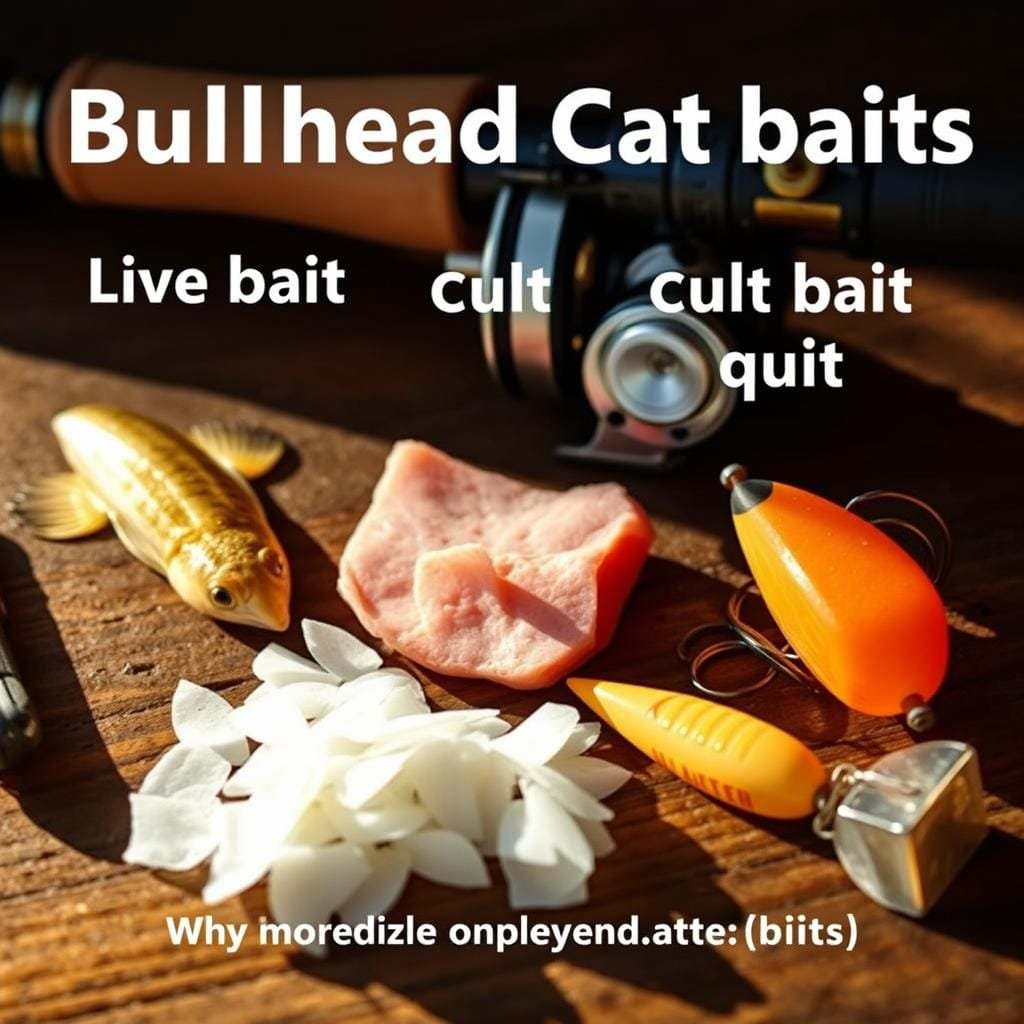
Think about movement, scent, and how long it lasts. This is key for bullhead baits. Live baits like nightcrawlers and minnows move and smell good. They work well under a float or on a light jig, attracting fish at dusk.
When the water moves fast or fish spread out, cut bait is better. Cut shad and suckers send out a strong smell. They also stick to hooks well, making them great for long casts.
For murky water, prepared baits like doughs and paste are best. They’re easy to use and don’t cost much. They’re perfect for fishing from the bank at night.
When you can’t find live bait, try grocery items. Chicken livers and hot dogs work well. Marshmallows or bread can make your bait float longer, helping it stay in the strike zone.
Choose the right rig for your bait. Slip sinkers work well for cut and prepared baits. Floats help with larger baits and show bites quickly. Switch baits as the day changes to keep catching fish.
| Bait Type | Best Conditions | Why It Works | Rig Pairing | Notes |
|---|---|---|---|---|
| Live (nightcrawlers, leeches, minnows) | Clear to lightly stained water, weed edges, evening feed | Natural motion plus scent triggers active fish | Float rig or light jig; larger hooks to limit deep-hooking | Strong choice in cutbait vs livebait debates when visibility is decent |
| Cutbait (shad, suckers, chubs) | Current seams, deep holes, scattered fish | Heavy scent plume pulls fish off bottom; holds on hook | Slip sinker to leader and size 4 bait hook | Leads many bullhead bait comparison tests in rivers |
| Prepared/Stink/Dough | Low visibility, post-rain stain, bank fishing at night | Concentrated odor disperses fast and wide | Slip sinker or fixed bottom rig with bait holder hook | Ideal when to use stink bait aligns with muddy or windy days |
| Grocery Options (livers, lunchmeat, hot dogs, cheese, bread, marshmallows) | Anytime live bait bullhead options are scarce | Easy access and varied texture/scent profiles | Bottom rig; add marshmallow for lift in soft muck | Budget-friendly prepared bait catfish backup for families |
Seasonal and Time-of-Day Tactics for More Bullheads
Match your fishing to the light, temperature, and depth of the water. Use a crepuscular fishing strategy. Choose bait that smells like blood. Change your spot as the seasons and sky change.
Dusk-to-Dawn Strategies
Bullhead fishing gets better at night. Arrive before it gets dark. Look for weedy edges or channel mouths.
Use headlamps and keep the drag light. Check your bait often. Scent attracts fish quickly.
For evening fishing, use bottom rigs and fresh bait. If bites are many, use a small float or jig. This helps avoid deep hooking.
Daytime Deep Spots vs. Nighttime Bank Bites
Daytime bullhead hide in holes and undercuts. They like places where it’s dark and the water is cool. At night, they move closer to the shore.
Look for them near cattails, timber, and culverts. The rule is “deeper by day, closer to shore at night”. This works in ponds, ditches, and lakes.
As the water warms up, fish move to shallower, weedy areas at night. In summer, these spots are best after dark. In spring, males guard spots near cover, but fish feed in low light too.
| Time Window | Best Location | Rig & Bait | Key Tip | Why It Works |
|---|---|---|---|---|
| Late Afternoon to Dusk | Weedlines, channel mouths, current breaks | Slip-sinker bottom rig with cutbait or nightcrawler | Cast before sunset and set rod holders | Starts the crepuscular fishing strategy as fish begin to roam |
| Night | Shallow banks, wood, culverts, riprap | Scent-heavy cutbait; add small float stop to lift hook | Use tight lines and headlamps for bite reads | Prime bullhead night fishing when scent disperses and visibility is low |
| Midday | Deep holes, undercuts, drop-offs | Slip-sinker or small jig tipped with bait | Slow down and soak baits longer | Daytime bullhead hold deeper where temps and light are steady |
| Seasonal Shift (Summer) | Warm, weedy backwaters after dark | Strong-scent cutbait or chicken liver on short leader | Refresh bait often in warm water | Seasonal bullhead patterns push fish shallow when oxygen and cover abound |
| Seasonal Shift (Spring) | Shallow cover near spawning areas | Worms, minnows, or small cutbait | Target low light and wind-blown banks | Evening catfish tactics align with pre- and post-spawn movement |
Finding Fish: Creeks, Backwaters, Ponds, and Weedy Edges
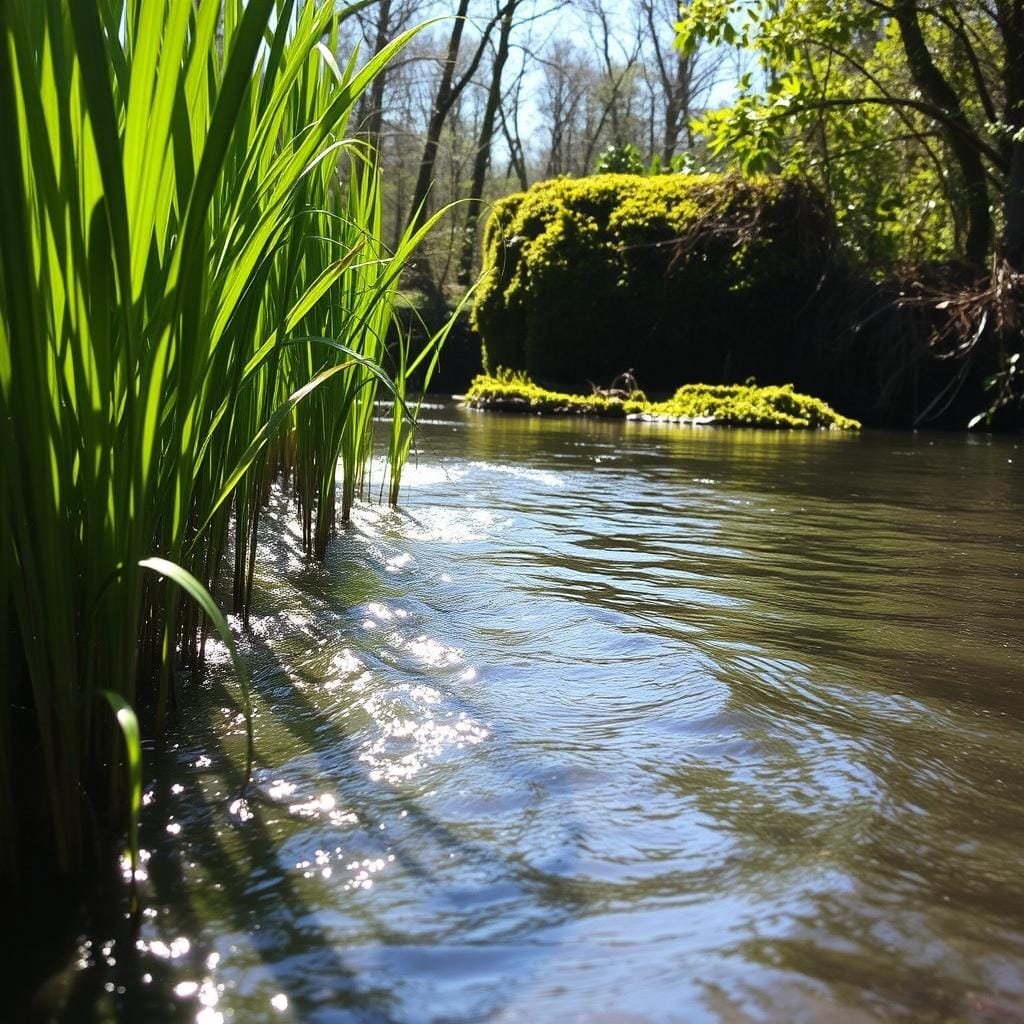
Look for bullheads in quiet places. Creeks, backwaters, and muddy ponds are good spots. Use a light touch and keep your line tight to feel their bites.
Deep Holes, Slow Eddies, and Vegetation Lines
Find bends in creeks where water slows down. These spots are great for catfish at night. Use a bottom bait during the day and move it closer to the bank at sunset.
In ponds, look where weeds meet open water. This is where bullheads like to hide. Different types of bullheads prefer different water conditions, making it easier to find them.
Small, Shallow, “Too Muddy” Waters That Secretly Hold Fish
Don’t ignore city ponds or small ditches. They’re full of food and warm, perfect for bullheads. Even shallow areas can have fish at dusk.
On windy days, use a bottom rig in shallow water. Cast downwind into murky water. Quiet spots are likely to have bullheads.
| Water Type | Best Spot | Time Window | Rig Tip | Why It Works |
|---|---|---|---|---|
| Small Creek | Outside-bend deep hole and downstream eddy | Midday in hole; dusk along edges | Slip sinker to leader; size 4 bait hook | Current gathers food; fish rest in soft flow |
| River Backwater | Slack pockets behind logs and cutbanks | Late afternoon through night | Short leader to anchor bait in place | Backwater catfish cruise calm water for easy meals |
| Pond | Weedline edge and inflow corner | Sunset to midnight | No bobber; tight line on bottom | Weedy edges fishing funnels bait and scent |
| Drainage Ditch | Culvert pool and shaded bends | Evening | Compact rig; minimal weight | Small water catfish sit in deeper pockets waiting on wash-in |
| Muddy Urban Pond | Downwind bank and shallow flats | Dusk and pre-dawn | Stout mono; exposed hook point | Muddy pond bullheads feed by smell; wind stacks forage |
Hook Styles and Sizes That Help You Land More Bullheads
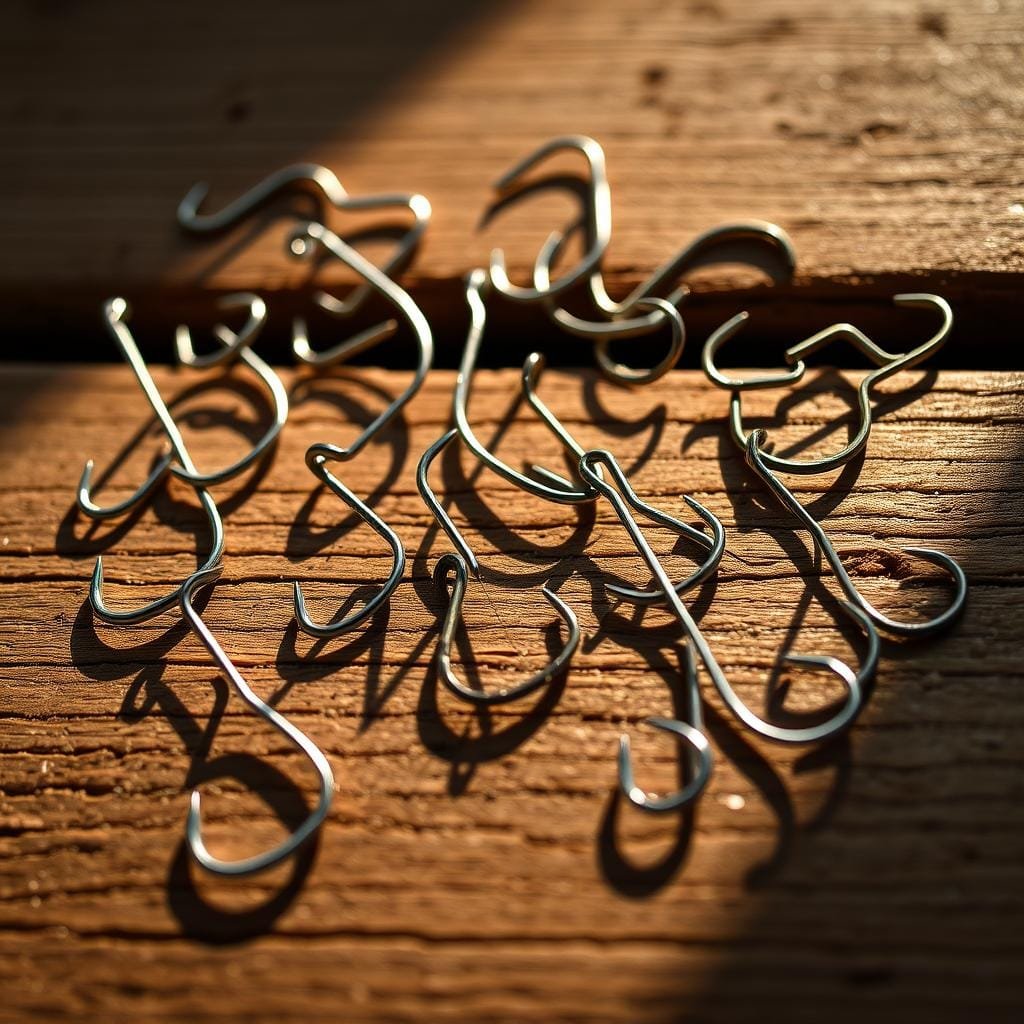
Choosing the right hooks is key for catching bullheads. A size 4 bait hook works well with slip-sinker rigs. Make sure the point is out so it can bite through tough mouths.
For fast bites, use a jig with worm or cutbait. This setup helps avoid deep hooks and keeps fish on the hook.
Pre-snelled #8 Eagle Claw baitholder hooks are great with nightcrawlers. They hold soft baits well in current. A Kahle hook is good for cutbait, making removal easy.
A circle hook is good for steady tension and fewer swallowed baits. Keep a tight line and let the rod load. For gulpers, try a long-shank hook for easier releases.
Hook size is important for penetration and bait control. Sizes 2 to 1/0 are good for chunk bait and big fish. For worms, #8 to 4 is better. Always check the point and keep the barb clear of bait.
Here’s a quick guide to match tactics with hardware.
| Hook Style | Typical Size | Best Use | Key Benefit | Notable Brands |
|---|---|---|---|---|
| Standard Bait Hook | #4 | Slip-sinker bottom rigs | Fast penetration with exposed point | Mustad, Eagle Claw |
| Baitholder Hook | #8–#4 | Worms and soft baits | Barbs keep bait from sliding | Eagle Claw, VMC |
| Kahle Hook | #2–1/0 | Cutbait under a float | Wide gap, easier unhooking | Gamakatsu, Mustad |
| Circle Hook | #2–1/0 | Live bait with tight lines | Corner-of-mouth hookups | Owner, Team Catfish |
| Long-Shank Hook | #2–1/0 | Chunk bait, gulp-prone fish | More reach for pliers, fewer deep hooks | Mustad, Eagle Claw |
| Jig Hook + Head | 1/16–1/8 oz | Worm or cutbait presentations | Reduces deep-hooking on aggressive takes | VMC, Northland |
Start with a #4 baitholder hook on bottom. Switch to a Kahle hook for float-cutbait. Keep a circle hook ready for tight lines. If deep hooks are a problem, try a long-shank hook or jig. Change hook sizes as bait changes and keep points sharp.
Bait Prep and Care: Keeping Live and Cutbait Fresh and Effective
Fresh bait catches more bullhead fish. Good care keeps worms and minnows alive. Smart cutbait makes scent bait better without falling off.
Keeping Worms and Minnows in Prime Shape
For worms, keep them cool and moist in bedding. Don’t let them drown. A cool bait cooler with ice keeps them lively.
Minnows need air and cool water. Use an aerator and change water when it gets cloudy. A cool Engel bait cooler keeps them fresh.
Purge live bullheads for bait to keep them clean. Feed them light, like corn or worms. Check the rules on live fish transport.
Cutbait Prep for Maximum Scent Dispersion
Choose oily bait like shad or sucker minnows. Cut 1–1.5 inch pieces for scent. Angle cuts help them stay on the hook.
For bottom rigs, use thick strips. For float rigs, use smaller cuts. Cutbait lasts longer and smells strong.
Keep cut bait cool in a cooler. Change pieces often. If bites slow, score the skin to refresh.
- Line and hooks: 6 lb mono with small, sharp hooks help quick sets on light takes.
- Wind or waves: Tight lines beat bobbers when fishing bottom for fast bite reads.
- Water changes: Swap a third of the water if it smells sour or looks cloudy.
| Item | Purpose | Pro Tip | When to Use |
|---|---|---|---|
| Engel bait aeration cooler (19 qt) | Portable livewell for minnows and small bullheads | Add a frozen bottle to boost oxygen retention in heat | Weekend trips and long drives |
| Minnow aerator | Maintains dissolved oxygen | Run continuously; keep spare batteries | All live minnow transport and dock fishing |
| Moist worm bedding | Temperature and humidity control | Keep cool; avoid standing water that drowns worms | Anytime nightcrawlers are on deck |
| Oily cutbait (shad, sucker, chub) | High-release scent dispersion bait | Angle-cut 1–1.5 inch strips for better hold and flow | Stained water and low-light bites |
| Small Kahle or bait hook | Secure hold with exposed point | Match strip size; keep the point proud | Float or bottom presentations |
Strike Detection and Hookset Tips for “Half-Biter” Bullheads
Bullheads peck first, then commit. To detect bites, use a slip-sinker rig with an exposed point. This lets fish move freely without feeling weight.
Focus on the rod tip and line angle. Let the bait do its job while you get ready for a clean hookset.
Let Them Run a Second—Then Set Hard
Half-biter catfish often mouth the bait and slide a bit before pausing. Give a brief beat to let the hook find the jaw corner. Then, set it firmly with a steady sweep.
If the fish drops the bait, wait. Many will come back. Keep your rod low and ready. Reset only when you feel a steady pull, not just taps.
Rod Holders, Tight Lines, and Bite Reads
Choose a strong rod holder, like Berkley or Scotty, or a forked stick if you’re light packing. Tight line fishing helps you read catfish bites better. Reel down to remove slack after the sinker hits bottom.
- For subtle pecks, lift an inch to feel weight, then sweep.
- With steady pulls, set hard and keep the rod loaded.
- Under a float, a larger bait aids bullhead bite detection and reduces deep-hooking.
At night, stand where your rod tip is lit by a headlamp or moonlight. Listen for tap-tap, short glide, then pull. Match this with a crisp hookset to catch half-biter catfish.
Handling, Safety, and Ethics: Spines, Barbs, and Smart Release
Handling bullheads means respecting their sharp points. A stressed dorsal spine fish can lock its fins. So, treat every catch like it can poke through your skin.
Wear light work gloves and keep the fish calm. Plan your move before touching it. This way, you support ethical catch and release and make the action smooth.
Safe Grip to Avoid Dorsal and Pectoral Spines
For safety, slide your palm behind the dorsal spine on top. Pin the fish gently, then place your thumb and fingers just behind the pectoral spines. This grip controls the fish without squeezing the belly.
Keep the head pointed away from you. Don’t rush the unhooking. If the fish thrashes, pause and reset your hold. A steady approach protects you and the bullhead.
Long-Shank Hooks and Pliers for Easier Unhooking
Use a long-shank hook to reach past the teeth pads and keep fingers clear. When a bullhead swallows, a long shank gives you leverage for a clean back-out. Many anglers pair sizes 2 to 1/0 with bait rigs for reliable hook sets.
Carry needle-nose pliers for unhooking and cut heavy line if needed. Quick tools shorten air time and help ethical catch and release. Check local rules on possession and transport so your gear and keeping choices stay legal.
- Gloves on; control the fish before unhooking.
- Long-shank hook for leverage and fewer deep sets.
- Use pliers for unhooking; clip the line on gut hooks.
- Follow limits and release extras to avoid waste.
From Water to Table: Cleaning and Cooking Bullheads That Taste Great
Don’t call bullheads “mudcats.” They have light, mild, and sweet meat. Start cleaning them right away and keep them cold. For muddy or weedy pond fish, soak them in salt and vinegar overnight. Rinse them well before cooking to keep flavors bright.
Be careful with bullheads. They have sharp spines. Trim these before cleaning. To clean, make a circle cut behind the head and peel the skin toward the tail. Use a sharp knife, a solid board, and gloves.
For a tasty bullhead recipe, try frying them. Pat the fillets dry, dust with flour and cornmeal, and season with salt and pepper. Fry them until golden and crisp. Serve with lemon and a simple slaw.
For more ideas, like using minnows or homemade catfish bait, see this guide on bullhead catfish table quality. Clean methods and hot oil make every bite great.