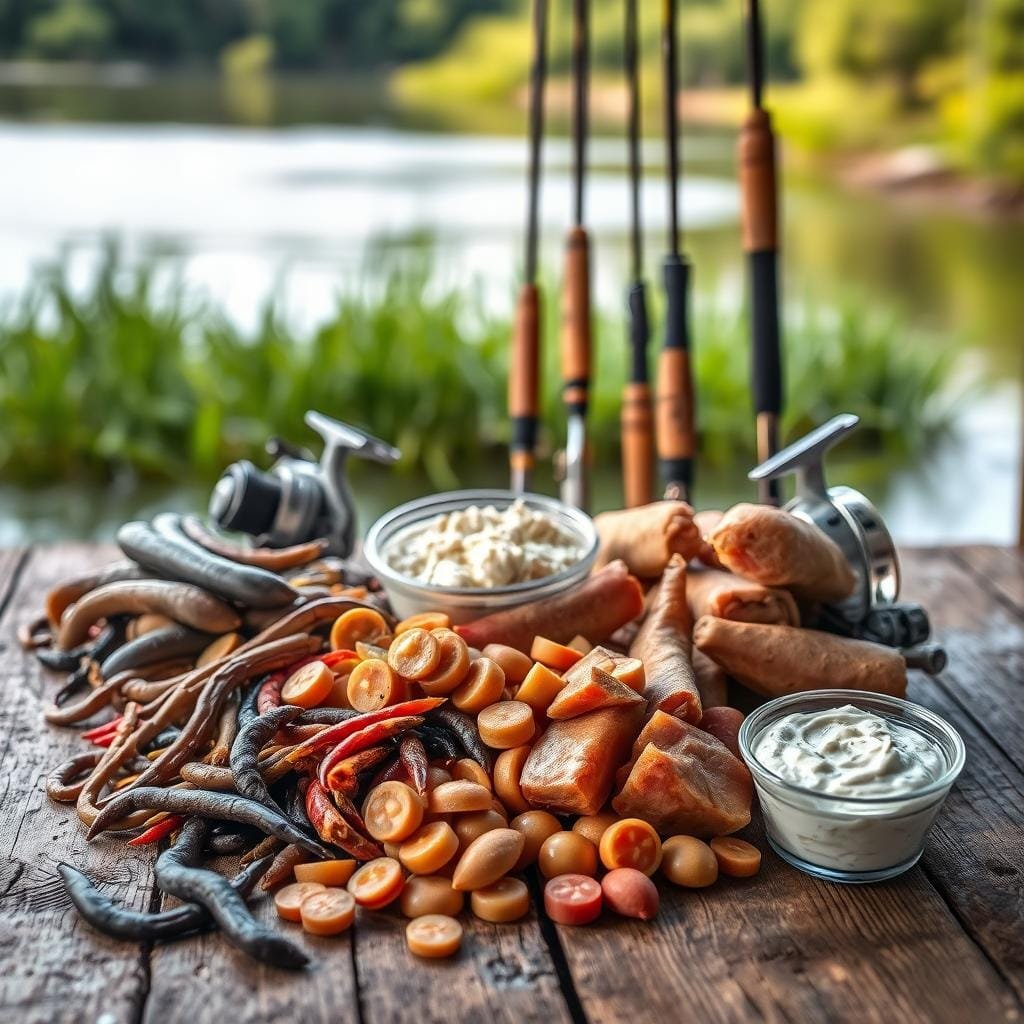
Want more fish in the net on your next U.S. catfishing trip? This guide shows the best bait for channel catfish. It uses real-water proof from rivers, reservoirs, and park lakes. You’ll learn about channel catfish bait and get quick, practical catfish fishing tips for tonight.
We start with baits that get bites fast: fresh cut gizzard shad, white suckers, and skipjack herring. We compare them to livebait like bluegill and local minnows. We also cover prepared baits like Berkley PowerDip and Junnie’s Wicked Sticky.
And we show when grocery-store options like nightcrawlers, chicken livers, and shrimp work best.
Beyond just listing baits, we share tactics that match how channels feed. We explain why their eating habits differ from blues and flatheads. We also cover proven lure angles, from Mepps Aglia spinners to Rat-L-Traps.
If you want a clear, field-tested plan for U.S. catfishing, this is it.
Why Channel Catfish Crush Certain Baits in U.S. Waters
https://www.youtube.com/watch?v=rGwQAx2zJFI
Channel catfish love certain baits in rivers, lakes, and park waters. They are catfish omnivores with sharp taste buds. This helps them find food in murky water.
Omnivore tendencies that favor scent and vibration
Strong scents attract fish, more so after rain. Brands like Berkley PowerDip and Junnie’s Wicked Sticky make scents last. In murky water, lures like Rat-L-Trap buzz for strikes.
Inline spinners like Mepps Aglia hum through water. This mix of scent and vibration is key for bites.
How regional forage (shad, minnows, crayfish) shapes bait choice
Local food shapes bait choice. Gizzard shad are common in many places. They bleed well in current.
In areas with crayfish and sunfish, specific lures work best. Bait choice depends on water color and flow.
Differences from blues and flatheads that affect bait selection
Blue catfish prefer fresh shad or skipjack. Many catch bait the same day. Channels also eat these, but they like other options too.
Flatheads prefer live bait like bluegill. Channels are more flexible. But, fresh native cuts are best when size counts.
Natural Cut Baits That Produce: Shad, Suckers, Skipjack
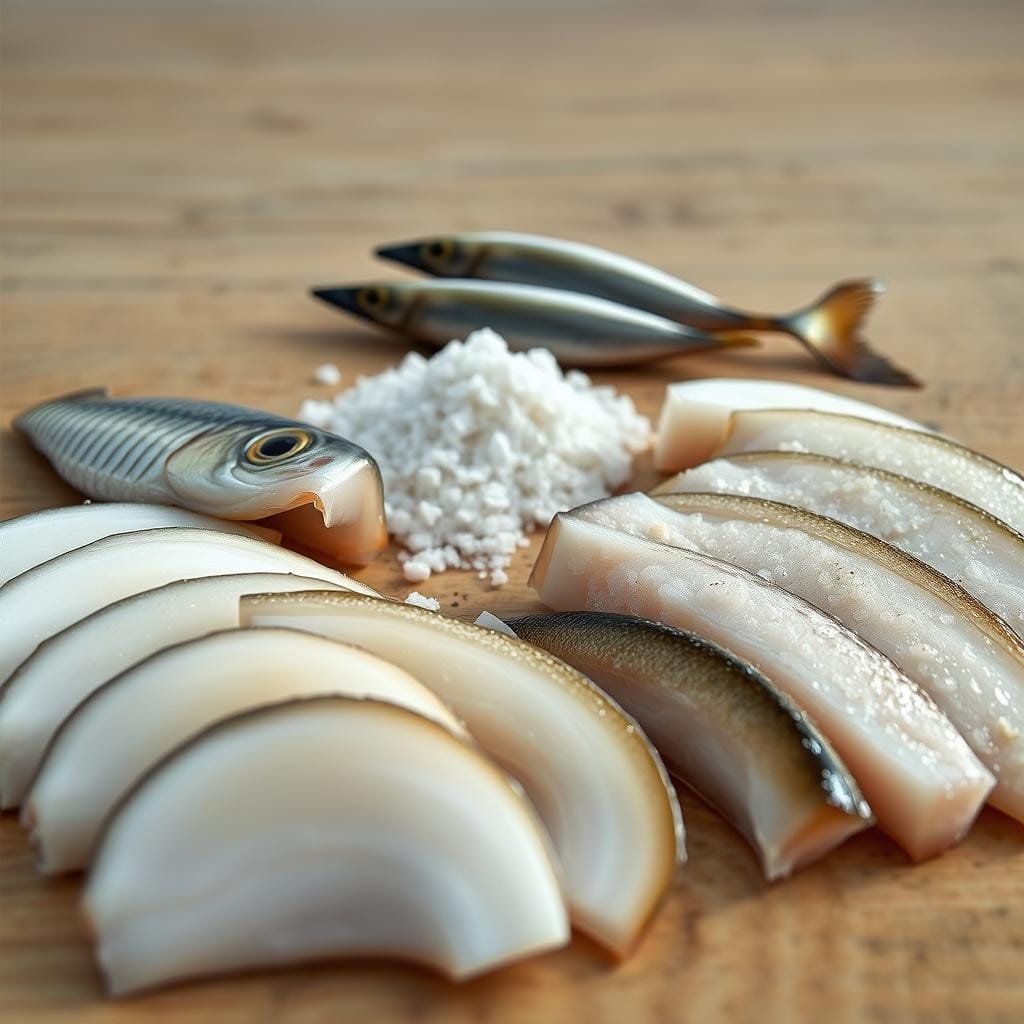
Want steady bites and simple rigs? Cut bait for catfish is hard to beat. Fresh pieces leak oil and blood, making a scent trail that fish follow fast. Keep a mix of gizzard shad, white sucker, and skipjack herring ready for reliable bites.
Gizzard shad: whole vs. chunks for channels in rivers and reservoirs
Gizzard shad are everywhere and work great. For fast taps, use 3- to 5-inch shad whole. Cut the tail or into chunks for more scent in current or around riprap.
Frozen shad catch fish too, but they get soft. Bring extra packs and swap them often. Scale, fillet, and cube into 1- to 1.5-inch pieces to match hook size. For more detail, see this guide to cutbait for catfish.
White suckers: durable, freeze well, and cling to hooks
White suckers are great for lasting through pecks. Their firm flesh and bony ribs hold a hook well. They freeze better than many baitfish, keeping flavor.
Use the whole fish: nose plugs for casting, mid-body steaks for staying power, and tail sections for steady drip. This mix keeps your spread fishing while you wait for bigger bites.
Skipjack herring: tournament-grade scent for big bites
Skipjack herring bait throws a powerful oil slick that pulls fish from far. Scale and fillet 18- to 24-inch fish, then cut 1 to 1.5-inch cubes. Use them in tailraces and main-lake points.
Jig for “skippies” below dams in spring or buy them fresh on ice. Keep knives sharp and pieces uniform. With a spread of skipjack herring, gizzard shad, and white sucker, your cutbait rotation stays dialed to conditions and fish mood.
Livebait Staples: Bluegill, Minnows, and Seasonal Forage
Smart cat anglers use live bait when the water is clear. They choose hardy panfish and local minnows. This choice helps them catch fish in ponds, creeks, and community lakes.
When small sunfish shine for pond and small-lake channels
Bluegill bait, four to five inches, stays lively. Use a float or a slip-sinker rig. Catch them on a size 10 hook with a redworm.
Hook them through the lip or dorsal to keep them active. In many park lakes, sunfish are common. This makes them a natural choice for cats at dusk and dawn.
Look for rocky edges where crayfish and catfish meet. In bigger waters, use seven- or eight-inch sunfish. This attracts fewer small fish and bigger ones near rocky areas.
Matching local minnows in streams with ambush-feeding cats
In creeks and small rivers, cats target chubs, fallfish, and shiners. Drift a live minnow through a current break. Or, pitch a fresh-cut chunk after rain.
Look for spots where smallmouth bass hide. Cats ambush prey tight to the bottom there. Keep baits lively with an aerated bucket. Change minnows often for the best results.
Know your regs: legality of live sunfish varies by state
Rules about using live sunfish as bait vary by state. Some states consider sunfish gamefish. Others let you use them for bait in the same water.
Check size and transport rules before keeping any bait. Keep a simple notebook for dates and places. If unsure, use cut bait or local minnows where allowed.
Following the rules protects the fishery. It also makes your fishing day more enjoyable.
| Livebait Choice | Best Scenario | Rigging Tips | Why It Works |
|---|---|---|---|
| Bluegill (4–5 in.) | Ponds and small lakes at low light | Dorsal-hook on a slip float; or slip-sinker with 1/0–2/0 circle | Hardy action mimics primary seasonal forage catfish see along banks |
| Bluegill (7–8 in.) | Bigger fish near riprap and timber | Lip-hook with 3/0 circle; keep bait off bottom with a short leader | Selective size filters small bites and signals a substantial meal |
| Native Minnows (chubs/shiners) | Current breaks in streams after rain | Nose-hook on size 2–1 circle; drift through seams | Stream minnows catfish expect in the flow; natural scent and flash |
| Fresh-Cut Minnow | Stained water or night setups | Thread chunk on a bait-holder hook; short casts to eddies | Scent cone spreads fast and stays effective when visibility drops |
| Crayfish (local, in-season) | Rocky banks in community lakes | Tail-hook on jig or plain hook; slow lift-and-drop | Aligns with seasonal forage catfish patrol during edge runs |
Prepared Options: Stinkbaits and Punch Baits for Numbers
Want fast action with schoolie channels? Use catfish prepared bait. It has a strong scent that attracts fish. It’s great for docks, current seams, and windblown banks.
It’s also good for family-friendly fun. Stinkbait for channel catfish is easy to rig and reload.
Why powerful scent plumes trigger school bites
Prepared mixes leak oils and proteins. This creates a wide scent plume. It draws channels and small blues, keeping bites steady.
Stinkbait for channel catfish refreshes the odor. This attracts roaming fish quickly.
Punch bait vs. dip bait: thicker mixes and clean loading
Punch baits are thicker and fibered. You can push a #4 or #6 treble into the jar. Twist and pull out clean. No tubes or sponges needed.
Dip baits are thinner and shine with carriers. They’re great for scent flow. But, they may need more frequent re-dips.
Trusted punch bait brands and how to keep baits sticky
Many anglers trust brands like Team Catfish Sudden Impact and Danny King’s Catfish Bait. CJ’s Catfish Punch Bait, Little Stinker Punch Bait, Sure Shot, and Willie P. Richardson’s Punch Magic are also favorites.
For stinkbait, Berkley PowerDip, Junnie’s Wicked Sticky, and Sonny’s Super Sticky are top choices.
If a mix gets watery, add cattail fuzz, cotton, or a pinch of hay. This will help it stick better. For a long-casting, guide-endorsed option, see this punch bait that loads easily and holds on treble hooks.
Grocery-Store Go-Tos: Nightcrawlers, Chicken Livers, Shrimp
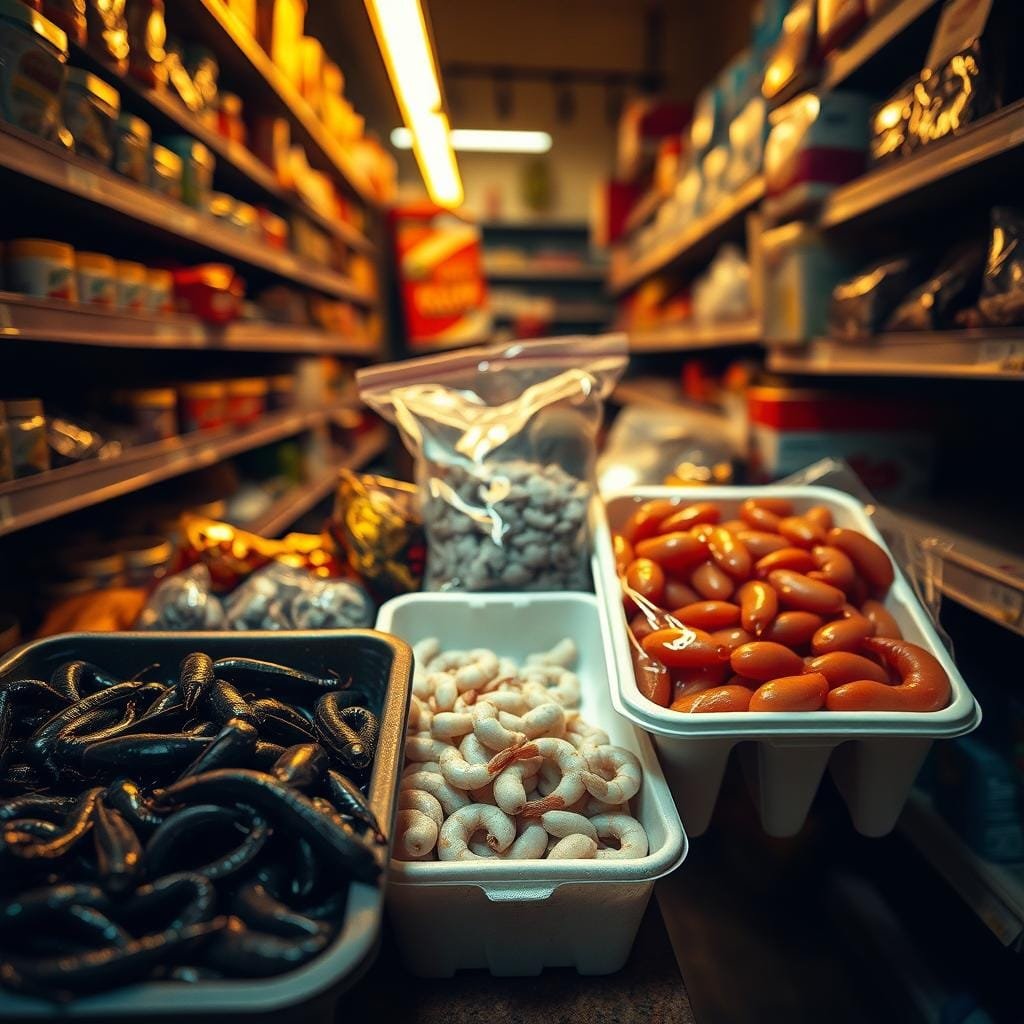
When time is short, a simple run for grocery store bait catfish can save the day. These options are cheap, easy to find, and they flat-out catch fish in ponds, rivers, and marinas.
Nightcrawlers for fast action with eating-size channels
Nightcrawlers catfish rigs produce quick bites from bank or boat. Thread two or three on a 1/0–3/0 circle hook behind a slip sinker to tempt larger channels and avoid tiny pecks. Expect bonus fish, as crawlers also draw blues, flatheads, white catfish, and panfish.
If you need a quick resupply, check the cooler at big-box stores, or dig your own after a rain. For more tips on where to find them in yards and pasture edges, see this guide to popular catfish baits.
Chicken livers: rigging with netting to withstand current
When bites are tough, chicken livers rigging pays because the soft tissue bleeds scent and lightly chums the hole. Wrap a golfball-sized clump in mesh or pantyhose, then run a treble through the bundle so it survives cast and current. Rebait often in warm water, as livers break down fast.
Livers usually stay fresh on the hook for 15 to 20 minutes, so work a spot, then move. In swifter rivers, add a small bead and a no-roll sinker to keep the bait pinned where cats can track the plume.
Frozen shrimp: easy, consistent strikes when baitfish are scarce
Shrimp for catfish is a reliable pinch-hitter when you can’t net shad. Thread medium raw shrimp tail-first so the bait rides straight and stays tight to the hook. It’s simple for kids to rig and draws steady bites from eater-size channels.
Pick up a bag at any supermarket and keep it iced. Many trotliners lean on shrimp during lean forage windows, which says plenty about its pull when natural baitfish are hard to find.
| Bait | Best Use | Hook/Rig Tips | Pros | Watch-outs |
|---|---|---|---|---|
| Nightcrawlers | Fast action with channels in ponds, rivers, marinas | 2–3 crawlers on 1/0–3/0 circle; slip sinker above swivel | Universal draw; easy to source; natural movement | Attracts non-target fish like bluegill and carp |
| Chicken Livers | Tough bites; creating scent trails in current | Chicken livers rigging in mesh with treble; no-roll sinker | Strong scent; acts like chum; quick hookups | Fragile; rebait every 15–20 minutes in warm water |
| Frozen Shrimp | When baitfish are scarce; family-friendly setups | Thread tail-first on 1/0–2/0 hook; light slip sinker | Easy to rig; available at any grocery; steady bites | Can soften in heat; keep on ice for firmness |
Before you go, remember that grocery store bait catfish tactics shine when matched to current and cover. Mix nightcrawlers catfish, chicken livers rigging, and shrimp for catfish through your spots until one pattern stands out.
best bait for channel catfish
First, check the conditions. Then, choose your bait wisely. The best bait changes with the water flow, clarity, and light. Keep some fresh cut baits, a tried-and-true prepared bait, and a few cranks and spinners ready to switch.
Quick picks by situation: current, stain, clear water, or night
In current, mix scent with vibration. Use 1/4-ounce Rat-L-Traps or Cordell Spots to attract fish. Then, anchor a fresh gizzard shad that bleeds.
In stained or rising flows, use a #3–#5 Mepps Aglia or Black Fury. It thumps hard and helps fish find the bait.
For clear water, choose something subtle. Use 2-inch Floating Rapalas or Yo-Zuri Pins Minnows with a tight wobble. Trim shad or sucker pieces small to match the water.
At night, use squarebill crankbaits that look like sunfish. Add a slow crawl with an Arbogast Jitterbug or a buzzbait for surface strikes.
Fresh cutbait vs. prepared baits when you need volume
For lots of bites, use prepared punch or stink baits. They reload fast and keep scent. Use a treble on a bait holder and cycle spots to find schools.
For bigger bites, try fresh native forage. Cut shad, white sucker, or skipjack herring has a strong oil trail. It’s durable and works well in current seams and channel edges.
Upsizing offerings to avoid bycatch and target bigger fish
Upsize to catch bigger fish. Use whole 3–5 inch shad, thicker cut chunks, or a legal, larger live sunfish. This deters bluegill and carp. In clean water, present a bigger piece but keep it neat.
When baitfish are scarce, bundle nightcrawlers or thawed shrimp. This makes your bait bigger. It draws quality bites at night and works on flats, riprap, and slow eddies.
Lure Tactics That Work: Spinners, Cranks, and Jigs for Channels
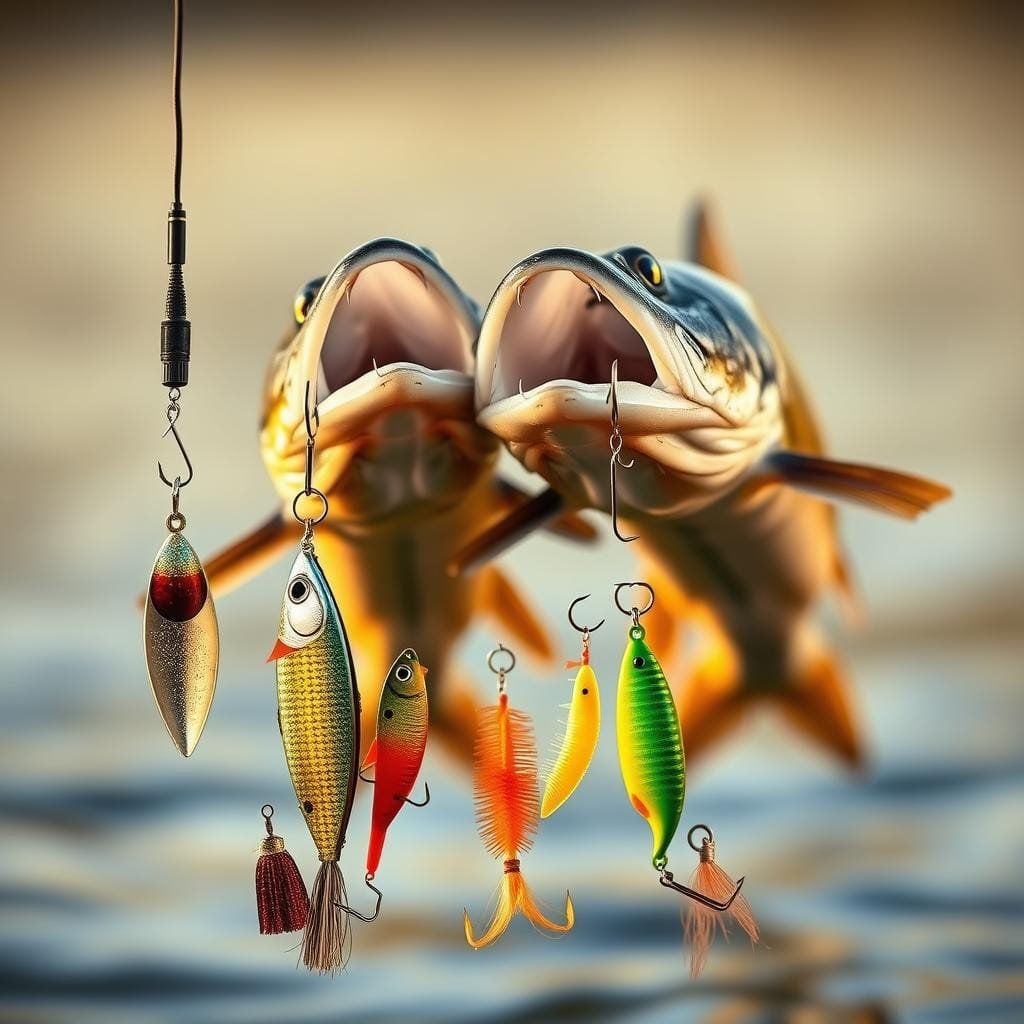
Yes, you can catch channel catfish on lures. Jim Gronaw and others have seen fish hit hard baits in the middle of the day. They like current, vibration, and small profiles.
In-line spinners and vibrating lipless cranks in high, turbid flows
After a storm, muddy water makes fish active. Use a 1/4-ounce Rat-L-Trap or Cordell Spot. They work well in muddy water.
Cast at an angle upstream, then lift to avoid snags. This action makes fish bite. A short-billed squarebill is also good for finding fish in thick debris.
Floating minnowbaits in clear water with tighter wobbles
In clear water, use a 2-inch Floating Rapala or Yo-Zuri Pins Minnow. Move it slowly to mimic small baitfish. Stop near rocks or weeds to attract fish.
At dawn and dusk, use squarebill crankbaits. They work well along shorelines. Keep hooks sharp for better bites.
Hair jigs and tubes for bottom-oriented fish in cold and clear
In cold water, use smaller lures. An 1/8-ounce marabou or bucktail jig is good. Drag a three-inch tube slowly to attract fish.
When it’s very cold, try a 3-inch Kalin’s Grub. Use a minnow or fresh cut bait for better results. This mix works in different fishing conditions.
Seasonal Patterns: Prespawn Through Postspawn Feeding Windows
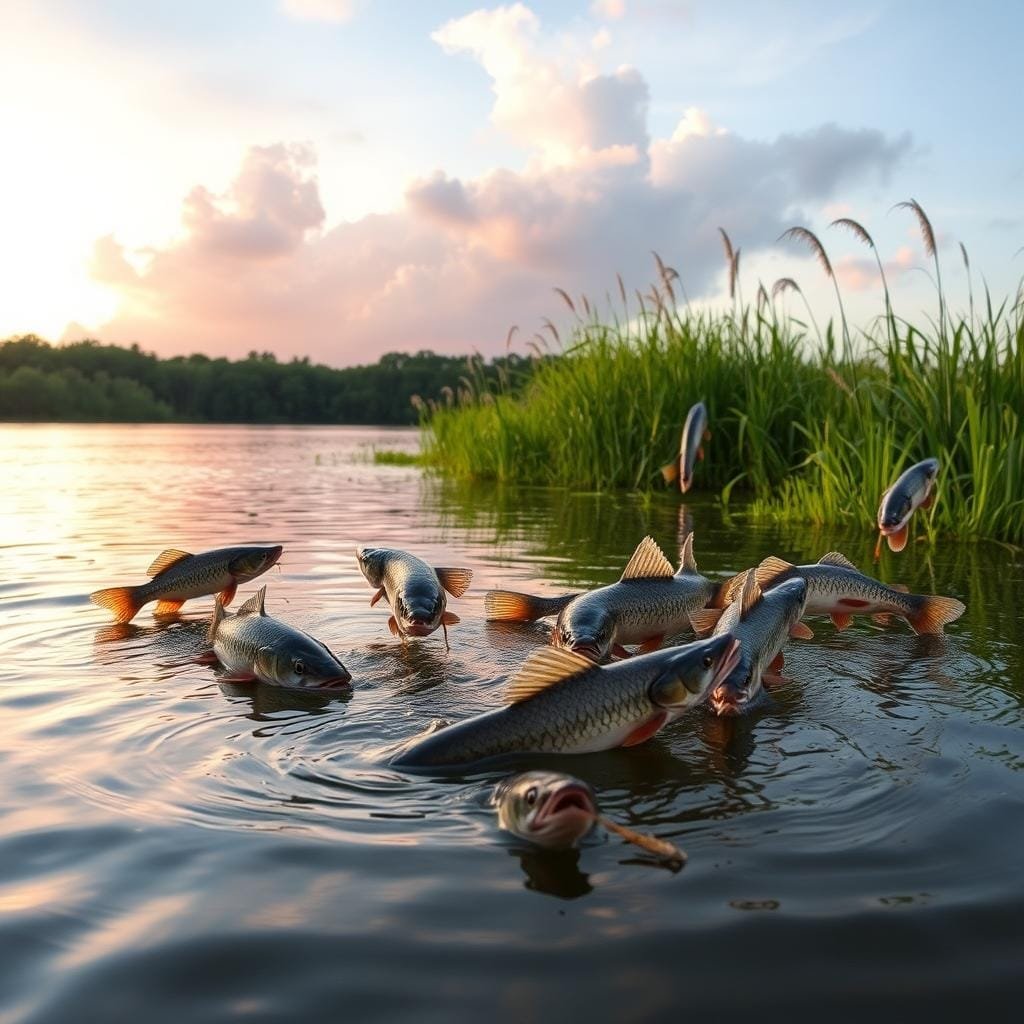
Channel cats have clear times to eat each year. Their eating times change with water temperature and daylight. They eat a lot before and after they spawn, but less when they’re nesting.
Match your fishing style to theirs. Use slow, gentle movements in cold water. Use fast, flashy lures when they’re active. These tips help you catch them in all seasons.
Early spring: tiny hair jigs and waxworms under floats
When it starts to get warmer and ice melts, channel cats look for small food. Use a tiny hair jig with waxworms, mealworms, or maggots under a small float. This works best at 3–4 feet deep. Move slowly and naturally.
Even big fish can be caught with finesse. Keith Gronaw caught an 18-pound, 33-inch channel cat on a tiny hair jig. It shows that small lures can catch big fish in early spring.
Summer low light: squarebills, buzzbaits, and shoreline patrols
In the early morning and late evening, summer is the best time to fish. Fish move along the shorelines and weed edges. Use 1.5–2.5 inch squarebills that look like shad or small sunfish. Move parallel to the bank to keep your lure in the strike zone longer.
When the water gets choppy, try a Jitterbug or a Booyah inline. These lures make a splash on the surface. Move them quickly and with wide wobbles to attract fish.
Cold water proof: sub-50°F cats are not immune to compact jigs
Don’t stop fishing when it gets cold. Even below 50°F, fish can be caught with small lures. Use 1/8‑ounce hair jigs and 3‑inch Kalin’s Grubs along the deeper parts of the shore. Move them short distances and pause for a long time.
Stable weather means fish are more active. Catching 3–7 pound fish is common when fishing slow and low. These techniques work well in cold water and keep you fishing when others stop.
| Window | Water Temp Cue | Primary Lures | Presentation Tips | Why It Works |
|---|---|---|---|---|
| Early Prespawn | Upper 30s–mid 40s | 1/64‑oz hair jig + waxworms | Suspended 3–4 ft under a small float; slow drift | Tiny forage match; subtle pulse triggers neutral fish |
| Spawn Lull | Mid 60s–low 70s | Selective cutbait or downsized jigs | Target edges near cavities; shorter sets | Guarding fish feed less; precise placement matters |
| Postspawn Feed | High 60s–mid 70s | 1.5–2.5 in squarebills; Jitterbug | Parallel riprap/weedlines; steady retrieve | Shoreline patrols meet high‑visibility wobble |
| Cold‑Water Pattern | Sub‑50°F | 1/8‑oz hair jigs; 3 in Kalin’s Grubs | Short hops, long pauses near breaks | Compact profile stays in the zone for winter strikes |
Rigging and Gear: Hooks, Leaders, and Drag for Hard Runs
Start with clean knots and sharp hooks for catfish rigging. A balanced system lets big channels pull smoothly. Keep it simple and test each connection.
Circle hooks for bait, trebles for punch/dip carriers
Use circle hooks for fresh cutbait or live bait. They improve hookups and prevent deep-hooking. Choose the right size for your bait.
Trebles are best for punch bait. Sizes #4–#6 hold carriers well in current. Keep all hooks sharp.
Barbless hooks help tight-line anglers land fish faster. Use egg, bell, or bank sinkers as needed. Adjustable float stops are useful for slipfloat rigs.
Mono leaders to braid mainline with barrel swivels
Start with 12–20 lb green braid and a 50 lb-test barrel swivel. Use a Palomar knot. Then, tie a 12–15 lb mono leader to the hook with an improved clinch.
This setup sheds twist and adds stretch. Beads above the swivel protect knots. For casting, use a #5 silver Mepps Aglia on a 15 lb mono leader.
For more on drift rigs, slipfloat rigs, and leader lengths, see this guide on best catfish rigs.
Setting drags or back-reeling to land 10–30 inch fish
Set drags for slight slippage on the strike. Then, give under steady pressure. Test on a loaded rod before casting.
Let 10–30 inch fish run when they surge. Steer them away from snags. Use smooth spinning reels from Shimano, Daiwa, or Penn.
Back-reeling is also good: run a firmer drag and feather the handle. Carry a Boga Grip, a Frabill Conservation Series net, and long-nose pliers. This helps shorten fights and protect fish.
Matching Bait to Water Type: Rivers, Reservoirs, and Park Lakes
Choosing the right bait for the water type is key. Look at the flow, what fish eat, and where they hide. Then, pick the scent, movement, and size that fits what fish expect. Keep your bait fresh and adjust your casting and retrieval based on the conditions.
Rivers after storms: scent and vibration in rising flows
Storms bring fast water and catfish look for smell and sound. Cast cut gizzard shad into the current. Use them in seams, pools, and behind dams. Let the bait sit in the soft edge as debris passes by.
When catfish hug the banks, use loud lures. Try Bill Lewis Rat-L-Traps and Cotton Cordell Spots in the troughs. As the water clears, switch to Floating Rapalas or Yo-Zuri Pins Minnows. This imitates minnows and works near rocks.
Reservoir flats: cut shad and skipjack where blues mix with channels
On flat areas near creek mouths, cut shad and skipjack attract catfish. Use sharp blades and strong leaders for mixed catches. This is good where blue catfish and channels mix.
Catching bait is important. Use a cast net for shad at dawn or jig Sabiki rigs for skipjack. Keep the bait fresh and change it every 20–30 minutes. This is key when the current slows and fish spread out.
Community lakes: sunfish forage and shoreline crankbait runs
In small lakes, catfish hide in weeds and near docks at dawn and dusk. Use squarebill crankbaits along the first drop-off. Then, switch to LiveTarget sunfish when bluegill schools are shallow.
Use a 4–5 inch bluegill under a float or on the bottom at dawn and dusk. If baitfish are hard to find, nightcrawlers or shrimp work well. Try them along riprap and culverts. Change spots every 15 minutes until you feel a strong bite.
- Key cue in rivers: Rising water favors scent trails and vibration.
- Key cue in reservoirs: Fresh cut shad or skipjack on flats and points.
- Key cue in park lakes: Sunfish patterns near cover and shallow structure.
Pro Tips for Freshness, Scent, and Staying Hooked Up
Freshness is key. Catch your own shad or skipjack when you can. This keeps the bait smelling strong. Use a cast net or small crappie jigs to mimic baitfish.
For frozen bait, choose white suckers. They stay firm and help your bait stay on the hook. Always have extra shad. They can get soft in heat or current.
Keep your baits cold and change the water to keep them fresh. This is important for catfish anglers.
Make your bait more attractive. Use mixes that create a steady scent trail. This draws in catfish and leads to quick bites.
Make your punch bait sticky. Add cattail fluff, hay, or cotton. This keeps it on the hook and the scent strong.
For chicken livers, wrap them in gauze or pantyhose. This saves time and keeps the hook clear. On tough days, use small jigs with minnow pieces or thin cutbait slices. This adds flash and flavor without slowing down the action.
Make sure your fight is smooth. Use a smooth drag or back-reel to control the fish. This helps you land more catfish.
Check your knots and hook points. Use a Palomar knot to the swivel and an improved clinch to the leader. Barbless hooks help with quick penetration and release.
Handle fish quickly in warm water. Use a Frabill Conservation Series net, a Boga Grip, and long-nose pliers. This makes it safe and easy.
In muddy or current-rich waters, add vibration with spinners or lipless cranks. In clear water, focus on tight profiles. After dark, fish the shoreline where channels are.
Target larger fish with bigger bait. Use bigger cutbait chunks or whole shad. Use bigger hooks to catch more fish.
Keep your bait fresh in a cooler. Rotate the pieces often. Watch the hook spacing to keep points exposed. Follow these tips to keep your bait fresh and your hookups successful.