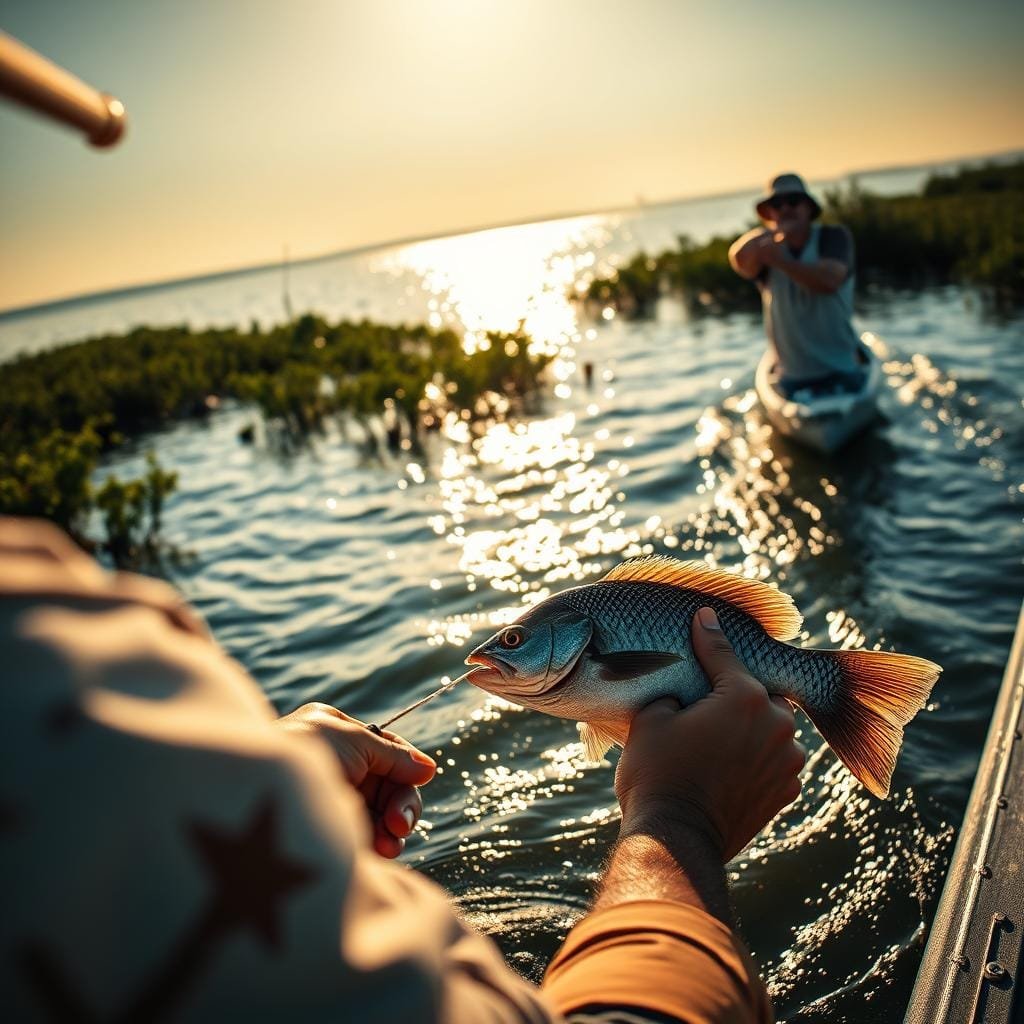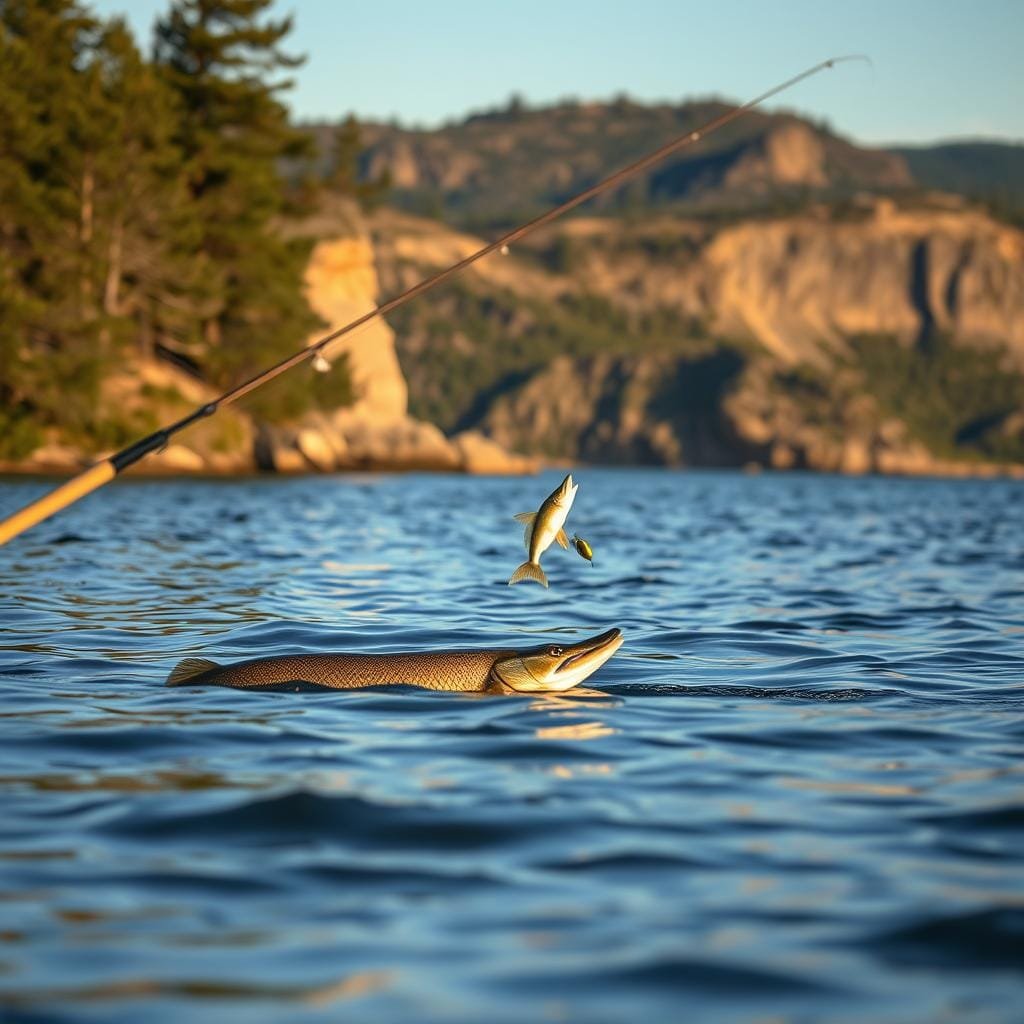
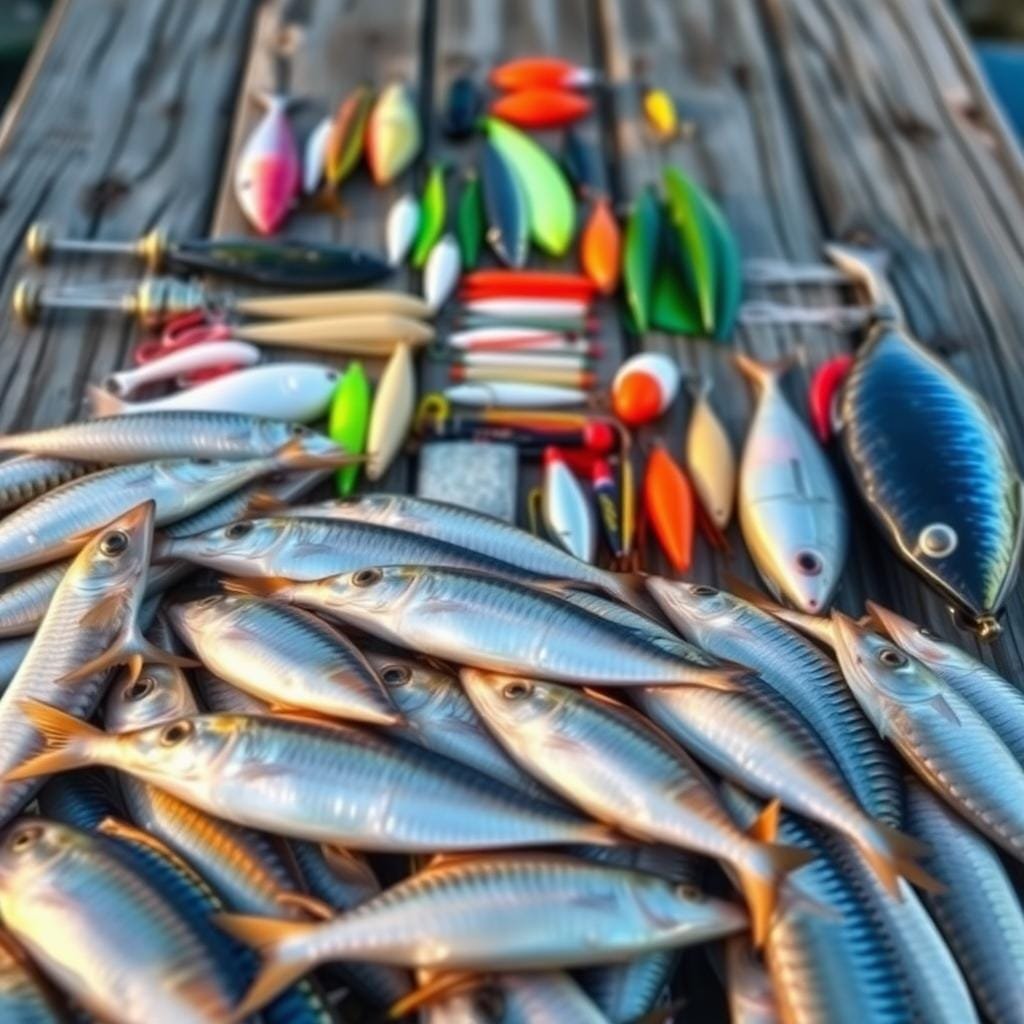
Cobia hit hard and punish weak gear. This guide shows the best bait for catching cobia fast. We’ll cover live bait, sharp-cut strips, and top cobia lures.
When fish cruise high in clear water, use cobia live bait. Herring, scad, or pinfish work well. On reef edges, slow-pitch and knife jigs in 80–100 grams are great.
For steady action, suspend cobia cut bait five to ten meters off bottom. This attracts roamers.
Spring brings fishing to Florida beaches and Keys channels. Temperatures rise to 60s–70°F. Sight-casters look for manta rays and sharks to find cobia.
Deep-diving minnows at about five knots help cover ground. For more tips, see this quick primer: how to catch cobia.
Rig with 10–15 kilogram rods and 50-pound braid. Use 100-pound leader and strong assist hooks. This is key for late boat surges.
From the Florida Keys to Panhandle piers, a good plan is key. Choose the right bait, match depth to mood, and stay mobile with the tide.
Understanding Cobia Behavior and Seasonal Patterns in the United States
The coast lights up when the spring cobia run comes. In the Panhandle, the cobia migration Florida grows as days get longer. The sun makes the water warm, and bait moves with the tide.
Spring runs, water temps, and full-moon triggers
When the water warms up to mid-60s to low 70s °F, it’s prime time. Mornings might be slow after a cool night. But by midday, fish feed near surface slicks and markers.
Many plan their fishing around the full moon cobia surge. This happens when the water warms up afternoons and the sky is clear.
In the Gulf, early-season fish have bellies full of squirrelfish. This shows fish start offshore before they hit the beach. Watch for fronts and sun angles. Then, wait for the water temperature to hit the sweet spot during the spring cobia run.
Why cobia shadow manta rays, sharks, and sea turtles
See a black, flapping disc and cast fast. Cobia on manta rays sit off the wingtips waiting for food. They like crabs, shrimp, and baitfish.
They also follow spotted eagle rays and drift with sea turtles. Keep your casts tight and don’t crowd the turtles.
Sharks can carry extra fish too. But watch their body language. If rays and turtles look calm, the followers are relaxed. Skippers often have a rod ready with a bucktail or live bait for these chances, as shown in this guide to cobia tactics.
Midwater cruisers: how their depth changes through the day
Cobia naturally cruise in the middle of the water. In cool mornings, they go deep and mark as faint arches. As the sun warms the surface, they move up to just under the chop.
They set up near inlet buoys, tide rips, and rays. Pairs and trios are common, with bigger fish often solo. Use sonar to find midwater marks close to the surface. Then, be ready to cast quickly.
| Trigger | Observed Cobia Behavior | Best Presentation | Why It Works |
|---|---|---|---|
| Rising temps into 60–70°F | Fish lift from deep to surface lanes | Unweighted live bait or slow-rolled swimbait | Matches natural rise during cobia migration Florida |
| Full moon cobia phase | Afternoon feed near markers and rips | Bucktail jig at mid-depths | Moon plus tide pushes bait and sets a steady current |
| Manta rays, sharks, sea turtles | Followers hover off flanks or wingtips | Quick cast to cobia on manta rays with topwater or live crab | Opportunistic strikes on flushed forage |
| Cool morning, clear sky | Deep, scattered arches; slow surface action | Weighted jig in the lower third of the column | Targets lethargic midwater cobia holding deeper |
| Afternoon warm-up | Shallow cruising, visible to sight-casters | Pitch shrimp or crab pattern fly | Low noise, precise drops to relaxed fish |
Where Cobia Hold: Structure, Current, and Sight-Fishing Zones
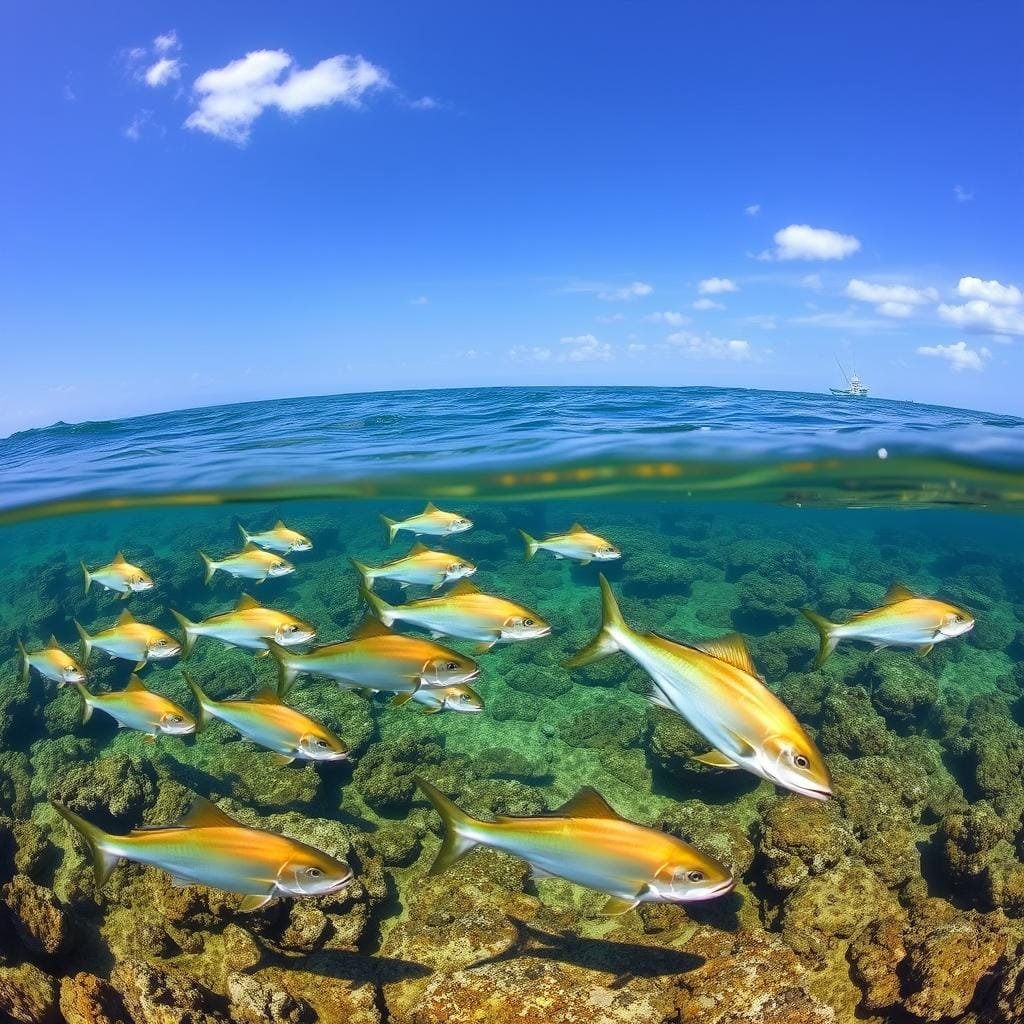
Think like a hunter to find cobia. They like moving water and obvious paths. Look for any structure that breaks the current.
Use binoculars, wear polarized lenses, and scan far for shapes and colors.
Reef edges, wrecks, markers, and offshore rigs
Inside the shelf, cobia like reef edges and wrecks. They often check boats and slide back to bait. Use marker poles and channel buoys as markers.
Make tight drifts and cast up-tide. This lets the bait sink into the strike zone without scaring fish.
Pressure points, channels, and tide rips
Running water makes fish stay in choke points. Target tide rips where foam meets color changes. Let baits sweep along the seam.
In slack water, look midwater for cruisers. They slide off the edges.
Beach runs, pier zones, and white-sand channel edges
Spring brings fish that run east–west just outside the breakers. Elevated spots on piers in Florida show fish you’d miss. Cast ahead and let the lure cross at a natural angle.
In the Keys, hawk channel cobia stand out over pale bottom. Work white-sand edges near Marathon and Long Key. Watch for manta rays and be ready to pitch.
best bait for cobia
Finding the right bait for cobia means knowing what they like. If they’re cruising or following rays, a natural bait works best. But if they ignore artificial baits, try something real.
Live bait picks that consistently get eaten
Live bait like herring, scad, and pinfish gets a quick bite. These baits swim well and stay deep. A lively pinfish is extra appealing.
Hook a live bait carefully and let it swim naturally. Many say this is the best way to catch cobia in clear water.
Cut bait and midwater presentations that convert
When cobia stop biting on the bottom, try midwater. Cut bait like squid or prawn strips work well here. They’re suspended 5–10 meters off the bottom.
Choose tidy strips that flutter, not spin. Use two baits at different depths to cover more area. Reset after each pass to stay in the action.
Artificial options that imitate squid, shrimp, and baitfish
Artificial lures are great for sight-casting to rays and beach runners. Use 5–7 inch soft plastics and stickbaits. Pause them to mimic injured bait, then speed up to attract cobia.
Drop cobia jigs in 30–50 meters. Use slow-pitch or knife styles with squid-toned finishes. Nearshore, a realistic shrimp lure can make a big difference.
- Live: herring, scad, pinfish presented naturally
- Cut: fish, squid, or prawn strips riding midwater
- Artificial: squid and shrimp profiles, plus metals and plastics
Live Bait That Wins: Herring, Scad, Pinfish, and More
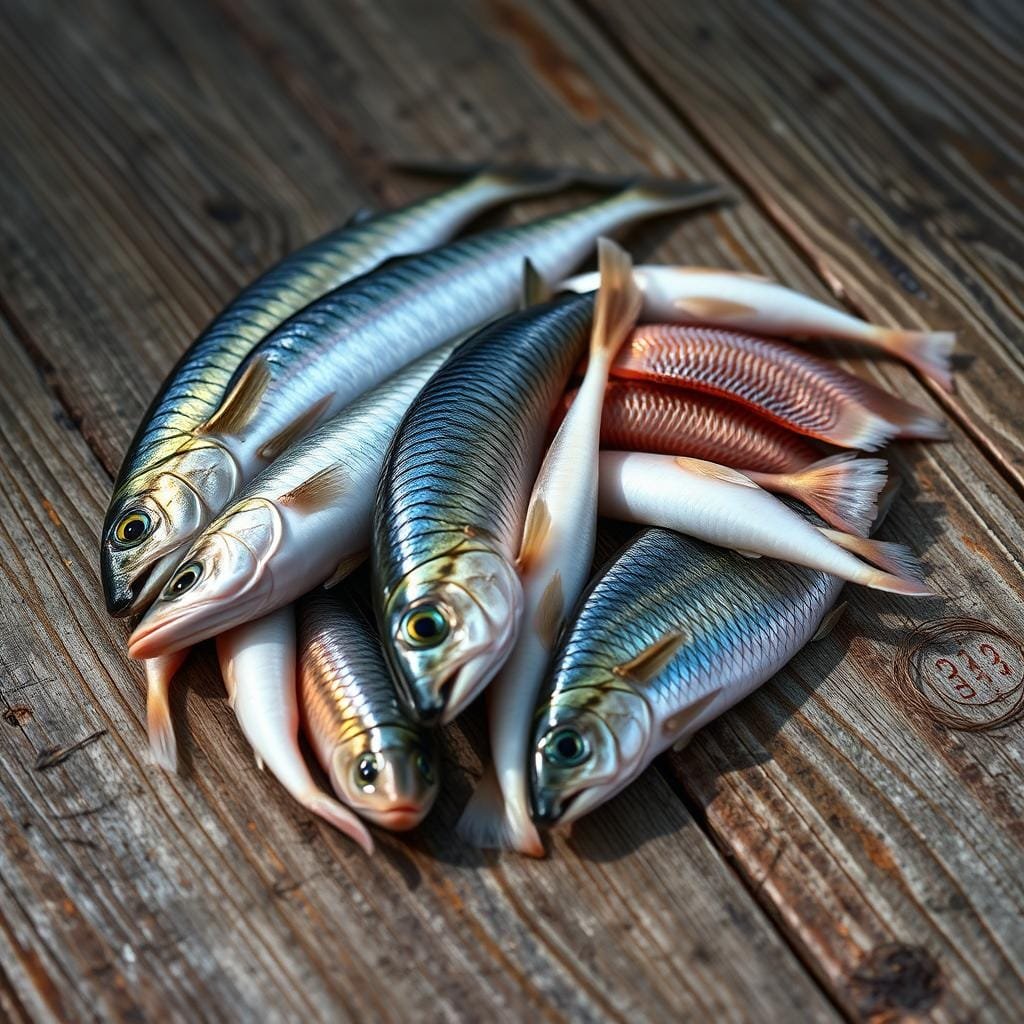
When cobia ignore plastics, try live bait. A good cobia live bait rig with strong baits keeps you in the game. Herring, scad, and pinfish are top picks from Florida to the Carolinas.
Nose-hooked unweighted livies for natural swim-down
For sight fishing, a nose-hook live bait rig is great. Pin a live-bait hook through the upper jaw cartilage. This lets the bait swim naturally, attracting cobia.
Use strong leaders for long runs. A simple cobia live bait rig works well in clear water.
When to add a small ball sinker in deeper water
In 40–80 feet or with strong flow, add a small ball sinker. It helps the bait reach the right depth. This keeps the bait lively and effective.
Don’t overdo it with the weight. Too much and the bait won’t swim. Too little and you might miss the bite.
Making do with any small legal baitfish when cobia are picky
Can’t catch the best baits? Use what you can. Threadfin, pilchard, or small grunt works. Cobia eat almost any small, active fish.
Try different baits until you get a bite. Switch between herring, scad, and pinfish. Adjust your rig to catch more cobia.
Cut Bait and Midwater Setups for Constant Cruisers
Cobia move like boats, so a good cobia cut bait rig works well. Lift your bait into the water column. Keep your drag smooth and watch for a fast bite.
Be ready to move away from wrecks or buoy chains. This trick makes slow-moving fish bite.
Why suspending baits 5–10 meters off bottom boosts bites
Cobia like to hunt in the middle of the water. Suspend your bait 5–10m above the bottom. This puts it right in their path.
A midwater bait drifts in cleaner water. Sharks and other fish don’t foul it as much. You’ll see the fish bite sooner.
Fish, squid, and prawn strips that draw fast finds
Use lean fish and squid strips to attract cobia. They move with the water. Add prawn bait when the current is slow.
Use 7/0–9/0 heavy-gauge circles with a short fluorocarbon leader. This keeps your rig neat while drifting.
Timing tip: drop midwater baits after reef bite slows
After the bottom bite slows, wait five to ten minutes. This lets midwater cobia bait work. It often reveals fish cruising by.
Keep a rod ready to suspend bait 5–10m. Move quickly when you feel a bite. Guide the fish away from structure on the first run.
Jigs That Get Crushed: Slow-Pitch, Knife, and Squid Patterns
Work reef edges, wrecks, and marker poles with cobia jigs when the current sets up clean lines. Drop to bottom, then fish the full water column. Cobia often hit halfway up, so keep the jig moving all the way to the top.
Choosing 80–100 g weights for 30–50 m depths
In 30–50 m, an 80g 100g jig cobia stays in the strike zone without tumbling. A slow pitch jig cobia excels when current is modest, while a knife jig cobia slices fast water and drops straight. Match weight to drift so you feel every tap.
Medium-paced retrieve with brief pauses every 15 m
Use a medium lift-and-wind and pause every 15 meters. Cobia eat on the drop and the rise, so let the jig flutter, then tighten up. Repeat from bottom to surface to track midwater cruisers that shadow structure.
Strong assist hooks and luminous/squid finishes
Rig heavy assist hooks cobia can’t bend during surging runs. A luminous jig cobia with glow stripes stands out in deep or murky water, and a squid pattern jig adds a natural trigger. Upgrade split rings and solid rings to keep hardware honest.
| Jig Style | Best Use Case | Weight Range | Retrieve Tip | Hook Setup | Finish Advantage |
|---|---|---|---|---|---|
| Slow pitch jig cobia | Moderate current over wrecks/reefs | 80–100 g | Medium lift, 2–3 turns, pause every 15 m | Twin heavy assist hooks cobia grade | Luminous jig cobia glow draws bites on the drop |
| Knife jig cobia | Faster current and quick vertical drops | 80–120 g | Steady wind with short pops through midwater | Single front assist, reinforced split ring | Metallic and glow tape for flash and visibility |
| Squid pattern jig | Finicky fish near marker poles or edges | 80–100 g | Short lifts, long flutter pauses | Short-shank dual assists to prevent fouling | Natural squid silhouette plus subtle UV accents |
Keep boat position tight to the up-current side of the structure to present cobia jigs vertically. Rotate between slow pitch jig cobia, knife jig cobia, and a squid pattern jig until the response locks in.
Artificial Lures for Sight-Casting Rays and Beach Runners
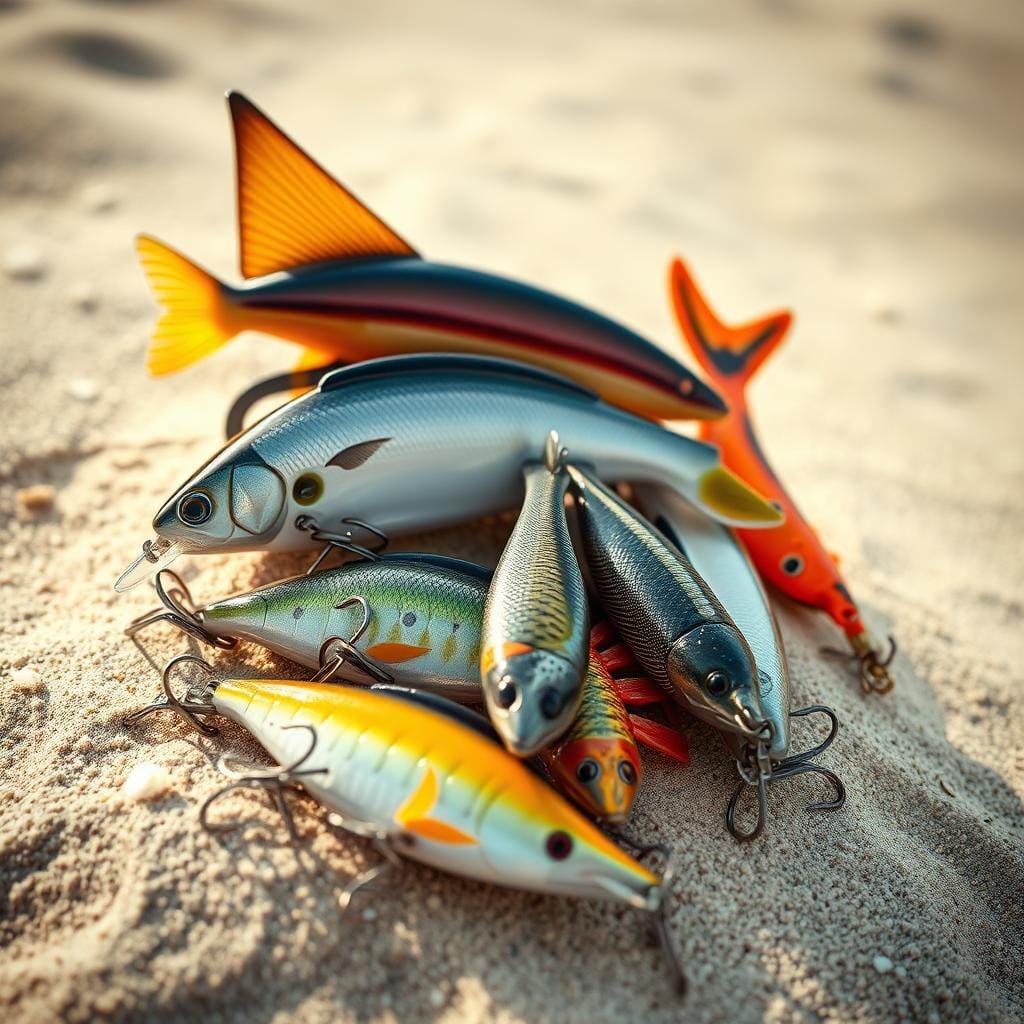
Cobia sight casting is exciting. It’s great along bright sand or when casting to mantas, sharks, and turtles. Keep the boat quiet and read the surface. Lead the target by several yards to avoid spooking followers.
Big soft plastics, stickbaits, chuggers, and floater-divers
Big soft plastics work well on 3/4–1 oz jig heads. They track true at midwater and shine in light chop. When fish ride high, cobia stickbaits like the Shimano Ocea or Yo-Zuri Hydro Pencil walk long and straight.
In swell or wind, cobia chugger plugs from Heddon or Rapala make a loud spit. This noise pulls fish up fast.
If they hug a ray’s back, use a floater diver cobia presentation. Think Halco Laser Pro or Yo-Zuri Mag Darter. Let the lure sit, then dive into the pack. This sudden plunge often flips the switch on wary followers.
Long-range casting gear and single-hook plug mods
Distance is key. Use a 7–8 ft medium-action spinning rod with a fast tip. Pair it with 30–50 lb fine-diameter braid and a 60–80 lb fluoro leader. This combo punches into wind and lands light, ideal for cobia sight casting across clear beach lanes.
Convert trebles to a single hook plug cobia setup. Use an inline single on the rear split ring. This reduces snags on rays and keeps leverage low boatside. It also speeds releases when multiple fish are circling.
Triggering follows on mantas with paused surface lures
When casting to mantas, throw well ahead of the ray’s path. Let the lure sit motionless. As the shadow arrives, give two sharp twitches. This pause-and-pop often brings hidden fish up and sparks eats you never saw coming.
If they only trail, swap to cobia stickbaits for a steady glide. Then finish with two aggressive chugs from cobia chugger plugs to seal the deal. If the school slides deeper again, return to a floater diver cobia approach and repeat the pause.
| Lure Type | Best Use Case | Example Actions | Hook Setup | Why It Works |
|---|---|---|---|---|
| Big Soft Plastics (5–8 in) | Beach runners in light chop | Count down, slow roll, brief lifts | Single jig hook, 3/0–6/0 | Natural profile stays in the strike zone longer |
| Stickbaits | High riders and cruisers | Walk-the-dog, long slides | Inline rear single (single hook plug cobia) | Long casts, subtle flash for pressured fish |
| Chugger Plugs | Wind, swell, or low visibility | Pop-pop-pause near rays | Rear inline single | Noise and splash draw fish from depth |
| Floater-Diver Plugs | Fish tight to manta or turtle | Dead stall, then dive through the pack | Rear inline single | Sudden dive triggers reaction feeds |
Trolling Options When You Need to Cover Water
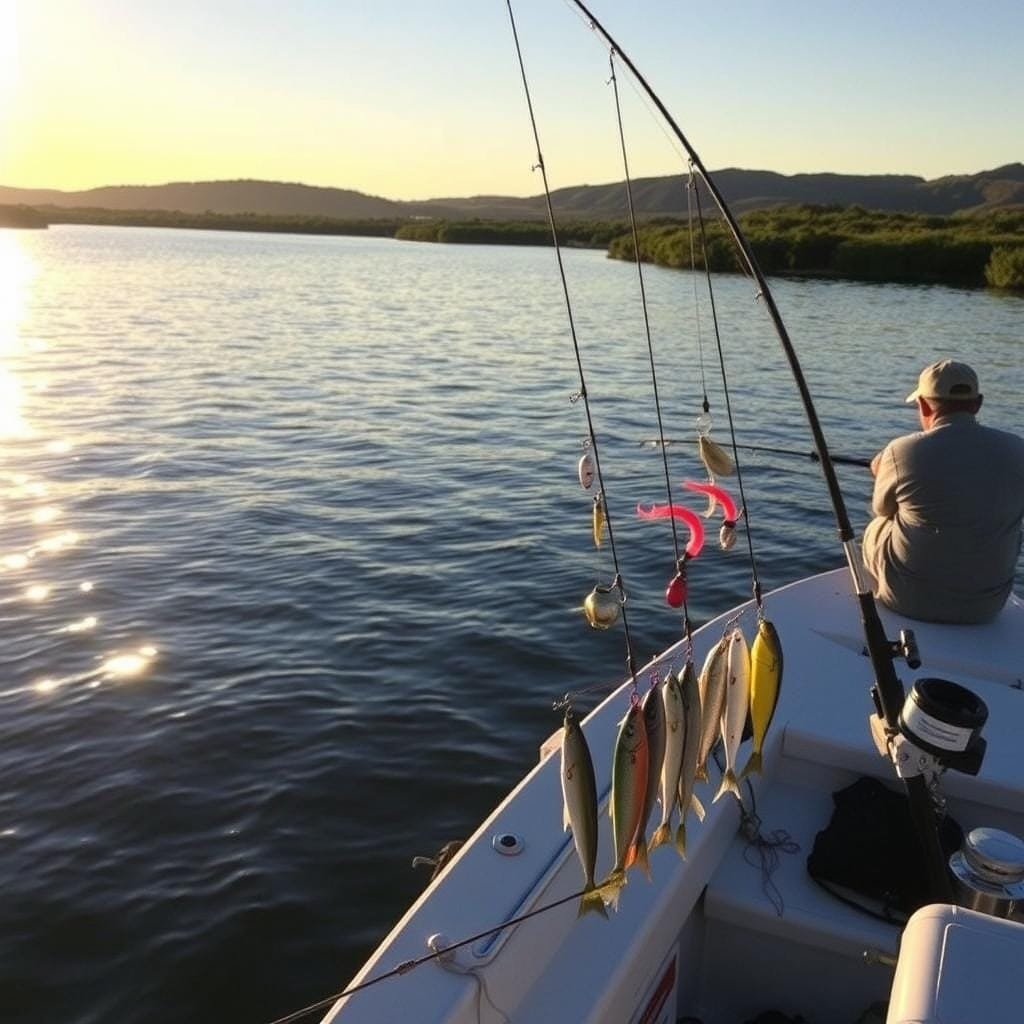
Trolling is great for covering a lot of ground quickly. It’s perfect for fresh areas or when fish move a lot. It’s easy to check sonar for fish and find good spots.
Use special cobia lures for trolling. Move at a steady 5 knot speed. This keeps the lure moving right without losing it.
Try a deep diving minnow cobia lure. It goes down deep and stays there. This attracts fish swimming below the surface.
Deep-diving minnows at ~5 knots
Bluewater-style plugs work well at almost the speed of fast fish. Use two lines, one long and one short. Move past reefs and bends so the lure touches the bottom and then moves away.
When you feel a bite, mark the spot on your GPS. Turn the boat sharply and go back at the same speed. If you see another fish, stop the engine for a second. This can make the fish eat the lure.
When trolling beats jigging or live baiting
Trolling lets you cover a lot of area. It’s better than jigging or live baiting when it’s windy or bumpy. It helps you find fish fast, then switch to better lures.
Keep your lures in the water while moving between spots. A deep diving minnow lure keeps you fishing while you move. This catches fish you might miss.
Working contour lines, markers, and rays on the move
Follow 10–30 foot lines, channel edges, and areas near marker poles. Look out for mantas and turtles. When you see them, slow down, stop, and get ready to cast.
Make a smooth S-pattern to cover both sides of structures. Change your path a bit each time. This can make a fish that was just looking bite.
| Lure/Spread | Ideal Speed | Target Depth | Best Use Case | Pro Tip |
|---|---|---|---|---|
| Samaki Pacemaker (Deep) | 5 knot troll speed | 15–30 ft | Reef edges, channel bends | Short pause on turns to trigger followers |
| Deep-diving minnow cobia (Long Line) | 4.5–5.2 knots | 20–35 ft | Locating midwater marks on sonar | Run 20–30% longer than the short corner for depth spread |
| Mixed Spread (Deep + Medium) | About 5 knots | 12–30 ft | Searching new ground fast | Stagger distances to prevent tangles in tight S-turns |
| Corner Rod with Slightly Heavier Leader | 5 knot troll speed | 15–25 ft | Near marker poles and ray lines | Heavier leader tolerates sudden boat-side strikes |
Timing the Bite: Light, Tides, and Temperature Windows
To catch cobia, watch the light, water movement, and when it gets warmer. As the tides change, fish in the middle of the water. Adjust your boat to stay near markers and reefs.
Learn how the moon and tides make fish hungry. See this saltwater timing guide for more.
First/last light, midday warmups, and night activity
First light, fish are high and active. Last light, they move again. Midday, when it’s warm, they go shallow.
At night, cobia are active near lights. Drift quietly with jigs or lively baits. Note when wind changes.
Rising into the 60s–70°F range and the afternoon push
When water warms to 60s 70F, fish move. A small temperature rise can make them active in the afternoon.
Plan your day around manta rays and tide rips. Full moon days are good for fishing.
Slack vs running tide positioning around structure
Running water makes fish stay near wrecks and reefs. Drift jigs across the up-current face. Then, slide baits through the seam.
On slack tide, fish roam. So, widen your search area. Keep lines in the middle of the water.
Adjust your boat as the tides change. Use local signs like bait flips and bird dips to plan your fishing.
| Window | Trigger | Tactic | Best Targets |
|---|---|---|---|
| First Light | Cool water, calm seas | Unweighted live bait glide, slow-roll jigs | Inlet buoys, beach edges, cruising turtles |
| Midday Warmup | cobia water temp 60s 70F | Midwater presentations over structure | Wreck crowns, channel bends, tide rips |
| Afternoon Push | Surface warming and bait stack | Sight-cast surface lures, suspend baits | Markers, manta trains, sandbar edges |
| Slack Tide | Reduced current | Fan-cast and slow-drift open lanes | Off-reef flats, pier lines, buoy fields |
| Running Tide | Current pressing on structure | Drifts across up-current faces | Reef points, jetties, channel tips |
| Full Moon | cobia full moon timing and extended tides | Dawn-to-dusk coverage, mobile spotting | Beach runs, outer bars, nearshore rips |
| Night | Lights, quiet boat traffic | Live baits and glow jigs in midwater | Bridges, markers, inlet seams |
Use this guide to fish at night, during slack tide, and in the day. Keep notes on wind, water color, and fishing signs.
Pro-Style Rigging and Tackle to Land Trophy Cobia
Make your cobia tackle better so big fish don’t find weak spots. You need strong torque, smooth drag, and durable hardware. The right rod reel combo keeps the fight steady and short.
10–15 kg rods, 50 lb braid, and 100 lb leader
Use a 10–15 kg rod from Shimano, Penn, or Daiwa for vertical jigging. Spool it with 50 lb braid for better cut resistance. A 100 lb leader is best for fins and gill plates, keeping hooks in place.
Choose rod action based on your fishing style. A moderate-fast tip is good for treble plugs, while fast tips work best for single-hook jigs. This setup helps tire out fish without damaging your gear.
10,000-size reels with 200–300 yards of capacity
Go for a high-drag reel like the Penn Slammer IV 10500 or Shimano Saragosa SWA 10000. These reels have 200–300 yards of 50 lb braid and 25–35 pounds of drag. They’re perfect for long first runs.
This setup is great for midwater jigging or slow-trolling live baits. With the right tackle, you can control fish runs and regain angles without stress.
Heavy-gauge hooks, net vs gaff, and boat-side control
Use heavy gauge hooks like 5/0–8/0 Mustad Demon or Owner SSW inline singles. Make sure split rings and swivels are strong too. When a fish pins broadside, pressure builds fast.
At color, decide between a net or gaff. Many prefer a deep, rigid net to reduce chaos. Ease the fish boatside, keep the head down, and sweep up steadily. With a strong rod reel and 100 lb leader, you’ll stay in control.
Regional Tips: Florida Keys, Panhandle Piers, and Nearshore Reefs
In the Keys, early-season Florida Keys cobia are found near Marathon and Long Key. They are in water up to 25 feet deep. Use a tower to spot them along white-sand edges and where rays are seen.
The water is very clear. So, it’s important to be quiet. Throw 1–3 oz jigs or a live pinfish at the cobia. When rays go deeper, count down your jig and sweep it midwater.
On the Panhandle, the Pensacola Beach Gulf Pier and Okaloosa County Pier are great for cobia in spring. Both piers offer good views for spotting cobia outside the breakers. Cast long with heavy jigs or surface plugs and move at a steady pace.
Boat crews should watch for surface activity in the afternoons when it’s warmer. This is more likely around the full moon. When follows turn to eats fast.
Near structure, nearshore reef cobia like slow-pitch and knife jigs in 30–50 meters. When the reef bite slows, slide midwater cut baits to catch cruisers. Shrimp profiles work well when bait is hard to find.
Use Power Prawn USA or Hoss Weedless Jigs for clean bites without live bait. Across Florida, watch for mantas, spotted eagle rays, sharks, and turtles. Cobia swim close together. A well-placed chugger or floater-diver can quickly get their attention.