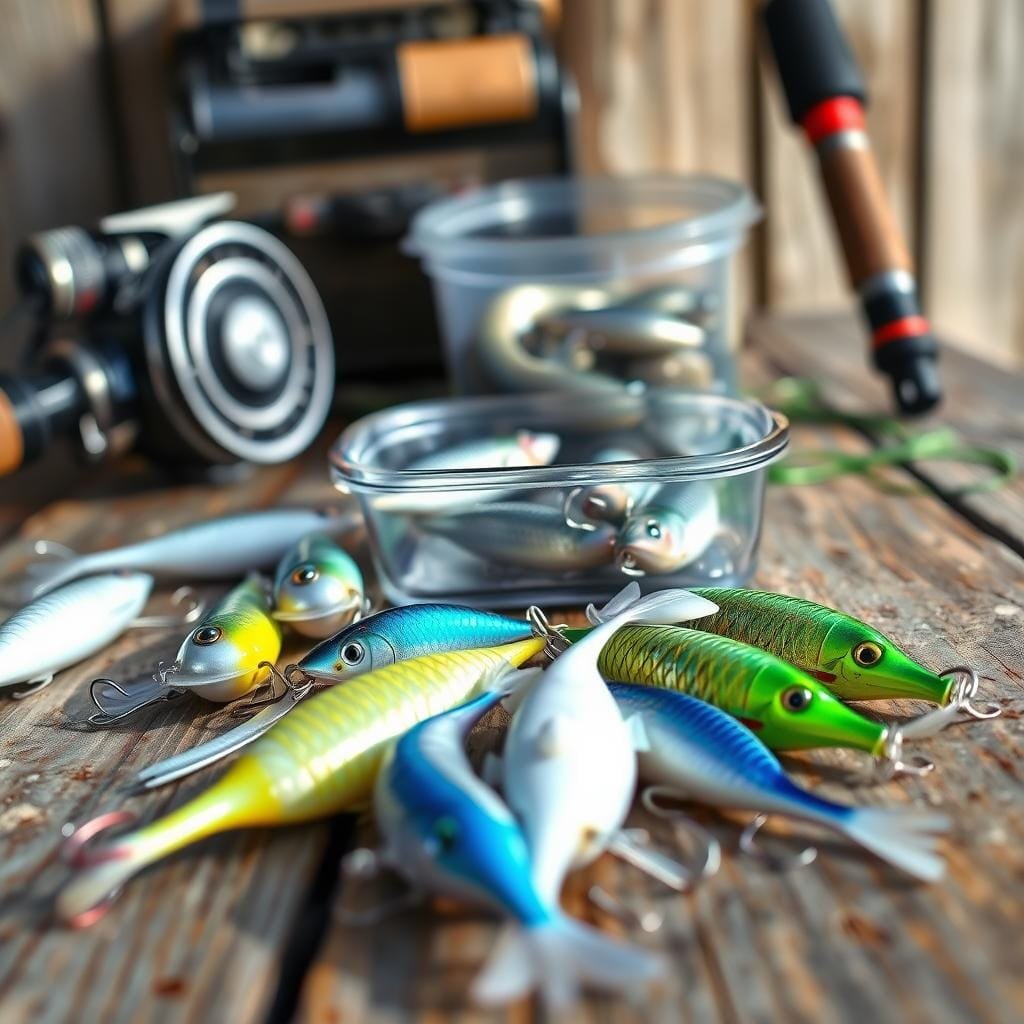
Crappie bite best when your bait looks alive and moves with purpose. Shade, cover, and nearby baitfish set the stage. This guide highlights the top crappie baits that win across seasons, from live bait for crappie to smart, simple crappie rigs you can fish anywhere.
We’ll walk through crappie fishing lures that match real forage and trigger bites without overworking the rod. Expect practical picks: minnows under a float, crappie jigs in hair and plastic, jigging hard baits like the Rapala Jigging Rap, and crankbaits for crappie when you need to cover water fast.
Along the way, you’ll see how to pair the best bait for crappie with simple presentation rules. That means subtle action near docks and brush, steady long-line trolling on summer reservoirs, and clean vertical drops when fish suspend over bait. Each choice puts you closer to the bite.
Brands you know—Rapala, Z-Man, Bobby Garland, Blakemore, and Thill—anchor the lineup. Whether you favor compact crankbaits for crappie, confidence plastics, or classic live bait for crappie, the next sections show how to rig, where to cast, and when to switch so every trip feels dialed in.
Why Crappie Bite: Shade, Cover, and Subtle Presentations
Crappie like light and edges. They hide in shade to rest and sneak up on food. Place your bait just above their eyes and keep it there.
Move slow and calm. Crappie like gentle presentations. Let your bait float and feel for bites.
How shade lines, stakes, docks, and contour changes concentrate slabs
Shade lines are like highways for crappie. They hide near light and wait to strike. Docks and bends are ambush points.
Look for shade near structure. Use mini-tubes or Road Runners to catch them. Learn more about finding schools here.
Subtle, life-like movement: triggering neutral fish without overworking baits
Neutral fish need finesse. Use hair jigs or small tubes for a natural look. Move them gently to attract fish.
They look up. Hold your bait just above them. This works best near docks and in clear water.
Reading stomach contents to match the hatch: shad, insects, minnows, and more
Check what’s in their stomachs. Switch your bait to match what they eat. Use mini-tubes or marabou jigs for different looks.
Choose light colors for open water and darker ones for near wood. Go small near docks. Use a slow retrieve on points.
Live Bait That Consistently Produces
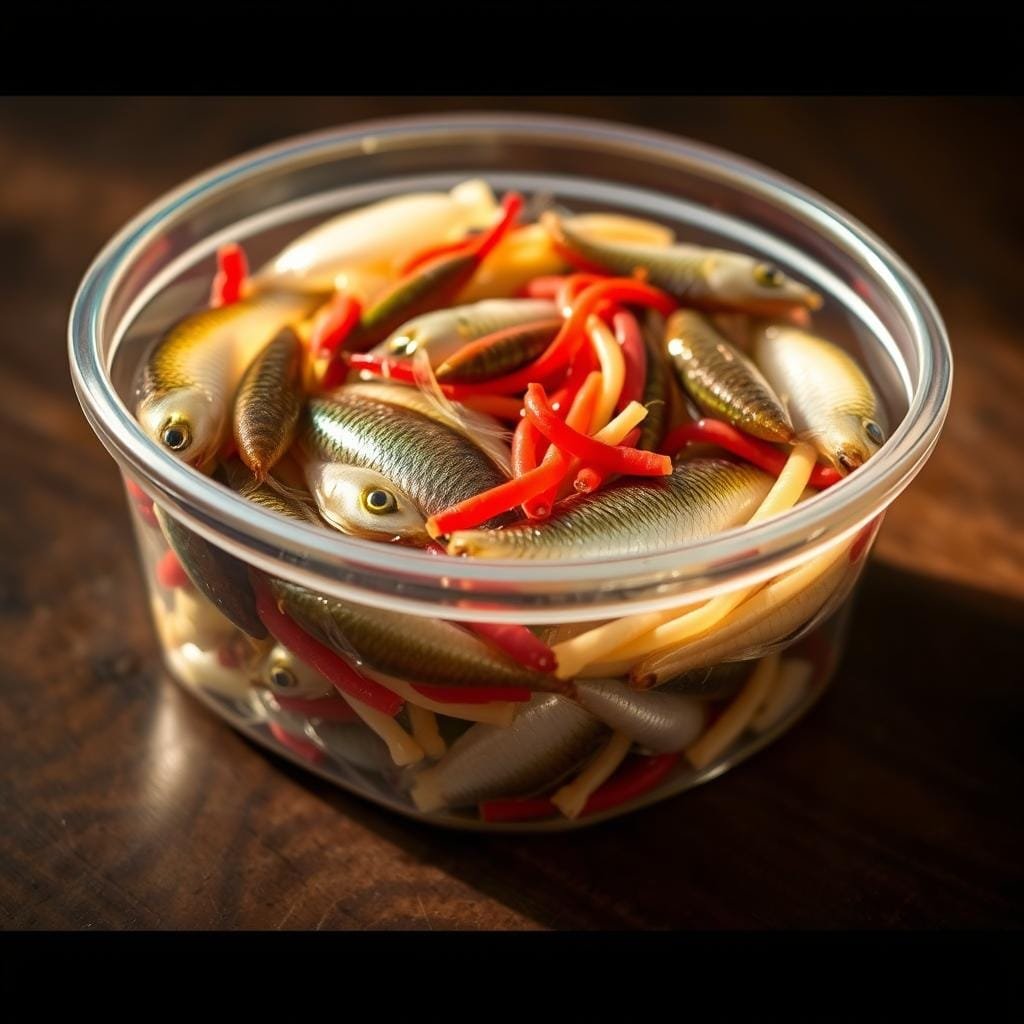
When fishing gets tough, live minnows for crappie make it easy. They work well in cold weather, after storms, and in murky water. Just use real bait and move slowly to catch more fish.
Minnows under floats, on spider rigs, and for dipping cover
Use a Thill Wobble Bobber to fish at any depth. It’s great for feeling light bites. Fixed bobbers are good for fishing near brush and laydowns.
For lots of fish, try spider rigging. Use long rods to cover more area. This method works well near edges or where schools are.
In tight spots, use long poles to fish cover. Place a minnow near stumps or dock posts. Move it slowly to catch fish.
Crickets, mealworms, and wax worms as jig-tippers
Crickets and mealworms attract black crappie in clear water. Wax worms stay on the hook and add scent. Jig tipping worms with hair or plastic also works well.
Use a small marabou or tube, then add a light tip. Make short casts or swing the jig gently. This keeps the fish biting.
When to choose live bait over artificials for black vs. white crappie
Black crappie like insects in clear water, so use tippers. White crappie prefer minnows in open water. Live bait is better in pressured or murky water.
Look at what fish are eating. If they’re not taking plastics, switch to live minnows. Move slowly and let the bait settle before you move again.
Jigs and Plastics: The Everyday Workhorses
More than nine out of ten crappie anglers use crappie jigs. They work in every season and around any cover. Hair and soft plastics each bring a strength. Match the day’s mood, then let simple moves seal the deal.
Hair vs. plastic: when marabou’s natural pulse outfishes rubber
A marabou jig crappie shines when fish get picky or the water cools. The feather breathes on the pause and looks alive with tiny twitches. The Great Lake Finesse Marabou Jig is a go-to over deep brush and summer structure.
Plastics win for speed and durability. They skip docks, take hits, and keep shape. The Mr. Crappie Slab Daddy Live Hair Jig covers shallow sight fish, while Z-Man’s 2-inch GrubZ adds glide when you need a slow hover on a steady retrieve.
Tube, grub, and stinger profiles that match forage
Crappie tubes imitate shad and young panfish in a compact package. The Southern Pro Lit’l Hustler Tube in 1.5–2.5 inches fishes well on insider or standard ball heads, with proven colors like chartreuse, white, smoke, and black/chartreuse.
A twister tail grub gives steady thump for stained water or wind. When crappie key on minnows, a slim stinger minnow profile tracks straight and won’t spin on the drop. For dock shooting and tight quarters, these shapes slide in quietly and fall true.
For a tuned setup with No. 4 sickle hooks, color logic, and tight-lining cadence, see this guide to jigging crappie that blends real-world lure picks with simple execution.
Weights and fall rates: 1/32 to 1/8 ounce for precise control
Think in terms of jig weights fall rate. Use 1/32 ounce for a slow, natural drop in shallow water or around spooky fish. Step to 1/16 ounce as the everyday choice for balanced pace in moderate cover and depth.
When current, wind, or deeper brush comes into play, 1/8 ounce keeps contact and cuts bow in the line. Pair these sizes with high-vis mono, short hops every few seconds, and let the bait swing on a semi-slack line to trigger more bites.
Jigging Hard Baits for Suspended Schools
When crappie are in the middle of the water, hard baits work best. They move fast, snap sharply, and glide briefly. This keeps them in the fish’s strike zone. Use forward-facing sonar to find fish and place your lure just above them. Then, let the lure’s movement do the work.
Jigging raps and spoons under docks and over open-water bait
Under docks, throw a Rapala Jigging Rap or small Binks Spoon into the shade. Give it a quick pop. This makes a flash and a tight glide that gets the fish’s attention. Over bait clouds in open water, the same method works well and covers a lot of depth quickly.
Crappie spoons fall straight and call fish from afar. The SteelShad blade bait adds a tight vibration on the lift. Keep the lifts short and then pause. Most strikes happen when the bait stalls and hovers above the school.
Power of vertical “stroke” and glide with forward-facing sonar
Vertical jigging crappie is precise with live imaging. Track arcs, stop a foot high, and “stroke” the lure. This makes it dart and glide back to eye level. This small gap makes fish chase up, not down.
On deeper pods, the Akara Midge micro-glider drops quickly and planes out on pause. Use braid to a fluoro leader for better feel. Watch the screen, time the glide, and repeat until the stack rises.
Cold-front and fall applications before ice-up
Cold fronts push fish off cover and into the water column. A disciplined stroke-and-glide keeps you in play when casting dies. In the Upper Midwest, vertical jigging crappie with Jigging Raps is a key pattern as nights cool.
Target edges of bait and isolated marks from forward-facing sonar. In many lakes, fall crappie schools hover 12–25 feet down. Keep crappie spoons and gliders just above their heads to stay in the game.
Crankbaits That Cover Water and Catch Deep Summer Slabs
When it’s hot, crappie crankbait trolling is a top choice. It’s great for finding deep summer crappie in big areas. Use small crankbaits with a tight wobble. Keep your line clean and watch your sonar.
Long-lining 2-inch cranks to 10–20 feet on big reservoirs
Long-lining cranks are simple and effective. Use a 2-inch Bandit 300 or Jenko Crappie Crank. They work well in 10–20 feet of water on big lakes.
Use a 7-foot medium-light spinning rod with 6–8 lb braid. Add a short fluoro leader. Use gentle twitches to attract fish. This setup casts well and stays deep.
Bright, high-contrast vs. match-the-hatch shad patterns
In murky or windy water, bright colors stand out. Try bold chartreuse backs or hot pinks. In clear water, use shad or bluegill colors.
Try different colors like a Bandit 300 in chartreuse/blue or a Jenko Crappie Crank in shad. Change colors every 20–30 minutes to match the light.
Dialing speeds and spreads for the Tennessee River and Mississippi lakes
On the Tennessee River and Mississippi lakes, adjust your speed and spread. Start at 1.2–1.8 mph and adjust. Longer lines dive deeper; shorter lines run higher.
Use a clean spread with two to four rods per side. Stagger them by 10–20 feet. Mix Jenko Crappie Crank and Bandit 300. Keep a Rapala Husky Jerk for when fish want a straighter track.
Jerkbaits and Spy Baits for Cold Water and Suspended Fish
When bait clouds drift and sonar shows arcs mid-depth, cold water crappie call for subtle motion and long hangs. A suspending jerkbait crappie setup or a quiet spy bait crappie retrieve keeps you in the strike zone longer. This is key in clear water and light wind.
Small suspending jerkbaits for winter/prespawn bites
Look for winter crappie lures that stop and hover. Smaller, 3-inch, two-treble models like the Nishine Lure Works Erie 95SD are good. They pin fish that won’t chase.
Make a long cast, count it down to the school, then work a tight twitch with long pauses. Most hits feel like the bait just got heavy. This is classic suspending jerkbait crappie behavior in clear, cold water.
Use braid to fluoro on light spinning to keep contact crisp. Long leaders cushion surges and help small hooks stick. Pauses stretch even longer when the water dips below 45, fitting the slow metabolism of cold water crappie.
Slow, steady spy-bait retrieves on BFS gear around bait clouds
For neutral fish cruising under shad, a spy bait crappie approach shines. The Jenko Shinobi Shad, Megabass Karashi, and DUO Realis Spinbait Alpha run straight and fine with a subtle roll. Cast past the marks, count down, and slow-roll.
A BFS crappie outfit or a light spinning combo launches tiny baits without overpowering them. Let blades and micro-vibration do the work.
In open water, the profile draws fish from a distance. Around sparse cover, the compact body slips through. For more on cadence and depth control, see this spybait and finesse swimbait breakdown.
Counting down to fish depth and feeling that “extra weight” bite
Use your graph to pin the layer—say 12 to 16 feet—then run a simple count. Ten equals shallow, fifteen rides low; adjust half-seconds until the lure tracks through the school. With winter crappie lures and spy baits, bites rarely thump.
You’ll feel extra weight or the line slacken. Sweep, don’t jerk, so small hooks stay pinned.
Pair a 12-pound Sunline Xplasma braid main line with a 6–8 pound Sunline Sniper leader around 20–22 feet for stealth and sensitivity. This system casts far, tracks true, and keeps suspending jerkbait crappie or spy bait crappie presentations in front of cold water crappie longer without spooking the school.
Seasonal Picks: Summer 2025 Rigs and Lures That Shine
Hot days and light wind mean fish move a lot. Summer 2025 crappie lures are made to track bait and stay in the strike zone. Keep your moves simple and let the bait do the work.
MoGlo jig + Bobby Garland Mayfly during insect hatches
When mayflies hatch, match their look and let it glide. Use a MoGlo jig in 1/24 or 1/32 ounce. The Bobby Garland Mayfly adds a buggy kick.
Work it under a slip float in shaded spots. Or slow-swim it past bluegill beds at dusk.
Bright glow heads work well in stained coves. Pause, then twitch once. Most hits feel like extra weight.
Yum FF Sonar Jig and Minnow for post-spawn weed edges
As fish move to weeds, the Yum FF Sonar Jig Minnow shines. Use a slow, even retrieve. Count it down to the outside edge, then reel just fast enough to tick the tops.
Add brief stalls to let it hover in front of suspended targets. Mark these on forward-facing sonar.
Bump to 1/8 ounce on breezy afternoons for control. Then drop back to lighter heads when the lake slicks off.
Lindy/Little Joe spinner rigs over weedbeds with leeches or crawlers
A Lindy spinner rig covers water and draws bites you’d miss with a straight jig. Thread on a nightcrawler or leech. Long-line along weed tops at 0.7–1.0 mph.
Use a split shot to track mid-columns or run clean to skim the canopy.
Change blade color with the light: gold in low sun, nickel when skies brighten. Keep turns wide to avoid fouling the bait.
Great Lake Finesse marabou for deep structure and brush
When thermoclines set up, reach down with Great Lake Finesse marabou. Cast past brush, count it down, and swim-suspend with tiny rod lifts. On steeper breaks, go vertical and hold the jig just above the marks.
Natural hues work best in clear water. If fish follow but won’t bite, shorten the pause and raise the bait a foot.
| Scenario | Primary Pick | Weight/Speed | Key Trigger | Best Water |
|---|---|---|---|---|
| Evening insect hatches | MoGlo jig + Bobby Garland Mayfly | 1/24–1/32 oz, slow fall | Horizontal glide under a float | Shaded docks, laydowns, riprap |
| Post-spawn edge roamers | Yum FF Sonar Jig Minnow | 1/8 oz, steady retrieve | Hover on brief pauses | Outside weed lines, dock corners |
| Covering large weedflats | Lindy spinner rig with crawler/leech | 0.7–1.0 mph | Blade flash over tops | Milfoil, cabbage, mixed weeds |
| Midsummer deep brush | Great Lake Finesse marabou | Countdown or vertical hold | Subtle pulse above fish | Brush piles, points, humps |
Rotate these Summer 2025 crappie lures as light and wind shift. Mix in the Bobby Garland Mayfly, a MoGlo jig for after-dark glow, a Yum FF Sonar Jig Minnow for suspended pods, a Lindy spinner rig for search duty, and Great Lake Finesse marabou when fish slide deep.
best bait for crappie
Choosing the right bait for crappie depends on the fish’s mood and where you are. In tight spots or under docks, a quiet bait works best. But in open areas or long points, you need something that moves fast.
Live minnows vs. jigs vs. hard baits—choosing by mood and cover
When fish are calm, it’s hard to choose between live minnows and jigs. A small shiner can move naturally in tight spots. A tiny jig also works well and can get through branches.
If the fish are active, hard baits are the way to go. Jigging raps and spoons attract roaming fish. A compact crankbait is great for finding fish in different depths.
Boat control: vertical presentations, dock shooting, and trolling
Being in control of your boat is key. For fishing near brush, hold the boat close and drop a jig straight down. This method helps avoid getting stuck and lets you feel bites.
For fishing near docks, sneak up quietly and cast into dark spots. This method is quick and effective. When fish are spread out, trolling with long lines or spider rigs is best. It covers a lot of ground and imitates natural movement.
Water clarity and color selection for consistent bites
The color of your bait should match the water’s clarity. In murky water, use bright colors like chartreuse/black or Hot Steel. In clear water, choose colors that blend in, like smoke or pearl.
Change your bait’s color as the light changes. Wind, depth, and cloud cover can affect how fish see your bait. Try different colors until you find the right one.
Proven Lure Models Experts Rely On
Choosing the best crappie lures saves time and catches fish. These picks cover docks, weed edges, open basins, and shallow banks well.
Southern Pro Lit’l Hustler tube for universal appeal
The Southern Pro Lit’l Hustler works great under a float or on a light ball head. Its hollow body and tentacles move on pause. This action attracts fish in clear or stained water. Colors like chartreuse, white, smoke, and black/chartreuse are good for traveling.
Z-Man 2-inch GrubZ for casting, jigging, or trolling
Z-Man GrubZ has a buoyant ElaZtech tail. It kicks at any speed and hovers on pause. Colors like Electric Pink, Glow, Motor Oil, and Shimmer Pearl work well in sun and shade. You can cast it to brush, count it down to schools, or troll for roaming fish.
Blakemore Road Runner for strolling edges with flash
The Blakemore Road Runner combines a pony head with a chin spinner. Pair it with a 2-inch grub for a slow stroll along grass lines and channel swings. Willow or Indiana blades add thump, calling slabs without scaring them.
Rapala Ultra Light Shad and Husky Jerk for trolling lanes
The Rapala Ultra Light Shad casts far and runs 4–5 feet. It has a tight shimmy. Colors like Hot Steel, Pink Clown, and Yellow Perch are good for light changes. For deeper trolling, the Rapala Husky Jerk tracks true and stays in the bite zone.
Mr. Crappie Slab Daddy hair jig for shallow sight-biting slabs
The Mr. Crappie Slab Daddy has marabou and hair for a living pulse. Sexy Shiner and Orange Tuxedo colors work well. Pitch it past the target and glide it back for easy catches.
These lures cover everything from surface shade to mid-depth lanes. Mix their profiles and cadences to match the mood, pressure, and forage. Then, let the hardware do the work.
| Lure | Primary Strength | Best Use | Key Colors/Sizes | Pro Tip |
|---|---|---|---|---|
| Southern Pro Lit’l Hustler | Natural tentacle pulse | Floats, docks, brush | 1.5–2.5 in; chartreuse, white, smoke, black/chartreuse | Rig on an internal or ball-head jig for a slow, level fall |
| Z-Man GrubZ | Durable, buoyant tail action | Casting, vertical jigging, trolling | 2 in; Electric Pink, Glow, Motor Oil, Shimmer Pearl | Pause often to let the grub hover and trigger neutral fish |
| Blakemore Road Runner | Flash and thump from chin spinner | Slow “strolling” along edges | 1/32–1/4 oz; willow/Indiana blades | Keep retrieves slow; let the blade work near grass and breaks |
| Rapala Ultra Light Shad | Tight wiggle, easy casting | Trolling lanes 4–5 ft | 1.5 in; Hot Steel, Pink Clown, Yellow Perch | Add clip-on weight to push deeper when fish slide down |
| Rapala Husky Jerk | True-tracking, suspending jerkbait | Long-line trolling over bait clouds | Size 6–10; shad and chrome patterns | Stagger line lengths to cover multiple depths in one pass |
| Mr. Crappie Slab Daddy | Life-like marabou movement | Shallow sight bites, clear to stained | 1/16, 1/8 oz; Sexy Shiner, Orange Tuxedo | Let it sit and quiver on tight fish guarding cover |
Pack the Southern Pro Lit’l Hustler, Z-Man GrubZ, Blakemore Road Runner, Rapala Ultra Light Shad, Rapala Husky Jerk, and Mr. Crappie Slab Daddy. You’ll have a mobile system ready for any lake mood.
Dock Shooting, Floats, and Finesse Delivery Systems
Stealth rigs put baits where slabs live. This means under shade, beside posts, and tight to cables. For dock shooting crappie, use compact plastics with balanced heads. Keep your line light.
When fish roam, a sensitive float or a fast-sinking jig is best. They make clean, repeatable presentations. This matches what you see on forward-facing sonar crappie.
Bobby Garland Mo’ Glo Slab Slay’R for easy skipping
The Slab Slay’R in 2 or 3 inches skips straight under docks. It walks along shade lines well. Its streamlined body and thin spear tail flutter on a slow fall.
Colors like Devil’s Grin, Ghost, and Pink Phantom shine with Mo’ Glo heads. A Dock Shoot’R Pull Tab helps load the rod safely. This makes accurate shots easy.
Thill Wobble Bobber: slip-float control at any depth
The Thill Wobble Bobber casts far and tracks true. It holds exact depth over brush or rock. It telegraphs light pecks and lets you hover a bait above stakes or cables without spooking fish.
Slide-stop adjustments make quick changes. This is useful when crappie rise or drop with wind shifts.
Tungsten Probe-style jigs for fast sink and sonar sniping
Compact tungsten crappie jigs like the VMC Tungsten Probe sink fast. They get down to suspended marks quickly. The dense head and slim body pierce wind and current well.
They are perfect for forward-facing sonar crappie. Glow Chartreuse or Pink Chartreuse Glow pop in deep water. They hang straight beneath a float for precision.
- Use 4–6 lb mono for forgiving dock shots; switch to braid with a fluoro leader for weed edges.
- Let the Slab Slay’R pendulum back to you; pause mid-column for neutral fish.
- Start the Thill Wobble Bobber a foot above marks, then fine-tune in 6-inch steps.
- With tungsten crappie jigs, count down the sink rate to tag specific arcs you track on sonar.
| System | Best Use | Key Advantage | Pairing Tips | Depth Range |
|---|---|---|---|---|
| Slab Slay’R dock shooting | Under docks, cables, shaded corners | Easy skipping with subtle tail flutter | Mo’ Glo jig heads; Dock Shoot’R Pull Tab; 5 lb mono | 2–10 ft |
| Thill Wobble Bobber slip float | Brush tops, stake beds, contour edges | Long casts, precise depth, bite sensitivity | Small split shot; stop knot; minnow or 2-inch plastic | 3–15 ft |
| Tungsten Probe-style jigs | Suspended fish and vertical “sniping” | Fast sink, tight profile for tough bites | 1/32–1/16 oz; glow finishes; 6 lb braid to 6 lb fluoro leader | 8–25 ft |
Blend these tools by mood and cover. Shoot the Slab Slay’R when fish bury deep. Set a Thill Wobble Bobber to hover over limbs. Drop tungsten when arcs hang mid-column.
Each rig keeps you quiet, accurate, and fast. This is exactly what pressured crappie demand.
Gear and Setup: Rods, Reels, Lines That Maximize Bites
A good crappie rod reel setup makes tiny baits look alive. It also keeps big rigs in check. This way, you catch more slabs without scaring them away.
Keep a special vertical jigging stick and a casting rod ready. Switching rods instead of retieing keeps your fishing smooth. It also keeps your bait in the right spot.
Ultralight panfish rods for tiny jigs and subtle bites
An ultralight panfish rod is great for small jigs and light bites. Try a St. Croix Panfish Series Light Fast with a Piscifun Carbon X 500 or Viper 500. It feels every tap and drops baits fast.
Use 2–6 lb mono for float fishing and dock shooting. For deeper water, try thin braid with a short fluoro tip. This rod keeps the pressure right, so fish don’t get away.
Medium-light options for spinner rigs and weed work
For power with spinners and light cover, choose medium-light spinning. A St. Croix Avid ML/MLF or MLXF gives you the strength to move fish out of weeds.
This extra power also helps with surprise bass or walleye. It keeps your blades moving and tubes gliding smoothly.
Braid-to-fluoro leaders for trolling cranks and jerkbaits
For trolling, use a 7-foot ML spinning rod with 6–8 lb braid to fluoro leader. Add 3–6 feet of 4–8 lb fluorocarbon for stealth. This setup works well with small cranks and jerkbaits.
The braid to fluoro leader boosts sensitivity. You’ll feel weeds and bait flicks. Add twitches while long-lining to get more bites without speeding up.
| Technique | Rod & Power | Reel | Main Line | Leader | Best Use |
|---|---|---|---|---|---|
| Tiny jigs, floats, dock shooting | St. Croix Panfish Series, Light Fast | Piscifun Carbon X 500 or Viper 500 | 2–6 lb mono or 6–8 lb braid | 2–4 ft, 4–6 lb fluoro (with braid) | Subtle bites, precise drops, finesse control |
| Spinner rigs, weed edges, tubes | St. Croix Avid ML/MLF or MLXF | 2500 size spinning | 6–10 lb braid or 6–8 lb mono | 2–4 ft, 6–8 lb fluoro | Weed deflection, backbone, mixed species |
| Trolling cranks and jerkbaits | 7′ ML medium-light spinning | 2500 size spinning | 6–8 lb braid | 3–6 ft, 4–8 lb fluoro | Long-lining, depth control, twitch strikes |
Build your crappie rod reel setup for these roles. With medium-light spinning for power, an ultralight panfish rod for finesse, and a braid to fluoro leader for stealth, you’re ready for anything.
Where and How to Fish Each Bait Around Common Cover
Start with shade. For dock shade crappie, use Rapala Jigging Raps or small spoons. Then, dock-shoot a Bobby Garland Slab Slay’R or a Southern Pro tube far under platforms.
Around docks, laydowns, weedbeds, and brush piles, keep casts short and precise. If fish are timid, use a Thill Wobble Bobber. This gives depth control for a VMC Tungsten Probe or tube to hang in the strike zone without spooking the school.
Laydowns and brush are great for vertical jigging brush. Dip live minnows with a long rod and a small float to hover just above limbs. Or, count down a Great Lake Finesse Marabou Jig and hold it steady.
On brush piles and deep structure, ease the bait down until you feel tops, then lift six inches. For contour changes and points, slow-roll a Blakemore Road Runner or a jig-and-grub along the edge. Spider-rig minnows across the breakline to pick off suspended fish.
Work weedbeds with motion and control. Pull Lindy or Little Joe spinner rigs tipped with a leech or crawler to draw fish from cover. Then, trace post-spawn weed edges with a Yum FF Sonar Jig and Minnow using a slow, steady retrieve with pauses.
During insect hatches near docks and shallows, run a Mo’ Glo head and Bobby Garland Mayfly under a bobber around shade lines. On clear shallow flats, a Mr. Crappie Slab Daddy hair jig shines for sight biters that cruise in small packs.
When crappie drift over open-water basins in deep summer, trolling basins with 2-inch crankbaits covers water fast. Long-line a Bandit 300, Jenko Crappie Crank, Rapala Ultra Light Shad, or Husky Jerk at 10–20 feet to sweep the zone.
In cold water, count down small suspending jerkbaits like the Tiemco Reverie, Megabass X-80, or Nishine Erie 95SD and crawl them above bait clouds. A DUO Realis Spinbait Alpha or Jenko Shinobi Shad seals the deal on neutral fish. Adjust boat angle, keep contact, and rotate through these crappie cover types to stay on a steady bite.