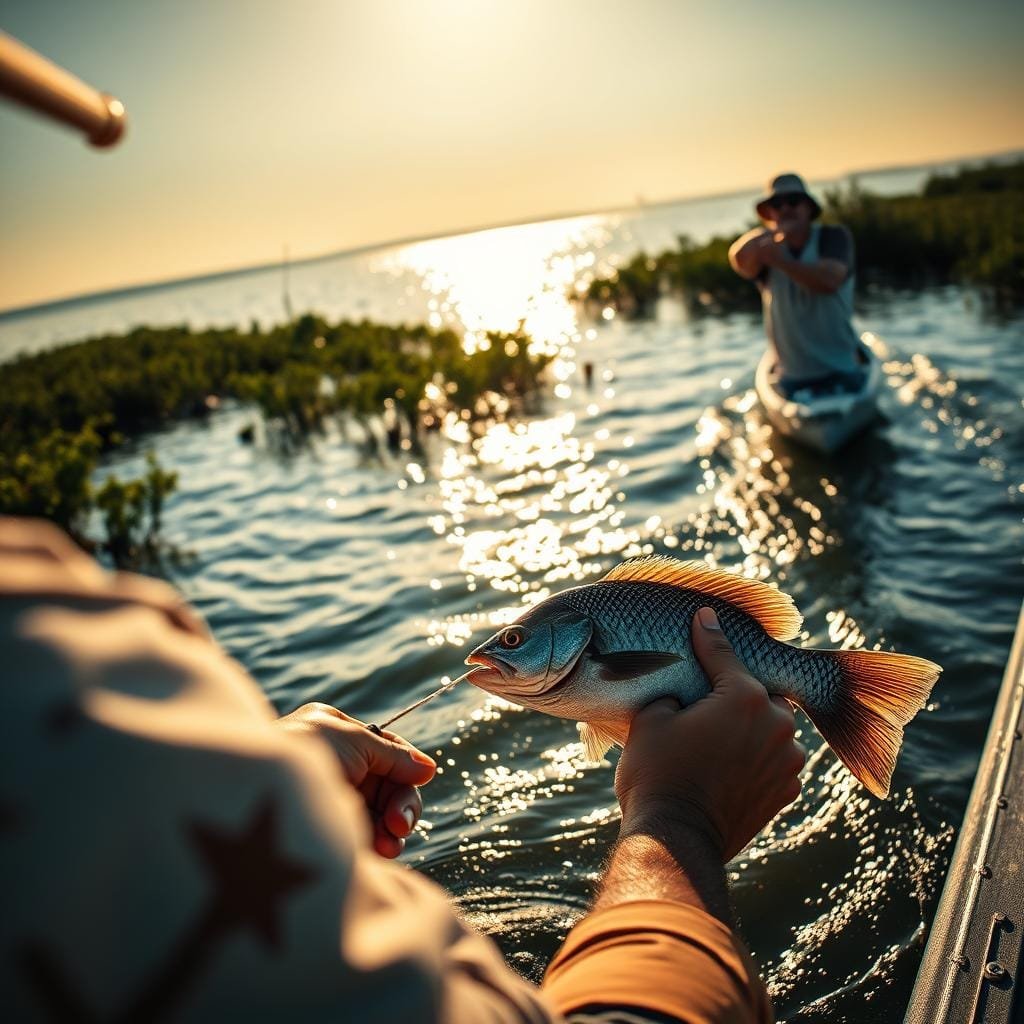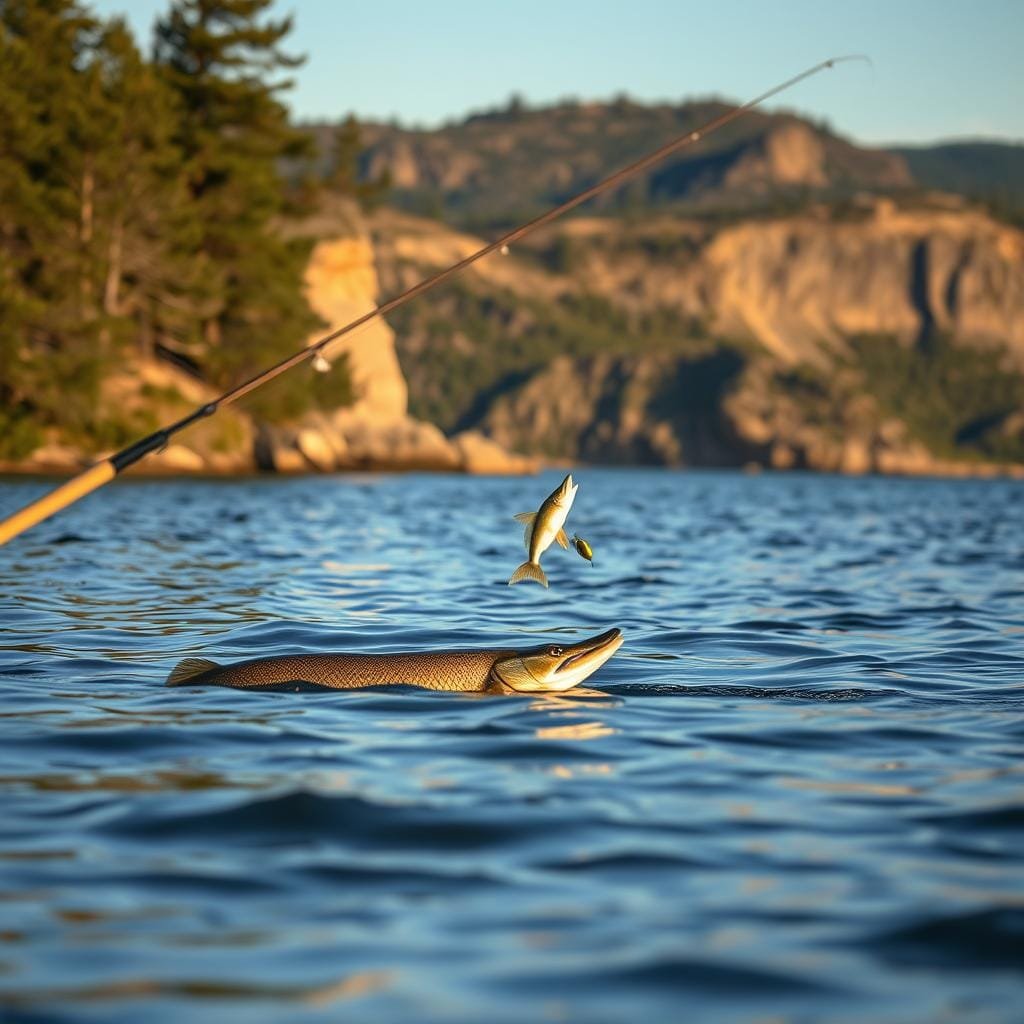
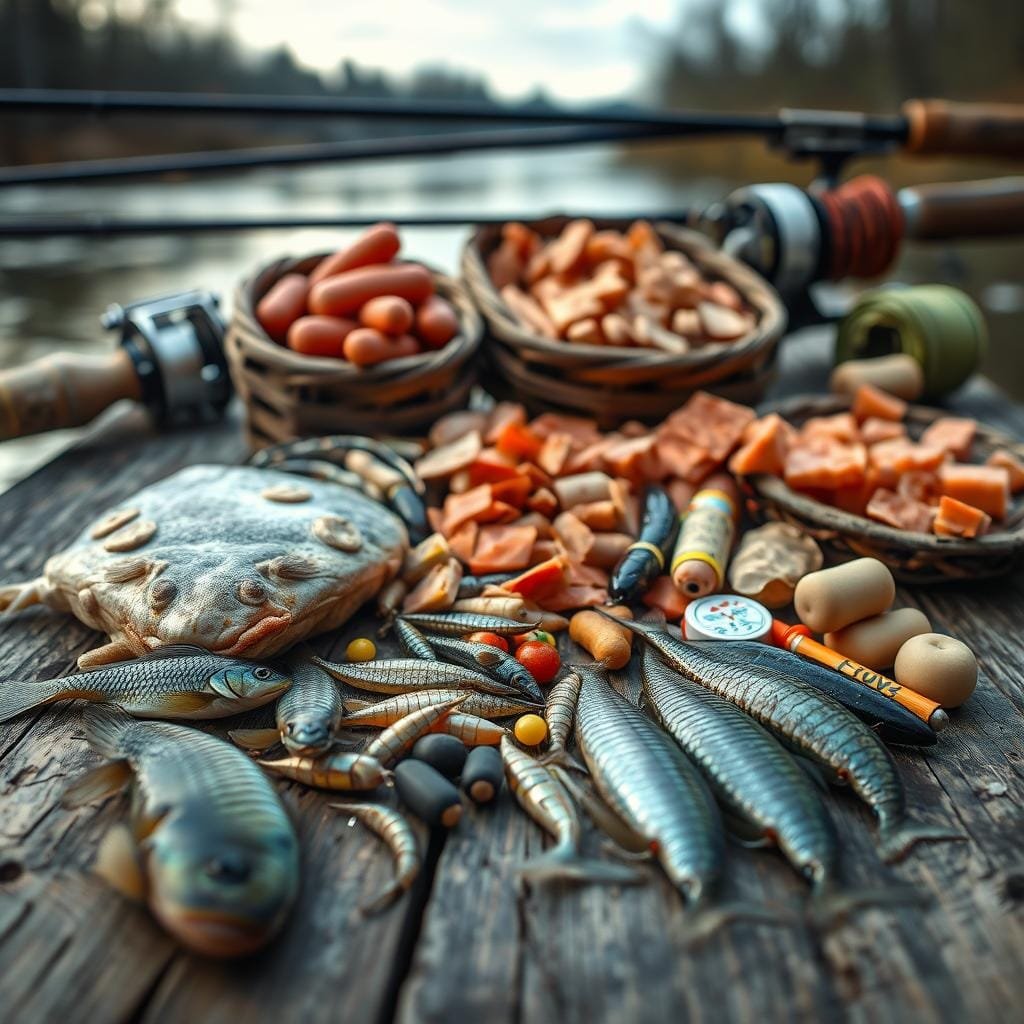
If you’re chasing U.S. flathead catfish, this guide is for you. Big fish like heavy cover and deep spots. The best bait is usually alive, but fresh cuts work too.
Expect fewer bites than with other fish. Patience is key. Use sturdy gear and match the spot and current.
Think about reels that hold 300 yards of line. Use 40–60 lb mono or 80–100 lb braid. Medium-heavy to heavy rods are best. Keep drags tight to pull fish from tight spots.
Flatheads don’t like stink baits. They love live bait that moves a lot. Or a fresh cut bait that looks good.
Scout during the day and fish at night. Drop a lively bluegill or fresh bait where logs are and the current slows.
Some anglers use odd baits with oil and scent. Try chicken skin with garlic, SPAM cubes, spoiled shrimp, green apple gum, or bar soaps. Oily meats like SPAM can also work.
Marinade your baits with anise liqueur, grape wine, beer, or brandy. Even Jell-O flavors can help.
Follow these tips to catch more flatheads. We’ll show you the best baits and how to use them. You’ll learn to catch the big ones.
Why Flathead Catfish Demand Specific Baits
Big river flatheads don’t waste energy. They live in deep bends, thick cover, and ambush lanes. Knowing how they eat helps you pick the right baits.
Opportunistic predators with a preference for live forage
These fish eat many things, but live bait is best. A lively bluegill or creek chub sends out movement and scent. This is what they can’t ignore.
Fresh cut bait works too, but live bait is better. It matches what they expect—real motion and the right profile.
How vibration and commotion trigger strikes
Flatheads hunt with feel as much as sight. The thump of a baitfish tail and the stumble of a panicked turn create a catfish commotion bite. In stained water, this vibration guides fish to your hook.
Set baits where current funnels sound and pulse through cover. The more authentic the rattle and kick, the more likely a heavy fish charges and commits.
Why stink baits rarely work on trophy flatheads
Rotten mixtures catch channel cats, but not big flatheads. They ignore smeared paste and soft grocery cuts. A fresh slab or a vigorous baitfish beats stink bait when size is the goal.
If you must choose, favor motion over musk. Trophy behavior rewards the angler who feeds the urge to hunt, not just sniff.
Finding Flatheads: Locations That Make Your Bait Shine

Finding the right spots for flathead catfish can make your bait irresistible. Look for deep, covered areas within a 10–20-mile stretch. Place your bait close to wood and rock. This way, your bait is easy to find and hard to steal.
Deep, cover-laden river bends: logs, boulders, brush
Start by looking at river bends that catfish love. These bends are deep and full of logs, boulders, and brush. They break the current, hide bait, and shade big fish all day.
Explore each bend from upstream to down. Drop your baits into the eddy seam and then move closer to the tangle. If you hit wood or rock, stay there; that’s where flatheads catch prey.
Small streams and “nastiest” holes that hold giants
In small streams, the biggest fish live in the ugliest holes. Look for scoured bends under cut banks, downed cottonwoods, or rock piles. These spots slow the current just enough.
Start by fishing the head and tail of the pool, then the darkest center. If the water is thin, be quiet and make short casts. One good set can light up the whole creek.
Day-scouting for night sets by kayak or boat
Use a kayak to scout out the best spots during the day. Catch channel cats while you’re at it. Note the spots with the most cover and a firm drop-off. Mark them on your fish finder or remember them by the shoreline.
Return at sunset with fresh bait and a plan. Go back to the best spots at night. Your preparation will make your bait stand out without wasting casts.
| Target Zone | Key Features | Best Entry Angle | Why It Works |
|---|---|---|---|
| Outside River Bend | 8–20 ft depth, stacked wood, boulders, soft-to-hard transition | Cast from upstream into seam, walk bait into cover | Merges food flow with safe ambush; classic flathead catfish locations |
| Logjam Undercut | Downed trees, root wads, slack pocket beside current | Short pitch straight down, tight drag control | Dense shade and current break concentrate giants in one bite window |
| Small-Stream S-Bend | Deepest outside turn, cut bank, rock-and-brush mix | Drop to head of hole, slide to belly, finish at tailout | Rotates food through the “nastiest” hole; ideal for small stream flathead fishing |
| Mid-Channel Ledge | Hard drop, scattered rock, faint inside seam | Anchor above ledge, feed line until bait touches lip | Edge effect funnels forage; big fish patrol after dark |
| Kayak Day Marks | Waypoints on deepest cover in 10–20-mile run | Slow drift, side-scan passes, quiet holds | Kayak scouting flatheads finds night sets that produce fast |
Night vs. Day: When Timing Supercharges Your Bait
Ask any seasoned angler about day vs night catfish and you’ll hear a familiar line: night time is the right time. This is true for night fishing flathead. The biggest fish often come out after sunset to hunt.
This lets a lively bluegill or fresh cut bait draw strikes. You don’t need to sit inches from a log.
Use the daylight to scout. Mark logjams, riprap, and deep bends with GPS on a Lowrance or Garmin. Then slide back after dark and drop baits where those fish prowl.
This rhythm turns mapping into meals. It stacks the odds for the best time for flathead catfish, in warm months.
Sound and scent carry farther at night. Thumping tails and steady vibration matter. Keep hooks sharp, check knots, and let the rod load before you drive steel.
These after-dark flathead tactics shine when current is steady and bait stays lively.
Pack smart for safety and efficiency. Bring a buddy, a warm jacket, a bright headlamp from Black Diamond or Petzl, and extra batteries. Quiet boat control, dim deck lights, and soft casts help on pressured rivers.
Test day vs night catfish patterns across bends, banks, and brush.
When you must fish daytime, put bait on their nose in shade lines and heavy cover. At night, spread sets to intercept movers along channel edges and upstream of logjams.
Rotate spots every 30–45 minutes. Stay with the bite and keep night fishing flathead productive using proven after-dark flathead tactics.
Live Bait All-Stars That Flatheads Crush
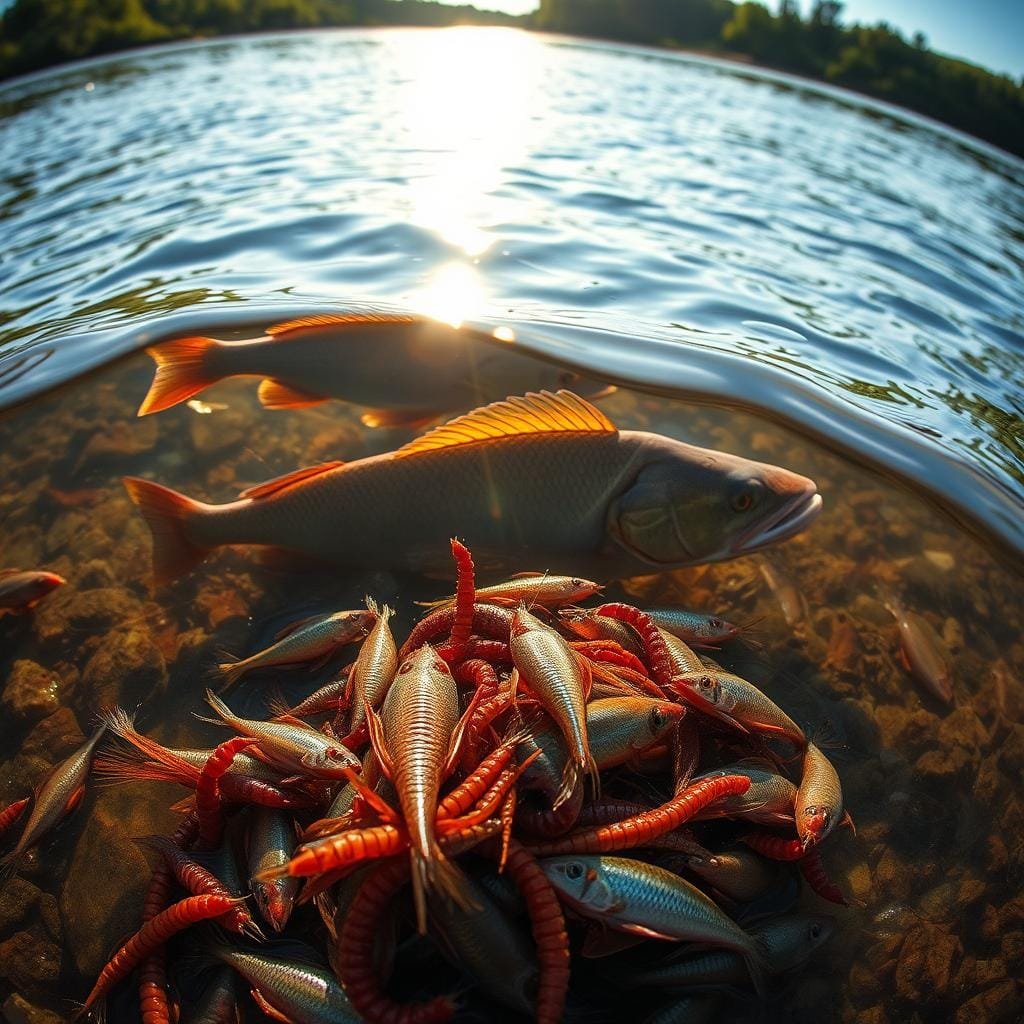
Flatheads love motion and strong baits. Choose lively baits that move well in water. Use strong tackle to pull fish out of tight spots.
Bluegills and sunfish: durable, high-commotion options
Live bluegill bait is perfect for catching flatheads in brushy spots. Bluegills and sunfish move a lot, which grabs the fish’s attention. Hook them in the nose or dorsal fin so they can swim well.
Use a small aerator and change the water often. This keeps the bait lively. For slow spots, use bigger fish to move more water and attract big flatheads.
Bullheads and suckers for big-river brutes
Bullhead bait is great for fast-moving rivers. Bullheads can handle rough water and last a long time. They’re perfect for night fishing on ledges and holes.
Slim suckers are also good for deep water. Place baits along a breakline and let them soak. A heavy sinker keeps the rig in place while the bait calls the fish.
Shiners, creek chubs, and carp as versatile choices
Golden shiners flash and move fast, which makes flatheads bite. Creek chubs work well in small creeks and rivers. Small carp are good for big fish, if allowed.
Choose the right size bait for the water. For gentle water, use 3- to 5-inch baits. For strong current, use bigger ones. For tips on bait placement, see this guide.
Keeping bait lively, legal, and healthy
Keep bait in cold, clean water with plenty of oxygen. Use insulated buckets and change the water often. Add a little non-iodized salt to reduce stress. Handle the bait gently and don’t overcrowd it.
Check what live bait is legal in your state before you go. Drain the water when needed, keep receipts, and don’t release unused bait. Healthy bait and following the rules lead to more bites and less trouble.
| Bait | Best Use Case | Rigging Tips | Durability | Key Advantage |
|---|---|---|---|---|
| Bluegill/Sunfish | Brush piles, slow to moderate current | Dorsal-hook with 8/0 circle; 3–5 oz sinker as needed | High | Big kick and strong profile for live bluegill bait flathead |
| Bullhead | Deep ledges, big rivers at night | Lip or tail-hook; heavy leader to resist scuffs | Very High | Elite stamina as bullhead bait for flatheads |
| White/Redhorse Sucker | Fast seams, rocky edges | Nose-hook; use slider rig to pin in place | High | Hydrodynamic body; ideal suckers for catfish in current |
| Golden Shiner | Roaming flats, dusk transitions | Nostril-hook; lighter weight to let it swim | Medium | Flashing sides draw curious fish |
| Creek Chub | Creeks, mid-size rivers, eddies | Dorsal-hook; adjust sinker for subtle movement | High | Reliable action; versatile creek chub bait across waters |
| Small Common Carp | Heavy cover, deep holes | Tail-hook; 80–100 lb leader and big circle hook | Very High | Strong swimmer with bulk for trophies |
Cut Bait That Consistently Produces Strikes
When live bait doesn’t work, cut bait does. It smells good and stays in one place. Keep it fresh and match it to the water and fish.
Fresh chunks from sunfish, carp, and suckers
Fresh sunfish flesh bleeds well and stays on the hook. Carp bait scents far and works in big rivers. Sucker gut sections are good at night.
Experts say clean cuts work better than old bait. Flathead bait tactics show chunks beat live bait in debris.
Size, oil content, and scent dispersion in current
Choose the right size for the water. In fast current, use a big chunk. In slow water, small chunks work well.
Fattier cuts smell better. Belly and gut sections spread scent far. Remove scales and score the skin for more scent.
Rigging cut bait to survive logjam battles
Use strong gear for heavy cover. Use a 4/0 to 6/0 hook and a locked drag. Pin the chunk through skin and meat.
Use a three-way or fixed sinker near snags. Lift and hold the rod high. Sweep hard and steer fish away. Cut bait works well when rigged strong and fished close to junk.
Unconventional Catfish Baits Anglers Swear By
Old-school tricks can fool catfish. These weird baits can save a slow night. Use them near current seams and wood, and keep rigs simple.
Chicken skin soaked in garlic or livers
Chicken skin garlic bait is a quick fix. Soak skins in garlic or livers overnight. Then, microwave them for a few seconds to loosen oils.
It works well for channel cats and smaller fish. Even big flatheads might take a bite when they smell it.
SPAM cubes and why oily meats call cats
SPAM catfish bait is full of salt and fat. Cut it into firm cubes for a J hook or circle hook. Its heavy oils make it great for big water.
A famous Mississippi River blue catfish once showed how good SPAM can be.
Spoiled shrimp and “sun-baked” scent strategies
Spoiled shrimp catfish tactics use funk and protein. Many anglers sun-bake shrimp for five days. Then, they bag it tight and hook it from head to tail.
This bait draws blue, channel, and flathead cats. It works best when the river is warm and flows steady.
Green apple bubble gum and bar soaps (Ivory, Zote)
Bubble gum bait, like green apple, sticks to the hook. Chew it first to release flavor. Then, use a small treble or tight circle hook.
Pure bar soaps like Ivory and Zote work too. Cut them into one-inch cubes for trotlines and tight anchor sets.
Marinades with booze for added kick
Layer scent with booze marinade catfish blends. Think aniseed liquor on cut bait, beer on salmon scraps, or brandy with anise oil plus cherry or strawberry gelatin over raw chicken. These mixes add volatility so the plume carries farther in stained water.
For more on these oddball baits and how anglers test them, see this rundown of secret catfish baits.
| Bait | Prep Tip | Best Use | Target Species | Hook/Rig Notes |
|---|---|---|---|---|
| Chicken skin garlic bait | Soak in garlic or liver overnight; brief microwave to release oils | Short sets around brush and cut banks | Channel cats; opportunistic flatheads | 2/0–5/0 circle; thread skin to lock on shank |
| SPAM catfish bait | Cube and chill for firmness | Big-river current seams and ledges | Blue, channel, occasional flathead | Octopus hook or circle; don’t overcast |
| Spoiled shrimp catfish | Sun-bake 3–5 days; seal until use | Warm water eddies and logjams | Blue, channel, flathead | Hook head to tail; leave point exposed |
| Bubble gum bait (green apple) | Chew to activate flavor; roll tight on hook | Steady current or calm water | Channel cats | Small treble or circle; avoid power casts |
| Ivory soap Zote bait | Cut into 1-inch cubes | Trotlines and setlines overnight | All species | Thread cube fully; let it harden in air |
| Booze marinade catfish | Aniseed liquor, beer, or brandy with anise oil and gelatin | Stained water where scent carries | Channel, blue | Soak bait 2–12 hours; refresh after each fish |
Use these weird catfish baits when the bite gets picky. Rotate through options fast. Let the current tell you which scent trail wins.
best bait for flathead catfish
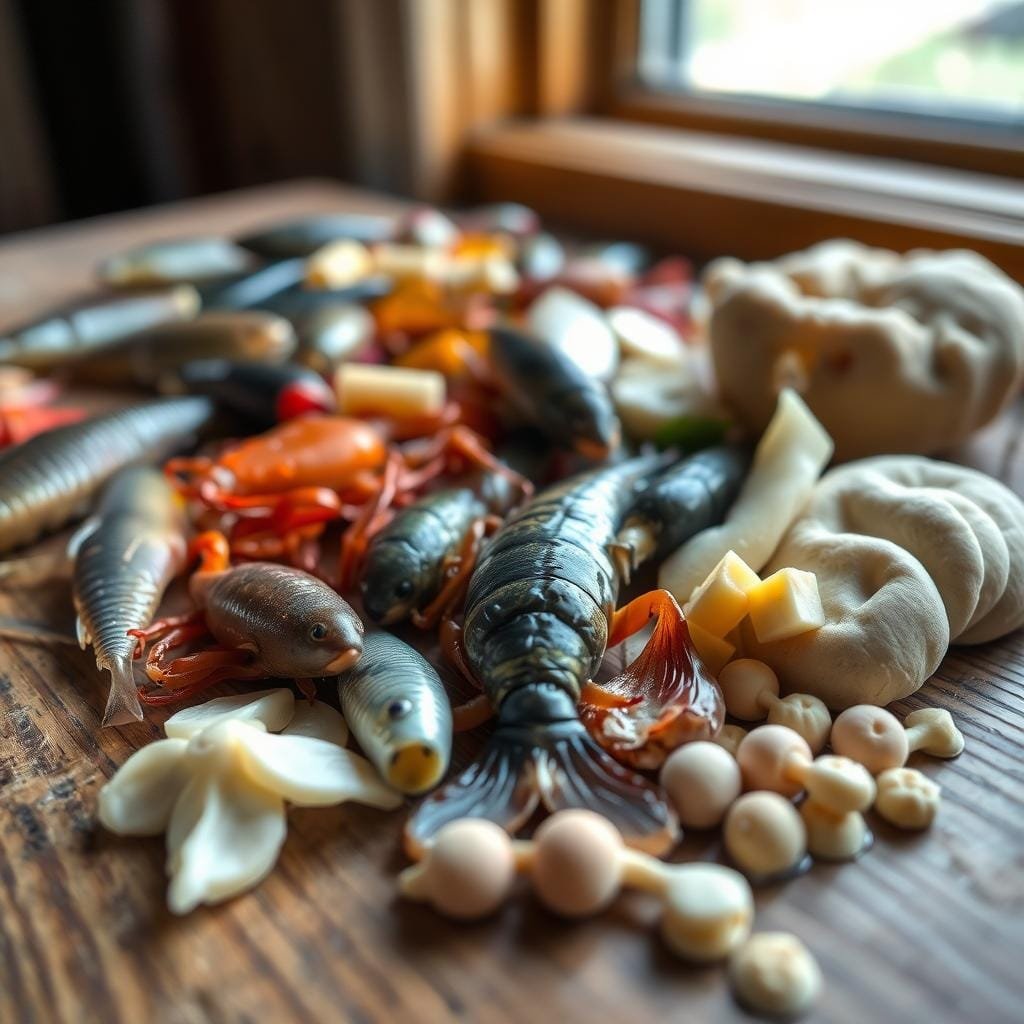
For trophy fish, the best bait is a lively, legal baitfish. Bluegill and other sunfish, bullheads, suckers, creek chubs, shiners, and small carp work well. Use fresh cuts for scent in moving water or when live bait is scarce.
Live vs. cut: when each wins around heavy cover
In logjams and root wads, live bait is better. It vibrates to draw fish out of tight spots. Pin a sturdy sunfish or bullhead on a circle hook near the snags.
Fresh cut bait is good when fish are not active. Cut oily chunks from suckers or carp. This way, they bleed scent without spinning. Use short leaders and strong line to keep bait in the strike zone.
Match your bait to water type, depth, and current
Choose bait that fits the river flow. In small, snaggy creeks, durable sunfish or bullheads work well. In big rivers, suckers or carp handle strong currents.
Depth changes the bait plan. Deeper bends need heavier rigs and tougher baits. In fast seams, use tighter, oilier chunks. In slow eddies, a lively creek chub can call fish from cover.
Seasonal tweaks: pre-spawn aggression to summer pattern
As water warms, use live bait for pre-spawn. Aggressive fish hit chubs, shiners, and bluegill near cover at dusk. Keep baits lively with fresh water and proper aeration.
In summer, balance motion and scent. Fish at night with a lively bullhead or a fresh chunk of sucker. Adjust hook size and leader length for the current.
| Bait Type | Best Use Case | Cover & Current Fit | Key Advantage | Notes |
|---|---|---|---|---|
| Live Sunfish/Bluegill | Heavy wood in small streams | Excels in tight bends and slow to moderate flow | High commotion draws strikes fast | Check state laws; keep baits lively and legal |
| Live Bullhead | Roots, rock piles, and snag fields | Handles abrasion and stays active | Durable under pressure | Great for live vs cut bait flathead comparisons |
| Live Sucker/Carp (small) | Broad river runs and deep bends | Stable in strong current | Powerful vibration in big water | Ideal for river current bait choice at depth |
| Fresh Cut Sucker/Carp | Fast seams and stained water | Oily scent cuts through flow | Consistent scent dispersion | Resize chunks to match current speed |
| Fresh Cut Sunfish | Moderate current near cover | Holds scent yet resists washout | Balanced profile and oil | Good backup when live bait is scarce |
| Creek Chub/Shiner (Live) | Edges of holes at dusk | Natural forage in clear water | Triggers pre-spawn flathead bait bites | Perfect for summer flathead tactics at night |
Rigs, Hooks, and Tackle That Protect Your Bait and Land Beasts
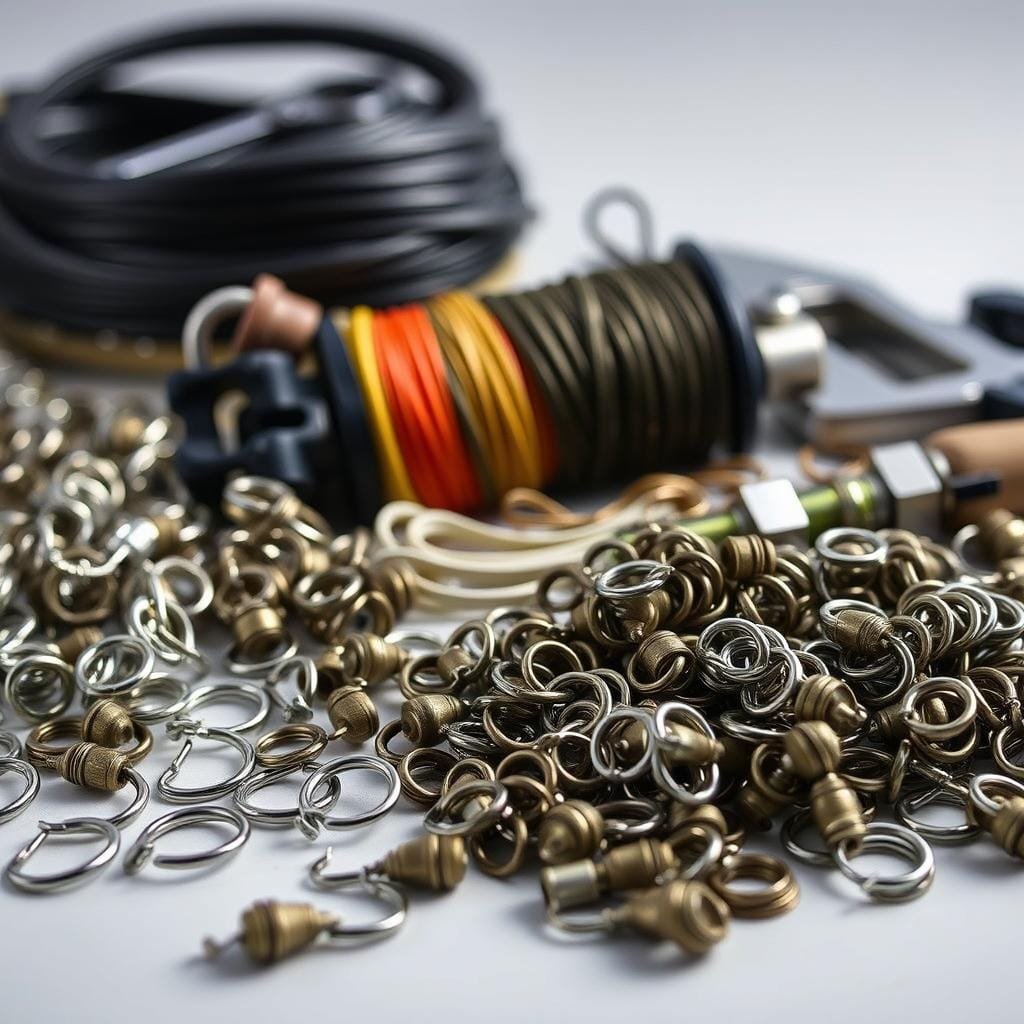
Make a tackle setup that wins the first five seconds. Use a strong reel that holds 300 yards of 20-pound line. Choose 40–60 lb monofilament or 80–100 lb braid to fight fish and protect against damage.
Pair it with heavy catfish rods from Ugly Stik Catfish, St. Croix Mojo Cat, or Abu Garcia Catfish Commando. These rods have the strength and shock control you need.
Drag is key. Make it strong enough to turn heads in cover but smooth to protect live bait. In tough spots, use logjam rigging. This includes short leaders, materials that resist abrasion, and strong terminal gear.
Hook choice is important. Circle hooks like Owner SSW, Gamakatsu Octopus Circle, or Mustad Demon are great for big fish. Choose the right size for your bait and replace dull hooks.
A sturdy swivel and a tough leader, like 80–100 lb Mono or fluoro, or coated 7-strand wire, keep your setup together.
Choosing between braid and mono depends on where you fish. Braid cuts through water and shows hits well. Mono stretches and is better around rocks. Mix them for the best results.
Set up to pull first and ask questions later. Keep casts short, angles tight, and rod tips high. This way, you protect your bait, catch fish cleanly, and guide them out before they get stuck.
| Component | Recommended Specs | Why It Works | Notes for Cover |
|---|---|---|---|
| Reel | 300-yd capacity (20-lb rating), strong drag | Room for heavy line and sustained runs | Favor all-metal frames for logjam rigging |
| Main Line | 40–60 lb mono or 80–100 lb braid | Power to lift fish and resist abrasion | Braid for slicing current; mono for cushion |
| Rod | Medium-heavy to heavy catfish rods, 7’6″–9′ | Backbone to turn fish fast | Longer rods steer fish around wood |
| Hooks | Circle hooks flathead sizes 7/0–10/0 | Corner-of-mouth hookups, less gut-hooking | Upsize for big live bait, sharpen often |
| Leader | 80–100 lb mono/fluoro or coated wire | Scuff resistance and shock control | Keep leaders short to limit wrap-ups |
| Terminal | Heavy swivels, snag-resistant sinkers | Prevents twist, holds baits in strike zone | No-roll or bank sinkers excel in timber |
| Line Choice Tip | braid vs mono catfish by location | Braid for dense wood; mono for rock and shell | Hybrid: braid mainline, mono leader |
| Application | flathead tackle setup for deep bends | Immediate control and clean hooksets | Essential for aggressive logjam rigging |
Stealth and Scent: Presenting Baits for Maximum Confidence Bites
Flatheads like quiet and clean scents. Scouting in daylight is good. But at night, being quiet is even better.
Placing baits “on their nose” in tight cover
Cast from upcurrent to drift into the strike zone. Place baits near logs or boulders. Use a soft touch to avoid scaring fish.
Use a slip sinker or no-roll with a short leader. This keeps live bait or cut bait in place. If you hit wood, wait a bit. It might get their attention.
Minimizing human scent and bait contamination
Rinse your hands with river water before you start. Use unscented gloves to handle fish and bait. Keep sunscreen and bug spray away from your gear.
Store bait in clean water. Some use marinades to hide smells, but keep it natural first. Change bait often to keep it fresh.
Using chum ethically where legal
Check the rules first. Catfish chum laws change by place. If it’s okay, use a small onion bag or cheesecloth with bait.
Put chum upcurrent of your spot. This lets scent flow into cover without too much food. Then, place your bait carefully to get a bite.
Safety, Regulations, and Ethical Bait Choices
Smart catfish trips start with respect for the water and the rules that protect it. Check live bait regulations before you buy, catch, or move baitfish. Keep gear tidy, keep records simple, and keep the habitat clean. Doing so helps you fish more and worry less.
State bait laws, transport rules, and invasives
States have different rules for legal species, wild collection, and where bait can be used. Read posted rules at ramps and bait shops. Also, confirm bait transport laws if you cross county or state lines.
Drain water from livewells and buckets to avoid moving invasive species bait or tiny hitchhikers like zebra mussels. Buy from licensed dealers when you can, and keep receipts. If you chum, make sure it’s allowed, and use small amounts. Avoid releasing leftovers; freeze or trash them instead.
Handling live bait humanely and responsibly
Healthy bait gets more strikes. Practice humane live bait handling: use a smooth, aerated bucket, change water often, and match temperatures slowly. Handle fish with wet hands and use circle hooks that pin bait cleanly.
Do not overcrowd. Add ice packs, not cubes, on hot days. If a baitfish is stressed, rest it or switch it out. Ethical choices keep mortality low and keep you within live bait regulations.
Night fishing safety: lights, buddies, and batteries
Dark water demands a plan. Follow night fishing safety tips: bring a partner, tell someone your route, and pack a headlamp plus spare batteries. Add navigation lights on boats and kayaks, and carry a power bank for phones.
Wear a U.S. Coast Guard–approved life jacket, even from the bank near deep drop-offs. Keep a basic first-aid kit, a dry jacket, and a whistle ready. Clear clutter so you don’t trip when a fish hits.
| Topic | What To Do | Why It Matters | Quick Check |
|---|---|---|---|
| Legal Species | Verify live bait regulations for allowed fish | Prevents violations and fines | Species list matches your state guide |
| Transport | Follow bait transport laws and drain all water | Stops spread of invasive species bait | Dry buckets and livewells before driving |
| Humane Care | Practice humane live bait handling with aeration and cool temps | Keeps bait lively and reduces mortality | Bait breathing steady, no rolling at surface |
| Chumming | Use only where legal and in small amounts | Avoids citations and overfeeding areas | Rule confirmed at ramp or in regs |
| Night Readiness | Carry headlamp, buddy up, bring extra batteries | Improves safety and response time | Backup light tested before launch |
Pro Tips & Troubleshooting When the Bite Is Tough
Slow nights can happen, even on the best rivers. Start by being patient and spending more time fishing. Check your location and timing again.
Scout during the day, then come back at night. Look for the deepest, most hidden spots with lots of logs and boulders. Use night fishing tips to make your bait more appealing. Place a lively bait or fresh cut bait right in front of the fish. Let the current help it get to the strike zone.
Change your bait strategy as the conditions change. Try different live baits like bluegills, sunfish, bullheads, suckers, creek chubs, shiners, and carp. Choose sizes that match the current speed and the mood of the fish.
If live baits don’t work, try fresh cut chunks from the same species. This changes the scent and look of your bait. If you’re not getting bites, try something different. Use chicken skin soaked in garlic, SPAM cubes, spoiled shrimp, green apple bubble gum, or bar soaps like Ivory and Zote. These can make the fish bite by triggering their natural instincts.
Check your gear before blaming the fish. For fishing in heavy cover, use strong tackle. This includes 40–60 lb mono or 80–100 lb braid, sturdy rods, and a firm drag. This lets you pull a hooked flathead out of the water right away.
Lost fish often mean your tackle is not strong enough. Keep your bait legal and fresh, and fish during the best times from dusk to dawn. Stick to the basics, keep trying different baits, and those night fishing tips will help you catch more fish.