Finding the right bait for kokanee fishing can make all the difference. This guide shares top kokanee fishing baits, lures, and scents. They work well in the Pacific Northwest and the Intermountain West.
Learn how to use 4–6 inch dodgers with the best bait. Set your leader lengths for clean action. Troll at 0.8–1.8 mph to get more bites.
Reliable baits include shoepeg corn, dyed-cured shrimp, and Berkley Gulp maggots. Downriggers or long-lines help keep your gear in the right temperature range.
Discover the best brands for kokanee fishing. Mack’s Smile Blade and Wedding Ring setups are great. Also, try Mack’s Cha Cha Kokanee Squid and more.
For scent, use krill, anise, garlic, tuna oil, and Pautzke Nectar. This adds just enough to spark aggression without slowing down your lure.
Whether you’re improving your trolling baits or trying new lures, this guide helps. Rig smart, troll steady, and let the right bait and scents do the work.
What Makes Kokanee Bite: Biology, Behavior, and Scent Sensitivity
Kokanee biology is key to fishing success. These fish grow up in lakes and live 3–5 years. They spawn and die in lakes from California to Alaska and the Rockies.
Schooling and density affect their size. Predators like Rainbow Trout and Char keep them cautious and shy.
Water is important for catching them. Kokanee like water around 53°F. The best fishing spots are usually near 45–55°F.
Stay gentle when handling them. They are soft-mouthed salmon and don’t release well.
Landlocked sockeye: plankton feeders with soft mouths
Kokanee feed on zooplankton. They use dense gill rakers to catch tiny prey. They also eat insects, algae, and freshwater shrimp.
They have soft mouths. This means you need light rods and steady pressure to catch them without losing hooks.
Hatcheries use four-year-old fish for stocking. This helps keep the fish healthy and stable in lakes.
Temperature and depth: targeting the 45–55°F comfort zone
Use sonar to find the right temperature. In spring, they swim near the surface. As it gets warmer, they go deeper.
Look for bait clouds on your sonar. Set your lines a bit above the school. They like to look up to strike.
Light and zooplankton: why kokanee move deeper on bright days
On sunny days, they go deeper for food. On cloudy days, they stay shallower. This is because plankton moves with the light.
Choose the right lure color for the light. UV and fluorescent colors work well underwater. For more tips, see this guide on what makes kokanee attack a.
Scent power: why masking human odors boosts strikes
Kokanee have a strong sense of smell. They can be put off by human smells. Use krill, shrimp, or special gels to mask these odors.
Small baits are very effective. Use shoepeg corn, maggots, and shrimp tips. Keep the baits small and move them slowly to catch them cleanly.
Algae blooms can harm the fish. They lower oxygen and make the water cloudy. Find the cleanest, coolest water to catch kokanee.
Essential Kokanee Trolling Setup: Dodgers, Leaders, and Lures
Getting the right kokanee dodgers, leader length, and lures is key. Start with a 4–6 inch attractor. Match your speed to the lake’s mood. Keep your trolling speed slow.
Dodger sizes and tuning for clear vs. stained water
Dodger size affects how visible and lively your lure is. In clear water, a 4-inch dodger works well. It’s subtle but effective. For stained or choppy water, a 5–6 inch dodger adds more flash.
Adjust your dodger’s shape to change its action. A Sling Blade can be bent for more thump or flattened for a smooth action. A Double D Dodger lets you adjust the lure’s movement. Avoid big metal lures in high-predation lakes.
Leader length rules for action vs. non-action lures
Choose the right leader length for your lure. Use 3–4 times the dodger size for action baits like spinners. For straight runners like squid, use 2–2.5 times the dodger size.
Keep your knots tight and clean. Adjust the leader length based on how the lure moves. If it’s too stiff, add a foot. If it’s too loose, shorten it.
Downriggers and long-lining: matching depth to the bite
Downriggers are great for precise fishing. Find the cool layer and set your line there. Use 10–20 feet of line behind the clip to keep the dodger active.
For shallow or spooked fish, try long-lining. Use inline weights and measured line counts. This method works well with moderate dodger sizes and subtle flash. Check out long-line trolling tactics for kokanee for more tips.
Speeds that trigger follows into strikes: 0.8–1.8 mph
Start with a speed of 1.1–1.3 mph. Slow down to 0.8–1.0 for pressured fish or calm mornings. Speed up to 1.5–1.8 mph in windy conditions or when fish are trailing.
Make small changes to your speed to get more bites. Try dropping the rod tip or making S-turns. These actions can turn followers into biters.
| Condition | Dodger Size & Model | Tuning Tip | Leader Length | Depth Method | Target Speed (mph) |
|---|---|---|---|---|---|
| Clear, calm | 4″ Sling Blade | Flatten bend for finesse sway | Action lures: 12–16″; Non‑action: 8–10″ | Downrigger kokanee, 10–15′ setback | 1.0–1.2 |
| Stained or windy chop | 5–6″ Double D Dodger | Use offset hole for stop‑and‑go pulse | Action lures: 16–24″; Non‑action: 10–14″ | Downrigger or long-lining kokanee with weights | 1.3–1.6 |
| High predation, pressured fish | 4–5″ low‑flash plate | Softer bend, minimal thump | Action lures: 14–18″; Non‑action: 9–12″ | Long-lining kokanee, measured line-out | 0.9–1.2 |
| Followers won’t commit | 5″ Sling Blade | Add slight bend; mix S‑turns | Adjust ±6″ to change kick | Downrigger kokanee, staggered set depths | 1.1 baseline with bursts to 1.5 |
Core Natural and Artificial Baits That Consistently Produce
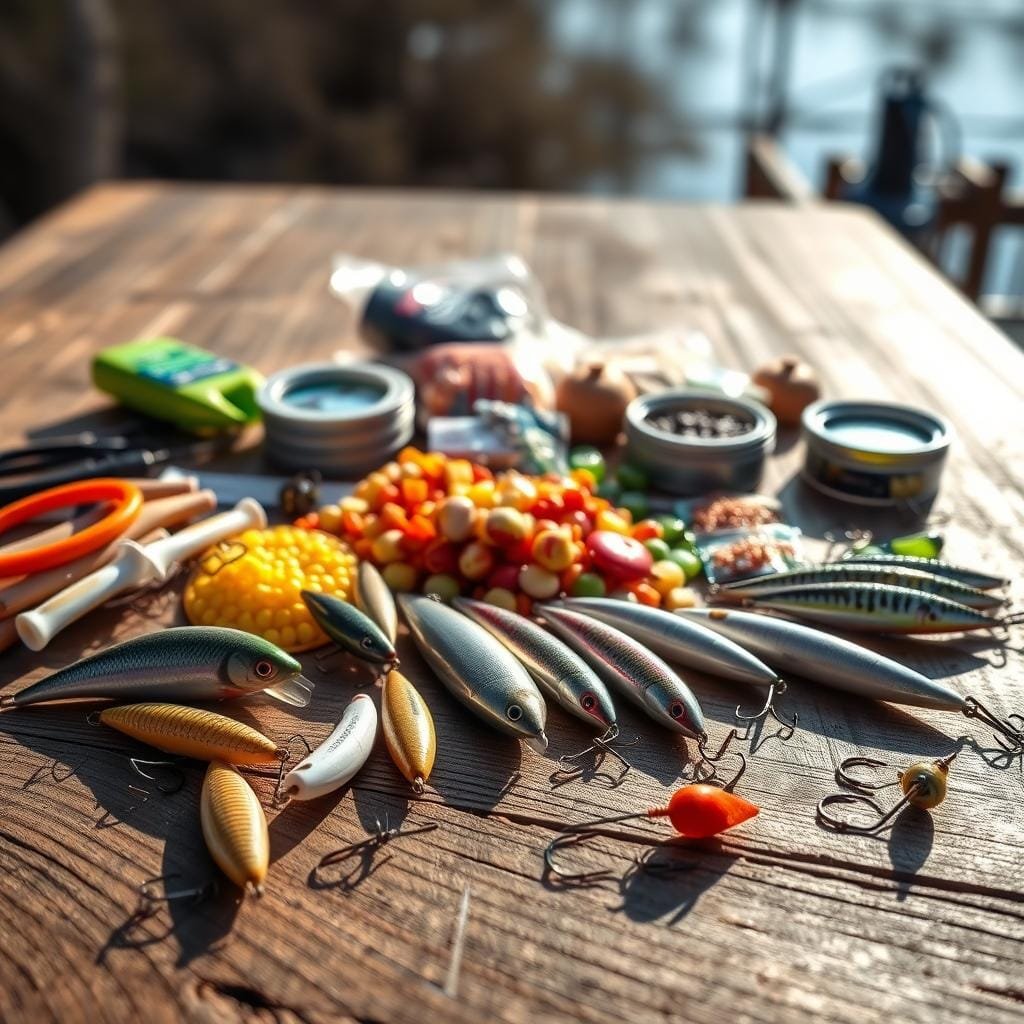
Kokanee eat plankton but also like small tips for smell and taste. Keep your lure small so it moves well. Use one or two pieces, not too much. Try different colors and scents, and use UV baits kokanee when the light changes.
White Shoepeg corn: the classic one-kernel tip
White corn is simple and works well. For shoepeg corn kokanee, use one kernel on the hook and troll. Many soak kernels in krill oil or anise, or use pre-scented jars from Pro-Cure. One kernel keeps your lure moving smoothly.
Real or synthetic maggots: pink and UV options
Two tiny grubs per hook is perfect. Pink maggots kokanee are great in clear water, and UV baits kokanee help when fish go deeper. Mix one real and one fake for durability. Keep it short so blades move well.
Dyed-cured shrimp and freshwater shrimp scents
Small pieces of cured shrimp look like natural food. Dyed shrimp kokanee in red, orange, or chartreuse work well behind a dodger. Add krill-based gels to make it more appealing, and trim to nail-length to avoid killing the roll.
When to go artificial with Berkley Gulp! maggots or waxies
Plastics are good on tough days or when you need to soak longer. Berkley Gulp maggots and waxies have strong scent and bright color. They can outdo corn in dirty water. Carry different colors to match the mood, and use just one piece to keep the lure lively.
- Go tiny: one kernel, one shrimp sliver, or one maggot keeps action tight.
- Swap often: alternate shoepeg corn kokanee, pink maggots kokanee, and dyed shrimp kokanee until a pattern pops.
- Leverage light: UV baits kokanee and Berkley Gulp maggots gain traction as sun climbs.
best bait for kokanee
The best bait for kokanee is a tiny tip that adds scent without killing the lure’s action. Think one White Shoepeg corn kernel, one to two pink maggots, or a sliver of dyed-cured shrimp. Many anglers compare kokanee corn vs maggots and rotate until the school responds.
Start with Pautzke Fire Corn and tailor jars for the season. Early, Nectar pairs well with tuna oil kokanee for a stronger plume. Through summer, krill scent kokanee stays steady, while anise garlic kokanee can wake up neutral fish later in the year.
Artificial options help when fish get picky. Berkley Gulp! maggots and waxies often shine when corn fades. Keep tips small so dodgers and lures keep their swing, which is key to turning follows into strikes.
| Bait Tip | When It Excels | Scent Pairing | Rigging Notes | Pros | Watch-Outs |
|---|---|---|---|---|---|
| White Shoepeg corn (single kernel) | All season; clear water | krill scent kokanee or anise garlic kokanee | Thread once on the top hook to keep lure balance | Consistent; easy to prep; strong dye options | Can soften if over-soaked; rotate jars often |
| Pink maggots (real or synthetic/UV) | Low-light, deeper fish, pressured lakes | Nectar early or light tuna oil kokanee | One to two grubs; avoid bunching that dampens action | Durable; UV pop; great when corn slows | Too many grubs can stall spinner roll |
| Dyed-cured shrimp piece | Stained water; aggressive mid-day bite | krill scent kokanee plus anise garlic kokanee | Tiny sliver only; keep dodger cadence lively | Bold scent; meaty profile | Oversized pieces kill lure swing |
| Pautzke Fire Corn (custom jar) | Early to mid-season experimentation | 3–4 tsp tuna oil kokanee per jar; 10 drops anise | Label jars by mix; refresh every few trips | Fast to tune; repeatable results | Garlic salt can overpower—go light |
| Berkley Gulp! maggots/waxies | Cold fronts; heavy pressure; finicky schools | Light krill scent kokanee mist | Tip sparingly; keep spinner or hoochie working | Long-lasting; clean handling | Too much gel can slick the action |
| Mix-and-match combos | Lake-specific dialing | tuna oil kokanee + garlic, or krill + anise | Test one change at a time across rods | Targets local preferences | Over-mixing muddies the scent trail |
Winning Scents and How to Rig Them Without Killing Action
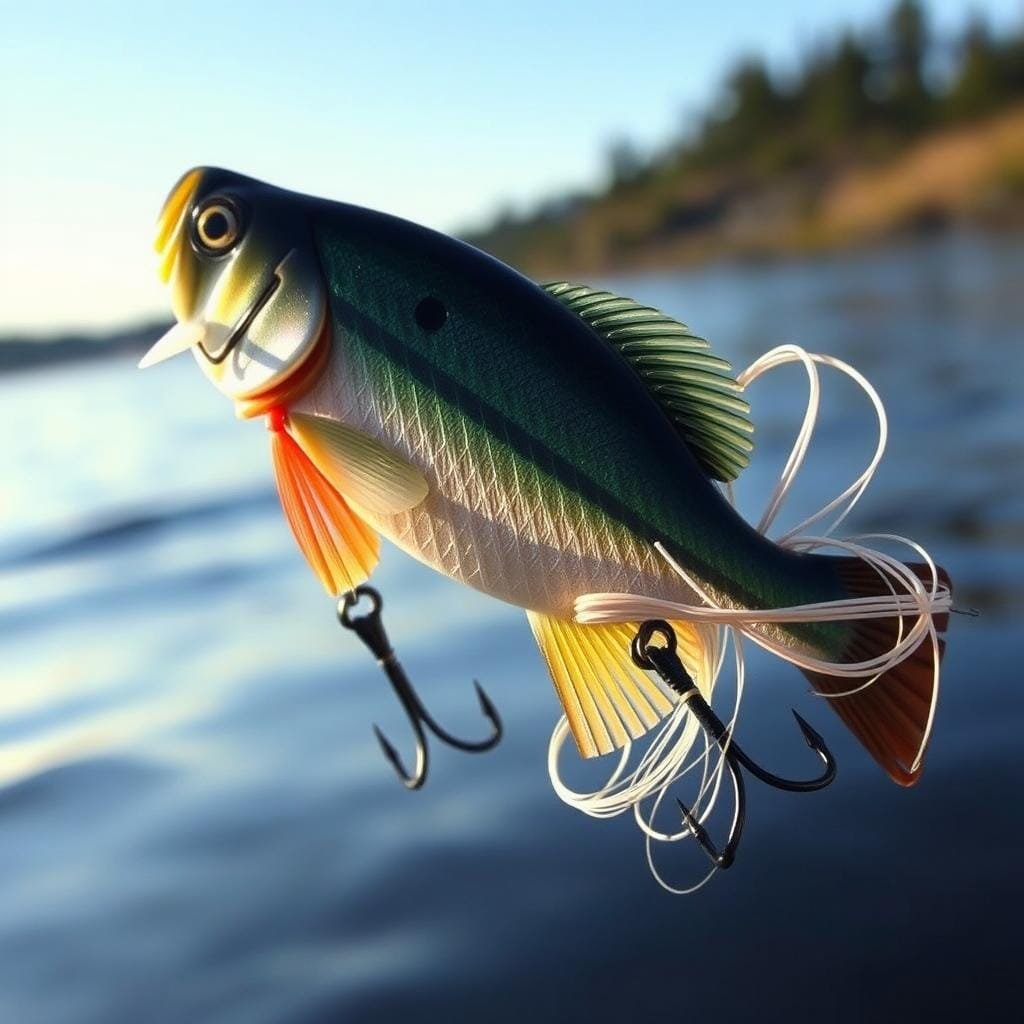
Kokanee fish follow a scent trail like a bloodhound. The right gel or juice can make them attack. Use small bait so your lure moves well.
Expert insight on action and color shows movement is key. The scent just convinces them to bite.
Krill, shrimp/krill gels, and kokanee-specific blends
Krill is best because kokanee eat shrimp. Use Pro-Cure Shrimp/Krill Super Gel, Kokanee Special Super Gel, and Bloody Tuna Super Gel. A little gel on the lure or hooks is enough.
For corn, add krill liquid to boost scent. Try different jars until you get steady bites.
Anise and garlic as irritants that trigger aggression
Anise can make fish bite. Use pure anise, about 10 drops per jar. Garlic works too, but use less, just one teaspoon of McCormick Garlic Salt per jar.
Tag the lure, not the dodger. This keeps the lure’s movement sharp and hides human smells.
Tuna oil, Nectar (salmon egg juice), and creative combos
In the early season, tuna oil corn is great. Mix tuna oil with Pautzke Nectar for a boost. Try tuna-plus-garlic, krill-plus-anise, or Nectar-plus-garlic for good results.
Keep notes on where you fish, how deep, and the weather. If it gets busier or sunnier, add a thin layer of Bloody Tuna or Kokanee Special.
“Less is more”: tiny tips that keep lure action alive
Big baits slow down your lure. Use one shoepeg kernel or two tiny maggots. Add a small amount of Pro-Cure Shrimp/Krill.
Speed affects how far scent goes. Move slower in summer for a cleaner trail. Pause and then move fast again to keep fish interested.
| Scent/Blend | Best Use | Application Tip | Seasonal Edge |
|---|---|---|---|
| Pro-Cure Shrimp/Krill Super Gel | Universal krill profile for most lakes | Rice-grain smear on hooks and lure head | All season; excels when fish track tight |
| Kokanee Special Super Gel | Kokanee-specific scent trail | Thin coat; refresh every 30–45 minutes | Midday or after missed strikes |
| Bloody Tuna Super Gel | Strong oil base to pull followers | Sparingly on lure body only | Bright days or pressured fish |
| Pautzke Nectar | Corn cure and maggot soak | Light splash per jar; don’t overfill | Early season confidence boost |
| Anise (pure) | Irritant to trigger aggression | ~10 drops per corn jar; test often | Neutral fish and post-front days |
| Garlic (salt) | Sharp irritant and cover scent | 1 tsp per jar; strengthens with time | Stained water or heavy boat traffic |
| Tuna oil corn | Oily plume for long scent lanes | 3–4 tsp per jar; flip kernels weekly | Early season; even late |
Top-Producing Lures to Tip With Bait for More Bites
Keep your spread simple. Use proven lures with a small bait. This lets the lure do the work. The combos below work well at kokanee speeds and stay in the zone.
Wedding Ring and Smile Blade spinners for low-speed spin
Mack’s Wedding Ring pulses at 0.8–1.8 mph. It doesn’t stall. Lightly tip the hook and let it thrum.
For extra kick, use a Smile Blade kokanee rig. It keeps spin at crawl speeds. This is good for turns and tight troll lanes.
Run either behind a 4–6 inch dodger with a short leader. This gives more swing. When fish are wary, lengthen the leader. This calms the action and keeps the spin steady.
Mack’s Cha Cha Kokanee Squid and Koke-A-Nut profiles
The Cha Cha Kokanee Squid has its own wiggle. It fishes clean behind a dodger or solo in flat water. A tiny bait tip is enough.
The Koke-A-Nut mixes glow fibers with a subtle profile. It stays effective from early spring through summer. Alternate these two when light changes.
Brad’s Kokanee Cut Plug with packable bait cavity
Brad’s Kokanee Cut Plug has a larger roll. It calls fish from distance. Pack the cavity with corn, tuna oil, or krill gel, but keep it light.
It runs well on a medium leader behind a steady dodger. When traffic is heavy, drop it outside the spread. Refresh the scent often to keep the roll producing.
Dick Nite spoons, Apex-style, and Rocky Mountain/P-Line squid
Dick Nite spoons flash fast and trigger slashing hits. They work well in UV patterns on bright days. Apex-style lures also hunt on a short leader.
A longer leader slows the dance in clear water. For custom rigs, the P-Line Sunrise Squid and Rocky Mountain Tackle squid make easy, high-contrast hoochies. They fish well with a single corn tip.
Mix a spoon with two squids to balance your spread. Rotate in Mack’s Wedding Ring or a Smile Blade kokanee setup when the bite goes soft. Keep a Cha Cha Kokanee Squid or Koke-A-Nut ready for low-light periods.
Color and UV Strategy for Changing Light and Depth
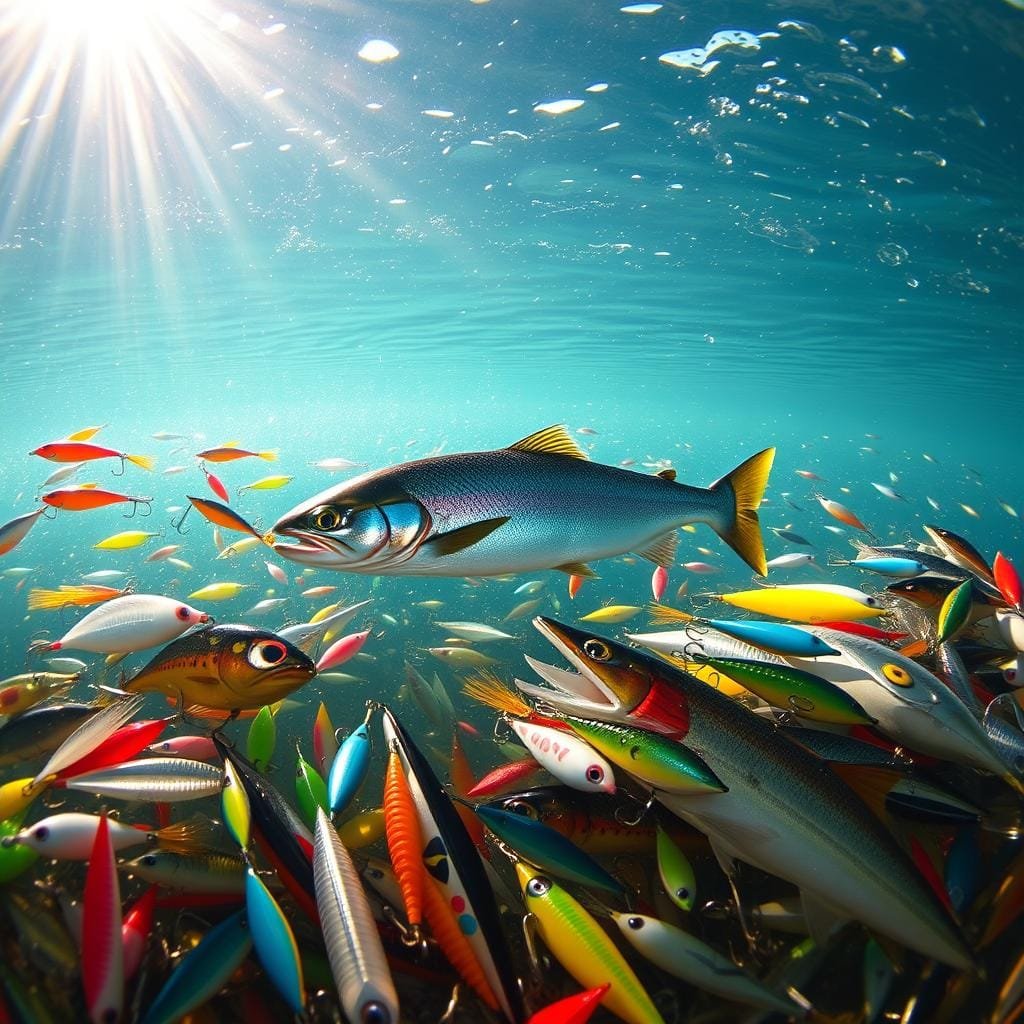
Choose your kokanee color based on the light and depth. Hot pinks and bright colors work well near the surface at dawn. But, as the sun rises, these colors fade.
Switch to silver or silver-gold blades in bright or clear water. Let the shape and contrast help. For deeper water, use UV kokanee finishes and glow colors to stay visible.
In shallow water, pink chartreuse patterns are loud and clear. But, as you go deeper, UV colors keep your lures visible. In dark water, use glow tape or beads for a clear outline.
Use the right gear to make this strategy work. Try Dick Nite UV Kokanee spoons and P-Line Sunrise Squid UV glow. Rocky Mountain Tackle and Mack’s Lure Smile Blade UV series are also good choices.
Pair your lures with dodgers for better action. Use UV colors for cloudy skies or deep water. For clear days, go with chrome or silver-gold. Change your colors as the fish move down.
Remember, action is key. Dodgers add weight, and small spinners and wedding-band styles create a strong pulse. For more on kokanee fishing, check out this primer on understanding kokanee fishing techniques.
- Dawn and dusk: low light kokanee color with glow colors for contrast.
- Mid-morning: pink chartreuse kokanee near the top; add UV kokanee blades as fish slide deeper.
- Midday drop: deep water UV on squids and spoons; keep a glow kicker on the hook or bead chain.
- Bright, clear lakes: tone down with silver or silver-gold and let movement sell the strike.
Dodgers and Flashers That Draw Schools Into Your Spread
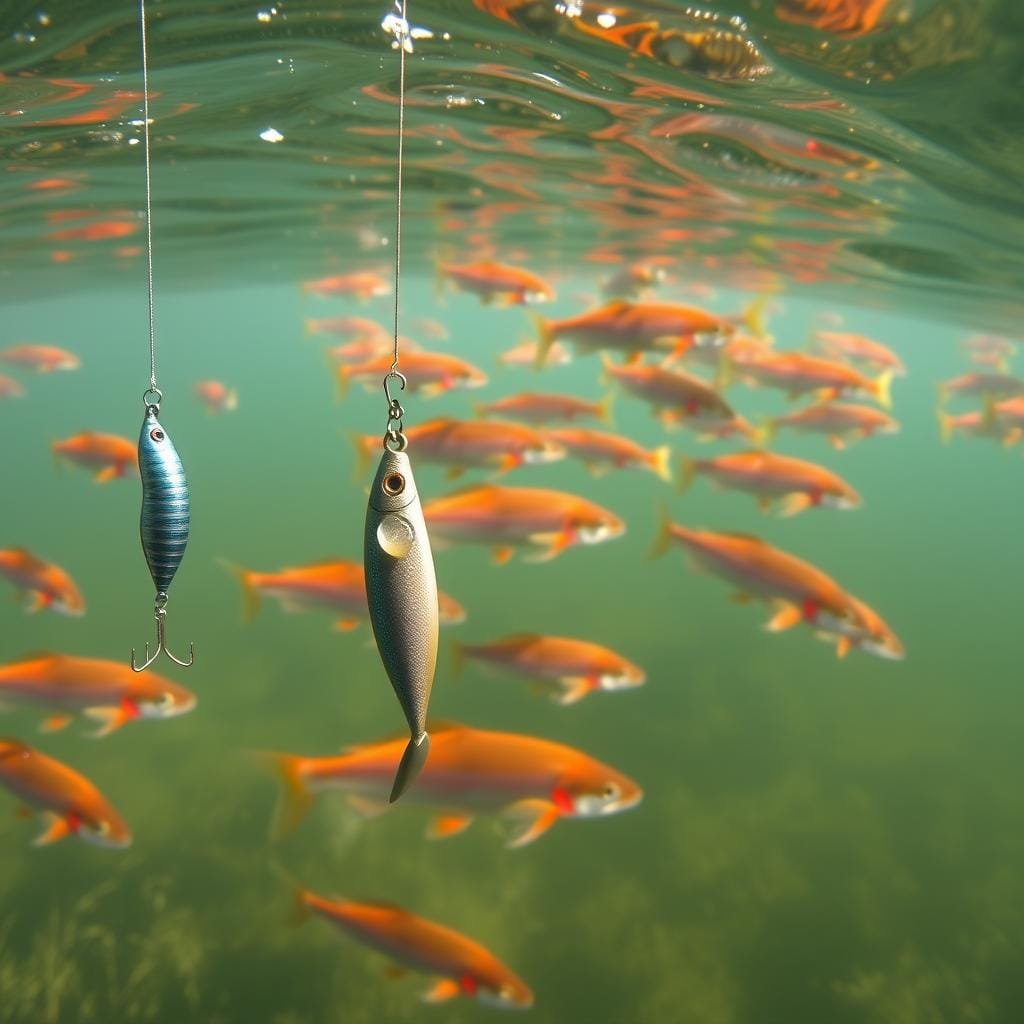
Kokanee fish like to follow the sound of flashers. That’s why using 4-inch and 6-inch dodgers is key. They attract fish without scaring them away, even when there are predators around.
In clear water, small blades work best. In murky water, bigger blades help fish find you. Make sure the leader length is right so the lure moves just right.
4–6 inch dodgers: flash, thump, and water displacement
Most days, 4–6 inch dodgers are the go-to. A 4-inch dodger adds bright flash and a light thump. This is great for clear lakes and sunny days. A 6-inch dodger moves more water, helping fish find you in choppy or colored water.
Watch how your rod moves. Fast, sharp movements mean a strong thump. Slow movements mean a gentle sweep. Adjusting speed or size helps manage the attractor action without losing lure movement.
Tunable options like Sling Blade and Double D Dodger
Mack’s Sling Blade bends to change the lure’s rhythm. You can add a curve for more thump or flatten it for a soft roll. This lets you adjust as the light and wind change.
Mack’s Double D Dodger changes rhythm by re-clipping. It goes from steady to stop-and-go. This is great for Lake Chelan and Lake Roosevelt.
Inline flashers (Flash Lite) for long-lining scattered fish
When fish spread out, a Flash Lite flasher draws them in. It moves straight with rotating blades, adding little side motion. Pair it with spinners, plugs, or squids for extra action.
Long-line passes are easy to manage. The Flash Lite has low drag. This lets you cover water at a steady speed without getting tired or overloading your rod.
Matching lure action to attractor style and leader length
Leader length is key to keeping motion balanced. Use 3–4x dodger length behind a Mack’s Sling Blade or Double D Dodger for spinning lures. For hoochies and non-action baits, use 2–2.5x to pass more pulse to the tail.
Test short pulls at the rail. If the lure over-spins, lengthen. If it looks dead, shorten. Small changes can turn curious followers into biters.
| Condition | Attractor Choice | Key Benefit | Leader Guide | Best Lure Types |
|---|---|---|---|---|
| Clear water, bright sun | kokanee dodgers 4-inch (Mack’s Sling Blade lightly arced) | Subtle flash, controlled thump | 3–4x dodger length | Spinners, spoons, plugs with built-in wobble |
| Stained water or wind chop | 6-inch dodger (Double D Dodger standard hole) | More displacement to call fish in | 2–3x dodger length | Hoochies, tubes, squids needing kick |
| Scattered fish, long-lining | Flash Lite flasher (low-drag inline) | Wide draw with minimal resistance | 3–4x behind flasher | Spinners, wiggle plugs, action-rich squids |
| Finicky followers | Double D Dodger re-clipped to stop-and-go | Rhythm change triggers swipes | 2–2.5x dodger length | Hoochies and short-leader squids |
- Use slower speeds for more swing; bump speed to tighten attractor action.
- Swap from a 6-inch dodger to kokanee dodgers 4-inch when fish shy off the plate.
- With a Flash Lite flasher, rely on lures that make noise and spin on their own.
Pro Tips for Bait Prep: Corn Cures, Dyes, and Scent Recipes
Get ready for kokanee fishing with small jars and a regular plan. Start with Fire Corn that’s already dyed. Keep the kernels firm and use small tips for your lures.
Change scents as the light, depth, and mood change. Find out what each lake likes best.
Fire Corn as a base, plus Nectar, krill, and anise add-ins
Make a Fire Corn kit with white Shoepeg corn. For Pautzke Nectar corn, fill half the jar with Nectar. Seal and shake well.
For krill corn, fill half with liquid krill and shake. It works from spring to fall. For anise corn, add 10 drops of pure anise oil. Shake and let it rest overnight.
Garlic salt caution: go light and let it strengthen over time
For garlic salt corn, add one teaspoon of McCormick’s Garlic Salt to a pint jar. Mix well but don’t add more on day one. Garlic gets stronger in brine.
Check if the kernels are firm. Drain off excess to keep them crisp.
Tuna oil early-season, plus mix-and-match combos
Tuna oil corn is great early on. Drain tuna oil and add 3–4 teaspoons to the jar. Shake well.
Try mixing scents: tuna and garlic for cold water, krill and anise for summer. Or Nectar and garlic when fish get picky. You can also try vanilla, strawberry extract, sugar, herring oil, shrimp oil, or a bit of sardine oil.
Storage, rotation, and lake-specific testing
Make many small jars and label them. Keep them cool. Rotate baits every few times to find trends.
If kernels get soft, drain the liquid. Keep tips small to keep lures swinging right.
What works on Lake Chelan might not work at home. Keep track of bites for Fire Corn, Pautzke Nectar, and tuna oil. Adjust as the season changes.
On-the-Water Tactics to Turn Lookers Into Biters
Kokanee trail gear for long stretches, so make the boat do the selling. Work the 0.8–1.8 mph window, then layer in speed changes kokanee respond to. Short bursts to 1.6–1.8, then dip to 0.8–1.0.
Mix in S-turns kokanee can’t ignore. The outside rods speed up, inside rods slow down. This often flips follows into hits. Add a stop-and-go troll every few minutes to let dodgers swing and stall like wounded prey.
Small moves count. Make quick downrigger adjustments—one crank up or down—to mimic a fleeing snack or a pausing plankton chase. Track sonar for suspended schools and circle back on marks. Reposition with purpose: current seams, wind-blown points, contour lanes, and major points where zooplankton stacks.
If fish scatter, skip the rigger and long-line behind inline flashers. Carefully count line out so you can repeat the exact depth after a bite.
Tune to conditions. Rotate dodger size and color: UV or glow deeper or at dawn, silver or gold in bright, clear water. Keep tips tiny—one white Shoepeg kernel or two small maggots—and refresh scent often to mask fuel or sunscreen.
These kokanee trolling tactics keep your spread clean and consistent while putting a strong trail in the water.
Protect the strike you earned. Use light, medium-slow rods and steady pressure to boost your soft mouth landing ratio. Ease fish in behind the boat, avoid pump-and-drop moves, and keep the net low and ready.
With smart S-turns kokanee like, a confident stop-and-go troll, and timely downrigger adjustments, lookers become biters—and biters make the box.