Ready to catch big pike in U.S. waters? This guide shows you the best baits and how to use them. You’ll learn where and how to fish, and which lures work best.
Experts say seven baits are key: spinnerbaits, chatterbaits, jerkbaits, swimbaits, poppers, spoons, and inline spinners. Charles Raymond likes spinnerbaits for their flash. He also uses chatterbaits and jerkbaits for different fishing styles.
Soft swimbaits are great for weeds. Try pink, white, green pumpkin, and natural chartreuse. For surface action, use poppers, frogs, and buzzbaits. In dark or murky water, spoons and inline spinners are best. Check out this list of northern pike lures for more ideas.
We’ll talk about the right tackle for pike. You’ll learn about rods, reels, lines, and tools for landing fish. Get ready for tips on fishing in the U.S., from planning to catching.
Understanding Northern Pike Behavior and Strike Triggers
Northern pike are ambush hunters. They have torpedo bodies, sharp teeth, and can speed up quickly. This makes them powerful predators.
They can crush baits up to 7 pounds. Bigger pike, up to 30 pounds, need the right lure to strike. In murky water or low light, they attack first and then check.
Their lateral line is key to their hunting. It senses pressure waves and vibrations. Using vibration, flash, and noise lures can attract them.
Why vibration, flash, and noise convert
Vibration baits feel like a doorbell to pike. Inline spinners and chatterbaits make a steady sound. Flash lures look like fleeing baitfish.
Noisy lures add clacks and knocks. Spinnerbaits from Booyah and Strike King mix pulse and flash. Chatterbaits from Z-Man have a metal blade that hums.
Poppers with internal beads spit and pop. This turns heads, even in poor visibility.
Reading the lateral line: making your lure “felt” before it’s seen
In windy or murky water, lead with feel. The lateral line picks up lure signals. Rotating blades on spinners send a steady signal.
Chatterbait blades pulse hard at slow speeds. This “felt-first” cue is important when sight is limited.
When pauses provoke: timing attacks during momentary stilness
Pauses can trigger pike attacks. Hard jerkbaits work best with tight twitches and pauses. Topwater poppers use a pop-then-pause rhythm.
Context is key. A steady roll can keep a follower interested. Brief pauses near cover can turn interest into action. Mix pauses with vibration, flash, and noise lures.
| Trigger Type | Primary Sense Engaged | Best Use Case | Example Lures/Styles | Why It Works for Pike Behavior |
|---|---|---|---|---|
| Vibration | Lateral line | Stain, wind, low light | Inline spinners, Z-Man ChatterBait | Strong frequencies act as pike strike triggers, guiding fish before visual ID. |
| Flash | Sight + lateral line support | Clear to mixed clarity | Strike King spinnerbaits, Mepps spinners | Flash lures mimic fleeing baitfish and seal the commit once pike close in. |
| Noise | Hearing + lateral line | Weeds, surface, heavy chop | Poppers with beads, clacking crankbaits | Noisy lures cut through background water movement and provoke reflex hits. |
| Pause | Visual confirmation | Jerkbait stops, topwater stalls | Suspending jerkbaits, walk-the-dog plugs | Momentary stilness lets predators line up, then detonate on the target. |
Spinnerbaits for Pike: High-Flash, High-Confidence Lures
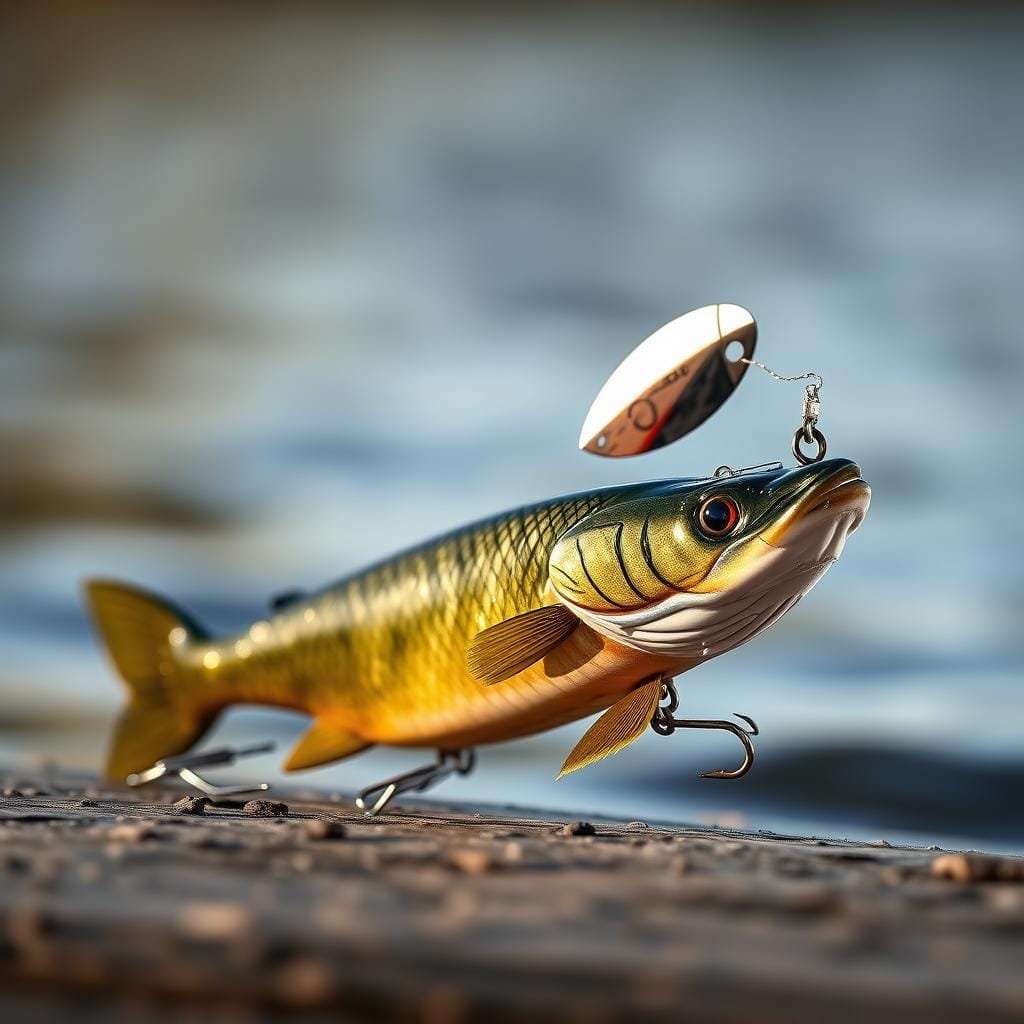
Spinnerbaits are great when the weeds are thick and it’s dark. They make a lot of noise and flash. This helps them work well even when they hit grass.
Charles Raymond likes them because they move well. They are easy to cast and control. They also don’t get stuck in weeds often.
Why spinnerbaits are a safe bet in weeds and cover
The wire arm helps the bait move through thick plants. This means fewer times getting stuck. You spend more time where fish are likely to bite.
The way it moves through the water makes fish strike. It’s good for fishing in tight spots where other lures can’t go.
Go-to colors: white, chartreuse, and yellow-perch patterns
Choose colors that match the water and what fish eat. White works well in clear water. Chartreuse is good in stained water or on cloudy days.
Yellow-perch patterns are great in the Upper Midwest and Canada. Booyah, Strike King, and Terminator make good ones.
Retrieve tips: smooth, steady speed for reaction bites
Move the bait at a steady, smooth pace. This keeps it at the right depth. Speed up a bit when you hit weeds, then slow down again.
This pattern makes fish bite. If a fish follows, try moving the bait a bit faster or pausing for a second.
Simple rigging: tie direct, add a 2–3 inch trailer if desired
Tie the spinnerbait directly to your line for better control. Use a 20–40 lb fluorocarbon leader to protect against bites. This adds strength without slowing you down too much.
If the cover is really tough, use a wire leader. But it might make the bait less sensitive. Add a 2 to 3 inch spinnerbait trailer to make the bait bigger and easier to see.
- Rod and reel: a 7′ medium rod with a reel rated near 15 lb max drag keeps casts long and hooksets firm.
- Line choice: 15–20 lb braid balances sensitivity and strength around weeds.
- Boat-side gear: a 20–36 inch net, long pliers, jaw spreaders, and a lip gripper make quick, safe releases.
Chatterbaits: Thump, Deflection, and Depth Control
The pike chatterbait is great for loud vibrations and precise depth. It runs a bit deeper than spinnerbaits. This lets you tap rocks and grass without getting stuck.
Advantages over spinnerbaits around rocks and grass
The hex blade helps the lure move smoothly over hard edges. It hops after hitting something, which is when pike often bite. In places with milfoil and boulders, it stays down better than spinnerbaits.
Use a 7′ medium casting rod with a reel that can handle 15 lb max drag. Put 15–20 lb braid on it with a 20–40 lb fluoro leader. Add a light wire bite guard only if you often lose fish, as it can make the thump less.
Color picks: white, chartreuse, black, and blue
For clear water, use white or chartreuse. In low light or stained water, black and blue work best. These colors match most conditions and look like common fish food. Try different colors until you find the right one for the day.
Technique: slightly slower retrieve to maximize blade knock and noise
Start with a slow retrieve and count down to the right spot. Use the rod to guide the bait into tight spots, then keep reeling. This pause-free action is a great trigger. A slow pace lets the blade make a big thump without losing control.
Trailer pairing for profile and lift
Choose a 2–3 inch soft plastic like a Z-Man Razor ShadZ or Keitech Swing Impact FAT. A swimbait tail adds lift and stability. A fluke-style trailer works better in cold water. Adjust the trailer’s size to change the bait’s depth on a slow retrieve.
Jerkbaits for Trophy Pike: Pauses That Trigger Strikes
A pike jerkbait is great when fish stare before they strike. It stays suspended, daring a big pike to bite. Work it near weeds, points, and rock flats where it can flash and roll well.
When to choose hard jerkbaits over other baits
Choose a hard bait for its look and pause. In clear water, it looks like a hurt baitfish. Tie it directly to keep its balance and action.
Cast and troll: versatile coverage with multi-treble hookups
Long casts cover water fast. Trolling at different speeds lets you control depth. Use a strong rod and reel for 25 lb max drag and line counter control.
Color selection: clown, orange, yellow perch, and white
Choose colors that match light and prey. Clown and orange work in stained or low sun. Yellow perch and white are good in clear water. Rapala, Yo-Zuri, and Smithwick offer durable colors.
Cadence: short jerks with deliberate pauses
Use a simple pause-and-jerk rhythm. Snap the rod tip twice, then pause. Many bites come when it’s paused. For casting, use 15–20 lb braid with a 20–50 lb leader. For trolling, use 30–40 lb braid.
- Avoid heavy vegetation where trebles snag; target weed edges and breaks.
- Use wire bite guards only if cut-offs are common; they can alter true suspension.
- Watch the lure on the pause—follow fish often eat at boatside.
| Scenario | Setup | Presentation | Color Picks | Why It Works |
|---|---|---|---|---|
| Clear points and rock flats | 7′ medium rod, 15–20 lb braid, 20–40 lb fluoro leader | Two snaps, 3–5 second pause | White, yellow perch | Natural flash plus a hang that triggers sight-feeding fish |
| Stained bays with sparse weeds | Medium-heavy rod, 30 lb braid, 30–50 lb fluoro leader | Firm snaps, 2–3 second pause | Clown, orange | High contrast helps fish locate the bait on the pause |
| Open-water trolling lanes | Line-counter reel, 30–40 lb braid, 25 lb max drag | 2.0–3.0 mph with wide S-turns | Clown, white | Speed shifts kick the bait; multi-treble layout boosts hookups |
| Weed edges at dusk | 7’2″ medium-heavy, 20–30 lb braid, 40–50 lb fluoro | Short jerks, extend pauses to 5–7 seconds | Orange, yellow perch | Long pauses let followers commit in low light |
Swimbaits: Realistic Action Through Weeds and Edges
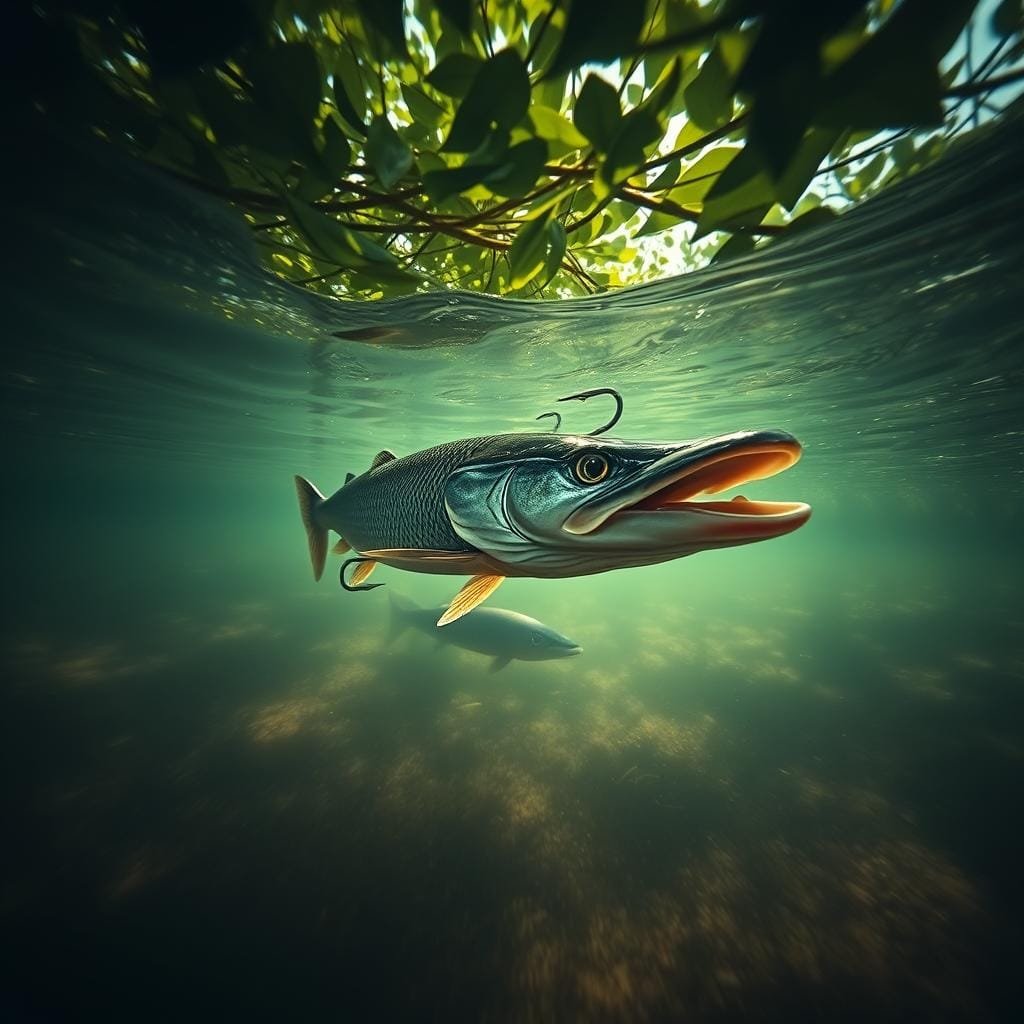
Swimbaits are great when weeds are thick and edges are lively. They move like real bait, even at slow speeds. This makes them perfect for catching northern pike. For more on swimbaits, check out this primer on swimbaits for pike.
Why soft swimbaits excel in vegetation
Soft swimbaits bend on a bite and slide through grass easily. A Texas rig keeps the point hidden, letting you move through tight spaces. In sparse cabbage, a jig head swimbait wobbles tightly, attracting fish without getting stuck.
Pro-picked colors: pink, white, green pumpkin, and natural chartreuse
Start with colors that match the local bait, then try different accents. Pink works well in stained water. White shines in sunlight and dusk. Green pumpkin blends in clear water, while natural chartreuse stands out in tea-stained lakes. Keep red and yellow swimbaits handy for stormy weather.
Texas rig vs. 1/4–3/8 oz jig head: where each shines
Use a Texas rig in thick grass, pencil reeds, and milfoil edges. It glides smoothly and stays upright. For deeper water, choose a 1/4–3/8 oz jig head swimbait. This adds weight without losing the swim’s natural action.
Speed discipline: slow roll for the best tail kick
Keep a steady slow roll to make the tail kick. Reeling too fast can make it spin and lose its appeal. On drop-offs, maintain a steady pace if a fish follows. Pike need this steady motion to decide to bite.
| Scenario | Rig Choice | Weight/Hook | Go-To Swimbait Colors for Pike | Retrieve Cue |
|---|---|---|---|---|
| Thick grass lanes | Texas rig pike | 4/0–6/0 EWG, 1/8–1/4 oz pegged | Green pumpkin, natural chartreuse | Slow roll retrieve just ticking tops |
| Outside weed edge | Jig head swimbait | 1/4–3/8 oz open hook | White, pink | Count down, then steady, level wind |
| Wind-blown points | Jig head swimbait | 3/8 oz for chop and current | White, natural chartreuse | Slow roll retrieve with occasional micro-pop |
| Tea-stained flats | Texas rig pike | Light bullet to stay high | Pink, chartreuse, yellow | High, even retrieve over grass tops |
| Steep drop-offs | Jig head swimbait | 1/4 oz for controlled fall | White, green pumpkin | Maintain pace if followed; don’t pause |
Use braid for casting, 15–20 lb for midsize swimbaits, 30–40 lb for larger ones. Add a 20–40+ lb fluorocarbon leader. If you get a lot of bite-offs, a short wire bite guard can help. Keep your hooks sharp and your speed steady. Let the tail do the talking.
Poppers and Topwater Options for Explosive Strikes
Few bites beat the rush of pike topwater. When fish slide shallow over cabbage or milfoil, a popper for pike shines. It works above the mess yet stays in the strike zone. Tie direct, keep your casts tight to weed edges, and be ready—hits often happen right after the bait settles.
Surface chaos: floating above weeds to avoid fouling
A cupped-face popper rides high, spits water, and rarely drags salad. Work lanes, pockets, and inside turns where stalks meet clean gaps. Brands like Rapala Skitter Pop and Rebel Pop-R hold position well, letting you tease fish without digging into the tops.
Sound matters: internal beads and “pop-pause” cadence
Internal beads help a popper for pike call fish from distance, even in wind chop. Use a crisp pop-pause cadence: snap the rod tip, then wait. Many strikes land on the dead stop. Count to two on calm water; stretch to three or four when fish are cautious.
Try frogs and buzzbaits when fish are shallow and active
When pike hunt tight to pads, a frog lure pike set—like a Scum Frog or BOOYAH Pad Crasher—slides through cover and hooks up clean. If they’re chasing, switch to buzzbait pike options from Strike King or Z-Man for a steady clatter that draws violent charges across open lanes.
Color picks: white, green frog, yellow, clown
Keep it simple. White is a clear-water staple, green frog looks natural over pads, yellow stands out in stain, and clown pops in mixed light. Use casting gear that drives hooks home: a 7′ medium rod, a reel with about 15 lb max drag, braid in the 15–20 lb range, and a 20–40 lb fluoro leader or light wire if teeth become a problem. Carry a big net, long pliers, a jaw spreader, and a lip gripper for safe control around trebles.
Spoons and Inline Spinners: Classic Flash Producers
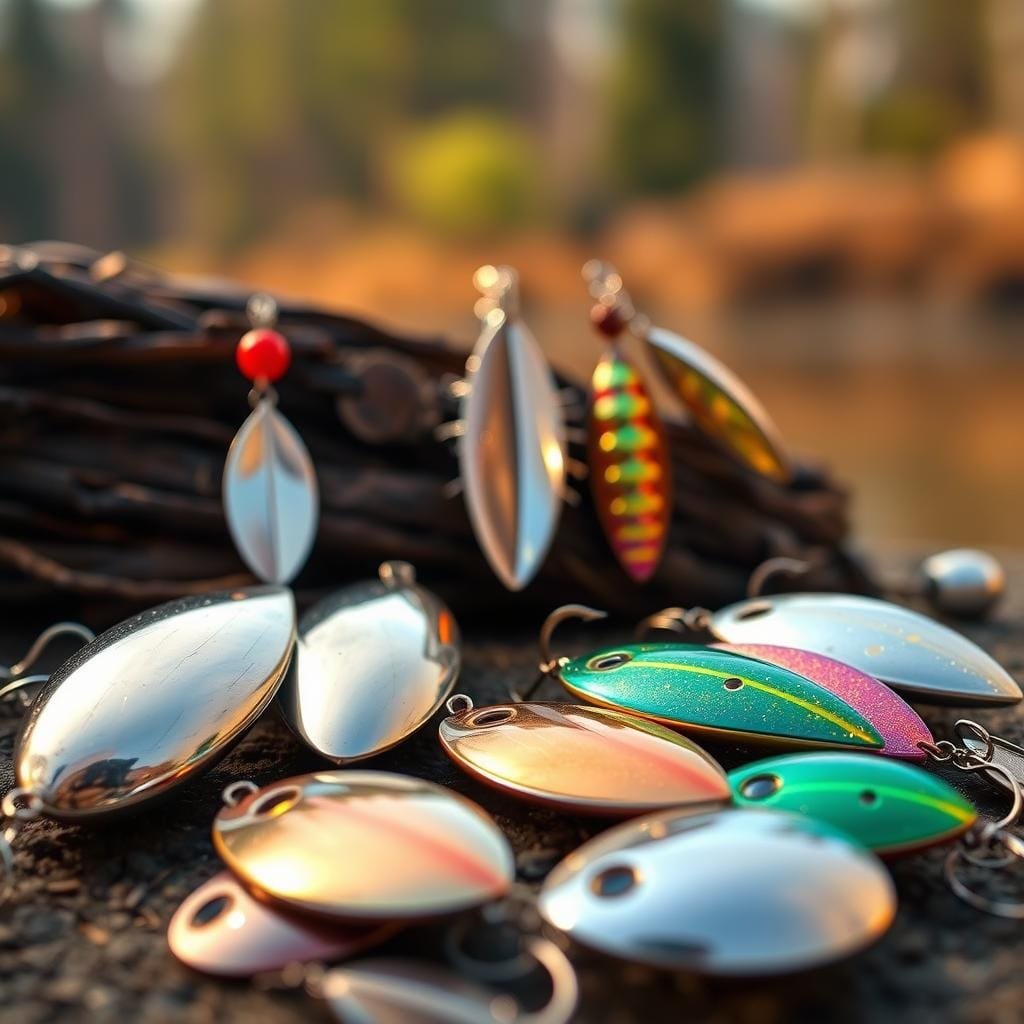
Pike spoons and inline spinners are great for covering water. They work well around weeds, wood, and drop-offs. This is because they flash and vibrate, attracting fish from far away.
Use a 7′ medium setup, 15–20 lb braid, and a 20–40 lb fluoro leader. Add wire if you have trouble with bite-offs.
Spoons: flutter-and-fall to mimic wounded baitfish
Cast long and count down. Then, start a steady retrieve with short pauses. This makes the lure look like a wounded baitfish.
In light chop, add a snap. This kicks the lure sideways and keeps it in the strike zone.
Sizes and finishes: 1/4–1 oz in gold/silver and local forage colors
Use spoons from 1/4 to 1 oz to track depth and wind. Gold works well under clouds, and silver shines in the sun. Choose colors that match local baitfish like cisco, smelt, or perch.
Inline spinners: blade vibration for murky or low-light bites
Inline spinners are great for murky or low-light conditions. The rotating blade sends pressure waves that fish feel. This is perfect for dawn, dusk, and murky water.
Keep the retrieve steady. This ensures the blade never stalls.
Color logic: darker for stain, chartreuse/yellow/white for clear
In stained water, use darker lure colors for a solid silhouette. In clear water or bright light, use chartreuse, yellow, and white. These colors stand out without spooking fish.
Swap skirts, blades, or tape to fine-tune your lure on the fly.
- Go-to picks: Acme Little Cleo and Kastmaster pike spoons; Mepps Aglia and Blue Fox Vibrax inline spinners pike.
- Quick tune: Upsize to heavier spoon sizes when wind kicks up; downsize when fish are lethargic.
- Boat prep: Keep a 20–36 inch net and long pliers handy for clean, safe releases.
Gearing Up: Rods, Reels, Line, and Leaders Built for Pike
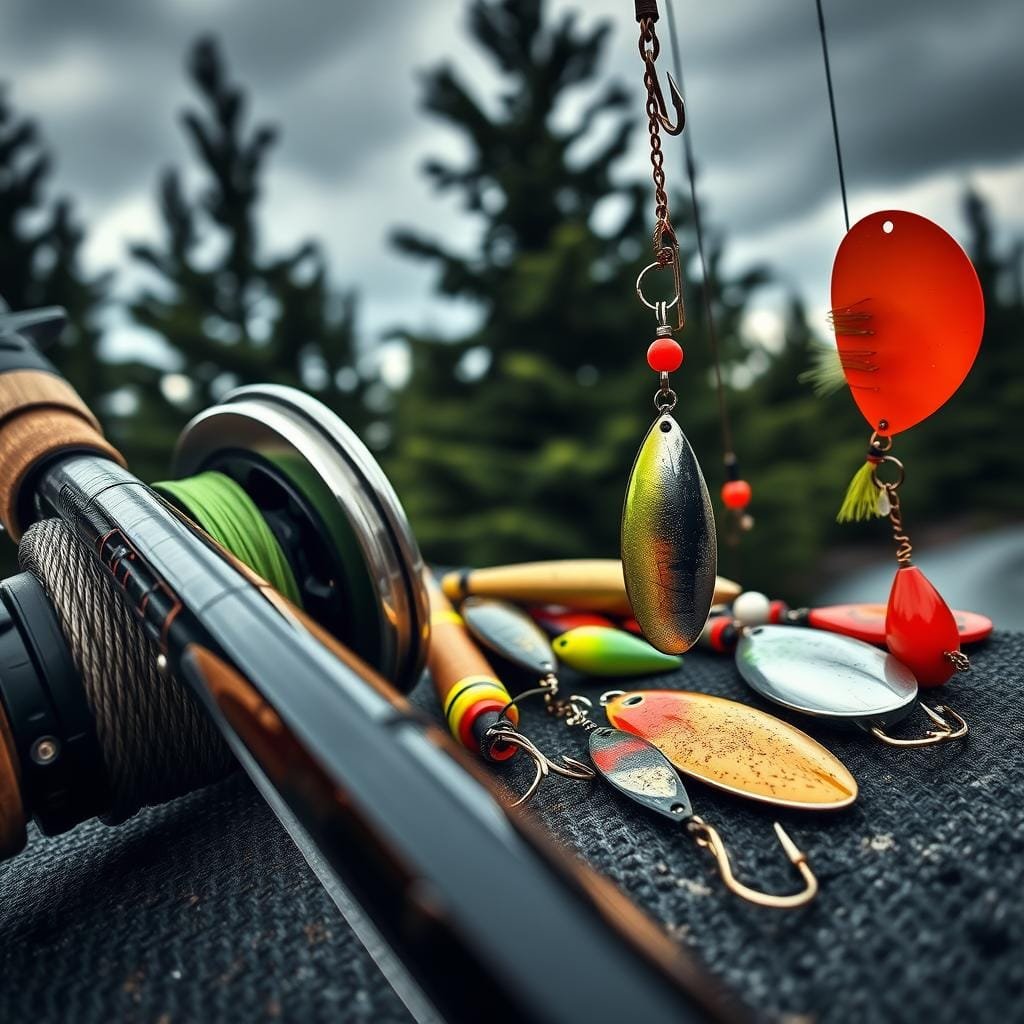
Choose a pike rod and reel that fits how you fish. Keep it simple, strong, and balanced. This way, big fish won’t find weak spots. The right braid and leader protect your lure and your time on the water.
Rods: 7′ medium for casting, medium-heavy for trolling
A 7-foot medium rod is great for casting. It works well with spinnerbaits, chatterbaits, swimbaits, spoons, and inline spinners. It loads up and throws baits far.
For trolling or throwing bigger baits, go medium-heavy. This gives you the strength to keep hooks in place.
Reels: 15 lb max drag for casting, 25 lb for trolling and big baits
Match your rod with a low-profile or round reel. Choose from Shimano, Daiwa, Abu Garcia, or Lew’s. For casting, use at least 15 lb max drag.
For deep trolling, pick a reel with 25 lb max drag. This helps with heavy swimbaits and long runs.
Braid and leader: 15–20 lb or 30–40 lb with 20–50 lb fluoro leader
Use 15–20 lb braid for general casting. For bigger fish, go with 30–40 lb braid. This cuts through weeds and drives hooks in.
Add 3–4 feet of 20–50 lb fluorocarbon leader. Pike anglers trust it for its strength and stealth in clear water.
Wire bite guards: pro/con for lure action vs. cut-offs
Short wire leaders stop bite-offs from sharp teeth. They work well with spoons and spinnerbaits. But, they might slow down jerkbaits and swimbaits.
If you need a natural action, use heavy fluoro. For protection from teeth, add wire.
Nets and tools: big hoop, long pliers, jaw spreader, lip gripper
Use a large coated net with a 20–36 inch hoop. It helps control fish quickly and keeps fins safe. Keep landing tools ready: long pliers, jaw spreader, and lip gripper.
Be careful of sharp teeth and gill plates. This keeps you safe and lets you release fish fast.
| Component | Recommended Spec | Use Case | Why It Works |
|---|---|---|---|
| Rod | 7′ Medium / Medium-Heavy | Casting vs. trolling and big baits | Loads for distance; added power for 15–30 lb fish |
| Reel | 15 lb drag (casting), 25 lb drag (trolling) | Reaction baits vs. heavy pulls | Consistent pressure and control under load |
| Main Line | 15–20 lb or 30–40 lb braid | Weed cutting, strong hooksets | Low stretch and high sensitivity for strikes |
| Leader | 20–50 lb fluorocarbon leader pike | Clear water and abrasion zones | Stealth plus shock resistance |
| Bite Guard | Short wire leader pike | Heavy teeth contact | Prevents cut-offs with minimal bulk |
| Net | Coated, 20–36 inch hoop | Boat-side control | Protects fish and speeds handling |
| Essential Tools | Long pliers, jaw spreader, lip gripper | Safe hook removal | Reliable landing tools for quick, clean releases |
Finding Pike: Maps, Structure, and Seasonal Spots
Find pike spots before you go fishing. Use maps and depth charts to mark good places. Then, check with a fish finder to see where pike might be.
Pre-scouting with aerial/depth maps and a quality finder
Start with maps to plan your fishing. Look at depth lines to find good spots. Use a fish finder to see where fish might be.
Prime zones: inlets, bays, coves, drop-offs, and weed beds
Fish inlets when the wind blows. Bays and coves with weeds are good too. Look for drop-offs and weed beds for pike.
Structure targets: submerged logs, undercut banks, bait-rich habitat
Look for logs and undercut banks. If birds are flying, bait is there. Fish where ambush and food meet.
| Location Type | Key Clues | Why It Holds Pike | Best Lure Style | Tactical Notes |
|---|---|---|---|---|
| Inlets & Current Necks | Bait flickers, stained inflow, temp breaks | Concentrates forage and oxygen | Spinnerbaits, chatterbaits | Retrieve across current seams; tick rock and grass |
| Bays & Coves | Patchy cabbage, pads, bluegill schools | Shallow feeding flats with cover | Weedless swimbaits | Slow roll through lanes; pause at holes in cover |
| Drop-offs & Inside Turns | Steep contour lines on sonar | Ambush edges along travel routes | Jerkbaits, spoons | Cast parallel to the break; add pauses over steps |
| Submerged Wood | Side-imaging shadows, isolated logs | Shade and current breaks for staging | Inline spinners, chatterbaits | Deflect gently; keep hooks up to avoid snags |
| Undercut Banks | Dark edges, overhangs, clay cuts | Classic ambush cover with overhead concealment | Spinnerbaits, weedless swimbaits | Pitch tight, then swim out along the edge |
| Weed Beds & Edges | Cabbage lines, coontail walls, clear lanes | Holds bait; funnels strikes along edges | Weedless swimbaits, spoons | Fish the clean edges first; then probe pockets |
Keep looking for pike spots. Use your fish finder to find where they are. Change your lure to match the area you’re fishing in.
Lure Presentation Strategies That Match Conditions
Adjust your pike lure presentation to fit the water, cover, and mood. In murky water or when it’s dark, focus on vibration. Clear water calls for flash and controlled speed. Make your casts purposeful, not random, and change your retrieve based on fish reactions.
Weed edges: Use weedless pike lures like Johnson Silver Minnow spoons or a Texas-rigged Keitech Fat Swing Impact in weeds. Cast past the weeds, then slowly roll along the edge. Pike hide in shadows, so keep your bait close to the edge and move it slowly.
Wood and banks: An inline spinner retrieve works well around logs and banks. Try Mepps Aglia or Blue Fox Vibrax for lots of thump and flash. Start the blade right when it hits the water, then follow the shape. Lightly tap on wood, then start the blade again to get more bites.
Fan casting: Cast in a grid pattern to cover more water. Start close and move far, left to right, with each cast. This keeps your lure fresh and helps you find active fish, even with wind.
Drop-offs: Use soft swimbaits like the Megabass Magdraft Freestyle on a 1/4–3/8 oz head for drop-offs. If a fish follows, keep moving at the same swimbait speed. A steady pace is more likely to get a bite than stopping.
- Vibration first: chatterbaits and inlines for dirty water; steady for spinners, slower thump for chatter.
- Flash in clarity: spoons and spinnerbaits with a smooth, even pull.
- Stop-start baits: pause-heavy jerkbaits and topwater pop-pause when visibility is high.
Match your lure’s rhythm to the mood: smooth for spinners and spinnerbaits, heavy for chatterbaits, and sharp for jerkbaits. Keep your pike presentation clean by avoiding tangles, and let the cover guide your choice and speed.
Setting the Hook and Fighting Northern Pike
When a pike eats, commit. Keep a short line and sweep a firm pike hook set upward with non-stretch braid to bury the points. Hold the rod at a 45-degree angle and keep reeling to load the blank. Set the drag to match your gear—around 15 pounds for casting and near 25 pounds for trolling or big baits—so surges don’t rip hooks free while you’re fighting pike.
Not every thump means steel met bone. If a hit feels off, keep the lure moving. Pike test, nip, and circle back. Many boat-side strikes happen on a steady retrieve after a miss, so stay ready and keep the rod loaded until the weight turns solid.
At the hull, expect a burst. Angle the fish in a smooth arc and guide it headfirst into a large hoop for safe netting pike. Use long needle-nose pliers and a jaw spreader for quick unhooking, and a lip gripper to control roll-offs. This routine protects you and boosts clean landing pike rates without stressing the fish.
Quick checkpoints
- Strong, upward pike hook set with braid to drive trebles or singles.
- Don’t quit after a miss—many return bites, specially near the boat.
- Manage boat-side strikes with steady pressure; no high-stick lunges.
- Sizeable net (20–36 inches), long pliers, and a jaw spreader for safety.
- Drag tuned to the reel’s capability to cushion surges when fighting pike.
Choosing the best bait for northern pike for Your Water
Start by thinking about where you fish. In weedy, shallow waters, use spinnerbaits or swimbaits. Choose colors like white, chartreuse, and yellow perch for spinnerbaits.
For plastics, pick pink, green pumpkin, and natural chartreuse. If the water has grass and rock, try chatterbaits. Use white, chartreuse, black, or blue chatterbaits and slow down your retrieve.
Over sparse cover or open edges, use spoons and inline spinners. Try flutter-and-fall with 1/4–1 oz spoons in gold, silver, and local forage colors. Use inline spinners for heavy vibration.
Match the hatch pike rules: go darker in stain and choose chartreuse, yellow, or white in clear water. For tracking fish, use jerkbaits in clown, orange, yellow perch, or white. Add short jerks with pauses to seal the deal.
Keep a topwater card ready for shallow windows. Poppers, frogs, and buzzbaits work well over weeds. Use a pop-pause cadence and let the bait talk.
Choose the right gear: a 7′ medium rod for casting and medium-heavy for trolling. Use reels with 15 lb drag for casting and 25 lb for big baits. Braid in 15–20 lb or 30–40 lb, and add a 3–4 foot 20–50 lb fluorocarbon leader. Run a wire bite guard only if bite-offs are common.
For more ideas, see this guide to the best pike lures. Check sizes and colors with your lake’s forage.
Pros scout the water before fishing. Use aerial and depth maps to find key spots. Fan cast to prime zones and run weedless options along edges.
Keep swimbait speeds steady if followed. Blend these steps with smart pike lure selection and local forage colors. You’ll match the hatch pike style and get more strikes on your home water.