Want to catch rainbow trout fast? This guide shows the best baits for rainbow trout. You’ll learn about classic lures and soft plastics that work well.
Worden’s Rooster Tail and Blue Fox Vibrax are great for catching trout. Mepps Aglia and Acme Phoebe also catch fish well. Soft plastics and dough baits are good when fish are picky.
Worden’s Rooster Tail has been around for decades. It comes in sizes from 1/24 oz to 1 oz. Blue Fox Vibrax has a 30° blade that spins and reduces line twist.
Mepps Aglia has six sizes and 32 colors for steady flash. Acme Phoebe is small but catches fish with its tight flutter.
Leland’s Trout Magnet is perfect for finesse fishing. It has a lead-free head and a split-tail body. Berkley PowerBait Floating Mice Tails are great for stocked trout.
Berkley PowerBait Floating Trout Worm and Worden’s Flatfish are good for clear or stained water. Rapala Husky Jerk and Moondog Stonefly Larvae are also effective.
Lunker City Slug-Go mimics a wounded baitfish. It’s good for both stocked and wild trout. These baits work well all season.
Temperature and timing are key. Rainbows feed best at 50–60°F. Adjust your fishing as the temperature changes.
In turnover periods, use slow presentations. This guide to trout baits helps with dough and egg-style rigs. It explains how to use scent and simple rigs.
Match lure size, profile, and color to the water. With a small box of lures, you can cover a lot of water. Keep it simple and fish with confidence.
Understanding Rainbow Trout Behavior and Seasonal Patterns
To catch more rainbows, read the water first. Rainbow trout behavior follows the flow, cover, and water temperature. In moving water, they hide behind boulders and slide up to feed when food passes by.
In calm water, they cruise along edges and points. They move with the light and oxygen levels.
Where rainbow trout live and how they migrate in rivers, streams, ponds, and lakes
Look for fish in current breaks in rivers and streams. This includes outside bends and riffle tails. In ponds and lakes, check wind-blown banks and inlet plumes.
Trout migration changes with the seasons and water flow. After high water, they move to soft pockets. Rising levels draw them to inlets. Steelhead runs mark the anadromous side of trout migration.
But many inland fish move shorter distances. They follow food and cover that match their patterns.
Temperature sweet spot: why 50–60°F triggers more bites
The best time to fish is when the water is near 50–60°F. This is when fish are most active. They feed longer and move farther.
When the water gets above the mid-60s, fish get stressed. This makes them less likely to bite. Hatchery trout feed more after stocking, but most rainbows settle down when the water cools.
Reading seasonal lake turnover to locate active trout
In spring, the surface water warms up while the bottom stays cool. Target deeper edges for good fishing. In summer, the water stratifies, and trout hang out in cool, oxygen-rich layers.
Fall cooling mixes the water column. Fish roam higher, often along rocky points. In mid-winter, even under ice, look 1–3 feet below the surface.
When wild vs. hatchery trout feed most aggressively
Wild trout feed best in fall and winter. Cold, clear water boosts their confidence and energy. Hatchery trout feed more after stocking, in community ponds and small reservoirs.
As pressure rises, both types move to softer current or deeper breaks. But fresh stockers stay near ramps and inlets before spreading out.
| Season | Primary Holding Zones | Depth/Layer Cues | Behavior Notes |
|---|---|---|---|
| Spring | River seams, riffle tails; lake points and drop-offs | Deeper edges until steady warming | Active with rising flows; trout migration toward inlets after rains |
| Summer | Fast riffles, shade lines; lake thermocline edges | Thermocline bands, oxygen-rich runs | Feeds early/late; lake turnover trout pattern shifts to stable layers |
| Fall | Rocky banks, windward shores; merged currents | Shallower as temps drop to 50–60°F | Peak rainbow trout behavior; wide roam during mixing |
| Winter | Soft pools, eddies; under-ice basins | 1–3 ft under ice, or slow deep lanes | Short but sharp feeds aligned with stable trout water temperature |
| Stocking Periods | Near ramps, inlets, gentle shelves | Midwater cruising before dispersal | Hatchery trout feeding spikes, then normalizes with pressure |
Live and Natural Baits That Consistently Catch Stocked and Wild Rainbows
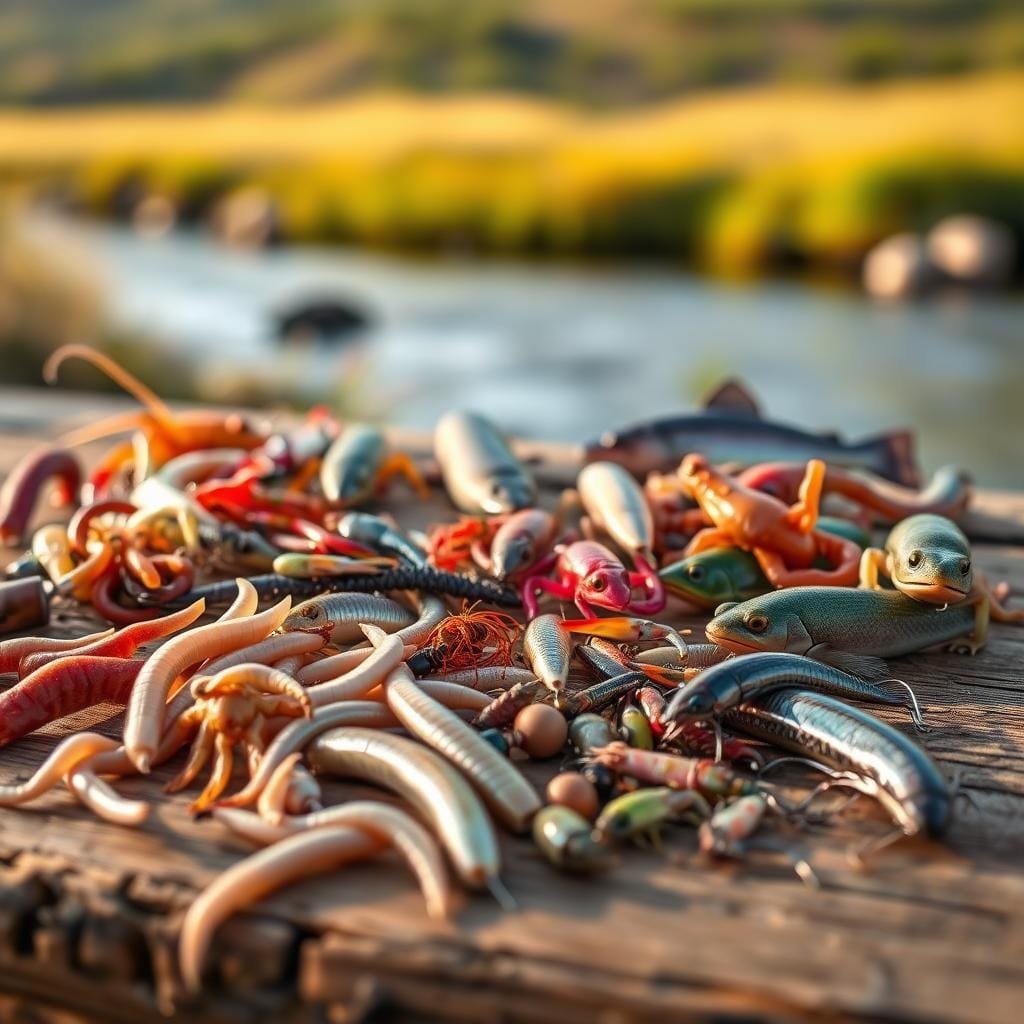
When fishing gets tough, simple baits work best. Keep your bait thin and quiet. Match what fish eat locally and let the water carry your line.
Worms and salmon eggs for cold, clear conditions
In clear water, quiet baits catch more fish. Use a small hook with half a nightcrawler or red worms. Add a tiny split shot to keep it moving slowly.
For picky fish, try single eggs. Use 4–6 lb fluorocarbon and a size 12 hook. Drift near the bottom and pause in soft spots.
Live nymphs and minnows in winter for neutral fish
In winter, trout look for small food. Use a live mayfly nymph or caddis larva. Make short casts to mimic falling prey.
For meat, use minnows. Nose-hook a small fish on a #8 jig head. Move it slowly through deep water.
Kernel corn and marshmallows for hatchery ponds
Stocked trout like bright colors and pellets. Use bright corn on a #10 hook near release zones.
Marshmallows work well too. Use a mini marshmallow with an egg or worm. This keeps the bait off the bottom.
Rigging tips to keep natural baits in the strike zone
Start with balance in your rig. Use split shot to keep baits off the bottom. Or use a bobber to suspend your bait.
In ponds, set your float so the bait is a few inches up. Adjust your shot size for the current. Make short casts for a natural drift.
Spinner Classics: Rooster Tail, Blue Fox Vibrax, and Mepps Aglia
These trout spinners are great for covering water fast. They look natural and cast well. You can change colors and blades to match the water.
For more info, check out this guide on best trout spinners.
Worden’s Rooster Tail: versatile flash in ponds, rivers, and lakes
A Rooster Tail for trout has instant flash and a lifelike skirted pulse. It comes in sizes from 1/24 to 1 ounce. You can fish shallow ripples or mid-lake drops.
Slow it for flutter or burn it just under the film. In clear water, silver or gold blades with olive or brown bodies look like forage. Hot chartreuse or fire tiger can trigger reaction bites when fish roam or after a rain.
Yakima Bait Worden’s Rooster Tail uses true hackle for a breathing tail. It stays lively in current. It’s good for creeks, ponds, and big reservoirs.
Blue Fox Vibrax: casting far and covering water on big lakes
For long casts on windy days, Blue Fox Vibrax trout options in sizes 3–6 carry well. The 30-degree blade keeps spin tight and reduces line twist. You can bomb points and saddles all afternoon.
Silver, blue, and white are money when trout cruise high. Let it sink and start a steady retrieve for fish holding over breaks.
The Classic Vibrax runs clean at 2–4 feet. The Vibrax Minnow Spin’s molded body stays planted behind the blade. Both put out a low-frequency thump that draws strikes from distance.
Mepps Aglia: steady vibration and flash at slow speeds
Mepps Aglia trout fans love how the blade fires at the first crank. It keeps turning on the slowest crawl. That steady vibration works in clear and stained water, daylight or dusk.
Go undressed for small streams and spooky fish. Pick a dressed treble with bucktail or squirrel fur when you want a bigger profile.
When the wind howls, the Aglia Flashabou adds extra shimmer for reaction bites. In low light, the Black Fury’s dark blade stands out. It can tick almost five feet deep on a slow roll.
Color and blade choices for clear vs. stained water
Match the mood and visibility. In clear water, keep trout spinner colors natural. Use silver or gold blades, baitfish tones, and smaller profiles.
In stained water, step up to brighter skirts or larger blades for lift and presence. Retrieve across current to keep the bait tracking naturally. Add a split shot or tungsten putty when you need more depth in faster flows.
- Clear water: silver/gold blades, white or olive bodies, steady medium retrieve.
- Stained water: fluorescent bodies, larger spinner blade choices, slower roll for thump.
- Depth control: pause to flutter over drops; count down with Blue Fox Vibrax trout models; slow-crank Mepps Aglia trout patterns for tight holding fish.
Small Spoons That Punch Above Their Weight
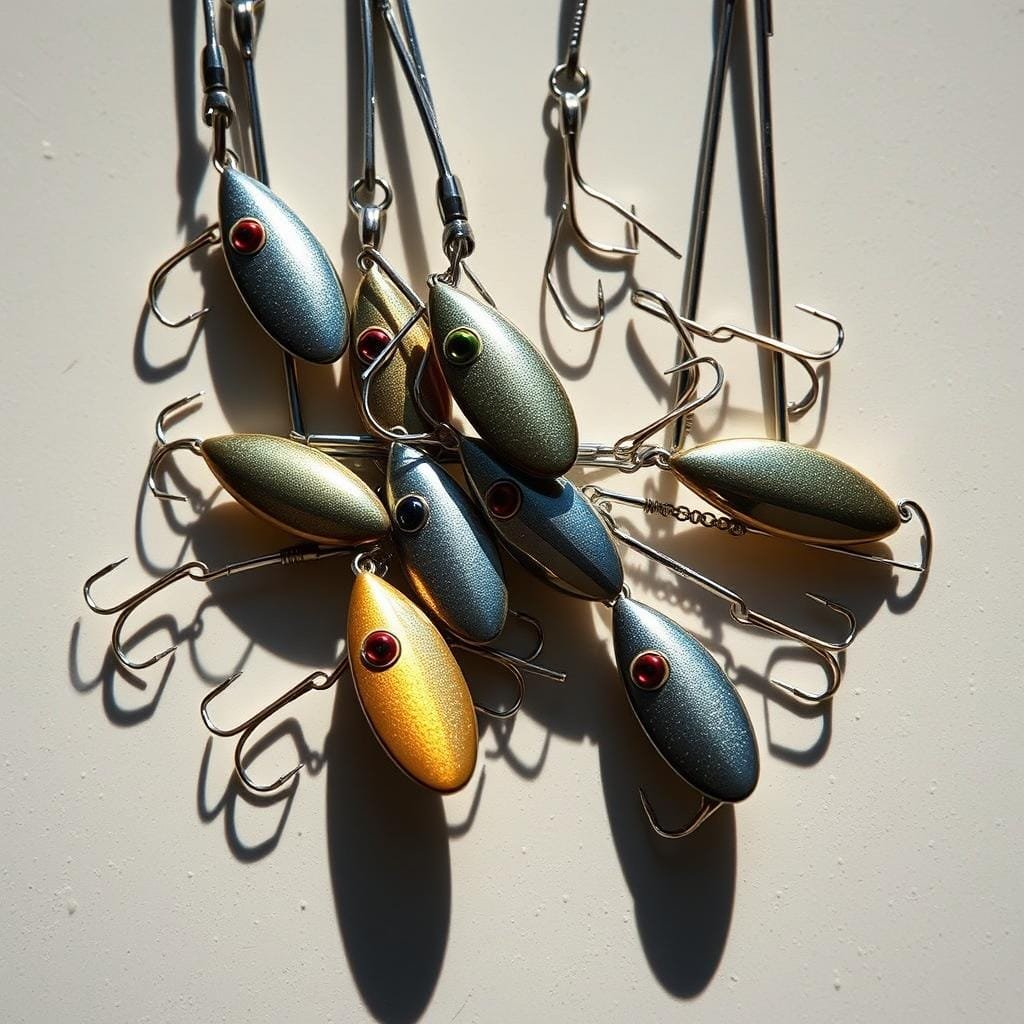
Light metal can be deadly for trout. Tiny lures work well in tight spots. They flash and settle in places where big fish hide. Using small spoons wisely keeps you close to the fish without being seen.
Acme Phoebe Spoon: flutter and spin for tight small-stream pools
The Acme Phoebe trout pattern is 1¼–2 inches long. It’s great for small pools. Its body wobbles and flutters, even on slow rolls.
Drop it into a pool, lift it, and let it slide back down. Silver is best on sunny days. Gold or bronze works better when it’s cloudy.
In tight spots, flip the spoon upstream. Count it down, then let it slide. Short casts along undercut banks often get bites. For deep holes, jig the lure to hang in front of fish.
Other proven spoons: Panther Martin, Kastmaster, Swedish Pimple
The Kastmaster for trout casts far and sinks fast. It’s perfect for windy days and wide pools. The Swedish Pimple trout setup falls vertically with a crisp kick.
Many anglers also use Panther Martin and Super Duper sizes. These are made for tiny prey windows.
For more details on sizes and rigging, check out this quick guide to micro spoons. It covers snaps, split rings, and loop knots.
Retrieve and jigging cadences trout can’t ignore
Let the water help. Cast upstream and start a gentle retrieve. The current will push the lure down and across.
In calm waters, change speed to flash or flutter. Add short pops, then pause. This lets the spoon slide and fall.
When the water is murky, speed up. This boosts vibration and helps fish find the lure.
Use a nonslip loop knot or micro snap to keep the action free. This makes the Acme Phoebe, Kastmaster, and Swedish Pimple trout more effective. They kick more on the turn and glide more on the pause, when fish often strike.
Jigs and Micro-Soft Plastics for Finicky Fish
When trout get shy, slow down and use small lures. Use lures that look real and move slowly. This makes them want to bite.
Make your casts short and watch your line. Let the water carry your lure. This keeps the lure in the right spot without scaring the fish.
Leland’s Trout Magnet: split-tail finesse under a float or bounced
Leland’s Trout Magnet has a small jig head and a split-tail body. It’s light and works well in tight spots. Move it slowly to catch fish.
In lakes, drop it down and let it slide. In fast water, add a tiny weight to keep it down. This lure is great for fish that don’t like spinners. Try different colors to see what works best.
Bead-head nymphs and 1/64-oz micro-jigs for dead-drift presentations
For fish that like bugs, use bead-head nymphs or small jigs. Put it under a thin float or add a light weight. This lets it move naturally with the water.
Look for small signs like line twitches. Lift the line gently when you feel a bite. This helps keep the fish on the hook.
Bite-triggering colors: subtle in clear water, bright in muddy flows
Choose the right color for the water. In clear water, use dark or light colors. In murky water, bright colors like pink and orange work best.
Change one thing at a time to see what works. Keep the lure moving smoothly and adjust its depth. This makes it look more real to the fish.
best bait for rainbow trout
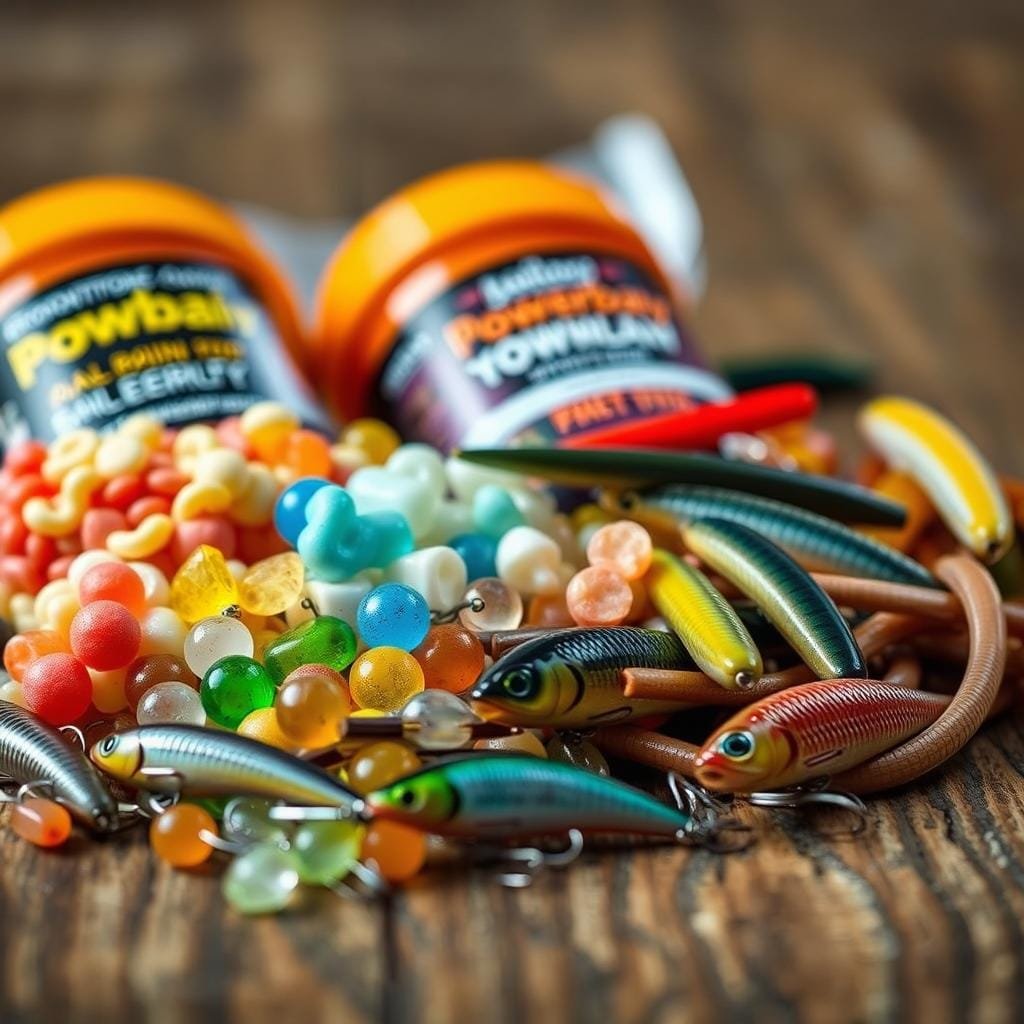
Find the best bait for rainbow trout by matching scent, color, and movement to the water. When lakes are 50–60°F, fish feed more and move around. In clear water, use subtle baits and light gear. In stained water, use brighter baits or more vibration to help fish find the hook.
For fast action, try Berkley PowerBait Floating Mice Tails in 2–3 inches. They look like eggs and worms and float. If fish get picky, try PowerBait vs worms to see what works best.
Nightcrawlers and garden worms work well all year. Fish them slowly on a size 10–14 hook or a 1/64-oz jig head. In cold, clear water, salmon eggs for trout are good because they drift naturally and stay in the zone.
In winter or when trout focus on small food, live nymphs and small minnows are great. In ponds with lots of trout, simple baits like kernel corn and colored marshmallows work well. This mix helps you catch trout in most places.
Some lures mimic bait and cover water quickly. Worden’s Rooster Tail, Blue Fox Vibrax, and Mepps Aglia add flash and thump. The Acme Phoebe works in tight spots. Leland’s Trout Magnet is for finesse. Rapala Husky Jerk and Lunker City Slug-Go mimic minnows. Berkley PowerBait Floating Trout Worm is good for tough bites.
Choose your bait based on the conditions. In clear water, use natural colors and gentle movements for wild trout. In murk or wind, use brighter colors for stocked trout. Keep leaders thin, check hooks often, and adjust depth until you get steady taps.
- Cold, clear creeks: salmon eggs for trout on light line; small worms drifted slow.
- Stocked ponds: Berkley PowerBait Floating Mice Tails; compare PowerBait vs worms to confirm mood.
- Big lakes: Blue Fox Vibrax for long casts; Rapala Husky Jerk when fish suspend.
- Finicky fish: Leland’s Trout Magnet or a Berkley PowerBait Floating Trout Worm in natural hues.
PowerBait and Dough-Style Options for Stocked Ponds
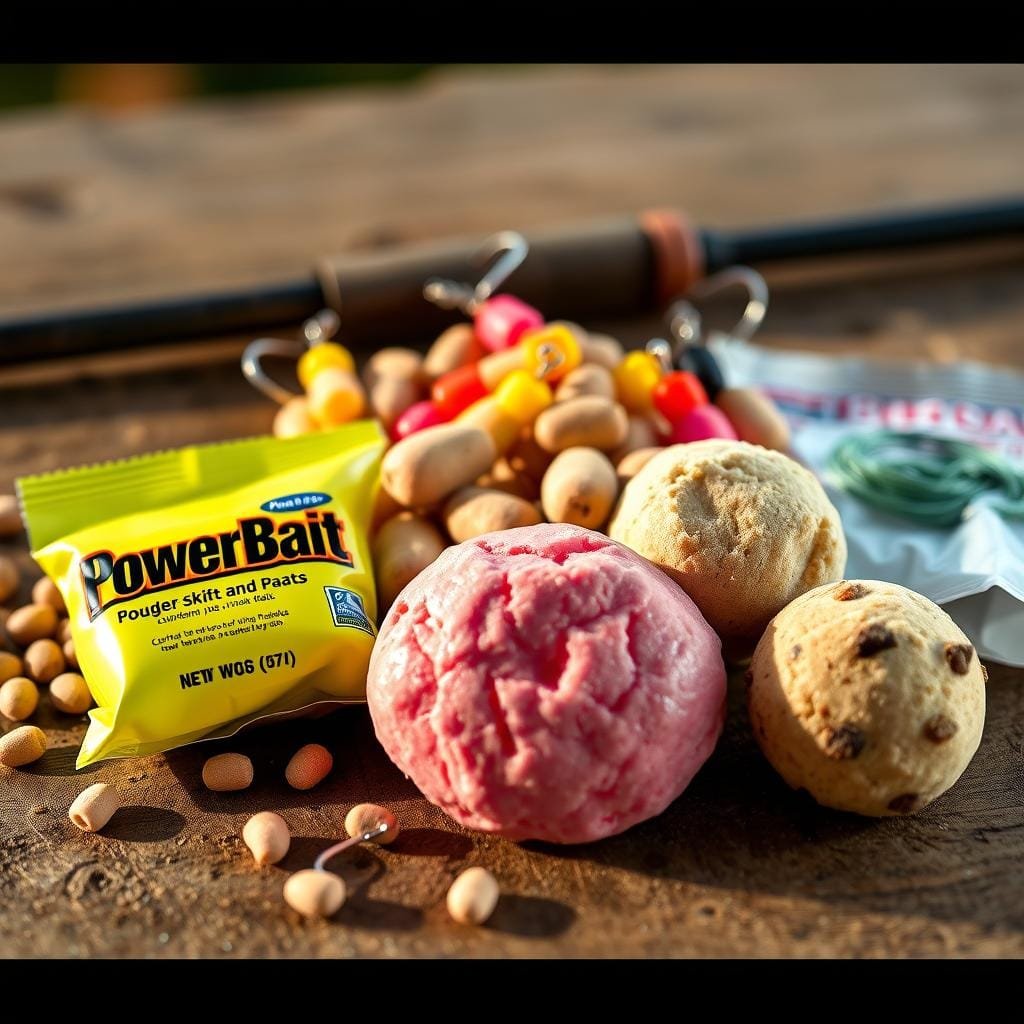
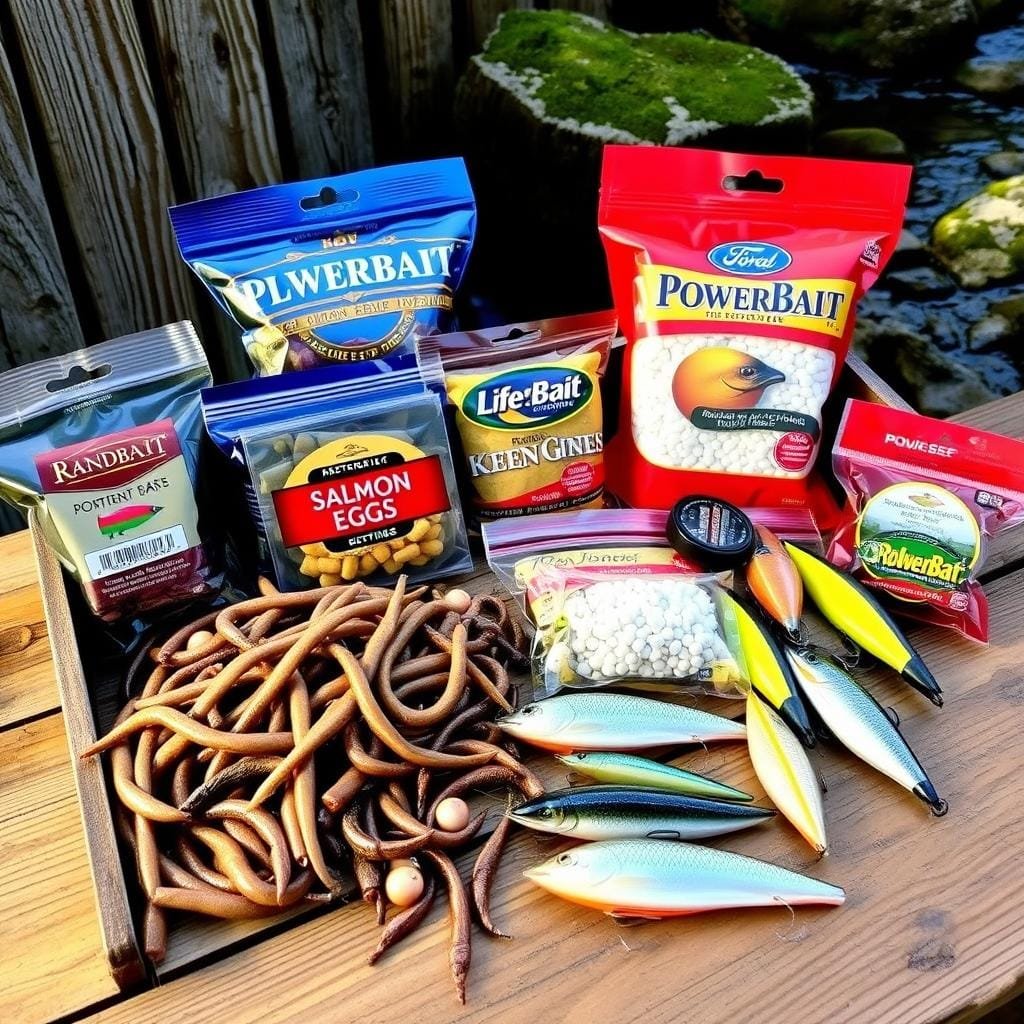
In hatchery waters, scent-heavy doughs work well because rainbows like the smell of pellets. PowerBait for trout has that familiar smell and soft feel. It’s a top choice for stocked ponds when fish first come to shore. Try different shapes and sizes to see what works best.
PowerBait Trout Nuggets vs. Floating Mice Tails
Trout nuggets are easy to set up and cast. They’re great for places where fish like to hide. They sit on the bottom and keep the scent close to the fish.
Berkley Floating Mice Tails are different. They have a tail that floats and an egg body that moves through the water. This makes them stand out and release scent.
Use trout nuggets when fish are near the bottom. They’re also good for beginners. Switch to Floating Mice Tails for more action and a better look.
How to rig Floating Mice Tails to hover inches off bottom
- Thread a #8–#10 baithook through the egg head so the tail floats free and dances.
- Add a small split shot 6–12 inches up the leader to pin the rig while keeping lift.
- Cast to stocking lanes, points, or gentle shelves, then let the current and buoyancy raise the bait just off bottom.
This rig keeps the lure visible above weeds. Rainbows can see it from far away.
Scent, color combos, and when to let it sit versus slow-drag
Carry different trout scent colors for changing light and water. Bright colors work in stained water, and natural colors in clear water. Mix up PowerBait and Mice Tails to get bites.
- Let it sit: ideal right after a stocking when fish prowl and follow scent trails.
- Slow-drag or tiny hops: best once the crowd thins and fish spread out.
- Color rotation: chartreuse/white, pink/white, orange, and natural browns cover most scenarios.
Try different moves with stocked pond trout bait. Keep switching until you find what works best.
Minnow-Imitating Hard Baits for Rivers and Inlets
Big rivers need precise casts and lures that stay put. A suspending jerkbait trout setup is great for this. It lets you work tight lanes and flash like a real minnow. Keep your rod low and feel the line before each cast.
Rapala Husky Jerk: suspending action that stays in the strike zone
The Rapala Husky Jerk is perfect for broad pools and logjams. Its neutral buoyancy makes it glide and hover like a real minnow. The rattle chamber attracts fish in both cloudy and clear water.
Choose sizes from 2½ to 5½ inches. Use bigger ones for big fish and smaller ones for more fish. This lure casts far, tracks well, and works in crosscurrents.
Crankbaits in fall: casting into current seams near inlets
In fall, bait piles up near inlets and mouths. Cast fall trout crankbaits into current seams. Land upstream, sweep through the soft edge, and let the lure stall in the pocket.
Work sandbars and pool heads, then use a feather retrieve along wood or rock. Minnow cranks dig and deflect, but the pause is key. Change angles until your lure ticks the seam just right.
Jerk-pause rhythms that trigger predatory browns and rainbows
Start with two to three sharp twitches, then pause 2–5 seconds. In colder flows, hang longer to tease fish. Keep slack controlled so the bait suspends, not drifts away.
Mix your cadence to match the fish’s mood. Fast twitches for active fish; longer pauses for pressured ones. Use the rod for action and the reel to gather slack, letting the bait hover where trout feed.
| Lure/Style | Best Water | Key Strength | Cadence Tip | When to Use |
|---|---|---|---|---|
| Rapala Husky Jerk | Pools, bank edges, logjams | Neutral suspend keeps bait in strike zone | Two–three twitches, 2–5 sec pause | Mixed clarity; bright or overcast |
| Suspending jerkbait trout | Wide rivers with complex seams | Long casts; stable on crosscurrent swings | Lengthen pauses in cold water | Late fall and early spring |
| Fall trout crankbaits | Inlets, mouths, sandbar edges | Deflects and calls bait-chasers | Slow roll with stall in soft water | Bait congregations in autumn |
| Current seams trout approach | Soft-hard current transitions | Natural ambush lanes | Cast upstream; sweep across seam | Any flow with defined edges |
| Jerk-pause retrieve | Clear to lightly stained flows | Triggers follows into strikes | Match pause to water temp | Finicky browns and rainbows |
Dead-Drifting Imitations When Trout Key on Insects
When cold currents bring hatches low in the water, dead-drift trout tactics shine. Think small, natural, and quiet. Match the size of local nymphs, keep the line semi-tight, and let the lure ride the flow like real insect imitations trout.
Moondog Stonefly Larvae: buggy profile for high water and winter
Moondog Stonefly Larvae are 1-inch micro-finesse plastics with a lifelike, jointed body. This stonefly larvae bait doubles as a mayfly or caddis mimic, which helps when trout get picky. In high water, fish push to soft edges; in winter, they want small bites. A #10 jig head lets you tap bottom lightly or hover mid-column as needed.
For a stealthy setup, thread the larvae straight and keep the hook gap clear. Use a thin fluorocarbon leader for shy fish. A single split shot can steady the drift without killing action.
Under-a-bobber vs. bottom-bounce dead drifts
Use bobber drift trout rigs to suspend the bait and ride surface pace. A small fixed float and #10 or #8 mosquito hook keep the larvae level and visible. Set depth so the bait travels a foot above the rocks.
Bottom bouncing trout rigs excel in deeper runs. Add minimal weight so the lure ticks, not drags. Cast slightly upstream, lift gently to clear snags, and reengage the drift. This mirrors nymphs that tumble, settle, and slide.
Matching drift speed to current for natural presentations
The key is syncing lure speed to the current. Stand a step up-current, manage slack, and prevent the arc that causes an unnatural swing. In stil water, count down and use a slow, even crawl to mimic a controlled sink.
For more on float and jig options that match aquatic insects, see this guide on spinning tackle insect matching. It explains how small plastics and micro jigs can imitate nymphs during tight bites.
| Rig Style | Best Use | Hook/Jig | Weighting | Key Tip |
|---|---|---|---|---|
| Under-a-bobber dead drift | Shallow seams, winter pools | #10–#8 mosquito hook | Small split shot spaced 12–18 inches up | Set float so the lure rides just off bottom for natural dead-drift trout movement |
| Bottom-bounce dead drift | Deep runs, high water | #10 jig head with open hook | Minimal; just enough to tick substrate | Maintain a semi-tight line to feel taps without dragging |
| Tandem micro-jigs | Variable depths, tricky currents | Two 1/80–1/64-oz jigs | Top jig unweighted, bottom slightly heavier | Stagger weights to stabilize insect imitations trout in eddies |
| Drop-shot nymph | Clear, snaggy bottoms | Nose-hooked larvae | Light drop weight 8–12 inches below | Hold bottom while the bait hovers at current speed for precise bobber drift trout alternatives |
| Split-shot swing check | Mixed riffles and pockets | #10 hook with larvae | One or two micro split shots | Feather mends to prevent lag and keep bottom bouncing trout drifts smooth |
Soft-Plastic Stickbaits and Worms for Tough Conditions
When fish get wary, soft-plastic trout baits keep you in the game. In cold fronts, low, clear water, or after heavy pressure, finesse trout tactics shine. Think slow moves, long pauses, and natural drifts that turn tough conditions trout into biters.
Lunker City Slug-Go excels for a realistic baitfish look. For Slug-Go trout, work a 3–5 inch model with a single #4 or #6 bait hook through the head. Twitch, then pause to let it glide like a stunned minnow. In faster runs, a long-shank jig head helps you bounce bottom and click off rocks.
Need a neutral drift? Center-hook the Slug-Go and float it under a small bobber. It will slide and wobble like an injured shiner, ideal for clear seams where rainbows hang back. Keep the rod high and feed slack so the bait stays in the seam.
Berkley PowerBait Floating Trout Worm is money when you need a subtle, upright presentation. This floating trout worm stands off the bottom and looks alive without much motion. In high, cloudy flows, rig a 3-inch worm on a short #8 or #6 jig head and tick the edges with short lifts.
In low, clear water, nose-hook the worm on a #10 or #8 baithook, add a tiny split shot, and drift it naturally. The buoyant tail hovers above rocks, which is perfect for a slow, believable ride that fits finesse trout tactics.
Match size to water and target fish. Three-inch plastics are ideal for small-stream brookies that nip short. Upsize Slug-Go trout offerings to 5–7 inches in bigger rivers and lakes when trophy browns and rainbows hunt larger meals.
Keep retrieves slow and deliberate during cold snaps and midday sun. Count longer pauses, mend line to protect a true drift, and let soft-plastic trout baits do the work. Small, precise moves trigger reaction bites in tough conditions trout without spooking the school.
Where to Find Rainbows Fast: Structure, Current, and Stocking Schedules
To find rainbow trout quickly, start by reading the water. Then, add stocking information to your plan. Look for spots where trout like to hide in moving water. These include outside bends, drop-offs, and areas behind boulders.
Trout also like spots near overhanging trees and the soft edges near dams. Start by fishing slower spots in cold water. As the water warms up, move to faster spots. When it gets close to 68°F, fish deeper and keep your movements quick.
Lakes and ponds have their own patterns. In the spring, fish deeper areas after the water turns over. In summer, find the thermocline and fish there. After fall turnover, fish near the banks.
In winter, fish just under the ice. On big lakes, use search baits like the Blue Fox Vibrax. This helps you cover more ground.
Stocked areas are best when you know when fish are stocked. Check your state’s stocking schedule. In the Mid-Atlantic, fish fast after a stocking event. Use PowerBait Trout Nuggets, Floating Mice Tails, and other baits.
Match your bait to the water’s clarity. Use natural colors in clear water and brighter ones in stained water. This helps you catch fish faster.
By using structure, temperature, and timing, you can find trout easily. Fish where trout like to be, follow the water’s changes, and check the stocking schedule. Keep your fishing simple and adjust your depth often. Let the water tell you where to fish next.