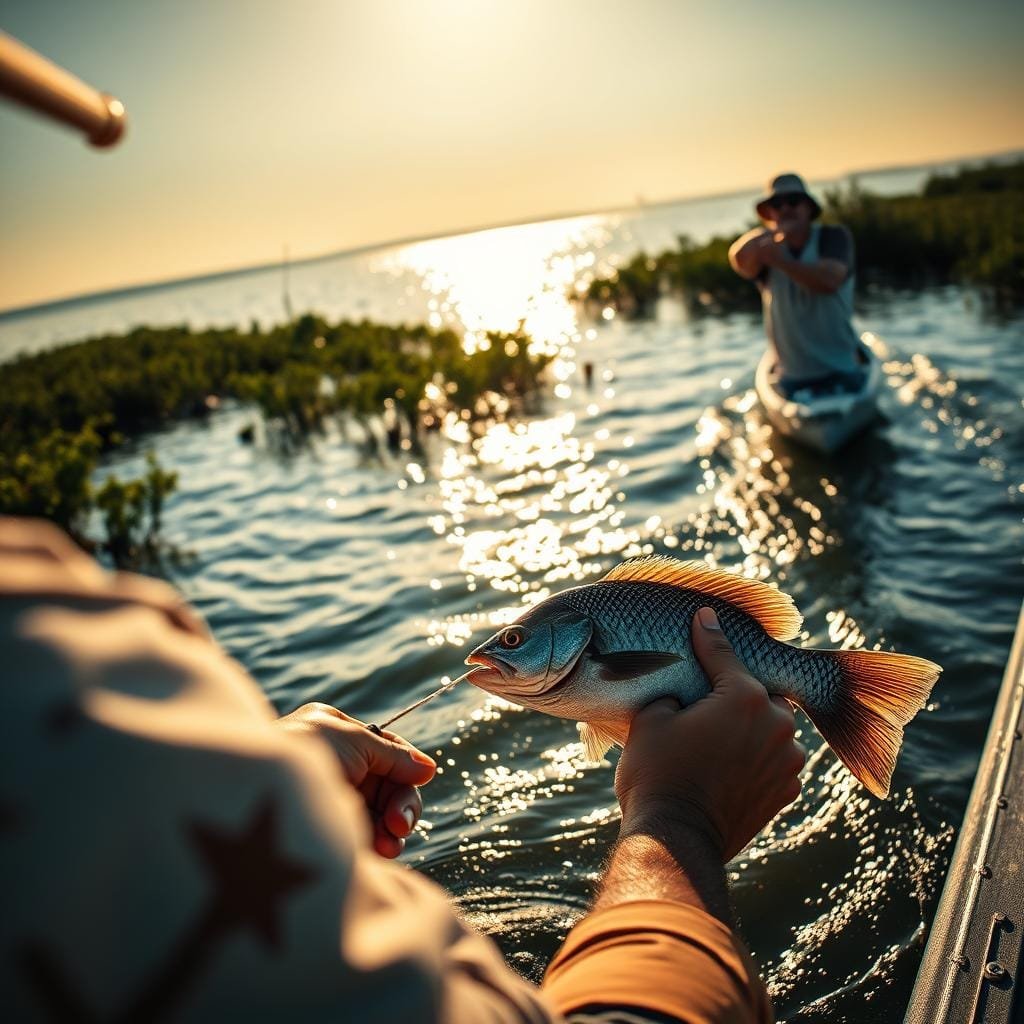
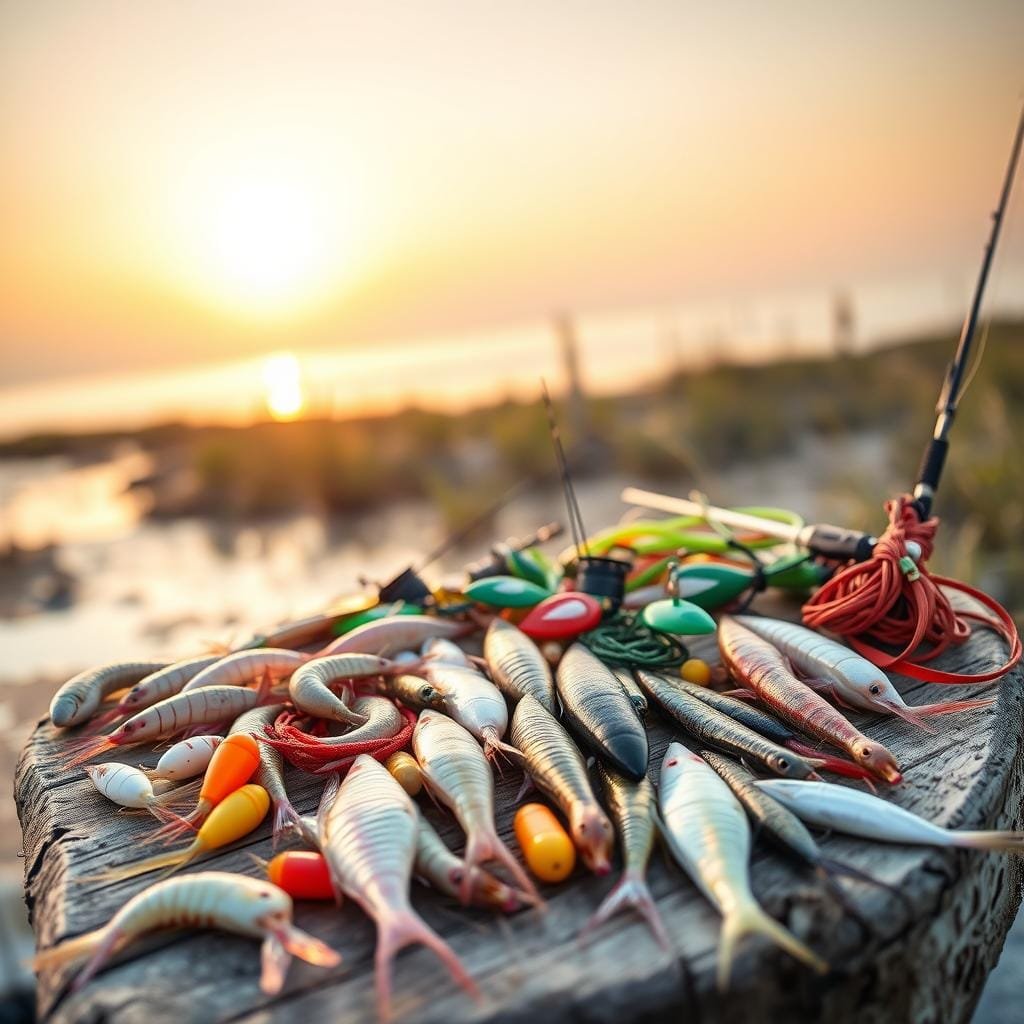
Redfish hit hard and roam wide. They love the right bait. This guide helps you pick the best bait for redfish.
Whether you fish in grassflats or mangrove shorelines, we’ve got you covered. There’s no one bait for all. It depends on the conditions.
We’ll teach you to match the bait to the environment. You’ll learn about scent, sound, and the best lures or live bait.
Live shrimp and crabs are great when the water gets murky. Fresh-dead shrimp and cut mullet attract big reds. They follow the scent trail.
For artificial lures, try gold spoons, skimmer jigs, and soft-plastic jigs. The Storm Wildeye Swim Shad and Zoom Super Fluke are also good. Use them in dock lines and deep grass.
Crab rigs are important. Use circle hooks and pop the claws. This helps manage line twist. In clear water, use subtle colors and quiet lures.
At first light or low wind, a spoon thump works well. These tips work from Texas to Florida and all along the coasts.
Seasons change what works. In spring, use natural-toned plastics and live shrimp. Summer is for dawn topwater and bait near structure.
Fall is for mullet and blue crab schools. Winter is for live crabs, shrimp, and soft-plastic jigs near the bottom. This guide helps you adapt and catch more reds.
Next, you’ll learn about field-tested setups and simple rigging. We’ll also share brand-specific picks. You’ll learn to choose the right bait for any moment.
Redfish Basics: Behavior, Habitat, and Why Bait Choice Matters
Red drum live in many places, from brackish backwaters to open bays. They like skinny flats, oyster edges, and channels. Choosing the right bait is key to catching them.
Where Redfish Feed: Flats, Marshes, and Channels
On calm mornings, redfish hunt shrimp and mullet on grass flats. As the tide rises, they move to marsh edges for crabs. In strong currents, they gather in channels and inlets.
They follow food and find safety in structures like docks and oyster bars. For more on their habits, check out this guide to redfish behavior and habitat.
Opportunistic Eaters: From Shrimp and Crabs to Baitfish
Redfish eat a lot of things, from shrimp to baitfish. They use their mouths to root on the bottom. But they can also chase down swimming prey.
Depending on what’s available, change your bait. In the fall, try mullet and blue crabs. In summer, shrimp and finger mullet work well.
How Tide, Light, and Water Clarity Affect Strike Windows
The tide and how clear the water are important for redfish. Moving water helps them ambush prey. Slack tide slows things down. Low light makes it easier for them to hunt without being seen.
In clear water, use bait that looks natural. In murky water, add scent and vibration. Fish in high tides and then move to troughs as the water drops.
| Scenario | Location Cue | Best Natural Bait | Artificial Tweak | Why It Works |
|---|---|---|---|---|
| Rising Tide, Clear | Grass flats redfish on sand pockets | Live shrimp | Natural-tone soft plastic on light jig | Stealthy profile for sight-feeding fish in clear water |
| Peak Current, Stained | Channels and inlets near bridges | Cut mullet or menhaden | Gold spoon with thump | Scent and vibration overcome low visibility and fast flow |
| Flood Marsh, Overcast | Marsh redfish on grass edges | Fiddler or small blue crab | Crab-imitating skimmer jig | Crab match mimics natural forage during low-light feeding windows |
| Falling Tide, Moderate Clarity | Oyster bars and creek mouths | Finger mullet | Paddle-tail swimbait in baitfish hues | Bait funnels off structure; fleeing profile triggers reaction bites |
Live Shrimp and Fresh-Dead Tactics that Trigger Instant Strikes
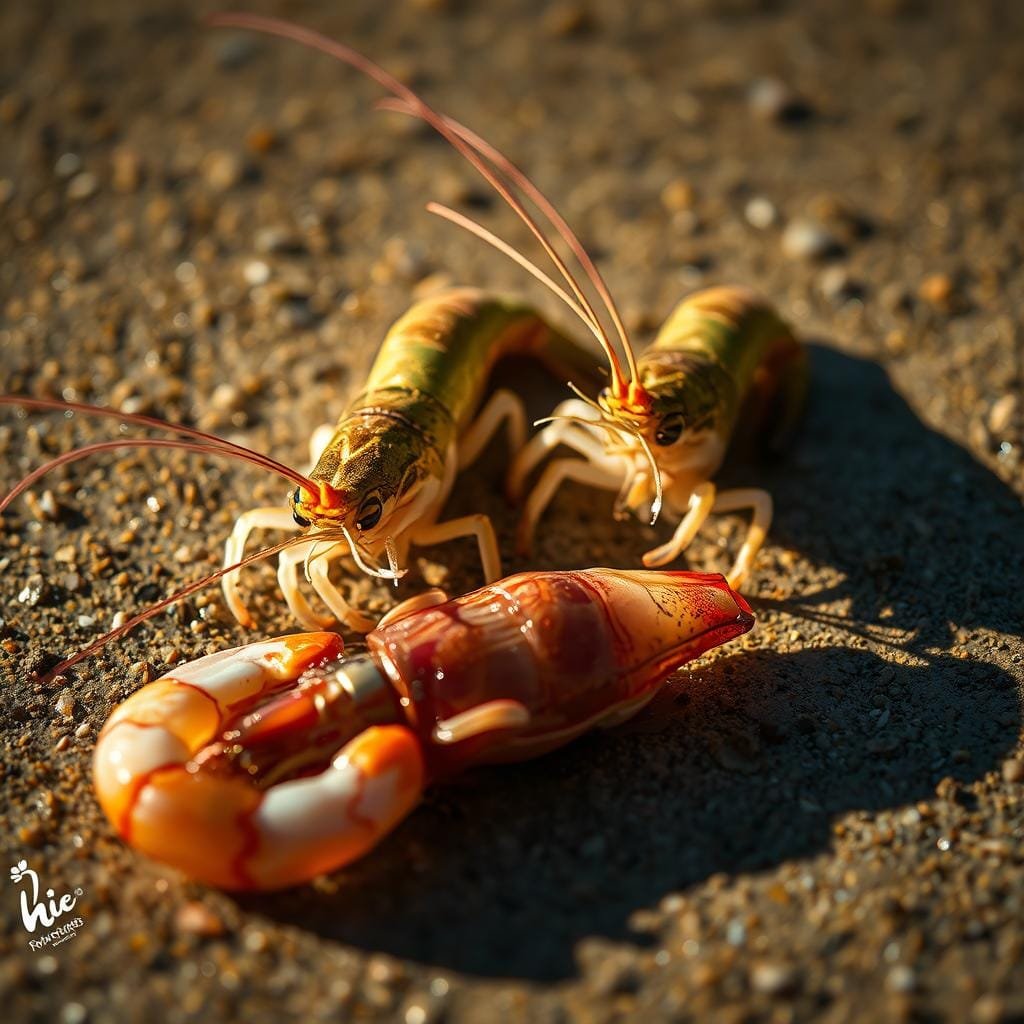
Live shrimp redfish tactics are super effective. They work well on quiet flats and near mangroves. Keep your rig simple and match the leader length to the grass height.
Let scent and sound do the work when the water is dark. In clear water, use lighter leaders and go natural. This helps avoid scaring the fish.
Popping Cork Setups and Sound Cues that Draw Reds In
A popping cork redfish rig is great for attracting fish. It makes noise and bubbles. Start with a pop-pop, then pause to let the shrimp sink.
Over flats, use a longer leader to stay above the grass. Along shorelines or channel edges, use a shorter leader. This keeps the bait in sight.
In stained water, focus on sound and scent. Add a small split shot in current to keep the bait in place. A single blurp near oyster beds can pull fish tight.
Hooking Methods: Under the Horn, Tail-Hooked, or Threaded
For maximum life, hook the shrimp under the horn and out through firm shell. Tail-hooking makes the shrimp swim forward naturally. Fresh-dead works well when threading shrimp from head to tail.
Use a Texas-rig shrimp to slip through grass without getting stuck. Scale the hook size to the shrimp. Use circle hooks for clean hookups. A small shrimp tip on a jig head adds scent without losing action.
Sight-Casting on Grassflats and Around Oyster Bars
For sight fishing redfish, lead the fish a rod length and land quietly. Let the shrimp swim on a slack line, then tighten as the fish bites. When tails wave in skinny water, a Texas-rig shrimp crawled slow is hard to ignore.
Edge work needs patient oyster bar tactics. Slide the cast up-current and let the bait sweep past the seam. If they’re picky, switch to fresh-dead threaded straight to keep the profile slim.
| Scenario | Rig & Hook | Presentation | Why It Works |
|---|---|---|---|
| Wind-sheltered flats with grass | Popping cork, 18–30 in. leader, 2/0 circle | Pop-pop…pause over grass flat shrimp lanes | Sound draws fish; pauses let shrimp fall into the strike window |
| Clear water, skittish fish | Free-line, light fluoro, horn-hook | Soft cast, minimal drag; let live shrimp redfish swim | Natural drift avoids spooking while staying lifelike |
| Turbid creeks and channels | Popping cork, short leader, tail-hook | Sharp blurp, then feed slack in current | Noise plus scent guides fish to the bait in low visibility |
| Oyster edges and rips | Texas-rig shrimp on 1/0 EWG | Slow crawl with short hops | Weedless profile slips through shells; strikes pin the fish |
| Tailing reds in knee-deep grass | Jig head, threading shrimp | Cast past, drag into cone, tiny lifts | Compact scent package triggers reflex bites at close range |
| Oyster bars at low tide | Free-line with small split shot | Up-current drop, glide along seams | Current presents shrimp naturally; ideal for oyster bar tactics |
Crab Baits that Bulls and Slot Reds Can’t Resist
Crabs make reds want to eat. In clear or stained water, a crab bait looks real. It rides the current and smells good.
Blue Crabs vs. Fiddler Crabs: When to Use Each
Live blue-claw crabs are great bait for redfish. You can find them at coastal bait shops from Texas to the Carolinas. A whole crab is best for big fish. Halves or quarters are better for fish that are hard to catch.
Fiddler crab setups work well in marshes, like in northeast Florida. Spring tides or full-moon cycles make fish eat more. Keep a bucket ready for when the wind or high water open up the shallow areas.
Rigging Tips: Circle Hooks, Removing Shells, and Reducing Line Twist
Use circle hooks for crabs because reds swallow the bait. A 5/0–7/0 circle hook works best. For small crabs, use a 1/0–2/0 circle hook.
For big reds, choose a blue crab with a 4–5 inch back. Remove the shell by lifting the hard top and taking off the claws. Don’t pull the claws off. Press them at the elbow to keep the bait alive and reduce line twist.
Where you hook the crab matters. Go through the bottom and out the top of the shell. Or, hook the leg joint for a durable bait. With fiddlers, use a light egg sinker or split shots. Move slowly to make the bait look real.
Flood-Tide Strategies for Marsh Reds on Fiddlers
When the grass flats flood, lead a fish by three feet. Let the bait settle. Make short, slow pulls to mimic a crab.
In less than two feet, cast fiddlers without weight. Add a single split shot as the water gets deeper or the current gets stronger. These tactics work well with circle hooks for crabs.
| Bait Type | Best Use Case | Hook & Weight | Key Advantage | Pro Tip |
|---|---|---|---|---|
| Whole Blue Crab (4–5″) | Deep channels and inlets for bulls | 5/0–7/0 circle; 1–3 oz depending on current | High scent and durability as bull red bait | Do shell removal for crabs and press claws off at the elbow to cut line twist |
| Halved/Quartered Blue Crab | Pressured fish on ledges and bars | 3/0–5/0 circle; moderate egg sinker | Natural scent plume; easier to swallow | Hook through corner of shell or leg joint for strength |
| Small “Bonefish” Crab (<3″) | Shallow flats for slot reds | 1/0–2/0 circle; weightless or single split shot | Subtle profile for wary fish | Lead sighted fish ~3 feet and keep movements minimal |
| Fiddler Crab | Flooded marsh grass on spring tides | 1/0 circle; light egg sinker, split shots, or 1/4-oz jig | Matches natural forage during flood tide redfish bites | Retrieve slow along bottom to reduce line twist and stay in the zone |
Artificial All-Stars: Spoons, Skimmer Jigs, and Soft Plastics
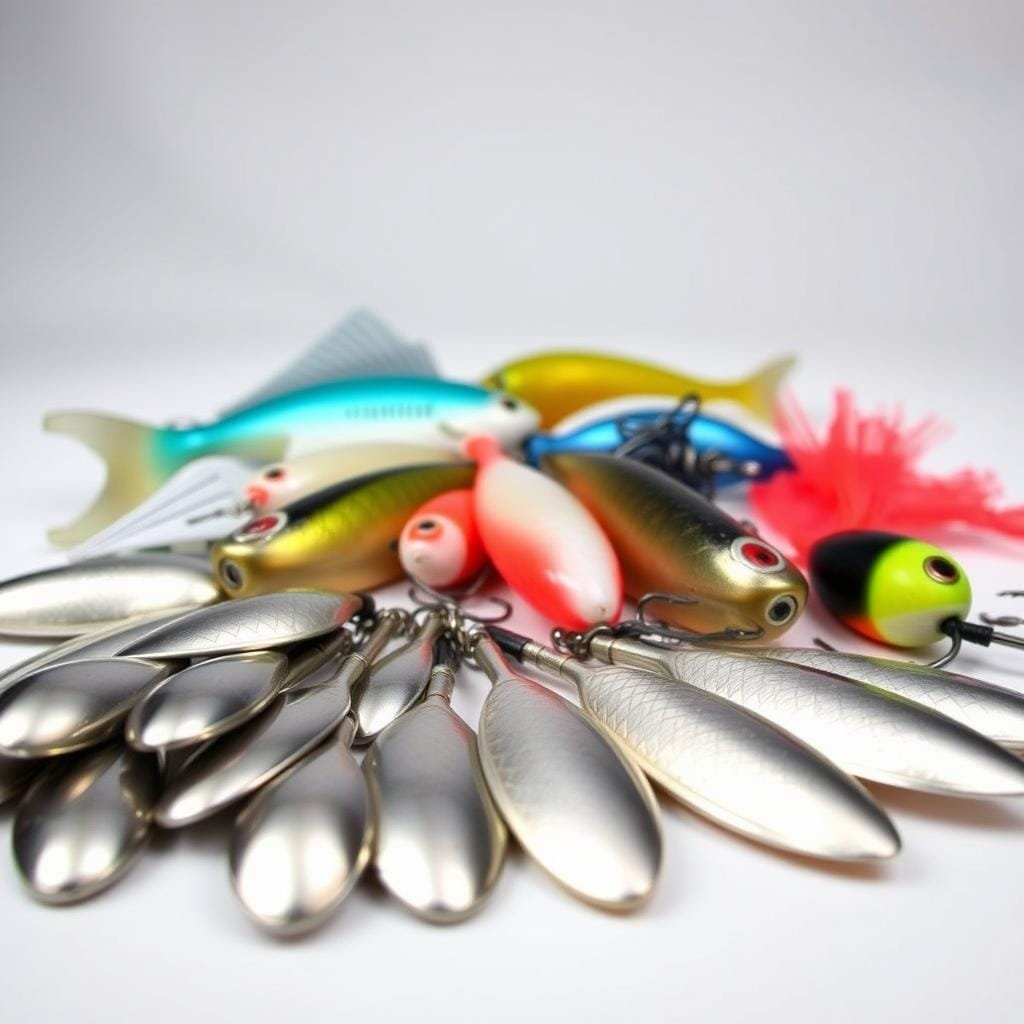
When sight-fishing gets hard or the grass is thick, these artificial lures work fast. They stay weedless. Mix flash, vibration, and lifelike profiles so redfish see, hear, and feel your bait. Keep retrieves smooth, then add brief pauses to seal the deal.
Weedless Gold Spoons and Color Tweaks for Clear vs. Stained Water
For classic flash over turtle grass, few beat the Johnson Silver Minnow. Many anglers swear by a gold spoon redfish setup in stained water. In bright, clear conditions, switch to black or scuff a shiny blade with sandpaper to mute glare.
Choose 1/8 ounce to land soft and stay high in the water. Retrieve slow to keep that steady wobble, and add a quality snap swivel to kill line twist. A tiny shrimp tip can add scent without killing action.
Skimmer Jigs that Imitate Crabs, Shrimp, or Baitfish
A skimmer jig redfish rig fishes clean across flats, potholes, and mangrove points. Look for monofilament weedguards and a light head. Models from Backbone Lure glide well and hold bottom subtly without snagging.
Match the water: brown and tan on salt-and-pepper flats; chartreuse/brown for pop; hot pink/white or orange/brown for contrast; black in mud. Tie a loop knot for freedom of movement and work 1/8 to 1/4 ounce with a hop-and-glide cadence.
Soft-Plastic Jigs, Swimbaits, and Jerkbaits for Versatility
In darker water, a D.O.A. CAL shad-tail or curly tail pulses hard and calls fish in. Rig 1/4 to 3/8 ounce along channel edges, and add a small rattle for thump. Check hook gap so plastic does not foul on the cast.
A Storm Wildeye Swim Shad runs hook-up and tracks true around oyster bars. Use smaller sizes on skinny flats and bump up in depth. For a darting look, twitch a Zoom Super Fluke; add a split shot at the eye to sink quicker, or skin-hook for weedless sailing.
Plastic Shrimp for Dock Lines and Deeper Grass Edges
When reds hug shade and current seams, pitch a D.O.A. Shrimp underhand to skip it deep. The internal weight and single hook ride clean through grass and around pilings. Let it fall on a tight line—hits often come on the drop.
Go clear with red or gold glitter in sunny, clean water. In stain, reach for Figi Chicken or Rootbeer/Chartreuse. Swim it slow, add a couple wrist snaps, and pause to mimic the real thing.
Seasonal Playbook: Spring Through Winter Bait Adjustments
Understanding seasonal redfish patterns can make your fishing trips better. Adjust your bait and fishing style based on water temperature, light, and what fish are eating. Always be ready to change your approach based on how fish react.
Spring: Rising Temps, Shallow Moves, and Natural-Tone Plastics
As the weather warms up, redfish move into shallower waters to feed. Look for clear water, long days, and lots of baitfish moving through the grass. Soft plastics in natural colors, live shrimp, and small paddletails work well.
Keep your fishing movements slow and gentle. Look for fish in the edges of marsh drains. This is a great time to find where mullet run redfish will be later.
Summer: Early/Late Topwater, Midday Live or Cut Bait Near Structure
Summer heat makes fish seek cooler spots like docks and channel edges. Fish early and late with topwater lures, then slow down as the sun gets higher.
In the middle of the day, fish near bridges, oysters, or jetties. Use live pinfish or cut mullet close to the current. Storms can make fish more active.
Fall: Schooling Reds, Aggressive Feeding, Mullet and Blue Crab
Fall is a time of plenty. Schools of redfish move through inlets, passes, and outside bars. Fall bull reds are hungry for bigger prey. Try swimbaits, live mullet, or blue crabs where birds and bait are.
Follow the mullet run redfish along beaches and points. Use spoons or topwaters to cover water, then stick with what gets the most bites.
Winter: Slow Presentations with Live Crabs, Shrimp, and Jigs
In the cold, fish gather in deeper spots and protected creeks. Winter jigging redfish prefer small, slow-moving jigs.
Fish when it’s warmest in the middle of the day. Use scented jigs or live crabs and shrimp with little movement. Let the fish rest longer between lifts to match their slower pace.
| Season | Where to Look | Primary Forage | Best Baits | Retrieve/Presentation | Why It Works |
|---|---|---|---|---|---|
| Spring | Sunny grassflats, marsh edges, shallow potholes | Shrimp, small crabs, juvenile baitfish | Natural-tone soft plastics, live shrimp, light swimbaits | Sight-cast, steady swim, gentle pops | Matches clearer water and active but wary fish in spring redfish zones |
| Summer | Early flats, dock shade, deeper channels at midday | Mullet, pinfish, menhaden | Topwater plugs at dawn/dusk, live or cut bait by structure | Walk-the-dog early; soak baits slow in heat | Targets summer topwater redfish at low light, then conserves energy midday |
| Fall | Inlets, passes, surf bars, bait-rich points | Mullet schools, blue crabs | Large swimbaits, spoons, live mullet, blue crab | Fast fan-casting; then slow-roll through schools | Aligns with aggressive feeding by fall bull reds and the mullet run redfish push |
| Winter | Deep holes, channels, sheltered creeks | Shrimp, small crabs | Soft-plastic jigs, live shrimp, live crabs | Bottom contact, long pauses, short hops | Triggers winter jigging redfish in stable, warmer water layers |
best bait for redfish
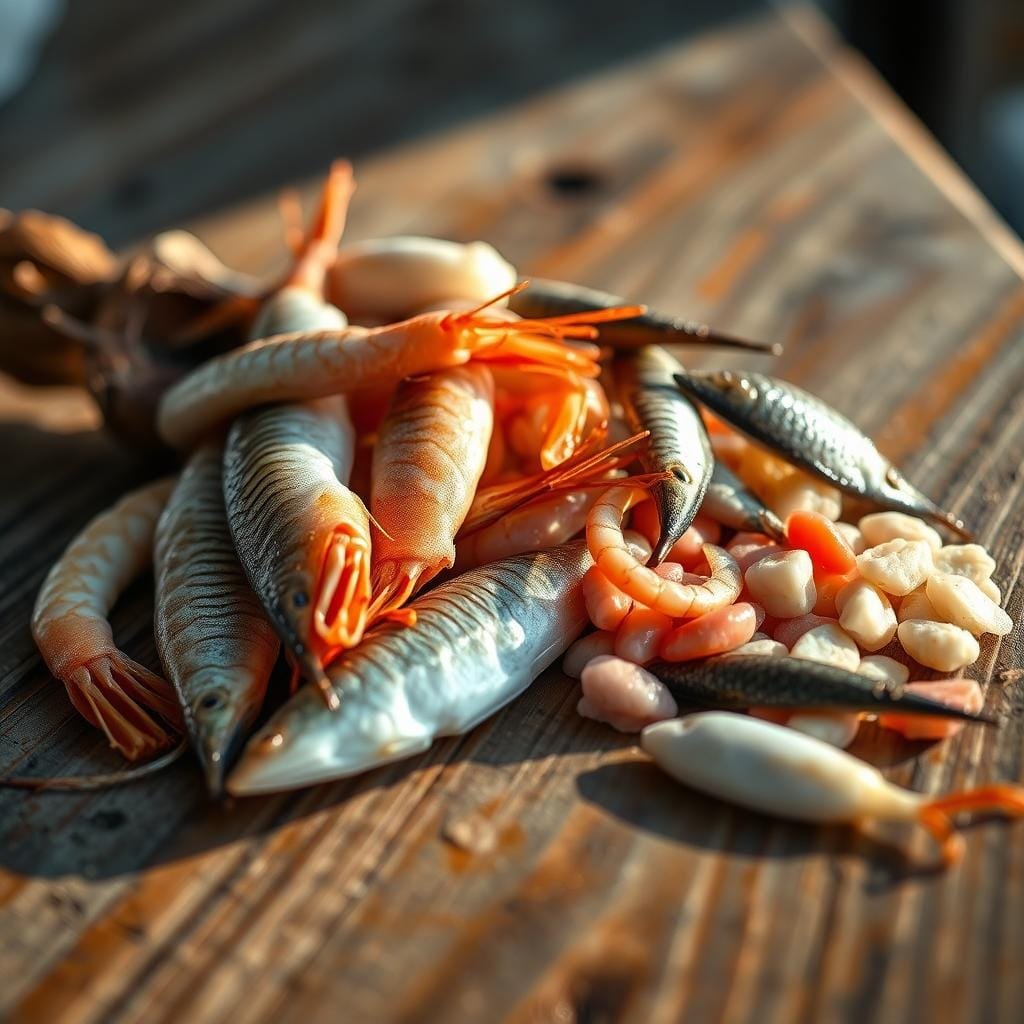
Finding the best bait for redfish means matching what they eat, sound, and smell. Think about the tide, water color, and how much pressure there is. Choose a way to fish that keeps you close to the fish without scaring them away.
Live Shrimp for Daily Consistency in Flats and Mangroves
Every day, live shrimp popping corks work great in mangroves, grass, and oyster bars. Pop the cork once or twice, then let it settle. Hook it under the horn for fast casts or tail-hook for slower ones.
Use a 1/4-ounce jig head with shrimp in potholes. Or, try a weedless spoon to cover more water. For more ideas, check out this guide to top redfish baits and see D.O.A. Shrimp and CAL shad tails.
Blue and Fiddler Crabs for Pressured or Trophy Fish
For cautious fish or big ones, small fiddlers and blue crabs are perfect. Use whole crabs for slot fish and bigger ones for bull reds. Remove shells and claws, then hook with a strong circle hook.
Work the current seams with short lifts to avoid twist. A fiddler crab flood tide on skinny flats can be exciting. Move quietly, cast far, and drag slowly to stay in the game.
Cut Mullet and Menhaden for Scent Trails in Current
Nothing beats cut mullet or oily menhaden for scent trails. In channels or points, place baits upcurrent to funnel scent to fish. Use enough weight to hold bottom without hiding the bait.
Use heavy-wire circle hooks to catch and release big fish. Fresh bait is better, so trim and rebait often when crabs are plentiful.
Spoons and Scented Soft Plastics When Visibility Is Low
In murky water, a wobbling spoon attracts fish with flash and sound. Scented soft plastics like Berkley Gulp! and D.O.A. CAL shad or curly tails add smell. Choose dark colors in muddy water and natural colors in clear.
Tick grass tops with a 1/8-ounce spoon, then switch to plastics with rattles for potholes. Mix your retrieves to attract fish.
Presentation That Pays: Sight-Casting, Popping, Jigging, and Trolling
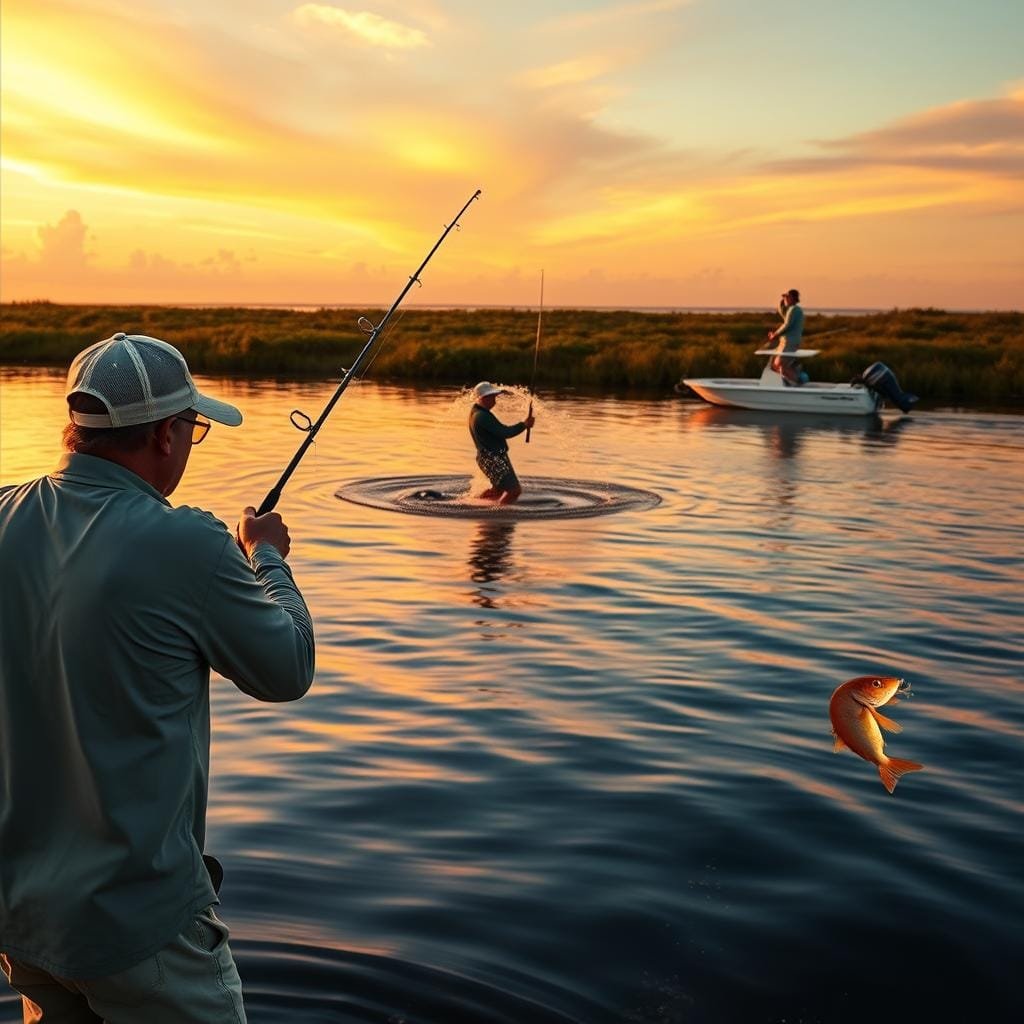
Fish like how a bait moves and sounds. Match the water’s mood and keep it quiet. Use finesse and timing to get them to eat.
Sight-Casting: Lead the Fish and Land Quietly
On clear flats and marsh edges, be quiet. Use a small crab or shrimp and cast softly. This way, you lead the fish without scaring them.
Try skipping a D.O.A. Shrimp under docks. Let it glide. Keep your rod low and movements small. If the fish follows, twitch once and stop.
Popping Cork Rhythm: Pop-Pop…Pause to Call Fish Up
Along mangroves and grass lines, set a popping cork rhythm. It should match the wind and current. Use pop-pop-pop, then pause to let the shrimp settle.
Add a single loud blurp to grab their attention. Then wait. Most bites happen during the pause.
Bottom-Kissing Jig Retrieves in Channels and Potholes
For jigging channels and potholes, use soft-plastic jigs. Cast up-current and let them tap bottom. Then, crawl the lure with small lifts.
Keep tension as it sinks. Strikes often happen on the fall. Use fiddlers or scented plastics for bottom-hugging fish.
Steady Swimbait Tracks Over Oyster Bars and Flats
Use a Storm Wildeye Swim Shad for a steady retrieve. Let the tail thump over grass and shell. This attracts redfish.
Over oyster bars, keep the hook up to avoid snags. Size down for skinny flats and upsize in deeper troughs.
- Sight-casting: quiet entry, three-foot lead, single twitch, then dead-stick.
- Popping: set a repeatable popping cork cadence, pause long enough for the bait to settle.
- Jigging: bottom contact in current, slow lifts for jigging channels and pothole jigging.
- Swimbaits: steady track over shell and grass, adjust size to depth and flow.
Trolling covers water when fish spread out. Vary speed and depth until rods load. Use live crabs, larger baits, or wobbling plugs to match the mood.
| Technique | Best Zones | Key Move | Primary Lure/Bait | When It Shines |
|---|---|---|---|---|
| Sight-Casting | Clear flats, marsh edges, docks | Lead 3 ft, soft land, single twitch | Small crabs, shrimp, D.O.A. Shrimp | Sunny, light wind, clean water |
| Popping Cork | Mangroves, grass lines, points | Pop-pop…pause, occasional blurp | Live shrimp under cork | Chop on water, moderate current |
| Bottom Jigging | Channels, potholes, depressions | Bottom-kissing crawl with tension | 1/4-oz jig with fiddler or soft plastic | Moving tide, cooler months |
| Steady Swimbait | Oyster bars, grass flats, troughs | Even retrieve, hook riding up | Storm Wildeye Swim Shad | Stained to clear water, roaming reds |
| Trolling | Channels, shell banks, edges | Vary speed and depth | Live crabs, large baitfish, wobbling plugs | Covering water, locating schools |
Tackle and Color Choices for U.S. Inshore Waters
Dialed gear makes every cast count. A balanced redfish rod and reel with smart color choices will handle strong tides. It’s ready for quick changes as water clarity shifts.
Rods, Reels, and Line Strengths for Powerful Runs
Choose a medium or medium-heavy 6’6”–8’ stick. It should have a sensitive blank to feel subtle ticks. Pair it with a smooth-drag 3000–4000 size spinning reel from Shimano or Daiwa for coastal duty.
Run 15–30 lb line. Braid gives strength and feel around oysters. Mono offers stretch for shock when fish surge at the boat. Add a 20–30 lb fluorocarbon leader to resist abrasion without killing action.
- Polarized sunglasses help spot edges and grass lanes.
- A coated landing net protects slime.
- A compact fish finder clarifies depth breaks on flats.
Loop Knots, Weedguards, and Snap Swivels to Improve Action
A loop knot redfish connection unlocks motion on skimmer jigs and paddletails. Tie a simple non-slip loop to let lures swing naturally and draw strikes from pressured fish.
For grass-choked lanes, a weedless presentation saves casts. Monofilament weedguards shed eelgrass while keeping hooks ready. When throwing spoons, rig snap swivel spoons such as the Johnson Silver Minnow to cut line twist and speed color swaps.
Color Matching: Natural Tones in Clear Water, Chartreuse or Black in Muddy
Start with the water first. In clear sun, lean into natural hues and toned-down metals. Think muted gold or even a black Johnson “Silver” Minnow to avoid spooking fish.
In stained or muddy water, push contrast. Chartreuse, black, and bold two-tones like hot pink/white or orange/brown stand out. Scented tails from Berkley Gulp! and soft plastics with internal rattles add vibration and smell that seal the deal.
Keep a small kit ready for fast pivots. A spare leader wallet for braid vs mono redfish swaps, a few wire-free clips for snap swivel spoons, and pre-tied loop knot redfish leaders. With the right redfish rod and reel and smart color selection redfish, you stay in the strike zone longer.
Ethical, Safe, and Legal Redfish Gameplans
Start by knowing the redfish rules. Check your state’s license and size limits before you go. Many places have slot limits to protect small and big fish.
Groups like Coastal Conservation Association work for sustainable fishing. Staying updated helps keep the fishery healthy and your trips safe.
Practice catch and release to help reds grow. Use circle hooks and barbless hooks for easy releases. Fight fish quickly and revive them before releasing.
Keep shorelines clean and avoid crowded spots. This helps schools of fish stay healthy.
Safety is key, every time you go out. Check the weather and plan for wind and storms. This keeps you safe.
If you kayak, always wear a life jacket. Add a whistle and light too. Wear sturdy shoes on slippery spots.
Follow the rules and care for the fish. Log your catch and use quick releases. This protects redfish everywhere and makes your next trip better.