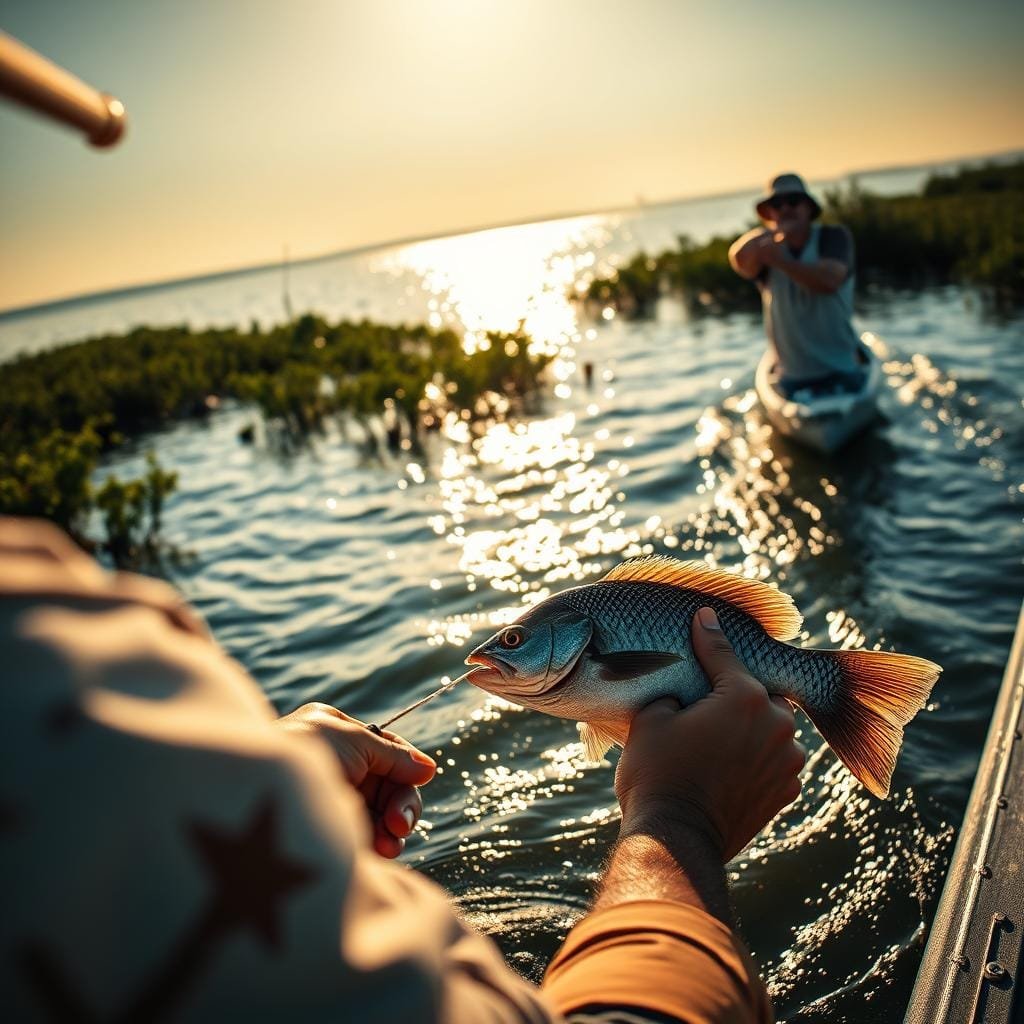
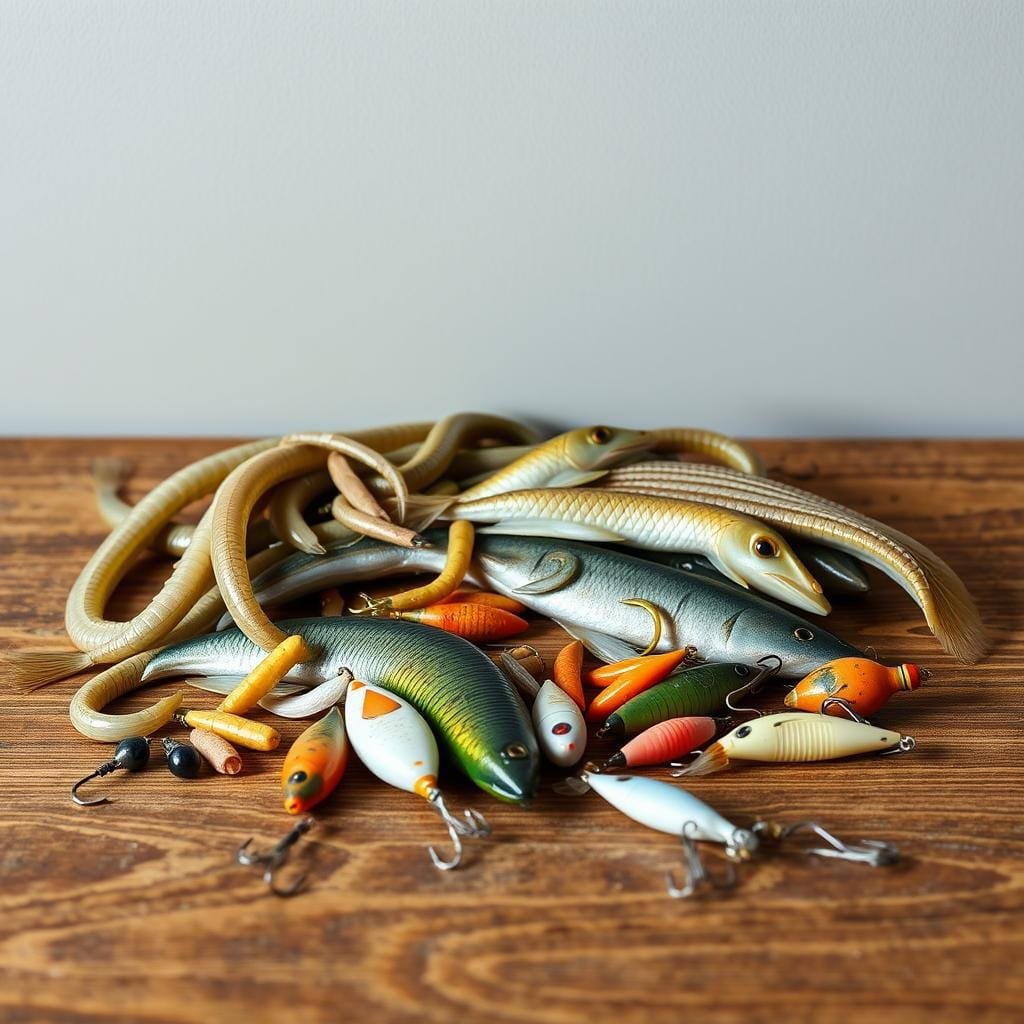
Rock bass are tough and hit hard. They love places with lots of structure. This guide shows the best bait for rock bass and how to use it.
We talk about the basics. Jigs, soft plastics, and crawfish color crankbaits are great. They work well in tight spots and around structures.
Seasons change, but rock bass lures stay effective. In cold water, slow craws work best. In summer, fast spinners are key.
Trusted brands like Yamamoto Senko and Z-Man Finesse TRD are mentioned. So are classic tubes and topwater icons like the Heddon Zara Spook. For more info, check out this article by Virginia DWR.
Simple gear is best: medium-light rods, 2000–2500 reels, and 4–8 lb line. We’ll cover hooks and retrieves. This keeps your baits in the strike zone.
Whether you like finesse or power, this guide has you covered. It helps you choose the right lures and techniques. Let’s go catch some rock bass!
Rock Bass Behavior, Habitat, and Why Bait Choice Matters
Choosing the right bait starts with understanding rock bass behavior. These fish love clear, warm water with lots of rocks and wood. This makes it easier to find them.
Think about small details. A single rock, a shadow under a pier, or a spot behind a bridge can be home to many fish. This focus helps you catch more fish.
Where rock bass live: rocky shorelines, gravel banks, docks, and current breaks
Rock bass like places with lots of rocks, gravel, docks, and where water moves fast. They like areas with shade and where water flows. This makes it easier for them to catch food.
When looking for rock bass, look for special spots. A small area with gravel, a log in rocks, or a piling that changes water flow. Cast your line to the edge of the water first, then move it down to catch more fish.
Seasonal movements: spring shallows, summer shade, fall feed, winter depths
In spring, fish move to shallower water as it warms up. Males make nests and guard them. This is the best time for bottom baits.
Summer keeps them in the same area but they hide in shade. Use short casts and quiet movements to catch them.
Fall brings them to deeper water but they keep feeding. They follow craws and small fish. Winter finds them in deeper, stable water near rocks and channels. Use smaller, slower baits then.
Diet insights that guide lure and live bait selection
Rock bass eat small fish, insects, and crustaceans. This means live minnows, worms, and crickets work well. Artificials that look like craws and shiners are good too.
Choose baits based on the area. Use craws and small swimmers in certain spots. Contact baits for tight spaces and reaction baits for active fish.
| Location Feature | Seasonal Sweet Spot | Forage Cue | Best Bait Types | Key Trigger |
|---|---|---|---|---|
| Rocky shorelines | Spring into early summer | Craws, mayfly nymphs | Finesse jigs, craw plastics, small crankbaits | Bottom contact and deflection |
| Gravel banks | Spring nests, fall transitions | Craws, sculpin | Stand-up jigs, tubes, Ned rigs | Slow hop with pauses |
| Docks and riprap | Hot summer mid-day | Baitfish in shade lines | Inline spinners (Mepps Aglia, Panther Martin), swimbaits | Shade-edge retrieves |
| Current breaks | Year-round in rivers | Drifting insects, minnows | Small crankbaits, micro-jigs, live minnows | Seam-targeted casts |
| Deep rock and boulders | Late fall through winter | Craws, dormant baitfish | Hair jigs, tiny spoons, subtle plastics | Short lifts and dead-sticks |
By understanding structure, season, and diet, every cast becomes more effective. This is how you catch more fish in changing water and light.
Jigs: The Most Versatile Lure Around Rocks
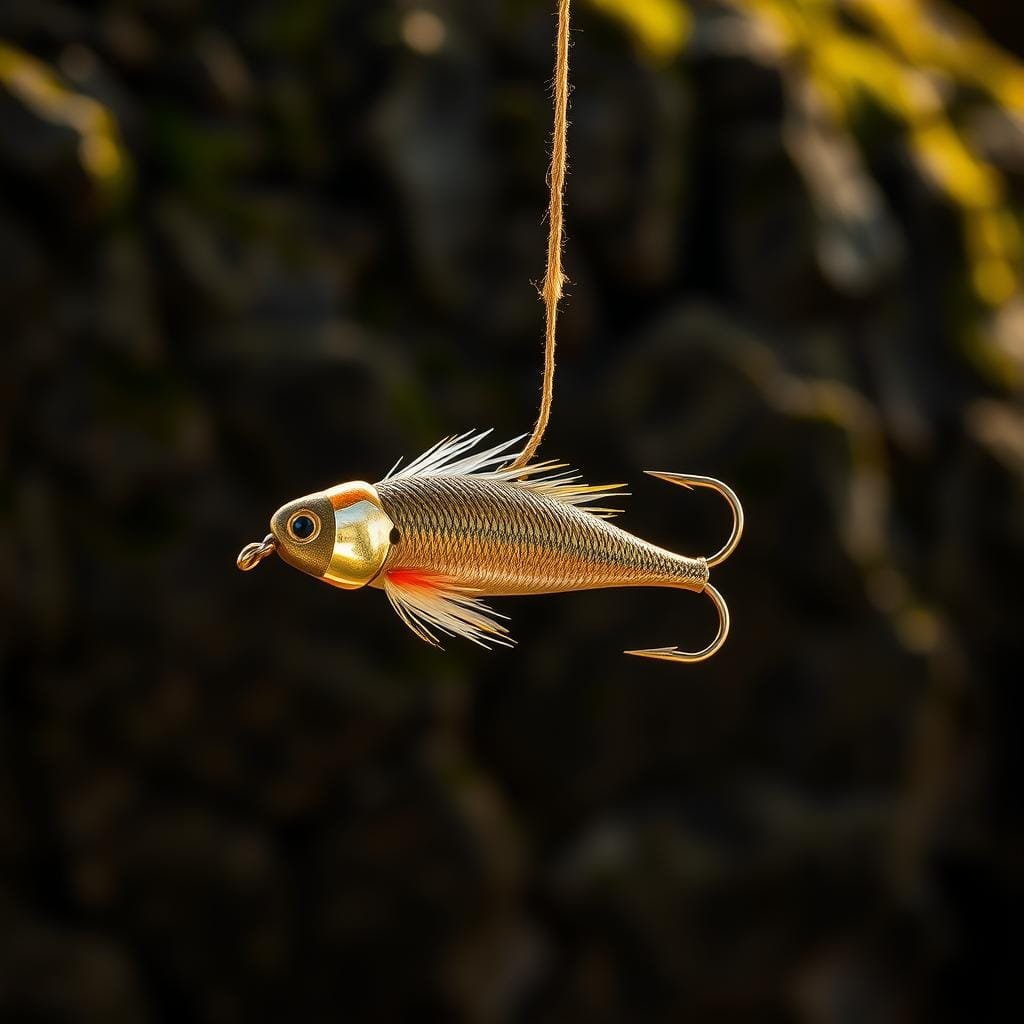
Rocky places are great for fishing. Rock bass jigs can reach the bottom and find cracks. Use Sufix 832 braid with a Sufix Invisiline fluorocarbon leader on a 2000–2500 spinning reel and a medium-light rod to feel every tap.
Light jigs for hopping points and chunk rock
Light jigs are good in spring and early summer. Use 1/16–1/8 ounce heads for hopping and dragging. This way, they don’t get stuck in crevices.
Add small grubs or compact creatures as trailers. They look like young craws.
Make hops short and crisp, then pause. This lets light jigs clear cracks and tease fish.
Heavy jigs for dragging and shaking along boulders
Heavy jigs are best for boulder fields. Use 3/16–3/8 ounce for hopping and dragging. Shake them to stir silt and attract fish.
Choose strong skirts and hooks. Keep soft plastic trailers close to the head for a crawlike shape.
Hair, marabou, and soft-plastic-tipped jig options for clear water
In clear water, use subtle jigs. Hair or marabou jigs move naturally. For more profile, add a small ball-head with soft plastic trailers.
Let these jigs pendulum and settle. Gentle shakes and slow drags keep the look real.
| Jig Type | Best Use Around Rock | Weight Range | Trailer/Material | Retrieve Tips | Ideal Gear |
|---|---|---|---|---|---|
| Light jigs | Hopping points, chunk rock, spring shallows | 1/16–1/8 oz | Soft plastic trailers (grubs, compact creatures) | Short hops, brief pauses, controlled falls | Medium-light spinning, 2000–2500, Sufix 832 + Invisiline leader |
| Heavy jigs | Dragging and shaking along boulders, deeper structure | 3/16–3/8 oz | Compact craws, chunk-style soft plastics | Slow drag, shake-in-place, bottom contact at all times | Same setup; bump leader strength for abrasion |
| Hair jig | Clear water, neutral fish | 1/16–3/16 oz | Bucktail or synthetic hair | Glide, pendulum, light twitches | Fluoro leader for stealth, long casts |
| Marabou jig | Ultra-clear, calm days | 1/32–1/8 oz | Marabou feather | Slow swim just off bottom, gentle lifts | High-visibility braid to watch line |
| Stand-up head + trailer | Craw mimic on gravel and mixed rock | 1/8–1/4 oz | Double-tail or slim creature | Lift–pause–drag to keep claws up | Moderate drag setting for light-wire hooks |
Soft Plastic Grubs and Creature Baits for Finicky Fish
Clear water and pressure can make fish stop biting. Using small plastics helps you catch them when they hide in gravel and shade. Match the bait to the fish and keep in touch with the rock.
Double-tail grubs on stand-up jigs during post-spawn
A stand-up jig with a double tail grub works well on pea gravel and chunk rock. The jig stays put while the tails move, attracting fish. Trim the skirt and cast past the target to avoid scaring fish.
Brands like Z-Man, Yamamoto, and Strike King have small trailers that work well. Use colors like green pumpkin, smoke, or brown. Add a scent if allowed in your state.
Lift–drop and bottom-drag retrieves to mimic craws
Keep in touch with the bottom. Use a slow lift-drop retrieve, then drag a foot and pause. Short shakes make the tails move like a craw.
Use 4–8 lb mono for stretch or braid with a fluoro leader for sensitivity. A smooth retrieve is better than fast.
Bed fishing finesse with compact profiles
For guarding fish, use tiny creature baits or a small grub. Pitch past the bed and let it quiver. Less movement means more time to catch.
Choose a 1/16–1/8 oz stand-up jig to pin the bait. Deadstick until the red eye shows. If they nip, try a smaller trailer and hook gap.
| Scenario | Rig | Primary Retrieve | Best Colors | Line Choice |
|---|---|---|---|---|
| Gravel banks after spawn | Stand-up jig + double tail grub | Lift-drop retrieve with short shakes | Green pumpkin, smoke, brown | Braid to fluoro leader (8–10 lb leader) |
| Clear, high-pressure mid-day | Compact creature baits on light jig | Slow drag with two-count pauses | Watermelon, cinnamon purple flake | Straight fluoro 6–8 lb |
| Bed or guarders in pockets | Stand-up jig + micro grub | Deadstick, micro-twitch in place | Natural craw, green pumpkin red | Mono 4–6 lb for a touch of stretch |
Crankbaits in Crawfish Colors for Spring and Late Fall
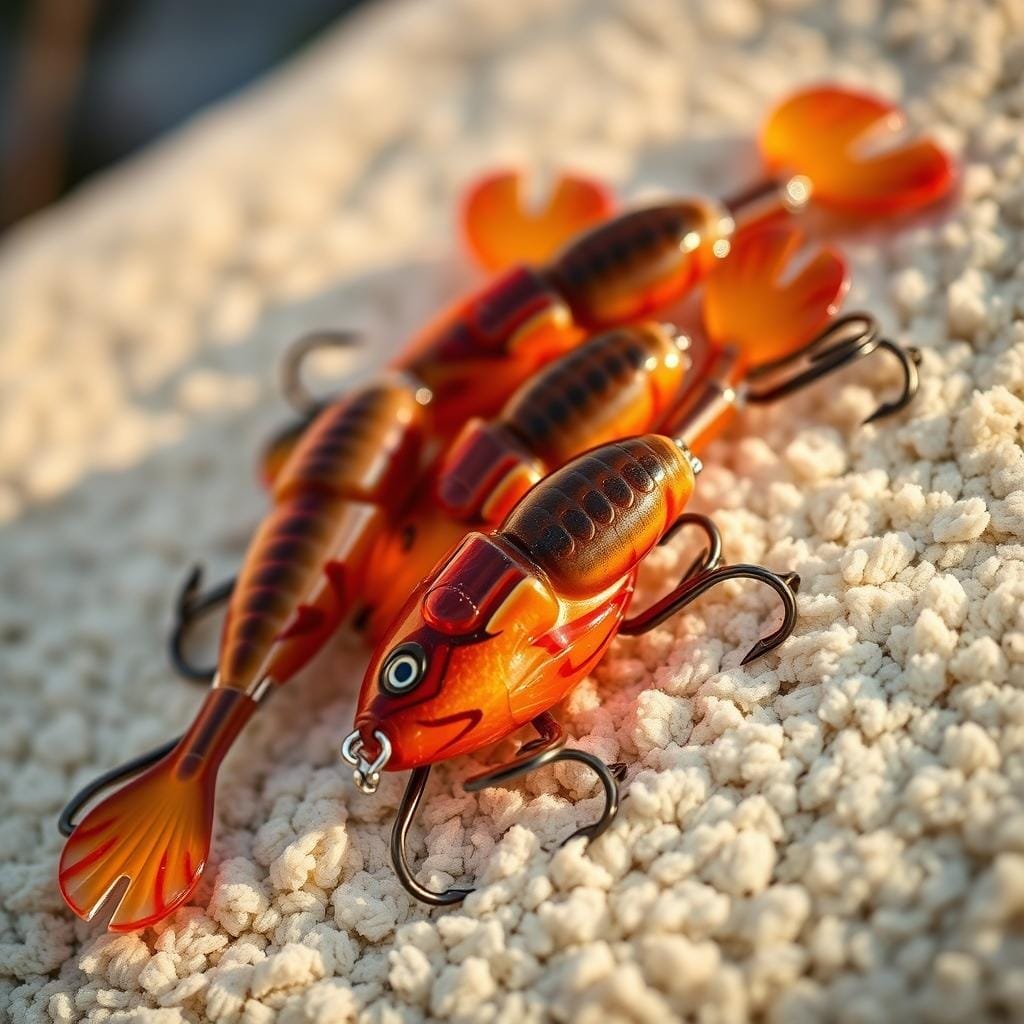
When rock bass go shallow, crankbaits in crawfish colors work great. Choose a medium diving crankbait that hits rock and then moves freely. Look for areas where rock meets pea gravel, hiding spots for fish.
Medium divers that deflect off chunk rock and pea gravel
Choose a medium diving crankbait that hits bottom. This lets it grind and then move quickly. Rock bass like this action a lot.
Work the crankbait slowly in cold water. Let it dig into the rock, then kick free. Good choices include Rapala DT-6, Strike King Series 3, and Bomber Model A in red-brown.
Target lanes, angles, and cadence to trigger reaction bites
Make parallel passes along the bank. Then, switch angles to cut across seams. Change lanes every cast to hit new rock and clean edges.
Mix steady grinding with short bursts and pauses. This can spark reaction bites when the bait hits an obstacle.
- Run high to nick boulder tops, then low to plow pea gravel.
- Vary rod position to adjust dive and angle without changing lures.
- Pause after a bump; many reaction bites load up on the first crank after the pause.
Tuning bills and hooks for rock contact
Rock hits can knock a bait off track. Quick bill tuning with pliers keeps it straight. This is key for a good deflection bite.
Sharp trebles are important. Upgrade to short-shank, round-bend hooks from Owner or Mustad. Use 6–8 lb mono or Sufix 832 braid with a fluorocarbon leader. Keep a file handy to sharpen tips after catching fish or hitting rock.
Texas-Rigged Craws for Bulking Bass Around Cover
A thick profile gets noticed around rock, and few shapes beat soft plastic craws. Rig a Texas-rig craw when fish are feeding up or guarding territory. The setup slips through laydowns, dock posts, and crevices without snagging, yet thumps on the bottom like a real crustacean.
Spring agitation around nests and shallow rock
Work a compact craw around spring nests with short flips and a slow drag. Let it tick stones, pause, then give a sharp shake to flare the claws. Gene Larew’s Salt Craw inspired today’s craws, and that silhouette triggers bites in cold, clear water.
Use abrasion-resistant fluorocarbon leaders to survive rough edges. An offset worm hook keeps the package weedless and precise in tight cover.
Switching to shaky heads and drop shots as fish slide deeper
After the spawn, fish slide off the bank and hold on rock seams. Swap to a shaky head and hop it down the slope, keeping bottom contact but avoiding long drags. When the marks push even deeper, a drop shot for rock bass shines with a smaller profile and subtle movement.
Medium-light spinning gear handles both approaches well. Keep leader strength up to resist abrasion, and choose hook sizes that balance penetration with the bait’s profile.
Suspending above rock with a drop shot for tight-to-bottom fish
When bass glue to the bottom, suspend above rocks with a short-leader drop shot for rock bass. Nose-hook a finesse bait or a trimmed craw and hold it in place so it hovers in their face. Tiny shakes, then dead-still pauses, draw reaction bites without moving the weight.
In calm water, lighten the sinker to reduce hang-ups and float the bait higher. In current, step up weight but keep the leader tight so the lure stays just off the stones, right where wary fish watch for an easy meal.
Inline Spinners and Small Crankbaits for Search and Reaction
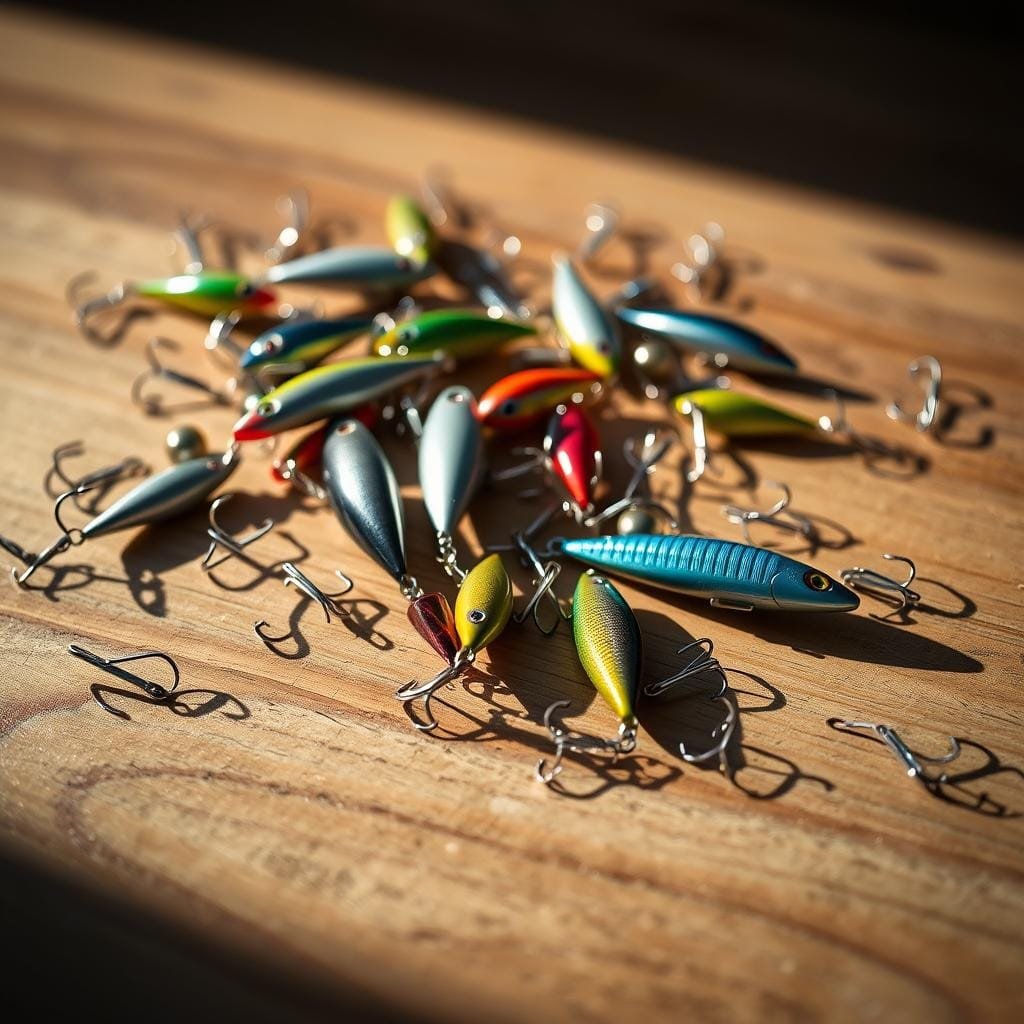
Scale the rocks fast with inline spinners for rock bass. They shine in clear seams and dock shade. A Mepps Aglia or Panther Martin throws bright flash and a tight thump.
Keep a steady retrieve, then add a quick twitch or a half-second pause. This sparks reaction strikes when they track but won’t commit.
Small crankbaits act like sprinting minnows. They make perfect search baits along points and riprap. Rotate shallow, mid, and square-bill models so you tick stone without wedging the hooks.
Cast past current breaks, reel to contact, and let the bait glance off the top of rocks. That deflection often flips the switch.
When wind bumps the surface or stain rolls in, a Z-Man ChatterBait bridges spinner flash and crank vibration. This keeps those reaction strikes coming. Downsized spinners are best on calm days, while micro cranks excel when fish pin bait tight to the bank.
Match size to forage, but keep casts short and frequent. This covers every seam.
Line choices matter with treble hooks and small wire shafts. Monofilament in 4–8 lb gives helpful stretch. This helps fish stay pinned on surges.
In clear water, a light braid main line with a fluorocarbon leader boosts casting distance. It also feels better without flashing in the sun.
| Lure/Setup | Primary Use | Best Locations | Retrieve Tips | Line Recommendation |
|---|---|---|---|---|
| Mepps Aglia (sizes 0–2) | High-flash search baits | Rocky shorelines, dock edges | Steady reel with quick twitches | 4–6 lb mono for cushion |
| Panther Martin (sizes 0–2) | Vibration in light current | Eddies, current seams | Slow roll, brief pauses at turns | 6–8 lb mono or braid-to-fluoro |
| Small crankbaits (shallow/mid) | Cover water, trigger reaction strikes | Riprap, pea gravel, points | Crank to tick rock, stop-and-go on contact | 6–8 lb mono or 10 lb braid + 6 lb fluoro leader |
| Z-Man ChatterBait Mini | Hybrid vibration for mixed clarity | Wind-blown banks, stained pockets | Medium retrieve, add pops to surge blade | 10–15 lb braid-to-fluoro for control |
best bait for rock bass
The best bait for rock bass depends on the water, current, and pressure. Keep a small box for live bait and another for artificial lures. Switch until the fish show you what they like.
Live options: minnows, worms, crickets/grasshoppers
Start with natural baits for neutral fish. Use minnows with a hook through the back or lips. This lets them swim well in light current.
For docks or current breaks, add a split shot 12 inches up. This makes them glide smoothly.
Short worms, like nightcrawlers or red wigglers, work fast. Use size 6–10 circle, Aberdeen, or bait-holder hooks. Crickets and grasshoppers are great for riprap or gravel banks.
Artificial staples: small jigs, grubs, inline spinners, micro cranks
For moving, choose small baits. Small jigs with soft plastics or hair crawl through rocks. They keep you in touch with the bottom.
Double-tail grubs on stand-up heads mimic craws. They stay upright, even when paused.
Inline spinners like Mepps Aglia and Panther Martin add flash. This attracts fish from shaded areas. Micro crankbaits sweep rocky lanes and deflect off rocks, triggering bites.
When to choose live bait over artificials (clarity, current, pressure)
Use live bait in clear water, for natural drift, or when fishing pressure is high. A lively minnow or a piece of worms can be key for bedding fish.
Artificial lures are better for covering water, exploring new banks, and getting reaction bites. If bites slow, try a smaller bait like a Yamamoto Senko or a Z-Man Finesse TRD on a Ned head. Slow down your presentation.
Ned Rig, Senko-Style Stickbaits, and Tubes for Tough Bites
When fishing gets tough in clear water, try smaller lures and slower movements. This helps keep the fish calm and interested. Ned rigs, stickbaits, and tubes work well in rocky areas and where fish are shy.
Ned rig TRD for high-pressure, clear-water reservoirs
The Z-Man Finesse TRD made Ned rigs popular for clear lakes. Use a 1/16–1/10 oz mushroom head on gravel or near docks. Make short casts and then pause to catch bass.
Use light spinning gear and a short fluorocarbon leader. Choose natural colors to blend in with the surroundings. This method is perfect for catching bass without scaring them away.
Wacky and weightless stickbaits that “do nothing” and get bit
A Yamamoto Senko falls slowly, attracting fish. Rig it without weight or wacky on a small hook. Fish it near rocks or docks for best results.
Adjust the size to match the water’s flow. In bright sun, fish near shade. In windy conditions, skip it under overhangs.
Tubes for smallmouth-rich, rocky lakes and bedding fish
Tube baits, like Bobby Garland’s Gitzit, are known for their deadly fall. Use a small internal head for dragging or Texas-rig for slipping through brush. The skirt flares on pause, attracting fish.
Try different colors like green pumpkin and smoke. Mix fast hops with long pauses to mimic a crayfish. Sometimes, a slow crawl can catch more fish than fast movements.
- Rod and line: medium-light spinning, braid main line to fluorocarbon leader for feel and stealth.
- Where: gravel banks, chunk rock points, and dock corners with shade.
- Backup: a Roboworm Straight Tail on a dropshot in Morning Dawn when they refuse horizontals.
Topwater Moments: Tiny Poppers and Walkers on Calm Evenings
When the lake gets calm at dusk, rock bass start to bite. The best time is during summer evenings. This is when shadows grow and bait moves along shallow rock.
Warm summer windows when rock bass rise
When it’s hot and there’s a light breeze, fish get active. They move from shade to the first break. Then, they float up to hit tiny poppers.
Use monofilament for better fishing. It stretches and keeps small trebles in place when a fish hits the bait.
Micro-poppers vs. walk-the-dog spooks in skinny water
Micro chuggers are great for precise casts near docks and rock seams. Use short pops and pauses to mimic bait. For wider areas, use a small walker and walk the dog gently.
The Heddon Zara Spook is perfect for long casts and smooth movements. It’s great for catching bass in deep water.
Color, sound, and pause timing near riprap and docks
In clear water, use natural colors like bones, smelt, or ghost shad. Near stained areas, add a bit of chartreuse or pearl. Change between silent and rattling lures to match the mood near docks.
Work tiny poppers with two pops and a pause. Over skinny rock, let a small walker glide and then stop. This often makes bass bite.
- Gear edge: 8–10 lb mono, short leader optional for abrasion.
- Hooks: sharp round-bend trebles; upsize one step only if action stays true.
- Cadence: calm water equals slower pops; add tempo with a ripple.
| Scenario | Best Lure Type | Cadence & Pause | Color & Sound | Target Zone |
|---|---|---|---|---|
| Calm, clear dusk | Tiny poppers | 2 short pops, 2–3 sec pause | Bone or ghost; silent | Dock corners, riprap seams |
| Skinny rock flats | Zara Spook (small) | Gentle walk the dog, 1–2 sec stalls | Natural shad; light rattle | Shallow lanes, shade lines |
| Light chop, warm water | Compact walker | Quicker walk, brief pauses | Pearl/flash; subtle rattle | Wind-blown edges of riprap docks |
| Tight cover targets | Micro chugger | Single pop, dead-stick 3–5 sec | Green pumpkin/clear; silent | Pilings, rock points, laydowns |
Presentation Keys: Speed, Cadence, and Contact with Rock
First, match your speed to the mood of the water. On calm days, slow down and keep your bait in contact with the bottom. Use a hop–pause or a light drag–shake.
When the wind blows and the bait stacks, speed up your retrieve. This suggests fleeing prey. In clear water, use less speed and trim your bait’s profile. In stained water, add flash and thump, and let slow roll spinners cover water without blowing past the strike zone.
For contact offerings, think like a crawfish. Use a lift-drop technique over gravel and chunk rock. This makes a natural plume and thud that calls fish. Keep your line tight to read the bumps, then add short shakes when it settles.
If fish slide deeper, switch to Texas rigs for shaky heads and drop shots. These let you hover a bait just above the stones while tracking bottom contact along seams and ledges.
Reaction tools need variety. Crankbaits, inline spinners, and vibrating jigs work best with subtle surges, stalls, and twitches. Aim for deflection off rock—tick pea gravel, clip a boulder, then let the bait recover. Retune the bill after hard knocks and check hook points so every deflection off rock can turn into a pin.
Use current like a conveyor. Cast upstream, let the lure swing through eddies and breaks, and guide it to nooks where food piles up. In cold flows, slow roll spinners just above the rocks; in warmer pushes, speed bursts can flip the switch on reaction vs contact baits. For more on how speed changes pitch, splash, and feel, see this quick guide on how to fish retrieve bass lures.
Gear matters to pace. A moderate gear ratio helps meter torque and keep a steady crawl for contact baits, while faster reels excel at burn–pause moves with reaction baits. No matter the setup, keep your line angle honest, listen for that gritty tick of rock, and let cadence—not luck—do the heavy lifting.
Dialed-In Gear: Rods, Reels, Line, and Hook Choices for Rock Bass
A good rock bass setup is simple and sharp. Use a 6–7 ft medium-light spinning rod with a 2000–2500 size reel. This combo helps with casting, feeling bites, and handling sudden runs.
This length is great for skipping docks and threading through current. It also works well on rocky banks. Add compact lures to cover different areas without getting tired.
Choose the right line for the job. Use 4–8 lb monofilament for small baits. It stretches a bit, protecting small hooks.
For clear water, use Sufix 832 braid and a fluorocarbon leader like Sufix Invisiline. This combo is almost invisible and strong against rocks. Check the leader often and retie any nicks.
Keep hooks sharp. Use sizes 6–10 for most baits. Circle hooks help with catch-and-release. Aberdeen hooks are good for minnows or worms.
Don’t forget to include key lures in your box. Use a Yamamoto Senko for finesse work. A Z-Man Finesse TRD is great for pressure bites.
Also, have a Roboworm Straight Tail for drop shots. Small lures like Mepps Aglia and Panther Martin are good too. Add medium divers and a Heddon Zara Spook for different situations.
Use the right terminal tackle and sharpen hooks often. Check your leader regularly. With a medium-light rod and the right line, you’re ready to go.