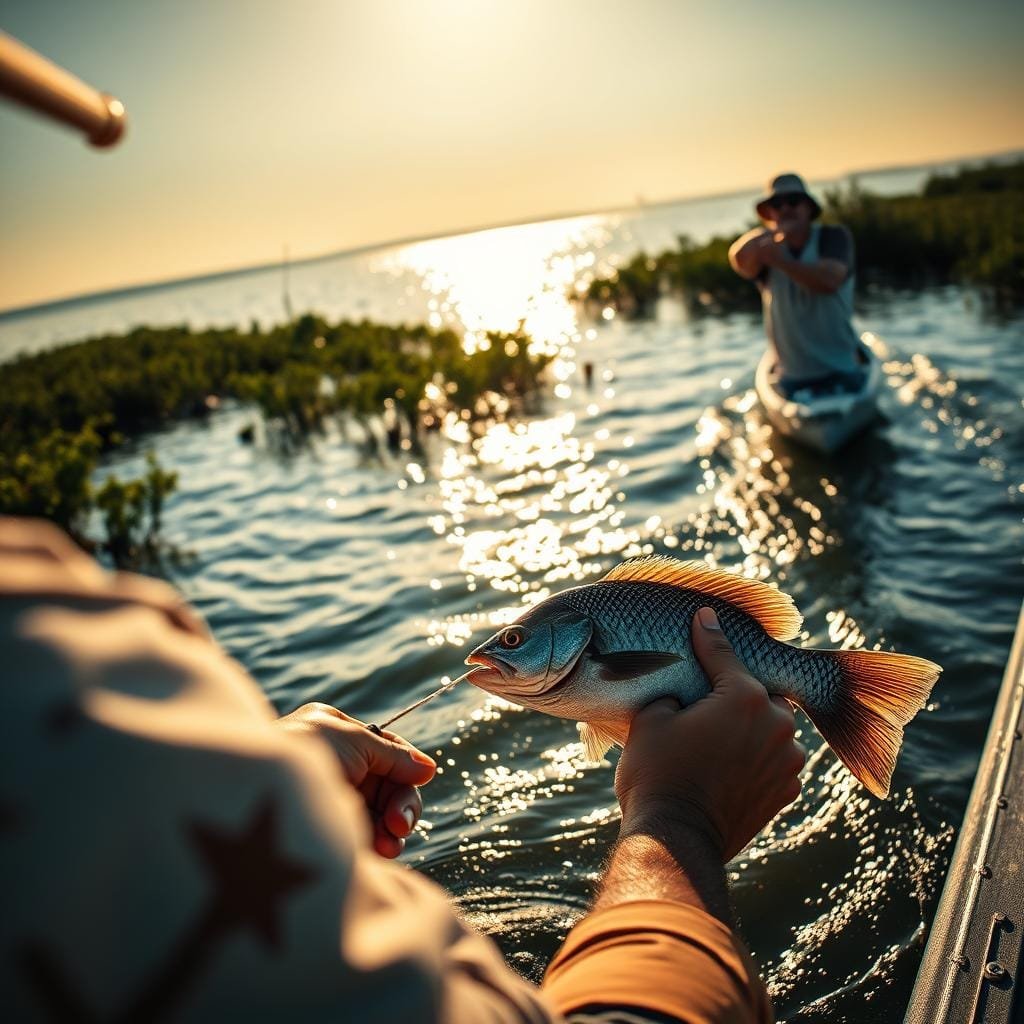
Chasing Atlantic sailfish off Florida, the Carolinas, or the Gulf needs smart choices. You need the right bait, clean presentations, and teamwork. This guide shows you the best baits and how to use them.
Learn the top bait for sailfish and how to present it. We’ll cover live baits like goggle eyes and dead baits like ballyhoo. You’ll also learn about switch baiting with teasers for exciting strikes.
Top captains start by trolling at 6–7 knots to find sailfish. Then, they focus on a spread when birds and bait appear. We’ll share the rigs, circle hooks, and tweaks for better hookups.
These tips work in Miami, Palm Beach, Destin, and the Mid-Atlantic. They come from the United States and places like Guatemala, Costa Rica, and Panama. Keep baits lively, match the hatch, and be ready for the next bite.
Why Sailfish Go Crazy for the Right Bait and Presentation
Sailfish love to hunt on the surface. They chase after what they see moving. Using natural movements and clean rigs helps catch more fish.
Fast, visual predators with acrobatic strikes
Sailfish can swim up to 60 mph fast. They hit their prey with quick turns. Their jumps after catching a fish show they need a steady bait.
They look for clear shapes and steady movements. This tells them when to strike near the surface.
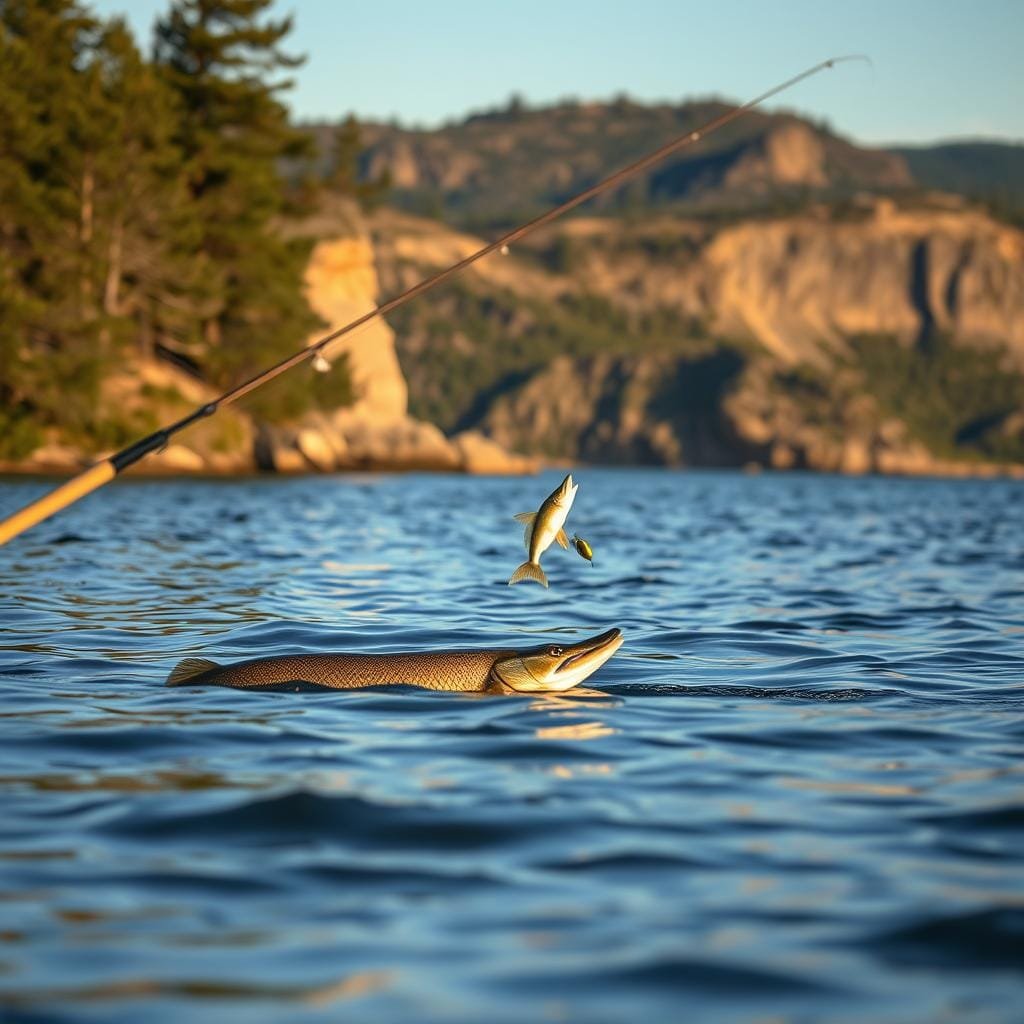
How sailfish herd bait on the surface with their dorsal fin
The sailfish’s big fin is not just for looks. It helps them herd bait. They spread it out with their fin, then attack with their bill.
They like baits that move straight and smooth. This is because real prey moves like that too.
Matching forage like mackerel, sardines, and scad
Good baits look like what sailfish eat. This includes mackerel, sardines, and scad. They need to look alive to get the sailfish’s attention.
Dead baits must move straight to look real. When your bait moves like real fish, sailfish are more likely to chase it.
best bait for sailfish
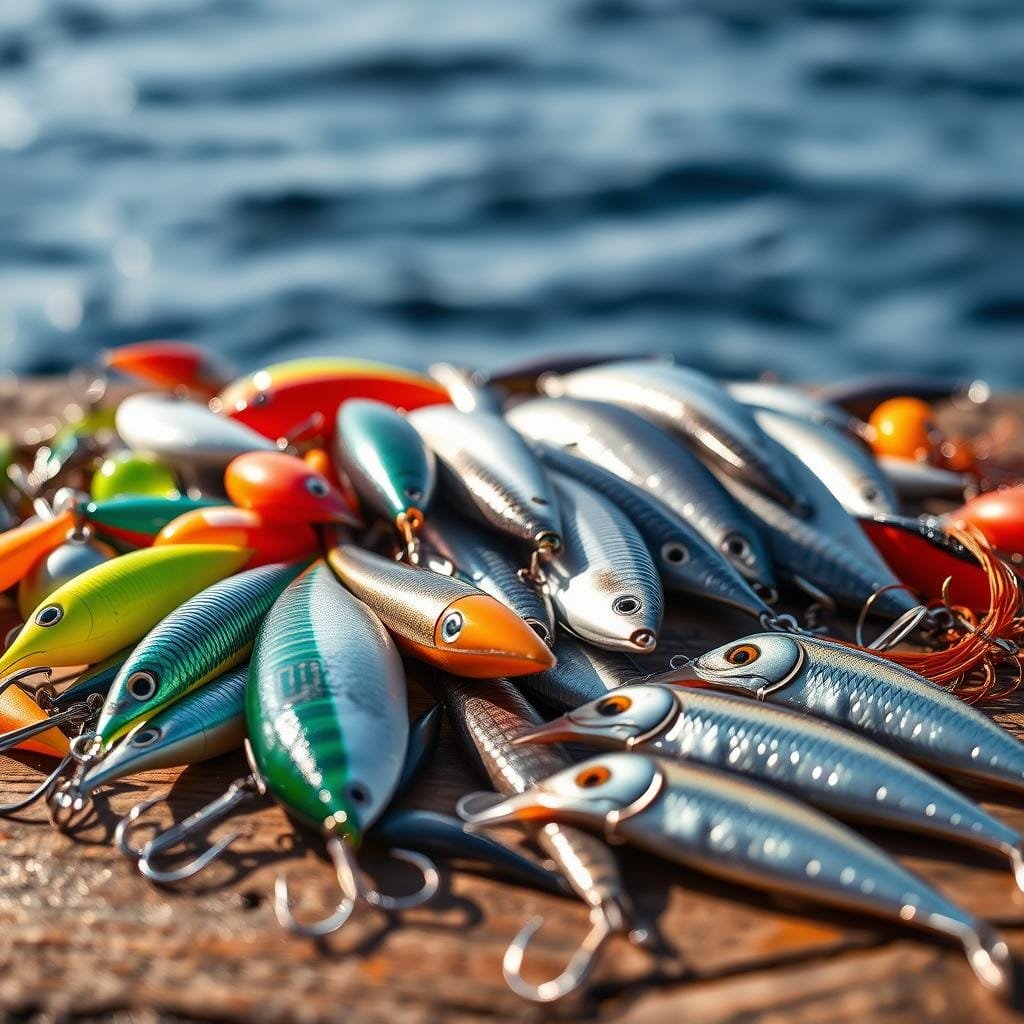
The right bait makes fishing easier. In clear water, a precise spread is key. It helps you scan new areas effectively.
Live goggle eyes (bigeye scad) for kite and slow-troll setups
Live goggle eyes attract sailfish quickly. They work well on kites and slow trolling. Keep them lively with proper care.
They also attract other fish like king mackerel and mahi. Handle them gently and adjust the boat to keep lines straight.
Ballyhoo for dead-trolling spreads that stay straight
Dead trolling ballyhoo is great for covering ground. The right rigs prevent spinning and keep the spread clean. This helps you see every bite.
Use plugs and teasers to attract fish, then switch to pitch baits. Clean baits last longer and swim straighter.
Local live options: cigar minnows, blue runners, mullet, pilchards, threadfin
Can’t find goggle eyes? Try cigar minnows or blue runners. Mullet and pilchards work well in windy conditions.
Learn about different baits in this guide: baitfish profiles for sailfish season. Match your bait to the fish you see.
When to pick live versus dead baits based on conditions and coverage
Use live baits when birds are over the water. Live goggle eyes are great for kites. Dead trolling ballyhoo is better for searching.
Slow trolling in light wind? Use live baits near bait balls. In windy conditions, start with dead baits to find fish.
| Bait | Best Use | Rigging Tip | Ideal Speed | Why It Works |
|---|---|---|---|---|
| Goggle eye (bigeye scad) | Kite, slow-troll | Light bridle through eye socket | Idle to 2 knots | Flashy, strong swimmer; survives pressure changes |
| Ballyhoo | Prospecting, dead-troll spreads | Chin weight, pin or circle-hook “naked” | 5–7 knots | Straight track covers water and draws window shoppers |
| Cigar minnow | Kite, flat lines | Nostril bridle; avoid heavy hooks | Drift to 3 knots | Schooling, easy to sabiki, quick to deploy |
| Blue runner | Windy kite sets | Dorsal bridle to tame torque | Drift to 2 knots | Hardy and visible in chop; triggers aggressive bites |
| Pilchard | Live-chum, kite | Small circle through nostril | Drift | Creates a feed; sparks multiples |
| Threadfin herring | Kite, bump-troll | Nostril bridle; avoid tearing membranes | Idle to 2 knots | Slender profile matches common forage |
Live Goggle Eyes: The Kite-Fishing Favorite
In winter swells and clear edges, goggle eyes bait is top for kite fishing sailfish. These hardy baits, called “gogs” by locals, kick hard and flash bright. They draw charges you can see from the T-top. Keep them lively and your spread will buzz.
Why gogs are irresistible to sailfish (and kings, wahoo, dolphin, tuna)
Bigeyes pulse on the surface, flashing tight signals that say “easy meal.” This signal attracts sailfish first. But it also gets kingfish, mahi, wahoo, and yellowfin. With clean live bait rigging, each bait acts like a wounded scad, staying in the strike zone longer.
How to catch them: sabiki rigs, cast nets, and nighttime efforts
Anglers work hard for sabiki goggle eyes at night. They use size 4–6 green flies and a light sinker. A steady lift is key. If they school tight, a soft-throw cast net works well. But be careful not to hurt the scales and keep the soak short. Keeping the water ice-free and aerated is vital for scad survival.
For more on presentations that trigger bites, see this guide to sailfish bait and presentation.
Where to find them: piers, jetties, buoys, reefs, wrecks, 10–500 ft
To find goggle eyes, start at dawn at piers, jetties, and buoys. Move to rocky bottoms, patch reefs, and wrecks from inshore to 500 feet. Watch for birds, sonar touches, and current breaks. When you see bait high, drop a sabiki and wait patiently.
Bridle rigging around the eye socket to keep baits lively
For kite fishing sailfish, bridle rigging gogs keeps hooks clear and baits alive longer. Use loop floss, a light wire pin, or a small rubber band through the tough tissue near the eye socket. This setup lets the hook ride free and the bait swim naturally. Missed swings are rare with a steady drop-back.
Alternate hookups: dorsal, lower back, or through the mouth in heavy wind/current
Change tactics as conditions change. Hooking behind the dorsal makes the gog swim down and away. Hooking lower back gives more kick in slow drifts. In heavy wind or sweeping current, pin lightly through the mouth to cut drag and stop spin. Match hook size to the bait, and keep live bait rigging clean so bigeye scad keep pulsing.
Dialed-in spreads pair goggle eyes bait with smart boat control. Fly one higher kite to lift the nose, another lower for splash. Let the baits skitter just enough to look panicked without drowning.
Dead-Trolling Ballyhoo That Don’t Spin
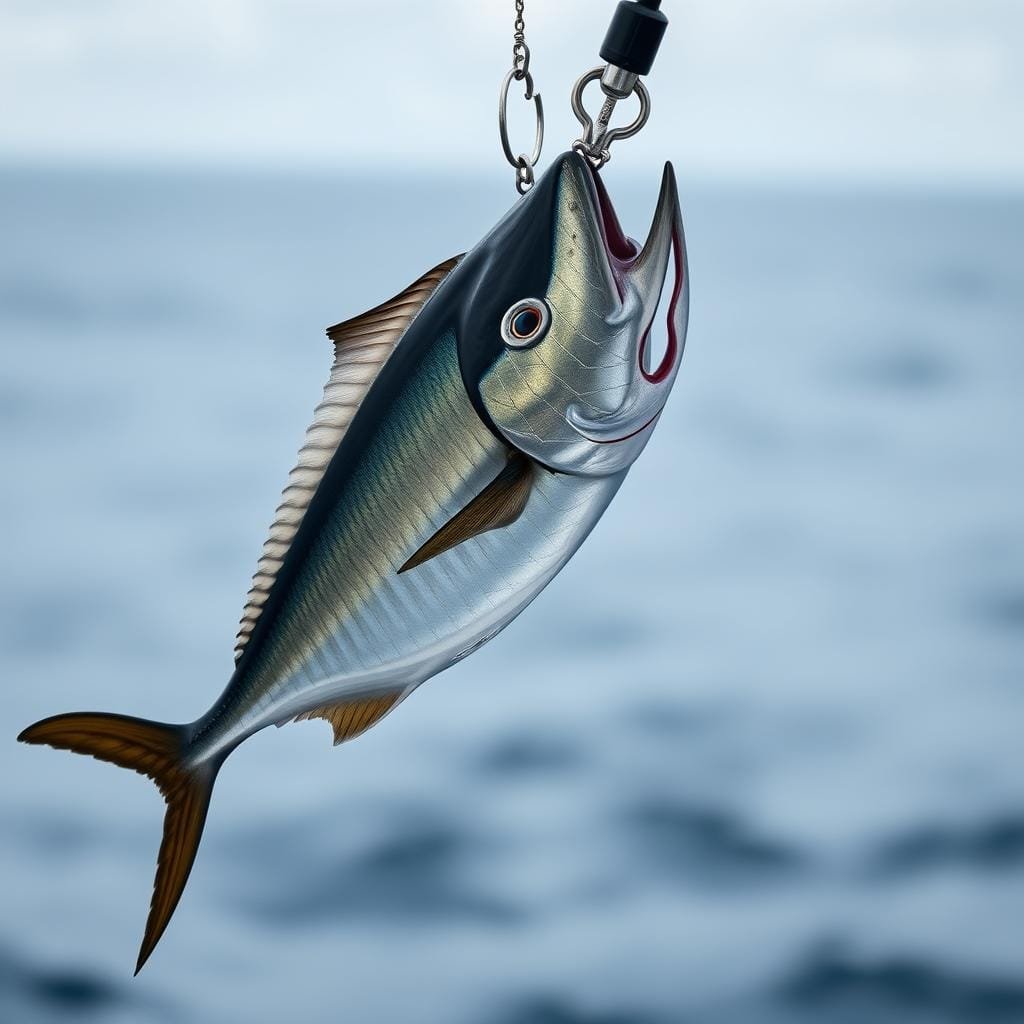
Dead baits catch fish all season if they move right. Make sure your baits are treated well. Use fresh, silver ballyhoo and keep them cold from the start.
Brining bellies with salt on ice so they “swim” right
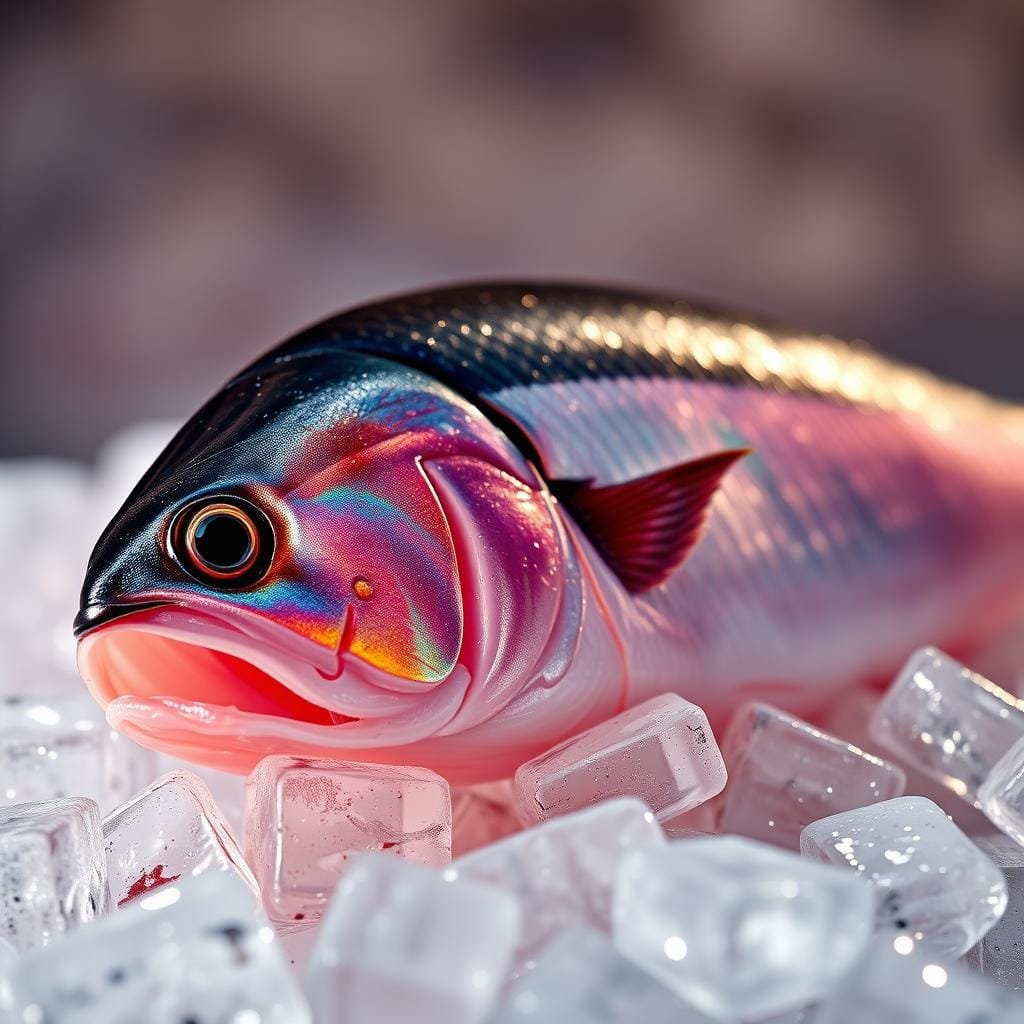
Make a strong ballyhoo brine the night before. Use coarse salt and crushed ice in a cooler. Keep the baits flat to make bellies firm and scales tight.
Brined baits won’t leak and swim well at 5 to 7 knots. Keep the cooler dry. Wet baits get soft and roll.
Skirted ballyhoo for anti-spin action and bubble trail
Skirted ballyhoo are good for beginners. They work well against spin and make a bubble trail. This trail attracts fish from far away.
Choose the right skirt size for your bait. Too long and it’s bad; too short and it shows the hook. Use them on corners or short riggers.
Naked ballyhoo with circle hooks and wire wraps
Naked ballyhoo rigs are for experts. They look natural in clear water and near pressured fish. Set the hook point in the upper belly and add tight wire wraps at the head.
Make sure the mouth is closed and the body is straight. Any kink or loose wrap means roll and lost bites.
Split-bill rig with chin weight and wire to lock the mouth
The split-bill rig works in choppy water. Split the bill partway, then pass the hook through both gill plates. Run wire between the gills and into the eye sockets.
Add a small egg sinker under the chin. Finish with wraps around the eye sockets, gill plates, and mouth. This makes the bait straight and holds line in turns.
| Rig Style | Best Use | Key Parts | Why It Works |
|---|---|---|---|
| Skirted ballyhoo | Rough seas, mixed crews | Soft skirt, brined bait, 80–100 lb leader | Anti-spin ballyhoo action with a bubble trail to raise fish |
| Naked ballyhoo rig | Clear water, picky sails | Circle hook ballyhoo, head wire wraps, straight beak | Natural profile and steady track for subtle presentations |
| Split-bill rig | Chop, tight turns, faster troll | Partial bill split, chin weight, wire through eye sockets | Locked mouth and keel effect keep the bait from rolling |
| Ballyhoo brine prep | All trolling programs | Coarse salt, crushed ice, drain plug open | Firmer bellies “swim” right and last longer in a dead bait spread |
Productive Alternatives When Gogs Are Scarce
When goggle eyes are not available, smart teams quickly change plans. Look for sailfish nearshore grass flats, under pier lights, and by reef edges. These spots offer good live bait alternatives.
Keep your fishing setup simple. Make sure your baits are lively. And, pay attention to where the fish bite.
Cigar minnows in schools: chum, sabiki, or cast net
Cigar minnows gather in schools when you use glass minnows or menhaden oil. Start a chum bag and watch your sonar for marks. Use a Hayabusa or Mustad sabiki, or a light cast net when they get close.
For rigging, cast them from the lower back in calm water. This makes them swim lively. Or, bridle through nostrils if it’s windy. This keeps them clean and ready to drop back quickly.
Hardy kite baits: blue runners, mullet, pilchards, threadfin
When it gets windy, use strong baits. Blue runners kite bait is tough and skips well in choppy water. Add mullet, pilchards, and threadfin to your spread. This lets you change sizes and profiles easily.
These baits handle long soaks and quick turns. Change baits often. Keep weak ones cold for later use.
Nostril bridle rigging through tougher membrane
For tough fish, use a floss or rubber band bridle through nostrils. This keeps the bait from tearing out. It also makes the bait swim better and last longer.
Use small circle hooks with neat bridles. Check your lines every 15 minutes. A fresh, lively presentation can turn any fish into an eater, even with substitutes.
Switch Baiting: Tease, Switch, and Connect
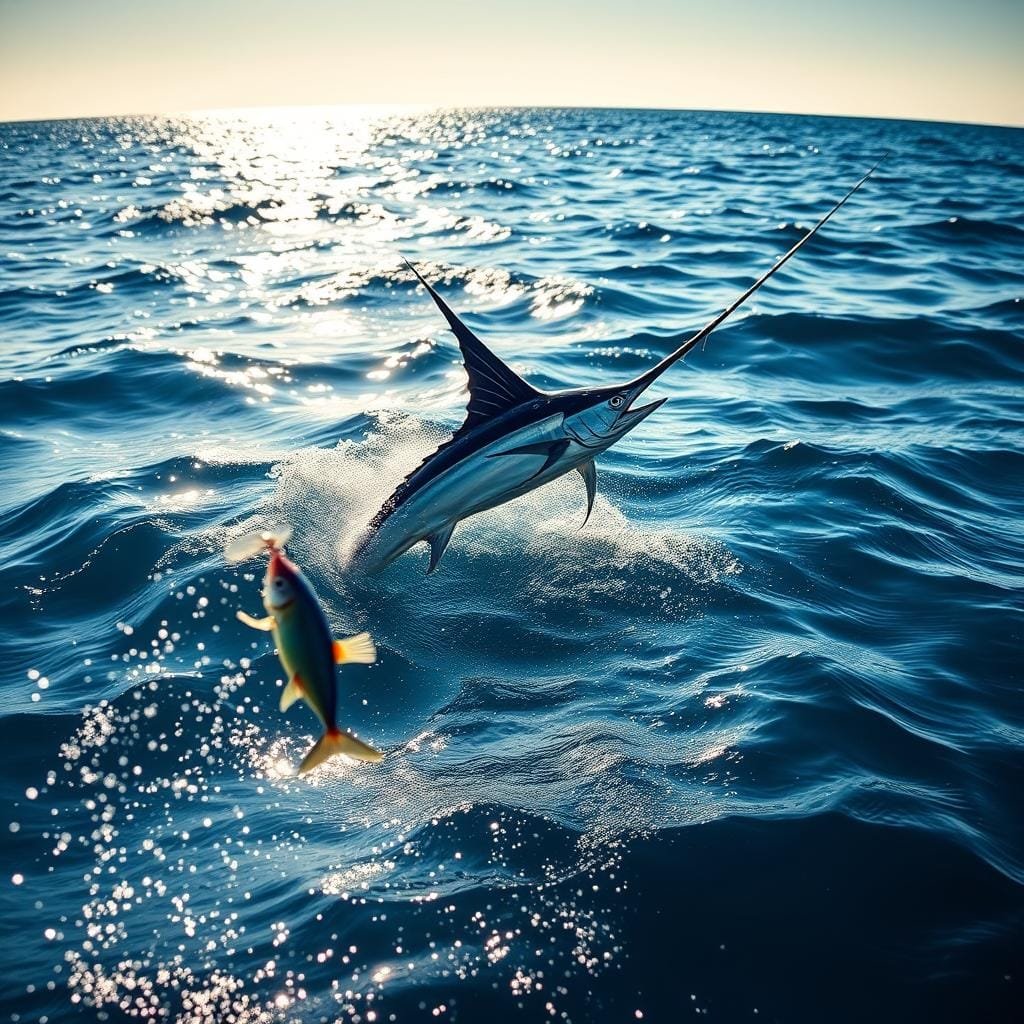
Switch baiting sailfish makes them bite for sure. First, move the fish with your lure. Then, switch to a bait quickly. Use gear that’s easy on the fish.
Keep the boat calm and ready. Watch the spread closely.
Hookless teasers: soft-headed pushers and daisy chains
Use a lure in bright colors like pink or purple. Add a daisy chain teaser with a bird on it. Use strong gear so you can pull the lure fast.
When a sailfish comes, drop a bait next to the teaser. Keep it skipping. If the fish goes away, pull the teaser again.
Outrigger placement and teaser distances in the spread
Make a spread with outriggers to keep lines clean. Put the daisy chain 15 meters back. The soft-head goes five meters further back.
Put flat lines inside the outriggers. This lets the bait slide in without tangling. Keep a pitch rod ready in each corner.
Skipping the bait back, free-spooling 5–10 seconds, then engaging
When the fish sees the bait, let it skip. Free-spool for 5–10 seconds when it bites. Then, tighten the line slowly.
Use circle hooks for clean catches. A 6/0 circle hook works best. It keeps the line steady without breaking.
Crew roles, timing, and removing teasers once hooked
Decide who does what before fishing. One person pitches, one works teasers, and one steers. The teaser person must pull the lure when the fish bites.
When hooked, stop the boat and clear the spread. If the fish misses, keep skipping the bait. Reset the teaser and lure if it misses again.
Trolling Strategy: Find Fish First, Then Slow Down
Start by looking for signs of life. Use reef edge trolling in deeper areas. Keep your spread clean while moving at 6–7 knots.
Watch for birds and flashes that mean sailfish are around. Cover a lot of water first. Then, slow down when you find clues.
Prospecting at 6–7 knots near reef edges, birds, and bait balls
Search along drop-offs and where currents meet. Look for terns and frigates. They show where sailfish are.
Run a steady pace to find rips and color changes. These are where predators hide.
When you see marks or birds diving, go back through faster. Keep moving at 6–7 knots until signs are clear.
Spotting dorsal fins and shadows; dropping back live or strip baits
Teach your crew to spot dorsal fins and shadows. Drop back live or strip baits quickly. Keep the line free and let the fish turn before pulling tight.
Use a teaser to lure fish in. Then, offer the real bait. Move smoothly and precisely to catch fish.
When to anchor, drift, or continue covering ground
Choose to anchor or drift based on the fish’s location. If there’s a lot of life, anchor or drift. Use kites or flat lines to catch more.
If fish are scattered, keep moving. Slow-troll live baits only when you know fish are there. Keep looking for the next spot.
Gear and Rigs That Convert More Bites
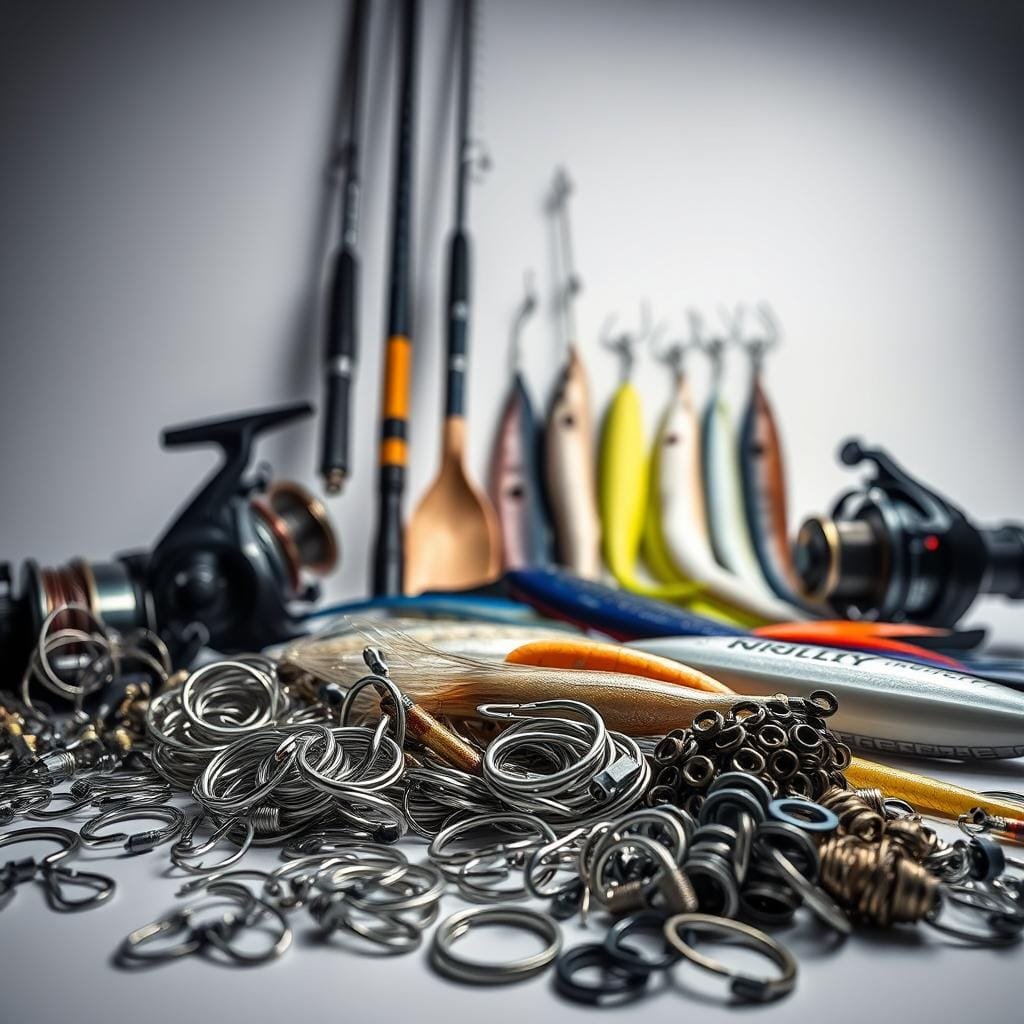
Clean rigging and balanced tackle help a lot when fishing for sails. Choose the right spread for your fishing style. Use simple connections and systems that stay tight during jumps.
Circle hooks, smart knots, and the right drag make each bite important.
Circle hooks for better corner hookups on billfish
Inline circles slide into the jaw and stay put. This reduces damage and keeps fish pinned. A 6/0 circle with a short bite section and firm drag is best for pitch baits.
Mono mainline for stretch and forgiveness versus braid
Mono is better for most spreads because it stretches and is forgiving. It cushions the fish’s runs and keeps hooks in place. Braid is good for kites, but add a long mono top shot to soften shocks.
Leader sizes: 100–200 lb for teasers and 100–150 lb for bait leaders
Choose the right leader strength for sailfish. Use 100–200 lb for teasers with heavy drag. For pitches and trolling baits, 100–150 lb fluorocarbon works well. A wind-on leader streamlines the connection when the fish is close.
Medium setups: 30–50 lb trolling and pitch outfits
Use 30–50 lb setups for versatility. A 30-class pitch rig with a Shimano Trinidad 20 or Daiwa Saltiga spinner works well. For trolling, an Accurate BX2 30 handles surprise bycatch.
- Core rig: Bimini twist mainline to an Albright onto a 100–150 lb wind-on leader, finishing with a 6/0 circle.
- Teaser gear: Locked drags, heavy rods, and short 100–200 lb leaders to speed the switch.
- Rod build: 6’6″–7′ with light tips and open guides keeps baits alive and spreads crisp.
For more ideas, check out this sailfish trolling gear list. It helps you choose without guessing.
Regional Intel: Where Numbers Stack Up
Pacific hot spots light up when currents push bait tight to the break. Crews scan for dorsal flicks and shadowed bills. Then, they set spreads to match what’s on top. Knowing the best time sailfish show packs the day with real shots.
Seasonal congregations off Guatemala, Costa Rica, and Panama
Guatemala sailfish stack along the Pacific shelf when warm, blue water and flying fish pile in. Boats out of Puerto San José often post big release counts during these pulses. Costa Rica sailfish near Quepos and Los Sueños fire when bait ribbons drift along current seams.
Farther south, Panama sailfish stage on the drops outside Coiba and Hannibal Bank when plankton lines tighten. These seasonal windows bring steady surface signs and clean edges that reward sharp eyes and quick drop-backs.
When slow-trolling live baits makes sense in known zones
In slow-troll live bait zones, you trade speed for precision. A pair of lively baits bridled and nudged along contour lines keeps you in the bite lane. This shines when birds sit and bait showers repeat in the same stretch.
Set a modest pace and box the life: up-current of rips, around color changes, and across bait balls you can mark twice. This approach trims wasted laps and boosts your hookup rate when sails are stacked.
Checking migratory presence before you go
Track migratory sailfish shifts with recent logs, dock talk, and satellite shots for temperature and chlorophyll breaks. Charter reports from Quepos and Marina Pez Vela help confirm whether fish are pushing inside range.
Time your run for the best time sailfish trend, then pack livewell capacity and circle hooks. If the edge slides overnight, adjust to the freshest intel and reset your passes where the life moved.
Pro Tips to Keep Baits Alive and Swimming True
Start with livewell bait care that favors oxygen and space. Bridle goggle eyes around the eye socket for clean hookups and max action. For tougher species—blue runners, mullet, pilchards, threadfin—use a nostril bridle to tap that stronger membrane and boost kite bait longevity. When wind or current ramps up, a mouth-hook on goggle eyes prevents tear-outs without killing the swim.
Dead baits need respect, too. Brine ballyhoo on ice with salt the night before so bellies stay tight and tracks stay straight. Add skirts for anti-spin rigging and a bubble trail when you want flash, or run naked with circle hooks and a neat head wire wrap if you’ve got the hands. A split-bill chin weight locks the mouth and steadies the path at speed.
Dial in the spread before the bite. Pre-rig switch baits and keep them in a bucket of seawater for instant pitches. Keep teaser management sharp with locked drags to rip teasers away and light up fish. When a sail piles on, use clean free-spool timing—about 5 to 10 seconds—so it can turn, then engage smoothly. Run mono for stretch, with 100–200 lb on teasers and 100–150 lb on bait leaders, and clear all teasers right after the hookup.
On the move, watch how each bait swims beside the boat and tweak speed so it tracks—not skips. Maintain steady pressure during drop-backs and keep the boat in gear while fighting to protect the connection. For deeper dives into rig choices and trolling speeds, check this quick guide on trolling better baits and keep your system tight from hook to leader.