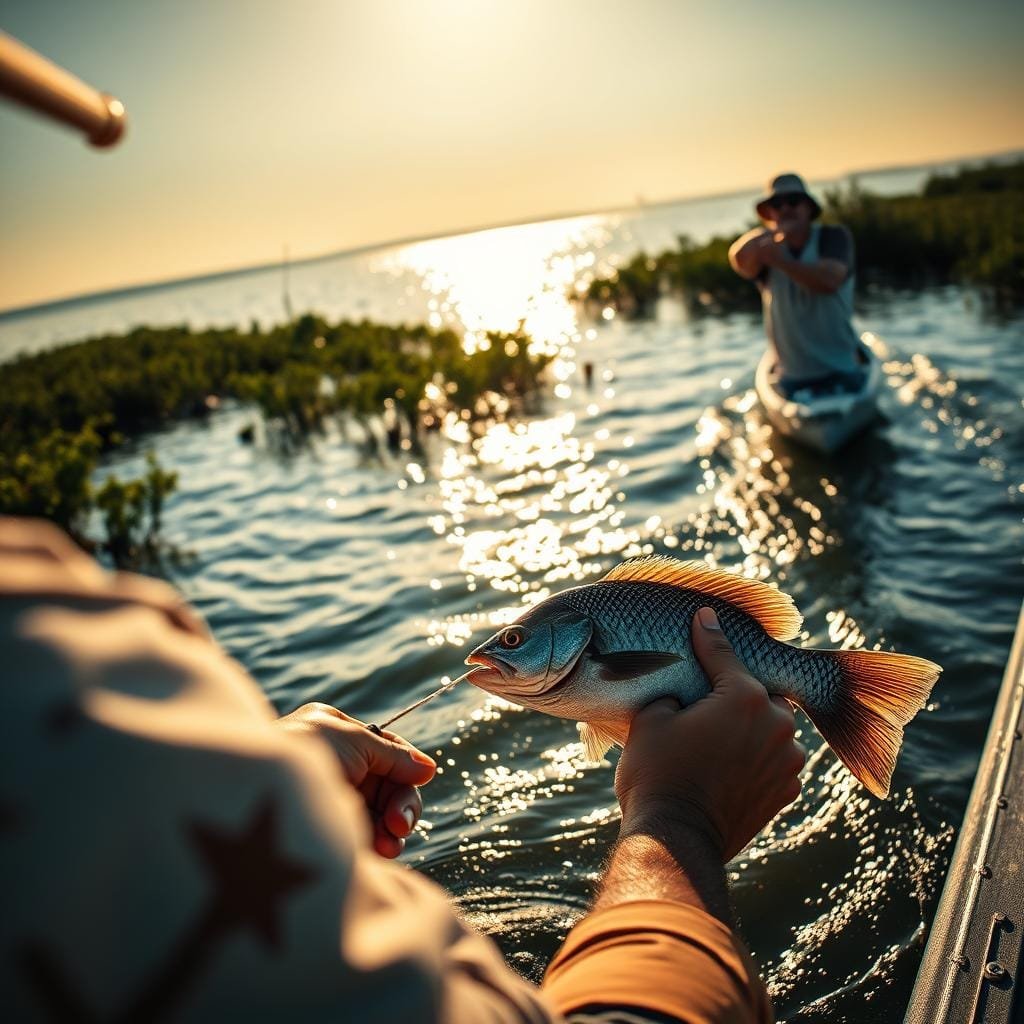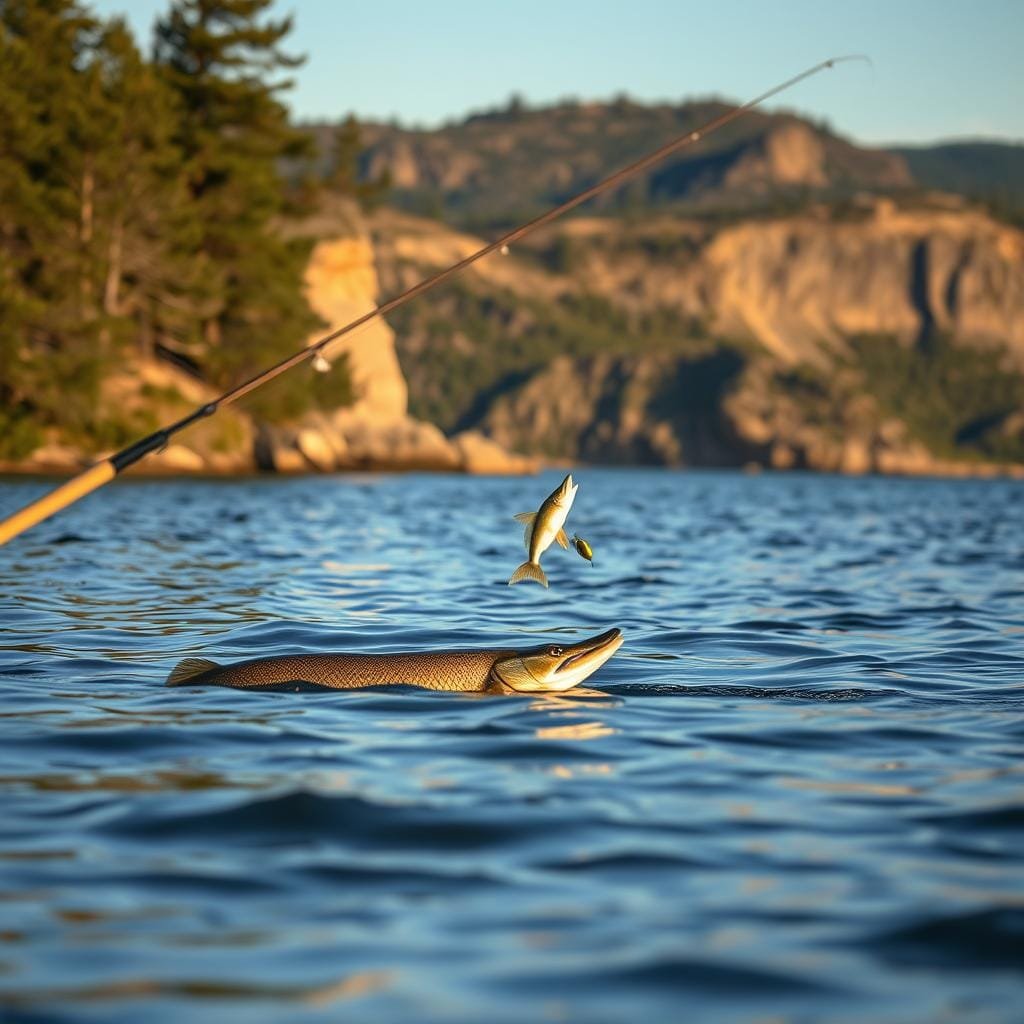
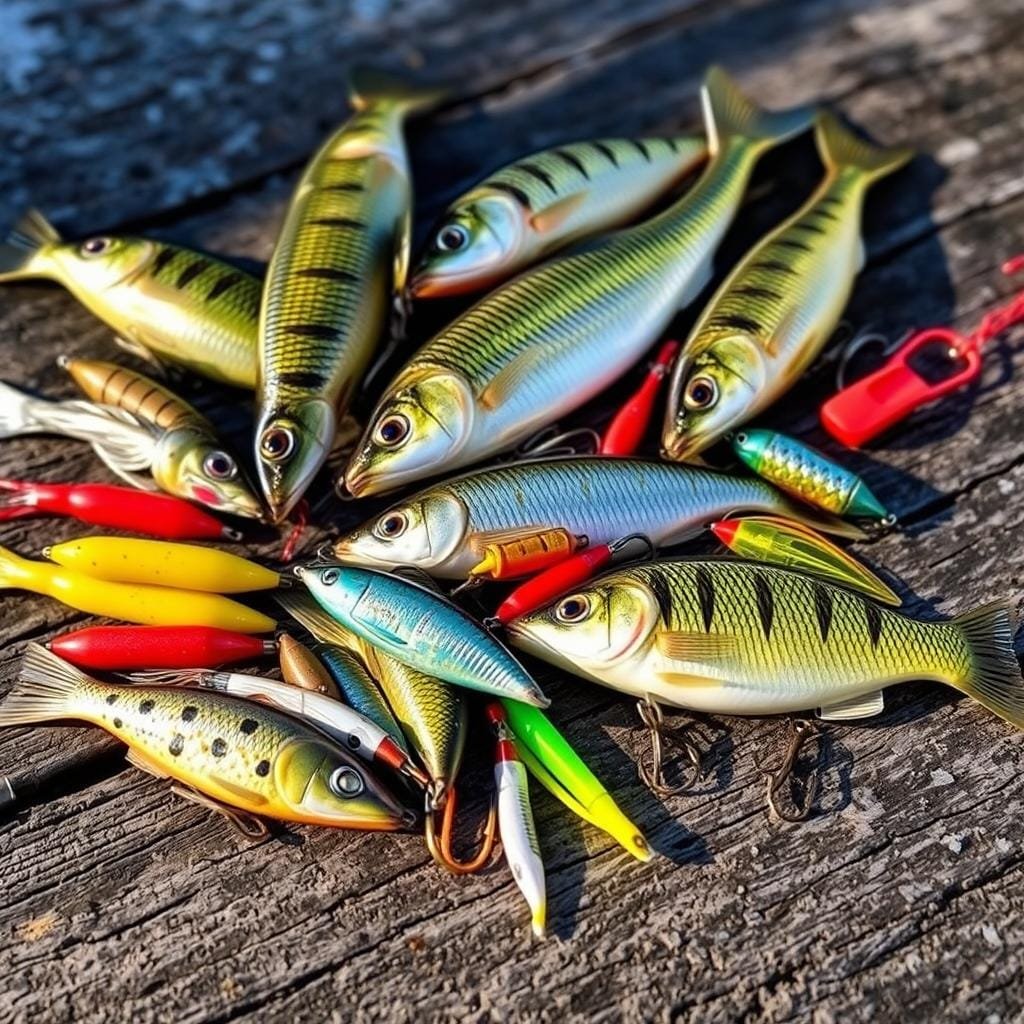
Want fast action when the bite turns tough? Saugers often save the day. They hit harder than many expect and feed when walleyes sulk. This guide starts with the best bait for sauger and simple, proven moves you can use today.
Think sauger vs walleye before you tie on. Sauger behavior leans to deeper, darker, and swifter water in many U.S. rivers sauger hotspots. That changes how you pick sauger baits and lures. Heavy vertical jigs, live minnows on Lindy-style rigs, and shiners on 1/4-ounce jigs get down fast and stay in the zone.
Match tools to depth and current. A compact leadhead with a minnow is a staple. Hair or feather jigs tipped with a minnow hold shape in flow. Soft plastics like the Berkley Gulp! Minnow in firetiger add color and scent that carry in stained water. For a deeper dive on these classics, see this quick read on sauger tips and tricks.
We’ll break down sauger fishing tips you can trust—how current speed, water color, and fish mood guide bait choice. You’ll learn when to go heavy for feel, when to switch to a live minnow, and how to time low-light windows. By the end, you’ll know the best bait for sauger, the right cadence, and the small tweaks that turn nips into solid hooks.
From Illinois River tournament wisdom to big-reservoir patterns, the plan is simple: put efficient, real-world rigs in front of fish fast. Keep it vertical, stay in contact, and let the lure do the talking. That’s how sauger baits and lures earn their keep, day after day.
Understanding Sauger Behavior and Habitat in U.S. Rivers
Saugers are different from walleyes, mainly because of light. Their eyes are made for low light. So, they like deep, dark places close to the bottom.
Think of main rivers like the Upper Mississippi to the Missouri. These places have stained water and dark spots. They are perfect for saugers all day long.
Light sensitivity: why saugers favor deep, dark water
When it’s bright, saugers stay close to the bottom. They don’t like bright areas. Instead, they hide in troughs and holes.
On clear days, they only come up to feed at dawn and dusk. Then, they go back to the shadows. This is because they can’t handle too much light.
Deeper and swifter than walleyes: where to start looking
Start looking on outside bends and mid-river spines. These areas have more water flow. Saugers like the same spots as walleyes, but a bit deeper.
Look for channel edges, ledges, and areas with strong current first. If the water gets darker, you can try shallower spots.
In clear places like Lake of the Woods, saugers are found in 25–30 feet. Walleyes prefer shallower spots. This is true in many U.S. rivers.
Dirty rivers, dam tailraces, and reservoir ledges
Stained water means more fish. Dam tailraces on rivers like the Missouri and Mississippi are great. The water is dark and there’s plenty of food.
Reservoir ledges are also good. On Lake Francis Case, long drops near where rivers meet are full of saugers. They like the channel edges where food gathers.
Seasonal Patterns and Prime Times to Target Saugers
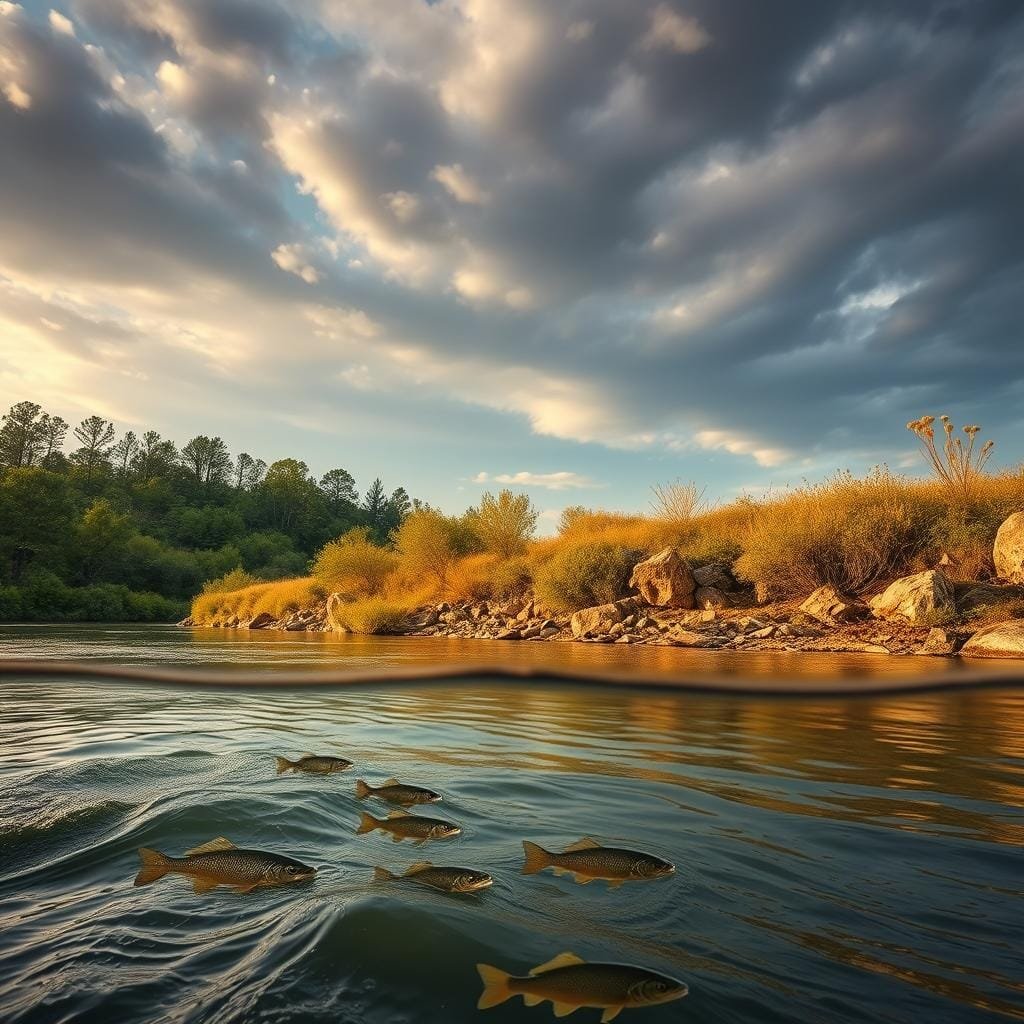
Learning sauger seasonal patterns can make fishing exciting. Watch for changes in water color, current, and sky. Use these clues to find the best spots and times to fish.
Prespawn to early summer: tracking fish on channel edges
In the prespawn, fish main-channel edges and ledges. Start in 10–15 feet near the lip. This is where fish move up to feed.
As light gets brighter, move back down the break. This keeps you in touch with the fish.
When river temperatures stabilize, focus on bends, dam tailraces, and washed-out holes. These spots attract bait and keep fish active. They follow the fall run patterns when flows are low.
Low-light windows on structure during bright days
On sunny days, look for sauger in low-light spots. Fish 12-foot rock or gravel at dawn and dusk. Then, move away when the sun gets too strong.
In the middle of the day, try shadowed seams or stained water. But make quick passes.
Cold fronts: when saugers shine and walleyes slump
Cold fronts are great for sauger fishing. While walleyes hide, saugers keep fishing. Look for them along the first break or just off the seam.
Use smaller jigs and slow lifts. Keep your line close to the bottom. Bites are light, so use a sensitive rod.
Late spring move deeper and year-round opportunities
By late May, saugers move deeper in reservoirs like Lake Francis Case. They stack on mid-channel ledges and basin lips. Use heavier jigs or trolling to find them.
From open water to ice, sauger fishing is good all year. Read the current and clarity to find them. When water gets murky, try rattle baits or glow plastics.
| Season Phase | Primary Location | Depth Range | Best Window | Core Tactic |
|---|---|---|---|---|
| Prespawn | Main-channel edges, ledges | 10–15 ft (edge), 8–10 ft (mix) | Dawn, dusk, overcast | Vertical jig short hops; hold on the lip |
| Postspawn | Bends, washout holes, dam tailraces | 12–18 ft | Rising flows or stained water | Slip-drift jigs; pitch to seam and drop |
| Cold Front | First break off structure | 14–22 ft | Midday steadies, low wind | Subtle lifts; downsize jigs; maintain bottom |
| Late Spring–Summer | Reservoir ledges, basin lips | 18–30 ft+ | Early/late; stable weather | Leadcore crankbaits; tune by vibration |
| Fall–Winter | Deeper holes, outside bends | 20–35 ft | Low light; slight clearing | Heavy vertical jigs; slow, tight presentations |
best bait for sauger
Saugers find food by feeling and smelling. The best bait is one that vibrates, smells good, and is small. It should also stay close to the bottom without dragging.
For deeper, faster rivers, you need to control your bait well. Short pauses are key.
Color and how you move your bait matter too. Bright colors work well in dark water. Natural colors are better in clear water. For more tips on bait, check out this guide: effective baits for sauger.
Live minnows on Lindy-style rigs and short jigs
Use a 42-inch leader on a Lindy Rig with a pink #4 hook. Add sauger minnows and a 2-ounce bottom bouncer. Keep the line angle at ≤45 degrees. Tap the bottom and move just a bit faster than the current.
For a tight package, try the Northland Fire-Ball, Lindy Fuzz-E-Grub, or Lindy Jig. They work well when fish want something small.
For trolling or slow slides, try 1-inch Lindy Lil’ Guys with a minnow. Use brief pauses to let fish find you by scent and feel.
Shiners on 1/4-ounce vertical jigs in 25–30 feet
Use shiners on a 1/4-ounce jig for deep schools. Hold steady over 25–30 feet and tap the bottom. Then pause. On places like Lake of the Woods, a “dead rod” can trigger fish.
Keep the jig straight under the boat. If it drifts, use a heavier jig to stay vertical. This keeps the bait feeling tight and thumping.
Soft plastics like Gulp! Minnow in firetiger patterns
The Gulp Minnow firetiger is great in stained rivers and tailraces. Its scent and bold color help fish find it. Cast upstream, let it hit bottom, and lift it just enough to hop without getting stuck.
On cloudy days, mix glow chartreuse, white, and orange. In spring, try Monkey Milk-style colors when fish move shallower.
Heavy hair/feather jigs tipped with minnows in current
In strong flow or 30–40 feet, use 3/4–1 ounce hair jigs with a minnow. The weight helps in the current. Lift a foot, drop to bottom, and repeat with crisp hops.
In muddy systems, add rattles or UV accents. Slow down your lift to keep the bait in the strike zone. Live minnows add scent to seal the deal.
| Presentation | Key Tackle | Depth/Current | Trigger | SEO Focus |
|---|---|---|---|---|
| Lindy-style rig with live bait | 2-oz bottom bouncer, 42″ leader, pink #4 hook | Moderate to heavy current, edges | Bottom ticks, slow tow, ≤45° line angle | Lindy Rig sauger, sauger minnows |
| Compact jig with minnow | Northland Fire-Ball, Lindy Fuzz-E-Grub, Lindy Jig | Reduced current, seams | Short hops, tight profile | best bait for sauger |
| Vertical shiner jig | 1/4-oz round head, long-shank hook | 25–30 ft, straight under boat | Steady hold, brief bottom taps, dead rod | shiners for sauger, vertical jigging sauger |
| Soft plastic minnow | Berkley Gulp Minnow firetiger on 3/8–1/2 oz | Dingy water, tailraces | Glow/chartreuse pops, hop-and-hold | Gulp Minnow firetiger |
| Heavy hair/feather jig | 3/4–1 oz bucktail or marabou, minnow tip | Strong current, 30–40 ft | Crisp lifts, hard bottom contact | hair jigs sauger |
Jigging Fundamentals: Leadhead Choices, Colors, and Weight
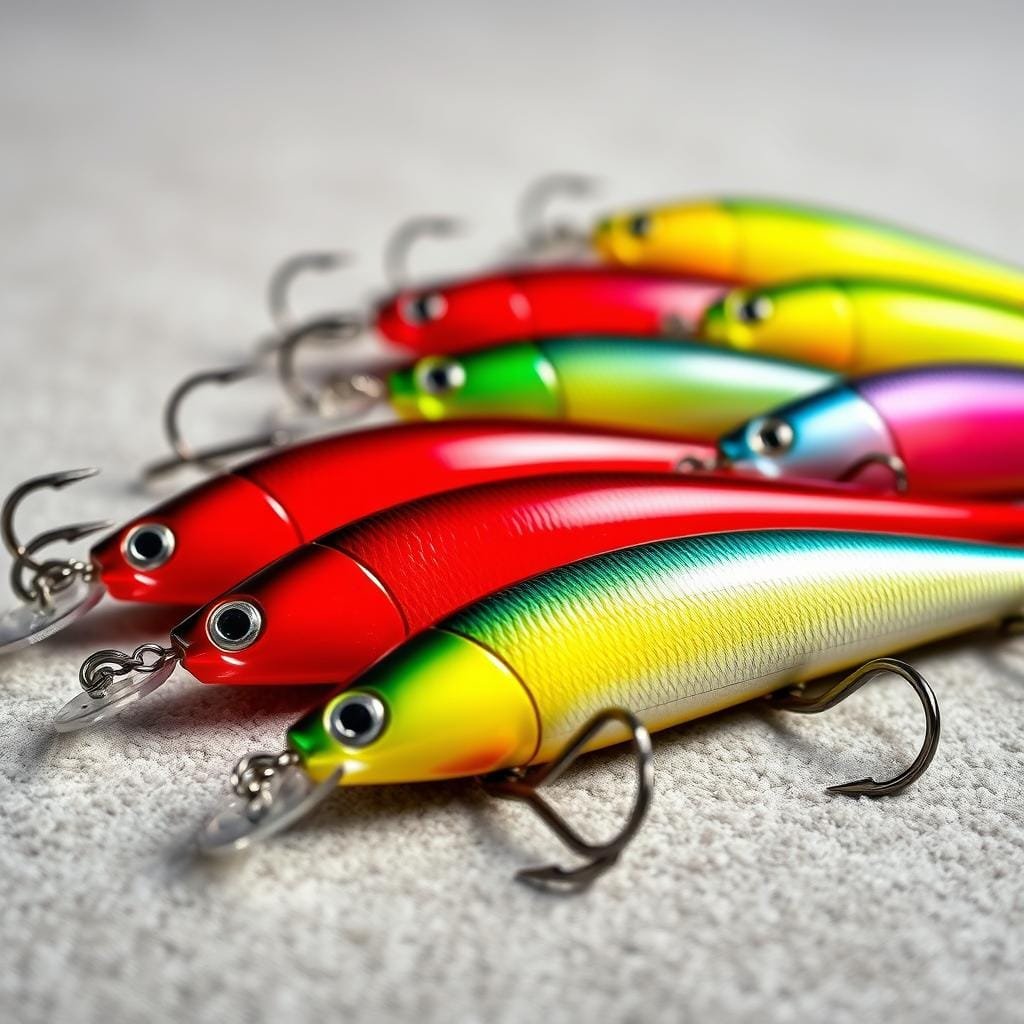
Choosing the right jig is key in vertical jigging deep rivers. It’s all about feel and tracking, not just flash. Pick a sauger jig weight that fits the depth and current. Keep your taps clean and stay in the strike zone without dragging.
Short vs. long jig profiles based on current strength
Use a Northland Fire-Ball or Lindy Fuzz-E-Grub in soft flow. They help you stay close to the bottom. For strong currents, a longer Lindy Jig works better. It tracks straight and keeps the hook up.
Match the jig to the water. Short for small eddies, long for fast chutes.
Go heavy for feel: 3/4- to 1-ounce vertical jigs in 30–40 feet
In 30–40 feet, use 3/4–1 ounce jigs. They sink fast and keep your rhythm. This is important for vertical jigging deep rivers.
Tap the bottom, lift 8–10 inches, pause, then go back. Don’t drag to avoid getting caught in moss and snags.
Color confidence: glow white, pink, blue, and when to use them
Dirty water needs bold colors like glow jig colors sauger. Use glow white, pink, and blue. In clearer water, try chartreuse or firetiger plastics.
When it’s clearer, use natural colors. But have a glow option for dawn and dusk.
Hooking minnows: lip-hook vs. back-hook for short strikes
Start with a lip-hook for a natural look on a Northland Fire-Ball or Lindy Jig. If that doesn’t work, try a back-hook for light bites.
For a Fuzz-E-Grub, thread the plastic first. Then add a tough minnow. Keep the minnow straight for better tracking.
Trolling Saugers with Crankbaits and Leadcore
Cover water with purpose. A good sauger leadcore setup keeps baits in the right spot. This is true even when the water moves and the depth changes.
Pair smart rigging with sharp boat control. This makes crankbait trolling for saugers steady and successful.
Leadcore-braid-fluoro leader setup for depth control
Start with 18-pound leadcore. Then add 18 feet of 15-pound braid. Finish with 6 feet of 14-pound fluorocarbon. This setup controls depth well and keeps hooks in place.
Use a medium-wobble plug like the Lindy Wally Demon. It works well at different speeds and around obstacles.
Count colors to check depth quickly. Adjust the leader length for better results. This mix of materials adds sensitivity and keeps the lure at the right depth.
Speed by feel, not GPS: matching lure vibration to current
Feel the rod tip and lure thump. It tells you more than the GPS. Adjust speed based on how the lure moves.
In heavy current, use 1.0–1.4 mph. Near a confluence, try 2.0–2.3 mph. Adjust as needed to keep the lure moving right.
Running height: 6 inches to 4 feet off bottom based on mood
Follow contour lines and keep the lure 6 inches to 4 feet up. Adjust based on fish behavior.
On aggressive days, fish 2–4 feet off bottom. For soft bites, go shallower. Lift higher when fish chase.
S-turns, rod pumps, and managing doubles in current
Use S-turns and rod pumping to trigger bites. A smooth S-turn changes the bait’s movement. Pump the rod a few times, then let it settle.
When a fish bites, keep moving for 30–40 seconds. This helps drive hooks in. Mark the best spots and come back to them.
Reading Structure and Current to Find Bigger Fish
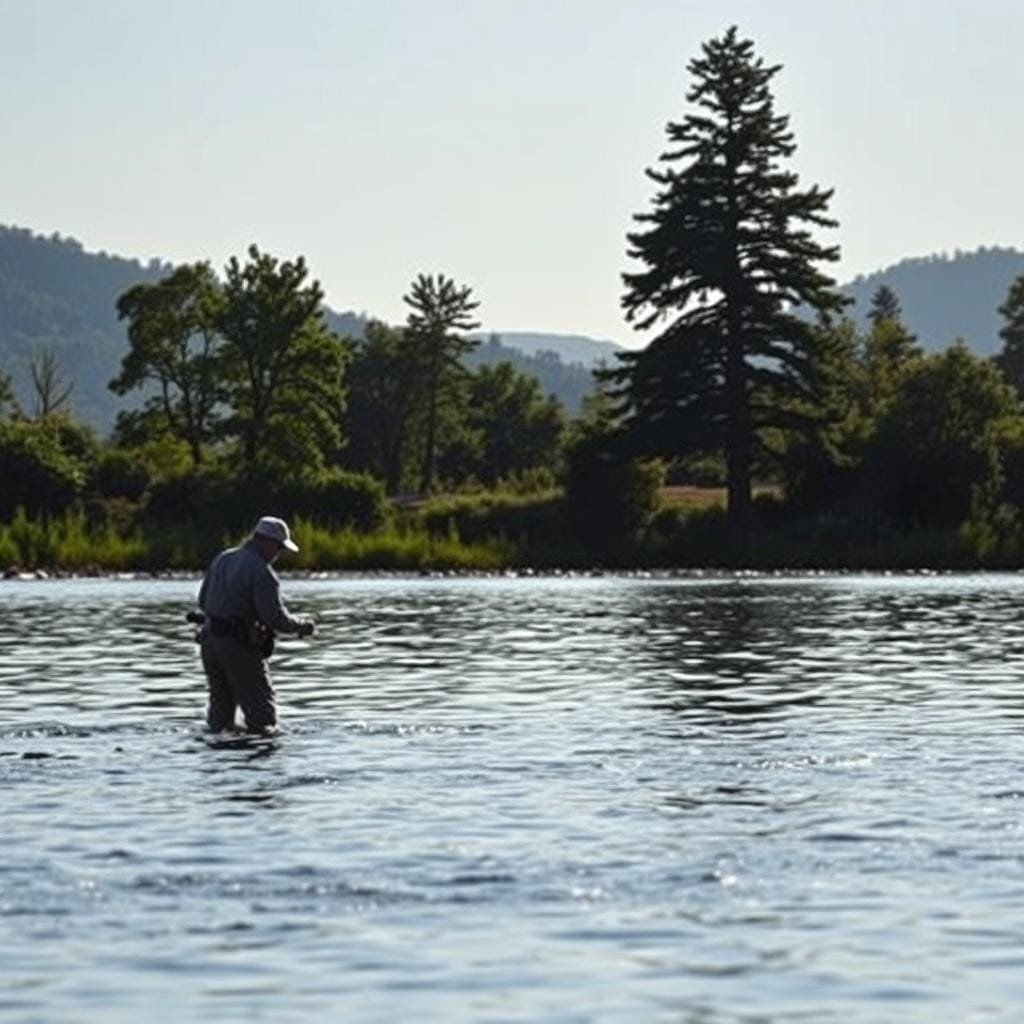
Start by fishing on classic rock-gravel ridges around the main channel. Move across the top, front, and back as the light and flow change. On dark, windy, or snowy days, go shallower and move slowly. Big fish often come up when the glare goes down.
Keep your line tight and your angle straight up. This helps you feel small changes on the bottom.
Look for channel ledges in 10–15 feet where they meet deeper water. These spots funnel bait and create clear paths. Use sonar to find clean drops, then make short passes over each ridge and edge.
If marks leave the bottom, slow down and stay close to the strike zone.
Find current seams where strong currents meet softer areas. In dam tailraces and dirty rivers, use a heavy jig to explore deep holes and hard spots. Make slow trolling passes to stay in the seam and catch fish.
Big fish like to be on the upstream sides of structures. They move into the current, grab food, and then slide back. Keep moving to find where they are feeding.
Reservoir confluences are great spots. Where two arms meet, small changes in water and current create a path. Lake Francis Case near the White River is a good example. Try the same tactics at other confluences in the Midwest.
Dirty and Muddy Water Tactics That Work
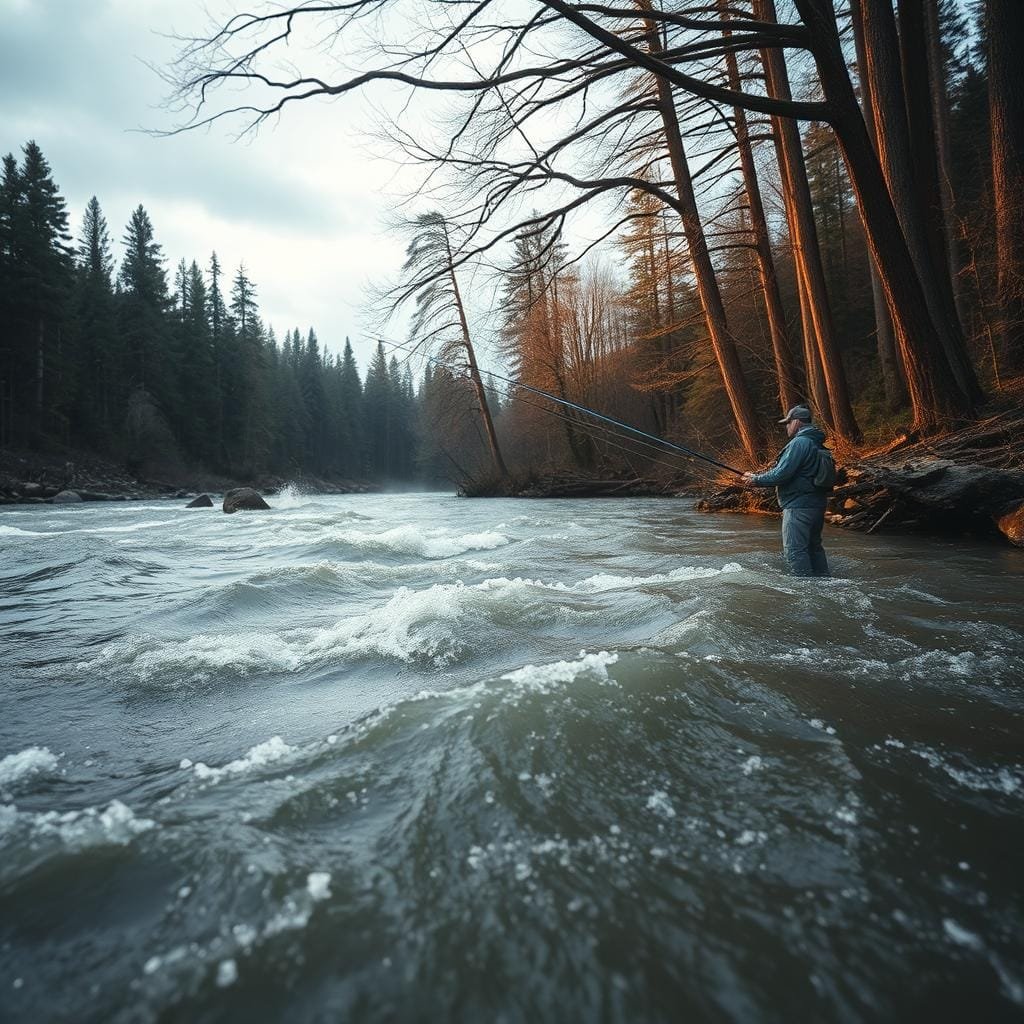
When it’s hard to see, make your bait loud, bright, and close to the bottom. A heavy vertical approach works well in muddy water. Start with feeling, then add color and sound. This way, fish can find your bait.
On the Ohio River, anglers use 3/4–1-ounce heads to stay in the current. This weight helps with bottom contact jigging. Tap, lift 8–10 inches, and pause. Don’t drag, as it can get stuck in moss and algae.
Rattles, UV/fluorescent plastics, and scent from live minnows
Use rattling jigs with UV plastics in colors like glow white, pink, blue, or firetiger. Add a live shiner or fathead for scent. In murky water, the rattle calls fish, UV plastics pop, and minnow scent seals the deal. This combo is great for Ohio River sauger in winter.
Deadsticking near bottom vs. slow lifts to stay in the zone
When fish are low in the water, deadstick your jig. Hold it after tapping and lifting. If fish slow down, try slow lifts and short pauses. Both methods keep your bait in the strike zone longer.
Maintaining bottom contact without dragging in snags and moss
For bottom contact jigging, use precise touches, not sweeps. Drop to the bottom, confirm, then hover just above. Re-tap every few seconds as you move. If you hit moss, clear it and start again. This method keeps your bait visible to sauger in muddy water.
Regional Hotspots and What They Teach
In the Midwest, sauger spots share common tips. Look at depth, current, and color to find them. Whether in a main channel or a reservoir ledge, a careful approach is key.
Illinois River “Sauger Capital” tournament insights
The Illinois River near Spring Valley is famous for sauger. The Masters Walleye Circuit sauger event shows that catching 2-pound sauger is easy. Heavier ones are possible too.
Hand-lining and pole-lining work well in stained water. A firetiger Berkley Gulp! Minnow has caught big fish. This helps the IDNR keep sauger numbers up.
For tips on catching sauger, check out this guide on how to catch sauger.
Lake of the Woods: deeper schools vs. shallow walleyes
Walleyes in Lake of the Woods are often 12–14 feet deep. But sauger are deeper, 25–30 feet, in early summer. Use vertical jigs with shiners along edges.
When it’s light, stay close to the bottom. At night, fish move shallower. Keep glow and natural patterns ready.
Missouri River system: Francis Case ledges and confluences
Guide Jim Klages fishes the Missouri River below Chamberlain. He uses Lindy Rigs and bottom bouncers near the White River. Fish are 17–19 inches long.
Focus on ledges and turns, not flat areas. Adjust your gear to stay near the bottom.
Upper Mississippi, Fort Peck, and Sakakawea patterns
The Upper Mississippi’s tailraces are similar to Illinois. Use heavy jigs and crankbaits along seams. Look for color lines where fish gather.
At Fort Peck and Lake Sakakawea, bigger fish are common. Target humps and island tips. Change jig weights with the wind and current.
Pro Tips to Maximize Bites and Land More Fish
Adjust current speed by feeling it, not just by GPS. Touch the rod to feel the thump of a crankbait like the Lindy Wally Demon. Then, adjust speed until the plug moves smoothly in the water.
Pay attention to how deep you fish. On busy days, fish 2–4 feet off the bottom. On slower days, fish closer, within 6 inches.
When jigging, tap the bottom, lift 8–10 inches, and pause. Use a dead rod to test pauses up to 30 seconds. This can make sauger bite more.
Improve your minnow rigging for sauger. Start with a lip-hook for a natural kick. If that doesn’t work, try a back-hook through the body.
Use heavy minnow rigs in strong currents. 3/4- to 1-ounce heads work well in 30–40 feet. Saugers will find them appealing.
Choose the right glow jig colors for low light. Glow white, pink, and blue work well on the Missouri River. A firetiger-pattern Gulp! Minnow is great on the Illinois River.
Move the boat when you hook a fish. Let the rod load for 30–40 seconds. Then, start working it in.
Pump other rods and make gentle S-turns. This helps manage doubles and triggers bites. In murky water, use rattles and UV plastics to attract sauger.
Keep your spread moving to avoid tangles. Use the right baits for muddy water. These tips will help you catch more sauger.