Want fast action from New Jersey to Maine? This guide shows the best bait for scup and how to use it. You’ll get practical tips, brand picks, and easy rigs for more porgies.
We’ll talk about bait like marine worms, fresh clams, and squid strips. Plus, metal and vibe options for when fish are picky. You’ll learn about blade baits and lipless cranks like the Rapala Rippin’ Rap and Storm Arashi Vibe.
Expect real-world tips from Long Island Sound, Buzzards Bay, and Cape Cod. We’ll share when soft baits work best and when squid is better in heavy flow. You’ll also learn how to choose the right size and gear.
For a weekend trip or to catch scup, you’re in the right place. By the end, you’ll know which baits to use first and how to keep the bite going.
Scup Basics: Where They Live, How They Feed, and When They Bite
Scup are key inshore fish all summer in the Northeast. They have a deep, oval body and sharp spines. Knowing when and where they move helps plan your fishing trips.
Range and seasons from New Jersey to Maine
Scup move from New Jersey to Maine in late May. They go into Long Island Sound and other areas as the water warms. By June and July, they fill channel edges and mixed bottoms.
In the fall, they keep fishing until they move offshore by November. Watch water temperatures and bait to know when to fish.
Feeding behavior near sandy edges, reefs, and shell beds
Scup eat crabs, clams, and small fish near the bottom. They like shell beds and mussel patches. Sandy areas next to reefs are also good spots.
Look for tight groups on sonar near these spots. Short drifts can show you where they are.
Size classes from schoolies to “humpback” porgies
Most scup are 8–10 inches long and weigh 1/2 to 2 pounds. The biggest ones have a hump behind their head. Look for these big ones in deeper water.
They come in different sizes. If you catch mostly small ones, try a deeper spot. You might find bigger ones there.
| Region Hotspots | Prime Months | Key Structure | Typical Size | Trophy Signal |
|---|---|---|---|---|
| Long Island Sound | June–October | Rock-sand seams, channel edges | 8–12 inches | Deeper edges near current turns |
| Buzzards Bay | Late May–October | Reefs, shell beds, mussel patches | 10–14 inches | Hard bottom with clean sand apron |
| Narragansett Bay | June–September | Drop-offs, pier lines, mixed rubble | 9–12 inches | Edges below bait schools |
| Cape Cod South Side | June–October | Ledges, reefs, tide rips | 10–15 inches | Marked humpback porgies size on deep humps |
| New Jersey Inshore | Late May–September | Jetty corners, sandy points by rock | 8–11 inches | Step-out to 30–60 ft rock piles |
Prime Habitats that Hold Porgies All Season
Find the scup habitat that’s full of fish all year. The best spots have clear water and firm bottom. Look for bright sand next to dark rock. Use bait or small metals to fish those edges.
Estuaries, jetties, docks, and piers for easy access
In spring, estuary mouths are great. They have clean sand and a steady tide. Shore anglers do well near jetties and docks where mussels grow.
Piers with drop-offs are best on a running tide. Beach casters should fish troughs where waves dump. Steep beaches with fast drops into deep water are also good.
Reefs, ledges, and mixed rock-sand seams
By summer, reefs and ledges are key. Fish passages between humps, then the mixed rock-sand seams. Drift to map bites, then anchor uptide to fish the edge.
Scup often hang beside heavy structure, not inside. Sandy edges and cobblestone flats around rock keep rigs clean. This way, you stay close to the action.
Shell beds and juvenile mussel patches as feeding lanes
Shell beds are magnets for porgies. They line ledges, rubble fields, and inlet corners. Mussel patches draw fish, too, on slower tides. Look for bright sand next to dark rock on sonar.
Set up along the edge, not over the snags. Use controlled drifts to cover short stretches. This way, you spend more time in good scup habitat without losing gear.
| Habitat | Key Feature | Why It Holds Porgies | Best Approach |
|---|---|---|---|
| Estuary Mouths | Firm sand + steady current | Concentrates food and keeps water clean | Cast bait up-tide; slow hop metals along edges |
| Jetties and Docks | Pilings with mussels, cross-bracing, drop-offs | Shade and cover create reliable holding lanes | Fish close to pilings; short, precise casts |
| Reefs and Ledges | Rocky relief with nearby sand seams | Ambush points for schools cruising structure | Drift passes, then anchor uptide of the edge |
| Shell Beds | Mussels, clams, and broken shell | High-calorie forage zone for steady bites | Light sinkers; keep contact without burying rigs |
| Beach Troughs | Darker lanes where waves dump | Creates depth and bait funnels near shore | Fan-cast along the trough at mid to high tide |
| Rock-Sand Seams | Bright sand beside dark rock on sonar | Schools patrol edges without heavy snags | Track with short drifts; mark bites and repeat |
Timing Your Trip: Months, Depths, and Tides for More Bites
Finding the best time to catch scup is about knowing the right times. Late May brings the first waves to shallow areas. June lights up Long Island Sound and Narragansett Bay.
By midsummer, rocky edges and shell beds are great spots. Porgies chase food in the warming water. As it cools, they go deeper. By November, they stack on offshore ledges.
This New York porgy timing guide shows how they move.
Late May to October inshore, winter offshore patterns
Early reports come from inside bays and sounds. Fish feed aggressively there. The best inshore time is June to September.
Dawn and dusk around mixed rock and mussel patches are key. By late fall, they move to wrecks and outer structure for winter.
Depth windows: casting distance to 30 feet vs. 30–100 feet
Most bites are in a reliable depth range. Inside, cast to 30 feet for steady action at daybreak and sunset. Midday, bigger fish hold a bit deeper.
In fall, outer reefs and channel edges are best in 30–100 feet. This matches the porgy tide windows when current loosens and bait stacks.
Slack and slow-current periods for finesse presentations
Plan for one to two hours around slack tide scup. Fish lighter sinkers and feel every tap-tap. Avoid peak moon currents when your rig tumbles and crabs steal bait.
If the bite fades, move within 10 minutes. Re-anchoring or redrifting keeps you on the school. These tide windows turn short feeds into full buckets with the right depth.
best bait for scup
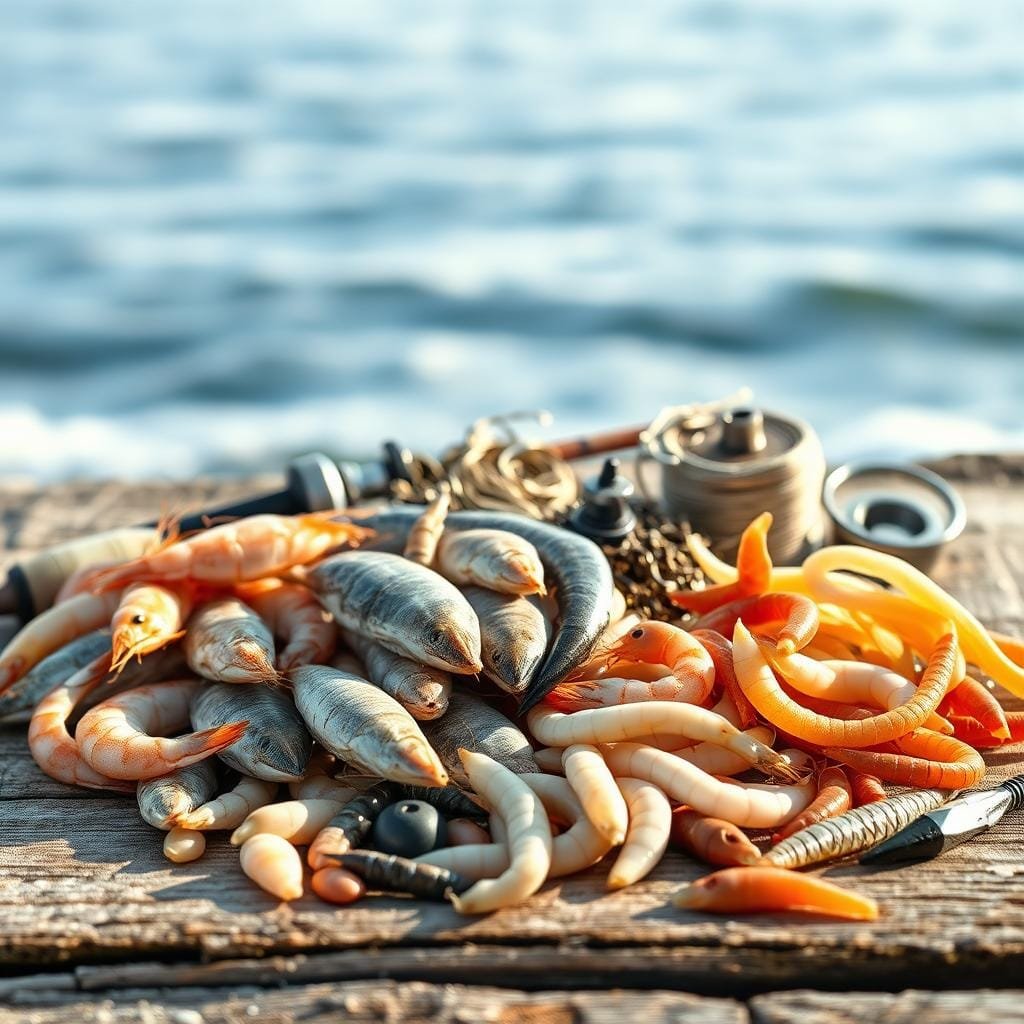
Find out what scup like, then keep it simple. The best bait for scup is fast scent and durable. This lets you fish longer without needing to rebait often.
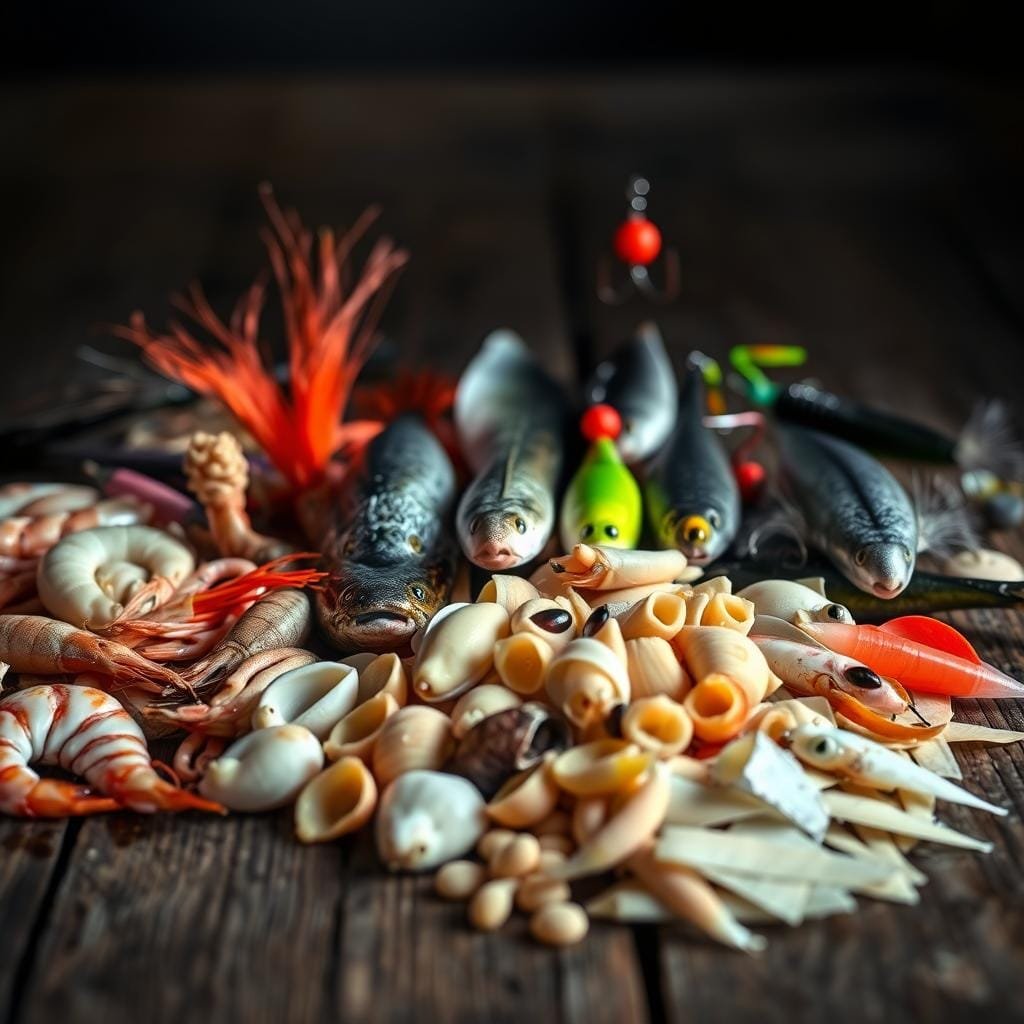
Marine worms, fresh clams, and squid strips as proven starters
Sandworms for scup release scent quickly. They attract scup fast, near jetties and docks. Fresh clam bait works well too.
When scup start biting, use squid strips. This way, you can keep fishing without needing to change bait often.
Soft baits for fast scent vs. durable squid in strong current
Clams and worms give off scent quickly. But, they get eaten by small fish. Squid is better in strong currents because it’s tough.
Start with soft bait to get scup to bite. Then, switch to squid to last longer. This method works well in different conditions.
Cut sizes, threading, and brining tips to extend bait life
To make scup bait last, cut worms into 2–3 inch pieces. Use a bait-holder hook to keep the points clear. For clams, use thumb-size pieces and a light brine to keep them firm.
Make squid strips thin and tapered. Pin them through the fat end so they flutter. Keep squid cold and refreeze leftovers to make them last longer.
If bait-stealers are a problem, use bigger clam or squid pieces. Add skinny squid teasers to your rig for extra flash and staying power. These small changes can help you catch more fish.
Blade Baits and Vibes: Lure Alternatives that Crush Porgies
Wind, drift, and current can make bait hard. But, compact, vibrating lures cover water fast. They stay in the strike zone, letting you feel every tick.
When small metal and lipless lures outfish natural bait
In water under 15 feet, a lipless crankbait porgy setup works well. It hums on a slow retrieve and draws fish. In deeper water, metal lures sink straight and hold bottom, even with strong tide.
These tools vibrate on the lift and glide on the drop. This flutter often triggers strikes, like when porgies chase sand eels or small crabs near seams.
Go-to picks: Damiki Vault, Cabela’s Mean Eye, Rapala Rippin’ Rap, Storm Arashi Vibe
Use 3/8-ounce blades and half-ounce or lighter vibes. A Damiki Vault porgy bite works well around edges and cobble. Cabela’s Mean Eye tracks fast to bottom and kicks hard on short hops.
The Rapala Rippin’ Rap scup pattern covers flats and troughs with a tight buzz. The Storm Arashi Vibe is good for subtle thump in shallow water. All are top scup blade baits that catch fish well.
Yo-yo retrieves, bottom pounding, and vertical jigging tactics
Count down to the bottom, then yo-yo with short, crisp lifts. Most hits come on the fall. Keep a semi-tight line to feel the tap.
Bottom pounding—two or three pops to kick sand—can wake up schools. In deeper spots, go vertical. Drop straight, lift a foot or two, and ride it down under control.
Short casts help in skinny water to avoid fouling. Color matters less than placement and feel. Pick a bright tone you can track and focus on cadence. With porgy vibes or metal lures for scup, steady contact beats guesswork every time.
Rigging That Works: High/Low vs. Fish-Finder Setups
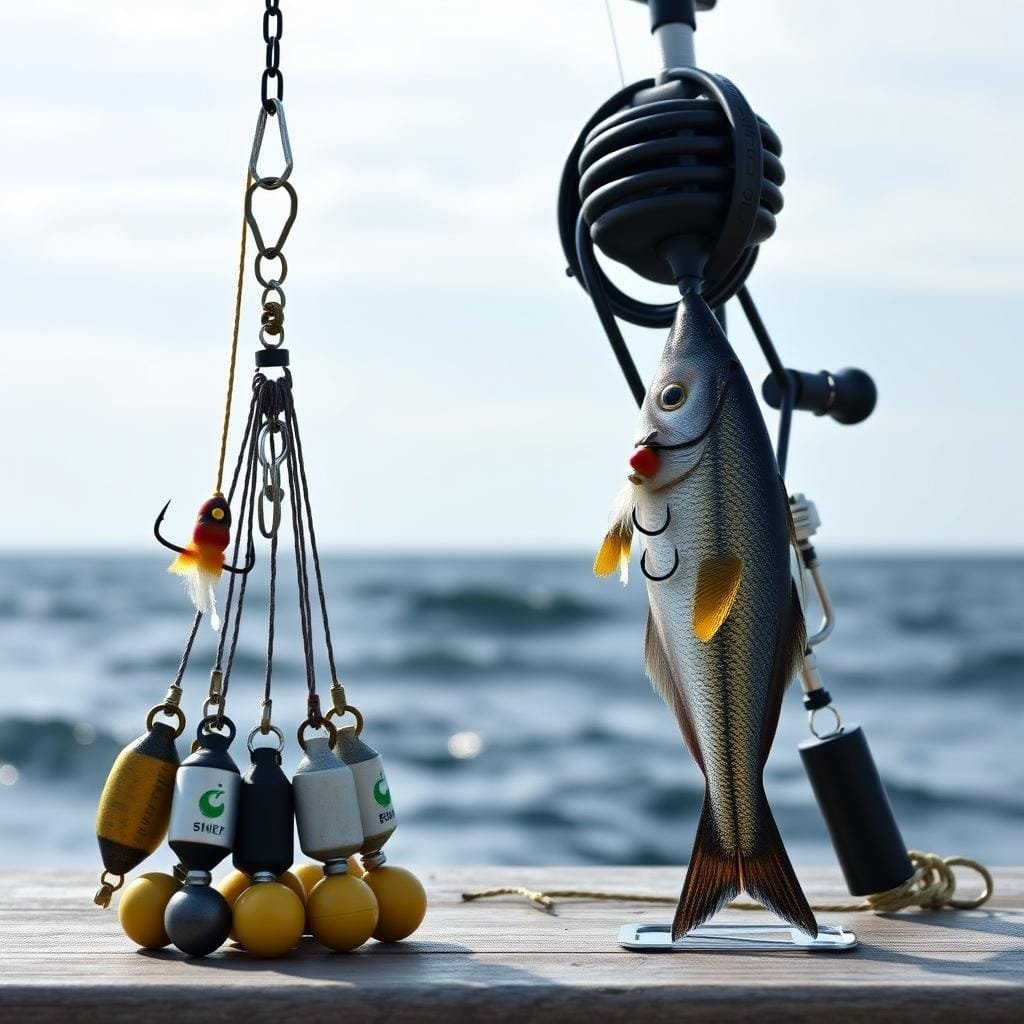
Choose the right rig for the tide and how fish hold in the water. A scup high low rig is great when the current is light and fish are suspended. Switch to a porgy fish finder rig for strong tides and where big porgies swim.
Targeting suspended feeders with high/low droppers
Use a scup high low rig in calm drifts. The sinker touches sand, and the upper dropper floats a bit up. This setup catches both roaming and bottom-dwelling fish.
For a Perlon leader porgy setup, keep droppers straight and avoid tangles. Aim for 50 inches of leader with droppers 8 inches apart. In shallow water, make the gap wider to avoid tangles.
Hugging bottom in current with a fish-finder rig
When the tide gets strong, use a porgy fish finder rig. It keeps bait close to the bottom and resists spinning. Choose the lightest sinker that holds bottom, and adjust as needed.
This rig is great for deep edges. It reduces tangles and makes bites clear. You’ll feel bites without the drag of spinning leaders.
Perlon vs. mono leaders, dropper spacing, and hook styles
Perlon leader porgy rigs are straighter than mono, making baits look clean in current. Stick to 50 inches of leader and consistent spacing to avoid tangles.
For hooks, use #2–#4 beak or bait-holder patterns for various baits. Fin Strike #461 with Gamakatsu porgy hooks is a good choice. Switch rigs with the tide: high/low in calm, fish-finder in strong.
| Rig Type | When It Excels | Leader & Spacing | Hook Pairings | Sinker Guidance |
|---|---|---|---|---|
| Scup high low rig | Slack to light current; fish suspended over shell and rubble | Perlon leader porgy, ~50 in; dropper loop spacing ~8 in (wider in shallow) | #2–#4 beak or bait-holder; Fin Strike #461 with Gamakatsu porgy hooks | Light as possible while touching sand and keeping vertical feel |
| Porgy fish finder rig | Moderate to strong current; deeper channels and rocky seams | Sturdy mono or Perlon; single leader to bait for max sensitivity | #2–#4 beak or bait-holder; durable points for clam and squid | Increase gradually until the rig pins bottom without dragging |
Tackle for Sensitivity and Control in Current
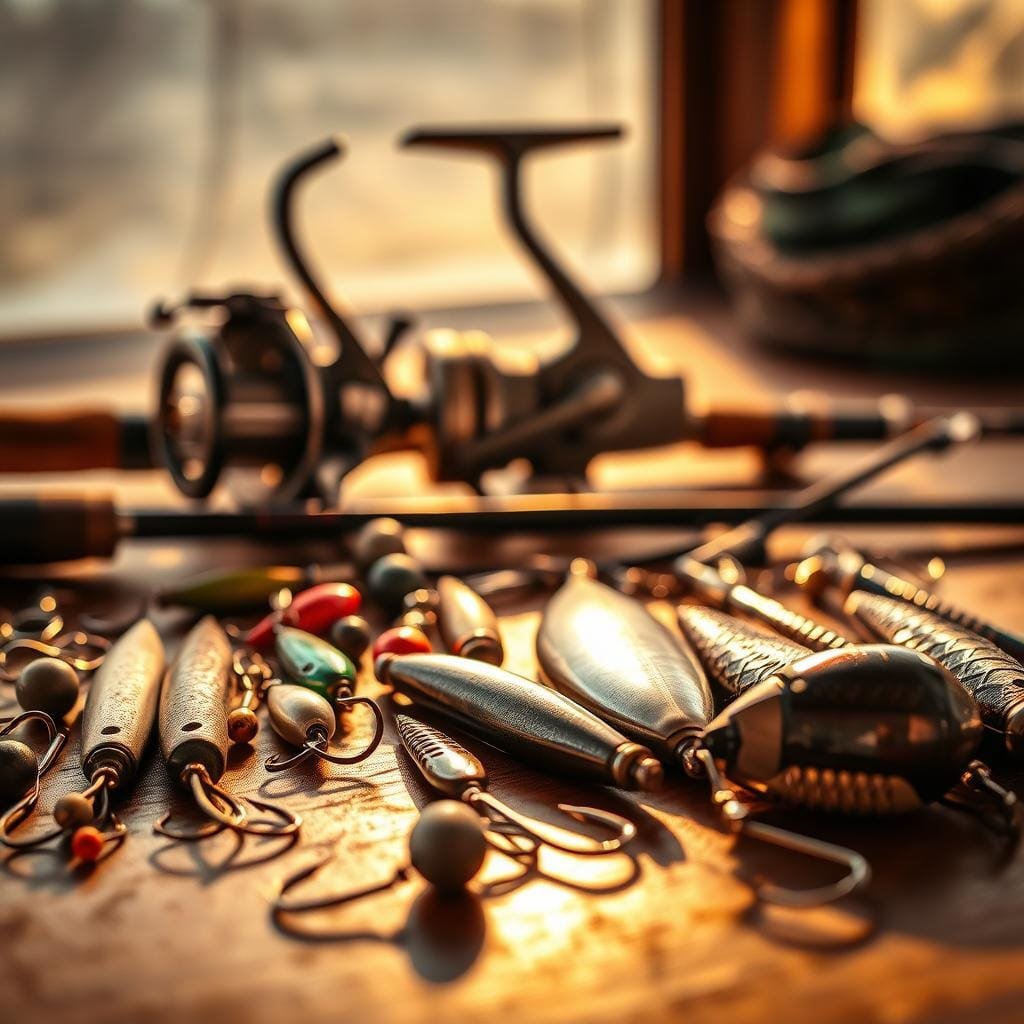
Dialed-in scup tackle starts with feel. You want a setup that feels every tap but softens big waves. This keeps fine-wire hooks in place. The tackle should be light, balanced, and ready for quick fish runs.
Light to moderate-action rods to keep trebles pinned
A light action rod is perfect for porgy fishing. It has a soft tip and a strong backbone. A custom Mudhole MHX dropshot rod is great for small lures, keeping trebles in place.
For bait fishing or party boats, use a 6.5–7 ft graphite rod. It’s in the 12–20 lb class, like the Sea Striker Contour. This rod helps in strong currents and feels every nibble.
Small spinning reels with smooth drag and 8-carrier braid
Match finesse rods with a small, smooth spinner. The Shimano Stradic 1000 is perfect, with a smooth drag. Use 6–8 lb Daiwa J-Braid X8 for better bite detection.
For lures, add a 6–8 lb mono leader for stealth. On heavy bait outfits, use a Shimano Tekota 300 with 15–20 lb braid. This gives the power to lift fish easily.
Leader strengths and sinker choices by depth and flow
Choose leaders based on the terrain. Near rocks or mussels, use 15–25 lb mono or fluoro. This protects against scuffs. Keep knots small for easy guide passage and retie often.
- Shallow drifts, light tide: 6–8 lb leader, minimal weight for crisp feel.
- Rough bottom or wreck edges: 20–25 lb leader to survive abrasion.
- Mixed sand and shell: 12–15 lb leader for balance of stealth and toughness.
Adjust sinker sizes based on the water. Use the lightest sinker that works. For 15–30 feet, use 3–6 ounces. For 30–60 feet, use 8–12 ounces. Adjust as needed to stay in contact with the bottom.
- 15–30 ft: 3–6 oz for precise taps and fewer snags.
- 30–60 ft: 8–12 oz when wind and tide stack up.
- Steep drops or rips: bump up one size to stay vertical.
By mixing these choices, you’ll catch more fish. You’ll feel every bite and stay in control from start to finish.
Boat Positioning, Anchoring, and Drift Strategy
Boat control is all about quick, steady actions. Use clean setups and watch the current. Let your electronics guide you. Mix anchoring for scup with timely drifts to keep baits in the strike zone.
Reading rips, edges, and mixed bottom on your sounder
Start by reading bottom for porgy. On a Humminbird Helix with Mega Side Imaging, bright sand is next to dark rock. Bait marks and scattered arcs show life. Humminbird side imaging scup appear as tight pods near seams or mussel patches.
Idle a slow grid. Look for rips where depth changes or the bottom shifts. If you see broken rock with bait streaks, drop a waypoint. Plan your first pass along the edge, not the center.
Anchoring uptide of structure and resetting fast
For tight schools on reefs or ledges, anchor uptide. This keeps baits and chum over structure. It pins you on the bite without chasing marks. Keep your scope short to fine-tune where your rigs land.
In skinny water, give each set about 10 minutes. If hits fade or fish run small, reset 30–60 yards along the seam. Match rig to flow—use a fish-finder when current pulls hard, then swap to a high/low as flow eases and fish suspend.
GPS drift lines to stay on the school
When the current builds or you slide into 30–100 feet, use a drift strategy porgy plan. Make one long scout pass, marking life and saving a clean GPS drift track. Retrace that line to stay centered on the school instead of wandering off the productive lane.
If the screen reveals a tight stack and the sea state allows, drop anchor uptide again to pin them. Keep recording each GPS drift track so you can adjust angles with wind shifts and keep baits on the seam.
| Situation | Electronics Cue | Boat Move | Rig Choice | Why It Works |
|---|---|---|---|---|
| Shallow reef, light current | Side imaging shows dark rock with bait streaks on the edge | Anchor uptide; short scope to land baits on the seam | High/low with small sinker | Suspending porgies hold just off the rocks; clean drops get fast bites |
| Mid-depth (30–60 ft), building tide | Down imaging shows scattered arcs over mixed rubble | Drift the contour; save a GPS drift track and repeat | Fish-finder with heavier sinker | Stable bottom contact while covering ground keeps baits in the zone |
| Tight school located | Dense stack at a rock-sand transition with bait above | Re-anchor uptide to pin the school | High/low; adjust dropper spacing | Locks your spread on the pile for steady doubles |
| Wind against tide | Track line shows sideways slide off the seam | Short drifts across structure; refine angle using GPS drift track | Fish-finder for quick resets | Maintains presentation even when the hull crab-walks |
Chumming to Pull Schools Under the Boat
Porgy chumming makes slow fishing fast by creating a scent trail. Use a weighted clam chum pot at the bow. This keeps it away from tangles. Add extra lead in fast current and start with crushed clams or a frozen log.
Refresh the chum often. Shake the chum every 15–20 minutes to wake up the fish. If you’re out of bait, use canned tuna or cat food to keep fishing.
Clam and mussel chum pots, placement, and shake timing
Hang the clam chum pot from the bow cleat. This lets your droppers fish down-current in the plume. Add lead to keep it plumb and avoid midship to prevent tangles.
When the bite slows, shake the pot firmly. This re-starts the feed without emptying it.
When to switch from soft clam to tougher squid
Start with soft clam or sandworm to get the fish’s attention. Then, switch to squid strips to keep fishing without rebaiting. Squid holds up better in current and draws more fish.
Light sinkers and short moves to stay on an active bite
Use light sinkers so scup can track in the slick. Go as light as possible while touching bottom. If action slows in 10 minutes, slide to the next seam or reset uptide.
| Chum Setup | Best Use | Key Advantage | Pro Tip |
|---|---|---|---|
| Weighted clam chum pot | Bow-hung in steady current | Vertical, tangle-free scent trail | Boost lead to keep it plumb during tide swings |
| Mussel-heavy grind | Clear water, pressured fish | Natural profile for mussel chum scup | Crush shells fine to slow the feed and hold fish |
| Soft clam starter | Kick-starting porgy chumming | Fast scent, quick bites | Thread once, leave a fluttering tail for movement |
| Switch to squid bait | When pickers are thick | Lasts longer, fewer rebaits | Cut pencil-thin strips for subtle glide in the chum |
| Light sinkers scup | Shallow to mid-depth drifts | Natural drift in the scent lane | Downsize until you barely tick bottom every few feet |
| Shake timing chum | Every 15–20 minutes | Maintains interest without overfeeding | Two hard shakes after a lull to re-stack fish under the boat |
Shore and Kayak Game Plans that Produce
Keep things simple and travel light. For shore fishing scup, use a medium setup with 20-pound braid. This can be PowerPro or Berkley FireLine. Add the lightest sinker that works.
Keep leaders short to stay tight. Let the structure do the work.
Beach troughs, jetty corners, and dock pilings
Target the darker water in beach troughs just past the first break. Make short casts and feel the bottom. Slide the rig along the seam.
A high/low rig with tiny clam or squid strips works well in light surf. It finds roamers fast.
At jetty corners, look for small eddies and slack pockets. These spots are great for jetty scup tips. Fish the pocket, then hop the jig one rock at a time.
Around dock pilings, focus on mussel-crusted shade lines near a sharp drop. Braid helps detect bites. Hits often come on the fall, as shown in this scup jigging guide.
Short casts with vibes to reduce fouling in shallow water
Use vibes for short casts in thick weed and shells. Count the lure down, lift, and yo-yo back with a tight line. Small metals or blade baits track clean and stay in the strike zone longer.
Keep your rod tip low to follow the contour. Pause on sand patches between rocks. This approach works well in mixed bottom areas where fouling kills the drift.
Kayak drifts along sandy drop-offs adjacent to rock
For kayak porgy tactics, set drifts along sand-to-rock edges. Look for areas near peanut bunker schools. Drop a compact vibe under the bait, then lift and let it free-fall to tick bottom. Repeat for fast hookups.
Mark bites with GPS and reset on the same line. When the school roams, swing back up-tide and run the edge again. These controlled drifts mirror jetty scup tips but cover more ground without spooking fish.
Hooking, Landing, and Upping Your Average Size
Scup hit fast. Read the bite and keep your line tight. Work with the current. A few small tweaks will help increase porgy size.
Quick lifts on “tap-tap” bites and keeping bottom contact
Those rapid taps mean the fish is nosing the bait. For setting the hook scup, hold bottom with the lightest sinker. Then, answer the tap with a quick, firm lift.
Stay in touch with the bottom contact porgy wants. Drop back after each lift. Feel the sinker kiss sand or shell, and keep the rod low. Use Fin Strike Gamakatsu hooks in a #2 or similar size.
Double-headers with two-hook setups when schools fire
When the screen lights up or rods bend, swap to a high/low rig. This triggers porgy double-headers. After the first hookup, pause a beat near bottom and let the second dropper flutter.
Choose snelled Fin Strike Gamakatsu hooks on short droppers for control. Keep pressure steady, avoid high-sticking, and guide fish to a small rubber net. Reset with fresh bait fast to hold the school under you.
Moving from smalls to nearby deeper edges for bigger fish
If shorts stack up, upsize to thicker clam cuts or longer squid strips. Then slide to the nearest deeper edge. Rock-to-sand seam or drop-off are good spots, mid-day or during heavy traffic.
Downsize only the sinker, not the hook strength. The goal is feel. On moon tides, hunt gentler flows. Keep setting the hook scup with sharp, quick lifts, and work the route until bigger marks stick.
Regional Notes: Cape Cod, Long Island Sound, and Beyond
Cape Cod scup fishing starts in mid-May. Porgies can be found in 14 feet of water. By early June, bigger ones are found in 20–25 feet on rocky reefs.
Drop high/low rigs and anchor uptide. You’ll catch porgies, black sea bass, and tog quickly. The Cape Cod fishing report also mentions sand eels, mackerel, and flounder.
Long Island Sound porgy fishing gets better in late May and peaks in summer. Look for them on reefs, ledges, and shell beds. Use small metals, vibes, and fresh bait to fish fast.
Narragansett Bay scup fishing is strong in June and September. They can be found on outer structures and channel edges. Sandy areas near rock and mussel patches are always good.
Beach fishing is also great. Porgies are close to shore, up to 30 feet away. Use a slow yo-yo or tipped jig to fish weed-free.
Switch to squid strips when bait pickers get too thick. This keeps you fishing without re-baiting.
Use side imaging and GPS to find schools. Mark pods and set drift tracks. Reset the anchor as schools move.
Keep a vibe rod ready for reaction strikes near structure. You might catch fluke, stripers, bluefish, or Spanish mackerel. Find rock and sand, add current, and move around.