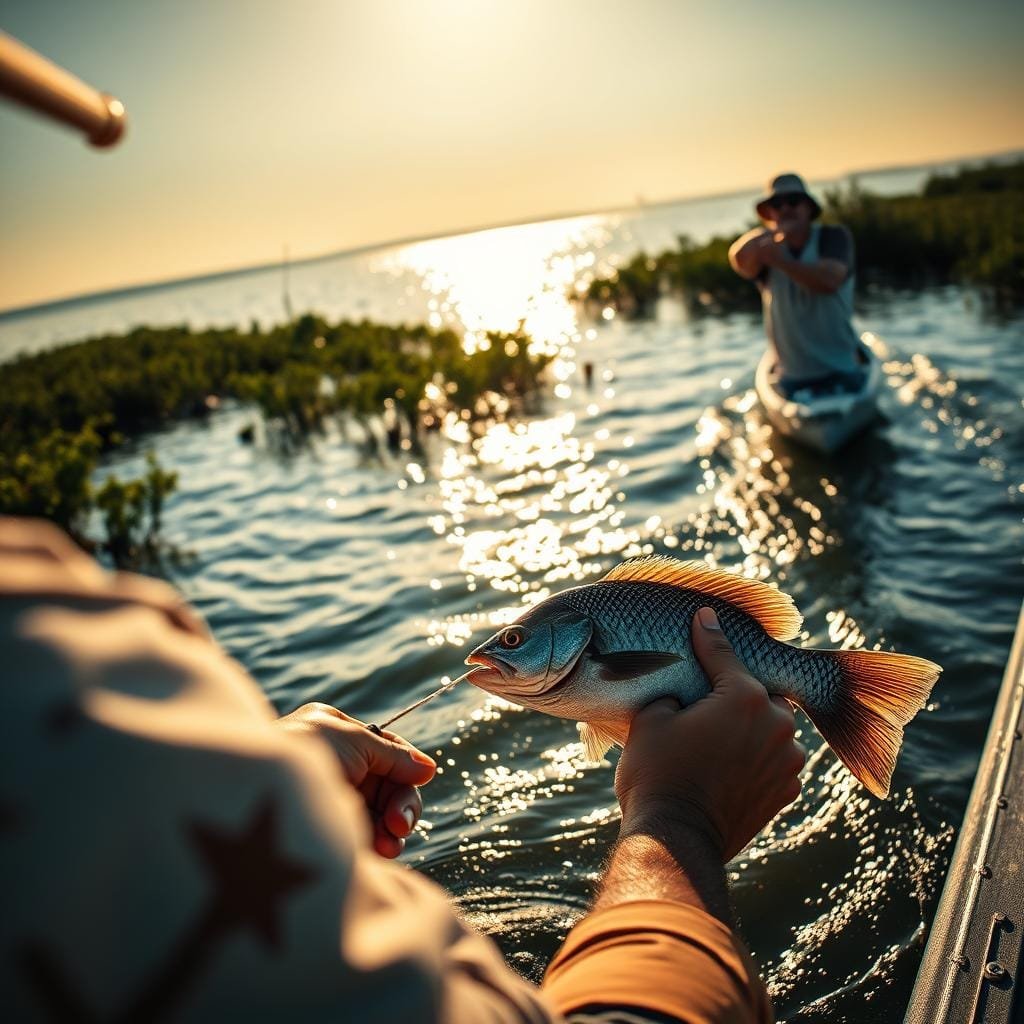
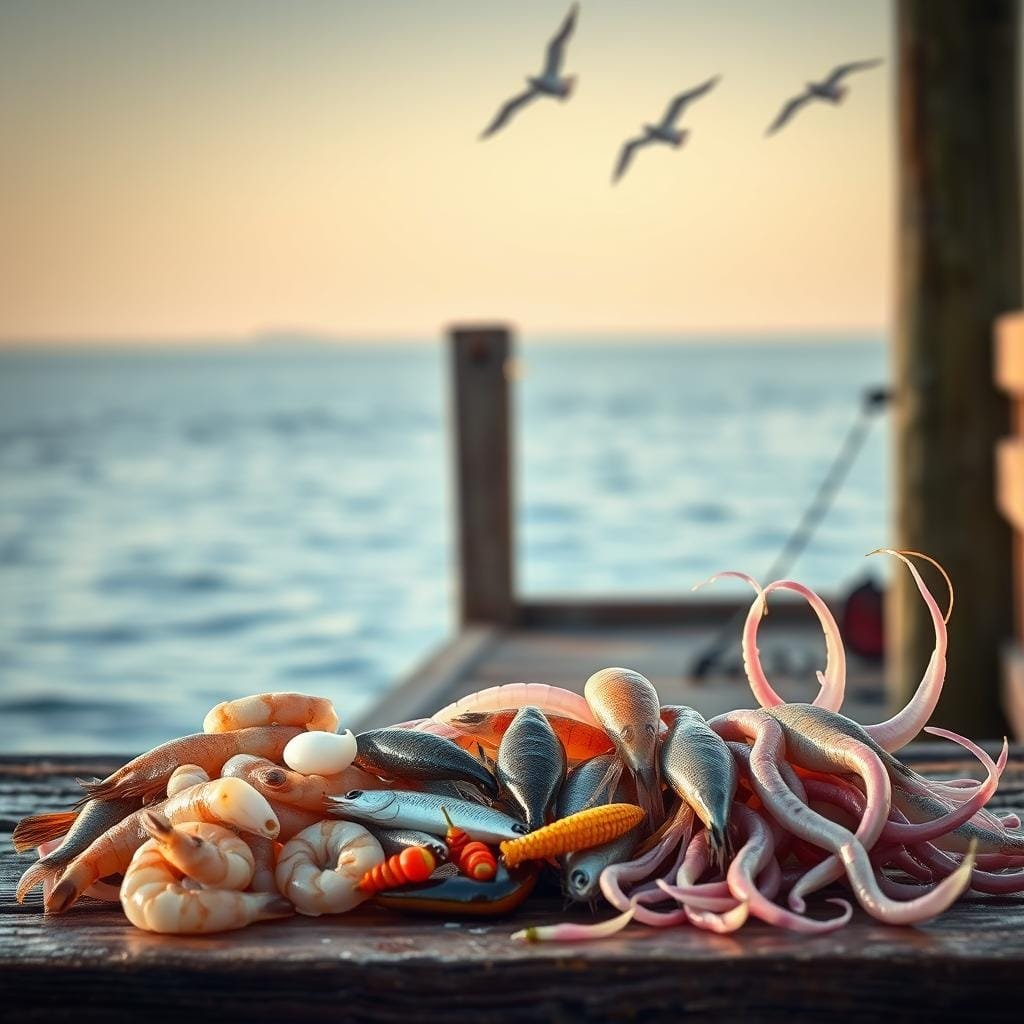
Chasing black sea bass is easy with the right bait and steady boat control. This guide shows the best bait for sea bass. You’ll learn fishing tips for today around wrecks, rock piles, and channel edges.
On Cape Cod, keep your bait near the bottom for the best results. Hi-lo rigs with fresh squid or clam get fast hits. Bucktails and metal jigs work well for quick drops.
Many sea bass fishermen use Joe Baggs Flukies in 1–5 ounces near the bottom. They add Berkley Gulp or squid for extra scent. Action starts shallow in spring and gets deeper in summer.
A teaser above your jig can help catch more fish. Cape Star Charters found success with Monomoy Tackle sea bass rigs near a shipwreck. The Massachusetts sea bass season is May 17 to September 1. These baits will help you catch fish and follow the rules.
We’ll cover black sea bass bait, fishing structures, and smart drifts. We’ll also talk about how to improve your hookups. Take this guide fishing and catch more fish.
Seasonal Behavior and Why Bait Choice Matters for Black Sea Bass
Choosing the right bait at the right time can make all the difference. As the water warms up, sea bass move from deep to shallow waters. This change in their habits means you need to adjust your bait to keep them biting.
Spring arrivals from offshore and pre-spawn feeding
In May, sea bass come in from the deep to feed. They hit jigs and natural baits in 15–30 feet on Cape Cod. Buzzards Bay is known for its blue-crowned males near 30 feet.
Anglers who fish fast tides and edges get the most bites. This is where the action is during the pre-spawn.
Shifting depths: shallow in spring, deeper as summer progresses
In the early spring, shallow areas like rock and gravel are hotspots. As summer goes on, sea bass move to 30–50 feet. Adjust your fishing gear to follow this change.
Reading activity spikes around structure and moving water
Start your drifts near the shallow edge of a channel. This lets the boat settle before you drop. Use your fishfinder to find dense groups and mark those spots.
Short-drift those areas to stay with the school. When birds dive and surface feeds happen, even topwater can work. But the best action is usually around rubble, wrecks, and ledges during spring.
Understanding Sea Bass Diet to Pick the Right Bait
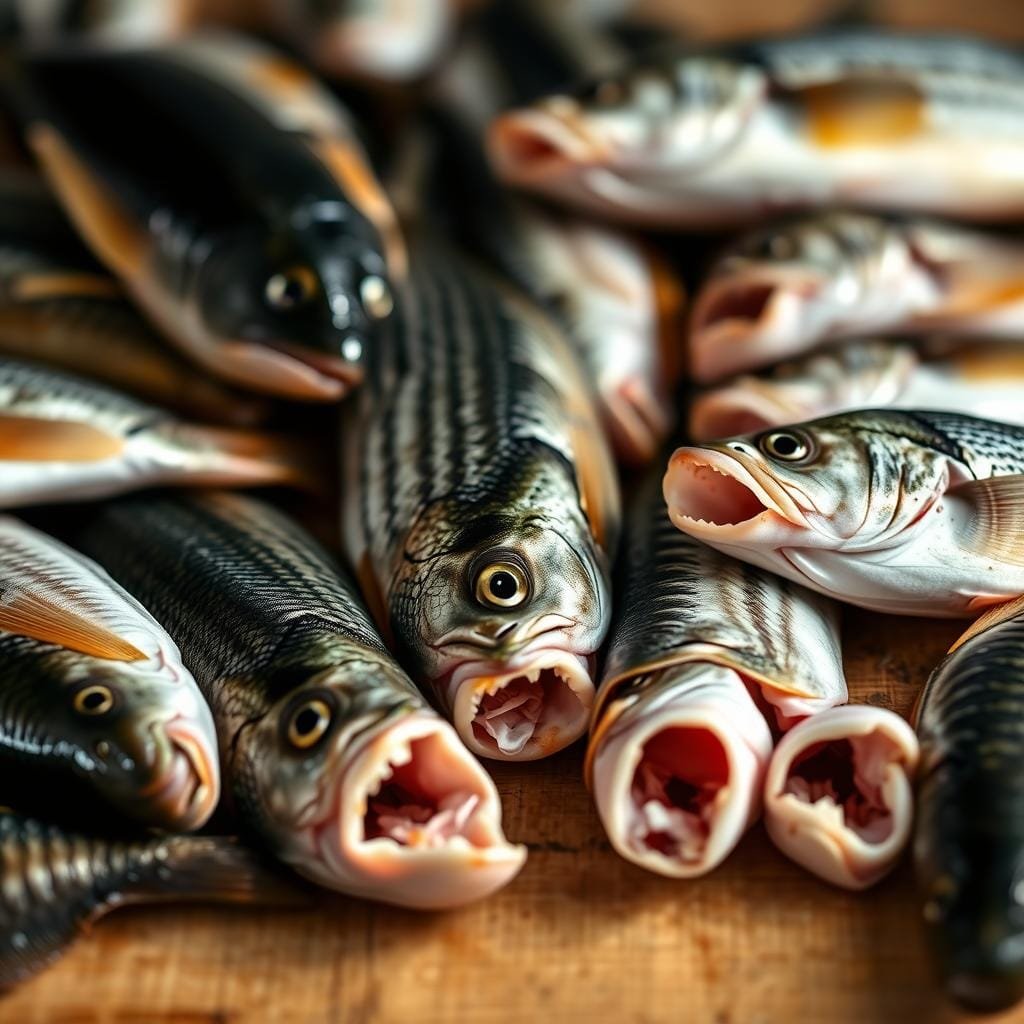
Black sea bass like to eat on rocky bottoms. They go for hard shells and soft bodies. They also eat anything that can’t run away fast.
When you use bait that sea bass like to eat, you get more bites. These bites feel strong and sure.
Crustaceans: crabs, juvenile lobster, mantis shrimp, and crabs
Crabs are a big part of sea bass diet. They eat young lobsters and mantis shrimp too. A small crab piece on a jighead looks like their favorite snack.
Make sure the crab pieces are neat and firm. This helps them stay on the hook longer. It’s like giving them a meal they love.
Mollusks and more: clams, squid, and starfish sightings
Clams and squid are also on the menu. Use hi-lo rigs with clam bellies or squid strips. This lets them follow the current and stay visible.
Starfish are also found in their stomachs. This shows they eat everything they can find on the bottom.
Match-the-hatch strategy for consistent bites
Match the hatch sea bass tactics are easy. Fish what they’re eating right there. Use cut crab over rocks and clam over mussel beds.
Change your bait based on where you are. Boulders, channels, and small ledges have different food. When your bait looks like their food, they bite more.
best bait for sea bass
Use natural baits to get sea bass to bite. Try different baits to see what works best. Keep your gear sharp and let the scent attract fish.
Cut crab on a jighead for trophy “knothead” sea bass
For catching big sea bass, use cut crab on a strong jighead. It’s great for fishing near rocks or wrecks.
Drop the bait, touch bottom, then lift it a bit. Hold it steady. Even when the metal slows, crab baits can attract big bass.
Squid strips on hi-lo rigs for steady action
Squid strips on a hi-lo rig make rods bend. Make sure the strips are neat and don’t spin. Add a small piece to a bucktail or metal for more scent.
Fish the rig just off the bottom. Keep it in contact with the bottom. Lift it a bit to get bites.
Clam baits for numbers when the bite is picky
Clam baits on a hi-lo rig can make fish bite when they won’t touch other baits. Use fresh clams and wrap them with bait thread.
Clam baits might get more bites from smaller fish. But, they can fill your bucket fast. Try different baits to keep the bites coming.
| Bait | Best Rig | Primary Advantage | Ideal Spots | Pro Tip |
|---|---|---|---|---|
| Cut crab | 1–2 oz jighead with short leader | Draws the largest fish; true knothead sea bass bait | Rubble, boulders, wreck corners | Hold above snags; pause to let scent pull fish in |
| Squid strips | Hi-lo with 3/0 bait hooks | Consistent action and durable on the drift | Edges of reefs, sand-mud transitions | Taper strips; tip a bucktail or metal for added scent |
| Clam | Hi-lo with bait thread wrap | Coaxes bites when fish are finicky | Soft-bottom humps near structure | Downsize hook and keep baits compact to reduce misses |
Top Artificial Baits and Teasers That Outfish Live Bait
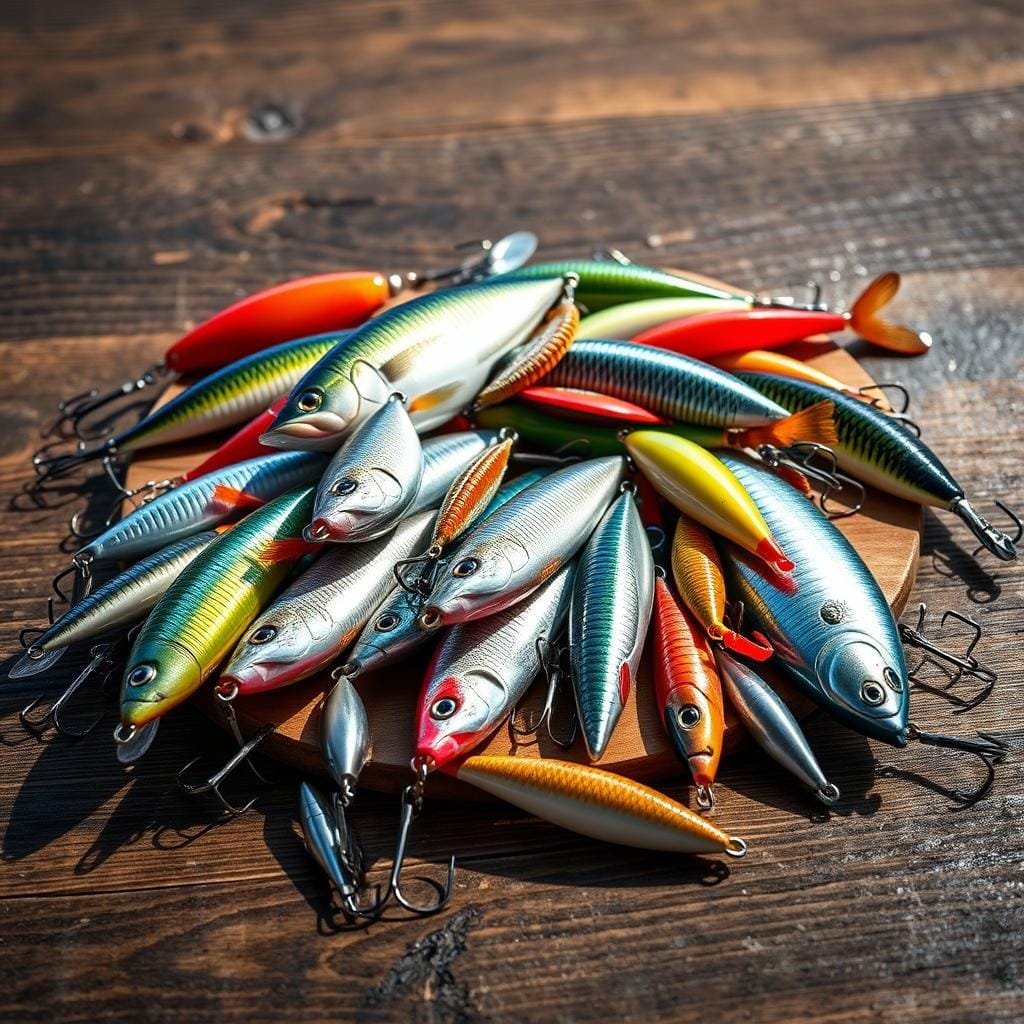
Artificial baits are great when you need to catch fish fast. Many people on Cape Cod say artificial sea bass jigs are better than bait. They work well around wrecks and rocky spots.
Metal jigs and blade jigs when you want clean, fast fishing
Use metal jigs like Shimano Coltsniper or Hogy Epoxy Jig for quick fishing. Drop them and then pull them up fast to get bites. Blade lures like Berkley Vibrato fall quickly and don’t get tangled.
Metal jigs move fast through the water. They hit the bottom quickly and stay up during drifts. They’re great when fish are close together and chasing fast-moving food.
Bucktail jigs tipped with squid or scented soft baits
Bucktail jigs are excellent for drifting near the bottom. Use Joe Baggs Flukies in sizes from 1 to 5 oz. They work well in the current and look natural.
Put a thin squid strip or a small scented trailer on the jig. This adds flavor without slowing it down. Keep the jig moving and let it swing naturally. It’s simple, but very effective.
Durable soft plastics: Z-Man Curly TailZ vs. Gulp for longevity
The debate between Z-Man and Gulp sea bass jigs is about durability and scent. Z-Man StreakZ Curly TailZ in Pearl or Coconut Ice Glow are tough and last a long time.
Gulp has a strong smell that attracts fish from far away. But it tears easily. Use Z-Man for a long-lasting bait, then switch to Gulp for a strong scent.
Adding teasers to double up on fish
Use a sea bass teaser rig 12–18 inches above your jig to catch more fish. Teasers from Monomoy Tackle or even old striped bass flies work well. They often get the first bite, and the jig gets the second.
On a good day, you can catch two or even three fish at once. Use a small metal or bucktail jig below, and you’ll look like a school of bait. It’s fast, clean, and very tempting to fish.
Best Rigs for Presenting Bait on the Bottom
Sea bass like to stay close to the bottom. Simple rigs that keep baits moving are best. A good setup mixes scent with motion, attracting fish in current and low light.
Hi-lo rigs for squid and clam in current
A hi-lo rig is great for sea bass when the tide is strong. Use fresh squid or salted clam on both hooks. This keeps baits moving and doubles your chances.
Use enough sinker to touch bottom but not drag. Short tag ends stop spin. Droppers 6–8 inches apart reduce tangles.
This setup fishes fast and covers fish on rocks and a few feet up.
Dropper loop placement and hook choices
For dropper loop sea bass, tie a double surgeon’s loop for your sinker or bucktail. Then, a single dropper loop 12–18 inches above. This keeps lines clear and baits in the current.
Choose hooks that match your bait. A 3/0 Gamakatsu baitholder hook works well for clam and squid. For more on bottom rigs, check out this overview on bass bottom rigs.
Bucktail on the bottom with a soft-plastic teaser above
Clip a bucktail to the bottom loop and a soft-plastic teaser to the upper dropper. The jig stays on the bottom and flashes. The teaser dances in the current.
This setup draws aggressive fish to the jig and convinces followers to bite the trailer. It works well with a light scent tip. Swap in squid if bites get picky.
| Rig | Key Components | Best Use | Hook Choice | Why It Works |
|---|---|---|---|---|
| Hi-lo Rig | Two droppers, bank sinker | Squid or clam in steady current | 3/0 Gamakatsu baitholder hook | Two baits in the strike zone, vertical control |
| Dropper Loop Layout | Bottom loop plus one dropper 12–18 inches up | Mixed bottom, light to moderate drift | 2/0–3/0 baitholder for natural baits | Clean separation, fewer tangles, precise depth |
| Bucktail and Teaser Rig | Bucktail on bottom, soft-plastic teaser above | Covering two levels with bait or artificials | Baitholder or small jig hook on teaser | Combines scent, flash, and action to trigger strikes |
Jigging Setups and Weights for Different Depths
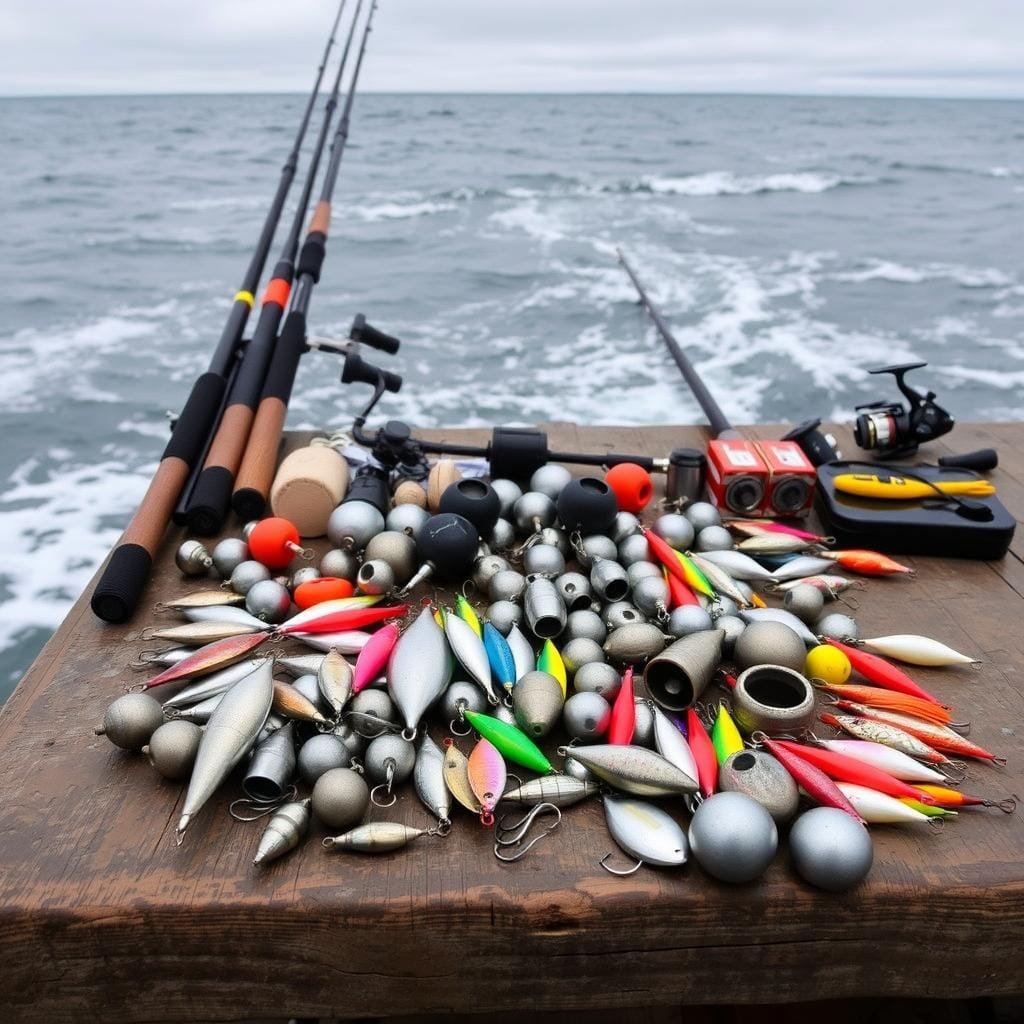
Choosing the right sea bass jig weight depends on depth and drift. You want to feel the bottom but not drag. When your lure hits something, you know you’re in the right spot.
Use squid or Berkley Gulp! if the fish get picky. This is common during Buzzards Bay jigging.
Choose your jig based on the conditions. Joe Baggs Flukies and Hogy Heavy Minnows work well. Adjust quickly if the wind or tide changes to keep your jig straight.
1–2 oz in shallow, light-drift inshore zones
In 15–40 feet with a light breeze, 1 oz 2 oz jigs are best. They swim well near rocky edges and wreck tips. Short pops and pauses make fish bite.
3–5 oz for deep water, wind, or fast drifts
For deeper water or fast drifts, use 3 oz 5 oz jigs. They stay on the bottom and feel every tick. This is key on Cape Cod humps and during Buzzards Bay jigging.
Slow lift-and-drop vs. bottom-bounce cadence
For a slow lift, lift it a foot off the bottom and let it fall. This is a good jigging style for sea bass near structure. If fish are tight, try a bottom-bounce: tap, pause, tap.
Add squid or Gulp to your jig when the water is clear or the drift slows.
Where to Use Each Bait: Structure, Channels, and Ledges
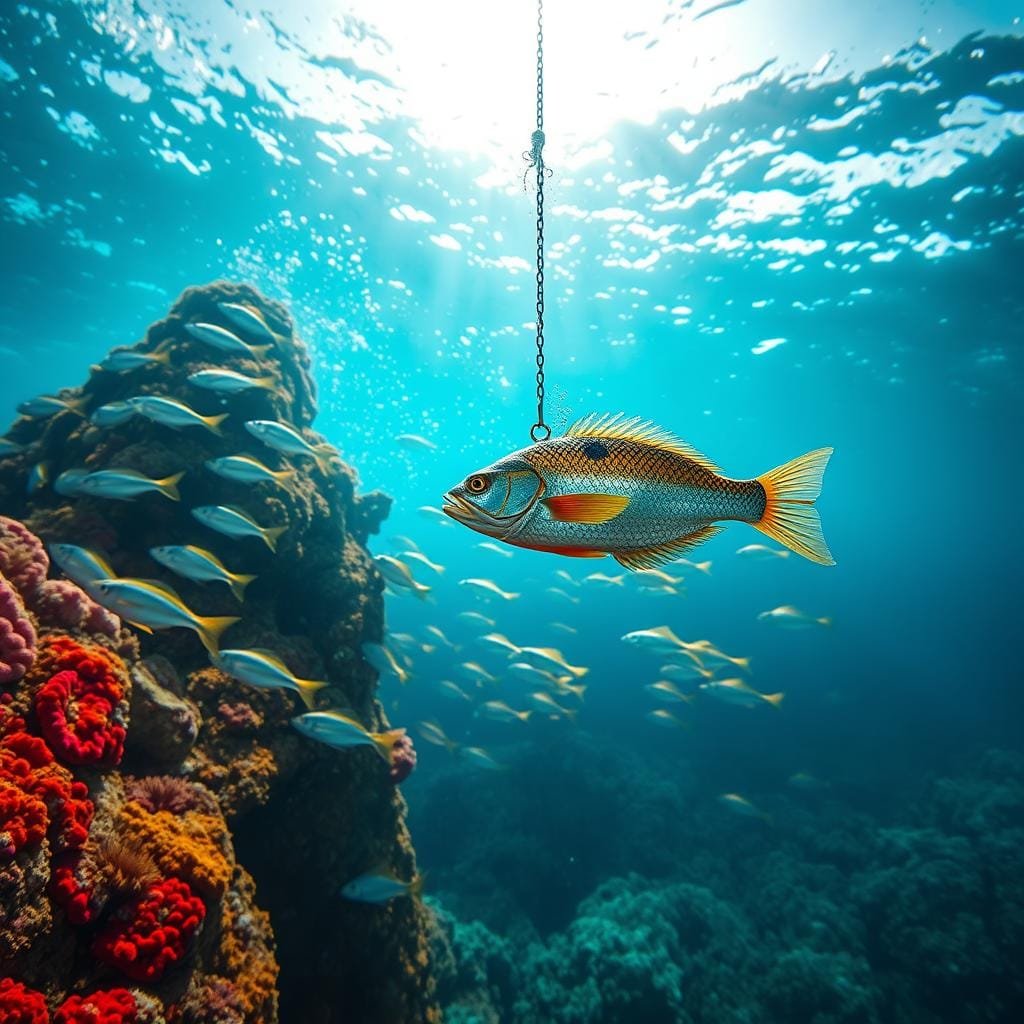
Find the right spot for sea bass by matching bait to the bottom. Use sonar and sidescan to guide you. Start with small weights to feel bites, then add more as the current grows.
Rocky bottom and isolated boulders that hold food
For sea bass on rocky bottoms, try squid strips on a hi-lo rig. Or use a bucktail with Gulp. Big rocks and boulders are great because they hide crabs and small mollusks.
Keep your jig close to the rock and lift it up carefully to avoid getting stuck. Use sidescan to find hidden rocks between known spots. Make short, precise passes over the rock, then move to the edges where big fish hide.
Channels as “highways” in 30–50 feet
In channels 30–50 feet deep, start on the shallow side and drift across. Move at 0.5–1.5 knots to stay on the bottom. Metal jigs work best in current, but switch to clam or squid if it dies down.
These channels are like highways for bait, so you’ll get bites in groups. Remember the depth when you catch a good fish, then repeat that spot on your next drift.
Small ledges as underwater oases surrounded by sand or mud
Small ledges often catch more sea bass than big spots like Cleveland Ledge. Fish the up-current side with a bucktail on the bottom and a teaser above. Clam baits get you more fish, while cut crab attracts bigger ones.
Set up just where the sand meets the rock. The change in bottom is a signal to feeding fish.
Marking waypoints and short-drifting dense schools
Got a big fish? Mark that spot right away. Spin back, then drift 100–200 yards and stay with the school. Anglers often catch their limit on 23.5-inch fish by making quick drops over the same spot.
Change your bait and check your hooks after each drop. If the school moves, move your start mark 20–30 yards to keep your jigs in the mix.
| Location Type | Depth & Drift | Best Baits/Rigs | Why It Works | Pro Move |
|---|---|---|---|---|
| Isolated Boulders | 20–40 ft; 0.5–1.0 kt | Bucktail + squid; hi-lo with clam | Concentrates crabs and mollusks; ambush points | Use sidescan to pick single rocks between known spots |
| Channel Edges | 30–50 ft; 0.8–1.5 kt | 3–5 oz metal jig; dropper loop with squid | Current funnels prey; steady quality bites | Start shallow, finish deep in one pass to map hot contour |
| Small Ledges | 25–55 ft; 0.5–1.2 kt | Cut crab on jighead; teaser above bucktail | Hard-to-soft transition stacks bigger fish | Fish the up-current face, then slide to the sand edge |
| Tight Schools on Waypoints | Pinpoint; repeat short drifts | Fast-drop jigs; fresh clam for follow-ups | Stays on larger class fish grouped by size | Immediate waypoint marking sea bass after a big hook-up |
Drift Strategies That Keep Baits in the Strike Zone
Cover ground, hold bottom, and fish clean. Sea bass drift at 0.5–1.5 knots. This speed is just right for searching and feeling every tick.
Watch your line angle and bottom contact. Adjust your speed or paddle to stay in the right zone.
Target 0.5–1.5 knots to cover ground without losing bottom
Start the drift above structure, then slide across the crown and down the lee side. In channels, start on the shallow shoulder. This helps the hull or kayak steady before hitting the deeper lane.
If wind and tide push you too fast, bump into the current briefly. This resets your speed.
Test drifts, reset angles, and use a drift sock when needed
Run a short test drift sea bass style around small ledges. This maps the true heading. Mark the up-tide edge and swing back for a longer pass.
When gusts push you too fast, use a drift sock sea bass anglers trust. It slows the slide and keeps jigs vertical. Between passes, reset quickly to stay on tight schools.
When to switch from jigs to bait to “build a bite”
Probe with metals or bucktails first. If a boulder gives up only a tap or two, swap to crab, squid, or clam. This builds a bite sea bass won’t ignore.
Let the bait ride naturally with the flow—classic drift fishing technique. Then hop back to jigs once the school fires.
Regional Notes: Cape Cod and Massachusetts Regulations
Planning a trip to Buzzards Bay, Cape Cod Bay, Nantucket Sound, Vineyard Sound, or the Monomoy rips? Make sure you know the Cape Cod sea bass season dates and the MA sea bass size limit. Anglers often get checked on the water. So, it’s smart to have your MA saltwater fishing license ready.
2025 MA season: Opens May 17 and closes September 1
The Massachusetts black sea bass season for 2025 starts on Saturday, May 17, and ends on September 1. These dates are great for catching sea bass in Cape Cod. You’ll find the best fishing around structures and in moving water.
Size limit 16.5 inches; 4 fish per angler per day
The minimum size for sea bass in Massachusetts is 16.5 inches. You can catch up to four fish per day. Always check your fish with a bump board to make sure they’re big enough.
License requirement and the importance of compliance
You need an MA saltwater fishing license to fish, even from shore or a private boat. Environmental Police are active in Cape Cod during peak fishing times. Always check the latest Massachusetts black sea bass regulations before you go.
| Item | 2025 Rule | On-the-Water Tip | Where It Matters on Cape Cod |
|---|---|---|---|
| Season Window | May 17 – Sept 1 | Target early tides for cooler water and active schools. | Buzzards Bay early, then Vineyard & Nantucket Sounds mid-season |
| Minimum Size | 16.5 inches | Measure twice; keep fish flat, mouth closed for accuracy. | Cape Cod Canal bycatch; check pot hangers and rips |
| Daily Limit | 4 fish per angler | Stop harvesting once your count is reached; switch to jigs for catch-and-release. | Cape Cod Bay ledges and rock piles |
| License | MA saltwater fishing license required | Carry digital and paper proof for quick inspections. | Common checks in harbors and near popular grounds |
Kayak and Boat Tips for Bait Presentation
Control your boat to put bait where sea bass live. Use these tips to hold tight to small spots, drop bait cleanly, and stay safe. Spring water is cold, and busy channels have lots of traffic.
Anchoring, spot-locking, or pedaling to pin small structures
For isolated rocks or a short ridge, anchor right on top. An anchor works when tide and wind match. But a trolling motor with spot-lock control keeps you fixed when it’s windy.
In a kayak, pedal drive fishing lets you stay over rocks without drifting. Drop bait straight down with a hi-lo rig or bucktail. Keep it vertical to attract fish.
Short drops on waypoints where big fish were hooked
Hook a big fish, then save the spot. Save it on your GPS and label it. Make short, repeated drops over that spot.
Large sea bass pack tight. Two or three precise passes often get more bites than wandering. Use a slow lift-and-drop and watch the sounder for tight arcs near the bottom.
Safety: cold-water gear, flags for visibility, and traffic awareness
Spring sessions demand hard rules. Dress for immersion with a dry suit, neoprene boots, and gloves. A visibility flag kayak on a tall pole helps captains spot you in chop and glare, around Cape Cod lanes.
Carry a whistle and a bright headlamp for gray-light launches. Keep your PFD zipped. Always scan for charter boats and fast center consoles. These tips mix precision with caution for a productive and calm day.
How to Add Scent and Improve Hookups
Sea bass smell fast. A little scent can make them bite. Keep baits fresh and hooks sharp. Check your gear often.
Pair scent with clean presentations. You’ll feel the difference at the rod tip.
Tipping jigs with squid or scent-infused soft baits
Start with a squid-tipped jig. Use your favorite bucktail or metal. A thin strip flutters and adds a natural plume.
For extra draw, use Gulp scent sea bass. Thread a small piece on the hook shank.
Many anglers use a Z-Man Curly TailZ as a teaser. Then, they use squid or Gulp for scent. This combo keeps the tail intact and seals the deal.
Leader and hook selection for toothy, abrasive mouths
Sea bass have sharp teeth and live tight to rocks. Use abrasion-resistant fluorocarbon. Check it after every fish. Knicks cost hookups.
On dropper loops, use a 3/0 Gamakatsu baitholder. It pins baits straight and grips soft flesh. Pair it with a bucktail on the bottom loop for scent, profile, and thump.
When to upsize bait to filter out shorts
Small fish peck at tiny offerings. Upsize bait sea bass tactics when that happens. Use thicker squid strips, bigger crab chunks, or a longer scented strip.
Keep the scent fresh and the profile honest. Refresh a squid-tipped jig often. Swap in Gulp scent sea bass pieces when the bite fades.
From Water to Table: Handling for the Best-Tasting Fillets
Start the moment the fish hits the deck. Begin by bleeding sea bass right away. Cut a gill raker and slip the fish into a bucket of clean seawater for a quick purge.
This step keeps the flesh pale and mild. It trims any metallic notes. And it sets you up for clean, easy fillets.
Next comes temperature control. Icing fish in a slurry—two parts ice to one part seawater—chills the core fast. It protects texture.
Keep the cooler shaded, drain meltwater often. Leave the fish on ice for 12–24 hours if you can. The flesh firms up, bones release easier, and the knife glides the next day.
When you’re ready to cook, you’ve got options. A simple black sea bass recipe—olive oil, lemon, and herbs—lets the sweet flakes shine. Whole-fish methods are standouts too.
A Thai style whole sea bass with lime, cilantro, and chilies brings bright heat. It pairs with the buttery meat without masking it.
Finish with tidy fillets or roast the fish on the bone for deeper flavor. Proper bleeding sea bass and disciplined icing fish turn a routine catch into restaurant-quality plates. From pan-seared fillets to Thai style whole sea bass, careful handling is the shortest path to the best tasting sea bass at home.