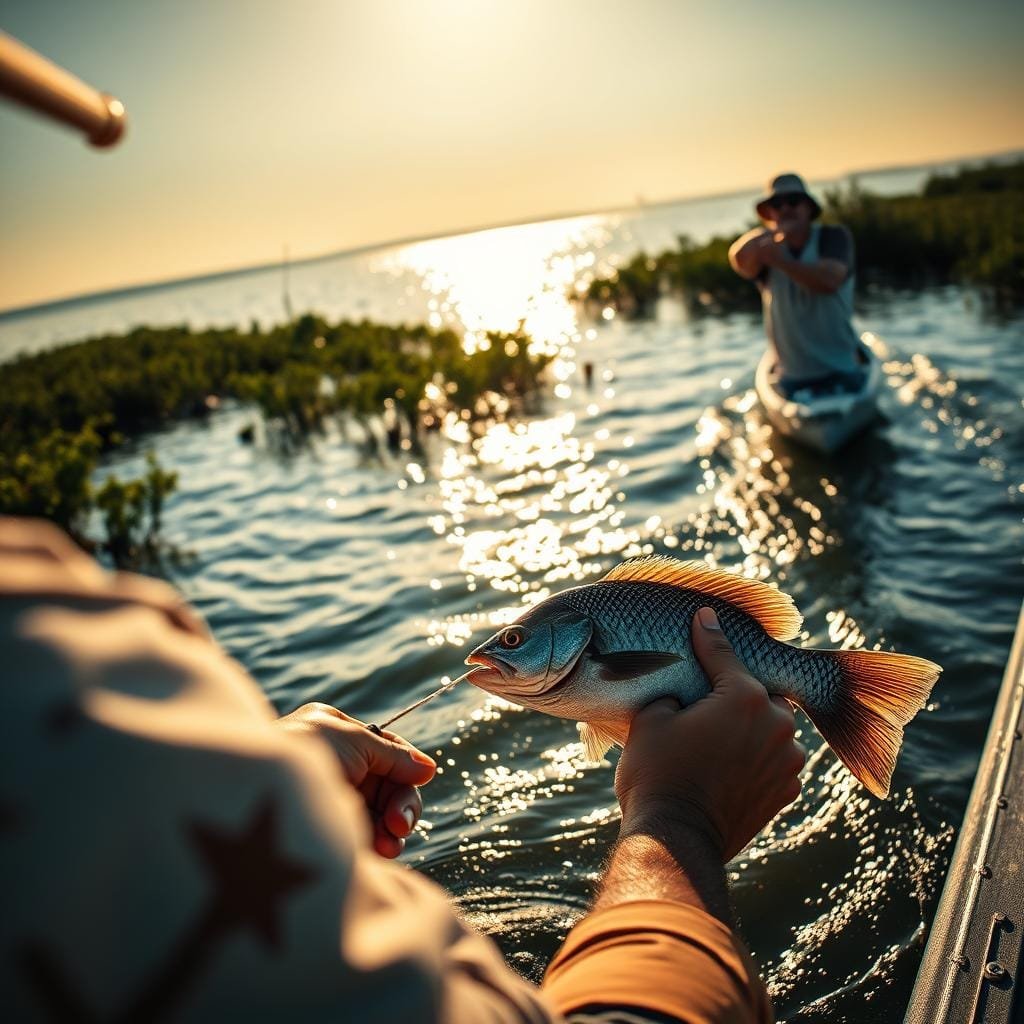
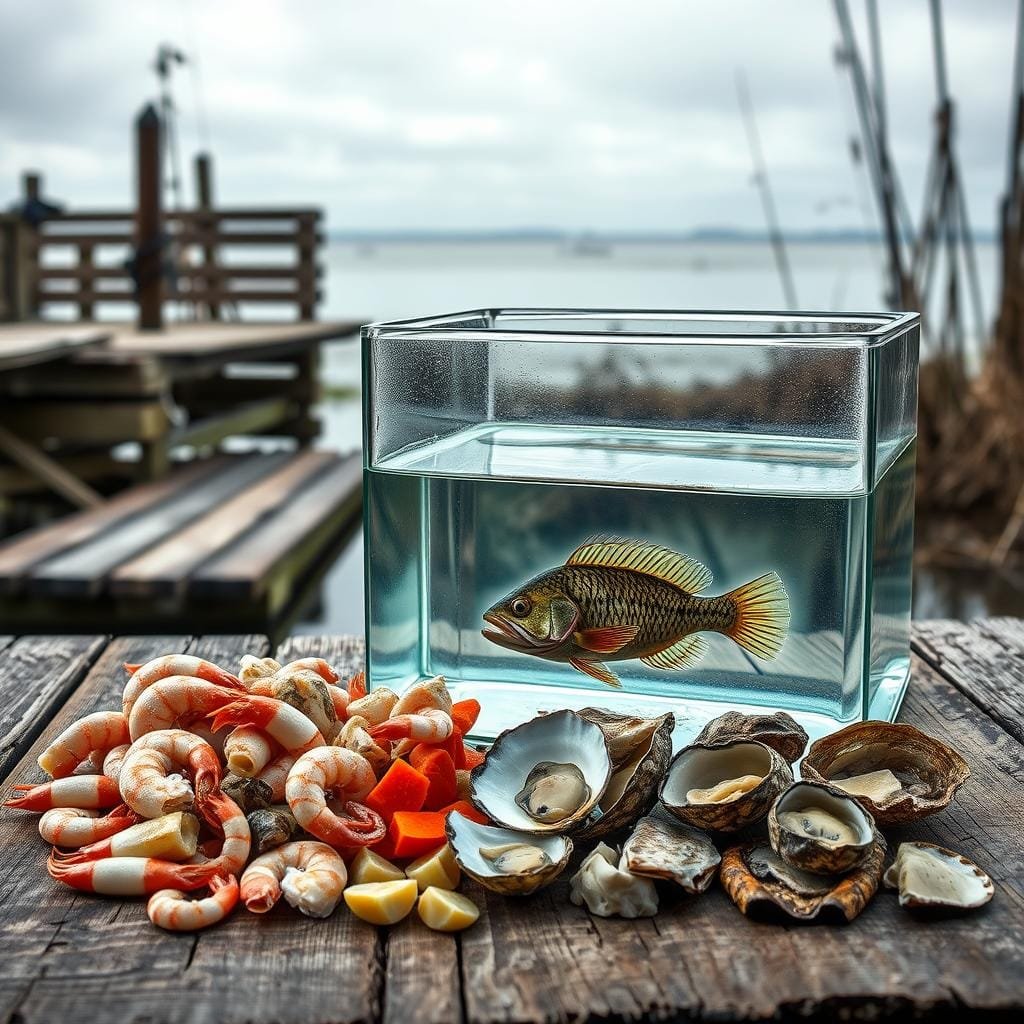
Want to catch sheepshead all season? Use live shrimp, sand fleas, fiddler crabs, small crabs, barnacles, oysters, and clams. These are what sheepshead love to eat near bridges, docks, and pilings. Their teeth are made for nipping and grinding, so use smart baits and rigs.
Winter is the best time for sheepshead fishing, from December to March. Big schools gather on structures then. We’ll show you the best baits and how to use them. You’ll also learn when to switch to lures like Power Prawn USA.
Get tips on fishing with hooks, jig heads, and gentle drifts. Learn to recognize the two-tap bite and how to set your hook. Find out the best tides and times to fish. For more on natural baits, check out this guide on sheepshead fishing.
Understanding Sheepshead Behavior and Feeding Habits
Striped like a prisoner’s suit, the convict fish stands out along docks, jetties, and bridge pilings. They’re porgies with quick reflexes and a taste for hard-shelled prey. Knowing core sheepshead feeding habits makes each drop count.
Anglers often mistake them for juvenile black drum. A fast check helps: most sheepshead show six or seven bold bars, while young drum carry four or five. Handle with care—the dorsal spines are stiff and sharp.
Why “Convict Fish” Steal Bait: Teeth and Tactics
Sheepshead teeth look almost human up front, with crushing molars set behind. That design lets them nip, test, and grind before you react. The “two-tap” feel gives them away—first tap to crack, second to inhale the meat.
Because the bite starts small, keep tension steady and avoid wild hooksets. These tactics match how the fish use structure and current breaks to corner food. A quiet approach puts the hook where those jaws work.
Crustacean and Shellfish Diet: What They Can’t Resist
A crustacean diet drives their daily search. Fiddler, mangrove, and mud crabs are routine targets. A shellfish diet rounds it out with oysters, clams, mussels, and barnacles they pry from hard edges.
The menu explains why baits vanish so fast. Sheepshead teeth crush shells clean, leaving only a clipped thread if you’re slow. Match the local forage and protect the hook point to ride out their pecks.
| Forage | Trigger | Best Presentation Cue | Tell-Tale Bite |
|---|---|---|---|
| Fiddler crabs | Natural crustacean diet near rocks | Small profile, minimal exposed hook | Rapid pecks, then a firm pull |
| Oysters and clams | Shellfish diet along pilings | Compact chunk, against structure | Two-tap crush followed by weight |
| Mussels and barnacles | Easy pickings on bridge legs | Scrape-and-drop pieces as chum | Light ticks that build to steady pressure |
| Mud and mangrove crabs | Hard shell, slow drift | Short leader, controlled sink | Single thud, then sideways move |
How Water Movement Influences Feeding Windows
Tidal movement sheepshead rely on keeps food rolling past structure. In a moderate push, rigs stay in the zone and bites read clean. When the current boils, they pin tight to cover and nibble becomes hard to feel.
Plan drifts to sweep naturally with the flow. Subtle lifts and brief pauses mirror live prey, syncing with sheepshead feeding habits. Keep contact with the weight so those tiny taps reach your fingers.
Seasonality and Tides That Boost Your Sheepshead Bite
Knowing the right time and tide can make fishing better. For winter sheepshead fishing, fish in the morning when the water is clear. The best tides help your bait stay in the fish’s strike zone longer.
Peak Winter Action and Spawning Aggregations
From December to March, sheepshead gather on bridges, docks, and reefs. This is when you can catch bigger fish, up to 10 pounds. Fish during calm weather and watch the moon for bigger tides.
Fish move with the tide. When the tide is high, they go up pilings to eat. When it’s low, they stay near the base. For more on timing, check out this guide on the best times to.
Moderate Tidal Flow vs. Boiling Currents
The best flow is moderate. Your bait falls naturally, and you can feel light bites. In fast currents, sheepshead stick to structure. You need heavier bait and a closer angle.
- Moderate flow: best tides for sheepshead—use lighter jig heads and short leaders.
- Fast flow: shorten the cast, pitch upcurrent, and let the bait track the face of the piling.
- Slack edges: switch to precise pitches and consider an artificial shrimp to hover in place.
Best Times to Fish Bridges, Docks, and Pilings
Fishing bridges is best during mid-tide swings. Cast to the upcurrent side and pause on the lee. At old docks, target shade lines and crossbeams for sheepshead.
In slow stages, fish close to concrete and rock piles. Use small crabs or shrimp imitations like Power Prawn USA. Keep your bait in touch without spooking the fish.
| Window | Primary Target | Presentation | Why It Works |
|---|---|---|---|
| Late Fall–Early Spring | Bridges and reefs | Light jig, short leader | Aligns with winter sheepshead fishing patterns and cooler-water feeding |
| Feb–Apr (Spawn Peak) | Piling clusters | Vertical drop with crab or shrimp | Spawning aggregations hold tight; vertical control beats current |
| Moderate Flood Tide | Upcurrent faces | Cast high, let bait slide down | Best tides for sheepshead create natural falls along structure |
| Boiling Current | Bridge seams | Heavier jig, tight pitches | Fish pin to edges; precise angles reach the strike lane |
| Early Ebb/Slack | Dock pilings sheepshead | Hovering plastics or split-shot free-line | Subtle movement coaxes pressured fish near cover |
| Midday Sun | Shaded docks/canals | Short flips to shade lines | Shade concentrates forage; bridge fishing sheepshead logic applies to docks |
best bait for sheepshead
Anglers love small crabs for sheepshead bait. They stay on the hook well. Fiddler, mud, and mangrove crabs are great near docks and bridges.
For more scent or easier hookups, shrimp and sand fleas are good. Use shrimp on a light jig head to catch sheepshead quickly.
Shrimp need to be threaded tightly to avoid being eaten by other fish. Sand fleas work live, dead, or frozen. Just thaw them a bit to keep them firm.
When crabs are hard to find, shellfish like barnacles and oysters are good. Crack them to chum the water. Then, use a small piece near structure.
- Crabs: Tough, easy to hook, and classic crab bait sheepshead for heavy structure.
- Shrimp: Versatile shrimp bait sheepshead for clear water and picky fish.
- Sand fleas: Compact, durable, and a steady choice on sweeping tides.
- Shellfish: Great near barnacle-laden pilings when fish key on hard baits.
| Bait | Primary Strength | Best Rig | When to Use | Notes |
|---|---|---|---|---|
| Small Crabs (Fiddler/Mud/Mangrove) | Stays on hook and resists pecks | Short leader, 1/0–2/0 cutting-point hook | Moderate current around pilings and rocks | Top sheepshead bait for consistent bites |
| Live Shrimp | High scent and fast strikes | Light jig head or split-shot freelined | Clear water or pressured fish | Thread firmly; delicate to bycatch |
| Sand Fleas | Natural match to surf and inlets | Bottom-sweeper-style jig | Rolling tide and sandy structure | Thaw frozen fleas partially |
| Barnacles/Oysters/Clams | Local forage near crusted pilings | Small piece on short leader | When fish feed tight to cover | Crush shells to chum and draw fish |
| Crab or Shrimp Imitations | Works when bait is scarce | Compact jig, precise vertical drops | Slack or slow-moving tide | Keep colors natural around structure |
Live Shrimp: Proven Producer with Smart Rigging
Live shrimp near pilings and dock legs really get the fish excited. They follow the scent and strike fast. But, you need to rig them right to outsmart the pickers.
Match the bait’s speed to the current. Keep it close to the structure. Let it fall naturally.
Live vs. Frozen Shrimp and When to Use Each
Use live shrimp when the tide is running and fish are close to barnacles. They move like real shrimp, which makes fish bite quickly. But, when pinfish are everywhere, switch to frozen shrimp. This slows down the pickers and saves you time.
Frozen shrimp are great in strong currents or around tough cover. They go through easily and can handle short strikes. Add a light shrimp jig head for better bites. Keep a close eye on the line.
For more bait ideas, check out effective sheepshead bait. Small pieces can make a big difference.
Threading Shrimp on Jig Heads to Beat Pickers
Pinch the shrimp’s tail and run the hook through the cut end. Then, thread it forward until the point comes out between the horn and head. This makes it harder for fish to nibble without biting.
Use a small shrimp jig head to avoid getting snagged. If pinfish or puffers get there first, try a shorter, tougher bait. Frozen shrimp on a jig head lasts longer. Keep the bait close to the structure, lift it, then drop it again for a strong bite.
Switching to Artificial Shrimp When Tide Slows
When the tide slows down and it’s quieter, switch to artificial shrimp. They look real but don’t need to be baited again. A little hop or slow fall can make fish bite.
Power Prawn USA is a good choice for artificial shrimp. Use a light jig head for a natural look. Don’t mix scents to keep the plastics from getting damaged. Switch between natural and artificial baits until you find what works best.
Sand Fleas: Compact Crustaceans That Drive Bites
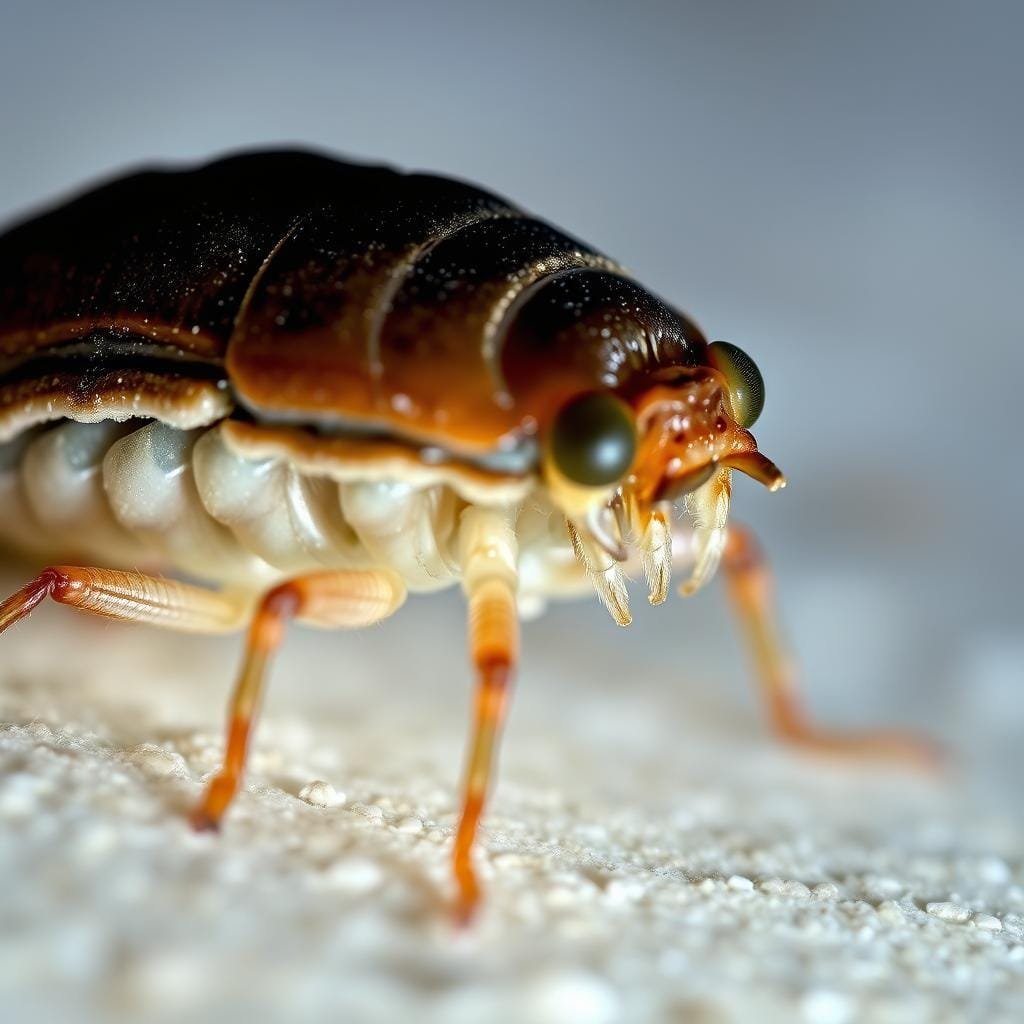
When the water gets cooler, sand fleas are a top choice for catching fish. Anglers use them near docks and rocky spots. A simple rig keeps the bait in place, making it hard for fish to miss.
Live, Dead, and Frozen Sand Fleas (and Thawing Tips)
Live sand fleas attract fish quickly with their scent and movement. Dead ones also work well, drawing fish to current seams. Frozen ones are a good backup; thaw them just enough to keep them firm.
Thaw them by piercing through the underside and out the back. This keeps the bait together. Test it gently before dropping it into the water.
Change baits often to avoid damage from crabs. In winter, this helps you stay active even when bites are rare.
Bottom Sweeper-Style Jigs and Minimal Exposed Bait
A bottom sweeper jig is great for fishing near the bottom. It has a sickle-style hook that keeps the bait close. Thread the flea through its body plate, leaving just the barb exposed.
This setup hides the hook and reduces damage from fish bites. Use it in tight spots near pilings and bridge fenders. It works well in currents.
Keeping Sand Fleas Alive and Avoiding Container Issues
Start by rinsing the fleas well. Then, keep them cool and dry with a thin layer of damp sand. Don’t let them stand in water.
Use small buckets with good airflow. Change the water often to keep the fleas alive. Store them in the shade to keep them fresh.
Fiddler Crabs: Small Crabs, Big Results
When tides pull past bridge pilings and dock legs, small crab bait is the best. Bait shops from Texas to Florida sell dime- to nickel-size fiddlers. Many anglers use them for quick bites on structure.
Best Sizes and How to De-Claw for Cleaner Eats
Choose lively, dime- to nickel-size crabs. This size is what sheepshead hunt and stays on the hook. Before fishing, de-claw the crab to make it easier for fish to eat.
Keep a small bucket and a damp towel ready. A gentle twist removes the big claw without hurting the shell. This way, you get cleaner bites and less time wasted.
Hook Placement Through the Leg Cluster
Thread the hook through the last two legs of the crab. Make sure the point is in at the joint. This keeps the crab secure and presents the hook well.
For tight spots, use a bottom-sweeper-style jig. The low-profile head tracks well around rocks and rebar. This makes the crab look natural and stay in the zone.
Why Cutting-Point Hooks Handle Tough Teeth
A 1/0 light wire hook with a cutting point works well. It drives cleanly through the shell without killing the crab. Slide the point just under the shell edge to keep it lively.
Match the 1/0 light wire hook to the crab size and current. In heavy flow, use a heavier jig but keep the same hook profile. This keeps the action quick and lifelike.
| Component | Why It Works | Pro Tip |
|---|---|---|
| Dime–Nickel Fiddlers | Natural size, tough shells, steady movement | Pick active crabs that dig and try to climb |
| De-Claw Fiddler | Cleaner eats, fewer missed nips | Remove big claw with a gentle twist before rigging |
| Leg-Cluster Placement | Locks bait, optimizes hook angle | Rotate crab to sit on top of the jig head weight |
| 1/0 Light Wire Hook | Fast penetration, keeps crab lively | Pin only the outer shell edge to avoid killing the bait |
| Cutting Point Hook | Holds up to tough teeth and hard lips | Retouch point with a fine file after rock contact |
| Bottom-Sweeper-Style Jig | Upright tracking in snaggy structure | Slow lift-and-hold to feel the subtle two-tap |
Other Natural Baits That Produce: Barnacles, Oysters, and Clams
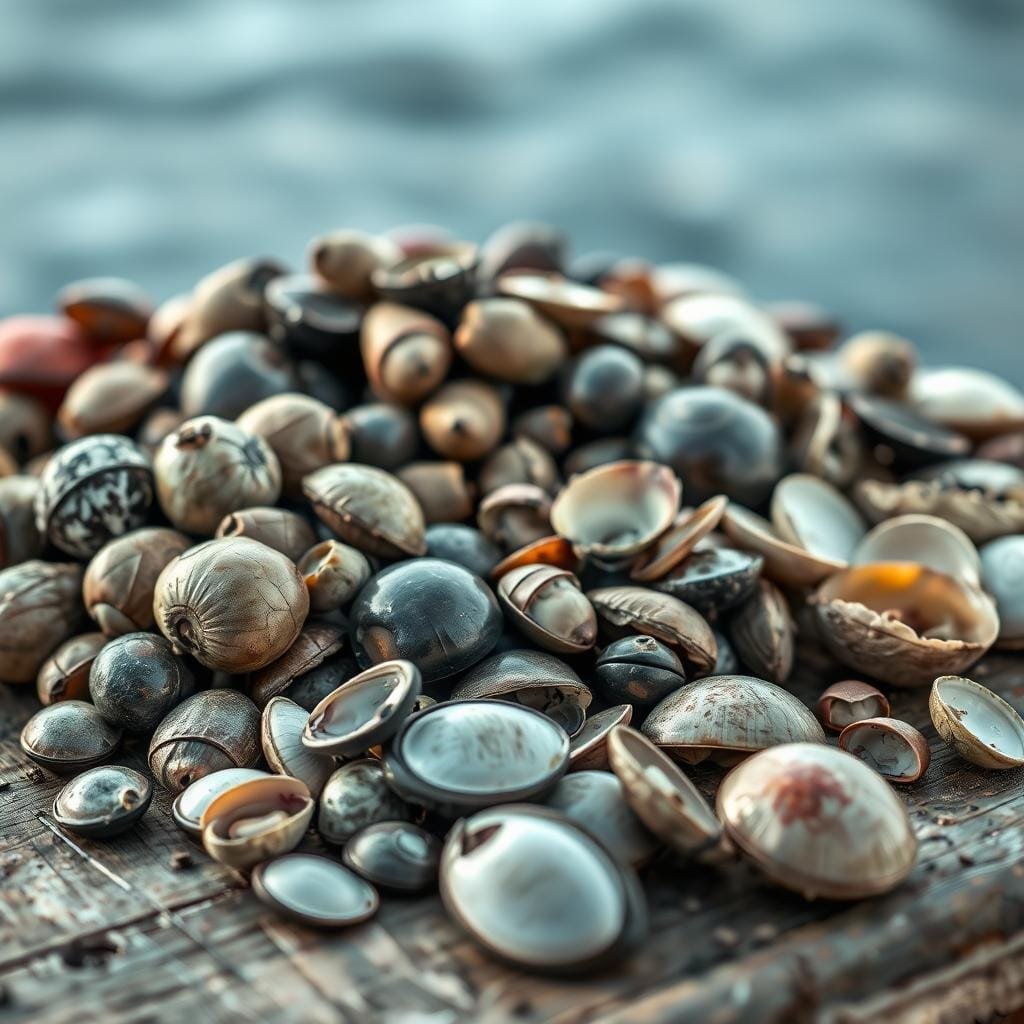
When crabs are hard to find or shrimp disappear, try the tough stuff. Barnacles, oysters, and clams are everywhere on docks, bridges, and seawalls. Their smell turns on pressured fish.
Drop your bait close to the structure. Let the current carry the chum. Then, wait for quick, subtle taps.
Collecting and Prepping Bivalves Safely
Look for oysters, mussels, and clams at low tide in legal areas. Wear gloves and use a dull bar to avoid cuts. Shuck them safely on a stable surface.
Save both the meat and the liquid for bait. This way, you can use it right away or store it in the fridge.
For bait, put a small piece on a 1/0 to 2/0 hook. Use a light loop knot for a natural swing. Change the bait often, as fresh pieces stay firm longer in cool water.
Crushing Shells to Create an Effective Chum Line
Crack barnacles and shells with a hammer’s top edge. Then, pinch handfuls and drop them up-current of pilings. This releases scent and bits that attract fish.
Match the bait to the situation. If the piling is covered, use barnacle bait right on the structure. Keep your leader short for better control. Bump the bait as it drifts by.
When to Choose Shellfish Over Crabs and Shrimp
Choose shellfish when it’s cold and crabs are scarce. Or when fish are attracted to oyster bars. Also, when shrimp are being picked by other fish.
Start with oyster bait along seams. Then switch to clam bait if the bite slows. Stay close to the strike zone and keep your taps in contact.
Artificial Options: Crab and Shrimp Imitations That Fool Fussy Fish
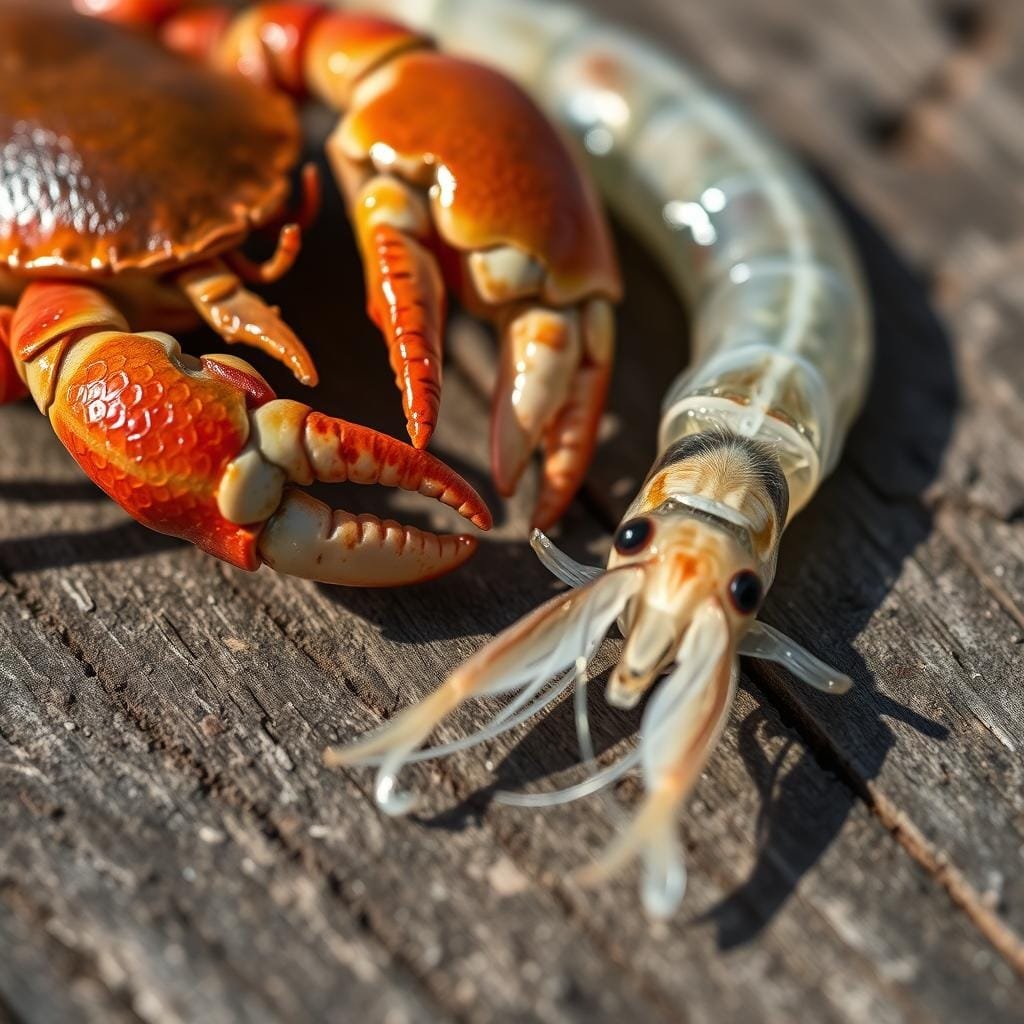
When the water is calm and fish are shy, the right lures can help. Use lures that look like real food and move quietly. This works best near bridges, docks, and pilings.
Choose lures that match what fish eat locally. Move slowly and let the lure do the work.
Crab Lures Around Structure and Color Considerations
Cast small crab lures close to the structure. Hold the line as they slide down. Stop often to feel bites.
Use colors that match what fish see every day. Olive, sand, and muted brown work well. Patterns that look like barnacles are also good.
Use strong hooks to avoid losing fish. Keep soft plastics flat to prevent them from spinning. Change baits often to keep your presentation sharp.
Power Prawn-Style Presentations Near Pilings
Artificial shrimp are great for sneaky fishing. Power Prawn USA is a top choice. It looks real but doesn’t smell or make a mess.
Rig it on a light jig head or a finesse weedless hook. Move it slowly down the current. Use a semi-taut line to feel bites.
In clear water, use translucent or ghost shrimp colors. In stained water, try new penny or root beer. These colors look natural but stand out a bit.
Slower Tides and Precise Dock Pitching
When the water is calm, dock pitching is perfect. Target shady spots and ladder rungs. Drop artificial shrimp or small crab lures straight down.
Adjust the jig weight to control the fall. Keep the line light to feel bites. Try different angles to catch fish that miss the first time.
- Key edges: outer pilings, broken concrete, and barnacle patches where lure colors sheepshead blend naturally.
- Quiet entries: thumb the spool to kill splash, then count the fall to stay in the strike zone.
- Tidy storage: segregate baits to avoid color bleed and deformation that ruin action.
Rigs That Increase Hookup Ratios on Notorious Bait Stealers
Good sheepshead rigs turn pecks into catches. Use a simple setup with braided line and fluorocarbon leader. Choose the right rig for the current, depth, and structure.
Recommended baits for sheepshead work well with these rigs. They are great around bridges, docks, and rocks where sheepshead like to hide.
Free-Lining with Split Shot for Natural Falls
Start with a bare hook. Add split shot later if needed. This lets your bait fall naturally.
In clear water, add a small, removable non-lead shot. This helps reach fish without losing the natural drift.
Keep your casts short and controlled. Use 18–24 inches of 20 lb braided line fluorocarbon leader. Let the bait touch, lift, and glide again.
Jig Heads for Snag-Prone Structure
A jig head setup is good for snaggy places. Use 1/8–1/4 oz most days. Bump to 1/2 oz when the tide is strong.
Thread sand fleas or shrimp straight to keep them in line. Short hops and controlled swings keep you in the strike zone.
Drop Shot Variations to Hover Bait Above Cover
Dropshot rigs are good for fish holding off the bottom. Pinch a weight below the hook to make the bait hover. Use VMC SpinShot hooks to stop line twist.
Adjust the leader length until bites come fast. Often, 8–16 inches above the weight is best. Keep contact to feel light pressure and set by reeling.
Reading the “Two-Tap” Bite and Reeling to Set
Learn the two-tap bite. The first tap is crunch; the second is inhale. Don’t swing hard. Point the rod, reel to load, then lift to pin that bony mouth.
A thin-diameter braid paired with a fluorocarbon leader boosts sensitivity and abrasion resistance. This combo helps you feel taps, survive pilings, and land more fish with these sheepshead rigs.
| Rig | Best Use Case | Weight Range | Primary Baits | Key Advantage | Pro Tip |
|---|---|---|---|---|---|
| Free-line + Split Shot | Shallow, light current, spooky fish | None to micro shot | Fiddler crabs, sand fleas, shrimp | Most natural fall and drift | Add removable shot to extend casts in clear water |
| Jig Head | Snaggy pilings, rocks, dock edges | 1/8–1/4 oz (up to 1/2 oz in heavy flow) | Sand fleas, shrimp, crab pieces | Compact profile reduces snags | Short lifts and pauses keep bait tight to structure |
| Drop Shot | Hovering over deep or sharp cover | Clip-on or pinch weights | Fiddlers, shrimp, small crab lures | Suspends bait above danger zone | Use SpinShot-style hooks to cut twist and improve hook-ups |
Finding and Approaching Prime Structure
Start with the obvious: bridges docks pilings, oyster bars, seawalls, rock piles, channel edges, and shallow reefs. These spots have hard cover and current breaks. They are classic sheepshead structure.
Older docks and residential canals facing open bays are great. They stack fish, thanks to baitfish and crabs. From shore, these spots are easy for anglers with fiddler crabs, sand fleas, or shrimp.
Look for visual clues before you fish. Barnacle- and oyster-crusted pilings and seawalls are good signs. Where features meet, like bridges docks pilings next to oyster bars, sheepshead feed well.
Shell crushing against structure can chum fish. It draws them out without scaring them away.
Boat positioning is key. On slower tides, ease in up-current and stop short. This lets your bait fall naturally to the target.
Use a quiet trolling motor or drift. This helps you present tight to posts and ladders without bumping them. In kayaks, hold at a 45-degree angle and pitch underhand. In skiffs, bump the engine out of gear and hover with subtle throttle taps.
Work season by season. In winter, use crabs, sand fleas, and shrimp to pick apart prime spots. Residential canals warm fast after cold snaps and can outproduce open flats.
Keep your casts short, your line tight, and your bait small. Precision is better than power when fishing bridges docks pilings and oyster bars.