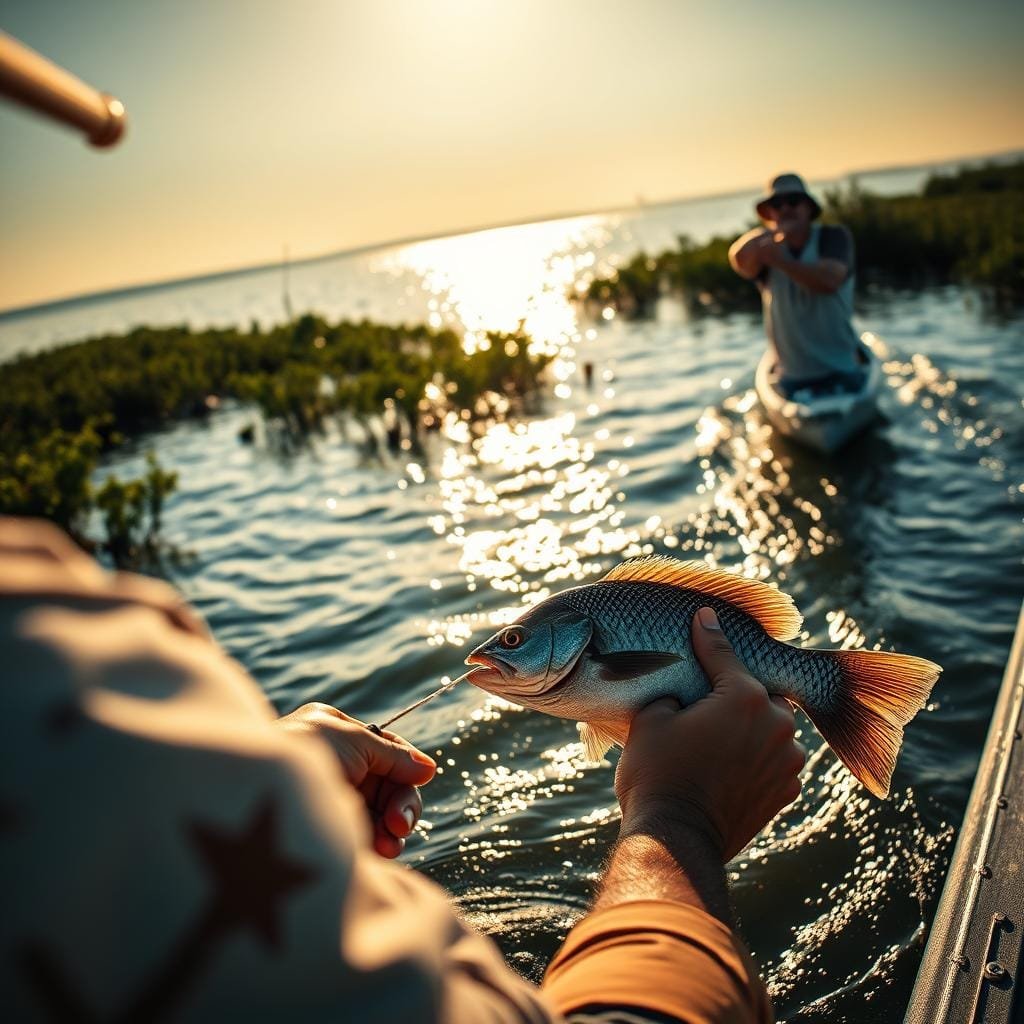
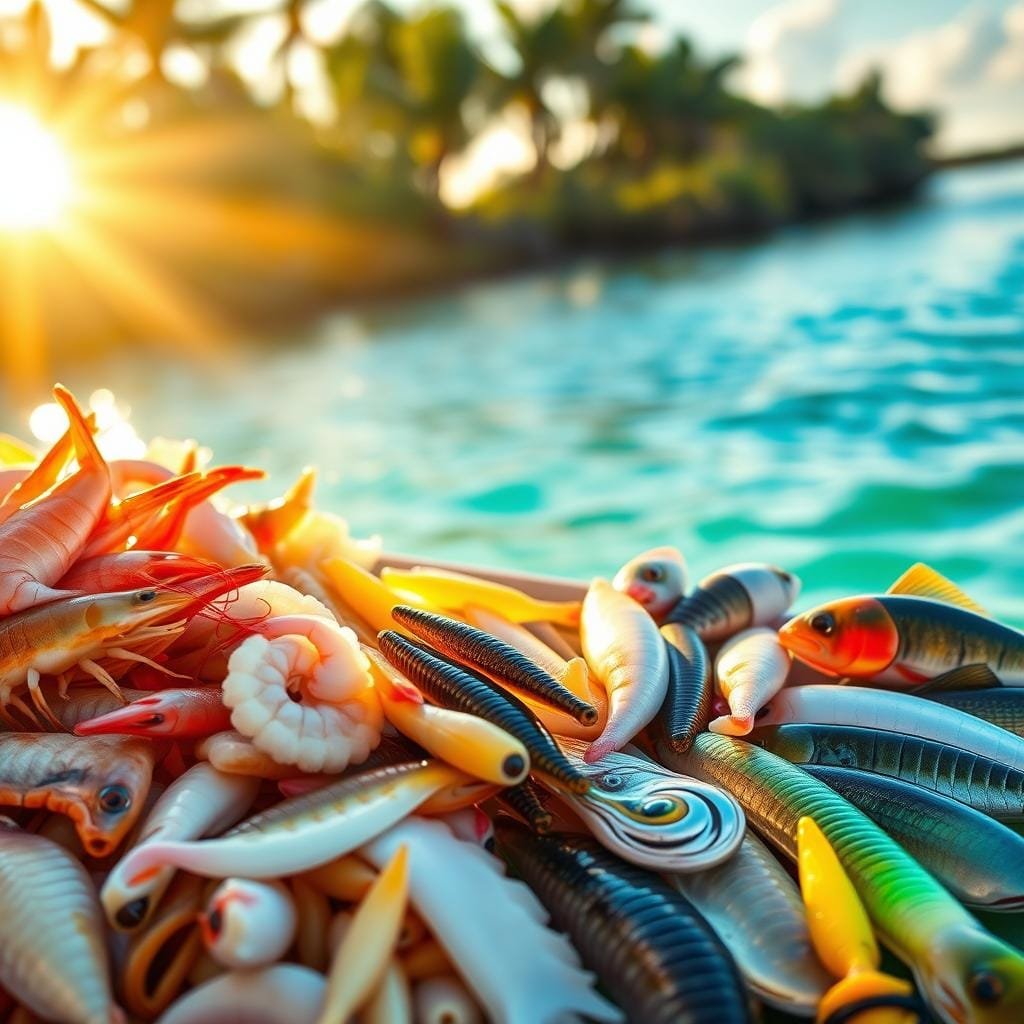
Want to catch more snook on your next fishing trip? This guide shares top snook fishing tips. It mixes live bait with artificial lures for success. You’ll learn a simple plan that works everywhere.
Captain Scott Moore is a legend in Florida snook fishing. He says to match your gear to the conditions. Choose the right bait, read the water, move quietly, and fight well. Pilchards, pinfish, and shrimp are great live baits. Cut mullet attracts big fish near channels. In spring, small blue crabs are key. For more on Moore’s methods, check out this snook fishing breakdown.
We’ll talk about when and where to fish, and the best ways to present your bait. You’ll learn quick tricks for catching snook near mangroves, bridges, and flats. Live bait or artificial lures, the approach is the same: start with the current, then the structure, and finish with the bait.
Stay tuned for more tips on catching snook all year. From dawn to night, small changes in your gear and quiet boat handling can make a big difference.
Understanding Snook Behavior: Sight-Feeding Ambush Predators
Snook are sharp-eyed fish that hunt in a special way. They look for prey and use the water flow. They wait for bait, then strike fast.
How current, structure, and bait drive feeding
Snook use current and structure to hunt. They move from channels to flats at the start of the tide. They set up on special spots like mangrove islands.
When current, structure, and bait meet, snook start to bite. If you don’t see bait, move your spot. This way, you stay in the best place to catch them.
Low-light advantage: dawn, dusk, and night
Snook are best at night and during dawn and dusk. They hunt when the tide moves. Under full moons, they hunt even more.
Move slow and quiet. Put your lure or bait where light and dark meet. Let the current help you catch them.
Lateral line sensitivity and stealth approaches
Snook have a special sense that picks up vibrations. To catch them, be quiet and sneak up. Use a Power-Pole or stake-out pole to stop your boat.
Make your casts soft and low. Trim your gear to avoid noise. Match your speed and sound to the water flow. This way, you won’t scare them away.
Seasonal Patterns That Decide What Bait Works Best
Florida snook seasons change how fish eat and where they go. Knowing these patterns helps you pick the right bait. This is true from river bends to the open sea.
Winter: shrimp and deeper river channels
Cold weather makes fish hide in deep places. The best bait in winter is a live shrimp. Move it slowly along the bottom.
Look for bends and drop-offs. If you can’t find shrimp, try a mud minnow or small pinfish. Keep your movements slow. Use quiet boats and light lines in cold water.
Spring: pilchards near river mouths, mangrove points, and flats
As it gets warmer, snook move to river mouths and flats. Scaled sardines, or pilchards, are the best bait in spring. You can use them freelined or under a cork. For more tips, check out this spring snook guide.
Use baits 3- to 4-inches long to swim naturally. Mix in shrimp or pinfish when pilchards are hard to find. Cast upcurrent and let your bait drift into the snook’s path.
Summer: beach and pass patrols, swash lines close to shore
In summer, snook are near the beach. Many people cast too far. Try to land your bait right where the waves hit.
At passes, use pilchards, croakers, or small grunts. The best times are dawn and dusk. But, midday near bridge fenders also works. Keep your rigs simple so your bait moves well.
Fall: transition zones around flats and bay points
In fall, snook move from beaches to rivers and creeks. Look for flats with bait, windward points, and bay mouths. Use pilchards, shrimp, and small mullet to match what’s around.
Drift along edges and potholes with the tide behind you. Across all seasons, bridge and dock lights are great at night. They attract bait and fish when the current is clear.
best bait for snook
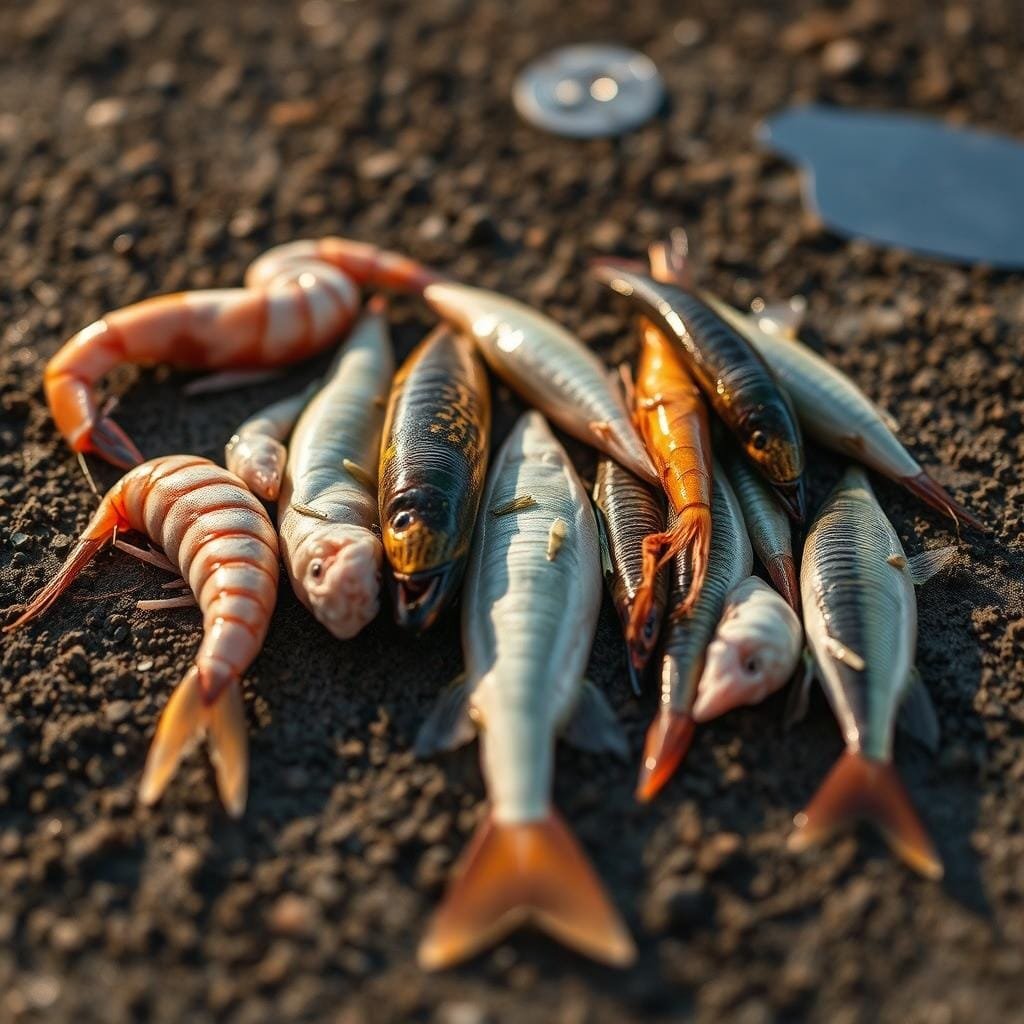
Finding the best bait for snook means knowing what they like where you are. Choose lively baits and use the current to your advantage. Scent or vibration can make the difference. If unsure, try different baits and see what works best.
Live bait top picks: pilchards, pinfish, shrimp, mullet, croakers, grunts, ladyfish, ballyhoo, crabs
Live bait is often the best choice for snook. Pilchards are great on flats and points in spring and fall. Pinfish are good all year on grass edges, docks, and bridges.
Shrimp are best in cold weather, at lights, and calm nights. Finger mullet and croakers attract fish near inlets, bridges, and beach troughs. Grunts, ladyfish, ballyhoo, and small blue crabs are also effective. For more tips, see this guide on snook fishing with live bait.
Cut bait opportunities: oily mullet for big snook near channels
Use cut bait when the water is moving fast or fish are not active. A piece of oily mullet on a channel edge can attract big snook. The scent of the bait draws in prey fish, and snook follow.
Make sure the bait is heavy enough to stay in place. Use strong leaders and sharp hooks. This method can lead to your biggest catch of the week.
Match-the-hatch: choose what’s most prevalent on the spot
Matching the hatch is a key strategy for catching snook. Look for whitebait, mullet wakes, or shrimp clicks on the surface. Use pilchards if they’re plentiful, or small crabs if they’re around.
Adjust your bait and tackle based on the conditions. Clear water needs subtle baits, while dirty water works better with thump and scent. Choose the right hook size for the bait, not the fish.
| Bait | Prime Habitat | Best Use Case | Hook Notes |
|---|---|---|---|
| Pilchards | Flats, mangrove points, river mouths | Fast drifts in spring/fall; chum to gather schools | Size 1/0–2/0, nose-hook for current |
| Pinfish | Grass flats, bridges, inlets | Sturdy option around structure and tide lines | 3/0–4/0, tail-hook to keep it kicking |
| Shrimp | Docks, lights, deeper channels in winter | Natural choice in cold water and at night | 1/0–2/0, through horn or tail for flow |
| Finger Mullet | Mangroves, docks, passes | Wake-and-flash draw in low light | 2/0–3/0, shoulder-hook to swim true |
| Croakers | Inlets, bridges, surf troughs | Big-fish ticket in moving water | 3/0–4/0, behind dorsal for vibration |
| Grunts | Reefy edges, channel corners | Lively noise-maker for pressured fish | 3/0–4/0, back-hook for stamina |
| Ladyfish (chunks or live) | Open bays, current seams | Live for reaction; chunks for scent | Cut: 5/0–6/0 circle; Live: 3/0 |
| Ballyhoo | Channel edges, clear beaches | Drift whole or sections on clean tides | 2/0–3/0, bridle to prevent spin |
| Blue Crabs (small) | Bay passes, river mouths | Spring flushes and outgoing tides | 2/0–3/0, point through corner of shell |
| Cut Mullet | Channels, drop-offs, pass mouths | Anchor and soak for trophy-class fish | 5/0–7/0 circle, short leader to reduce spin |
Combine these baits with local forage and tide patterns. The best bait for snook is often the one that’s already there. Pilchards, pinfish, and shrimp are usually good choices. Cut bait is best for big fish. Adjust your approach based on what’s happening in the water.
Live Bait Mastery: Rigging, Hooking, and Presentation
Getting good at snook live bait rigging makes fishing better. Keep your leader clean and knots tight. Let the bait swim naturally.
Choose the right hook and bait for the current. Small details like where you hook the bait matter. They help your bait stay alive and your hookups clean.
Hook placement for current: nose-hook in strong flow, tail-hook in light flow
In strong tide, hook the bait’s nose. This lets it swim with the current. In light drift, hook the tail. This helps guide the bait to ambush points.
Hook sizes for common baits (1/0–2/0 pilchards; 3/0–4/0 bigger pinfish)
Use 1/0–2/0 hooks for pilchards for a natural look. For bigger pinfish, go with 3/0–4/0 hooks. Capt. Moore likes Eagle Claw 254 J-hooks for their movement.
Avoiding chum-shy fish and fishing live bait like artificials
Don’t over-chum. It makes fish wary. Fish like you’re working a jig. Move and cast in different ways.
Circle hooks to protect fish and improve hookup ratios
Use circle hooks for snook to protect them. They help fish swim away if they’re not caught right. Circle hooks also help catch fish near docks and lights.
Freeline pilchards or pinfish in thick bait. Use fluorocarbon under dock lights for quiet fishing. In winter, fish shrimp near bottom then move to corks. Small changes in snook live bait rigging can make a big difference.
Artificial All-Stars for Snook When You Skip the Livewell
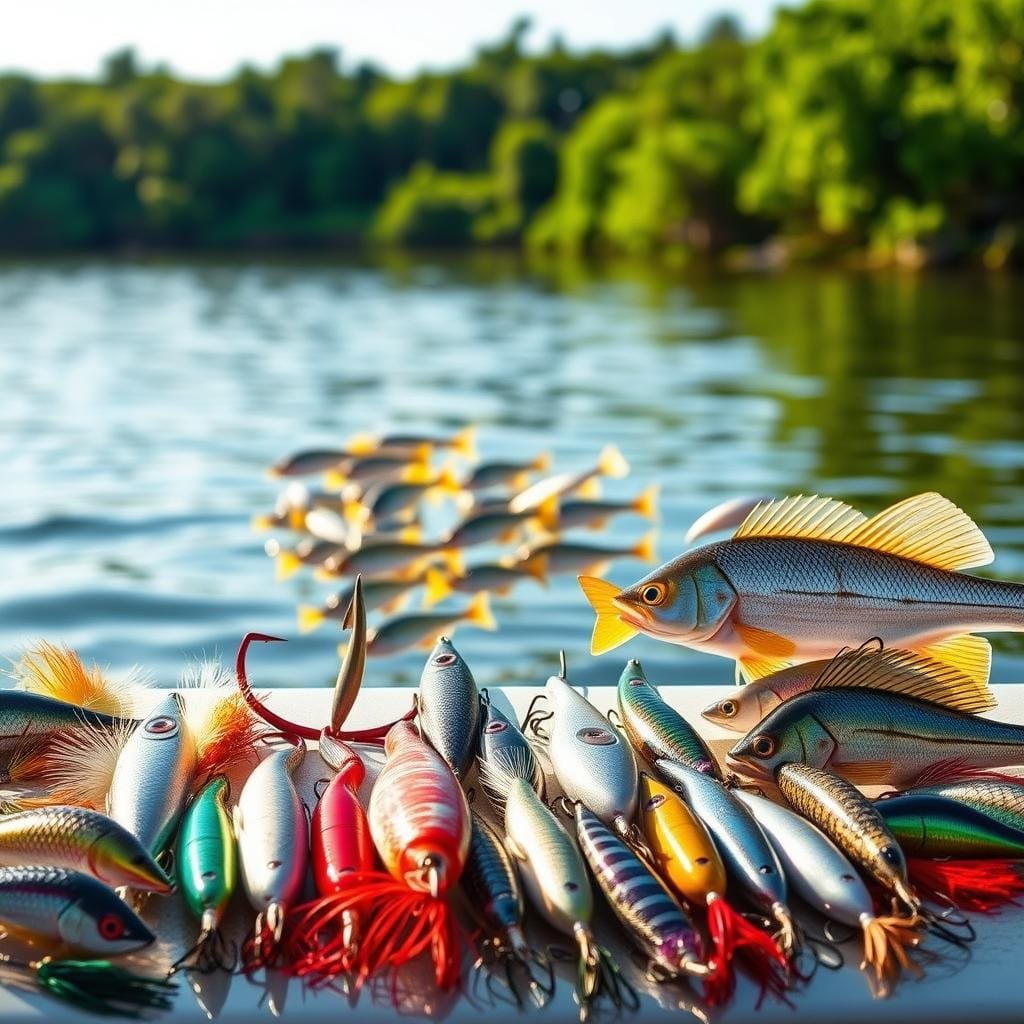
When live bait is hard to find, the best snook lures are key. Think about the current, depth, and shadow lines. Choose a lure that fits the spot.
Keep your retrieves simple. Make casts up-current. Let the lure move naturally. For more on flats and shadows, check this guide to artificial lures for snook.
White bucktails with red accents for beaches, docks, and bridge shadow lines
A white bucktail jig snook setup is great for beaches and docks. Use a Spro Prime 1/2 oz with a red hackle. Cast to the light edge, then pulse the skirt with short hops.
Let it glide in the strike zone. This will trigger sight-feeding fish.
Soft-plastic jigs for a shrimpy profile and slow bottom bumps
Soft plastic jigs mimic shrimp and small baitfish. They come in classic Cotee-style tails and modern durable options like Monster3XUSA. Use light twitches or slow bottom-bumps.
Pause often to draw eats.
Lipped swimming plugs as night search baits on uptide shadow lines
For night fishing, lipped plug snook patterns cover water fast. Work the uptide edge of lit bridges and seawalls. Change lip sizes to control depth.
Upgrade to saltwater-grade split rings and hooks for brutal head shakes.
Flare jigs for probing deep around bridge pilings and fenders
A flare hawk jig snook presentation is great in heavy flow. Drop it straight down the seam, then lift and drop along pilings and fenders. Use braided line and a sensitive graphite rod.
Feel subtle thumps and stay tight in current.
- Shallow: Topwaters, twitch baits, and soft jerkbaits when fish roam high.
- Mid: Jigs, bucktails, and swimbaits for suspended fish in rips.
- Deep: Heavier jigs and large plugs to scrape bottom near structure.
Match lure depth to the zone, then adjust cadence to the flow. Whether it’s a bucktail jig snook bite at first light or a flare hawk jig snook thump at midnight, these best snook lures keep you in the game without a livewell.
Tides, Moon, and Timing: When Snook Feed Hard
Snook fishing is all about timing. They gather in channels at low tide. Then, they move to flats and mangrove edges as the tide rises.
Set up where water meets structure. Fish the first push when bait moves.
Read the snook moon phase and plan around current. New and full moons bring stronger currents. Snook ambush from the flow side, so let your bait drift naturally.
Beginning of the incoming tide as a prime window
The incoming tide is a great time to catch snook. Start on channel edges where depth meets a bar or point. Then, move shallow as the tide rises.
Strikes often peak early. By mid tide, fish may feed less.
Keep casts tight to seams. Let the lure swing with the flow. Short pauses near the current edge are key when snook track bait.
New/full moon currents and outgoing tide patterns
On moon weeks, the outgoing tide is fierce. Strong drains pull shrimp and glass minnows from creeks and flats. Fish pin them at choke points.
Work the down-current side of bridges and cuts where the eddy forms. Speed up the retrieve a touch to trigger reaction bites in heavy flow. If the current is ripping, step up leader strength and keep contact with your jig or plug.
Dawn, dusk, and strategic night sessions under lights
Dawn and dusk offer cool light, moving water, and low pressure on fish. Hit the first two hours on either side for clean shots. For night snook fishing, time trips to the start of a tide.
Target dock light snook with up-current casts that cross the bright edge into the shadow. Let the bait sweep through the beam, then quicken the pace to draw a chase. On strong moon flow, the best tide for snook under lights often aligns with that first surge.
Stealthy Approaches That Trigger More Bites
Snook feel pressure waves before they see you. Move quietly instead of fast. Let the current help you.
Start quietly before casting. Every move should be silent. This keeps danger hidden.
Idle in early, turn off the engine far from the flat. Use a push pole or paddle for the last stretch. Kayaks and paddleboards are great here. They make less noise and let you move with the current.
Quiet entries: reduce hull slap, motor noise, and boat swing
Snook feel vibrations with their lateral line. Loud noises scare them. Keep your boat quiet.
Boat swing is very bad. When wind and tide meet, it looks like a predator. Use a power pole to stop it.
Power poles, stakes, and wading to stay undetected
Dual Power-Pole anchors or a stake-out pole keep you in place quietly. Set up up-current of the strike zone. This way, your bait arrives first.
When the water is shallow, wade fishing is best. Move quietly and cast ahead. This makes your bait last longer.
Beach strategy: fish the swash just feet from shore
Beach fishing is about small water. Fish are close to shore. Target the swash line and trough, not the outer bar.
Cast up-current and let the lure slide with the wave. Onshore wind builds swash; offshore wind spreads it out. Fish fast at first light, then slow down.
- Cut noise: drift or paddle the last 100 yards to keep snook stealth intact.
- Lock position: deploy a power pole snook setup or stake to prevent swing.
- Go low profile: wade fishing snook in knee-deep water to erase hull slap.
- Read the beach: favor onshore wind and active swash for close passes.
| Scenario | Stealth Move | Why It Works | Pro Tip |
|---|---|---|---|
| Wind vs. tide cross | Power-Pole + bow stake | Stops swing that alarms fish | Position 30–60 feet up-current of the lane |
| Shallow flat at dawn | Paddle in, then wade | Removes hull slap and motor hum | Cast past fish and retrieve with current |
| Surf swash line | Short casts parallel to shore | Keeps bait in the travel lane | On onshore wind, work foam edges first |
| Dock or bridge edges | Spot-lock off, stake in | Quiet hold in heavy current | Approach on the dark side and minimize lights |
Smart Positioning on Productive Structure
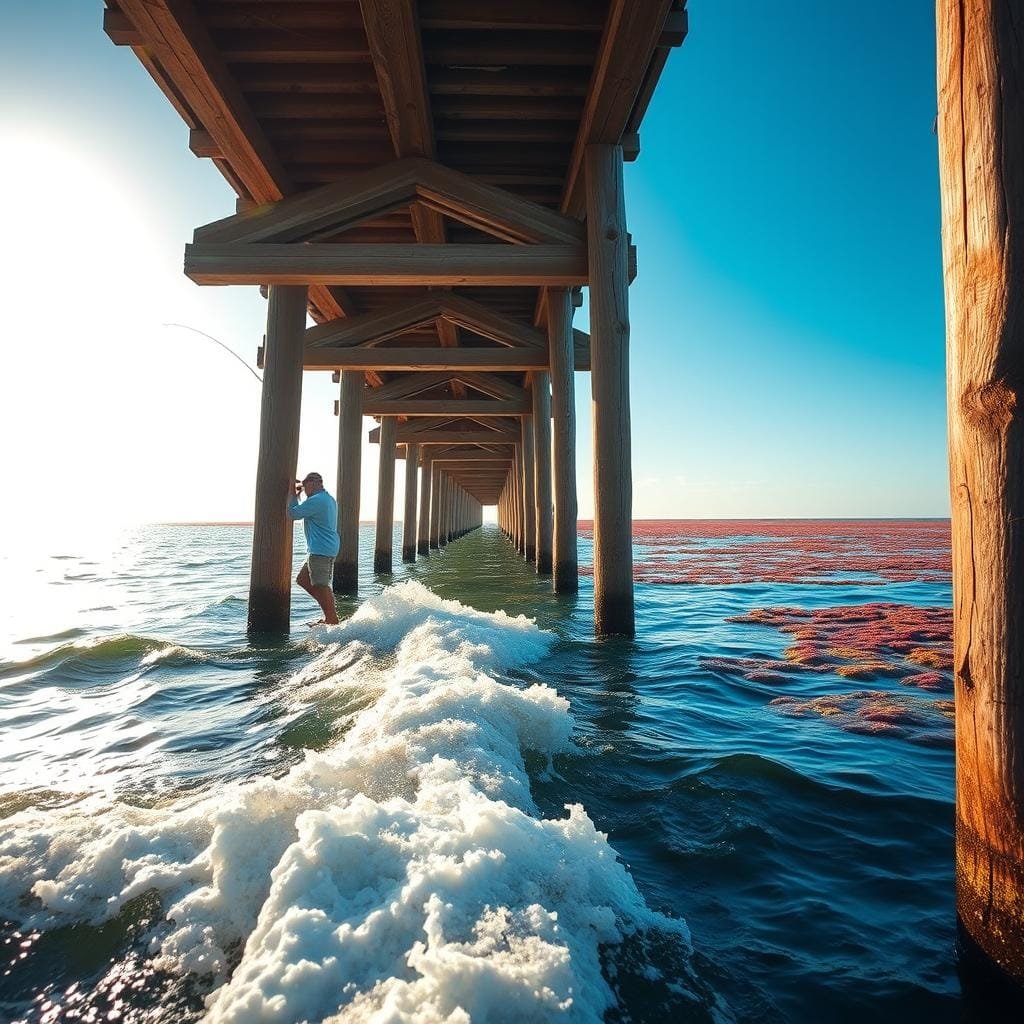
Great snook fishing starts with three things: current, bait, and snook structure. Read the tide like a map. Then, find spots where the flow meets food.
If bait is scarce, move until you find more. Keep your casts tight and quiet. Let the water do the work.
Mangrove islands, potholes, swashes, and channel edges
Look for mangrove snook lanes where roots meet moving water. Potholes on the flats trap prey as the tide rises. Swashes on beaches draw cruisers to your feet.
Set baits along channel edges where snook travel. Cast upcurrent and let the drift sweep naturally. Pause near cuts, points, or pothole lips.
If birds pick or glass minnows flash, you’re in the right spot.
Set up on channel edges during incoming to intercept movers
Stage down-tide of ambush points. This way, the current feeds your spread first. On the incoming, post on the upcurrent corner of bars, bends, or mouth cuts.
Adjust boat or wading angles to keep lines parallel to the edge. Use bucktails or soft-plastic jigs in brisk flow. Switch to live pilchards or shrimp when it softens.
Bridges, docks, and shadow lines at night
After dark, target bridge snook where light meets dark. Shadow line fishing is best when current moves. Cast uptide with a lipped plug or white bucktail.
Sweep through the edge before the lure breaks out of the light. For dock lights snook, pick pilings with strong flow and visible bait. Probe deep with a flare jig around pilings and fenders.
Keep contact with braided line and a crisp graphite rod. Rotate through spots until you find the feed.
| Location Type | Primary Target | Best Tide Window | Go-To Presentations | Why It Works |
|---|---|---|---|---|
| Mangrove islands & potholes | mangrove snook | Mid to late incoming | Live pilchards, shrimp; soft-plastic jigs | Edges, roots, and bowls gather bait with gentle flow |
| Channel edges & swashes | channel edge snook | Beginning of incoming | Bucktails, cut mullet, paddletails | Fish migrate onto flats; contours funnel prey into lanes |
| Bridges & pilings | bridge snook | First push of tide at night | Flare jigs, lipped plugs, heavy bucktails | Deep seams and structure create ambush walls |
| Docks with lights | dock lights snook | Dusk to early outgoing | Small plugs, shrimp, light jigs | Shadow line fishing isolates bait on a clear edge |
| Oyster bars & grass edges | Mixed snook structure | Steady moving water | Weedless soft plastics, live pinfish | Hard/soft bottom transition holds forage and current |
Keep moving until you find clean flow, visible bait, and a sharp edge. When those three line up on snook structure, bites come fast and close.
Gear That Matches Conditions, Not Trends
Set up your snook gear for the water, current, and cover. Choose the right line size and leader strength for where fish live. Pick actions and lengths that keep you in touch with the lure. The right braid and leader for snook makes every cast count, from open flats to dock lights.
Leaders and line: 10–15 lb braid with 30–40 lb leader on open flats
On clear grass flats and slow current, use 10–15 lb braid with a 30–40 lb leader. This setup keeps distance, cuts drag, and lands fish fast. Many pros use 30 lb fluorocarbon snook leaders for stealth and strength.
Step up near mangroves/docks and heavy current structure
Close to mangroves and docks, use 15–20 lb braid and a 40–50 lb leader. In fast current around bridges or rock edges, go to 30–40 lb braid with a 50–80 lb leader. This protects against pilings, oysters, and gill plates when fish surge hard.
Fluorocarbon advantages under dock lights
Under lights, fluorocarbon snook leaders are great because they bend light less and stay tough. A 30–40 lb fluoro leader with clean knots fools tight-lipped fish while surviving a short run around a post. Keep leaders short enough for casting accuracy but long enough to guard the strike zone.
Rod sensitivity and length for lure control and bite detection
For artificials, choose fast graphite blanks for sensitivity. 7’6″ to 8′ rods help launch bucktails, soft plastics, and lipped plugs across current seams. Snook rod recommendations often pair medium-heavy power with a crisp tip for jig contact and quick hook sets. When throwing live bait, step to a slightly heavier action to move fish from cover without overloading the snook gear setup.
- Open flats: Light braid, moderate leader, longer rods for reach and subtle presentations.
- Docks/trees: Heavier snook line size, stout leaders, fast tips to turn fish.
- Bridges/current: High-capacity braid, abrasion armor, and blanks that keep pressure steady.
| Scenario | Mainline | Leader | Why It Works | Best Uses |
|---|---|---|---|---|
| Open grass flats, slow flow | 10–15 lb braid | 30–40 lb fluorocarbon | Stealth, casting distance, fine lure feel | Soft-plastic jigs, small bucktails, twitch baits |
| Mangroves and docks, light–medium current | 15–20 lb braid | 40–50 lb fluorocarbon | Extra abrasion buffer and pulling power | Live pilchards, pinfish, midsize plugs |
| Bridges, heavy current, hard structure | 30–40 lb braid | 50–80 lb fluorocarbon | Control in fast water; protects against pilings and gill plates | Flare jigs, RedTail Hawk-style jigs, strong lipped plugs |
| Night under dock lights | 10–20 lb braid | 30–40 lb fluorocarbon | Low visibility with solid shock resistance | Free-lined shrimp, small swimbaits, downsized plugs |
For deep jig work around bridge pilings, pair sensitive graphite spinning rods with tight, smooth drags. Strong lipped plugs fitted with saltwater hooks stay pinned on surging fish. Keep these snook rod recommendations in mind as you tune braid and leader for snook to each tide and spot.
Fight and Land More Snook Without Breakoffs
Start calm and keep steady pressure from hookup to the net. A clean snook hook set is simple: lift to 12 o’clock and let the run drive the point home. Avoid big sweeps that tear flesh or pop hooks. Stay tight through jumps so slack doesn’t let those razor gill plates slice your leader. These fundamentals are the backbone of how to land snook and prevent snook breakoffs.
Steer early or lose late. The moment a fish turns for roots, sweep the rod to angle its head and keep snook out of mangroves. Short pumps, quick reels, then reset—don’t over-pump. If the fish rockets, let it run and gain line between bursts. A surprise jump can shake them off balance and buy you space, but keep pressure so the hook stays pinned. These fighting snook tips shine around mangrove points, seawalls, and oyster edges.
Match gear to the spot. On open flats, lighter braid helps cast far and control lures. Around bridges and pilings, step up line and leader so you can muscle fish from the concrete. Sensitive graphite rods and braid help feel deep, thumping strikes; tough lures with strong hooks resist bend-outs during surges. Time your shots when tide eases so current won’t turn a short fight into a marathon, another key to prevent snook breakoffs.
Handle live bait with circle hooks to pin the corner of the mouth and speed safe releases for out-of-slot fish. Keep the rod low when a fish digs, then raise and reel as it pauses. Combine a clean snook hook set, controlled angles, and tide-savvy pressure, and you’ll keep snook out of mangroves, shorten fights, and master how to land snook with confidence.