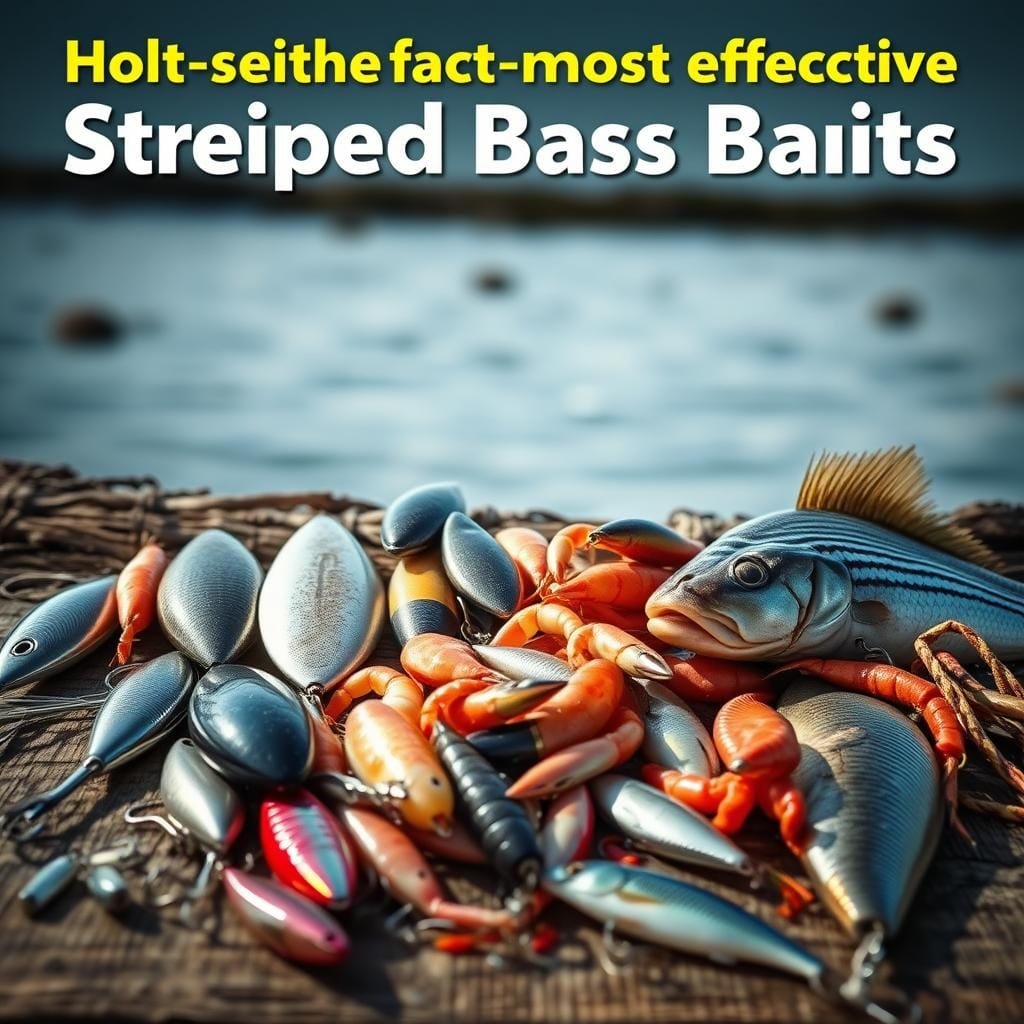
Anglers in Maine to New Jersey fish for striped bass. They use different spots like tidal rivers and surf lines. You need the right lures to catch them.
Some lures work well in real fishing situations. The Musky Mania Doc gets fish to jump out of the water. Rapala X-Rap Long Cast and Daiwa SP Minnow are great for making fish bite.
Swimbaits like Tsunami Pro Swim Shad and Hogy Pro Tail Paddle work well in current. They are good for fishing in the surf and rivers too.
Soft plastic lures like Zoom Super Fluke and Lunker City Slug-Go are good for slow movements. European lures like Fiiish Black Minnow and Crazy Sand Eel add variety. Artificial eels from Felmlee are great for catching big fish.
These lures work in different places and times. They help you catch striped bass in rivers, surf, and more. They have simple ways to fish that work well.
Where Stripers Feed: Beaches, Jetties, Rivers, and Open Ocean
Striped bass live in many places, from quiet creeks to the ocean. To catch them, choose the right spot. Fish beaches at dawn, jetties at tide changes, rivers when it’s strong, and the ocean when bait is plentiful.
Think about where fish are at different depths. Use current seams and structure to guide your casts.
Reading tides and current in tidal rivers
Inlets and river mouths are great for finding fish. Look for areas where the current is strong. This is where fish like to catch prey.
Use swimbaits and heads that sink fast. This helps you reach the bottom without getting stuck.
Pay attention to the tide and what fish are eating. Sea herring, mullet, and sand eels are common. A long cast and slow retrieve can be effective. For more on inlets, see this primer.
Targeting rock piles, flats, and rips from shore
Look for bars and rocky points at low tide. Then come back when the tide is high. Topwater lures can help find fish quickly.
On jetties, cast up-tide and use lures that swim along the shaded side. Fish hold tight to the rocks. Use a sweep to cover current seams and pause to trigger bites.
Seasonal movements along the Northeast and Mid-Atlantic
In spring, schoolies and early keepers move into rivers. By early summer, they go to the ocean. Open ocean stripers prefer wrecks and shoals in summer.
When it’s windy or cold, fish don’t bite on top. Use jerkbaits and swimbaits to catch them. In fall, fish are active along beaches and jetty tips. Always watch the tide and current.
Topwater Thrills: When Surface Strikes Tell You You’re In The Zone
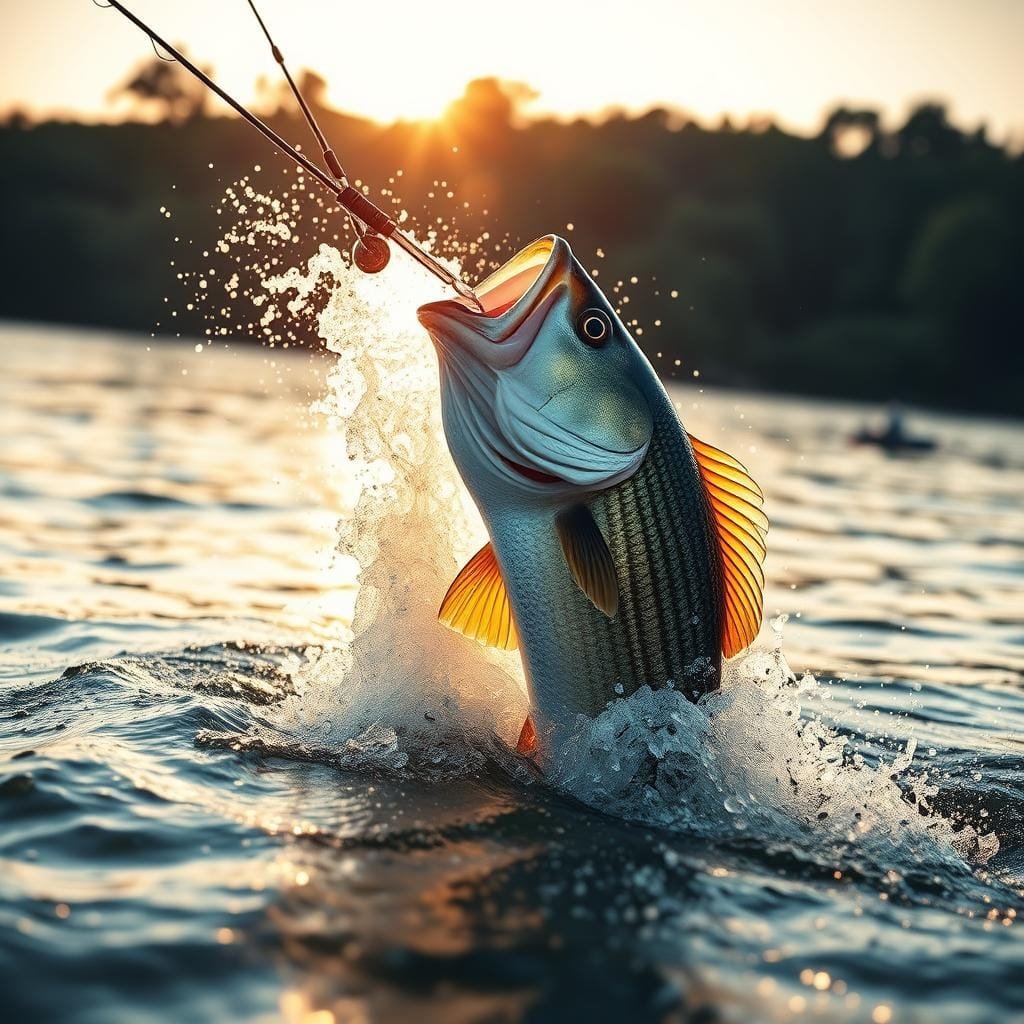
Nothing beats a striped bass topwater eat. It’s when bait showers and whitewater boils. Use this time to explore flats, rips, and rock edges where fish like to be.
Surface plugs for stripers are great here. They call fish up and help find them fast when they move.
Blitz conditions and why topwater excels
During blitz fishing, bass attack bait tightly. A loud walk-the-dog lure triggers bites. Its flash and splash are key.
The Musky Mania Doc is known for its big profile and rattle. Long-cast stickbaits like the Joe Baggs Skipper reach far. They’re perfect for finding stripers.
Covering water fast to locate aggressive fish
When it’s quiet, fan-cast and move. Use a steady cadence to find fish in current seams and outer bars. This method helps find stripers fast.
Adjusting after the blowup: switching to slower follow-ups
If a fish misses, pause and downshift. Switch to a subsurface lure to catch it. Rapala X-Rap Long Cast, Daiwa SP Minnow, or Tsunami Pro Swim Shad work well.
Surface plugs drew them in. The slower bait finishes the bite.
Musky Mania Doc and Other Big Walkers for Giant Stripers
Big surface plugs attract big bass. A nine-inch plug casts a big shadow. It stays visible in choppy water. That’s why experienced anglers always carry a topwater walker for stripers.
Use them when the water ripples or birds show you where to go.
The Musky Mania Doc started for Esox but works great in saltwater too. Its wide body moves with light taps. This lets you cover a lot of ground during surf casting at dawn.
If it’s cold, start fast and slow down if fish stop biting.
Why the Doc’s glide and internal rattle convert follows
The Doc’s long glide gives you time. This pause lets fish line up. The internal rattle adds a click that carries in wind and water, making fish bite.
Move the plug with short, crisp twitches. Keep it high and pause briefly. Many bites come when the lure slides and the rattle keeps going.
Long-cast stickbaits like the Joe Baggs Skipper for surf reach
The Joe Baggs Skipper is great for long casts. Its three-ounce body goes far, even in a headwind. It creates a bubble trail that attracts fish.
This makes it perfect for open beaches, bars, and outer rips.
Cadence tips: subtle twitches, wide “walk-the-dog” sweeps
Start with a rhythm: tap-tap, quarter turn, tap. This creates a wide walk-the-dog motion without overworking the plug. Begin fast to get fish’s attention, then slow down to seal the deal.
If you miss bites, try smaller twitches. In cold water, try topwater at sunrise, then switch to a sinking jerkbait if needed.
| Lure | Best Use Case | Key Trigger | Retrieve Notes | Ideal Conditions |
|---|---|---|---|---|
| Musky Mania Doc | Calling up ledge and rip-line cows | Wide glide + pitched internal rattle | Light twitches for long slides; add brief stalls | Dawn/dusk, moderate chop, bait on top |
| Joe Baggs Skipper | Long casts from the beach or jetty | Bubble trail and easy cadence | Brisk start to search, slow to let followers commit | Wind-in-your-face surf, open bars, bird activity |
| Other big walkers | Covering water during surf casting topwater | Large silhouette that stays visible in chop | Tap-tap with controlled slack for a steady walk-the-dog cadence | Warm months, moving tide, scattered bait |
Hard Jerkbaits That Trigger Finicky Fish
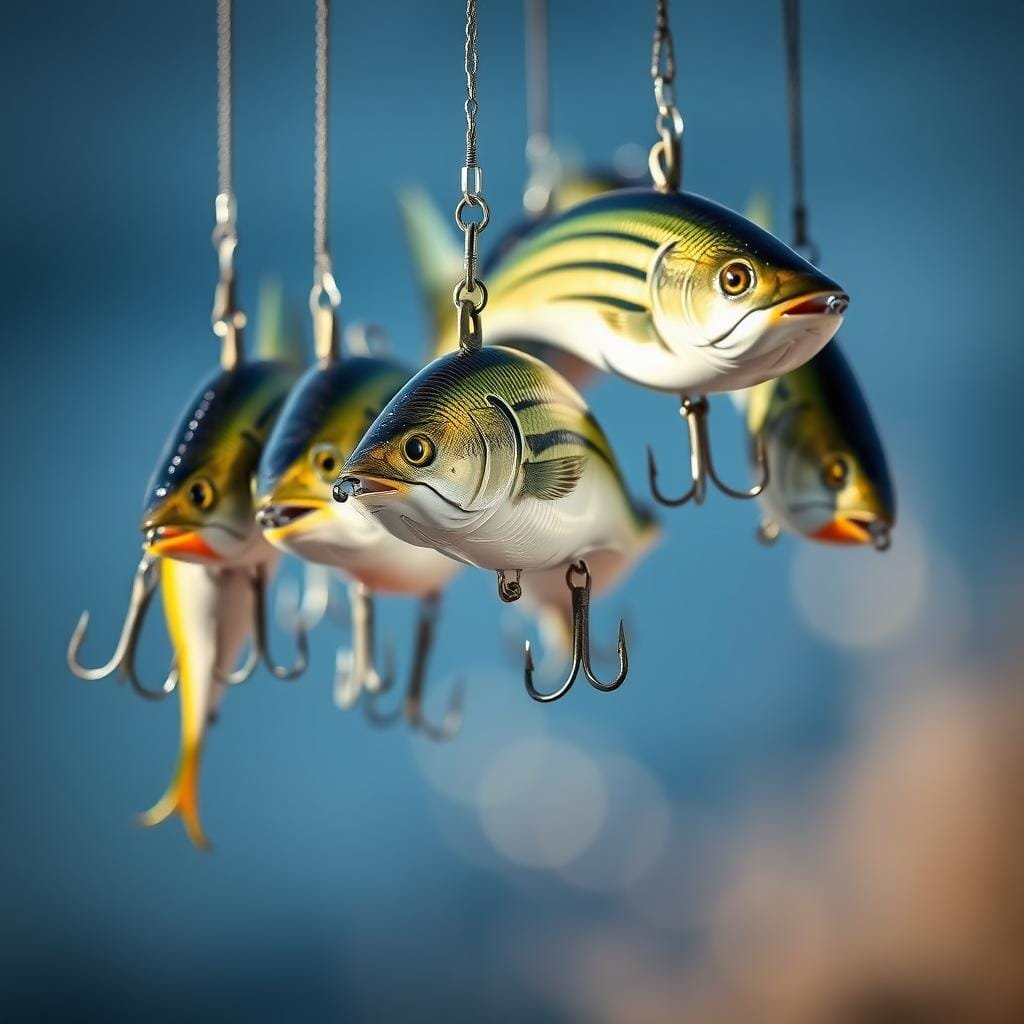
When stripers get picky, use hard minnow lures. Make long casts and fish with purpose. A bold jerkbait retrieve can turn lookers into biters.
Rapala X-Rap Long Cast for slash action and distance
Rapala X-Rap Long Cast stripers love speed and power. Use two to three sharp rod pops, then reel tight. This makes a flash that tracks straight.
It goes a mile, so you can reach far bars. Use single VMCs for easy releases in heavy surf. In wind, point the rod low and rip harder.
Daiwa SP Minnow for pauses, 3D eyes, and realistic finishes
Daiwa SP Minnow stripers like a clean roll and wiggle. The 3D eyes and scale finish are key. Work it steady with taps, then a short pause.
On calm mornings, use natural hues and moderate twitches. In chop, choose brighter patterns and push the cadence. For more info, see best striped bass lures.
Power twitches over long pauses for aggressive stripers
Hard minnow lures need big rips, not long waits. Rip-rip-rip, then a half-second settle. This keeps the lure hunting and keeps stripers angry.
- Two to four forceful twitches, reel slack, repeat
- Short pauses only—no dead stalls unless fish demand it
- Cast cross-current, sweep through the seam, and finish through the wash
Rapala X-Rap Long Cast and Daiwa SP Minnow both like bold cadence. Keep hooks sharp, stay tight to the plug, and let the current add life.
Soft Swimbaits That Match the Forage Across the Water Column
When the bait is spread from shoal to channel, striped bass swimbaits shine. They look real and move well in the water. Keep your retrieve simple to let the tail do the work.
Soft plastic baits for stripers look like local food. Pick a color that matches the water. Adjust the weight so it swims right, not spins.
Tsunami Pro Swim Shad: boot-tail thump and yo-yo retrieves
The Tsunami Pro Swim Shad is ready to fish. It swims straight and has a strong pulse. It’s great for a slow yo-yo retrieve.
Fish it over rocks or by jetty seams. In cool water, count it down and lift it a bit. Then, let it drop on a tight line. Hits often happen on the fall, so keep your line tight.
Hogy Pro Tail Paddle: dense body, UV flash, and current control
The Hogy Pro Tail Paddle has a dense core. It grips the flow and stays put. It has UV flash for stained water and a strong hook.
Cast uptide and sweep across the seam. Track the lure like a jig. Lift it when it hits bottom and swim it a bit. This subtle action can trigger fish.
Rigging weights to reach bottom in heavy current
Choose the right weight for depth and pace. Lighter jig heads work high in the column. For deeper rips, use heavier ones to touch bottom.
Use braid for feel and a short fluoro leader for protection. Adjust the Tsunami Pro Swim Shad or Hogy Pro Tail Paddle until the tail thumps right. Then, repeat the count for a steady yo-yo retrieve.
best bait for striped bass
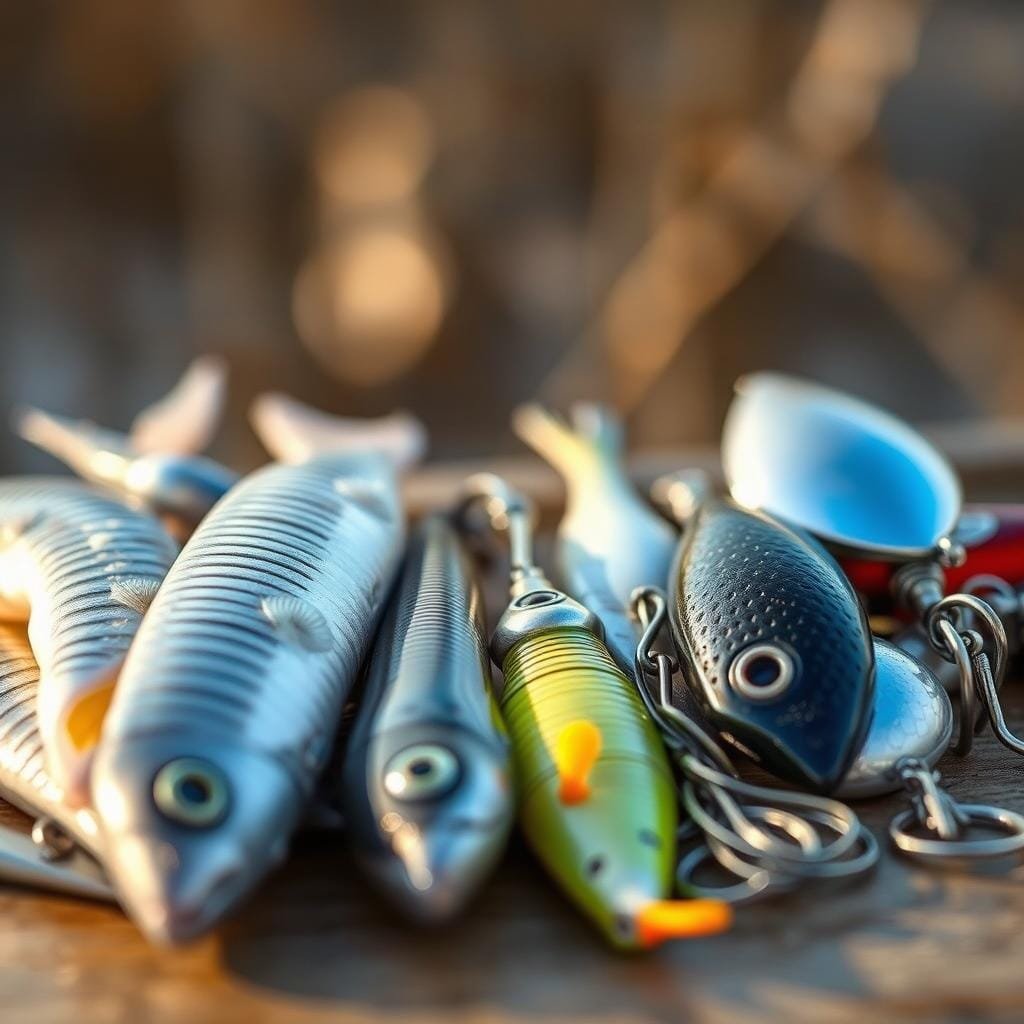
Find the best bait for striped bass by matching mood, water, and reach. The Musky Mania Doc and Joe Baggs Skipper are great for loud surface presence and long casts. They draw fish from far away and help you cover tide-swept points and open beaches.
When wind shifts or current builds, keep confidence picks ready. These are the best lures for stripers in changing conditions.
Cold snaps or picky schools need hard jerkbaits. The Rapala X-Rap Long Cast and the Daiwa SP Minnow work well with sharp twitches and brief pauses. They track straight and stay pinned in crosswinds, making them reliable for river fishing.
Soft swimmers fill the gaps from surface to bottom. A Tsunami Pro Swim Shad has a boot-tail pulse you can feel. A Hogy Pro Tail Paddle adds density for current control. Change weights to hold the strike zone on bars, rips, and channel edges.
Water color guides your bait choice. In clear seas, a Fiiish Black Minnow in khaki blends with sand eels and small scup. In stained water, orange-yellow boosts visibility. These colors work well for surf casting and in choppy water.
Artificial eels are great for big, lazy fish. Standard and modified Felmlee eels move like real eels. The 11-inch is good for boulder fields, and the 16-inch is best for trolling along ledges.
- Surface search: Musky Mania Doc, Joe Baggs Skipper for reach and commotion.
- Neutral fish: Rapala X-Rap Long Cast and Daiwa SP Minnow with crisp pauses.
- Water column coverage: Tsunami Pro Swim Shad and Hogy Pro Tail Paddle with tuned weights.
- Color calls: Fiiish Black Minnow khaki in clear; orange-yellow in stained water.
- Big profiles: Felmlee eels for glide, with sizes matched to casting or trolling.
Soft Plastic Jerkbaits: Flukes and Slug-Style Eels
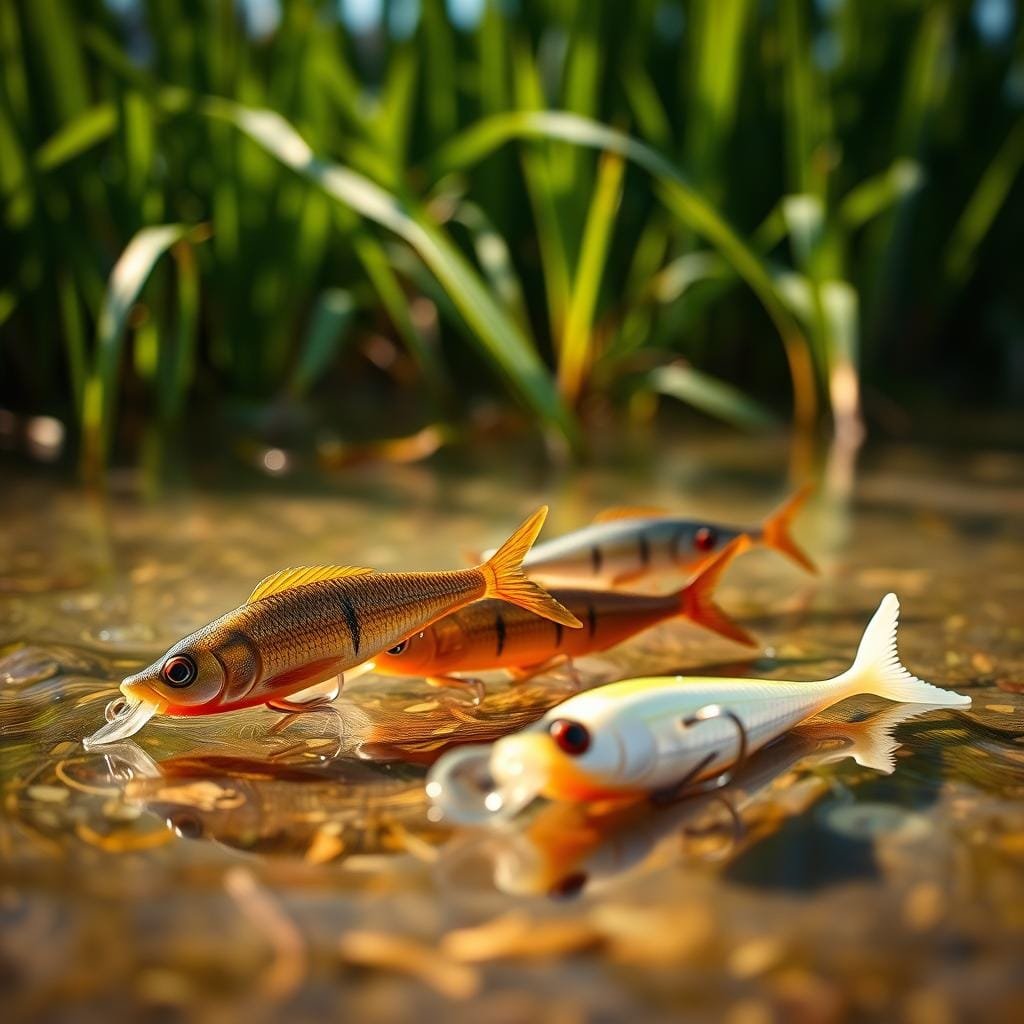
Soft plastic jerkbaits are great for many fishing situations. They move well in calm or rough water. They’re perfect for surf, jetty, and boat fishing for big fish.
Zoom Super Fluke for subsurface walk or snap-jigging
The Zoom 7-inch Magnum Super Fluke moves smoothly under the water. It pauses well, making it easy for fish to hit. For more action, try snap jigging.
Zoom Super Fluke works well on the move, fall, and sweep. A light jig head helps it move better in current. A weedless hook is great for fishing around boulders.
Lunker City Slug-Go sizes and colors for matching hatch
Lunker City Slug-Go comes in sizes and colors that match the baitfish. White, bone, and natural colors work well in clear water. Pink is good in low light. Sizes from 7 to 9 inches are best when there are adult baitfish around.
Move the lure sharply then pause to mimic injured bait. A small jig head makes it shimmy on the drop. This is very effective. For more tips, check out this preferential plastics guide.
Weightless versus jighead rigging for different depths
Use a weightless rig for fishing in shallow water or over eelgrass. It lands softly and moves far without sinking fast. It’s great for early morning fishing on sand bars and quiet bays.
Switch to jigheads for fishing at different depths. Use a light jig for near the surface and a bigger one for deeper. Keep your line straight and move the lure steadily to attract fish.
European-Style Winners: Black Minnow and Crazy Sand Eel
These soft baits come from France and work best when the tide is strong. They have sleek bodies and an offshore head jig that moves straight and sinks fast. This makes them great for catching Fiiish Black Minnow and Crazy Sand Eel stripers.
Fiiish Black Minnow offshore heads for current and depth
Choose sizes 120, 140, or 160 based on the current. The Offshore Head casts far and drops quickly. It’s perfect for river mouths on a falling tide or over offshore structures.
Use a sharp, jerky lift to make the lure rise. Then let it fall fast. This action is easy for pressured fish to trigger. It keeps the offshore head jig in the right spot for big Fiiish Black Minnow stripers.
Color picks: khaki in clear water, orange-yellow in stained
Choose your color based on how clear the water is. Use khaki in clear water when sand eels or small baitfish are near the bottom. Switch to orange-yellow when the water is stained. This color stands out in choppy water and attracts fish from far away.
Fast prospecting with lighter heads vs. probing deep with heavier
Use 10–20 g heads for fast casts near the surface with the Black Minnow or Crazy Sand Eel. When you find bait or hit bottom, use 30–50 g heads to explore mid-depths and ledges. Lighter heads are best for quick checks, while heavier weights help you follow contours and stay on bottom in strong currents.
- Lighter heads: rapid fan casts, mid-tide sweeps, quick read on life.
- Heavier heads: slow-roll the seam, hop through holes, map depth bands.
- Retrieve: lift-pop, then controlled drop to mimic fleeing and stunned prey.
Mix these European shapes with your favorite American swimbaits. But keep the offshore head jig as the main part. With the right size and color, you’ll stay efficient and catch fish in tough tide conditions.
Artificial Eels That Outsmart Big, Lazy Stripers
When bass get picky, an artificial eel lure is perfect. It works great in waters like New Brunswick and Nova Scotia. These places have similar tides to many U.S. areas.
The lure moves like real prey. This action gets big, lazy fish to bite. It’s a clever way to catch them.
Standard vs. modified Felmlee eels for lifelike action
The stock Felmlee eel swims well. But, it needs a faster retrieve to move the tail right. A simple change makes it better: use 100 lb soft braid instead of 80 lb steel wire.
This change makes the lure move better at slow speeds. It’s perfect for catching fish in current seams. It also fixes a problem with a weak link.
When to cast the 11-inch versus troll the 16-inch
Use the 11-inch lure for shorelines and bridge shadows. It needs accuracy. Cast up-current, count it down, then slow roll with brief pauses.
If a fish swirls and misses, keep moving. Followers often bite on the next crank. For boat work, use the 16-inch lure. It’s better for trolling along channel edges.
Retie tips: soft braid for flexibility and stronger connections
Cut the stock wire and crimp. Then, tie 100 lb soft braid between the head and stinger. Use a doubled Uni-to-ring and a Palomar at the hook.
Keep the link short to avoid fouling. But, long enough for the tail to move. Check the braid after each fish for chafe.
Pair the lure with 40–60 lb fluorocarbon and a strong clip like Tactical Anglers. On the Saint John River, a modified eel out-fished a topwater. This shows that subtle action wins when bass snub the surface.
| Scenario | Eel Size & Head | Method | Key Tuning | Why It Works |
|---|---|---|---|---|
| Shoreline current seams | 11-inch, 1 oz | Casting eel lure across and down-current | 100 lb soft-braid link; slow roll with pauses | Lifelike tail pulse at slow speed triggers energy-saving fish |
| Channel edges from a boat | 16-inch, 3 oz | Trolling striped bass eel at steady pace | Modified eel rig to increase flex; run above marks | Stable track and big profile draw strikes from deeper schools |
| Dawn river bite after topwater refusals | 11-inch, 1 oz | Count down, slow retrieve near bottom | Soft-braid connection; stinger sharp and aligned | Subtle, natural thump converts neutral fish |
| Open-tide rips with bait schools | 16-inch, 3 oz | Slow troll cross-current | Short leader, strong clip, check chafe | Consistent tail action stays in the strike zone longer |
Dialing Presentation: Retrieve Styles That Consistently Produce
Match lure speed to mood, then refine with precise striper retrieve styles. Hard baits need thought. A sharp jerkbait cadence on the Rapala X-Rap Long Cast works well. It has big rips and short checks, no dead time.
When fish shadow but won’t slash, the Daiwa SP Minnow is great. It shines with brief pauses that mimic a wounded bait’s “give up.”
Topwater turns lookers into biters. Use subtle twitches on the Musky Mania Doc or Joe Baggs Skipper. This lets you get a wide walk-the-dog retrieve. Start brisk to cover water, then slow the glide near the rod tip to convert followers.
Swimbaits do well in current. The Tsunami Pro Swim Shad thrives on a steady roll. It broadcasts tail thump. Or, use a yo-yo retrieve where the kick on the drop triggers most eats.
The dense Hogy Pro Tail Paddle stays planted on bottom lanes. It makes it easy to lift, settle, and track the seam without blowing out.
European-style plastics reward rhythm. A Fiiish Black Minnow responds to a crisp lift-and-drop with fast descents. Run lighter heads for skinny water prospecting and heavier heads when you must hold depth.
Slug-style baits love a snappy rod tip, but keep them honest with short pauses around bait schools.
When giants sulk, slow down and get real. Modified Felmlee eels on soft braid feel alive at crawl speeds. Gentle pulses keep the profile breathing. This approach pairs well with power twitching stripers that track low and feed on eels at night, around rips and boulder fields.
Blend these moves by conditions. Wind chop? Tighten the walk-the-dog retrieve. Clear water? Smooth the jerkbait cadence and shorten the pause. In sweeping current, alternate a steady roll with a measured yo-yo retrieve to stay in the strike zone longer without losing bottom contact.
Tackle, Hooks, and Rigging Essentials for Landing More Stripers
Start with the right tackle for striper fishing. The Rapala X-Rap Long Cast comes with VMC single hooks. These hooks hold strong but release quickly.
The Hogy Pro Tail Paddle uses a tough Barbarian jig hook. It’s made for big fish and strong currents. Swimbaits like the Tsunami Pro Swim Shad are durable and ready to fish.
Choose jig head weights based on the current and depth. Lighter heads are best for fast, shallow fishing. Heavier heads are needed for deep fishing in strong currents.
Dense bodies like the Hogy Pro Tail work well in deep water. Use a Fiiish Black Minnow or Crazy Sand Eel for shallow water. Pick khaki for clear water and orange-yellow for stained water.
Make your rigging better where it matters. Replace wire on Felmlee eels with 100 lb soft braid. This prevents crimp failures and improves action.
Cast the 11-inch, 1-ounce Felmlee eel in beaches, jetties, and tidal rivers. Troll the 16-inch, 3-ounce model in open ocean or heavy flow. Keep a variety of lures like topwaters, hard jerks, swimbaits, flukes, and slugs.
Check your tackle before fishing. Make sure you have sharp VMC single hooks and a sturdy Barbarian jig hook. Also, have different jig head weights and fresh leaders for the best results.