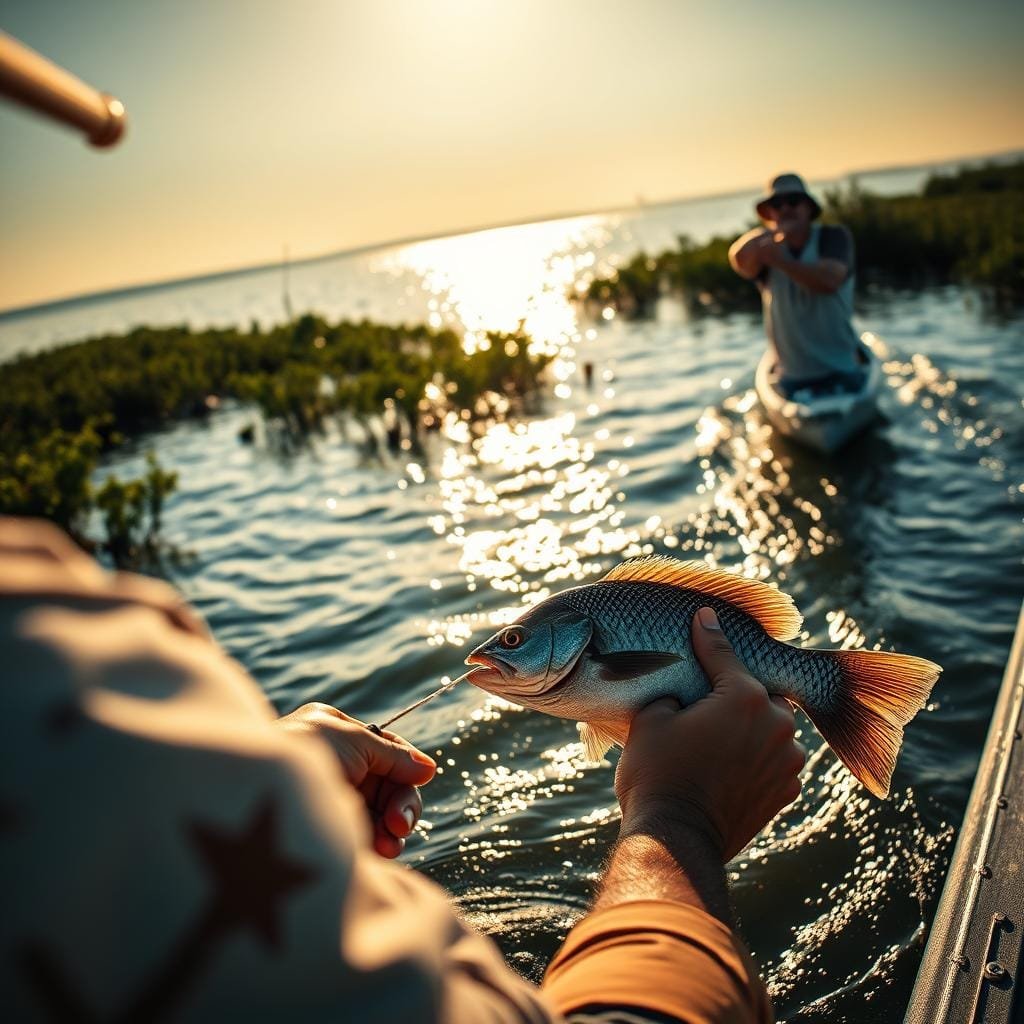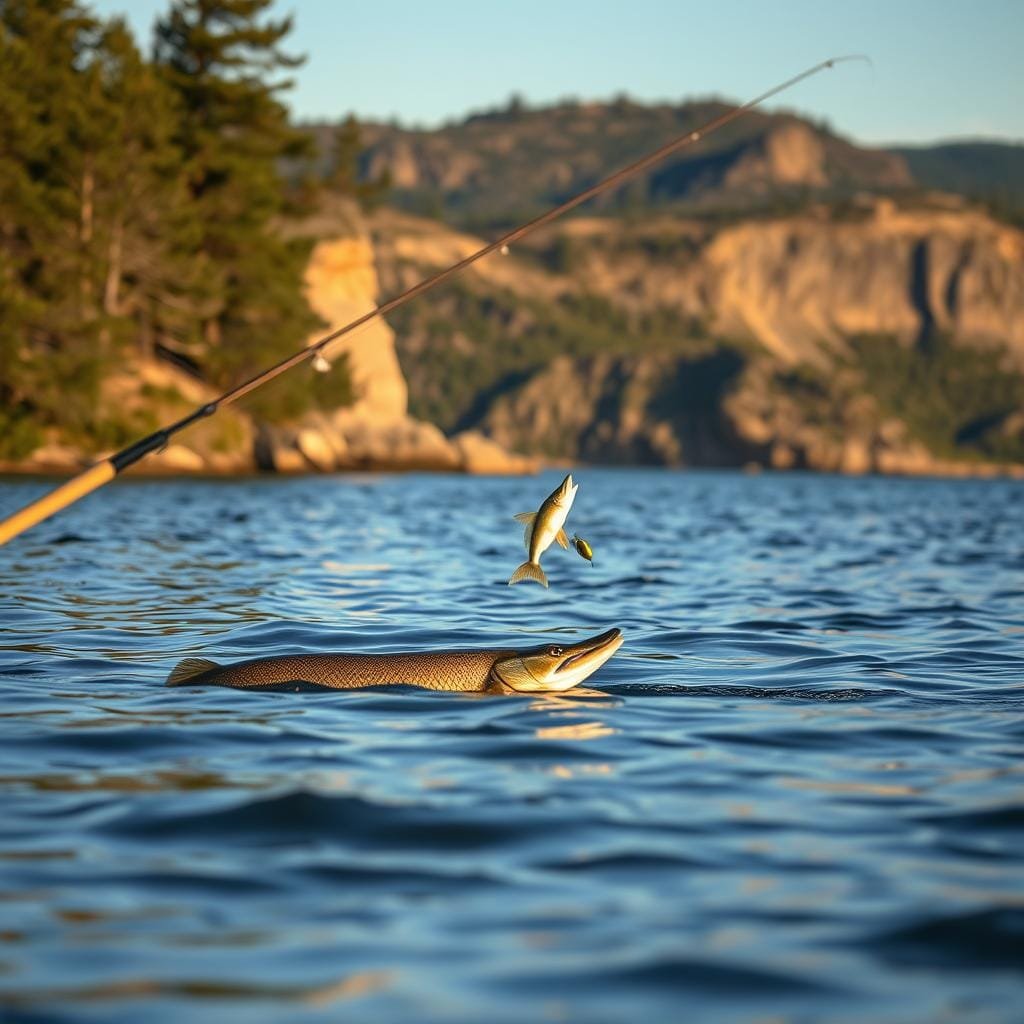
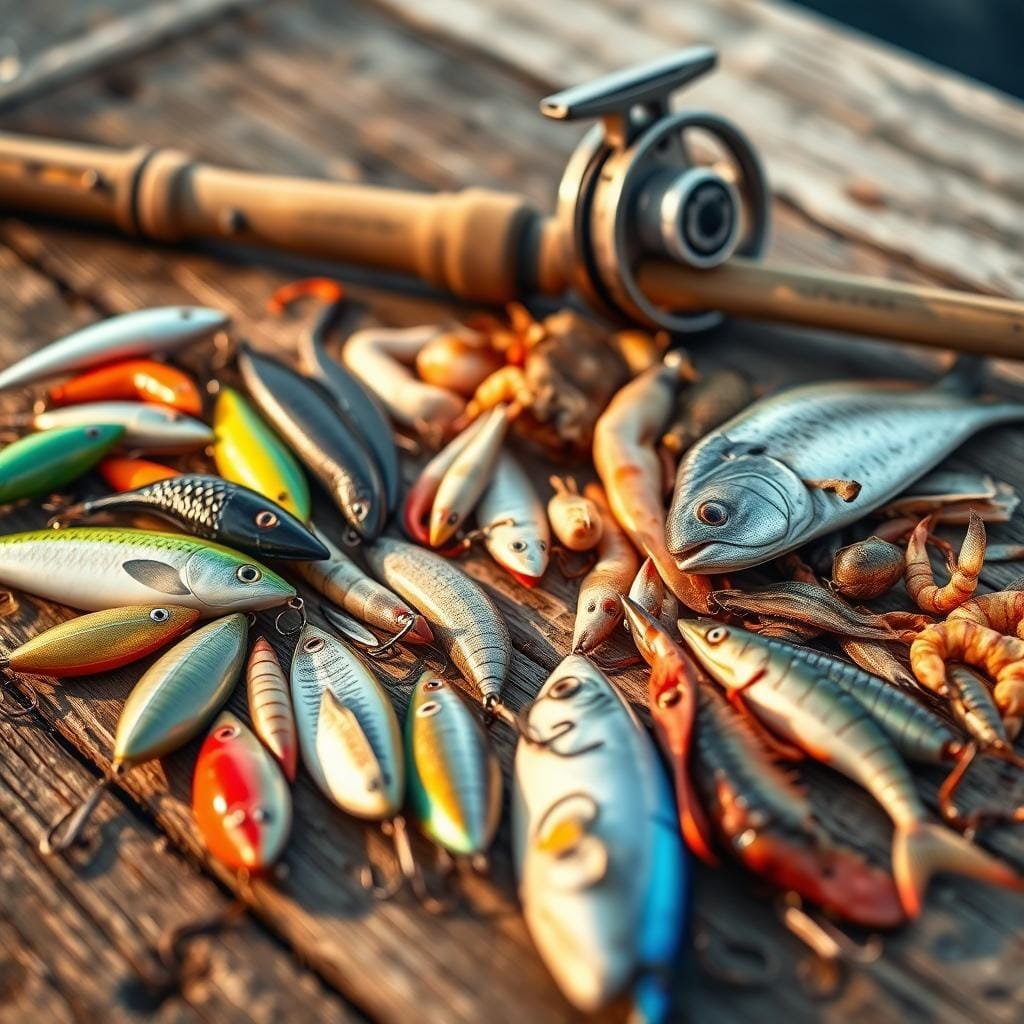
Hooking a silver king takes more than luck. This guide shows the best bait for tarpon. It also tells you how to match it to the season, water, and tide. Whether you fish bridges in the Keys or passes on the Gulf, you’ll find clear, proven options that work right now.
We cover tarpon live bait like finger mullet, larger mullet, pilchards, threadfin, shrimp, pinfish, ladyfish, and crabs. You’ll also see how cut bait for tarpon—mullet heads, butterflied mullet, and ladyfish chunks—pulls strikes when the water turns murky or the current rips.
When bait is scarce, smart tarpon lures shine. Think 5–8 inch white paddle-tail swimbaits on 1/2–1 ounce jig heads. Topwater icons like the Zara Super Spook and MirrOlure Top Dog at dawn are also great. Gold and silver spoons, and the DOA Big One Terror Eyz around mangroves and creek mouths are good too.
Season matters. Tarpon fishing Florida heats up from spring into summer. New and full moons push hill tides through passes and bridges. We’ll align baits, leaders, and gear so you’re ready when the bite lights up.
From bays to beaches and brackish creeks, presentation is everything. You’ll get simple rigging tips, leader ranges for juveniles and adults, and reliable gear picks from brands like Penn and Daiwa. Skim, apply, and go fish—the silver kings won’t wait.
Understanding Tarpon Behavior, Seasons, and Where They Feed
Tarpon have a plan. As the water warms, they move into bays, beaches, and bridges. In Florida’s tarpon season, watch for tides, light, and bait.
They feed in the roll, push, and quick turn on schools. Peak season guidance helps plan trips. This way, you know where to find tarpon.
Prime times: spring through summer, dawn and dusk
Spring and summer are busy. Fish hunt in low light at dawn and dusk. They push bait to the surface.
In hot afternoons, they dive deeper. They gulp air and reset for more feeding.
Spring in the Keys is electric. Bites are steady when winds calm. Summer evenings bring fish cruising along beaches and bridge shadows.
High-percentage spots: inlets, passes, river mouths, beaches, mangrove creeks
Start with funnels and edges. Inlets, passes, and river mouths are ambush lanes. Beaches show migration lines just off the first bar.
Mangrove creeks and back bays hold fish on calm days.
- Bridges and jetties: hard structure, tight current, steady food.
- Nearshore reefs: bait stacks up, tarpon drift and pick off stragglers.
- Brackish rivers: good when winds rough up open water.
Moon and tide influence: new/full moons, hill tides, and bait flushes
New and full moons power outgoing water. This sweeps crabs, shrimp, and pilchards through choke points. Late spring and early summer are best for hill tides tarpon.
Work the edge of the flow, not the heaviest boil. Keep presentations up-current and natural. During major pushes, scale up leaders and keep fights tight to avoid sharks shadowing the school.
Water clarity and salinity: from bays to brackish creeks and lakes
Clarity controls approach. In clear water, long leaders, quiet drifts, and subtle casts win. In stained water, scent and vibration matter more, and fish track by feel along contours and eddies.
Tarpon handle a wide salinity range. They slide from salty passes to brackish creeks and even some lakes. Adjust where to find tarpon by mixing clarity, tide, and temperature with the broader rhythm of tarpon migration and tarpon season Florida.
| Window | Trigger | Behavior Cue | Best Zone | Notes |
|---|---|---|---|---|
| Spring dawn | Warming surface temps | Rolling lines and daisy-chains | Beaches, outside bars | Match mullet/pilchard schools; quiet approach |
| Summer dusk | Cooling light, steady breeze | Active pops in shallow troughs | Bridge shadows, sand troughs | Up-current drifts with natural swing |
| Hill tide peaks | New/full moon outflow | Stacked fish under bait flush | Passes and inlets | Short leaders, accurate drops; expect crowds |
| Midday heat | Low oxygen backwaters | Frequent rolling in dark creeks | Mangrove creeks, ponds | Slow, scent-forward tactics shine |
| Windy fronts | Clouded surf, choppy bays | Fish tuck into lee banks | River mouths, inside bends | Heavier leaders; tighten drifts along seams |
Live Baits That Consistently Produce Tarpon Strikes
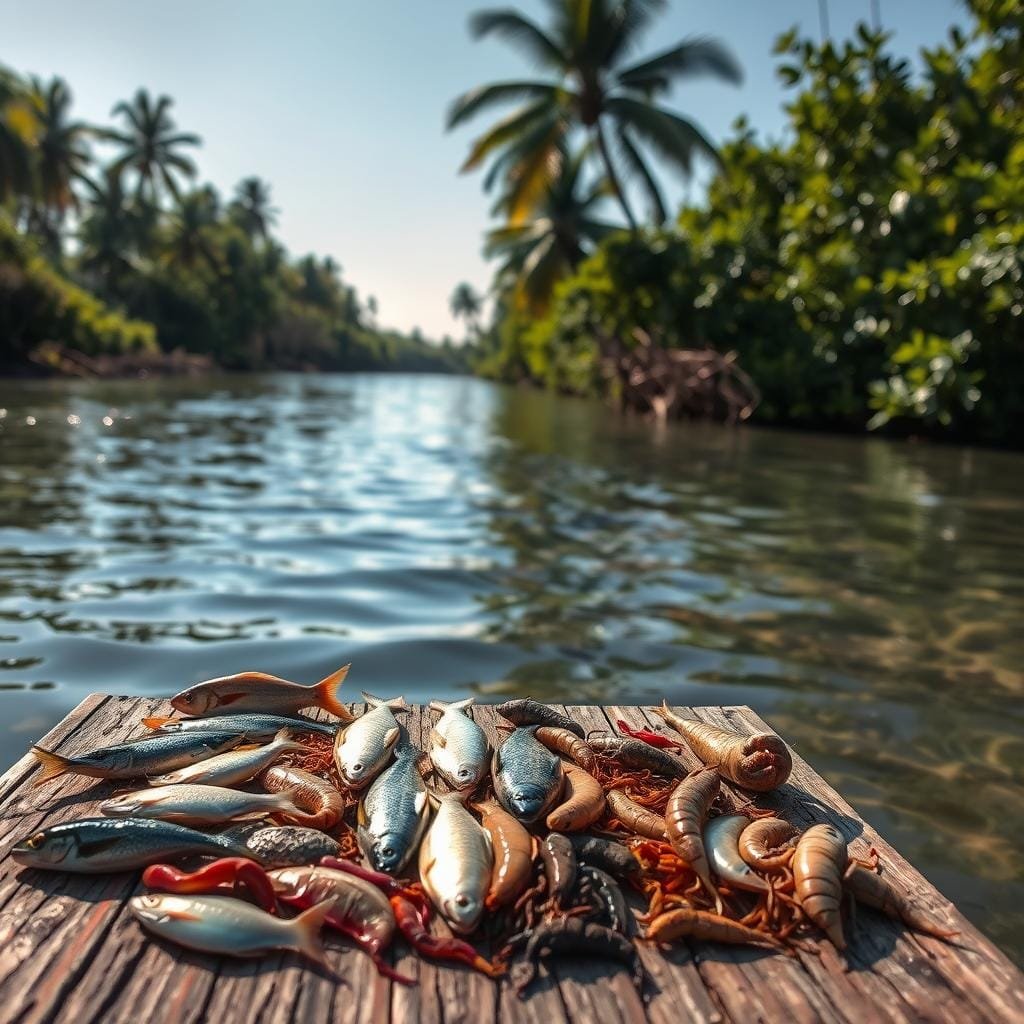
Florida tarpon love live baits that swim right. Match the hatch and keep baits lively. Let current do the work. Use live mullet, pilchards, threadfin herring, and crab bait to stay in the bite.
Finger mullet and larger mullet: free-lined, nose-hooked for natural swim
Free-line finger mullet in the 4–8 inch range with circle hooks. A 5/0 fits medium baits; use 6/0–7/0 for 10–12 inch fish. Nose or top-lip hooking tracks true in current and keeps them lively.
For cruisers along beaches and inlet mouths, use larger mullet or ladyfish. The natural swim of live mullet for tarpon shines when you keep drag smooth and the presentation simple.
Pinfish: under a popping cork to keep them up and out of the grass
Pinfish work anywhere grass meets flow, but they love to dive. Rig them under a popping cork tarpon setup with 3–4 feet of 20–30 lb leader for schoolies. For bigger fish, bump leader class and keep the bait suspended.
Change hook position to manage behavior. A dorsal hook makes them kick; a nose hook steers cleaner when you drift edges or potholes.
Pilchards/whitebait and threadfin: drifted in current, subtle presentations
Pilchards for tarpon and threadfin herring tarpon play best around bridges, markers, and grassflats with good tide. Nose or upper-lip hook to drift naturally. When you’re anchored, a breast or anal-fin hook can push the bait down and away from the boat.
Dollar-bill threadfin are money on clear, moving water. Slip the point between the nostrils for current, or behind the pectoral in calm water to hide the hook and keep them steady.
Crabs during hill tides: Boca Grande, Keys bridges, and West Central Florida
On May–July hill tides, crab bait tarpon dominates around Boca Grande Pass, Bahia Honda, and the Seven Mile area. Pick blue or pass crabs about three inches wide. Remove pincers so they don’t dig into grass or structure.
Hook from the bottom up through the back corner of the shell, and add a small float a few feet above to hold the strike zone. The same rig excels around Keys bridges when the moon phase pushes a heavy flush.
| Bait | Best Rig | Hook Size | Where It Shines | Pro Tip |
|---|---|---|---|---|
| Finger/large mullet | Free-line, nose/top-lip hook | 5/0–7/0 circle | Beaches, inlet mouths, passes | Use live mullet for tarpon when fish cruise high and current is steady. |
| Pinfish | Popping cork tarpon rig, 3–4 ft leader | 4/0–5/0 circle | Grass edges, potholes, shallow bays | Keep baits suspended to avoid snags and trigger surface rolls. |
| Pilchards (whitebait) | Nose-hook drift | 3/0–4/0 circle | Bridges, markers, mangrove points | Pilchards for tarpon excel in clear water with subtle feeds. |
| Threadfin herring | Nostril hook in current; behind pectoral in calm | 3/0–4/0 circle | Beaches, channels, reef edges | Threadfin herring tarpon baits match hatch during bait flushes. |
| Blue/pass crabs | Back-corner shell hook with small float | 3/0–4/0 circle | Boca Grande, Keys bridges, West Central FL | Crab bait tarpon is prime on hill tides and new/full moon flows. |
Cut Bait Tactics: Oily Scents That Call in Big Fish
Big tarpon like deep cuts, river mouths, and dark tidal creeks. Fresh, oily bait gets you noticed fast. Drop your bait quietly and use steady pressure to fish for tarpon on the bottom.
Work slowly and let the scent do the work. Cut bait is great when it’s hard to see, the water is moving, and baitfish are spread out.
Ladyfish heads and chunks: oversized pieces to avoid catfish
Use firm, fresh ladyfish heads or 6-inch chunks on a 6/0 circle hook. Make the bait big to keep sail cats and gafftopsail catfish away. The fresh cuts bleed oil, attracting big fish; that’s where ladyfish chunks shine.
Set the bait on the bottom, close the spool, and let the fish load the rod. Don’t swing—stay tight and let the circle hook do its job.
Mullet heads and butterflied mullet: maximize scent and sink naturally
Mullet heads thump and stay in current. For a stronger scent, use butterflied mullet. Remove the tail, fillet both sides, pull out the backbone and guts, then pin the head on a circle hook. The exposed meat leaks oil and sinks flat.
Keep a jar of Pro-Cure in shrimp or mullet. A light smear boosts the slick without hiding the fresh smell.
Weighting strategy: just enough lead to hold bottom without spooking fish
Use the least weight that holds. In flow or deeper water, a fish-finder rig tarpon setup with a 1/2–1 oz egg sinker slides clean. Around docks or tight seams, a knocker rig keeps casts accurate and prevents hang-ups.
Too much lead feels wrong to wary fish. Minimal weight looks natural and wins more pickups during bottom fishing tarpon.
| Bait Choice | Best Use | Hook Size | Rig & Weight | Key Benefit |
|---|---|---|---|---|
| Ladyfish head | Deep cuts with current | 6/0–7/0 circle | Fish-finder rig tarpon, 1/2–1 oz | Big profile, fewer catfish |
| Ladyfish 6-inch chunk | River mouths, murky water | 6/0 circle | Fish-finder rig tarpon, 1/2–3/4 oz | Heavy oil trail, easy swallow |
| Mullet head | Edges of channels | 6/0–8/0 circle | Knocker rig, light egg sinker | Durable, thumps in current |
| Butterflied mullet | Dark tidal creeks | 6/0–8/0 circle | Fish-finder rig tarpon, minimal lead | Wide scent plume, natural fall |
Keep baits fresh, keep weights light, and let the slick form. These small tweaks with cut bait for tarpon convert quiet spots into strike zones fast.
Artificial Lures That Trigger Eats When Bait Is Scarce
When live bait is hard to find, use smart tarpon artificials. They cover water and stay in the right spot. Keep your movements steady, pause often, and match the lure size to what’s around.
Paddle-tail swimbaits (5–8 inch) on 1/2–1 oz jig heads
White 5–8 inch paddles on red 1/2–1 oz jig heads work well. They’re great from the Treasure Coast to Tampa Bay. Move them in a medium, even roll in the water.
Tick the edges of rips, then drop to the seam and let it swing. This attracts tarpon.
In deep inlets like Boca Grande, use big soft-plastic shad on heavy heads. This lets you jig fast. Short lifts and controlled drops help you feel bites.
Topwater walkers at dawn and dusk: Zara Super Spook, MirrOlure Top Dog
At dawn and dusk, use surface lures. A walk-the-dog path with a Heddon Zara Super Spook draws tarpon. Use long pauses after zigs.
Use a MirrOlure Top Dog in choppy water. Its heavy knock tracks straight in wind. This helps you fish points and bars.
DOA Big One Terror Eyz: trolling or casting around mangroves and creeks
The DOA Terror Eyz works well in mangrove edges and creek mouths. Use white or chartreuse. Creep it past ambush cuts.
Cast tight, let it sink, then pulse it out with two short lifts. This attracts tarpon.
Spoons in gold/silver: size up for bigger tarpon, vary retrieve speed
When bait scatters, tarpon spoons in gold or silver cover ground fast. Choose the right size for bigger tarpon. Start with a slow, thumping sweep.
Add brief bursts to flash, then fall back to slow and steady. This triggers followers.
Mix these with other tarpon artificials during a tide shift. Try spoons, paddles, and topwater. This will show you the day’s best bites in minutes.
Rigging and Presentation: Leaders, Hooks, Corks, and Free-Lining
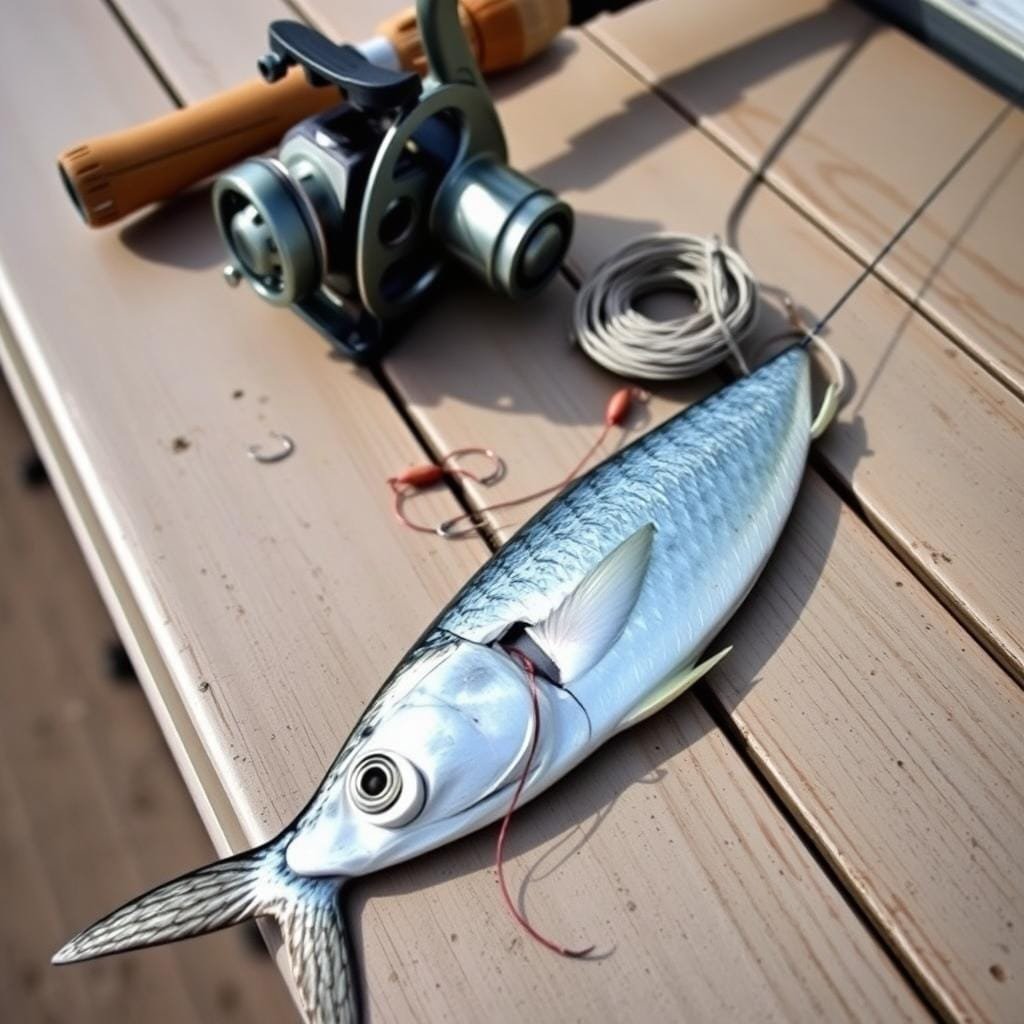
Start with clean knots and simple gear. Choose the right setup for the water and bait. Let the fish guide you.
Circle hooks (6/0–9/0) for live and cut bait, loop knots for artificials
Use a 6/0–9/0 circle hook for live bait. Tie it well to catch the fish right. Don’t pull the hook back too hard.
For swimbaits, use a loop knot. It lets the lure move naturally. This is good in moving water.
Leader choices: 20–30 lb for juveniles, 50–100 lb for adults
Choose the right leader size for the fish. Use 20–30 lb for small fish. It’s light and casts far.
For big fish, use 60–80 lb fluorocarbon. Go up to 100 lb near obstacles. Check for mouth rubs after jumps.
Wire leader in muddy water: when abrasion and slippage matter
In murky water, use a wire leader. It protects the hook from rough mouths. Use it when the bite is strong.
Stick with fluorocarbon in clear water. It makes the bait look real.
Popping corks vs free-lining: when to float, when to let baits swim
Free-lining works in moderate current. Let the bait swim naturally. Use a little weight to stay in place.
A popping cork is good for suspending bait. Use it over grass or shell. Keep the leader short and pop gently.
Change your tactics based on the situation. Use different leaders and hooks. This will help you catch more fish.
Gear That Matches the Fight: Reels, Rods, and Line
Choose the right tarpon rod and reel for the water and the size of the fish. You need strong drags, long casts, and steady pressure. Use braid for tarpon to keep the line small and hooksets solid. Pair it with spinning reels that can handle the fight.
Beach/inlet setups: 5500–6500 reels, 80–100 lb braid, MH–XH rods
For passes and open surf, use 5500–6500 reels with 80–100 lb braid. A 7–8 foot MH–XH rod is great. In heavy surf, a 10–15 foot rod is best.
The Penn Spinfisher tarpon lineup is tough against spray and sand. It’s perfect for waders and jetty anglers.
Inshore “all-arounder”: 4500 reel, 15–30 lb braid, 7’ MH fast rod
For shots from channels to flats, a 4500 reel with 15–30 lb braid is ideal. Use a 7-foot MH fast rod. This combo casts well and has the strength to steer fish.
The Daiwa BG tarpon setup is a great value for boat fishing. It has smooth drag and grit without a high price.
Baby tarpon outfits: 2500 reel, 8–10 lb braid, ML–M action
For creek and backcountry juveniles, use a 2500 reel with 8–10 lb braid. A ML–M rod is perfect. It keeps small hooks in place and makes fights fun.
Durable choices: sealed spinning reels for surf, kayaks, and flats
Salt, sand, and spray damage gear quickly. Sealed spinning reels like the Penn Spinfisher tarpon are great for surf, kayaks, and flats. On dry decks, the Daiwa BG tarpon is a rugged value.
For quick specs and real-world advice, see this guide on the best tackle for tarpon fishing.
| Scenario | Reel Size | Line | Rod | Why It Works | Notable Picks |
|---|---|---|---|---|---|
| Beach/Inlets, heavy current | 5500–6500 | 80–100 lb braid for tarpon | 7–8′ MH–XH; 10–15′ surf when needed | Long casts, high drag, control near structure | Penn Spinfisher tarpon; spinning reels for tarpon with sealed bodies |
| Inshore all-around | 4500 | 15–30 lb braid for tarpon | 7′ MH fast | Balance of distance, sensitivity, and lifting power | Daiwa BG tarpon; versatile tarpon rod and reel |
| Backcountry juveniles | 2500 | 8–10 lb braid for tarpon | ML–M action | Protects light hooks, keeps fights sporty | Compact spinning reels for tarpon under 4′ |
best bait for tarpon
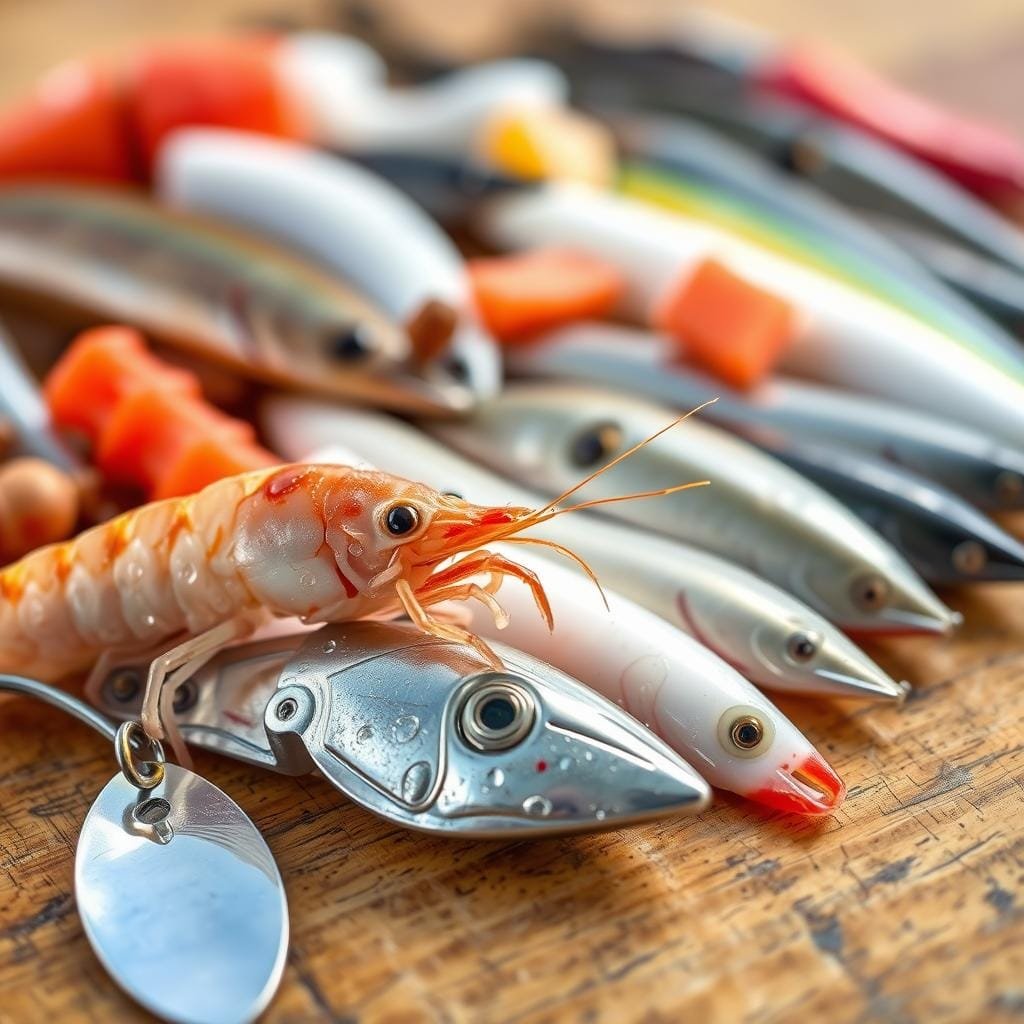
Choose the right bait for tarpon based on the situation. In clear water, use free-line live mullet or ladyfish. This is the best bait for tarpon in Florida, used when fish are active.
Small live crabs are great when the moon causes strong currents. Near Boca Grande Pass and the Keys bridges, a 3-inch crab bait works well. Many locals say crab is the best bait for tarpon in these areas.
In dark places, like creeks and river mouths, use cut bait. Ladyfish heads or butterflied mullet are good because they smell fresh. Cut bait is better when it’s hard to see or fish are deep.
Try artificials if bait is hard to find. Use white swimbaits, Zara Super Spook, and MirrOlure Top Dog to cover a lot of water. For more info, check out this guide: best baits and lures for tarpon.
Choose the right rig for your goal. Use 20–30 lb leaders for young tarpon and 50–100 lb for big ones. Use 6/0–9/0 circle hooks for all baits. A short wire bite guard helps in muddy water. This setup is perfect for fishing in Boca Grande or the Keys.
Water Temperature, Visibility, and Scent: Conditions That Drive Bites
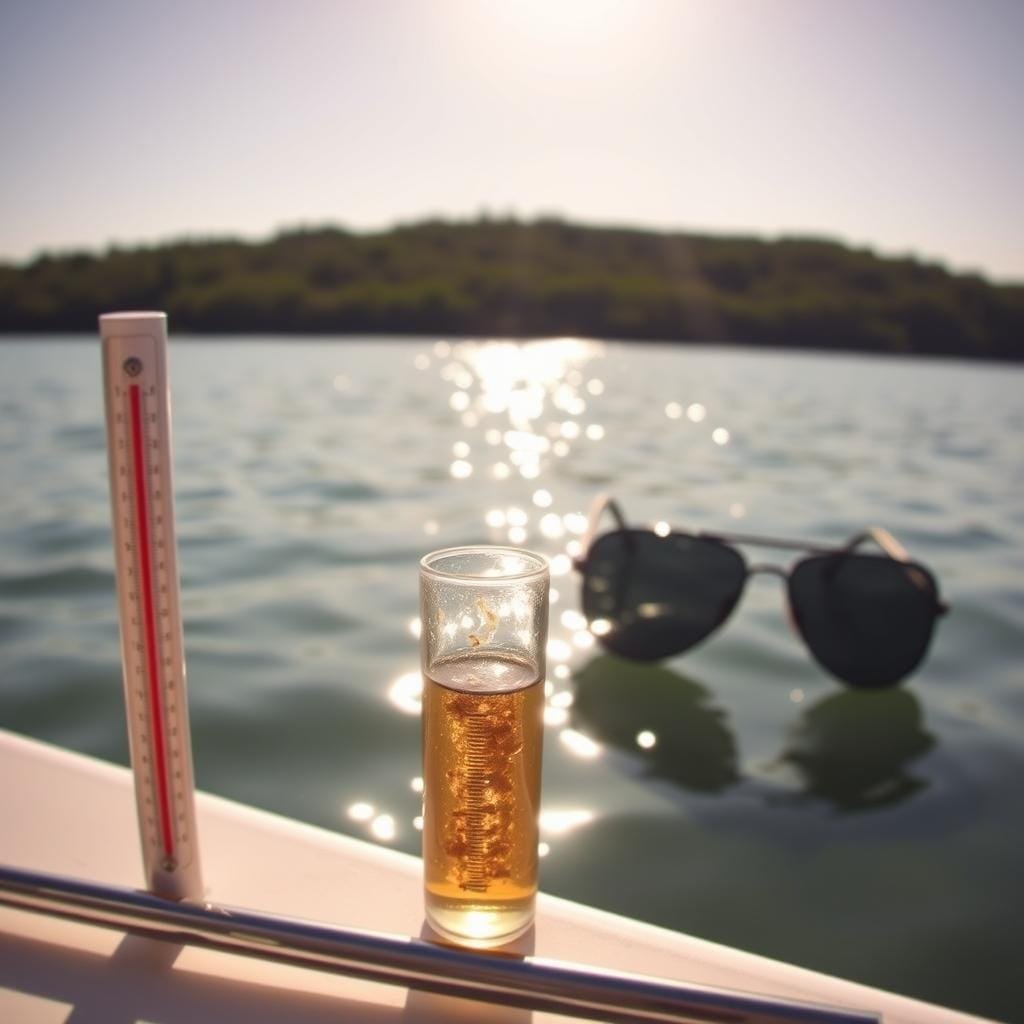
Getting the best tarpon conditions starts with real data, not guesses. Tarpon are cold-blooded, so small changes in water temperature matter a lot. Knowing the water’s clarity helps decide if to use stealth, vibrations, or scent.
Thermometers on a string: reading temps beyond the surface
Surface readings can be wrong. A thermometer on a string shows what’s really happening 10–12 feet down. Check mud flats at dawn, then probe channels to find the best tarpon spots.
When you see a big temperature difference between the surface and deep, change your plan. Watch where tarpon roll as the cool layer sinks.
Hot and cold strategies: shallow early vs deeper mid-day
On hot days, start in shallow water. The cool skin layer helps. As it gets warmer, move to edges and deeper spots where it’s cooler. In cold weather, wait for it to warm up and fish dark areas where it’s cooler.
Clear skies make it easier to see tarpon, so use smaller leaders and natural presentations. In the middle of the day, when it’s hottest, a slow drift along a temperature break is best.
Leaning on smell in murky water: fresh cut bait and sticky attractants
When water gets cloudy from rain or wind, tarpon rely more on smell. Use fresh bait like ladyfish heads or mullet chunks on the bottom. Keep weights light so baits move naturally and don’t scare fish.
Use scent gels to make your bait even more attractive. Pro-Cure tarpon blends in mullet or shrimp are great for dark water. Reapply after a long drift or if a fish misses your bait to keep the scent strong.
Regional Notes: Florida Keys, Boca Grande, Treasure Coast, and Beyond
In the Florida Keys, spring to summer is crab time. Places like Bahia Honda and the Seven Mile see lots of crabs. Use small floats and live crabs for fun surface bites.
Because the water is clear, you need to be quiet. Use thin leaders and light weights. This is how you catch tarpon near bridges.
Boca Grande Pass is all about fast fishing. The best times are when the tide is strong and there’s a lot of boats. Use big shad lures to catch tarpon.
Sharks might show up when it’s busy. You need to be quick to catch a big tarpon here.
On the Treasure Coast, the best times are early morning and late evening. Use swimbaits and topwater lures for big bites. These lures look like fish the tarpon like to eat.
Along beaches and inlets, big tarpon are caught with free-lined bait. In mangrove areas, smaller tarpon eat bait under corks. This is a good spot for catching them.
From April to November, fish move around Florida as it gets warmer. When it cools down, they go back to the Keys and south. Use the right tackle for the water you’re fishing in.
Choose reels that can handle salt and spray. A Penn Spinfisher is good for the surf, and a Daiwa BG is great for boats. Knowing the tides and moon helps you catch tarpon in the Florida Keys, Boca Grande, and Treasure Coast.