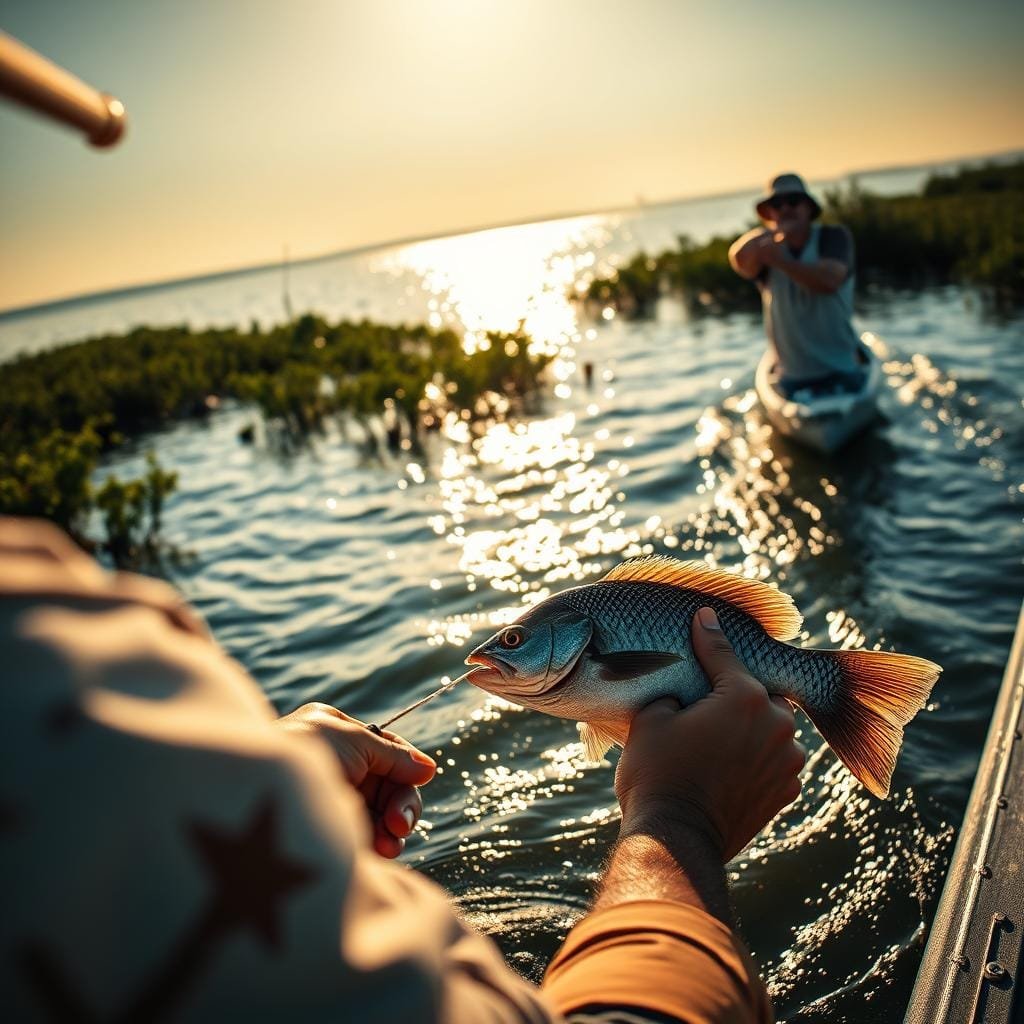
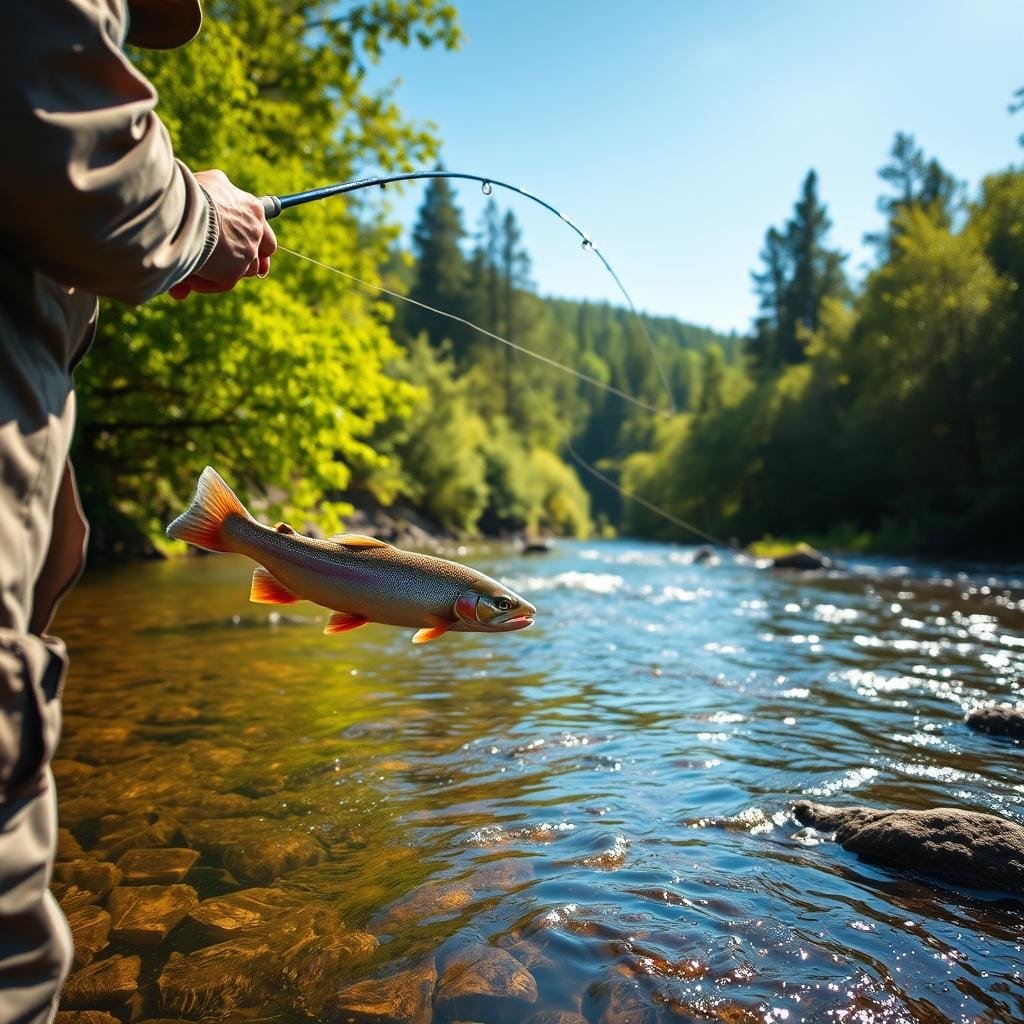
Welcome to the world of brook trout fishing. It’s a mix of skill, patience, and art. In Canada, they’re called speckled trout or “specks”. They have bright colors and fight hard.
This guide will help you learn brook trout fishing techniques and speckled trout angling tips. You’ll understand their habits and where they live.
To catch these fish, you need to know they like cold, clear water. Go into the wilderness to find them. The “coaster” brook trout in the Great Lakes are special.
They migrate like sea-run cousins. Learn how to find them during their migrations. Know their favorite water temperatures and what they eat. With the right gear, catching brook trout is rewarding and fun.
Want to learn more? Visit nipigonriveradventures.com. There, you’ll find more about brook trout fishing. Adventure is waiting for you, whether by a river or a mountain lake.
Understanding Brook Trout: Habits and Habitat
Brook trout are loved by anglers for their beauty and the challenge they offer. They live in cold, oxygen-rich waters. Knowing where and how they live is key to understanding these amazing fish.
Identifying Brook Trout Habitats
Brook trout live in the northern parts of North America. This includes Canada and the northern United States. They like clean, cold streams and rivers.
They can also be found in lakes, where they go deeper and colder in warm months. Places with lots of underwater structures like rocks and logs are important. These spots help them hide from predators and strong currents.
The Seasonal Movements of Brook Trout
Brook trout move with the seasons. In late summer, they go upstream to shallow areas to spawn. After spawning, they might go back to deeper waters or stay near their spawning spots.
This depends on food and how warm or cool the water is. In winter, they find deeper pools in rivers and lakes. This helps them save energy and stay at a stable temperature.
Why Water Temperature Matters for Brook Trout
Brook trout have special temperature needs. They do best in water around 53 degrees Fahrenheit. This temperature helps them stay healthy and grow well.
Knowing about the water temperature of their habitats is important. It helps with conservation and managing fish populations.
The Essential Gear for Brook Trout Fishing
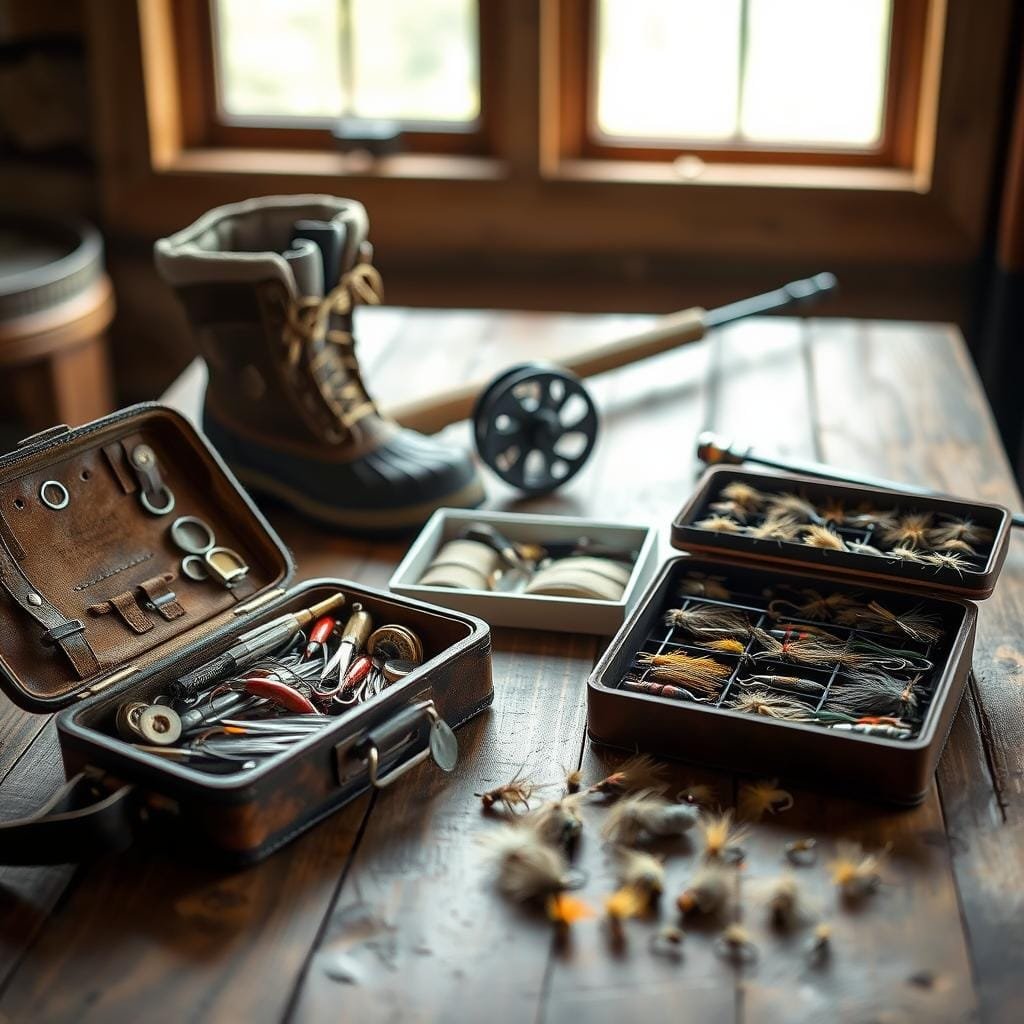
Getting the right gear for brook trout fishing makes your trip better. It prepares you for the fun and challenges of catching these fish. Whether you’re in a stream or a lake, the right gear is key.
Choosing the Right Rod and Reel
Choosing your rod and reel depends on your fishing method. For fly fishing, pick a light rod for precise fly control. A good fly reel helps with smooth line control.
For spin fishing, a light rod and strong reel are best. They handle tough water and fishing.
Must-Have Flies and Lures for Brook Trout
Choosing the right lures and flies is important. Small spinners and flies that look like local bugs work well. The Toronto Wobbler is a favorite for spin fishing.
For fly fishing, the Black Wooly Bugger and Royal Coachmen are must-haves. You can find more info in this guide on brook trout fishing.
The Importance of Proper Fishing Line
Choosing the right fishing line is also key. It needs to be strong but not too visible. Fly fishing lines should be light for natural fly movement.
Spin fishing lines must be tough for rocky areas. This helps your line last longer.
How to Catch Brook Trout: Techniques and Strategies
Catching brook trout is all about smart angling strategies and fishing techniques. You can use fly fishing or spin fishing. Each method has its own way to catch trout.
Fly fishing for brook trout means using streamers and surface flies. These attract trout to the surface. It’s a fun way to fish.
Spin fishing uses lures like small straight-spinners and jig heads. These work well in deep waters. For fast currents, use heavier lures like Countdown Rapalas.
| Fishing Method | Lure/Bait Type | Best Used In |
|---|---|---|
| Fly Fishing | Emerging Patterns | Shallow Streams |
| Spin Fishing | Straight-Spinners | Rapid Currents |
| Fly Fishing | Surface Flies | Calm Waters |
| Spin Fishing | Boot-Tail Grubs | Rocky Ridges |
| Spin Fishing | Countdown Rapala | Swift Currents |
Using these fishing techniques and angling strategies will help you catch more trout. It also makes fishing more fun.
Finding the Best Brook Trout Fishing Spots
Anglers looking for the best spots to fish for brook trout need to use maps and know about habitats. The DeLorme Atlas & Gazetteer is a great tool for finding good places to fish. It helps both new and experienced anglers find the best spots.
It’s important to know where brook trout like to live. They like rocky places, near stream mouths and with cabbage weed. These spots give them shelter and food.
Using maps well can help you find these great spots. Guides from places like Quebec Lodge share local tips. They help you find the best places to fish by pointing out important features.
Talking to local experts like Gord Ellis can also help a lot. He knows when and where brook trout move. His advice can lead you to secret spots full of fish.
In short, using maps and knowing about habitats makes fishing better. It helps you find the best places and catch more fish. So, get ready for a great fishing trip!
The Art of Fly Fishing for Brook Trout
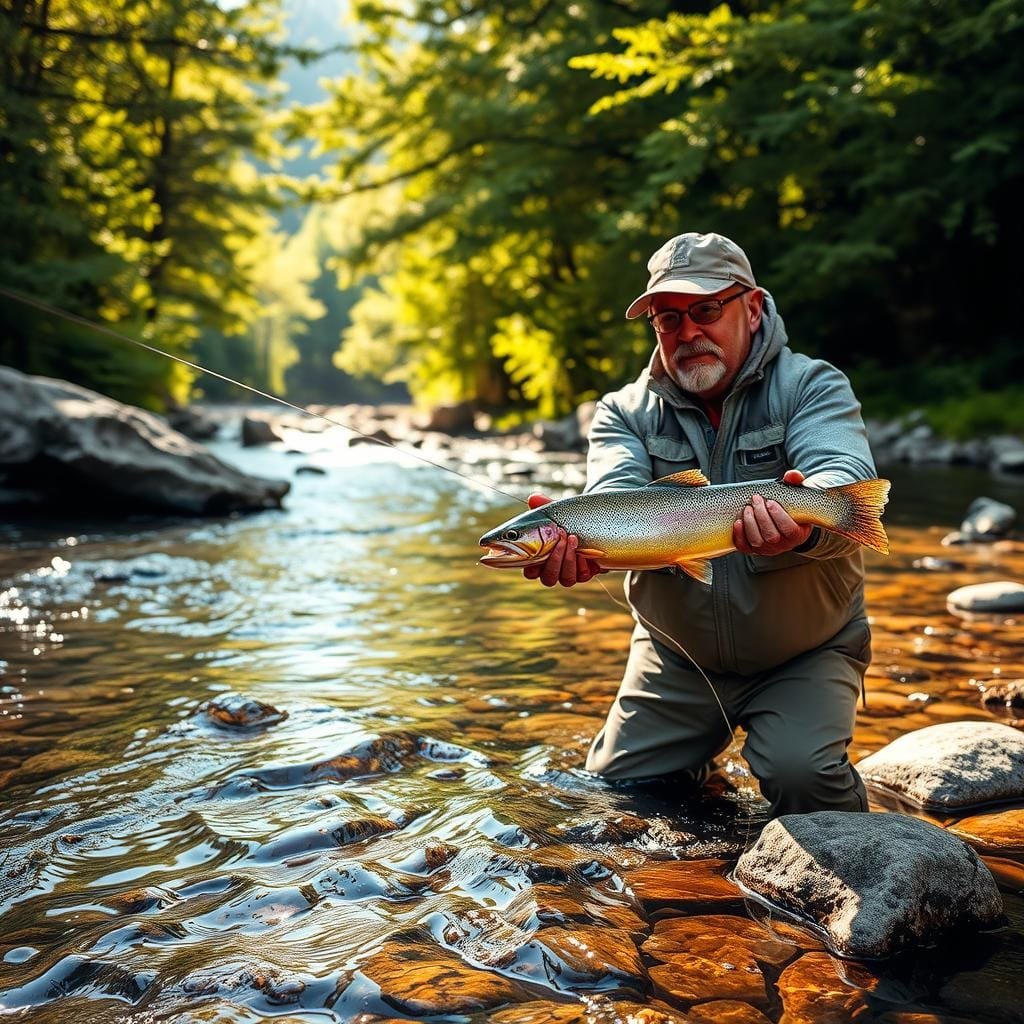
Learning to fly fish for brook trout is a special skill. It needs you to know about fly fishing techniques and fly selection. You must also be good at casting skills. Choosing the right fly is key, as it must look like the trout’s food.
To get better at fly fishing, you need to be precise with your rod. You also have to know how trout act and what their water looks like. Watching the water’s flow, temperature, and when insects hatch is important. It helps you pick the right fly and catch more fish.
Mastering the Fly Fishing Cast
Being good at casting is very important. You need to cast your fly just right, without scaring the fish. It takes practice and learning the right techniques. You’ll need to know how to cast overhead, roll cast, and spey cast.
Selecting Flies for Different Conditions
Picking the right fly is very important. You want to choose a fly that looks like the insects trout are eating. For example, during a caddis hatch, a caddis fly pattern is best. This increases your chances of catching a trout.
- Dry flies for surface feeding during hatchings
- Nymphs for underwater feeding when there are no visible hatches
- Streamers for mimicking small fish and large aquatic prey
Understanding these points and getting better at casting and choosing flies is key. Whether you’re fishing in small streams or big waters, skill, knowledge, and the right gear will help you enjoy and succeed in fly fishing.
Using Spinners and Baits to Target Brook Trout
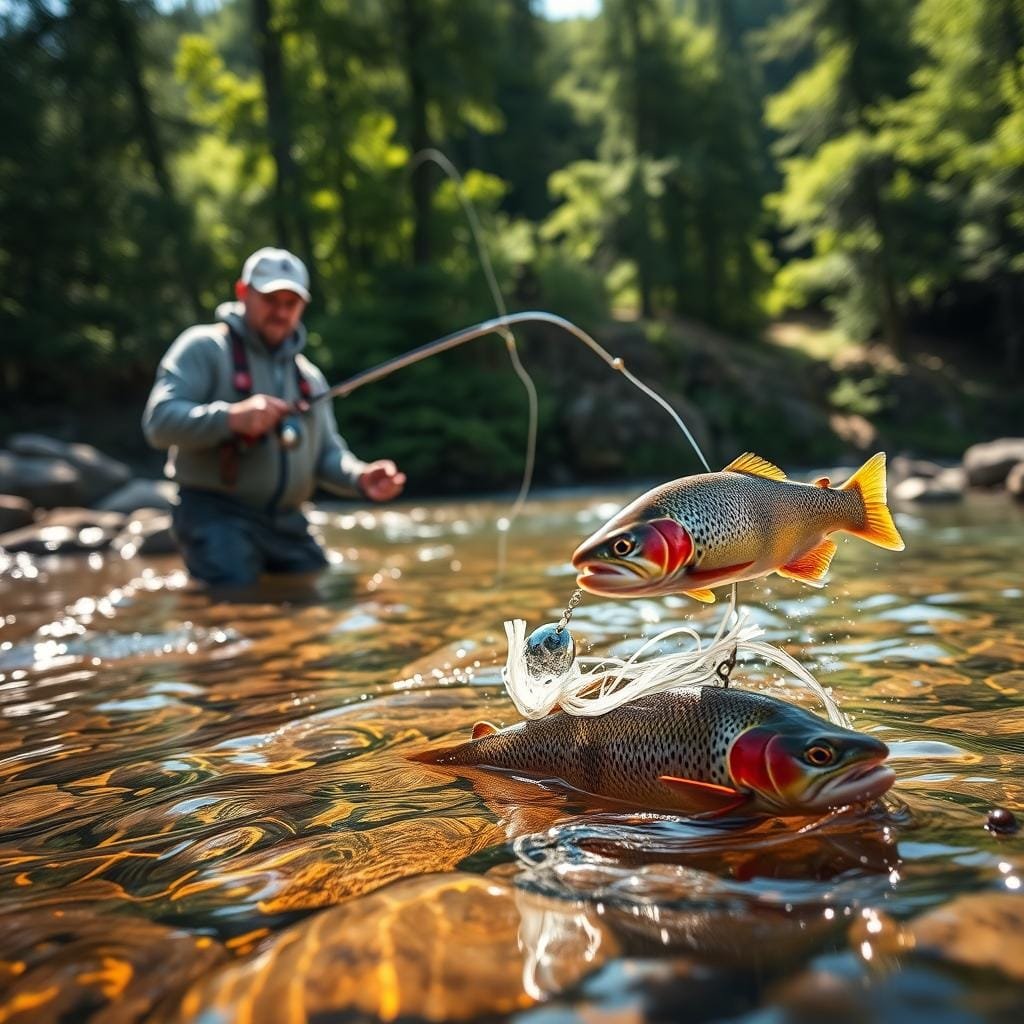
Spinner fishing is a top choice for catching brook trout. Spinners look like small fish, which brook trout can’t resist. Choosing the right spinner is key to a good catch.
Knowing how to fish with spinners is important. Look for rivers with fast currents and calm spots. These places make spinners look like real fish.
- Straight spinners – Ideal for calm, clear water where subtlety is key.
- Jig heads with boot-tail grubs – Best for mimicking small baitfish with enticing movement.
- Countdown Rapala – Effective in deep waters or strong currents, reaching areas where brook trout may hide.
Every bait and spinner should match the water you’re fishing in. Whether it’s a lake or a river, picking the right bait is essential.
The Role of Catch and Release in Brook Trout Fishing
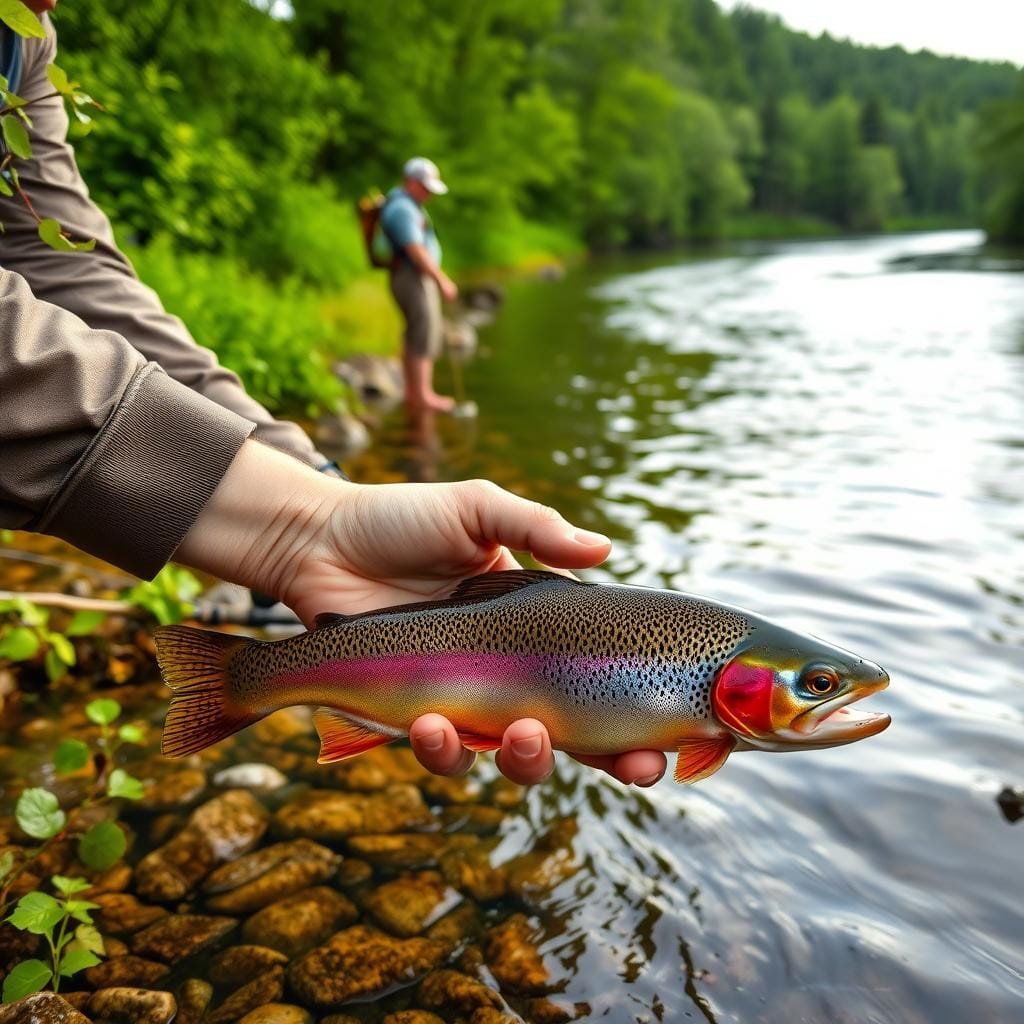
Catch and release is key for brook trout conservation and sustainable angling. It lets anglers have fun while helping fish populations stay healthy. Doing it right helps brook trout live well in their homes, balancing fun fishing with caring for nature.
It’s important to know why catch and release matters. It helps keep brook trout numbers up. This is good for the whole ecosystem.
- Use of Single Barbless Hooks: Makes it easier to release fish safely.
- Handling Techniques: Keeping fish wet and gentle helps them recover fast.
- Swift Release: Quick release helps fish survive better.
Sustainable angling is more than just catching fish. It’s about making the water healthier. Teaching anglers about catch and release practices is vital for brook trout conservation. By following these steps, we can enjoy fishing more in the future.
Reading Water and Weather Conditions for Brook Trout Fishing
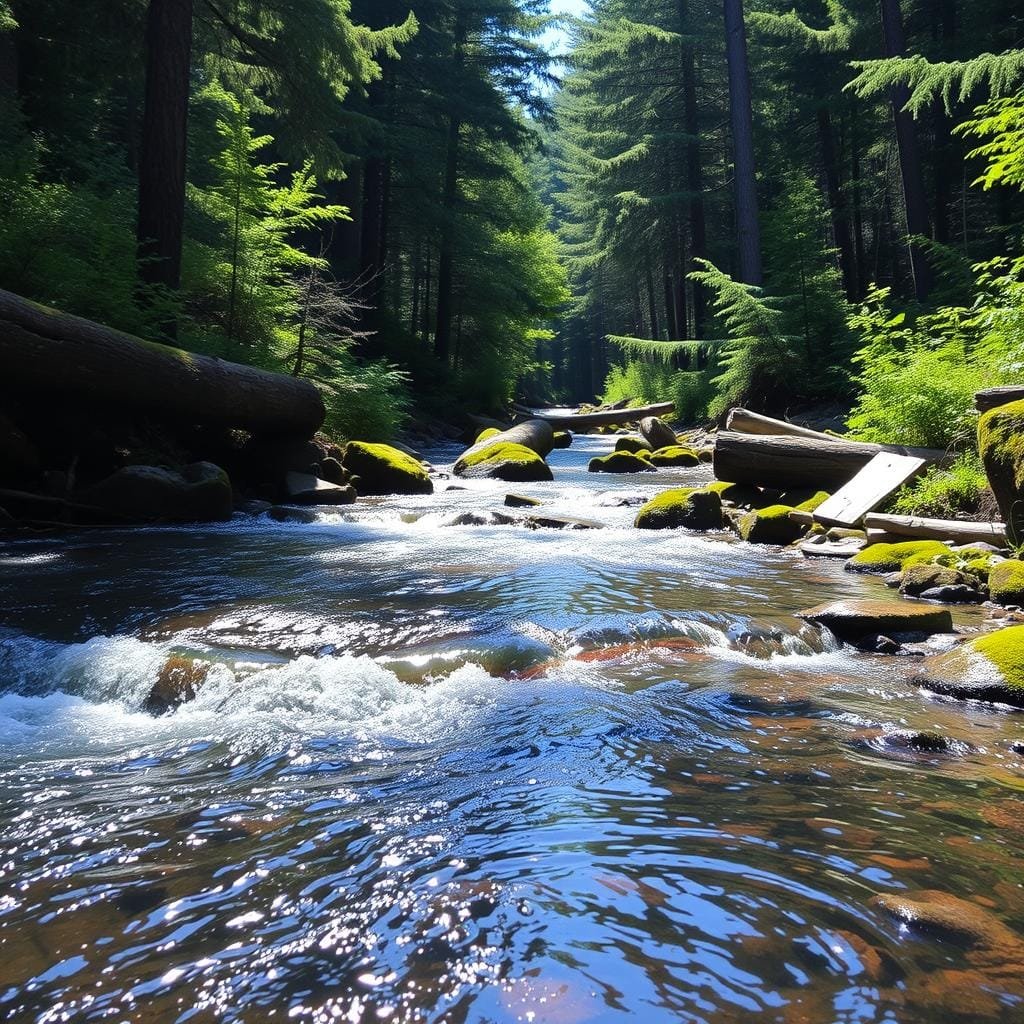
Water conditions and weather patterns greatly affect brook trout. This helps anglers plan better for fishing. Knowing these signs can make fishing more successful, whether you’re in a new place or a familiar spot.
It’s important to notice changes in water and weather. These changes tell us where trout might be. Let’s look at how to understand these important signs.
Interpreting Water Flows and Structures
Knowing how water moves is key to fishing. Rivers, streams, and lakes have different water flows. These flows create places like pools and runs where trout like to be.
Things like rocks and logs also change how water moves. These spots are safe for trout. Anglers should look for where fast and slow water meet. Trout like to hunt there.
- Look for areas where water flows around obstructions, creating natural feeding points.
- Identify deeper pools following runs; brook trout may retreat here during brighter parts of the day.
- Observe eddies and undercut banks which can provide shelter and feeding grounds for trout.
How Weather Affects Brook Trout Behavior
Weather is also very important for fishing. Changes in weather can change the water’s temperature. This affects how trout move and eat.
On cloudy days, trout are more likely to eat. They feel safer when it’s not sunny. This makes them more active.
- Cooler, overcast days often result in more surface insect activity, prompting brook trout to feed more aggressively.
- Barometric pressure changes before a storm may increase fish activity, as trout sense the impending weather shift.
- Strong winds can stir up the water’s surface, potentially bringing more nutrients into the system and encouraging active feeding.
By using what you know about water and weather, you can catch more trout. Your fishing plan should change with the conditions. This makes fishing exciting and fun every time.
Adventures in Remote Brook Trout Fishing
Going on remote fishing trips for backcountry brook trout is an exciting adventure. It’s not just about catching fish. It’s about exploring the beautiful places where brook trout live. To have a great time, you need to be well-prepared.
This means having the right gear and knowing the area you’ll fish in. It’s all about the journey and the thrill of finding a big fish.
Packing for Backcountry Brook Trout Fishing Trips
- Navigation Tools: GPS device, map and compass—never rely on mobile phones alone.
- Fishing Equipment: Lightweight rod, reel with a strong drag system, and a selection of flies and lures suited to backcountry waters.
- Clothing: Weather-appropriate attire, including a reliable rain jacket and moisture-wicking layers.
- Safety Gear: First aid kit, bear spray, and a water purifier.
- Sustainable Practices: Tools for catch and release, including barbless hooks and a net.
Navigating Remote Waters for Trophy Brook Trout
Exploring remote waters like those in God’s River in Manitoba is an adventure. You need to know the local conditions, which can change quickly. Whether you’re hiking or fishing, understanding the water is key to catching big fish.
Books like 75 Hikes in Virginia’s Shenandoah National Park can help. They show how to hike and fish together. This way, you can find remote spots full of brook trout.
Tackling Challenging Environments for Brook Trout
Mastering fishing in tough places means knowing each spot well. Anglers after brook trout face fast rivers and deep lakes. Each place needs its own way to fish, which can make or break your trip.
In fast-flowing rivers, the water is strong. You need lures that sink fast and can handle the water’s power. The Countdown Rapala is great because it goes deep, where trout like to hide.
Lake fishing is different. Brook trout in lakes like places with shelter and food. Try fishing near rocks, between islands, and by weeds. Knowing the lake’s secrets is key. It’s about finding the right depth and understanding the water’s layers.
Both rivers and lakes are tough but rewarding. Learning to fish in each place boosts your chances of catching trout. It also makes you a better angler, ready for any water. Adapting your fishing to the situation is what makes a pro.
Tips and Tricks from Seasoned Anglers
Getting expert angling advice from seasoned anglers can make your fishing trip better. They share seasoned fishers’ tips and their experience. This helps a lot, like in brook trout fishing.
One key fishing success secret is knowing how to use your gear and technique. Learning from experts like Canadian author Gord Ellis is very helpful. He knows a lot about brook trout and where to find them.
Talking to local guides or reading books like Bob Mallard’s “Squaretail” can also help. Mallard shares important info about brook trout. This info is very useful for catching them.
Also, visiting websites with fall fly fishing tips can be very helpful. You learn from experts and get better at fishing.
Remember, it’s not just about catching fish. It’s also about enjoying nature and fishing responsibly. This way, you catch fish and help keep the environment healthy for others too.
Conservation Efforts and Brook Trout Sustainability
Keeping brook trout healthy is linked to our ecosystems. We must fight threats like pollution and climate change. By doing this, we help these fish and the places they live.
Restoring their homes is key. For example, adding limestone sand to streams helps. It makes the water better for trout. Also, fixing old culverts lets trout move freely.
This work is vital for restoring brook trout. It’s a big part of keeping our waters clean and full of life.
Helping brook trout means taking care of our environment. We need to protect the land around rivers and control invasive species. Monitoring the environment is also important.
Supporting these efforts helps the trout and keeps our waters clean. It’s good for all living things that depend on our rivers and streams.