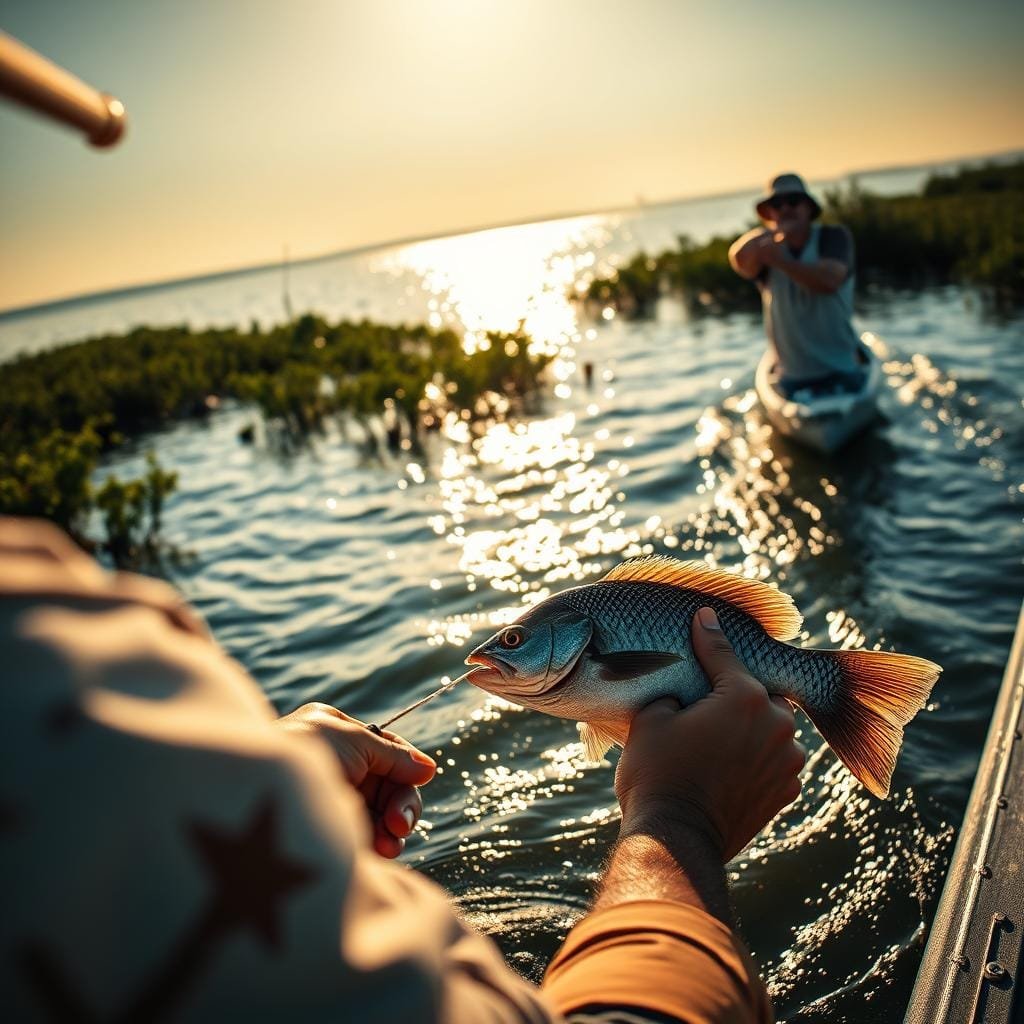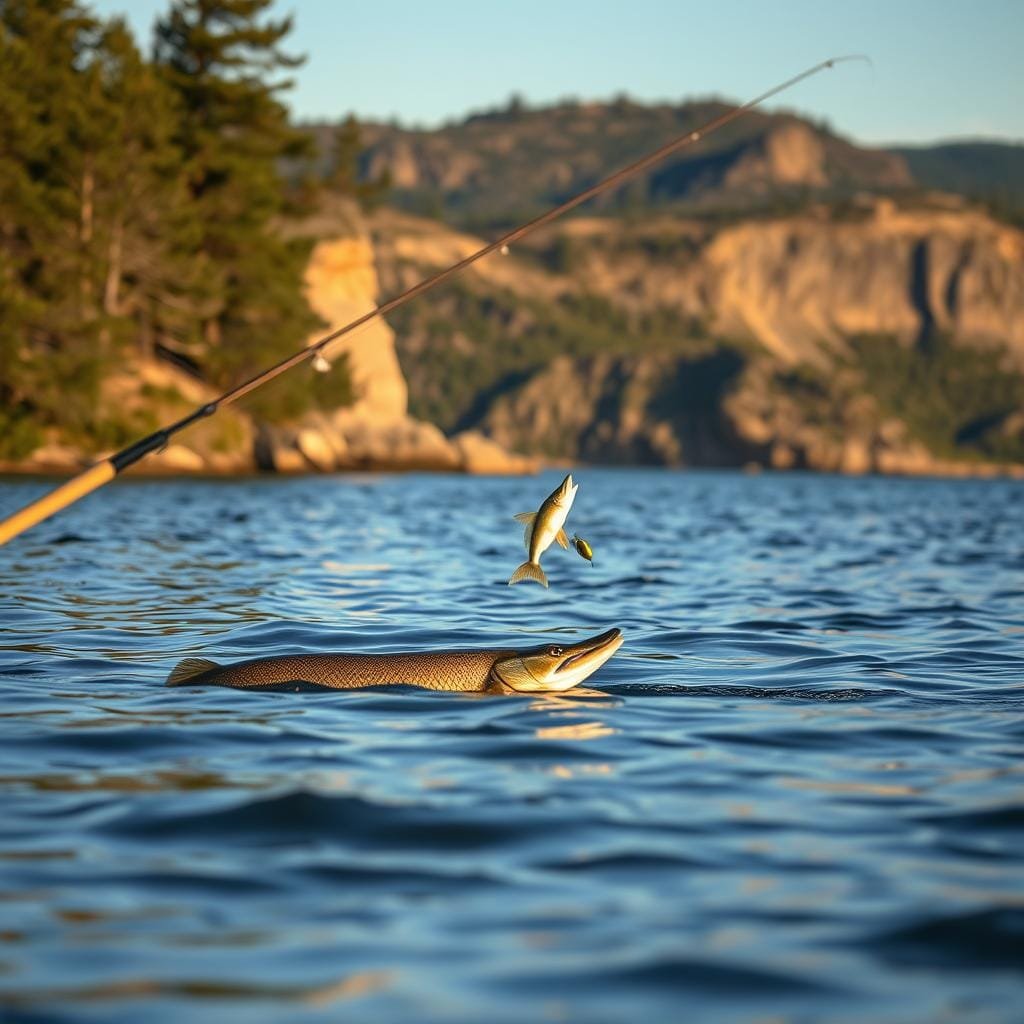
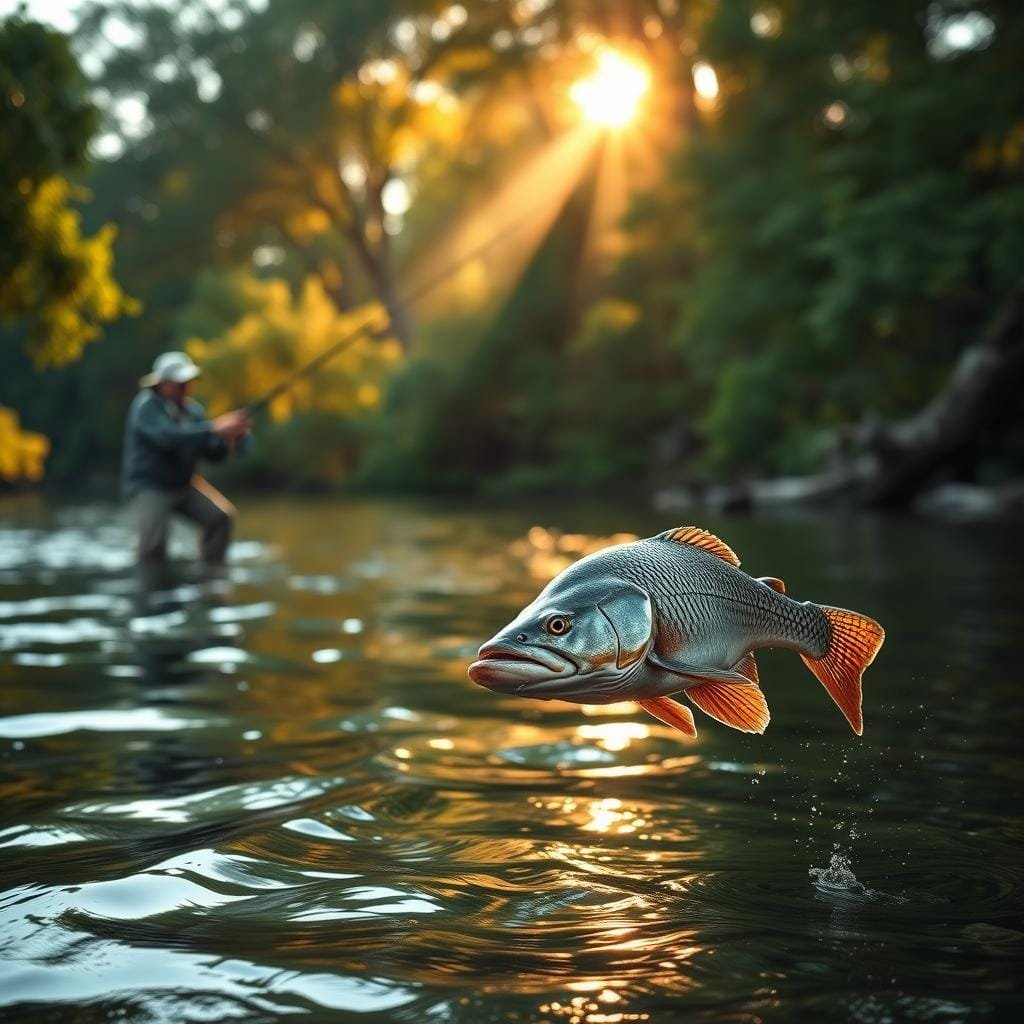
Imagine being a master angler, chasing fish that look like dinosaurs. These fish have long jaws and scaly skin. To catch them well, you need patience and skill, making each cast exciting.
Learning to fish for gar is more than just using the right gear. It’s about knowing how these ancient fish behave. This knowledge helps you catch them better.
When you fish for these strong, jumping fish, you need the right tools. Whether you’re experienced or new, the right strategy is key. Let’s see how to turn your gar fishing into amazing stories.
Understanding Gar: Habits and Habitats
Gar fish have a long history and look like they’re from another time. They are hard to catch but very interesting. To catch them, you need to know where they live and how they act.
Identifying Prime Gar Locations
Gar like to live in weedy areas of rivers and lakes. These places are great for them to grow. They can be found from the Mississippi to Quebec and down to the Gulf Coast in the U.S.
When looking for gar, find places where they are always active. They like to go back to the same spots every year. This makes it easier for experienced anglers to find them.
The Seasonal Patterns of Gar Behavior
Gar behave differently with the seasons. In the summer, they are very active. They come up to the surface a lot.
This is because it’s hot and they need air. Summer is the best time to catch gar because of this.
The Significance of Surface Activity
Gar coming up to the surface is important. It shows how healthy the water is. When they are active, it means there might be more fish nearby.
This helps anglers plan their fishing trips. It shows how gar behavior is connected to the environment.
The Essential Gear for Gar Fishing
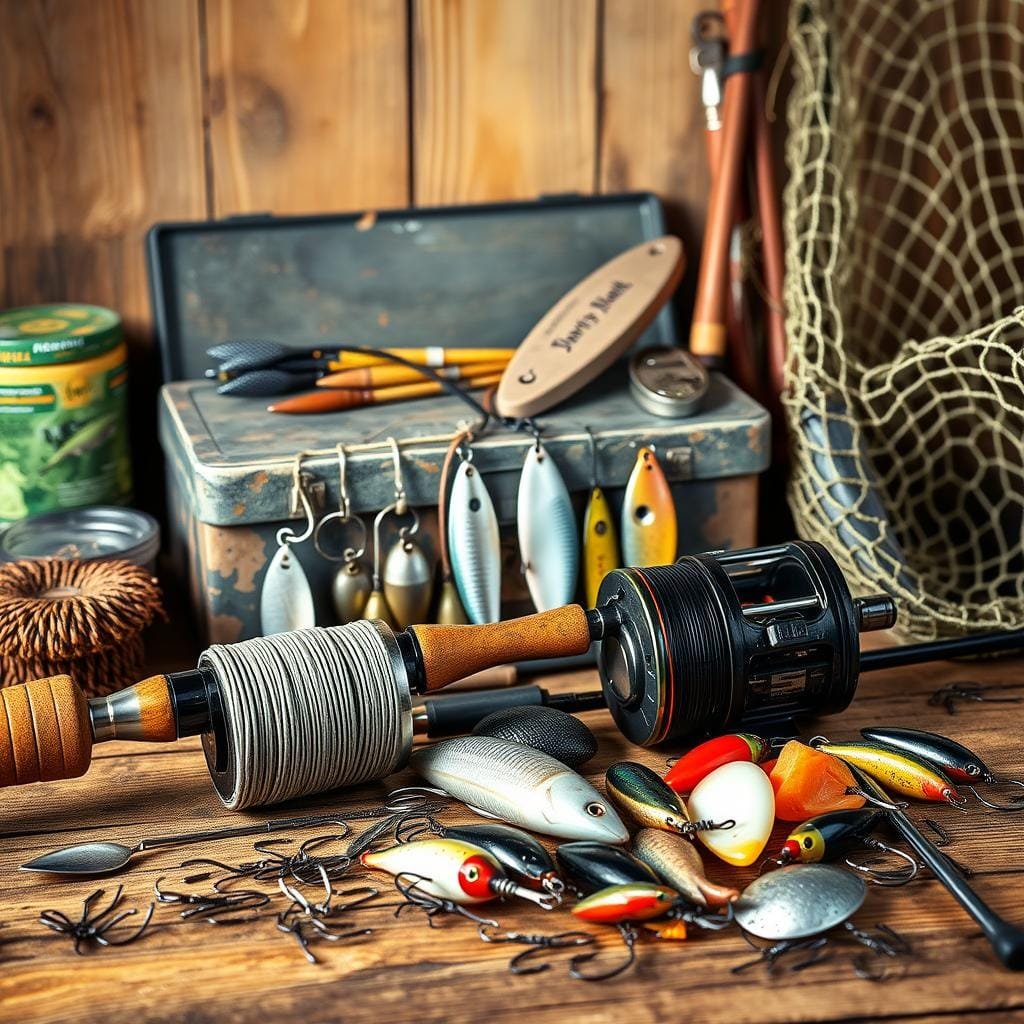
Getting the right gar fishing gear is key for a good fishing trip. You need a medium-heavy spinning rod to start. This rod is strong and can handle the big and strong gar fish.
A good reel is also important. It should hold heavy lines and strong fish. Anglers often use 14-pound-test monofilament or braided lines. This depends on the water and the size of the gar.
- Steel leaders are a must because gar fish have sharp teeth.
- Use 30 to 40 pounds mono or Tyger Wire for strength and less visibility.
- Secure the leader to the lure with a loop knot. Then tie it to the mainline with a perfection loop.
Remember these tips to catch more gar fish. Your gear will also last longer against these big fish.
How to Catch Gar: Proven Techniques and Strategies
Learning gar fishing techniques needs patience and knowing how gar behave. You also need specialized lures. The rope fly for gar is a key tool. It’s a hookless bait that grabs the gar’s attention.
Starting a gar fishing trip with a rope fly made of nylon can help a lot. These lures get stuck in the gar’s teeth, keeping it from getting away. The rope fly is simple yet very effective, perfect for clear waters where gar can see it from far away.
Using weighted lures is also a good idea. They’re easier to handle with a strong fishing rod. The weight lets you cast further and deeper, where gar like to hide when it’s hot.
To catch more gar, try different lures and ways. Fly-fishing with rope flies works well, near weeds or where gar like to swim. Remember, gar might take time to get interested in the lure before you can hook them.
Keep practicing and learning from experts to get better at gar fishing. Joining fishing communities or reading about gar fishing can help you improve your skills.
No matter if you’re new or experienced, knowing these tips will make your gar fishing trips better. It turns hard times into chances to catch this strong fish.
Decoding the Diet: Bait Selection for Gar Fishing
Choosing the right bait is key in gar fishing. It greatly affects your success. Live bait, cut carp bait, or artificial lures can all work well. Knowing what gar like can help a lot.
Live baits like bluegill or small carp are popular. They move naturally and smell good. But for big alligator gar, cut bait is best. Cut carp bait, in particular, is great. It releases oils and scents that attract gar.
Live vs. Artificial Baits: What Works Best
Live and artificial baits both have their good points. The choice depends on the fishing conditions and the gar type. Artificial lures are great for sight fishing. They make gar strike aggressively.
Brightly colored lures that move like injured fish work well. They grab gar’s attention.
The Effectiveness of Cut Bait for Alligator Gar
Alligator gar have strong, bony mouths. They need baits they can bite into and hold. Cut carp bait is a favorite among anglers for this reason.
Its strong scent is perfect for murky waters. Gar find the bait by smell, not sight.
Making the Catch: Hooking Techniques for Gar
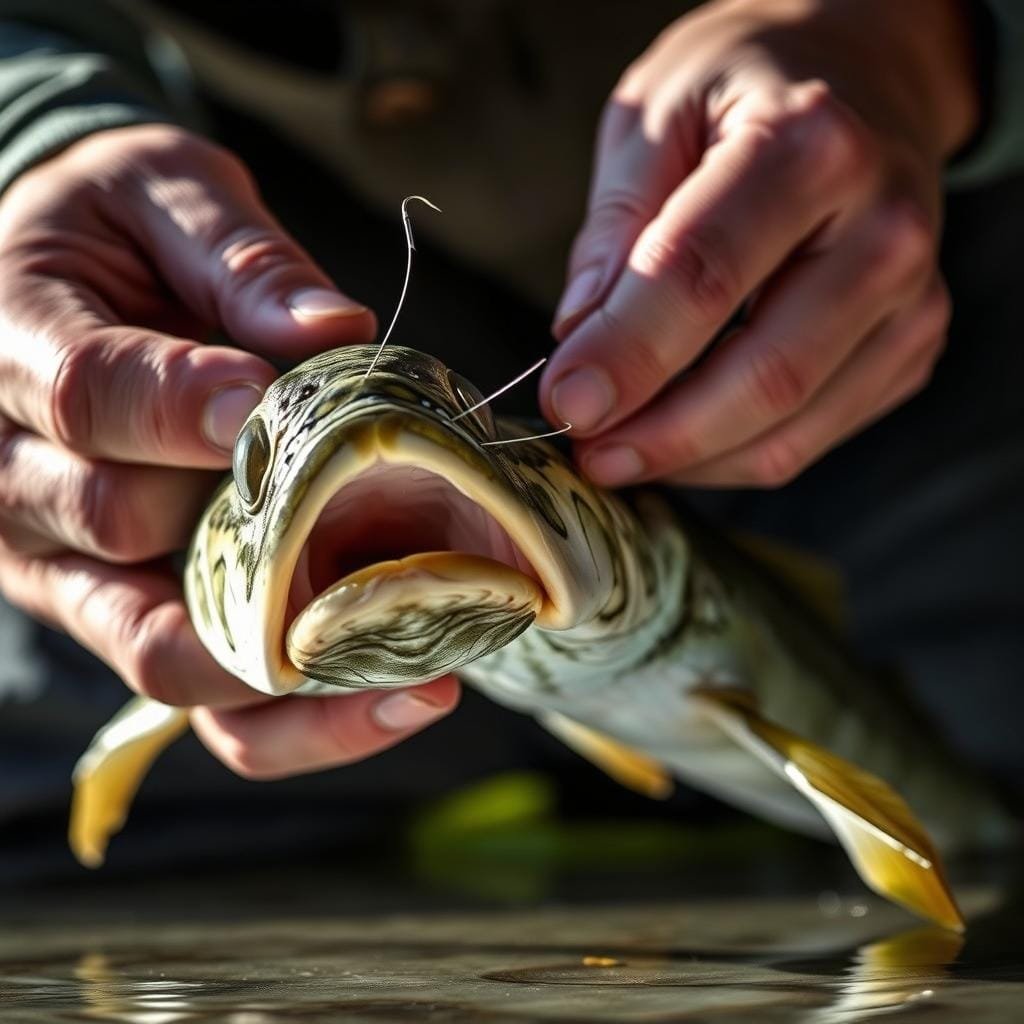
Fishing for gar needs special techniques because of their bony jaws. Hooking gar is hard but very rewarding. It’s key to use methods that match their aggressive strikes.
Rope lures are a favorite among experienced anglers. They work well because they look like gar’s natural food. If a gar hits the lure, the rope’s tangled parts help get a treble hookup even if it misses the hook at first.
- Wait for the gar to pick up the bait before trying to set the hook.
- Watch closely for gar movement; aggressive strikes often come after a short pause.
- When you see a strike, set the hook quickly and strongly to catch the fish.
Getting the timing and technique right is key to catching gar. Being alert and quick helps tackle the challenges of this unique fish.
The Art of Sight Fishing for Gar
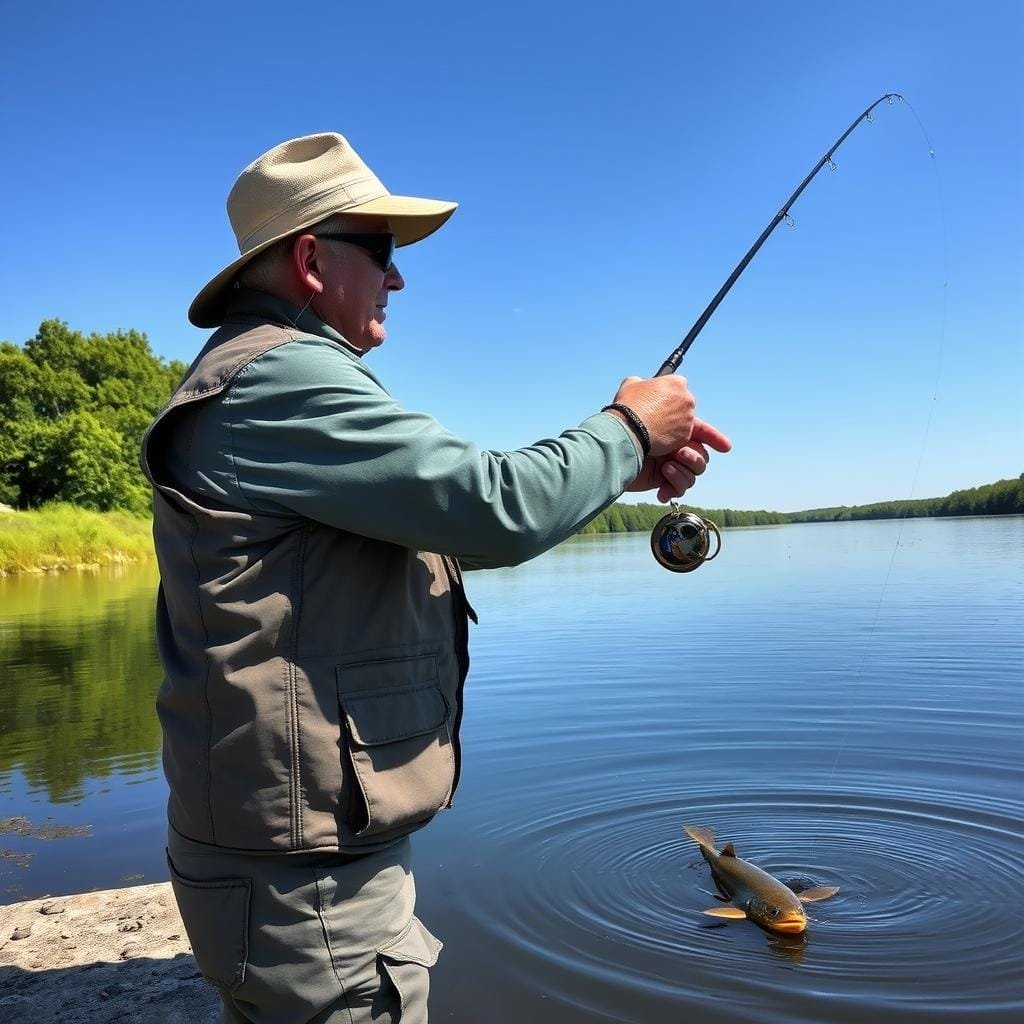
Sight fishing for gar is exciting. It mixes the thrill of hunting with fishing. Knowing how gar act in light helps you catch more.
Wearing polarized glasses is key. They cut down glare, letting you see clearly underwater. This helps spot gar’s movements and splashes.
The best days for sight fishing are sunny. The sun’s light makes it easy to see underwater. Gar are more active when it’s bright.
Here’s a quick guide for sight fishing for gar:
| Condition | Visibility | Recommended Action |
|---|---|---|
| Bright, Sunny Day | High | Use polarized glasses to spot gar near the surface |
| Overcast | Moderate to Low | Patient tracking and looking for subtle splashes |
| Choppy Water | Low | Focus on areas where gar might seek shelter |
Knowing these tips helps you catch more gar. Whether the water is clear or murky, being ready makes your fishing better.
Custom Lures and Rigs for Successful Gar Fishing
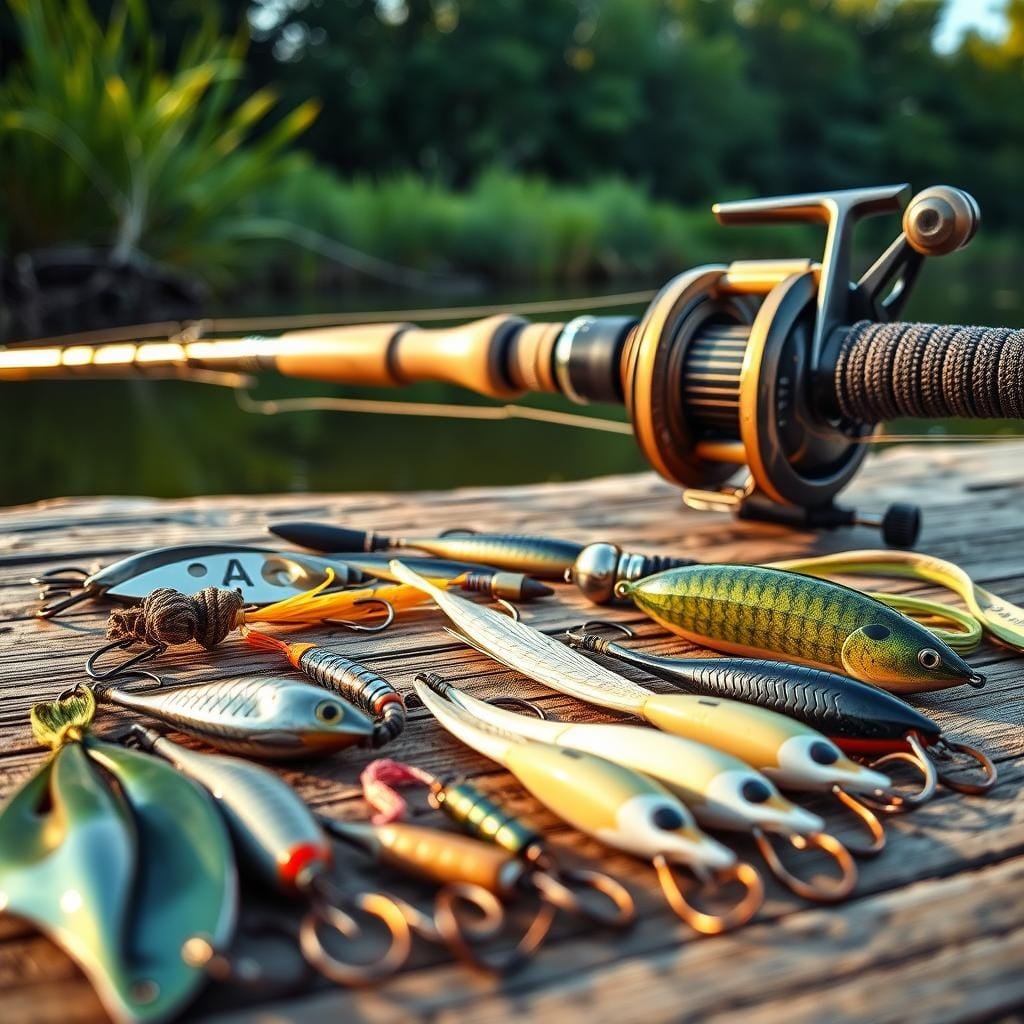
In gar fishing, custom gar lures and special rigs help a lot. They match the gar’s body and how it eats. This makes them key for any good angler.
Rope fly tying is a cool DIY way to make lures. It’s part of DIY fishing tactics. These lures grab onto gar’s teeth, perfect for catching them.
Rope lures are a big deal in gar fishing. They use frayed nylon rope on hooks or jigs. This looks like real food and gets gar to bite.
For DIY gar fishing tactics, here’s a quick guide:
- Start with a 3-6 inch piece of 3/8-inch nylon rope.
- Fray the ends to create a bushy appearance.
- Attach to a jig head or hook using strong thread or a small wire, securing it with epoxy for durability.
- Enhance the lure with natural colors or add small weights for deeper water fishing.
Using DIY fishing tactics and custom gar lures boosts your catch chances. It also makes fishing more fun by letting you make your own tackle.
Whether you’re experienced or new to gar fishing, these entanglement lures will make your fishing better. They lead to exciting and successful fishing trips.
Handling and Releasing Gar: Tips for Conservation
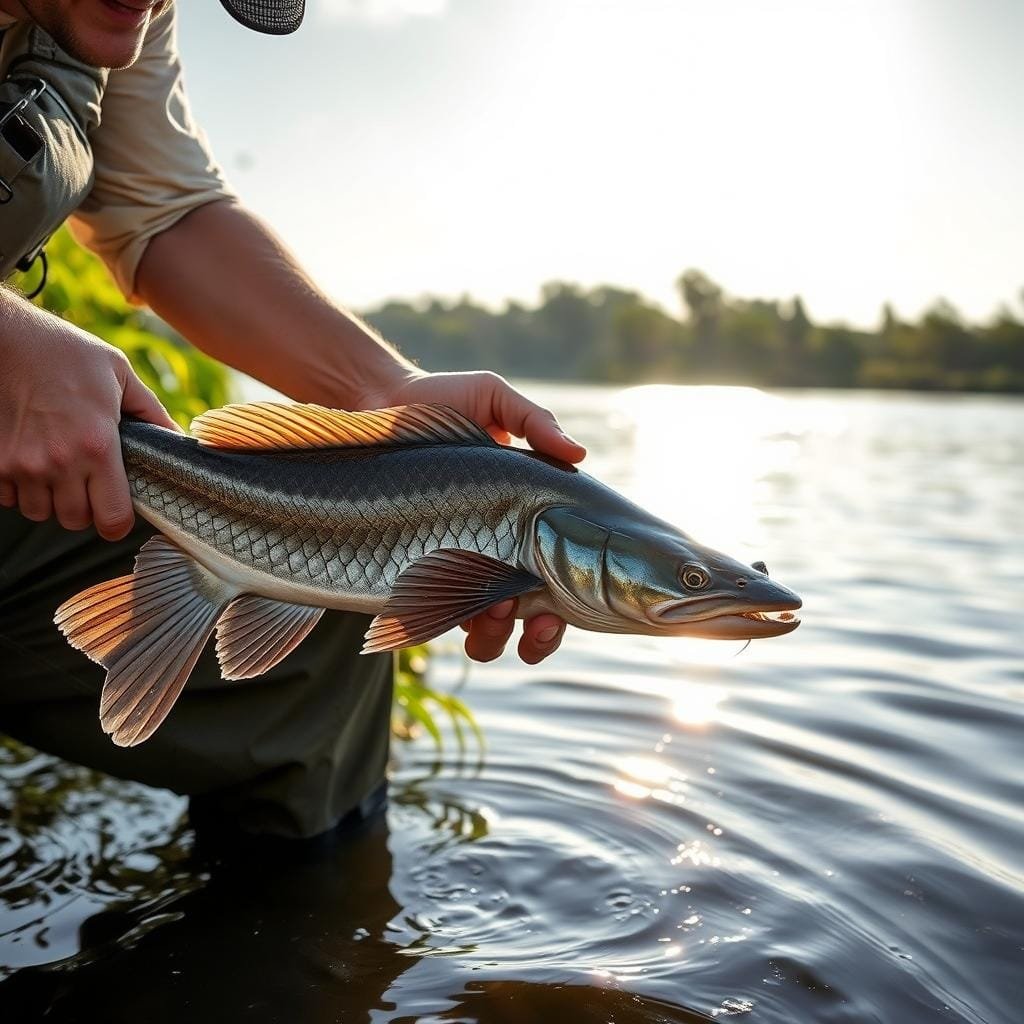
Keeping gar populations safe is key for their survival. Using safe catch and release methods helps both the fish and the environment. Gar can live over 20 years, so every careful release helps.
Wearing fish-handling gloves is a good idea when handling gar. These gloves protect both the angler and the fish. They help in safely controlling the fish during the unhooking and release process.
- Use non-stainless-steel leaders and hooks 3/0 or smaller.
- Land fish on shore instead of on a boat to prevent injury.
- Keep handling times short to help the fish survive.
- For deeply hooked fish, cut the line or leader and leave the hook in place to minimize damage.
For more detailed guidelines on safe practices, consider reviewing this resource for gar conservation techniques.
Ensuring a quick and safe release means removing all entangled fibers from rope lures before letting the gar go. This is key to prevent post-release mortality. It helps the gar swim and feed well.
By following these guidelines, anglers can enjoy catching gar while helping to conserve them. Remember, the future of gar fishing depends on today’s gar conservation efforts.
Catching Monster Gar: Tactics for the Trophy Angler
Trophy gar fishing is an exciting adventure in freshwater. It needs patience, skill, and the right tackle. Heavy tackle is key. Use lines from 30- to 80-pound-test and strong rods and reels.
Summer is the best time to catch these big fish. They fight hard when hooked.
Understanding where and how gar fish eat is important. Look for places with lots of cover and food. Topwater plugs that look like baitfish can attract them. Live or cut bait near the surface also works well.
To catch trophy gar, be ready and watch carefully. Change your tactics based on the water, weather, and gar behavior. Using special gear for monster alligator gar can lead to a big catch. Try trophy gar fishing for a unique experience.