The Kokanee Craze is big in the Pacific Northwest and British Columbia. More anglers want to catch these shiny fish. They are known for being plentiful, fighting well, and tasting great.
Kokanee salmon are as popular as Rainbow Trout. Knowing Kokanee fishing techniques makes your fishing trip special.
This guide will teach you the basics and advanced ways to catch Kokanee. It’s for both new and experienced anglers. You’ll learn about the biology of these fish.
Our guide is not just tips. It’s a detailed resource to improve your fishing. It will help you catch Kokanee easily.
Understanding Kokanee Biology and Behavior
Kokanee biology is fascinating. They are landlocked Sockeye Salmon. Knowing their behaviors and life cycle helps anglers catch them.
The Basics of Kokanee Salmon
Kokanee live in freshwater and don’t go to the ocean. Their life cycle is all in freshwater. This makes them interesting to study.
They are self-sufficient. This is different from other Salmon. It helps us learn more about Kokanee biology.
Feeding Habits: Zooplankton and More
Kokanee eat Zooplankton. They use their gill rakers to filter it. They also eat small plants, insects, and shrimp.
Their diet shows how they eat. It depends on what’s available in their home.
Impact of Water Temperature on Kokanee
Water temperature is very important for Kokanee. They like water between 45°F and 54°F. Water over 60°F can be very bad for them.
Knowing about water temperature is key for fishing. It helps catch these sensitive fish.
Water temperature and food are key for Kokanee. Here’s a table to show why:
| Temperature Range (°F) | Impact on Kokanee | Typical Behavior |
|---|---|---|
| 45 – 54 | Optimal growth and health | Active feeding |
| 55 – 60 | Increased stress | Reduced feeding activity |
| >60 | High mortality risk | Seeking deeper, cooler waters |
Kokanee are amazing. They are built for freshwater and have a special relationship with their environment. Knowing about them helps with fishing.
Kokanee Habitat: Finding the Hotspots
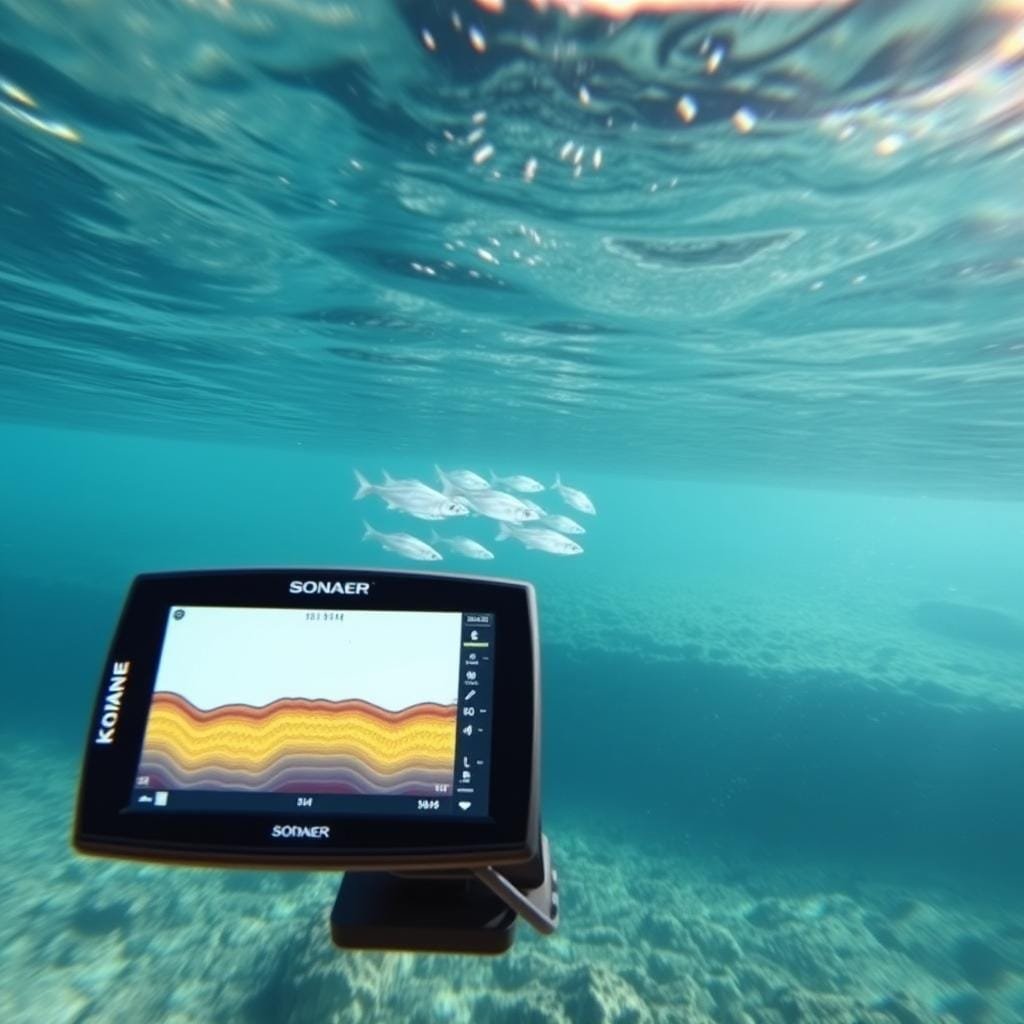
If you love lake fishing, knowing where to find Kokanee is important. You can scan big lakes or look for special spots. Using sonar fishing technology helps find the best places to fish.
Utilizing Sonar Technology for Locating Schools
Sonar has changed lake fishing, making it easier to find schooling fish like Kokanee. It sends sound waves into the water and shows where fish are. This helps find where Kokanee might be eating.
Identifying Kokanee Zones in Lakes
To find Kokanee hotspots, knowing their favorite places is key. They like areas with wind, tight sonar lines, and big points. These spots have lots of food, making them great for fishing.
- Windblown Points: These areas get food carried by the wind, drawing Kokanee.
- Tight Contour Lines: Shows sudden depth changes, good for fishing as Kokanee feed here.
- Extended Points: Far into the lake, these points block water flow, attracting bait and Kokanee.
How to Catch Kokanee: Essential Gear and Tackle
Kokanee fishing needs the right gear and tackle. It’s important for catching these lively fish in different lakes. Knowing about Kokanee fishing gear and trolling techniques can help you catch more.
Older fishing methods used heavy metal gear. But now, people prefer lighter, more sensitive equipment. This change helps catch Kokanee better and enjoy their fight more.
Choosing the right rod and reel is key for Kokanee fishing. Use ultra-light to medium action rods. They help feel bites and handle the fish’s quick moves. The right reels and tackle make a big difference too.
Selecting the Right Rod and Reel
- Ultra-light to medium slow action rods: Ideal for the sensitivity required to feel the Kokanee’s gentle nibble.
- High-quality spinning or baitcasting reels: These should have excellent drag systems to handle sudden pulls.
Importance of Trolling Speed and Depth
Using the right trolling techniques is key. Trolling speeds should be between 0.8 to 1.8 mph. This is slower than for other fish like Rainbow Trout.
Depth is also important. Kokanee can be found at different depths. Use downriggers or weights to keep your lure at the right depth.
Mastering the Art of Trolling for Kokanee
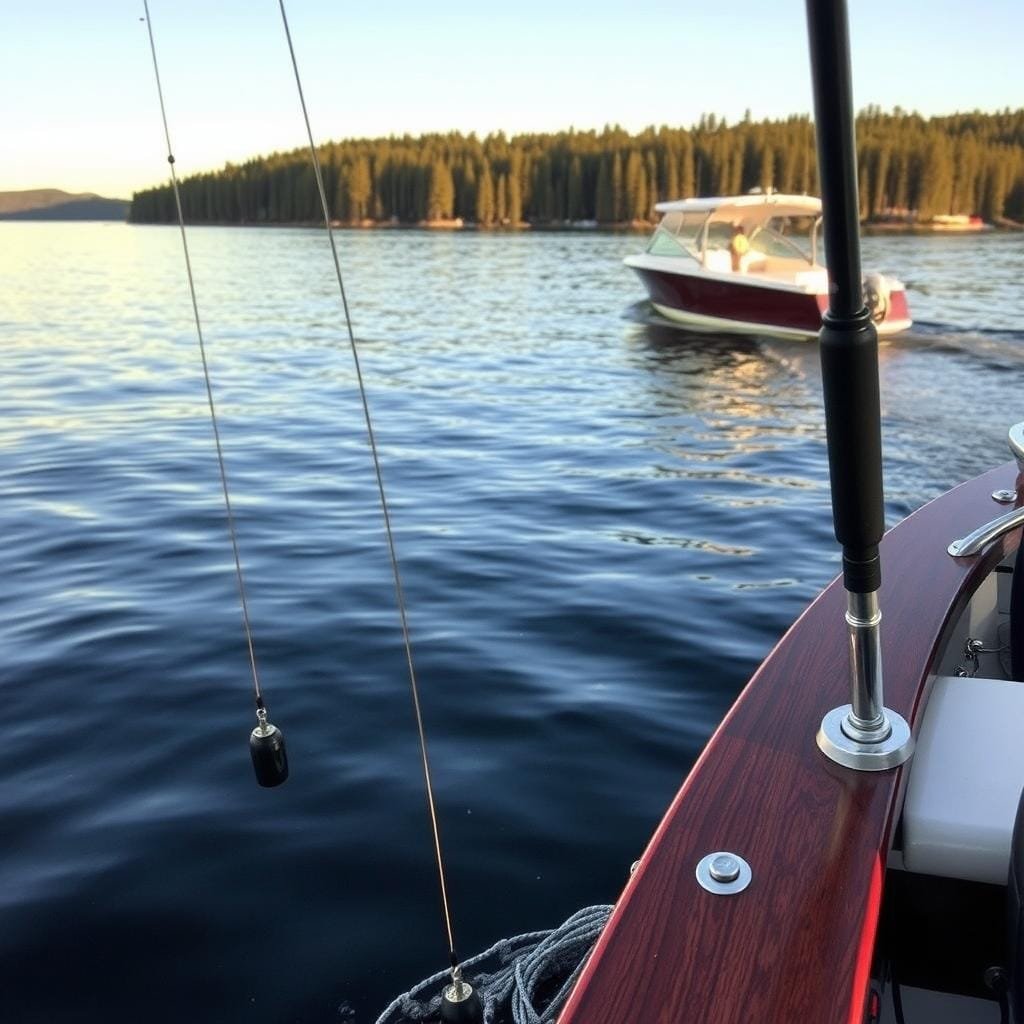
Learning to troll for Kokanee well means knowing how to control your gear’s depth. You need both old and new ways to do this. It’s like a dance under the water.
The Role of Downriggers
Downriggers are key for finding Kokanee at the right depth. They let you set your bait where Kokanee like to eat. This makes your fishing better and easier to find the fish.
Alternate Weight Systems for Depth Adjustment
If you don’t have downriggers, there are other ways to adjust depth. Inline weights are one. They help your lure go to the right depth. Knowing which one to use is important for a good trip.
| Tool | Use Case | Benefits |
|---|---|---|
| Downriggers | Deep water trolling | Precise depth placement, less line tangling |
| Inline Weights | Adjusting lure depth without downriggers | Cost-effective, easy to set up |
Lures and Baits: Enticing Kokanee to Bite
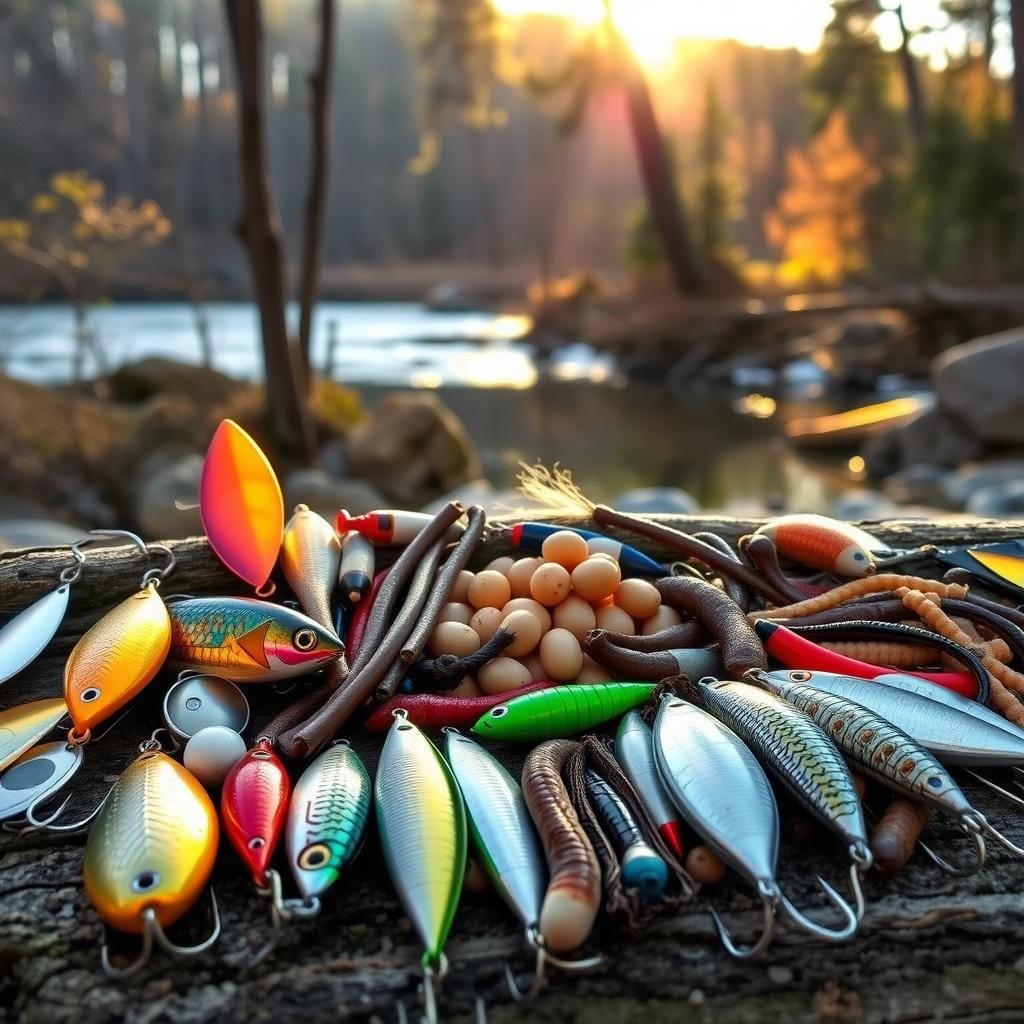
Kokanee lures and fishing baits are key in fishing. They don’t just look like food. They also make fish want to bite more. Knowing how lures move and smell can help you catch more fish.
Choosing the right lure depends on the fishing conditions and the fish’s mood. It’s smart to have both action and non-action lures. Here are some top picks for enticing fish to bite when fishing for kokanee.
Top Lures for Kokanee Fishing
- Mack’s Lure Wiggle Hoochie: Known for its unique wobbling action which mimics a live fish.
- Mack’s Lure Smile Blade: Perfect for slower trolling speeds, adding a vibrant flutter that grabs the attention of nearby kokanee.
Enhancing Lures with Scents and Baits
Adding scents to your lures can really help. Many people use scents or bait changes. Here are some popular ones:
- Pink maggots: Either real or synthetic, these can be effective during specific seasons.
- Dyed-cured corn or shrimp: These add both scent and visual appeal to the lures.
Using these tips can make your fishing better. You can see how they work in the table below. It shows the best lures and baits for enticing kokanee to bite.
| Lure Type | Bait Additions |
|---|---|
| Mack’s Lure Wiggle Hoochie | Pink Maggots |
| Mack’s Lure Smile Blade | Dyed-Cured Corn |
Using these tips can make your fishing trips better. It makes fishing more fun and productive. Try different lures and baits to find what works best for you.
The Significance of Dodgers and Flashers in Kokanee Fishing
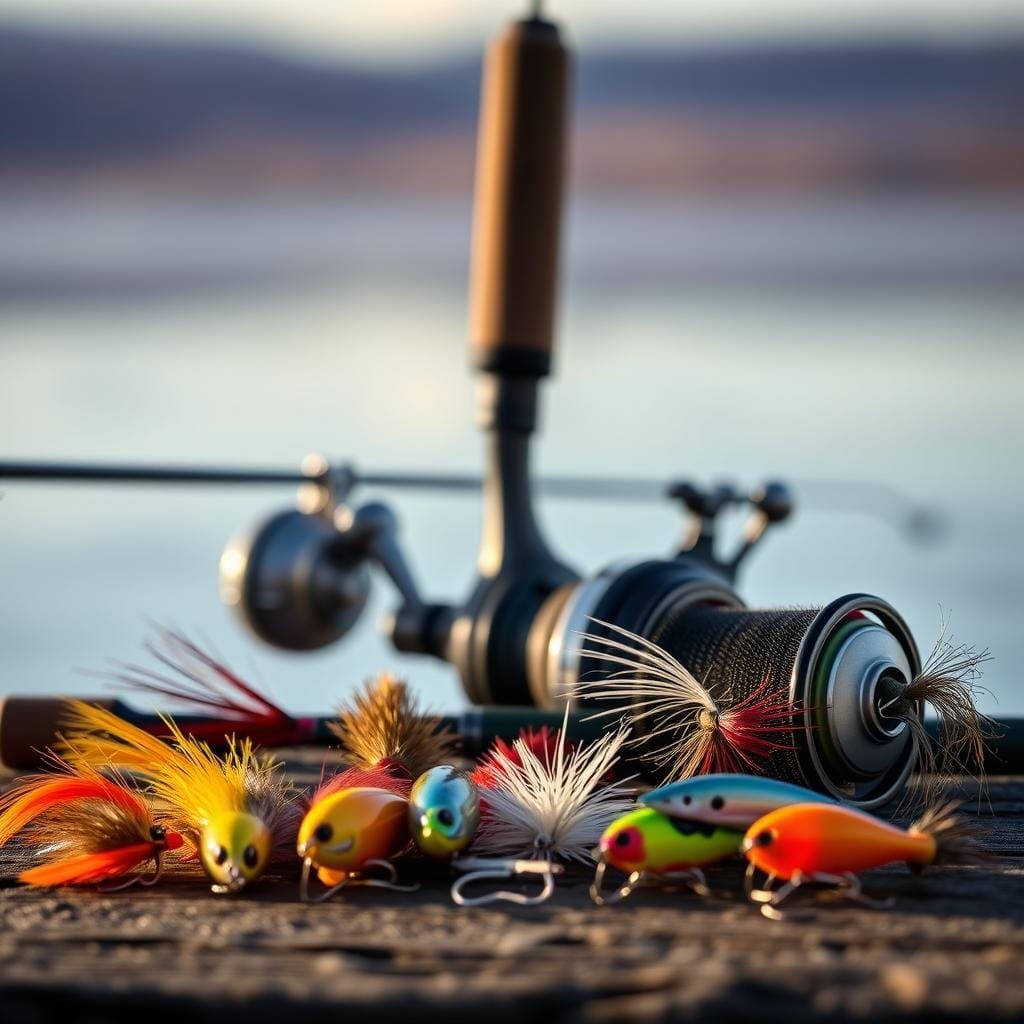
Kokanee fishing dodgers and fishing flashers are key in catching Kokanee. They look like baitfish and move like them. This makes Kokanee want to bite.
Using the right dodgers and flashers can really help you catch more fish. They make it look like there’s real food in the water.
When picking dodgers for Kokanee fishing, think about size and color. Big dodgers work well in clear water. But, they might scare fish in areas with lots of predators.
Small dodgers are better for murky water or when it’s cloudy. The finish of the dodger is important too. Shiny ones reflect more light, while matte ones flicker like real fish.
Setting Up Flashers Effectively
Setting up fishing flashers is all about getting them just right. Use inline flashers like Mack’s Lure Flash Lite 4-Blade Series. They spread light and make a nice visual disturbance.
This is great when Kokanee are spread out. The right flashers and dodgers together can make it look like a school of baitfish. This makes Kokanee very interested in biting.
To catch Kokanee well, you need to set the right depth and speed. Also, adjust your setup as the day goes on. Using both Kokanee fishing dodgers and fishing flashers makes your fishing better than using just one.
Optimizing Leader Lengths for Kokanee Success
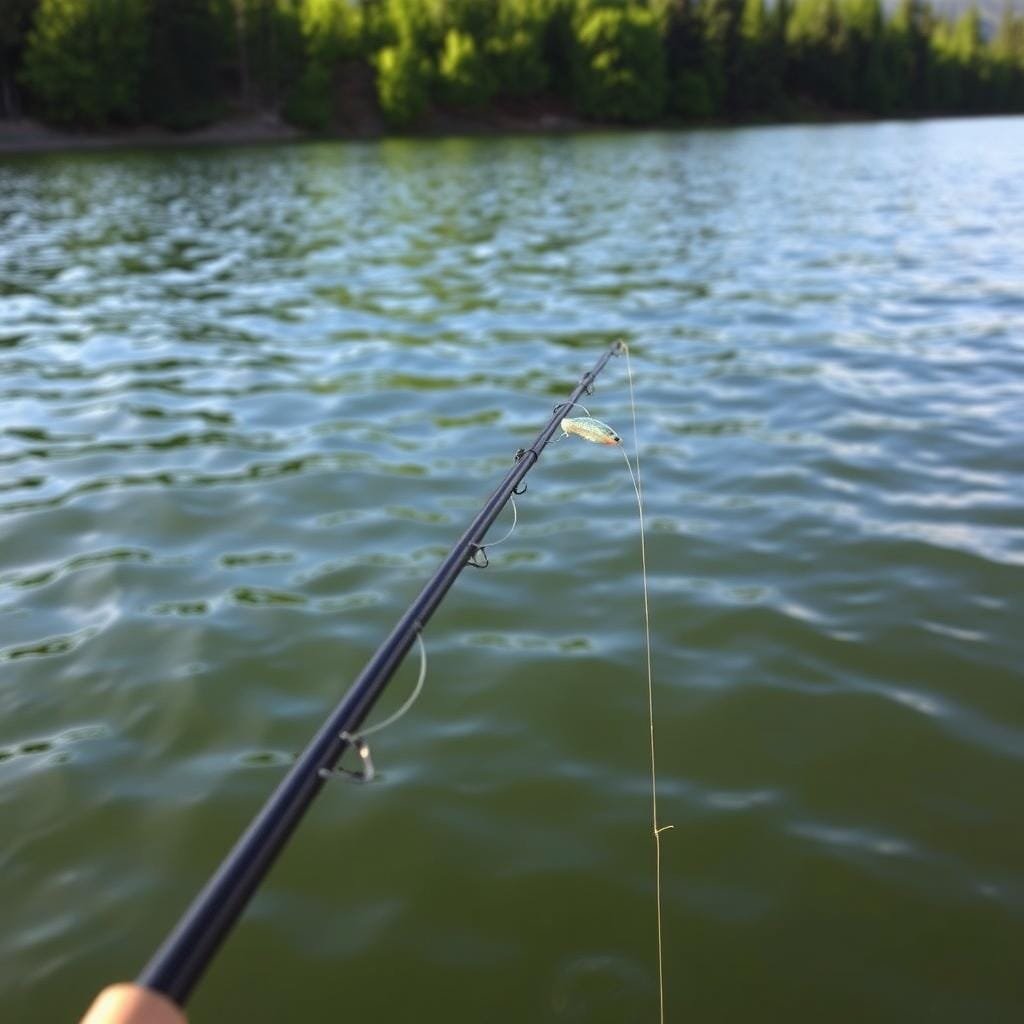
Knowing how to adjust fishing leader lengths is key for catching Kokanee. The right length makes lures work better. This can really help you catch more fish.
Changing the leader length is important. Use longer leaders for lures that move on their own, like spinners. This lets them swim like real fish.
For lures that don’t move by themselves, like hoochies, use shorter leaders. This helps the lure move when a dodger or flasher pushes it.
Impact of Leader Length on Lure Action
Leader length changes how a lure acts underwater. Short leaders make passive lures move fast, great for cold water. Long leaders make active lures move wide, attracting fish in many conditions.
| Lure Type | Recommended Leader Length | Typical Action |
|---|---|---|
| Active Lures (Spinners/Wobblers) | 24-36 inches | Wide, rhythmic movements |
| Passive Lures (Hoochies) | 12-18 inches | Quick, sharp jerks |
Setting up your trolling gear right is important. Think about leader lengths and lure actions. Try different setups to catch more Kokanee on your next trip!
Color and Light: Maximizing Visibility Underwater
Knowing how color and light work together is key for catching Kokanee fish. Light changes as it goes through water, affecting what colors we can see. The right lure colors and light conditions can make a big difference in catching fish.
The light changes throughout the day, affecting what we can see underwater. In the morning, soft light means we need colors like chartreuse and green. As the sun gets stronger, brighter colors like red, pink, and hot orange work better.
Also, how clear the water is and how deep it is matters for lure color. In cloudy water, bright colors and UV lures help a lot. Adding reflective parts, like fishscale tape, can also help lure visibility, making them look more like real fish.
| Time of Day | Recommended Lure Color | Visibility Tips |
|---|---|---|
| Early Morning | Chartreuse, Green | Use UV colors for enhanced visibility |
| Midday | Bright Red, Pink | Opt for glossy or reflective surfaces |
| Late Afternoon | Hot Orange, Fluorescent Red | Incorporate glow elements in murky waters |
To catch more Kokanee fish, think about color, visibility, and light. Choosing the right lure color for the conditions can increase your chances of catching fish. It also makes fishing more fun and strategic.
Advanced Techniques: Adapting to Kokanee’s Preferences
Fishing success depends on adapting to changes. Knowing when to change your tactics is key. This includes adjusting for weather, time of day, and seasons.
As seasons change, so do the fish’s habits. This means you need to change your seasonal fishing strategies to catch more fish.
In cold months, fish are in shallower waters. Use lighter tackle and special lures. In summer, they go deeper to avoid heat. You’ll need heavier gear and different angler techniques.
For more details, check out this guide on fishing for kokanee.
Weather affects fish activity. On clear days, use quiet lures. On cloudy days, you can use bolder tactics. Changing your gear for the weather is important for catching more fish.
| Season | Recommended Tactic | Optimal Depth (feet) |
|---|---|---|
| Winter | Jigging with light lures | 10-30 |
| Spring | Trolling with medium lures | 30-60 |
| Summer | Deep trolling with heavy lures | 60-100 |
| Autumn | Drifting with mixed lures | 20-50 |
Mastering advanced kokanee fishing tactics means knowing the fish and its home. Changing your angler techniques and seasonal fishing strategies helps you catch more fish at different times.
how to catch kokanee
Learning the kokanee fishing technique can make your fishing trips better. Knowing the Rule of 100 is key for catching kokanee.
The Rule of 100 for Trolling Kokanee
The Rule of 100 is very important in kokanee fishing. It says your line depth plus how far back it is from the boat should add up to 100. For example, if you’re fishing at 30 feet deep, your line should be 70 feet back from the boat.
This helps your lure stay in a kokanee’s striking zone. It makes you more likely to catch fish. Learn more at BCFISHN’s kokanee fishing guide.
Varying Speed and Direction to Trigger Bites
Changing your trolling speed and direction is also key. By doing this, you make your lure move in ways that look like real fish. This makes kokanee want to bite.
Just changing your speed or making a sharp turn can make your lure more appealing. It’s like a magic trick for catching fish.
Knowing these techniques is important for catching kokanee. Each method helps you fish smarter. It makes your fishing trips more fun and successful.
Tips from the Pros: Increasing Your Kokanee Catch Rate
Explore the world of professional kokanee fishing. Get tips to make your fishing trips better. Learn from experts who have caught many kokanee.
Insights from Experienced Anglers
Seasoned anglers say the secret to catching kokanee is to watch the underwater world. They change their speed and direction to look like real food. This makes kokanee curious and want to eat.
They also watch how the fish act and change their plans fast. This keeps their fishing successful.
Implementing Professional Strategies
Experts suggest using the right gear and tactics for each situation. For example, picking the right dodger size is important. In clear water, use small dodgers. In murky water, use bigger ones.
Using rubber snubbers helps catch fish without losing line. A long-handled net makes it easy to catch fish without hurting them.
Try these tips to catch more kokanee. Being flexible and learning from the environment and fish is key. It makes you a better angler.
Making the Most of Your Kokanee Fishing Experience
Fishing for kokanee salmon is more than just fishing. It’s a great way to spend time with your family. The calm of the lake and the excitement of catching fish make it fun for everyone.
Young kids can help too. They can use a small rod or help with the net. This makes them feel included and proud of their help.
From casting to cooking, it’s a fun learning experience. It’s a mix of fun, learning, and being together.
Kokanee salmon are tasty and fun to catch. You can fry, grill, or bake them. Cooking together makes the day even better.
It’s all about sharing stories and enjoying good food. The best part is eating together and talking about the day’s adventures.
Remember to be ready for weather changes. The right gear and a positive attitude make fishing great. Whether you catch a fish or not, the joy is in sharing the experience with your family.